
The Official Protestants Appreciate the ‘Facilities’ the Cuban Regime Gives Them in Cienfuegos

The pastors were even more specific and asked God “to support all the expectations of improvement to which Cubans aspire.” (5 de Septiembre)

14ymedio bigger14ymedio, Havana, January 6, 2024 — An unusual article, which asks for God’s blessing “to the country and the province” during 2024, appeared this Friday in 5 de Septiembre, the Communist Party newspaper in Cienfuegos. The article describes a ceremony in which “numerous religious denominations”, such as the Church of the Foursquare Gospel and the Brethren in Christ Society, prayed for “love and unity” in the country in front of local authorities.

To leave no doubt about the “thematic axis” of the celebration, the pastors, the text adds, were even more specific and asked God “to support all the expectations of improvement to which Cubans aspire.” “Blessings to the nation and the city” followed, as well as “high-flying artistic numbers with careful stage composition.”

Immediately afterwards, Israel Curbelo, provincial representative of the ruling Council of Churches of Cuba, took the floor to thank “the facilities and willingness provided by the authorities of the territory” to carry out what he described as a “public act” at the Tropisur complex in Cienfuegos. He then spoke with the special envoys of 5 de Septiembre and gave an account of his organization’s agenda, in addition to reiterating his gratitude for the ceremony, “the fifth activity of this type that is carried out publicly in Cienfuegos.” continue reading

“Blessings to the nation and the city” followed, in addition to “high-flying artistic numbers and careful scenographic composition”

In another forum, no longer religious but digital, Cuban Foreign Minister Bruno Rodríguez criticized this Tuesday that Cuba and Nicaragua were included, for yet another year, in the list prepared by the US State Department of countries that violate religious freedom.

The echo of his statement, published on the social network X, did not appear in the official press. Several articles commented on Havana’s “exemplary performance” or – like 5 de Septiembre – covered events that, in their opinion, demonstrate that religion is not only tolerated but also encouraged in Cuba.

During the last weeks, and anticipating the publication of the list, Havana took several steps to clean up its image, among them the meeting of Miguel Díaz-Canel, on December 19, with Jerry Pillay, the general secretary of the World Council of Churches. The religious leader complimented the president and asked for the end of the US embargo on the island and the exclusion of Cuba from the list of countries sponsoring terrorism.

Pillay’s statements provoked outrage from several international religious communities, such as the organization Outreach Aid to the Americas (OAA), which in a statement on December 28 urged the reverend to “defend religious freedom in Cuba.”

“His visit, apparently closely orchestrated by the Cuban Government, has not provided him with an accurate understanding of the state of the fundamental right to freedom of religion or belief in Cuba. Worse still, we are seeing that the Cuban Government is using his visit, and specifically his statements celebrating religious freedom in Cuba, to reinforce his absurd claim that Cubans do enjoy this fundamental freedom,” denounced Teo Babun, the director of OAA.

Babun also commented on the “dark reality that the faithful live in Cuba” and asked Pillay to “raise his voice on behalf of the afflicted and oppressed in Cuba.”

Babun also commented on the “dark reality that the faithful live in Cuba” and asked Pillay to “raise his voice on behalf of the afflicted and oppressed in Cuba

An episode that exemplified Babun’s statement was the police summons, in December, of the evangelical bishop Jorge Luis Pérez Vázquez, leader of the Rehobot Ministry on the Island. The pastor published a video on social networks showing the document issued by the Police of Santiago de Cuba. “I want to record this and leave it as evidence. Our only ministry in this nation is to preach the gospel, help widows, orphans and prisoners,” he said.

For exiled Baptist pastor Mario Félix Lleonart , the summons – for which the cause was not clarified – constitutes another demonstration of the activity of “repressors and violators of religious freedoms in Cuba.”

The interest of the Cuban Government in gaining the support of the religious institutions of the Island has led it to meet on several occasions with their leaders to demonstrate the religious communities’ support for the State. This happened last June, when Díaz-Canel traveled to the Vatican to meet with Pope Francis. From the conversation, which was expected to handle delicate issues such as the release of political prisoners on the Island, only words of support for the regime from the Catholic headquarters remained.

Last September, the Bible Society of the Council of Churches was established, with a representation of Catholics and Greek Orthodox, who were not part of the group, made up mainly of Protestant churches. During the event, in which Caridad Diego – in charge of Religious Affairs of the Communist Party – was present, the representatives of the institutions sent bibles dedicated to Raúl Castro, Díaz-Canel and Esteban Lazo.

____________

COLLABORATE WITH OUR WORKThe 14ymedio team is committed to practicing serious journalism that reflects Cuba’s reality in all its depth. Thank you for joining us on this long journey. We invite you to continue supporting us by becoming a member of 14ymedio now. Together we can continue transforming journalism in Cuba.
Two Cuban Companies Compete in the Blue-Scorpion Fraud Against Cancer

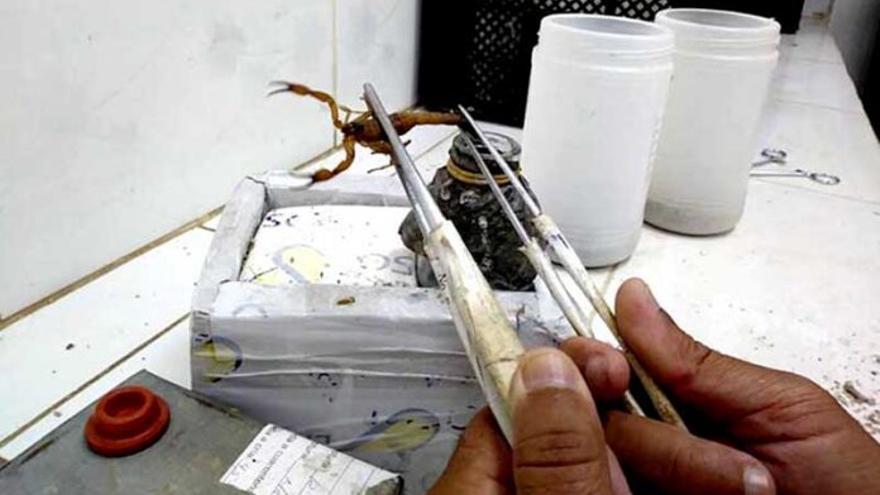
The directors of Labiofam in Las Tunas launched a crusade on Wednesday to contain “the indiscriminate hunting of the blue scorpion.” (Periódico 26)

14ymedio bigger14ymedio, Havana, January 5, 2024 — Gema, a 65-year-old from Havana, received the news in 2013 that she had liver cancer at a fairly advanced stage. In a rapid physical decline, she clung to the recommendation made by a neighbor to look for blue scorpion venom, because the product could “stop the advance of cancer.” In a tiny jar accompanied by a dropper, the woman obtained a few millimeters of a liquid that she had to mix with plenty of water and consume every day. When the amount of venom in the bottle decreased, she made new contacts to buy the “miracle formula.”

Without a label, expiration date and sold in the informal market, the veracity and effectiveness of the product was based on trust. “The person who sells it to me gets it from a laboratory, where they discovered its properties,” she said one day to friends who were curious about the venom. Hundreds of pesos later and after many glasses of diluted drops, she died. She still had two jars of scorpion venom left that her nephew sold to another interested patient. A couple of small, amber-colored jars, unlabeled, surrounded by promises of improvement and recovery.

Patients from all over the world have come to Cuba as a lifeline since, in 2011, the state-owned Labiofam introduced Vidatox, a drug whose active ingredient was the venom of the Cuban blue scorpion (Rhopalurus junceus), to which it attributed “proven anti-tumor, analgesic and anti-inflammatory efficacy.” The researcher in charge of explaining the product – and its master mind – was the young microbiologist Alexis Díaz, who then reported that there were already customers eager to try it in Spain, Italy, Albania and several Latin American countries.

In a few years, the drug was so discredited worldwide that some customers and relatives of deceased patients ended up calling it “Cuban water”

Vidatox was not the hen with the golden egg that Havana was hoping for, although hundreds of patients bought it, and many paid for months of continue reading

treatments in Cuba. Soon, international oncologists began to warn cancer patients about the scam. In a few years, the drug was so discredited worldwide that some clients and relatives of deceased patients ended up calling it “Cuban water.” To keep a low profile, Labiofam then began to qualify Vidatox as a homeopathic product (a pseudotherapy based on water and alcohol solutions).

In an unprecedented acrobatic maneuver in Cuban Public Health, the creative team of Vidatox – including Díaz – shut down Labiofam and formed a new international research group, Lifescozul, which claimed to sell “the most advanced formulation of the blue scorpion venom” – Escozul – while harshly criticizing Vidatox.

Vidatox, they insist, is manufactured by Labiofam, a company that specializes in “products for veterinary use,” and does not contain “a single molecule of the blue scorpion venom.” But the criticism doesn’t stop there, Díaz’s team warns. Vidatox not only does not cure anyone but also “causes and accelerates metastases due to the high degree of alcohol it contains.”

On the contrary, they argue, the Escozul brand – “created by Cuban scientists” supervised by Díaz – is available in more than 30 countries, although “it is in the Health Registration phase” for commercialization. The company’s website has several spaces devoted  to “scientific data” disproving the effectiveness of Vidatox.

The fine print of the Lifescozul chronology clarifies the origins of the scism: the group “was founded by Cuban scientists and doctors who once worked at Labiofam and decided not to continue when the management of Labiofam chose to market a homeopathic product without the properties of the blue scorpion venom. That product was called Vidatox 30CH.”

The Cuban State facilitates the work of Lifescozul and does not penalize its activity in any way. The most solid proof is the commercialization of treatments with blue scorpion venom offered to foreigners

How is a discord of that level possible between two pharmaceutical companies that belong to the same State health system? Does the Ministry of Public Health punish Díaz and his team for selling a drug that competes with Vidatox, manufactured in the same laboratories as the advertised Cuban vaccines against the coronavirus?

The answer is negative: the Cuban State facilitates Lifescozul’s work and does not penalize its activity in any way. The most solid proof is the commercialization of treatments with the blue scorpion venom. The treatment is offered to foreign patients and has to be done in a hotel or in hospital facilities administered by the Government, such as the La Pradera International Health Center, founded by Fidel Castro in 1996, and the Lifescozul headquarters in Havana.

If a cancer patient wants to be treated by Escozul in Cuba, he will have to pay $1,200 – perhaps more, if he goes in the “high season” for tourism – and spend three months in Cuba for an initial treatment. The cost includes the visa, insurance, stay, transportation, food and the “appointment with the producer.” If he wants the medicine to be sent to his country, he has to pay between 80 and 110 dollars per month for the duration of the treatment. But, they clarify, the most advisable thing is to go to the Island.

The empire continues to grow, always under “the highest authority” of Díaz. In 2018, they agreed on a research project with the University of Chile and the University of Talca, also in Chile. In 2021, they signed two contracts in Mexico, with the companies Pharmometrica and Research Pro. In 2022, they closed a deal with the Tecnológico de Monterrey, Mexico, to give more scientific weight to Escozul’s work. Díaz’s ambition is to obtain the Health Registry of the product, which would allow its authorized sale worldwide.

Labiofam managers in Las Tunas launched a crusade this Wednesday to contain “the indiscriminate hunting of the blue scorpion

However, new obstacles have appeared, and the future of Escozul and Vidatox – which the Cuban Government continues to sell – is in danger from the same source. The directors of Labiofam in Las Tunas launched a crusade on Wednesday to contain “the indiscriminate hunting of the blue scorpion and the misuse of its venom for health treatments.”

In the northern part of the province, where scorpions abound, an emergency meeting took place with the hunters, to make them see “reason.” Labiofam informed them that the arachnids “are part of the food chain with insects and pests in their diet,” so their extinction would be a problem for the local fauna.

Negotiation through the way of conscience did not, apparently, have too many results. Labiofam ended up promising “a payment system to hunters,” to “include them in the company’s human resources and thus ensure that the activity is safe.” To manufacture Vidatox in Las Tunas, they pointed out, between 400 and 600 scorpions must be hunted annually. They remain in captivity for two years and then, supposedly, about 14,000 are “freed” every year throughout the country.

Despite the “campaigns” of Escozul, Labiofam continues to sell its panacea against cancer and, in October 2022, protested because the United States prevented the purchase of about 50,000 bottles of the drug – the price of each: $40.78 – to “meet the potential demand” of Vidatox in that country. It was two million dollars that Cuba stopped earning due to the well-known blockade, said the company, which also complained about the “disinformation campaigns that hinder its registration and commercialization in some markets,” although it did not allude to Escozul.

The medical consensus on both products is categorical: it is not scientifically proven that scorpion venom can cure cancer. The prestigious cancer research center Memorial Sloan Kettering – founded in 1884 in the United States – has explained that the benefits attributed to Escozul and Vidatox “are mostly based on anecdotes, testimonies and experiments that may not have been executed correctly.” And it adds that “in Cuba, where these products originate, the Government rejected the use of Escozul in 2009 for not having enough information.”

Beyond the controversies between Vidatox and Escozul, the very expensive treatments and the undisclosed numbers of deaths of patients who trusted Labiofam and Lifescozul, the stories of patients who relied on scorpion venom are tragic, but they haven’t stopped the false hopes.

Translated by Regina Anavy

____________

COLLABORATE WITH OUR WORKThe 14ymedio team is committed to practicing serious journalism that reflects Cuba’s reality in all its depth. Thank you for joining us on this long journey. We invite you to continue supporting us by becoming a member of 14ymedio now. Together we can continue transforming journalism in Cuba.
Cuba Registers a ‘Large-Scale Electrical Breakdown’ in Santa Clara, the First of the Year

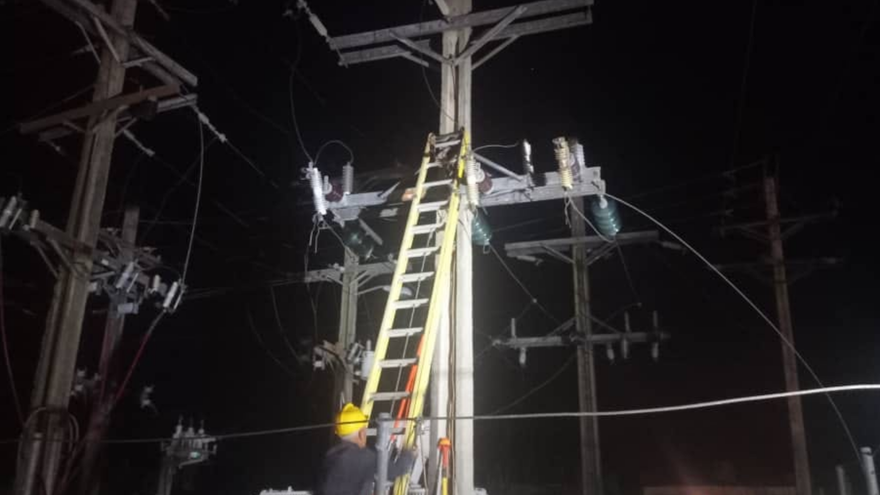
The workers of the Cuban Electrical Union had to spend the night fixing the pole and the collateral effects. (UNE)

14ymedio bigger14ymedio, Havana, January 5, 2024 — Bad news for the year’s energy forecast. The collapse of a pole in front of the Unión Cuba Petróleo Company (Cupet) at the exit of the Santa Clara Subplant, in the province of Villa Clara, is the first incident described by the authorities as a “large-scale electrical breakdown.”

The event occurred at 3 in the afternoon on line 861, 33kV, and left six circuits of the main city without electricity. According to Yadier Ruiz Sánchez, director of the load dispatch of the Electric Company in the province, after 4 in the afternoon the service had been restored in half of them, with three others still affected, the 5th, the 9th and the 17th.

The broken post was not the only problem. According to the local press, “when service was returned to these circuits, a technical problem also occurred in the corresponding substation,” so repairs had to continue during the night. The workers spent the early morning replacing the pole and, at the same time, “regenerating the damaged disconnectors,” said the manager, who announced that the work would continue as long as necessary. continue reading

  “The circuits that already have the service may have a blackout again precisely to carry out the synchronization itself”

“Once both breakdowns have been resolved, the reconnection process may take some time, so as not to cause other accidents, and the circuits that already have the service may have a blackout again precisely to carry out the synchronization itself,” added Ruiz Sánchez.

“We started the year well,” was the general reaction among Santa Clara residents to the information offered by the different channels of the Electrical Union of Cuba (UNE) and Villa Clara’s citizen and media portals. “The maintenance that leaves us without power for more than six hours, what are they for?” asked a customer. “Isn’t the entire circuit checked? Because not long ago there was maintenance on that line and now a pole is broken, which was surely in poor condition, we have been without electricity for more than five hours and there are children without food. If maintenance is carried out, it must be carried out correctly, because they leave us without electricity that day and then a pole breaks without any wind. If we get hit by a cyclone, we will spend weeks without power.”

Almost at the same time, the official Canal Caribe broadcast a report that tried to answer the question : What are the forecasts for electricity generation for 2024 in Cuba?

In it, the UNE prided itself on having been able to reduce “unforeseen outages” – in reference to the disconnections of the thermoelectric unit system – compared to 2022. According to its data, Cuba had almost 70% less time with blackouts due to a deficit in generation capacities and all thanks to planning and preventive maintenance.

“This inevitably results in a better service and greater generation for our people,” says Edier Guzmán Pacheco, a UNE thermal generation engineer who explained all the work successfully carried out in 2023, including those of the two main central plants, the Lidio Ramón Pérez, from Felton, in Mayarí (Holguín), and the Antonio Guiteras, in Matanzas.

Both have once again suffered a year of working and failing, some planned and others “unforeseen,” which summarizes Guzmán Pacheco’s description of the arrangements.

  “This inevitably results in a better service and a greater generation for our people”

“Last year it was confirmed how much preventive maintenance represents to avoid failures and stoppages (…) This maintenance, which was not deep, which was not fundamental, which did not solve the fundamental problems but which was programmed and effectively executed where they needed the machines most and where it had the most influence on the stability and reliability of the units,” he said.

For this year the same will be attempted, he said, although among the main works will be that of Guiteras, with a “capital intervention” that requires bringing parts from abroad, some in the manufacturing process and others in the contracting process.

In January 2023, after a year marked by blackouts, the protests that followed them and the dismissal of the Minister of Energy and Mines, his replacement, Vicente de la O Levy, promised an improvement in the situation thanks, also, to more maintenance. The leader assured that the power outages would be “two or three hours long. And not to everyone and not to all provinces,” but it only took one month for six-hour blackouts to begin to be reported and in summer the blackouts already exceeded 12 and 14 hours.

____________

COLLABORATE WITH OUR WORKThe 14ymedio team is committed to practicing serious journalism that reflects Cuba’s reality in all its depth. Thank you for joining us on this long journey. We invite you to continue supporting us by becoming a member of 14ymedio now. Together we can continue transforming journalism in Cuba.
The Perpetrator of Cuba’s First Femicide of 2024 Was Released on Bail for Another Crime

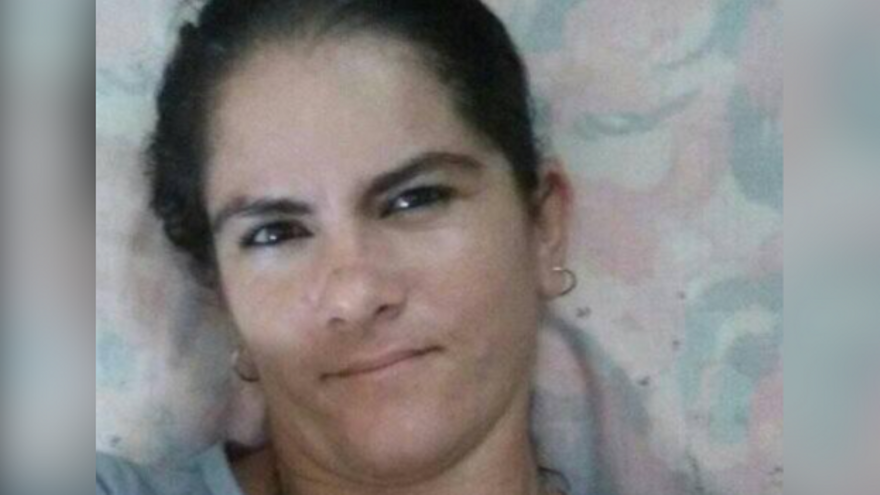
Cervantes was 29 years old at the time of her death. (Facebook/Diana Rosa Cervantes Mejías)

14ymedio bigger14ymedio, Havana, January 5, 2024 — The femicide of Diana Rosa Cervantes Mejías in Camagüey, which occurred on January 2, was confirmed this Thursday by the independent journalist Henry Constantín, who interviewed a relative of the victim and provided more details about the crime. The murder of Cervantes is the first case of violence against a women resulting in murder recorded by the independent media in 2024, after the previous year’s figure of 87 femicides on the Island.

According to a note published on Facebook by La Hora de Cuba, a media outlet directed by Constantín, Cervantes met her ex-partner last Tuesday in the house where they used to live together before separating, located “near the factory known as La Baldosera, in the Juruquey neighborhood” in Havana.

The 29-year-old victim was brutally beaten by the alleged aggressor, whose identity responds to the initials C.A.G. The man, said Constantín, who interviewed Cervantes’ mother, was on bail and awaiting trial at the time of the murder for having assaulted a co-worker “with a machete.”

Likewise, an anonymous source consulted by ’La Hora de Cuba’ characterized the alleged killer as “an abuser”

Several social media posts in recent days alleged that Cervantes had been beaten with a bat “out of jealousy.” Likewise, an anonymous source consulted by La Hora de Cuba characterized the alleged killer as “an abuser.” The aggressor “is now imprisoned,” this media confirmed, adding that Cervantes “left behind a nine-year-old boy.”

This Monday there was also news of the femicide of Nurisbel Guerra, a nurse resident in the Granma municipality of Cauto Cristo, who was serving on a medical mission in Venezuela. After returning to the Island for a few days on December 24, she was killed by her husband, who committed suicide after cutting her throat. The man, identified as Oreste Tamayo, from whom she intended to separate, was a worker at the Electricity Company of the province, as several media reported at the time.

The name “Guerra” was the last one added to the 87 femicides – more than double those quantified a year earlier (34) – that occurred on the Island in 2023, as confirmed by independent platforms and media.

This type of crime, which is not classified in the Criminal Code, has managed to attract the attention of the Island’s population, who demand a response from the authorities in the face of the “wave of violence” in the country that has claimed the lives of dozens of women.

For their part, both the official press and the authorities keep their distance from femicides, and their promises to prevent and quantify cases of violence against women in real time remain unfulfilled.

Translated by Regina Anavy

____________

COLLABORATE WITH OUR WORKThe 14ymedio team is committed to practicing serious journalism that reflects Cuba’s reality in all its depth. Thank you for joining us on this long journey. We invite you to continue supporting us by becoming a member of 14ymedio now. Together we can continue transforming journalism in Cuba.
Etecsa Promises To Crack Down on ‘Digital Criminals’ Who Attack the Cuban Government’s Servers

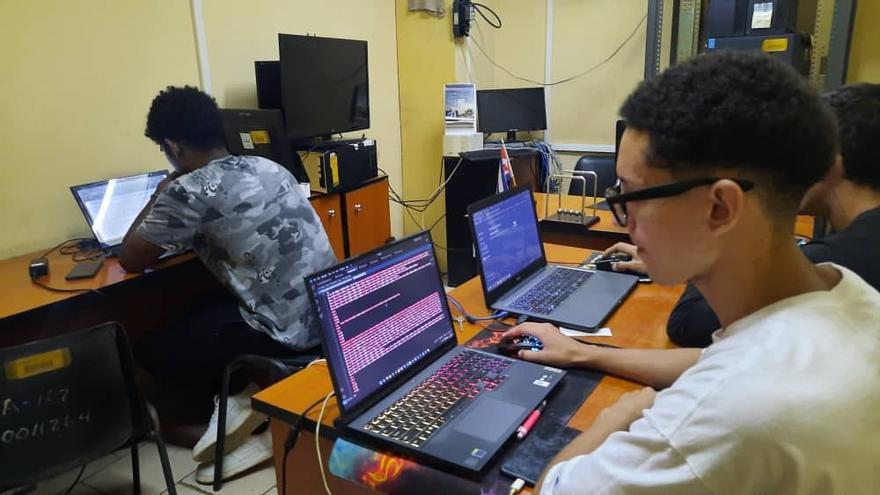
A battalion of engineers has been training at the University of Computer Science for several years. (Facebook/UCI)

14ymedio bigger14ymedio, Havana, January 6, 2024 — The Cuban communications monopoly, Etecsa, revealed this Saturday that its cybersecurity experts recorded 2,600 incidents from January to September 2023, including numerous attacks and “complex intrusions” into banking and government servers, which are characterized by “the use of unauthorized systems and devices to share data that are of a confidential nature.”

Daniel Ramos, Business Director of Etecsa, said that most of the attacks have to do with “the sending and receiving of spam, malicious traffic generated by malicious codes, service scans and exploitation of vulnerabilities that have compromised websites and other computer elements.”

However, the official said he felt reassured about the future of cybersecurity in the country: a battalion of engineers has been training at the University of Computer Sciences (UCI) for several years, with a course plan that will train them to become the digital elite, with one goal: to make war on “cybercriminals” with a spoonful of their own medicine, Artificial Intelligence (AI), among the other tools used by “criminals,” Ramos said. continue reading

Human error is one of the main causes of cyber incidents in State entities,” Ramos said

“Human error is one of the main causes of cyber incidents in State entities,” Ramos said. The cause: “violations of information security policies by those responsible for computer security and users of these technologies.”

In addition, he pointed out, in “work devices” – computers and the industrial phones of cadres and workers, subsidized by the Government – “weak passwords” are used, and it is common for “staff to visit unsafe websites.”

Some 8.4 million Cubans have an Internet connection, which also makes them vulnerable to threats, Ramos alleged. Some 70% of the cybersecurity “incidents” counted by Etecsa refer to “cyber harassment, identity theft and scams through digital social networks and electronic payment channels” such as Transfermóvil and EnZona, Ramos said.

Etecsa considers cybersecurity as an indispensable condition for the banking process set up by the authorities in August 2023. Without “high levels of security in the technological organizations involved” there will be no banking, the official warned. Ramos also asked for a “permanent update” of the telecommunications laws in Cuba.

The director of Etecsa, who alluded to Cuban servers as victims of “cyber enemies,” did not say a word about the complaints of international cybersecurity companies, which have warned about the intensification, since 2019, of the information manipulation campaigns that several Governments – including that of Cuba – have put at the center of their political agendas.

The proliferation of anonymous profiles, the generation of images and videos with AI and the dissemination of false content are some of the activities that characterize the work of these Internet groups

The proliferation of anonymous profiles, the generation of images and videos with AI and the dissemination of false content are some of the activities that characterize the work of these Internet groups, related to the Island’s regime and the governments of Russia, China, Iran, Mexico, Argentina,  El Salvador and, in addition, organizations in Ethiopia, Indonesia and Ecuador, according to the American company Mandiant.

Although Mandiant does not reveal to what extent the Cuban regime is involved in the financing of these groups, its report takes as an example one of the false profiles created by a group related to the Government of Havana. The technique, they say, is the recreation of a digitally altered face so that it looks like the profile of a real person.

For more than a decade, activists have pointed out the ICU as the origin of these campaigns. Even the testimonies of graduates of that center confirm the hypothesis that students, among their teaching tasks, must carry out hacking and denial-of-service attacks on dissident sites, techniques that are now learned professionally, as Ramos explained, in the recent Cybersecurity major of the ICU.

Translated by Regina Anavy

____________

COLLABORATE WITH OUR WORKThe 14ymedio team is committed to practicing serious journalism that reflects Cuba’s reality in all its depth. Thank you for joining us on this long journey. We invite you to continue supporting us by becoming a member of 14ymedio now. Together we can continue transforming journalism in Cuba.
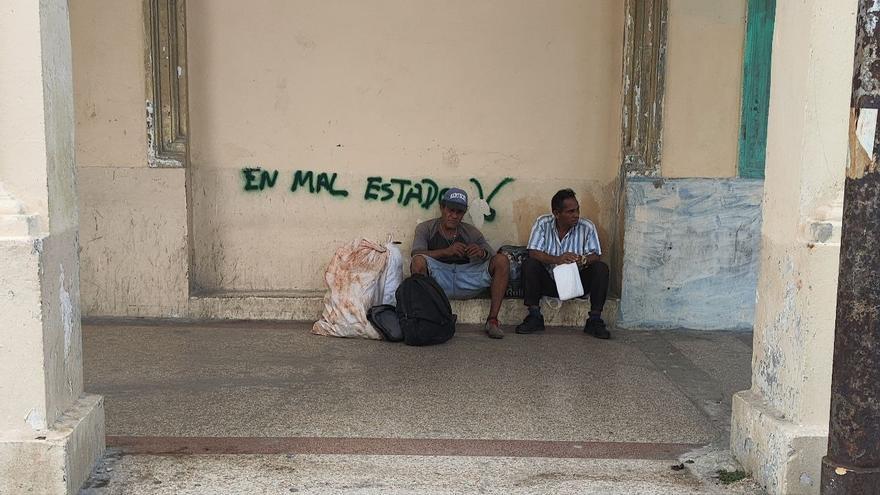
Misogynist Graffiti in Havana Becomes an Enigmatic Message

Two men taking a break on Thursday in front of a hand-painted sign at the corner of Belascoaín and Zanja streets.

14ymedio bigger14ymedio, Natalia Lopez Moya, Havana, 4 January 2024 — “I buy women in bad shape,” the message read back in April, when 14ymedio first reported on it. As of a few days ago, all that was left were the words “in bad shape,” which now seem like a cryptic description of that corner, of the city and of Cuba itself.

On Thursday, two men were sitting in front of it, taking a break. Some passersby could not help but make a joke. “Look what you’re doing there in front of that sign criticizing the state,” a security guard from the nearby Banco Metropolitano remarked ironically. Only then did both individuals turn their heads and read the words.

One of them got up a few seconds later and continued on his way. The other wasted no time picking up the bag he had left on the ground and also walked hurriedly away from the site. This odd, green-lettered graffiti no longer carries the suggestion of mockery or harm to women but rather something worse in the eyes of many Cubans: “an anti-government slogan” in the words of a resident on nearby Tetuán Street. continue reading

That’s how it’s been for months. No one seemed to care. My prediction is that it won’t long before they erase it completely.

“That’s how it’s been for months. No one seemed to care. My prediction is that it won’t be long before it’s gone completely,” she concluded. The question for some residents is why the person who got rid the the first four words did not go to the trouble to erase the rest. “It looks like they did it with the same paint as the wall, so they must have been well-organized.”

In a country where the number of murdered women just keeps growing due to inaction by the state, this enigmatic phrase is more frightening than the previous sexist statement.

____________

COLLABORATE WITH OUR WORKThe 14ymedio team is committed to practicing serious journalism that reflects Cuba’s reality in all its depth. Thank you for joining us on this long journey. We invite you to continue supporting us by becoming a member of 14ymedio now. Together we can continue transforming journalism in Cuba.
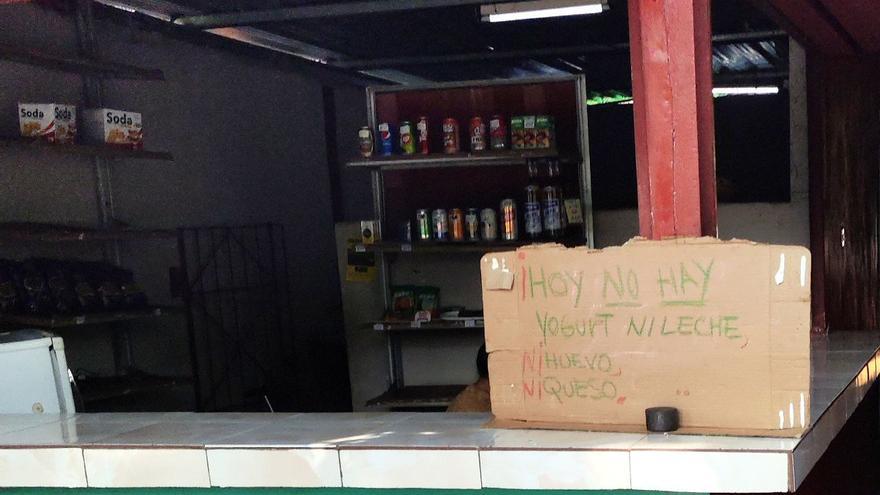
A New Slogan for the Cuban Revolution on Its 65th Anniversary: Get By on Less

“Then it will be here tomorrow,” says an elderly woman sarcastically, as she walks past the place. “The 65th anniversary is off to a good start.” Text of sign: “Today there is no yogurt nor milk nor eggs nor cheese.”(14ymedio)

14ymedio bigger14ymedio, Juan Diego Rodriguez, Havana, 5 January 2024 — State-run media has been flooding pages and screens for days with the faces of Fidel Castro, his brother Raúl and other bearded “heroes” on the occasion of the sixty-fifth anniversary of the Cuban revolution. In the official rhetoric, there is only room for triumph and volunteerism, not for the impoverished reality that the Cuban people are experiencing.

It is Friday and nothing in Havana suggests that this is the eve of a Catholic holiday: Three King’s Day. Deserted streets, uncollected garbage, houses for sale. All are part of the backdrop that a stroll through the capital provides.

The only thing the establishment has to offer are cans of sugary soda, the kind of universal food that remains available even in the midst of misery

There is nothing special to buy in the shops either, especially in the most depressed neighborhoods such as Lawton and Tenth of October. At a small, privately owned store on the corner of Porvenir and Pocito streets, a discouraging sign is propped up on the counter: “No yogurt, no milk, no eggs, no cheese today.”

“Then it will be tomorrow,” says an elderly woman sarcastically as she walks past the place. “The 65th anniversary is off to a good start.”

The only thing the establishment has to offer are cans of sugary soda, the kind of universal food that remains available even in the midst of misery. The store provides a corner from which to observe the true portrait of the revolution: one of shortages and hopelessness.

____________

COLLABORATE WITH OUR WORKThe 14ymedio team is committed to practicing serious journalism that reflects Cuba’s reality in all its depth. Thank you for joining us on this long journey. We invite you to continue supporting us by becoming a member of 14ymedio now. Together we can continue transforming journalism in Cuba.

A Peculiar Almanac

Reading has become like a secret sect: its members recognise one another in trains and cafés. (Facebook/La Nave Antiquarian Bookshop)

14ymedio bigger14ymedio, Xavier Carbonell, Salamanca, 31 December 2023 – In a freezing bookshop in Burgos; with an antiques dealer in Salamanca; talking to a bookseller in Seville; awaiting the post from a miserly bookseller from La Rioja; rooting through a hundred stalls at the Madrid fair; unpacking packages that arrive from Cuba: to narrate my year is to narrate my books. In each case I know how much they cost, where I bought them, and what they brought to me that was new to my life and to my library.

A sporting spirit brings a reader to make lists – not only of the books they’ve read but also the ones they’ve acquired, the ones they’ve lost and the ones most wanted. My list – which contains all of the above – is divided into months, and it resembles a list of diary entries of where I found each book, as well as any notes or reflections that seemed worth jotting down at the time. It’s not a bad habit to have if you’re going to want some content for future use in novels or in columns.

In my diary – a lovely little Moleskine – I also describe meals, or the weather, people I’ve met and places visited. Observations from a bewildered point of view, because, for someone who has left their native country, although they might have a bed and a roof over their head, beyond that, everything appears exotic. The reader’s diary is not short of heroes and villains, unexpected luxuries and moments of extreme hardship. (In interviews, Borges said that he had known extreme poverty. “When, Borges?”, Soler Serrano asked him in 1980. “The poverty of not getting to the end of the month”, the blind man replied.) continue reading

People who read, they get up every day with an impulse that asks them “to save Shakespeare, the Mona Lisa, Havana cigars, penicillin, the iPhone and the Kalashnikov”

People who read, they get up every day with the sense of responsibility described by María Stepánova: it’s an impulse that asks them “to save Shakespeare, the Mona Lisa, Havana cigars, penicillin, the iPhone and the Kalashnikov”. Stepánova wanted the same thing as Walter Benjamin, W.G. Sebald and George Steiner – all stateless people whom I have read with some attention this year.

I discovered Sebald via his book Austerlitz, (published by Anagrama) in Burgos, just after hitting my head on a ceiling beam: I was on the second floor [third floor, to Americans] of a bookshop, and I’d just had to climb a narrow staircase in order to reach it. When I recovered, I saw the spine of the book. Pain and illnesses also form part of memory’s arsenal. A simple example is a strip of esomeprazol, a pill with literary prestige – Arturo Belano and Roberto Bolaño took them – which marks the rhythm of my own week.

But if anything has defined my ups and downs this year it has been the hunt for the catalogue of a publisher which doesn’t exist: The Kingdom of Redonda. There are 40 coloured volumes, published by Javier Marías, with a sharpened arrow on the cover, by little known but always exceptional authors. These are cult books, other-worldly objects, which are disappearing from the bookshops. The quest for them and for reading them has shaped even my travel.

I travelled through Castilla y León by train whilst reading Los Recuerdos de este fusilero (Memories of this Fusilier), the tale of a British soldier who made this same journey on foot during the Napoleonic Wars. I travelled to Seville in search of The Religion of a Physician – the classic essay by Sir Thomas Browne – but I couldn’t find it. I eventually ended up haggling in a raised voice over the price of a copy, with a bookshop owner in Logroño. I discovered, in The Fall of Constantinople (which inspired more than a few passages from The Lord of the Rings), that the Ottomans were planning to do what Cortés actually did, shortly after, on the other side of the ocean – he dragged his ships overland, because the sea was closed by a “thick chain”, similar to the one that blocked the way of English ships during the Siege of Havana in 1762. As I’ve already said, other-worldly books, for readers from another world.

Like an inquisitive dog, a reader will always try to see what book a potential ’partner in crime’ has under his arm

Reading has become like a secret sect: its members recognise one another in trains and cafés, they show kinship for one another through the simple fact of each having the same book in their hands. Like an inquisitive dog, a reader will always try to see what book a potential ’partner in crime’ has under his arm. And if he recognises it, at the risk of appearing indiscreet, he can’t avoid breaking the ice (or at least enjoy the coincidence in silence if he’s too timid).

Winter, of endearing and indifferent books like Lolita; Spring, of Simic, Paz and Abilio Estévez; tropical August, with Divine Bodies by Cabrera Infante and The Colour of Summer by Arenas; Autumn, of classics – Jenofonte, Seneca, Homer and of obsession with Steiner, the “lay rabbi” whose books offer so much calm and optimism. Tonight, that which awaits me is The Seven Pillars of Wisdom by T E Lawrence, the unforgettable Lawrence of Arabia; and for desserts an English edition of King Solomon’s Mines.

I’ll spend the close of the year reading, or talking about books. Or, at least surrounded by them, which – in these times of people being wrapped up in radicalism or poverty, political correctness or intellectual destitution – continue to be the best of company. And, obviously, with a cigar and a glass of something to hand. No need to overdo it.

Translated by Ricardo Recluso

____________

COLLABORATE WITH OUR WORKThe 14ymedio team is committed to practicing serious journalism that reflects Cuba’s reality in all its depth. Thank you for joining us on this long journey. We invite you to continue supporting us by becoming a member of 14ymedio now. Together we can continue transforming journalism in Cuba.
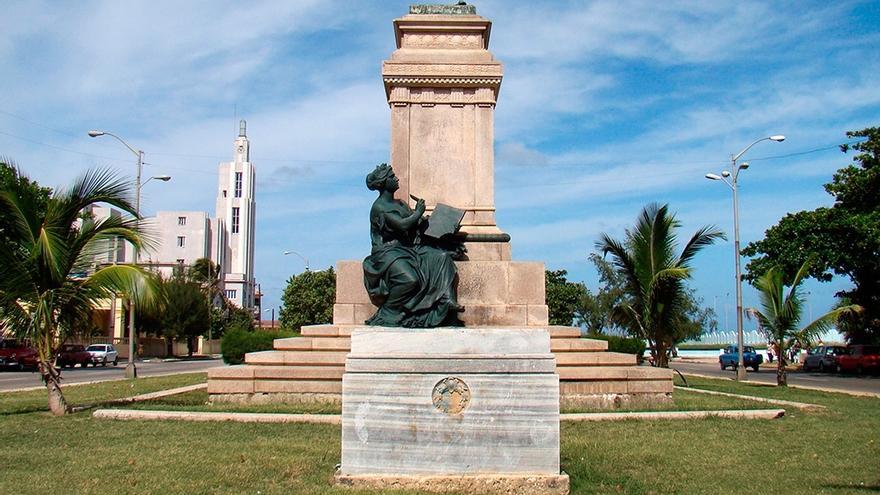
Putting Yourself in the President’s Shoes

All that remains of Tomás Estrada Palma are his shoes, which sit atop a desecrated monument on Avenue of the Presidents.

14ymedio bigger14ymedio, Yunior Garcia Aguilera, Madrid, January 4, 2023 — If you came here thinking that I would be talking about Díaz-Canel or his shoes, you would be mistaken. To be president of a republic, you need to be elected, at least by a parliament. And electing someone implies being able to choose between two or more options. In the case of this individual, he was the only candidate on the parliamentarians’ ballot. So they elected nothing and he presides over nothing. Díaz-Canel is just an appointed director, a front man, Raul Castro’s latest whim.

The person I intend to talk about in this column was the first Cuban president to be elected by popular vote. At school they told us little more than that he favored annexation by the United States. Official historians have emphasized that he requested, begged, implored the U.S. to occupy Cuba a second time. Less mainstream journalists revel in anecdotes about his legendary stinginess. But the truth is that, in Cuba, little is known about who our first elected president was.

All that remains of Tomás Estrada Palma are his shoes, which sit atop a desecrated monument on Avenue of the Presidents, known locally as Avenue G, in Havana’s Vedado district. His statue, which was the creation of the Italian artist Giovanni Nicolini, was unveiled in 1921 and destroyed in 1959 in a fit of collective hysteria. continue reading

Estrada Palma’s presidency was austere, yes, but no one could call him corrupt. His motto — “more teachers than soldiers” — was consistent with his vocation and the needs of the country

The story goes that it was the people who ripped his statue off its pedestal back in the 1970s but ordinary people do not have cranes. Its destruction was not the result of a truly popular rejection but rather an order from powerful officials with a very clear purpose: to erase history. They say that one of Estrada Palma’s sons was staying at the Hotel Presidente Hotel at the time and witnessed this official act of iconoclasm. Perhaps his only revenge was seeing how his father’s shoes clung to the marble.

Years later, a group of pedestrians happened to walk past it without any idea what the monument represented. Some thought it was perhaps an homage to that poem about the rose slippers by Jose Martí. The stubborn bronze shoes remained there until 2020, when the Office of the City Historian finally decided to finish the job, remove them from public view and store them in their archives.

Tomasico* was was born, it is said, on July 9, 1835. He was the only child of Andrés Maria his wife Yaya. His father died when he was little and he developed a singular attachment to his mother. Perhaps because of that bond, he was unable to finish his studies in Seville. He returned to his hometown to be with her and to run La Punta, his family’s hacienda. He was named petty-lieutenant in Bayamo, an administrative position with about as much authority as its pleasant phonetics imply.

When war broke out, Tomás was sent to by the authorities to negotiate with the insurrectionists but ended up joining them. He managed to rise through their ranks, ultimately becoming president of the Republic in Arms. There were more losses than victories, however, and those defeats would leave their mark on him.

La destrucción de la estatua de Estrada Palma no fue el resultado de un rechazo auténticamente popular, sino una orden del poder con un propósito muy claro: borrar la historia. (CC)
The destruction of his statue was not the result of a truly popular rejection but rather an order from powerful officials with a very clear purpose: to erase history. (CC)

His dearly beloved mother died in the mountains of hunger after being captured by the Spanish and then released into the wilderness alone. He himself was captured near the end of the war by Cubans who sympathized with Spain. During his imprisonment in Morro Castle, no Cuban went to visit him. The colonial government spread the news that he had switched sides and he was unfairly assumed to be a traitor. To withstand the December cold, he had to rely on clothes given to him by Spanish soldiers.

Perhaps this is why he had little faith in Cubans’ ability to govern themselves. It was in the United States where rediscovered his love of teaching and where he found a degree of respect and dignity. He regained his belief in Cuba only because someone with the stature of Jose Martí rekindled that hope in him.

Estrada Palma’s presidency was austere, yes, but no one could call him corrupt. His motto — “more teachers than soldiers” — was consistent with his vocation and the needs of the country. Those who insist he favored annexation by the United States ignore his efforts to make sure the Isle of Pines remained part of Cuba and to reduce the number of American naval bases from five to just one.

He was not perfect by any means, but nor was he the rube nor the sellout portrayed in Cuban history classes. A country was being forged and, in such times, it is all too easy to get burned. Perhaps one of his most famous lines says it all: “We have a republic but it does not have citizens.

*Translator’s note: Spanish diminutive of Tomás.

____________

COLLABORATE WITH OUR WORKThe 14ymedio team is committed to practicing serious journalism that reflects Cuba’s reality in all its depth. Thank you for joining us on this long journey. We invite you to continue supporting us by becoming a member of 14ymedio now. Together we can continue transforming journalism in Cuba.
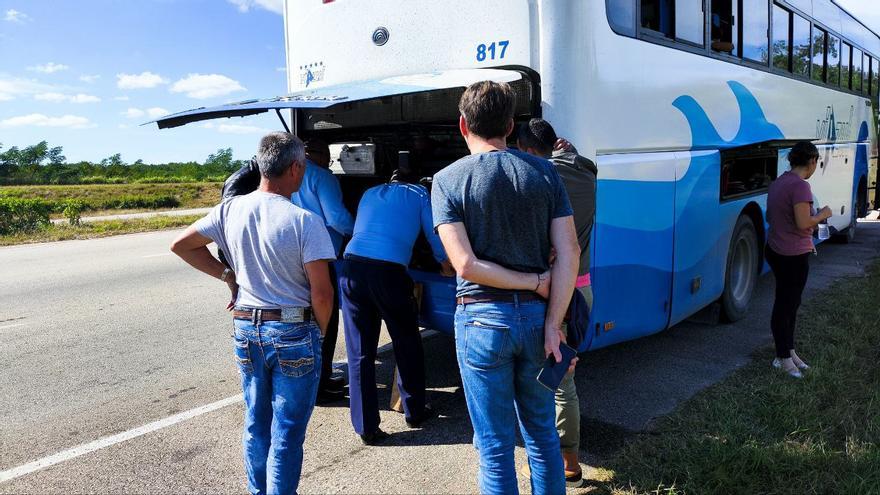
Three Hours Stranded on the Highway, Cubans and Tourists Suffer the Negligence of Viazul

After half an hour, the driver gave his diagnosis: the transmission belt broke and, worst of all, he didn’t have a spare. (14ymedio)

14ymedio bigger14ymedio, Olea Gallardo, Havana, 4 January 2024 — The trip from Ciego de Ávila to Havana by bus is neither short nor cheap, but Maidelys is already used to it. This habanera has been traveling that road by public transport for ten years every time she has a vacation, to visit a sister in the central province. Although the distance is about 400 kilometers, or 250 miles, the trip between the two cities by road takes almost eight hours. That is, if there are no unforeseen events like those that happened this Wednesday, which caused her to arrive three hours later.

As has been customary for a long time, another brother, an emigrant, had given her the ticket, which cost 28 euros, buying it on the Viazul website, where payment is only accepted with foreign cards. Very few can afford these prices, so the vehicle, coming from Santiago de Cuba, was full of foreign tourists, many of them Cuban-Americans, with very few domestic travelers.

The bus left at six in the morning from Ciego de Ávila, and Maidelys fell asleep right away, until they reached the next stop, Sancti Spíritus. “Fortunately it was one of the comfortable buses, because in some Astros [National Bus Company] I can’t get a wink of sleep,” she says. “Once I traveled in one that had no floor in front of my seat, and I spent the whole trip thinking that if I fell asleep I would fall through the hole.”

“There’s a goldmine here,” is how Maidelys described the atmosphere of Las Palmas restaurant. (14ymedio)

Another advantage of going in a “tourist” vehicle is that they have hot food at the stops. “With the bus of the proletariat, there’s only sugar and more sugar,” Maidelys jokes, referring to the soft drinks and cookies sold at the government stops.

At kilometer 139 of the National Highway, after passing Santa Clara, the bus stopped for breakfast. “There’s a goldmine here,” is how Maidelys described the atmosphere of the Las Palmas restaurant, a “grill” where the meat dishes cost 2,000 pesos, the sandwiches go from 600 to 1,200, and a continue reading

malted milkshake costs 500. They also sold boxes of cigars for 120 dollars, although some foreigners haggled until they got them down to 110.

Everything seemed to be in order – they had already passed through the provinces of Cienfuegos and Matanzas – when with just under an hour and a half left to reach the capital, at kilometer 72 on the highway, at the height of Nueva Paz in Mayabeque, the vehicle stopped.

“At first you only heard the driver and someone else, like a baggage handler, and no one worried,” says Maidelys. “But then the air conditioning turned off, and people began to protest, saying it was a lack of respect, what with the cost of the ticket.”

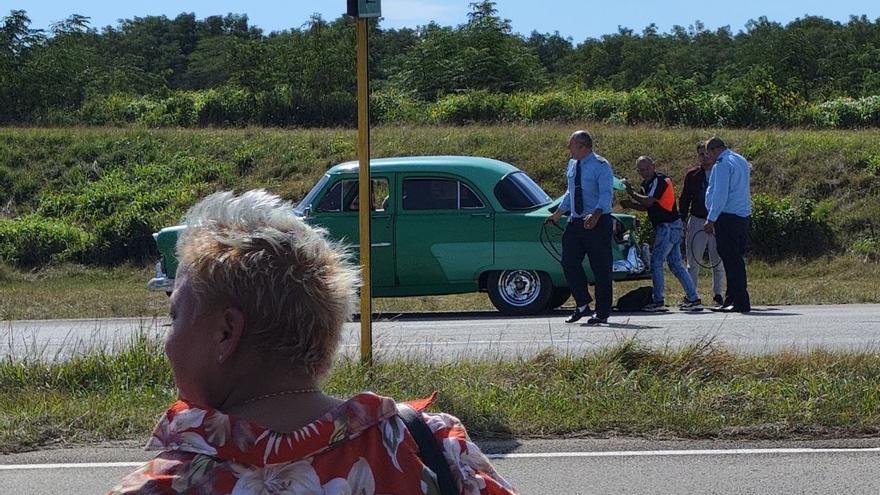
An almendrón — a classic American car operating as a shared taxi — stopped to help, but they didn’t have the right part, and then a Transgaviota bus, which didn’t have any spare parts either.” (14ymedio)

After half an hour, the driver gave his diagnosis: the transmission belt broke and, worst of all, he did not have a spare. He did not say  if they would have to wait for another vehicle or if the company would send help. “There is a review department that is supposed to handle all breakdowns,” Maidelys says. “It shouldn’t happen because they’re charging you up the nose, and none of these buses have the comfort they’re supposed to have.”

The driver himself, she says, acknowledged his impotence before the travelers who complained about the breakdown: “He told us that the rule said that after five years the buses should be renewed, but that Viazul has not had new buses for at least 15 years.” The laughter of those present testified to the lack of credibility of the driver’s excuse for such precariousness: “the blockade.”

Soon, as the minutes passed and there was no solution, the good mood gave way to restlessness. “There were people with flights at two in the afternoon, another with a ticket for 1:00 pm, but he already knew it was lost,” says Maidalys. The most dramatic case was that of a young mother who was traveling with her daughter to get to Nicaragua — from where she would probably make the journey to the United States:  she cried when she saw her money for the bus tickets wasted.

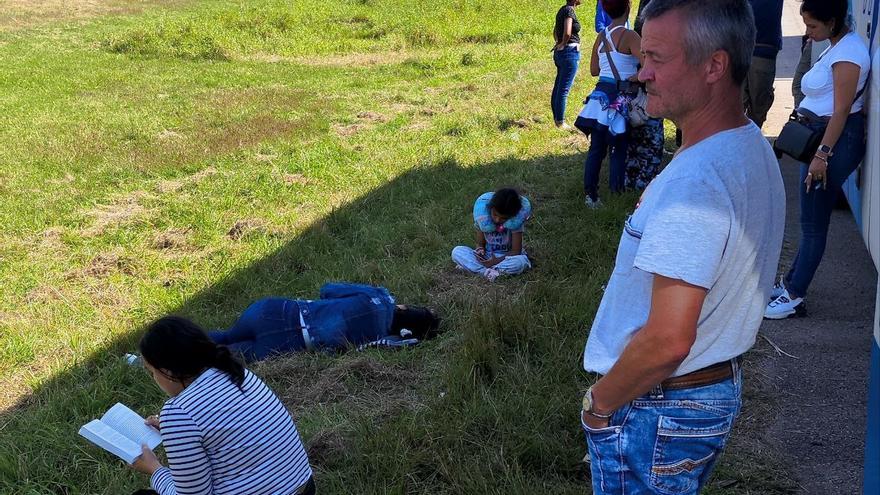
Those who did not have a plane to catch were the most resigned, and they spread out on the ground. (14ymedio)

Those who did not have to catch a plane were the most resigned, and they spread out on the ground, like Maidalys. From a mound she saw how the bus driver desperately stopped other vehicles to ask for help. “An almendrón [a 1950s American car operating as a shared taxi] stopped, but they didn’t have the right part, and then a Transgaviota bus, which didn’t have spare parts either,” she says.

And she continues with the surreal parade that soon populated the place: “A pastry seller appeared and then someone who sold preserves, to get us to buy a kilo, but the worst thing was that an old woman who got on in Santa Clara began to hyperventilate. I don’t know if it was from anxiety or fatigue, but they said that there was no ambulance to pick her up.”

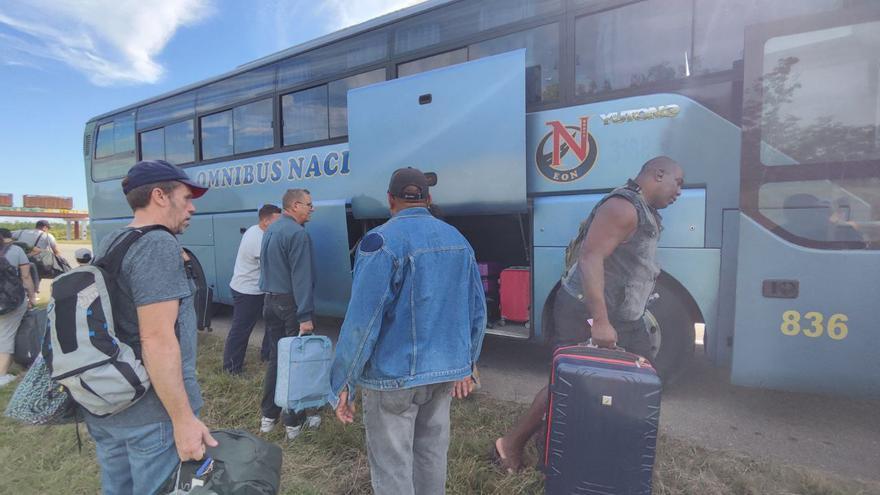
It was more than an hour after being stranded that they began to call the passengers whose final destination was terminal 3 of the José Martí International Airport, to get them into another vehicle. “But they were warned that they had to stand up,” Maidelys says. With that bus, a fan belt also arrived, but it didn’t solve the problem either.

“We had to wait almost three hours for another bus to come and pick us all up.” (14ymedio)

“We had to wait almost three hours for another bus to come and pick us all up,” says Maidelys, who finally arrived at her destination, the bus terminal near the Plaza de la Revolución, at the end of the evening. “I had a piece of meat in my suitcase. It was frozen but I was already afraid that when I arrived in Havana it would be cooked. Rather than Viazul, they should call it Viacrucis [the Way of the Cross].”

The only happy person during the trip, she indicates, was a passenger who, in the middle of the journey, learned that she had received Spanish citizenship: “She started screaming like crazy, and it’s no wonder. She’s not going to have to put up with the things of this country anymore.”

Translated by Regina Anavy

____________

COLLABORATE WITH OUR WORKThe 14ymedio team is committed to practicing serious journalism that reflects Cuba’s reality in all its depth. Thank you for joining us on this long journey. We invite you to continue supporting us by becoming a member of 14ymedio now. Together we can continue transforming journalism in Cuba.
With Its Alternative ‘Therapies,’ Cuba Wants To Become a Paradise for Sick Tourists

Customers will be able to buy packages of 14 and 21 days to be treated on the Island, beginning in January. (Invasor)

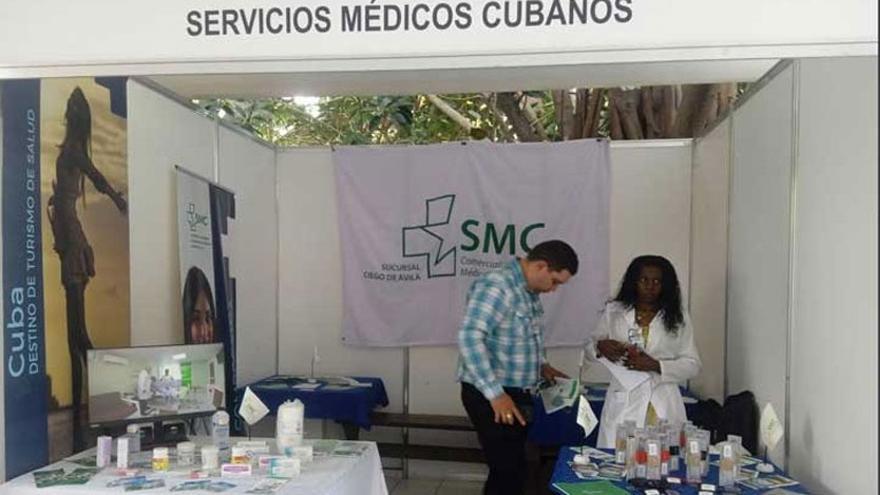
14ymedio bigger14ymedio, Juan Izquierdo, Havana, January 4, 2024 — Ready to take out the artillery in the face of the tourism crisis in Cuba, the ministries of Public Health and Tourism returned this Thursday to their strategy to make the Island a paradise for the sick traveler. The Cayería Norte of the province of Ciego de Ávila will be converted into an enclave of “oriental and western therapies, along with therapies with dolphins,” where “ancestral energies” will have as much weight as “the use of Cuban medicines.”

The Medical Services Marketer (CSMC) explained to the official press that the “traditional” Cuban sun and beach tourism is already medicinal in itself, but that they plan a whole package to contribute “to the well-being and improvement of the quality of life” of those who relapse, afflicted by any ailment or a desire for relaxation on the beaches of Seville.

Agnerys Cruz, director of the state company in Ciego de Ávila, pointed out to Invasor that the services will include all kinds of innovative “therapies”

 Agnerys Cruz, director of the state company in Ciego de Ávila, told Invasor that the services will include all kinds of innovative “therapies,” as well as “the consumption of healthy food and drinks” and direct interaction with the dolphins of Cayo Guillermo, which offer proven benefits to the mental health of patients.

“To this is added the possibility of attention to different disorders, from the autism spectrum, in all its varieties, to others that hinder socialization,” Cruz added, without going into details. continue reading

The limits of the program are only imposed, judging from the announcement, by the imagination. “The possibility of visiting cities and rural areas is added, including agricultural farms and local development projects, where they can enjoy ecological walks, farmers’ lunches, traditional Cuban drinks, tropical fruits and fresh vegetables. These proposals reinforce the initiative to travel to Cuba to receive well-being and quality of life services,” the director said.

On a more practical note, Cruz offered customers packages of 14 and 21 days, beginning in January, although she did not delve into the costs. “The experience will be wonderful for both tourists and therapists,” she said.

Both the state facilities and the hotels of Jardínes del Rey will be involved in the new program, which already includes the Canadian Blue Diamond Resorts as one of its partners. “These offers are added to the existing ones at the Starfish Cayo Guillermo hotel, but the purpose is to extend them to other facilities,” the director explained.

However, the CSMC plans an ambitious expansion in its services and is already targeting other audiences. “The Grand Muthu Rainbow hotel, destined for the LGBTIQ+ segment, develops specific therapies that meet the demands of that market and make the stay more pleasant,” Cruz celebrated.

Also inaugurated, in the capital city of the province, was a medical office at the Rueda hotel, “with the aim of ensuring healthcare for those who engage in city tourism in hotel facilities, rental houses or are passing through the province,” she added.

The staff will promote the use of Cuban drugs such as vaccines against covid-19 and Heberprot-P

The office will promote the use of Cuban drugs such as vaccines against covid-19 and Heberprot-P, the latter described as a “stimulant and accelerator of the healing of diabetic foot ulcers” that reduces the risk of amputation.

“In the same way, the medical office staff will promote services aimed at guaranteeing the well-being and quality of life of tourists, such as massages and cosmetic dermatology,” Cruz said.

The initiative, Invasor alleges, is based on data from the World Tourism Organization, which assures that this year health tourism will be a “trend,” since it “increased the number of travelers eager to regain their energies, take a ’breather’ and feel comfortable with themselves.”

It is not the first time that the regime has tried to create a “favorable climate” to attract this type of traveler. After the coronavirus pandemic, the authorities offered foreigners a trip to the Island to recover or receive treatment. The controversy was not long in coming from the population, who feared an increase in the number of infections with the arrival of thousands of tourists.

To this is added, today, the health debacle that the country faces, unable to offer treatment or perform a surgery without the patient’s emigrated relatives sending everything from the simplest supplies, such as needles and thread, to the most expensive drugs. The situation has reached the point where the Government has had to extend again and again the tariff exemption for food, toiletries, medicines and even generators that travelers can bring to the Island for non-commercial purposes.

Translated by Regina Anavy

____________

COLLABORATE WITH OUR WORKThe 14ymedio team is committed to practicing serious journalism that reflects Cuba’s reality in all its depth. Thank you for joining us on this long journey. We invite you to continue supporting us by becoming a member of 14ymedio now. Together we can continue transforming journalism in Cuba.

More than 18,000 Cubans Requested Asylum in Mexico in 2023

After nine days of walking, the “Exodus from Poverty” caravan was dissolved. (EFE)

14ymedio bigger14ymedio, Ángel Salinas, Mexico, 4 January 2024 — The Mexican Refugee Aid Commission (COMAR) processed documents for 18,386 Cubans during 2023. All of them were part of the 140,982 migrants who requested documents for visitors for humanitarian reasons, which includes asylum cases. This is a “record figure,” the coordinator for COMAR, Andrés Ramírez Silva, told 14ymedio.

Migrants from the Island were the third largest group to which they provided assistance, behind Haitians, with 44,239 applications and Hondurans, with 41,935. Ramírez Silva stressed that despite the fact that the figure is considerable, between “November and December” they observed a decrease in the number of irregular foreigners who went to their facilities.

“Since October it has been agreed with the Ministry of the Interior to give priority to migrants who request asylum and want to remain in Mexico,” the official also explained, who attributed the collapse suffered during the year to the misinformation among foreigners who came to obtain transit permits so as not to be arrested. continue reading

Not to be confused with those who continue to arrive in Mexico. The flow has been very large and that is why the meeting took place between Mexico and the United States”

Ramírez Silva clarified that this decrease refers to migrants who approach COMAR: “Not to be confused with those who continue to arrive in Mexico. The flow has been very large, and that is why the meeting between Mexico and the United States took place.”

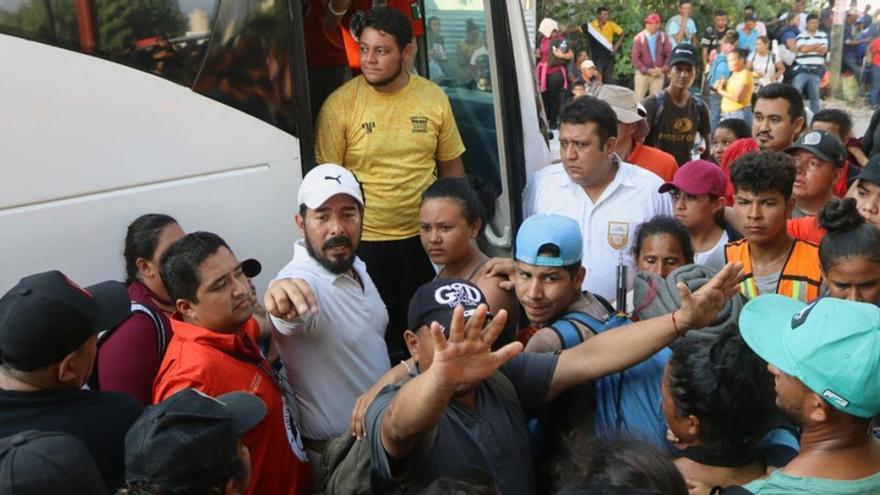
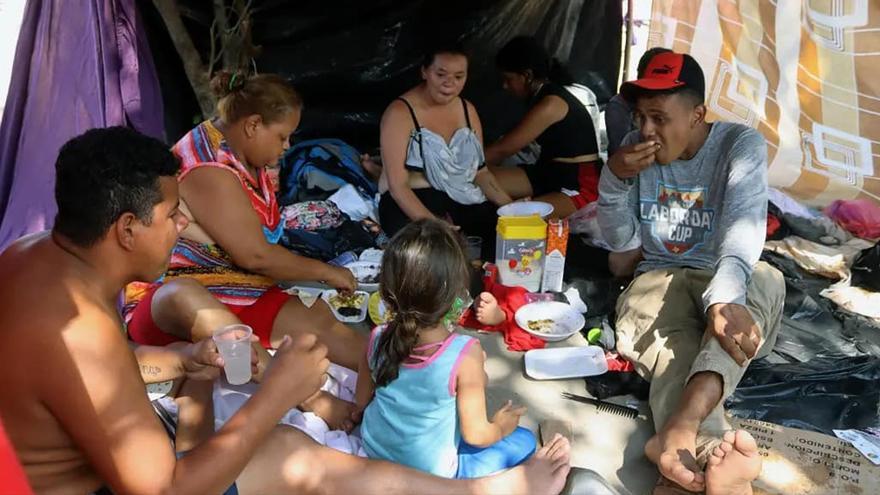
Guillermo wants to reach the United States, but he distrusts the Mexican authorities who have offered the almost 5,000 migrants who make up the so-called “Exodus of Poverty” caravan a “humanitarian visa” to be able to transit to the northern border. “They are going to return us to Tapachula and put us in prison,” he fears.

This Cuban tells 14ymedio that neither he nor nine other Cubans are going to get on the buses that Migración sent to the municipality of Mapastepec to transfer them to the custom facilities of Cerro Gordo, located on the Huixtla-Villa Comaltitlán section. He says that they will get the documents, but they will continue walking.

Zuselmi García López and the other 12 Cubans whom Migración tried to extort, charging 1,500 Mexican pesos (88 dollars) each, have left the caravan. “The same day of the complaint they took advantage of the night to continue in a van,” says Guillermo.

A group of the so-called “Exodus of Poverty” caravan in the municipality of Mapastepec (Chiapas). (Facebook/Girasol TV)

The coordinator of the Center for Human Significance, Luis Villagrán, told this newspaper that Migration committed to provide special attention to the vulnerable groups of the caravan (minors, women, the elderly). These will be attended to through the DIF (National System for the Integral Development of the Family) and will be provided with “assistance and services to meet their family needs.” The remaining migrants will be transferred to other parts of the country, but he did not specify where.

While the procedures are being carried out for the members of the caravan, the Secretary of the Interior, Luisa Alcalde Luján, reported the rescue of 31 people who were kidnapped in the state of Tamaulipas.

Without breaking down the figures by nationalities, Migration said that last year 135,382 documents were issued for visitors for humanitarian reasons, of which 97,545 were refugees, 25,402 were victims of persecution and 9,103 were given documents for humanitarian reasons.

They also delivered 136,235 documents for temporary residents, 83,529 to applicants for permanent residence, 69,517 to regional visitors and 6,637 for border workers.

Translated by Regina Anavy

____________

COLLABORATE WITH OUR WORKThe 14ymedio team is committed to practicing serious journalism that reflects Cuba’s reality in all its depth. Thank you for joining us on this long journey. We invite you to continue supporting us by becoming a member of 14ymedio now. Together we can continue transforming journalism in Cuba.
Cuban Athlete Osvaldo Lara Dies in Misery After a Successful Career

Former athletes Osvaldo Salas, Marcia Garbey and Sigfredo Bandera died during the first two days of 2024. (Collage)

14ymedio bigger14ymedio, Havana, 4 January 2024 — Cuban sports have said goodbye at this beginning of the year, in just three days, to three former figures in its history: former sprinter Osvaldo Lara, at 69 years old; former jumper Marcia Garbey, at 74; and coach Sigfredo Bandera, at 75.

On January 1st, sprinter Osvaldo Lara died, according to PlayOff Magazine. Lara was widely recognized for his sprinting and represented the Island at the Moscow Olympic Games in 1980.

Some of his best records were the silver medal in the 4×100 relay, with 38.36 seconds, in the Continental Cup held in Dusseldorf, Germany (1977); the 10.11 seconds in Medellín (Central American and Caribbean Games, 1978) in the 100 meter dash, and the 20.94 seconds in the 200 meter dash in Havana (Central American and Caribbean Games, 1982).

Lara participated in several international events between 1977 and 1986, including the Central American and Caribbean Championships, in Xalapa, Mexico (1977), and in Nassau, Bahamas (1985); and the Pan American Games in Caracas, Venezuela (1983). continue reading

Lara told the official newspaper, for example, that he only charged 700 pesos for one of the medals won in his years as a professional athlete

Despite his successful career, an interview published by Workers in 2022 showed the terrible conditions in which he was spending his old age. Lara told the official newspaper, for example, that he only charged 700 pesos for one of the medals won during his years as a professional athlete. However, he did not receive retirement pay because he requested sick leave when he developed high blood pressure.

The former sprinter also suffered from diabetes and the after-effects of a stroke. His wife reported that the sports authorities did not visit him and Workers published the photo of the former athlete with his eyes full of tears and holding a worn medal.

Also on January 1, in Santiago de Cuba, Marcia Garbey died, recognized for being the first Cuban jumper to reach the final of the Olympic Games, in Munich 1972.

Marcia Garbey’s feat in Munich was a jump of 6.52 meters that placed her in fourth position, very close to the podium. Other notable results include the bronze medal at the Central American and Caribbean Games in San Juan, Puerto Rico, and the gold medal in the 4×100 relay at the Pan American Games in Winnipeg (Canada), in 1967.

In this black week for Cuban sports, the official media Jit also lamented the death of coach Sigfredo Bandera, who guided several Cuban athletes to the Olympic and world podiums.

Coach Bandera led Yoelbi Quesada to third place on the podium at the 1996 Atlanta Olympic Games, as well as the triple jumpers Alexis Copello and Yoel García, and Enrique Cepeda, Paralympic champion of Barcelona 1992 and Sydney 2000.

____________

COLLABORATE WITH OUR WORKThe 14ymedio team is committed to practicing serious journalism that reflects Cuba’s reality in all its depth. Thank you for joining us on this long journey. We invite you to continue supporting us by becoming a member of 14ymedio now. Together we can continue transforming journalism in Cuba.
Paying with Hard Currency Cards, A Scam for Tourists in Cuba

A ticket just to enjoy the Tropicana show regularly ranges between $75 and $95, depending on whether it is standard or premium. (Facebook)

14ymedio bigger14ymedio, Natalia López Moya, Havana, 4 January 2024 — Twinkling lights, sculptural bodies and music. The propaganda about the Tropicana cabaret in Havana has barely changed in decades. The environment has changed and customers looking for a night of relaxation will have to overcome some obstacles, including the method of payment: a convoluted and frustrating mechanism that many see as a scam.

“They told us just to come and pay the entrance, but it is more complicated,” lamented an American this Saturday, at the  entrance of Havana’s most famous cabaret. The man, who traveled to the island with a group that had previously toured several Cuban evangelical communities, found that entry to the “paradise under the stars” could only be paid with magnetic cards, not cash. And the magnetic card had to be one bought in Cuba, loaded with ‘freely convertible currency’ [MLC].*

A ticket to just enjoy the Tropicana show regularly ranges between $75 and $95, depending on whether it is standard or Premium. If dinner is included, it can cost up to $120 and, this Sunday, December 31, as a special New Year’s Eve offer, with several services included, each person had to pay $300 dollars with the promise of also enjoying a special presentation of the dancers. continue reading

At the suggestion of a Tropicana employee, one of the foreigners went to a nearby hotel and bought a ’hard currency’ card on which he deposited 800 dollars

“American cards do not work, so to enter they have to buy one in freely convertible currency [MLC]”, the employee at the Tropicana access checkpoint clarified to the group. With night already falling and temperatures cool for Havana, the last thing the anxious customers wanted was to delay their entry and postpone the first drink of rum to warm up their bodies.

Prepaid cards in Cuban ‘MLC’ are purchased at airports, hotels and the Island’s exchange offices known as ’Cadecas’. The cards can then be used to pay for hotel reservations, excursions, purchase of airline tickets, in stores, to rent a car, and to eat in restaurants. Their main function is to help travelers from the United States overcome the restrictions that the embargo imposes on financial operations between both countries.

However, after its implementation in mid-2021, what should have been a convenience has become a headache due to the continuous connection problems between the businesses that use them and the Central Bank. Distrust also accompanies this form of payment, which many tourists see as a nuisance, since it involves waiting in line to get them and, in addition, any balance that is not used on the Island is lost.

At the suggestion of a Tropicana employee, one of the foreigners went to a nearby hotel and bought an MLC card on which he deposited $800, an amount that covered the cost of entry for all the members of his group. But, his problems had just begun. “When we went to swipe the card, the device did not read it. We tried, but nothing,” the saddened tourist told 14ymedio.

Once, twice, three times and the device screen always gave an error message. “We have problems communicating with the bank,” insisted another employee, who assured that the payment terminal was “working perfectly for non-US Visa or Mastercard cards,” but “since the afternoon it has been having problems with the MLC cards,” an explanation that left the customers overwhelmed.

“We are losing money, because there are people who, when they find out that they have to go back to the hotel and buy an MLC card they do not return for the show”

“We are losing money, because there are people who, when they find out that they have to return to the hotel and buy a card an MLC card, they do not return for the show,” a tourist guide who frequently takes groups of foreigners to visit the Tropicana acknowledges to this newspaper. “Everyone knows that it would be best if tourists could pay in dollars directly, but they don’t want to implement that for fear that the fulas [dollars] will end up in the workers’ pockets.”

“To prevent employees from pocketing part of the ticket money [which they do by giving a fake or recycled ticket to some tourists] they have created a mechanism that does not work and that only brings headaches to visitors,” he complains. Finally, after several attempts, the Americans paid with a Visa card from a bank in Spain that one of them, with business in that country, had on him.

“The problem is that these cards in MLC are not refundable, now they have to spend the money they deposited on it because they are not going to get it back even if the card has not worked due to problems for which they are not at all to blame,” emphasizes the official guide. “It can’t be done like that, we all lose from this.”

After obstacles at the entrance, the group of American tourists managed to access the Tropicana. But the night was no longer what they projected. Hanging over them was the question of how they were going to manage, in less than the 48 hours they had left in Cuba, to recover the 800 dollars deposited on the card. The guide, embarrassed, clarified that they could only withdraw Cuban pesos from ATMs – at the official rate of 120 CUP per dollar – or transfer the amount in MLC to the account of a relative or friend on the Island.

More than a cultural spectacle, the ‘paradise under the stars’ seemed, to the overwhelmed Americans that Saturday, a complete representation of the Cuban absurdity.

*Translator’s note: The irony is that the MLC cards must be bought with foreign credit cards, but the American cards cannot be used for anything else, and the MLC cards are worthless outside of Cuba.

____________

COLLABORATE WITH OUR WORKThe 14ymedio team is committed to practicing serious journalism that reflects Cuba’s reality in all its depth. Thank you for joining us on this long journey. We invite you to continue supporting us by becoming a member of 14ymedio now. Together we can continue transforming journalism in Cuba.
The Cuban Leinier Domínguez, Eighth Best Chess Player in the World Despite His Stumble in Barcelona

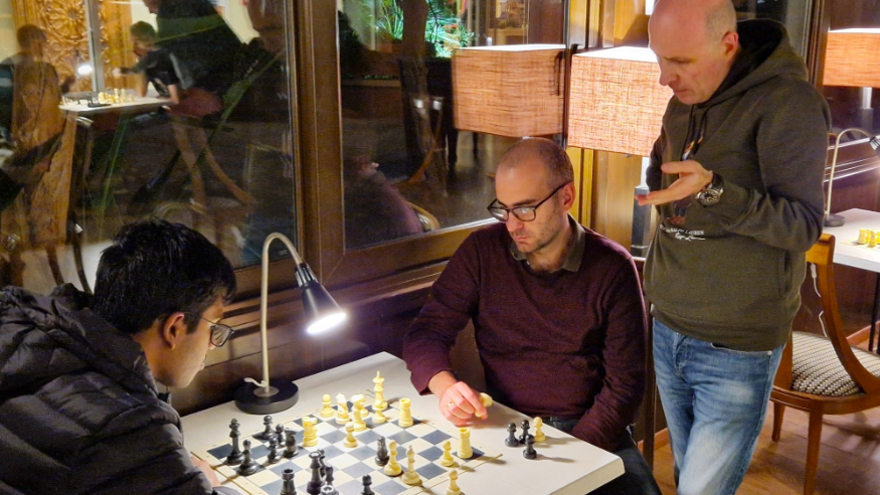
Domínguez, in the center, analyzes his game against his Indian rival, Pranav, and his coach, Vladimir Chuchelov, in Sitges. (ChessBase)

14ymedio bigger14ymedio, Havana, 2 January 2024 — The unexpected departure of Leinier Domínguez in the Sunway Sitges tournament (Barcelona) last December did not prevent the Cuban from starting the year as the eighth best chess player in the world, according to the International Chess Federation (FIDE). With 2,752 Elo* and playing under the American flag, it is not the most notable score of the great master, but it is his best mark in the international ranking.

The Cuban has been one of the top ten of FIDE on three other occasions, always with a better score than this year and in 10th place. In May 2014, he had 2,768 Elo; in August 2019, 2,763, and in October of that same year,  also 2,763.

Domínguez – who at 40 is the oldest member on the list – was in seventh place for several weeks and had his sights set on the Candidates Tournament, which will be held in April in Canada. However, on September 16, in Barcelona, he agreed to a draw with the young Indian chess player Anand Pranav and withdrew from the tournament for health reasons. continue reading

His participation in the Sitges contest responded to a FIDE requirement that participants in the Candidate Tournament win in a competition outside the country they represent

His participation in the Sitges contest responded to a FIDE requirement that participants in the Candidate Tournament win in a competition outside the country they represent. According to the Spanish journalist Leontxo García, the measure – which has generated great controversy – forced Domínguez to “fly urgently” to Spain, with a view to complying with the Federation and guaranteeing the points he needed.

It couldn’t be. García himself, in his comment on the Cuban’s performance in Sitges, where he was the great favorite, concluded that Pranav – a 17-year-old prodigy and with only 2,520 Elo – had “embittered” the day.

In fact, after 43 moves and playing with white, Domínguez could only reach a draw with his opponent. The Cuban started with a Spanish opening and built a solid defense, but from the 23rd move he made a series of mistakes that cost him the victory. When they agreed on a draw, Pranav kept his rooks and a bishop, and Domínguez his queen and a knight.

Two days later he appeared on television talking about his departure from the tournament. “I had all the desire in the world to fight for a spot in the Candidates Tournament,” he said. “I’m simply risking too much if I continue. I could have played better. I don’t regret it.”

The FIDE world ranking included this January, in addition, the Camagüeyan Carlos Daniel Albornoz in the group of chess players with more than 2,600 Elo. The Cuban, towards whose career the official press remains vigilant, was the winner of the Carlos Torre in Memoriam tournament, held last December in Mexico. Until February, when FIDE updates its results again, Albornoz will occupy 186th place in the world.

None of the successes of the so-called ’Idol of Güines’ is echoed by the official Cuban press, which this Tuesday celebrated the results of Albornoz

At the top of the list remains the Norwegian genius Magnus Carlsen, with 2,830 Elo, followed by far by one of Domínguez’s traditional rivals, the Italian-nationalized American, Fabiano Caruana, with 2,803. Below 2,800 are the Japanese Hikaru Nakamura, the Chinese Liren Ding, the Russian Ian Nepomniachtchi, the French Alireza Firouzja and the Filipino Wesly So, who is followed by Domínguez.

None of the successes of the so-called Idol of Güines is reported by the official Cuban press, which on Tuesday celebrated the results of Albornoz and reviewed the list up to Nepomniachtchi, without daring to allude to Domínguez.

The Cuban Chess Federation, of which Domínguez was the most valuable asset until he left for the United States, invited emigrated chess players to play in Cuban national championships if they left the foreign federations with which they had affiliated. In the best of his world game, Domínguez did not react to the measure or to the statements of the ruling party, who promised to make an “exception” if he requested it.

The person who was definitively ruled out, because he was “disrespectful” of the regime, was the great master Lázaro Bruzón. Following his critical position against the Government, Bruzón did not refrain from commenting on the draconian conditions of the Cuban authorities. “They have the Cuban people sunk into the utmost misery and despair and they know what they have to do, which is a radical change of the system,” he said at the time.

*Translator’s note: The Elo rating system calculates the skill level of chess players.

Translated by Regina Anavy

____________

COLLABORATE WITH OUR WORKThe 14ymedio team is committed to practicing serious journalism that reflects Cuba’s reality in all its depth. Thank you for joining us on this long journey. We invite you to continue supporting us by becoming a member of 14ymedio now. Together we can continue transforming journalism in Cuba.