
The Cuban Government Used to Praise the Business Whose Owner is Now in Detention

Fernando Javier Albán founded the successful ’mipyme’ [micro, small, or medium enterprise] Media Luna, linked to the former Minister of Economy
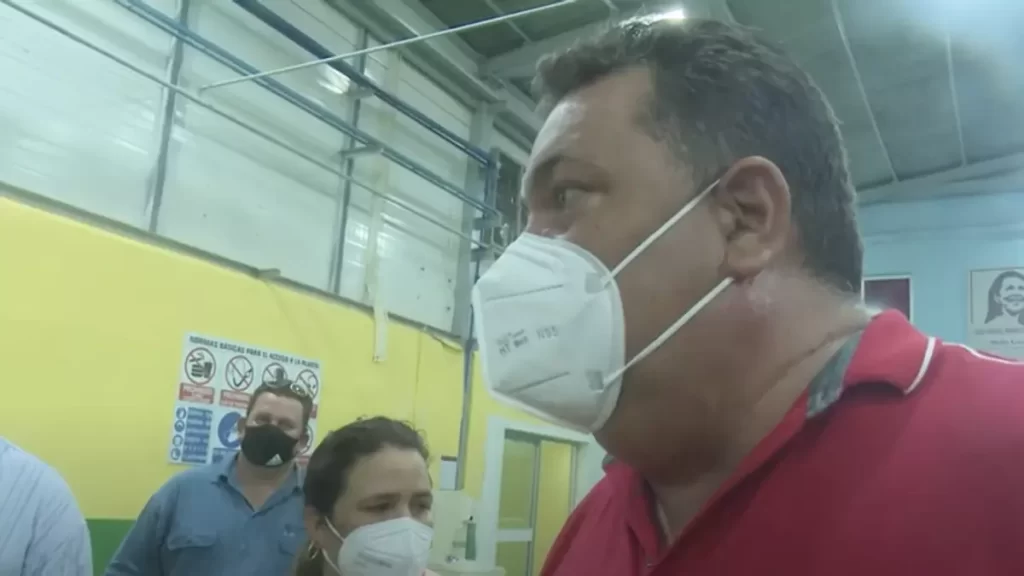
14ymedio bigger14ymedio, Havana, 11 March 2024 — On March 3rd, while one of the owners of the Media Luna ’mipyme’*, Fernando Javier Albán, was supposedly arrested for corruption or about to be, Cuba’s Vice Minister for Food Industry, Orlando Borrero, visited the agroindustrial company in Ciego de Ávila and went out of his way to praise the juice and preserves producer, for its technology as well as the quality and capacity of its production and health and safety of the work. “We need many Media Luna,” he insisted.

Despite having its production paralyzed while an audit was conducted, workers remains at the company’s facilities, as documented on their social media with abundant photos. Media Luna’s Facebook, X and Instagram accounts and even LinkedIn showed the hyperactivity of the mipyme, wehether it was receiving a visit from the authorities, pariticipating in an event as the juice purveyor for the tourism industry or treating its employees to a copious luncheon on March 8th, International Women’s Day.

According to journalist Mario Pentón of El Nuevo Herald, Albán was arrested around the time former Minister of Economy, Alejandro Gil Fernández, was relieved of his duties; he is now under investigation for unknown crimes, though the state-run press insinuates corruption. Sources close to the businessman have reported to the daily that the Cuban authorities are investigating whether Gil benefitted personally from his relationship with Albán. continue reading

“The company has not been shut down, but sales are paralyzed by an audit following the arrest of Albán and those closest to him”

“The company has not been shut down, but sales are paralyzed by an audit following the arrest of Albán and those closest to him,” an administrator who manages procurement for the tourist zone confirmed to 14ymedio.

Media Luna was founded on October 18, 2021 as a medium sized enterprise and grew in very short period of time, becoming the exclusive supplier of the hotel sector in the Northern Cays. The brand also has a point of sale, La Casa del Jugo, and a litany of praises from the state-run press, which led many to believe he benefitted from his good relations with the authorities.

According to El Nuevo Herald, Alejandro Gil intervened to obstruct an investigation of the medium-sized enterprise, which aimed to prove that its success was genuine.

Be that as it may, the state-run press had nothing but praise for it. In 2022, Bohemia magazine visited its facilities and was stunned that meeting its commitments, including loans, resulted in “good things for the population and for Cuba.” These “things” were repairs to a rural school, a medical office and a local shop, in addition to opening a point of sale in a provincial hospital, with reasonable prices.

“Why?” they asked. “Because we are Cuban, because we are grateful. Because this is our country, because we remember and because we want the best for everyone,” responded Néstor Proveyer Ugando, another partner of the mipyme.

Translator’s note: “mipyme” is generally MSME in English, for Micro, Small, Medium Enterprise

Translated by: Silvia Suárez

____________

COLLABORATE WITH OUR WORKThe 14ymedio team is committed to practicing serious journalism that reflects Cuba’s reality in all its depth. Thank you for joining us on this long journey. We invite you to continue supporting us by becoming a member of 14ymedio now. Together we can continue transforming journalism in Cuba.
Of Those Arrested for the 11 July 2021 Protests, 676 Cubans Remain Detained

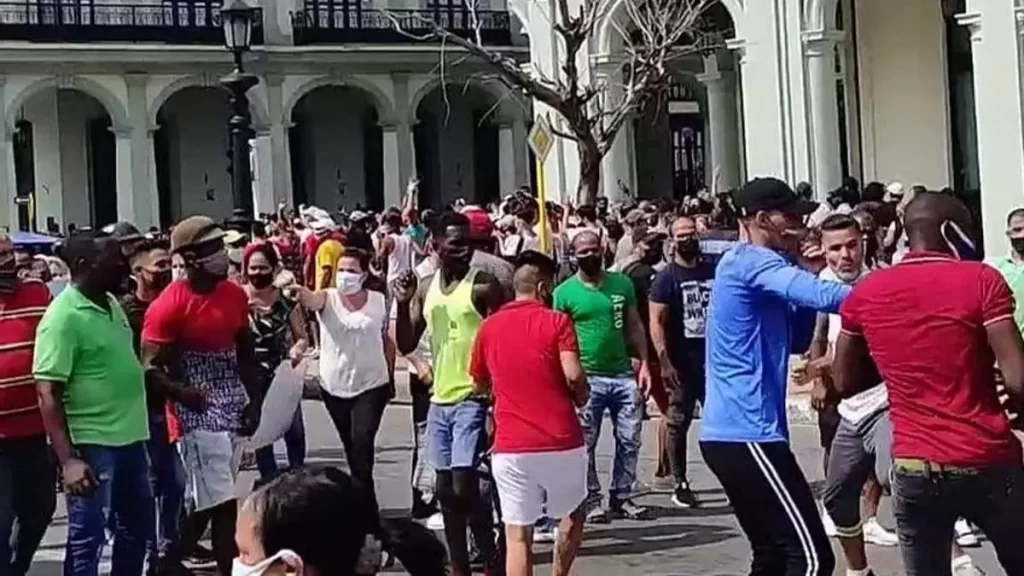
In the witch hunt that followed that day, the Government arrested 1,580 demonstrators. / 14ymedio

14ymedio bigger14ymedio, Havana, Juan Izquierdo, March 13, 2024 — With two recent heart attacks on his medical record and a sentence of 15 years in prison, political prisoner Wilfredo Castillo received a license last week to leave the Agüica prison, in Matanzas, for a year. Haggard and thin, his most recent photograph – in a hospital room – is eloquent about the health of a 55-year-old man who, along with hundreds of Cubans throughout the Island, suffered the consequences of going out to protest on July 11, 2021 (11J).

In the witch hunt that followed that day, the Government arrested 1,580 demonstrators, of whom 676 remain detained. The temporary release of Castillo is the most recent news about that initial group, to which – after several relevant protests in past years – several hundred names have been added. Between 11 July 2021 and February of this year, according to several organizations, more than 1,900 demonstrators have been arrested, 1,067 of whom are still imprisoned, including the artist Luis Manuel Otero Alcántara and the opponent José Daniel Ferrer.

Only 18 of those who were sentenced for taking to the streets on 11J are free and continue to live in Cuba, according to the NGO Justicia 11J. Another 80 went into exile – especially to the United States, Spain and the rest of Europe – and have resumed their activism outside the country. continue reading

The 11J demonstrations were not only a watershed moment for the opposition, but they also modified the landscape of human rights organizations inside and outside the Island

There are 663 demonstrators who have been released from prison but are serving some kind of sentence. Penalties include house arrest, restriction of mobility, correctional work, fines and bail. In addition to Castillo, only two other licenses to leave prison have been granted due to an inmate’s serious state of health: for Juan Carlos Izquierdo, in Mayabeque, and Mario Josué Prieto Ricardo, in Holguín.

The inventory of Justicia 11J does not have data on 141 of the detainees after the protests, but it does keep records for those who, in addition to participating and being imprisoned on that date, participated in organizing the Civic March of November 15, 2021, and the protests of 2022 – including those in Nuevitas, Camagüey, in August of that year and in 2023.

The 11J demonstrations were not only a watershed moment for the opposition, but they also modified the landscape of human rights organizations inside and outside the Island. After the clamor of the protest, several observatories and institutions emerged with the goal of counting the detainees and making visible, along with the independent press, the repression and the precarious conditions to which they are subjected in prison.

“The hardest thing in prison? In prison everything is hard, there is nothing right, there is nothing beautiful, only depression, hunger,” Osain Denis Trujillo told Martí Noticias on Wednesday. He was released this Monday in Cárdenas, Matanzas, after serving a sentence of two years and eight months. Trujillo was beaten and arrested in his own home on July 12, in front of his wife and daughter, by an armed commando. “They put me in the van and hit me,” he said. “I was unjustly imprisoned. They didn’t give me a regime change, they didn’t give me a minimum, they didn’t give me parole.”

“The hardest thing in prison? In prison everything is hard, there is nothing right, there is nothing beautiful, only depression, hunger”

For Trujillo, the situation that led to the outburst has not changed; it may even be worse. And the consequences of the economic crisis are also felt in prison: “All we have to eat now in prison is rice, pumpkin water and what we call ’electric pasta’. The cup – a portion of rice – is getting smaller and smaller. At breakfast, we get hot pumpkin water or some herbal tea,” he added.

Several of those who protested on 11J or the next day are independent journalists, such as Carlos Michel Morales, who was released this Wednesday in Caibarién, Villa Clara, after two years and ten months in prison. An image of the reporter, as thin and mistreated as Castillo, circulated on social networks. The former prisoner, his relatives say, has health problems from malnutrition, beatings by the guards and the hunger strikes he carried out while behind bars.

Last January, Yusmely Moreno González was also released from prison, sentenced to three years for protesting in the town of Surgidero de Batabanó, in the province of Mayabeque.

Prisoners Defenders (PD) – which includes in its inventory, like other organizations, those who have protested in recent years before and after 11J – claimed in its most recent report the existence of 1,067 political prisoners in Cuban prisons at the end of February 2024. The figure represents an increase in incarcerations, with 9 arrests in February alone and 22 so far this year.

The issue, PD alleges, has been gaining an important ground in the international debates about Cuba. A resolution of the European Parliament of February 29, 2024, the organization emphasizes, denounced in clear terms the drastic increase in political prisoners and the tendency of the regime to imprison more and more opponents. In addition, parliamentarians are aware not only of the number of prisoners currently serving sentences, but also the more than 11,000 cases of “pre-criminal ” convictions, PD alleges, for people who did not commit any crime.

Last January, Yusmely Moreno González was also released from prison, sentenced to three years for protesting in the Surgidero town of Batabanó, in the province of Mayabeque

The report points out that the World Prison Brief, written by the Institute for Investigations on Crime and Justice, placed Cuba in second place worldwide in its incarceration rate last January, taking into account the number of prisoners on the Island.

Of the 1,067 inmates counted by PD, 30 are minors, a fact that the Cuban Government recognized at the United Nations, claiming that they were in “occupational training schools” but hiding that these facilities are true penitentiary centers.

The regime’s disrespect for prisoners – 115 – and for transsexual women – two, imprisoned in men’s prisons – has also been noted in numerous testimonies, including that of the María Cristina and Angélica Garrido sisters, imprisoned in Mayabeque and sentenced to 7 and 3 years, respectively.

Although the numbers speak for themselves, the real tragedy of 11J is the suffering of the prisoners’ families. This Wednesday, Wilber Aguilar, the father of prisoner Walnier Aguilar, sent a message to his son on his 24th birthday. During his last visit to the prison, he said, the family wished him “blessings,” not “happiness,” because they have “nothing to celebrate” while the young man remains in prison. However, those who visited other inmates delayed their visit to show solidarity with the Aguilars. “I’m trying to turn all this pain into strength,” he concluded.

Translated by Regina Anavy

____________

COLLABORATE WITH OUR WORKThe 14ymedio team is committed to practicing serious journalism that reflects Cuba’s reality in all its depth. Thank you for joining us on this long journey. We invite you to continue supporting us by becoming a member of 14ymedio now. Together we can continue transforming journalism in Cuba.

Faced With the Upsurge in Violence in Haiti, Cuban ‘Mules’ Are Looking for Alternative Markets

The mules buy many things, from footwear and clothing to cell phones and appliances.

14ymedio bigger14ymedio, Havana, 13 March 2024 —  The Cuban mules’ fear of being trapped in the crossfire of the Haitian gangs – as happened days ago with more than 250 visitors who were shopping in that country and of whom it is not known if they have managed to return to Cuba – has forced these merchants to look for new markets for buying merchandise. The Venezuelan island of Margarita, as well as Guyana and Nicaragua are some of the destinations that regular travelers to Haiti have in their sights.

“We will not sell tickets to Haiti until next month because of the current situation, which does not allow travel,” one of the improvised “agencies” that manage these trips from Port-au-au-Prince, the Haitian capital, tells 14ymedio through social networks. The price, they add, “is $500, including everything: round-trip tickets plus two days of accommodation in a house. During those two days they can go out and buy.”

Businesses that survive by selling everything from clothes and footwear to appliances and cell phones, however, cannot afford to be without merchandise for long, and, despite what ticket resellers say, it’s the airlines that decide when to resume flights. This is the case of Sunrise Airways, with two weekly frequencies (Monday and Thursday) between Port-au-Prince and Havana, and one (Friday) to Camagüey. One of its planes to Camagüey got caught in the crossfire during a gang shooting on March 1, and Sunrise has clarified that it will not resume flights “until further notice.” continue reading

“The last time I was there, I arrived in the middle of a stampede. They even killed a person in front of me. Since then I travel to Guyana, where with just over 1,000 dollars and what I spend on merchandise, I can do business”

The travel agencies, which seek to replenish their clientele after the loss of the Haitian destination, now propose other spots with the same comforts for Cubans. This Monday, an ad on Facebook suggested solving the “problem” with a trip to Venezuela. “I’m thinking about you and how I can help you travel to Margarita Island, in Venezuela, in the next few days when the price will not be too expensive.” And it added: “It is a tourist package with the visa, ticket and lodging included, with departures from Holguín and Havana.”

However, despite the promises, the difference between the 500 dollars that mules pay to travel to Haiti and the 1,050 and 1,200 dollars that resellers and agencies charge to reach the Venezuelan island is more than substantial.

Before the debacle of Haiti, Margarita Island was already popular among Cuban merchants. In 2022, according to data from the Venezuelan Government, about 5,000 Cubans, mostly “small businessmen,” arrived on the island as tourists, spending an average of 5,000 dollars per person.

Guyana, another popular destination among Cubans, has also been considered by the mules, who “for a long time” have been noticing a rise in violence in Haiti. Maritza, a habanera who traveled frequently to Port-au-Prince six months ago, tells this newspaper that due to the violence, which has even forced many countries to withdraw their staff, she has begun to travel to Guyana.

“The last time I was in Haiti, I arrived in the middle of a stampede,” she remembers. They even killed a person in front of me. Since then I travel to Guyana, where with just over 1,000 dollars and what I spend on merchandise, I can do business. It’s more expensive, but right now Haiti is a jungle and I don’t want to risk it.”

The Cuban Ministry of Foreign Affairs has not returned to the issue of the Cuban mules stranded in Haiti

“I also was very hungry and did a lot of work in the houses where I was staying, and I don’t want to do that now,” she says. “When I can’t travel, I go to the La Cuevita fair, in San Miguel del Padrón, and there I buy and then resell,” she adds.

As for the situation of the Cubans stranded in Haiti since March 1, videos were posted on social networks asking for help from the authorities of both countries to return them to the Island. They said that, having bought the merchandise days before, they barely had enough money and provisions to stay for a few more days in the hostels in Port-au-Prince.

Among them there are groups from Havana, Camagüey and Santiago, who have shared their situation and describe it as distressing due to the lack of explanations from the airline and the climate of insecurity that has led the Haitian authorities to declare a state of emergency.

The Cuban Foreign Ministry, which reported on the same day as the videos that it was taking “measures to ensure the safe return of Cubans residing and in transit in that country,” has not mentioned the issue again.

Translated by Regina Anavy

____________

COLLABORATE WITH OUR WORKThe 14ymedio team is committed to practicing serious journalism that reflects Cuba’s reality in all its depth. Thank you for joining us on this long journey. We invite you to continue supporting us by becoming a member of 14ymedio now. Together we can continue transforming journalism in Cuba.

Putin Approves New Credit Facilities for the Cuban Debt

Russian President Vladimir Putin and his Cuban counterpart, Miguel Díaz-Canel, in an archive image / X/@DiazCanelB

14ymedio biggerEFE (via 14ymedio), Moscow/Madrid, 11 March 2024 — Russian President Vladimir Putin approved on Monday an amendment to the credit agreements between Russia and Cuba that gives the Island better conditions for the payment and restructuring of its debt. The corresponding document was published this Monday on the legal information portal of the Russian Government.

The protocols approved by the Russian president refer to the  credit agreements for Cuba granted between 2009 and 2019 for the purchase of hydrocarbons.

The debt contracted by Cuba within the framework of the agreements, whose restructuring was approved today, amounts to 277.2 million dollars, according to the Deputy Minister of Finance of Russia, Alexei Sazanov.

The facilities granted to Havana include the possibility of paying the debt in rubles, postponing the payment plan from 2023-2027 to the period 2028-2040, and modifying the calculation of the rates for the delay in payments. continue reading

Russia believes that aid to Cuba aimed at guaranteeing its crude oil supply will strengthen Moscow’s political positions in Latin America

Russia believes that aid to Cuba aimed at guaranteeing its supply of crude oil will strengthen Moscow’s political positions in Latin America.

At the moment the Island is going through a deep energy crisis, with simultaneous blackouts in up to 44% of the national territory, which have provoked protests in some provinces.

As numerous specialists have denounced, the Cuban electricity system is in a catastrophic situation, and to solve it it would require an investment of 10 billion dollars and between six and ten years of time.

The lack of foreign currency has also limited Cuba’s ability to import fuel, which affects national energy production.

On March 1, the new fuel prices were established, up 400%, included in the so-called paquetazo [package], which were originally going to enter into force a month earlier, just when its main architect, Alejandro Gil Fernández, was dismissed from his position as Minister of Economy. He is allegedly being investigated by the Government for “serious errors made in the exercise of his functions.”

On the same day as Gil’s dismissal, it was also the last day in Havana for the Russian economic advisor Boris Titov, on his most recent visit to the Island, days after his compatriots Sergey Lavrov and Nikolai Patrushev. Although the official press gave Titov’s arrival the usual pomp, it did not offer news of his stay.

Translated by Regina Anavy

____________

COLLABORATE WITH OUR WORKThe 14ymedio team is committed to practicing serious journalism that reflects Cuba’s reality in all its depth. Thank you for joining us on this long journey. We invite you to continue supporting us by becoming a member of 14ymedio now. Together we can continue transforming journalism in Cuba.

The United States Seeks To Demonstrate That ‘Cuba Is a Failed State’ the Regime Complains

Johana Tablada in Havana, where she gave an interview to Prensa Latina last week.

14ymedio bigger14ymedio, Madrid, 11 March 2024 — Of all the measures of the “criminal blockade” systematically denounced by the Cuban regime, the one that most annoys Cuba’s deputy director for the United States, Johana Tablada, is the “disinformation campaign about Cuba’s medical cooperation,” which she considers ignoble. The official has made a list of all the “pretexts” and “falsehoods” that Washington alleges in order to harm the Government of Havana, among which is the recruitment of Cuban mercenaries to fight with Russia in Ukraine.

“It is absolutely false and has been denied, just like the accusation of the Chinese bases that The Wall Street Journal publishes every week with total impunity and without attachment to any evidence,” she says bluntly in an interview published this Saturday by Prensa Latina. In Tablada’s opinion, Washington’s objective continues to be “to apply that crooked logic that if the blockade is tightened it will finally provoke a situation of revolt, a destabilization of our population, in order to blame the Government of Cuba for the impact of their measures.” continue reading

In Tablada’s opinion, Washington’s goal continues to be “to apply that crooked logic that if the blockade is tightened it will finally provoke a situation of revolt, a destabilization of our population, in order to blame the Government of Cuba”

The official eludes any self-criticism and emphasizes that the decisions of the US Government cause “a very severe, very painful impact on the standard of living of the Cuban family that today sees itself affected by the basic basket [of the rationing system], transport prices and the possibility of eating the food they need. Their idea is that this is because Cuba is a failed state; that is the narrative that is repeated,” she insists.

Last October, Tablada offered an interview to The Hill media in which she emphasized that the removal of Cuba from the list of states that sponsor terrorism is one of her priorities. “As we know, it is not just another slander; it’s a measure that goes directly to the jugular of the Cuban economy,” she says, but the meetings have not borne fruit for the moment, and Joe Biden’s Administration has maintained the Island’s status. The official’s words to Prensa Latina make clear her disappointment with the Democrats and even her indifference to a change of government in the neighboring country in November.

“The policy of Joe Biden’s government has essentially followed the policy of the Donald Trump government,” she says, “even with the electoral promise that those inhumane measures that affected the Cuban family were going to be lifted.” The regime visibly supported the Democratic Party during the 2020 elections, whose headliner (Biden-Harris) had claimed that they would alleviate some measures against Cuba taken by its predecessor.

A few months after those elections, now with Biden in the White House, the repression against the demonstrators of 11 July 2021 mass protests across the island put an end to any initiative to resume the thaw, and the relaxations have been much less than those predicted by the Cuban Government, which dreamed of a return to the times of Barack Obama.

“In 2024, there is still the possibility of a second term for President Biden,” says Tablada, “but I also predict that in January 2025, what I call  ’President Trump’s demolition team’ will return. This is a country that is very polarized, where almost fascist forces are emerging, and even barbaric values that are anti-civilization such as racism, xenophobia and discrimination have become fashionable,” she elaborates.

Tablada has also referred to Republican representatives from Florida, specifically María Elvira Salazar – whom she accuses of wanting to perpetuate the presence of Cuba on the list of states that sponsor terrorism – and other opponents whom she does not mention but clearly alludes to.

“[There is a] permanent deception with the issue of human rights in which the United States Government grants privileged treatment to those people who have been the target and recipients of their financing projects for their intervention programs in Cuba’s internal policy. Those individuals are later presented as the heroes that they are not, because they have no support in our society,” she says.

“[There is a] permanent deception with the issue of human rights in which the Government of the United States grants privileged treatment to those people who have been the target or recipients of their financing projects”

According to Tablada, favoring those people “who do not even live in Cuba, is intended to justify the permanent and real violation of the human rights of millions of Cubans.” The official states that this economic suffocation is forcing the massive emigration of Cubans, without referring to the visa exemption policy maintained by Nicaragua – promoting exits at the request of Havana – or the more or less forced exits that the Government has promoted for opponents and other critics.

“The largest migratory wave in the history of Cuba, which has been very unfortunate for the Cuban family (…) is the result of that insensitive irrational policy, disconnected from reality, of thinking that by depriving people of sustenance, by cutting off all sources of income for the Cuban economy, it will manage to derail a process like ours of independence and sovereignty,” she insists. At the same time, she points out that this policy, implemented since 1959, has not worked.

Tablada’s message is repetitive throughout the interview, in which she warns that a report is being prepared that gathers the data of the fines “applied by the Department of Commerce to Cuban partners, in which it will be seen that “they have broken the record of previous years.”

Among the areas affected by the US measures, those that “affected the capacity of States to fight against COVID-19” stand out, without specifying what exactly she was referring to, but also the most recent decisions in the academic sphere. She insists that there are “growing calls” for the restoration of relations from economic, scientific and political sectors, and she adds that the meetings she continues to attend with American officials despite everything are a sign of Cuba’s goodwill.

Tablada says that “the people of Cuba trust much more in their very great solidarity, in the decency and decorum of those institutions”   

“In 2023, it is no secret to anyone that even though the toughest measures that affect the lives of Cuban men and women have been maintained, certain spaces of cooperation and exchange with the Government of the United States have been restored, in total agreement with the aspirations of their people to live in peace with their closest neighbor,” she says, after accusing Washington of using a logic “in which I do everything I can to suffocate your economy and at the same time finance a permanent and systematic disinformation campaign with billions of dollars to hold the victims responsible for the impact of those measures.”

In the midst of a situation aggravated by energy shortages, lack of food and an increase in prices of various supplies, including the fuel that warms the Island’s spirits, Tablada affirms that “the people of Cuba trust much more in their very great solidarity, in the decency and decorum of those institutions that will always extend their hand to a country that, like few others, has been reaching out to help everyone who has needed it.”

Translated by Regina Anavy

____________

COLLABORATE WITH OUR WORKThe 14ymedio team is committed to practicing serious journalism that reflects Cuba’s reality in all its depth. Thank you for joining us on this long journey. We invite you to continue supporting us by becoming a member of 14ymedio now. Together we can continue transforming journalism in Cuba.

A Judge Upholds the US ‘Parole’ Program That Benefits Cubans

More than 75,000 nationals from the Island had been approved in the program

14ymedio bigger14ymedio, Havana, 10 March 2024 —  Humanitarian parole will continue in force now that a judge in Texas has dismissed the lawsuit of 21 Republican states against the program implemented by the Biden Administration, which allows migrants from Cuba, Haiti, Nicaragua and Venezuela to apply for entry into the U.S. for humanitarian and emergency reasons. The migrants will also receive financial aid.

The federal district judge, Drew B. Tipton, said last Friday that he dismissed the appeal filed by the plaintiffs a year ago because they had not shown that they suffered economic damages because of the humanitarian parole program, reports the U.S. press. “When reaching this conclusion, the Court does not address the legality of the program,” Tipton wrote in his ruling.

Through February, and after a year of being in force, humanitarian parole had benefited more than 357,000 Cubans, Haitians, Nicaraguans and Venezuelans, according to official figures from the U.S. Department of Homeland Security. More than 75,000 nationals of the Island were approved for the program, in addition to 144,000 Haitians, 64,000 Nicaraguans and 92,000 Venezuelans.

The White House, upon learning of the judge’s ruling, said that the court’s decision “is based on the success of this program, which has expanded legal avenues” for the thousands of migrants who have entered the country, “while drastically decreasing the number of nationals of those countries who cross our southwest border,” said spokesman Angelo Fernández Hernández. continue reading

“We have processed most of the people who already are in the system, and the rest are taking longer. This is how we maintain an equitable system so that everyone has a chance”  

A year ago, the plaintiffs argued that Joe Biden’s decision to give the green light to the humanitarian program was “arbitrary and capricious.” They also said that it represents an expenditure of millions of dollars for states that have to provide “services to migrants.”

After several months, the trial began last August and ended in September. Thousands of migrants who were put on hold still expect to benefit from the humanitarian parole. Faced with doubts about whether or not the policy would remain in force, hundreds of Cubans who already had their travel permits decided to advance their flights and enter the United States.

Others had bad luck and were not approved, even though the program has been in place for 14 months. According to the testimonies published in Facebook groups that Cubans have organized to stay informed about the parole process and cases recorded by this newspaper, dozens of people who applied in January 2023 are still waiting to be approved.

Migrants must have a financial sponsor in the United States who submits an online application. When they are approved, they must enter the country by air and can stay for two years and obtain a work permit.

“Because there is more demand than spots, we are processing 30,000 travel permits a month,” Luis Miranda, Deputy Undersecretary of the Office of Public Affairs of the Department of Homeland Security, told Martí Noticias last February.

“We have processed most of the people who already are in the system, and the rest are taking longer. This way we maintain an equitable system so that everyone has a chance.”

“Not everyone is going to qualify. Not everyone is going to get out of this process with the result they want, but we have helped more than 357,000 people in the last year, and that is something tremendously generous. It is the largest expansion that has been made in decades in the legal processes to emigrate to the United States,” Miranda explained.

Translated by Regina Anavy

____________

COLLABORATE WITH OUR WORKThe 14ymedio team is committed to practicing serious journalism that reflects Cuba’s reality in all its depth. Thank you for joining us on this long journey. We invite you to continue supporting us by becoming a member of 14ymedio now. Together we can continue transforming journalism in Cuba.

Cuban Judo Is Also Impacted by Departures and Lack of Support

Idalys Ortiz (78 kg/172 lb) won the bronze medal for Cuba in Austria.

14ymedio bigger14ymedio, Havana, March 11, 2024 –Iván Silva, Andy Granda and Idalys Ortiz avoided a debacle for Cuban judo at the Grand Prix Austria 2024, which ended this Sunday. The gold medals in the 90 kg/ 198 lb category, silver in the 100 kg/221 lb, and bronze in the 78 kg/172 lb obtained by these athletes, in this respective order, give them enough possibilities in the rankings to qualify for the Olympic Games in Paris 2024.

However, there were athletes who “lost the possibility of advancing.” According to Jit,  a government-run sports newspaper, they could not “maintain the status with which they came to the contest.” Magdiel Estrada (in the 73 kg/161 lb category) was one of those cited by the media that missed his opportunity to qualify.  His participation in Paris depends on the invitation granted by the International Olympic Committee and the International Judo Federation.

Orlando Polanco (66 kg/146 lb) was another of the Cuban competitors who, failing to score points, descended in the qualifying ranking. The possibilities for this judoka depend on future events. According to the same digital media, the “instability” of Idelannis Gómez (70 kg/154 lb) led her to being in 47th place, with little chance of winning a ticket to the Olympic Games. continue reading

This sport, which has won 37 Olympic medals for the Island – 6 golds, 15 silvers and 16 bronzes – has also been impacted by defections. Judo has its best exponent in Idalys Ortiz. The native of Artemis reigns in the 78 kg/172 lb category with the bronze medal that she won at the 2008 Olympic Games in Beijing, a gold in London 2012, a silver in Rio de Janeiro 2016 and another silver in Tokyo 2020.

Ortiz is the hope of this sport for Paris 2024 with a record that is difficult to match. In addition to her Olympic medals, she has eight medals in world competitions. She has been three-time champion of the Pan American Games, has won 11 medals in continental sports tournaments and accumulated more than 30 on the World Judo Tour.

This sport, which has given the Island 37 Olympic medals – 6 golds, 15 silvers and 16 bronzes – has also been impacted by defections. Between July and September of last year, nine judokas ended their relationship with the Cuban sports entity

The bronze medalist at the Budapest Judo World Championship (2017), Kaliema Antomarchi, boarded a flight to Serbia in September, a route followed by many Cubans to access the European Union. This athlete’s departure coincided with the escapes in Canada of Samarys Gregorio, Odelin García and Yurisleydis Hernández after winning second place in the Pan American and Oceania Championship held in Calgary.

Vanesa Godinez, Mellisa Hurtado, Santa Virgen Romero, Blanca Elena Torres and Lutmary García also left the Cuban team in May, during their training in France.

Iván Silva won a gold medal for Cuba in the 90 kg/198 lb category in the Grand Prix Austria 2024 / X/@Judo

The first to separate from the team were Vanesa Godinez, who in 2022 won a silver medal at the European Judo Open in Australia, and Mellisa Hurtado, who in the 52 kg/115 lb category, won the gold medal after beating the Swiss Fabienne Kocher in the same event. Santa Virgen Romero left the training in the first quarter of that year.

In addition, the “inattention and lack of maintenance” was denounced in an interview with Cubanet by the bronze medalist in Central American games and coach of the Judo Academy in Havana, Yosvani Pérez Hernández. “They have to see that they are not doing their job. The health of judo is being lost,” he said.

Pérez Hernández said that among the shortcomings they face is the disappearance of work areas in the communities, not having a fixed headquarters, a lack of equipment for training and not being able to count on incentives for progressing.

Translated by Regina Anavy

____________

COLLABORATE WITH OUR WORKThe 14ymedio team is committed to practicing serious journalism that reflects Cuba’s reality in all its depth. Thank you for joining us on this long journey. We invite you to continue supporting us by becoming a member of 14ymedio now. Together we can continue transforming journalism in Cuba.

Contaminated Water is the Main Cause of Diarrheal Diseases in Cuba

The poor water service in most of the country forces a large part of the citizens to use the water they have at their disposal / Invasor

14ymedio bigger14ymedio, Havana, 11 March 2024 — Acute diarrheal diseases in Ciego de Ávila, Cuba, increased by 86% compared to March 2023, the official newspaper Invasor reported this Monday. Despite the excessive increase, which has translated into a worrying increase “in hospital care,” the epidemiological authorities of the region assure that the cases are within the estimates for this period of the year, which is why they estimate that the situation is still located in the “safety zone.”

“Even though epidemiologically speaking we are not in a critical situation, we do have to worry and take measures, especially at home,” José Luis López, deputy director of Epidemiology at the Provincial Hygiene Center, clarified to the newspaper.

As explained, the institution establishes four categories to monitor the progress of these diseases on the Island: success zone, when there are fewer cases than estimated; safety zone, when the estimate is met; of alarm, when cases increase; and epidemic, when cases exceed what was expected. For “this time of year,” the manager insisted, “cases have increased, but within limits.” continue reading

“In the studies that have been done, more than 38% of the samples analyzed have been positive for protozoa (parasites)”

Invasor, however, was not satisfied with López’s statements and stressed that months ago the newspaper highlighted the increase in annual cases in the province, which as of September 2023 exceeded 1,000, at a rate of 37 per week in that month and with “emphasis on pediatric ages.” The figure exceeded the number of cases of the same period in 2022 by 71.2%. With such clear warnings, even if it is a “seasonal increase,” even the official media questions whether the authorities could have been able to prevent a greater increase this year.

“In all municipalities, except Chambas and Bolivia, cases of diarrheal diseases have increased and the highest incidence is in children under 15 years of age, and, among them, infants up to one year of age, which sets off the alarms due to the risks of dehydration in that age group,” adds López.

As for the causes, the director points out an evident increase in “intestinal parasitism” in a large part of the patients suffering from these conditions. “In the studies that have been done, more than 38% of the samples analyzed have been positive for protozoa (parasites), and in some cases salmonella, which causes salmonellosis, a common bacterial disease has been isolated that affects the intestines, and can cause diarrhea, fever and abdominal cramps,” he says.

In this sense, explains López, outbreaks of diarrheal diseases escape the hands of health institutions, since many of these parasites and bacteria are found mainly in water or in the food itself, so it is up to other authorities to verify, for example, the quality of drinking water.

The poor water service in most of the country, however, forces a large part of citizens to use the water they have at their disposal, whether from cisterns with stagnant liquid, polluted dams and rivers, or wells that do not meet the quality parameters for consumption. Added to this are the constant blackouts suffered by the Island, which have intensified during the last week, and which make it difficult to refrigerate food.

Last December, the official press reported an outbreak of leptospirosis in the eastern provinces, another of the diseases generally associated with unsanitary cities and the alarming presence of rodents. The gigantic garbage dumps that the cities of the Island exhibit, denouced to this newspaper at that time by a Havana woman, are the main cause of the increase in this disease.

The authorities, however, once again limited themselves to blaming the population for not going to the hospitals in time to be treated, and did not offer a clear explanation for the increase in cases.

____________

COLLABORATE WITH OUR WORKThe 14ymedio team is committed to practicing serious journalism that reflects Cuba’s reality in all its depth. Thank you for joining us on this long journey. We invite you to continue supporting us by becoming a member of 14ymedio now. Together we can continue transforming journalism in Cuba.

Long Blackouts in Cuba Provoke Popular Protests in Holguin and Camaguey

This Saturday night there were protests in Holguín and the municipality of Florida, in Camagüey, after the long blackouts of recent days on the Island / 14ymedio

14ymedio bigger14ymedio, Miguel García, Holguín, 10 March 2024 — Cacerolazos* in several neighborhoods of the country and throwing stones at a State institution marked the protests that took place this Saturday night in cities such as Holguín and the municipality of Florida, in Camagüey, after the long blackouts that have occurred in recent years, lasting for days throughout the Island.

“The Manuel Angulo Dental Clinic in Pueblo Nuevo was hit with stones in the middle of the blackout, and in the 26 de Julio and Alcides Pino neighborhoods they ‘played cazuelas’* last night,” a Holguin resident described to 14ymedio.

“Last night all the police sector chiefs of the Popular Council of Pueblo Nuevo were on guard and ready to repress,” warns another neighbor, who also confirmed that the dental clinic that was stoned remains under State Security surveillance this Sunday.

A few videos that have come to light on social networks record some of the cacerolazos that took place on Saturday in Holguín. Currently, much of the city remains without electricity, so the mobile signal is weak or non-existent and users cannot publish images of the protests because they do not have an internet signal. continue reading

“The Manuel Angulo Dental Clinic in Pueblo Nuevo was hit with stones in the middle of the blackout and in the 26 de Julio and Alcides Pino deliveries they ‘played cazuelas’ last night

Other testimonies that reached the 14ymedio editorial office confirm that in the capital of Holguín the repressive forces of the regime continue to be “on guard” against the possibility of new protests emerging in the streets.

For his part, journalist Luis Tan Estrada confirmed on his Facebook page with several sources that, this Saturday night, several residents of the Camagüey municipality of Florida “took to the streets to protest in the midst of the blackouts.”

“Although the authorities of that territory tried to prove the opposite through posts on Facebook, the reality was different,” the reporter insisted when referring to a publication by the Party secretary of that municipality on the social network, in which she illustrated with some photos that the people were “enjoying the tranquility of my Cuba, free and sovereign.”

But in reality, Tan Estrada describes, his sources informed him that the atmosphere in Florida “got hot” and that shortly after the protest “they turned on the electricity.” Other reports also confirmed demonstrations in Batabanó, in the province of Mayabeque.

The blackouts will continue all day Sunday. The Electrical Union predicts for this day a deficit of 1,045 megawatts (MW) and an impact of 1,115 MW during peak hours. Last Friday, an impact of 1,566 megawatts was recorded at the time of maximum demand, an unprecedented number since the energy crisis worsened two years ago.

*Translator’s note: ‘Cacerola’ and ‘cazuela’ both translate as ‘pot’ and a ‘cacerolazo’ or ‘tocan cazuela’ where people bang on pots and pans is a common form of protest across Latin America.
____________

COLLABORATE WITH OUR WORKThe 14ymedio team is committed to practicing serious journalism that reflects Cuba’s reality in all its depth. Thank you for joining us on this long journey. We invite you to continue supporting us by becoming a member of 14ymedio now. Together we can continue transforming journalism in Cuba.

Colombia Sends a First Batch of Half a Million Eggs to Cuba

“We are sure that our high-quality fresh eggs will be well received by consumers on the Island” / 14ymedio

14ymedio bigger14ymedio, Havana, 11 March 2024 – After starting negotiations last July and after approving the health certifications in December, the Colombian Agricultural Institute (ICA) will send the first batch of eggs to Cuba. Two 40-foot containers with 17,280 boxes of 30 units – 518,400 eggs in total – will soon leave for the Island, the Institute assured, although without revealing the exact date.

Juan Fernando Roa Ortiz, general manager of the ICA, described the agreement between Bogotá and Havana as “an important milestone” and assured that “this first export of eggs to Cuba is testimony to the commitment of our producers to health, safety and quality, allowing our products to reach more international markets.”

“We are sure that our high-quality fresh eggs will be well received by consumers on the Island,” said Roa Ortiz.

Since 2023, both Governments have been discussing health frameworks and import requirements so that the Colombian product reaches Cuba as soon as continue reading

possible. After reaching an agreement at the last Havana International Fair (Fihav), the ICA and the National Center for Animal Health (Cenasa) of the Island gave the green light to export in December.

Roa Ortiz said that he hopes that business with the Island will bring “great benefits for the national economy, the generation of employment and the transformation of the Colombian countryside”  

“Last year we had the opportunity to participate in the largest food fair in Cuba, Fihav, with the help of Procolombia and the ICA; in which not only commercial agreements were consolidated, but sanitary agreements were defined between the ICA and Cenasa, the Cuban health authority, to achieve effective admissibility for eggs in shell,” stressed Gonzalo Moreno, executive president of the Federation of Poultry Farmers. from Colombia.

In his December statement, Roa Ortiz said that he hopes that business with the Island will bring “great benefits to the national economy, the generation of employment and the transformation of the Colombian countryside.” Likewise, he celebrated the approval of the relevant certifications, which require Colombia to keep its data updated with the World Organization for Animal Health, to be a territory free of avian influenza and Newcastle disease – two diseases with a high level of contagion that can damage both the life and production of birds and are transmitted to human beings – in addition to the fact that the breeding farms where the eggs are collected are under official veterinary control.

On this occasion, Moreno also promoted the Colombian product, and said that “two years ago, the Poultry Sustainability Seal was launched, as a result of comprehensive work to promote sustainable practices in the poultry sector. This seal is unique in the world and is a testimony to the commitment of Colombian poultry farming to sustainability.”

In Colombia, an egg has a price of 581 Colombian pesos, which is equivalent to 14¢ US or 37 Cuban pesos

In Colombia, an egg has a price of 581 Colombian pesos, which is equivalent to14¢ US or 37 Cuban pesos. Although the value is only a third of the almost 100 pesos that a unit can cost on the Island – between 2,700 and 2,800 for a carton of 30 units – it is likely that the import cost will end up increasing its price in the Cuban market.

According to the ICA, since 1995 egg production in Colombia has gone from 5 billion units to more than 16 billion. Although Havana does not appear as one of Bogotá’s main partners, this country does export large quantities of eggs to other nations in the region.

In 2022, Colombia exported eggs worth $1.25 million to Venezuela, its main buyer. In that same year, Colombia’s total egg export was valued at 1.6 million dollars, but the country imported the same product for 3.81 million dollars, making it a net importer.

Eggs are in high demand by Cubans who, faced with the food crisis and the inability to pay the high prices of meat, turn to this product, which has reached prices that border on the prohibitive in the face of the debacle of the poultry industry. The shipments of ’food combos’ paid for by relatives abroad have been another of the alternatives that families have resorted to in search of eggs, one of the great absentees from the Cuban table.

Translated by Regina Anavy

____________

COLLABORATE WITH OUR WORKThe 14ymedio team is committed to practicing serious journalism that reflects Cuba’s reality in all its depth. Thank you for joining us on this long journey. We invite you to continue supporting us by becoming a member of 14ymedio now. Together we can continue transforming journalism in Cuba.

The Economic Debacle Accelerates the Decline of Rail Transport in Cuba

Interprovincial rail transport will also experience the price increase expected for the entire sector. / Sierra Maestra

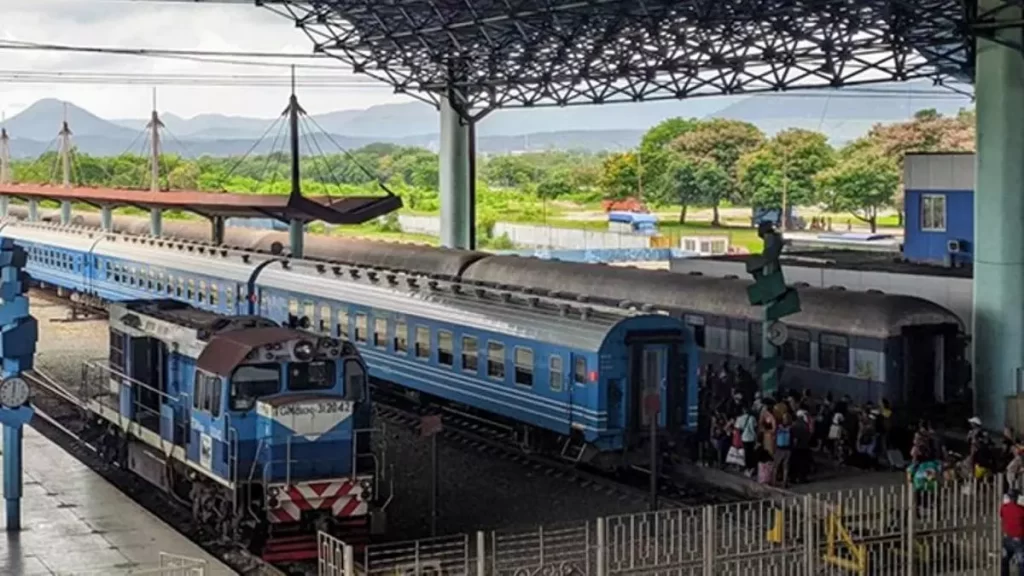
14ymedio bigger14ymedio, Madrid, 7 March 2024 — The rail industry in Cuba is also at a standstill. The lack of investment, especially due to a shortage of foreign exchange, deepens the crisis of trains and infrastructure, causing the transport of goods to decrease, which is also the result of fewer goods to transport. With the economic debacle there is less to mobilize. In short: another disaster.

Some 67% of tracks and 40% of infrastructure need maintenance, as explained this Wednesday on State TV’s Round Table program by Lisvany Fernández Rivero, acting general director of the Railway Transport Administration, who began his speech by boasting that the Cuban railway was the first in Latin America and seventh in the world, decades before independence.

Returning to the 21st century, there is little joy. The official put the needs of the railway at 900 million pesos per year, of which a large part is in foreign currency, specifically 25 million dollars “for materials, supplies and parts.” continue reading

The official put the needs of the railroad at 900 million pesos per year, a large part of which is in foreign currency, specifically 25 million dollars “for materials, supplies and parts”

It was enough to look at the graphs to check the status of the infrastructure and its rapid decay. For the maintenance of the railway, between 60,000 and 80,000 concrete ties are needed annually, but in 2023 funding was obtained for only 15,000, which will be provided this year. In 2018, 51,600 were manufactured, and in 2019 it was increased to 61,600, quantities that, without covering the needs, today are splendid, since in 2020 and 2021 there 45,000, while in 2022 it fell to 12,000, and last year only 7,200 were produced. In other words, a catastrophe.

Fernández Rivero said that the wooden ties are made mostly in the country, and compared to 3,500 in 2020, in 2021 there only 270 made. He concluded by saying that there are problems with bridges and railways “in general.”

Then, Luis Roberto Rosés Hernández, general director of the UFC (Union of Railways of Cuba), took over. He provided figures for the entire fleet and summarized the consequences left by the situation, since cargo transport works both to distribute through the rationing system the – ever fewer – products from the basic family basket and the sugar harvest, and provide cement and aggregates to the Port of Mariel. And, worst of all, it transfers the fuel. “Of the locomotives, only 12 are large enough; we really need 34. This is the biggest difficulty we face today,” he said.

Thus, “cargo transport has shown a downward trend, mainly due to the reduction in economic activity,” and – although he did not say it – the reduction in economic activity burdens the improvement of the railway network. The official said that last year the state company achieved a participation of 24.5% in cargo transport, and this year it expects to contribute 26%, but for this it will need to repair 335 railcars, in addition to solving issues of logistics technology, scales, lighting, prevention of occupational risks and too many other things, since, he admitted, there are problems that range from the lack of parts to obsolescence, lack of tools and equipment, fuel and lubricants.

“The railway system needs approximately 34 million in foreign currency to be maintained, so alternatives must be sought to generate additional income,” said Rosés Hernández, who aims to increase the transport of cargo destined for export to receive payments in foreign currency.

Passenger transport affects the economy less, but it does affect people’s lives. “In relation to the problems of delay in domestic trains, these are well known to the population,” said the manager. He indicated that the demands of passengers must be addressed, and he mentioned the difficulty of reconciling their needs. At the moment, he specified, there are requests to add 15 additional stops, which would increase the travel time of each long-stretch train by four hours, such as those from Havana to the eastern provinces. The decision will be in the hands of the provincial authorities.

There are requests to add 15 additional stops, which would increase by four hours the travel time of each train for long stretches, such as those from Havana to the eastern provinces

Rosés Hernández praised his boss, the Minister of Transport, Eduardo Rodríguez Dávila, for his active Facebook profile that “not only provides news and information, but also receives opinions to work together to find solutions to the problems that arise.” The official explained that the main “dissatisfactions” pointed out by the passengers are the lack of discipline – he did not specify, although it is supposed, of the workers – and the lack of attention to and information for the traveler.

The manager stated that they expect support from Cuba’s allies, China and Russia, which have helped in recent years – along with French collaboration – to upate the workshops, locomotives, trains and infrastructure. In addition, they plan to continue building ferrobuses, a hybrid remedy between the bus and the train originating in the 70s. It was attempted during the Special Period, but it doesn’t work for transporting large numbers of people.

Interprovincial rail transport will also experience the price increase expected for the entire sector. “The service without air conditioning to Santiago de Cuba, which is one of the longest trips, [previously] cost 95 pesos and now will cost 670 pesos. Before, the air-conditioned car from Havana to Santiago de Cuba cost 132 pesos; now it will cost 820,” Rodríguez Dávila said on the day of the fare increase. Quite an expense for a 14-hour journey.

Translated by Regina Anavy

____________

COLLABORATE WITH OUR WORKThe 14ymedio team is committed to practicing serious journalism that reflects Cuba’s reality in all its depth. Thank you for joining us on this long journey. We invite you to continue supporting us by becoming a member of 14ymedio now. Together we can continue transforming journalism in Cuba.
Romanticizing the Electricity Cuts in Cuba, More Than Cynical It Is Offensive

Romanticizing a blackout by alluding to the fact that the great classics of universal literature were written by candlelight, surpasses cynicism and becomes an offense / 14ymedio

14ymedio bigger14ymedio, Yoani Sánchez, Generation Y, Havana, 12 March 2024  — A ‘snort’ runs through the neighborhood. They have just cut off the electricity service and life is paralyzed until the power returns. The elevator does not work, the elderly residents of the upper floors wait on the ground floor of the building because arthritis and fatigue do not allow them to climb the stairs. The cafeteria on the corner closes to the public since the oven is electric and its main offering is pizzas. The pipes remain dry because the water pump could not complete the rise to the tank and, furthermore, “for two days there has been a break in the Palatino pipeline,” says a neighbor.

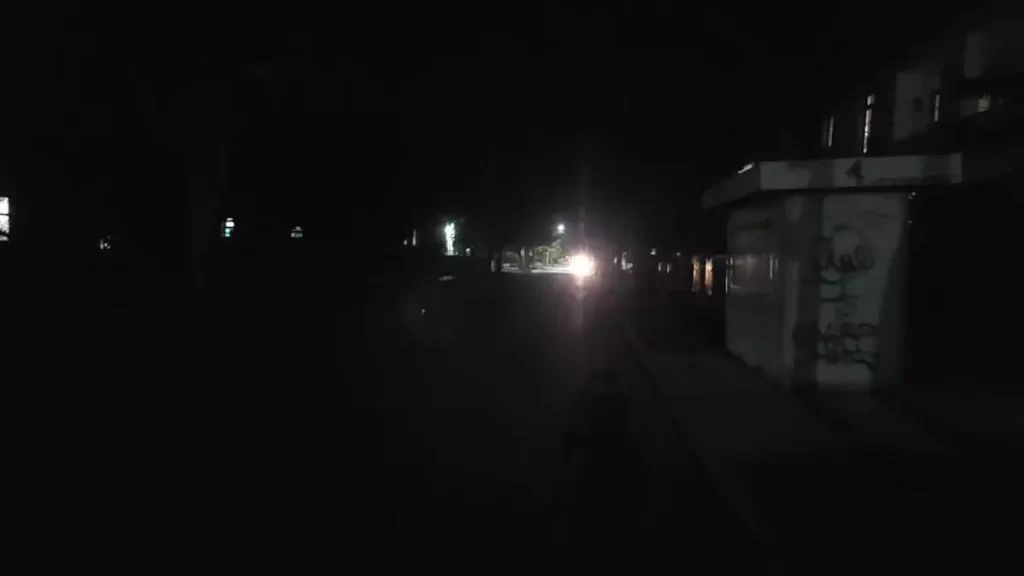
There is nothing romantic, beautiful or creative about blackouts. They are not, as official media assures, the opportunity to prepare a candlelit dinner for a couple,  to get away from the mobile screen or read a book. Not having power is something much more mundane, irritating and limiting. Bedridden patients are flooded with sweat because the fans no longer work; the little milk that the family saves for the baby spoils due to the lack of refrigeration; the poor young man who earns his living as a bicycle messenger loses his little income. because the shipping application stops working after the telecommunications towers are turned off. continue reading

Now, they claim that darkness can return us to a calmer and more natural life, when in reality it makes our existence more distressing

With the blackout, people become more aggressive and in the silence left by the engines and devices, domestic fights, swearing and insults emerge more strongly. With the power outage, private businesses are sinking, the dangers of accidents with disconnected traffic lights multiply, night outings are reduced even more, plans are postponed and the idea of ​​packing suitcases gains strength. Weddings are also postponed, schools further reduce the quality of their teaching and bureaucratic procedures become much more complicated.

Romanticizing a blackout, alluding to the fact that the great classics of universal literature were written by candlelight surpasses cynicism and becomes an offense. Just like when, during the Special Period, some leaders of the Communist Party praised the flavor that cooking with firewood left in food, due to the absence of gas. But, while they evoked the charcoal that leaves a smoky touch on food, we burned our grandparents’ furniture so we could eat. Now, they claim that darkness can return us to a calmer and more natural life, when in reality it makes our existence more distressing.

No, there is nothing beautiful about a blackout, especially when you have suffered them for a good part of your life and you cannot see, in the short or medium term, that they will stop breaking into our daily lives.
____________

COLLABORATE WITH OUR WORKThe 14ymedio team is committed to practicing serious journalism that reflects Cuba’s reality in all its depth. Thank you for joining us on this long journey. We invite you to continue supporting us by becoming a member of 14ymedio now. Together we can continue transforming journalism in Cuba.
Facebook Goes Down for More Than Two Hours and Cubans Think the Internet Has Crashed

On the Island, Facebook is the main means of communication, not only between acquaintances, but also with the outside world.

14ymedio bigger14ymedio, Madrid, March 5, 2024 — For Cubans, the inability to access Facebook on Tuesday was almost a complete internet disruption. Around 10 am, Facebook and Instagram, both owned by the American company Meta, suffered a worldwide outage.

The problem, which also affected Messenger, persisted for more than two hours. According to Andy Stone, Meta’s communication director who apologized, the situation was resolved “as quickly as possible” for all those affected.

The technology company has not revealed the cause of these incidents, which also affected Threads, another Meta application that is linked to Instagram and which can be used without signing up. However, WhatsApp, also from Meta, continued to work normally.

“There’s no internet,” someone said on the streets of Havana this Tuesday, after the collapse of the social networks. “They don’t realize that there’s no connection, that there’s no Facebook,”observes Yulia, on the streets of Centro Habana. “Cubans spend most of their time online all day long . That addiction is worse than this,” she says, pointing to her cigarette. continue reading

“Cubans spend most of their time  online all day long. That addiction is worse than [cigarettes]”

On the Island, Facebook is the main way of communication, not only between acquaintances but also with the outside world. While Facebook attracts 82.2% of connected users, other applications, such as YouTube, Twitter and Instagram,  only  have close to 12% of the traffic

In addition, ever since  internet began to be allowed on mobile phones in 2018, it became a powerful tool for dissidence.

On 11 July 2021, a demonstration in San Antonio de los Baños was broadcast live on Facebook. It spread across the entire Island an eventually became the most important protest in Cuba since 1959, coming to be known as ’11J’.

Translated by Regina Anavy

____________

COLLABORATE WITH OUR WORKThe 14ymedio team is committed to practicing serious journalism that reflects Cuba’s reality in all its depth. Thank you for joining us on this long journey. We invite you to continue supporting us by becoming a member of 14ymedio now. Together we can continue transforming journalism in Cuba.

The Murders of Two Women, in Matanzas and Las Tunas, Bring Femicides in Cuba to 13 in 2024

In 2023, feminist activists recorded 87 women killed at the hands of their partner or ex-partner. (Escambray)

14ymedio bigger14ymedio, Havana, 6 March 2024 — The murders of Dinosca Rivera Martí, a resident of the town of Carlos Rojas, in Matanzas, and Martina Hernández, a resident of Becerra, a rural neighborhood in the city of Las Tunas, are the two newest cases of femicides reported this Wednesday by the Women’s Network of Cuba, Alas Tensas and Yo Sí Te Creo en Cuba.

The murder of Rivera Martí, 34, occurred on March 5 at the hands of her partner and the father of her children. “The aggressor attacked her in public on the road, after she left her two young children at school, who at least did not witness the events,” explain the feminist platforms.

In the case of Hernández, whose age could not be specified, the murder occurred on February 12, also at the hands of her partner. continue reading

The average profile of a victim of femicide in Cuba in 2023 is that of a 37-year-old woman, with at least one minor in her care, murdered by her ex-partner.

The platforms, which sent condolences to family members and friends close to the victims, clarified that the femicides were confirmed by the joint effort of independent media, citizens and activists.

With the deaths of Rivera Martí and Hernández, there are 13 femicides recorded by 14ymedio. So far, independent platforms have not confirmed the femicide of Samantha Heredia, a 22-year-old nurse, murdered in Santiago de Cuba by her husband, Dr. Pedro Carmenate, last weekend.

An employee of the Juan Bruno Zayas Clinical Surgical Hospital in the eastern capital, where the victim and aggressor met and the latter worked as a resident doctor, confirmed to this newspaper Heredia’s murder.

In 2023, feminist activists recorded 87 women killed at the hands of their partner or ex-partner, more than double the 36 recorded the previous year.

The average profile of a victim of femicide in Cuba in 2023 is that of a 37-year-old woman, with at least one minor in her care, murdered by her former partner.

Translated by Regina Anavy

____________

COLLABORATE WITH OUR WORKThe 14ymedio team is committed to practicing serious journalism that reflects Cuba’s reality in all its depth. Thank you for joining us on this long journey. We invite you to continue supporting us by becoming a member of 14ymedio now. Together we can continue transforming journalism in Cuba.

Discontent Grows in Cuba With a New Record of Blackouts

Havana, which until a few days ago was free of blackouts, is now suffering from them every day / 14ymedio

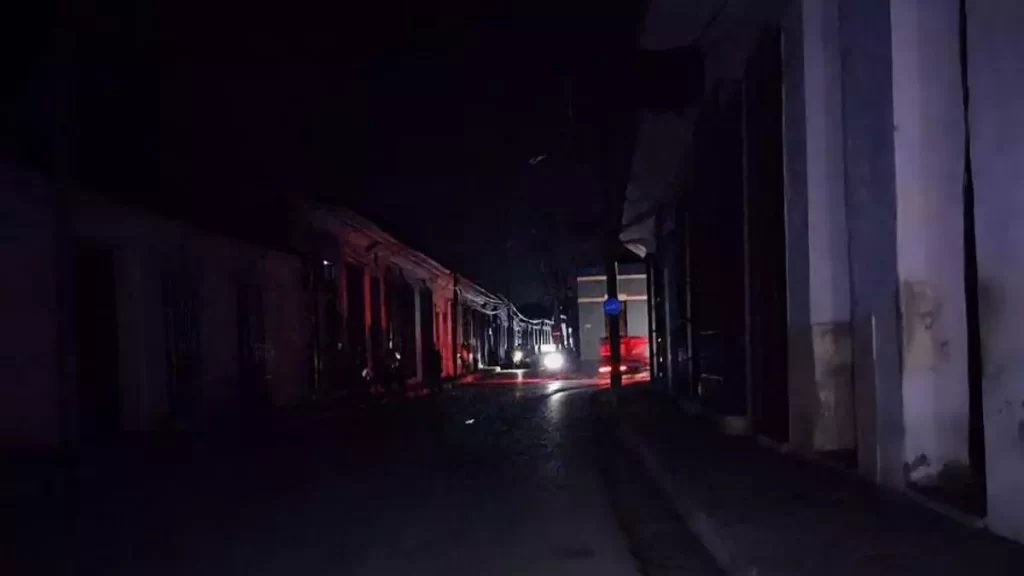
14ymedio bigger14ymedio, Havana, 9 March 2024 — The power blackouts in Cuba are reaching a record never seen in recent years. On Friday, the official press itself reported, “there was a deficit of electricity generation for 24 hours, and it has not been possible to restore the power this morning.” The maximum recorded yesterday, 1,566 megawatts at the time of maximum demand, is unprecedented since the energy crisis escalated two years ago.

For Saturday, the outlook is not much better: an availability of 1,600 MW and a demand of 2,550, which means an average impact of 1,300 MW.

The figures included in the statement of the UNE (Electric Union of Cuba) speak for themselves: 85 distributed generation plants, plus the Moa fuel plant and the Santiago de Cuba plant are out of service due to lack of fuel. There are also 16 plants “with low coverage.”

Thus, the citizens are desperate, and rumors of demonstrations run throughout the Island. The SEN (National Energy System) barely exceeded 1,000 MW when, in August 2022, mass protests broke out in Nuevitas, Camagüey. continue reading

“I imagine that those poor people who had only two hours of power must be on the verge of suicide”

The repression unleashed after the demonstrations – similar to what happened on 11 July 2021 – may explain why for the moment, the frustration is only expressed in complaints on social networks. One of the posts that asked users about the place and time of the power outages was immediately followed by hundreds of comments.

“Four hours with power and twenty without,” said one of them, corroborated in some areas of the Island, such as Santiago de Cuba, by the official newspaper Sierra Maestra.

In Güines, Mayabeque, another commentator said that the power had been missing this Friday “since 8 at night, and still nothing. We had 12 hours without power and yesterday only 3 hours during the day.” In the same province, in San José de las Lajas, the power went off at 5 in the morning until 3 in the afternoon, and after two hours it went off again for 10 more hours. In Sancti Spíritus, there were places with up to 14 hours of blackouts.

The complaints cover the entire national territory. In Bayamo, Granma, people also reported 14 hours of blackout; in Minas, Camagüey, up to 18 consecutive hours. In the municipality of Céspedes in Camagüey, a neighbor complained: “From yesterday until now they gave us three hours of power. They only put it on from 2 to 6 in the morning; let’s see if they put it on when no one is cooking or awake.”

Havana, which until a few days ago was free of the power cuts, now suffers from them on a daily basis. Four hours in a row of no power is predicted, for example, in the municipality of Nuevo Vedado, where the editorial staff of this newspaper is located.

“These blackouts make life miserable, but I really can’t complain,” concedes a woman living in Central Havana. “The power has been off for several hours two days in a row, and the water pump in the building didn’t allow the water to fill the tank enough for me to wash. I imagine that those poor people who had only two hours of power must be on the verge of suicide.”

Translated by Regina Anavy

____________

COLLABORATE WITH OUR WORKThe 14ymedio team is committed to practicing serious journalism that reflects Cuba’s reality in all its depth. Thank you for joining us on this long journey. We invite you to continue supporting us by becoming a member of 14ymedio now. Together we can continue transforming journalism in Cuba.