“No Martyrs or Leaders,” the New Directions for the Diminished Cuban Bodegas

This newspaper was able to confirm that the images of the country’s former leaders were no longer in at least a dozen places where they were previously exhibited.

14ymedio bigger14ymedio, Havana, Natalia López Moya, 16 March 2024  — “They told us to remove the photos,” explains the employee of a bodega (ration store) in Nuevo Vedado, Havana, before the question of a customer surprised by the disappearance of the images of Fidel Castro, his brother Raúl and Ernesto Guevara who, until recently, alternated on the wall with the blackboard that announces the ever-shorter list of available products. “They called from the Ministry of Internal Trade and advised us that we could not have any martyrs or leaders,” he says.

The practice of placing images of leaders of the Cuban Communist Party (PCC), guerrillas and people who fell in combat during the revolutionary battles, was very common in the ration stores. “You went with your libreta (ration book) to buy something, and instead of beans you found a poster with a smiling Camilo Cienfuegos or propaganda from a PCC Congress,” says Liuber, a resident of San Lázaro Street in Central Havana. He was surprised a week ago when he arrived at his bodega and found “nothing; those faces were no longer on the shelves.” continue reading

“You went with your ration book to buy something and instead of beans you found a poster with a smiling Camilo Cienfuegos”

This newspaper was able to confirm that the images were no longer in at least a dozen places where they were previously exhibited before the eyes of those who entered. A butcher’s shop on Basarrate Street in El Vedado, which until recently showed a portrait of Ernesto Guevara, with a beret and a thin beard, no longer had the photograph, previously located on the table behind the counter.

“It seems they don’t want people to continue taking photos of the bodegas and butcher shops without food but full of propaganda and posting them on social networks,” says another bodeguero in Old Havana who also received the “direction from above” to remove the images “that had been there for more years than the tomato sauce that didn’t arrive for the libreta.

The butcher shop on Basarrate Street replaced the painting of Che with an abstract / 14ymedio

However, the employee clarifies that the new regulations have not reached them in writing. “They told us at a meeting that the counterrevolution was using the photos they took inside the bodegas to create popular discomfort and associate the leaders of the process with the shortages.” The woman regrets the decision because “those images attracted tourists, who came in, started talking to us and some even left us a little gift.”

Now, the little rice that arrives every month for the standard quota does not pose for the cameras next to the face of a leader sheathed in his olive green uniform, and the sugar that is delayed in the supply no longer shares space with a poster of a guerrilla with a rifle on his shoulder. The political altars can no longer be next to the meager ration of food that is sold in the Cuban bodegas and butcher shops.

Translated by Regina Anavy

____________

COLLABORATE WITH OUR WORKThe 14ymedio team is committed to practicing serious journalism that reflects Cuba’s reality in all its depth. Thank you for joining us on this long journey. We invite you to continue supporting us by becoming a member of 14ymedio now. Together we can continue transforming journalism in Cuba.

Cuba Reaffirms Its ‘Unique Friendship’ With North Korea

Miguel Díaz-Canel and Ma Chol Su, the ambassador of North Korea

14ymedio biggerEFE (via 14ymedio), Havana, 16 March 2024 — The Cuban government decorated the ambassador of North Korea, Ma Chol Su, who finalized his diplomatic work in Havana, while reaffirming Cuba’s “unique friendship” with the Asian country, state media reported on Saturday.

The official newspaper Granma reported a meeting between the Cuban president, Miguel Díaz-Canel and the North Korean diplomat. In it, the Cuban president affirmed that the decoration was a “reaffirmation of friendship, solidarity and the brotherhood that exists between our Parties, our peoples and our Governments.”

North Korea maintains a historic relationship with Cuba that dates back to the time of the Cold War

“Our relations have matured with the passage of time; they have  endured and been consolidated. This process has been achieved because our relations have elements that distinguish them as truly unique among peoples,” he added. continue reading

The North Korean ambassador assured that he would transmit “to the leader Kim Jong-Un the messages of friendship and the fraternal feelings expressed” by Díaz-Canel.

North Korea has a historic relationship with Cuba that dates back to the time of the Cold War, in 1960. Then Cuban President Fidel Castro (1926-2016) visited North Korea in 1986, where he met with the country’s founder, Kim Il-sung, and his son and successor, Kim Jong-il, grandfather and father, respectively, of the current North Korean leader, Kim Jong-un.

The reaffirmation of political ties with North Korea takes place almost a month after the announcement of the formalization of relations between South Korea and Cuba, broken since 1959.

Translated by Regina Anavy

____________

COLLABORATE WITH OUR WORKThe 14ymedio team is committed to practicing serious journalism that reflects Cuba’s reality in all its depth. Thank you for joining us on this long journey. We invite you to continue supporting us by becoming a member of 14ymedio now. Together we can continue transforming journalism in Cuba.

German Tourism Giant TUI Suspends Its Flights From Amsterdam to Varadero

TUI maintains that it is not profitable to travel to Varadero

14ymedio bigger14ymedio, Havana, 17 March 2024 — The German operator Touristik Union International (TUI) announced that it is canceling the only service that connects Cuba with the Netherlands due to a shortage of customers. “There is not enough demand for this destination,” a TUI spokeswoman told the Luchvaart Nieuws website. Thus, from mid-May, there will be no more flights between the airports of Schiphol, in Amsterdam, and Varadero, in Matanzas.

Up to now, that flight has been operating on a weekly basis and makes a stopover in Varadero on its route to Cancun, Mexico, but the limited number of passengers who disembark and embark at Juan Gualberto Gómez airport is not profitable for the German company.

That flight operates on a weekly basis and makes a stopover in Varadero on its route to Cancun

“Travelers who have already booked a trip (after mid-May) will be personally informed by TUI or the travel agency with which they booked,” the spokesperson explained. The airline will also cancel the flights for the next winter season and does not plan to resume the route to the Cuban destination in the future. continue reading

The company will maintain, however, its flights to Cancun from Amsterdam, once a week without a stopover, and another with a stopover in Montego Bay, Jamaica.

In 2019, KLM Airlines, which was flying between Schiphol and Havana, suspended its operations due to the crisis caused by COVID-19. With the interruption of TUI’s services, Cuba has no direct connection with the Netherlands.

Luchvaart Nieuws adds that since the US abolished the visa exemption for those who have traveled to Cuba, interest in the Island as a tourist destination has decreased in that market. As provided by the measure that came into force in July 2023, if a traveler has visited the Island from 2021 and wants to enter the United States, they must apply for the B1/B2 visitor visa, which is more expensive and takes time.

The company will maintain its flights to Cancun from Amsterdam, once a week without a stopover, and another with a stopover in Montego Bay

The best alternatives for residents of Belgium, Holland and Luxembourg who want to travel to Cuba will be the routes that operate between the airports of Frankfurt and Paris to Havana and Varadero

In December 2023, TUI announced that, beginning in May of this year, it will suspend the route that connects the city of Manchester, in the United Kingdom, and Varadero.

Translated by Regina Anavy

____________

COLLABORATE WITH OUR WORKThe 14ymedio team is committed to practicing serious journalism that reflects Cuba’s reality in all its depth. Thank you for joining us on this long journey. We invite you to continue supporting us by becoming a member of 14ymedio now. Together we can continue transforming journalism in Cuba.
Spain Will Support the Construction of a Solar Park in Cuba Through an EU Initiative

The national energy plan is to reach 24% renewables  by 2030, a goal for which Cuba has a late start.

14ymedio biggerEFE (via 14ymedio), Havana, 16 March 2024 — Spain will support the construction of a solar park in Cuba within the framework of the Global Gateway strategy of the European Union (EU), the EU embassy on the Island reported in a statement on Friday.

The European bloc “has committed to supporting the energy transition in Cuba through renewable energies,” said the statement, which is made public in the midst of the energy crisis that the country is suffering, with prolonged daily blackouts.

A delegation visited the Island this week to hold talks. Spain announced its contribution, and the EU, Spain and France showed their willingness to work “to mobilize new investments in the sector,” according to the statement, which did not provide details about the project that has Spanish support. continue reading

This project aims to provide energy for 8,500 households and generate savings of 84 million euros

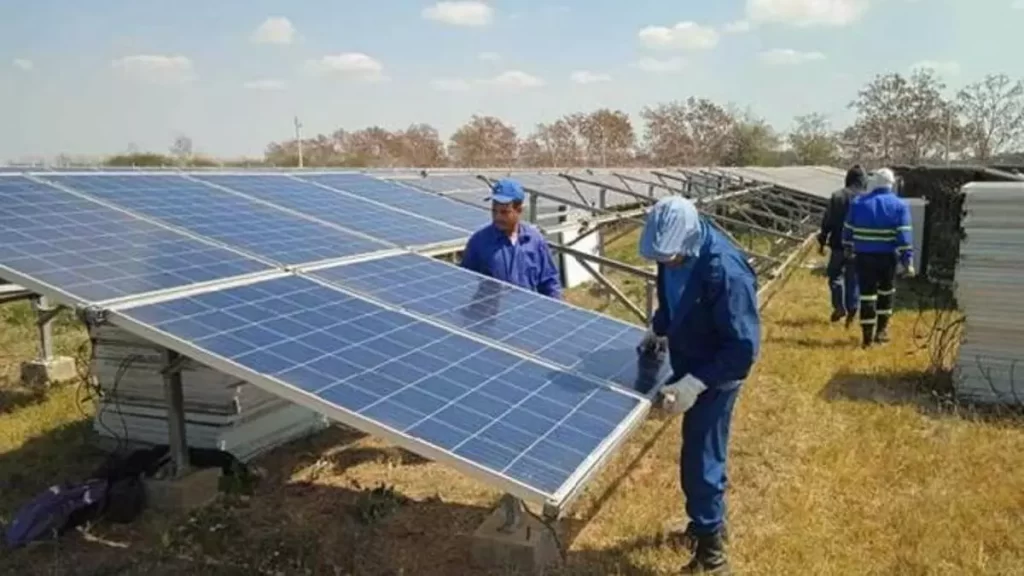
The EU delegation visited a solar plant in the west of the Island, financed entirely with European funds. According to the EU embassy in Cuba, this project aims to provide energy for 8,500 households, generate savings of 84 million euros (about 91 million dollars at today’s exchange rate), replace 168,000 tons of fuel and avoid the emission of 721,000 tons of CO2 into the atmosphere.

Global Gateway’s goal is to “promote smart, clean and safe links in the digital, energy and transport sectors, and to strengthen health, education and research systems around the world,” in accordance with the EU.

Since the end of January, the daily rate of maximum energy deficit is between 20 and 45% of the country’s needs

Cuba, plunged into a serious economic crisis for more than three years, is also going through a difficult energy crisis. Since the end of January, the daily rate of maximum energy deficit is between 20 and 45% of the country’s needs. This situation is due to the poor state of the national electricity system, which has seven obsolete thermoelectric plants with a chronic investment deficit, and a shortage of fuel due to lack of foreign exchange for importation.

This Wednesday, a plan was announced to install 92 solar parks on the Island to generate 2,000 megawatts. The national energy plan is to reach 24% renewable energies by 2030, a goal for which Cuba has a late start.

Translated by Regina Anavy

____________

COLLABORATE WITH OUR WORKThe 14ymedio team is committed to practicing serious journalism that reflects Cuba’s reality in all its depth. Thank you for joining us on this long journey. We invite you to continue supporting us by becoming a member of 14ymedio now. Together we can continue transforming journalism in Cuba.
Of the 314 Women Detained in Cuba for Political Reasons Since ’11J’ Mass Protests, 56 Are Still in Jail

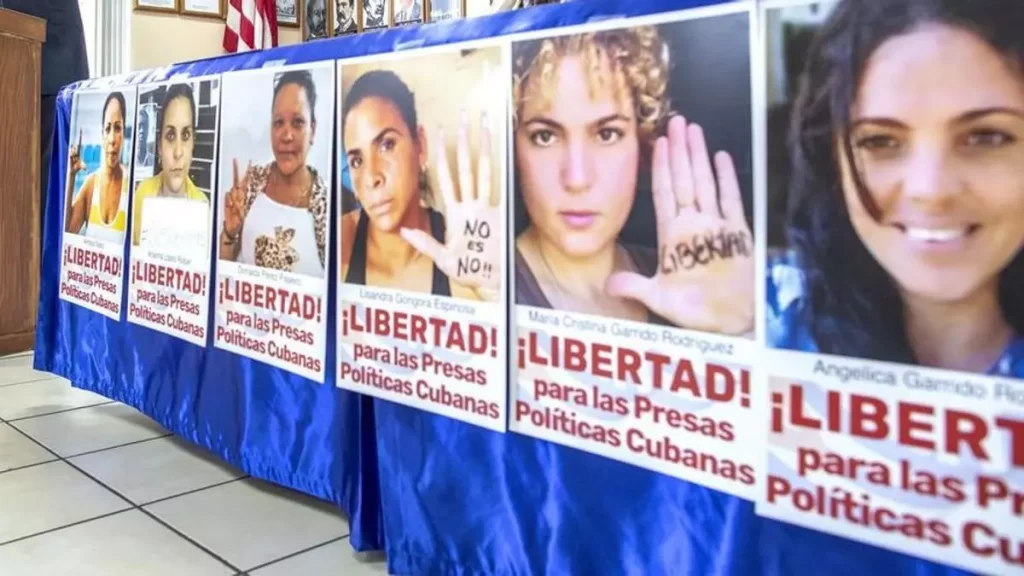
Posters with photos of Cuban women prisoners during a press conference in Miami, Florida, on May 16, 2023. (EFE/EPA/CRISTOBAL HERRERA-ULASHKEVICH)

14ymedio bigger

14ymedio, Havana, 15 March 2024 — One month after being diagnosed with a five-centimeter uterine fibroid, Lizandra Góngora, a political prisoner for participating in the protests of 11 July 2021 and sentenced to 14 years, remains in Los Colonos prison, on the Island of Youth. Although neither the hospital of the special municipality nor the prison’s medical services have the supplies or personnel to treat her, the authorities are still reluctant to send her to Havana for medical treatment.

Góngora’s situation, who was also imprisoned far from her province of origin (Artemisa) and her husband and children, reflects just one aspect of the circumstances of the 56 women who remain in detention since July 11, 2021 (’11J’) onwards, due to the protests in Cuba. Of the 56 prisoners, 30 are mothers and two are awaiting sentencing after being tried. Only one, Leydiana Cazañas, detained in March 2023 without protest, remains awaiting trial.

According to the NGO* Justicia 11J database, since the 2021 protests and to date, a total of 314 women have been detained for political reasons. Of that total, 40 were released and 171 were sentenced to house arrest, mobility restriction, correctional work, or fines and bail, so they did not serve time in prison. Another 30 women live in exile. continue reading

The NGO has requested help to find out the statuses of 15 other women. It is not known whether they remain in prison or have been released

Alina Bárbara López, a Matanzas professor who has been arrested on several occasions for her activism, has been banned from leaving the country and was tried and sentenced to pay a fine of 7,500 pesos after refusing to attend a police summons that she considered illegitimate.

The situation of the transsexual woman Brenda Díaz, imprisoned in a male prison for AIDS patients, has been one of the most widespread outrages. Last January, Ana María García, mother of the political prisoner, complained to prison authorities about the constant abuse that the inmate, a participant in the 11J protests, is being subjected to.

As she explained, Díaz was locked in a punishment cell after being unfairly linked to alcohol trafficking within the prison. After clearing up the misunderstanding she was released, but when she reported her mistreatment, she was returned to her cell.

The case of Díaz, sentenced to 14 years and seven months – to which were added another seven months last April 2023 for “contempt” – even caught the attention of Mariela Castro, Director of the National Center for Sexual Education and daughter of Raúl Castro, who assured the EFE agency that García’s story is an “overblown tale full of fantasies”.

Translated by Norma Whiting

____________

COLLABORATE WITH OUR WORKThe 14ymedio team is committed to practicing serious journalism that reflects Cuba’s reality in all its depth. Thank you for joining us on this long journey. We invite you to continue supporting us by becoming a member of 14ymedio now. Together we can continue transforming journalism in Cuba.

A Nurse is Assassinated by Her Husband, a Doctor in Santiago de Cuba

Samantha Heredia was 22 years old and lived with her aggressor, Pedro Carmenate, in a district known as “El Salao” / Facebook

14ymedio bigger14ymedio, Havana, 3 March 2024 — Samantha Heredia, a 22-year-old nurse, was murdered in Santiago de Cuba by her husband, Dr. Pedro Carmenate. An employee of the Juan Bruno Zayas Clinical Surgical Hospital in the eastern capital, where the victim and aggressor met and the latter worked as a resident doctor, confirmed the news to 14ymedio. Likewise, she declares that many of Heredia’s acquaintances came to the hospital after reading the news on Facebook.

According to a source from independent journalist Yosmany Mayeta Labrada, the young woman was “brutally beaten and then drugged” and Carmenate turned himself in to the Police. The couple resided in the Micro 1B subdivision of the Abel Santamaría district, known as “El Salao.”

Heredia, a graduate from the School of Nursing and Health Technology in Santiago de Cuba just two years ago, worked as a nurse at the Josué País García Polyclinic. continue reading

So far, independent platforms have not confirmed the femicide of Heredia, who will be buried this Sunday afternoon.

So far, the independent platforms Alas Tensas and Yo Sí Te Creo, both in Cuba, have not confirmed Heredia’s femicide, who will be buried this Sunday afternoon. Her death represents the eleventh femicide on the Island so far in 2024.

On February 24, Yanelis Coca, 40, was murdered by her ex-husband in La Conejera, in the town of El Caney, also in Santiago de Cuba. The femicide occurred at the victim’s home in the presence of her 7-year-old grandson, who lived with her.

A day later, on February 25, Raquel Arriera Álvarez, 22 years old, was murdered in the town of Guayacanes, in Majagua, Ciego de Ávila. The young woman was killed by her husband, a former police officer and father of their two children, who were orphaned after the event.

Translated by Norma Whiting
____________

COLLABORATE WITH OUR WORKThe 14ymedio team is committed to practicing serious journalism that reflects Cuba’s reality in all its depth. Thank you for joining us on this long journey. We invite you to continue supporting us by becoming a member of 14ymedio now. Together we can continue transforming journalism in Cuba.

A Strong Smell of Gas Alarms the Residents of Central Havana and the Authorities Do Not Respond

This Friday, those who passed by Galiano and Zanja couldn’t comment on anything else

14ymedio bigger14ymedio, Havana, Juan Diego Rodríguez, 15 March 2024 — A penetrating odor of gas has been alarming the neighbors of Galiano and Zanja, in Central Havana, for more than 24 hours. Early this Friday, those who passed by couldn’t comment on anything else. The situation, the residents say, is unsustainable.

In a phone call, the Gas Company confirmed to 14ymedio that several residents had already reported what appears to be a leak. “My car is now in the area,” the employee said, referring to a state service vehicle. “It looks like it’s on the street.”

In a second inspection by this newspaper, however, no official car was observed on the street   

To the question of what he advised the neighbors to do while determining if there was a way out and where to go, he answered: “Listen, I can’t give you an answer because I don’t know what’s going on.” continue reading

In a second inspection by this newspaper, however, no official car was observed on the street.

In the meantime, there’s a lot of fear. People still remember the terrible images of the Saratoga Hotel, which flew through the air on May 6, 2022, due to improper handling of liquefied gas from a tanker truck, which claimed the lives of 47 people.

Translated by Regina Anavy 

____________

COLLABORATE WITH OUR WORKThe 14ymedio team is committed to practicing serious journalism that reflects Cuba’s reality in all its depth. Thank you for joining us on this long journey. We invite you to continue supporting us by becoming a member of 14ymedio now. Together we can continue transforming journalism in Cuba.

Cuba Promises Russian Businessmen That They Will Be Able To Manage Hotels on the Island

Last year, Russian tourism grew 3.4 times compared to 2022

14ymedio bigger14ymedio, Havana, March 15, 2024 — With the arrival in Russia of Juan Carlos García Granda, Cuban Minister of Tourism, this week, the Island took a step further in its attachment to the Kremlin. Investment opportunities, inauguration of Russian-managed hotels and all kinds of facilities for tourists are Havana’s new promises to Moscow in exchange for obtaining, “in the short term,” the arrival of half a million travelers.

“The task we have put forward is to attract capital from Russian investors for Cuban tourism (…). We are working with the Russian hotel industry to have them manage hotel chains in Cuba. We want Russian businessmen to build their hotels in Cuba,” García Granda said at a conference in Moscow on Thursday.

We want Russian businessmen to build their hotels in Cuba,” García Granda said on Thursday

Cuba expects to receive more than 200,000 Russian tourists this year, a modest goal if you take into account that in 2023 more than 184,800 Russians visited Cuba, which resulted in a 3.4 percent increase in tourism from that country compared to the previous year. This was also recognized by the minister, who explained that “it is not a very large figure in absolute terms, but it will be a rather motivating result for us. I hope that in the short term, while I’m still minister, we will reach half a million.” continue reading

“The hotel business in Cuba has been developing for 30 years with the help of foreign investment. And, if we depend on Russian tourism, then it would be logical for this business to be managed by people who know Russian tourists well,” argued the minister. He added that this will involve the creation of “hotel complexes, various facilities with parking for yachts and other expansions.”

According to the minister, Cuba has adapted part of the sector so that Russian travelers feel comfortable when they visit the Island. “For example, Canadian tourists buy only one excursion while they are on vacation in Cuba. The Russians buy an average of three excursions. But over the years, customer preferences change, and we are planning to develop active and adventure tourism,” he explained. In addition, he added, “they can combine a vacation on the beach with an excursion and become familiar with Cuban culture, dance, rum production and tobacco plantations.”

The implementation of payments with MIR cards, since November 2023, was another of the “achievements” highlighted by the minister in the plan to “make things easier for the Russian client.”

“In these first months of operation, more than 2.7 million dollars have been transferred through MIR cards. There are 20,000 POS (point of sale) terminals in the main stores and tourist points throughout the country. This is something that is going to grow and all the conditions are created for it to do so,” he guaranteed. García Granda also insisted on the attractiveness of the Island for Russian tourists and clarified that “he hasn’t given up on the goal of the Russians occupying one of the first three places among foreign visitors to the country.”

Both countries propose to increase the number of flights and have their sights set on St. Petersburg

Even during the COVID-19 pandemic, the minister recalled, relations between Moscow and Havana allowed Russian travelers to continue arriving on the Island. Now, both countries intend to increase the number of flights and have their sights set on St. Petersburg, the second most populous and important city in Russia.

Last November, the Cuban ambassador to Moscow, Julio Garmendia, reported that both countries had agreed to establish an air route every ten days between St. Petersburg and Cayo Coco airport, in Ciego de Ávila, by the end of the year. However, the authorities have not revealed whether the agreement was finalized.

A similar plan was suggested this February by the St. Petersburg Tourism Development Commission, which expressed the intention to inaugurate charter flights from the Russian city to the Island. “We have to support the development of the tourism industry of each one. I think we have all the conditions to move from words to deeds,” said Óscar Enríquez, representative of the Ministry of Tourism of Cuba in Russia.

The disproportionate investment in the tourism sector, compared to others such as food or health, has not yielded the results that the regime expected. According to the annual report of selected tourism indicators, in 2023 three out of four hotel rooms on the Island were left empty.

Translated by Regina Anavy

____________

COLLABORATE WITH OUR WORKThe 14ymedio team is committed to practicing serious journalism that reflects Cuba’s reality in all its depth. Thank you for joining us on this long journey. We invite you to continue supporting us by becoming a member of 14ymedio now. Together we can continue transforming journalism in Cuba.

The Cuban Government Closes 45 Businesses for Not Implementing Electronic Payment and Targets Another 893

In Cienfuegos, three state ration stores were closed, as was a point of sale (POS) of the financial company Cimex, several sites of the Ministry of Agriculture and one Construction business. /14ymedio

14ymedio bigger14ymedio, Havana, 15 March 2024 — This Thursday, the Communist Party newspaper published a list of 45 businesses (60% of them from the private sector) whose closure was decreed by the Government for not including the electronic method among its means of payment. The measure, announced in large headlines by the official press, sends a clear message to those who violate the “right” to electronic commerce, the golden rule – Granma says – of the bancarización [banking reform] process* decreed in August 2023.

The 3,341 “control actions” that the inspectors launched in February, says Granma, in the tone of the police, revealed that 893 entities – in particular self-employed workers and points of sale administered by the Ministry of Agriculture – “do not comply” with the provisions of Resolution 93/2023 of the Internal Trade portfolio, the road map of bancarización.

After the raid, 89 fines were applied and 75 commercial authorizations were withdrawn, the newspaper reported. Mirurgia Ramírez, director of marketing of the ministry, reported that the inspectors are directing their “priority” attention to businesses that presented deficiencies in previous inspections, in particular those that took place before bancarización was approved. continue reading

This February, the official explained, the ministry found that not all the provinces had been inspected with the same rigor. In Havana, Artemisa and Matanzas, “more control actions” have been carried out, while Cienfuegos and Holguín were left behind. It is striking that, despite this, no business in the capital was closed.

This February, the official explained, the ministry found that not all provinces had been inspected with the same rigor

The conclusion is that “the measures adopted are insufficient,” and there are “delays in the contracting and activation of Transfermóvil QR Codes,” which makes electronic payment impossible. After commenting on the situation, Granma published the list of “closed” businesses. In Matanzas, three gastronomy units were suspended. In Cienfuegos, three state ration stores, a point of sale of the financial company Cimex, several points of sale of the Ministry of Agriculture and one of Construction were shut down.

In Ciego de Ávila, the private sector was the most affected, a constant that was repeated in the eastern provinces: four self-employed workers, two private companies – an organoponic and a cooperative – and a beauty institute closed their doors. The inspectors of Holguín and Granma also shut down several state points of sale.

Santiago de Cuba was left without two cafes and a restaurant, and Guantánamo saw the closure of the La Tijera store, managed by the Gaesa military conglomerate. Isla de la Juventud will stop the work of five self-employed workers and a private business, in addition to a multi-service workshop in Nueva Gerona.

“Are you complying with the provision?” Granma asks, with the intention of being rhetorical, and the numbers respond. However, the newspaper does not dedicate a single line to describing the scourges of any electronic process in Cuba: the terrible internet connection, which becomes non-existent in remote parts of the Island, the constant blackouts that affect connectivity and the lack of payment terminals or other devices.

Voluntarism** and legal warnings set the tone of the Communist Party’s newspaper, for which, if bancarización faces multiple obstacles and deficiencies, the answers must be sought in the negligence of the businesses and not in the structural crisis of the country. To denounce offenders, Granma reminds readers, the lines are open.

Translator’s notes:
*Bancarización is a term used in Cuba and other Latin American countries. All economic transactions must be made by debit card, including cash withdrawals and the payment of salaries. The term does not have a counterpart in English so the Spanish term is used throughout this translation.
** This means that it is up to the individual business to fix the problem itself. 

Translated by Regina Anavy 

____________

COLLABORATE WITH OUR WORKThe 14ymedio team is committed to practicing serious journalism that reflects Cuba’s reality in all its depth. Thank you for joining us on this long journey. We invite you to continue supporting us by becoming a member of 14ymedio now. Together we can continue transforming journalism in Cuba.

Innovators in the Making: The Vibrant World of Cuban Students

Cuban students’ approach to education and learning is deeply influenced by their cultural heritage / Unsplash/Alexander Kunze

Note: this article is in English in the original.
14ymedio bigger15 March 2024 — In the bustling streets of Havana and beyond, a vibrant and resilient spirit thrives within the heart of Cuban academia. Cuban students, with their dreams as vast as the Caribbean skies, navigate through their educational journey in a country known for its rich history, cultural vibrancy, and revolutionary educational system. These students embody the resilience and ingenuity of an island nation that faces numerous challenges.

It’s within this context that many find themselves at a pivotal moment in their academic careers: the daunting task of dissertation writing. For some, this is where the saying “It takes a village” becomes a reality, seeking guidance from mentors, peers, and even online resources. It’s not uncommon to hear a student say, “I need to help with essay,” highlighting the collaborative and supportive educational environment that fosters success.

Cuban students’ approach to education and learning is deeply influenced by their cultural heritage. This heritage instills in them a profound sense of community and solidarity, traits that are reflected in their study habits and academic pursuits.

The Journey of Learning and Innovation

Cuban education, while facing resource constraints, has mastered the art of innovation out of necessity. Students and educators alike have become adept at utilizing limited resources to their maximum potential, often leading to creative and innovative solutions. continue reading

This environment encourages students to think critically and outside the box, skills that are invaluable in today’s globalized world. For instance, in the face of limited internet access, Cuban students have developed unique ways to share information and collaborate on projects, showcasing their resilience and adaptability.

Moreover, Cuban students are deeply involved in research projects that aim to address local and global challenges. From sustainable agriculture practices to advancements in medical sciences, these young scholars are contributing their knowledge and skills towards creating a better world. Such initiatives not only enrich their learning experience but also instill a sense of purpose and responsibility toward societal well-being.

Students support each other through study groups, peer mentoring, and collaborative projects, creating a nurturing academic environment / Unsplash/Yerson Olivares

The Spirit of Community and Solidarity

At the heart of Cuban student life is a strong sense of community and solidarity. This spirit is evident in their approach to education, where learning is seen as a collective journey rather than an individual race.

Students support each other through study groups, peer mentoring, and collaborative projects, creating a nurturing academic environment. This camaraderie extends beyond academics, with students actively participating in community service projects, cultural events, and social movements.

These activities not only contribute to their personal growth but also to the strengthening of community bonds and the fostering of a collective identity.

Challenges and Aspirations

Despite their achievements and innovations, Cuban students face unique challenges that test their resilience and creativity. Limited resources, internet connectivity issues, and economic sanctions are but a few obstacles that they navigate daily.

Yet, these challenges have not dampened their spirits or aspirations. Cuban students continue to dream big, aspiring to become leaders, innovators, and changemakers who can contribute to their nation and the world at large. Their journey is a testament to the power of education to inspire hope, drive change, and build a brighter future.

Innovation Through Adversity

The resourcefulness of Cuban students shines brightest in their ability to innovate with limited resources. This ingenuity is evident in fields such as sustainable technology, where students develop projects that address energy efficiency, waste reduction, and eco-friendly solutions tailored to local needs.

These innovations not only contribute to their academic growth but also have a tangible impact on their communities and the environment. It’s a testament to the idea that necessity indeed is the mother of invention, and Cuban students are at the forefront of turning challenges into opportunities for innovation.

Healthcare Education and Global Contributions

Healthcare and medical research are a critical area of study for many students. The emphasis on preventive medicine, community healthcare, and international medical action has shaped generations of Cuban medical students.

These future healthcare professionals are not only trained to serve their communities but also to participate in international medical brigades. Doctors, nurses and students have been instrumental in fighting global health crises.

Technology and Digital Innovation

In recent years, the digital revolution has slowly but steadily been making its way into Cuba, offering new avenues for educational and entrepreneurial ventures. Cuban students are increasingly engaging with digital technologies, from coding and software development to digital art and media.

These technological endeavors not only open new career paths for Cuban students but also contribute to the island’s digital economy, signaling a future where innovation and technology play a central role in Cuba’s development.

Final Thoughts

As we explore the vibrant world of Cuban students, we’re reminded of the transformative power of education. These students shine brightly in the face of adversity, embodying resilience, creativity, and a deep sense of community.

Their journey is not just about acquiring knowledge but about using that knowledge to positively impact the world. Cuban students remind us that education is a journey best traveled together, where challenges are met with innovation and dreams are pursued with unwavering determination.

They are not just the future of Cuba; they are a beacon of hope and inspiration for students everywhere, showing us what is possible when we learn, innovate, and grow together!

____________

COLLABORATE WITH OUR WORKThe 14ymedio team is committed to practicing serious journalism that reflects Cuba’s reality in all its depth. Thank you for joining us on this long journey. We invite you to continue supporting us by becoming a member of 14ymedio now. Together we can continue transforming journalism in Cuba.

Learning to Eat Healthy in Cuba, Where Everything Is in Short Supply

Maria Paco is trying to teach Cubans that they they can get by without a meat-based main course. EFE

14ymedio bigger14ymedio, Havana, 12 March 2024 — Changing Cuban eating habits, with an emphasis on health and local availability, at the same time the country is experiencing a food shortage is the aim of a nutritional education project sponsored since 2017 by the Spanish-French entrepreneur María Paco.

“People often laugh when I talk about diversifying the Cuban diet and learning to eat healthier — with vegetables, with no sugar and abandoning the idea of a ’main course,’ which here means meat,” she tells EFE from her organic farm on the outskirts of Havana.

Paco quit her job in France as a fruit broker for a big international corporation and came to Cuba for the first time in 2014. “What I noticed was how little Cubans knew about the benefits of nutritional education, especially in a country where everything is in short supply,” she explains. continue reading

“My parents and grandparents were campesinos who taught me the importance of using everything that came out of the fields”

“My parents and grandparents were campesinos — peasant farmers — who taught me the importance of using everything that came out of the fields, of not throwing anything away,” she says in describing her Spanish roots.

Her alternative menu might feature pureed eggplant on toasted bread; salads made with lentils, cabbage and chili; or pizzas topped with basil, rosemary and parsley instead of the usual tomato and cheese. She even suggests substituting fruits such as bananas for artificially flavored carbonated beverages.

“I started with the people who were helping me on the farm. At first, they looked askance when I served them yellow rice with vegetables instead of chicken, or gave them a snack of toasted bread, pureed eggplant and tomato juice. They later began to assimilate the changes into their own meals, using what they themselves were harvesting here on the farm,” she says.

Her efforts have taken on a new urgency in the last three years. The island’s most recent economic crisis, caused mainly by a lack of foreign exchange earnings, has created a severe shortage of basic staples such as milk and flour in a country that imports 80% of what it consumes.

In 2017 Paco signed an agreement with the Juan Tomás Roig primary school in the town of Cacahual to turn her initiative into a community development project which would offer nutritional education to students aged five to eleven years.

“The idea was that children would come once a month to cook, to learn, to eat vegetables, to see that it was easier and healthier to eat what they had on hand at home than to eat junk food,” she says.

“They learn to value the work of the farmer. They collect their vegetables, prepare them and then they eat what they themselves make,” she explains.

The experiences of the children participating in the project were featured in a video series

The experiences of the children participating in the project were featured in a video series entitled “Cooking, a Game for Everyone.” The series was funded by the World Food Program, the United Nations Educational, Scientific and Cultural Organization (UNESCO) and the United Nations Children’s Fund (UNICEF)

At a recording session a few days ago in Havana, French director Dominique Clément explained that each of the series’ ten 8-minute-long episodes features a recipe using products grown on Paco’s farm.

Paco highlighted her project became more valuable when the Food Sovereignty Law was passed in 2022 because the law ” supports taking advantage of what we can cultivate from an approach that also respects nature.”

This legislative text proposes strengthening municipal autonomy, reducing food waste losses and promoting  sustainable agricultural practices based on agroecological bases, among other topics.

Paco herself acknowledges that ” in Cuba food is very good, but sometimes it gets wasted and that becomes a headache for many parents.”

She admits, however, that the hardest part has been changing Cuban attitudes and customs. “People still laugh when I tell them a meal does not have to include meat.”

____________

COLLABORATE WITH OUR WORKThe 14ymedio team is committed to practicing serious journalism that reflects Cuba’s reality in all its depth. Thank you for joining us on this long journey. We invite you to continue supporting us by becoming a member of 14ymedio now. Together we can continue transforming journalism in Cuba.

Alejandro Gil’s Sister Confirms That the Former Cuban Minister and His Wife Are in Detention

Alejandro Gil and his wife Gina María González

14ymedio bigger14ymedio, Havana, 14 March 2024 — “My brother has been detained along with his wife. They have no cell phones; there is no way to communicate with them.” The former television presenter María Victoria Gil thus summarized the situation of her sister-in-law, Gina María González, and her brother Alejandro Gil Fernández, former Minister of Economy of Cuba, dismissed at the end of February and investigated for alleged errors committed in the exercise of his office.

Victoria Gil, who recently traveled to Havana, sent an audio to the YouTube channel El mundo de Darwin (Darwin’s World, emitted from Canada), after returning to Tenerife, Spain. Vicky, as she is known on the Island, said that she always travels to Cuba in March, every two years, so as not to lose her property, and that she bought the ticket well in advance to make it cheaper. This would explain the coincidence that she arrived in the country shortly after the official announcement of her brother’s fall from grace.

“My niece (Laura María Gil González) is at home but under house arrest, also without a cell phone. I contacted my nephew, my brother’s son,” and the young man also did not have information about the whereabouts of his father Alejandro Gil and his mother Gina María González: “I don’t know anything about them; I don’t know anything about my aunt. I’m very worried, but what can I do?” continue reading

“My niece is at home but under house arrest, also without a mobile phone. I communicated with my nephew, my brother’s son”

Despite sending the audio to Darwin’s World, Vicky said on Thursday on her Facebook profile that she had not given “any statement to digital media,” nor did her son, Daniel Alejandro Trujillo Gil.

“Someone has stolen my identity on TikTok and given statements to the prominent journalist Mario Pentón (Martí Noticias) from my account, posing as my son,” she clarified after indicating that she received “a screenshot of the message” that, allegedly, her son sent to Pentón.

She acknowledges that the message contained “no lies or insults, not at all; it is information in the public domain, but I reiterate that it was not provided by my son. I don’t know the intention of the person who did it, but  it doesn’t contain any falsehood,” she insisted.

These statements come to light after Pentón published last Tuesday in Martí Noticias that Gina María González was also detained, and he cited as a source the nephew of the former minister, Daniel Alejandro Trujillo Gil.

“I don’t know the intention of the person who did it, because, in addition, it does not contain any falsehood”

On the other hand, the former presenterin Cuban Television denied have been pressured by State Security during her stay on the Island. Also on Facebook, this Tuesday she published a post in which she thanked the Government for not having “bothered” her while she was in Havana, and she was grateful to the broadcasters of Cuban television for their attitude towards her “at such a difficult time.”

Vicky Gil was filmed several times on the Island, and in one of them she is singing. “I don’t know how I managed to sing; I ignored the way some notes came out of my throat because of so much emotion,” she said on Facebook. “My conscience is clear. I love my homeland and adore my people. I am incapable of profiting from the sacrifice of my fellow human beings. I love them immeasurably and will always be on the side of truth, honesty and justice.”

She did not offer details of the criminal proceeding against her brother that was announced in a brief official note last week. The statement, signed by Miguel Díaz-Canel, said that after a “rigorous investigation” and “taking into account the level of verification of the facts,” the Political Bureau of the Central Committee of the Party and the Council of State “approved that the competent bodies of the Ministry of the Interior initiate the corresponding actions for the total clarification of these behaviors.”

The former presenter of Cuban Television denied having been subjected to pressure from the Cuban State Security during her stay on the Island

Alejandro Gil graduated as an engineer in Maritime Transport from the Technological University of Havana, a profession that is little related to the position of Minister of Economy that he held for almost four years. Until his dismissal, he was one of the key men of the regime and had survived several crises, including the debacle after the so-called Ordering Task.*

A regular guest of State TV’s Round Table program, he was a great advocate for the economic adjustment measures that the Cubans baptized as the “paquetazo” [package] which included an increase in the price of fuel and electricity, implemented at the beginning of this month, and new currency exchange rates, still to be applied. His sister Vicky then defined him as the person “most hated” by the people, along with Díaz-Canel and Prime Minister Manuel Marrero.

Gil’s wife, Gina González García, was manager of the Chamber of Commerce of Cuba and, previously, had worked as commercial manager of BisMusic, an official record company. Their daughter, Laura María Gil González, was employed in the Imports Department of the Ministry of Foreign Trade and currently worked in the Caudal Group, which depends on the State and manages insurance and financial services.

*Translator’s note: The Ordering Task is a collection of measures that included eliminating the Cuban Convertible Peso (CUC), leaving the Cuban peso (CUP) as the only national currency, raising prices, raising salaries (but not as much as prices), opening stores that take payment only in hard currency, which must be in the form of specially issued pre-paid debit cards, and a broad range of other measures targeted to different elements of the Cuban economy.

Translated by Regina Anavy

____________

COLLABORATE WITH OUR WORKThe 14ymedio team is committed to practicing serious journalism that reflects Cuba’s reality in all its depth. Thank you for joining us on this long journey. We invite you to continue supporting us by becoming a member of 14ymedio now. Together we can continue transforming journalism in Cuba.

A Pharmacy in Holguín Is Stoned in Protest Against 15-Hour Blackouts

TRD Latin America in the Alex Urquiola distribution in Holguín / 14ymedio

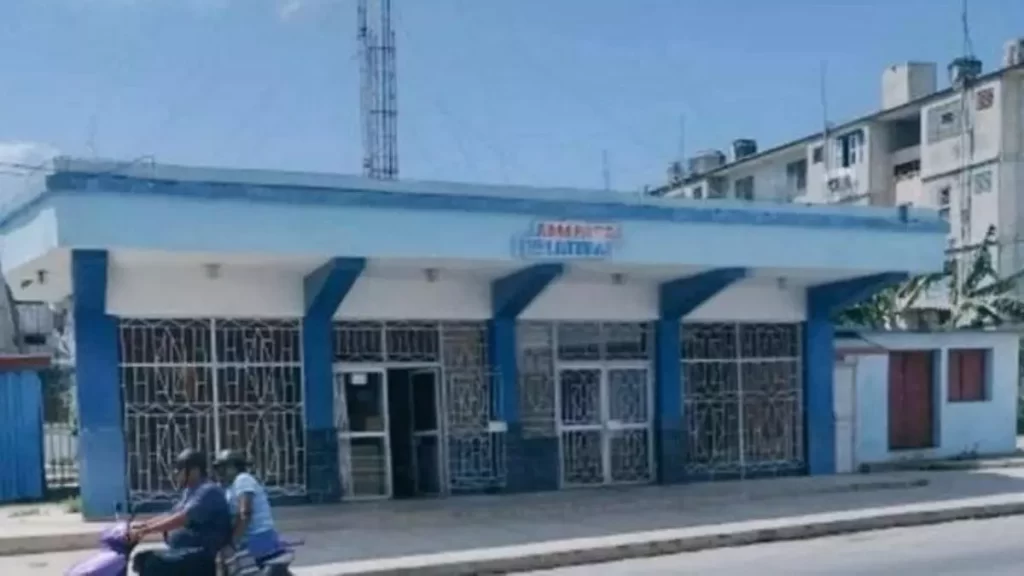
14ymedio bigger 14ymedio, Holguín, Miguel García, 14 March 2024 — Popular discontent with the long blackouts is at the origin of several protests in the city of Holguín, where this Tuesday a pharmacy located at the intersection of Martí and Fomento streets was stoned. The event was confirmed to this newspaper by local sources, who also pointed out that last Thursday morning, the old Latin America foreign currency store in the La Colorá neighborhood had its windows broken.

This type of event, in addition to the cacerolazos — demonstrations where people beat on pots and pans — and an increase in police surveillance, are increasingly frequent in areas that experience the worst of the energy crisis, as reported by 14ymedio previously. Holguín is one of the provinces where long blackouts occur, which can last up to 15 hours in a single day.

A resident of the Alcides Pino popular council told this newspaper that since the power outages began, “incidents expressing discontent occur almost daily. They haven’t spilled into the streets, but there’s no shortage of cacerolazos when there’s no power. The discontent is widespread.”

As for the stores with broken windows, he says that the authorities have not stood idly by. “They are sending police and red berets (special security) at night to guard the foreign currency stores to prevent people from breaking windows. It’s not the first time that’s happened in Holguín,” he adds. continue reading

“There are also many patrols making rounds in the city and on Carralero Street”

“There are also many patrols making rounds in the city, on Carralero Street and in the Dagoberto Sanfield neighborhood, where one of the senior police commanders lives. In addition here are other military personnel, and there is always a patrol keeping watch as soon as night falls,” says the holguinero.

A woman in Holguín interviewed by 14ymedio asserts that, in addition, the long blackouts prevent the normal operation of any work center and are an obstacle to procedures of any kind. “My husband has been standing in line at the offices of the Ministry of the Interior for four days to change the official route for our pedicab, and he has not been able to, because when it’s his turn, the current goes off and service is interrupted,” she says.

“Life becomes difficult in many ways when the current goes off. There are parents who are not sending their children to school because, between the coming and going, the power goes out two or three times in the early hours of the morning, and neither they nor their children can sleep (without an electric fan). Not to mention the food. I know people who have chosen to cook with wood in the face of blackouts of more than 15 hours,” she says.

The other aggravating thing is that, “despite having so many hours of blackout, the cost of electricity continues to rise. It’s inconceivable!” she emphasizes. Last year, the official newspaper Ahora! published the results of a survey based on the complaints of many people in Holguin about the increase in their bills during July and August, despite power outages of 12 hours or more.

Latin America foreign currency store in the Alex Urquiola neighborhood in Holguín / 14ymedio

The response of the Electric Company at that time was that after the restoration of the current, when equipment is connected – mainly refrigeration – the consumption increases.

The holguinera also says that in some state centers there are on-call workers, as well as heads of the National Police Sector and State Security agents, “ready to take to the streets and repress.” The “order,” she explains, is to put down any demonstrations that expresses dissatisfaction with the regime.

On March 9, the cacerolazos began in Holguín after several days of power outages. The Manuel Angulo dental clinic in Pueblo Nuevo in the main municipality was stoned, and hours later it was under guard by State Security.

At the same time, another demonstration in the municipality of Florida, in Camagüey, managed to get the authorities to restore service, but not before assuring that everything remained “calm” in the neighborhood.

* Errata: Initially, the information reached 14ymedio’s Editorial Office and the testimonies on the ground spoke of stoning of the exterior windows of the Martí y Fomento Pharmacy, but on another visit to the place and thanks to the warning from our readers, we confirmed that, in that case, it had been an accident in which a car hit the windows.

Translated by Regina Anavy

____________

COLLABORATE WITH OUR WORKThe 14ymedio team is committed to practicing serious journalism that reflects Cuba’s reality in all its depth. Thank you for joining us on this long journey. We invite you to continue supporting us by becoming a member of 14ymedio now. Together we can continue transforming journalism in Cuba.
Economist Pedro Monreal Points Out a ‘Statistical Blackout’ in Official Cuban Data

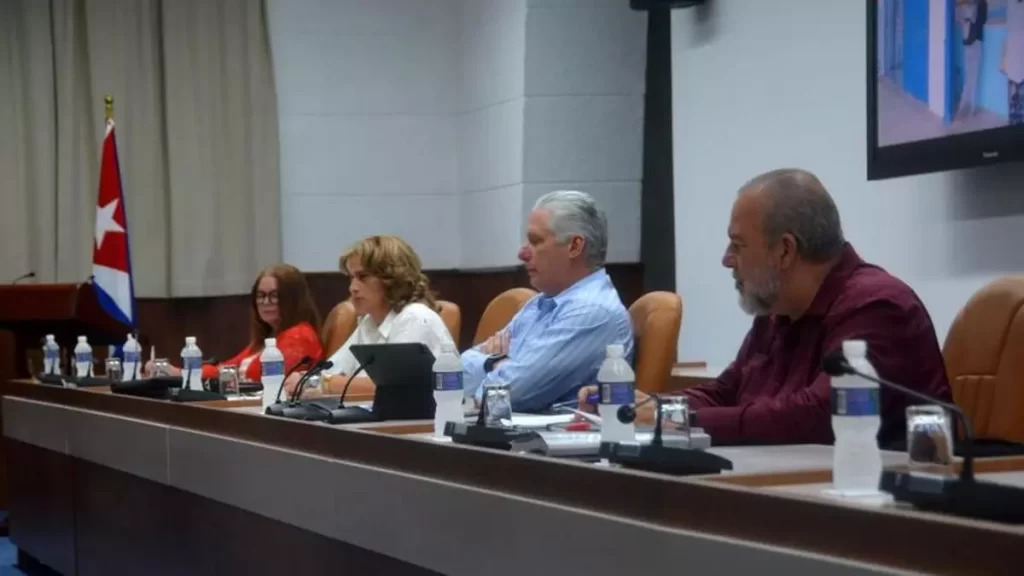
Prime Minister Manuel Marrero admitted that this sector is one of the most associated with corruption by citizens. / Estudios Revolución / 14ymedio

14ymedio bigger14ymedio, Havana, 14 March 2024 — The balance sheet for Internal Trade in Cuba for 2023, published by the Government this Wednesday, provided only one statistic for the sector: 70% of the construction materials delivery plan was met. The rest of the meeting consisted of an accumulation of “enigmatic formulations, abundant exhortations, a drought of data and scarcity of details about specific programs,” said Cuban economist Pedro Monreal.

The administrative inefficiency of the Ministry of Internal Trade barely motivated a discussion among officials, who mentioned in passing the main problems of the sector: “the proliferation of illegal sellers; the diversion from retail sales as a secondary activity in production companies; the scarce and unstable supply of products and services in gastronomy; the fluctuation and deficient preparation of managers and employees; as well as the ineffectiveness of the measures implemented to prevent and confront crime, illegalities and acts of corruption.”

According to the website of the Cuban Presidency, which summarized the meeting, “the main results achieved in 2023, as well as problems that persist in the sector and proposals to solve them” were exposed in an “audiovisual” that was not made public. “It would be advisable to disclose it because there is a striking ’statistical blackout’ with respect to Internal Trade, due to the absence of the 2022 data,” Monreal commented, while showing the empty printout for that year from the National Office of Statistics and Information (Onei). continue reading

In February, the minister acknowledged that there were serious difficulties with the purchase and distribution of milk powder due to the high cost of the product

Despite the fact that the Government keeps the real figures under lock and key, the latest public speeches – almost all on the distribution of the rationing system’s basic family basket – by the head of the ministry, Betsy Díaz Velázquez, hint at a more chaotic panorama than the regime is willing to admit.

In February, the minister recognized that there were serious difficulties with the purchase and distribution of powdered milk due to the high cost of the product in the international market and the low availability of fuel to deliver it to the warehouses. The distribution at that time depended mainly on donations from the World Food Program (WFP), and weeks later, the Cuban Government requested help from the WFP for the first time due to the pressing need for the product, intended mainly for children, pregnant women and the elderly.

Similar situations have occurred with other rationed foods, such as bread, rice and coffee, which have forced Internal Trade and the Ministry of the Food Industry to offer explanations on Cuban Television.

As for corruption, another mandatory issue in the balance sheet after the announcement that the former Minister of Economy is being investigated for “serious errors made in the performance of his functions” – although the “paquetazo” [package] proposed during his management of the portfolio continues to be implemented – the Government did not offer numbers for global losses, recovery plans or offenders.

However, the recent disclosure by the official press of cases related to embezzlement and illegal sales of products by leaders of state companies – such as the diversion of yogurt in the Río Zaza dairy production company in Sancti Spíritus and the theft of 133 tons of chicken from a state warehouse – give the measure of the current state of the situation.

“This sector is one of those that the population most associates with corruption, and we need to work to eliminate those facts,” admitted the Prime Minister, Manuel Marrero.

Díaz-Canel asked, paradoxically, to “break the myth that everything State is inefficient”

Only one element, commercial circulation, “month after month is overfulled,” Marrero said, although the cause is “the increase in prices and not greater offers of products and satisfaction of the demands of the people,” he acknowledged. The comment was criticized by Monreal, who pointed out that “the Government refers to the distortion derived from its own statistics as if it were not its responsibility. There would be no illusion of ’over-compliance’ of commercial circulation if the official statistics included values adjusted to inflation and updated physical data.”

Once again, the strategy of justifying the Government’s mistakes by alleging “economic asphyxiation and media indoctrination” of the United States to “harm the Revolution” was entrusted to President Miguel Díaz-Canel who, in the face of the report of the failures of Internal Trade, asked, paradoxically, to “break the myth that everything State is inefficient.”

Translated by Regina Anavy

____________

COLLABORATE WITH OUR WORKThe 14ymedio team is committed to practicing serious journalism that reflects Cuba’s reality in all its depth. Thank you for joining us on this long journey. We invite you to continue supporting us by becoming a member of 14ymedio now. Together we can continue transforming journalism in Cuba.
Cuba: How to Convert a Distinguished Pioneer Into a Vile Elvispreslian Worm

Cover of “This is your house, Fidel. The History of a Grandson of the Revolution”  Xavier Carbonell

14ymedio bigger 14ymedio, Xavier Carbonell, Salamanca, 6 March 2024 — Carlos Lechuga Hevia was a machine for the Revolution. His grandfather, Colonel Manuel Lechuga was a machine for Independence. What type of machine is his grandson, Carlos D. Lechuga? His first last name is barely a letter, an elipsis, interfering with the nice ring of the clan name. Lechuga Hevia, red aristocrat, Castro’s ambassador in New York during the Cuban Missile Crisis, returns as a ghost to settle scores with his grandson for converting him into a fictional character and stealing — for the title of his book — the golden rule of communist hospitality: This is your house, Fidel. You better run, D. Lechuga.

Published by De Conatus, the grandson’s 137 pages are an insult to the memory of the ashen comandante, familiar idol and devil upon the shoulder of pioneer Lechuga. The mantra, from preschool through sixth grade, was one, “Fidel-Alejandro-Castro-Ruz!” The fantasy: that his grandfather would die so that he’d attend the funeral, with a sensational bodyguard, the supreme grandfather, Fifo. His biggest desire: to extend the hand of the Revolution itself, with its long, chilling nails.

Lechuga Hevia, red aristocrat, Castro’s ambassador in New York during the Cuban Missile Crisis, returns as a ghost to settle scores with his grandson for converting him into a fictional character 

But Lechuga has no reason to run. He is far from the tropics and his childhood, and ghosts don’t bite. The main character of those 137 pages is him and no one — not even the other children born in the 80s — can steal the show, which begins with the imaginary funeral of the old man and ends with the suitcase he brought to Spain. “Am I leaving anything behind? Anything that defined me? Was I leaving myself behind?” I get the impression that Lechuga still has not answered these questions and that one book is not enough for him to do so. But, let’s get back to the pioneer who dreamed about Fidel. continue reading

Lechuga seems — we see him — with the neckerchief and white shirt, distinctive of a good student and a last name that opens doors. García Márquez visited his grandfather’s house frequently; he and the old man had in common that both were surrounded by girls, women and matriarchs. Lechuga was the first boy of the family and he was named after the ambassador. “If the baby is a boy he will be named Carlos, like his grandfather; if it is a girl, she will be named Carla; and if it is born gay, it will be named Carlota.”

Childhood was idyllic. Thinking in Russian, dreaming in American, the hierarchy was clear and it always imitated the State. Lechuga Hevia was the household Fidel; Carlos the child, a little proletariat at the bottom of the cosmic order. When anyone brought his grandfather a sweet, his wife would toss it, in case they were trying to poison him like the comandante. One day the child discovered that Castro not only had a symbolic double–his grandfather and the rest–but also a real one. A slightly heavier farmer but with the same face. One of many, he later learned, who played the Fidel game to such an extent that every year, the Spanish film about Franco’s double, Espérame en el cielo, would air on television.

With adolescence, which coincided with the Special Period, the world begins to crack. Lechuga feels that, like his mother, there is a magnetic field that wants to expel him from the family photograph. “Life has put me in an inferior place,” reasoned the child when workers at the Romanian Embassy, near his house, threw “things” across the fence. But the mental breakthrough arrived when he saw the “enraged people” crushing an independent journalist. The possibility of turning into part of the mob, the dilemma between being complicit or protesting, resulted in an instinctive reaction, “I had to censor myself. Edit. Delete.”

The possibility of turning into part of the mob, the dilemma between being complicit or protesting, resulted in an instinctive reaction, “I had to censor myself. Edit. Delete.” 

We will always doubt whether Lechuga is telling the truth when he describes falling in love with a young man whose code name is the Afghan whippet. If he had any “Elvispreslian attitude” or whether anyone had to tell him to deepen his voice and stop being “soft”. But sexual rebellion was only the result of political rebellion, and the sharpest hierarchs came to warn him, “We hope to continue knowing you as the good kid, Lechuga’s grandson, and not as a vile worm.”

It was quite late. When grandfather died, Fidel did not go to the burial. The world of Lechuga Hevia, the loyalty machine, was in ruins. “Traveling down Quinta Avenida, you could see its books in the trash, its old passports, its bar in the shape of a globe, the painting of the singing fish.” The “comrades in arms” looted his mansion before the family could act.

But this is your house, Fidel is not only the dialogue with the dead, but rather a prologue to his exile, his new life. In 2013, Lechuga managed to screen his film and State Security got wind of — and recognized — the typical worm. He had to leave a couple of years ago. The rest is life, neither fiction nor memories. Lechuga in color, not in black and white. Owner of his cigar. Without having to offer his house to undesirable spooks.

Translated by: Silvia Suárez

____________

COLLABORATE WITH OUR WORKThe 14ymedio team is committed to practicing serious journalism that reflects Cuba’s reality in all its depth. Thank you for joining us on this long journey. We invite you to continue supporting us by becoming a member of 14ymedio now. Together we can continue transforming journalism in Cuba.