
Cuban Customs Declares War on Those Who Take Out More Money and Cigars Than Allowed

There are two groups of travelers that give Customs officers headaches: “these who enter” with drugs, weapons and illegal cargo, and “those who leave” with more currency than allowed.

14ymedio bigger14ymedio, Havana, 20 March 2024 — “We are surrounded by many countries,” the head of the General Customs of the Republic, Nelson Cordovés, explained this Tuesday on Cuban Television. His headaches, he said, can be attributed to two groups of travelers: “those who enter” the country with drugs, weapons and illegal cargo, and “those who leave” with more currency and cigars than allowed, and medicines that are lacking on the Island.

Cordovés attended State TV’s Round Table program with a portfolio of photographs, data and concrete examples. So far this year, 135 cases have been detected of travelers trying to take more money than the law establishes – the official equivalent of $5,000 in any foreign currency – and in 2022, this was attempted by 233 travelers.

According to the head of Customs, so far in 2024, 3.2 million pesos and 91,000 dollars have been confiscated; in 2022, 5,033 billion pesos and 420,000 dollars. The “issue of money,” Cordovés observed, has become a “trend.” continue reading

Cordovés did not explain why he omitted the figures of 2023, the year in which Mirtza Ocaña, a Cuban recently arrested in Tampa, Florida, managed to get at least 100,000 dollars off the Island. Last February, Ocaña – of whom Cordovés did not say a word – was accused by the Federal District Prosecutor’s Office of transferring that amount of money and could face up to five years in prison if she is arrested.

Cordovés did not explain why he omitted the 2023 figures, the year in which Mirtza Ocaña, a Cuban recently arrested in Tampa, United States, managed to get at least 100,000 dollars off the Island   

The irregularity was not detected during any of the 45 trips that the woman made to Cuba, and despite the surveillance of which Havana boasts, it was the U.S. authorities who, after making a search, found several thousand dollars in her clothes.

As for the “insured” medicines – those that are lacking – that people try to take out, Cordovés did not give details or the names of the drugs. Cigars, on the other hand, suffer from multiple “violations” if more than the two allowed boxes, or 20 loose cigars, are taken out. So far in 2024, 141 infractions have already been committed, a figure that far exceeded the number of 99 for the previous year.

“We cannot allow them to leave the country without control, being a Cuban exportable product,” he said, claiming that people also take out the binder leaves, work tools, boxes and qualifications (rings and other ornaments of the final product).

As for what people try to bring into Cuba, Cordovés did not spare images of the objects confiscated by his colleagues throughout the Island: pistols, rifles wrapped in aluminum foil to avoid detection, pneumatic weapons that exceed the 4.5 caliber allowed for import and drugs, about which the head of Customs spoke at great length.

Firearms, brass knuckles, ammunition and pieces of any weapon, he emphasized, “are not allowed in the country.” Cordovés suggested that there is an increase in the import of spear guns for recreational purposes, such as fishing, a symptom of their “abusive use” in Cuba, but admitted that this was more of a concern for families and depended on “their own decisions.”

Regarding drugs, the official insisted that Customs let the Ministry of the Interior do the work, with 17 cases of smuggling detected this year, with 99 kilograms (218 pounds) of drugs seized, and  55 kgs (121 lbs) in 2023. “In the last 15 years we never had that high a figure,” he said.

What drugs do they try to bring in? “Many different kinds,” Cordovés said, including “the famous chemical,” which he defined as a kind of “synthetic cannabis”   

What drugs do they try to bring in? “Many different kinds,” Cordovés said, including “the famous chemical,” which he defined as a kind of “synthetic cannabis.” Unlike other times, when it was common to hide the product – in the digestive system, for example – now more frequently drugs are camouflaged inside food, such as preserves and canned goods, or they are made to look like condiments. Another example is the import of prohibited pharmaceuticals. “We recently documented 73,000 tablets that smugglers tried to bring into the country,” he said.

Customs also does not allow the import of electronic cigarettes, because their use is “prohibited” according to the Ministry of Public Health. If a tourist brings one in, Customs temporarily confiscates it and allows him to take it back when he leaves,” Cordovés said.

Tariff violations, “another “scourge,” the official argued, is also extremely common. Fraudulent statements and “violations of tax regulations” have also been reported by Customs. The Mariel Container Terminal, the José Martí International Airport and the port of Santiago de Cuba continue to be the points of reference for this kind of illegal activity.

Finally, Cordovés regretted that Customs does not have enough workers. “We search at all the job fairs,” he said, and have “caught” 400 employees. They have had to use “the Armed Forces way”: Military Service. “Young people work with us at Customs, and we train them as technical assistants. Then they can be future officers,” he said.

He didn’t miss the opportunity that television gave him to promote the job once again. The sector, in terms of the economy, is doing well, he stressed. In addition, he promised those who knock on his door that there will always be a “stimulation”(a reward) for those who stand out in “the mission.”

Translated by Regina Anavy

_______________

COLLABORATE WITH OUR WORKThe 14ymedio team is committed to practicing serious journalism that reflects Cuba’s reality in all its depth. Thank you for joining us on this long journey. We invite you to continue supporting us by becoming a member of 14ymedio now. Together we can continue transforming journalism in Cuba.

Vicky Gil, Outraged by the Cuban TV Show Con Filo’s Defamations Against Her Brother

Vicky Gil singing at Rodair’s Café in Havana, during her most recent visit to the Cuban capital /Facebook/Raúl de la Rosa/Screen Capture

14ymedio bigger14ymedio, Havana, 17 March 2024 — María Victoria Gil Fernández, Alejandro Gil’s sister, continues to cry out to the heavens from Spain through her social networks. This Saturday, two days after reproaching the independent press for statements that she denied having given – “I beg the media to allow us to be in peace” – it was the regime’s turn at scolding, specifically against the TV program Con Filo, which dedicated its latest transmission to shooting down the reputation of the ousted Minister of Economy.

“I cannot forgive the Cuban press and those profiteers and opportunists who launch a cruel smear campaign from Cuba against my brother Alejandro Gil Fernández and against my family,” attacks Vicky Gil, who warns Michel Torres Corona, presenter of the official program, that “defamation is a crime indicated and sanctioned in the Cuban Penal Code, that I am a registered lawyer in the Republic of Cuba and that the presumption of innocence is mandatory.”

“If my brother has been chosen as a scapegoat, I will also ensure that all the accomplices and truly corrupt people fall with him”

The former Cuban Television presenter remembers that “at no time has my brother been accused of corruption or other crimes.” Therefore, she continues, “if his innocence is proven in this process, of which I am absolutely sure, I will appear as a private accusation against [Michel Torres Corona] and against the referenced program.” And she ends her text: “I will personally ensure that the full weight of the law falls on them for insults and slander. If my brother has been chosen as a scapegoat, I will also ensure that all the accomplices and truly corrupt people fall with him.” continue reading

Until last week, Vicky Gil was visiting Havana, where she was caught at various times, one of them singing in a venue, and where, as she publicly stated, the regime authorities did not bother her “at any time.”

Without offering evidence of the possible link, some independent media relate both the dismissal of the first secretary of the Communist Party in Ciego de Ávila, Liván Izquierdo Alonso, and the arrest of businessman Fernando Javier Albán Torres, owner of the Media Luna MSME, with Alejandro Gil’s fall from grace.

However, the reference to the former Minister of Economy in Con Filo is the only mention from an official source since the Government reported that he was being investigated for “serious errors in the exercise of his functions.” Rumors have spread since then, including that the former top official and his wife, Gina María González, are in custody while authorities investigate them.

Translated by Norma Whiting

____________

COLLABORATE WITH OUR WORKThe 14ymedio team is committed to practicing serious journalism that reflects Cuba’s reality in all its depth. Thank you for joining us on this long journey. We invite you to continue supporting us by becoming a member of 14ymedio now. Together we can continue transforming journalism in Cuba.

Cuban TV Program ‘Con Filo’ Campaigns for the Execution of Ousted Economy Minister Alejandro Gil

Con Filo also made reference to an article by Luis Toledo Sande, who compared Gil to a murderer / Screen Capture

14ymedio bigger14ymedio, Yunior García Aguilera, Madrid, 14 March 2024 —  The most recent edition of the Cuban TV Con Filo* program has touched on “a slaughter” against Cuba’s ousted Minister of Economy and Planning, Alejandro Gil Fernandez. The most unpopular program on Cuban television began by quoting Che: “this counterrevolutionary must be persecuted and annihilated.” They then established a parallel, not at all subtle, with Arnaldo Ochoa Sánchez, major general and Hero of the Republic of Cuba, executed by firing squad on July 13, 1989. To top it all off, they cited a fragment of a speech by Fidel Castro, also related to the Ochoa case, where the bearded man shouted that, in the name of the martyrs, they were forced to be “severe.”

It must be remembered that the death penalty is still in force in the Cuban Penal Code. The new regulations raised to 24 the number of criminal offenses that could put a citizen before a firing squad. Despite the existing moratorium and the fact that the maximum penalty has not been applied since 2003, there are many enthusiasts who demand that this letter be dusted off and used as a lesson during the current political crisis.

Con Filo also made reference to an article by Luis Toledo Sande published in Cubaperiodistas. Under the title Corruption/corrosion, the ultra-Marxist writer compared Gil to a murderer, called him antisocial and an accomplice of the most bitter enemies of the Revolution.

The man became a magnet of hatred, disaster after disaster

The truth is that almost no one would bother to come out to defend Gil if they decided to put him to death. That the first vice minister knew nothing about economics… who is surprised by that? That he was corrupt… who is surprised by that? That is usually the norm, not the exception. The man became a magnet of hate, disaster after disaster. The regime now needs three things: someone to take all the blame; to demonstrate that their pulse does not tremble to annihilate whenever and wherever; and to throw a piece of meat to the side of the most radical. The pack must continue to appear united. continue reading

Anyone who is even remotely attentive to the “debates between revolutionaries” that swarm online knows that there is a heated controversy surrounding private businesses. Reformists defend the idea of ​​expanding this sector, taking the experiences in China and Vietnam as references. In contrast, those who have failed to benefit from a piece of the pie fanatically cling to the communist playbook. The latter camp grudgingly accepts MSMEs, for example, but only as temporary measures and under strict state control.

In the interview he gave to his friend Arleen Rodríguez in October 2023, Díaz-Canel defended himself against the criticism from that side, calling it “offensive.” He stated that these people “were generating distrust and discredit in the Revolution.” His irritation in his gestures and words revealed his tremendous internal anger. To close, making a handsome gesture, he questioned whether this group had what it takes to stay standing. Some of those mentioned, in private conversations, would later speak of ideological softness and go so far as to ask for his head.

Toledo Sande himself, in the article cited above, states: “We must not close our eyes to the evidence that corruption can go beyond the scope of mid-level officials. It can go so far beyond it that it is capable of getting close, not to the knees or shoulders of the nation, but to its head.” Who was Toledo Sande referring to? Obviously, he wasn’t talking about Gil anymore.

Some of those mentioned, in private conversations, would later speak of ideological softness and would go so far as to ask for his head.

Lis Cuesta, Cuba’s first lady (for international tours), or “wife who works at her job” (for domestic matters), recently posted on X a quote from Fidel Castro about difficult times. The now deceased leader had spoken of hesitant, confused, discouraged, cowardly, softened, traitors, deserters. The use of the plural was overwhelming. Cuesta finished off the quote with her own contribution and in capital letters: “In force for everyone.” It is curious that the wife of the nominal head of the State remains completely silent about the rumors of corruption that also circulate about her.

It is also very eloquent that the chancellor himself, Bruno Rodríguez Parrilla, succumbed to the temptation of sending messages between the lines. In his X account he posted: “It is clear that the greatest enemy of every revolution is division, that the best ally of the enemies of the people is divisionism.” This is how things are going in the palace.

The most radical wing of the Roman coliseum wants blood. What remains to be seen is whether the real Caesar, Army General Raúl Castro Ruz, will give them a knee, a shoulder… or the very head of his front man.

*Translator’s note: Source Wikipedia: A month following the July 11 protests in 2021, Cuba’s state media announced a new political program called ‘Con Filo’ that was designed to push back against international “media manipulation” surrounding Cuba. [Con Filo = ‘with a knife’ or ‘with an edge’] 

____________

COLLABORATE WITH OUR WORKThe 14ymedio team is committed to practicing serious journalism that reflects Cuba’s reality in all its depth. Thank you for joining us on this long journey. We invite you to continue supporting us by becoming a member of 14ymedio now. Together we can continue transforming journalism in Cuba.

Havana Has Plans To Repatriate the Cubans Stranded in Haiti but With No Set Date

Image published by one of the Cubans stranded in Haiti.

14ymedio bigger14ymedio, Madrid, 21 March 2024 — After two weeks without a word about the fate of the Cubans trapped in Haiti, the Cuban Embassy in Port-au-Prince announced on Wednesday that the plan for their return has been designed, but there is no scheduled date as long as the Toussaint Louverture airport remains closed, in the midst of the most recent crisis of violence that the country has been experiencing since February 29th.

“The representative of Cubana de Aviación, a member of the Cuban state mission in Haiti, has established telephone and face-to-face contact with the 32 rental houses where most of the Cuban passengers of the canceled flights are staying, reports the diplomatic headquarters. That group includes 260 Cubans in total, mostly “mules” who travel between Haiti and the Island to stock up on goods that are scarce in Cuba.

According to the statement, the Embassy is in contact with Barbara Joseph, the commercial specialist for Sunrise Airways, the Haitian travel company used by the Cubans. “There will be flights to two destinations: Camagüey and Santiago de Cuba. Passengers from other provinces will be transported by Transtur bus to their places of origin,” the text adds.

“The flights will be made to two destinations: Camagüey and Santiago de Cuba. Passengers from other provinces will be transported by Transtur bus to their places of origin”

To organize the return, Cubans who reside in Haiti – mostly workers on Cuban “missions” such as the 60 healthcare workers – and those who are passing through will meet virtually with the representatives of both airlines “in order to provide relevant information and discuss concerns.” continue reading

Some family members reflect on the distressing situation of their loved ones. “They have spent over three weeks in a place full of uncertainty, hardship and fear. Shootings and killings in the streets continue; the violence is unimaginable,” says one person.

“I make this appeal to all the families of the Cubans who are stranded in Haiti to raise our voices and ask the Government to do something for them. They have been telling us lies for 23 days, in one statement after another, about how they are going to get them out, and they still haven’t done a thing. We want our families here now! We are desperate. Please help us if you can,” one woman demanded of the Foreign Ministry, while another, whose aunt is in Haiti, wanted a quick return for her. “May God allow everything to go well and soon everyone will be here in Cuba eating together, even if it’s just picadillo, but happy and calm.”

“May God allow everything to go well, and soon everyone will be here in Cuba eating together, even if it’s just picadillo, but happy and calm”

On February 29th, when the armed gangs began a new wave of violence in Haiti, a Sunrise Airways plane bound for Cuba was delayed by gunfire. That day, for security reasons, air traffic was closed, preventing the return of the Cubans who were in the country, who have asked for help from both the airline and the Cuban Government. There are another 2,000 Cubans in Haiti “in different conditions,” according to the Minister of Foreign Affairs, Bruno Rodríguez, last week on Cuban television.

At the moment, the only country that has begun to evacuate its nationals is the United States, which plans to take 30 people every day by helicopter to the Dominican Republic. According to CNN, another 30 people were transferred to Miami on a flight chartered by the State Department. In total, there are almost 1,000 Americans in Haiti, said its spokesman, Vedant Patel.

In the meantime, the situation in the capital remains high-risk. This Wednesday, the streets of Pétion-Ville, in the hills of Port-au-Prince, were again strewn with bodies. This neighborhood is the only one in the capital of Haiti that is not yet completely controlled by armed gangs.

Seven bodies were found, adding to the 15 found two days earlier. The images were similar: bodies shot – some in the midst of flames and others already charred – stretchers with the deceased being put into ambulances and workers carrying coffins.

In addition to the already existing insecurity, at the beginning of the month about 3,000 prisoners, including gang leaders and members, managed to escape from two prisons in the city, during assaults by armed groups.

In addition to the already existing insecurity, at the beginning of the month about 3,000 prisoners, including gang leaders and members, managed to escape from two prisons in the city

All this has an impact on the functioning of the city. There is practically no commercial activity, schools are closed, and there is a constant movement of people fleeing from their homes and neighborhoods to areas considered safer.

According to the latest data from the International Organization for Migration (IOM), this new escalation of violence has led to more than 15,000 people becoming displaced. In total, more than 86,000 Haitians live in 84 refugee centers, in schools, churches and public squares, where they survive in unhealthy and inhumane conditions. In addition, according to IOM, in less than a week, 17,000 people left the capital in search of a safer place and traveled with family and friends to other provinces, putting themselves in danger, since the gangs control the roads.

The United Nations agency estimates that, since the beginning of the year, in the metropolitan area of Port-au-Prince, the displaced population has increased by 15%, and 160,000 people cannot return to their homes.

All this happens while waiting for the implementation of a transitional presidential council. The Haitian Prime Minister, Ariel Henry, will then leave power, and a multinational security force will be deployed, led by Kenya.

Translated by Regina Anavy

____________

COLLABORATE WITH OUR WORKThe 14ymedio team is committed to practicing serious journalism that reflects Cuba’s reality in all its depth. Thank you for joining us on this long journey. We invite you to continue supporting us by becoming a member of 14ymedio now. Together we can continue transforming journalism in Cuba.

The US Will Deport 24 Rafters Who Landed on Monday in the Florida Keys

The rafters made landfall on Duck Key, in Monroe County (Florida)

14ymedio bigger14ymedio, Havana, 20 March 2024 — The United States Border Patrol processed for deportation 24 rafters who landed in Duck Key, Monroe County, Florida. The Cubans were arrested on Monday by Fisheries and Wildlife officers, who handed them over to the Border Patrol, reported the acting head of the Miami Sector, Samuel Briggs.

The detainees told the officers that their journey lasted two days, after they left the Island from the northern side. The authorities provided them with medical assistance and, after certifying that they were in good health, reminded them that those who illegally enter U.S. territory will be deported and will not be able to enter the United States within a period of five years, in addition to not being eligible to seek asylum.

The detainees told the officers that their journey lasted two days, after they left the Island from the northern side

Between January and February, the same officer Briggs also recorded the arrival of 45 rafters. A group of 20 Cubans arrived on the last day of December in the Florida Keys, while another 25 made landfall in January in Biscayne National Park. All were listed for deportation.

Under the bilateral agreement between Cuba and the United States to return to the Island those who arrive by sea, there were eight transfers to repatriate 426 rafters since April 2023, when air expulsions resumed. continue reading

During the fiscal year that began on October 1, 2022 and ended on September 30, 2023, more than 6,800 Cubans were intercepted by the U.S. Coast Guard on their way to Florida, according to official data.

The landing of these Cubans comes a week after the Republican governor of Florida, Ron DeSantis, ordered the deployment of 250 police officers and soldiers to the Florida Keys to arrest rafters, mainly Haitians fleeing the violence in that country.

Between January and February, the same officer Briggs recorded the arrival of 45 rafters. A group of 20 Cubans arrived in February

However, so far, the United States Coast Guard has not recorded an increase in migrants in the waters of Florida.

“Currently no, there is nothing out of the ordinary,” the chief non-commissioned officer of the Miami Coast Guard, Stephen Lehmann, told the AP agency. “We have a team in the area and are waiting to see if there’s an influx.”

According to official figures, the U.S. Coast Guard has deported 131 Haitians who illegally entered the country by sea since the first day of last October, including 65 who were found on March 12 in a boat near the Bahamas.

Translated by Regina Anavy

____________

COLLABORATE WITH OUR WORKThe 14ymedio team is committed to practicing serious journalism that reflects Cuba’s reality in all its depth. Thank you for joining us on this long journey. We invite you to continue supporting us by becoming a member of 14ymedio now. Together we can continue transforming journalism in Cuba.

Is Cuba Headed Towards Post-Totalitarianism?

Raúl and Fidel Castro in José Martí Revolution Square at an event celebrating the twentieth anniversary of the Revolutionary Armed Forces on December 4, 1976.

14ymedio bigger14ymedio, Pedro Corzo, Miami, March 19, 2024 — For many years Cubans have realized that the dictatorship the Castro brothers imposed on the Island was quite different from those we had experienced in the past, and not only because of the endless repression and extreme cruelty. Its control over the population was unprecedented, extending even to property management, over which the state gradually acquired a monopoly.

The early years were extremely chaotic. Everyone was impacted by missteps and confusion. I still remember the apprehension I felt over Fidel Castro’s identifying each year by name. The purpose was to indicate the most important task of those ensuing 365 days, so 1962 was supposed to be “The Year of Planning” and 1963 “The Year of Organization.” Instead, the opposite occured. After that, the economic disarray just increased along with the number of executions, political prisoners and exiles.

At first it was a genuine, populist-inspired military dictatorship, though one distinguished by abject inefficiency and waste, massive propaganda and the deification of Fidel Castro

If one thing was certain from January 1959 onwards, it was that no one could be oblivious to political issues, which encompassed everything. We found ourselves caught up, voluntarily or involuntarily, in the Castro system, which we would come to see as a form of totalitarianism. It was very similar in its criminality to the Nazi and Soviet systems but much more economically encompassing, so much so that the writer José Antonio Albertini said at one point that they were about to nationalize toothbrushes, which shortly thereafter disappeared from store shelves along with toothpaste and everything else. continue reading

At first it was a genuine, populist-inspired military dictatorship, though one distinguished by inefficiency and waste, massive propaganda, the deification of Fidel Castro and consecration of his closest disciples. It was also one that demonized political parties and subjugated civil society, including all labor, social and professional organizations.

The largest property owners lost all their assets in the first three years of revolutionary government while, in a parallel move, foreign-owned businesses were expropriated without compensation. Many small businesses were also confiscated and consolidated into larger companies, a move that, in no small measure, helped plunge the country into an economic abyss.

The Castros controlled the economy without neglecting politics. They never allowed independent political parties or anything like a free press. By 1965, Cuba was under the  control of a single-party regime. To make it official, they created the Communist Party of Cuba and set up the newspaper Granma as its official organ.

Once socialism was established and the generous Soviet subsidies were secured — sending thousands of Cubans to Angola as cannon fodder for Castro and the Kremlin further guaranteed it — the country was ready for the most ruthless kind of totalitarianism.

The Castros controlled the economy without neglecting politics. They never allowed independent political parties or anything like a free press

On March 13, 1968, the regime nationalized approximately 58,000 small businesses, arguing that this move would be the best way to industrialize the country. Cobblers, hairdressers, barbers, seamstresses and all those providing goods or services — those that the regime now promotes as MSMEs and self-employed workers — became state employees. The bureaucracy was enthroned and leadership of the new conglomerates was assumed by party men. Real, non-fictional men in black. All were incompetence personified.

I remember that even the bars and nightclubs were closed because, according to the official party line, they were hotbeds of prostitution, homosexuality and crime, labeled as social scourges by the leaders of the Communist Party Central Committee. In spite of its association with the Ten Million Ton Sugar Harvest and the musical group Los Van Van, the next decade saw the national economy sink into a deep depression as dependence on the Soviet Union and militarization of Cuban society increased.

The enthusiasm of Castro’s followers led the country into the wastelands of corruption and inefficiency. The national economy is now completely in ruins, so much so that, according to some, the regime is now thinking about getting rid of some totalitarian measures and becoming once again the bloody dictatorship it was before March 13, 1968, when prison bars and bloodstained bread were the norm for those actively opposed to its tyranny.

Once socialism was established and the generous Soviet subsidies were secured, the country was ready for the most ruthless kind of totalitarianism, which could already be seen in the way politics were managed.

____________

COLLABORATE WITH OUR WORKThe 14ymedio team is committed to practicing serious journalism that reflects Cuba’s reality in all its depth. Thank you for joining us on this long journey. We invite you to continue supporting us by becoming a member of 14ymedio now. Together we can continue transforming journalism in Cuba.

The Cuban Opposition Warns of a Risk to Ferrer’s Life, As Happened With Alexei Navalny

José Daniel Ferrer’s daughter, at the door of the Mar Verde prison to demand to see her father. / Unpacu/ Facebook

14ymedio bigger14ymedio, Havana, 20 March 2024 — After several days of rumors that led to fears for the life of José Daniel Ferrer, his daughter was finally able to visit him this Tuesday in the Mar Verde prison, in Santiago de Cuba, where she confirmed that he is still alive. The situation in which he finds himself, however, has left his family very concerned, and they have asked for a mobilization to help protect his life. In a few hours, the Christian Democratic Party (in exile) of Cuba has already echoed that request, and has published a statement in which it asks that the leader of the Patriotic Union of Cuba (Unpacu) not become a new Alexei Navalny.

“The collusion between the Russian and Cuban states is clearly evident. Ferrer, like Navalny, represents a real challenge for the Cuban Government,” says the statement, titled: José Daniel Ferrer, we do not want a new Navalny. Let us raise our voices to avoid a fatal outcome.

The communication states that the opponent is the Cuban political prisoner with the greatest international visibility and that, despite the numerous times he has been in prison, he has never wanted to leave his country. “He has stoically endured his various arrests in maximum security prisons, without bowing to the pressures received,” it emphasizes. continue reading

“The collusion between the Russian and Cuban states is clearly evident. “Ferrer, like Navalni, represents a real challenge for the Cuban Government”

The text briefly reviews the comments, in video format, from his sister, Ana Belkis Ferrer García, who spoke hours earlier about the situation in which the opponent finds himself.

“They only let her see him for two minutes. Upon arriving at the isolation cell – where he has been confined since August 2021 – she saw José Daniel lying there, not even being able to sit up on the floor itself, where he has been lying for so many hours. Fatima, very alarmed, rushed to stand over him and asked him if he had been hit again. José Daniel told her no and, surprised, asked her what she was doing there, to which Fátima replied that since yesterday there were strong rumors both inside and outside of Cuba that he had been murdered. He replied that, thank God, he is still alive,” the activist described.

According to their testimony, the relatives, after a long time of anguish and suffering, are “a little encouraged” to have managed to have proof of Ferrer’s life, but at the same time they feel extremely worried because the dictatorship of Raúl Castro and Díaz-Canel is “assassinating” the leader of Unpacu.

Ana Belkis Ferrer stated that, up until March 2023, her brother still was still allowed to make phone calls, a right that has been withdrawn, as have family and conjugal visits. “He told us on several occasions that he was buried alive, and dying slowly. These are the conditions in which José Daniel finds himself, and if we do not do something to achieve his immediate freedom, the next rumor is not going to be false, the next rumor is going to be true,” she warns.

The activist thanks the people who have demanded proof of life in these days – whom she credits for the visit being allowed – and asks them to continue the effort “to prevent the dictatorship from murdering José Daniel as it did with Oswaldo Payá Sardiñas, Harold Cepero, Orlando Zapata, Pedro Luis Boitel, Wilman Villar and Laura Pollán, among other brave Cubans.”

The Christian Democratic Party has quickly picked up the gauntlet and, while denouncing the “cruel, inhuman and degrading” conditions, with “constant physical and psychological torture” that Ferrer suffers, demands his unconditional freedom and calls on the international community to mobilize, to “avoid a fatal outcome, which, if it occurs, will weigh on everyone.”

“These are the conditions in which José Daniel finds himself, and if we do not do something to achieve his immediate freedom, the next rumor is not going to be false, the next rumor is going to be true.”

“It is our collective responsibility to denounce with firmness and determination the constant violations of rights and freedoms by the Cuban regime. Their voices are and will always be present in the imagination of all of us for their dedication, fortitude, generosity and coherence. Let us raise our voices. Let us avoid new martyrs. We are all Ferrer. We are all Navalny,” closes the document, which adds a brief biographical-prison summary of the Unpacu leader.

José Daniel Ferrer has been in prison since 11 July 2021, before he could join the massive protests of that day, although his history of repression began much earlier. He was part of the group of prisoners of the Black Spring, sentenced to death commuted to 25 years in prison and released after eight years as a result of the negotiations with the Vatican and the mediation of Spain.

Amnesty International has designated him a prisoner of conscience as a symbol of the hundreds of political prisoners that the Cuban regime keeps in its prisons.

____________

COLLABORATE WITH OUR WORKThe 14ymedio team is committed to practicing serious journalism that reflects Cuba’s reality in all its depth. Thank you for joining us on this long journey. We invite you to continue supporting us by becoming a member of 14ymedio now. Together we can continue transforming journalism in Cuba.
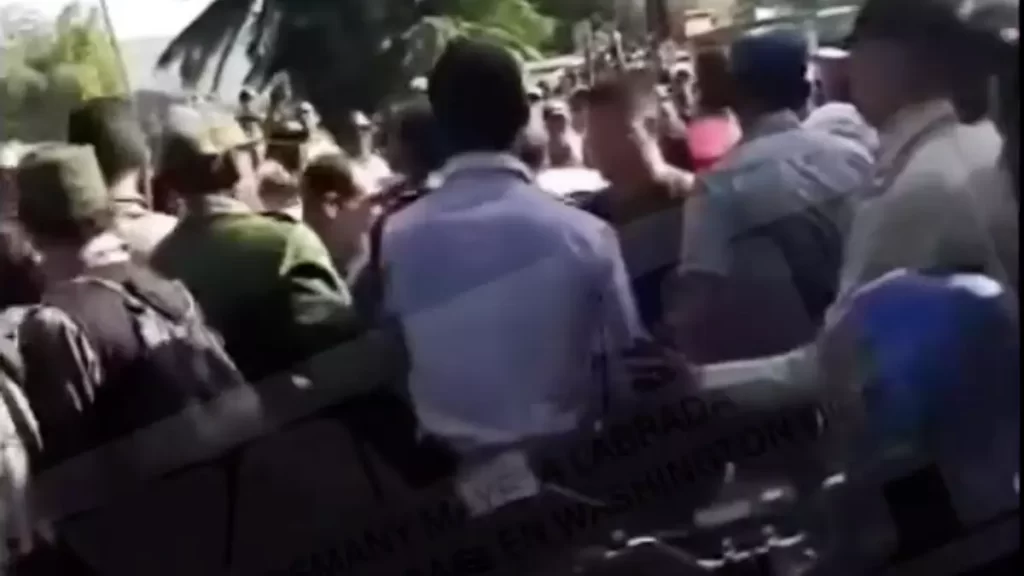
For a Second Day Protestors in El Cobre, Cuba, Demand the Release of Three Detainees

Police officers and soldiers in Cobre try to forcibly arrest a young man as several civilians intervene to stop them / Facebook/Yosmany Mayeta Labrada

14ymedio bigger14ymedio, Havana, 18 March 2024 — For the second day in a row, dozens of people gathered in front of a police station in El Cobre, a town in Santiago de Cuba province. The Cuban government and the Foreign Ministry, however, are pushing another narrative. They attribute the protest to interference from Washington and have summoned the U.S. chargé d’affaires in Havana, Benjamin Ziff, to complain.

Several videos posted on social media claim the demonstration started after family memebers of the three detainees staged a protest in front of the police station on Sunday to call for their release.

In one of the videos posted by independent journalist Yosmany Mayete Labrada, police officers and soldiers can be seen trying to arrest a young man as several civilians intervene to stop them. Several demonstrators also sat in the middle of the street, blocking a squad car which was there to take the young man to jail.

Clips from other videos show protesters shouting “freedom” as the police officers advance towards the crowd with clubs in their hands. “The town is heavily militarized and people have tried to prevent the police from transferring three protesters who were unjustly arrested,” Mayeta stated on Facebook. continue reading

Following protests on Saturday, the Cuban government accused Washington of trying to destablilize the country. On Monday the Foreign Ministry took things one step further, summoning Ziff to a meeting with Deputy Foreign Minister Carlos Fernández de Cossío to lodge a formal complaint.

In a press release, the Foreign Ministry stated, “The American diplomat was reminded of the minimum standards of decency and honesty that are expected of a diplomatic mission in any country, which the United States embassy in Cuba is incapable of observing. It was also pointed out that this diplomatic office and its personnel are obliged to behave in accordance with the rules of the Vienna Convention on Diplomatic Relations.”

Once again, they reminded Ziff that the U.S. bears direct responsibility for Cuba’s economic crisis, particularly for “the depression and shortage of essential goods and services,” which it blamed on the U.S. trade embargo, calling it ’the blockade’. They also accused Washington of pursuing a policy of destabilization with clearly “aggressive purposes” and brought up the issue of Cuba’s presence on the State Department’s list of state sponsors of terrorism. In a revealing final comment, they also blamed the United States for targeting the country’s fuel imports and for “intimidating businesspeople, visitors, artists and any person with an interest and right in interacting with the Cuban people.”

“I think what we are seeing is a reflection of the dire situation on the island”

The social-media profile pages of Foreign Minister Bruno Rodríguez and President Miguel Díaz-Canel have devoted space to the official version of the events, claiming they were carried out by a tiny group of concerned citizens but manipulated by the “enemies of the Revolution.” They also warned the US embassy in Havana that it must “refrain from interfering in the internal affairs of the country and inciting social disorder.”

The Biden administration has not remained silent. Brian Nichols, Assistant Secretary of State for Western Hemisphere Affairs, stated on social media, “The United States supports the right of the Cuban people to assemble peacefully.”

Nichols added that the Cuban government will not be able to satisfy the needs of its people until it adopts democracy and the rule of law, and respects the rights of its citizens.

“Let me just be quite unambiguous about this. The United States is not behind these protests in Cuba and the accusation of that is absurd,” State Department spokesman Vedant Patel told reporters on Monday. He added, “Protests across several cities in Cuba yesterday called for electricity, food, and fundamental freedoms. I think what we are seeing is a reflection of the dire situation on the island. We urge the Cuban Government to refrain from violence and unjust detentions and are calling on the authorities to respect the Cuban citizens’ right to peaceful assembly.”

This weekend’s protests began Saturday night in Cacocum, a town in Holguín province.  Residents there came out to demand an end to the blackouts, banging pots and pans, and shouting “We want power.” The gesture was replicated on Sunday in the city of Santiago de Cuba, where the local government tried to control the situation by restoring electricity and cutting off the internet. In the nearby village of El Cobre, protesters began shouting “No to violence” in the presence of police patrols and soldiers.

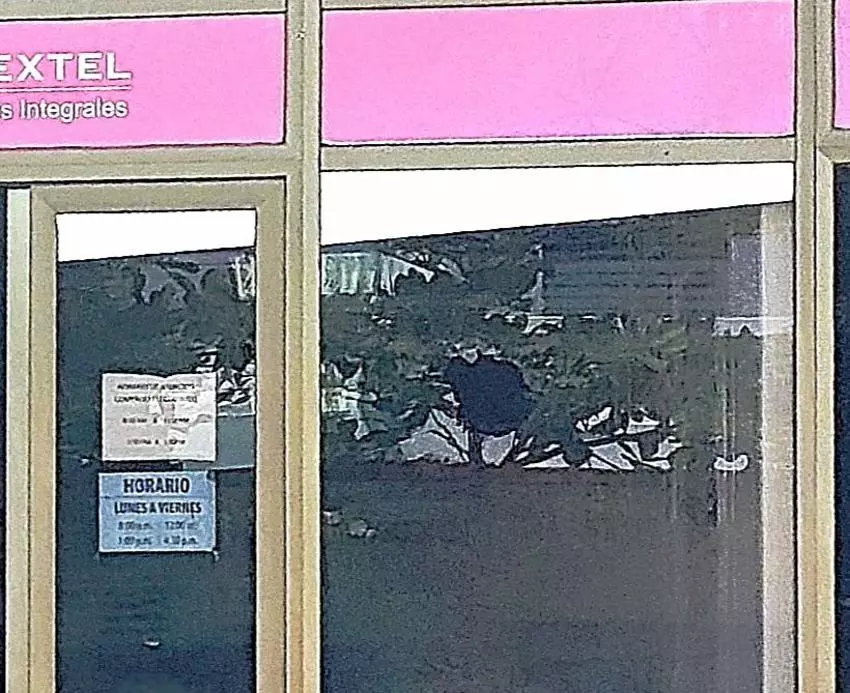
Locals in Sancti Spíritus report that a Copextel store and a branch of the People’s Savings Bank were attacked with stones / 14ymedio

Following the example of Santiago de Cuba’s provincial communist party leader, local leaders climbed on the roof of a building in an effort to calm the demonstrators, who responded by shouting “No one elected you.”

Locals in Sancti Spíritus report that a Copextel store and a branch of the People’s Savings Bank were pelted with stones in downtown Julio Antonio Mella Street on Sunday. Evidence of the attack was visible on Monday in the form of a hole in a window of the state-run store and a missing door at the bank, which was removed for repairs.

The protests in Santiago were followed by others in Santa Marta, a small town near Varadero in the midst of a blackout, and Bayamo. A video of the demonstrations in Granma shows a group of citizens struggling with police officers while others flee to avoid being beaten. In a video posted by La Hora de Cuba, hundreds of people can be seen chanting “Homeland and Life” and singing the national anthem. The site claims that the entire city is under military lockdown. A third video posted on social media confirms the presence of security patrols blocking a street, identified in the responses as Zenea Street, to prevent the protesters from continuing their march.

Only in El Cobre did residents return to the streets on Monday. Many cities throughout the country, such as Havana, were under military lockdown and remained eerily quiet.

____________

COLLABORATE WITH OUR WORKThe 14ymedio team is committed to practicing serious journalism that reflects Cuba’s reality in all its depth. Thank you for joining us on this long journey. We invite you to continue supporting us by becoming a member of 14ymedio now. Together we can continue transforming journalism in Cuba.
The Sister of the Former Cuban Minister of Economy Denies That He Is Detained: ‘He Is Incommunicado’

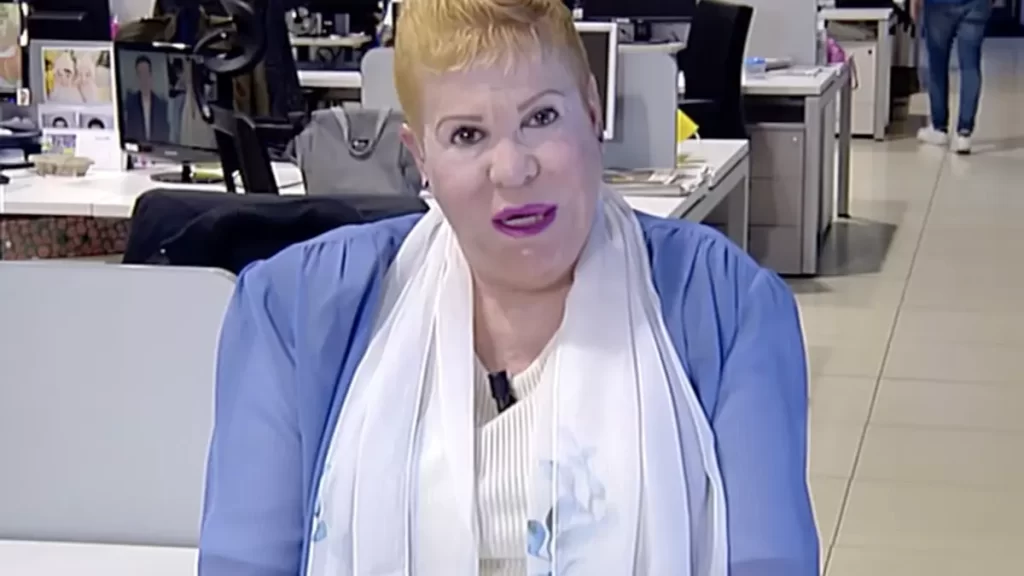
Caption – Vicky Gil, during her interview with Canary Island television, in Spain (TVC/Capture)

14ymedio bigger14ymedio, Yaiza Santos, Madrid, 20 March 2024 — María Victoria Gil Fernández spoke publicly again about her brother, the former Minister of Economy. In a statement this Monday to Canary Islands television in Spain, where she resides, she said that Alejandro Gil has not been arrested: “My brother is incommunicado.” She also blamed Raúl Castro for the so-called Ordering Task,* which plunged the country “into absolute misery.”

In conversation with 14ymedio, this Tuesday, the former presenter of Televisión Cubana, who was in Havana between March 3 and 10, just when the “investigation” that the regime undertook against her brother was announced, corroborates everything she said about the former deputy and right-hand man of President Miguel Díaz-Canel.

María Victoria Gil Fernández: “He is not detained as such; he is incommunicado somewhere, maybe in Villa Marista, if it is a detention house of the Ministry of the Interior. From the legal point of view, detention means he is in prison, and he has not been charged with a crime. I couldn’t talk to him, I couldn’t contact him, because he is totally incommunicado.”

14ymedio: But he isn’t at home, neither he nor his wife?

A: No, no, no. Neither of them. Laura María Gil González is in the house, with her husband, Álvaro Iglesias, and my grandniece, who I wanted to meet, who is a year and a half old. But I understand that my niece is working [in the Caudal group, which is charged with the  custody and transfer of securities and belongs to the Ministry of Finance]. She goes to work and everything, but she doesn’t have a cell phone. continue reading

Until the Prosecutor’s Office charges him with a crime, one cannot say that he is corrupt. That’s why I said that I will file a complaint against the Con Filo television program, because the presumption of innocence is mandatory

Q: He is not detained, but if he is somewhere similar to Villa Marista, we know what that means.

A: I imagine that given my brother’s former position, he would not be in Villa Marista. In Cuba there are some special state security houses, very nice houses, in Miramar and in Nuevo Vedado, where high-level, “high-ranking” people are taken,  who are being investigated. It was the case of Carlos Lage and many others. They have all the luxuries and comfort; they are not given bad treatment either, far from it. He must be in one of those houses; I don’t know where.

Q: Who told you that he was incomunicado?

A: My nephew, who is not involved, Alejandro Arnaldo Gil González. He has always been apart from the whole family. He is a very quiet person, very reserved. He is a computer engineer, a professor, and he lives at his wife’s house in Playa. I communicate with my nephew every day. He tells me: “Auntie, this is going to happen, I’m sure.” He must really be suffering, because you can imagine a boy with his personality, his father being accused, as they say, of corruption, which is a term that has been used even by the Cuban press, but the prosecutor’s office has not charged him with any crime.

Q: Didn’t the public statement say “serious errors in the performance of his duties”?

A: “Serious mistakes in the performance of his duties,” and then there is a tagline, which has always been added since I was a little girl, born and raised with the Revolution: “The Government will never tolerate corruption, insensitivity or simulation (fraud).” That doesn’t mean that he is being accused of corruption. Until the Prosecutor’s Office charges him with a crime, one cannot say that he is corrupt. That’s why I said that I will sue the Con Filo television program, because the presumption of innocence is mandatory. It is described in the laws of criminal procedure, which are the same in Spain as in Cuba, Uruguay and Argentina, because they all come from the same root, which is Roman Law. If you are talking about charging a crime without respecting the presumption of innocence, you are committing the crime of slander.

Q: Con Filo is not an independent news program. It is actually the way the Government talks about your brother.

A. Exactly.

Q: In the interview with Canary Islands television, you blame Raúl Castro for the situation that Cuba is experiencing, and you also point out that Díaz-Canel congratulated your brother on his birthday on February 2, the same day that he was dismissed as minister.

A: The biggest contradiction that exists is that the president of the Republic of Cuba dismisses my brother on February 2 and congratulates him for his achievements, and my brother replies: “Thank you, Díaz-Canel, we continue with you,” and then on March 7 they announce that they are investigating him. How can the president of Cuba not know what is happening?

Q: Hence the question: To what extent did Díaz-Canel know what was happening on February 2? Your brother was his right-hand man.

A: They were “nail and flesh” (really close), as we say in Cuba.

“If Díaz-Canel had something to do with that decision and made it without knowing about the crimes, in quotation marks, which are supposedly imputed to my brother, how can he congratulate him on his good work?”

Q: Does Díaz-Canel have something to do with this decision?

A: Of course he has something to do with this decision. But if he does and he made it without knowing the crimes, in quotation marks, which are supposedly imputed to my brother, how can he congratulate him on his good work? It’s contradictory.

Q: How can you legally file a lawsuit against the Cuban Government, as you said yesterday?

A: I’m a lawyer by profession; I graduated in Cuba in 1982 wth high honors. I have four specializations, in forensic medicine, for example. I was advanced in judicial science. I will attend the proceedings. My son [Daniel Trujillo Gil] says that he is going to tie me to a tree, that he is going to tear up my Cuban and Spanish passports, but I’m going to do it.

If there is a trial, as was done with Ochoa, when the State cleared itself of all its crimes with one person, I was enraged knowing that behind Ochoa there was really State corruption. I will attend personally and make a private accusation. And if they show that my brother really was corrupt, then the others were also corrupt, and all the criminals involved will fall along with him. Even if my son wants to tie me to a tree. Now that I’m back, he hid my passport. He didn’t want me going to Cuba because he said that I was going to be detained, since I had made some very strong statements against the Government, and that they have arrested political prisoners in Cuba for less. But I went to Cuba, and no one bothered me.

Q: How do you interpret that arbitrariness?

A: I don’t know. My son sat with me two days ago and said, “Mamá, I’m going to be honest with you, and I have to tell you the truth. Today I am sure that you are a member of the Cuban State Security, because only and exclusively does it explain how after the statements you have made, the posts on Facebook and the interviews you have given, you have been able to enter Cuba without any problems.”

Q: And how did you respond?

A: What am I going to tell him? If he believes it, what can I do? If it had happened to him, I would believe it too. Because it is a miracle that I have really entered and left Cuba without anyone bothering me. There have been people who have done one-fifth of what I did, and they wouldn’t even let them get off the plane. It’s very strange and has no explanation, but that’s the way it is, and I am not a member of State Security.

*Translator’s note: The Ordering Task was a collection of measures that included eliminating the Cuban Convertible Peso (CUC), leaving the Cuban peso (CUP) as the only national currency, raising prices, raising salaries (but not as much as prices), opening stores that take payment only in hard currency, which must be in the form of specially issued pre-paid debit cards, and a broad range of other measures targeted to different elements of the Cuban economy.

Translated by Regina Anavy

____________

COLLABORATE WITH OUR WORKThe 14ymedio team is committed to practicing serious journalism that reflects Cuba’s reality in all its depth. Thank you for joining us on this long journey. We invite you to continue supporting us by becoming a member of 14ymedio now. Together we can continue transforming journalism in Cuba.
At Least Five People Have Been Arrested in the Latest Protests in Cuba

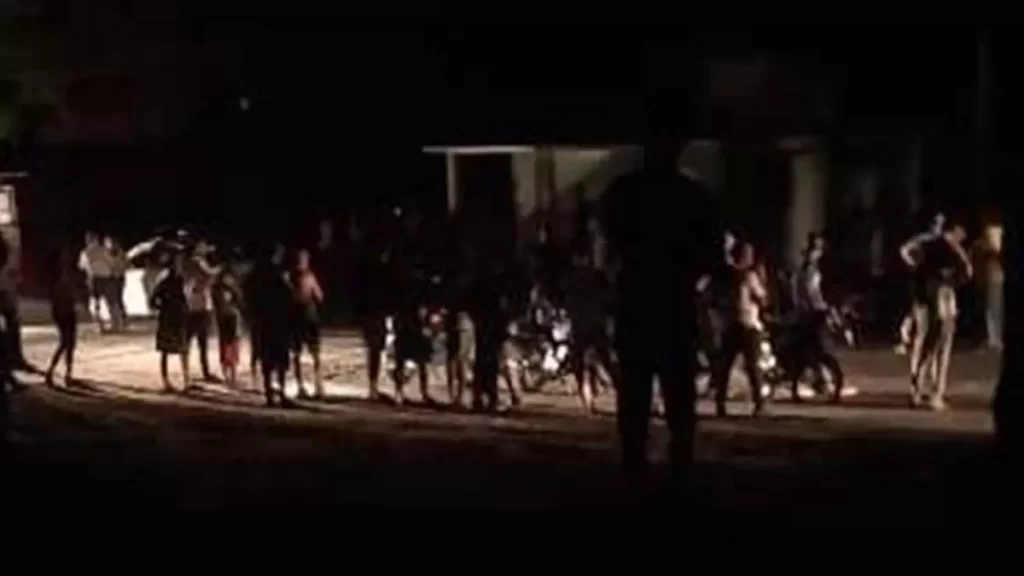
One of the images shared on social networks of  the protest in Santiago on the night of March 18 (Yosmany Mayeta Labrada/Facebook)

14ymedio bigger14ymedio, Havana, March 19, 2024 — There have now been at least eleven people arrested during this weekend’s protests in several places in Cuba. According to the legal organization Cubalex, in El Cobre (Santiago de Cuba) Oriesel García, Karel Artiles and another man whose identity is not known were arrested on Sunday. In Bayamo, Justicia 11J counted ten arrested, among whom two, Leandro Tamayo and Raúl González, have been released.

According to the organization, which does not know the identity of the others arrested and asks for help for this, Tamayo was released on Monday night after paying a fine of 3,000 pesos for “public disorders” and with an order to leave the province to return to his place of residence. “We have no more information about the conditions of Raúl González’s release,” adds Justicia 11J.

Some activists and social media profiles have also reported the arrest in Santa Marta (Matanzas) of a couple who participated in the protests on an electric motorcycle, but this has not been confirmed, and the identities of the detainees are not known.

Independent journalist Yosmany Mayeta Labrada reports that Oriesel García, 41, from Santiago, a member of the Masonic lodge, was violently arrested while demonstrating peacefully, and his whereabouts are unknown. continue reading

Justice 11J also reported the arrest of former political prisoner Ramón Jesús Velázquez Toranzo, who returned to Cuba from abroad, where he lives, and was arrested on March 8 after calling for a peaceful march in El Cobre.

His daughter Rufina Velázquez, who lives in the United States, said that her father was taken to the Carlos J. Finlay Military Hospital on Monday and that they still do not know “what charges have been invented against him or what legal process exists.”

“My brother was able to see my father, who is very weak, in a complicated health condition. He is still on hunger strike,” she added, encouraging Cubans to continue protesting. “We are uniting in a just cause, which is love for Cuba,” she said.

Despite the repression, the demonstrations continued on Monday night. With the shouts of “Turn on the power,” “Patria y vida” and “Díaz-Canel singao (motherfucker),” several neighborhoods of Santiago de Cuba, such as Micro 9 in the José Martí district, joined the march of conga and cacerolazos [banging on pots and pans],* after the residents of El Cobre did the same.

According to Mayeta on Facebook, the residents had been without electricity since 1:00 a.m. on Monday afternoon and began to demonstrate at night, chanting “We are hungry.” In the area near the Sodito cafeteria, “several patrol cars and black berets (special troops) arrived, but people continued to protest and beat on pots and pans,” he said.

Hours later, Mayeta, who lives in the US, shared other videos where several trucks were seen moving sacks, while the population shouted: “The rice, the rice has arrived!” One of the demands of the demonstrators, along with the cessation of blackouts, has been that the standard ration of food, which is late or only half of the allotted amount, be delivered to the ration stores. Local leaders have tried to calm the protests by momentarily turning on the power and speeding up the deliveries.

Mayeta also said that the Los Pinos neighborhood had taken to the streets and published a video in which, in the middle of a blackout, the residents walked through the streets shouting slogans.

Other publications on social networks report protests in Sancti Spíritus, as well as internet outages throughout the Island. As a neighbor who asked for anonymity told this newspaper, on Monday night several people gathered in the Jesús María neighborhood to protest, but they were silenced by a group that chanted slogans in favor of the Government. In a video released on social networks, which allegedly records these  protests, several protesters are seen singing La Bayamesa, the national anthem, and demanding “Freedom!”

Several communities of Cubans residing in various countries have demonstrated in support of the protests on the Island. In Spain, emigrants demonstrated in Madrid, Barcelona and Bilbao.

Also in Belgium and Uruguay, exiled Cubans have asked the Government of the Island to respond to the demands of the citizens and respect their right to demonstrate. “Our exile community continues demonstrating in the streets of Uruguay for the second day, accompanying the protests in Cuba and making visible the repression that the regime continues to exercise against our civil society. All off us are giving moral support to our people from South America,” said the Cubanos Libres platform in Uruguay on its social networks.

In the United States, in addition to the support of several congressmen and politicians of Cuban origin, such as Mario Díaz-Balart, Maria Elvira Salazar, Carlos Giménez, Marco Rubio and Rosa María Payá, the exile community also held demonstrations in front of the Versailles restaurant, in Little Havana (Miami), at the monument to José Martí in New Jersey and in front of the Cuban Embassy in Washington.

Meanwhile, the Cuban Government insists on blaming the United States for the economic situation of the Island and for “taking advantage” of the moment of crisis to instigate disorder. The Cuban Foreign Ministry even called on the chargé d’affaires of the Washington Embassy in Havana to give him a protest note which called for order and warned him about the “intervening” behaviors of his Government.

In this Monday’s broadcast of the Primetime News, Miguel Díaz-Canel, who appeared in front of the state press and several leaders, said the protests were “created by instigators” and called the Washington Embassy in Havana – which posted a statement on X asking for the human rights of the demonstrators to be respected – “meddling,” “hypocritical” and “arrogant.”

Faced with the accusations, the Biden Administration responded to Havana: “The United States supports the Cuban people in the exercise of their right to meet peacefully,” Brian Nichols, the head of the State Department for Latin America, said on social networks. “The Cuban Government will not be able to meet the needs of its people until it adopts democracy and the rule of law and respects the rights of citizens.”

*Translator’s note. Protesting by banging on pots and pans, called a ‘cacerolazo’ in Cuba, is a common form of protest in many Latin American countries.

Translated by Regina Anavy

____________

COLLABORATE WITH OUR WORKThe 14ymedio team is committed to practicing serious journalism that reflects Cuba’s reality in all its depth. Thank you for joining us on this long journey. We invite you to continue supporting us by becoming a member of 14ymedio now. Together we can continue transforming journalism in Cuba.
La Guiteras Power Plant Lasts Only One Day Before Shutting Down on the Cuban Electric System

View of the Antonio Guiteras thermoelectric plant, the largest in Cuba, located in the province of Matanzas. / TV Yumurí/Facebook

14ymedio bigger14ymedio, Madrid, 20 March 2024 — The main thermoelectric power plant in the country, the Antonio Guiteras of Matanzas, left the National Electric System (SEN) just 24 hours after its synchronization. Without further details, early in the morning of Wednesday, the Electric Union of Cuba (UNE) announced that its only unit is out of service “due to a breakdown.”

The Guiteras entered the SEN on Monday, March 18, after being out of service 17 days for maintenance. Its arrival was eagerly awaited, since it is the plant with the most generation, 280 megawatts (MW) at full capacity. Journalist José Miguel Solís, of Radio Rebelde in Matanzas, follows the wanderings of the thermoelectric plant. He published an image of the Guiteras in full operation shortly before 1:00 in the afternoon on Tuesday, when its capacity was 270 MW.

According to Radio 26 of Matanzas, in the early hours of Wednesday the plant suffered an “inconvenience in the boiler,” in addition to a steam leak in one of the turbines, which the technicians hope to solve in a short time. “The correction of the breakdowns, natural after an intense maintenance of 1,500 parts, will allow the reinstatement of the unit before the time of maximum demand,” the media said. continue reading

This Monday, the Minister of Energy and Mines, Vicente de la O Levy, celebrated the return of the western colossus that, together with a tanker that was supposed to arrive with fuel “in the middle of the week,” could alleviate the huge deficit reached in the last month, when records showed a deficit of up to 45% of the daily demand for electricity throughout the Island. The blackouts have even reached Havana, traditionally free from the most extensive cuts that are common in the interior of the country, especially in the east.

The Minister of Energy and Mines, Vicente de la O Levy, celebrated the return of the western colossus, together with a tanker that was supposed to arrive with fuel “in the middle of the week”

The shortage of energy, which shuts down water pumping systems, air conditioners and fans, and causes problems with cooking in homes and businesses, among other things, have forced hundreds of Cubans into the streets throughout the country. The forecast of two weeks of calm announced by the authorities is now meaningless with the departure of the Guiteras.

In addition, unit 2 of the Felton plant, in Holguín, is no longer in the system due to a breakdown, and unit 8 of the Mariel plant and unit 6 of Nuevitas are undergoing maintenance, while the “limitations in thermal generation” as the UNE calls them, are 457 MW.

The total forecast for this Wednesday, in the middle of this panorama, is 940 MW of deficit, favored by a cooler climate than last week. “They can’t pretend that putting patches and glue on a transformer of such power can solve the problem,” says a customer. Unfortunately, what the Guiteras needs is a total maintenance on everything, and there’s no money for that.”

Translated by Regina Anavy

____________

COLLABORATE WITH OUR WORKThe 14ymedio team is committed to practicing serious journalism that reflects Cuba’s reality in all its depth. Thank you for joining us on this long journey. We invite you to continue supporting us by becoming a member of 14ymedio now. Together we can continue transforming journalism in Cuba.
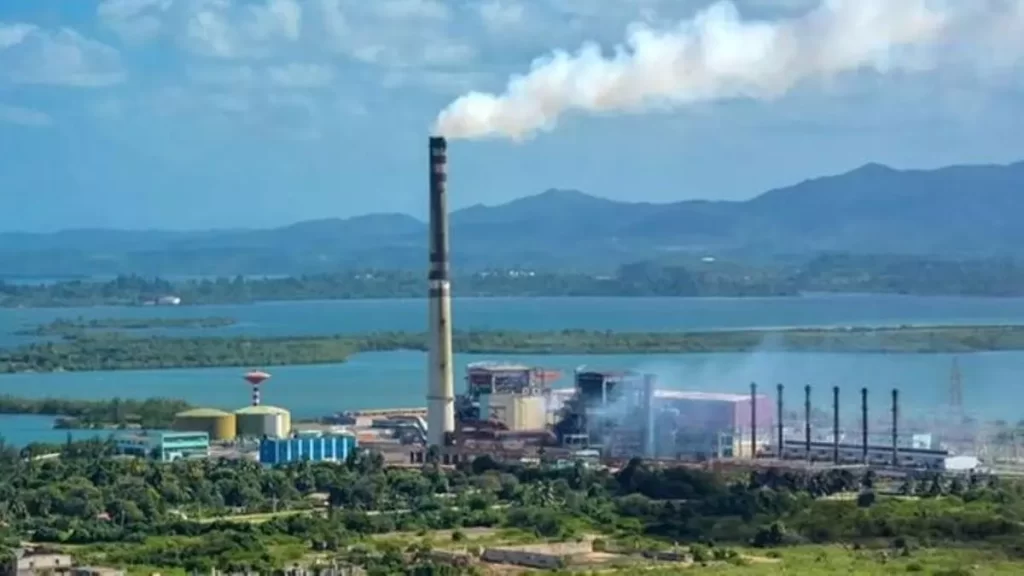
Residents of Santiago de Cuba Take to the Streets, Demanding Electricity and Food

Protests this Sunday in Santiago de Cuba

14ymedio bigger14ymedio, Havana, 17 March 2024 — After several days of extended power outages and weeks-long shortages of basic rations, thousands of Santiago residents took to the streets on Sunday, shouting “electricity and food… freedom… homeland and life” and “We are hungry.”

The crowd was concentrated on Carretera del Morro, close to several popular and humble neighborhoods such as Vista Hermosa, Van Van, Dessy and Altamira.

After initial images of a large-scale demonstration began to appear on social media sometime after noon, the Cuban government — as has become customary in such instances since the Island-wide protests of 11 July 2021 — began restricting communications, cutting off cell-phone internet access across the island.

Independent journalist Yosmany Mayeta Labrada, who was born in Santiago de Cuba and now lives in the United States, shared several images of the city sent to her by followers of her Facebook page. These show a strong police presence that includes uniformed officers monitoring some of the protest and several patrol cars at the scene.

The recently appointed provincial Communist Party secretary, Beatriz Johnson Urrutia, arrived on the scene. In a video posted by Mayeta, Johnson can be seen on the roof of a house trying to talk to the crowd, who shout her down. Dozens of people, mainly women, insult her and other officials. They can be heard chanting Patria y vida and, to applause, “libertad.”  A truckload of soldiers can also be seen in the video being rebuked by the crowd.

https://www.facebook.com/100008052648546/videos/426155683221905/?ref=embed_video&t=0

In the same video, a lieutenant colonel from the Armed Forces ministry as well as dozens of police officers can be seen among the demonstrators but, for now, there have been no reports that security forces have tried to disrupt the protest.

Other footage seems to capture the moment when Beatriz Johnson arrives on the scene. In an expression of frustration with the excuses the regime always provides to justify its mismanagement, people can be heard shouting “We don’t want a lackey”.

Residents of Santiago de Cuba report that on Saturday, March 16, ration stores in some areas of the city began distributing only three pounds of rice instead of the usual monthly quota of six pounds. Residents are only just now receiving January’s quota of coffee. “We’re dying of hunger and, on top of that, there are the blackouts. There’s not even enough electricity to chill some water or preserve the little food you do get,” says a resident of Caney, a village northeast of Santiago.

In another video circulating on social media, women of varying ages, among them women holding children, shout “electricity and food.” Plainclothes policemen try to silence them but the women just shout louder.

Similarly, another resident shouts, “Down with communism… Down with Díaz-Canel.”  A short time later, several women applaud her, shouting “electricity and food.”

https://www.facebook.com/100008052648546/videos/1549077522316071/?ref=embed_video&t=23

In an unusual move, the government-run digital news website Cubadebate offered explanations for what was happening in Santiago de Cuba on Sunday. In a post on Facebook, it stated, “As a result of hours-long hours of power outages due to the unavailability of fuel and other situations resulting from the current economic crisis, some people took to the streets and a popular demonstration occurred.”

It added, “Demonstrators were calling for ’electricity and food,” and noted, “Isolated shouts of “Patria y Vida” could be heard coming from small groups within the crowd,” though it added that “most demonstrators did not join in.”

Cubadebate has also reported the presence of security forces but says, “Police have not intervened, as can be seen in the videos. They are just monitoring the demonstration and conversing directly with citizens, in the normal course of duty. They are allowing the demonstration take place unhindered.” It also confirms of reports of Beatriz Johnson’s and other officials’ presence at the scene, “talking to the people and listening attentively to the complaints.”

“Police have not intervened, as can be seen in the videos. They are just monitoring the demonstration and conversing directly with citizens”

Though no activist or independent journalist has called for violence, state media claims that there have been such calls from “media and spokespersons who seek social destabilization on the Island and violence among Cubans.”

“Is the demonstration still going on?” asks Cubadebate without providing a definitive answer. “Some reports indicate it has ended though videos and photos of the event are still being posted on social media.”

Demonstrations were also reported on Sunday in Bayamo, a city in Granma province. Videos posted on social media show a crowd in the streets, with some people on foot and others on bicycles, tricycles and electric scooters. Photographs released by independent news outlets also indicate the presence of police and soldiers in transport trucks ready to break up the demonstrations.

14ymedio received a report after 7:00 P.M. that, in recent days, there were several protests in Holguín and that military personnel have taken over some large parks in the city such as Calixto García, Las Flores y el José Martí.

“There are dozens of officers on motorcycles, plainclothes police, patrol cars and cars with men in red berets,” describes one city resident. “They expect something or fear repercussions in Holguín from the Santiago demonstrations,” he adds.

It seems provincial authorities felt an urgent need to respond quickly to the situation. A large part of the city center is militarized, with many civilian security personnel present as well,” says the same source, who claims that, due to heavy surveillance, photos cannot not be taken.

In other provinces such as Sancti Spíritus and Artemisa, phone calls cannot be made and mobile data is not working.

____________

COLLABORATE WITH OUR WORKThe 14ymedio team is committed to practicing serious journalism that reflects Cuba’s reality in all its depth. Thank you for joining us on this long journey. We invite you to continue supporting us by becoming a member of 14ymedio now. Together we can continue transforming journalism in Cuba.
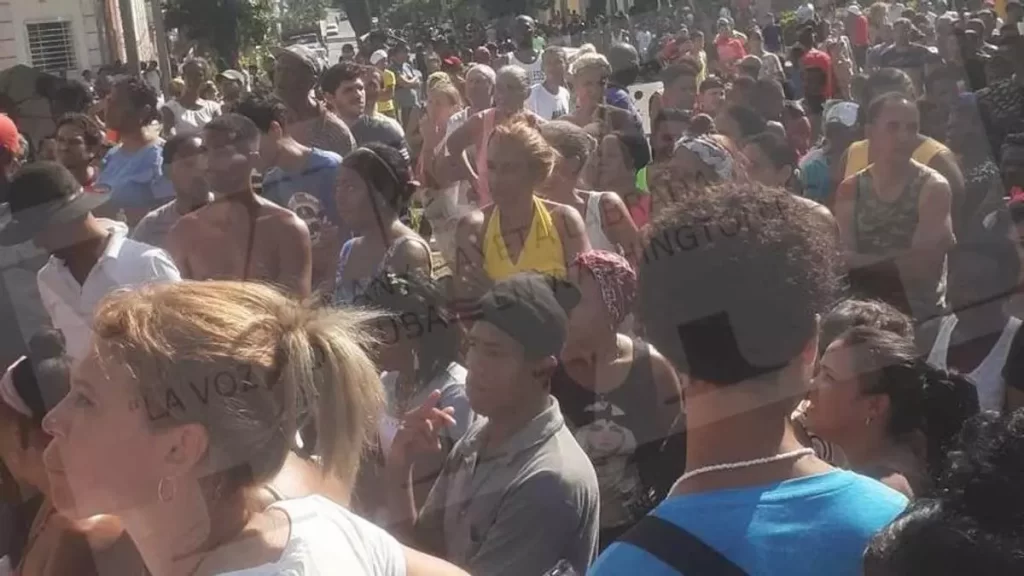
Chile Faces the Danger of Following in Cuba’s Footsteps

Although they were all fair demands, the way of expressing them through citizen “revolts,” in which the current president Gabriel Boric also participated, left much to be desired / Twitter/Archivo

14ymedio bigger14ymedio, Houston, Jorge Luis León, 15 March 2024 — Chile is a beautiful and vigorous country – I saw this when I visited my Chilean family in 1996 – but the political instability and constant protests that shook the country distorted that beauty. The Estallido Social, a social outburst that lasted from October 2019 to March 2021, has been one of the most violent in recent years. Many say this was the moment of the “awakening of Chile”; others describe the protests as a “big mistake” that weakened the country enormously. For me, the outburst exceeded the limits that Chilean democracy could endure.

The trigger was the increase in public transport rates, later joined by demands for reform in the health and education sectors, as well as with pensions. Although they were all fair claims, the way of expressing them through citizen “revolts,” in which the current President Gabriel Boric also participated, left much to be desired.

The violence covered Santiago and quickly spread to other regions of the country. The “awakening” left about 34 dead, in addition to thousands wounded and arrested. On the economic front, the losses amounted to 3.3 billion dollars, between 100,000 and 300,000 jobs, the devaluation of the Chilean peso and a decline in the country’s economic growth. continue reading

The “awakening” left about 34 dead, in addition to thousands wounded and arrested   

This was the situation when Boric came to the presidency in 2022. His program promised everything that citizens had demanded during the demonstrations: justice, order, increase in the minimum wage, improvements in education and health, and, as a highlight, a new Constitution for the country. So far, nothing seemed out of the ordinary, although the inclusion of several communist politicians in his cabinet raised suspicions.

In the long run, the Administration demonstrated its inability and clumsiness in governing, to the point that 65% of the population disapproves of its management. Nothing has been resolved. On the contrary, new problems have arisen with few solutions, and the Government “advances” blindly in the face of many possible missteps.

One of the scenarios where Boric’s poor political judgment was clearly perceived was the creation of a preliminary draft of a new constitution for Chile, with which he intended to divide the country into multiple nations. Naturally, the proposal was rejected by the Chileans. Weren’t there enough elements to suggest that such clumsiness would not pass the scrutiny of the people? Yes, there were, but a myopic president and an unprepared government team could not perceive them.

This is how things continue in a country that was called at some point, with good reason, the “locomotive of South America.” If this Government does not rectify its course, if it persists in blindly following the continent’s far left, the consequences are predictable: stagnation, poverty and, what is worse, hopelessness.

Let’s look in our own mirror: Cuba, one of the most prosperous nations in Latin America, became one of the poorest. I hope history doesn’t leave the Chileans, like us, mortally wounded.

Translated by Regina Anavy    

____________

COLLABORATE WITH OUR WORKThe 14ymedio team is committed to practicing serious journalism that reflects Cuba’s reality in all its depth. Thank you for joining us on this long journey. We invite you to continue supporting us by becoming a member of 14ymedio now. Together we can continue transforming journalism in Cuba.

A Proposal To Join Forces Against the Dictatorships of Cuba and Its Allies

Luis Zúñiga, former Cuban political prisoner, during the conference on torture and dictatorships in Latin America held in Madrid. (14ymedio)

14ymedio bigger14ymedio, Madrid, Rosa Pascual, 18 March 2024 — More than 4,000 miles away from Santiago de Cuba, in Madrid, there was talk this Monday night of the protests that took place in the eastern capital and other cities of the Island. “Let’s keep present in our thoughts the people who are in the streets right now,” said Javier Larrondo, founder of Prisoners Defenders, at the beginning of the part dedicated to Cuba in Faces of Torture, autocracies in Latin America.

Leopoldo López, general secretary of the World Liberty Congress, which organized the event with the support of the Human Rights Foundation (HRF), had inaugurated a conference for victims of the tyrannies of Bolivia, Nicaragua, Venezuela and Cuba, asking for the unity of the citizens of all countries living under an autocratic regime. “Human rights have no borders; human rights cannot be defended on islands, without understanding that every human being has the same rights, regardless of where he lives,” said the Venezuelan opponent, exiled in Spain since October 2020.

Both he and former Bolivian senator Zvonko Matkovic, who spent ten years in pretrial detention without trial, insisted on the union of the activists of the four countries in response to the authoritarian regimes, all members of the Puebla Group. “The rulers help each other, and we also have to help each other.”

“They have the whole society on its knees. They need to establish terror in society. That’s why they torture those who have the audacity and courage to face them”

Along with Larrondo, the voice of Cubans was represented by Luis Zúñiga, a former political prisoner described by the regime as an “anti-Cuban terrorist,” who began by exposing how Castroism has used the Armed Forces from the beginning to torture and repress the Cuban people. “They continue reading

have the whole society on its knees. They need to establish terror in society. That’s why they torture those who have the audacity and courage to face them,” he said.

Zúñiga, who silenced the already sensitized audience by telling how he and other prisoners covered their ears with threads pulled out of their underwear so as not to hear the screams of the tortured, detailed the process of accelerated establishment on the Island of a terror based on that of the Stalinist regime. To illustrate, he gave a figure.

Before 1959, there was a prison for each province in Cuba, which then numbered 6, and now number 15. After, 240. “On an island of 11 million inhabitants. So that you understand the level of repression that has been experienced in Cuba for 65 years.” In the 1960s, he said, there were 120,000 political prisoners, “recognized by Fidel Castro and commented on at the United Nations.” He showed a photograph of a walled cell, like the one in which he himself spent nine of the 19 years he was in prison. “There is no window in the cell, and that’s where you live. You live perpetually in that twilight,” he added.

Zúñiga also spoke of the Cuban presence in Angola and showed photographs from the ’11J’ demonstrations of the wounded and beaten. By criticizing the regime, Cubans can lose their jobs and, even worse, their freedom. In addition, he stressed, Cuba is the model to follow for the rest of the autocratic countries in the region. “They have two strategies: one for friendly countries, which are Nicaragua, Venezuela, Brazil and Honduras; and another for other countries, such as Colombia, Chile, Argentina, Uruguay.” In the former, he specified, intelligence and the Armed Forces are trained, while in the second they act “through non-governmental organizations, civil society and far-left organizations.”

Venezuelan Leopoldo López, general secretary of the World Liberty Congress, inaugurated the event in Madrid. (14ymedio)

Javier Larrondo asked everyone to have a symbolic and specific thought for the leader of the Patriotic Union of Cuba, José Daniel Ferrer, among the many individual cases he cited. The alarm has increased over this prisoner in the last 24 hours, after his relatives – later supported by American and European political leaders – asked for proof of life. They haven’t heard from him since November 2023. “There is a victim who is being tortured, and they are killing him slowly, systematically. And his name is José Daniel Ferrer. They want to release him in a wheelchair, that’s a reality,” Larrondo shouted.

In his speech there was no lack of reproach toward the leaders of the European Union, for sitting down and shaking hands with the leaders of the regimes who torture those who are willing to stand up to them.

The figures provided at the beginning of the event by Javier El-Hage, legal director of HRF, did not leave anyone indifferent. “In the world, there are a total of 97 authoritarian or hybrid states; that is, with a democratic facade but authoritarian methods.” Among those he considers “hybrids” are India and Serbia, he said, warning of the considerable ground that authoritarian governments are gaining in the face of democracies.

“There is a victim who is being tortured, and they are killing him slowly, systematically. And his name is José Daniel Ferrer”

His introduction was followed by Jhanisse Vaca Daza, of the Jucumari Foundation, and Alejandra Serrate, both Bolivians, who demanded that the situation of their country be taken into account, overshadowed by the apparently most brutal cases of Cuba, Nicaragua and Venezuela.

Vaca Daza told the story of the indigenous opponent, César Bazán, a cocoa grower, who is in a private prison for medical assistance after suffering three embolisms that paralyzed him after being tortured. According to her report, the jailers pressured him to sign – with a finger, since he lacks mobility – a paper admitting his guilt. “They told him that he could be free and have the necessary care, that he is there because it is his decision to be suffering that type of torture, that he does not know because he is very stubborn and does not want to accept it,” she said.

Both agreed that the Government of Luis Arce is even “stronger in terms of repression, political persecution, torture and authoritarianism, even armed attacks on the press, because it wants to win the vote of the people who support Evo Morales.”

Another of the most emotional moments occurred during the testimony of the Nicaraguan student leader Lesther Alemán, who received a standing ovation from the auditorium by reclaiming his nationality, lost “only on paper.” “I am and will continue to be Nicaraguan, however painful that is.” Alemán, 26, spoke together with the activist Alexa Zamora, also stripped of her passport, and told of the case of the children who are collateral victims of the violence of these dictatorships, exemplified in the case of the son of one of the stateless opponents who – like him – was forcibly expatriated on a flight to the United States.

Alemán did not want to reveal the name of the affected person, but he did explain that the child could not leave the country because his father, lacking a passport, “did not exist.” The solution that was offered to the family in Migration – “sent from above” – was to deprive the minor of his paternal surname and formally take away parental authority. “The minor has had to lose his father’s last name to be able to hug him,” he said, showing the way family members are pressured.

“Not only is it worrying that there are more and more dictatorships, but that their economic and commercial power is increasing”

Venezuela was very present at the event, especially thanks to the video with virtual reality prepared by Víctor Navarro, from Voices of Memory, to place attendees of the exhibition – which will be open until Wednesday in the Serrería Belga cultural space in Madrid – inside the Helicoide prison itself, headquarters of the Bolivarian Intelligence Service in which all kinds of tortures have been reported.

Both he and Molly de la Sotta put the focus on the many detainees of the Maduro regime that “liberates political prisoners on one hand and imprisons as many on the other.” Both were critical of the processes of dialogue that have been carried out with the Government of Nicolás Maduro and, even more, of the many dealings that the different countries have with Venezuela. “Many democratic countries continued to do business with Venezuela. Not only is it worrying that there are more and more dictatorships, but that their economic and commercial power is increasing. According to a report, 48% of the world’s Gross Domestic Product is produced by autocracies,” said Navarro. “An economy that is maintained thanks to the blood of the tortured.”

De la Sotta shook up the public detailing some of the methods of torture of Chavismo that have been documented, including asphyxiation by immersion, hanging with ropes, cuts in the soles of the feet, rapes with a rifle, simulation of executions, deprivation of food and sleep for more than 48 hours, obligation to eat their own excrement and vomiting, and all kinds of ideas, imaginable or not.

“This is a key year for the permanence of this autocracy. A key year for a transition process. Yes, we need the European Union. We need you to say that there is torture in Venezuela. We need you to demand the release of political prisoners. In Venezuela there is torture; in Venezuela there is murder. But there are also Venezuelans who are not going to shut up and who are going to continue fighting,” Navarro concluded.

Translated by Regina Anavy

____________

COLLABORATE WITH OUR WORKThe 14ymedio team is committed to practicing serious journalism that reflects Cuba’s reality in all its depth. Thank you for joining us on this long journey. We invite you to continue supporting us by becoming a member of 14ymedio now. Together we can continue transforming journalism in Cuba.

Cuba and North Korea Congratulate Putin on His Electoral Victory With 87 Percent of the Votes

Russian President Vladimir Putin and his Cuban counterpart, Miguel Díaz-Canel, in an archive image.

14ymedio biggerEFE (via 14ymedio), Havana, 18 March 2024 — The president of Cuba, Miguel Díaz-Canel, congratulated his Russian counterpart, Vladimir Putin, on his re-election for a fifth term as president, after achieving his biggest electoral victory since he came to power this Sunday, which will allow him to remain in the Kremlin until 2030.

“Our sincere congratulations on the re-election of President Vladimir Putin. It is a reliable sign of the Russian people’s recognition of his management,” the Cuban ruler said on the social network X.

Díaz-Canel said that “links between Cuba and Russia will continue to be strengthened, in sectors identified for the well-being of our peoples.”

In the last year, the relationship between the two governments has intensified, with the exchange of visits by senior officials, including trips to Havana by the Russian Chancellor, Sergey Lavrov, the secretary of the Security Council and the deputy prime minister, Dmitry Chernyshenko. continue reading

Russia is one of Cuba’s top ten trading partners, and both governments define their association as “strategic.” In November 2022, Díaz-Canel and Putin analyzed in Moscow the development prospects for the Russian-Cuban strategic partnership in the political, economic, commercial, cultural and humanitarian spheres. Several agreements were signed, including the supply of oil, a key area for Havana.

The North Korean leader, Kim Jong-un, also sent a message of congratulations to the Russian president for his victory in the presidential elections held on Sunday, in which the authorities did not allow the participation of any strong opposition candidate.

In a brief note, the North Korean news agency KCNA said that Kim “congratulated Vladimir Vladimirovich Putin on Monday on his re-election to the presidency of the Russian Federation.”

The message, the report adds, “will be transmitted to the Russian Ministry of Foreign Affairs by Sin Hong-chol, ambassador of the Democratic People’s Republic of Korea (official name of North Korea) to the Russian Federation.”

The Russian Central Electoral Commission allowed only three candidates considered loyal to the Kremlin to take part in the presidential elections  

Kim and Putin held a summit meeting last September at the Russian cosmodrome in Vostochny. They agreed to expand cooperation in the military field and certified the recent rapprochement between the two countries.

Since then, Pyongyang has transferred thousands of containers with weapons that the Russian Army has used against Ukraine, and in return, it is believed that Moscow advised the North Korean regime on successfully launching its first spy satellite.

Both countries have also strengthened their cooperation in the areas of food, commerce, science, tourism and sports.

Alleging technical or formal defects, the Russian Central Electoral Commission (CEC) allowed only three candidates considered loyal to the Kremlin to take part in the presidential elections.

Putin, 71 years old and in power since 2000, received 87.34% of the votes, ten points more than in 2018 (76.5%), during the three days of voting in the eighth presidential election in the history of Russia since 1991, according to the scrutiny of 50% of the votes reported by the Central Electoral Commission (CEC).

The second and third candidates with the most votes were the communist Nikolai Kharitonov and the representative of the New People party, Vladislav Davankov, with just over 4% of the votes each. The last contender was the ultra-nationalist Leonid Slutski, who received approximately 3% of the votes.

Translated by Regina Anavy

____________

COLLABORATE WITH OUR WORKThe 14ymedio team is committed to practicing serious journalism that reflects Cuba’s reality in all its depth. Thank you for joining us on this long journey. We invite you to continue supporting us by becoming a member of 14ymedio now. Together we can continue transforming journalism in Cuba.