The Cuban Regime Confirms Talks With the United States

Miguel Díaz-Canel says the goal is to “identify areas of cooperation” and “concretize actions for the benefit of the peoples of both countries.”
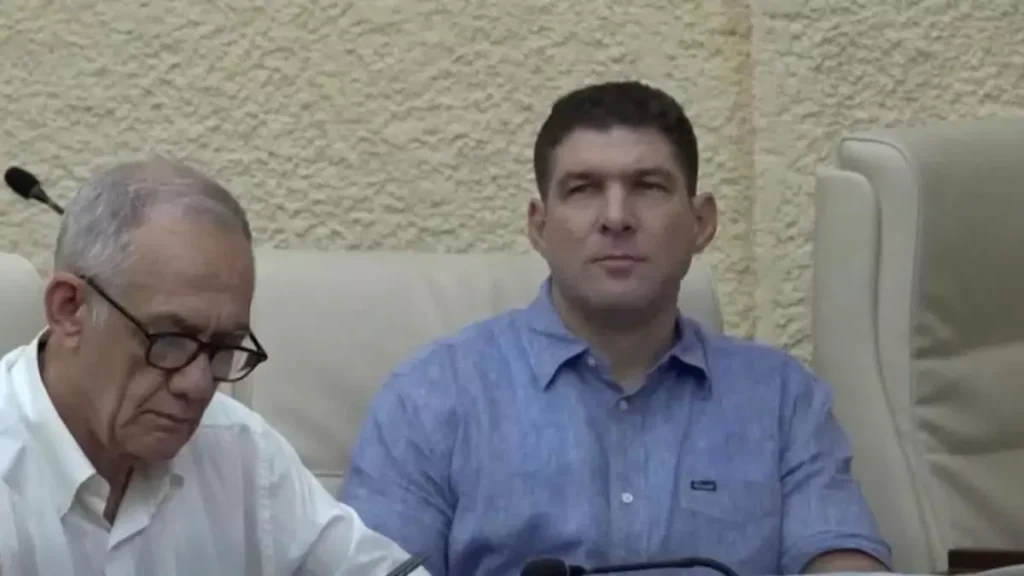

To the right, Raúl Guillermo Rodríguez, alias “El Cangrejo,” grandson of Raúl Castro, present during Miguel Díaz-Canel’s appearance / Screenshot / Canal Caribe

14ymedio bigger14ymedio, Madrid, March 13, 2026 – The Cuban president, Miguel Díaz-Canel, confirmed this Friday that conversations are taking place with the U.S. government to “identify areas of cooperation” and “concretize actions for the benefit of the peoples of both countries, to confront threats and guarantee the peace and security of both nations and also of the region.”

The president made these remarks in a room where Raúl Castro  was present, along with his grandson, the alleged mediator in the talks, according to leaks from U.S. media in recent days. Another member of the family was also present: Oscar Pérez-Olivia, the grand-nephew of Raúl and Fidel Castro and deputy prime minister and minister of Foreign Trade and Foreign Investment. Also seen in the room were Foreign Minister Bruno Rodríguez Parrilla, Interior Minister Lázaro Alberto Álvarez Casas, and Army Corps General Roberto Legrá Sotolongo, among other high-ranking officials.

Díaz-Canel emphasized that the talks began inspired by the spirit of the Revolution and commanded by Raúl Castro. “And by me,” he stressed, in a context in which there has been speculation that the president is being sidelined not only by the Trump administration but also by the regime itself.

“These conversations have been aimed at seeking solutions, through dialogue, to the bilateral differences that exist between the two nations. There are international factors that have facilitated these exchanges,” said the president.

“These conversations have been aimed at seeking solutions, through dialogue, to the bilateral differences that exist between the two nations.”

For weeks, the contacts, first mentioned by U.S. President Donald Trump at the beginning of January, had been denied by members of the regime, who limited the dialogue to the usual exchanges on security and immigration matters. Díaz-Canel alluded to this indirectly, saying that “it has not been, nor is it the practice of the leadership of the Cuban Revolution to respond to speculative campaigns about this type of issue.”

According to his version, the matter is very sensitive and is being handled with “seriousness and responsibility, because it affects continue reading

bilateral relations between the two nations and requires enormous and arduous efforts to find solutions and create spaces of understanding that allow us to move forward and away from confrontation.”

Díaz-Canel insisted that “in the exchanges that have taken place, the Cuban side has expressed its willingness to carry out this process on the basis of equality and respect for the political systems of both states, for sovereignty, and for the self-determination of our governments,” taking into account “reciprocity” and adherence to international law.

At a press conference following his initial remarks, where there was not a single question about the dialogue with the United States, Díaz-Canel spoke about the seriousness of the energy situation. The president claimed that no ship carrying crude oil has entered the country in the last three months, although reports indicate that the Ocean Mariner entered Cuba on January 9, and that the situation has worsened, especially in March.

Up to that point, the country had been working with rationed crude oil that was supplied to the engines in Moa and Mariel, and it has now run out. Aside from that, only the thermoelectric plants using domestic oil, Energás, and solar energy remain. The latter sometimes contributes, he said, up to 53% of energy, but not all of it can be used due to the adjustments needed to balance the system. “There are 1,400 megawatts of fuel that cannot be used,” he regretted.

The president praised the workers of the Cuban Electric Union for the continuous effort they make, as well as the population, which is affected in daily services such as water, communications, and health care, although he also reproached those who “criticize.” “The magnitude of the problem is so great that it cannot be seen,” he said, before listing the countless temporary fixes that have been implemented to alleviate the situation, from charcoal to solar panels installed in countless places. He also announced future photovoltaic parks, progress in the works at the Matanzas supertanker base, increased national crude production, and the incorporation of thermoelectric units for the remainder of the month.

Díaz-Canel also spoke about the situation at universities, during a week in which several students have protested demanding reforms. The president only referred to the controversial semi-in-person teaching format and, after acknowledging that the academic year may advance with difficulty under these circumstances, rejected ending classes. “What are we going to do, throw in the towel?”

The decisions will be communicated Monday in an appearance by Pérez-Oliva on some television program that could be, he said without complete certainty, Mesa Redonda.

Asked about Cuban Americans who allegedly want to invest in the country, Díaz-Canel said that a set of measures has been adopted that will ease current bureaucratic barriers and facilitate those practices. The decisions will be announced Monday in Pérez-Oliva’s television appearance, possibly on Mesa Redonda.

At the press conference, there was also discussion of donations from third countries and the interception of a boat from Villa Clara. “In the investigation, everyone has acknowledged that they fired at our border guard service and have provided very important details that will be revealed later about who recruited them, who prepared them, and their names,” he said.

Only at that point did Díaz-Canel again refer to Washington, announcing that a delegation from the FBI will soon arrive on the Island to investigate the case. “Yes, there is cooperation,” he stated.

Before concluding and leaving for “defense activities,” Díaz-Canel referred to the announced release of 51 prisoners, a process that the Holy See also referred to on Friday to confirm its participation. The president, aware that the move will be interpreted as a concession toward the United States, emphasized that the decision was made in a sovereign manner. “Now prepare to be happy,” he added.

Translated by Regina Anavy

______________________

COLLABORATE WITH OUR WORK: The 14ymedio team is committed to practicing serious journalism that reflects Cuba’s reality in all its depth. Thank you for joining us on this long journey. We invite you to continue supporting us by becoming a member of 14ymedio now. Together we can continue transforming journalism in Cuba.

The Mother of Cuban YouTuber Anna Bensi Is Threatened With Five Years in Prison

The Inter American Press Association denounces that this type of harassment against independent journalists and their relatives has become constant in Cuba.

Anna Bensi and her mother Caridad Silvente / Image taken from social media

14ymedio bigger14ymedio, Havana, March 12, 2026 – The wave of repression in Cuba has continued intensifying in recent days. Interrogations and arbitrary criminal proceedings are being used to stop any form of critical expression.

Caridad Silvente, the mother of YouTuber Anna Sofía Benítez Silvente (“Anna Bensi” on social media) was interrogated at a police station in Alamar, in Havana, and now faces criminal proceedings for having circulated images of the agent who delivered her police summons.

Silvente stated that she was interrogated for nearly two hours, during which she was accused of allowing her daughter to publish denunciations against the Government and was threatened with a sentence of up to five years in prison.

The accusation is based on Article 393 of the Cuban Penal Code, which punishes “acts against personal and family privacy, one’s own image and voice,” after she revealed the identity of a ‘suboficial’ of the Ministry of the Interior, Yoel Leodan Rabaza Ramos, who went to the home to deliver the summons. Anna Bensi had shared these images as a denunciation of police intimidation.

According to Silvente, the agents called her a “bad mother” and accused Anna Bensi of being “counterrevolutionary,” of “conspiring,” and of receiving orders from the United States. After the interrogation, Silvente was informed that she is under house arrest and cannot receive visitors. She is required to find a lawyer within five days for her criminal case. They also told her that Anna Bensi will be summoned soon.

The agents called her a “bad mother” and accused Anna Bensi of being “counterrevolutionary,” of “conspiring,” and of receiving orders from the United States.

In a message published on Facebook, the 21-year-old posted a public response addressed to State Security, in which she denounces how this intimidation is meant to pressure her to stop expressing herself freely on social media. “My mom is not a criminal,” she wrote. “If anything happens to my mom or continue reading

to me, it will be your fault [State Security].” She also stressed that she will continue expressing her ideas freely without fear.

The U.S. Embassy in Cuba spoke out against this harassment on its X profile: “We have not had the pleasure of meeting Anna Bensi or her mother, but why are the regime’s authorities summoning them? Why are they threatening them?”

The case shows the increasingly frequent practice of police pressure against the relatives of activists. A similar intimidation was reported last Tuesday against the father of a member of the digital project Fuera de la Caja [Outside the Box] who was intercepted by State Security agents at his workplace and threatened with having his children imprisoned if they continue their political activity on social media.

Fuera de la Caja reported today on its Facebook profile that Anna Bensi and her mother have had their internet connection cut off, another repressive measure by the State.

This wave of harassment has raised alarm among international organizations. The Inter American Press Association (IAPA) yesterday denounced the increase in repression against independent journalists on the Island, pointing to arrests, police blockades, and physical assaults. In a statement released from Miami, the organization said this represents a persistent pattern of intimidation directed at those who exercise the right to report information.

The repetition of arrests, police blockades, physical assaults, and threats demonstrates the systematic use of the state apparatus to intimidate and silence journalists.

It is the second series of incidents documented by the organization since the end of January. “The repetition of arrests, police blockades, physical assaults, and threats demonstrates the systematic use of the state apparatus to intimidate and silence journalists,” said the organization’s president, Pierre Manigault.

The president of the IAPA’s Press Freedom Commission, Martha Ramos of Organización Editorial Mexicana (OEM), stated that “the persecution not only reaches those who report the news, but also their relatives and close associates, in a strategy intended to generate fear and encourage self-censorship.”

The 2025 edition of the Chapultepec Index of Freedom of Expression and Press, released yesterday by the IAPA, classifies Cuba as a country with “High Restriction”: “Cuba presents a strengthened dictatorship that has normalized situations adverse to freedom of expression, refining the restrictive environment to the point of nearly preventing citizen expression, which, although it still exists, faces new obstacles due to prior repression within an institutional blockade.”

Translated by Regina Anavy

______________________

COLLABORATE WITH OUR WORK: The 14ymedio team is committed to practicing serious journalism that reflects Cuba’s reality in all its depth. Thank you for joining us on this long journey. We invite you to continue supporting us by becoming a member of 14ymedio now. Together we can continue transforming journalism in Cuba.
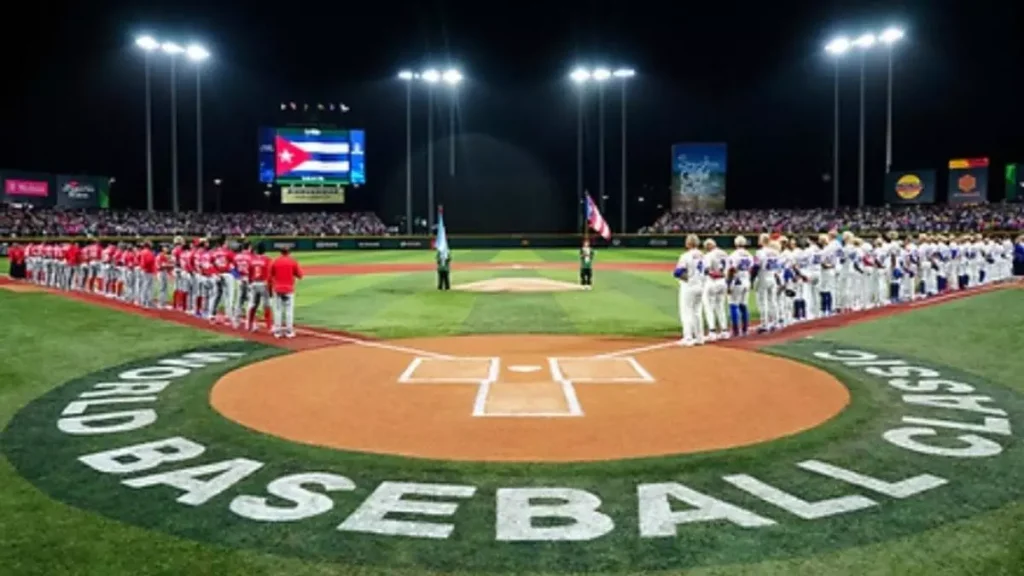
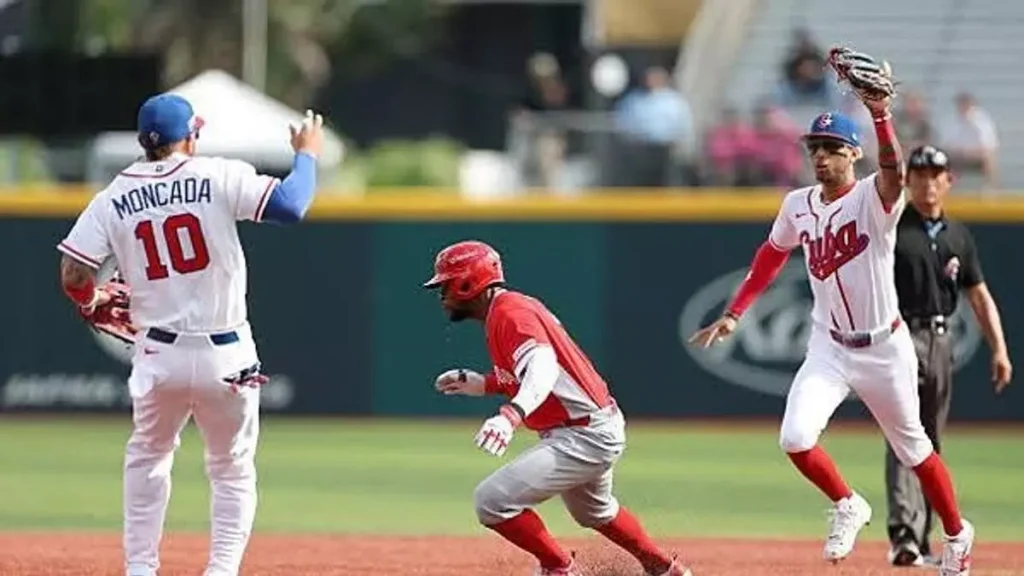
Cuba Has a “Disastrous Finish” in the World Baseball Classic and for the First Time Fails To Pass the First Round

Canada defeats Team Asere 7–2 at Hiram Bithorn Stadium.

Never before had Cuba been eliminated in the first round of the World Baseball Classic. / Jit

14ymedio bigger14ymedio, Havana, March 12, 2026 – The squad managed by Germán Mesa had a “disastrous finish” on the field of Hiram Bithorn Stadium, acknowledged the pro-government media Jit. Cuba’s 2–7 loss to Canada hurt. The game not only exposed the weaknesses of Team Asere but also marked the worst performance in the six editions of the event. Never before had the Island been eliminated in the first round.

The team displayed “a conglomerate of lapses in the three aspects of the game,” the same media described, which the opponent knew how to take advantage of. In addition, the team continued with “a brutal offensive drought.” In the game they recorded five hits, a total of 20 in four games, and “struck out a whopping 13 times.”

Speaking to the media, Mesa admitted that “work was done, but the way the game was played makes it very difficult to win a baseball game.” The manager spoke about conducting an evaluation and said this defeat will serve as experience for the next World Baseball Classic.

Journalist Francys Romero, who closely followed Team Asere’s performance, was blunt: “A radical change is needed.” The commentator believes that for Cuba to be a winning team it is urgent that “the system stop controlling the sport” and the Cuban Baseball Federation (FCB).

The commentator believes that for Cuba to be a winning team it is urgent that “the system stop controlling the sport” and the Federation.

Romero recalled that, under the current conditions, the call-up of players is limited to 50. The selection is restricted by the athletes’ “political status,” and those who have abandoned a delegation are excluded. The analyst regretted that changing this “is not contemplated in the mentality of the current system.”

For El Nuevo Herald contributor Jorge Ebro, “relievers Yariel Rodríguez, Yoan López, Darién Núñez and Raidel Martínez were unable to contain the Canadian attack, although starter Liván continue reading

Moinelo had managed to keep the score close in the early innings, despite working too long and using up valuable pitches.”

The loss was blamed on Yariel Rodríguez. However, journalist Yasel Porto Gómez of DPorto Sports LLC said that “it isn’t fair for him to take all the lightning bolts that are coming down on him on social media.”

Porto says that the Cuban Baseball Federation and the team’s leadership also bear responsibility, since they brought “two catchers without the necessary level,” when there were veterans such as Ariel Pestano. “Nor should Andrys take all the criticism for a game in which others also didn’t perform well, and I don’t think he deserves the worst attacks and insults either,” he added.

Juan Carlos Guerra Alonso, JuanK, from Por La Goma LLC, was emphatic: “You can’t build a national team without calling up the best players born in your country. This is the level that group has, and this is the result. It is not a matter of chance or of lighting candles to the saints: it is pure reality.”

The analyst emphasized that “they stubbornly insisted on players who were no longer suited for tournaments of this type, betting on the luck of the famous ‘blessed hit’ that never arrived. In that effort they ended up destroying the beautiful history of several of them, degrading them and making them look very bad on a stage where they didn’t deserve to end like that. All because of archaic ideas that unfortunately ended up demonstrating how wrong they were.”

The analyst emphasized that “they stubbornly insisted on players who were no longer suited for tournaments of this type, betting on the luck of the famous ‘blessed hit’ that never arrived.”

With the win against Cuba, Canada qualified for the quarterfinals for the first time and will play this Saturday in Houston (United States) in the quarterfinals against the second-place team from Group B, which will be decided between Mexico, the United States, and Italy.

The Canadians, managed by Ernie Whitt, advanced to the quarterfinal stage with a 3–1 record and surpassed Puerto Rico for first place in Group A thanks to a higher number of runs scored, 21 to 10 allowed, while the hosts finished with a 15–7 balance.

With an outstanding performance by pitcher Cal Quantrill, who won the game against Cuba after throwing five innings, allowing one unearned run, two hits, one walk and five strike-outs, and with a home run by Abraham Toro, Canada dominated the game.

Translated by Regina Anavy

______________________

COLLABORATE WITH OUR WORK: The 14ymedio team is committed to practicing serious journalism that reflects Cuba’s reality in all its depth. Thank you for joining us on this long journey. We invite you to continue supporting us by becoming a member of 14ymedio now. Together we can continue transforming journalism in Cuba.
Havana Chronicles: “Be Like Water”

Living in this city comes with water anxiety.

The plumbing system is one of the most affected in these buildings, which copied Eastern European architecture in this tropical Havana. / 14ymedio

14ymedio bigger14ymedio, Yoani Sánchez, Havana, March 12, 2026 –  We will have two days without water pumped in Havana. The news, barely announced in the official media, is confirmed by the dry pipes and silent sinks. In my building, most apartments have a storage tank to last when the lack of electricity prevents pumping from the cistern. But this time it’s different. There is a sense of the end and of living through an extreme period in which we may never again hear the roar of the motor that pumps the water up to the rooftop tank.

I don’t remember a single moment in my life in Havana when water wasn’t a concern. Living in this city comes with water anxiety. I, like every Cuban, am obsessed with saving every last drop. Under the kitchen counter, I have all sorts of containers. Bottles, buckets, jugs, and even a basin that always has to be full. If I could, I would turn anything into an artificial reservoir for when the pipes break down, the aqueduct shuts off, and fuel shortages paralyze the pumps. Years ago, we also created a rainwater harvesting system on the terrace of our apartment.

“Be like water,” Bruce Lee, one of my childhood idols, used to say. I was about seven or eight years old and would rush home from pushing a wheelbarrow with a tank from a street corner in Central Havana to sit in front of the television and watch that small man move like a wave, powerful and effective. There he was, silent and clean-shaven, in a world that, for me, was full of authoritarian beards and slogans shouted at the top of one’s lungs. “Take a bath, Yoani, and don’t waste the water you use; we have to flush the toilet,” my grandmother would tell me from the kitchen. “You have the bucket and the little pitcher ready,” she would emphasize.

The smell of burning garbage has returned after a few days’ respite.

Then I went to the school in the countryside and took with me a photo of that martial arts expert. With his narrow waist, he looked at me from the hostel locker as we counted the days when the water didn’t come and the reddish earth accumulated under our fingernails and on our sheets. He, with his gesture, called me to fluidity, and I was stuck in a social experiment where fungus multiplied on my feet and hunger gnawed in my stomach. “Take the shape of what surrounds you,” he seemed to suggest from his jet-black hair, already fading from the sun streaming through the blinds.

“Be like water,” I told myself, when they closed the hostel bathroom, overflowing with filth, because for a whole eleven days the precious liquid hadn’t reached that fourth floor. The day I left, I placed the Bruce Lee poster near my bunk and walked a good stretch along that Alquízar road, surrounded by parched fields where Fidel Castro’s latest folly, the Food Plan, was trying to materialize: the planting of bananas with a microjet system that sucked up the water meant for our showers and the sweet potatoes of the local farmers.

This Thursday in March, I woke up humming a song. “I’ll tell you, I came from a strange world,” I said to myself, the moment my feet touched the floor in the middle of a blackout. The smell of burning garbage has returned after a few days’ respite. Last night, we heard the echoes of a pot-banging protest in the Lawton area. The wind carried the clanging and the sound of continue reading

shouts from a completely dark area. Noise, like water, has strange ways of spreading. Sometimes it arrives intermittently, and other times it seems as if the pot is only a few meters away, even though someone is banging it in another municipality. During the protests of 11 July 2021, those roars of euphoria continued to reach us even in the dead of night.

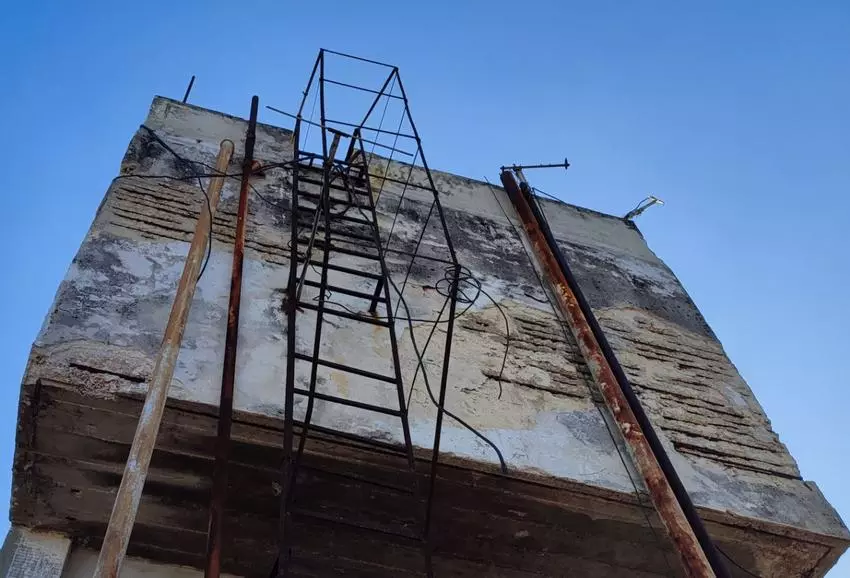
A team came to assess the damage and estimated that repairing the building’s water tank will cost at least three million pesos. / 14ymedio

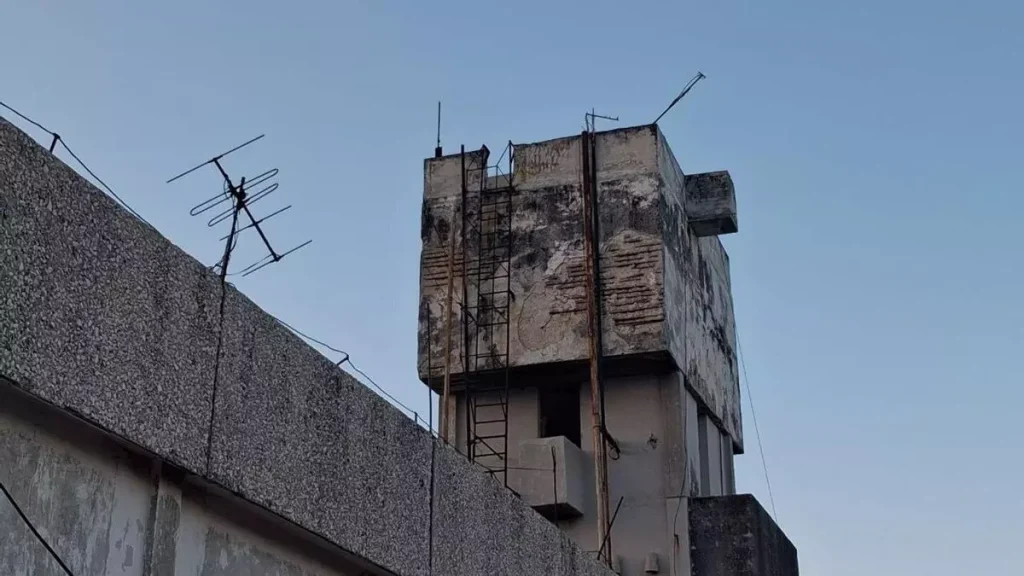
The water tank in my building is falling apart. When the cistern on the ground floor is full, it can fill the rooftop tank two and a half times. But the imposing structure, which sets this concrete block apart from others in the area and gives it a certain air of an airport control tower, is crumbling. It has supplied water to more than 140 apartments for four decades, and in all that time, it hasn’t received a single repair. Now the steel is exposed on its exterior, and the ship’s ladder that led to its top has lost some of its steps to rust.

The last one to go down that structure was my husband, Reinaldo. As he descended, the steps crumbled beneath his feet. Later, a crew came to assess the damage and estimated that repairing the building’s water tank would cost at least three million pesos. That was a couple of years ago, so it’s surely worth double… or triple that now. In that time, it has continued to leak fragments. A multi-family building has large “no man’s land” areas that the Cuban state long ago abandoned, and the residents can’t afford to maintain them. The plumbing system is one of the most affected in these buildings, which copied Eastern European architecture in this tropical Havana.

My neighbor says it won’t be long now, that we have maybe two weeks left until the whole regime collapses and things “start to get better.” I’m not as optimistic as she is. Sometimes I have nightmares about the rooftop water tank cracking like a pumpkin, and I don’t manage to warn the people walking down below in time. Other times I dream that I’m searching for and can’t find any more jugs, basins, or buckets to fill. An unexpected leak empties all my supplies, and I can only manage to store what fits in the palm of my hand.

“Be like water,” Bruce Lee repeats to me from somewhere deep within my memory. But how can I take shape and adapt to a world as strange as this one we inhabit? How can I endure in this city when the pipes are dry and the hum of the pump that fills the decaying colossus above our heads is no longer audible?

————————-

Chronicles
What Does Collapse Smell Like?

The Death Throes of ‘Granma’, the Mouthpiece of a Regime Cornered by Crisis

The Anxiety of the Disconnected Cuban

One Mella, Three Mellas, Life in Cuba Is Measured in Thousands of Pesos

It Is Forbidden To Leave Home in Cuba Today Because It Is a “Counter-Revolutionary Day”

Vedado, the Heart of Havana’s Nightlife, Is Now Converted Into a Desert

Havana, in Critical Condition

______________________

COLLABORATE WITH OUR WORK: The 14ymedio team is committed to practicing serious journalism that reflects Cuba’s reality in all its depth. Thank you for joining us on this long journey. We invite you to continue supporting us by becoming a member of 14ymedio now. Together we can continue transforming journalism in Cuba.
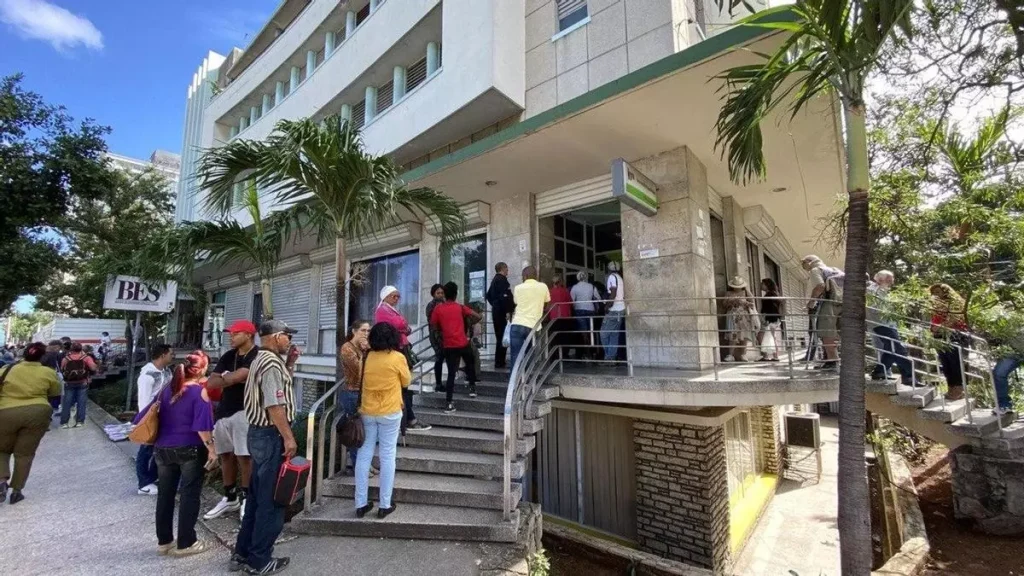
Cuban Authorities Admit They Haven’t Managed To Curb the Black Market in Foreign Currency

The Interior Ministry currently has more than 300 investigations open into the illegal buying and selling of foreign currencies

In just three months, the exchange rate has climbed to 470 pesos per dollar. / 14ymedio

14ymedio bigger14ymedio, Madrid, 12 March 2026 — Three months after the introduction of a floating exchange rate in the official currency market aimed at fighting the illegal sale of foreign currency, “it’s no secret -the reality is that it still doesn’t operate in the way the Cuban economy needs,” Humberto López admitted bluntly on the TV program Hacemos Cuba this Wednesday.

The Interior Ministry currently has more than 300 investigations open into various economic crimes linked to illegal foreign-currency trading with connections abroad, three of which were described on the program. Taken together, the money seized in these operations amounts to almost 16 million pesos, close to $19,000 and around €15,000.

Lieutenant Colonel Gisnel Rivero Crespo, head of the Department for Combating Economic Crimes, said the scale of the problem was very significant and acknowledged that, despite the legislation that has been passed, “criminal structures that handle these financial flows outside the law persist, moving considerable volumes of money… These large flows unquestionably have a direct impact on macroeconomic stability.”

The officer highlighted three specific police operations. The first, and the most organized, took place in the Luyanó neighborhood (Diez de Octubre municipality), where “a criminal structure dedicated to illegal currency trading and the delivery of remittances was operating out of two homes,” functioning almost like a private bank. In the raid, at least one person was arrested. Police seized 13,278,560 pesos and €1,500, along with two 2025 Kia Picanto vehicles, five safes, and three money-counting machines. They also found 12 magnetic cards, phones, laptops, and documentation, which has allowed investigators to look into five other properties.

In the raid, at least one person was arrested. Police seized 13,278,560 pesos and €1,500, along with two 2025 Kia Picanto vehicles

Another of the networks under investigation in Havana had gained attention, according to the authorities, for how openly it operated and the steady, visible flow of customers. This one involved two homes in Plaza de la Revolución and one in Cerro. In that case, the owner of a private business was arrested while depositing that day’s takings at the premises in order to exchange them for dollars. The cash seized there totaled $17,210, €13,475 and 2,199,650 pesos. continue reading

The most recent case involved a house in El Vedado and another in Quiebra Hacha (Mariel, Artemisa). The main suspect, a partner in a small private company (mipyme) and a self-employed worker, already had a prior fine from the tax authority (ONAT) for more than 1.6 million pesos and was caught carrying out “cash dollar exchanges, trading in bank-linked currencies (MLC and CUP), and cryptocurrency operations.”

According to officials, his bank activity exceeded 36 million pesos in credits and 35 million in debits. During the search, officers seized 134,550 pesos, $815, money-counting machines, laptops, and eight bank cards, including one Clásica card and several foreign ones. The detainee was also involved “in delivering remittances via couriers.”

“We have established the participation of Cubans living abroad working with structures in Cuba that support this activity,” Rivero Crespo added. According to his explanation, there are “individuals who enter into negotiations with private economic actors to finance their imports. But those imports, which obviously are in dollars, are carried out according to a conversion rate imposed by them.”

The margin ranges between 6% and 12%, he said, “while at the same time drawing these actors into criminal networks.”

Rivero Crespo – ignoring that for years the state failed to offer a legal exchange market where private businesses could obtain the foreign currency they needed to import — accused these “financiers” of speculating by applying such high margins. This, in turn, forces entrepreneurs to pass the cost on to consumers in order to pay for it. That, he said, “distorts cost structures.”

The same happens with people involved in the illegal sale of foreign currency “in both physical and virtual spaces,” which often operates with margins of around 15%, contributing to the rising price of foreign currency and the depreciation of the peso.

The lieutenant added that structures still exist that simulate international phone top-ups while keeping the foreign currency abroad, so the money never returns to Cuba.

Some people “receive the foreign currency abroad and instead of sending those dollars here, they use them to finance imports. Then there are people here in Cuba who (…) collect the revenues from these economic actors.” Rather than depositing that money in banks, he complained, it is used -in national currency – to distribute remittances.

Finally, the officer referred to another classic method: the use of “mules” to take cash out of the country using the $5,000 limit allowed by Customs.
“What happens is that if this is done repeatedly and with several people, a considerable amount can be moved,” he said.

Finally, the officer referred to another classic method: the use of “mules” to take cash out of the country using the $5,000 limit allowed by Customs. “What happens is that if this is done repeatedly and with several people, a considerable amount can be moved,” he said.

Prosecutor Yudenia San Miguel Ramírez warned about the “strictness” with which the Penal Code is being applied in these cases, including the offense of “apology for crime” seen on social media.

“We are facing an aggravating circumstance of criminal responsibility when these tools [digital networks] are used to facilitate the commission of crimes… these individuals act outside these provisions and completely violate the legal framework,” she said.

On December 17, 2025, Cuba finally approved a long-announced third official exchange rate, a floating rate aimed at “individuals and non-state forms of management.” It began at 410 pesos per dollar, adding to the already existing rates of 24 pesos (for state companies) and 120 pesos (for entities able to generate foreign currency).

The measure was intended to close the enormous gap opened by the informal market, which was buying and selling dollars at three times the official rate, amid relentless demand driven by the need to shop in state stores that sell in foreign currency – the only ones properly stocked -and by the need to import goods into a country that produces very little.

However, in just three months the rate has climbed to 470 pesos per dollar.
That is still cheaper than the 510 pesos on the informal market, which actually has foreign currency available and delivers it immediately -unlike state banks and official exchange houses (Cadeca), which are limited to buying dollars rather than selling them.

According to U.S. economist Steve Hanke, the Cuban peso has lost 33% of its value over the past year, and year-on-year inflation is around 47%, although the government -which does not include the black market in its calculations – put the figure at 14% at the end of 2025.

Translated by GH

______________________

COLLABORATE WITH OUR WORK: The 14ymedio team is committed to practicing serious journalism that reflects Cuba’s reality in all its depth. Thank you for joining us on this long journey. We invite you to continue supporting us by becoming a member of 14ymedio now. Together we can continue transforming journalism in Cuba.
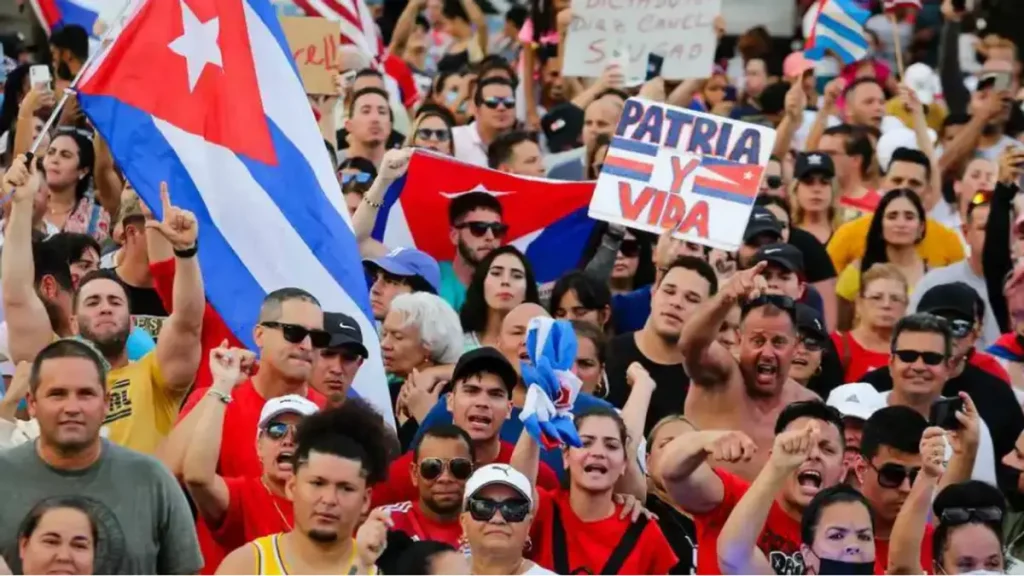
Bewilderment in the Exile Community Over the Alleged Trump Economic Agreement for Cuba

“I fear that supposed liberation may be approaching, which is an offense and a humiliation for the people of Cuba,” says Ramón Saúl Sánchez.

Cubans in Miami protest in solidarity with the Island. / Semana

14ymedio bigger14ymedio, Madrid, March 11, 2026 – Emotions have heated up  in Florida since last Sunday when USA Today published an exclusive report claiming that the White House was very close to announcing an agreement with the Cuban regime, mainly of an economic nature. The pact, revealed by two sources close to the U.S. Government, supposedly contains concessions to Washington in the areas of energy, tourism, and ports. In exchange, the ban on Americans traveling to the Island would be lifted, while also providing an exit for Miguel Díaz-Canel and allowing the Castros to remain in the country.

The uproar spread quickly on social media in the early hours, but exile leaders remained cautiously silent, possibly waiting for clarification or a denial that never came. Thus, more than 24 hours after the puzzling report, José Daniel Ferrer exploded: “If after capturing Nicolás Maduro, if after eliminating Ali Khamenei and other high-ranking leaders of the Iranian regime, President Trump and Secretary of State Marco Rubio end up closing only an economic deal with the Castros and they remain in Cuba, then when the current administration ends, the United States would once again have to confront dangerous enemies on the continent,” he wrote on the social network X.

The former political prisoner and leader of the Patriotic Union of Cuba (UNPACU) did not directly attack the supposed contents of the agreement but warned about the consequences of leaving the Castros in control of the Island. “The United States would have new October Crises with Russian and Chinese missiles, and many Castros, Chávez, Evo, Correa, and Ortega,” he said.

“The United States would have new October Crises with Russian and Chinese missiles, and many Castros, Chávez, Evo, Correa, and Ortega.”

The White House did not respond to this statement either, but it did impel Ramón Saúl Sánchez, leader of the Democracy Movement, to publish a video on Tuesday in which he appeared visibly saddened. “Apparently, according to information coming out in credible press outlets and from statements by our officials, the President of the United States and the Secretary of State, Marco Rubio, I fear that continue reading

this supposed liberation may be approaching, which is an offense and a humiliation for the people of Cuba,” he said.

These statements were the first in which a historic exile figure accepted the supposed plan as plausible, which he says confirms something he had “unfortunately” predicted. Sánchez, who faced a deportation process that he won in 2023, believes his message could put his stay in the United States at risk, but he argues that he will not remain silent. “Are they now going to tell us that because corporations buy or extract nickel or cobalt from Cuba we will be free? That the Castros can stay there while corporations come to extract minerals? Is that freedom?” he asked.

In a report published this Wednesday by El País, Sánchez reiterates his hopes: “I don’t want to die without seeing my homeland free, but I also don’t want to see it occupied by American corporations, squeezing out the last remains of our country with those henchmen in power,” he insists.

Luis Enrique Ferrer, brother of José Daniel and also an opposition leader in exile, spoke Tuesday on Miami television, where he stated that the regime’s only path to survival is repression, but with the Castros still inside there will be no freedom. “The real change is removing the Castro family from power, Díaz-Canel, and all the accomplices of the dictatorship, and letting the Cuban people have the opportunity to choose their leader.”

Although he maintains some faith in Donald Trump’s administration, his indirect mention of Delcy Rodríguez reflects his fears. “We can see something similar with what is happening in Venezuela. The dictatorship buys time and plays with the timelines of democracy.”

Florida politicians have begun fearing the worst, and this Tuesday some timid denials began circulating that have not fulfilled their goals. “We cannot leave any Castro behind. If they are speaking with any Castro it is only about when they are leaving, how they are leaving, and under what conditions, but not for anyone to stay,” said Republican congresswoman María Elvira Salazar, implying that negotiations with the son or grandson of Raúl Castro, both named by international media as interlocutors (especially the latter), are indeed taking place.

More uncertainty was generated by the response of the usually hard-line Mario Díaz-Balart, who did not even want to deny the possibility. “The goal is that this regime no longer exists. How is that done? You have to trust Secretary of State Marco Rubio, who is very clear about it,” he told Univisíon.

“The goal is that this regime no longer exists. How is that done? You have to trust Secretary of State Marco Rubio, who is very clear about it.”

The ambivalence of the ever-contradictory Trump also does not help calm the staunch opponents of rapprochement. The U.S. president said last week that the “taking control” of Cuba could be friendly and, in the next sentence, added that it might not be. Nevertheless, the Speaker of the House of Representatives, Mike Johnson, almost completely ruled out the military option on Tuesday. “I don’t think there is a need. I don’t think there is an appetite for putting boots on the ground in Cuba. I think some of this happens organically,” he emphasized.

More clues favoring a friendly option came Monday from the Vatican. There, the powerful Secretary of State Pietro Parolin confirmed that he is mediating to “promote a negotiated solution to the crisis.” The cardinal mentioned contacts with Cuban Foreign Minister Bruno Rodríguez, head of U.S. mission in Havana, Mike Hammer, and other diplomats to address a solution through dialogue, highlighting that the Holy See “has taken the necessary steps” in its conversations. Not much has been revealed, but history shows that Vatican intervention has been a decisive lever in numerous agreements, from the so-called thaw during Barack Obama’s administration to the recent release of more than 500 prisoners in exchange for being taken off the list of state sponsors of terrorism for one week.

On Tuesday, influencer Alexander Otaola also intervened in the debate and argued that the information from USA Today comes from an attempt to manipulate public opinion against Donald Trump before the midterm elections. In his view, the report, whose accuracy he accepts, about the creation of a task force within the Department of Justice to study a possible criminal indictment of the regime’s leadership is incompatible with this kind of agreement, and he calls for trust and calm.

However, the debate on social media again features a persistent specter.  “It’s the same thing they did in Venezuela. Take the oil, the gold mines, and whatever else they can grab. In Cuba they bring in American companies and install Cuban millionaires. They take over all the hotels and make billions from tourism, which is what they were doing under Batista. If they allow that agreement to be signed, they will leave us in the same conditions we’re in now, because they are not interested in the Cuban people, only in business. Hopefully I’m wrong.”

Translated by Regina Anavy

______________________

COLLABORATE WITH OUR WORK: The 14ymedio team is committed to practicing serious journalism that reflects Cuba’s reality in all its depth. Thank you for joining us on this long journey. We invite you to continue supporting us by becoming a member of 14ymedio now. Together we can continue transforming journalism in Cuba.
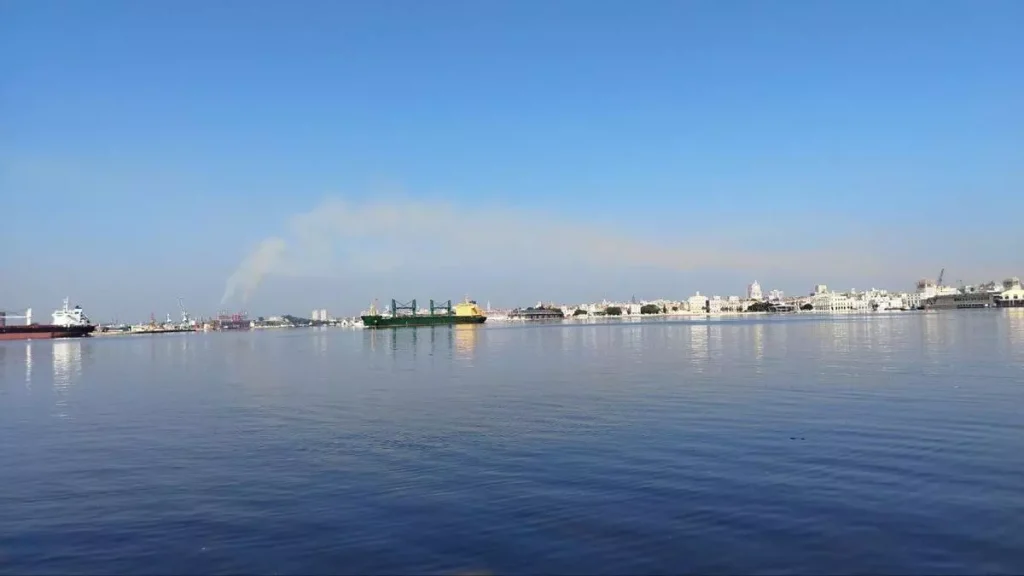
Economic Agreements With the US, Díaz-Canel’s Departure, and the Castros’ Continued Presence in Cuba

‘USA Today’ reveals an alleged plan to facilitate investments by US companies in energy, ports and tourism on the island

According to the newspaper, the agreement includes concessions in areas such as the island’s ports. / 14ymedio

14ymedio bigger14ymedio, Madrid, March 9, 2026 — The Trump administration will soon announce an economic agreement with Cuba, according to two sources familiar with the talks who spoke to USA Today. According to this report, the pact includes lifting sanctions in the energy, port, and tourism sectors, as well as easing the travel ban to the island for Americans. In exchange, President Miguel Díaz-Canel would negotiate his departure from Cuba, but the Castro regime would remain.

The newspaper does not give dates on when the exact content of the agreement will be known, but believes it could be very soon, something reinforced by the statements of Trump himself, who has been anticipating an imminent change in Cuba for days, with much of the country overwhelmed by blackouts of more than 20 hours a day.

When asked about it, the White House declined to confirm anything and referred USA Today to the president’s recent remarks, most recently at the summit with his 12 right-wing counterparts in Miami on Saturday, where he said: “Cuba is at the end of its road. It is very much at the end of its road. It has no money. It has no oil. It has a bad philosophy. It has a bad regime that has been bad for a long time.”

The newspaper thus concludes a weekend dedicated to reporting on this seemingly imminent agreement, in which it remains unclear what the US will gain in return. The article follows a report published the previous day, which gave voice to several business leaders from both sides of the border who shared their opinions on current and future trade easing measures. One of them is John Kavulich, president of the US-Cuba Economic and Trade Council, who claims to have been approached by the administration about the possibility of his organization’s members supporting Trump’s strategy of dealing directly with the private sector on the island continue reading

and forming a body, possibly called the Executive Directors Council for a Free and Democratic Cuba.

Kavulich claims to have been sounded out by the Administration about the possibility of his group’s members supporting Trump’s strategy of dealing directly with the private sector on the Island.

None of those consulted agreed, Kavulich maintains. “Everyone is terrified that the Administration will support them in the morning and then criticize them by lunchtime,” said the businessman, who asserts that they are waiting to see what happens. In his opinion, Trump’s strategy is very similar to the one initiated by Barack Obama during the thaw, although this time it seems more likely to succeed than before, since it has been assumed that the current US administration will not hesitate to force the issue if the regime stalls.

Despite this, Kavulich believes that, once again, Havana will emerge more unscathed than some expect. “They’re not liquidating, they’re reorganizing,” he said, and criticized Trump’s strategy as less perestroika and more bankruptcy.

USA Today also spoke with Aldo Álvarez, whom they describe as a Cuban businessman who, after spending several days with his merchandise stuck at a port due to a diesel shortage, saw a limited supply arrive at the nearest gas station for private individuals like himself. “It’s a significant change. I can guarantee my supply on a stable basis… Without a doubt, it’s good news,” he told the newspaper.

Álvarez owns Mercatoria, a company that imports all kinds of products and is advertised on Cubadebate. The project began as a local development in 2021, but soon grew into something more substantial, and its founder has even attended several events in the US to try to establish ties with businesspeople in the neighboring country, which is why he is now delighted.

“The Trump Administration recognizes the Cuban private sector as a real sector and also as a key strategic partner on the ground to help alleviate the humanitarian crisis. We have never seen anything like this before,” Ric Herrero, executive director of the Cuba Study Group, told the media outlet, expressing surprise at Trump’s change of approach.

Eric Jacobstein, former Deputy Assistant Secretary of State for Western Hemisphere Affairs during the Biden administration, who has made numerous trips to the island to meet with business leaders, praises Cuba’s private sector and believes it is essential to support it from the United States. “It is crucial to engage them. They are independent, entrepreneurial… It is a group that has embraced capitalism within a decaying communist system,” he says.

Michael Bustamante, from the Department of Cuban and Cuban-American Studies at the University of Miami, fears how the Cuban exile community in Florida will react to these contacts between officials and businesspeople from the island, “something they have strongly opposed for years,” he stated. “I think it’s a surprise to many people. Perhaps it will be a surprise to Marco Rubio,” he believes.

Michael Bustamante, from the Department of Cuban and Cuban-American Studies at the University of Miami, fears how the Cuban exile community in Florida will react to these contacts between officials and businessmen from the Island, “something they have strongly opposed for years.”

The current Secretary of State, a vocal critic of any lifting of sanctions and Obama’s policy toward the island, is reportedly making a similar move, according to these theories, even though he probably never imagined finding himself in this situation. Just two weeks ago, at the Caribbean Community (CARICOM) summit, where some of his advisors allegedly met with representatives of the regime, Rubio said: “The status quo is unacceptable… Cuba needs to change. It doesn’t have to change all at once. It doesn’t have to change overnight… But Cuba needs to change. It needs to change drastically.”

This Friday, several US media outlets reported that the creation of a task force within the Department of Justice is being considered to prosecute potential criminal offenses – related to drug trafficking, immigration, or violence – in order to, as The Washington Post put it , “overthrow the regime.”

But at the same time, the US press is insistently promoting the option of negotiations, avoiding confrontation. “Perhaps we’ll have a friendly takeover of Cuba,” Trump told a group of journalists last week.

“It was clear that President Trump wouldn’t focus so much on eradicating communism from Cuba, but rather on prioritizing trade, economic, and financial interaction,” Kavulich reiterates. “I don’t think anyone should be surprised if we eventually see Steve Witkoff [US special envoy] and Jared Kushner [Trump advisor] in Havana negotiating with the Cuban government.”

Robert Muse, a Washington lawyer specializing in assisting American companies in Cuba, told USA Today that business leaders are cautiously following developments after so often believing the island would become like China or Vietnam. Now, according to Muse, things are different. “There’s a growing awareness that this is a pivotal year. This is a fundamental economic reform in Cuba,” he says.

Regarding when it will happen, the outlet returns to Trump’s statements in Doral, as instructed by the White House: “We are focused now on Iran, and that’s what we’ll do. I would say, ‘What will you do? Will you take two days off, Marco? Maybe an hour. He’ll take an hour off and then close a deal on Cuba.’”

______________________

COLLABORATE WITH OUR WORK: The 14ymedio team is committed to practicing serious journalism that reflects Cuba’s reality in all its depth. Thank you for joining us on this long journey. We invite you to continue supporting us by becoming a member of 14ymedio now. Together we can continue transforming journalism in Cuba.
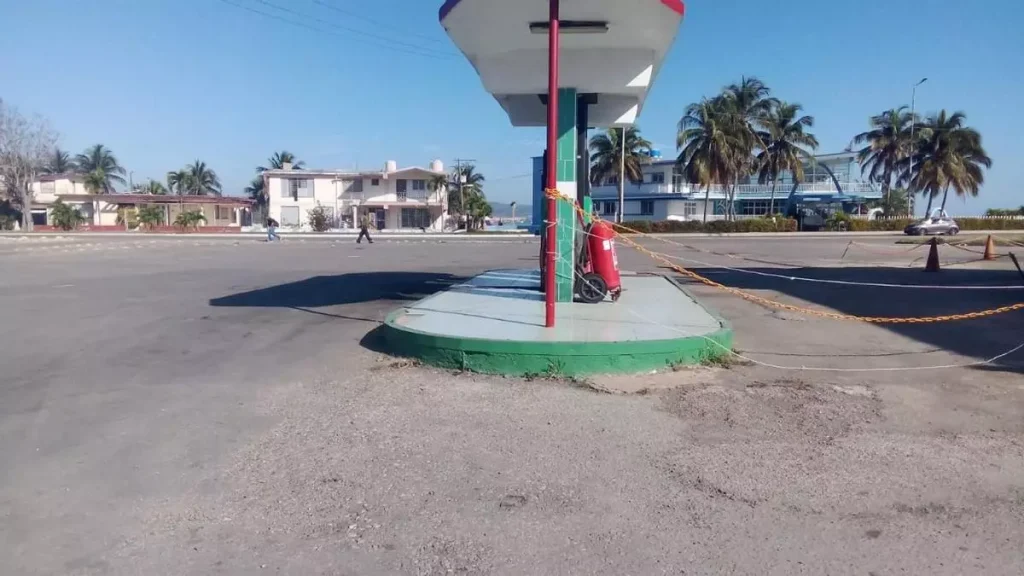
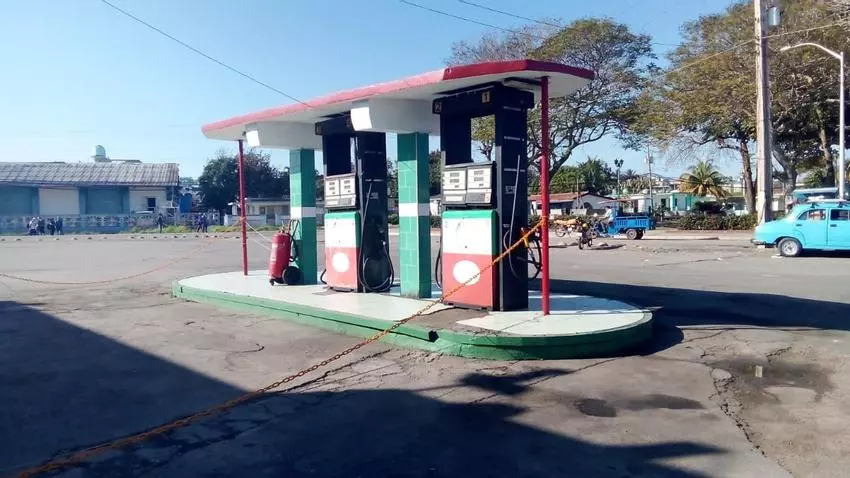
The Ghost Gas Station of Peñas Altas in Matanzas, Cuba

Without fuel since February, rumors are circulating that this service station will soon switch to dollars, as is happening throughout the country.

An improvised chain surrounds the pumps, and the place is dominated by silence. / 14ymedio

14ymedio bigger14ymedio, Julio César Contreras, Matanzas, March 11, 2026 – Under a cloudless sky, the two fuel pumps at the Cupet station in Peñas Altas, Matanzas, look more like an abandoned facility than a functioning service station. An improvised chain surrounds the pumps and silence dominates the place. No lines, no impatient drivers, no usual smell of gasoline in the air.

The lack of fuel keeps the service station’s equipment practically unused, and the employees pass the time chatting while waiting for the end of their workday.

“Since last month I haven’t seen the tanker truck unload fuel here,” a motorcyclist watching the scene from a nearby cafe tells 14ymedio. His motorcycle rests against the curb while he keeps an eye on the Cupet station with a mixture of resignation and distrust.

According to the young man, this gas station was for years a mandatory refueling point for buses carrying workers to and from Varadero. The Yutong buses of the National Bus Company, whose repair workshop is located just a few meters away, also refueled here.

Today, however, the place remains almost empty. The province of Matanzas has the largest number of gas stations open in the country, but they sell fuel in dollars, operate with only a few shifts per day, and have strict orders not to dispense more than 20 liters per person.

“Until now, this Cupet sold in national currency,” the motorcyclist adds. Then he lowers his voice, as if sharing a secret everyone already knows. “But they say that very soon they will dispense only in dollars.” The dollarization of fuel has been spreading across the Island, but even paying in foreign currency does not guarantee getting any gasoline. continue reading

The motorcyclist has had to look for alternative solutions due to the shortages in the state service station network: buying gasoline at inflated prices at a house in Reparto Iglesias, one of the many informal points that have proliferated amid the scarcity.

Located between the Central Highway and the Vía Blanca, for decades it was a strategic stop for those entering or leaving the city of Matanzas. / 14ymedio

The privileged location of this Cupet explains why its decline is so visible. Located between the Central Highway and the Vía Blanca, for decades it was a strategic stop for those entering or leaving the city of Matanzas.

In the 1950s, older residents say, the place operated day and night. “My father used to tell me it had fuel 365 days a year, 24 hours a day,” recalls Felipe, a 61-year-old driver who has pulled his Chevrolet over to the side of the station.

Felipe looks at the inactive pumps with a frustrated expression.

“Now it’s completely bankrupt,” he regrets. For the driver, the decline of the place is not only a consequence of the energy crisis hitting the country but also of years of poor management.

The most recent episode happened just a few days ago. “When I tried to enter the service station, an employee stopped me saying they were closed,” he recounts. Up to that point, nothing surprising in these times of shortage.

But what happened afterward left him outraged. “I asked if they knew when fuel would arrive, and he told me he could let me know… if I gave him 2,000 pesos for the favor.” Felipe shakes his head while recalling the scene. “I’m too old for them to make money off me in such a dirty way.”

Now, the cars passing along the Central Highway no longer stop at the Peñas Altas gas station. They simply drive past, as if the place had ceased to exist.

Translated by Regina Anavy

______________________

COLLABORATE WITH OUR WORK: The 14ymedio team is committed to practicing serious journalism that reflects Cuba’s reality in all its depth. Thank you for joining us on this long journey. We invite you to continue supporting us by becoming a member of 14ymedio now. Together we can continue transforming journalism in Cuba.
Cuban Private Sector Concerned Over Energy Caps Imposed by the State

Some companies already badly weakened by blackouts fear that the new measures will affect production.

State factory La Pasiega, in Havana, where the private company Jolyni operates. / Cubadebate

14ymedio bigger 14ymedio, Madrid, March 11, 2026 – The 470,000 private entities currently operating in Cuba, including companies, self-employed workers, and cooperatives, must submit to the monthly energy-saving plan determined by the State. Of these, 110,089 have already been officially notified of the consumption they are allowed to use, and although authorities claim that most are willing to cooperate without problems, they also admit there is concern that the limitations may be “so rigid” that they affect productive capacity.

The measure represents an extension, throughout the last quarter of 2025, of the plan announced at the end of 2024 for electricity savings under Decree 110. That regulation established the need to control and efficiently use the national energy system because it is a limited resource and highly subsidized in Cuba. The strictest conditions were aimed at high consumers, equal to or greater than 30 MWh or 50,000 liters of fuel, who had to immediately apply the savings plan and have a self-consumption system ready to cover 50% of their needs by 2028 (or immediately in the case of newly created companies).

In recent months, consumption limits apply to all economic actors without exception, explained Welner Collejo Jerez, deputy director of the National Office for the Control of the Rational Use of Energy (Onure), in an interview with Cubadebate. The measure is taken, he noted, “under the socialist principle of consuming only what is necessary for production and services.”

The calculation until now has initially been simple: the limit equals the same consumption used in the same month of the previous year. The exception has been Havana and Varadero, which must adjust to 15% less “because this year the level of disruption in those places was not as significant as in the rest of the provinces.”

Collejo recalled that one way to increase potential consumption is self-sufficiency, preferably with solar panels.

In any case, the official said that “the process of requesting, approving, and assigning the plan is a flexible process” and that, since each territory has prioritized activities, it can and should review allocations according to municipal needs. Collejo also noted that one way to increase potential consumption is self-supply, preferably through solar panels, which do not require the scarce fuel available in the country.

During visits to nearly 340,000 private businesses to establish the limits, Onure technicians found that some, without knowing the measure would affect them, had changed their conditions compared with the previous year, due to increases in personnel or equipment with higher consumption. In these cases, he said, the plan is being adapted continue reading

to their new circumstances.

“Although this is a flexible process, it always begins with planning and daily control of consumption levels, which will allow municipal energy councils to foresee and warn about compliance with the plan,” he said. Companies themselves must carry out a daily self-reading that will be compared with the electric company’s billing at the end of the month. Sanctions for those who exceed the cap are those established in Decree 110, ranging from “publicizing bad practices, identifying non-compliant entities or those where violations occur, preventive notification, fines, and suspension of the license.”

Collejo insisted that the measure will be accompanied by training and information for those affected, as well as encouragement to acquire solar panels through loans, something that currently does not appear to be working very well, as the official press itself has acknowledged on several occasions and as this same report notes.

Her company has had to modify work shifts and move them to night and early morning hours, when electricity supply is more stable.

“So far the experience is that non-state economic actors are fully aware of the situation and therefore maintain behavior aligned with the measures adopted,” the official said. But Cubadebate spoke with some of the business owners subjected to the limits, and the mood is not as optimistic.

Anabell Meléndez, director of the dairy products SME Delola, is already recognizing that Miguel Díaz-Canel’s instructions to contribute through production to the country’s social commitments “clash with reality.”

“We practically have no electricity,” she confirms. Her company has had to modify work shifts and move them to night and early morning hours, when the electrical supply is more stable.

“Last week, the partial collapse of the National Electric System caused the loss of 1,000 liters of milk in the maturation process. They were lost. We couldn’t recover them because we don’t have energy backup,” she regrets. Attempts to install renewable energy to change the situation have also been unsuccessful.

“They tell me that to apply for a loan you must have a project endorsed by a certified company in the country that prepares lending projects. Then that project must be certified, and only then can we go to the bank,” she explains.

In addition, in her case she had to dismantle all the machinery she found in the factory when she arrived, which previously produced white ceramics and was classified as a high-consumption facility. Delola now uses only 30% of what its predecessor consumed, but Onure has still not assigned it a new cap, and she fears it will be too low.

“We need eight hours of electricity, with the equipment operating at one-third of its capacity. Otherwise we cannot sustain production. If they reduce that consumption too much, it will be very difficult to produce.”

“Any power outage damages the quality of the product and halts the process.”

Although she believes the future lies in installing solar panels, she is still waiting for authorization for the 80 million pesos she needs to install 120,000 kilowatts.

Others interviewed by Cubadebate are more relaxed, such as an SME that repairs machinery in the municipality of Cotorro or the owner of a shop, bar, and ranchón restaurant in Boyeros who, although he has had to reduce refrigeration consumption, believes the effort is necessary.

However, a sales representative from Confecciones Entaya in Camajuaní (Villa Clara) says they have had to obtain generators that operate throughout the workday, so they are involved in “advancing the process of importing fuel,” in addition to acquiring solar panels.

More frustrated is Jorge Félix Peraza Noriega of the widely promoted food company Jolyni, which partners with the state enterprise in whose factory it operates but is still not spared from blackouts.

“Any power outage damages the quality of the product and halts the process. After that, if we don’t have diesel for the generators, production stops completely. The lack of energy and fuel to produce food has negative effects. The only result is having to import more food and making the country spend more.”

Translated by Regina Anavy

______________________

COLLABORATE WITH OUR WORK: The 14ymedio team is committed to practicing serious journalism that reflects Cuba’s reality in all its depth. Thank you for joining us on this long journey. We invite you to continue supporting us by becoming a member of 14ymedio now. Together we can continue transforming journalism in Cuba.
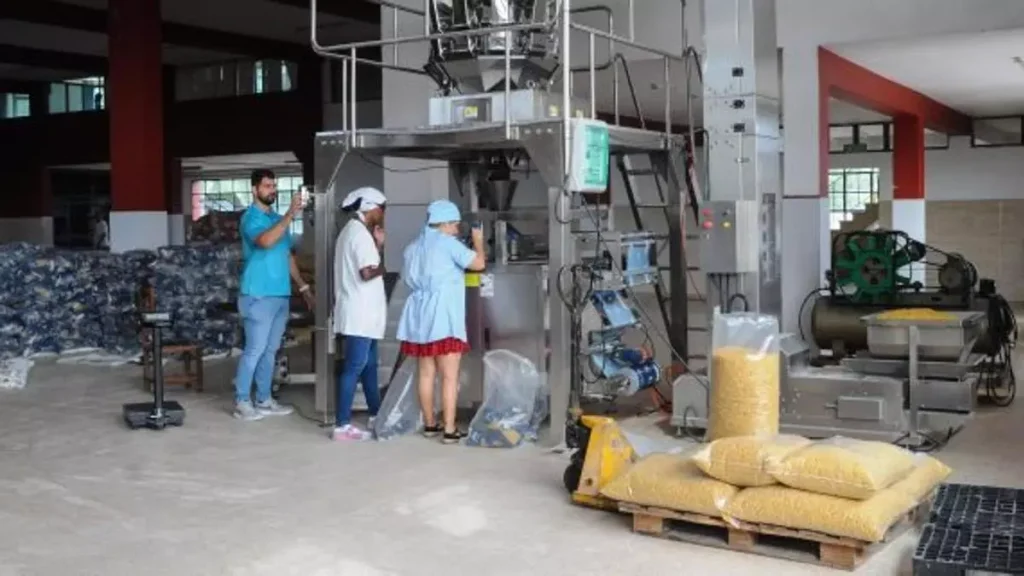
Cuba Preferred to Pull Out the Medical Mission Instead of Accepting the New Conditions, Says Jamaica

The Ministry of Foreign Affairs and Foreign Trade assures that since last July, it started reaching out to the Island and hasn’t received a response

A group of the 277 Cuban specialists who were in Jamaica. / Ministry of Public Health of Cuba

14ymedio bigger14ymedio, Havana, March 9, 2026 – While the Cuban government accused Jamaica of caving in to pressure from the United States to pull the medical mission, the Caribbean island’s side of the story is different. The regime didn’t even respond to Kingston’s proposal, which suggested keeping the deal if they made direct payments to the specialists and let them hold onto their passports—conditions that they did accept in other countries.

According to a statement from the Ministry of Foreign Affairs and Foreign Trade, the Jamaican government “is disappointed” with Havana, which chose to withdraw 277 specialists rather than accept the terms laid out.

“We value the contribution of the medical personnel, respect the Cuban people, and maintain our commitment to cooperation. However, no program operating in Jamaica can continue under conditions that contradict Jamaican legislation and international conventions,” emphasized the Ministry of Foreign Affairs and Foreign Trade.

In the document, the authorities say they realized “that other Caribbean countries had arrangements under which direct payments were made to the Cuban medical personnel. This makes it even clearer that a lawful and transparent alternative was possible.”

Jamaica acknowledges that the review of the agreements on the medical missions proceeded after the US stated that this program constitutes a form of forced labor and following the revocation of visas for officials from several countries last June. continue reading

Jamaica acknowledges that the review of the agreements on the medical missions proceeded after the US stated that this program constitutes a form of forced labor.

“The so-called ‘medical missions’ aren’t humanitarian aid. They’re a multibillion-dollar business of forced labor, where the regime pockets up to 90% of the doctors’ salaries,” the Cuban-American legislator from Florida, María Elvira Salazar, pointed out on her social media,

Kingston noticed that the doctors weren’t carrying passports, so they took immediate steps to fix it. “The matter was raised with the Passport, Immigration and Citizenship Agency, as well as with the local Cuban authorities, to ensure that all personnel could carry their passports,” the statement notes.

Another concern was the salaries: “although they were calculated at the same level as those of their Jamaican counterparts, they were being paid by Jamaica to the Cuban authorities in US dollars,” without specifying the amounts.

The only payment the Cuban doctors got, according to the bulletin, was “overtime payments,” but there’s “no contractual provision” that specifies what portion of those payments should go to the workers.

Kingston initiated talks with the Cuban government last July to restructure the agreement.

“That agreement raised serious concerns under Jamaica’s labor and tax laws, as well as international labor conventions,” the official document states.

Kingston initiated talks with the Cuban government last July to restructure the agreement. From that point, they brought up the issues with payments and documents.

The topic made it to the Cabinet in October, and after discussion, they came up with a formal proposal. “Unfortunately, the continued lack of response had the practical effect of preserving an agreement that Jamaica could not justify,” the statement says.

Kingston’s decision joins the ones recently taken by other countries in the region that have modified or canceled similar agreements with Havana. Among them are Honduras, Guatemala, Antigua and Barbuda, Dominica, Guyana, and Saint Vincent and the Grenadines.

Translated by GH

___________________

COLLABORATE WITH OUR WORK: The 14ymedio team is committed to practicing serious journalism that reflects Cuba’s reality in all its depth. Thank you for joining us on this long journey. We invite you to continue supporting us by becoming a member of 14ymedio now. Together we can continue transforming journalism in Cuba.
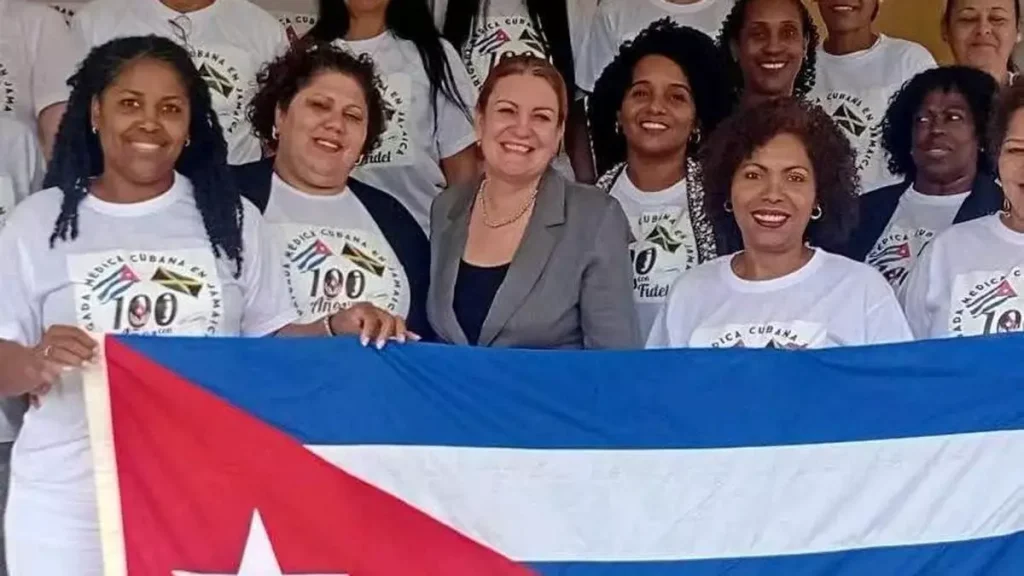
Cuba: In Villa Clara, Unpasteurized Milk Is Sent to Municipalities To Save Fuel

The official newspaper ‘Granma’ presents this and other measures the province has had to adopt due to the crisis as an “environmental success.”

The measure solves the “waste” represented by using 2,200 liters of diesel daily to transport the milk to the company. Today, only 259 liters are used for direct delivery. / CMHW

14ymedio bigger14ymedio, Havana, March 10, 2026 – Faced with the severe fuel shortage, Villa Clara has decided to send most of its milk directly to neighborhood ration stores in the municipalities without passing through pasteurization, with the exception of Santa Clara, where the process is carried out using solar panels. The information appeared this Monday in the official newspaper Granma, which considers that the measure resolves the “waste” that previously meant using 2,200 liters of diesel per day to collect and transport the milk to the processing company. Today, only 259 liters are used for direct delivery.

The measure is part of a longer list of decisions adopted by the Villa Clara Dairy Company to cut costs, which the newspaper describes as an “achievement of innovation” and an example of “turning challenge into opportunity.” Thus, it mentions alternatives used in services for workers, such as cooking with firewood or transportation by tricycles, examples of “creativity in times of crisis.”

“As the grandparents used to say, it’s never too late to start; solutions and initiatives have begun to appear everywhere,” states Granma, which insists that there has been waste of “human and material resources in most sectors, as if this were a rich country or one functioning in a normal context.”

“As the grandparents used to say, it’s never too late to start; solutions and initiatives have begun to appear everywhere.”

The official newspaper resorts to several quotes attributed—most of them incorrectly—to Albert Einstein to argue that the crisis forces the search for new solutions and alternatives and emphasizes that “solutions and initiatives have begun to appear everywhere, demonstrating the existing potential in the nation to resist the imperial assault.” One example is pasteurization using 400 solar panels that continue reading

, last year, allowed savings of 47 tons of diesel as well as 131 tons of carbon dioxide emissions into the atmosphere.

The process, now limited only to the provincial capital, serves to eliminate potentially dangerous bacteria through heat and is one of the basic methods for guaranteeing the sanitary safety of milk. Its absence reduces the possibility of preserving the product, which would then need to be kept under proper refrigeration conditions, something that can hardly be guaranteed in a country affected by prolonged blackouts.

For this year, the number of panels is expected to reach 1,364, guaranteeing 10% of the total energy needed by the complex. “And since the Villa Clara dairy thinks big,” according to Granma, the company is already working on acquiring 18 electric tricycles to transport all the milk that moves within Santa Clara, leaving trucks only to move the remaining milk in the municipalities.

Solar panels will also be the solution for the La Purísima dairy products factory, whose production of mayonnaise and other dressings had been in doubt until 60% of the systems that will allow operations to continue were installed, as well as for the Chichi Padrón slaughterhouse, which is also joining the energy-saving measures by planning the installation of 272 solar panels that will provide about 300 kilowatts. Otoniel González Ruiz, director of the entity, says that now they will be able to carry out all their work and adds that they will also apply the “very well thought-out” measure of replacing the employees’ bus with tricycles in order to minimize fuel consumption.

The Agustín Rodríguez Mena rum distillery in Santo Domingo also has 2,752 panels with which it generates the energy it needs and sends the surplus to the National Electric System, although in its case they were more forward-looking and did not have to wait for the crisis to tighten the screws, since their systems were installed in 2016.

“He who overcomes the crisis overcomes himself without being overcome,” Granma quotes—again incorrectly attributing it to Einstein—to conclude the list of solutions that, like the rum distillery, could have been adopted earlier without waiting for them to become unavoidable.

Translated by Regina Anavy

______________________

COLLABORATE WITH OUR WORK: The 14ymedio team is committed to practicing serious journalism that reflects Cuba’s reality in all its depth. Thank you for joining us on this long journey. We invite you to continue supporting us by becoming a member of 14ymedio now. Together we can continue transforming journalism in Cuba.

The Most Difficult Trip: Getting to the Maternal Hospital in Matanzas, Cuba

Without buses or state taxis, pregnant women and relatives depend on motorcycles and tricycles to reach the José Ramón López Tabrane Gynecology and Obstetrics Hospital.

Entrance to the José Ramón López Tabrane Gynecology and Obstetrics Hospital in Matanzas. / 14ymedio

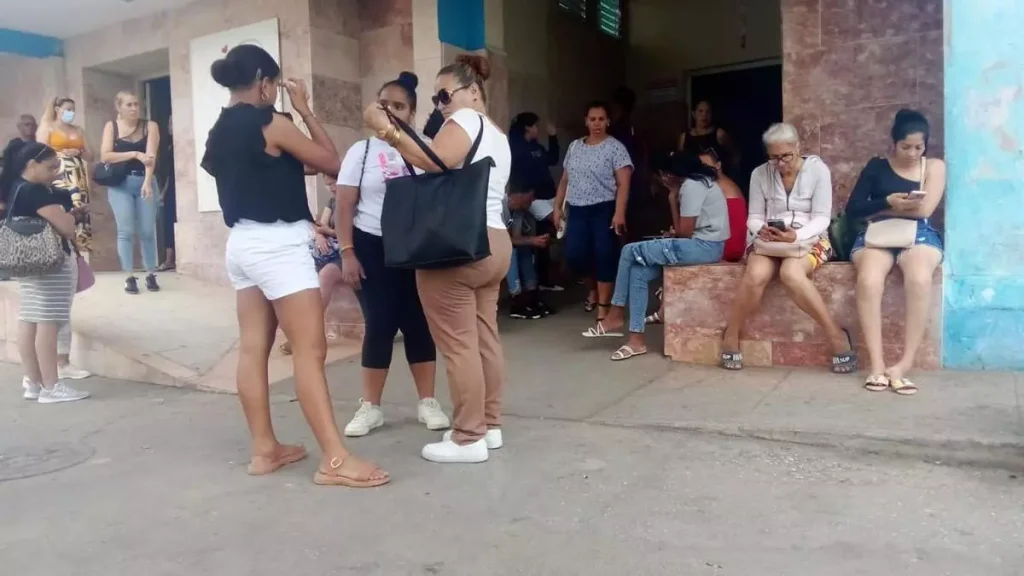
14ymedio bigger14ymedio, Matanzas, Julio César Contreras, March 10, 2026 – Getting to or leaving the José Ramón López Tabrane Gynecology and Obstetrics Hospital, in the Versalles neighborhood, has become a daily ordeal for patients and their relatives in the city of Matanzas. In front of the main entrance of the well-known Maternal Hospital, pregnant women, companions carrying bags, and young people persistently searching for transportation that rarely appears all mingle together.

At the building’s entrance, several people sit waiting on the edge of the steps. Some check their phones with resignation, others speak quietly while looking toward the street as if a lifesaving taxi might turn the corner at any moment. But the asphalt remains almost empty. From time to time a motorcycle or an electric tricycle passes by and is immediately surrounded by people trying to negotiate a seat.

“Local buses are not coming to this part of the city,” says Sandra, a young pregnant woman who has just gotten off a red motorcycle taxi. The driver has not even started the engine again when she is already mentally calculating the money she will have to spend to return home.

From time to time a motorcycle or an electric tricycle passes by and is immediately surrounded by people trying to negotiate a seat. / 14ymedio

“I just paid 1,000 pesos to bring me from my house, which is about three kilometers from here. If I don’t make that sacrifice I miss the genetics appointment,” she explains while adjusting her bag on her shoulder.

Sandra is in her third month of pregnancy and has already had to go to the hospital several times for checkups with the obstetrician. During none of those visits has she been able to find public transportation or any official vehicle associated with the Maternal Hospital taxi stand.

“I haven’t seen a state taxi parked in front of the emergency entrance even by chance,” she says. According to what she has been told, there is a car available 24 hours a day to assist with transporting patients, but it almost never appears. “They always say it’s on the road or attending an emergency.” continue reading

The scene surrounding the hospital entrance reflects the energy crisis the country is experiencing. The fuel shortage has reduced the circulation of buses and state taxis to a minimum, forcing people in Matanzas to rely on motorcycles, electric tricycles, or any vehicle that does not require fuel to move.

In one corner of the doorway, several women talk while waiting for news about possible transportation. One of them is Idania, who holds a bag full of baby clothes. Her niece has just been discharged after giving birth.

“There’s no ambulance here, no taxi, and no shame from the Public Health bosses. They go around in cars everywhere.” / 14ymedio

“She gave birth the day before yesterday and today she’s going home,” she explains. “The question is how we’re going to get there.” The woman looks toward the street with clear frustration. “There’s no ambulance here, no taxi, and no shame from the Public Health bosses. They go around in cars everywhere.”

Sitting on a concrete bench, Idania says she has spent the morning trying to avoid a solution she considers excessive: paying 50 dollars for a private taxi to take the mother and the newborn to Santa Marta.

“When it was time for the birth a neighbor did us the favor of bringing us,” she recalls. “At least in our case, the guarantee of institutional transport has been completely absent. We came on our own and we will leave on our own.”

For her the problem goes beyond the lack of fuel. “Here the answer is always that there isn’t any,” she complains. “But what there also isn’t is sensitivity.”

A few meters away, Lizandra watches the scene with concern. The young university student studies psychology and is going through her first pregnancy. While waiting to be called for an appointment, she calculates what each visit to the hospital costs her.

“Just to get here and then return home you need at least 2,000 pesos,” she explains. That is if you are lucky and a motorcycle or tricycle appears with space available.

The uncertainty about transportation adds to the normal fears of pregnancy. / 14ymedio

The uncertainty about transportation adds to the normal fears of pregnancy. “You already are nervous, as with any medical appointment, and on top of that you have to think about how you are going to get here and how you will get back home,” she says.

For pregnant women who live outside the provincial capital the situation is even more complicated.

“I have friends who have practically gone through their entire pregnancy at home because they have no way to come from Ceiba Mocha or from Pedro Betancourt,” Lizandra says. Getting to the hospital means organizing an uncertain trip, and, many times, one that is too expensive.

Meanwhile, in front of the Maternal Hospital the small group of people waiting for transportation continues to grow. A green tricycle stops for a few seconds and immediately several relatives approach to ask if there is space.

The driver shakes his head and starts moving again.

A motorcyclist stops shortly afterward, with his helmet raised and the engine still running. Two women approach to negotiate the price. The driver raises three fingers.

“1,500 pesos,” he says.

The women look at each other. One sighs and finally nods.

In the hospital no one seems surprised by these scenes. State taxis, recognizable by their yellow color, are nowhere to be seen. Ambulances only appear when there is a medical emergency. The rest of the time, patients and companions must manage on their own.

In the hospital doorway, Sandra looks at her phone again before entering her appointment. In a few hours she will have to repeat the same process: go out to the street, raise her hand, and wait for some motorcycle or tricycle to agree to take her.

In today’s Matanzas, even getting to the hospital can become an uncertain journey. And returning home often simply depends on having enough money to pay for the trip.

Translated by Regina Anavy

______________________

COLLABORATE WITH OUR WORK: The 14ymedio team is committed to practicing serious journalism that reflects Cuba’s reality in all its depth. Thank you for joining us on this long journey. We invite you to continue supporting us by becoming a member of 14ymedio now. Together we can continue transforming journalism in Cuba.
Closed Doors for the Meeting With Students: The University of Havana Deactivates the Protest

The institution avoids the “media show” that, in its view, occurred this Monday, when about twenty students gathered on the steps to demand the resumption of the academic term.

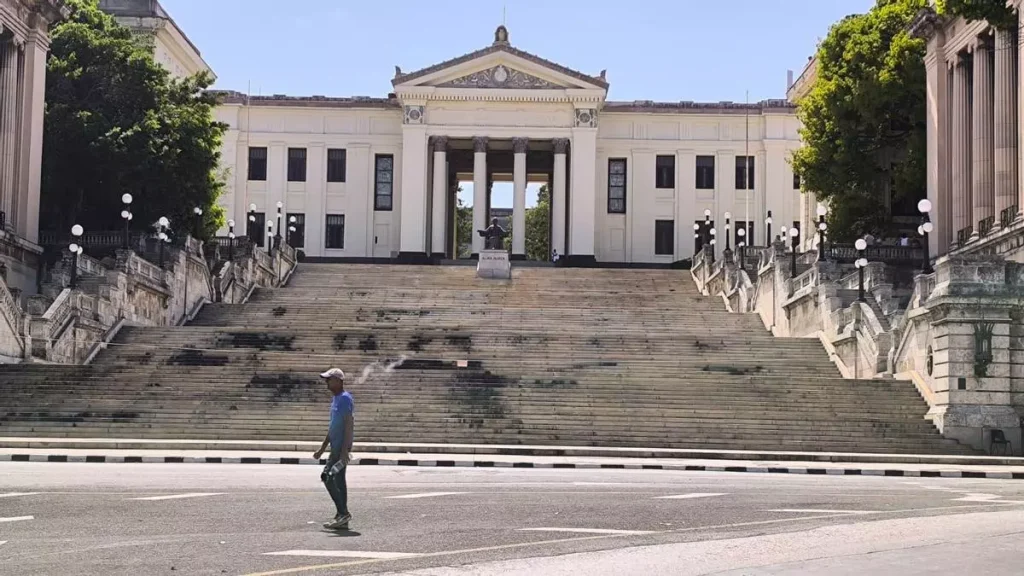
Steps of the University of Havana in the early afternoon this Monday / 14ymedio

14ymedio bigger14ymedio, Havana, March 10, 2026 – Cuban authorities seem to have achieved their objective of deactivating the continuation of Monday’s university student protest. The students had called for a dialogue this Tuesday at 10 a.m. in Víctor Hugo Park, but they moved the activity indoors at the request of the rector’s office. “After a fruitful negotiation, the University of Havana (UH), as an institution, has provided us with a classroom for our meeting in order to avoid unnecessary attention, the presence of the press, and agents external to the student body,” they announced in a WhatsApp group created to coordinate the actions.

The message indicates that the steps will once again be the meeting point for those who wish to attend the exchange, but from there participants will move to the room “enabled for use.” In this way, the institution avoids the “media show” that, in its view, occurred this Monday, when about twenty students gathered in that iconic place to demand the resumption of the academic term, which had been suspended due to extreme energy-saving measures taken to confront the energy crisis, aggravated by the U.S. oil blockade and transportation problems.

For the meeting scheduled for today, the student body has indicated some “parameters” to follow. “First, to clarify that our intention is to gather the opinions of students belonging or not to UH who are integrated into the higher education system. Second, that there will be zero tolerance for those who, through words or actions, hinder this process. This also implies zero tolerance for acts of provocation, vandalism, or eccentric behavior that ultimately damage the reputation and credibility of the process. Thank you in advance.”

“Where are the results, what the students are asking for? Oh, right, next week they will meet again to explain that they are ‘still’ working on it.”

These recent messages suggest that the idea promoted by the Cuban government has taken hold, that yesterday’s action serves “media outlets” seeking a “media show with the clear intention of harming” the Revolution. The students will discuss their demands behind closed doors in order to present continue reading

their concerns to the Minister of Higher Education, Walter Baluja, who, they say, “agreed to listen to the claims of those present.” Next Monday, March 16, a meeting is scheduled for the entire university student body at UH with the aim of unifying positions.

The situation appears to have calmed after alarms were raised yesterday, when State Security prevented people from joining the initial group of participants. Official media reported the incident as an exchange of views with Baluja, who went to the steps due to the commotion, and the UH rector. Commentators in state media themselves have shown disagreement with the way that press coverage was handled.

“Let’s see… the students PROTESTED, just as Fidel Castro and Mella once did. Is that journalism?” said a Cubadebate reader on social media. Although another user repeatedly responded to those questioning the approach by asking why no one complains to the “pedophile master of the North,” most expressed their discomfort. “They are hypocrites trying to whitewash the student protest,” another commented. Most doubted the issue would be resolved, no matter how many meetings are held: “Where are the results, what the students are asking for? Oh, right, next week they will meet again to explain that they are ‘still’ working on it. Ok, thanks for the information.”

University students have expressed their displeasure over the postponement of the academic term, but they seem to fear a larger escalation in a context where fear still dominates the population.

“When you protest, you can’t find a job. They take measures against you or your family,” a sociology student from the University of Artemisa told the Reuters news agency. On Tuesday Reuters published a report from San Antonio de los Baños noting that guaranteeing anonymity is still the only way to get Cubans to speak about the regime. During a tour through several areas near Havana, the agency found about a dozen people willing to identify themselves, but the rest preferred to hide their identity. “People are not going to get involved, because in real life nobody wants to be imprisoned again. The people have no way to defend themselves.”

Translated by Regina Anavy

______________________

COLLABORATE WITH OUR WORK: The 14ymedio team is committed to practicing serious journalism that reflects Cuba’s reality in all its depth. Thank you for joining us on this long journey. We invite you to continue supporting us by becoming a member of 14ymedio now. Together we can continue transforming journalism in Cuba.
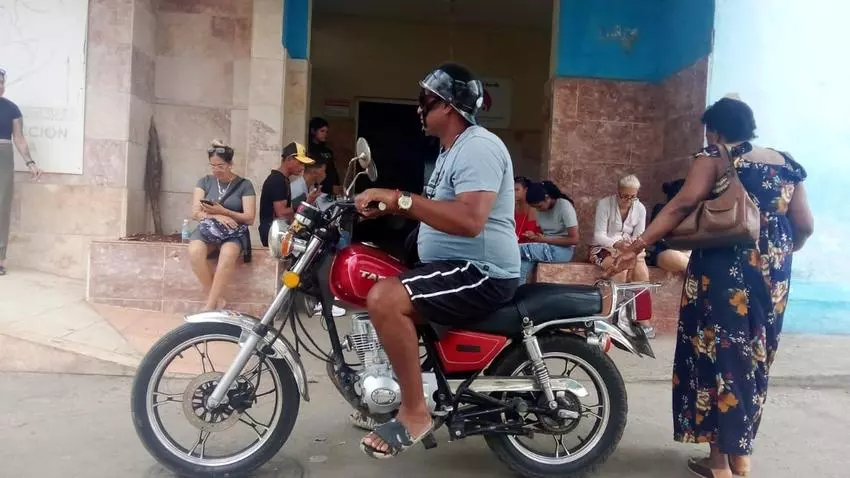
Cuba Loses to Puerto Rico and Puts Its Qualification for the Final Round of the World Baseball Classic in Doubt

The Island’s team barely managed two hits, its worst offensive performance in the entire tournament.

Cuba is in second place in Group A, with a 2–1 record. / Jit

14ymedio bigger14ymedio, Havana, March 10, 2026 – Cuba’s national team was exposed this Monday by Puerto Rico in its third game of the World Baseball Classic, losing 4–1. The defeat at Hiram Bithorn Stadium in San Juan puts Team Asere’s qualification for the final round in doubt, as it will now have to defeat Canada this Wednesday afternoon to advance to the next stage.

From the second inning, the Puerto Ricans pulled ahead. Catcher Martín Maldonado hit a double that drove in three runs against starting pitcher Julio Robaina. In the fifth inning the fourth run came on a sacrifice fly by Carlos Cortés against pitches from Havana reliever Josimar Cousín, who recorded eight outs, four of them by strikeout.

For Cuba, the only run came in the sixth inning thanks to a double by Alfredo Despaigne off Yacksel Ríos, combined with an error by the Puerto Rican defense. With that hit, the Cuban player reached 29 hits and moved into third place in the history of the World Baseball Classic, behind Frederich Cepeda from Sancti Spíritus (32) and Puerto Rican Carlos Beltrán (30).

After that brief attempt at offense, Team Asere could no longer generate any threat. Puerto Rico’s pitching staff shut down the Cuban offense, which had hit four home runs in its first two games against Panama and Colombia. Puerto Rico’s pitchers, with starter Elmer Rodríguez (three innings) and relievers Jovani Morán (two), Yacksel Ríos (two), Fernando Cruz (one) and Edwin Díaz (one), allowed only two hits, marking Cuba’s worst offensive performance of the entire tournament. “That makes it very difficult to salvage a smile in such a demanding competition,” the newspaper Jit concluded this Tuesday.

“That makes it very difficult to salvage a smile in such a demanding competition.”

With the loss, Cuba sits in second place in Group A with a record of two wins and one loss. To advance, it must defeat Canada, which arrives with the same chances as the Island, turning the game into an early final continue reading

for both teams. For that game, the pitcher for Germán Mesa’s team will be Liván Moinelo, who defeated Panama in the opening game. Meanwhile, Puerto Rico has already secured its place in the final round with a 3–0 record at the top of the group.

This was the third time the two teams have faced each other in a World Baseball Classic. In the 2006 edition they met twice, with one win for each side, although the most important victory went to Cuba, then managed by Higinio Vélez, which secured its place in the semifinals of that tournament.

Besides the remaining spot sought by Cuba and Canada, another place remains to be decided in Group B, where last night the United States (3–0) secured its advancement by defeating Mexico 5–3. Japan (3–0) and South Korea (2–2) have also secured their participation in the quarterfinals from Group C, along with Venezuela and the Dominican Republic, both with 3–0 in Group D.

Japan (3–0) and South Korea (2–2) have also secured their participation in the quarterfinals from Group C.

Unlike Cuba’s first two games in this tournament, the match against Puerto Rico did not feature any type of protest against the Island’s government, at least not any that were captured by the international broadcast.

The most notable case occurred in the opening game against Panama. Behind home plate, where the television camera focuses for much of the game, a fan displayed a banner reading “Down with the dictatorship! Díaz-Canel’s days are numbered.” The message, captured by the Fox television network and repeated by several media outlets, went around the world, although manager Germán Mesa said he did not see it.

Also during the game against Colombia, cameras focused on two fans wearing black T-shirts with the phrase “Díaz-Canel bastard,” an anti-government protest message that can carry long prison sentences if displayed in Cuba,.

Translated by Regina Anavy

______________________

COLLABORATE WITH OUR WORK: The 14ymedio team is committed to practicing serious journalism that reflects Cuba’s reality in all its depth. Thank you for joining us on this long journey. We invite you to continue supporting us by becoming a member of 14ymedio now. Together we can continue transforming journalism in Cuba.
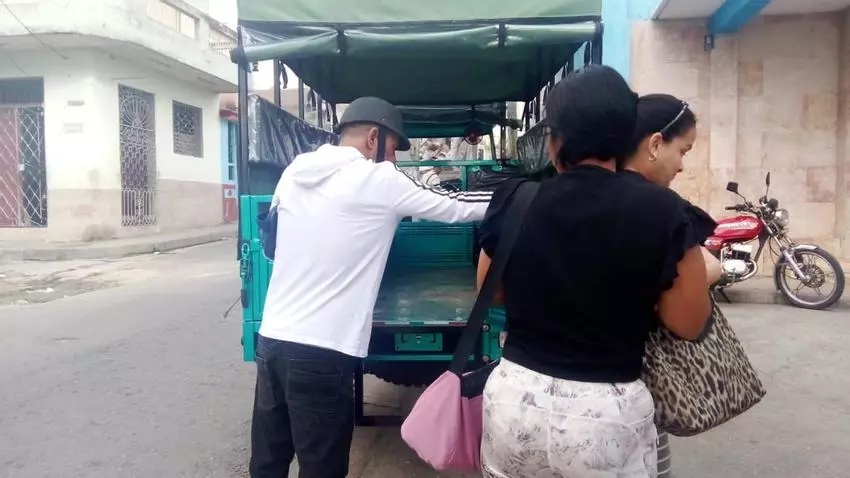
Cuban State Security Prohibits a Student Sit-In on the Steps of the University of Havana

The FEU (Federation of University Students) tried to prevent the protest called to express “the students’ dissatisfaction with the current teaching plan”

Image of students on the steps of the University of Havana, this Monday. / X/@CNN_Oppmann

14ymedio biggerDarío Hernández/Juan Diego Rodríguez, Havana, March 9, 2026 — About twenty students are meeting with education authorities after holding a peaceful protest on the steps of the University of Havana this Monday morning. Around 3:00 p.m. on Monday, the site showed no trace of what had happened several hours earlier, except for the internet connection being blocked

The students, around 25 in number, occupied the stairs in a peaceful protest. As stated on the poster circulated through a WhatsApp group, the “university sit-in” was scheduled for March 9th at 10 am “to publicly and peacefully demonstrate the student body’s dissatisfaction with the current teaching plan.”

The situation, an eyewitness reported to the organization Ciudadanía y Libertad, (Citizenship and Freedom), “remained calm at first,” but “changed when more students began arriving, interested in joining the protest.” Then, the sources continued, State Security agents blocked more people from entering the steps and the university grounds.

Police patrols in the vicinity of the University of Havana, this Monday. / 14ymedio/Courtesy

According to CNN correspondent Patrick Oppmann in Havana, who posted a picture of the protest on his social media, the students who had previously been on the steps entered the center to meet with officials and authorities.

The rector of the University of Havana, Miriam Nicado García, and the first deputy minister of Higher Education, Modesto Ricardo Gómez, approached the place where the young people were gathered.

“How many hours of electricity did you have last week? And do you have a connection when the power is cut off?” a student asked a dean, according to EFE.

“Many students from the provinces haven’t been able to submit anything because there’s no connectivity,” another student said.

These predominantly academic demands were gradually overtaken in the conversation by complaints about how university students can raise their issues and participate in the debate on solutions and decision-making processes.

“The paths to reach the Ministry of Higher Education are obstructed,” a young woman continue reading

stated, to which a student added: “This sit-in, I’m afraid, is a last resort.”

The First Vice Minister of Higher Education directly addressed the young people in an attempt to end the sit-in: “This isn’t going to solve the problems we have. Why this, gentlemen, young men, when my whole life has been dedicated to educating you?”

The young people, around 25 in number, took to the stairs in a peaceful protest. / 14ymedio/Courtesy

“Because they haven’t listened to us from the very beginning: that’s the answer you have,” a young man retorted.

In fact, the students had started to feel sidelined last week and, faced with what they perceived as decisions made from above, they created several alternative discussion groups on social media and launched the call for the sit-in.

Both the University of Havana and the FEU quickly came out to say that this initiative was “fake” and stressed that the established dialogue spaces were working.

Several young people highlighted that part of the erosion of trust in the University and in the FEU began last June, when the students’ discontent over a very sharp increase in the rates for mobile service by the state-owned telephone company was not addressed as they wished.

On the other hand, in the early afternoon, in the WhatsApp group for the call, the students posted: “For all those who are following the situation, the group that responded to the call is in dialogue with the Minister of Higher Education, expect more information before the end of the day.”

“Defending institutional dialogue is correct, but pretending that it exhausts all legitimate forms of expression is a mistake.”

In a letter shared on their social media, the organizers addressed the Secretariat of the University Student Federation (FEU), responding to a statement in which the pro-government organization dismissed the call, calling it “completely false” and “unnecessary”.

“We feel an obligation to respectfully disagree with your posture,” the missive stated. “Defending institutional dialogue is correct, but claiming that it exhausts all legitimate forms of expression is a mistake.” In four points, the students explained why the sit-in “is both real and necessary.”

First, they said, because “it is not a denial of dialogue, but rather its deepening.” A sit-in, they explained, is a tool to demand dialogue “when it becomes insufficient or slow” and “means bringing concerns to the forefront,” so that the “actions” taken by educational authorities “do not remain in closed spaces, but rather become the focus of collective conversation.”

On the other hand, they alluded to the fact that the FEU Secretariat told them they had already been “receiving concerns.” “This is valuable, but it’s not sufficient,” they retorted. “The legitimate question many have is: what happens to these concerns once we communicate them to you?” The protest, they argued, “seeks to break down the intermediaries and create a horizontal space, student to student, to compare opinions and reach our own conclusions, unfiltered by a structure.” And they continued: “If the current channels were effective, there wouldn’t be this spontaneous need for hundreds of students to seek an alternative way to organize.”

“We appreciate your work, but the solution to the problems in teaching and the general discontent cannot simply be ‘waiting’ for them to be addressed.”

On a third point, they criticized the FEU for referring to their action as “symbolic,” “as if it were something negative.” They argued: “The history of the University of Havana is built on symbols. Sitting in a common place, looking each other in the eye, and debating the problems of teaching and the situation of the country is a profoundly transformative act.”

Finally, they referred to the “management of solutions” that the Secretariat had offered them. “We appreciate their work, but the solution to the problems in teaching and the general discontent cannot simply be to ‘wait’ for them to be managed. The university community must be an active part in creating those solutions.”

The worsening energy crisis has led to the suspension of in-person classes at all universities, a cancellation that has left thousands of students at home. Maintaining contact with teachers through WhatsApp groups and other virtual platforms is not a viable option in a country where internet access is becoming increasingly unreliable.

______________________

COLLABORATE WITH OUR WORK: The 14ymedio team is committed to practicing serious journalism that reflects Cuba’s reality in all its depth. Thank you for joining us on this long journey. We invite you to continue supporting us by becoming a member of 14ymedio now. Together we can continue transforming journalism in Cuba.