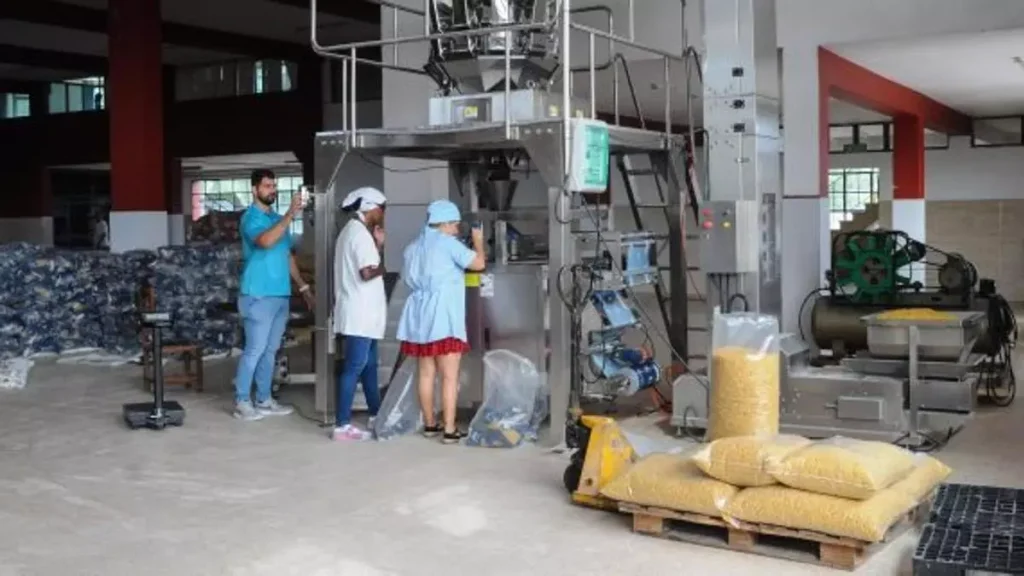
Lacking charisma, authority, and with a penchant for repression, the Cuban leader embodies the political exhaustion of Castroism. He is, without a doubt, the failed statesman of a dictatorship in its death throes.
 14ymedio, Yunior García Aguilera, Madrid, 13 March 2026 — There are leaders who, even in authoritarian systems, manage to project a certain aura of command. A tone of voice that commands respect. A gesture that conveys confidence. A phrase that, even if it’s propaganda, seeks to remain in the memory. Miguel Díaz-Canel does not belong to that category.
Since assuming the presidency of Cuba, his figure has been marked by a deficiency that is difficult to conceal: the complete absence of ashé. In the island’s popular culture, this word encapsulates the feeling that someone possesses a special force, an energy that commands respect, influence, and effectiveness. Díaz-Canel, on the other hand, seems to have come to power accompanied by an almost uninterrupted string of calamities.
During his presidency, tragedies have occurred, including the 2018 plane crash, the devastating tornado that struck Havana a year later, the COVID-19 pandemic, and the massive fire at the Matanzas supertanker base. To this succession of disasters was added a geopolitical blow of enormous magnitude: the loss of control of Caracas following the capture of Nicolás Maduro.
That operation not only exposed the fragility of the Cuban security apparatus but also deprived Havana of its main oil benefactor. For the Cuban regime, losing Venezuela to the United States has been a blow similar, in contemporary terms, to what losing Cuba meant for Spain in 1898.
But attributing his disastrous administration solely to bad luck would be an oversimplification. The worst catastrophe of his term has not been chance, but political obstinacy. Decisions such as the poorly designed continue reading
Díaz-Canel completely lacks a sense of humor, a fundamental political tool in Cuban culture
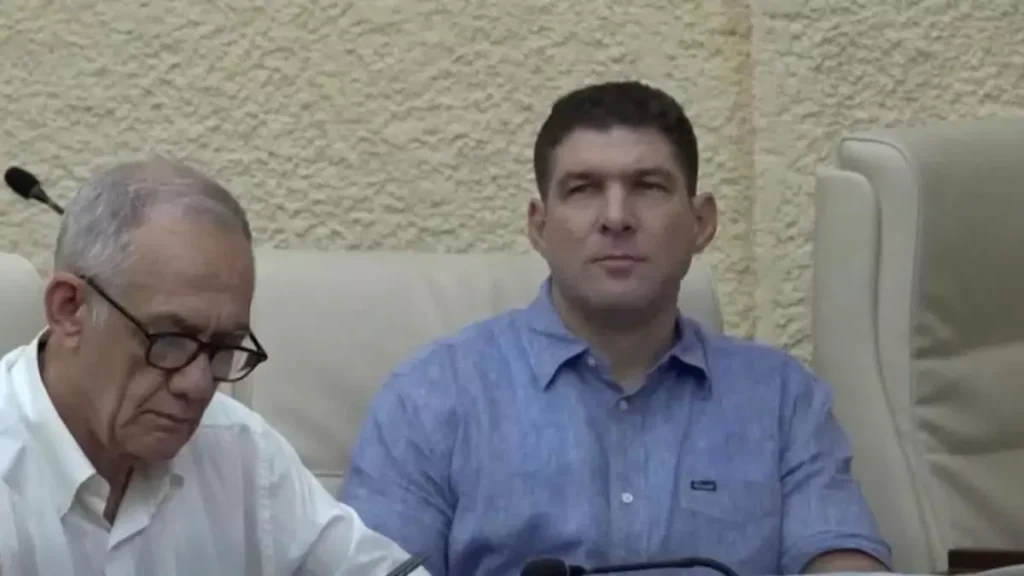
On the communication front, the sub-dictator also fails to compensate for his lack of leadership with style. He completely lacks a sense of humor, a fundamental political tool in Cuban culture, where irony and double entendre are part of everyday language. His public appearances tend to be delivered in a rigid, almost schoolboyish register, incapable of connecting with the people. This is compounded by unnatural diction, with forced pronunciation, irregular cadence, and sentences strung together in a monotonous tone that conveys more weariness than conviction.
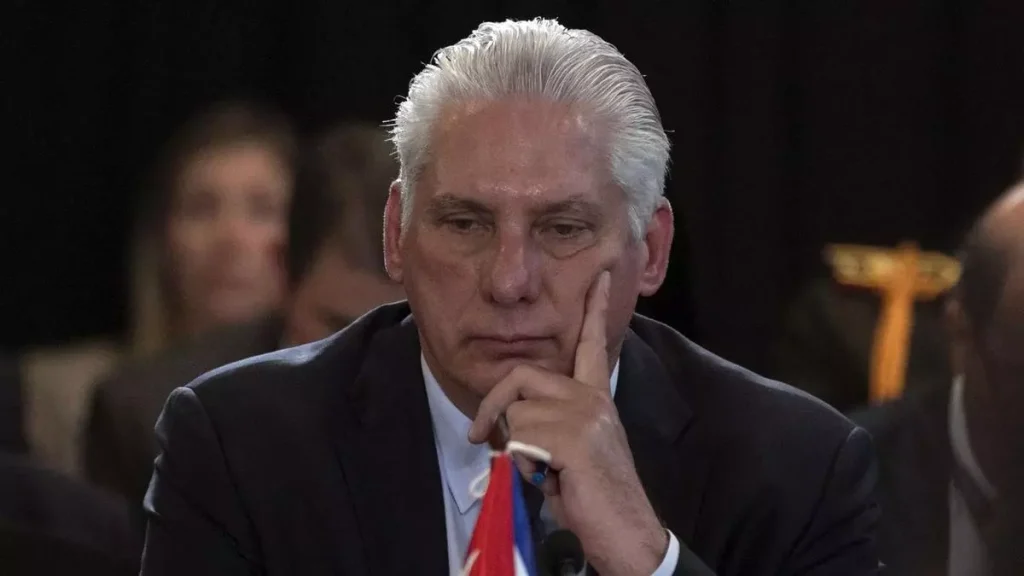
In terms of body language, his stage presence doesn’t help either. He frequently appears before the cameras with a tense, almost disgusted expression that hardens his face and makes him seem less approachable. While speaking, his body sways slightly from side to side, a repetitive movement that betrays nervousness and a lack of stage presence. Instead of projecting confidence, these gestures reinforce the impression of a leader uncomfortable in his role, as if each public appearance were a chore he must complete rather than a moment of leadership.
His ascent was not the product of genuine competition within the power structure. On the contrary. When Raúl Castro announced his appointment, he let slip a revealing phrase: Díaz-Canel was the sole survivor of an initial list of twelve potential candidates.
The statement, far from reinforcing his authority, exposed the method by which the system chooses its leaders. It is not about selecting the best, but the most manageable, the least dangerous, someone who won’t overshadow those who truly control the power.
He did not have his own political base nor did he have a strong international profile
For decades, the Cuban political apparatus has demonstrated a remarkable ability to neutralize its own members when they begin to stand out too much. The system does not reward boldness or initiative. It rewards obedience. The ideal leader is not the one who proposes changes, but the one who guarantees continuity.
In this context, Díaz-Canel was a perfect choice. He lacked his own political base and a strong international profile. Nor did he possess a heroic biography that could compete with the revolutionary mythology of the old guard. He was, essentially, a disciplined cadre who had climbed the ranks within the Party without causing too much turmoil. Mediocrity, in that sense, served as an advantage.
Those who designed the succession probably sought precisely that: a lackluster leader, incapable of challenging the real power structures. A bureaucrat who would manage day-to-day operations without altering the system’s architecture. The problem is that this formula might work for a while, but not in the midst of a complex crisis.
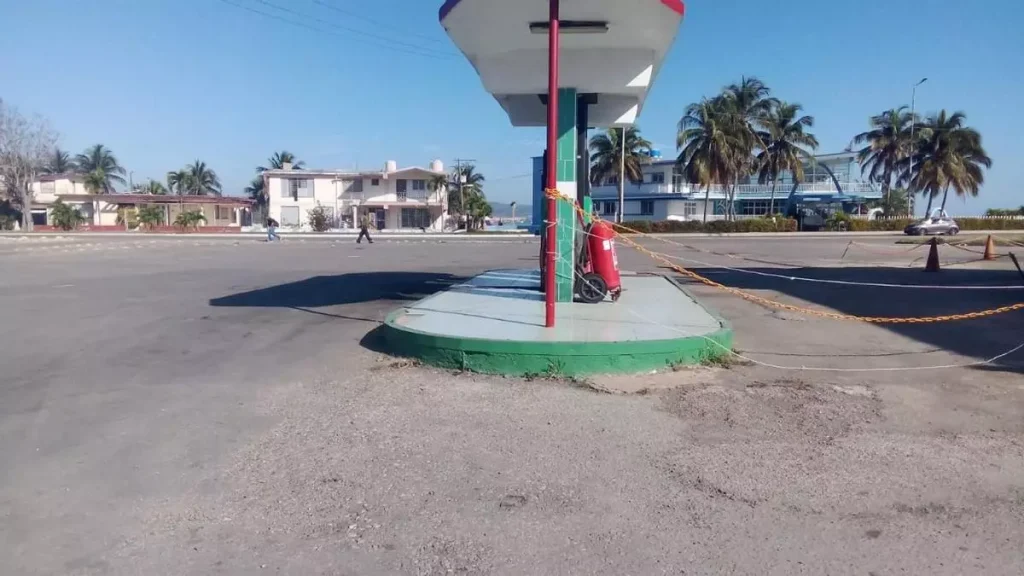
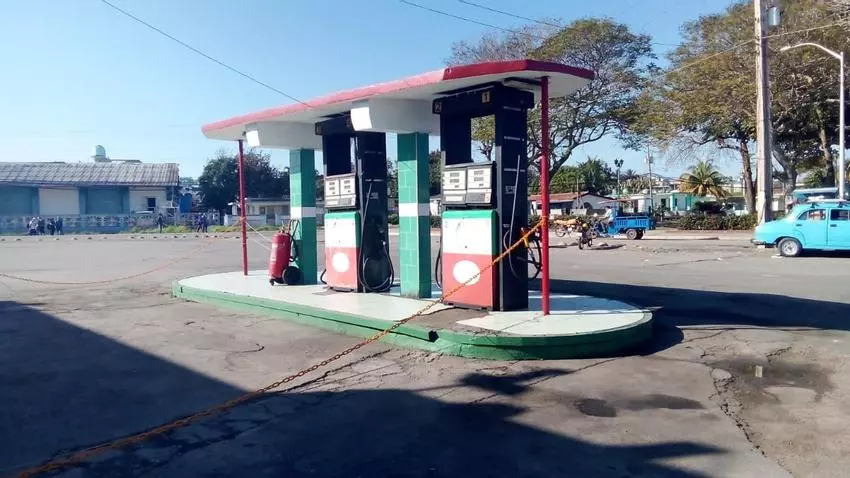
In a country mired in the worst economic collapse in its history, the leader who formally occupies the pinnacle of power seems incapable of connecting with the reality of the people. Under his mandate, Cuba has experienced accelerated deterioration, unprecedented protests, and a migratory exodus that has reached historic figures. Agricultural production is plummeting while food prices are skyrocketing. The national currency has become a mere accounting fiction. And the state, trapped in its own inefficient structure, seems unable to offer real solutions, only timid and belated reforms.
The phrase that remained etched in the collective memory: “The combat order is given”
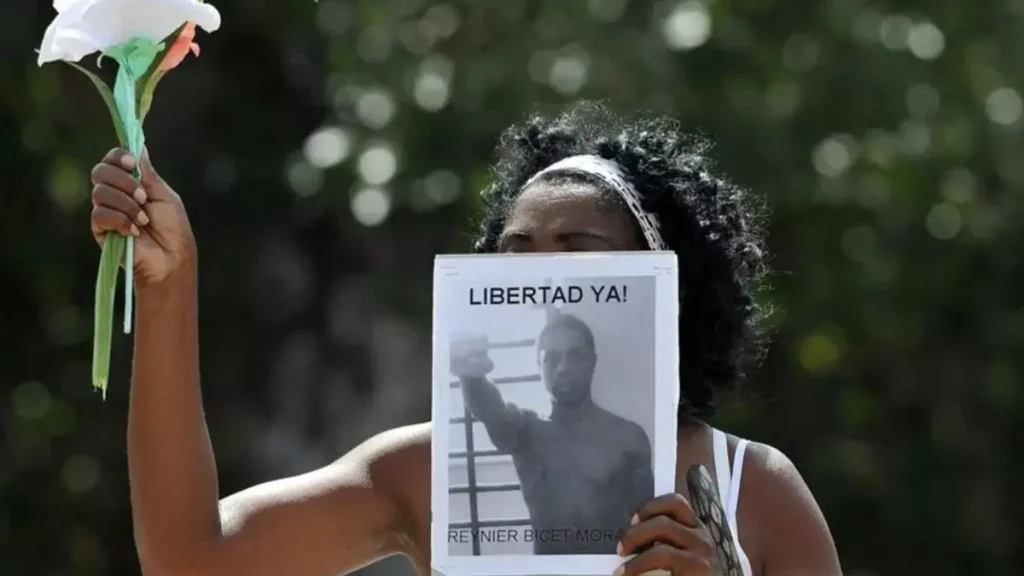
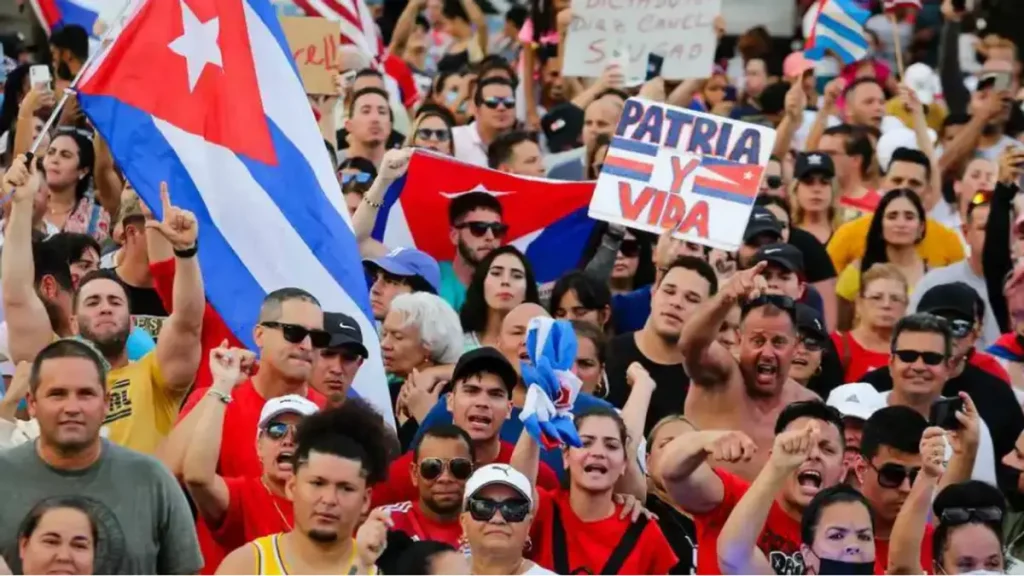
This political weakness is compounded by another trait that has come to define his presidency: internal repression. The clearest example came during the Island-wide protests of 11 July 2021, when he uttered the phrase that has become etched in the collective memory: “the combat order is given.” That call to confront the protesters marked a point of no return. Hundreds of young people ended up in prison with disproportionate sentences, thousands were arrested, and the repressive apparatus was deployed with an intensity unseen for decades.
Since then, many Cubans have begun referring to him by a nickname that was already circulating in rap lyrics or whispered about: El Singao.* In the island’s popular slang, the term describes someone abusive, vile, or morally despicable. It is the verdict of a citizenry that perceives its president not only as an incompetent leader, but as a thug willing to maintain power at the cost of punishment and bloodshed.
He is, without a doubt, the failed statesman of a dictatorship in its death throes.
The average Cuban does not need economic reports to perceive the system’s collapse. They simply have to step outside. After Díaz-Canel’s pointless public appearance this Friday, the desire for his disappearance from the national scene has resurfaced on social media: some fantasize about him being abducted by Trump or aliens; others, that he’ll voluntarily pack his bags and vanish into some psychiatric clinic in Siberia. He is, without a doubt, the failed statesman of a dictatorship in its death throes.
*Translator’s note: Diaz-Canel and ‘Singao’ rhyme. The latter is variously translated as motherfucker, bastard and similar epithets.
______________________
COLLABORATE WITH OUR WORK: The 14ymedio team is committed to practicing serious journalism that reflects Cuba’s reality in all its depth. Thank you for joining us on this long journey. We invite you to continue supporting us by becoming a member of 14ymedio now. Together we can continue transforming journalism in Cuba.