With a monthly pension of 3,000 pesos, a grandfather in charge of his grandson, because the parents left the country, cannot guarantee a child’s food.

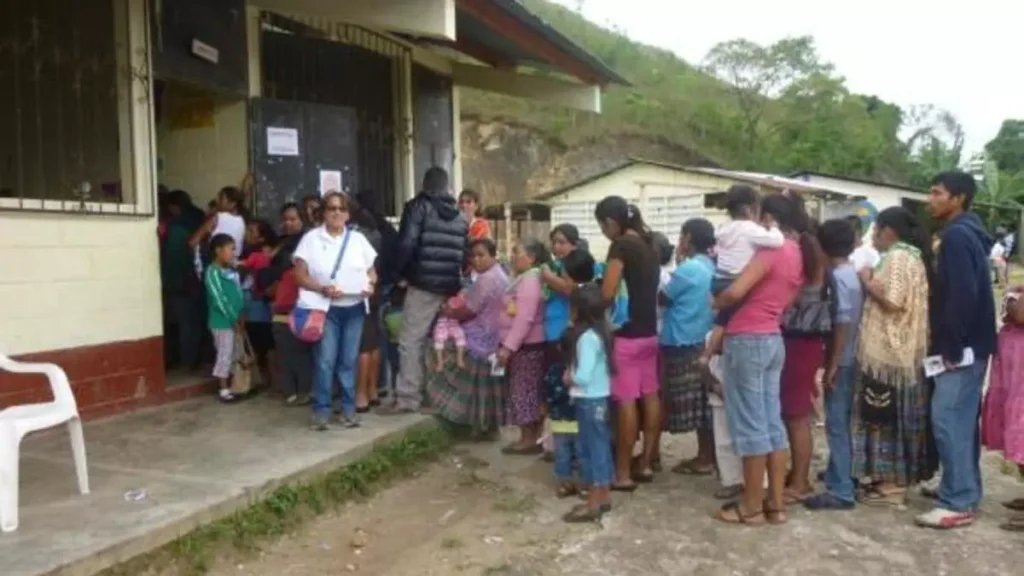
 14ymedio, Guantánamo, Dayamí Rojas, March 28, 2026 – The morning bustle gathers every day in front of a primary school in the Caribe neighborhood, in the city of Guantánamo. At that hour, children arrive with their backpacks slung over their shoulders and a small additional bundle in their hands: their snack. Some bring a piece of bread, others a small bag with cookies, and a few barely carry a bottle with an instant drink. Behind each of those portions there is a story of domestic sacrifice and inflation.
In most schools in Guantánamo there has not been a school snack distributed by the educational center itself for decades. That practice, which in other times included a bottle of soda or a portion of sweets, disappeared during the years of economic crisis and was never restored. Since then, the responsibility of feeding students during the school day has fallen exclusively on families, who must figure out each day what to put in the child’s backpack.
But in recent months, the rise in the cost of basic products has turned that daily task into a real obstacle course. The increase in the price of bread, cookies, and all flour-based products has driven up snack costs, while inflation and the devaluation of the Cuban peso continue to erode the purchasing power of salaries and pensions.
Private vendors offer baguette-style bread early in the morning. The loaves are displayed in plastic boxes or improvised baskets, and they disappear quickly. The price changes depending on availability and demand pressure. What used to cost a few dozen pesos has now become a significant expense for any family with school-age children.

“Ensuring breakfast and a snack for a child today in Guantánamo costs, at a minimum, between 100 and 150 pesos daily,” a father, who also works as a teacher, explains to 14ymedio. “If you add lunch and dinner, each child needs between 300 and 400 pesos daily so that, at least, they do not go hungry.” continue reading
His words summarize a reality that is repeated in many households in the province, where family incomes do not grow at the same rate as prices. In a context marked by inflation and shortages, every purchasing decision
becomes a complex calculation. Parents and grandparents compare prices among different vendors, reduce portions, or substitute more expensive products with lower-quality ones.
On a corner in the San Justo neighborhood, Saúl waits his turn in front of a private sales point. He holds a crumpled bill in his hand and keeps his eyes fixed on the tray where the bread is piled up. He has two children in primary school and every morning he must go out early to secure the day’s snack.
“A baguette costs you 250 pesos, if you can find it at that price, because in my neighborhood they already sell them for 350. Soft drinks have also gone up, everything is very expensive,” the man from Guantánamo tells this newspaper.
What used to be an occasional purchase now represents an expense that many families cannot afford frequently
The increase in prices is not limited to bread. Cookies, sweets, and juices have followed the same trend, driven by the shortage of flour, rising sugar prices, and the higher cost of the inputs needed for their production. Many of these products are sold on the informal market or in small private businesses, where prices constantly adjust depending on the availability of goods.
Around several schools, street vendors have become a common presence. They offer small doughnuts, bread with cheese, and sweet cookies, aimed specifically at students. However, what used to be an occasional purchase now represents an expense that many families cannot afford frequently.
The situation becomes even more difficult in households where children are left in the care of grandparents, an increasingly common reality in Guantánamo due to the parents’ emigration. In those cases, an elderly person’s pension must cover all the child’s expenses, including daily food.
“A grandfather who is in charge of his grandson, because the parents left the country, and who has a monthly pension of 3,000 pesos cannot guarantee a snack every day for that child,” explains a resident of Guantánamo living in the city center.
Insufficient nutrition not only affects children’s physical well-being, but also their academic performance
The figure is revealing when compared with current food prices. With a pension that barely covers basic household expenses, allocating daily money for a school snack becomes an almost impossible challenge. In some cases, children attend classes with a minimal snack or nothing to eat, making it difficult for them to last until the end of the school day.
Inside classrooms, teachers closely observe this reality. Some students share their snacks with classmates who have nothing, while others try to stretch time so that hunger does not interfere with concentration. Insufficient nutrition not only affects children’s physical well-being, but also their academic performance.
In a school in the Los Maceo neighborhood, a teacher comments that it is increasingly common to see students arriving without snacks or with very small portions. The scene repeats itself during recess, when the yard fills with children who open their backpacks and compare what each was able to bring that day. The next day, the family will have to start the same battle again: finding and paying for something the student can eat mid-morning, in the middle of their classes.
Guantánamo: Cuban families and the daily challenge of school snacks
Translated by Regina Anavy
______________________
COLLABORATE WITH OUR WORK: The 14ymedio team is committed to practicing serious journalism that reflects Cuba’s reality in all its depth. Thank you for joining us on this long journey. We invite you to continue supporting us by becoming a member of 14ymedio now. Together we can continue transforming journalism in Cuba.