For 40 years, the elimination of the station was one of the most constant demands of the Cuban dictatorship, comparable only to the return of the Guantanamo naval base or the end of the embargo.
For years I was a regular contributor to ’The News As It Stands’ on Radio Martí, where you could hear reports from ’14ymedio’, ’Diario de Cuba’ and ’Cubanet’ / Radio Martí
14ymedio, Reinaldo Escobar, Desde Aquí, 18 March 2025 – I don’t know whether the USA will now be more “grande” (’great again’) after closing down Radio Martí. Neither do I know whether, in the English spoken by the president of that country, the word “grande” (’great’) is limited to the amount of money that that country stashes away in its vaults. In the Spanish that we speak in Cuba the word “grande” is associated with “grandeza” – magnanimity, or nobility – and this word in turn is associated with generosity.
Generosity cannot be demanded, but it is one’s duty to give thanks for it.
For 40 years, the elimination of Radio Martí was one of the most consistent demands made by the Cuban regime, comparable only to their demands for the return of the Guantánamo naval base and the end of the embargo. To use an expression familiar to the Republican who, for now, occupies the White House, the Cuban negotiators never even had “the cards” to put on the table for achieving their goal of switching off Radio Martí.
I’m not familiar with the rules of Poker, nor of any other card game, but if I were to get all ’conspiracy theory’ about it I would dare to suspect that the game’s being played underneath the table. ’Certainly’ it’s a coincidence that the closure of Radio Martí came just after we’d heard about the release of 553 prisoners! – which had been promised to the Vatican (of which only 230 were considered to be political prisoners), and shortly after it was announced that foreigners could now buy and own land in Cuba. And who knows, perhaps at last we may be about to find out exactly why so many hotels have been built on the island recently. continue reading
In the Spanish that we speak in Cuba the word “grande” is associated with “grandeza” – magnanimity, or nobility – and this word in turn is associated with generosity
There’s no use crying over spilt milk. For years I was a regular contributor to ’The News As It Stands’ on Radio Martí, where you could hear reports by independent media organisations such as ’14ymedio’, ’Diario de Cuba’ and ’Cubanet’, to name but a few. There, any Cubans without internet access were able to find out what these digital media had been publishing. Granted, it was accompanied by noise and interference, but it had a clarity which only the truth can provide.
Perhaps it’s now just become our turn for giving “grandeza”/generosity towards the United States – to help it become “great again,” via yet more money in its vaults, in exchange for losing those spaces for truthful information about our reality. But as I’ve already said: generosity cannot be demanded, but it is one’s duty to give thanks for it.
Translated by Ricardo Recluso
____________
COLLABORATE WITH OUR WORK: The 14ymedio team is committed to practicing serious journalism that reflects Cuba’s reality in all its depth. Thank you for joining us on this long journey. We invite you to continue supporting us by becoming a member of 14ymedio now. Together we can continue transforming journalism in Cuba.
An article in ‘Granma’ describes the bleak outlook for the sugar harvest in Guantánamo province.
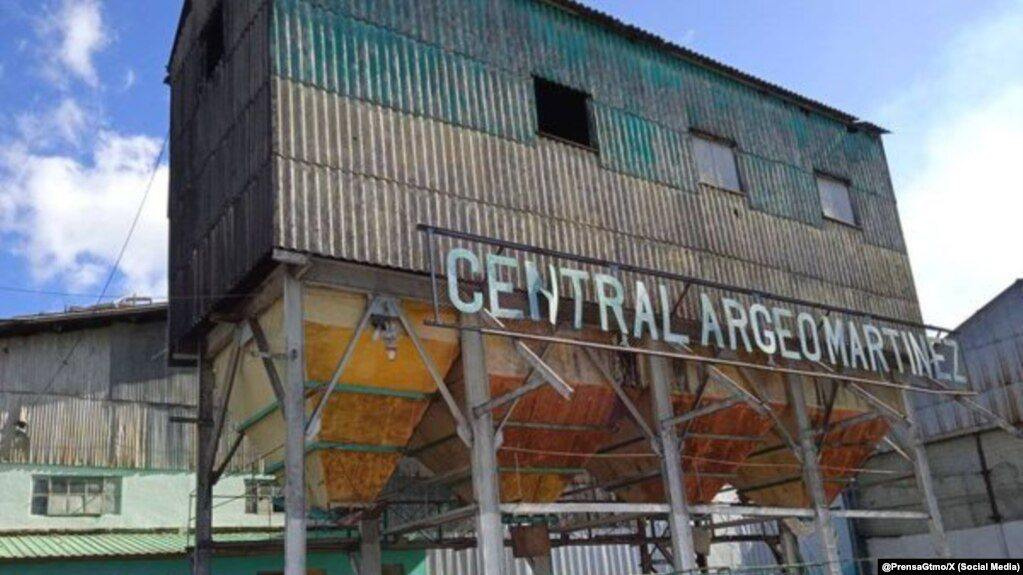
Argeo Martínez is the only sugar mill in the east of the country that joined the campaign this year / Prensa Guantánamo
14ymedio, Havana, 18 March 2025 — The International Agroindustrial Food Fair of Cuba began this Monday in Havana, at a time when national agriculture is experiencing a deep crisis and desperately needs foreign investors to revive production. Proof of this is an unusual article by the State newspaper Granma that describes the bleak panorama of the harvest in the eastern provinces and bears a title that says it all: With such ingenuity and effort, where’s the harvest?
In the eastern zone, the Argeo Martínez sugar mill is the only one that has assumed the grinding (there are only 14 throughout the country this year), but its entry into the campaign was late, and after the appearance of other “inconveniences,” the delays have accumulated. From the beginning, the mill was far from reaching the 26,000 tonnes of sugar it achieved in 2014. For this year, the plan is one fourth as much, and with a deadline of March 25, they already owe 700 tonnes.
This translates into thousands of tonnes of cane not being processed, according to the mill’s administrator, due to rain and other obstacles.
The raw material “reached the conveyor belt with a delay of up to 90 hours and was often burned”
According to Granma, the raw material “reached the mill with a delay of up to 90 hours and was often burned,” which the person in charge of the harvest in Guantánamo – where the mill is located – justifies with the poor state of the fields: “In some seedlings there is pica pica,” a plant that stings the skin of the cane cutters and which it is better not to approach,” says the continue reading
newspaper.
Other plants have also invaded the oldest plantations, neglected for two and a half years. Cutting them down, the article argues, would demand too much effort on the part of the macheteros, so it is decided to burn the field,* and only the blackened cane remains standing. “The scientific literature states that the burning of cane fields affects biodiversity and the ecosystem, reduces the natural fertility of soils and reduces the quality of the raw material,” the media emphasizes.
The same was alleged by Deputy Prime Minister Jorge Luis Tapia Fonseca in his visit to Argeo Martínez last week, when he asked for “more discipline” on the part of the employees: “What kind of harvest can be obtained from a burnt cane that arrives late to the conveyor belt?” he scolded.
The director also “saw railroad cars waiting too long to be unloaded, and he knew – from the record – that there was cane in the field waiting to be transported, a sign of discontinuity in the flow of raw material to the mill,” says the media.
To this are added the failures, unforeseen stops, problems in the boilers, “disorders here and there in the 162-year-old ’rheumatic’ colossus”
Granma also highlights “other causes and bad luck” that delay the transport to the mill. “The humidity on the ground has risen, and many times, because of it, the cutting and lifting slow down. The mud makes it difficult and sometimes prevents the cane from arriving on time, which takes away its freshness,” emphasizes the administrator of Argeo Martínez
Added to this are failures, unforeseen shutdowns, boiler problems, “disorders here and there in the 162-year-old ’rheumatic’ colossus” whose ailments can no longer be corrected with temporary patches.
However, some workers take responsibility for the failure with voluntarism and promise a better future for the harvest. The administrator believes that the next plantings “will give more sugar.” Until now, the yield was 5.79 tonnes of sugar for every hundred tonnes of ground cane, but “in recent days that index exceeds 6.50,” which managers see as a “good symptom.” And they assure: “we will get to eight.”
“At first glance it seems impossible,” predicts Granma, which attributes to the mill a “gypsy curse disguised as interruptions and inefficiencies, which has haunted them year after year for more than a decade.” If it is achieved, it is thanks to the “efforts of the operators and the workers.” And it clarifies: “The good, the bad and the regular of the current sugar campaign in the Upper East depends on this sugar mill, the only one working in Guantánamo.”
For years, each sugar campaign has been worse than the previous one, and, in 2024, the Island reached its lowest point. Barely 160,000 tonnes were produced, less than half of what was achieved a year earlier, when 350,000 were reached. Last year, Cuba also imported more sugar than it produced for the first time.
Sugar is just one product of those presented – all in a similar state – by Cuban agriculture to companies in Spain, Italy, Panama, Chile and Brazil, and to the 46 firms from 20 countries visiting the Agroindustrial Fair. Currently, according to official data, the country imports 80% of the food it consumes, including 100% of the products in the basic family basket.
*Translator’s note: Burning the cane field eliminates the grass and makes it easier to cut at the base of the plant.
Translated by Regina Anavy
____________
COLLABORATE WITH OUR WORK: The 14ymedio team is committed to practicing serious journalism that reflects Cuba’s reality in all its depth. Thank you for joining us on this long journey. We invite you to continue supporting us by becoming a member of 14ymedio now. Together we can continue transforming journalism in Cuba.
A power deficit of 1,300 MW is forecast for today as more tankers carrying oil and fuel continue to arrive.
The Luyanó neighborhood has been without water for more than a week / 14ymedio
14ymedio, Havana, 18 March 2025 — After the collapse last Friday of the national electricity system (SEN), electricity is not the only thing missing for Cubans. In Havana, the image of elderly people carrying buckets or pushing wheelbarrows with water containers has become frequent. In some neighborhoods, the supply cycle was interrupted by the total blackout, and, since then, “not even one drop of water” has reached homes.
This is the case of Luyanó, in the municipality of Diez de Octubre, where the neighbors who talked to 14ymedio assure that they have been “more than a week”, since Monday, March 10, without water. Normally, they say, the service works every other day. The options to overcome the shortage range from appealing to the kindness of neighbors with wells to going to relatives with reservations to be able to bathe or cook.
In Nuevo Vedado, where the editorial staff of this newspaper is located, the situation is similar. “I only have a small reserve left, and I hope that this afternoon there is enough water in the building’s cistern to be able to pump it into a container,” says a resident in the area. continue reading
“I had to go to the Hermanos Ameijeiras hospital on Monday. and there were nurses complaining that they had not been able to wash their uniforms”
I had to go to the Hermanos Ameijeiras hospital on Monday, and there were nurses complaining that they had not been able to wash their uniforms because they still had no power in their homes,” adds the neighbor, worried about the hygiene of the employees who are exposed to diseases and infections. In the center, despite now having electricity, “the servers were down and there was no network,” she adds.
According to an article published yesterday in the State newspaper Granma, the “greatest complexity” with the water supply is in the capital. Interviewed by the official media, José Antonio Hernández Álvarez, director of Water and Sanitation in the province, explained that water service would not be available until “the afternoon-night of Wednesday” if the supply is restored.
“The stability in the pumping systems begins about 72 hours after being energized, in this case after the reconnection of the national electrical system, which collapsed last Friday,” Granma added.
The weekend of total blackouts has reminded many of the obstacles they faced at the end of the year, when the SEN suffered three power outages in three months. In Holguín, on the other side of the island, Manuel still laments that most of the food he had refrigerated ended up in the trash. “We had to bring food to my wife’s grandmother, who lives in the countryside about five kilometers from the city, because everything went bad,” he says.
He explains that this week everything has returned to the usual “normality,” at least in Havana. “The blackouts are now scheduled and will happen as before. But in the countryside it takes two hours and more to turn on the power, taking the programming schedule as a reference,” he says.
The image of elderly people carrying buckets or pushing wheelbarrows with water containers has become frequent in Havana / 14ymedio
As of this Monday, and despite the fact that many Cubans continue to suffer the consequences of the total blackout of the weekend, the Electric Union began again to broadcast its usual report. For this Tuesday, the deficit is forecast at 1,300 megawatts, a number that has become standard in recent months and that represents almost half of the Island’s demand.
The situation is barely alleviated by the tankers that arrive on the Island and take time to distribute the tons of oil they bring. “It took the Corossol about 120 days to unload its precious cargo of urgently needed fuel,” Texas University expert Jorge Piñón told this newspaper about the ship loaded with 650,000 barrels of diesel that had been circulating around the Island since November before docking at the port of Matanzas on March 3.
The same is repeated, says the specialist, with the Marlin Aventurine, which has been waiting to unload in the operational part of the Matanzas Supertanker Base since March 5. On the horizon, with an expected arrival in Matanzas on April 1, he explains, there is another ship approaching, the Marlin Ammolite, with an estimated 330,000 barrels of fuel from France. “Does Cuba have a problem in the storage capacity in its logistics chain or a financial problem?” asks Piñón, who emphasizes that these three tankers “do not come from Mexico, Russia or Venezuela, where there would not be any kind of delay for payment reasons.”
They are all, for the moment, questions: “Is it Cuba who is paying in cash for the fuel in these three tankers? Or is it a third party, Russia or Venezuela, that is the counterparty through a credit to the supplier?” Not counting the freight, the expert estimates these three tankers carry fuel worth 85 million dollars.
Meanwhile, unit 6 of the Renté thermoelectric plant, in Santiago de Cuba; the 2 of Felton, in Holguín; the 6 of Mariel, in “maintenance in Artemisa; as well as the 3 of Santa Cruz del Norte, in Mayabeque; the 3 and 4 of Cienfuegos, and the 5 of Renté are out of the game.
Another 435 megawatts are not available in thermal generation, he says without offering explanations. And, finally, 42 distributed generation plants are not working due to lack of fuel, affecting another 176 megawatts.
Translated by Regina Anavy
____________
COLLABORATE WITH OUR WORK: The 14ymedio team is committed to practicing serious journalism that reflects Cuba’s reality in all its depth. Thank you for joining us on this long journey. We invite you to continue supporting us by becoming a member of 14ymedio now. Together we can continue transforming journalism in Cuba.
Currently in Cuba, along with hunger, poverty, ill health, disease, criminality, and repression, suicides are on the rise
Source: El Toque
Cubanet, Luis Cino Álvarez, Havana, 17 March 2025 — Rare is the day we don’t hear of a suicide: someone of any sex or age who hanged or poisoned themselves, jumped off a bridge or rooftop, shot themselves, slit their wrists, set themselves ablaze, threw themselves under the wheels of a bus or truck.
At this time in Cuba, along with hunger, poverty, ill health, disease, criminality, and repression increase, suicides are on the rise.
According to official data, which are most likely conservative, the suicide rate in Cuba has ranged between 12 and 20 for every 100,000 persons.
According to the Pan American Health Organization (PAHO), the suicide rate in Cuba is 14.11 for every 100,000 inhabitants. The worldwide average is 9.49, and 7.3 on the American continent.
According to data from the National Office of Statistics and Information (ONEI), in 2021 the suicide rate in Cuba was 16 per 100,000 inhabitants, and in 2022, 12.9 suicides.
In the neighboring Dominican Republic, the rate is almost half that: 6.3.
In 2015, ONEI stated that suicide was the tenth leading cause of death in Cuba. But in the last five years, with the country’s economic and social continue reading
conditions worsening to extreme levels, the number of persons taking their own lives must have increased significantly.
The number of Cubans who die by suicide is surpassed only by deaths from traffic accidents, heart attacks, strokes, and cancer.
In official reports (police, forensic, demographic, etc.), they avoid using the term “suicide.” So as not to admit the fact that so many Cubans (even among the elite, as was the case with Fidel Castro Díaz-Balart) are unhappy, stressed, and depressed enough to prefer death. In official Cuba—given as they are to euphemisms—they use a rather long one to refer to suicides: “death by intentionally self-inflicted injuries.”
Capable as they are of any absurdity in official circles, I don’t know if they also use that euphemism when there are no injuries, as in cases of poisoning, which are among the most common, especially among women, children, and adolescents.
Regarding the latter, the Statistical Health Yearbook revealed that suicides among minors between the ages of five and 18 rose from 18 in 2022 to 28 in 2023; and that among adolescents between the ages of 10 and 18, suicides increased from 31 to 34, making it the fourth leading cause of death in that age group. These are mostly due to bullying, family problems, and also, among those aged 16 to 18, to avoid compulsory military service.
If the authorities deem that the attempt to take one’s own life disrupts the public order and “civil peace,” the failed suicide is sent to prison. A military conscript who tried to kill himself is also put in jail. How can a draftee attempt to take his own life, which, like the means of production, information, and everything else, also belongs to the socialist state?
Visitors fall by 33% and 49% respectively, while European arrivals fall to historic lows.
Foreign tourists in Old Havana. / 14ymedio
14ymedio, Havana, 18 March 2025 — The number of Canadian tourists visiting Cuba has plummeted by 33% in the first two months of the year compared to the same period in 2024. A year ago, Cuba received 261,009 travelers from Canada between January and February, compared to 176,611 in 2025, a significant drop of 87,398 visitors, according to preliminary data from the Ministry of Tourism published by economist Pedro Monreal this Tuesday.
“The end of the 2024-2025 high tourist season in Cuba looks bleak. Preliminary data indicate a decline in visitors from the four main markets in January-February 2025: Canada, the Cuban community abroad, the US, and Russia,” the expert notes.
According to this data, the Cuban community has dropped from 45,999 to 38,757, a 15.7% decrease; while in the case of Americans, the reduction is smaller, 10.9%, falling from 28,289 to 25,197. The most worrying case, however, is that of Russia. The ally called upon to save the sinking Cuban tourism industry has struck out like no other, posting a 49% drop, from 43,859 in 2024 to 22,306 this year.
The European quartet also continues to decline, with Germany’s decline being the most moderate
The figures released by the ministry do not reflect the total number of tourists who have arrived on the island in the past two months. We will have to wait for the publication of the monthly report from the National Office of Statistics and Information (ONEI), but there are some other revealing data.
The decrease in cumulative travelers in January and February 2025 compared to the same period of the previous year leaves some more or less expected declines. One of these is Argentina, which had a positive balance in 2024 but suffered a poor performance that has been consolidated in these first two months, when there were 7.4% fewer visitors.
The European quartet also continues to decline, with Germany experiencing the most moderate decline, at -14.7%, followed by France, at -22%. Spain and Italy are close behind, at -25.21% and -25.82%, respectively, although Spain’s case is the most alarming, due to the cultural and economic ties that exist between the two countries. According to Cuban authorities, the reason lies in the penalty imposed by the US, which requires Europeans who have visited Cuba to apply for visas to travel to its territory, instead of being able to benefit from the ESTA visa waiver program.
Confirmation of this seemingly endless decline comes two days after the close of the Lisbon Tourism Exchange, a trade fair held until last Sunday in the Portuguese capital, where Cuba attempted to sell its benefits as a tourist destination to the country’s public.
Prensa Latina published a note this Monday praising the “successful participation” of the Cuban delegation in Lisbon
The official Prensa Latina news agency published a note this Monday praising the “successful participation” of the Cuban delegation at the event, where an attempt was made to promote direct air connections, dispensing with the Madrid connection—a highly unlikely aspiration, since travelers from Portugal (which has a population of 10.5 million) never appear in national tourism reports, being relegated to the “others” catch-all category.
“The high season ends in March, and we’ll have to wait until October for the start of the 2025-2026 high season. The February data and the announcement of March figures are pending confirmation, but 2025 could be another bad year for tourism in Cuba,” Monreal concludes.
The Cuban government, after years of setbacks, has set a meager tourist target for 2025: just 2.6 million, compared to the 2.7 million achieved in 2024. The initial peak season figures are raising alarm bells, as this target could be far from being achieved.
____________
COLLABORATE WITH OUR WORK: The 14ymedio team is committed to practicing serious journalism that reflects Cuba’s reality in all its depth. Thank you for joining us on this long journey. We invite you to continue supporting us by becoming a member of 14ymedio now. Together we can continue transforming journalism in Cuba.
The former world boxing champion says the blackout on the island happens all the time, but in Havana they are a little more careful.
The former world boxing champion Yordenis Ugás //Facebook/Yordenis Ugás
14ymedio/Swing Completo, Havana, 17 March 2025 — “Cuba is like a horror movie in real time.” That’s how former world boxing champion Yordenis Ugás defined the island’s blackout that has lasted more than three days. The boxer, now exiled in the United States, shared a photo of the Cuban capital in darkness on his Facebook account this Sunday, emphasizing: “This happens all the time in the interior of the country,” although “Havana is more careful.”
Ugás, who fled the island by boat in 2010 and lives in Miami, questioned: “How can a Cuban live in the United States or China and not report this?” The Santiago native doesn’t understand those who choose to “go dancing and shake their butts with many who are sometimes like them: how can you be so insignificant in life?”
This happens all the time in the interior of the country,” although with “Havana they are more careful,” said Yordenis Ugás.
“How can a Cuban say he represents his country and his community and not denounce this?” Ugás asked. “How can you be so unworthy?” In his comment, echoed by Swing Completo the athlete notes: “So you can’t ask God why this suffering has lasted 66 years, when many of our people have pulled themselves out of the suffering and forgotten what happened.”
Ugás laments the sadness of his fellow countrymen, of “our families, our children, our neighbors, without power, without the hope of seeing the light tomorrow.” continue reading
While the power outages prevail on the island due to the collapse of the National Electric System last Friday, Cuban President Miguel Díaz-Canel speaks of “continuing the fight with optimism and faith in victory.” The energy collapse, the fourth in less than six months, has left the vast majority of Cuba’s 9.7 million people without power and, in many cases, without other basic services.
Ugás also denounced on social media that both Cuba and North Korea are “the two countries with the least freedom, at least economically.” The exiled boxer reiterated that he always condemns “all dictatorships, both left and right.” The Santiago native clarified that in “other countries, people can grow, read, and improve themselves and reach their heights.”
In another commentary, Ugás said that the closure of Martí Noticias “brought the communists in Havana to a celebration.” The exiled boxer recalled growing up “during the Special Period and the rafters [crisis], listening to Radio Martí reporting the news and the things and stories that were happening here and often there.”
The boxer commented that he became a TV Martí viewer since his mother arrived in Miami a few months ago. “Trump, in this second administration, has arrived with Musk, and while it’s true that government spending seems gross and unsustainable, injustice will surely be committed.”
Ugas acknowledges that he is no expert, however, “whatever decision makes the miserable dictators of Havana happy, I logically do not agree with it and I repudiate it.” He concluded his opinion with “God, Homeland, Life, Liberty.”
____________
COLLABORATE WITH OUR WORK: The 14ymedio team is committed to practicing serious journalism that reflects Cuba’s reality in all its depth. Thank you for joining us on this long journey. We invite you to continue supporting us by becoming a member of 14ymedio now. Together we can continue transforming journalism in Cuba.
Miami media reports that at least six migrant women from the island are on their way to San Diego, California.
The increase in deportations from U.S. territory occurs amid increased immigration controls. / U.S. Embassy in Cuba/Facebook
14ymedio, Madrid, 18 March 2025 — The number of Cuban migrants detained in the United States with Form I-220A* has increased in recent days. The most recent case, that of Beatriz Monteagudo, came to light thanks to a phone call she made from the Broward detention center in Florida, broadcast on Telemundo 51.
“I’m afraid they’ll transfer me to another state because they’re taking them to Louisiana, to Texas. And that really scares me, that they’ll transfer me to another state,” said Beatriz Monteagudo.
The Miami-based channel also spoke with a friend of the detainee, Johan Ariel, who said that last Monday, before Monteagudo left for her appointment at Immigration and Customs Enforcement (ICE), he wished her luck and asked her to report back when she returned, which didn’t happen.
“The moment she called me, she burst into tears. She said, ’Johan, I’m here. I don’t know what happened. I don’t know why they detained me. There are 18 of us,’” the young man said, reporting their conversation. Having entered the US with a CBP One appointment he also fears for his fate.
Monteagudo’s case joins that of Laura de la Caridad González Sánchez, who was also detained while attending her immigration control appointment on March 10 at the same center in Miramar, South Florida. The 26-year-old nursing student had arrived in the US in September 2022 and was living—with her provisional release permit, known as I-220A, after requesting asylum—awaiting her trial, scheduled for December 25, 2025.
González was in Arizona this weekend before being transferred to California, her mother told Noticias 23. “I’m broken, I’m devastated. She’s my only daughter,” Celia Sánchez said. “There’s no explanation. They told her there that it was a group that had been chosen at random.” continue reading
“There is no explanation whatsoever. They told her there that it was a group that had been chosen at random.”
In these cases, families are being forthcoming in expressing their fears. Even Beatriz Monteagudo’s mother, who remains in Cuba, has done so. “We know practically nothing about our daughter. A girl who had done all her work. She had appeared in court. She had a work permit. She hasn’t committed any crimes. What a situation for young people who leave this country and cross borders and then are detained on top of that!” she lamented. “So, where do we seek freedom?” she told Telemundo.
Lisvani Sánchez is the husband of Denice Reyes, one of the cases that has sparked the most theories among exiles. Both arrived in the US in January 2022 and, like the others, are asylum seekers authorized to reside in the country with an I-220A. Last week, they also attended their appointment in Miramar and were detained, but their fates have been very different.
“At 4:00 p.m., they came and gave me back my papers, and they told me I had to leave, that my wife had to stay in custody. I asked them why, and they told me it was an order from above,” Sánchez said. His wife was taken to the Broward Detention Center, while he left with a GPS tracking device.
Yadira Cantallops Hernández, a US-born mother of a young child whose trial date is scheduled for April, is the latest of the Cubans whose identity has come to light, although there are at least two more, according to journalist Daniel Benítez, who has stated that the migrants are together and have San Diego as their final destination, with no further details available about what awaits them there.
The Miami press has sought opinions from specialized lawyers in recent days, given the confusion generated among Cubans remaining in the US with I-220A documents and awaiting a court decision. This group of migrants, who initially said they felt secure in their status amid the Trump administration’s harsh policies, has been shocked by the growing news of detentions of people in their situation.
Attorney Wilfredo Allen, in statements to the press, has urged migrants not to fail to attend their ICE appointments for fear of reprisals, as they could make things worse. “I believe that when they make these arrests, they are sending a message of panic and fear. A large portion of people are released immediately. In some cases, people who had I-220As and had no court date have been given a court date,” he said a few days before it was learned that this group of Cuban women were on their way to California.
Attorney Wilfredo Allen has asked migrants in statements to the press not to fail to attend their appointments with ICE for fear of retaliation, as this could make things worse.
In an interview with CiberCuba, Allen also urged Cuban-American Congressmen María Elvira Salazar, Carlos Giménez, and Mario Díaz-Balart to intervene in this case. “It’s in their hands,” said the expert, who believes there is an administrative solution dependent on political will. “The Secretary of Homeland Security has the power to determine that I-220A is a legal entry for Cuban Adjustment, and it’s based on previously existing laws and memoranda regarding the entry of Cubans,” he maintained. Salazar, in particular, has repeatedly pledged to work for migrants in this situation.
Rosaly Chaviano, a specialist consulted by Telemundo, expressed her inability to understand what is happening. “We really don’t know, because ICE hasn’t officially said so, why they are detaining these people, but what we are seeing are these detentions based on violations of the conditions of I-220A,” she comments, referring to alleged breaches of the law or the conduct they are instructed to follow, although this does not appear to be the case with this group. “Definitely, if these people have no violations, that could be an argument to tell ICE that they are willing to comply with whatever they ask, whether it be bail or additional conditions,” Chaviano explained.
“What concerns us is that they will extend this interpretation of expedited deportations to those who are not currently in deportation court. Those who are I-220A without a court,” the lawyer added, urging them to be prepared for “any circumstance.”
The recording, which the Republican plans to share on social media, invites migrants to use CBP Home
This Tuesday, it was revealed that Trump took his immigration policies a step further by recording a video in which he asks undocumented immigrants to “self-deport” before authorities arrest them, according to the news site Axios , which obtained the footage. The recording, which the Republican plans to share on social media, invites migrants to use CBP Home, a government-provided app through which they can inform the administration that they are leaving the country.
“My Administration is launching the CBP Home app to provide individuals who are in our country illegally an easy way to leave now and voluntarily self-deport,” Trump explains. “If they do so, they may have the opportunity to return legally at some point in the future.” But, “if they do not take advantage of this opportunity, they will be found, deported, and never again be admitted to the United States—never, ever, ever again,” the president warns.
COLLABORATE WITH OUR WORK: The 14ymedio team is committed to practicing serious journalism that reflects Cuba’s reality in all its depth. Thank you for joining us on this long journey. We invite you to continue supporting us by becoming a member of 14ymedio now. Together we can continue transforming journalism in Cuba.
“The only thing that works is the engine” and he had to invest “almost $5,000” to get it in acceptable condition
Olympic boxing champion Erislandy Álvarez claims that only the engine of the car Inder gave him is working. / Jit
14ymedio/Swing Completo, Havana, 16 March 2025 — Cuban Olympic boxing champion Erislandy Álvarez criticized the distribution of damaged vehicles that the National Institute of Sports, Physical Education and Recreation (Inder) made a few days ago to encourage its outstanding athletes. “Why tag me in that distribution if what they gave me was crap,” the boxer posted on Facebook, and shortly afterward deleted the post .
Álvarez, who stood up for Cuban boxing at the 2024 Paris Olympics by winning the island’s only gold medal in the sport, denounced that the only thing that works on the Hyundai Grand i10 vehicle that INDER gave him is the engine. The athlete asserted that, in just two weeks, he has invested “almost $5,000, and what’s missing” to bring it into acceptable condition. “These are things they don’t publish,” he said, referring to the reports made by the official media about the delivery of the cars.
The cars delivered are not new, but were taken from the tourist rental market. The regime used them to encourage retired athletes, coaches, and continue reading
active athletes for their “dedication and loyalty” at an event held this Monday at the Coliseum of Havana’s Sports City.
The cars delivered were taken from the tourism rental market and the regime took advantage of the opportunity to encourage retired athletes, coaches and sportsmen.
According to images shared on social media, they had some visible damage. The white car delivered to Briandy Molina Elías, according to an image shared on the Facebook page Por la Goma, is missing some parts and the paint is damaged.
Para-athlete Ulicer Aguilera Cruz was given another vehicle with a license plate bearing his name and the year 2024. The car is missing its wheel covers and the engine cover is misaligned, as seen in the photos published by Inder in Banes.
During the event at the Sports City, a vehicle was also presented to coach Raúl de Jesús Trujillo Díaz, the architect of the strategies and tactics that led Greco-Roman wrestling star Mijaín López to win five consecutive gold medals at the Olympic Games: Beijing 2008, London 2012, Rio de Janeiro 2016, Tokyo 2020, and Paris 2024.
Also receiving cars were Cuban athletes Enrique Figuerola Camué (athletics), Omara Durand Elías (parallel track and field), and Luis Miguel Rodríguez Ricardo (baseball). Coaches who received cars included Sarbelio Fuentes Rodríguez (boxing), Filiberto Alberto Delgado Santiago (wrestling), Miriam Ferrer Fernández (parallel track and field), and Nelson Perales García (canoeing).
The rest of the list includes: Erislandy Álvarez Borges (boxing), Luis Alberto Orta Sánchez (Greco-Roman wrestling), Yusneylis Guzmán López (freestyle wrestling), Milaimy de la Caridad Marín Potrillé (freestyle wrestling), Robiel Yankiel Sol Cervantes (parathlete), Yunier Fernández Izquierdo (table tennis), Guillermo Varona González (para-athletics), Yamel Luis Vives Suárez (para-athletics), Pablo Ramírez Barrientos (paraweights) and Sheyla Hernández Estupiñán (para-judo).
____________
COLLABORATE WITH OUR WORK: The 14ymedio team is committed to practicing serious journalism that reflects Cuba’s reality in all its depth. Thank you for joining us on this long journey. We invite you to continue supporting us by becoming a member of 14ymedio now. Together we can continue transforming journalism in Cuba.
“We are at home and they have kept our salaries until they decide what they are going to cut and what stays,” says a worker at the entity.
The media, active since 1985, seeks to promote democracy and the free flow of information in Cuba
14ymedio, Havana, 16 March 2025 — On Saturday, all employees of Radio and Television Martí were put on administrative leave, after a decision by the Trump administration to temporarily suspend the operation of the entity. The media, active since 1985, which seeks to promote democracy in Cuba, has been practically paralyzed.
“They sent us home, but our salaries will continue until they decide who will be cut and who stays,” said an employee who works in the digital division of Martí News. “We hope that this is only temporary and that everything will return to the way it was before, for the good of Cubans,” said the source, who preferred to remain anonymous.
The workers were notified of the temporary suspension of their activities through an email that reached their mailboxes on March 15. According to the electronic message, those affected will not only keep their salary for the time being but will also receive all their benefits until further notice.
The pause of Radio and Television Martí has come just one day after Trump signed an executive order to begin dismantling the United States Agency for Global Media (USAGM). The entity in turn manages the Voice of America, Radio Free Asia, Radio Free Europe/ Radio Liberty, Middle East Broadcasting Network and Open Technology Fund.
Initially, the Office of Cuba Broadcasting (OCB), which oversees the Martí group with its radio, television and news website about the Island, was not included in the list of media. But this Saturday, the relief of its employees turned into deep concern after receiving the announcement of the group’s administrative leave. continue reading
During the day, the digital platform has continued to publish news but at a much slower pace than before. Readers have also perceived a drop in the use made by the website of press agency images, given that this week the cancellation of USAGM’s contracts with Reuters, AP and AFP was announced.
The decrease in the services of these agencies has caused Radio and Television Martí to have fewer photos, videos and other materials about the reality of the Island, which they used in their coverage and transmissions. According to the CaféFuerte website, the company has “about 100 workers between federal employees and contractors. Of the 46 professional employees registered on the federal payroll, all receive salaries above $100,000 per year.”
An internal source had assured this newspaper that they were not afraid that the Trump administration intended to close the Martí group
Last month, however, workers felt confident in the continuity of the project. An internal source had assured this newspaper that they were not afraid that the Trump Administration intended to close the Martí group.
“Elon Musk walks like a child with a torch in his hand burning left and right and causing concern among federal employees, a group of people who thought their jobs were secure. In the case of Martí, we are in one of the best moments in our history, with numbers that show how well we are doing our work: we exceed one million followers on Facebook; we have millions of views on our social networks from Cuba, and we are expanding audiences on the Island,” he stressed at the time.
Founded 40 years ago on May 20, Radio Martí was for several decades one of the few unofficial sources of information about the Island. In 1990, Television Martí came to light, which can barely be seen inside Cuba, where the radio signal also suffers from strong interference in several parts of the country.
The existence of the stations popularly known as “los Martí” has caused friction between the Cuban and US governments. Havana frequently demands that Washington eliminate transmissions, as happened during the diplomatic thaw led by Barack Obama and Raúl Castro from December 2014.
But the stations have suffered attacks not only from the regime. They experienced an intense controversy after a report commissioned by the federal government that revealed irregularities in the information management of certain topics.
One of its directors, former Miami mayor Tomás Regalado, resigned in September 2019, after a scandal involving his son, also an employee of the entity, who, allegedly, manipulated a news story about the popular riots in Nicaragua.
Translated by Regina Anavy
____________
COLLABORATE WITH OUR WORK: The 14ymedio team is committed to practicing serious journalism that reflects Cuba’s reality in all its depth. Thank you for joining us on this long journey. We invite you to continue supporting us by becoming a member of 14ymedio now. Together we can continue transforming journalism in Cuba.
The sound engineer, apparently removed from all official propaganda, also receives requests not to broadcast certain “controversial opinions.”
In recent years, with the intensification of the crisis, controls on the station’s employees have also increased / 14ymedio
14ymedio, Julio César Contreras, Cienfuegos, March 17, 2025 — A few weeks ago Adriano resigned from Radio Ciudad del Mar, the local station in Cienfuegos where he had worked as a sound engineer since his college graduation. The decision cost him, especially because of the uncertainty of not knowing if he was going to find another job that he would enjoy as much. But he tells this newspaper that he does not regret putting a stop to what was happening inside the medium: “No one has the right to think for me or put words in my mouth.”
Working on the radio was not a dream he had as a child, but as a teenager, when he became interested in the work of Radio Ciudad del Mar, located in a two-story house in front of the Cienfuegos boardwalk. He was not so attracted to talking on the programs as to doing them himself, taking care of the music and sounds, and after graduating from Physical Culture he managed to sneak into the station.
However, with the work of a sound engineer, apparently far from all official propaganda, also came requests not to give certain “controversial opinions.” “The time came when it was impossible to broadcast one’s real thoughts or give opinions different from what is established on social networks and in the studio itself,” he says. continue reading
“The time came when it was impossible to broadcast one’s real thoughts or give opinions different from what is established on social networks and in the studio itself”
For Adriano the threshold of the door of Radio Ciudad del Mar marked the border between two different realities. Inside, the team and especially the announcers, “are continuously forced to broadcast news that is very distant from reality.” Outside, in the street, “we face criticism from listeners who call us liars or say we gloss over things that are serious. We find ourselves locked between what we’re supposed to say and what we experience daily as part of society.”
“It is very difficult to work in a place where anything that we do must have the approval of those from above. Creativity is subordinated to an institutional methodology, which in turn is subordinate to the orders from Havana,” explains the young Cienfuegan, who admits that, although surveillance is general, some people are more controlled than others. In the case of broadcasters, “the censorship is constant and comes from advisors, assistants and program directors. Whatever is minimally problematic is crushed by editorial policy, which is actually a straitjacket,” he says.
In recent years, with the intensification of the crisis, controls on the station’s employees have also increased. At the same time, Adriano adds, there are the practical problems: How do you broadcast without power? How do you record a program in a closed studio without air conditioning? How do you work without microphones, with old computers and sound equipment from decades ago?
“No one imagines how suffocating it is to work besieged by blackouts. The station’s generator does not support the equipment and air conditioners at the same time,” says the sound engineer, who reveals the tricks they used in the station to evade the suffocating heat. “While a program was running, we were bathed in sweat. Sometimes we played two or three songs in a row to have a few minutes to go out and catch the cool air that comes from the bay,” he confides.
“Sometimes we played two or three songs in a row to have a few minutes to go out and catch the cool air that comes from the bay” / 14ymedio
When a complaint was made to the superiors for not being able to connect the air conditioners or because the equipment was now too old and needed a replacement, “the response of the National Radio Directorate was always the same: there are no resources and the country faces a complex situation.”
This situation is also to the detriment of the audience, which is already diminished by the emergence of alternative means of information, more truthful, faster and which consume less of the public’s time. “If serious surveys were conducted at the station to evaluate audience levels, it would show that most people even prefer social networks to the radio to get information. In theory, the programming is designed for different audiences, but in practice it is very far from pleasing popular tastes,” he says.
As he explains, the station broadcasts live programs until ten at night. “From that time on, everything that is heard is recorded and, it must be said, it is not consistent with the demands of the early morning. Thus, an important segment of the population is lost, which deserves spaces capable of attracting the attention of radio subscribers,” he argues.
For a while, when Adriano saw several colleagues leave the radio to work in other state or private-sector centers, the question of whether he should leave worried him. The “thing,” he says, was having to choose between doing what he likes with a salary that does not reach 4,000 pesos – it depends on the number of programs that are made – along with constant surveillance, or giving priority to his discomfort with the censorship and a better pay.
But a month ago, when he learned that his wife was pregnant again, the indecision cleared up. However, Adriano assures that he did not leave the station just to ensure the family economy but that the pregnancy was only a catalyst. Between proposals to cut down to the least “subversive tone” and the frustration of not being able to do his job with quality, his departure from Radio Ciudad del Mar was “inevitable.”
Translated by Regina Anavy
____________
COLLABORATE WITH OUR WORK: The 14ymedio team is committed to practicing serious journalism that reflects Cuba’s reality in all its depth. Thank you for joining us on this long journey. We invite you to continue supporting us by becoming a member of 14ymedio now. Together we can continue transforming journalism in Cuba.
Not even a police baton are able to prevent people from speaking loudly and badly against the government.
Tension is more abundant than oxygen among the food stalls, punished by the midday sun of Havana / 14ymedio
14ymedio, José Lassa, Havana, 15 March 2025 — The lack of enthusiasm of the three policemen who watched the Guanabacoa fair this Saturday, settled on their motorcycles, does not deceive anyone: they too have had a difficult night. For anyone’s nerves and body, an early morning of total blackout is devastating. Even so, you have to go out to look for food, and no matter how slim the pickings are, you have to take advantage of it.
The motorcycles come and go around the stalls, and the officers – two young men in blue and an older one in the army’s olive-green uniform – continue to watch over the transactions. But be careful. With a night like this Friday, not even a police baton is able to prevent many insults from being hurled loudly against the Government.
The blackout also has an amplifying effect on the general annoyance. If every weekend prices go up and pocketbooks lose power, after a night without sleep everyone wakes up in a bad mood. Customers are tense, and sellers are uncomfortable; those who listen are upset, but no one can think of what to do or what pill to resort to. continue reading
Two young policemen in blue and an older one in the olive-green uniform of the Army watch over the transactions / 14ymedio
A concern runs through the crowd: with the total blackout, the last reserves of liquefied gas in homes will have to be used. When what they have saved is used up, they will have to go back to using charcoal. The bread, increasingly compact and hard, is sold for 200 pesos in Guanabacoa, and only the rich – if that word makes any sense in Cuba – can afford to buy a bag from a street vendor.
The tension is more abundant than oxygen among the food stalls. The noonday sun is punishing; last night it was the mosquitoes and the blackout. One of the policemen wakes up and walks around the food fair. Fleeing from the sun as if he were a vampire, he soon returns to the comfort of his motorcycle.
Several kilometers away, in Luyanó, people also wake up hungry. The most desperate ride their bicycles up and down the street, hunting a seller. The bakery door is closed. Bad sign. A messenger explains that the bakeries in La Víbora – another Havana neighborhood – closed yesterday and they asked him to collect about 600 bags of bread.
“It was the only thing that could be done before the arrival of the blackout, and I have already sold everything,” he says, before continuing with his wheelbarrow on Arango Street.
The electronic equipment at the sugar mills had their own blackout.
Dodging the power cut and saving the equipment has become a macabre sport in Cuban homes, and there is not always luck. “You have to have everything disconnected when the current comes back on so that things don’t explode,” a housewife from Cienfuegos tells this newspaper. “In my house an air conditioner and a microwave oven have already bit the dust.”
When hunger presses, everyone looks for what they can, and no one has to remind the dumpster divers. About to dive into the trash, an old man pushes the bags away from the top to see if it’s worth exploring further. Like those lined up in Guanabacoa or pedaling under the Luyanó sun, his clothes are threadbare and his face full of wrinkles. They are emblematic of a country where the goal is to survive. Living will be for another day.
Translated by Regina Anavy
____________
COLLABORATE WITH OUR WORK: The 14ymedio team is committed to practicing serious journalism that reflects Cuba’s reality in all its depth. Thank you for joining us on this long journey. We invite you to continue supporting us by becoming a member of 14ymedio now. Together we can continue transforming journalism in Cuba.
For Cubans, Babel is not a myth, it is the K Tower, built by military gods and dead generals
Flemish panel ’The Tower of Babel’ 87 x 115.5 cm painted by Jacob Grimmer’s fraternity and exhibited in the Universal Art Building / National Museum of Fine Arts
14ymedio, Xavier Carbonell, Salamanca, 15 March 2025 – If I close my eyes I can see myself standing in front of two paintings. I don’t remember which is to my right and which to my left. Memory brings me first to the Tower of Babel by Jacob Grimmer – it was in fact painted by one of his students – and then the one painted by Marten van Valckenborgh’s fraternity. Grimmer was born in Amberes in 1525; Valckenborgh in Lovaina in 1534. I don’t know how their panels – that’s to say panels painted in their workshops but by anonymous hands – came to be in Havana.
I’m in the National Museum of Fine Art, in the mansion which used to be the Asturias Centre. I’m here, and I’m not here, because it’s almost ten years since I last saw these paintings and, for the moment, in order to study them I’m only able to rely on poor reproductions, as well as memory. Both panels represent a biblical myth – the building and destruction of the Tower of Babel.
In Genesis chapter 11, after the Flood but before the patriarchs – that is, during a time that is more than imaginary – men decided to build a tower that reached the sky. No God would have liked this idea. Yahvé, take a look at all those foundations, all that mule activity, all those masons down there in the Sinai Desert and stop their project in the cruelest way possible: “Let’s go down there then and mess up their language so that none of them can understand each other any more”. The worst thing wasn’t that man didn’t manage to get up to the sky but that God had had to descend to Earth.
Tarot cards, always on the ball at reading the Old Testament, represent this second fall literally: on the tarot card, or great mystery no. 16 (The House of God) a bolt of lightning destroys the top of the tower. Men fall to earth and a confetti-like red and blue rainfall covers the plain. Yahvé’s intervention here is the language of fire. For Kafka, a reader of the rabbis, what came from the sky was a gigantic fist which gave forth five successive blows. continue reading
Almost all important museums have a painting of the Tower of Babel. The myth was a huge obsession with the Flemish masters
Almost all important museums have a painting of the Tower of Babel. The myth was a huge obsession with the Flemish masters of the sixteenth and seventeenth centuries during the Protestant Reformation. For Juan Benet, who wrote a fine essay on the subject, the tower became fashionable as a way to criticise Rome. At that time, St Peter’s Basilica was under construction and for Northern Europeans this was a symbol of arrogance comparable to that of Babel itself. God’s giant fist was about to punch down at the Pope.
Grimmer and Valckenborgh were both working in this religious climate. Their model is Brueghel the Elder’s ’Tower of Babel’, which today hangs in Vienna’s Art History Museum. An erroneous examination of Grimmer’s ’Tower’ concluded that it too was painted in Valckenborgh’s studio. This was eventually corrected in 2001.
Grimmer’s panel is the one which most resembles Brueghel’s. The foundations are white, and round, and it loses its solidity and three dimensionality as it rises up. It ends up a house of cards, an origami that wouldn’t stand up to any gust of wind; an ants nest in which, although the ant workers keep on labouring it’s obvious that the whole thing is about to collapse. Most of the characters in the picture are lost in their own world: in business, walking about, playing. For them the tower is already lost.
There’s a river right at the gates. The Sinai desert was surrounded by the river Tigris, and the Euphrates, and it’s pretty much accepted that the tower described in the myth was nothing more than a Babylonian ’ziggurat’ (temple tower). In the Brueghel there is a city right there next to the building; Grimmer, however, places the city inside the tower itself; it’s as if the weight of all those little houses consumes the entire project – a cancer of poor planning there in the actual innards of the project, and not sent by Yahvé.
Finally, there’s a long line of travellers being received by a god. He reminds one of Hermes with his staff in his hand or of Zeus wielding his lightning bolts. For the jealous Hebrew Yahvé this is unforgivable. Grimmer, or his student, insist on the isolation of the valley: there’s nothing beyond Babel. It was all or nothing, as Benet said. And it was nothing.
Ten years ago I preferred Grimmer’s painting, but today I like Valckenborgh’s more. It’s stranger, more metallic, his tower feels like a shipwrecked vessel. The ship’s keel rears out of the frame and pokes itself at the viewer. The project is Orwellian, oppressive, symmetrical. All there is to see is hard work; and clouds, which, if we weren’t in the sixteenth century you would say were industrially produced steam. The ground plan isn’t round but four sided, like a skyscraper: even God cannot tear it down with any ease. If a wall is destroyed, then another, smaller one is revealed. We are in front of a beehive whose robustness symbolises human obstinacy.
Which Cuban millionaire bought the two towers that are today kept on the fifth floor of the museum?
Unlike Grimmer’s version, this project doesn’t admit foreign bodies. There are no houses to ruin the outline of its walls, rather arches and then more arches, buttresses, archivolts and mainstays. For him, the Sinai isn’t a flat plain but rather a truce between mountains as high as the tower. Despite it all, Valckenborgh’s style is austere. It befell him to live during the “iconoclastic fury” which led to the destruction of hundreds of Catholic images. Valckenborgh was a Protestant but ended up in exile and died in Frankfurt.
Which Cuban millionaire bought the two towers that are today kept on the fifth floor of the museum? In 2002 both panels were restored by European specialists and were exhibited for a time in Holland. They had waited decades for someone to look after them – so said, with horror, the people who paid for the maintenance of these and other works, in Maastricht.
Babel brings, along with itself, a moral lesson, but this teaching – human pride, divine punishment, futility, confusion – arrives in the tropics diluted and ridiculed. For Cubans, Babel isn’t a myth but rather the Tower K, built by military gods and dead generals. For Babel to be able to shine, Havana has to take on darkness. Our Babel, with a Kafkaesque K, doesn’t belong to those who built it, as in Grimmer and Valckenborgh, but to foreigners. The Tower K isn’t the communist utopia, the first of many beacons of progress, but rather it is the gravestone of a country.
Babel en el trópico. / Xavier Carbonell[Translated by Ricardo Recluso
____________
COLLABORATE WITH OUR WORK: The 14ymedio team is committed to practicing serious journalism that reflects Cuba’s reality in all its depth. Thank you for joining us on this long journey. We invite you to continue supporting us by becoming a member of 14ymedio now. Together we can continue transforming journalism in Cuba.
Most centers have begun to provide some data indicating that the harvest will be bad again.
Trains loading sugarcane from the Uruguay sugar mill, which does not harvest sugar, to the Melanio Hernández sugar mill. / Escambray
14ymedio, Havana/Madrid, 12 February 2025 — Lucía is amazed every time, like this Tuesday, when she arrives at the bodega (ration store) to pick up the module that the government donates from time to time. “I find it quite mind-blowing that another country would donate sugar to this one,” she says, incredulous. This February’s free distribution began yesterday in Havana, upon presentation of an ID card, with products donated by some “friendly nations.”
This time, the combo includes a 500-gram package of spaghetti from Turkey, a kilo of Brazilian sugar, and a can of sardines in oil from Venezuela for pregnant women, children, and those over 65. The amount depends on what authorities call “family units” and increases depending on the number of people living under the same roof.
The delivery of these modules, which has been carried out regularly since at least July 2021 and includes very basic products from all over, should make Lucía accustomed to finding the usual package of foreign sugar, but this retiree, who has experienced the best years of the harvest on the Island, continues to throw up her hands. continue reading
This time, the combo includes a 500-gram package of spaghetti from Turkey, a kilo of Brazilian sugar, and a can of sardines in oil from Venezuela.
Nothing suggests things will change in the short or medium term. The sugar industry is in irrecoverable condition, and the 2024-2025 harvest is underway without any production data from the previous year.
The last harvest for which data is available is for 2022-2023, when 350,000 tons of sugar were produced, the worst harvest since 1898 and far below national demand, estimated at at least half a million tons. The phantom figure, and this has been acknowledged, is worse than that, although by how much is unknown.
In recent days, the provincial press has been offering some data that confirms that things aren’t looking any better for this year. This Tuesday, the newspaper Escambray reported that the Tuinucú sugar mill, Melanio Hernández, “has managed to stabilize its performance,” but still has “shortfalls in its production plan of nearly 3,000 tons.”
Brazilian sugar, Venezuelan sardines, and Turkish pasta make up the donation module being distributed in Havana this February. / 14ymedio
Antonio Viamontes, director of the sugar company, indicated that 7,400 tons of raw sugar have been produced to date, only 40% of the total, due to the backlog in harvested cane. Other setbacks have been fuel shortages, machinery breakdowns, and poor worker performance, but on the positive side is the efficiency of the machinery. Furthermore, the mill is not only self-sufficient but also contributes more than 40 megawatts (MW) to the national electricity system (SEN), wages have improved, and there are four rail connections with Uruguay (at Jatibonico)—which, although it does not grind sugarcane, provides 60% of the sugarcane—to offset the inconveniences.
The pressure is even greater at the Carlos Manuel de Céspedes sugar mill, the only one in Camagüey that will produce sugar and whose main purpose is to produce for the ’family basket’. The goal is to obtain 23,500 tons, grinding 250 tons of cane daily for 115 days. The shortage of personnel is felt at this mill, where half of the workers are new. In exchange, it will benefit from the experience of other companies that will not harvest this year.
In this case, the plant is also self-sufficient, but it barely contributes 1 MW to the SEN. “There is no other option but to comply, and the workers are clear about the role they play in guaranteeing those 23,500 tons, in a province with a sugarcane tradition, but which in recent years has been far below its real potential and far from fulfilling plans,”the State newspaper Granma warned on Tuesday .
“There is no other option but to comply, and the workers are clear about their role in guaranteeing those 23,500 tons, in a province with a sugar-producing tradition, but which in recent years has fallen far short of its potential.”
In Santiago de Cuba, two mills will grind sugar, although only one of them will be used for the ’family basket’. These are the Dos Ríos mill, located in Palma Soriano and taking over from América Libre in Contramaestre, and the Julio Antonio Mella mill, in the municipality of Mella. It’s worth remembering that only 14 mills will harvest this year, if all of them succeed. Their task is to produce 20,000 tons of sugar, but it’s already behind schedule considering it started last weekend.
“The factory started without incident. The parameters designed in the different areas are being checked. Between Monday and Tuesday, it should deliver the first tons of sugar for the basket and for social consumption,” said its manager, Osvaldo Arias. The goal, says Sierra Maestra, is “to put the non-compliances in the past and make the rational and efficient use of human, material, and financial resources a pillar of its management.”
The other Santiago sugar mill participating in the competition is Paquito Rosales, in San Luis, but in its case it is called upon to produce molasses, although, the provincial newspaper highlights, “it will not give up on producing sugar, if possible, following the extraordinary repair process it underwent, which yielded notable results.”
In Las Tunas, where the Antonio Guiteras sugar mill is operating—from which much more is expected than from the thermoelectric plant of the same name—130 tons of good-quality sugar were produced this Sunday, to the delight of authorities, who reported it to Periódico 26.
Carlos Górgora Serrano, head of production at the mill, celebrated that this had been the best day of the current season and considered it evidence of the mill’s improvement, a relief considering it has the largest order for this year, exceeding 40,000 tons, which, together with Majibacoa, should total 61,000 tons.
To put the figures into perspective, in 2015 Guiteras alone managed to produce 100,000 tons of sugar, an amount that pales in comparison to the 218,000 tons of 1983, a national record for the harvest, never surpassed.
The industry has five mills in operation, and Górgora stated that it is necessary to add one more, since the current number “does not allow us to meet expectations.”
To put the figures into perspective, in 2015, Guiteras alone managed to produce 100,000 tons of sugar, a figure that pales in comparison to the 218,000 tons achieved in 1983, a national record for the harvest never surpassed.
In a meeting held this Tuesday , Eduardo Walter Cueli, coordinator of Programs and Objectives for the provincial government, attributed the majority of the public accounts deficit to the Las Tunas sugar mills: 1.8 billion of the total 2.6 billion left by 35 state entities. The official emphasized that in 2024, “more than 50,000 tons of sugar production was lost, which directly affected social consumption and the local food industry, as well as the sugar derivatives supply chain.”
____________
COLLABORATE WITH OUR WORK: The 14ymedio team is committed to practicing serious journalism that reflects Cuba’s reality in all its depth. Thank you for joining us on this long journey. We invite you to continue supporting us by becoming a member of 14ymedio now. Together we can continue transforming journalism in Cuba.
Technicians face difficulties in resolving a “complex situation”
There are hardly any vehicles or people in the streets of Luyanó / 14ymedio
14ymedio, Havana, 16 March 2025 –The few lights that were on in Havana at sunset this Saturday looked more like phantoms in a cemetery than a capital city. From the Loma de la Cruz in Guanabacoa, where a reporter from this newspaper photographed the dark panorama, a few lights marked the port area and the Naval Hospital, privileged – like the hotels – for having their own generators.
At dawn this Sunday, darkness still dominated part of the city. The neighbors “go crazy looking for ice because their food will spoil,” a resident in the Luyanó neighborhood told this newspaper. Those who do not have their own generator have also faced difficulties cooking and, in many cases, the water supply has been suspended. “There are hardly any people on the streets and no cars,” the woman says.
According to the Unión Eléctrica (UNE), it has been possible to connect some areas of several Havana municipalities, but, as this newspaper verified, the restoration of electricity service in homes has been unstable and has been interrupted on several occasions. In the neighborhood of Nuevo Vedado, where the newsroom of 14ymedio is located, only some ministries and official entities have electricity.
At the end of Saturday, Lázaro Guerra, who from his position as UNE director has become a bearer of bad news for Cubans, assured that the UNE had managed to connect a “broad system of islands” from Matanzas to Holguín and that it began with Energas Varadero. The west and east were in a “complex situation,” he said. In the case of the first, the failed entry of the Energas Boca de Jaruco plant had slowed down the connection on several occasions.
Saturday’s dark sunset in Havana, photographed from the Loma de la Cruz in Guanabacoa / 14ymedio
This plant, managed in collaboration with the Canadian Sherritt, is the main link in the synchronization and conformation of the so-called microsystems in the western region, with which power is then brought to continue reading
the thermoelectric plants Antonio Guiteras (Matanzas), Mariel (Artemisa) and Santa Cruz del Norte (Mayabeque).
“We have the floating power plant in Havana (the Turkish patana works with fuel oil), which is delivering a level of electricity here in the capital, and we are looking for alternatives to be able to reach the most important generation centers, such as Mariel’s,” added the engineer, who said that the “problem has a solution,” although it may take time. “Microsystems are in themselves weak systems, and there is always the possibility that something can happen and involve a delay or a setback.”
Outside the capital, in Pinar del Río and Artemisa, some small islands are responsible for giving electricity to “vital centers,” Guerra added. During the last failures of the SEN, which coincided with the passage of Hurricane Rafael through Artemisa, this province was the most affected and the last to recover electricity.
As for the eastern provinces, the manager explained that microsystems had been established in Guantánamo, Santiago de Cuba and Granma, but none had been able to connect to the main Matanzas-Holguín network. This Sunday, units 5 and 6 of the Nuevitas thermoelectric power plant were integrated, and unit 1 of Felton, in Holguín, managed to enter the national electrical system (SEN) during the early hours.
The authorities have not dared, nor did they do so in the three total blackouts of October, November and December, to predict a date for the SEN’s restoration, but the cancellation of classes at the universities confirms that the situation is expected to extend at least until Monday. In a statement on Saturday night, the Ministry of Higher Education postponed the entry of national and foreign scholarship students to residences until further notice.
The authorities have not announced anything for other education levels, although some local governments have delayed the entry of students in pre-university scholarships pending the reconnection of the SEN.
In the three previous national blackouts, the UNE began by reactivating microsystems – powered by large generators that use fuel oil or diesel – and interconnecting them to bring power to the thermoelectric plants. Every time the SEN has collapsed, like last Friday, the authorities allege lack of fuel to keep it afloat. On this occasion, however, the shortage of fuel oil or diesel is difficult to justify.
A few weeks ago, two diesel-loaded tankers entered Cuban ports, the Marlin Aventurine from France with 340,000 barrels, and the Corossol from Rotterdam, with 650,000 barrels. In addition, the Akademik Gubkin arrived with 790,000 barrels of high-quality Russian oil to be processed in Cuban refineries.
Translated by Regina Anavy
__________________
COLLABORATE WITH OUR WORK: The 14ymedio team is committed to practicing serious journalism that reflects Cuba’s reality in all its depth. Thank you for joining us on this long journey. We invite you to continue supporting us by becoming a member of 14ymedio now. Together we can continue transforming journalism in Cuba.
Cuban pharmaceutical company Neuronic Mexicana benefited from Birmex laboratories, revealed the Superior Audit Office of the Federation.
Birmex staff receiving the batches of medicines in their warehouses / Birmex
14ymedio, Ángel Salinas, Mexico City, 14 March 2025 — The laboratories of Biologicals and Reactives of Mexico (Birmex) – the state company responsible for buying and distributing medicines, and controlling their quality – covered up during fiscal year 2023 the payment of 46,695,400 Mexican pesos (2,348,358 dollars) to the Cuban-Mexican pharmaceutical company Neuronic for medicines that did not meet the quality standards required by Mexico.
The payment set off alarms during a Superior Audit of the Federation (ASF) of Birmex, which showed that some drugs did not comply with the requirements and that others were not even those requested by the Institute of Health for Welfare (Insabi), an institution created by the Government of Andrés Manuel López Obrador that operated from 2020 to 2023.
In August 2023, Neuronic – which, with the permission of the Cuban regime, manages the salaries that Mexico pays to Cuban doctors who carry out missions in Mexico – was also favored by Birmex with a payment of 5,880,398 dollars, a source from the Health sector told 14ymedio. The reason: “contracts” for unspecified activities that took place between 2022 and 2023.
The audit, published last February, also yielded other significant figures: Birmex delivered to Neuronic, two years ago, 1,334,500 Mexican pesos (more than 67,000 dollars) as payment for 7,395 containers of 20 ampoules continue reading
of aminophylline, a drug for asthma and shortness of breath, and 1,181 containers with 10 bottles of fluorouracil, which is used in cancer treatments.
A tour of the warehouses of Birmex, the company in charge of buying and distributing medicines / Birmex
According to the investigation, the lots were delivered after the agreed deadline, which carried “a penalty of 160,100 pesos that was not covered.”
By contract, Neuronic also had to deliver to Birmex 30,203 packages of pilocarpine, 158,031 of atropine, 1,900,290 of chloramphenicol, 208,864 of diclofenac, 1,130,857 of prednisolone and 192,099 of cisplatin, drugs for a whole range of treatments. To guarantee delivery, Mexico gave the Cuban-Mexican company 23,258,500 pesos (more than a million dollars).
However, the audit found that the batches of chloramphenicol, pilocarpine and atropine delivered by Cuba – where all these medicines are missing – “do not correspond to the codes and descriptions that were required by Insabi.” Nor are they listed in the National Compendium of Health Input, an index of drugs endorsed for use in Mexico. This absence caused “several rejections by health institutions,” they said.
Another irregular deposit from Birmex to Neuronic was one of more than 15 million pesos (almost 700,000 dollars) for 10 batches of medicines that did not meet the requirements of the Federal Commission for the Protection against Health Risks (Cofepris), and that were still not rejected by the state.
Birmex warehouses also hold batches of the Cuban Abdala vaccine. / Birmex
The Government of Mexico has favored Neuronic again and again. The National Council for Humanities, Science and Technology (Conahcyt) awarded it $7,427 three years ago for a pharmacokinetic project for early detection of Alzheimer’s in rats.
In March 2022, Conahcyt received notification about four payments for other projects of the Cuban-Mexican company. It released the money on September 27 of that same year. For the so-called “validation of the production process and preclinical tests with CNEURO-120” – the drug intended for early detection of Alzheimer’s – $3,439 was paid. Later, as part of that same project, $15,037 was delivered and, in another phase of the investigation, another $4,028.
Other anomalies were detected in the course of the audit. In fiscal year 2023, Neuronic was not the only company that, having caused losses to Birmex, was protected by its managers. In the same situation are the company Almacenaje y Distribución Avior, which paid 819,630,000 Mexican pesos (more than $41 million), and Farmacéuticos Maypo, which paid 152,533,000 pesos (almost $8 million).
List of drugs purchased by Birmex from the Cuban-Mexican pharmaceutical company Neuronic. / ASF
Translated by Regina Anavy
____________
COLLABORATE WITH OUR WORK: The 14ymedio team is committed to practicing serious journalism that reflects Cuba’s reality in all its depth. Thank you for joining us on this long journey. We invite you to continue supporting us by becoming a member of 14ymedio now. Together we can continue transforming journalism in Cuba.

 14ymedio, Reinaldo Escobar, Desde Aquí, 18 March 2025 – I don’t know whether the USA will now be more “grande” (’great again’) after closing down Radio Martí. Neither do I know whether, in the English spoken by the president of that country, the word “grande” (’great’) is limited to the amount of money that that country stashes away in its vaults. In the Spanish that we speak in Cuba the word “grande” is associated with “grandeza” – magnanimity, or nobility – and this word in turn is associated with generosity.