Cuba’s Only Labor Union (CTC) Calls To Celebrate May 1st ‘While Rationally Assuming the Imposed Restrictions’

With grandiloquent language and references to ‘Che’ Guevara, the CTC calls to “defend the country from the furrow, the factories, the classrooms, from every trench of combat”


In recent years, the May 1 parade has had low turnout, despite pressure. / 14ymedio

14ymedio bigger14ymedio, Madrid, April 13, 2026 – The Island’s single union, the Central de Trabajadores de Cuba (CTC), will once again adapt to circumstances and on May 1 will again celebrate its act of revolutionary reaffirmation, this time “with parades and events in every workplace collective, towns, municipalities, and provinces, rationally assuming the imposed restrictions.”

The call has gone through years of ups and downs in which the pandemic, lack of fuel, and low turnout capacity have made the traditional parades to the Plaza de la Revolución disappear. What remains unchanged is the distance from international labor movements, which dedicate the day to making demands on governments and not to applauding their own, with the exception of China, North Korea, or Vietnam.

The statement was released at the end of the most recent “voluntary workday,” held this Sunday with a focus on food production. Union leaders present at the event highlighted that these activities, called by the CTC on weekends this year, “have become a demonstration of unity alongside other organizations, reviving the creative idea championed by Che Guevara in the 1960s as a powerful tool to produce and sustain the vitality the country needs to grow and move forward in the face of the genocidal blockade.”

Union leaders present at the event highlighted that these activities, called by the CTC on weekends this year, “have become a demonstration of unity alongside other organizations, reviving the creative idea championed by Che Guevara in the 1960s

Last week, in fact, Miguel Díaz-Canel participated in one of these events in Artemisa. The president was photographed turning the soil in a furrow with a hoe, alongside about 50 people, including 18 young people to whom he handed membership cards of the Union of Young Communists. The CTC has asked that these voluntary work efforts focus, in addition to “food sovereignty,” on the installation of solar panels and the sugar harvest, although milling is halted in all sugar mills in the country due to lack of fuel.

Liván Izquierdo Alonso, first secretary of the Communist Party in Havana, and Yanet Hernández Pérez, governor of the province, accompanied by other members of the UJC and the PCC, stood alongside Osnay Miguel Colina Rodríguez, president of the organizing committee of the 22nd Congress of the CTC, who outlined the purpose of the May 1, 2026 event. Under the slogan “the Homeland is defended,” the objective will not differ from continue reading

traditional ones, although with the yearly varnish, which this time is the energy blockade.

The statement emphasizes the importance of “working together and growing as a country (…) in the face of increasing threats from the U.S. Government, reinforced by the executive order of January 29, which added an energy siege to the already intensified economic, commercial, and financial blockade imposed on us for more than 65 years simply for wanting to build a dignified, sovereign, and independent nation.”

Nor does the call differ, as is traditional, in the use of the so-called founding fathers of the nation. “Celebrating May Day (…) is to once again ‘break the corojo’* as Maceo did in Baraguá when he did not accept a peace without independence; it is to evoke the ideas of José Martí in his speech Los Pinos Nuevos, a transcendental declaration of unity of several generations of Cubans around the independence project; it is to defend, in the year of the centennial of Commander in Chief Fidel Castro Ruz, his concept expressed on May 1, 2000.”

The organization calls on workers to “defend the country from the furrow, the factories, the classrooms, scientific centers, thermoelectric plants, hospitals, culture, sports; from every trench of combat,” and invites “friends of Cuba around the world” to accompany the celebration. Last year, according to the organizers, nearly 1,000 activists from 260 organizations aligned with the regime in 39 countries traveled to the Island, including 211 Americans, the largest national delegation. Now, with a large number of international flights suspended, it remains to be seen what will happen with these foreign delegations, which normally attend the Havana event and usually take part in a tour of activities.

Now, with a large number of international flights suspended, it remains to be seen what will happen with these foreign delegations, which normally attend the Havana event and usually take part in a tour of activities

In any case, the CTC thanks in its statement the solidarity of those who wish to support them “in the midst of a real military threat” and repeats the idea that Díaz-Canel brought up last week during his interview on the U.S. channel NBC: “To die for the homeland is to live.”

The document continues by urging workers to comply with “the priorities defined by the Party,” whether it be the energy matrix shift, food, education, or health, “not out of dogma or fanaticism, but out of conviction, ideas, and action.”

Last year, the regime claimed to have gathered one million people at the May 1 parade, which was again held in the Plaza de la Revolución. Enthusiasm, however, was once again notably absent, as in the past decade. According to official data, in 2018 there were 800,000 attendees, but a year later, during the so-called energy “conjuncture,” the empty spaces were clear evidence of the lack of motivation, despite pressure. After the suspension of celebrations due to the pandemic and the last-minute cancellation in 2023, the situation was such that in 2024 the march was held at the Anti-Imperialist Tribune, with 13,000 square meters and the attendance of supposedly around 200,000 people.

*Translator’s note: The phrase “el 23 se rompe el Corojo” was used as a coded message of defiance by supporters of Maceo, setting a date (March 23) to “break the corojo,” meaning to break the agreement and resume hostilities. (AI)

Translated by Regina Anavy

______________________

COLLABORATE WITH OUR WORK: The 14ymedio team is committed to practicing serious journalism that reflects Cuba’s reality in all its depth. Thank you for joining us on this long journey. We invite you to continue supporting us by becoming a member of 14ymedio now. Together we can continue transforming journalism in Cuba.

China Replaces Canada’s Sherritt As the Main Operator in Nickel Exploitation in Cuba

The multinational has suspended its activities in Moa due to the lack of fuel, while Beijing, the leading buyer of the mineral, invests in modernizing the industry

The deterioration of Sherritt in Cuba is due both to the collapse of the international price of nickel and to the growing financial burden of its operations on the Island. / Radio Angulo

14ymedio bigger14ymedio, Havana, April 12, 2026 – The Cuban energy crisis has opened a gap in one of the country’s most sensitive industries, and China is moving to fill it. While the Canadian company Sherritt has suspended operations in Moa due to fuel shortages, the Cuban government is showcasing the arrival of Chinese technology at the Comandante Ernesto Che Guevara plant as a sign of continuity in a sector that has been operating at the limit for years. What is at stake is not just a specific investment, but a rebalancing of external influence in the exploitation and commercialization of Cuban nickel.

The official press reported this week on the installation of a Chinese-made sedimentation tank in the leaching and washing area of the Moa plant, in Holguín, framing it within a technological modernization program. It did not report how much the equipment cost, who manufactured it, under what conditions it was acquired, or how much it will increase process efficiency. In Cuba, strategic industrial investments are often announced as political gestures rather than as projects subject to public scrutiny.

The new development stands out because it comes at the most delicate moment for Sherritt in years. In February 2026, the Canadian company reported that it had reduced or halted activities in Moa due to fuel restrictions and warned that a prolonged shutdown makes any restart more expensive and complicated. Sherritt maintains its stake in the joint venture Moa Nickel S.A., but the operational crisis has reduced its visible presence on the ground and exposed the fragility of a model overly dependent on imports, subsidized energy, and logistical stability.

In 2024, China was the main destination for Cuban exports of “nickel mattes” and other intermediate nickel products, with 53.1 million dollars

In that context, China appears less and less like a distant partner and increasingly like the practical support Havana needs to sustain the industry. This is not, at least for now, a formal corporate replacement of Sherritt. It is something more gradual and perhaps more important. Beijing gains influence where the Canadian company loses room to maneuver, especially as a buyer of the mineral, supplier of equipment, and actor willing to sustain a strategic relationship with an industry that Cuba cannot allow to collapse.

China has long occupied a central place in this framework. In 2018, Cuba aimed to produce more than 50,000 tons annually of continue reading

combined nickel and cobalt. Production from the Ernesto Che Guevara plant was exported mainly to China, while that of Pedro Soto Alba, operated in association with the Canadian company Sherritt, was sent to Canada. China was, at least for a significant portion of Cuban nickel, the main destination market.

The most recent trade data from the Observatory of Economic Complexity reinforce this trend. In 2024, China was the main destination for Cuban exports of “nickel mattes” [intermediate sulfide products] and other intermediate nickel products, with 53.1 million dollars, ahead of the Netherlands, with 35.4 million. The figure confirms that the link with Beijing can no longer be described as complementary. In a key part of the business, China is now the most important buyer.

The relationship between the two countries in this sector, however, did not begin now. The most ambitious precedent dates back to 2004, when Cuba and China signed 16 cooperation agreements that included a promise of investment exceeding 500 million dollars to complete a ferronickel plant abandoned in the eastern part of the country. According to the United States Geological Survey (USGS), that package also included the supply of 4,000 tons of nickel annually to China between 2005 and 2009, and the creation of a joint venture to explore and develop mineral deposits. As has happened so many times in the Cuban economy, the gap between announcement and outcome was considerable. It was later acknowledged that the Camarioca project ended up leaving the orbit of China Minmetals.

Sherritt has not disappeared from the map, but the combination of energy crisis, production paralysis, and external dependence has weakened its immediate prominence

In statements to 14ymedio, businessman William Pitt has linked the deterioration of Sherritt in Cuba both to the collapse of the international price of nickel and to the growing financial burden of its operations on the Island. In April 2024, he warned that a metric ton of nickel was trading at 17,439 dollars, well below the 23,894 dollars of a year earlier, and argued that this drop was forcing mining companies to cut investments in Cuba. A year later, commenting on the company’s annual report, he noted that although in 2024 Sherritt extracted 30,331 tons of nickel and 2,206 of cobalt, its revenues fell to 109.9 million dollars, 29% less than in 2023.

In May 2025, moreover, the company recorded a loss of 40.6 million dollars in the first quarter, while its nickel production fell from 3,597 to 2,947 tons, its nickel sales declined from 87.8 to 75.7 million dollars, and the Cuban State kept frozen the payment of some 107 million dollars it owed the Canadian company. For Pitt, behind those losses there is not only a bad price cycle, but a combination of blackouts, fuel shortages, falling global demand, lack of personnel, and the general deterioration of the Cuban state partner.

Sherritt has not disappeared from the map, but the combination of energy crisis, production paralysis, and external dependence has weakened its immediate prominence. China, on the other hand, is strengthening its position through a less visible and more effective route. It buys, supplies equipment, sustains cooperation, and places itself at the center of an industry that the Cuban government needs to preserve in order to obtain foreign currency. According to the USGS, mineral products accounted for nearly a third of Cuban exports in 2023, a proportion too high to allow nickel to collapse without external support.

The installation of the sedimentation tank does not by itself rescue the industry nor does it amount to a major wave of investment. But it does function as a symptom. At the moment when the Canadian company slows down and the Cuban State cannot sustain the comprehensive modernization of the sector with its own resources, China occupies the available space.

Translated by Regina Anavy

______________________

COLLABORATE WITH OUR WORK: The 14ymedio team is committed to practicing serious journalism that reflects Cuba’s reality in all its depth. Thank you for joining us on this long journey. We invite you to continue supporting us by becoming a member of 14ymedio now. Together we can continue

Madruga, a Cuban Town Stalled at the Bus Stop

The lack of transportation turns every trip into an odyssey of hours and money in the Mayabeque municipality

Madruga, a Cuban Town Stalled at the Bus Stop

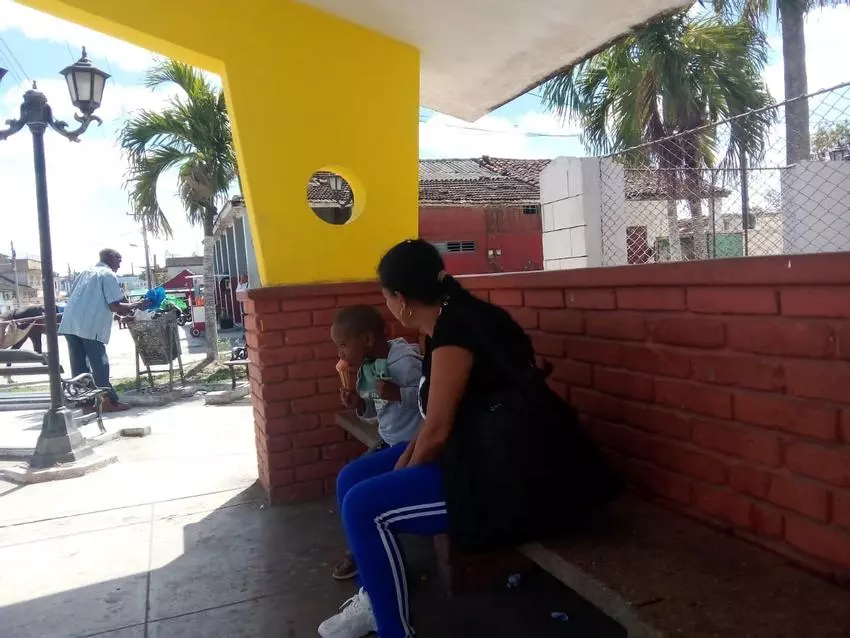
14ymedio bigger14ymedio, Julio César Contreras, Madruga (Mayabeque), April 12, 2026 – The traffic sign next to the bus stop has blank boxes. There could be no better symbol to define the lack of public transportation, the void that stretches along the central highway for those who have to travel. In Madruga, Mayabeque, the stop has become a place of waiting without promises, a point where time stretches and patience is tested under the clear sky and the dust kicked up by the few vehicles that manage to pass.

“The route that used to go to San José de las Lajas twice a day no longer exists. Now you have to go segment by segment, getting on whatever stops,” explains Ignacio, a self-employed worker who comes to the town frequently. The man, with a backpack slung over his shoulders and rubber boots still stained with dirt, watches the road as if salvation might appear at any moment in the form of a truck, scooter, or improvised pickup.

According to Ignacio, speaking to 14ymedio, he managed to get on an electric tricycle that charged him 500 pesos to Catalina de Güines, from where he managed to climb onto a cargo truck for another 600 pesos. “To get here I was lucky, but the return is very complicated. I’ve been here at the stop for four hours and not even flies are passing. My only hope is that by holding out a 1,000-peso bill, some driver will want to take me,” he laments, pacing restlessly back and forth along the sidewalk.

Only a woman with a small child shelters under the yellow roof of the terminal, trying to protect themselves from the heat and exhaustion. / 14ymedio

Next to the stop, the taxi stand from which private taxis used to depart is also deserted, leaving no way to travel to Ceiba Mocha or Matanzas. The metal bench, once contested by passengers, remains empty for long stretches of time. Only a woman with a small child shelters under the yellow roof of the terminal, trying to protect themselves from the heat and the fatigue accumulated after hours of waiting.

“It’s already past 2:00 in the afternoon and not a single car has come through today. Now things are really bad, because even with money in your pocket you can’t get out of here,” says a young man, for whom the municipality of Unión de Reyes feels farther away than ever. The man checks his phone frequently, although he knows the battery will run out continue reading

before a vehicle willing to pick up passengers appears. “The few that are circulating are from the same town. No private driver will go to Matanzas for less than 40,000 pesos. Honestly, it’s an abuse,” he complains.

Worried that night will fall without being able to leave, the man from Matanzas has gone several times with his four-year-old son to a nearby cafeteria, where tractor-trailers stop to eat. The child, sitting on the edge of a bench, plays with an empty cup while curiously watching the road. “Only two or three big trucks have passed. All the drivers tell me they’re loaded, that they can’t take me. My child keeps asking when we’re leaving. He asks for water, food, and we’re stuck in the middle of the road. We left San Nicolás de Bari before dawn and we’re still wandering around. Hopefully we won’t have to sleep on a bench,” says the young father, visibly exhausted.

“No official is concerned about the hardships the people go through, because they all have ways to get around.” / 14ymedio

You could cross the road without looking both ways, if not for the occasional electric scooter breaking the silence of the roadway. The sounds of combustion engines have practically disappeared from the central highway. There is little movement in the surroundings: a street vendor pushes a cart with agricultural products, a cyclist passes slowly, and occasionally a truck raises a cloud of dust that forces those present to cover their faces.

“I need to take medication to my mother who lives in Aguacate, just a few kilometers from here. A trip that can be done in minutes takes a whole day because there are no intermunicipal buses running,” says a woman, sitting in the same spot since mid-morning, without even leaving to get a coffee for fear of missing a vehicle that might stop. She grips her bag tightly and anxiously watches every point that appears on the horizon.

“The traffic sign is there for nothing. I got tired of raising in accountability meetings that this stop needs an inspector, but no official cares about the hardships people go through, because they all have ways to get around,” the woman argues, unable to hide her frustration.

As the afternoon goes on, the sun beats down on the sidewalk and the shadow of the yellow roof becomes the only refuge for travelers trapped in the wait. Time seems to stand still in Madruga. Only the young man with his son and four other people persist in trying to embark on a journey whose wait becomes unbearable due to the heat and uncertainty.

Translated by Regina Anavy

______________________

COLLABORATE WITH OUR WORK: The 14ymedio team is committed to practicing serious journalism that reflects Cuba’s reality in all its depth. Thank you for joining us on this long journey. We invite you to continue supporting us by becoming a member of 14ymedio now. Together we can continue transforming journalism in Cuba.
Iberia Suspends All Its Flights to Cuba Starting in June

It is the first time in history that the Spanish airline cancels the route for reasons attributable to conditions on the Island, although it aims to resume flights in November

A Havana-bound aircraft from the Spanish company, landed at José Martí International Airport. / Iberia

14ymedio bigger14ymedio, Madrid, April 13, 2026 – The airline Iberia announced this Monday the suspension of its flights to Cuba due to a drop in tourism. The measure does not take effect immediately and is limited to the low season, between June and November, with the intention of resuming routes at that time. However, the fact that it is one of the main airlines connecting Europe with the Island, and until now seemed committed to continuing to guarantee the route, is another final blow to the deplorable state of the sector.

The Spanish company currently maintains three weekly frequencies from Madrid to Cuba, and the first step is to reduce them to two in May. When June arrives, the only alternative will be to travel to Panama and, from there, come to the Island with Copa Airlines, which has a codeshare agreement with Iberia. The company has stated that its offices in Havana remain open to assist customers who need help.

“This temporary suspension affects exclusively Cuba, due to its exceptional situation. Iberia maintains the rest of its operations normally and, looking ahead to this summer, will offer a record number of 21.4 million seats,” the airline said in the announcement. The declaration is another painful verdict for Havana. The Spanish company had only suspended operations twice before, and neither was attributable to conditions on the Island. continue reading

“This temporary suspension affects exclusively Cuba, due to its exceptional situation. Iberia maintains the rest of its operations normally and, looking ahead to this summer, will offer a record number of 21.4 million seats”

In 2013, Iberia went through a severe economic crisis that forced the airline, which only two years earlier had merged with British Airways in the IAG alliance, one of the largest in the world, to carry out a workforce restructuring. In those negotiations, which led to the departure of more than 4,500 employees, three long-haul routes were canceled: Cuba, the Dominican Republic, and Puerto Rico. It was the first time in more than 60 years that the Spanish company did not fly to the Island.

The measure lasted two years, and in 2015 flights resumed in a big way, with five weekly connections, precisely in a promising year for the Cuban economy, when amid the thaw with the United States, companies from around the world bet on positioning themselves on the Island ahead of an opening that ultimately ended in failure.

Iberia suspended flights to Cuba again during the pandemic, when air routes worldwide were affected by border closures and airspace shutdowns.

This is, therefore, the first time the Spanish airline leaves the Island for reasons attributable exclusively to Cuba. On February 9, the company announced that, despite the lack of fuel, it would maintain its flights to Havana by refueling in the Dominican Republic. It was also one of the few airlines that did not backtrack on its decision, unlike those from Canada and Russia, countries that currently have higher flows of tourism to the Island, which nevertheless evacuated their nationals and stopped traveling until the situation is resolved.

Spain, despite being a key economic and cultural partner of Cuba, has ceased to be a top-tier tourism market as it had been until recently. The commitment of hotel entrepreneurs remains, for now, intact, but travelers are fleeing. Last year, barely 46,489 Spaniards visited the Island, compared to 65,054 in 2024. These numbers are put into perspective when compared to those of 2017, when the figure was 168,949.

In the first two months of 2026, only 4,422 Spaniards traveled to Cuba, 32% fewer than in the same period the previous year.

Translated by Regina Anavy

______________________

COLLABORATE WITH OUR WORK: The 14ymedio team is committed to practicing serious journalism that reflects Cuba’s reality in all its depth. Thank you for joining us on this long journey. We invite you to continue supporting us by becoming a member of 14ymedio now. Together we can continue transforming journalism in Cuba.

Seven Cubans Deported by the US Find Support in a Shelter in Tapachula

“These people have spent more than half their lives in the US and they have no one in Mexico.”

A group of deported Cubans in Tapachula. / Video capture

14ymedio bigger14ymedio, Angel Salinas, Mexico City, April 10, 2026 / Tapachula, in the state of Chiapas, has become the epicenter of deportations from the US of Cubans, Haitians, Mexicans, and Salvadorans. “Mexico is doing the dirty work; today it accepts people that the Donald Trump administration doesn’t want—people with criminal records and the elderly, people who are abandoned without papers or money,” says lawyer Jacinto Gómez.

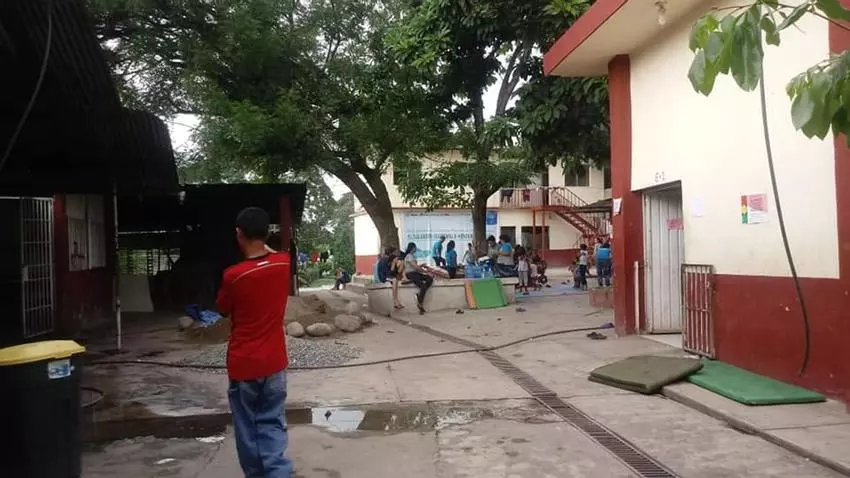
At the Jesús el Buen Pastor del Pobre y el Migrante shelter, there are seven Cubans. The oldest, Olga Sánchez Martínez, the center’s director, tells 14ymedio, is about 65 or 75 years old. “These people have spent more than half their lives in the US; they have children, family, property, but they were deported and have no one in Mexico.”

Doña Olga, as the migrants call her, has accepted these Cubans regardless of their history. “They need help; most are between 40 and 50 years old, and many of them have spent days without food and sleeping on the street.”

At the shelter, located almost 20 minutes from downtown Tapachula, migrants find a place to sleep, shower, and eat, “for as long as they need.” The facility, which has been receiving migrants for decades , has a capacity for 1,500 people, but is currently housing only 90. In addition to Cubans, “there are Nicaraguans, Haitians, Salvadorans, Africans, and Mexicans.”

Despite being expelled, the island’s nationals, Sánchez says, “are hoping to return when Trump leaves the White House. They are waiting for continue reading

changes.”

The Jesús el Buen Pastor del Pobre y el Migrante shelter has a capacity for 1,500 people. / Facebook

More than 500 Cubans have been deported by the US between March and the beginning of April. The director of the Center for Human Dignity, Luis Rey García Villagrán, denounced the apathy of the authorities toward their requests for immigration regularization. They are allowed to fill out the forms and “in the best-case scenario, are told to wait three to four months to receive an email that will never arrive.”

The shelter is sustained by Sánchez Martínez, who also owns a small store: “That’s where the money comes from to cover the electricity, water, and food expenses.” The state government helped him this year with bathroom renovations. “Health authorities come to the shelter twice a week to provide medical care.”

Sánchez began supporting migrants in 1992, helping those who “fell off the train and lost legs or an arm,” she says, referring to the freight train known as La Bestia (The Beast), which travels north-south through Mexico carrying all kinds of goods, while migrants sneak on for a ride north. She continued even when authorities pressured her to stop the aid. “The train left, but the migrants kept arriving, first a few, then thousands, and they know they won’t lack food or shelter.”

During the day, the migrants go out in search of work; “there is work on the farms, harvesting bananas, papayas, and coffee.” Because of their circumstances, the wages are low; they earn 150 pesos a day (a little over $8) when the average wage is 270 pesos ($15.60) per day.

While some deported Cubans hope to return to the United States, others have expressed their desire to go back to the island. One of them is William Herrera López, who told Diario del Sur last March that, given the lack of opportunities in Tapachula, he was seeking Mexico’s support to return to his country. “I’m 53 years old and I’d like to be sent back to my country. There I have my mother, siblings, nephews, and a humble little house where I can stay, not here in a place I don’t know and am completely alone.”

Óscar Rodríguez, another of those expelled by the US, lamented: “Work is hard here, it’s poorly paid, and it’s not enough. The truth is, all we can do is ask to be sent back to Cuba or given the opportunity to move to another part of Mexico, because things are complicated in Tapachula.”

______________________

COLLABORATE WITH OUR WORK: The 14ymedio team is committed to practicing serious journalism that reflects Cuba’s reality in all its depth. Thank you for joining us on this long journey. We invite you to continue supporting us by becoming a member of 14ymedio now. Together we can continue transforming journalism in Cuba.

A Man Dies While Attempting To Steal Dielectric Oil in Santiago De Cuba

Two brothers were extracting the product when a transformer exploded, causing the death of one and severe burns to the other

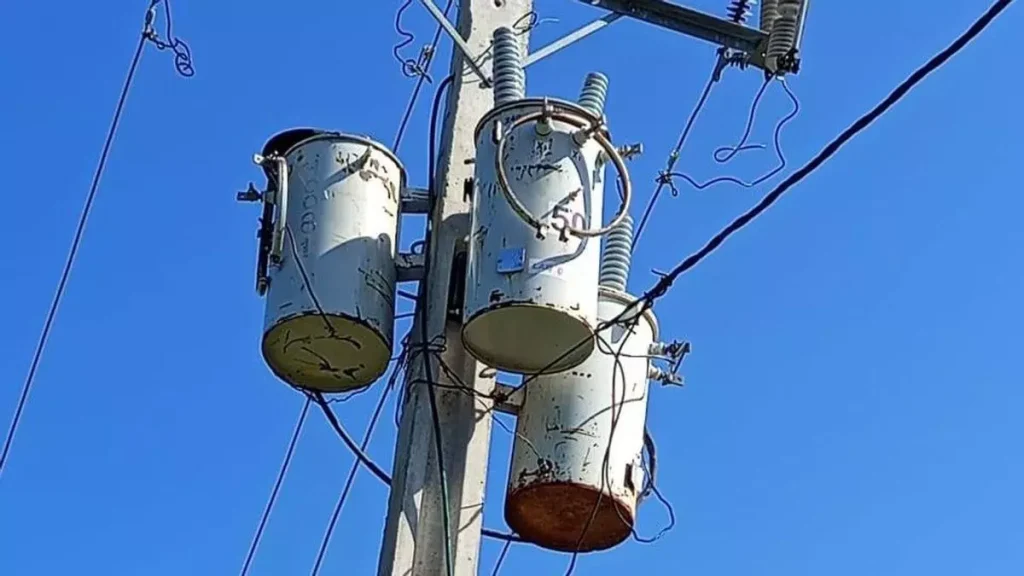
Transformers where the incident took place, in Songo La Maya, Santiago de Cuba. / Santiago de Cuba Electric Company

14ymedio bigger14ymedio, Havana, April 11, 2026 – A man died and another was seriously injured on Friday night in Santiago de Cuba while attempting to steal dielectric oil* from a bank of transformers in the locality of Alta Esperanza, in the municipality of Songo La Maya.

According to the official publication of the provincial Electric Company, at the moment when the two brothers were attempting to carry out the theft, a fault in a transformer caused an explosion that directly affected those involved, instantly killing one of them and severely burning the other.

The statement emphasizes that this type of crime against the National Electric System (SEN) is punished under Law No. 151/2022, Article 125, of the Penal Code, which constitutes “sabotage” as it is an “attack against the infrastructure that sustains daily life and the country’s economic development.”

The risky theft of dielectric oil is not new in Cuba, and its recurrence demonstrates the level of desperation the population has reached in the context of needs and shortages resulting from the current crisis on the Island.

The risky theft of dielectric oil is not new in Cuba, and its recurrence demonstrates the level of desperation the population has reached

In addition to being dangerous to the physical integrity of the perpetrators, as seen in this and other cases, the crime is defined and severely punished by law. Penalties can range from four to twenty years in prison and even reach life imprisonment if there are aggravating circumstances. In some cases reported by 14ymedio, perpetrators have received sentences of up to 15 years in prison. continue reading

Dielectric oil serves an essential function of insulation and cooling, crucial for extending the lifespan and efficient operation of electrical transformers. In a situation of scarcity of all kinds of supplies in the country, this substance has become a valuable commodity, stolen from power poles to end up lubricating motors of household appliances, among other uses.

The explosion of the transformers caused a power outage in the municipalities of Songo La Maya and Segundo Frente, following the fall of a 33 kV line that supplied the area. The Electric Company warned that the extraction of dielectric oil can cause breakdowns, explosions, and blackouts as occurred in this case, in addition to generating a shortage of this essential resource for the system, with direct effects on supply to the population.

The state entity reported hours later that the perpetrators were brothers, and that authorities managed to recover 70 liters of the stolen oil 100 meters from the scene of the incident.

*Dielectric transformer oil is a specialized insulating fluid used in power transformers to provide electrical insulation and cooling.

Translated by Regina Anavy

______________________

COLLABORATE WITH OUR WORK: The 14ymedio team is committed to practicing serious journalism that reflects Cuba’s reality in all its depth. Thank you for joining us on this long journey. We invite you to continue supporting us by becoming a member of 14ymedio now. Together we can continue transforming journalism in Cuba.

A Pair of Oxen and a Cart, the Latest Innovations in Cuba’s Military Strategy

What must they be thinking in Washington and Moscow about the bovine logistics introduced by Havana in the “war of all the people”?

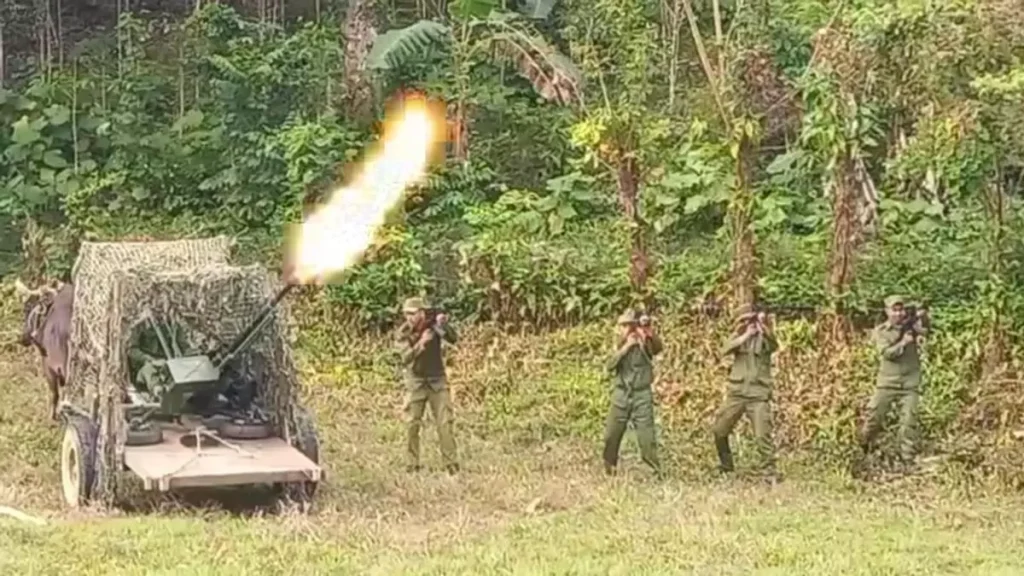
Following the same logic, the Strait of Hormuz could be closed with a pair of barracudas. / Screenshot

14ymedio bigger14ymedio,Yunior García Aguilera, Madrid, April 11, 2026 – Social media of the regime have once again delivered one of those scenes conceived halfway between parody, mockery, and Cuban-style ridicule. In the videos of defense preparations circulating this Saturday, several half-malnourished uniformed men deploy around a rural house, crouch down, take positions, and simulate a military operation with the seriousness of someone who believes they are participating in the prelude to the Normandy landings. Except that in the middle of the scene, a camouflaged cart bursts in, pulled by a pair of oxen, as if it were a secret, decisive, and impregnable weapon.

In some Pentagon office, one imagines U.S. generals watching the videos in silence, first with confusion, then rewinding them to make sure they are not looking at a meme, and finally wondering whether it is a military exercise or a Gaesa agricultural fair. Perhaps one of them has concluded that there is no need to deploy drones, satellites, or precision missiles against an adversary that still seems to fight its battles in the Middle Ages.

On the other side, it is also easy to imagine the discomfort of Havana’s allies. In Moscow, perhaps someone has looked away to avoid admitting that, after sending weapons, oil, and political support, the great showcase of Cuban “resistance” ends up making such blunders. Even in Tehran, perhaps some strategist has thought that, following the same logic, the Strait of Hormuz could be closed with a pair of barracudas, three sharks, and a boat covered with dry grass. continue reading

It’s one thing is to improvise in a ruined country and quite another to turn precariousness into military doctrine

While the world discusses autonomous drones, electronic jamming systems, highly precise guided missiles, and wars fought thousands of miles away through screens, satellites, and sensors, in Cuba the defensive epic seems to continue relying on bovine logistics. The ox, slow and completely alien to the rhetoric of the “imperial enemy,” thus enters the cast of the “war of all the people.”

There will be no shortage of those who say it is ingenuity, adaptation to shortages, or a display of “creative resistance.” But it’s one thing to improvise in a ruined country and quite another to turn precariousness into military doctrine and, on top of that, to showcase it. In the images, soldiers run around, smear their faces with mud, cover themselves with grass and bushes, as if thermal weapons, night vision, and satellite surveillance had not yet been discovered.

What is laughable, however, stops being amusing when the context is observed. Since January, after the capture of Nicolás Maduro and the cutoff of Venezuelan oil shipments, the Cuban regime has intensified its military maneuvers and the staging of defense exercises. In parallel, the energy crisis has worsened to extremes that affect daily life, the electrical grid, and essential services.

That is where the oxen from Villa Clara come into the scene, not as a tactical innovation, but as a prop resource to disguise waste

The Russian tanker Anatoly Kolodkin arrived with about 730,000 barrels of crude, a limited amount whose real dilemma is not its volume but what the authorities will decide to spend it on. That aid will not last long if it ends up squandered on absurd war drills. While operations in hospitals are suspended, supplies are scarce, and the healthcare system operates at the limit due to blackouts and lack of fuel, the State continues to find thousands of liters, week after week, to move tanks, helicopters, and heavy equipment, as has been seen in previous maneuvers.

Now propagandists seem to have understood that it is no longer effective to denounce to the world that there is no fuel for pediatric services but there is for weekly military deployments. The narrative of permanent victimization runs into the evidence of a power that, when it comes to shielding itself, always finds reserves, diesel, mobilization, and staging. Perhaps that is where the oxen from Villa Clara come in, not as a tactical innovation, but as a prop resource to disguise waste.

In a collapsed country, wasting fuel on useless exercises to reassure a nervous leadership does not convey strength. It conveys fear. And also disconnection. The distance between power and the needs of the people is measured today in hours of blackouts, canceled bus routes, lost harvests, and exhausted hospitals. But also, it seems, it can be measured in the length of a cart pulled by oxen and presented as if it were a strategic resource.

The scene provokes laughter, yes. But then it leaves something worse: the certainty that, while the country sinks, those in power continue playing at war with the fuel they deny the population. And so, among dry grass, mud camouflage, and the weary pace of military cattle, the Revolution ends up demonstrating that it no longer knows how to run a country and barely manages to herd its own decline.

Translated by Regina Anavy

______________________

COLLABORATE WITH OUR WORK: The 14ymedio team is committed to practicing serious journalism that reflects Cuba’s reality in all its depth. Thank you for joining us on this long journey. We invite you to continue supporting us by becoming a member of 14ymedio now. Together we can continue transforming journalism in Cuba.
Russia ‘Is Working on an Energy Supply Plan’ That Includes Sending Another Oil Tanker to Cuba

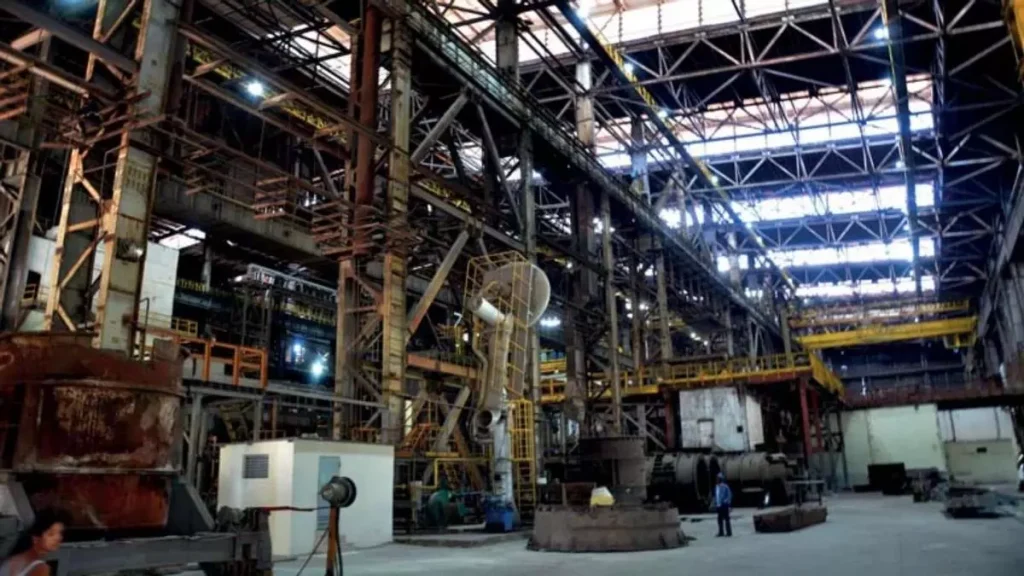
An envoy from Moscow gives no details about this cooperation and limits himself to noting that it involves restarting the Antillana de Acero plant, paralyzed by the lack of electricity

Antillana de Acero, halted since 2020, continues without stable operations due to the energy crisis and decades of deterioration. / Granma

14ymedio bigger14ymedio, Havana, April 11, 2026 – Speaking Friday, the Russian Deputy Minister of Industry Roman Chekushov said, “We discussed with our Cuban partners that Russian companies would have access to the management of industrial enterprises in the Republic [of Cuba].” Chekushov is in Havana as part of a delegation led by Russian Deputy Foreign Minister Sergei Ryabkov.

Last Thursday, Chekushov had stated to the same outlet that both parties have agreed on “an energy supply plan” as a basis for reactivating production at the Cuban metallurgical plant.

“We will try to launch rolled steel production once the small remaining outstanding debt is settled, which will increase the turnover of metallurgical product sales and allow further development of that business with those funds,” the Russian official noted.

Chekushov stressed that Cuba’s current economic priority is the restoration of normal electricity supply. “All industrial projects are linked to this,” he said.

“We discussed with our Cuban partners that Russian companies would have access to the management of industrial enterprises in the Republic”

The most important project within this bilateral cooperation is the modernization of the Antillana de Acero José Martí metallurgical plant, whose rehabilitation was agreed upon in 2015 by both governments. According to the Russian official, the contract is 93% completed in terms of value, which he described as “practically the end.”

The completion of the project would allow an annual production of around 160,000 tons of rolled steel, in a context where Cuba’s heavy industry has operated for years with serious energy and investment continue reading

limitations.

He also noted that in the case of the assembly of Russian vehicles in Cuba, suspended last month as a result of the energy crisis just one year after its launch, is expected to resume once the energy supply is normalized.

The Russian Deputy Foreign Minister, Sergei Ryabkov, at a press conference following his meeting with Cuban president Miguel Díaz-Canel last Thursday, stated: “Ensuring the Island’s energy security is a priority. It is premature to talk about next steps. It is widely known that we are not limited to the supply of the batch of oil that has already arrived on the tanker Anatoly Kolodkin.”

A second tanker loaded with 251,000 barrels of diesel and coming from the Baltic port of Vysotsk is heading toward the Caribbean, probably to Cuba

Following the arrival in Cuba on March 30 of the Russian oil tanker Anatoly Kolodkin, with 100,000 tons of oil, a second shipment appears to already be en route to the Caribbean.

However, Ryabkov did not confirm the departure of the second Russian tanker promised a few days earlier by Energy Minister Sergei Tsiviliov, who boasted of having “broken the energy blockade” imposed by Washington.

According to maritime tracking agencies, the tanker Universal, loaded with 320,000 barrels of fuel and coming from the Baltic port of Vysotsk, has just crossed the English Channel and is heading toward the Caribbean, with an arrival date of April 23, probably to Cuba, although it keeps its final destination secret, as do all Russian ships sanctioned by the United States and Europe.

Translated by Regina Anavy

______________________

COLLABORATE WITH OUR WORK: The 14ymedio team is committed to practicing serious journalism that reflects Cuba’s reality in all its depth. Thank you for joining us on this long journey. We invite you to continue supporting us by becoming a member of 14ymedio now. Together we can continue transforming journalism in Cuba.
A Cuban Man and Others Deported by the U.S. to Eswatini Will Have the Right to a Lawyer

Roberto Mosquera del Peral, who had served a sentence for homicide in Miami, was sent to that African country last summer

In October 2025, the Cuban’s lawyer said her client had begun a hunger strike to protest his detention. / DHS

14ymedio biggerEFE / 14ymedio,  Nairobi / Madrid, April 11, 2026 – The Supreme Court of Eswatini, the former Swaziland, ruled in favor of four of the migrants deported by the United States to that small African kingdom and recognized their right to meet with a lawyer, after spending nine months without in-person access to legal assistance. Among them is the Cuban Roberto Mosquera del Peral, sent to the country last summer as part of the new policy of expulsions to third states promoted by the Trump administration.

The court’s decision confirms an earlier ruling by a lower court, which had been challenged by the Eswatini government. The case refers to the first group of deportees that Washington sent to Eswatini in July 2025: initially there were five men, although one of them was later repatriated.

The judicial resolution does not end the case nor immediately improve the underlying situation of the deportees, but it does represent a defeat for the Eswatini executive, which had argued that those men did not have the right to a defense because, formally, they were not detained nor had they been charged with any crime in the country. It also claimed that they did not wish to meet with the local lawyer Sibusiso Nhlabatsi, who acts on behalf of the attorneys representing them from the United States and who until now had only been able to speak with them by phone.

Amnesty International (AI) welcomed the ruling, although it warned that the main problem remains unchanged. “The Supreme Court’s ruling represents an important step in defending the right to access a lawyer for people who have been illegally transferred by the U.S. to Eswatini,” said Vongai Chikwanda, regional deputy director of the organization for East and Southern Africa.

“No one should be transferred to a country in violation of international law guarantees, only to then be secretly detained without a clear legal process”

The NGO, however, stressed that access to a lawyer does not correct the most serious violations reported for months. According to AI, these transfers are part of an abusive practice that leaves deportees trapped in continue reading

countries with which they have no connection, without a clear judicial process, and without guarantees against a new expulsion.

“No one should be transferred to a country in violation of international law guarantees, only to then be secretly detained without a clear legal process, without access to lawyers, and without protection against a subsequent illegal expulsion,” the organization insisted.

The case of Mosquera del Peral illustrates this policy. The Cuban man had served a sentence for homicide in Miami and was one of the individuals sent by Washington to Eswatini after his country of origin, like others, refused to accept him. He traveled with nationals from Vietnam, Jamaica, Laos, and Yemen. Over the months, the number of deportees transferred to that African kingdom grew to at least fifteen people, although two of them have already been returned to their countries, Jamaica and Cambodia.

Last October, Mosquera’s lawyer, Alma David, reported that the Cuban had been held for more than three months without charges in the maximum-security prison of Matsapha, in Eswatini. The attorney said at the time that her client had begun a hunger strike to protest his detention and warned that his life was in danger, while demanding that he be allowed access to a lawyer in that African country.

Washington agreed to pay 5.1 million dollars to the Eswatini government, as acknowledged by the kingdom’s authorities

According to complaints filed in court and by human rights organizations, the deportees have remained detained without charges and in isolation in the maximum-security prison of Matsapha, near Mbabane, the capital of Eswatini. The local government denies that these are illegal detentions, but that has been precisely one of the central issues in the litigation.

As early as last February, Eswatini’s judiciary rejected an appeal that sought to halt the deportation of third-country nationals from the United States. That lawsuit had been filed in August, shortly after the U.S. Department of Homeland Security confirmed the transfer of the first five foreigners to the African country.

The agreement was not free. Washington agreed to pay 5.1 million dollars to the Eswatini government, as the kingdom’s authorities acknowledged. That figure further fueled criticism from activists and legal experts, who see in these agreements an externalization of the U.S. migration system: those expelled leave American territory but do not necessarily return to their countries of origin, instead being sent to third states willing to receive them in exchange for financial compensation.

Nine months after their arrival at a maximum-security prison in a foreign country, they remain in a situation of legal limbo

Since returning to the White House in January 2025, Trump has hardened his migration policy and promoted rapid expulsions with the support of several countries. In addition to Eswatini, Washington has reached similar agreements with El Salvador, Ghana, Rwanda, Uganda, South Sudan, Equatorial Guinea, and the Democratic Republic of the Congo.

Humanitarian organizations believe these agreements expose hundreds of people to a chain of abuses: arbitrary detention, mistreatment, isolation, and the risk of being sent to places where they may face persecution, torture, or degrading treatment. For this reason, they have called on several African governments to refuse to become destinations for migrants expelled from the United States.

In the case of Eswatini, the Supreme Court’s ruling opens a legal window for the deportees but does not clarify how long they will remain detained or what their final destination will be. Nor does it resolve the underlying issue: whether a country can accept people expelled from another state and keep them detained for months, without charges, without transparency, and without explaining what will happen to them.

For Mosquera del Peral and the other men, the ruling means at least a possibility of defense that had until now been denied to them. But nine months after their arrival at a maximum-security prison in a foreign country, they remain in a situation of legal limbo, turned into pawns of a migration policy that has moved the problem far from the U.S. border.

Translated by Regina Anavy

______________________

COLLABORATE WITH OUR WORK: The 14ymedio team is committed to practicing serious journalism that reflects Cuba’s reality in all its depth. Thank you for joining us on this long journey. We invite you to continue supporting us by becoming a member of 14ymedio now. Together we can continue transforming journalism in Cuba.
Deputy Foreign Minister Ryabkov Denounces the United States’ “’Obsession’ With Expelling Russia From the ‘Western Hemisphere’

Moscow reiterates its “100% solidarity with Cuba” and its intention to remain in the region

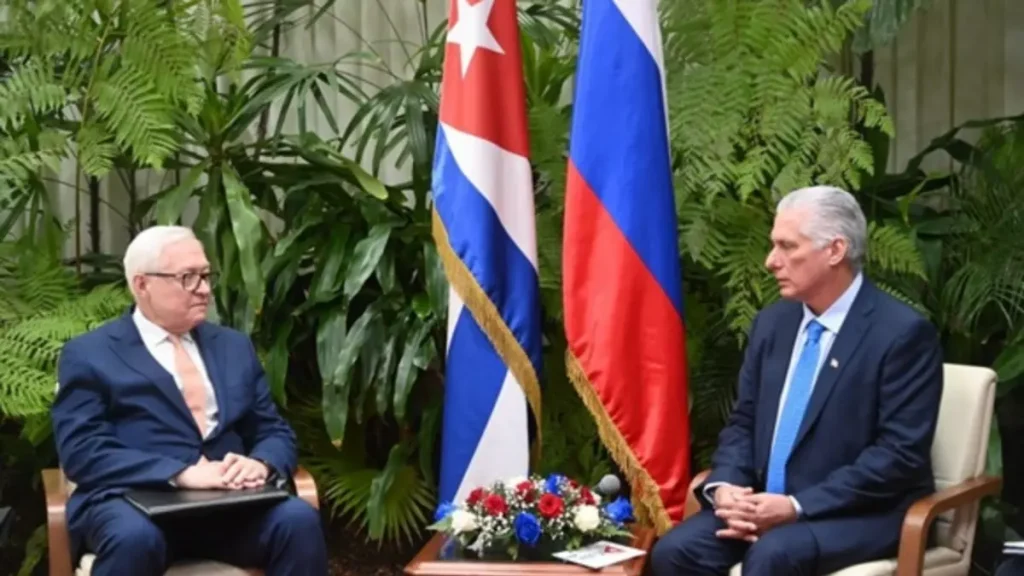
Díaz-Canel conveyed to Sergei Ryabkov a hug for Putin. / Cubadebate

14ymedio bigger14ymedio, Madrid, April 10, 2026 – Nine days after the Anatoly Kolodkin docked at the port of Matanzas with 730,000 barrels of crude oil, Russia’s deputy foreign minister, Sergei Ryabkov, entered the Palace of the Revolution ready to receive praise from Miguel Díaz-Canel. “There is value in countries like the Russian Federation in not allowing themselves to be subjected to imperial policies,” said the Cuban leader.

The meeting also comes after Moscow announced the shipment of a second tanker to the Island, although it has not provided details about it. “Russia is not going to abandon the Western Hemisphere, no matter what they say in Washington, which is obsessed with the idea of expelling Russia, as well as China, from this region,” he said.

“At the present time, Russia is one hundred percent in solidarity with Cuba; despite the complexity the country is going through, we are by your side,” Ryabkov told the Cuban leader.

Díaz-Canel thanked the deputy foreign minister for his support and stated that “it is proof that Cuba is not alone.” According to the Cuban leader, the shipment of crude oil to the Island “supports a concept that we are defending, which is that we have every right to receive oil and that other countries have every right to export oil to Cuba.” continue reading

“It supports a concept that we are defending, which is that we have every right to receive oil and that other countries have every right to export oil to Cuba”

The decision to send the tanker Anatoly Kolodkin to the Island seemed like an impossible mission at the time it became known. After the order signed by President Trump at the end of January imposing tariffs on countries that sent oil to the Island, none were willing to take the risk, even though both Russia and Mexico stated several times that they were seeking solutions. The decision by the Supreme Court, which declared the mechanisms by which Washington intended to apply those tariffs illegal, seemed to open a window, but no one made a move knowing there were other possible penalties.

Another possibility opened with the announcement by the United States of suspending sanctions on Russian crude for one month to ease energy problems resulting from the closure of the Strait of Hormuz. The Sea Horse, flying the flag of Hong Kong (China) but loaded with Russian oil, began heading discreetly toward the Island but changed course almost at the same time that the White House added an amendment stating that Iran, North Korea, and Cuba were excluded from that relief.

However, the Anatoly Kolodkin continued its route without opposition from the United States. “They have to survive! (…) I have no problem,” Trump himself said when asked about that ship. “I said, if a country wants to send oil to Cuba right now, I have no problem with it. Whether it’s Russia or not,” he added. Subsequently, the White House clarified that it was a humanitarian decision and that it would be reviewed case by case, making the future of that second shipment announced on April 1 by Russian Energy Minister Sergei Tsiviliov unpredictable.

Ryabkov spoke yesterday of the “special nature” of relations between Havana and Moscow and described as “very productive” the meeting of political consultations between the foreign ministries of both nations held that day, which he considered “very useful in carefully evaluating different issues.”

Translated by Regina Anavy

______________________

COLLABORATE WITH OUR WORK: The 14ymedio team is committed to practicing serious journalism that reflects Cuba’s reality in all its depth. Thank you for joining us on this long journey. We invite you to continue supporting us by becoming a member of 14ymedio now. Together we can continue transforming journalism in Cuba.
March Rumors Fantasized About Russian Oil and the Fall of Díaz-Canel

La ‘bola’ — the rumor  — about free internet access through Starlink revealed that more and more Cubans and small private businesses are obtaining this expensive and illegal system

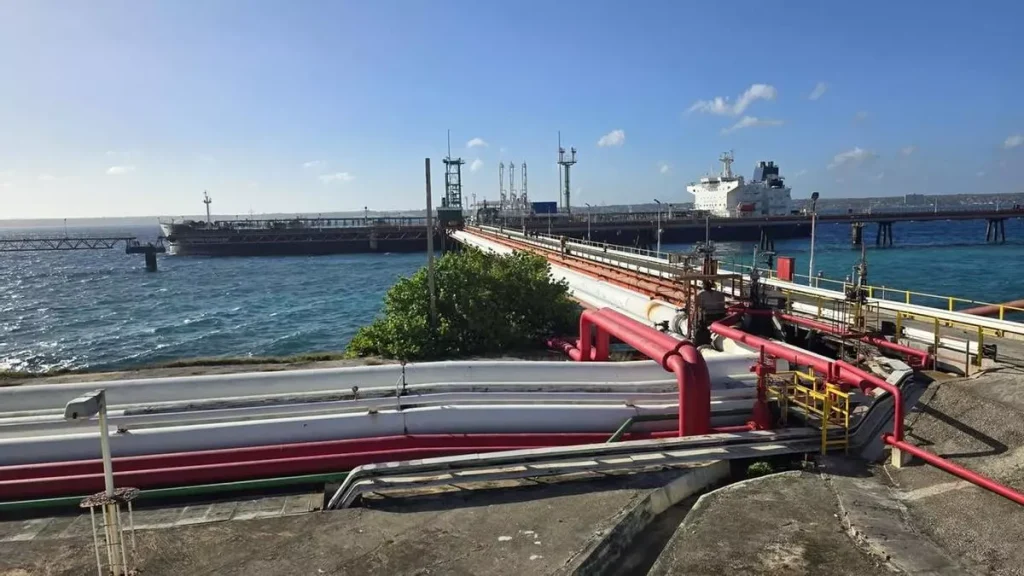
The Russian tanker Anatoly Kolodkin at the dock of the Supertanker Base in Matanzas / Facebook/Oliver Zamora Oria

14ymedio bigger14ymedio, Havana, April 10, 2026 – March once again showed that in Cuba, rumors are not mere gossip but a way of surviving informationally in a country where official silence takes up too much space. In the absence of data, institutional opacity, and the habit of announcing everything after it has already happened, people fill the gaps with conjectures. Rumors circulate by word of mouth, jump from a WhatsApp chat to a Telegram group, and become the soundtrack of daily life. This month, amid blackouts, lines, and geopolitical shocks, rumor-mongering reached an intensity rarely seen.

The undisputed protagonist of March was the Russian oil tanker Anatoly Kolodkin. Since it set sail from Primorsk at the beginning of the month, every mile it advanced toward the Caribbean fueled new speculation. In Havana neighborhoods, its position was discussed as if it were a hurricane during cyclone season. Some claimed that Washington would prevent its arrival, in compliance with the executive order signed by President Trump at the end of January, which imposes tariffs on countries that supply fuel to the Cuban regime. Others, more dramatic, spoke of a possible military confrontation between the United States and Russia in waters near the Island. Ultimately, the tanker docked in Matanzas without issue.

Others, more dramatic, spoke of a possible military confrontation between the United States and Russia in waters near the Island

Another rumor that gained traction in March was the supposed political decline of Miguel Díaz-Canel. Since the leader himself publicly confirmed negotiations between Washington and Havana, an open secret already reported by international media and the independent press, many began to see him as a leader on his way out. The question is not whether he will fall, but when and how. Will he leave the country on a discreet plane? Will he be removed by the Castro clan to make way for a figure more acceptable to Washington?

Recent statements by Sandro Castro, grandson of Fidel Castro, claiming that Díaz-Canel “is not doing a good job,” were interpreted as a sign that the president has become a fuse ready to be burned. In political circles and in bread lines, his fate seems sealed long before any official announcement. continue reading

Militarization also occupied a prominent place in the month’s rumor mill. Drivers traveling at dawn along interior highways reported convoys of trucks loaded with soldiers and equipment. In Havana, military exercises and explosions associated with defensive maneuvers caused concern among residents. Helicopters flying over urban areas, practice gunfire, and unusual movements in military facilities reinforced the sense that something is being prepared behind the scenes. In a country accustomed to secrets, any loud noise becomes a coded message.

Amid so much speculation, one of the most frustrating rumors for Cubans was the one claiming that access to the Starlink internet system had been opened on the Island. For several days, social media filled with messages promising fast and stable connection just by activating a mobile phone. The illusion did not last long. To use the service, a reception kit is still required, an expensive piece of equipment pursued by the General Customs Office of the Republic, along with a monthly subscription unaffordable for most people on this Island. The promise of free internet once again turned out to be a technological mirage.

The promise of free internet once again turned out to be a technological mirage

Statements by Donald Trump, in which he said he hoped to “take” Cuba soon, also unleashed a wave of conjecture. Some imagined discreet negotiations that would lead to an orderly political transition. Others spoke of more violent scenarios, from a military intervention to an internal collapse of the regime.

The social outbreak in Morón, Ciego de Ávila, was another focus of speculation. After the burning of items at the municipal headquarters of the Communist Party and the subsequent internet blackout in the locality, versions began to circulate about mass arrests and a strong military presence in the area. There was talk of young people being pursued in their homes and of fear spreading throughout the community. The lack of official information and restrictions on connectivity fueled distrust, reminding many of what happened during the Island-wide protests of 11 July 2021.

Precisely, problems with internet connectivity have become a constant rumor. Every digital blackout generates suspicions of deliberate censorship. Many Cubans believe that interruptions are not only due to technical failures or the energy crisis but also to the intention of preventing citizens from organizing and sharing information in real time. In a country where social media has become a public square, disconnecting the signal is equivalent to closing the street.

Translated by Regina Anavy

______________________

COLLABORATE WITH OUR WORK: The 14ymedio team is committed to practicing serious journalism that reflects Cuba’s reality in all its depth. Thank you for joining us on this long journey. We invite you to continue supporting us by becoming a member of 14ymedio now. Together we can continue transforming journalism in Cuba.

The IACHR Demands Explanations From the Cuban Regime Over the Imprisonment of the Minor Jonathan Muir Burgos

The organization gives the Cuban State five days to report on the situation of the teenager imprisoned for participating in the Morón protests, accused of the crime of sabotage

Jonathan Muir is being held in a maximum-security prison under conditions not officially clarified.

14ymedio bigger14ymedio, Havana, April 10, 2026 – The Inter-American Commission on Human Rights (IACHR) sent an official request to the Cuban Government demanding urgent information about the situation of Jonathan Muir Burgos, the 16-year-old who remains deprived of liberty after participating in the protests last March 13 in Morón, Ciego de Ávila.

The request, addressed Thursday to the Minister of Foreign Affairs, Bruno Rodríguez Parrilla, gives a period of five days for the State to respond about the conditions of Jonathan Muir’s detention, his state of health, and the measures adopted to guarantee his integrity.

The IACHR clarifies that this request does not yet imply a decision on the granting of such measures but underscores the urgency of verifying the teenager’s situation. The request has been made following a petition for precautionary measures submitted by the organization Cuba Decide (Defensa CD).

“The case of Jonathan has ceased to be an isolated complaint and has come under formal international observation,” Juan Carlos Vargas, executive director of Cuba Decide, told Martí Noticias. “The regime now has to respond within a very short timeframe. What is happening with a minor who is imprisoned, held incommunicado, and at risk?” he added.

“The regime now has to respond within a very short timeframe. What is happening with a minor who is imprisoned, held incommunicado, and at risk?”

The teenager’s family is denouncing what they consider a pattern of torture. Initially, the calls Jonathan was allowed to make from prison took place at 1:00 a.m. Both the time and his cries describing his situation and his pleas – “Please, get me out of here” – were unbearable for his parents. But since Thursday, April 9, those calls have stopped completely. Furthermore, the first scheduled visit was canceled, which has heightened the family’s concern. continue reading

In its request, the IACHR asks the Cuban authorities for clarification on three key aspects: the official position regarding the request for international protection; a detailed report on the conditions of detention, including access to medical care since Jonathan suffers from skin conditions and is not receiving treatment for them in prison, according to his relatives; and a risk assessment detailing whether the competent authorities have analyzed the danger the minor faces and what measures have been adopted to guarantee his safety.

Jonathan David Muir Burgos was charged with the crime of sabotage, an accusation that could cost him at least seven years in prison. The authorities ordered his transfer to Canaleta prison, a facility that in February was the scene of a riot violently repressed by regime forces after a young man committed suicide following complaints about the prison’s poor food.

While the dictatorship responds or not, Jonathan remains inside a maximum-security prison. Time is running against him

The teenager is one of the cases of several minors detained in Cuba in the context of the anti-government protests that have taken place since last March 6, following the deterioration of the already serious energy situation. Jonathan Muir is being held in a maximum-security prison under conditions not officially clarified. Relatives and civil organizations have reported psychological pressure against the young man and mistreatment in the conditions of his confinement.

“While the dictatorship responds or not, Jonathan remains inside a maximum-security prison. Time is running against him,” Vargas warned Martí Noticias. “This request is not just another procedure; it is an urgent tool to prevent the situation from escalating into something irreparable.”

Translated by Regina Anavy

______________________

COLLABORATE WITH OUR WORK: The 14ymedio team is committed to practicing serious journalism that reflects Cuba’s reality in all its depth. Thank you for joining us on this long journey. We invite you to continue supporting us by becoming a member of 14ymedio now. Together we can continue transforming journalism in Cuba.
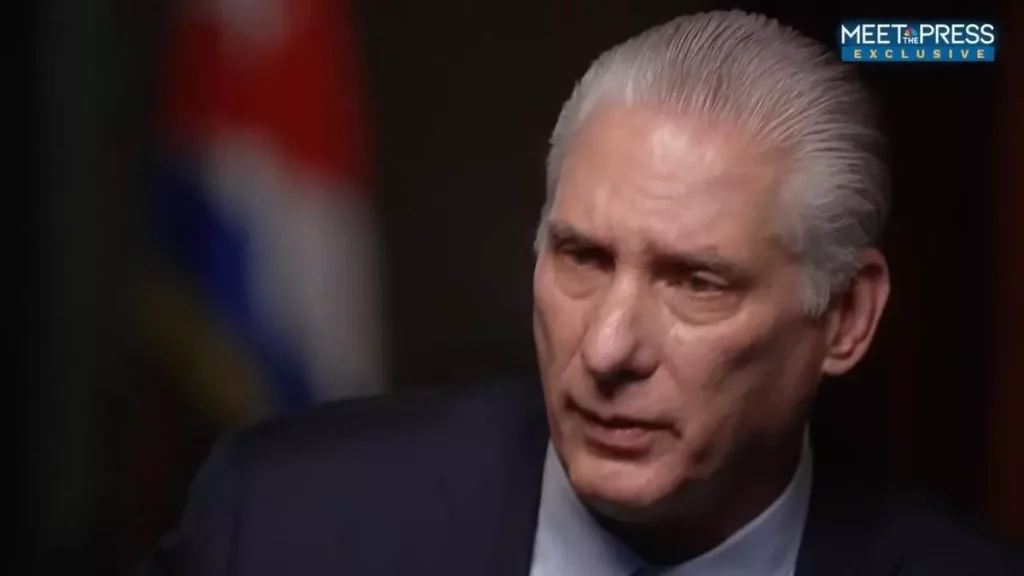
Díaz-Canel Disliked the NBC News Question About “His Willingness to Resign to Save Cuba”

The president asserts that only the Cuban people can remove him from the Presidency if they believe he is “incapable” or not “up to their standards”
Díaz-Canel during the NBC News interview, which will air in full on Sunday / Screenshot

14ymedio bigger14ymedio, Madrid, April 10, 2026 – “Resigning is not part of our vocabulary,” Miguel Díaz-Canel told Kristen Welker, host of NBC News’ Meet the Press, in a preview of an interview that will be broadcast in full next Sunday. The last time a Cuban leader was interviewed by this U.S. television network was in 1959, when Fidel Castro appeared on that very same program.

The clip begins with a moment of high tension between the president and the interviewer. “Would you be willing to resign in order to save Cuba, the Cuban people?” Welker asks. Díaz-Canel, dismissing the critical questions, spends more than a minute pushing back against the journalist, insisting on whether she asks that type of question to other presidents, whether she is doing so on behalf of the State Department, and whether she would ask it to Donald Trump, apparently ignoring the strained relationship between the U.S. president and NBC. Welker, unfazed, clarifies what everyone knows: “I ask very tough questions to the president.”

With that settled, Díaz-Canel addresses the issue. “In Cuba, the people who hold leadership and government responsibilities are not chosen by the Government of the United States, nor are they appointed by the Government of the United States. We are a sovereign, free state. We have self-determination, we have independence, and we do not submit to any dictate of the Government of the United States,” he argues.

“We are a sovereign, free state. We have self-determination, we have independence, and we do not submit to any dictate of the Government of the United States,” he argues

The president then defends his humble origins and reaffirms Cuba’s electoral system. “Any one of us, in order to hold a responsibility, must be elected at the grassroots level in an electoral district by thousands of Cubans and then the Cubans who represent those others in the National Assembly of People’s Power elect those positions through indirect voting, as happens in other countries around the world,” he repeats.

He does not clarify, however, that it is impossible to be elected if continue reading

one does not belong to the Communist Party or one of the organizations endorsed by the regime. On the contrary, he defends the single-party system. “When we assume a responsibility, we do not do so out of personal ambition, nor corporate ambition, nor even for a party position, because our party is not electoral. We do it by a mandate of the people, and in the concept of revolutionaries, surrender is not an option.”

Díaz-Canel, despite being fully aware that he is not a popular leader —  unlike his more charismatic predecessors — asserts that the population can show him the door. “If the Cuban people believe that I am incapable, that I am not up to their standards, that I do not represent them, they are the ones who must decide whether I should be in leadership or holding the position of president or not,” said the man who governs a country where criticizing him personally constitutes a crime of “propaganda against the constitutional order,” punishable by long prison sentences.

The president continues by saying that policy in Cuba is decided by collective bodies and that under no circumstances can the United States demand anything of him, especially given what he describes as decades of “hostile” policy toward the Island. “They do not even have the moral authority to say they are concerned about the situation of the Cuban people and that the Cuban Government is the one that has led Cuba to this situation when they bear all that responsibility,” he continues, urging Washington to take a critical look at itself and see “how much their policies have cost the Cuban people in suffering and limitations, and how much they have deprived the American people of a normal relationship with Cuba.”

Díaz-Canel has maintained, as in all his recent appearances, that the regime is willing to engage in dialogue, as long as it is not conditioned on changes to the system. “We would not demand changes to the American system, about which we have endless doubts and endless criticisms,” he argues, and he calls for talks to focus on what can unite both countries. “Once again, I repeat, to avoid confrontation and to have a future for both peoples of benefit, of relationship, of friendship, and also of solidarity,” he concludes.

The excerpt of the interview was broadcast alongside a message the president sent to the II International Conference on Unilateral Coercive Measures, held in Geneva, in which he again denounces the “strangulation” that the United States imposes on the island. “Cuba is the victim of a prolonged collective punishment that seeks to bring its people to their knees through hunger, disease, and severe shortages of basic supplies,” he said in a video.

“Cuba is the victim of a prolonged collective punishment that seeks to bring its people to their knees through hunger, disease, and severe shortages of basic supplies”

The president reviewed some of the consequences he attributes to the worsening energy situation following Trump’s oil blockade. Among them, he cited the suspension of surgeries for more than 96,000 people (including 11,000 minors), 19,000 patients who are undergoing oncology or hemodialysis treatments being at risk, shortages of gas and water, and industrial production at minimal levels. “What right does the world’s leading economic power have to commit such an abuse against a small country?” Díaz-Canel asked, describing the situation as a return to “barbarism and servitude.”

“It is impossible to quantify the physical and psychological exhaustion, the daily shortages, the postponement of dreams, and the media war that is inflicted, out of sheer malice, on a noble, resilient, and supportive people like ours,” he argued, also taking a few minutes to thank those who have chosen to stand by Cuba, such as Mexico and Russia, coinciding with the announcement that a new oil tanker from that country will arrive on the Island, although Moscow has not indicated a date.

Translated by Regina Anavy
______________________

COLLABORATE WITH OUR WORK: The 14ymedio team is committed to practicing serious journalism that reflects Cuba’s reality in all its depth. Thank you for joining us on this long journey. We invite you to continue supporting us by becoming a member of 14ymedio now. Together we can continue transforming journalism in Cuba.
After Nearly Two Months Imprisoned Without Evidence, the Cuban Regime Releases a Man Accused of Graffiti Against President Díaz-Canel

Moisés Legrá Díaz was held in conditions of overcrowding and malnutrition despite a police expert report that exonerated him

Moisés Legrá Díaz’s mother denounced the poor conditions in which he was being held. / Social media

14ymedio bigger14ymedio, Havana, April 9, 2026 – Moisés Legrá Díaz was released by the regime on April 7, after spending nearly two months deprived of liberty under pretrial detention as a precautionary measure, accused of the crime of “propaganda against the constitutional order.”

The arrest had taken place on February 13 in Havana, after the young man responded to a summons from State Security in Villa Marista, following the appearance of graffiti in the municipality of Arroyo Naranjo with the phrase “Patria y Vida” and insults against President Miguel Díaz-Canel. From the political police operations center, he was transferred to Combinado del Este, a maximum-security prison.

According to Javier Larrondo, president of the NGO Prisoners Defenders, speaking to 14ymedio, the precautionary measure was lifted after handwriting analysis could not prove that the posters matched his writing. Therefore, he clarified, Legrá Díaz’s release is not part of the 51 political prisoners the regime promised to release after the agreement reached with the Vatican last March. Nor is it part of the 2,010 prisoners that the Cuban government announced it would release starting this April, who so far are all common prisoners.

Legrá Díaz, a father of three with no criminal record, was released as innocent. However, he had been held since his arrest in conditions of overcrowding and malnutrition, according to complaints by his mother and civil organizations. During the weeks he remained in pretrial detention, activists and relatives warned about the deterioration of his health. continue reading

During the weeks he remained in pretrial detention, activists and relatives warned about the deterioration of his health

One of these independent organizations was Cubalex, which denounced that, although Legrá had undergone handwriting analysis to determine whether he authored the posters, with a negative result, he remained detained.

Legrá Díaz’s return to his home, where his family was waiting for him, was confirmed by a call from his mother to Martí Noticias: “Since around two in the afternoon Moisés is now here at home with the children,” who, she describes, “cried and hugged their father.”

The criminal offense of “propaganda against the constitutional order,” incorporated into the 2022 Penal Code, penalizes any expression of criticism that the State considers “incitement against the social order or the socialist State,” without clearly defining which acts constitute the crime, making it a legal instrument to persecute dissent.

The case exposes the abusive use of pretrial detention as a preventive punishment, as well as the use of ambiguous criminal charges to target freedom of expression

Cubalex points out that the case of Legrá Díaz, a family man with no criminal record or activist background, exposes the abusive use of pretrial detention as a preventive punishment, as well as the use of ambiguous criminal charges to persecute freedom of expression.

The same offense has been applied, with prosecutors requesting up to nine years in prison for posters or street graffiti, as in other recent cases reported by 14ymedio, but also for social media posts or direct criticism of the government, among which the example of the conviction and imprisonment of the young creators of the digital collective El4tico stands out.

Translated by Regina Anavy

______________________

COLLABORATE WITH OUR WORK: The 14ymedio team is committed to practicing serious journalism that reflects Cuba’s reality in all its depth. Thank you for joining us on this long journey. We invite you to continue supporting us by becoming a member of 14ymedio now. Together we can continue transforming journalism in Cuba.

Imports of Chicken From the U.S., the Main Source of Protein for Cubans, Have Fallen by Nearly 50%

Food sales are declining overall, while car deliveries are holding steady, and, for the first time, small private businesses are authorized to purchase fuel

Frozen chicken has been the most imported food product into the country since 2012 / 14ymedio

14ymedio bigger14ymedio, Havana, April 9, 2026 – The crisis in Cuba is also being reflected in the drop, since the beginning of this year, in food imports from the United States. Chicken, the product most purchased by both the State and small private businesses since records have been kept, plummeted this February both in tonnage and value compared to the previous month.

A total of 13,121 tons were purchased for 15.87 million dollars, a drop of 19.6% in quantity and 21% in value compared to January. Moreover, compared with the month of December, when around 23,000 tons arrived, the situation is much worse. Regarding the year-on-year decline, in February 2025 Cuba imported 25,474 tons for 32.46 million, which means that the availability of the Island’s main source of animal protein has been reduced by nearly half in one year.

The data comes from the U.S. Department of Agriculture and reflects limitations in the purchasing capacity not only of the State, but also of private actors. Long blackouts, which prevent the maintenance of the cold chain, and distribution difficulties from ports, as a result of the oil restrictions imposed by the U.S. on the Island at the end of January, are worsening the already diminished purchasing options for the population.

The data comes from the U.S. Department of Agriculture and reflects limitations in the purchasing capacity not only of the State, but also of private actors

The figures are consistent with those also published this Wednesday by the U.S.-Cuba Trade and Economic Council, which revealed a 36.6% drop in imports of food and agricultural products, including frozen chicken, compared to February 2025. In the second month continue reading

of the year, the Island paid 30,187,420 dollars for food, down from 47,636,633 dollars last year, although slightly above what was reported in February 2024, at 27,204,788 dollars.

In the first two months of the year, the value reached 65,831,522 dollars, also below the 93,168,816 dollars recorded in the same period of 2025, equivalent to a year-on-year contraction of 29.3%.

The report shows that frozen chicken continues to be, since 2012, the most demanded product by Cuban importers and accounts for nearly half of total food purchases in February. Next on the list is rice, with 1,926,996 dollars. It is followed by sweetened milk and cream, frozen pork, juice mixes, roasted coffee, and bone-in pork cuts.

In total, the 10 main products purchased in February amounted to 22,140,544 dollars, which represents 73.3% of the total exported by the United States to the Island under the framework authorized by exemptions to the embargo, which mainly allow the import of food, health products, and automobiles, always paid in cash and in advance.

The figures continue to show that the much-discussed food sovereignty remains far from being achieved. During the first nine months of 2025, Cuba imported 355 million dollars in agricultural products from the United States, 15% more than recorded in the same period of 2024, according to figures from that country’s Department of Agriculture. At that time, one of the products that increased the most was pork. Between January and September last year, the Island purchased 33.6 million dollars of that product from its northern neighbor, more than double the same period in 2024, when it spent 16.3 million dollars.

This month’s report also notes that, once the Trump Administration added fuels to the list of products authorized for export to private actors in Cuba, there were purchases totaling 2,573,594 dollars.

This month’s report also notes that, once the Trump Administration added fuels to the list of products authorized for export to private actors in Cuba, there were purchases totaling 2,573,594 dollars

In that regard, growth in exports of cars from the United States is also reported, with a total amount of 16,238,357 dollars in the first two months of this year. The cumulative value since 2022, when the first license to import vehicles to the Island was issued, exceeds 416 million dollars. Of this figure, more than 243 million correspond to electric and gasoline vehicles, both new and used, as well as bicycles, trucks, motorcycles, and mopeds, in addition to parts and components. The year with the highest spending on these products was 2025, closing at 149,413,031 dollars.

The spending figures presented in the report only include the price of products exported from the United States, without including transportation or other associated charges.

In February, Cuba also ranked 51st among 215 U.S. agricultural export markets. In 2004 it reached position 25 in annual data and 29 in 2008, before falling to 49 in 2024 and 2025.

Translated by Regina Anavy

______________________

COLLABORATE WITH OUR WORK: The 14ymedio team is committed to practicing serious journalism that reflects Cuba’s reality in all its depth. Thank you for joining us on this long journey. We invite you to continue supporting us by becoming a member of 14ymedio now. Together we can continue transforming journalism in Cuba.