
Due to the Risk of Collapse, the Cienfuegos Train Station Closes After Investing 5.3 Million Pesos

The cancellation of itineraries and the closure of the terminal have left travelers and employees without options / 14ymedio

14ymedio bigger14ymedio, Julio César Contreras, Cienfuegos, 6 March 2025 — “No entry, danger of collapse,” warned the sign that on February 28 closed the Cienfuegos train terminal indefinitely. For the passengers who arrived at the station and found the doors and windows closed, the notice glued to the wall was an unfortunate surprise. However, Marta, who has worked there for years, believes that the closure is not really news.

The woman clearly remembers when the terminal was closed in 2019, due to serious roof problems. The City Conservator’s Office hired the private design group Redema for the repairs. Three years and 5.3 million pesos later, according to the official press, the terminal reopened its doors, but the result was disappointing.

“When it reopened and the workers returned, I realized that it didn’t have the quality that was so advertised”

“I remember that time very well, because while the repairs lasted I had to look for other work. When they reopened and the workers returned, I realized that it did not have the quality that was so advertised. The roof and plumbing problems continued, to the point that it was now impossible to maintain cleanliness. There was also a lack of implements to ensure the hygiene of the premises,” the worker explains to 14ymedio.

Many people there agree with Marta, some of them cited by the local newspaper, 5 de Septiembre. “Not even two weeks had passed since the work was completed, and leaks were already appearing in the center of the facility when the first downpours arrived,” a resident of the municipality of Palmira told the newspaper.

The repairs initiated in 2019 included replacing the roof tiles, restoring the woodwork, the floors, the platforms, the ticket office and the bathrooms. The benches in the waiting room were also replaced by metal seats. However, “the roof was already falling apart, and from the outside you could see broken tiles, as if absolutely nothing had changed,” says Marta. continue reading

The benches in the waiting room were also replaced by metal seats / 14ymedio

Marta explains that the all-wood construction is now rotten, and the building – founded in 1913 – threatens to collapse at any point. “It is obvious that they didn’t do the work that was needed.”

The 5 de Septiembre report ventures one step further and even asks the authorities to take action on the matter. “The population has no doubt that ’the badly done’ will only get worse, as long as time continues to pass without a committed entity under the tutelage of the UEB Ferrocarriles Cienfuegos getting involved in the matter. There needs to be a decent, definitive epilogue to a heritage building that deserves it, and which currently continues to experience a fatal scheme of hit-and-run repairs.”

Meanwhile, the trains continue to arrive at the closed station, but they are as unstable as the future of the building. “The train bound for Santo Domingo, which originally went six times a week, has been canceling trips due to breakdowns and lack of fuel,” explains the terminal worker.

Another hard blow was suffered by the dozens of people who were traveling in hired vehicles, which were taking travelers on their way to the municipality of Aguada. Many of the travelers had this cheaper way to go from one place to another in Cienfuegos. “The possibility of recovering the train route to Sancti Spíritus had already been lost, and the instability of the vehicle services going to Santa Clara presaged this collapse,” the woman laments.

The cancellation of itineraries, as well as the closure of the terminal, have left travelers without options

The cancellation of itineraries, as well as the closure of the terminal, have left travelers and employees who depended to a lesser or greater extent on the operation of the facility without options. “Obviously, I can’t stay with my arms crossed in my house indefinitely, without earning a centavo, until another new capital repair can be made. The leaders always ask that we develop initiatives to guarantee the maintenance of the premises, but very little can be done when the repair itself is a disaster,” says Marta.

“So right now I am unemployed,” says the woman, who has taken advantage of the moment to give another direction to her life. “The salary of 2,500 pesos was not enough at all, and there is always a risk that with the closure they will fire some of the workers,” she analyzes. The closure, for her, has closed more than one door: “I don’t think I will work for the State again.”

Translated by Regina Anavy

____________

COLLABORATE WITH OUR WORK: The 14ymedio team is committed to practicing serious journalism that reflects Cuba’s reality in all its depth. Thank you for joining us on this long journey. We invite you to continue supporting us by becoming a member of 14ymedio now. Together we can continue transforming journalism in Cuba.

In Its Annual Report, Sherritt Points Out the Risks of Operating in Cuba

  • The Canadian company is losing money, according to expert William Pitt, and he fears an intervention by Gaesa in mining management
  • Blackouts, fuel shortages, natural disasters and the loss of 2,100 workers affect the financial results
Sherritt has bet everything on the expansion of its plant in Moa, Holguín / Sherritt.com

14ymedio bigger14ymedio, Havana, 9 March 2025 — The Canadian company Sherritt International has just corrected an omission by the Cuban authorities, who published a balance sheet in February of the country’s mining activities without disclosing the production data for 2024. Now, thanks to the annual report of the multinational, we know that the extraction of nickel and cobalt was, respectively, 30,331 and 2,206 tons.

Although the figures for 2024 were, on paper, better than those of the previous year – 28,672 tons of nickel and 2,876 tons of cobalt – the company has nothing to celebrate. This was explained to 14ymedio by businessman William Pitt, who knows the ins and outs of the mining giant, which he criticizes, along with its Cuban partner, for not presenting its data “in an adequate and precise way.”

To understand why Sherritt had a terrible year, says Pitt, we must take into account that the volume of metal extracted in Cuba is not necessarily processed in its entirety in the company’s plants in Canada or sold, since “the decrease in global demand” must be taken into account. In addition, profitability has been affected by “the cost of power cuts, hurricanes, sick leave and many other reasons.” continue reading

Despite the fact that the amounts extracted in 2024 were higher, Sherritt received 109.9 million dollars, 29% less than in 2023, Pitt summarizes

Despite the fact that the amounts extracted in 2024 were greater, Sherritt received 109.9 million dollars. Aware of these figures, the Ministry of Energy and Mines admitted only to having gone through “an austerity process that slowed down its growth a little.” However, Sherritt’s report spares no negative comments in the description of its activities on the Island. Damages, natural disasters, lack of fuel and basic supplies… the description shows that the word “austerity” falls short in the face of the outlook.

The Altman scale, an index to measure the “future” of the company this year, rated its expected performance at -2.85. “It’s like saying that Sherritt has great opportunities to go bankrupt in the next two years,” Pitt says.

The future is in Moa, according to the report. Sherritt has bet everything on the expansion of its plant in Holguìn and calculates 25 more years of useful life for the deposits. By the end of 2025, it expects to have extracted between 31,000 and 33,000 tons of nickel and 3,300 of cobalt. The extracted metal is transported to Sherritt refineries in Alberta, Canada, and from there it is sold mainly to countries in Europe and Asia, the company explains.

In Moa, Sherritt aspires to produce mixed hydroxide precipitate, an indispensable compound for the electric car industry, especially in the United States. The constant clashes between the Administration of Donald Trump and the Government of Justin Trudeau, immersed in tariff tension, complicate those hopes.

“Nor will Tesla – the company run by Elon Musk, one of Trump’s favorites – use minerals from Cuba in its batteries,” says Pitt. “In addition, the batteries will not use as much cobalt and nickel as lithium.”

An agreement with the Cobalt Exchange allows Sherritt to exploit Cuban mines as compensation for a million-dollar debt, which in 2023 earned the company more than 2,000 tons. Cuba had to split its delivery in the fourth quarter of 2024: it paid $23.7 million in foreign currency and 223 tons in cobalt.

For once, Pitt says, Sherritt “played the game well”: despite the division, it managed to sell 50 of the tons delivered by Cuba and earned almost a million dollars.

The decrease in the price of cobalt in the international market, on the other hand, has been remarkable

“It is impossible to know why there was that fractionation because neither Sherritt nor Cuba has given information about the case; but the logical thing is to assume that it is because Cuba did not have enough foreign currency to make the full payment,” speculates the businessman. The decrease in the price of cobalt in the international market, on the other hand, has been remarkable since it exceeded $90,000 per ton in 2022. A ton is now quoted at just $24,300, a figure that had not decreased to that level since 2016.

One section of the report assures that the company has thoroughly investigated the accidents that caused the death of two of its workers in Moa in 2023. Since that time, it has implemented new security strategies. The result, they say, is that no incident was recorded last year.

However, Pitt says, the exodus of workers has been unstoppable. Sherritt has lost 2,100 workers in Cuba and has had to employ students “without any mining experience” in the workforce.

Two chapters discuss the risks of operating in Cuba: the exchange rate fluctuations of currencies and the growing inflation. In addition, Sherritt accuses the United States of intensifying the embargo and of having laid the foundations for the current economic crisis.

It admits, however, that the economic ups and downs of the Government, the obstacles to extract foreign currency from Cuba, the incidence of hurricanes and the blackouts – whose end they do not foresee – are factors that will affect the development of its activities in the country, as already happened in 2024. “These are changes that are beyond our control,” the report indicates.

There is another variable in the mining equation on the Island: the intervention of Cuba’s military conglomerate Gaesa, which Pitt sees as imminent. The fact that the Cuban regime is once again in the crosshairs of Washington’s sanctions, with Trump’s entry into the White House, has mainly harmed the hierarchy of the Armed Forces, who have lost the million-dollar business of remittances and are looking for new sources from which to “silently extract” money.

Operating in the shadows, Gaesa has placed sectors of the Cuban economy that were the responsibility of the civil government in military hands

Operating in the shadows, Gaesa has placed sectors of the Cuban economy that were the responsibility of the civil government in military hands. This happened with the Cimex corporation and with Cupet (Union Cuba Petróleo), argues Pitt, in addition to Gaviota, the Almest real estate group, the International Financial Bank and many other agencies.

“Sugar and coffee are no longer important,” Pitt points out. In tobacco – which brought more than 400 million dollars into the state coffers (total sales were 827 million, but half went to the Spanish shareholder of Habanos S.A.) – other powerful partners intervene, who will not easily give up their share. Mining is what remains, concludes the businessman. “And not just any mining, only nickel and cobalt mining, because iron, copper and manganese have failed to establish efficient production.”

“An intervention by Gaesa will cost Sherritt a lot,” says Pitt, “because its shares are already at depressing levels, and they will lose all their attraction even for the most adventurous shareholders.” As for the report of the mining giant, enthusiastic even when describimg a disaster, it is a mere “fairy tale” when there is an unquestionable truth: “Sherritt continues to lose money on the Island.”

Translated by Regina Anavy

____________

COLLABORATE WITH OUR WORK: The 14ymedio team is committed to practicing serious journalism that reflects Cuba’s reality in all its depth. Thank you for joining us on this long journey. We invite you to continue supporting us by becoming a member of 14ymedio now. Together we can continue transforming journalism in Cuba.

Artemisa Rolls Out the Red Carpet for Vietnam’s Envoy and Its Investment Projects in Cuba

Hanoi has seven companies in the Mariel free zone and proposes to get involved in agricultural development, fishing and energy

Vietnam has signed several agreements with the Island to invest in rice planting / Granma

14ymedio bigger14ymedio, Havana, 7 March 2025 — It is not clear what Vietnam is looking for on the Island, but the failure of its largest agricultural project, due to Cuban mismanagement, has not slowed down its intention to do business there. Last Thursday, Le Quang Long, the Vietnamese ambassador to Cuba, was received by Artemisa Province authorities. He expressed Vietnam’s desire to participate in Cuba’s development in agriculture, fishing, tourism and renewable energies.

The authorities of the province rolled out “the red carpet” and said they were willing to “receive Vietnamese investors and companies,” said the VietnamPlus newspaper, paraphrasing the governor of the territory Ricardo Concepción Rodríguez.

Vietnam’s intentions, in addition to the usual incursions into cultivations of rice, corn, soybean and aquaculture crops, are also to invest in other more lucrative businesses: mining and the construction of solar parks, which until now has been controlled by China, Cuba’s largest partner.

The Vietnamese ambassador “promised support for cooperation between the Cuban province of Artemisa and Vietnamese localities,” especially the province of Binh Duong, the country’s media highlighted. Likewise, the diplomat urged his country’s companies that are installed in Cuba, such as AgriVMA, Viglacera and the fertilizer producer Anh Kiet, to expand “collaboration and investments in the province of Artemisa.” continue reading

The Vietnamese ambassador “promised support for cooperation between the Cuban province of Artemisa and Vietnamese localities”

In September 2024, the President of Vietnam, To Lam, visited the Mariel Special Development Zone, where seven companies from his country are located. It is the second largest number of companies of a single nation in that free zone, VietnamPlus said at the time, which highlighted the interest of the country in having a presence in the enclave.

In the case of AgriVMA, three months ago an experimental rice planting program began in the municipality of Los Palacios, in Pinar del Río, which this month gave its first results. The harvest of the first 16 hectares, of 1,000 planted with the CT16 grain variety, was valued by VietnamPlus as a sample of “efficient cooperation between Vietnam and Cuba in agriculture.”

Indeed, the plantation had a yield of 7.2 tons of rice per hectare, more than the Vietnamese had predicted. To achieve this, AgriVMA deployed a whole project to support Cuban farmers with training, supplies, fertilizers, pesticides, seeds and agricultural machinery. All this was in order to comply, as the president of the company told the ambassador on a visit to the fields, with the aid agreement signed by both Governments in 2024.

The gain for Hanoi, once again, was not clear, but the project has increased its goals for this coming May. “It is expected that 1,100 hectares of rice grown by the company itself will produce more than 10 tons of grain per hectare in the May harvest, higher than the figure of three tons recorded in most Cuban fields that do not yet have Vietnamese varieties and techniques,” said Vietnam’s media.

“We will carry out an exchange on the techniques applied in the field, and we will provide technical attention to ensure success”

A Vietnamese company, whose name was not disclosed, was also the first foreign entity since 1959 to receive land in usufruct from the Cuban State. It is, initially, the concession of 308 hectares to plant rice on a farm in the south of the province of Pinar del Río, and the official press reported that the experience is unprecedented.

Thanks to AgriVMA, Havana also managed to recover the planting of rice in La Sierpe, in Sancti Spíritus, which had been abandoned after 20 years of disappointments by technicians from Vietnam. The firm arrived in Cuba with an initial investment of 21 million dollars at the beginning of 2023, and – although its business is mainly focused on animal feed and livestock – it expanded to the rice sector.

“We will carry out an exchange on the techniques applied in the field, and we will provide technical attention to ensure success,” said a manager, who assured that the company’s intention is to continue later with the usual seed, planting 15,000 hectares throughout the Island from November, when the cold-weather campaign begins. “This harvest, like the previous one, will be donated to the Cuban homeland,” she added.

This Wednesday, Cambodia presented itself as another partner for Cuba in the matter of rice. Both countries signed a memorandum of understanding for the experiment of planting short-cycle varieties of the grain.

Translated by Regina Anavy

____________

COLLABORATE WITH OUR WORK: The 14ymedio team is committed to practicing serious journalism that reflects Cuba’s reality in all its depth. Thank you for joining us on this long journey. We invite you to continue supporting us by becoming a member of 14ymedio now. Together we can continue transforming journalism in Cuba.

Cuban Communist Party (PCC) Demands Severe Measures Against the Cadres Who ‘Facilitate’ Crime in Las Tunas

The principal authorities of the police, the Communist Party and the provincial government of Las Tunas / Periódico 26

14ymedio bigger14ymedio, Havana, 5 March 2025 –The collusion – by work or omission – of officials and leaders has contributed to the criminal panorama, which has reached an unprecedented “complexity” in Las Tunas, according to the police on Tuesday. The authorities registered 300 crimes last week, mostly “felonies against state entities,” in which several local authorities were involved.

“Policemen are not enough,” was the slogan with which Walter Simón Noris, the first secretary of the Communist Party in Las Tunas, illustrated during a meeting with the provincial government and the police the need for all local leaders to get involved in surveillance and denunciation, especially of multiple “negligent” cadres.

This is well exemplified by the “repeated” robbery of ration stores and state warehouses, especially in the facilities of the Cuban Bread Company in the municipality of Colombia. Noris called for “more energetic measures” against those who allow the theft of resources, such as the administrator of a ration store in Manatí who – according to the police – “facilitated a robbery.”

Las Tunas is not alone. “Officials in analogous administrative jurisdictions are under investigation for similar situations,” she explained. continue reading

The governor of the province, Yelenis Tornet, said she was concerned “about the weak punitive measures” against the leaders

The governor of the province, Yelenis Tornet, said she was concerned “about the weak punitive measures” against the leaders. Some, she reported, ignore their subordinates when they commit a crime and allege “communication problems” to justify being “on the sidelines.”

The theft of cables – which has caused at least one death in Cuba, according to the Unión Eléctrica (UNE) – is “another front that generates attention,” according to the executives. Thieves do not only target UNE facilities, such as transformers or, more recently, photovoltaic parks, but also steal equipment from schools and workplaces.

“An administrative process was opened against a worker at the Las Tunas Psychopedagogical Center for trying to steal funds from the property. Others are being investigated for stealing the generator of the Mártires de Las Tunas pediatric hospital,” Tornet reported.

The communications monopoly Etecsa has also denounced the “vandalism” of its facilities. In 2024, 19 events of this type occurred in the province. “The evildoers have increasingly set their eyes on the basic fixed telephone network that reaches homes,” it says. In addition, other elements are stolen, such as the perimeter fences of their offices.

There is an increase in the consumption of ’el químico’ [the chemical] compared to 2024, the leaders categorically said, without offering data

Drugs – and in particular the omnipresent “chemical” – are “a priority,” and it is no wonder. There is an increase in consumption compared to 2024, the leaders categorically said, without offering data. There is “a diversification of the substances used and an increase in consumption among unemployed young people.”

A report from the beginning of February gives an idea of the situation. Of the more than 500 consultations made last year by Toxicology in the province, 80% were for drug abuse. The most frequent ages were between 13 and 17 years old, although the case of a child who started consumption at only eight years old is known.

The leaders alluded to a “recent operation” carried out on February 26, which ended with the arrest of seven citizens in Peoples’ Council 1 of the main municipality. Cocaine, marijuana and the “chemical” were confiscated from the sellers, and they were transferred to the Investigation Unit in the province, accused of drug trafficking. The investigation is continuing, they warned.

Some 40% of the reported crimes have to do with the livestock sector. Because of hunger, bad practices and the illegal butchers, Las Tunas lost 25,000 cows last year, according to the official press. There are just over 200,000 animals left, and the infrastructure for their care is on the verge of collapse. “At the rate of so many losses, cattle breeding is in danger of disappearing,” the same newspaper admitted at the beginning of February.

The Cuban Prosecutor’s Office has promised “severity” for thieves of all types of goods

The Cuban Prosecutor’s Office has promised “severity” for thieves of all types of goods, given the crisis that Cuba has been experiencing for months. However, the Ministry of the Interior recognizes that it is not able to arrest criminals and asks, according to the official press, that “each organization structure the protection of its resources.” No one knows how this can be done.

On the threshold of the East and traditionally neglected by Havana, Las Tunas has been demanding resources and solutions from the Government for years. Two crises occurred in the province at the beginning of 2024, concerning the water supply and Communal Services, which were aggravated by the national energy debacle and the increase in the number of cattle rustlers in the countryside.

Now, Las Tunas Province, once called the “balcony of the East,” has become a powerful enclave for the sale of “the chemical.” Local leaders, in the words of Periódico 26, have already become accustomed to seeing “glimpses of illegality” in almost any sector.

Translated by Regina Anavy

____________

COLLABORATE WITH OUR WORK: The 14ymedio team is committed to practicing serious journalism that reflects Cuba’s reality in all its depth. Thank you for joining us on this long journey. We invite you to continue supporting us by becoming a member of 14ymedio now. Together we can continue transforming journalism in Cuba.

The Mother of Political Prisoner Sissi Abascal Denounces the Deterioration of Food in Prison

 Authorities prevent Sonia Álvarez, the ’Lady in White’ and wife of Félix Navarro, from visiting her daughter Sayli in prison, because she was wearing white

Sissi Abascal was sentenced to six years in prison after demonstrating with her family in Carlos Rojas, a town in the municipality of Jovellanos, in Matanzas. / Facebook

14ymedio bigger14ymedio, Havana, 6 March 2025 — The situation in Cuban prisons continues to deteriorate. In addition to overcrowding and poor medical coverage, the food ration has been reduced in recent months. “I am very worried about my daughter, she can practically only eat a full plate every 15 days when she has a visitor,” Annia Zamora, mother of the political prisoner Sissi Abascal, told 14ymedio this Wednesday, after visiting her daughter in La Bellotex prison, in Matanzas.

“I found her in good health, but the food situation was very bad. They are not giving them bread for breakfast,” the mother details. “For us relatives it is very difficult to bring anything to the prison because we live in a place where there are very few options to buy, here there it has been more than a week since there has been any bread,” says Zamorra, speaking about the town of Carlos Rojas where they live.

Activist Sayli Navarro is also in La Bellotex prison and, like Abascal, was convicted after demonstrating on 11 July 2021. The daughter of former political prisoner Félix Navarro was sentenced to eight years of deprivation of liberty for attack and public disorder, while Abascal is serving a six-year sentence.

“It’s a little bit of rice that they give them when there is any, the rest is a watery broth. This week they are giving them some tomato jam that Sissi says is very bad, so that you can hardly eat it”

“It’s a little rice that they give them when there is and, the other is a watery broth. This week they are giving them some tomato jam that Sissi says is very bad, so that you can hardly eat it,” Zamora complains. “You can end up with anemia, because what you get from food is not enough to stay healthy.” continue reading

Zamora has no news that either Abascal nor Navarro will benefit from the prisoner releases agreed to between the Cuban regime and the Vatican, a process that resumed last Thursday after being stopped for several weeks. “Nothing is said, no one gives information in prison about that,” she laments.

Last January, the Cuban regime denied, for the fourth time, to both political prisoners the benefits to which they are entitled. Both Abascal and Navarro — who is the daughter of the opponent Félix Navarro who was released from prison last January – were taken to the prison management, where they were informed that their request to “pass to a regime of less severity” was rejected, so they remain under “severe regime.”

This Tuesday, Navarro’s parents travelled from the municipality of Perico to visit her in prison, but the guards prevented the entry of her mother, Sonia Álvarez, Lady in White. “Officer Fernando introduced himself and asked to talk to us on the outskirts of the prison, before allowing the relatives to enter for the visit,” Félix Navarro explained to this newspaper. The uniformed man said he was not going to allow “Sonia, dressed in white” to enter, although she had been able to do so on other occasions.

Only Navarro was able to meet his daughter. “She is very firm and told me that she is focused on the year 2030, because she does not expect her release before that date.” That same afternoon, Navarro, a former prisoner of the Black Spring, went to the Military Prosecutor’s Office of Matanzas to complain about what happened. “There I was attended by Major Bárzaga, whom I know from previous visits to the place. His initial response was that prison officials are the ones who define what is related to the wardrobe.”

Navarro replied to the officer that in the regulation “nothing about the color of the wardrobe appears.” A few minutes later, Bárzaga returned and informed him that the answer to his complaint would be received from the Prosecutor’s Office, after interrogating the officers who had denied Álvarez’s entry into prison.

Translated by Regina Anavy

____________

COLLABORATE WITH OUR WORK: The 14ymedio team is committed to practicing serious journalism that reflects Cuba’s reality in all its depth. Thank you for joining us on this long journey. We invite you to continue supporting us by becoming a member of 14ymedio now. Together we can continue transforming journalism in Cuba.
Only Four Venezuelan Entities, and No Cuban, Survive Trump’s Cuts

The National Endowment for Democracy turns to court to unfreeze its funds as independent press seeks alternative funding

Damon Wilson, President and CEO of the National Endowment for Democracy / NED

14ymedio bigger14ymedio, Madrid, 6 March 2025 — Of the 95 programs that the International Republican Institute used to support democracy in countries such as Cuba, Venezuela and Nicaragua, only four remain after the Trump Administration canceled subsidies from the United States International Development Agency (USAID). Sources of the newspaper El Nuevo Herald, based in Miami, say that the only survivors were four entities linked to “Venezuelan groups.”

Added to this is the paralysis of another 80 programs of the Institute around the world, which depend on funds that Congress allocates to the National Endowment for Democracy (NED), a bipartisan organization created in 1983 under the Reagan Administration. Specifically, 18 of the programs were operating in Latin America, and the freezing of funds puts them in a state of suspension. The malaise has led the NED to make the decision to resort to the courts to recover, at least, the funds that had already been committed to it.

On Wednesday, “the National Foundation for Democracy filed a lawsuit in the United States District Court against agencies and officials of the Executive Branch for illegally withholding funds allocated by Congress, which are essential to comply with NED’s legal mandate to promote democracy worldwide,” the agency announced in a statement. continue reading

“They have jeopardized its ability to support democratic organizations that resist authoritarian regimes”

According to the text, the Government has “unfairly” denied 167 million dollars that were already allocated and refuses to deliver the 72 million that, additionally, Congress gave it by direct mandate. “These actions have seriously disrupted the NED’s operations, have affected its workforce and have endangered its ability to support democratic organizations that resist authoritarian regimes.”

Peter Roskam, director of the Endowment, says that 83% of its resources are used to “support people who fight for freedom of expression, thought and religion” in authoritarian contexts. “The sudden retention of our funds harms our mission and its indirect benefits for the national interest of the United States. The security, prosperity and global leadership of the United States benefit when the world is freer and more prosperous.”

The text also includes the words of the current president and executive director of the NED, Damon Wilson, who says that the organization has always been on the sidelines of partisan interests and has enjoyed a good relationship with US administrations of both parties. “We are looking forward to solving this problem so that our beneficiaries can continue their essential work of defending fundamental freedoms against authoritarian excesses,” he adds.

The statement insists that the claim is not linked to the decision to suspend funds from USAID, which is part of an Executive Order from Donald Trump, but to the amounts that the legislature approves and which, therefore, cannot be subject to the unilateral decisions of another power of the State.

The statement insists that the claim is not linked to the decision to suspend USAID funds

The NED also claims for the years dedicated to promoting democracy. It makes express mention of Cuba, China and Iran, and includes groups from Hong Kong, the Uyghurs and Tibetans, among other minorities. The claim also argues that NED contributes to improving the lives of people in their respective countries, thereby minimizing forced emigration.

In Florida there is concern, according to El Nuevo Herald, which reports that its source says the State Department indicated to the International Republican Institute, after review, that the contracts “were not aligned” with its priorities and were not “of national interest,” despite the fact that the organization itself is linked to the Republican Party .

In any case, the same thing occurs with the National Democratic Institute, which has 100 similar programs. Only one, also focused on Venezuela, is still active. The Florida newspaper tried to obtain a version directly from the State Department, which did not answer its questions, a disconcerting extreme among the Cuban and Venezuelan exile sectors, which had high hopes placed in Marco Rubio.

Employees of the two institutes affected, the NED and most organizations with programs supported by these funds, have lost their jobs or are still waiting for a favorable resolution of their situations. The independent Cuban press is among these groups, as well as some unofficial associations that supported the rights of prisoners, women and other groups.

Several media, such as Cubanet, Diario de Cuba and El Toque, have started fundraising campaigns among their readers

Several media, such as Cubanet, Diario de Cuba and El Toque, have started fundraising campaigns among their readers. In an interview with Diario de Cuba, the director of Cubanet, Roberto Hechavarría, said that the suspension of those funds is “good news” for the regime. “The regime will take advantage of this to impose and intensify its propaganda within Cuba and towards the Cuban-American community in South Florida,” he said.

His newspaper, the oldest Cuban independent media, created in 1994 and based in Miami, received the notification last week that the US government had canceled a $1.8 million, three-year grant from USAID, which ends this coming September.

This Wednesday, Florida Senator Rick Scott justified the situation in a hearing, pointing out that all the USAID money has not served to end the dictatorial regimes of the continent. “The Castro regime still controls Cuba; Venezuela has just stolen another election, and Ortega is getting stronger in Nicaragua,” he said. His comments echo the opinions expressed by billionaire Elon Musk and taken up by the Trump Administration, which have mocked, among many others, subsidies to “rebuild the ecosystem of the Cuban media.”

The President of the International Republican Institute, Daniel Twining, said – according to El Nuevo Herald – that the situation is extreme, and at least 40 groups in the region have had to close. In addition, he warned that these cuts not only benefit authoritarian regimes but also put at risk those who work in the field and who have been prepared for years to contribute to democracy.

“I will continue to fight to restore these funds that protect dissidents, attack censorship and provide hope”

Another of the newspaper’s sources said that there are still Republicans pushing for the Government to yield and for Congress to approve funds, although they will have to reach agreements with the Democrats for other votes in which they need their support. This conflict comes from the fact that democratic policies promote support for environmental groups, feminists, LGBTI+ and other groups that the new Administration rejects.

Some Republicans and, above all, Democrats, have expressed their annoyance at the blockades to funds that have an impact on programs to promote democracy in Cuba, Venezuela and Nicaragua.

“It is unthinkable that the Republicans of the House of Representatives will stand idly by while Trump destroys decades of investments in Cuban and Venezuelan democracy programs,” said Democratic Congresswoman Debbie Wasserman Schultz.

“I have fought my whole career to promote human rights and hold these brutal regimes accountable. I will continue to fight to restore these funds that protect dissidents, attack censorship and provide hope.”

This Wednesday, the Supreme Court ordered the Government to pay part of the funds withheld to USAID for work already done, although, according to the Herald, it will be a problem to repair what was destroyed, since there are hundreds of canceled contracts and dismissed staff.

Translated by Regina Anavy

____________

COLLABORATE WITH OUR WORK: The 14ymedio team is committed to practicing serious journalism that reflects Cuba’s reality in all its depth. Thank you for joining us on this long journey. We invite you to continue supporting us by becoming a member of 14ymedio now. Together we can continue transforming journalism in Cuba.
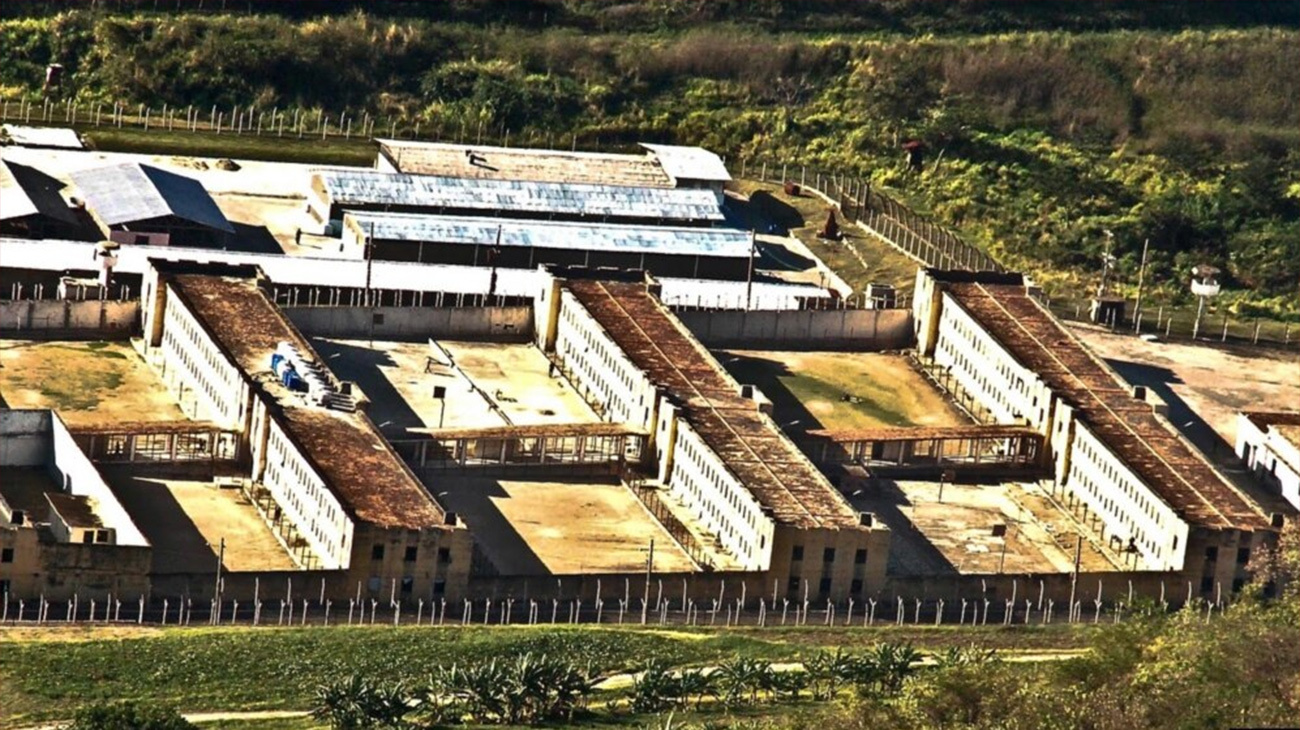
Eight Prisoners Have Died of Hunger and Tuberculosis in Cuba’s Boniato Prison in Two Months

In less than three months, the death of several inmates has been recorded in Cuba’s Boniato prison / Ena Columbié / Gaspar, El Lugareño

14ymedio bigger14ymedio, Havana, 5 March 2025 — The legal organization Cubalex denounced the death of the prisoners Giovanis Ferrer Verdecia, alias El Menor, and Israel Cabrera, in the Boniato prison, in Santiago de Cuba, both of which occurred on Saturday, March 1. With these, there have been eight deaths in the same prison this year alone.

Ferrer Verdecia, 46, who was detained in detachment number 16, died of tuberculosis and kidney failure. According to data provided by Cubalex, the inmate “remained hospitalized for several days before his death and was buried last Sunday morning.” He was originally from the town of Ramón de Guaninao, in the municipality of Palma Soriano.

Cabrera was in Block 2, where inmates with low weight are imprisoned. According to Cubalex, “the exact circumstances of his death are unknown.”

The NGO says that Boniato is a detention center where “abandonment, unhealthiness and lack of medical care continue to claim lives.” One of the reasons for the deaths of prisoners is tuberculosis. This is how Osbety Girón continue reading

Matos, 51, died in mid-February. The inmate was in Block 13, section 4, and he “died after being hospitalized for several days in the prisoners’ ward of the local hospital,” the organization said.

The NGO says that Boniato is a detention center where “abandonment, unhealthiness and lack of medical care continue to claim lives”

The prison authorities have quarantined the block to prevent the spread of the disease among the penal population, with little success.

“The overcrowding, lack of medical care, malnutrition and unsanitary conditions continue to put the lives of prisoners at serious risk and facilitate the spread of deadly diseases,” adds Cubalex.

The Boniato prison has been denounced by relatives of inmates for the alarming conditions in which they are kept, in addition to subjecting them to a regime of maximum severity. “The food is insufficient and inadequate. Currently they receive only rice soup or a burro banana, without regular access to a main course, which is provided to them sporadically,” the NGO stressed.

On February 1, Iraqi Nieto died from malnutrition. He was in Block 2, where the inmates with low weight were kept.

For his part, the lack of food led Giovanis Reyes Ortega to commit suicide. According to Cubalex, the conscript “had been fainting daily for almost a month due to lack of food and medical assistance. His state of extreme malnutrition led him to take his own life.”

Last December, José Daniel Ferrer, leader of the Patriotic Union of Cuba (Unpacu), denounced the bad conditions of the Boniato prison. The opponent was informed by other prisoners of the painful situation of hunger and illness they experienced there. In 2024, 22 deaths were recorded.

Another case in Boniato was that of the inmate Oscar Leiva Caballero, who died on February 1 from a heart attack

Another case in Boniato was that of inmate Oscar Leiva Caballero, who died on February 1 from a heart attack. He was serving a 15-year sentence for a common crime and suffered a first heart attack on January 31. “Other details about the circumstances of his death and whether he received timely medical assistance are unknown,” the NGO said.

The death of Juan Antonio Singüenza Sánchez was announced on March 3. Cuban opposition leader José Daniel Ferrer denounced the horrors experienced by the 56-year-old prisoner in the dungeons. He was released in December in an alarming state of malnutrition and full of scabies from head to toe, reported La Tijera. Days later he died in Santiago de Cuba.

Between January 2022 and January 2024, at least 56 people died under state custody in Cuba, according to data documented by Cubalex. Of these cases, 34 correspond to inmates in prisons, and the main cause of death was the denial of medical care, with 19 cases registered.

Translated by Regina Anavy

____________

COLLABORATE WITH OUR WORK: The 14ymedio team is committed to practicing serious journalism that reflects Cuba’s reality in all its depth. Thank you for joining us on this long journey. We invite you to continue supporting us by becoming a member of 14ymedio now. Together we can continue transforming journalism in Cuba.

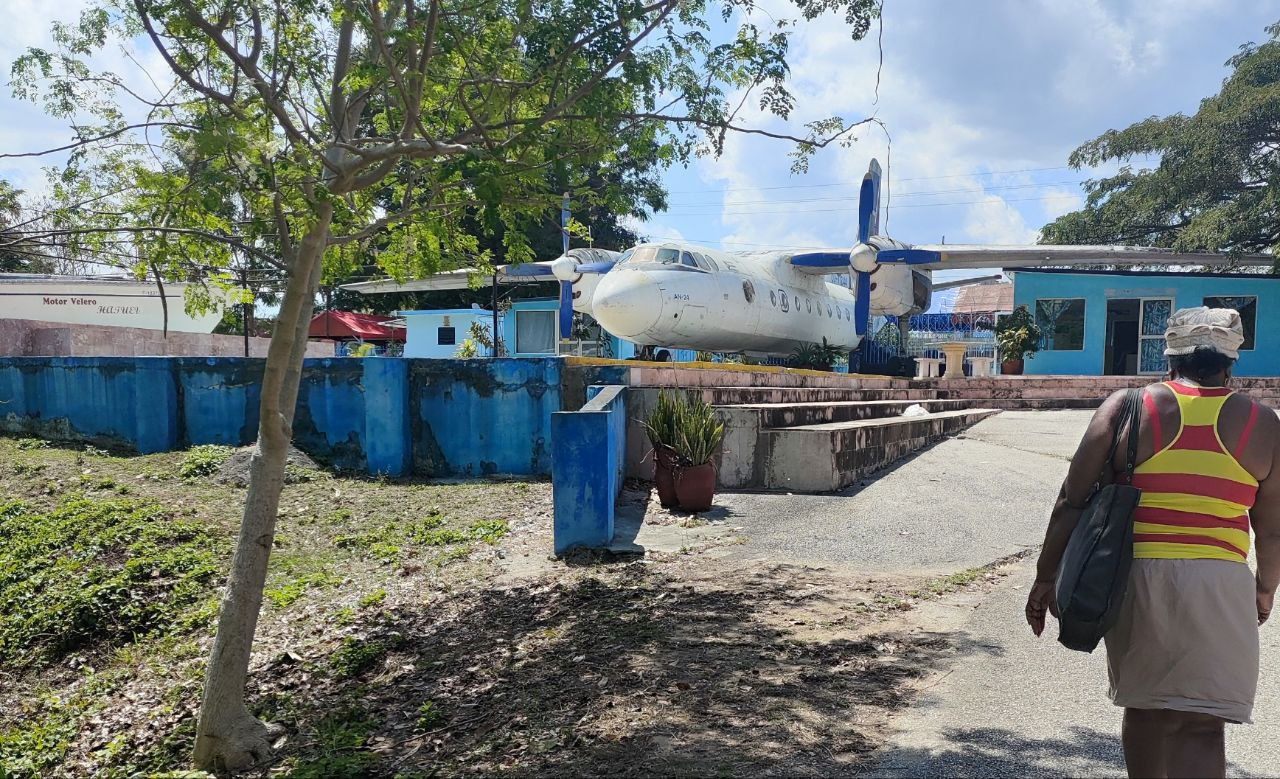
Forced Landing of El Avión, Another Cuban Restaurant Closed Due to Lack of Food

Part of the old and useless fleet of the state-owned Cubana de Aviación, the ‘ship’ was equipped to serve 24 diners

It was inaugurated as a gastronomic restaurant at the beginning of 2013 / 14ymedio

14ymedio bigger14ymedio, Mercedes García, Sancti Spíritus, 4 March 2025 — Two years after completing the interior of the Russian-operated Antonov (An-24), all that remains are a deserted esplanade and a custodian, which indicates that it is closed, without any reopening date set.

Inaugurated as a gastronomic restaurant in early 2013, El Avión began its journey by causing a real stir. Its arrival on the Central Highway to its final location caused great fright among the people of Sancti Spíritus, who believed that it had crashed. That beginning was an omen of the random path that it would take later.

Part of the old and useless fleet of the state-owned Cubana de Aviación, the small plane was renovated to serve 24 diners. To reinforce the idea of a flight, customers were received in a replica of an air terminal, a cubicle where the “captain” took their orders before they entered the “plane.” While waiting to board, they could have a cocktail and feel that they were future travelers in a waiting room.

Once inside the An-24, “passengers” could sample the main dishes and imagine that the plane, designed in 1957 in the Soviet Union, had taken off and was now lost among the clouds heading to a remote destination. For many of the customers who arrived it was the first time they had been on an aircraft, although it was still anchored to the ground. After dining, the continue reading

service staff announced that it was time to deplane to make way for the next customers.

“Like everything in this country, it started more or less well, but when it had been opened a few months, I came for my birthday and the food was already terrible,” said a man born in the province who, after visiting the nearby agricultural fair, decided to go see “the little plane,” as many called it. “I ordered a dish with shrimp, because they specialized in fish and seafood, but it was inedible. The tomato sauce they added didn’t taste good; it was full of chunks.”

However, the man recalls that “it was a different place and the children loved to come.” For many “it was a way to fulfill their dream of being on a plane. Here there are many people who have not even left this province, let alone flown from one place to another.” Nor do the nearby facilities that served to support the restaurant, such as the bathroom and the supposed terminal, provide service. A Cuban flag painted on the side of the Antonov has been fading with the rain, the sun and the passage of time, that same accumulation of years and neglect that once prevented it from leaving the ground and that now make it impossible to survive as a restaurant.

Translated by Regina Anavy

____________

COLLABORATE WITH OUR WORK: The 14ymedio team is committed to practicing serious journalism that reflects Cuba’s reality in all its depth. Thank you for joining us on this long journey. We invite you to continue supporting us by becoming a member of 14ymedio now. Together we can continue transforming journalism in Cuba.

The Cuban Government Contemplates, for the First Time, Granting Land in Usufruct to Foreigners

“We know of many cases of people living in the country who are interested in accessing this possibility,” said the Ministry of Agriculture.

The Government has already given land in usufruct to foreign companies / ACN

14ymedio bigger14ymedio/EFE, Havana, 4 March 2025 — The Cuban Government is considering granting land in usufruct to foreign companies and individuals with permanent residence on the Island, in a new measure to increase agricultural production, which is going through a deep crisis.

The Ministry of Agriculture advanced the step this Tuesday at a press conference, by presenting a draft law on ownership, possession and use of land. It explained that the regulation seeks to “increase agricultural production” and to “recognize all economic actors.”

The text, 60 pages, will enter a discussion phase until May 1 and will be presented to the National Assembly of People’s Power for approval in December.

The text will enter a discussion phase until May 1 and will be presented to the National Assembly of People’s Power for approval in December

Cuba has already delivered land in usufruct to foreign companies, although under a “legal vacuum,” Mayra Cruz, Legal Director of the Ministry of Agriculture, clarified at a press conference.

“The fundamental change comes from giving recognition. The current decree law on the delivery of land in usufruct does not speak of foreign legal entities in any way. How has the delivery of land to these subjects been resolved legally? From the Constitution, but there is a gap on this issue in continue reading

agrarian legislation,” she said .

Last January, the Cuban state press reported that a Vietnamese company became the first foreign firm since 1959 to receive land to cultivate on the Island.

The company, according to the official newspaper Granma, obtained 308 hectares to plant rice on a farm in the south of Pinar del Río province.

“We know many cases of foreigners who live in the country who are interested in the possibility of having land in usufruct. They have had to request it from their wives, a child, a Cuban relative. This proposal incorporates the possibility that, as with other goods – cars, homes -, they can acquire it in their name,” Cruz said.

“The current decree law on the delivery of land in usufruct does not talk about foreign legal entities in any way”

Boris Titov, president of the Cuba-Russia Business Council, had already said in May 2023 that the Island offered Russian businessmen the right to use land for a period of 30 years, an unprecedented concession from the regime.

“They are giving us preferential treatment; the path is paved,” said the Kremlin adviser during the inauguration of the bilateral business economic forum held in Havana, according to Reuters.

For Titov, the conditions proposed by the Cuban government affect ” the long-term lease of land, the tax-free import of agricultural machinery, the granting of the right to transfer profits in foreign currency and much more. Of course, we are also waiting for the reduction of bureaucratic barriers.”

Translated by Regina Anavy

____________

COLLABORATE WITH OUR WORK: The 14ymedio team is committed to practicing serious journalism that reflects Cuba’s reality in all its depth. Thank you for joining us on this long journey. We invite you to continue supporting us by becoming a member of 14ymedio now. Together we can continue transforming journalism in Cuba.

Ulises and Arminda, Retirees and Professional ‘Coleros’ at the ATMs in Cienfuegos, Cuba

The elderly save others long waits under the sun or rain and charge them 1,000 pesos for their service

Early mornings on the boulevard can be dangerous, especially when you can’t even see your hands due to the blackout / 14ymedio

14ymedio bigger14ymedio, Julio César Contreras, Cienfuegos, 2 March 2025 –14ymedio, Julio César Contreras, Cienfuegos, 2 March 2025 — They are just shadows in the middle of the dim light in front of the branch of the Banco Popular de Ahorro on the boulevard of the city of Cienfuegos. Every night they are there to stand in line so that, the next morning, they can withdraw cash from the ATMs. Sometimes the long hours of waiting end in frustration because of a power cut, lack of money, a technical breakdown or some other mishap.

“Anyone may think that we are fleeing the blackouts and enjoying a little cool air, but the reality is that we are standing in line for our customers,” says Ulises, an old man whose face is already part of the urban landscape on that stretch of the street. “This is a great sacrifice, and most of us are retired. I come every three days, and the people interested in my service contact me very early.”

Although Ulises has been retired for several years, he has had to look for a job as a custodian for a nearby State building to earn extra income. His potential customers look for him there during the day, and once he withdraws the cash from the ATM they give the elderly man 1,000 pesos for his service. A real roulette marked by chance if you take into account the continuous blackouts and technical problems that affect the city’s banking network.

Faced with such a difficult task, a group of coleros — people who stand in line for others — has been created that guarantees, at least, that those who can pay for their services do not have to spend a morning outdoors. “People complain that we take the first places in line, but what we do is a job, an continue reading

occupation that helps other people who can’t spend all night like this,” adds the pensioner.

“We almost all know each other, and if someone has a problem and has to go home for a while, we’ll take care of their place in line”

The man lists what kind of people require his work. “There are families with small children who cannot leave them alone, people who take care of the bedridden who can’t leave, others who are in charge of an elderly person and have to collect the pension but cannot spend a lot of time in line at the ATM. Anyway, they need cash but they don’t want to be here all this time.”

The coleros watch each other’s backs. Early mornings on the boulevard can be dangerous, especially when you can’t even see your hands due to the blackout, something that happens more and more frequently in a city that suffers up to more than 20 hours without electricity every day. “We almost all know each other. If someone has a problem and has to go home for a while, we will take care of their place in line.” Solidarity is vital for a job that is prohibited and does not enjoy a good reputation among the users of the branch.

“The first places in line are always in the hands of the coleros; you definitely can’t go to that bank,” says a young engineer who has given up taking out cash from the branch, the closest to her home. “I try to do everything I can through electronic transfers but not all businesses accept them, and you always end up needing cash.”

She says that customers have repeatedly complained to the bank’s management about the difficulties in accessing the ATMs. The complaints are not only directed against the coleros, but also against those who try to use a single place in line to extract money from several cards. “You are fifth in line, and you think you’re going to get there, but the person in front of you does five transactions and it’s all over.”

Based on the complaints, the branch managers have imposed a rule that each customer can only withdraw money from one card. The device also has a limit on the number of bills for each operation that restricts the quantities. “You can only withdraw 5,000 pesos in each operation, but the cash they put in the AT is so little that sometimes they recharge it at nine in the morning, and by eleven it’s empty.”

The young woman has chosen to mobilize her family to be in at least three lines at the same time

The young woman has chosen to mobilize her family to be in at least three lines at the same time. “My husband is in the branch on Argüelles Street, my mother in the San Carlos bank, and I am in this one on the boulevard, but sometimes we don’t even manage to get money.” In her opinion, the coleros who have been in front of the office since dawn are only the result of a bigger problem: “The lack of money and the fact that everything costs a lot, hundreds and thousands, and they don’t want to accept the smallest bills.”

One of the most experienced coleras on the boulevard is Arminda, 68 years old and with a pension of 1,500 pesos per month. “I have spent early mornings without sleeping; I have been bitten by mosquitoes, and I have even experienced some scares, just so a bank employee can come out and say that they aren’t putting money in the ATM that day, or the power goes off just when it is time to open to the public.”

Her main goal is to stay in business, despite the risks and frustrations, in order to buy, in the informal market, the medicines and food needed by her daughter, a young woman with mobility problems who can barely get out of bed. “If the power goes off just as the ATM starts, then I have to stay there under the sun so as not to lose my place in line, until the blackout is over.”

Insects, the early morning cold and the noon heat are not the only things that make Arminda uncomfortable. “Bank employees come out, stop the line and put in three or four cards to get money for their friends or people who pay them for it,” she complains. The old woman says that every day there is a different fight; people get very aggressive because, of course, money is a delicate matter.”

Last week Arminda was somewhat lucky because she stood in three lines during the early morning. She managed to withdraw cash for her customers in about two days. But she knows that in the fragile business of guaranteeing a position in the front of the line, nothing is assured. Her occupation is as unstable and elusive as those bills with the face of Céspedes (100 pesos) or Frank País (200 pesos).

Translated by Regina Anavy

____________

COLLABORATE WITH OUR WORK: The 14ymedio team is committed to practicing serious journalism that reflects Cuba’s reality in all its depth. Thank you for joining us on this long journey. We invite you to continue supporting us by becoming a member of 14ymedio now. Together we can continue transforming journalism in Cuba.

Collecting a Pension in Manzanillo Is a Real Obstacle Course for Retired Cubans

“I worked like a beast and now I look like a beggar, following officials month after month to get paid what they owe me,” complains Orestes

When the collection dates approach, the place is filled with retirees who wait patiently, sometimes all night, to receive their pensions / 14ymedio

14ymedio bigger14ymedio, Carlos A. Rodríguez, Manzanillo, Granma Province, 25 February 2025 — 14ymedio, Carlos A. Rodríguez, Manzanillo, Granma Province, 25 February 2025 — When he worked for the State, Orestes was happy when the payment dates were approaching. However, since he has been retired, the end of the month makes him worried at the prospect of banks without electricity and ATMs without cash in Manzanillo (Granma province). The obstacle course exhausts him before he even sets foot in the street to receive his pension.

Retirement, he says, is not a gift or a work of charity from the State. It is remuneration for the years he worked, for his contribution to society, which belongs to him. Orestes knows this very well, and that’s why he’s indignant that he has to go on an odyssey to receive his pension. “I worked like a beast and now I’m a beggar, going after the officials month after month so they pay me what they owe,” complains the manzanillero from outside the Post Office where he receives his pension.

When the collection dates approach, the place is filled with retirees who wait patiently, sometimes all night, to be paid their pensions. Orestes himself has experienced the despair of standing in line, which he almost always has to do for several days to finally obtain a few thousand pesos.

Orestes himself has experienced the despair of standing in line, which he must almost always do for several days to finally obtain a few thousand pesos / 14ymedio

At almost 70 years old, Orestes hides a catheter under his shirt and belt, just as he hides his everyday hunger and fatigue. He almost never has money to buy a snack, but even if he did, he couldn’t afford it. He spends every peso he receives each month on food and medicine. If it weren’t for the fact that he has no other option, he says, he would think that the hardships he goes through to get his pension are not worth it. continue reading

“This time I was lucky and can get paid on the third day. I almost always have to come four or five times because the power goes out, the connection goes out or there is no cash. Every day I dedicate to this – he laments – is a lost day.”

Orestes remembers the time when postmen brought the pensions to the homes of retirees, but with the lack of staff and “bancarización” [banking reform] now even that doesn’t happen. “Today they opened the Post Office around nine because there was no power, and at eleven they had to stop because they only had 1,000 peso bills. There were more than 50 people left, and we had to wait until a girl showed up with a money box and smaller bills,” he explains, still not being able to enter.

The situation is repeated at each of the collection points in the municipality / 14ymedio

The people in line complained, he says, but calmed down when the payments restarted, although the anguish did not disappear. Now, he claims, “they fear the imminent blackout after so much delay.”

On the same days and in the same line, Orestes has met many retirees like himself, and he has seen and heard everything: a woman fainted from fatigue in line; a housewife who does not have enough money even though she receives 7,000 pesos and remittances; people who, to collect their pension, must leave their sick relatives alone for hours.

The list goes on, and the situation is repeated at each of the collection points in the municipality

Being in the same line on the same days, Orestes has come to meet many retirees like him, and he has seen and heard everything / 14ymedio

In bank branches such as Bandec’s, the “desperate people,” the retirees who lengthen the line, sleep there the night before to try to collect. That, warns Orestes, “is if the cashiers have cash and the electricity does not go out.”

The discomfort, notes Orestes, spreads quickly in the lines, as the retirees are exhausted by the ordeal they suffer to collect their meager pension. “I gave my youth and my life to this process. I never thought I would regret it, but it’s one disappointment after another,” he says, throwing up his arms in despair.

Above all, he remembers the years he was an employee of the State: “I worked in Minas del Frío, lived there and was a bricklayer in the construction of the Camilo Cienfuegos School City, in the Caney de las Mercedes in the Sierra. That’s why I was proud when I heard people talking about the leaders and the military as the historic generation of the Revolution. I am also the historic generation! Without me and others like me they wouldn’t have built this shit!”

Translated by Regina Anavy

____________

COLLABORATE WITH OUR WORK: The 14ymedio team is committed to practicing serious journalism that reflects Cuba’s reality in all its depth. Thank you for joining us on this long journey. We invite you to continue supporting us by becoming a member of 14ymedio now. Together we can continue transforming journalism in Cuba.

With Blackouts and No Teachers in the Schools, Cuban Education Has Become ‘Optional’

Severalschools have reduced their hours and only offer classes in the mornings or from Monday to Thursday.

Elementary school children arriving at school /14ymedio

14ymedio bigger14ymedio, Juan Diego Rodríguez, Havana, March 2, 2025 — Dayma has not sent her daughter to school on Fridays in the municipality of Placetas, Villa Clara, where she is in third grade. According to 14ymedio, it is not because the girl is sick or because there is a new “complication,” but because the primary school itself has established that school days are only from Monday to Thursday.

She doesn’t know if the order came “from above,” but since the announcement, her life has turned upside down. “Every week I have to juggle to see who stays with her because if I stop working, we don’t eat. And at ten years old, I can’t leave her alone,” says the mother.

Hiring someone to pick her up from school and take care of her until she gets home from work is not an option either. The service is not cheap, and, with her daughter’s frequent outings at noon – when classes are suspended – it becomes more expensive.

On top of this, she argues, she works in the provincial capital, Santa Clara, which makes it difficult for her to take care of her daughter during working hours. Although she has tried to look for a job in Placetas, for now she cannot leave her only source of income.

Dayma confesses to this newspaper that she is “distraught” with the operation of the school: “I don’t know of any other programs, but my daughter barely has classes.” continue reading

According to the mother, the girl has not had a steady teacher since the school year began

According to the mother, the girl has not had a steady teacher since the school year began, and, due to the lack of staff, many subjects “have been left hanging.” “The other day I took her a little late because I had a medical shift, and when I got to the classroom there were only two children, of the 20 in the group. The parents had not sent the rest of them,” she says worriedly

In addition, the primary school has not had a director for at least two years. The teacher who held the position got sick and gives orders from her home, but she is never at the school “nor does she have the authority to demand anything if she herself does not go.” On several occasions, attempts have been made to “cover the gap,” says Dayma, but no other worker will step forward: “No one wants to get into that mess.”

“I know that things are difficult with the blackouts, lack of food and the situation of the teachers, who have their own problems. Sometimes I don’t want to send my daughter to school, because I feel it’s a waste of time and they only go hungry without doing any work. If things continue like this, they won’t learn anything,” she admits, and adds that even in Santa Clara many of her co-workers have complained about the same thing.

Carmen, a resident of the Luyanó neighborhood, in Havana, has a similar experience. Mother of a seventh-grade teenager, she has had to manage so that her son, at home, learns what they don’t teach him in school.

At the rate they’re going, the woman believes that only the most intelligent and those “with parents who force them to study” will be able to graduate

“At the beginning of the course they said that they would teach all day, but my son only goes in the mornings and often returns at ten or eleven saying that the teacher wasn’t there or that a shift was suspended,” she says. Other times, she points out, “they go in the morning and the teachers don’t come, so they leave them there for three hours, fulfilling a schedule, but without giving classes,” she complains.

Following the death of Jonathan Oliva, the 12-year-old boy who drowned during the floods last Monday in the capital, the schools of the municipality have tightened the measures, says Carmen. “Now they require the boys to also go in the afternoon, but they are not doing anything. In the end, without teachers and resources, they will not be able to maintain that system,” she predicts.

At the rate they’re going, the woman believes that only the most intelligent and “those with parents who force them to study” will be able to graduate. The most backward, she says, have no chance: “If they pass the year it’s because the school approved them so as not to have a bad record.”

Alarmed by the situation in the schools, both mothers agree that education on the island is far from demanding and controlled. “At any time you can meet a group of pre-university boys, or of any classroom , on the street. And it’s not that they ran away, but because they were released when classes were suspended,” Dayma criticizes.

If before these situations were only seen on days when the energy crisis forced the closure of schools and certain workplaces – as the Government did two weeks ago – now, the mother says, “it seems that education in Cuba is optional.”

Translated by Regina Anavy

____________

COLLABORATE WITH OUR WORK: The 14ymedio team is committed to practicing serious journalism that reflects Cuba’s reality in all its depth. Thank you for joining us on this long journey. We invite you to continue supporting us by becoming a member of 14ymedio now. Together we can continue transforming journalism in Cuba.

The Chinese Solar Parks Arrive, the Turkish ‘Patanas’ Leave and the Blackouts Continue

 20 photovoltaic plants are needed to replace the more than 400 MW lost with the closure of five floating power plants

The ’Suheyla Sultan’ floating power plant in the port of Havana, this Friday / 14ymedio

14ymedio bigger14ymedio, Havana, 28 February 2025 — With great enthusiasm the Cuban authorities boasted a week ago of having synchronized the first photovoltaic park in Havana, named Escuela de Enfermería, to the national electrical system (SEN), which will provide the country with 35,000 megawatt-hours (MW/h) per year. They plan to install 55 photovoltaic parks with Chinese technology before the end of this year, and this Friday, the Cuban authorities announced the inauguration of the second one. It is named Alcalde Mayor, is located in Cienfuegos and has the same generation capacity as the first of 21.87 megawatts (MW).

A report in the newspaper 5 de Septiembre reiterates what Cubadebate said about the synchronization of the park in Havana, that the operation of the Alcalde Mayor, in the municipality of Abreus, Cienfuegos, will allow an annual saving of 8,500 tons of diesel. Also, it is anticipated that in the coming months the province will have two other facilities of the same type: La Yuca, also in Abreus, and Mal Tiempo, in Cruces, with the same capacity, which will be added to another 18 MW already operational and from smaller parks.

However, the speed with which progress is being made in what the regime has called “a change of energy matrix” by betting on solar energy with the help of China, does not seem to be enough to end the blackouts on the Island, neither in the short nor in the medium term. Above all, it does not take into account something to which the Government has given minimum publicity: the departure of the Turkish floating power plants from Cuban ports. continue reading

The loss of floating power plants, says Piñón, “puts the reliability of the SEN at risk this summer”

Sold at the time to public opinion as an energy solution, there were eight of those patanas in the country, but today there are only three , all of them in Havana, as announced by the Minister of Energy and Mines, Vicente de la O Levy, in December. One of them, the Belgin Sultan – which suffered a fire five months ago that left two workers dead and another six injured – is simply a service ship, so, for electricity generation purposes, there are only two, which produce when they have fuel for their engines. The Suheyla Sultan, has a capacity of 240 MW, in Tallapiedra/Melones, and the Erol Bey, provides 63 MW, in Regla.

When the Cuban government ran out of money to pay the rent to the Turkish company Karadeniz, the other floating power plants, reports the energy specialist of the University of Texas, Jorge Piñón, went to Ecuador (Erin Sultan), Guyana (Ela Sultan and Baris Bay) and the Dominican Republic (Esra Sultan and Irem Sultan). “It would take 20 solar parks of
those that are currently being installed (of about 20 MW each) to cover the loss of more than 400 MW of generation of the five patanas that have left Cuba,” Piñón explains to 14ymedio.

The expert recalls that, according to the National Bureau of Statistics and Information (Onei), the contribution to the SEN of these floating units “was important in the total generation of the National Electric Union (UNE).” Specifically, 2,591 gigawatt-hours (GWh) in 2022, 14% of the total, and almost double in 2023, 4,494 GWh, 23% of the total.

The loss of floating power plants, says Piñón, “puts the reliability of the SEN at risk this summer,” the season of highest energy demand in Cuba.

Alcalde Mayor photovoltaic park, inaugurated this Friday in Abreus, Cienfuegos / 5 de Septiembre

Although the specialist says he recognizes and applauds that the Escuela de Enfermería “was built on schedule,” he believes that the objectives of the Cuban regime for this 2025 “are pharaonic.”

Enumerating the details of the government plan – from January to June, 27 solar installations with 590 MW of power, and from July to December, 28 with 610 MW of power; that is, 55 at the end of the year with 1,200 MW – Piñón calculates that this means completing in just twelve months 60% of the goal established for 2030, 92 parks with 2,000 MW of power.

“I wish them good luck. Perhaps they learned from the booklet that the Chinese read to Díaz-Canel and from his lessons,” says the expert, referring to the trip that the Cuban president made in November 2022 to China. Díaz-Canel himself then let drop the conditions set by his Chinese counterpart, Xi Jinping, by declaring: “Our commitment must be fulfilled well; we must do things well, take advantage of opportunities, be efficient, not waste resources, and ensure that investments have an adequate return. We must be increasingly serious and more effective also in the projects we propose to continue expanding cooperation.”

In this regard, Piñón, who has 30 years of experience in the private energy sector, emphasizes: “The biggest obstacle Cuba has in finishing its projects is its lack of project management, not the embargo, nor the lack of financing or technology. Management, management and management.”

Thus, according to the specialist, the decision of US President Donald Trump to revoke Chevron’s license to produce and export oil from Venezuela can paradoxically benefit Cuba.

Chevron contributed to the increase in Venezuelan crude oil production, which reached almost one million barrels a day (bpd) last December, far from the three million bpd of 25 years ago but more than double that in 2020. Piñón believes that the state oil company Pdvsa will try to maintain current production to avoid the closure of wells – the process of reactivating them is very expensive – and, therefore, will have more crude oil available for Cuba. “It is very possible that, in the coming months, Pdvsa will return to the average of 55,000 bpd, as in 2023.”

On the other hand, the other major fuel supplier to Havana, Mexico, will probably have to reduce its deliveries of crude oil and gasoline – it is not clear whether they are donations or barter for the shipment of Cuban doctors – to reduce the debt of the state-owned Pemex. This Wednesday, the Mexican Chamber of Deputies voted an amendment to the Hydrocarbon Income Law to reduce the tax burden of the state-owned Petróleos Mexicanos (Pemex), according to the Spanish agency EFE.

The initiative, supported by the official majority, establishes a new tax regime called Oil Law for Wellbeing, with the aim of remediating the finances of the state company and promoting its competitiveness in the energy sector.

Meanwhile, the electricity deficit expected this Friday once again exceeds 1,500 MW, the usual in recent weeks. For a demand of 3,250 MW there is an availability of 1,695 MW, and a real affectation of 1,695 MW is expected late evening during peak hours. It is lower than the maximum recorded on Thursday, 1,719 MW, which is dangerously close to the 1,800 MW that, last September, caused the SEN to collapse.

In the UNE statement today, there is no mention of the Turkish patanas. This newspaper verified that of the 12 engines of the Suheyla Sultan, three are off, since its chimneys do not emit smoke, probably due to lack of fuel. The Regla floating power plant is working, although it could not be verified if all eight of its engines were on.

The report does offer, again, an inventory of all the broken or in-maintenance plants: unit 5 of the Mariel CTE, the 1 and 2 of Santa Cruz, the 5 of Nuevitas, the 3 and 4 of Cienfuegos, the 5 of the Renté and units 1 and 2 of Felton.

The Government’s hopes for this weekend reside in the Lidio Ramón Pérez thermoelectric power plant, in Felton, in Mayarí (Holguín). The official press has announced that the recovery of block 1, which stopped unexpectedly on February 11, is imminent, but it has not yet happened.

Translated by Regina Anavy

____________

COLLABORATE WITH OUR WORK: The 14ymedio team is committed to practicing serious journalism that reflects Cuba’s reality in all its depth. Thank you for joining us on this long journey. We invite you to continue supporting us by becoming a member of 14ymedio now. Together we can continue transforming journalism in Cuba.

Nicaraguan Freemasonry Follows in the Footsteps of the Cuban by Bending to the Ortega Regime

It is a small fraternity, but the Sandinista leaders want to dismantle it

Nicaraguan Freemasonry has not had an easy history / Grand Lodge of Nicaragua / Facebook

14ymedio bigger14ymedio, Juan Izquierdo, Havana, 2 March 2025 — Cuba is not the only country where the relationship between Freemasonry and the Government is problematic. In Nicaragua, where the regime of Daniel Ortega has withdrawn the legal identity of more than 5,600 organizations, including Freemasonry, the fraternity has begun a laborious rapprochement with the Government. Its strategy: bend, allow former Sandinista politicians to occupy high positions and criticize the Freemasons who ask for “full democracy” for the continent.

The last episode of the controversy occurred on February 17, when the Inter-American Masonic Confederation (CMI) – a historic coalition of 94 fraternal organizations in 26 countries – met with the secretary of the Organization of American States (OAS) to discuss the deterioration of democracy in the region.

Rather than ingratiating themselves with Ortega, an ally of Nicolás Maduro and defender of his legitimacy after the 2024 elections, the highest Masonic authorities in Nicaragua expressed their indignation and resigned “unilaterally and irrevocably” from their membership in the IAMC.

“Breaking with the CMI is very serious: Nicaraguan Freemasonry has just harmed itself.” This is the assessment of Hiram, a Mason based in Managua who talks with 14ymedio about the schism, the State infiltration in Freemasonry and the regional situation – including the Cuban ups and downs – of the fraternity.

“Every Freemasonry is like a country: the Grand Master is the president; he has a secretary, chancellor, provincial and municipal lodges that are like departments and ministries. To break with the CMI is to isolate yourself, even for a small masonry.” continue reading

According to Hiram, Nicaraguan Freemasonry, burdened by exile, has fewer than 200 members. “And of those, many continue to leave.” The figure is minimal when compared to that of regional Masonic powers, such as Cuba, which currently has about 20,000 initiates and which, almost 10 years ago, had more than 27,000.

The letter of the Nicaraguan Masons, spread through internal channels of the fraternity, was initialed by the leaders of the Grand Lodge and the 33 degree Supreme Council – the two highest authorities in the country – and the Chapter of Freemasons of the Royal Arch, another high institution.

They protested against the “dangerous” meeting of the CMI with Luis Almagro, secretary of the OAS, “an organization that has long lost regional credibility.” According to the text, the CMI carried out an illegal and anti-Masonic act by asking the OAS “to intervene in the sovereign Bolivarian Republic of Venezuela.”

Maduro is the “constituted authority,” they argued, and not recognizing him shows a “lack of vision,” encouraged by the OAS. This organization, in turn, serves “the imperial interests of the United States of America,” they insisted, unravelling in concrete insults against the “tentacles” of Donald Trump’s Administration.

The decision was made to “cut all ties” and abandon its membership status. Indeed, the Grand Lodge of Nicaragua is no longer on the official membership list of the CMI, although the Nicaraguan flag remains on the logo.

In reality, the Open Letter to the Society – published by the CMI on its social networks and signed in Washington on February 14 – was limited to demanding “unity, action and commitment” towards Venezuela. They demanded “dialogue and joint action” from the Masons and the OAS to guarantee the restoration of democracy in the country.

None of the Nicaraguan or Venezuelan Masons signed the letter. Nor did any Cuban Mason.

“The CMI letter was born in the heat of the Venezuelan elections, in July of last year,” Hiram explains. “Venezuela’s Freemasons – some opponents of Maduro and others not – were going to demonstrate against the result, and the CMI asked them not to risk it and to write their own statement. At that time the Nicaraguan Masons also protested.”

In 2023, Ortega declared that Nicaragua was leaving the OAS, which the Foreign Ministry called “an interference organization of the decadent unipolar and hegemonic government” of the United States. Relations with the organization had been soured since 2018, when the regime repressed popular protests and imprisoned hundreds of demonstrators.

“What do the Masons demonstrate in this whole story? Why do they ingratiate themselves with the dictatorship?” asks Hiram

“What do the Masons demonstrate in this whole story? Why do they ingratiate themselves with the dictatorship?” asks Hiram. “The Government doesn’t care about Freemasonry. Last year, both the Grand Lodge and the Supreme Council were left without legal identity. Despite that, those who go along with it, including several former Sandinista politicians, are all trying to get closer to Ortega.”

Nicaraguan Freemasonry has not had an easy history. Many Freemasons, Hiram reflects, continue to talk about “Somoza’s Masonic betrayal of Sandino.” Both leaders, the revolutionary Augusto César Sandino – who died in an ambush in 1934 – and Anastasio Somoza, dictator for several terms, were Freemasons.

It was the National Guard, led by Somoza, that was responsible for Sandino’s death. Since a Mason is forbidden to kill another Mason, Sandino’s death violated the ethics of the order. “That’s why the Government has always alluded to Somoza’s ’masonic betrayal’ of Sandino,” says Hiram. It is a symbolic stain on the order that Ortega’s propaganda has been able to take advantage of.

“In my opinion, the Government has never launched a large-scale infiltration of Freemasonry,” he says. “But there are senior officials, such as the signatories of that letter, who try to hijack it for the Government. There are the historical toads (snitchers). There are few opponents left, but there are some of Ortega’s boot lickers. They want to convert the Lodge into a [political] party.

“But there are high officials, like the signatories of that letter, who try to hijack it for the Government”

The recent crisis of Cuban Freemasonry – still active – after the theft of 19,000 dollars from the office of the Grand Master, who tried at all costs to remain in power, was commented on in the Nicaraguan lodges. “We said, What is happening in Cuba? Why did a Grand Master leave the country in 2023? Why was that money lost? It was embarrassing, it seems incredible. But there was never a larger debate, just hallway comments,” says Hiram.

Due to its secret character in the 19th century, Freemasonry contributed to forging independence movements and fighting against dictatorships on the continent. Aware of that organizational power, regimes such as the Cuban, Venezuelan and Nicaraguan have done everything possible to dismantle it, or at least keep it at bay.

For Hiram, this libertarian sense is the DNA of the fraternity, which has been immune to all dictatorships, both external and internal.

Translated by Regina Anavy

____________

COLLABORATE WITH OUR WORK: The 14ymedio team is committed to practicing serious journalism that reflects Cuba’s reality in all its depth. Thank you for joining us on this long journey. We invite you to continue supporting us by becoming a member of 14ymedio now. Together we can continue transforming journalism in Cuba.

With the ‘Instability’ of the Family Basket, Cuba’s Ration Stores Run Out of Cash

The function that allows customers to receive money with a QR code linked to their bank account is thus lost.

Businesses that request the extra cash service do not receive money in advance by the bank to put it into the hands of customers / 14ymedio

14ymedio bigger14ymedio, Madrid, February 28, 2025 — The Government must have thought “for big problems, big solutions” when it invented the “extra cash” service. The long lines at the banks, the lack of cash in the branches, the blackouts that shut down the ATMs and the disconnections that prevent card payment were going to be solved with this alternative. The concept is simple: the customer goes to one of the affiliated establishments, scans a QR code and makes a transfer of money to the premises, which – once the validity of the operation is verified – gives him cash: the panacea for rural areas.

More than three years later, the idea, which never prospered as expected, fails to work worse than ever. “If the stores and government establishments don’t collect money, you can’t withdraw money. The last thing they told me in the grocery store is that they are saving money to pay their workers. The rest of us have to sleep in front of the bank to withdraw 2,000* pesos, assuming there is money and electricity,” says a woman from Nuevitas.

Businesses that request the extra cash service do not receive money in advance by the bank to put in the hands of customers but rather depend on what they collect themselves. The 2021 measure was designed for ration stores, points of sale for propane and pharmacies, although later Correos [post offices], Casas de Cambio [currency exchanges], Cupet [gas stations] and other state-owned companies have been able to take advantage of it. The incentive is basically null, since the bank pays the premises a continue reading

commission of 0.5% of the balance of the day and a peso for each operation carried out, but – in return – it is doing the job of a cashier.

The official press of the provinces has dedicated some sporadic reports to the disappointment of this service

The official press of the provinces has dedicated some sporadic reports to the disappointment of this service, which has been progressively reduced. In December, the Central Bank of Cuba announced that the amount of 5,000 pesos without limit of operations, that was in force until that moment, was drastically reduced: 6,000 pesos, but only once a week.

The Government has not given up on the service but admits that it has been increasingly limited, as indicated by the report published this Friday by the State newspaper Granma. The article gives both praise and criticism to the extra cash service, based on cases in two provinces: Villa Clara, where the project progresses properly, and Granma, where it is shipwrecked without hope of rescue.

Juan Miguel Cabrales Perdomo, director of Development of the Commerce Business Group in the eastern province, says that of the 862 extra cash services that were initially enabled in the Commerce network, there are not even 400 that continue to work. For the official, the reason is very clear: the shortage of products for the rationed family basket leaves the coffers of the ration stores empty.

“Regardless of the fact that the majority of ration stores sell industrial products and other items, the most money they collect is from the sale of products for the family basket, which today do not have stability and arrive in fractional form. What happens as a result? The ration store requests extra cash, but there is none,” he tells the official newspaper of the Communist Party.

Cabrales Perdomo says that it was a good idea and was born “as an alternative to the lack of cash,” but “the situation has been changing.”

The provincial management of the Bank of Credits and Commerce (Bandec) indicates that there are 1,298 premises with the service, but the requests have stopped due to “lack of interest of some agencies, given the limitations they have with the existence of cash.”

However, the bank states that the increase in electronic payments is also behind the reduction in available cash and gives the electricity company as an example. Last year, 85% of the billing was through the bank, the company says, so the little money in cash they have left is for paying the workers and not for the public that requests it. “For me, the extra cash service has been a very comfortable and effective option, but for some months, withdrawing money that way has become an impossible mission,” said a customer. She told Granma that she used to withdraw cash from the gas company and that she would be an example of this type of case, since payments for electricity are most often done by bank, as the authorities have stated numerous times.

Apparently to alleviate the situation, the report addresses the case of Villa Clara, where 2,243 premises offer the service

Apparently to alleviate the situation, the report addresses the case of Villa Clara, where 2,243 premises offer the cash service. In this way, the residents of the province obtained 815,425,000 pesos (about 2.4 million dollars at the informal exchange rate), an amount that, without the comparative data, was much higher than that of the previous year. Specifically, Santa Clara ostensibly excelled, with 257,210 extra-cash operations (45% more than the previous year), worth 681 million pesos.

According to the newspaper, the abysmal difference between the two provinces is due to the fact that the administrators of the establishments of the Commerce of Villa Clara carried out very adequate informative work, which has promoted adherence to the program. The merchants managed to pocket 3,745,000 pesos in commissions, “nothing negligible,” the report considers, although it is the equivalent of 11,000 dollars among more than 2,000 establishments.

The report also addresses the corruption that can occur in this service, although the Commerce director assures that everything is under control. “We have had some cases of people trying to take advantage of this facility for personal purposes or to favor others, which have been detected and neutralized immediately, thanks to the vigilance that we carry out every day on this matter, and to our close relationship with the banking system, which can trace and record all the operations,” he emphasizes.

Translator’s note: The peso/dollar exchange rate is quite volatile, and varies even on the same day in different places based on different exchange scenarios. That said, today 1 Cuban pesos is worth roughly 4.2 cents US.

Translated by Regina Anavy

____________

COLLABORATE WITH OUR WORK: The 14ymedio team is committed to practicing serious journalism that reflects Cuba’s reality in all its depth. Thank you for joining us on this long journey. We invite you to continue supporting us by becoming a member of 14ymedio now. Together we can continue transforming journalism in Cuba.