In the Midst of a Deep Publication Crisis, Nine Volumes of the ‘Selected Works’ by Raúl Castro Are Presented

The general did not attend the presentation but did attend the ceremony for the anniversary of the Central Committee of the Party


Photo of Raul Castro during a different event, a celebration at the PCC / X/Miguel Díaz-Canel

14ymedio bigger14ymedio, Havana, October 4, 2025 — With the publication this Friday of his Obras escogidas [Selected Works], Raúl Castro intends to go down in history, imitating his brother not only as a political leader but also as a thinker. In nine volumes, said one of the editors, Cubans can approach “the personality, ability and sensitivity of Raúl.” However, the general did not show up at the presentation of the books, although he did appear at the celebration of the 60th anniversary of the creation of the Central Committee of the Communist Party, supporting Miguel Díaz-Canel and banishing for the umpteenth time the rumors of his death that were circulating in September.

Castro’s books are, as expected, privileged among the few Cuban publications. According to Cubadebate, the volumes have “a quality commensurate with the historical significance they capture.” Their selection was very careful and each one contains an analytical index and “QR code that refers to images corresponding to the period described, thereby incorporating contemporary technological resources.”

Soon, reported the media, they will be available in libraries and institutions, which will allow access to “more than 500 documents” and “2,000 specific situations and contexts.” Digital versions are also available on the Party’s official website. If this publication feat was possible on an island without paper and with few functional printing presses, it is because China financed a run of 3,000 copies.

The publication blackout in Cuba is represented in numbers: While in 2023 more than 6,000,000 pages were printed in Cuba, in 2024 that figure dropped dramatically to 1,355,500. The shortage is not only of paper but also of political will. However, the legacy of the historic figures of the Revolution has always had priority.

The Selected Works are also promoted by Díaz-Canel, who attended the presentation at the José Martí Memorial

In the words of Abel Prieto, director of Casa de las Américas, with these books Editions Celia is making available to Cubans “70 years of an exemplary and heroic life, which we now have as a formidable guide of ethical behavior in revolutionary action.” continue reading

The Selected Works are also promoted by Díaz-Canel, who attended the presentation at the José Martí Memorial of the Plaza de la Revolución along with other high officials of the PCC: the Secretary of Organization of the Central Committee, Roberto Morales Ojeda; Vice-President Salvador Valdés Mesa and Prime Minister Manuel Marrero Cruz.

The books contain unpublished documents, speeches, letters and the campaign diary that Castro wrote in the Sierra Maestra, divided by years in each volume.

In Prieto’s hand, the books became a “compass” for “teachers, professors and student organizations” to combat the “phenomenon of dumbing things down and the erasure of memory.” Castro, he said, constantly addresses the issue in those pages, which warn against the “misrepresentation of history.”

“Prieto specifically referred to counterrevolutionary materials circulating on social networks, where artificial intelligence is used to show a Havana embellished with symbols such as a “giant McDonald’s” in the case of the Revolution’s defeat,” highlights Cubadebate, quoting the director of Casa de las Américas when he calls this a phenomenon of “illness” or “primitive fascism.”

Prieto also urged reporters to spread the book’s ideas. “You, the journalists, must work hard, see what ideas of these can be used for short audiovisuals and post them on the networks”

“An ethical sensibility runs through the whole book, from the first pages, when Raúl was very young, to the last. I discovered Raúl again with this collection and am very grateful. He was in all the battles: in the construction of the Party, in the Revolutionary Armed Forces (FAR),” said the official.

Prieto also urged reporters to spread the book’s ideas. “You, the journalists, must work hard, see what ideas of these can be made into short audiovisuals and post them on the networks. We must work with the networks to create a daily vindication of Cuba,” he ordered.

The leader raised the tone even more: “We are in the midst of a very serious cultural and ethical crisis. The main victims of these offensives are the new generations. Their memory is being erased, along with their national identity, their origins, their sense of belonging to a culture. Therefore, texts such as that of Raúl’s diary and, in general, these Selected Works, are weapons in this contemporary war,” he insisted.

Raúl, for his part, did not attend the book presentation. His attention was directed to the celebrations of the Communist Party, where his frequent presence is intended to calm — in addition to the rumors of his illness and death — the discontent towards the government.

Translated by Regina Anavy

____________

COLLABORATE WITH OUR WORK: The 14ymedio team is committed to practicing serious journalism that reflects Cuba’s reality in all its depth. Thank you for joining us on this long journey. We invite you to continue supporting us by becoming a member of 14ymedio now. Together we can continue transforming journalism in Cuba.

Neither Ration Stores nor Cattle Are Saved From the Increase of Crime in Holguín, Cuba

The “Frontier” case in Cacocum, where a group armed with machetes and shotguns stole 61 cattle, is highlighted

In Holguín, 1,672 criminal acts were recorded in September, according to the provincial authorities. / Ahora

14ymedio bigger14ymedio, Holguín, October 3, 2025 — Crime is rampant in Holguín, and the official statistics confirm this. During the Provincial Plenary held on Thursday at the Expo Holguín fairground, it was reported that in September alone 1,672 criminal acts were recorded, an increase compared to August, with seven municipalities affected. Calixto García, Moa and Sagua de Tánamo top the list as the most problematic.

Among the homicides, robberies with force and the recurring theft of cattle, the local authorities met and presented a deluge of worrying figures, adorned with calls for “revolutionary vigilance” and criticism of the managers of ration stores and state entities, which apparently have become the favorite prey of thieves and opportunists.

Of all the cases presented, the one that attracted the most attention was the one baptized as “Frontier.” On September 1, in the town of Limoncitos (Cacocum), a custodian aged just 28 decided that caring for cows was less profitable than stealing them. And with the complicity of 12 other people, he planned the theft of 61 cattle from the dairy where he worked.

Mounted on horseback, dressed in black, with balaclavas, three shotguns and several knives, the thieves burst in as if it were a western movie. The plot ended with 13 detainees, although one, the main organizer, remains at large. The authorities claim that some of the perpetrators were arrested after an “intensive interrogation process.”

The robberies of ration stores were also at the center of the debate. In September, five incidents were reported in the municipalities of Holguín and Báguanos. continue reading

The criminals are not only aware of when the rice arrives, but could also be taking advantage of help from the workers themselves

The curious thing, officials said, is that the thefts coincided with the distribution of rice, which suggests that the criminals are not only aware of when the rice arrives, but may also be taking advantage of help from the workers themselves, or the information disseminated on Telegram.

For Joel Queipo Ruiz, First Secretary of the Party in the province, the problem is not so much the thieves but the administrators who “don’t take measures,” and the lack of “revolutionary vigilance.”

Nor do the crime statistics for state entities offer much comfort. In September, 50 events were recorded, bringing the total to 894 so far this year. The municipality of Holguín accounts for 38.2% of the incidences, with a predominance of robbery, theft and, again, the eternal problem of livestock.

The perpetrators of these crimes have shown increasing violence

Some 54.5 percent of crimes were concentrated in strategic sectors such as agriculture, trade, public health, education and water resources. To top it all off, the perpetrators of these crimes have shown increasing violence, according to the police report.

Mayarí, Urbano Noris and Banes accompany Holguín province as the most affected territories. Lack of lighting, vacant security positions and administrative mismanagement complete a scenario conducive to the increase in crime.

Finally, Queipo praised the importance of the Fourth Crime Prevention and Confrontation Exercise, held in September throughout the country, as a way to “ensure citizen peace, respect for internal order, stability and social discipline.”

Holguín, one of the most populous provinces in the country, today displays a map of insecurity that resists being whitewashed with harangues.

Translated by Regina Anavy

____________

COLLABORATE WITH OUR WORK: The 14ymedio team is committed to practicing serious journalism that reflects Cuba’s reality in all its depth. Thank you for joining us on this long journey. We invite you to continue supporting us by becoming a member of 14ymedio now. Together we can continue transforming journalism in Cuba.

“Beatings, Torture, Humiliation and Death Threats” Lead José Daniel Ferrer To Accept Exile from Cuba

The leader of UNPACU also points out his “frustration at the disunity, sectarianism and lack of effectiveness of the opposition inside and outside Cuba”

José Daniel Ferrer, leader of the Patriotic Union of Cuba, in one of his live broadcasts before being arrested again / Stock photo/Facebook

14ymedio bigger14ymedio, Madrid, October 3, 2025 –The opponent José Daniel Ferrer, leader of the Patriotic Union of Cuba (UNPACU), accepts his exile from Cuba. He has expressed this in a handwritten letter published by his family on their social networks and sent from the prison of Mar Verde, in Santiago de Cuba, where he has been since his parole was revoked, April, 29, after having been released for three months.

Before that date, when the “last assault” on his home occurred, Ferrer explains, he had already made up his mind. “This decision was taken for the safety of my family and because of the frustration that I felt when I came out of prison to confirm the disunity, sectarianism and lack of effectiveness of the opposition inside and outside Cuba in the struggle for freedom and the well-being of our homeland,” he says, referring to his months of release.

“For years I have been subjected to brutal beatings, torture, humiliation, death threats and other cruel, inhuman and degrading treatment by henchmen and other instruments of the worst dictatorship that the American continent has known,” begins his letter. “All with the intention of forcing me to leave my country or to renounce the non-violent struggle for freedom, democracy and human rights and the well-being of my homeland.”

In the last few months that he has been in prison, “the brutality of the dictatorship against me has exceeded all limits”

In the last few months that he has been in prison, “the brutality of the dictatorship against me has exceeded all limits.” He lists “beatings, tortures, humiliations, threats and extreme conditions,” as well as “theft of my food and toiletries” and threats against his wife, Nelva Ortega, and her children. “All with the intention of forcing me to leave continue reading

my homeland,” he says. “In the face of constant efforts by the political police to get me out of Cuba, I ended up agreeing to go into exile.”

However, he states, “since the procedures to achieve this end began, as always happens, the agents of the regime have been playing dirty: they continue with the plan of harassment, threats, humiliations, robberies and extreme conditions.” As an example, he mentions the pressure they exerted to have his marriage with Nelva take place on the “birth day of the deceased dictator,” August 13, and the “videos and recordings” that Ferrer claims they took “with the intention of producing publications that call into question our commitment to the struggle for freedom in Cuba.”

He also states that they tried to compel him to make statements and ask the Catholic Church to mediate between Havana and Washington, a dialogue, he defines, “leading to the shameful negotiation of other times: release of political prisoners in exchange for lifting sanctions and other benefits for the dictatorship.”

The opponent clarifies: “If my life and that of my family depend on me asking for such things, I prefer my death in this Nazi-style concentration camp and even the sacrifice of my family.” And he adds, without making it clear whether his departure can take place in the short term, “I leave Cuba, only with my dignity and my head held high, and not for long.”

“He deserves a welcome worthy of a hero and will receive it,” said Cuban-American congressman Mario Díaz-Balart

Nelva Ortega, who confirmed to Martí Noticias the authenticity of the letter, reiterates that the decision to accept exile “was taken after months of torture, beatings and extreme conditions of imprisonment” and that “it was the only way to protect the family and prevent them from responding with violence in such inhumane circumstances.” However, she did not clarify when the departure would occur, which, according to Ferrer in his letter, would be to the United States. In his view, it is the only country that “maintains a firm stance against the communist regime and is truly in solidarity with the peaceful opposition and the Cuban people.”

Cuban-American congressman Mario Díaz-Balart spoke on X about the opponent’s decision, calling him a “hero” and saying, “After years of imprisonment, beatings, physical and psychological torture and persecution by the murderous regime in Cuba simply for demanding freedom, he is being forced into exile. He deserves a welcome worthy of a hero and will receive it.”

For her part, the sister of the UNPACU leader, Ana Belkis Ferrer, told Spanish news agency EFE that her brother “accepted the banishment, but we do not yet know if it will be implemented because the dictatorship wants to profits from it, and José Daniel is not going to agree to any negotiations.”

The initial joy of the family for the possible release of Ferrer from prison turned into “something very frustrating,” reports EFE from its conversation with the activist’s sister, who said: “Not every human being would be willing to go through that: it’s a constant martyrdom.”

“Not every human being would be willing to go through that: it’s a constant martyrdom”

The Council for the Democratic Transition in Cuba (CTDC), of which the UNPACU leader is president, also spoke in favor of the opponent’s decision. “We know what it will have cost him to take it,” they say in a statement. “He has the right to his own life and to be with his family.” The platform stresses that it is a determination “intimately linked to the horrors of prison where he has been treated like an animal, subjected to beatings, physical and psychological torture, which only a person of great physical strength, emotional and spiritual like his, has allowed him to endure.”

The CTDC adds that Ferrer “is and will always be, wherever he lives, an icon and an example for all of us.” The “clarity” of the opponent, they warn, “will not be undermined by any disinformation campaign of a structurally lying regime very comfortable with the ecosystem of deep fakes, fakes news and post-truth.”

On previous occasions, Ferrer had spoken out against leaving the country, as offered by State Security in exchange for not keeping him in prison and under torture. The opponent was informed of the charges against him -propaganda against the constitutional order and contempt of Díaz-Canel- two weeks after he was imprisoned.

Ferrer was violently removed from his home, also the headquarters of UNPACU, in Altamira, Santiago de Cuba, after three months of constant harassment. According to his family, the State Security agents “completely ransacked” the house and took him away, along with Nelva Ortega and their young son, Daniel José, although they were released hours later.

On the same day, April 29, Félix Navarro was also arrested with his wife, the Dama de Blanco [Lady in White] Sonia Álvarez, during a visit to the prison in Mantazas where their daughter Sayli Navarro is being held.

Both opponents were part of the group of prisoners released last January under an agreement between the regime and the Vatican and returned to prison eight days after the death of the previous pope, Francis.

Translated by Regina Anavy

____________

COLLABORATE WITH OUR WORK: The 14ymedio team is committed to practicing serious journalism that reflects Cuba’s reality in all its depth. Thank you for joining us on this long journey. We invite you to continue supporting us by becoming a member of 14ymedio now. Together we can continue transforming journalism in Cuba.

Cubans Lead the Caravan of Nearly 1,500 Migrants Denouncing Extortion in Mexico

The group is heading to Mexico City and asks for support from the authorities to regularize their immigration status

The Cubans lead the caravan that left this Wednesday from Tapachula and is heading to Mexico City. / EFE

14ymedio bigger14ymedio, Mexico City, Ángel Salinas, October 2, 2025 — There is no life for migrants in Tapachula,” Yamila Sarmiento, 38, tells 14ymedio. The woman is one of almost 500 Cubans who are part of the so-called “Caravan for Freedom,” with more than 1,500 migrants from Guatemala, Honduras, Venezuela, El Salvador and Haiti, who left this Wednesday for Mexico City. “We want papers to be able to work, because money is the thing,” she says.

Sarmiento decided to join because she has been listening to the same speech at the Mexican Commission for Aid to Refugees (Comar) for eight months: “We are understaffed; you have to wait for the message for your interview.”

She says that a couple of Venezuelans paid $1,800 to a lawyer for an interview with Comar. “The man already has papers; those of us who don’t have resources are left in a heap. In Tapachula, if you pay lawyers you can resolve things with the agents; as for the rest of us, we’re fucked.”

Rebeca García, also Cuban, told Diario del Sur that migrants are exploited and the pay is bad. They receive between 180 ($9.75) and 200 ($10.84) pesos a day . “So we can’t help our families; we left our country for them. For that reason we are leaving Tapachula, and going to the US is impossible now.”

The migrants denounce extortion by immigration agents and accuse the lawyers of collusion. / EFE

Yovani de Jesús, from Venezuela, complained that the immigration authorities “denied me the documents to regularize.” He told EFE that he has been going to Comar for seven months, first because the response did not arrive in the promised 14 working days. He was told to wait. After another long wait, he came and was given a digital piece of paper that loads but has no validity: he is still “illegal” in Mexico and without work.

Last August, a Cuban named Figueredo, 28, told this newspaper that in order to avoid “extortions” he went to the migration headquarters in mid-June. “I stood there every day for a week to get an appointment,” he complains. “You’re there, in line, and at the end they ask you to wait for the response from Comar. It never arrives; everything is corruption.” continue reading

Tapachula, even before the caravan, became a second home for 13,779 Cubans. However, as of July 5,959 of these people still did not have their immigration status regularized, confirmed a Migration employee to 14ymedio. “There are no officials in Comar, so they have delayed the delivery of documents, and this will go on for another two months,” says Yaniel Ponce de León, who still has not received his humanitarian visa.

Attorney José Luis Pérez denounced the apathy of the immigration authorities with regards to speeding up the processing of these Cubans. “Migration has violated the rules and kept thousands of people in uncertainty, stranded in Mexico. With the arrival of Donald Trump to the presidency of the U.S., the American dream was cut short. The only thing that migrants want is an opportunity.”

Holding up a blanket that says “With papers we can contribute more to Mexico,” the migrants intend to follow the coast of Chiapas and pass through the municipalities of Huehuetán, Huixtla, Villa Comaltitlán, Escuintla, Mapastepec, Pijijiapan, Tonalá and Arriaga.

Tapachula, even before the caravan, became a second home for 13,779 Cubans. / EFE

Some of the migrants obtained motorcycles and bicycles to help the women and children. They plan to pass through twice a day: first at 4:00 am with a rest stop at 1:00 pm. The second pass-through would be at 2:00 pm, with a rest stop at 8:00 pm.

Mexico City has become a critical destination for hundreds of migrants, who remain stranded in the absence of documents. Between fear and mistrust of institutions, they are aggravating the migration crisis.

The so-called “border effect,” which was previously concentrated in border cities such as Tijuana and Tapachula, is now being felt in the country’s capital, given the new migratory restrictions in the US since the return of Donald Trump to the White House in January.

In Tapachula, some migrants are still dealing with the scams. Jean Philippe Alexis, from Haiti, reported charges of up to 22,000 pesos ($1,200) for obtaining an interview at Comar, where he says “migrants are being used and denigrated.”

Philippe Alexis left his country because of “hunger” and to help his family. “If my country was okay, I wouldn’t have to be in Mexico,” he says. “If I get arrested for not having money, I don’t know what I’m going to do.” The Haitian says that officials do not understand that “without papers there is no work or money.”

Translated by Regina Anavy

____________

COLLABORATE WITH OUR WORK: The 14ymedio team is committed to practicing serious journalism that reflects Cuba’s reality in all its depth. Thank you for joining us on this long journey. We invite you to continue supporting us by becoming a member of 14ymedio now. Together we can continue transforming journalism in Cuba.

Peruvian Mandarins Return a Lost Flavor to Cubans

The price is 1,300 pesos a pound, almost half of a monthly pension

When the seller told her the prices of the imported products, which also included California onions, the woman’s face became a grimace. / 14ymedio

14ymedio bigger14ymedio, Juan Diego Rodríguez, Havana, October 2, 2025 — First was the garlic from the US, then came the beans from Mexico, and the mandarins and oranges from Peru have now landed in Cuba . This Thursday, a street vendor near Central Park in Havana offered his glossy merchandise with the new sticker that points to the origin and the company responsible for its trade. For 1,300 pesos a pound, almost half of a monthly pension, the client could take that piece of flavor home that was lost for ages to Cubans.

“I don’t think I’ve seen a mandarin in more than five years,” said a sweet old lady who came up. When the seller told her the prices of the imported products, which also included California onions, the woman’s face became a grimace. A young man, who appeared to be more financially solvent, also approached the cart and ended up buying two pounds of mandarins. “I’ve really missed these, I don’t remember the last time I saw them,” he explained, justifying the expense.

Street vendor in Havana selling imported fruits and vegetables / 14ymedio

The steep fall in domestic agricultural production and the high prices of food, together with the attractive foreign fruit that is often cleaner and more carefully presented, have pushed diners to prefer imported fruits and vegetables, even though they cost more. Citrus fruits, which were once the pride of official propaganda, are among the most affected in recent decades by pests, hurricanes, the loss of international markets and State inefficiency.

I don’t know whether to eat them or hunt them,” the young man joked with his bag of freshly bought mandarins. “My mom tells me that when continue reading

she was a child she ate a lot of them and always had that smell on her hands, so I bought them to surprise her.” From the Murcott variety, often called Mandarina Gold, the fruits that are sold these days in the Cuban capital are much appreciated for their juicy pulp, their sweet and intense flavor, their reddish orange skin and the fact that they are easy to peel and have few seeds.

Marketed by the company Inkagold, it is unlikely that, at the time of their collection, the agricultural workers who tore them from the branches imagined that those mandarins would end up in Cuban homes. The image of the Island is associated not only with sun, beaches and catchy music, but also with citrus fruits, like the lemon used in the mojito or the oranges enjoyed at the the seashore. But this idyllic tourist postcard is far from a reality where mandarins make everyone who passes in front of a truck driver raise their eyebrows, emit sounds of amazement and salivate profusely.

Translated by Regina Anavy

____________

COLLABORATE WITH OUR WORK: The 14ymedio team is committed to practicing serious journalism that reflects Cuba’s reality in all its depth. Thank you for joining us on this long journey. We invite you to continue supporting us by becoming a member of 14ymedio now. Together we can continue transforming journalism in Cuba.

In September, Cuba Received the Largest Amount of Venezuelan Crude Oil of the Year, in Addition to Oil From Russia

Despite the 52,000 barrels per day received from Pdvsa, the Island still suffers a fuel deficit

Caracas has problems taking on the volume of exports due to the shortage of ships. / Pdvsa

14ymedio bigger14ymedio, Madrid, October 2, 2025 — Venezuela exported 52,000 barrels per day (bpd) to Cuba this September, the largest known quantity so far this year and coinciding with the record of exports of the Venezuelan state oil since February 2020, which exceeded one million bpd by far. This is, to date, the only month in which the Island has received an amount close to what was agreed between the two countries in 2000. In March it was almost 50,000 bpd, but low amounts have dominated the first nine months of the year, meaning that Caracas will again have broken the pact between Hugo Chavez and Fidel Castro.

This, at least, comes from the data available and provided monthly by the Reuters agency, although it doesn’t rule out the possibility that Havana is receiving fuel from Pdvsa outside of official channels, according to an alleged secret plan mentioned by President Miguel Díaz-Canel and Energy Minister Vicente de la O Levy. In addition, last week the Akademik Gubkin arrived in Cuba with 740,000 barrels of Russian oil.

Despite the escalation of hostilities between the regime of Nicolás Maduro and the Administration of Donald Trump, the results for the oil industry are going full steam ahead for Venezuela

Cuba has suffered this September from huge shortages of electricity, although in the last days of the month a slight relief has been noted, according to reports from different provinces. De la O Levy said weeks ago that the biggest problem this time has been the shortage of lubricants rather than that of fuel.

Despite the escalation of hostilities between the regime of Nicolas Maduro and the Administration of Donald Trump, the results of the oil industry are in full swing for Venezuela. Sales to the US have also continue reading

reached considerable volumes: in September it received 108,000 bpd from Pdvsa, well above the 60,000 bpd that it imported the previous month but still far from the 294,000 that it bought in January 2025, a record to date.

That month, shortly after the inauguration of the US president, the White House announced the end of the license that the administration of Joe Biden had granted to the company Chevron to operate in Venezuela. The first date set for the extinction of the document was April 3, but it was later agreed to extend it until May 27.

A few days before the deadline, the American press announced that the Government had negotiated a new “minimum activity license” under which “essential maintenance operations” could be carried out, but no new investments and no oil exports.

At the end of July, the new concession came to fruition. Nothing has been known about the details, other than the alleged intention that a significant part of the money from the sale of oil cannot be transferred in any way to the Government of Nicolás Maduro or deposited in frozen accounts outside of Venezuela. Last week, several specialized media published that one of the conditions imposed by the US consists of a cap on the volume of sales, which cannot exceed 50% of what Chevron extracts from its wells.

Last week, several specialized media published that one of the conditions imposed by the US consists of a cap on the volume of sales, which cannot exceed 50% of what Chevron extracts from its wells

In total, exports from Venezuela reached 1,093,667 bpd, even more than in May, when it reached 1.06 million. The quantity sold this September is 13% more than in August and 39% more when compared to September 2024, which shows that the sanctions have not affected the situation of Pdvsa.

The main buyer, once again, has been China, which took 84% of Venezuelan oil exports, either directly or indirectly, because, recalls Reuters, these exchanges are carried out through “little-known intermediaries” trading in crude oil to circumvent sanctions.

During that second quarter, Pdvsa accumulated a good amount of oil in the Orinoco Belt, the country’s main producing region, which it is now exporting, says Reuters. Meanwhile, it has been importing from Russia and China naphtha and light crude oil, which are essential to dilute the extra heavy oil that Venezuela produces. The latter is reflected in total imports of diluents, which rose from 99,000 bpd in August to 41,000 bpd in September.

Translated by Regina Anavy

____________

COLLABORATE WITH OUR WORK: The 14ymedio team is committed to practicing serious journalism that reflects Cuba’s reality in all its depth. Thank you for joining us on this long journey. We invite you to continue supporting us by becoming a member of 14ymedio now. Together we can continue transforming journalism in Cuba.

The US Issues a Travel Alert for Cuba Because of the Increase of Chikungunya

In addition to infants, those over 65 and those with diabetes or heart disease are at high risk

Matanzas polyclinic, which a few days ago issued a health alert because of the increase of Chighungunya, dengue and oropouche / 14ymedio

14ymedio bigger14ymedio, Havana, September 30, 2025 — This Tuesday, the US Embassy in Havana issued a health alert for anyone who wants to travel to Cuba due to the outbreak of Chikungunya throughout the entire island. The risk is determined at Level 2, which requires “extra precautions.”

In its statement, issued in English and Spanish, the diplomatic headquarters warns that this virus is transmitted by mosquitoes, and that symptoms, mainly fever and joint pain, appear between three and seven days after the bite.

Other symptoms, they indicate, may be headaches or rashes. “Most people recover within a week; however, some may experience severe joint pain for months or years after such an acute illness.” There is no specific treatment for Chikungunya, and, although death from this disease is rare, newborns infected at the time of delivery are at risk of suffering a more serious illness. Therefore, pregnant women are asked to “reconsider” traveling to the Island.

continue reading

The media of that province added to this risk another one that the Washington Embassy does not mention: dengue fever

In addition to infants, people over 65 and those with diabetes or heart disease are also at risk. 

The US Embassy publishes this alert days after the Matanzas press issued its own for the territory, because of “the high incidence of chikungunya.” The media of that province added to this risk another one that the Washington Embassy does not mention: dengue fever. Both viruses are caused from bites by mosquitoes of the genus Aedes Aegypti.

Then, Andrés Lamas Acevedo, director of the Provincial Center for Hygiene and Epidemiology in Matanzas, denied that there was a mysterious disease in Cárdenas, after weeks of reports by communities that were decimated by a condition that those sickened described as “very debilitating” and that “causes joint inflammation, high fever and general discomfort.”

The official specified that the viruses recorded were dengue (serotypes 3 and 4), Chikungunya and, to a lesser extent, Oropouche. However, the lack of reagents in crowded polyclinics means that many patients go through the disease without knowing for sure what they have. Washington’s focus on Chikungunya sheds light.

Translated  by Regina Anavy

____________

COLLABORATE WITH OUR WORK: The 14ymedio team is committed to practicing serious journalism that reflects Cuba’s reality in all its depth. Thank you for joining us on this long journey. We invite you to continue supporting us by becoming a member of 14ymedio now. Together we can continue transforming journalism in Cuba.

Capping Prices in Agro-Markets in Havana Is a New Attempt ‘To Regulate Marketing’

“When they say they’re going to lower prices, the products disappear,” complains the population

The measure is announced just one day after the end of the Island-wide illegality control exercise. / 14ymedio

14ymedio bigger14ymedio, Havana, September 30, 2025 — After closing the fourth exercise of control of illegalities last Sunday, the government of Havana announced on Monday a new price cap on various foods. This is the umpteenth “effort to regulate the marketing of agricultural products and ensure greater equity,” a strategy that has so far yielded few results.

Signed by the governor of Havana, Yanet Hernández Pérez, the resolution, whose date of entry into force is unclear, repeals all previous rules in this regard and imposes a new system of maximum prices for the retail sale of 29 products marketed at agricultural fairs. Among the most prominent are yucca, sweet potato, frying plantain and fruit plantain, as well as pumpkin, which may not exceed 25 pesos per pound. Guava was estimated at 20, while pineapples and a pound of plantain was estimated at 35.

For the rest of the products, prices go up: rice to 155, charcoal to 800, malanga can be sold for 55 or 75 pesos depending on the variety, and beans, if inputs were delivered to the producer, are at 196 pesos. Otherwise, they will be sold at a maximum of 285 per pound.

In these cases there were 19 products with higher maximum prices

Maximum retail prices were also imposed on truck drivers, tradespeople, non-agricultural cooperatives and “supply and demand markets managed by Acopio.” In these cases, 19 products had higher maximum prices. continue reading

A pound of cassava, for example, can be sold at 45 pesos, almost twice what is required for agricultural fairs. Other products follow the same trend: frying and fruit plantain, cucumber and guava at 40 pesos; malanga at 75 or 110 and plantain at 50. However, others like rice, beans and some vegetables have the same price.

Price lists are established on the basis of three types of marketing: purchase from the producer, wholesale and retail. For example, the farmer must sell a pound of yuca for 20 pesos to the wholesaler, who will market it for 24 pesos, while the retailer will offer it for 30 pesos.

The list also includes sweet potato, frying and fruit plantain, in addition to pumpkin, which all have the same price cap as cassava. The rest varies between 25 and 250 pesos depending on the product and from which entity it is purchased.

The new price caps will take effect in all municipalities of the capital, adds the resolution, which insists that its purpose is to “improve transparency in the marketing of food, protect consumers and strengthen State control over prices in a challenging economic context exacerbated by the intensification of the blockade.”

“If instead of capping prices, they made it easier for farmers…”

It is no accident that prices are being controlled just after the State deployed its inspectors throughout the country for a whole week. According to the results published by the official press upon the closure of the exercise against illegalities, one of the violations most frequently found was precisely the sale of food at “abusive prices.”

However, the residents of Havana already see the disappearance of the regulated products and their sale on the black market, as happens every time the State announces a price cap. “When they say they’re going to lower prices, the products disappear. The private stores have all the goods, and the State ones have nothing and also sell at high prices. We can give the example of the potato: they only gave it to us once in the so-called basic basket. The rest was sold by street vendors at high prices. Here we hardly trust anything, we only have to wait and see,” said a reader in the comments section of the Tribuna de La Habana page on Facebook.

“If instead of capping the price, they should make it easier for the farmers to grow crops; for example, giving them fuel to prepare the land, fumigation products and fertilizers, and facilitating the movement of goods to the city. They can talk about lowering prices, but this is what makes farmers leave and do something else,” criticized another from the point of view of the farmers. They, like many sellers, have complained many times that prices do not cover the investment needed to plant or buy food.

However, the State seems to be more focused on imposing standards than on solving the problem at its root, and, in the long run, the fines collected for price violations bring in millions of pesos.

Last week alone, 7,500 fines were imposed throughout the Island as part of the illegal activity control exercise resulting from more than 12,000 inspections. The sanctions amount to almost 24 million pesos collected, to which are added seizures of all types of products that go to the State companies responsible for marketing them.

Translated by Regina Anavy

____________

COLLABORATE WITH OUR WORK: The 14ymedio team is committed to practicing serious journalism that reflects Cuba’s reality in all its depth. Thank you for joining us on this long journey. We invite you to continue supporting us by becoming a member of 14ymedio now. Together we can continue transforming journalism in Cuba.

Cuba’s Second Fish Hatchery is in Crisis Due to Lack of Energy, Fuel and Water

Of the 14.8 million fry planned for 2025, only 5.4 million have been produced so far this year

This year, the energy crisis has struck the fish hatchery / Granma

14ymedio bigger 14ymedio, Havana, September 30, 2025 — The largest fish breeding station in Granma province and the second largest in Cuba, the René Ramos Latour Basic Business Unit (UEB), in the municipality of Bartolomé Masó, is experiencing a production crisis. Of the 14.8 million fry planned for 2025, only 5.4 million have been produced so far this year. At best, the figure could exceed 6 million, still far from what was expected.

According to an article published on Tuesday in the official daily Granma, the production debacle dates back at least to 2023 and has different causes. Two years ago there was a shortage of feed. However, this year it is the energy crisis that has taken its toll on the hatchery.

Specific conditions are required for fish to breed: “They don’t reproduce by themselves, alone in ponds,” explained Alejandro Socarrás Parra, the company technician. The cyprinids [family of freshwater fish], including white and spotted tench, common carp, wild carp and catfish, come from large rivers in Asia and Europe. “There the male goes behind the female and gently pats her abdomen until she releases the eggs and he immediately fertilizes them,” added the worker. Therefore, he said, they need a constant stream of water, because the eggs need pressure to hatch. “Otherwise, they are most likely to be born deformed or not at all.”

This year, the energy crisis has hit the nursery

Although on-site incubators are prepared to imitate this process with mechanisms that generate a current, the lack of electricity does not allow them to operate. Before this, the company installed an internal combustion engine that “has been a relief,” but not totally, because “you have to throw in more than 700 liters [185 gallons] of fuel, and often you don’t have it.” At most, it is done twice a month, Socarrás Peña said. continue reading

Another factor has been the water shortage, which has affected the entire country in recent months. In February, when the production was going according to plan, the level in the ponds dropped, causing the fry to lack oxygen and die. “They completely disappeared,” said the technician.

Despite having “20 concrete ponds,” few are in use. Catfish inhabit three of them but don’t represent large populations. The others are empty, “full of weeds or ashy concrete from so much sunlight.” Of those that contain water, none is full. “It takes a whole day of current to fill,” said the company director, Rudisnel Santos.

As there is barely electricity for three hours a day, they only fill those that are already in use

As there is barely electricity for three hours a day, they only fill those that are already in use, because the combustion engine “does not work. The pumps are huge. You need a lot of current to get them working,” remarked the official.

“A few weeks ago we made a proposal to have 12 hours of power on a daily basis for at least 10 days. With that we could fill at least four ponds. The point is that, in order to give power to this station, it must also be given to half of Masó. And that, in these times,  would be like bragging about what we have while others are in need,” said Yuniesky Rosabal Rosa, director of General Services, with an air of resignation. 

Another problem is the presence of “predators of all kinds. With more than 50 hectares [124 acres] of fish, up to 10 or 12 people can enter in one night.”

Although there are places available to integrate security guards, no one will take the job. “What happens with these positions is that people have already run the numbers,” said Rudisnel Santos. They pay 2,300 pesos a month for this work. “That has demotivated the troops: they don’t get money in their pockets. Political work can be adopted for it one day, but… what about food? It’s complicated. It takes sacrifice. It takes stamina,” he added.

“Political work can be adopted for it one day, but… what about food? It’s complicated. It takes sacrifice.”

Granma’s report is only a sample of the crisis in the country’s fisheries. It was also reflected in the largest reservoir of Cuba, in Sancti Spíritus. The frenetic fishing that started last year in Zaza, due to the drought, caused the cooperatives to go out and fish as much as they could.

One year later, the fish became feral, scarce and afraid to surface, which has impacted the campaign planned for this year. From 914 tons of fish that was programmed for the first four months, they barely managed to catch 658 tons.

Translated by Regina Anavy

____________

COLLABORATE WITH OUR WORK: The 14ymedio team is committed to practicing serious journalism that reflects Cuba’s reality in all its depth. Thank you for joining us on this long journey. We invite you to continue supporting us by becoming a member of 14ymedio now. Together we can continue transforming journalism in Cuba.
 

The Havana Night Is Filled With ‘Cacerolazos’ Because of the Blackouts

The energy crisis that afflicts the Island comes to the surrounding areas of the Casino Deportivo, where villas with gardens are plentiful

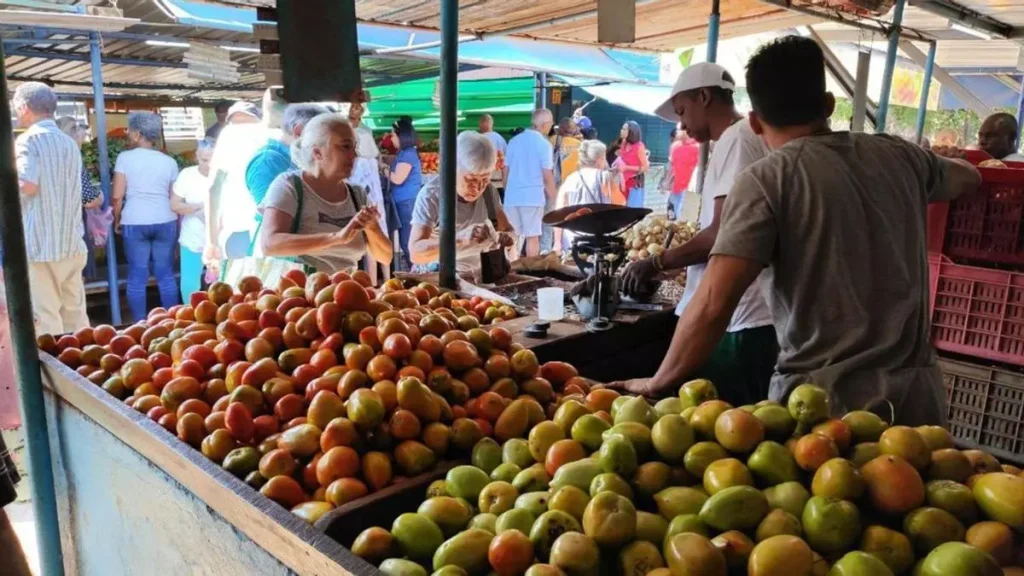
The areas surroundings the Casino Deportivo, in the municipality of Cerro, Havana, this Monday / 14ymedio

14ymedio bigger14ymedio, Havana, Darío Hernández, September 30, 2025 — The areas surrounding the Casino Deportivo, in the municipality of Cerro, were pitch black on Monday night. Dark, but not at all silent. In streets like Primelles and Santa Catalina the cacerolazos (street demonstrations with people banging on pots) were forceful. “The schedule isn’t working; people can’t sleep,” a neighbor reports to this newspaper, saying that in recent days they have had 12 hours of blackout daily.

Yesterday, the Havana Electric Company reported that a break in two circuits lefts some substations in operable: Melones and Tallapiedra, in addition to the only Turkish patana (floating power plant) that remains in Havana, in Regla. Old Havana, Centro Habana and part of San Miguel del Padrón and Diez de Octubre were left without light. On Tuesday morning, the State-owned company announced that six blocks in the capital were “affected” and “the schedule could not be met.”

According to today’s report from the Electric Union of Cuba (UNE), an allocation of 1,798 megawatts (MW) was reached on Monday at peak demand time. On Tuesday it is expected to be even worse. For peak time, the estimated demand is 3,550 MW and and the estimated availability is 1,780 MW, resulting in a deficit of 1,770 MW. The actual impact, however, is estimated at 1,840 MW.

“Now everyone is banging on a pot, something that was unthinkable a year ago”

Although what Havana experiences is far from the power cuts of the provinces, where blackouts have lasted 26 hours in recent weeks, its residents are becoming fed up. “Now everyone is banging on a pot, something that was unthinkable a year ago,” says a resident of the Casino Deportivo neighborhood. continue reading

The neighborhood, with an image of a well-to-do area in Havana where families with better economic status live, used to appear in the classified ads for homes as an area where “the lights stay on.” However, the energy crisis that afflicts the Island has also knocked on the door of the villas with gardens and spacious salons that abound in its perimeter.

Arbitrary prison sentences for some of those who have gone out to protest the energy crisis by beating on pots are an effective deterrent, but the mood is getting angrier. This Monday, despair, mainly due to the lack of water but also of light, led a group of mothers to close Monte street with their children in their arms, hoisting empty buckets.

Police officers tried to break up the protest by shoving and cursing, although moments later a water truck appeared on the scene, guarded by a patrol car, to appease the crowd.

Translated by Regina Anavy
____________

COLLABORATE WITH OUR WORK: The 14ymedio team is committed to practicing serious journalism that reflects Cuba’s reality in all its depth. Thank you for joining us on this long journey. We invite you to continue supporting us by becoming a member of 14ymedio now. Together we can continue transforming journalism in Cuba.

A Mexican Ferry Arrives in Cuba To Serve the Isla de la Juventud

The V2V Empress will replace the catamaran Perseverancia, which needs extensive maintenance

The V2V Empress arrived in Cuba this Saturday and will start operating on Monday / Facebook]

14ymedio bigger14ymedio, Havana, September 28, 2025 — Finally there will be some rest for the ferry Perseverancia, overused in recent months, which covered the circuit of Batabanó-Nueva Gerona-Cayo Largo del Sur. The catamaran V2V Empress, with the flag of Belize and coming from Yucatán, arrived in Cuba this Saturday to take Perseverancia’s place. No details were given on the type of contract signed with the Mexican owner of the ship, the company Naviyuc, which is already present in Cuba and has participated in numerous maritime projects of the oil company Pemex.

The Minister of Transport, Eduardo Rodríguez Dávila, made the announcement through his social networks. In his message, the official said that the new vessel “marks a change in the operation of this vital crossing for the connection between La Isla de la Juventud and the western region of the country.”

According to Rodríguez Dávila, the commissioning of the V2V Empress is linked to the “scheduled departure for maintenance” of the Perseverancia, which “will have a necessary pause to renew itself with a full maintenance. This replacement promises to keep the vital connection between the two islands alive.” continue reading

According to Rodríguez Dávila, the commissioning of the V2V Empress is linked to the “scheduled departure for maintenance” of the Perseverancia

The new catamaran, meanwhile, will follow a schedule of daily routes starting next Monday, and will alternate between Batabanó and Cayo Largo, “including one day a week dedicated to the maintenance of the boat to ensure safety standards.”

The V2V Empress, before arriving in Batabanó, left on September 25 from the port of Yukalpetén (Progreso), in Yucatán, according to the Vessel Tracker platform. It is owned by Naviyuc, a “100% Mexican private capital firm” based in Mérida, the capital of Yucatán, which acquired the ferry from a Canadian company in January 2023.

This company is no stranger to Cuba. It has had maintenance and repair contracts since 1999 with the Asticar shipyard, in Havana. In addition, in October 2022, it announced the development in Cuba of “the first multimodal port for rolling cargo, passengers and cruises in the province of Pinar del Río, in the Gulf of Guanahacabibes, the point closest to Mexico,” along with “the 100% Cuban-owned commercial company, Coral Marítima S.A.”

The information was announced during the International Transport and Logistics Fair, held in Havana that year. Without going into detail, it was also indicated that it would seek to encourage the development of tourism and the creation of a cruise port, which could be inserted in the Cozumel-Mahahual-Cuba triangle. At that event, on the last day, Minister Rodríguez Dávila was present.

This company is no stranger to the Island. It has had maintenance and repair contracts since 1999 with the Asticar shipyard

Despite the fact that the company has a website and a contact phone in the records of the Secretariat of Communications and Transport of Mexico, it is not possible to contact them to find details of the agreements with Havana, because their website does not work and their phone is out of service.

As for the history of the V2V Empress, Naviyuc has already licensed it to other governments, although it is unknown whether this is the type of deal that it made with Havana or if it is a donation or purchase. Months after acquiring it, in October 2023, the company signed a contract with the Administration of the Caribbean island of Montserrat to provide a passenger ferry service between Montserrat and Antigua beginning in November of that year.

The agreement stipulated that the term was for five months, until March 31, 2024. It operated five days a week during the period of low demand and six days during the periods of high demand, between December 2023 and March 2024. “The schedule will also include several day trips to Antigua and Nevis, with the option of traveling from Antigua to Nevis or from Nevis to Antigua, with a short stopover in Montserrat,” it added.

As for the history of the V2V Empress, Naviyuc has already licensed it to other governments

The contract was signed by Daphne Cassell, permanent secretary of the Office of the Prime Minister of the Government of Montserrat, and the representative of Naviyuc, Roberto Chami Lizárraga. However, the gamble lasted for a shorter time than expected, as despite the promised renewal of the contract for another year, the end of the agreement was announced in May last year.

The vessel, built in 1995, was designed as a high-end service vessel. Its history began in 2017, when it launched a premium cruise service in British Columbia, Canada. It connected the city of Vancouver with Victoria, the provincial capital; however, this was not successful. The company that operated it announced in 2020 – before the COVID pandemic began – that it would shut down operations. The catamaran with 242 seats “remained practically abandoned for almost three years,” until the sale to Naviyuc.

Translated by Regina Anavy

____________

COLLABORATE WITH OUR WORK: The 14ymedio team is committed to practicing serious journalism that reflects Cuba’s reality in all its depth. Thank you for joining us on this long journey. We invite you to continue supporting us by becoming a member of 14ymedio now. Together we can continue transforming journalism in Cuba.
“Instead of Looking for Oil, Cuba Should Bet on Biomass and Import Liquefied Gas”

Expert Jorge Piñón believes that the support of China and Russia will not be enough to rescue the national electricity system

The biomass plant of Ciego de Ávila, with Chinese technology, was opened in 2020. / Granma

14ymedio bigger14ymedio, Madrid, September 29, 2025 — The Cuban government’s strategy to recover the national electricity system (SEN) is completely wrong, explains University of Texas researcher Jorge Piñón in an interview published on Monday by Bloomberg Linea. The expert is clear that, in the short term, it is impossible to have a solution by betting on a radical change through the use of liquefied natural gas and biomass – the latter especially, because it would regenerate, in parallel, the sugar industry.

“If you say to me tomorrow: ‘Hey, here’s a $20 bill, where are you going to invest it?’ I will tell you in biomass, because it gives me sugar, electricity and ethanol, which, as fuel, can reduce the need to import gasoline,” Piñón tells the economic media. In his opinion, the Island has a huge potential in sugar as an energy generator, a model that follows Brazil. However, the condition of the sugar mills and an ever shrinking sugar harvest act against it. “I would forget drilling for oil and bet on the Cuban countryside to repair the sugar mills and increase cane production.”

In the face of the usual announcements by the Cuban authorities, above all about the small solar installations, which generate only 21 megawatts (MW) each, the specialist rejects the national source of crude oil as energy, due to its high sulphur content, which has contributed to the deterioration of the currently declining thermoelectric plants due to overuse. Pìñón qualifies the national crude oil as “harmful, very harmful” for the thermoelectric plants. “It is a vicious circle: they repair the plants, but they break again because of the crude oil used for fuel.” continue reading

“It is a vicious circle: they repair the plants, but they break again because of the crude oil used for fuel”

Piñón admits that the U.S. sanctions weigh on the “recapitalization” of the Cuban system, but denies that they are the main cause of the SEN’s deterioration. “There are several projects that Cuba could not complete, such as a wind farm in La Herradura, Las Tunas, a project 100% financed by China. Another example is Ciro Redondo, a biomass plant that cost 186 million dollars, also financed by China, to generate 62 MW, which is inactive due to the lack of sugarcane biomass,” he states.

Other foreign actors cited by the specialist are the companies Total (France) and Siemens (Germany), which in 2018 were considering the construction of a power plant in Cuba with natural gas, without success. “It was going to take three to five years and there was no money to build it, nor financing,” he says, recalling that neither the Cubans with their pesos, nor the bankrupt State can pay, nor are there international organizations that can or want to loan money to the Island. “As you can see, the only thing is for the Russians and the Chinese to give Cuba new power generation plants. I don’t envision a solution in the short term,” he admits.

Piñón also refers to the contribution of China with solar energy, which, in his opinion, cannot be the only solution, especially with the small installations, which generate only 21 MW each. “I support renewable energies, such as solar, wind and biomass that this plan includes, but you can’t put all the eggs in one basket,” he says. The lack of batteries, which do not store the energy generated, is a burden at the moment, he adds, and gives as an example a park that has just been built in Texas – where he lives – by a French company that provides 720 MW with 225 MW storage.

The expert is also very skeptical about the support of China and Russia and believes that, beyond political support, in practice it is not the Island that interests Beijing and Moscow. “Cuba is like a chess pawn, a small piece. For Russia and China, Venezuela and Guyana are more important. They want to show their political support for Cuba, but not an economic support that guarantees a long-term income,” he argues.

“Cuba is like a chess pawn, a small piece. For Russia and China, Venezuela and Guyana are more important. They want to show their political support for Cuba, but not an economic support that guarantees a long-term income”

Among the errors of the Cuban strategy, Piñón points out again and again, is that the national oil is a hindrance. Distributed generation, which he describes as a “carbon copy of the thermoelectric plants,” requires very expensive maintenance, which Cuba cannot afford, as happened with the floating power plants from Turkey. “The Island leased all the equipment but also had to supply the fuel, and since it did not have cash available to pay the rent, only two remain out of the eight that they originally had. The others have gone to Ecuador, Guyana and the Dominican Republic.”

In the midst of this desolate panorama and the certainty that solving the problem of the moribund thermoelectric plants requires years and huge amounts of money that do not exist – “starting from the generation of 60% energy with plants using 100% natural gas, which would require between $8 billion and $10 billion and three to five years of work” – the expert is blunt.

“We applaud the target of 37% renewable energy, but what about the rest? It should be liquefied natural gas, following in the footsteps of the Dominican Republic, Puerto Rico and Panama. Liquefied natural gas can be brought from Trinidad and Tobago, from a future Venezuela, from Angola, from countless markets, to supply the thermoelectric plants instead of using oil with high sulphur content,” he concludes.

Translated by Regina Anavy

____________

COLLABORATE WITH OUR WORK: The 14ymedio team is committed to practicing serious journalism that reflects Cuba’s reality in all its depth. Thank you for joining us on this long journey. We invite you to continue supporting us by becoming a member of 14ymedio now. Together we can continue transforming journalism in Cuba.

Tropical Storm Imelda Leaves One Dead and 18,000 Displaced in Eastern Cuba

Classes are suspended in Santiago de Cuba and Guantánamo this Monday, when lighter rains are expected

Landslides in Santiago de Cuba this weekend / Santiago press office

14ymedio bigger14ymedio, Madrid, September 29, 2025 — The intense rains that tropical storm Imelda left in Santiago de Cuba have resulted in one fatality: Luis Mario Pérez Coiterio, a 60-year-old man whose house collapsed early in the morning while he was sleeping, due to a landslide.

The house was located on a hillside of the Veguita de Galo division, in Santiago de Cuba, and according to the official version published by TV Santiago, it was not a suitable place to live. “Close relatives present at the site informed the authorities that while he was living with them, Luis Mario was happy and had a safe home but unfortunately decided to return. They even asked him to stay with them during the storm because his home wasn’t safe,” said the report.

From the hundreds of comments that followed the publication, it is clear that the deceased was a vulnerable person. “What painful news. Great person, he was my neighbor. A person who because of his physical situation was able to go out day by day to fight like a warrior, selling mops, brooms, look for wood to cook his food, how sad. Rest in peace, my friend. May God hold you in glory, fly very high,” wrote one user.

The official information highlighted that the body was recovered by rescue teams, but the deceased’s sister posted several messages in the comments thanking everyone for the condolences but asking to tell “the truth” and denying that Beatriz Johnson Urrutia, first Party secretary in the province, was present on the spot. “From 1:00 am my brother was under the rubble, continue reading

and a neighbor warned us at 1:00 pm. My eldest son along with neighbors took him out; before the firefighters arrived they had already taken him out,” said Nivia Pérez, who also pointed out that her brother was not married, contrary to what the publication claimed.

“Don’t write lies, respect the pain of others. My brother lived alone in that house in bad condition,” she said.

https://www.facebook.com/TurquinoTeVe/posts/1363430218902042?ref=embed_post

A neighbor also referred to the insecurity of the area. “My mom has a ceiba tree next to her house; these rains knocked down a wall and nobody does anything. As much as the need for pruning was reported, they didn’t say anything except that have no gas or no crane that can get there. It’s always something. And the life and integrity of the home is at risk. It rains inside the house because a wall has collapsed and is open, and the ceiba stands as the new wall, and in Santiago there is no one to respond. They wait for the worst to happen to act,” she lamented.

The force of the rain has also caused significant structural damage to the Cañizo bridge in the municipality of Guamá. “The weather phenomenon undermined one of the corners of the infrastructure, leaving exposed the concrete base that supports the passage.”

“Currently, the only visible and functional part of the bridge is the top slab, which poses a potential risk to vehicles and pedestrians. Any additional weight on the structure could compromise its stability, so extreme caution is required when transiting through the area,” official sources have noted.

The Cañizo bridge connects several rural communities with the center of the municipality and is used daily by residents, trucks and basic services, the report indicates. However, the road has not been completely cut off, although there are calls for “traffic limitations and safety measures to prevent accidents.”

Another damaged infrastructure has been the already weakened electricity grid. The provincial manager, Javier Calero Román, indicated that there are fallen poles and faults in distribution lines, especially in the area of Guamá and the capital city of Santiago. The general manager of the Provincial Electric Company stated that the main incidents are due to fallen poles and the deterioration of distribution lines.

“We are giving priority to circuits that feed vital centers such as hospitals, pumping stations and areas of high population concentration. Coordination with the Provincial Temporary Working Group has been key to organizing response actions and ensuring access to affected areas,” said Calero Román. The damage is not great, he says, but recovery also depends on how the storm develops.

Imelda has left more than 18,000 evacuees in Guantánamo. According to the latest report of the Institute of Meteorology (INSMET), it is expected that the rains will continue to be strong, at least in the south and the mountainous areas of the east. The center may suffer some showers, while in the western area, which will be cloudy, isolated rains are expected.

Given the current situation, local authorities have suspended classes at all levels of education in Santiago and Guantanámo, although childcare centers will be open.

The hydraulic company of Santiago de Cuba said that 8.2 million cubic meters [2,166.2 million liquid gallons] have currently been collected in the province’s 16 reservoirs, which until now suffered from a long drought.

Translated by Regina Anavy

____________

COLLABORATE WITH OUR WORK: The 14ymedio team is committed to practicing serious journalism that reflects Cuba’s reality in all its depth. Thank you for joining us on this long journey. We invite you to continue supporting us by becoming a member of 14ymedio now. Together we can continue transforming journalism in Cuba.

The “Fight Against Illegalities” Leaves Cuban Regime With Millions of Pesos in Fines and the Self-Employed With Confiscations

This week alone, more than 7,500 fines were imposed nationwide.

Stock photo of an inspector collecting a fine from a street vendor / Invasor

14ymedio bigger14ymedio, Havana, September 28, 2025 — The recent deployment of inspectors in Sancti Spíritus province, described with pomposity by the official media Escambray, is nothing more than a new assault against the few commercial spaces where food and basic products can still be bought, although at high prices. More than 800 inspections, nearly 190 fines, business closures and seizure of goods are part of what the authorities celebrate as an achievement in the so-called “fight against corruption and economic crime.”

In the province, irregularities such as illegal chalkboards, “abusive prices” and “improper” use of electronic payment gateways were penalized. The sanctions were mainly imposed on self-employed workers and private businesses, who handed over more than a million pesos in fines. The products with the most price violations were rice, cooking oil, detergent, powdered milk and sausages, all more or less staples in Cuban homes.

Those who didn’t have their goods confiscated were again warned to sell at capped prices, which, as sellers have complained in several cases, sometimes do not even cover the cost of acquisition.

What is in theory a matter of ensuring “legality” and “consumer protection,” has in practice become a witch hunt by the Government that occurs more and more frequently. The situation is also not unique to Sancti Spíritus. In Havana, the “Fourth National Exercise for Preventing and Combating Crime” has also resulted in surprise inspections, millions of pesos in fines and business closures. continue reading

In Metropolitan Park, reported the Havana authorities, the private business Salsa Rio was sanctioned for not properly facilitating payments by digital gateways

In Metropolitan Park, reported the Havana authorities, the private business Salsa Rio was sanctioned for not properly facilitating payments by digital gateways. In the municipality of Plaza de la Revolución, “90 control actions were carried out with fines amounting to more than 1.2 million pesos, and the temporary immobilization of 20 actors for hygiene violations along with the detection of 11 illegal vendors. Documents on three projects were inspected and non-performing activities halted,” the official press reported.

At the national level, according to a report on the site Cadena Agramonte, this week alone more than 7,500 fines were imposed nationwide, the result of more than 12,000 inspections. The sanctions amounted to almost 24 million pesos collected. A blow not only for those who try to survive with their business, but for a whole population that depends, in many cases, on the informal market to find products that the State is unable to put on the counters. However, the official press proudly declared that not a single province was freed of fines for “illegalities.”

The emblematic example has been that of La Cuevita, temporarily closed by the government of Havana with the excuse of carrying out repairs, but this week it is still crowded. “This is what the people live on; they can’t shut it down,” a seller told 14ymedio.

La Cuevita, temporarily closed by the government of Havana with the excuse of carrying out repairs and this week still crowded

At the beginning of the year, in April, something similar happened on Holguín’s 13th Street. After a “control operation” an informal market was closed; fines were imposed, and there were confiscations and detentions. The sellers pretended for a few days to respect the capped prices, but the candonga [deception] soon returned to its usual rhythm.

On more than one occasion the sellers themselves have denounced the arbitrariness of the Government, which not only imposes prices that do not match the demand and cost of acquiring the products, but also sends hordes of inspectors who, record book in hand, seek more to collect money in fines than to control illegalities.

Osmel Ramírez, a self-employed man from Mayarí, was summoned by the police this week after denouncing an inspector for her abusive behavior. According to Ramírez, the official frequently visits him, and when she finds the slightest infringement, she imposes the maximum fine possible. “People like her hurt more than the blackouts,” he wrote on social media.

The inspector, he said, had already fined him 45,000 pesos when he started his business, and now wanted to collect another 16,000 “for some cigarettes I had in my pocket. That’s the way they stimulate the private sector: encourage us to go bankrupt.”

Translated by Regina Anavy

____________

COLLABORATE WITH OUR WORK: The 14ymedio team is committed to practicing serious journalism that reflects Cuba’s reality in all its depth. Thank you for joining us on this long journey. We invite you to continue supporting us by becoming a member of 14ymedio now. Together we can continue transforming journalism in Cuba.
A Cuban Player Returns to the Island After His Attempt To Play in the Major Leagues Was Thwarted

Enyer Fernández spent several months stranded in the Dominican Republic for lack of money.

Enyer Fernández returned last Friday to Cuba. / Swing Completo

14ymedio bigger14ymedio/Swing Completo, Havana, September 28, 2025 — Baseball player Enyer Fernández returned to Cuba last Friday after his attempt to be picked up by a professional team in the Dominican Republic failed. After leaving the national sport last November, the 24-year-old from Guantánamo hopes that the Island’s National Baseball Commission will welcome him with open arms.

Fernández returned after spending ten months in the Dominican Republic and not getting a contract. “At the time it was a possible starting point for new personal goals. However, it became a personal ordeal,” highlighted the specialized medium Swing Completo. Without money or prospects of a contract, he was stranded with no chance to return. His case even prompted a collection, intended for paying his return ticket to Cuba, but the initiative failed.

The left-hander arrived preceded by a National Series in which, with 70 strikeouts, he placed third with an average of 3.96 ERA (allowed clean runs), and a pitching speed between 90-92 miles per hour. In addition, he was in the pre-selection of the national team of the Premier 12 tournament and participated in the Caribbean Cup. Before, in 2022, he joined the U23 representation.

Fernández tried out for Major League organizations with pitches between 89-91 miles per hour (mph), below his personal mark

Fernández’ characteristics placed him as an ideal prospect for the talent scouts. The power of his arm, according to journalist Francys Romero, opened up the possibility of “commanding the strike zone and aspiring to a contract with a professional team.” continue reading

During his stay in the Dominican Republic, the lefty perfected his skills at the TBT Baseball Academy under the tutelage of Julio Estrada, a center where other Cubans have also trained, like Andey Garrido, Pedro Pablo Revilla and Daniel Reyes, whom he met.

Last July 7, Fernández appeared before Major League organizations, but it was not the best day for him: he recorded pitches of 89-91 mph, below his personal mark, and a 76-79 mph slider.

His chances were slim after “the franchises of Major League teams concentrated during the last months of the international period on pitchers. Of the 75 players signed in May, 53 were pitchers,” said journalist Francys Romero.

Translated by Regina Anavy
____________

COLLABORATE WITH OUR WORK: The 14ymedio team is committed to practicing serious journalism that reflects Cuba’s reality in all its depth. Thank you for joining us on this long journey. We invite you to continue supporting us by becoming a member of 14ymedio now. Together we can continue transforming journalism in Cuba.