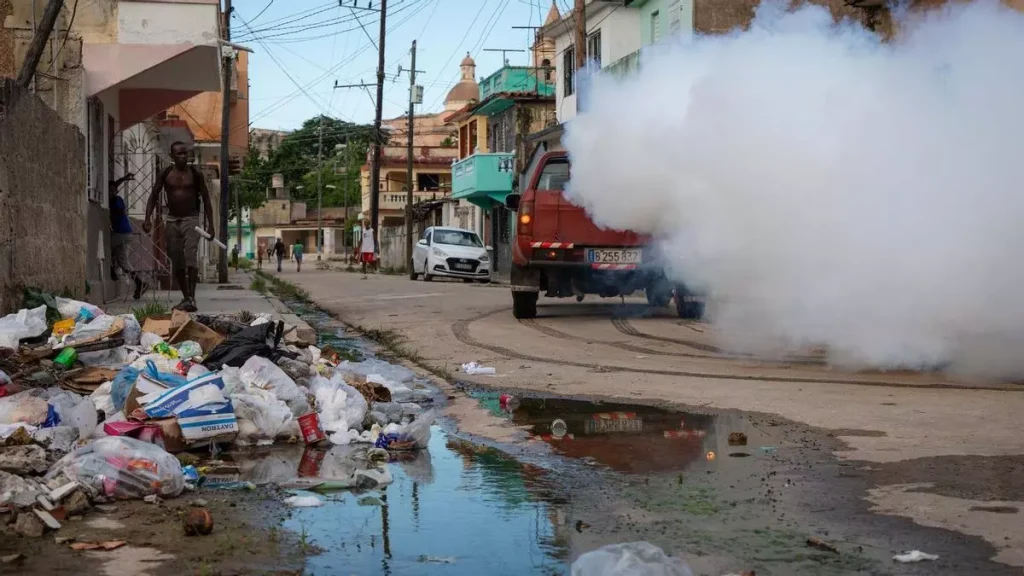
“In the Last Sugar Harvest We Finished Without Collecting 14,000 Tons of Cane”

A producer in Las Tunas calls for increased incentives to workers and reproaches the state insurance company for its poor coverage: “Always looking for justifications”


A worker in a sugarcane plantation in Madruga, Mayabeque (Cuba). / EFE/Ernesto Mastrascusa

14ymedio bigger 14ymedio, Madrid, November 19, 2025 — The machinery for starting the sugar harvest of 2025-2026 begins to be greased with the doubt about how much planning will go up, in a year that could drown in the bottomless pit that has become Cuba’s former premier industry. The season should be “a watershed” with respect to recent years, Joel Queipo Ruiz, first secretary of the Communist Party in Holguín said last September, and although he was referring to the particular province, the message is valid for all.

Falling below the maximum 147,652 tons produced in 2025 would be disastrous, but it is quite possible. The loss of labor force is one of the factors that adds to the agricultural and technological problems, says José Luis Jomarrón Cera, president of the Diego Felipe cooperative. Located in Puerto Padre, Las Tunas, the company is one of the few that are doing well, although the sugar mill to which it delivers the cane — the Antonio Guiteras — remained at 16% of what was foreseen last year, 7,200 of the 45,000 tons planned.

So far this year, he has achieved a good yield: 42 tons of cane per hectare “in very poor quality and dry soil,” he says. In the spring campaign he achieved the goal of planting the 82 hectares planned. “Now we have the land ready to start the cold campaign and plant another 73.4 hectares,” he tells Periodico26, which today interviews the producer to try to understand what is failing in the Cuban sugar industry and how it could be helped.

So far this year, he has achieved a good yield: 42 tons of cane per hectare “in very poor quality and dry soil,” he says

“Producers know how to do it, and we are aware that much can be done,” he says after considering that the sector suffers from the dilemma of whether it is the chicken or the egg. “Should more cane be sown if the industry cannot process it?” the producers ask him. “If the industry does not grind there will be no cane, and if there is no cane the industry will not grind,” he continue reading

says. This is not the first time that the provincial newspaper has asked the same question: on October 18, it published a long and harsh article in which it directly accused the industry of being “totally obsolete.” For Jomarrón Cera, however, the main stumbling block is the lack of incentives for the workers.

“In the last sugar harvest we were left without collecting 14,000 tons of cane with approximately 28 million pesos to be paid, of which eight would be for expenses and 20 for distribution, which would represent 200,000 pesos per profit for each worker,” he explains.

In his view, the campesino must be aware that he owns the production, and he must be provided with materials and inputs and motivated. “This is not new, but you have to pay them a stimulus for productivity, quality and work discipline. There is legal support for implementing payment systems that take these attributes into account, but there is a lack of materialization,” he says, without going into detail.

The producer states that, despite contradictory data, the government has adopted decisions that have improved the situation — the known 93 measures to strengthen sugar production that came into force in 2022 — and ensures that the State accompanies workers through all institutions, except one entity that is accused of the contrary: the National Insurance Company (ESEN).

“Insurance is too expensive and yet does not cover even 10 per cent of the costs that affect production. There are persistent droughts, floods with large productive and economic impacts, and the ESEN does not cover anything, it always seeks justifications and in most cases it does not show up. This is the general opinion among the labriegos [farm workers].

This figure should be around 20%, but in many companies, they are working with percentages of between 40 and 70 percent

Jomarrón Cera, despite his conviction that the state supports them, has some criticism. “There should be more attention paid to the workers, because right now they are the only asset we have available, and they can generate many of the resources that we lack. We have lost 10 times more than we would have spent on such actions, but we have not paid attention to that strength. We have only had speeches, good intentions and stereotypical phrases.”

In his case, he considers that the cooperative has achieved good results as a result of linking the campesino to the land and achieving a good balance of cane varieties. This figure should be around 20%, but in many companies, he says, are working with percentages between 40 and 70%. “Also, the cane is milled too late because of delays in the harvest.” Jomarrón Cera says that his company is also failing to earn a lot of money. “We had planned to pay, between basic advance and incentive for performance evaluation, up to 17,000 pesos per month, and it was not possible.” But he still gives a weekly incentive to his workers.

The producer, who praises the ability of other countries to make money from the sugar sector, still defends the production model. “The State must give autonomy, but control more. It has to play another part, another role,” he says. And he points out that the cooperative model is a work organization that is “perfect for a socialist model,” which is not sufficiently recognized.” We cannot continue betting on privatization,” he concludes.

Translated by Regina Anavy

____________

COLLABORATE WITH OUR WORK: The 14ymedio team is committed to practicing serious journalism that reflects Cuba’s reality in all its depth. Thank you for joining us on this long journey. We invite you to continue supporting us by becoming a member of 14ymedio now. Together we can continue transforming journalism in Cuba.

Cuba Declines To Attend Baseball’s Caribbean Cup After Qualifying for the Central Americans

The trip involves additional expenses, which would be better spent on the National Baseball Series, says the Federation

Cuba has won 15 gold medals at the Central American and Caribbean Games / Cubadebate

14ymedio bigger14ymedio, Havana, November 19, 2025 — The Cuban Baseball and Softball Federation announced on Tuesday that the country will not attend the Caribbean Cup, which will be held in the Bahamas at the beginning of December. The decision was made after the Island qualified directly for the 2026 Central American and Caribbean Games in Santo Domingo.

According to a Prensa Latina statement, Juan Reinaldo Pérez Pardo, president of the Federation, explained that attending the tournament “made no competitive or logistical sense,” since the spot that would be contested in this event for the regional games was guaranteed.

To justify his decision, the official said that the trip involves additional expenses and that it would be better to concentrate those resources on the National Baseball Series. Since it began last September, Cuba’s participation has had to be suspended due to problems with hotel capacity, lack of fuel to move players to some of the venues and even infections with the viruses that plague the island right now.

Despite the economic, energy and even health crises that the country is experiencing, they will seek to “concentrate resources and planning” to organize a tournament

Encouraged, Pérez Pardo said that, despite the economic, energy and even health crises that the country is experiencing, they will seek to “concentrate resources and planning” to organize, in the last quarter of 2026, a continue reading

tournament that could award places for the next Pan American Games, to be held in Lima, Peru, in 2027.

Last Sunday, the Executive Committee of the Pan-American Baseball Confederation (COPABE) reported that it gave out five direct tickets to the Central American and Caribbean Games. The top five teams in the Americas (except the United States) received a pass: Mexico (third place in the Americas and sixth in the world), Puerto Rico (fourth in the continent and seventh in the world), Panama (fifth in the Americas and eighth in the world), Cuba (sixth at continental level and ninth internationally) and Colombia (eighth in the continent and thirteenth in the world).

Originally, access to the regional contest was going to be split into two events at this year’s close: the America’s Baseball Cup, which would be played in Panama but was recently canceled due to sponsorship issues, and the Caribbean Baseball Cup, to be held between December 1-9, in Nassau. In the first event there were going to be five tickets in play, while in the Bahamas one ticket will be contested.

Cuba will have the opportunity in the Central American Games to return to the forefront of the discipline

With its presence assured, Cuba will have the opportunity in the Central American Games to return to the forefront of the discipline, something that it has not been able to do for 11 years since it won the title in the Veracruz in  2014, and to confirm its dominance as the greatest winner in history at the regional contest.

Since the first edition of the Central American Games, held in Mexico in 1926, Cuba has won 15 gold medals, far above the rest, where the Dominican Republic and Puerto Rico appear with three. Nevertheless, Cuba’s domination has been diluted since the beginning of this century, because of the last six editions of the Games, where it won only two, as did Puerto Rico. The remaining games were divided between Mexico and the Dominican Republic.

It could also cut through the stalemate that has been especially evident in the last two years, leading to its 12th place in the World Confederation of Baseball and Softball (WBSC) ranking by mid-2025, its worst position ever since this system was invented in 2011. In recent months Cuba managed to advance to ninth place, just 41 points above Panama, in eighth place.

In addition, poor performance has also caused Team Cuba, which in 2012 was the leader of the world ranking, to fall even at the regional level, where for two years it occupied sixth place on the American continent.

Translated by Regina Anavy

The Ministry of Fear and the Culture of Panic

The “suspect detector” has been perfected as a management tool, each official calculates how many times per day he should tweet the hashtag ordered by the boss.

The “people” is nothing more than a huge archive where everyone has an open file. / Facebook

14ymedio bigger14ymedio, Madrid, Yunior García Aguilera, November 18, 2025 — Terror has taken hold of Cuban institutions. Faced with a rumor circulating on social networks about the old and long-known corruption within the Ministry of Culture, the commissioners have come out to respond with a letter of self-vindication, accompanied by some 220 signatures. The answer may seem desperate and ridiculous if you do not understand the context in which it is written: there is an internal purge and all heads feel threatened.

Only panic can explain the clumsiness of those who wrote, signed and decided to make public the pamphlet. The hornet’s nest that can be stirred up behind this letter is far worse than any rumor about a spa in the home of a former deputy minister. Because, although the family business of Fernando Rojas is not news to all of us, there are juicier tidbits hidden in the Cuban cultural muddle. The Squirrel, in honor of his nervous name, far from protecting his henchmen is focusing on them. And there everyone has a glass ceiling.

Therefore, the most reasonable explanation for the official’s reaction may be related to the Gil case. After the accusations against the former deputy prime minister and head of Economy, every bureaucrat suspects that he or she may appear on the list (and not precisely Jeffrey Epstein’s). As they would say in the time of Stalin: “There is no one innocent, only people poorly investigated.” In Cuba it would be translated as: “No one knows the past that awaits him.”

As they would say in the time of Stalin: “There is no one innocent, only people poorly investigated.” In Cuba it would be translated as: “Nobody knows the past that awaits him”

All this paranoia and conspiracy theories have their origin in the obvious disaster that the country is experiencing. But perhaps it got even more complicated from a misunderstanding. A friend who’s a jokester but well-informed tells me that someone confirmed to Raúl Castro that the ship was sinking and it was hopeless. And Raúl, without taking his eyes off the screen of his television, replied that they would look for a scapegoat. So far, everything was normal; after all, his brother had shot his best general (and best colonel) when the trumpets of perestroika and glasnost sounded. What difference would it make to sacrifice a technocrat whom no one had heard of before the pandemic? continue reading

But here comes the possible mistake: perhaps the secretary misspelled the word expiar [atone for] and replaced it with espiar [spy]. Once you screwed up, you had to continue with the pantomime, and the former comrade of Díaz-Canel went from being merely insensitive to being a notorious spy, although we still do not know if he sent the alleged information to Agent 007 or to Mortadelo and Filemón [Spanish cartoon characters].

“The Cuban people can never be divided with messages of hate,” proclaims La Jiribilla’s text, refusing to recognize the curvature of the earth. Never before, my friends, had we been so divided! What they call “the people” is made up of the same people they call “enemies.” Their own speech betrays them. The “people” is nothing more than a huge archive where everyone has an open file.

Seeing some roofs burning and others running to hose them down, I remembered a phrase that may have escaped (or maybe not) the officer who questioned me during my last months in Cuba: “I’m itching to finish you off along with the insufferable little groups of your generation, in order to deal with the big shots we’re investigating.” It is possible that his phrase was part of the manual. But it is also likely that the officers were so saturated, propping up a building that was coming down without plans, that they did not give a fig about the manual. The truth is that, if my file was about ten pages long, that of the officials of the apparatus surely occupied several volumes. That’s why they all jump at the first accusation. They’re on edge.

The poor souls who stamp their signature on the pamphlet are old acquaintances of the guild. Some of the elderly included there are dependent on the increasingly meager aid of the “attention to personalities” department, a bureaucratic euphemism for state charity. Others expect a promised house, or hope to be prioritized if a ship arrives with a donation of paper. And there is no lack of those who retain good memories of some cultural drunkenness and feel indebted to the official who brought the bottle. But not a single one of those signatories can say, with his hand on his heart, that cultural institutions are corruption-free territory or that the country is doing well.

Not a single one of those signatories can say, with his hand on his heart, that cultural institutions are corruption-free territory or that the country is doing well.

Nor is it news that some in the world of culture play at being the mascot of power. Even the Austrian painter had several artists who put their talent at the service of horror. In our own history there is no lack of examples: Machado had his salon chroniclers; Batista his pen-pushers who called him “The Man”; and Fidel Castro his army of shaggy bards. But those who used to sing to the bearded man are today still on their knees before a bureaucrat whom they themselves recognize as a mediocre leader, even if he is disguised as someone who will help when a hurricane strikes.

In the corridors of the Ministry of Censorship five-year plans are no longer discussed, but rather daily rumors: who did not applaud enough during the last speech-poem by Alpidio Alonso; who fell asleep listening to Abel Prieto criticizing Shakira and talking nonsense about cultural colonization; who did not post a a heart emoji to the last profile photo of Amauri Pérez, Prieto’s new wardrobe consultant. The suspect detector has been perfected as a management tool, and each official calculates how many times per day he should tweet the hashtag ordered by the boss.

What is coming now is predictable. UNEAC, AHS, UPEC and all those subordinates to G2 will go through the list to collect new names. And after a while, the vast majority of those who stamp their initials will say as usual: “I didn’t know what I was signing.” And the worst is that they will be right, because many of them completely ignore what is hidden behind this pamphlet.

Translated by Regina Anavy

____________

COLLABORATE WITH OUR WORK: The 14ymedio team is committed to practicing serious journalism that reflects Cuba’s reality in all its depth. Thank you for joining us on this long journey. We invite you to continue supporting us by becoming a member of 14ymedio now. Together we can continue transforming journalism in Cuba.

Without Playing, Cuba Qualifies for the 2026 Central American and Caribbean Games

Cuba will seek again to win the regional tournament, which it has not won for 11 years.

Cuba seeks to confirm its dominance in Central America, where it is the biggest winner in history /Jit

14ymedio bigger14ymedio, Havana, November 18, 2025 — Without having to earn its place on the playing field and through the ranking, Cuba obtained its pass to compete in the Central American Games of Santo Domingo in 2026. This Sunday, the Executive Committee of the Pan American Baseball Confederation (COPABE) reported that it gave out five direct tickets to the tournament based on international rankings.

Originally, access to the regional competition was going to be split into two events at this year’s close: the American Baseball Cup, which would be played in Panama but was recently canceled due to sponsorship issues, and the Caribbean Baseball Cup, which will take place between December 1st and 9th, in Nassau and the Bahamas. Cuba will be present but without the pressure of gaining access.

However, due to the tight schedule, there will no longer be space to hold any tournament that would give those places, so they were awarded by world ranking and by using the last update of the list of the World Confederation of Baseball and Softball (WBSC) in mid-November. The top five teams in the Americas (except the US) received the pass: Mexico (third place in the Americas and sixth in the world), Puerto Rico (fourth in the continent and seventh in the world), Panama (fifth in the Americas and eighth in the world), Cuba (sixth continental and ninth international) and Colombia (eighth in the continent and thirteenth in the world).

The top five teams in the Americas (except the US) received the pass.

With ticket in hand, Cuba will try next year in the Dominican Republic to win back the gold in the Central American tournament, something that has not happened since 11 years ago, when they won continue reading

the title at the 2014 Veracruz Central American and Caribbean Games, confirming Cuba’s dominance in the discipline, where it is the greatest winner in history.

Since the first edition of the Central American Games, held in Mexico in 1926, Cuba has won 15 gold medals, far above the rest; the Dominican Republic and Puerto Rico won three. Nevertheless, Cuban domination has been diluted since the beginning of this century, because in the last six editions of the Games they won only two, as did Puerto Rico. The remaining wins were divided between Mexico and the Dominican Republic.

The team’s poor performance has been particularly evident in the last two years, which led to it being ranked 12th in the WBSC ranking by mid-2025, its worst position ever since this system was invented in 2011. However, in recent months Cuba managed to climb to ninth, just 41 points above the eighth place, Panama.

Last year was also one to be forgotten. The Cuban team generated the fewest points of the teams in the top 10 of the world ranking

Last year was also one to be forgotten. The Cuban team generated the fewest points among the teams in the top 10 of the world ranking. The team could only add 401, far from the second worst team in that year, the Dominican Republic, with 760. The classification also takes into account achievements in minor categories, where there were also no major results.

The low performance has also caused Team Cuba, which in 2012 was the leader of the world ranking, to fall even at a regional level, where for two years it has occupied sixth place on the American continent.

In 2026, in addition to the Central American and Caribbean Games, the World Baseball Classic -in which Cuba was runner-up in 2006- is scheduled, but Cuba’s participation is still up in the air. Until the end of October, there was no confirmation from the organizing committee. Germán Mesa, who was going to be at the head of Team Cuba in the canceled Copa América, declared that “for the 2026 World Classic, we still don’t know if Cuba has received permission.”

Translated by Regina Anavy

____________

COLLABORATE WITH OUR WORK: The 14ymedio team is committed to practicing serious journalism that reflects Cuba’s reality in all its depth. Thank you for joining us on this long journey. We invite you to continue supporting us by becoming a member of 14ymedio now. Together we can continue transforming journalism in Cuba.

Cuba: “Those Who Have Family Outside Survive Better; the Rest of Us Improvise”

New dollar stores feed the stomach and drive inequality in Guantánamo

For months, the city has been undergoing a silent transformation: a proliferation of shops selling exclusively in dollars. / 14ymedio

14ymedio bigger14ymedio, Guantánamo, November 17, 2025 — In Guantánamo, the line in front of the La Fragancia store forms early. Some arrive with international cards, others carry the Cuban Classic but all have something in common: they have dollars to buy anything from shampoo to soap. The arrival of hard currency stores in the city has been shaping domestic commerce and the economy, as well as dividing opinions between those who applaud their proliferation and those who renounce them.

On the outskirts of the central market this Friday, a dozen people were waiting to enter. From time to time, a customer came out with a transparent bag showing off some of those products that are barely found in Cuban pesos. “I have $8.70 left on the card and I have to manage it very well,” says a man who pauses for a moment and presses his face against the glass to observe the shelves inside.

For months, the city has been undergoing a silent transformation: a proliferation of shops selling exclusively in dollars, managed by Cimex, the powerful conglomerate under military control. So far this year, several of these air-conditioned spaces have been opened, with tidy shelves and products no longer seen in the dwindling shops in freely convertible currency (MLC): milk powder, detergent, pasta, imported chicken and, hopefully, some meat.

A few meters from one of these markets, a woman who identifies herself as a food worker summarizes the feelings of many. “This is an abuse: we earn in pesos and here everything is in dollars.” She says she has no hard currency card, does not receive remittances and depends on changing her Cuban pesos in the informal market to buy “from time to time a few cubes of soup and some sausages. If someone from outside doesn’t send it to you, you don’t eat here. But what are we going to do? I still have to come, because the MLC stores don’t even have oil sometimes.”

Miguel, an electrician, complains without hesitation. “This hurts. It hurts because it reminds you that your salary is not good enough to live in your continue reading

own country.” His gesture is one of exhaustion, not anger. He speaks with the serenity of one who has already spent all his fury. “If there are elderly people who don’t even have a peso to buy rationed bread, how will they get dollars to come to this kind of store?”

Next to him, an old lady with gnarled fingers holds a blue card that contains part of the money she receives monthly. ” My son in Tampa helps me refill it. If it weren’t for him, I wouldn’t even have coffee to drink in the morning,” she says. She recognizes that these shops “save” her but immediately lowers her voice, as if she were ashamed to admit it: “This is a blessing and an injustice at the same time.”

Foreign exchange businesses also shape the informal market and the prices of private traders selling in national currency. “The MSMEs* in my neighborhood use the prices in these stores to set the exchange rate for pesos. If a carton of eggs is six dollars here, then they automatically put it at 3,000 pesos,” she complains.

That is the tone tone among the majority of people: the resigned recognition of a “necessary evil.” They use dollar stores because there are no alternatives, but almost nobody approves of them. The one who has no hard currency looks from outside; the one who has it buys, but with a hint of guilt, aware that the whole system drives inequality.

In a nearby park, a group of young people agree that these shops are an “economic tightrope.” “Those who receive remittances have it made,” says one of them. “The rest of us are cooked.” Another adds: “Before there were difficulties, yes, but we all looked at the same shelf. Now there are full shelves for some and empty shelves for others.”

“Before there were difficulties, yes, but we all looked at the same shelf. Now there are full shelves for some and empty shelves for others”

Dollar stores in the city of Guantánamo usually have good air conditioning, soft music and uniformed employees. The Micro Caribe market, of the Pan-American chain, is one of those comfort bubbles. A few meters from the premises a middle-aged man launches his diagnosis: “This is not commerce, it’s natural selection. Those with families outside survive better; the rest of us improvise.”

In the Pastorita neighborhood, the line for the currency store has become a meeting place. People chat, exchange news and make mental calculations. “Do you think I can afford a package of chicken?” asks a mother who came with her little daughter. “Hopefully,” says another. Some carry dollars in cash but they are the few.

“I prefer to put the currency on the card because they never have coins to give change and you get back candies or soup cubes,” complains another customer. The door opens and a breath of fresh air with a clean smell emerges from inside. Card in hand, the next lucky group with hard currency enters the store.

*Translator’s note: Literally, “Micro, Small, Medium Enterprise.” The expectation is that it is also privately managed, but in Cuba this may include owners/managers who are connected to the government.

Translated by Regina Anavy

____________

COLLABORATE WITH OUR WORK: The 14ymedio team is committed to practicing serious journalism that reflects Cuba’s reality in all its depth. Thank you for joining us on this long journey. We invite you to continue supporting us by becoming a member of 14ymedio now. Together we can continue transforming journalism in Cuba.

Havana: If the Wastewater Affects the Railroad Tracks, Dig a Trench

At the 19 de Noviembre station, on Tulipán Street, the mixture of mud, grease and excrement has formed a quagmire that threatens both the nose and the metal.

As they dig, the smell becomes stronger in the midday sun. / 14ymedio

14ymedio bigger14ymedia, Havana, Natalia López Moya, November 16, 2025 — On Conill Street, in Nuevo Vedado, there is a smell that blots out the landscape. A thick stench that invades the sidewalk where every morning, almost in droves, the students of the José Miguel Pérez pre-university school pass by. For months now, the pestilence comes as a warning, a daily reminder that wastewater does not understand schedules or routines. The dark stream rises from a collapsed sewer and winds down the street.

The wastewater comes out through the gaps and edges of the metal lid, dragging bags and garbage along with it. In the course of its journey, the viscous liquid has been conquering ground until it has run into the tracks of the railway that leads to the 19 de Noviembre station on Tulipán Street. Along the way, the mixture of mud, grease and excrement has formed a muddy quagmire that threatens both the nose and the metal.

Ankle-deep in their boots in the fresh mud, they use their shovels to remove a dirt that smells like a public toilet. / 14ymedio

The image of the site this Saturday speaks for itself: a group of workers, with their boots sinking into the fresh mud, using their shovels to remove dirt that smells like a public toilet. Around them, the puddles reflect a blue sky that seems incompatible with the disaster under their feet.

One brigade embarks on what seems like an impossible mission to protect the iron tracks. They have no pumps, no new pipes or tools to rebuild the sewer system. They only have shovels, rubber boots and patience. Their “solution” — if you can call it that — is to open a trench under the rails to divert the water and prevent the tracks from ending up moving by losing solidity at the base. A kind of makeshift canal that, hopefully, will keep moisture at bay for a few days… or hours.

In a city facing a surge of viruses, this steady flow of wastewater seems like a direct provocation. / 14ymedio

As they dig, the smell becomes stronger in the midday sun. And the irony too: in a city facing a resurgence of respiratory and stomach viruses, with overcrowded hospitals and pharmacies without basic medicines, this constant flow of wastewater seems like a direct provocation.

The neighbors are no longer surprised. They have long since learned to coexist with “temporary solutions,” those patches that fill speeches and press reports but never get to the heart of the problem. The routine consists of patching, diverting, covering, filling, re-opening, recovering. As if the entire city lives under an endless cycle of cosmetic repairs that do not heal, but rather become chronic. A Havana where life passes between spills of wastewater and the slow passage of a train that, hopefully, will manage to advance without sinking into the mud.

Translated by Regina Anavy

____________

COLLABORATE WITH OUR WORK: The 14ymedio team is committed to practicing serious journalism that reflects Cuba’s reality in all its depth. Thank you for joining us on this long journey. We invite you to continue supporting us by becoming a member of 14ymedio now. Together we can continue transforming journalism in Cuba.

By Pretending, the Cuban Ended Up Not Really Knowing Who He Is

In Report Against Myself, Eliseo Alberto confesses to what many Cubans learned to do to survive: speak with two voices

In the Cuba of the report, blame is not settled: it is archived. / 14ymedio

14ymedio bigger14ymedio, Málaga, José A. Adrián Torres, November 15, 2025 — There are books that are neither written nor read: they confess. Informe contra mí mismo (Report Against Myself), by Eliseo Alberto, belongs to this rare category. It is the story of a man who writes a police report — not against the enemy, but against his own family — and discovers that the real informer is not the one who signs the paper, but the system that managed to make it possible.

The novel, written from Mexican exile and silenced in official Cuba, could be read as the Cuban version of The Lives of Others. In the German film, a Stasi agent spies on a playwright and ends up redeeming himself out of compassion. In Report against Myself, on the other hand, the narrator does not redeem himself: he undresses. He does not save anyone. He only tries to save his conscience. Surveillance does not come from above, but from within. The snitch becomes his own victim.

Both works share the same moral axis: the abolition of the individual by the totalitarian state. But Eliseo Alberto adds something that the film cannot offer: the warmth of betrayed affection. There is no cold basement or interrogation room. There is a house in Havana, a poet father, a mother who puts out a lit cigarette, a family that sings while the son — a soldier in the reserves — receives the order to spy on them. It is horror with the smell of rum and the sad light of the kerosene lamp.

Eliseo Alberto was the son of Eliseo Diego and nephew of Fina García Marruz, heirs to a poetic tradition that believed in the dignity of language. That is why his testimony hurts even more: because it shows how a regime that proclaimed itself the redeemer ended up destroying even faith in the word.

The Lives of Others ends with a redemption; Report Against Myself does not. In the Cuba of the report, the guilt is not expiated: it is archived. The author says it with bitter irony: “I am imprisoned in a file.” That bureaucratic file is the real Cuban prison: one that does not need bars, just a people educated to distrust themselves. And he adds on another page: “No one is entirely guilty of his fear.”

Eliseo Alberto was not a counter-revolutionary; he went from “red” to “pink.” He loved the Revolution as one loves a youth, and that makes it more painful. Because he understood that the great success of the process was not literacy or reform, but to perfect the art of depersonalization. The Revolution turned obedience into moral virtue, loyalty into a test of faith continue reading

and fear into a form of belonging. It taught how to give up the self without feeling that it was given up.

The Cuban speaks like a militant in the ration store, a skeptic at home and a victim with foreigners or in exile.

From that moral experiment emerged a phenomenon that still defines Cuba: the multifaceted self. It is not a psychological split, but a pragmatic identity that rotates according to the context without being dissociated: a strategy of moral and linguistic adaptation in an environment where personal coherence could be dangerous. It is the ability, or need, to change both face and language according to the context. The Cuban speaks like a militant in the ration store, a skeptic at home and a victim with foreigners or in exile. Each environment activates a code, a lexicon, a “way of thinking.” That verbal and moral plasticity, born of fear, ended up becoming — like jokes and humor — another survival strategy: learning to say the “right” thing where appropriate.

It is not hypocrisy, but adaptation. In a country where sincerity could cost at least a punishment, work or freedom, discourse was fragmented. This created a culture of interchangeable opinions, where words serve to protect, not to reveal. The result: a people who, by force of pretense, ended up not knowing at all who they are.

Report Against Myself is the autopsy of that loss. Eliseo Alberto does not accuse, he does not pontificate; he shows how the system managed to install a censor within each citizen. And although the author wrote from exile, his book is still relevant on the Island. Every time someone shuts up out of prudence or fear, disguises his thinking in order to survive or changes his vocabulary so as not to be out of tune, he himself rewrites that report.

“The Revolution has grown old, but its most enduring work is still alive: the Cuban divided between what he says, what he keeps silent -but thinks- and what he seems to say.” That depersonalization triumphed where the five-year plans and the harvest of ten million failed.

‘Report Against Myself’ is not a political allegation, but an inner atonement

Perhaps the only thing left to do, on behalf of all those who unknowingly signed it, is to write the reverse: a report in one’s own favor. A report in favor of freedom. Even so, lucidity and candor do not exonerate. Eliseo Alberto was a victim and participant at the same time, like many of the intellectuals of his generation. The problem — and here is something uncomfortable — is that many, for aesthetic, family or ideological fidelity, kept silent too long. Some did so out of fear; others, believing they could still save the project from within. But when the cultural and moral repression was already evident, staying was also a form of complicity, even if it was passive or sentimental.

This moral ambiguity should be recognized: not to judge it harshly, but to remember that the sensitivity and intelligence with which a pain of conscience is expressed in writing are not enough when a long past silence perpetuates the damage. Eliseo Alberto faced the monster, yes, but he did it late. And he paid for it with a chronic remorse, not with the personal and committed political action that would have been more redemptive. Report Against Myself is not a political allegation, but an inner atonement.

His friend Héctor Abad Faciolince, from Colombia, expressed it with the clarity of someone who did not share this servitude: he admired his talent, but could not forgive him for taking so long to break the “spell.” That remark, more fraternal than cruel, sums up the moral dilemma of a generation that believed that the word — poetry, essay, criticism from within — could redeem a Revolution that had already lost its soul, given itself to the same “devil” … that it itself had created.

Translated by Regina Anavy

____________

COLLABORATE WITH OUR WORK: The 14ymedio team is committed to practicing serious journalism that reflects Cuba’s reality in all its depth. Thank you for joining us on this long journey. We invite you to continue supporting us by becoming a member of 14ymedio now. Together we can continue transforming journalism in Cuba.

Mexico Sends a Ship With 70,000 Barrels of Diesel to Cuba

The ‘Ocean Mariner’ sailed last Wednesday from Coatzacoalcos, Veracruz, heading for Havana, where, according to the Marine Traffic website, it will arrive this Monday.

The Ocean Mariner sailed last Wednesday from Coatzacoalcos, Veracruz, heading for Havana, where, according to the Marine Traffic website, it will arrive this Monday.

14ymedio bigger14ymedio, Mexico City, Sergio Castro Bibriesca, November 16, 2025 — This week oil shipments from Mexico to Cuba were reactivated. According to the weekly ship schedule of the Port of Coatzacoalcos, in Veracruz, the tanker Ocean Mariner loaded 10,392 tons of diesel and fuel oil and sailed last Wednesday to Havana, where, according to the Marine Traffic website, it will arrive this Monday.

The shipment would represent about 70 million barrels, according to Ramses Pech, advisor of energy and economy, who points out to 14ymedio that the cargo, about 11 million liters, could represent a cost of between 12 and 18 million dollars.

Whether it’s diesel or fuel oil, “Cuba burns much of its fossil fuel to generate electricity,” he says. The island “has great problems because of that. We have seen it the last few times with the national power outages, partly due to the fact that they have received less fuel from Venezuela. That is why Mexico started to send crude oil as well,” he adds.

“Cuba burns much of its fossil fuel to generate electricity”

The expert indicates that Mexico “must be sending Cuba fuel with a low amount of sulphur, as well as fuel oil with less than 2%, and this can help generate the power plants. It may be a conversion from diesel to fuel oil. There is not much difference.” He says that “they may even be residuals that you can also burn, or a low-quality diesel. After all, they are fuels that you can use and adapt to how you’re going to burn them.” continue reading

According to the local media Notiver, which reported from early November the presence of the tanker, the Ocean Mariner arrived on October 27 but did not enter port and stayed until October 31 in the anchorage area. Although it was reported that its departure was officially on November 12, “it stayed facing the port” and left on the 14th of November.

The Ocean Mariner, flying the flag of Liberia, “a small ship,” according to Ramses Pech, has sailed from Mexican ports to Cuba on at least four occasions since May 23, according to satellite tracking consulted by the organization Mexicans Against Corruption and Impunity.

The president of Mexico, Claudia Sheinbaum, has justified the diesel exports to Cuba, saying they are due to an alleged “surplus”

The president of Mexico, Claudia Sheinbaum, has justified the diesel exports to Cuba, saying they are due to an alleged “surplus” in the country. However, experts such as Jorge Piñón, a researcher at the University of Texas at Austin, have pointed out that Mexico can send the hydrocarbon to the island because it imports diesel and gasoline from the US, to the point of being its largest buyer of refined fuels, according to official data published by the U.S. Energy Information Administration.

At her daily press conferenceon October 16, the successor of former president Andrés Manuel López Obrador said that there was an elevated production of this oil derivative in the country to justify shipments to the island.

In this respect, Pech warns that “it is important that Mexico clarify how these alleged sales are made — something that Pemex has concealed and justified as a ‘private matter’– because, shortly, we will have the revision of the T-MEC (Trade Agreement between Mexico, the US and Canada) on the energy side, and that could affect Mexico in terms of the new terms and conditions that may come, which could limit shipments” to Cuba.

Translated by Regina Anavy

____________

COLLABORATE WITH OUR WORK: The 14ymedio team is committed to practicing serious journalism that reflects Cuba’s reality in all its depth. Thank you for joining us on this long journey. We invite you to continue supporting us by becoming a member of 14ymedio now. Together we can continue transforming journalism in Cuba.

The Havana Marathon, Another Victim of the Viruses That Plague Cuba

Laura, Reynier and other fans who are convalescing, even those with symptoms, have chosen to run the middle distance of 10 kilometers since the 5000 meter [5k] race is only for foreigners

This year only 200 foreign runners have registered, fewer than the 300 of the 2024 edition. / 14ymedio

14ymedio bigger14ymedio, Havana, Darío Hernández, November 15, 2025 — Many runners will not participate in the 39th edition of the Havana Marathon (Marabana) due to the consequences of dengue and chikungunya, viruses that according to official figures have affected 30% of the Cuban population. Cancelations, changes of distance and disorganization marked the first day of number pick-up at the hotel Habana Libre for registered athletes.

“I’m here because I want to see if I can change the distance. I had planned to run the marathon, the 42 kilometers, but this year I won’t be able to.” Laura has been running for 10 years, and it’s been nine since she missed an edition of the most popular race in Cuba. The first time, she remembers, she ran the 5 kilometer competition and then it increased, first to 10 kilometers and then to the half marathon (21 kilometers), until five years ago when she managed to run the full marathon.

“This time it will be impossible for me. I got the virus a month ago. I spent two weeks without going out, and only now have I been able to stretch my legs a little. The pains are still there, in the wrists, ankles, the soles of my feet. I recently ran 5 kilometers as a test and spent the next three days unable to walk. And just the next day, on the Round Table program, Dr. Durán said that the pains can last from three months to a year.” Laura prefers not to take risks and to rest a bit, so she wants to cut the distance in half. “If they don’t change my participation to 21 kilometers, I won’t run this year.”

Reyner, on the other hand, says that the virus hit him very hard, and he constantly relapses. “I’m still convalescing, but this would be my first race, and I don’t want to miss it. I was going to run the 10 kilometers, and I want to lower it to 5, but it’s difficult because this distance is only for foreigners. It’s the most popular, and surely more people would come and spice it up. Cubans can only run 10 kilometers. No one runs a 10; that takes preparation. That’s why the Marabana is becoming less popular.” continue reading

About 2,800 runners will participate this year. / 14ymedio

According to data provided to the official press by Carlos Gatorno, director of the Marabana Maracuba National Running and Walking Commission, this year about 2,800 runners will participate, more than the 2,400 from last year, but only 200 will be foreigners, fewer than the 300 of the 2024 edition. They can opt for any distance and the possibility of running only 5 kilometers. To do this, they must pay $150 for registration.

Daniel is Mexican and has a two-year employment contract in Cuba. He says that the cost seems excessive and that he will wait until the day of the race, because he has been told that there are almost always extra spots at the last minute. “This year it should be much easier to buy a number. I have a friend who got in that way. An acquaintance gave him his permit to get a number, because he is in bed with the virus.”

However, on the morning of Thursday, the first day to pick up the number and the runner’s bag, which includes a T-shirt, a package of detergent and wet towels, many complained that the organizers did not let anyone else pick up the numbers of those who were sick. They had to go in person. “These people are inflexible. With the number of people convalescing how can you be so strict? They have to limp in line to enroll,” says Luis, who had to come personally on crutches to pick up his number — despite not being able to participate because he is sick — in order to give it to his brother.

“My brother came the day before to ask and they told him no, that if he was sick he could not run, and that they could not be giving out T-shirts like this, because those were used for prizes in other competitions. My brother was in shock, because nothing they told him made sense. They are very intolerant about giving the T-shirt and number to someone else.”

Foreigners must pay $150 for registration. / 14ymedio

The hours passed and the line did not advance. Above, in the registration area, members of the Armed Forces, the Ministry of the Interior and other official institutions had priority when receiving their numbers and carried the T-shirts for their members in suitcases, even though it was reported that the time for these institutions was Wednesday, the day before.

This Sunday, November 16, when the Marabana begins on Independence Avenue, hundreds of registered Cubans will not participate in the race, due to the aftermath of the viruses that have been plaguing the island for months, and for which there is still no response.

Translated by Regina Anavy

____________

COLLABORATE WITH OUR WORK: The 14ymedio team is committed to practicing serious journalism that reflects Cuba’s reality in all its depth. Thank you for joining us on this long journey. We invite you to continue supporting us by becoming a member of 14ymedio now. Together we can continue transforming journalism in Cuba.

Among Fries and Pizzas, the Kiosks Near the Hospital of Matanzas Sell All Kinds of Drugs

“Except for the blood for surgery, I had to buy everything else out here among the bread and jam”

“You can find aspirin made in Cuba and antidepressants from the United States. / 14ymedio

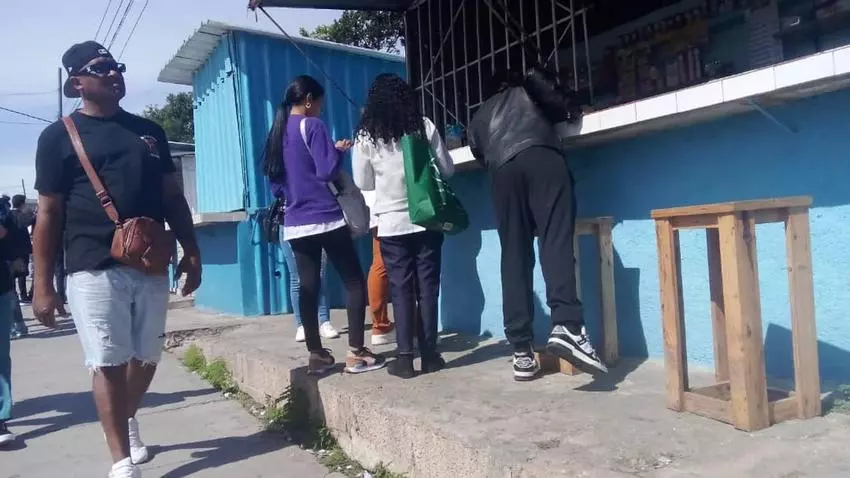
14ymedio bigger14ymedio, Matanzas, Julio César Contreras, November 15, 2025 — As soon as the sun warms the pavement in front of the Faustino Pérez hospital in Matanzas, the sidewalk begins to fill with medical students, patients’ families and curious people who roam among the blue and red kiosks lined up on the street. The scene is familiar: a small hive where the smell of freshly made pizzas mixes with the noise of the mototaxis waiting for customers and the conversations of those looking for something to eat… or something much more urgent.

Sandra is one of them. After hours of trying to get from the hospital pharmacy tablets of paracetamol prescribed for her joint discomfort, she came out empty-handed. This Thursday she can be seen among the kiosks, adjusting her shoulder bag, breathing with exhaustion. “They are only giving some of the medicines to the hospitalized patients,” she says without imagining that, next to a juice and fries counter, she would find the solution that the public health system could not give her.

In one of these stalls, barely noticeable behind the poster for smoothies and pizzas, an employee holds a large bag where refreshments coexist with bottles of pills, blister packs and several packets of syringes. “She has vitamins, antibiotics and even needles,” says Sandra, while showing the 500 mg pack of paracetamol that she just bought for 900 pesos. “If I don’t do it like this, the pain kills me.” continue reading

“That’s why the government pharmacies are empty, because there is no one to control this illegal sale.” / 14ymedio

Sandra also needs Captopril for her mother, who has been unable to purchase it at the state pharmacy for more than six months. “I don’t have enough money to pay the 350 pesos that it costs there; otherwise I would have bought it.”

“Along with a malt I bought the suture thread for my wife’s operation,” says Leonardo, a butcher who knows the informal circuit well. “The surgeon himself told me where to go and who I had to see.” His words do not surprise anyone: many in that area have gone through the same thing. “Except for the blood for surgery, I had to buy everything else out here. Among the bread and jam, if you have the money anything appears.”

El costo total de los insumos para la cirugía de su esposa rondó los 5.000 pesos: seis pares de guantes desechables –“a 250 pesos cada uno, vendidos por un tipo que hace pan con minuta de pescado”–, más antibióticos, más soluciones salinas, más suturas. “El colmo”, cuenta, “después de ser operada, mi esposa tenía fiebre. Como en la sala no había un termómetro, vine directo para acá y compré uno en 2.300 pesos”.

The total cost of supplies for his wife’s surgery was around 5,000 pesos: six pairs of disposable gloves — “at 250 pesos each, sold by a guy who makes bread with fish fillets” — plus antibiotics, more saline solutions, more sutures. “Then,” he says, “after being operated on, my wife had a fever. Since there was no thermometer in the room, I came straight here and bought one for 2,300 pesos.”

“As there was no thermometer in the room, I came straight here and bought one for 2,300 pesos.” / 14ymedio

Laura, a third-year medical student, takes advantage of a break between patients to get her father’s urgently needed Amoxicillin. The young woman, in her white coat, converses with other students and carries a folded bill between her fingers. “I’m going to wait for some people to leave. I know who sells it. I always check the expiration date before buying,” she says.

She herself explains what sells in those kiosks: “You can find aspirins made in Cuba and antidepressants from the United States.” Nothing appears on the price boards: neither Loratadina, nor Cefalexina, nor Rosefin, but everyone knows that they are available… at the price of the day. “The medicines go up as much or more than the food. Many come to eat a pizza and end up buying pills. It’s an option.”

As Laura discreetly walks away, more students arrive, more family members wait, more salesmen arrange boxes or discreetly check inside their backpacks. Between pizzas, soft drinks and endless lines, there is everything here that the state pharmacies cannot offer.

Translated by Regina Anavy

____________

COLLABORATE WITH OUR WORK: The 14ymedio team is committed to practicing serious journalism that reflects Cuba’s reality in all its depth. Thank you for joining us on this long journey. We invite you to continue supporting us by becoming a member of 14ymedio now. Together we can continue transforming journalism in Cuba.

The Trial of Cuba’s Former Economy Minister Alejandro Gil Is Extended One Day Longer Than Expected

The TPS president who is judging the former official made a public argument in favor of the death penalty two years ago.

The People’s Civil and Family Court of Marianao, in Havana, where the espionage trial against Alejandro Gil took place. / 14ymedio

14ymedio bigger14ymedio, Madrid, November 13, 2025 — The trial in which former Economy Minister and Deputy Prime Minister Alejandro Gil Fernández was accused of espionage concluded this Thursday, one day longer than expected, according to sources close to the proceedings who spoke to EFE. The Supreme People’s Court (TSP) did not indicate whether the case had been submitted for judgment.

A source connected to the case, who requested anonymity, told 14ymedio that the secrecy surrounding the matter is “total.” Inside the courtroom where the trial was being held, at the People’s Civil and Family Court of Marianao, in Havana, the only family member allowed to attend was the former official’s son, Alejandro Gil González, from whom “no statement of any kind” is expected, the same source said.

In the vicinity of the courthouse, both this Thursday and yesterday, the activity that had been present on Tuesday, the first day of the trial, announced less than 24 hours in advance on the midday news, was nowhere to be seen. Only three State Security agents, one of them on a motorcycle, were monitoring the area, a stark contrast to the operation two days prior, when streets and businesses were closed. No international press has been observed either this Wednesday or today, unlike on Tuesday.

The former minister’s sister, María Victoria Gil, a lawyer by training, is puzzled that he is being tried in that court in Marianao.

The former minister’s sister, María Victoria [‘Vicky’] Gil, a former Cuban television presenter and lawyer by training, is puzzled that he is being tried in that court in Marianao and not at the main TPS [Tribunal Supremo Popular] headquarters, the agency handling his case, in Old Havana. She has no explanation for it. “I’m at a loss for words,” she told this newspaper.

This Wednesday, in an interview with Cuban influencer Darwin Santana, who resides in Canada, Vicky Gil outlined three possible scenarios. The first, she said, is that “the prosecution will finalize its provisional conclusions and maintain its request for a life sentence,” even though the prosecution’s specific request is for continue reading

30 years. The second is that the prosecution will reach “more moderate conclusions, resulting in a lesser sentence,” and the third is that “the prosecution will withdraw the charges,” something she confessed “is like asking God for the impossible.” For the former minister’s sister, in any case, “it is a sentence that has already been handed down.”

A fourth scenario, not mentioned by María Victoria Gil, is that the Court, with Rubén Remigio Ferro at the helm, raises the prosecution’s request and hands down the maximum penalty, one of the punishments foreseen for the crime of espionage and in force in the Penal Code although it has not been applied on the Island since 2003. The TPS president himself, two years ago, made a public argument in favor of the death penalty, which he defined as the “crown jewel” of the Military Penal Code Law.

At that time, Ferro noted that a “death penalty” had not been applied for twenty years, since “those events of the boat hijacking and the whole situation that ensued,” referring to the 2003 theft of the Regla Ferry vessel that traveled between Regla and Old Havana with the goal of reaching the United States. The boat quickly ran out of fuel, and ten people were arrested and prosecuted. Among them, nine days later, after a summary trial, Lorenzo Copello, Bárbaro Sevilla, and Jorge Martínez were executed by firing squad.

“There is no official statement on the matter, but all this time that has passed is a kind of undeclared moratorium. That doesn’t mean it doesn’t exist.”

“There is no official statement on the matter, but all this time that has passed is a kind of undeclared moratorium. That doesn’t mean it doesn’t exist,” said the TPS president regarding the maximum penalty. He justified it by saying, “We have to have it there as a defense for our society, for our State, for our Revolution, against the very serious threats we constantly face.”

The government has remained silent on this potential outcome of the trial against Gil Fernández, who faces another trial on the remaining charges—a dozen in total, including embezzlement, tax evasion, and influence peddling—in which some twenty other people, including high-ranking regime officials, will also be prosecuted. These days, it has limited itself to disseminating, through various media outlets, excerpts from the interview conducted by the newspaper Granma with Arnel Medina Cuenca , a “Doctor of Juridical Sciences,” who explained why the trial is being held behind closed doors.

“That decision rests exclusively with the Court, which is the one analyzing the specific case and it has all the evidence from both the prosecution and the defense,” the specialist told the Communist Party newspaper. “The Cuban criminal process, regulated by Law 143, establishes in Article 477 that the oral trial is public, unless reasons of national security, morality, public order, or the respect due to the victim or their family advise holding it behind closed doors.” The fact that the crime being tried is espionage—”extremely serious, because it directly threatens national security,” Medina Cuenca said—is the TPS’s excuse for not holding a public hearing.

The decision denied the request for an open trial made by the former minister’s daughter, Laura María Gil, in social media posts after the Court’s decision was announced on television on Monday afternoon.

Alejandro Gil Fernández is being defended by lawyer Abel Solá López, who has extensive experience in trials related to state security. One such case was the 2017 trial that sentenced Alina López Miyares and her husband, Félix Martín Milanés Fajardo, to 13 and 17 years in prison, respectively, for espionage. That trial, held on October 2nd in the Marianao Military Court’s Justice Room, was also closed to the public and “without access for the defendants’ families.”

Translated by Regina Anavy

____________

COLLABORATE WITH OUR WORK: The 14ymedio team is committed to practicing serious journalism that reflects Cuba’s reality in all its depth. Thank you for joining us on this long journey. We invite you to continue supporting us by becoming a member of 14ymedio now. Together we can continue transforming journalism in Cuba.


At Least 30% of the Cuban Population Has Had Dengue or Chikungunya

Health authorities deny that the current epidemic is due to a new disease.

They indicated that all patients with symptoms should be hospitalized, but that it is not necessary to be in a healthcare facility. / 14ymedio

14ymedio bigger14ymedio, Havana, November 13, 2025 — On the Cubadebate page, after the arrival of Hurricane Melissa, the hashtag #FuerzaCuba, which gave encouragement to more than 3.5 million people affected by the rains in the east of the island, still reigns. The slogan could also be applied to the victims of the epidemic that has spread throughout the country and for which, after several weeks, the authorities have decided to give explanations.

To be blunt, at least 30% of the population has been infected at some time, calculates Public Health. The national director of Epidemiology, Francisco Durán García, brought little news regarding the meeting this Tuesday of political authorities and science experts, although he did want to make clear that it is not a new disease or influenza, but dengue and chikungunya.

Chikungunya was emphasized in the television program this Monday, leaving out dengue, which is better known by the population. Its expansion is located – as was said the previous day – in 98% of the north and center of the island, mainly in Matanzas. María Guadalupe Guzmán Tirado, director of the Centro de Investigación, Diagnóstico y Referencia del Instituto Pedro Kourí (IPK), explained that citizens feel more fear at this moment because chikungunya is a relatively new virus in Cuba, transmitted by the mosquito Aedes aegypti, the same vector for dengue and Zika.

The symptoms can take up to three months to go away and joint pain is severe

The doctor gave extensive explanations about this disease that keeps the island in check, since its symptoms can take up to three months to disappear and the joint pain is severe. Guzmán wanted to settle a very lively controversy about the need to carry out diagnostic tests to determine the suffering and the inability of Cuba to do so due to lack of means. “It is not necessary to perform a laboratory test for every patient with symptoms, as the clinical picture is very typical. Diagnosis by epidemiological link is continue reading

sufficient for public health notification and action, reserving virological confirmation for specific situations such as the detection of initial circulation, serious or complicated cases,” she said.

The protocols of the Pan American Health Organization (PAHO) determine, in effect, that laboratory diagnosis is indicated only to identify the beginning of a virus or in specific cases, but not when there is a community outbreak already, as is the case in Cuba, where up to date there are 21,681 cases, according to official sources. This represents a rate of 223.5 cases per 100,000. To get an idea of the dimension, in one of the most recent regional outbreaks (2022), the incidence on the continent was 27.2 per 100,000 inhabitants, with Belize at the top (more than 600), followed by Brazil with 124.

The disease has been rooted in the continent for decades, with a stage between 2023 and 2016 of great virulence, but in Cuba its presence was much more controlled. “It has now reached us, and it may have entered through travelers from places where transmission is maintained,” she said. What has happened to make the situation out of control? One of the things clearly pointed out by the doctor is the disastrous management of garbage. The proliferation of water tanks in homes — which is a response to the poor provision of water service — is coupled with “inadequate management of solid waste and deficiencies in sanitation.”

This accusation was accompanied by the testimony of Madelaine Rivera Sánchez, head of the National Directorate for Surveillance and Vector Control, who cushioned the impact by accusing the “US economic blockade” of the difficulty in acquiring fumigation equipment and repair parts.

She argued that there may be “delay” or “low availability of some medicines” but there is care and beds

“Fumigation teams should soon reach all the provinces,” she said, before asking residents to open their doors to the brigades and insisting that there are only 45 minutes of emissions. “We are back in the same circle if we do not act together,” she said, urging people to keep their homes clean.

Doctor Yagen María Pomares Pérez, Director of Primary Health Care at the Ministry of Public Health, indicated that all patients who have symptoms should be hospitalized, but pointed out that it is not necessary to be in a health facility. “When I speak of hospitalization, I mean that admission may be at home or in primary or secondary institutions.”

However, she defended the health system and argued that there may be “delay” or “low availability of some medicines,” but there is care and beds. “We must assume the same response dynamics that we applied during Covid-19. Chikungunya can lead to death and must be treated with due seriousness,” the doctor warned. “The key from the first symptoms is to maintain hydration and rest, and go to the doctor without self-medicating.”

In addition, Doctor Daniel González Rubio, infectologist of the Instituto de enfermedades tropicales Pedro Kourí, described the symptoms of the disease, especially joint pain, and its stages. After incubation of one week, the acute stage begins, with intense pains and fevers of 40 degrees or more. “This arthritis can make the person an invalid who has difficulty in performing daily tasks,” explained the specialist.

This is followed by the subacute phase, up to three months, with persistent pain, stiffness and possible relapses. In addition, there is a group of patients who evolve to a chronic phase, and their symptoms can last for years.

Durán closed the program saying that clinical trials are being organized and approved to test the drug Jusvinza in chronic cases of chikungunya arthritis. “It’s not that we’re slow, it’s that there’s a process,” he said. In the meantime, “we all need to be actively involved in vector removal and environment management.”

Translated by Regina Anavy

____________

COLLABORATE WITH OUR WORK: The 14ymedio team is committed to practicing serious journalism that reflects Cuba’s reality in all its depth. Thank you for joining us on this long journey. We invite you to continue supporting us by becoming a member of 14ymedio now. Together we can continue transforming journalism in Cuba.

US Accuses a Pilot Who Participated in the Shoot-Down of Brothers to the Rescue of Immigration Fraud

Luis Raúl González-Pardo faces charges that could cost him up to 15 years in federal prison

González-Pardo, in the center, with a group of pilots from the Cuban Armed Forces / Martí Noticias

14ymedio bigger14ymedio (via EFE), Miami, November 13, 2025 — Authorities in Florida accused Cuban pilot Luis Raúl González-Pardo of immigration fraud for lying about his past in the Cuban Air Force after arriving in the US under Humanitarian Parole in 2024, despite being implicated in the deaths of four Americans.

The Attorney General’s Office in the South Florida District announced that González-Pardo, 64, faces charges of fraud and misuse of visas, permits and other documents, and of giving false statements to a federal agency, which could get him up to 15 years in federal prison.

“This man’s past as a longstanding military pilot for the evil Castro regime, which has brought unspeakable suffering to the Cuban people, should have been front and center in his immigration file,” Attorney General Pam Bondi said in a statement.

“This man’s past as a longstanding military pilot for the evil Castro regime, which has brought unspeakable suffering to the Cuban people, should have been front and center in his immigration file”

The pilot, who arrived in April 2024 under the humanitarian parole program of former President Joe Biden (2021-2025), submitted “false declarations” about his membership in the Cuban Air Force from 1980-2009 on his I-485 form, in order to adjust his immigration status, according to the Department of Justice.

The complaint alleges that “he falsely stated that he had never received any military or weapons training, never participated in a group of any kind that used weapons or threatened to use weapons, and never served in a military or police unit, when in fact he received such training and served in the Cuban Army.” continue reading

Authorities accompanied the indictment with a photo of the suspect while working in the Cuban Air Force.

La polémica estalló en octubre de 2024, cuando legisladores republicanos de Florida, como el entonces senador Marco Rubio, ahora secretario de Estado, enviaron una carta a la Administración de Biden para denunciar que la llegada de González-Pardo implicaba admitir a “individuos ligados al régimen ilegítimo de Cuba”.

The controversy erupted in October 2024, when Florida Senator Marco Rubio, now Secretary of State, sent a letter to the Biden Administration denouncing that the arrival of González-Pardo “implied admitting individuals linked to the illegitimate regime of Cuba.”

Authorities accompanied the indictment with a photo of the suspect while working in the Cuban Air Force

Lawmakers reported that the pilot is “notoriously linked” to a 1996 incident in which Cuban MiG-29 jets shot down two planes of the humanitarian organization Brothers to the Rescue, resulting in the death of four “innocent Cuban-American pilots.”

The current US president, Donald Trump, revoked the Humanitarian Parole program, a temporary legal protection that the Biden government granted to some 532,000 Cubans, Nicaraguans, Venezuelans and Haitians.

“This Department of Justice will vigorously pursue anyone who lies about their past and takes advantage of the US immigration system,” Bondi warned.

Translated by Regina Anavy
____________

COLLABORATE WITH OUR WORK: The 14ymedio team is committed to practicing serious journalism that reflects Cuba’s reality in all its depth. Thank you for joining us on this long journey. We invite you to continue supporting us by becoming a member of 14ymedio now. Together we can continue transforming journalism in Cuba.
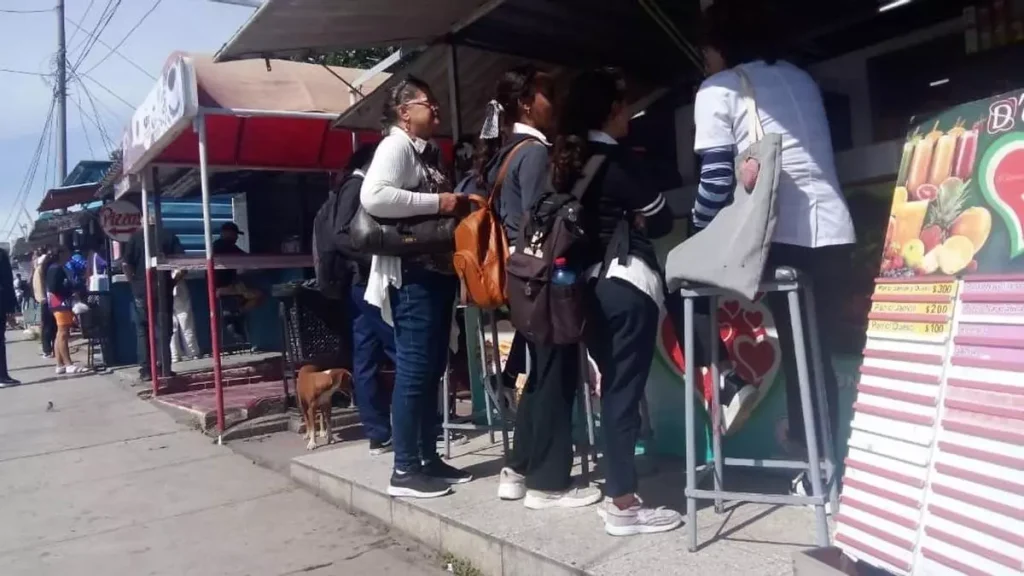
“Sometimes I Think This Pain Will Last Forever”

In Matanzas, patients with symptoms of chikungunya do not find relief in the line at the hospital

Patients despair for the lack of relief from pain that they feel will not go away. / 14ymedio

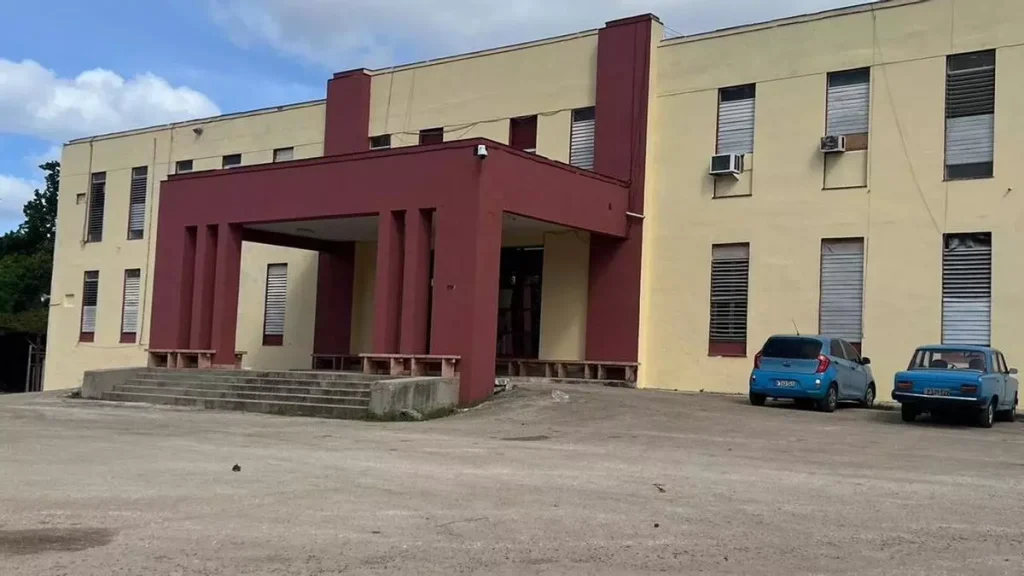
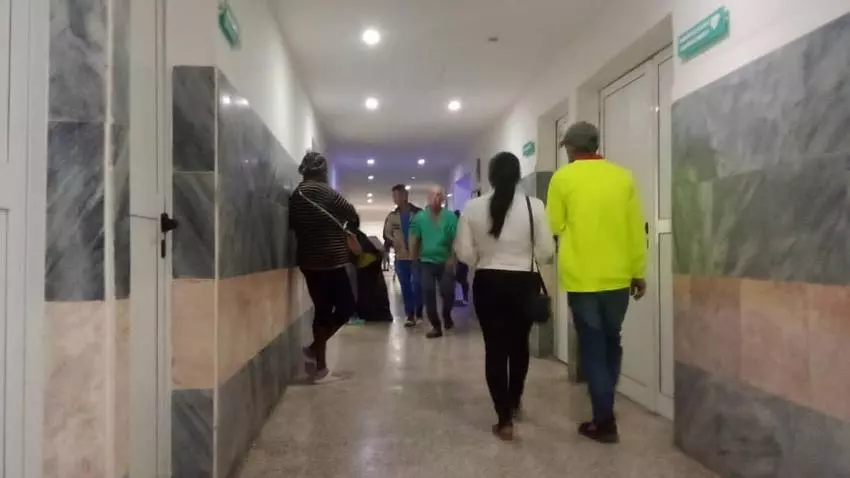
14ymedio bigger14ymedio, Julio César Contreras, Mantanzas,November 13, 2025 — The corridor at the Faustino Perez hospital seems to have no end. The white light is reflected in the worn-out tiles, and the air is still, saturated with disinfectant and resignation. It is 8:00 am, and the line in front of the post-arbovirosis clinic now stretches to the end of the corridor. Among those who wait, a woman, walking slowly with bandaged knees and tired eyes, asks if this is where they attend the patients with chikungunya. Her name is Yolanda, and she is 59 years old. For two months she has barely managed to walk.

“Since I got the virus, I haven’t been able to leave my house,” she says, leaning against the wall. “The swelling and pain in my knees are terrible. No one has explained to me if there is a cure or if I will stay like this forever.” Other patients hear her and nod in silence. They all share the same evil: the long aftermath of a fever that went away but left a broken body.

Yolanda says that in the La Playa polyclinic, the doctor could only refer her to the hospital: “She didn’t have a prescription for me.” In her neighborhood, Facebook groups and Google searches have become the new consultation rooms. “You learn on your own, because if you wait for them to guide you, you die of pain,” she complains. After a while, she finds a seat on a metal bench. Sitting down with difficulty, she takes a deep breath and watches as the other patients move slowly, dragging their feet.

In front of the intake window, the scene repeats itself: faces of fatigue, moans of pain and an employee who notes down names on an endless list. The health system tries to maintain the protocol, but the shortcomings are visible. Doctors repeat continue reading

the same recommendations over and over again –rest, painkillers, compresses — while patients look for answers.

The line in front of the post-arboviral consultation room now stretches to the end of the corridor. / 14ymedio

Tania, with swollen hands and red fingers, has been like this for five weeks. “I took a taxi from Limonar to get here, only to be told to take paracetamol,” she says. She was treated by three doctors, but none seemed to look beyond her file. “They talked to each other about their stuff, and in the end asked me if I had any risk factors. They don’t even know what virus I had. I spent eight days in bed without being able to get up. And now I arrive and leave the same way: no diagnosis and no relief.”

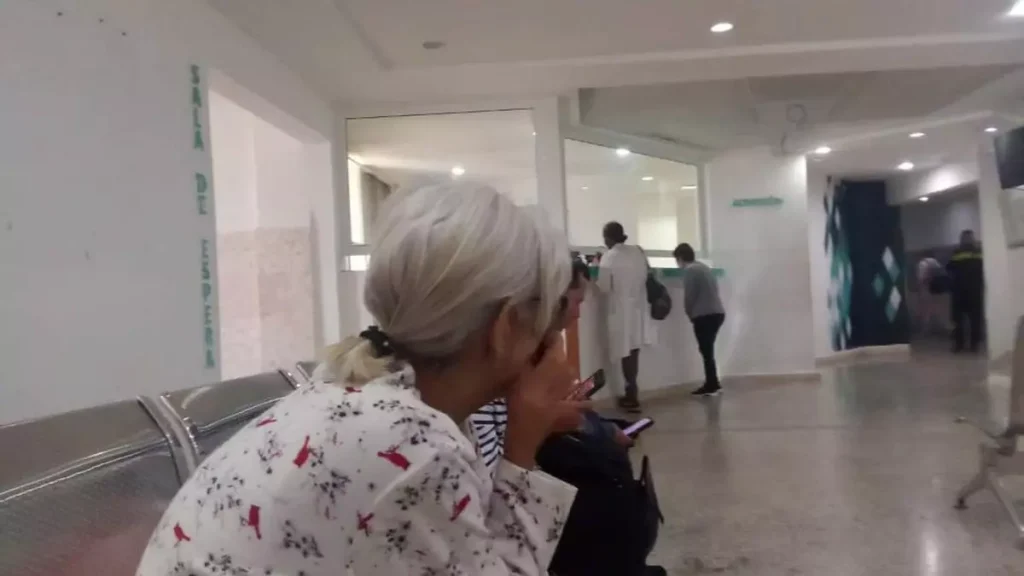
In the waiting room, an elderly woman wears a white robe printed with flowers and holds a phone in her hand. “Sometimes I think this is a test of endurance,” she whispers. She is accompanied by a young man who barely looks up. “Here the only thing that works without interruption are the lines,” she adds with an attempt at humor.

Sergio, a 52-year-old carpenter, managed to get a turn by calling the registration department directly. “Since the end of August I haven’t been able to pick up a hammer,” says this worker who makes baby furniture and cribs, rubbing his swollen hands. “I have spent more than 20,000 pesos on medicines, and neither paracetamol nor prednisone has worked for me.” The man speaks without anger, but with a resigned sadness. “I tried ice, exercises, massages… The only thing left is acupuncture. I don’t know if it will work, but I don’t have another option.” The silence of the corridor is interrupted by moans. Someone moves around in a wheelchair, another calls for help to find the consultation room.

The silence of the corridor is interrupted by moans. Someone moves around in a wheelchair, another calls for help to find the consultation room.

The most heard words are “rest” and “patience.” However, in the gestures of the sick there is more fatigue than hope. Arbovirosis has gone from being a seasonal news item to becoming a chronic disease of Cuban life. Not just for the viruses but for what comes with them: the after-effects and limitations to resume normal life.

Yolanda gets up when she hears her name. “At least today they will see me,” she says, although she knows that there will not be a treatment other than the one she already knows. Before entering, she says goodbye to those who are still waiting. “Beware of the mosquito,” she recommends with a faint smile.

When she leaves, more than a half-hour later, the line remains, with the same faces next to others who have arrived with similar symptoms. Only the time has changed. “I was told that I have to continue taking the same medications,” she says. She walks slowly towards the exit, clinging to the wall. “Sometimes I think this pain will last forever.”

Outside the hospital, the traffic noise reminds her that the day continues. “I’m going to take a taxi and go back home. I’ve done what I had to do.” She adjusts her backpack, takes a deep breath and crosses the street with slow and clumsy steps.

Translated by GH and Regina Anavy

____________

COLLABORATE WITH OUR WORK: The 14ymedio team is committed to practicing serious journalism that reflects Cuba’s reality in all its depth. Thank you for joining us on this long journey. We invite you to continue supporting us by becoming a member of 14ymedio now. Together we can continue transforming journalism in Cuba.
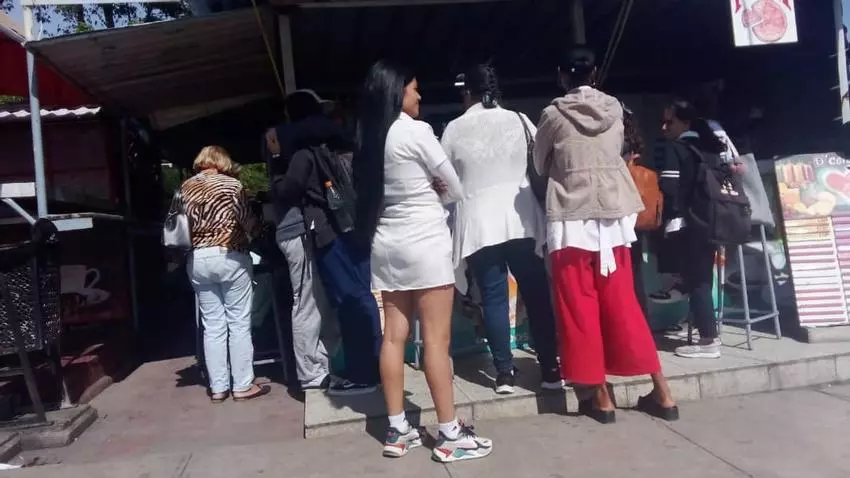
Cuba Acknowledges 60% More Serious Cases of Dengue to the Pan American Health Organization (PAHO) and Promises To Handle It ‘Like We Did With COVID-19’

Cuban authorities report that the number of infections is beginning to be controlled, but in just three weeks the number of cases has soared

Fumigation in a street in Matanzas. / Girón

14ymedio bigger14ymedio, Madrid, November 12, 2025 — Cuban President Miguel Díaz-Canel Bermúdez spoke words that were as feared as they were expected on Tuesday. “We are going to handle this epidemic like we did with Covid-19,” he said at the meeting of health experts, who analyzed the situation created since viruses associated with arbovirosis began to spread on the island. The population has assumed for weeks that the spread is rampant and expected the authorities to do the same, although they fear that the mention of coronavirus will cause more worry.

The authorities spoke yesterday of an “unspecific febrile syndrome,” as it is known in medicine: a condition characterized by the presence of high fever and commonly associated with a wide variety of diseases such as dengue, zika, chikungunya and many others. According to the data offered by Public Health at the meeting, it is the second consecutive week that the number of infections has decreased, but the accumulation of cases is frightening.

Dr. José Raúl de Armas Fernández said that there are eight provinces in which the number is beginning to fall — Havana, Matanzas, Villa Clara, Cienfuegos, Ciego de Ávila, Granma, Santiago de Cuba and Guantánamo — from which it can be inferred that the others have at least stable, if not increased, numbers. Sancti Spíritus, according to an article published this Wednesday in the newspaper Escambray, maintains the highest rate of suspected cases. Data on dengue, the most dangerous of the arbovirosis circulating on the island this year, were very unspecific. continue reading

Sancti Spíritus, according to an article published this Wednesday in the newspaper Escambray, maintains the highest rate of suspected cases.

The authorities have been reluctant to give an absolute figure, but the data provided by PAHO show that a total of 9,602 people have already been infected, compared to 6,519 on October 23. This means that the incidence is 87.79 cases per 100,000 inhabitants, compared to 59.6 cases per 100,000 three weeks ago.

The numbers are from suspected and confirmed cases, in the 46th week of data, although they represent a small part of those actually on the island, since a large part of the population is reluctant to go to health centers despite the insistence of the authorities. Three weeks ago, when this newspaper reviewed the PAHO data on dengue, Cuba had reported 71 cases of severe dengue, but today it reports 115 cases, 62% more in just 21 days. Deaths are also reported: three in total, unchanged from mid-October.

Dr. Armas Fernández did give more precise figures for chikungunya, not for the first time. Last week, the national director of Epidemiology, Francisco Durán, placed the number at 20,062, while yesterday the cumulative figure had increased to 21,681, of which more than 20,000 had a clinical suspicion of the disease in 14 provinces, 93 municipalities and 151 health areas. Matanzas, Havana, Camagüey, Cienfuegos, Artemisa, and Villa Clara have almost all the cases, 98.5% of those diagnosed.

As for oropouche, experts stated that there has been no confirmed or suspected case since September 26.

“El objetivo fundamental de nuestro sistema es lograr el ingreso de todos los pacientes que tienen síndrome febril. Este ingreso puede ser en la vivienda o puede ser por los criterios que ya están aprobados”, afirmó Yagen Pomares Pérez, directora general de Atención Primaria y doctora en Ciencias.

“The fundamental objective of our system is to accomplish the admission of all patients with febrile syndrome. This can be home admission, according to criteria that are already approved,” said Dr. Yagen Pomares Pérez, the director general of primary care.

Pomares said that a new protocol has been approved for this situation based on the experiences of the Covid-19 pandemic, in which it is essential “to admit patients,” beginning with isolation at home, which, she admitted, is complicated.

She also indicated that there is a need for the health teams to continue monitoring the patient. For this, and in the midst of a collapse of staff and human resources in the health sector, “fifth-year medical students who now have the sufficient competence” have been mobilized. The experience now has been tested, as this newspaper reported last month and now confirmed on Tuesday by the official in Matanzas, the first province to suffer the serious epidemic.

The experts reported that there are demographic groups that must be hospitalized in all cases, such as children under two years of age, pregnant women and older adults

The experts reported that there are demographic groups that must be hospitalized in all cases, such as children under two years of age, pregnant women and older adults. They should be joined by people suffering from any disease that can be aggravated with a virus, from the hypertensive to the diabetic and any other condition that produces comorbidities. But the authorities are faced with the great challenge of citizens’ mistrust, who fear finding themselves in an institution where there are shortcomings of all kinds, including sanitation and being surrounded by others affected.

“We all know that the main concern of our population today is pesticide treatment, fumigation,” added Madelaine Rivera Sánchez, national director of Surveillance and Vector Control. She claimed yesterday that “it has not been possible to reach everywhere, as we have been accustomed to during the years of epidemic outbreaks.” However, it is not the first year that problems of fuel, supplies and personnel have complicated the task or made it impossible.

Although Rivera promised to try to reach urban areas or others where an intervention is called for, “there are some provinces in which it has not gone well because the teams have remained on the ground.” This disease, she said, “has had a very fast transmission rate due to the presence of the mosquito, and we must continue to carry out the main actions against the vector in order to be able, in the shortest possible time, to solve this problem that is affecting the entire population.”

Translated by Regina Anavy

____________

COLLABORATE WITH OUR WORK: The 14ymedio team is committed to practicing serious journalism that reflects Cuba’s reality in all its depth. Thank you for joining us on this long journey. We invite you to continue supporting us by becoming a member of 14ymedio now. Together we can continue transforming journalism in Cuba.