Even the Least Critical Economists Describe Cuba’s Coexistence of Several Exchange Rates as a ‘Very Serious Error’

In ‘La Joven Cuba’, Omar Everleny Pérez Villanueva, Ricardo González Águila, Carlos Enrique González and Arturo López-Levy fear the failure of foreign-exchange market regulations
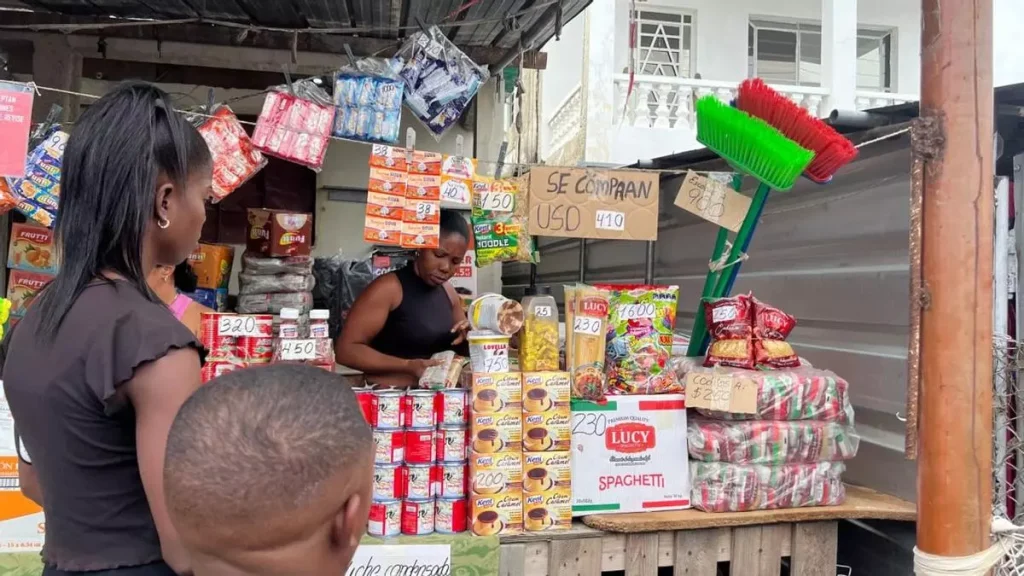

Informal currency buying stand at the La Cuevita market in San Miguel del Padrón, Havana. / 14ymedio

14ymedio bigger14ymedio, Havana, December 19, 2025 — Confusion has been a constant on the first day of life of the floating exchange rate for the Cuban peso. “The banks in Regla are without power, so they’re closed. But they did tell me they’re already buying dollars,” says Alfredo, a Havana resident who had gone -unsuccessfully- to inquire about the service at Cadeca, a currency exchange house. For now, the exchange offices are not buying foreign currencies, and bank branches are the only option for selling US dollars, which in its first two days is at 410 pesos per dollar.

“In the morning it was packed, but that was just to withdraw the 3,000 pesos a day allowed on the card,” says Alfredo. He had to keep walking in search of an official dollar buyer.

It was to be expected that the value of the new rate would initially be set at a high level, though perhaps not so close to that of El Toque, after its demonization by the official press. It stands at 440 both yesterday and this Friday, only 7% more than the exchange rate of the Central Bank of Cuba (BCC).

“We recognize that the new rate announced will not be low; perhaps it is not what many expected, but it is the one that will allow the exchange market to work”

“We recognize that the new rate announced will not be low; perhaps it is not what many expected, but it is the one that will allow the exchange market to work,” the BCC’s macroeconomic policy director, Ian Pedro, told the press, echoing comments made weeks earlier by officials. Although they have endeavored to explain the many benefits the new rate will bring — for the population, the private sector and, ultimately, for the State — few economists agree. continue reading

There is no need to turn to the most critical voices, such as Pedro Monreal, Mauricio de Miranda Parrondo or Pavel Vidal, who have already left eloquent analyses. Criticism comes from closer quarters as well, beginning with Omar Everleny Pérez Villanueva, who has commented in La Joven Cuba with unusual force. “The existence of multiple rates is a very serious error in economic policy, because segmented markets will persist, and that is the same distortion that is intended to be eliminated. It has been announced that it is gradual, but in Cuba this term is terrifying, because prior experiences have not been successful,” he argues.

One problem, he notes, is linked to the $100-per-person purchase cap, “which will necessarily keep the informal market alive and likely push the rate higher.” Pérez Villanueva, who laments the lack of transparency on how 410 pesos per dollar was reached as a starting point, is categorical: “The real economy will prove that those intentions of a third rate will not lead to the results expected by the Government. The measures that are missing should focus on removing obstacles to the production of goods and services, and especially on resolving the issue of food production.”

It is something “extremely complicated in a declining economy with important macroeconomic imbalances”

Carlos Enrique González expands on the idea and underlines that this implementation is “extremely complicated in a declining economy with important macroeconomic imbalances.” He says setting it below the informal rate is a defect. “It is, at the very least, reckless, and it limits the ability to capture those fluctuations.”

Another element introduced by the expert is the low confidence that Cubans have in the BCC, although he does see something positive: “the possibility that exporting companies sell part of the foreign currencies they retain under closed financing schemes at the new exchange rate. It is very beneficial for them, and one can start talking about import substitution as a serious possibility rather than an exhortation.”

Ricardo González Águila, who also spoke to media close to officialdom but slightly critical, considers that allowing exporters to sell foreign currency at a higher exchange rate is “bold and necessary” although it has major risks. Among them is the BCC buying expensive dollars and selling them cheaply to State-owned enterprises, “with implications for macroeconomic balances.” The expert believes that if this announcement is not accompanied by a micro-economic reform that gives companies autonomy to set prices, wages and investments, the failure will continue.

Arturo López-Levy, for his part, welcomes the long-overdue recognition of the real value of foreign currency compared to the “administrative fiction” maintained until now, but he believes that a floating rate requires productive capacity and reserves that Cuba does not currently have. “Without a truly mixed economy, where the private and State sectors are integrated; without clear property rights; without a modern, redistributive, regulatory and developmental State; without orderly privatizations and credible competitive rules, Cuba will remain trapped in precariousness,” he notes.

The list includes the coexistence of multiple exchange rates, which creates a lack of transparency and makes it difficult to measure the real profitability of companies

These considerations do not differ much from those made by Pavel Vidal, who authors a new article for the Cuban Monetary and Financial Observatory (OMFi), in which he draws attention to how close the BCC rate is to what his team of experts has calculated. There are positive assessments in the article, notably the inclusion of private actors and individuals in this new market, the exclusion of State-owned companies — which limits the risk of imbalances — and the application of the rate to current accounts and not just cash.

However, it also contains many criticisms. The list includes the coexistence of multiple exchange rates, which creates a lack of transparency and makes it difficult to measure the real profitability of companies. In addition, the BCC recognizes a “managed float” based on discretionary criteria rather than supply and demand — an issue complicated by the fact that the military conglomerate Gaesa holds international reserves in secret accounts outside the country. Operational limits, coupled with the inability of branches to operate well due to technical and energy problems and the lack of confidence in the banking system do not help either.

“To the extent that the population and the private sector fail to fully satisfy their demand for foreign currency in the official floating market, a willingness to pay a spread or premium may be observed in the informal market in exchange for immediate and unrestricted access to foreign currency. As a result, it is expected that the informal market exchange rate will remain above the official floating rate, at least during the initial phase,” concludes the article.

Mauricio De Miranda Parrondo, for his part, has exploded on social networks with a long, hypercritical post about the measure, which, in short, he calls “new nonsense. The most sensible decision — and I will repeat it ad nauseum — is a unified exchange rate, starting from defining which exchange rate regime will be used. Do you peg the national currency to the dollar? to the euro? to a basket of currencies?” he asks. He insists that partial dollarization “will not improve living conditions and will deepen social differences.”

Translated by Regina Anavy

____________

COLLABORATE WITH OUR WORK: The 14ymedio team is committed to practicing serious journalism that reflects Cuba’s reality in all its depth. Thank you for joining us on this long journey. We invite you to continue supporting us by becoming a member of 14ymedio now. Together we can continue transforming journalism in Cuba.

Democratic Congressman Denounces Cuban Interference With Florida Radio Stations Using “Harmful Communist Propaganda”

Darren Soto introduces a bill to help those stations block signals coming from the island “for hours every night”

Congressman Darren Soto says many small stations lack the resources to block those signals / Facebook

14ymedio bigger14ymedio, Miami, December 16, 2025 — U.S. Congressman Darren Soto announced this Tuesday the introduction of a bill aimed at stopping signal interference coming from Cuba on Florida radio stations in order to “spread communist propaganda.”

The Democrat said that Cuba’s official radio “broadcasts communist propaganda for several hours every night and affects the transmission of local stations,” especially on the AM band.

The initiative was promoted by Congressman Soto, from central Florida, who warned about the alleged impact these interferences are having on stations with limited resources and—according to him—on the communities they serve.

A local radio station in central Florida regularly sees its signal interfered with by Cuban state radio

“At this moment, a local radio station in central Florida sees its signal regularly interfered with by Cuban state radio, which for hours every night broadcasts harmful communist propaganda to Floridians,” the lawmaker stated.

Soto also underscored the economic difficulties faced by the affected stations.

“Many small AM radio stations in Florida and Alaska do not have the financial resources necessary to block these signals,” he said.

The bill, called the Stop Communist Radio Act, seeks to instruct the Federal Communications Commission (FCC) to establish a grant program to support stations suffering harmful interference from foreign signals originating in communist countries such as Cuba, Russia, and North Korea.

Translated by Regina Anavy

____________

COLLABORATE WITH OUR WORK: The 14ymedio team is committed to practicing serious journalism that reflects Cuba’s reality in all its depth. Thank you for joining us on this long journey. We invite you to continue supporting us by becoming a member of 14ymedio now. Together we can continue transforming journalism in Cuba.

New Cases of Dengue and Chikungunya Fall by 20%, but Cuba Remains “In the Epidemic Zone”

The government has not released case numbers, although the EFE news agency estimates 1,480 new cases of dengue this week based on available data.

Problems carrying out effective fumigation have influenced the epidemic. / Girón

14ymedio bigger14ymedio (via EFE), Havana, December 16, 2025 –- The Cuban government said this Monday that the chikungunya and dengue outbreak in Cuba is moving “toward better control,” although “the curve” on the graph of new cases “is still in the epidemic zone.”

Deputy Minister of Public Health Carilda Peña made these statements on state television, where she noted—without providing absolute figures—that new cases of nonspecific febrile syndrome (high fever is the first symptom of both arboviral diseases) have been reduced by 21% compared to the previous week.

With regard to dengue, she acknowledged that the incidence rate last week rose to 15.25 infections per 100,000 inhabitants. This, over a total population of 9.7 million people—according to the National Office of Statistics and Information (ONEI)—would amount to 1,480 new infections.

With regard to dengue, she acknowledged that the incidence rate last week rose to 15.25 infections per 100,000 inhabitants

The Pan American Health Organization (PAHO), which compiles official Cuban figures, indicated last week that from the beginning of the year through the end of November, the total number of infections in Cuba in 2025 from this disease had reached 25,995. continue reading

Regarding chikungunya, Peña also did not provide figures on new or total cases, but stated that the number of new infections has been reduced by 20%. On Friday, official figures spoke of 44,604 infections.

The deputy minister also made no reference to the number of deaths from the epidemic, which on Friday had risen to 47, according to official figures. Two-thirds of them were minors.

The Ministry of Public Health’s (Minsap) attention is focused on “newborns, infants, pregnant women, and young people,” Peña said.

The number of patients in intensive care fell to 42, of whom 12 are in critical condition (mostly minors). “The trend continues to be downward,” the deputy minister added.

EFE has contacted the Cuban government to gain access to more data on the epidemic, but so far has received no response.

EFE has contacted the Cuban government to gain access to more data on the epidemic, but so far has received no response

Health authorities have reiterated that the number of infected people is underreported, because many patients do not go to medical centers, mainly due to the deterioration of public services on the island.

The Cuban government first acknowledged on November 12 that the country was suffering an epidemic of chikungunya and dengue, despite the fact that the first cases were diagnosed in July and that infections had surged in September and October.

The epidemic has found fertile ground in Cuba due to the severe economic and energy crisis the country is experiencing, which has led to a notable deterioration of public services.

Control measures like mass fumigation against mosquitoes and systematic garbage collection limit prevention, and patient care is affected by the lack of tests to confirm the type of illness, medications and other medical supplies.

Translated by Regina Anavy

____________

COLLABORATE WITH OUR WORK: The 14ymedio team is committed to practicing serious journalism that reflects Cuba’s reality in all its depth. Thank you for joining us on this long journey. We invite you to continue supporting us by becoming a member of 14ymedio now. Together we can continue transforming journalism in Cuba.

In Cuba, Stealing 25 Liters of Gasoline Is More Serious Than Diverting Millions of Barrels of Oil

In the face of the U.S. military deployment in the Caribbean, five tankers from Russia’s shadow fleet turn around

The Boltaris—in the image under its former name—turned back while heading to Venezuela with Russian naphtha. / Ivan Zelepukhin

14ymedio biggerMadrid, December 16, 2025 –The commission of a minor crime has cost two workers at the Matanzas Fuel Trading Company a public humiliation that includes the dissemination of their faces and full names as if they were two dangerous criminals. That is just the appetizer, because the harsher punishment is still to come if, at the trial awaiting them, they are charged with sabotage—one of the most serious crimes in the penal code—carrying sentences of between four and ten years in prison.

The news was spread this Monday by the pro-government account Con todos la victoria [With all of us the victory], dedicated to showcasing small police “successes” in the province of Matanzas, which labeled the incident a “totally shameful act.” In the post—accompanied by photographs of the alleged thieves—it is reported that authorities surprised the shift supervisor and a security guard from the company “with their hands in the gasoline.”

The workers had siphoned from one of the tanks “25 liters of gasoline carefully packed in nylon bags, a product in high demand and in short supply among the population these days,” when “their mission was precisely to protect those resources destined for the economy and the well-being of the population.” For this reason, they say, “they earned themselves a judicial process.”

They were luckier than a driver for the state company Transcupet, who was caught “milking” fuel on the national highway near Jagüey Grande.

They were luckier than a driver for the state company Transcupet, who was caught “milking” fuel on the national highway near Jagüey Grande. In his case, although his first and last names were also released, there was no photo showing his face—despite the fact that he was extracting 100 liters of diesel continue reading

from the tank. The account once again seeks to teach a lesson: “The move, which seemed clever, ended in a setback, a lesson that makes it clear that, no matter what tricks are invented, what belongs to others remains off-limits.”

It cannot be denied, judging by the comments on both posts, that there are voices calling for a heavy hand against those who “steal from everyone,” but the staunch defense of the three individuals is the general tone. “In Cuba people live off theft in all the companies, because the salary is not worthy of any human being,” one comment said. References to unlivable wages are repeated ad nauseam, and there is no shortage of those who consider corruption inherent in everyday life in Cuba. “In Cuba everything is illegal; from the moment you get out of bed you’re thinking about how to survive.”

Fuel theft has battered the island for many years, and the authorities do not know how to put a stop to it: neither exemplary trials nor increasingly harsh sentences have managed to reduce the number of such thefts. A few months ago, on a program by Humberto López on Cuban Television devoted to this crime, it was stated that in the country there were perfectly oiled systems— involving operators, brigade chiefs, executives, and guards—through which “as much as 20,000 or 30,000 liters of fuel” were lost every day.

Under current conditions, when the Electric Union reports a daily deficit of about 1,000 megawatts due solely to the lack of distributed generation—most of it because of fuel shortages—pointing the finger at someone who takes 25 liters cannot hide the fact that the Cuban government itself diverts millions of barrels of oil sent by Venezuela to the Chinese market, instead of using them to produce electricity to reduce the 24-hour blackouts.

This Monday the island again experienced a scandalous generation deficit, with 2,007 MW at peak hour. Despite the fact that during the best hour of sun the photovoltaic parks delivered 523 MW, the morning’s generation was only 1,330 MW for a demand of 2,300 MW. Things logically worsened in the late afternoon and evening, when only 1,257 MW were being produced for a demand of 3,089 MW—more than 930 MW of the deficit due to lack of fuel.

The situation could become more complicated given the direction things are taking at the state oil company PDVSA. To the data made public this Monday about buyers demanding discounts—seeing that their purchases could be seized by the United States after what happened with the confiscation of the Skipper—new information is added. According to Reuters, an oil tanker carrying Russian naphtha—used to refine heavy Venezuelan crude—and four large tankers have turned around since that vessel was seized.

The first of these is the Boltaris, flying the flag of Benin, which was carrying some 300,000 barrels of Russian naphtha to Venezuela and turned back over the weekend.

The first of these is the Boltaris, flying the flag of Benin, which was carrying some 300,000 barrels of Russian naphtha to Venezuela and turned back over the weekend. It is now, the agency reports, heading to Europe without having unloaded. The other four vessels, scheduled to load in Venezuelan ports in the coming weeks, have also turned back, leaving many of the country’s exports paralyzed, with the exception of those shipped by Chevron, the U.S. company authorized to operate in Venezuela.

This Monday, the PDVSA stated that it had been the victim of a cyberattack that halted its administrative and operational systems, including oil deliveries.

The sanctions imposed on hydrocarbons during Donald Trump’s first term caused a 99% drop in foreign-currency revenues between 2014 and 2020, and the economy stopped generating $642 billion.

In January of this year, crude production surpassed one million barrels per day (bpd) for the first time since June 2019, with the pumping 1,031,000 bpd. The amount increased to 1,142,000 bpd in November, although in 1998—one year before Chavismo came to power—Venezuela produced 3.1 million bpd, according to a report by the Organization of the Petroleum Exporting Countries (OPEC). Two years later, Chávez and Castro signed the agreement that ensured Cuba a stable supply, which sustained it for decades, even as production declined, especially since 2017, but now things are taking an even worse turn.

Translated by Regina Anavy

____________

COLLABORATE WITH OUR WORK: The 14ymedio team is committed to practicing serious journalism that reflects Cuba’s reality in all its depth. Thank you for joining us on this long journey. We invite you to continue supporting us by becoming a member of 14ymedio now. Together we can continue transforming journalism in Cuba.

Authorities Blame a Florida-Based Network for the Production and Sale of ‘El Químico’

Cuban police arrest 24 people and confiscate homes, vehicles and 11 million pesos

The police operation against el químico / Canal Caribe

14ymedio bigger14ymedio, Havana, December 13, 2025 –The Cuban authorities insist on accusing external forces of being behind the spread of drugs on the island. This time, they found the pretext in a police operation announced on Friday against an alleged network dedicated to producing and distributing el químico – the chemical – the synthetic cannabinoid that has become the drug of greatest impact among young Cubans.

According to official media, the criminal network is directed from Florida and employs residents on the island as distributors, a scheme that coincides with the recent official strategy of attributing the increase in consumption to “external influences.”

Arnaldo Ramos, section chief of the Specialized Criminal Investigation Unit of the Ministry of the Interior, stated on State television that the drugs, described as a cream-like mixture, entered Cuba through “illegal air parcel shipments” camouflaged in yogurt containers, gelatin, food supplements and medications. The official insisted that Havana has “accordingly” informed Washington about individuals in the US who allegedly try to promote trafficking on the island, although “there has been no response to these cases.”

According to official media, the alleged drug trafficking network is directed from Florida

The explanation exists in a context where the Government itself has had to recognize, for the first time in years, that consumption of synthetic drugs has diversified and expanded, particularly among adolescents and people in their twenties. The most recent reports speak of a growing market for variants of el químico made with imported substances and processed clandestinely in private homes, a phenomenon that authorities had kept silent about until continue reading

very recently.

In the operation publicized this week, the head of the Anti-Drug Unit, Yoan Saporta, reported the arrest of 24 people charged with offenses related to drug trafficking. In addition to the drugs, authorities seized syringes, gloves, trays, masks and acetone, the latter considered one of the basic inputs for producing el químico. Houses, vehicles and 11 million pesos were also confiscated, a sum equivalent to $91,600 at the official exchange rate but barely more than $25,000 on the informal market.

The operation is presented as part of the “zero tolerance policy” reiterated by senior government officials in early December, when they denied that Cuba is a producing or transit country for narcotics. The official speech coincides with the reinforced US military deployment in the Caribbean to combat drug trafficking, which Havana links to geopolitical pressures on allied governments, especially that of Nicolás Maduro in Venezuela.

As part of this hardline policy, the courts have multiplied the “show trials,” a practice that the official media has frequently publicized over the past year. In one of the most recent cases, a young man was sentenced to 15 years in prison for possession and sale of small quantities of illicit substances, a punishment that is contrary to international standards and reveals the punitive hardening supported by the new Penal Code, which establishes sentences ranging from 4 to 30 years, life imprisonment and even the death penalty.

Although authorities have belatedly acknowledged the rise in drug use, they do not hesitate to crack down on independent journalists who investigate cases outside official channels. The Ministry of the Interior insists on presenting each operation as a decisive blow against drug trafficking, while the expansion of synthetic drugs exposes a reality that is less controlled than official discourse admits.

Translated by Regina Anavy

____________

COLLABORATE WITH OUR WORK: The 14ymedio team is committed to practicing serious journalism that reflects Cuba’s reality in all its depth. Thank you for joining us on this long journey. We invite you to continue supporting us by becoming a member of 14ymedio now. Together we can continue transforming journalism in Cuba.
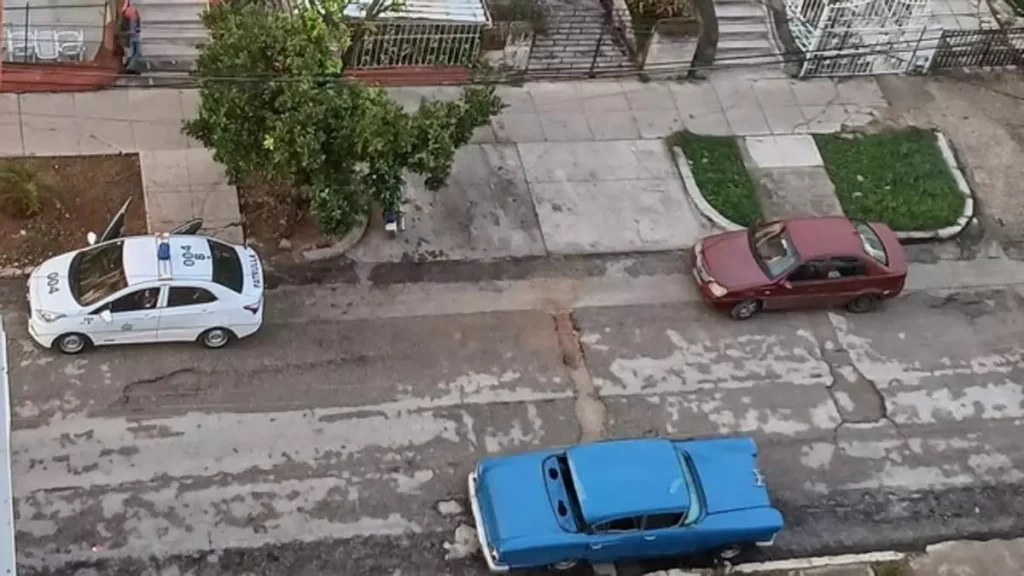
Without Fuel, Fertilizers, or Insecticides, They Intend To Plant 41,000 Hectares of Rice in Eastern Cuba

Yields have stalled between two and 2.5 tons per hectare, whereas in the past they reached up to five and the Vietnamese achieve up to seven in the rest of the Island

Vietnam has signed several agreements with Cuba to invest in rice cultivation. / Granma

14ymedio bigger14ymedio, Madrid, December 12, 2025 –- “We’ve gone practically four years without having that technological package,” Odisnel Traba Ferrales, agricultural director of the Fernando Echenique Agroindustrial Company, told the official press. The manager refers to the kit the State used to distribute to producers—containing imported fertilizers, herbicides, and pesticides—crucial for some crops, in this case rice, which is also considered a “very technical” crop.

The province of Granma, once among the elite of rice-producing regions, plans to plant 41,000 hectares of the country’s total 200,000, but the data is hardly encouraging. The manager himself admits, between the lines, that the estimate is far from realistic. “The total planting commitment in the province (30,000 hectares from the Fernando Echenique company and 11,000 from the José Manuel Capote Sosa company) is quite a tough goal in the current context,” he emphasizes.

No surprise there: the yield of these lands is far below what was achieved in the past and barely reaches two to 2.5 tons per hectare, compared with the five obtained previously. The figure looks ridiculous when compared with the success Vietnamese producers are achieving both in Pinar del Río—where the company Agri VMA, which has land in usufruct, exceeds 7.2 tons per hectare—and elsewhere on the Island.

No surprise: the yield of these lands is far below what was achieved in the past and barely reaches two to 2.5 tons per hectare, compared with the five obtained previously.

But even more striking are the results from Vietnam’s cooperation as a State actor. Within this program, yields are even higher, according to recent data published by the Cuban Institute for Seed Plant Research, which found yields of up to 9.14 tons per hectare in the winter season (7 in spring) for continue reading

one of the varieties they work with, Viva76. In Cuba there are four varieties, three belonging to the Mekong Delta Rice Institute (MEKO), with results that have impressed even the Asian country itself.

Another variety, Viba17, yields 8.28 tons per hectare in winter and 7.13 in spring, while Viba51 reaches 7.18 in winter and 5.5 in spring. “In the context of Cuba’s efforts to overcome food security challenges due to harsh climate, saline soil, and prolonged drought, the acceptance and testing of Vietnamese rice varieties is considered a strategic step,” Vietnamese media highlighted this week.

The three varieties—grown in Matanzas, Cienfuegos, and Mayabeque—stand out for their productivity and disease resistance, with yields between 20% and 30% higher than the local variety, triple on average. Among their advantages is very fast growth, which reduces costs: about 100 or 110 days of growth compared with 120 or 125 for Cuban rice, according to the Vietnamese institute.

“This is clear proof of the effectiveness of the Rice Cooperation Project in particular, and agricultural projects in Cuba in general,” said one of the engineers who was in the country supporting the program. Although the expert praised the “hospitality” of Cubans, there have been no shortage of Vietnamese reports complaining about local work methods, which have led to program cancellations in the past.

This, along with the shortage of technology, has brought production in Granma province to a bare minimum, heavily affected as well by the flooding caused by Hurricane Melissa when the Cauto River overflowed—the planting areas are concentrated in its basin: Río Cauto, with 23,121 hectares, and Yara, with 11,602.

A report from the official State newspaper Granma, which on Friday offers the first part of what is expected to be a broader piece, includes the experience of one of the workers, who describes the difficulties of managing water. “The first two months are key; you have to be here from sunup to sundown. Today you plant the rice and tomorrow, without fail, you have to drain the field, ‘pachanguearlo,’ so that puddles don’t form. That means removing all the water because the seed is pregerminated and, if it stays submerged, it drowns.”

His account is interrupted by a colleague who highlights another problem: “There are enough weeds to fill a cart. When I barely opened it, the rush of water almost swept me away,” he says—what Granma describes as “hydraulic sabotage.” The newspaper attributes serious issues to the “water war” in the area: farmers who block the canals—“in their desperation,” it excuses—to get a few minutes of irrigation, which ultimately deprives another farmer.

The newspaper attributes serious issues to the “water war” in the area: farmers blocking the canals—“in their desperation,” it excuses—to get a few minutes of irrigation that, in the end, they take from someone else.

“Before, when a seed field was planted, anyone who stole water was prosecuted; today nothing happens,” laments one interviewee. “Just last night, the producer of the field had to leave a man on guard at this gate because people open it to take the water. That fight is old in these fields. You have to stay alert because there’s always someone ready to take advantage of someone else’s water,” he says.

The report contains another devastating line: despite the harshness of the work, “after the sugar mill shut down, there is nothing else to do but plant rice.” One interviewee claims he earned half a million pesos by flooding three caballerías* two months ago, but it isn’t easy. “The mud, the mosquitoes, the sun, the thirst… it’s brutal,” he says.

The lack of fuel also complicates rice transport—the crop “gets diverted” when it cannot be moved— not to mention Gelma, the wholesale supplier of inputs, where “there is not a single product,” forcing people to resort to mipymes [small private enterprises]. The need to pay in cash—without the bank providing it—and the high prices in pesos because of the devaluation of the national currency complete the picture.

“The success of this campaign will not depend solely on the sweat poured into the furrows, but on the ability to untie those old knots that choke productive potential,” Granma concludes. The second chapter, however, remains to be read.

*caballería is a land measure equalling 194.2 acres

Translated by Regina Anavy

____________

COLLABORATE WITH OUR WORK: The 14ymedio team is committed to practicing serious journalism that reflects Cuba’s reality in all its depth. Thank you for joining us on this long journey. We invite you to continue supporting us by becoming a member of 14ymedio now. Together we can continue transforming journalism in Cuba.

One More Year, the Cuban Regime Marks Human Rights Day With a Police Deployment

Patrols and State Security agents surround opposition members in their homes

Police patrol in front of the home of Boris González Arenas, in Havana, this Wednesday. / Facebook

14ymedio bigger14ymedio Havana, December 10, 2025 –- As every year, Cuba spent this Wednesday’s International Human Rights Day with police operations, internet cuts, and house arrests imposed on activists and independent journalists. The regime once again deployed its ability to silence any civic gesture.

The 14ymedio newsroom in Havana woke up without web browsing service and with a police operation at the entrance of the building where it is located in the Nuevo Vedado neighborhood. The repression has also extended to other journalists, such as Boris González Arenas, held in his home under the watch of State Security. “This Government only has energy to repress the people it is starving to death,” denounced Juliette Fernández Estrada on Facebook.

Activist Yamilka Lafita, known as Lara Crofs, reported that a man who introduced himself as “chief of the combatants, Eduardo,” accompanied by two police officers, arrived at her home to warn her that she could not go out. “They say it’s ‘for the reason I know,’” she wrote on her social media. “My door may be watched, but they won’t silence my voice,” she said, dedicating the day to the Cuban people, the political prisoners, and their families.

Cuba spent International Human Rights Day with police operations, internet cuts, and house arrests against activists and independent journalists

Wilber Aguilar, father of political prisoner Walnier Aguilar, also denounced a police cordon in front of his home. “Patrol car 241 is parked here. I can’t leave; I can’t move from my house,” he reported. “Everyone in my house came down with the virus, practically dying, and not a single doctor showed up, but today the State Security agents do come.” Bitterly, the father of the continue reading

young man imprisoned for participating in the Island-wide 2021 July 11 protests summed it up: “We live in a country where human rights don’t exist, nor humans with rights.”

In the Havana municipality of Lawton, the leader of the Ladies in White, Berta Soler, warned of heavy surveillance against her and her husband, Ángel Moya Acosta, as well as against the headquarters of the movement. She explained that neighbors have reported several patrols surrounding the area. The operation is located at the corner of Martínez and D streets. “State Security repressors started early with their repressive deployment,” she
denounced.

The human rights crisis on the Island, recall the members of the Cuba X Cuba project, is not limited to political prisoners or those facing arbitrary proceedings. “It also affects millions of people condemned to live in degrading conditions,” they stated. “Twenty-hour blackouts, lack of medicines, food shortages, collapsed basic services, growing insecurity, and a health crisis form a landscape where surviving is an act of resistance.” On this Human Rights Day, the organization renewed its commitment “to dignity and freedom, to those still imprisoned, to those waiting for a nonexistent medicine or surviving in darkness, or watching their neighborhood, their school, their hospital, and their future deteriorate.”

Cubans abroad called marches and protests around the world to make visible the precarious human rights situation on the Island

Cubans abroad used the date to call marches and protests around the world with the aim of making visible the precarious human rights situation on the Island. Opposition leader José Daniel Ferrer García called for a global day for human rights and freedom in Cuba.

Various actions were organized in at least 13 cities, including protests, walks, gatherings, and symbolic acts, in countries such as Spain, Canada, Germany, Sweden, Chile, France, and the United States.

In Berlin, a group of members of Cuban civil society was received by German government authorities “for the first time in history,” explained activist Tania Tasé on her profile Las Taniadas. “We will do the best we can, for all Cubans,” she said moments before the meeting.

In Barcelona, a group of emigrants gathered in the streets to denounce the Cuban dictatorship. Videos posted on the page of the Coalition of Women for a Free Cuba show participants speaking on issues such as the severe health and food crisis in the country, political prisoners, and the total lack of rights faced by Cubans.

In Madrid, the protest of exiles took place in front of the Cuban embassy and was broadcast by the Council for the Transition in Cuba and the magazine Alas Tensas.

Translated by Regina Anavy

____________

COLLABORATE WITH OUR WORK: The 14ymedio team is committed to practicing serious journalism that reflects Cuba’s reality in all its depth. Thank you for joining us on this long journey. We invite you to continue supporting us by becoming a member of 14ymedio now. Together we can continue transforming journalism in Cuba.
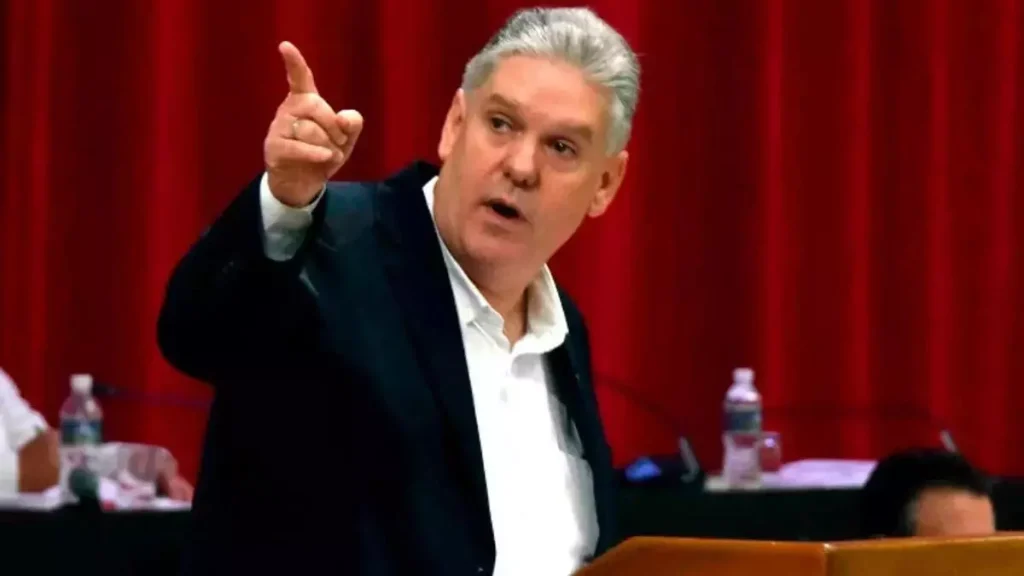
Cuba Closes November With a Record 1,192 Political Prisoners

Prisoners Defenders and the Cuban Observatory of Human Rights denounce the increase in repression in November

Prisoners in a Cuban prison / EFE

14ymedio bigger14ymedio, Havana, December 9, 2025 – Cuba closed November with 1,192 political prisoners, the highest figure ever recorded by Prisoners Defenders. In its report published this Tuesday, December 9, the organization denounces that repression is the only policy used by the Cuban regime to survive amid the country’s economic, social, and humanitarian collapse.

The NGO, founded in Madrid to protect human rights on the Island and in other totalitarian regimes, documents 19 new arbitrary detentions that occurred that same month with recurring patterns. Arrests without warrants, forced disappearances, incommunicado detention, and criminal charges as vague as “disobedience,” “contempt,” or “public disorder”—used to punish opinions expressed on social media, verbal statements, or protests over the lack of basic services and food—confirm a form of “State terrorism” aimed at silencing any gesture of dissent.

Repression remains the policy used by the Cuban regime to survive amid the country’s collapse

Among the new cases is that of Dr. Pedro Bauta Gómez, a well-known psychiatrist from Holguín, who was arrested after saying publicly that there is no transportation for the sick but there is for the Party. Since then, his whereabouts are unknown, and he has been denied legal counsel and contact with his family.

Also notable is the case of William Sosa Marrero, detained for critical Facebook posts and accused of “pre-criminal penal disobedience,” a provision in the new Penal Code that replaces the former concept of “social dangerousness” while preserving preventive persecution against citizens who have committed no crime.

The organization denounces the criminalization of simple neighbors in Las Tunas detained for shouting slogans or painting critical graffiti, or of protesters in Bayamo arrested for peacefully protesting the lack of governmental response, while families live in terror and do not even dare to complain for fear of reprisals. continue reading

Among the most alarming issues are incarcerated minors. The report notes that 33 adolescents have been convicted for political reasons between 2021 and 2025—10 of them confined in adult prisons or penitentiary centers called “schools,” and 23 under police surveillance and constant threats. Many were arrested during the social uprising of 11 July 2021, tortured, and subjected to extreme overcrowding and violence, in direct violation of the Convention on the Rights of the Child.

July 11 remains the most significant moment of repression; 409 protesters are still imprisoned

In 2025 this pattern continues, with cases such as Eliane Martín, detained at age 16 while pregnant, with no information available on her location or health status; or Leroy Hernández Escalona, imprisoned after participating in a peaceful protest, whom relatives say is being held in a “torture center” in Las Tunas. These cases show that neither childhood nor pregnancy acts as a limit to political punishment in Cuba.

The 11th of July 2021 (11J) remains the most important moment of repression. Since then, 409 protesters continue to be imprisoned, and 334 are serving sentences outside prison under threats. Even those who are no longer behind bars live under a regime of harassment and fear, as illustrated by numerous cases included in the report.

In total, 743 Cubans continue to be punished for that day, which marked the largest citizen protest in more than six decades, among them 13 women—mothers and workers—who are being punished with particular cruelty in order to suppress independent female leadership. Among them are Lizandra Góngora, imprisoned in Los Colonos prison and separated from her five children by a 14-year sentence for demanding basic freedoms; and María Cristina Garrido, a poet imprisoned and subjected to constant harassment for having raised her voice against the Government.

The regime also targets artists. Eleven remain in prison and together face more than 137 years in sentences for making music, poetry, or critical art. Among them are the rapper Maykel Castillo Osorbo, two-time Latin Grammy winner for Patria y Vida, who has endured numerous solitary confinement cells and threats of transfer far from his family; and the visual artist Luis Manuel Otero Alcántara, held in Guanajay prison, where he has suffered chikungunya fever and diarrhea without medical care. He recently began a voluntary hunger strike to demand the freedom of all prisoners of conscience.

The country’s health crisis—worsened inside the prisons—makes the situation even more severe. Currently, 461 political prisoners suffer from serious illnesses without treatment, and 41 have mental disorders without psychiatric care, figures that show that physical and psychological deterioration is a deliberate component of the repression.

Meanwhile, the Cuban Observatory of Human Rights (OCDH) reported at least 225 repressive actions on the island in the month of November, of which 18 were arbitrary arrests and 207 were other abuses.

Among the most common violations committed by the Cuban regime last month were illegal home detentions, abuses against political prisoners, threats, and police summonses. Most of these repressive actions occurred in the provinces of Havana, Holguín, Guantánamo, and Sancti Spíritus.

The country’s health crisis—exacerbated inside prisons—continues to worsen the situation of political detainees

“The regime maintains repression in a context of a deepening social crisis, without medicines or food to alleviate the health situation caused by several simultaneous epidemics. The authorities offer no solutions and, at the same time, continue repressing any political or civic initiative,” the OCDH stated in its report published Monday.

Repression in November once again extended beyond the island’s borders, as the government directly threatened—by name—18 journalists and contributors to the digital media outlet El Toque, located outside the country.

“We are deeply concerned by the increasing use of blacklists to threaten exiled activists in various countries. We hold the Cuban regime responsible for any situation these individuals may face,” added the OCDH.

So far this year, at least 2,883 repressive actions have been recorded, including 651 illegal home detentions and 508 arbitrary arrests.

Prisoners Defenders also highlighted other shameful records for Cuba in 2025: the island became the number one country in the world for cases of arbitrary detention, according to the UN Working Group on Arbitrary Detention; the second worldwide in terms of penal population; and fourth globally in the number of urgent actions issued by the UN Committee on Enforced Disappearances.

Translated by Regina Anavy

____________

COLLABORATE WITH OUR WORK: The 14ymedio team is committed to practicing serious journalism that reflects Cuba’s reality in all its depth. Thank you for joining us on this long journey. We invite you to continue supporting us by becoming a member of 14ymedio now. Together we can continue transforming journalism in Cuba.

Former Cuban Economy Minister Alejandro Gil Sentenced to Life in Prison for Espionage

In a second trial for bribery, influence peddling, and tax evasion, he received an additional sentence of 20 years in prison

Gil, according to the Court, acted in a “corrupt and deceptive manner,” and “deceived the country’s leadership and the people.” / ANPP

14ymedio bigger14ymedio, Havana, December 8, 2025 — The People’s Supreme Court has issued a ruling against Alejandro Gil Fernández, former Minister of Economy and Planning and one of the officials most heavily promoted by official propaganda until his abrupt dismissal in 2024. In language filled with references to “treason against the homeland” and a supposed “ethical, moral, and political degradation,” the ruling sentences him to life imprisonment for espionage and an additional 20-year prison term in a second trial for economic and administrative crimes.

The oral hearings, held in two phases between November 11 and 29, 2025, proceeded — according to the Court — “under full respect for procedural guarantees.” However, as is common in high-profile political trials, there were no independent observers, public access to the sessions, or verifiable details about the evidence presented. Even the daughter of the former deputy prime minister, Laura María Gil González, was not allowed to attend the espionage trial. The Government has limited itself to publishing a summary of the events that reads less like a legal document and more like a political narrative meant to reinforce the image of an internal enemy infiltrated within the State structure.

In the first criminal case, Gil was found guilty of espionage, bribery, theft and destruction of documents under official custody, violation of seals, and repeated infringement of classified information protection regulations. According to statements made by his sister, María Victoria Gil, the authorities linked him to the U.S. Central Intelligence Agency. The official description claims that the former minister removed and “made available to enemy services” confidential economic documents. Based on that accusation, the Court imposed a life sentence.

In the second case, the ruling included ongoing crimes of bribery, forgery of public documents, influence peddling, and tax evasion. For these, he received an additional 20-year sentence, although the Court clarified that once appeals are resolved, a single joint sentence will be formed, as established under the current Criminal Code.

Gil, according to the Court, acted in a “corrupt and deceitful” manner, deceived “the country’s leadership and the people,” received money from foreign companies, bribed officials, and caused “damage to the economy”

The additional sanctions include confiscation of assets, a permanent ban on managing public resources, and the loss of several civil rights. The ruling states that the assessment complies with Article 147 of the Constitution and Articles 29 and 71.1 of the Penal Code, which refer to the “social harmfulness” of the acts.

The official narrative does not spare adjectives. Gil, the Court says, acted in a “corrupt and deceitful manner,” deceived “the country’s leadership and the people,” received money from foreign companies, bribed officials, and caused “damage to the economy.” The document cites continue reading

Article 4 of the Constitution, recalling that treason against the homeland is the gravest crime and is punished with the harshest penalties.

But the political emphasis does not hide an obvious contradiction: the same Government that for years promoted Gil as the architect of monetary reform, a champion of “economic resistance,” and a fresh face in the Cabinet, now portrays him as an infiltrated enemy. It is a familiar script in recent Cuban history, where high-ranking officials shift from hero to villain in a matter of months, without any acknowledgment of failures in the selection process or internal Party oversight.

As in other high-profile cases — such as corruption trials against party leaders — the authorities have offered no concrete details about the alleged espionage: neither what information was taken, nor when, nor how it supposedly reached “enemy intelligence services.”

The speed of the process is also striking. In less than a year since his removal from office, Gil went from being a central figure in economic policy to receiving one of the harshest sentences given to a civilian in decades. According to analysts cited in previous reports, the rush could reflect the Government’s urgency to suppress debate over the failure of the “reorganization” plan and the economic collapse of recent years.

This time, the target is the man who for years publicly defended, across all official platforms, the same policies that now leave the country facing its worst economic situation in decades

Alejandro Gil was one of the figures most publicly supported by President Miguel Díaz-Canel. Presented as a modern technocrat, he spearheaded the Ordering Task — a project that in practice triggered inflation and severely eroded purchasing power — and defended every measure that deepened the economic crisis. Even after his dismissal, the president continued praising him on the social platform X, offering congratulations, embraces, and birthday messages.

His downfall, announced in February 2024, was followed by an unusual official silence. Only later — and slowly — did references begin to appear regarding “serious misconduct” and “incompatible behavior.” The sentence now confirms the type of narrative the regime tends to construct to convert structural failures into individual blame.

The Court notes that both the defendant and the Prosecutor’s Office have ten days to file the corresponding appeals. In the case of the life sentence, even if no appeal is filed, an appeal will be automatically processed as a “guarantee” for the accused — a formality that, within the Cuban judicial system, is unlikely to alter the political course of the process.

The statement concludes by noting that both Gil and his lawyers acknowledged that procedural guarantees were respected. This is a standard declaration in cases of this type and cannot be independently verified.

This time, the chosen target is the man who for years defended, in every official forum, the very policies that now keep the country in its worst economic situation in decades. The sentence against Gil says much about him — but says even more about the model that elevated him, used him, and now buries him under the label of “traitor.”

Translated by Regina Anavy

____________

COLLABORATE WITH OUR WORK: The 14ymedio team is committed to practicing serious journalism that reflects Cuba’s reality in all its depth. Thank you for joining us on this long journey. We invite you to continue supporting us by becoming a member of 14ymedio now. Together we can continue transforming journalism in Cuba.

The Journalists Club of Mexico Is an Instrument of Cuban and Russian Propaganda

Some 72% of the magazine’s content distributed by the Club comes from RT, Sputnik and Prensa Latina to promote “freedom of expression and journalistic rigor”

At the Journalists’ Club, five blocks from the headquarters of the Mexican government, a ceremony for the 60th anniversary of Prensa Latina / SPR took place

14ymedio bigger14ymedio, Mexico City, December 7, 2025 — From Mexico, with public resources, the narratives of the regimes of Russia and Cuba are being disseminated. According to a report published this Sunday by Factchequeado, a US fact-checking institution, the Journalists’ Club, a Mexican non-profit organization that claims to promote “journalistic excellence since 1952,” acts as “a propaganda facade” for both governments.

The Club uses a magazine called Journalist Voices, its “news organ,” to republish information from official agencies in Russia and Cuba. According to the research, since April 2025, almost three-quarters of its content (72%) is taken from state media, mainly from the Russian RT and Sputnik (53%), followed by the Cuban agency Prensa Latina (18.6%).

Although the Journalists’ Club claims to promote “freedom of expression and journalistic rigor,” it is now “a pro-Kremlin and anti-Western propaganda conduit,” according to an analysis by the Alliance for Securing Democracy of the non-partisan German Marshall Fund. The author of the report added that the page “amplifies the narratives of the Russian and Cuban regimes while publicly presenting itself as a genuine national journalistic project.”

The page “amplifies the narratives of the regimes in Russia and Cuba while publicly presenting itself as a journalistic project”

The Journalists’ Club shows a clear inclination in favor of the present and past government in Mexico, and it’s no wonder. It benefited financially under Andrés Manuel López Obrador, an open sympathizer with the Cuban regime. From 2020 to 2023, it received 951,000 pesos (about $ 51,000), for advertising in the magazine that it “publishes,” although it is not known where you can get a physical copy, and despite the fact that its Facebook page has only 2,600 followers. continue reading

The Club is run by Celeste Sáenz de Miera and Mouris Salloum George, the editor responsible for the publication. Just last April, he was recognized by the Government of Vietnam “for his work in spreading the values and the resilient spirit of the Vietnamese people.”

Previously, in 2019, at the headquarters of the Journalists’ Club, five blocks from the Palacio Nacional, the seat of the Mexican government in Mexico City, Salloum George led a ceremony for the 60th anniversary of Prensa Latina. At the event, the then director of the agency, Luis Enrique González, stated that his “mission” to “counter the campaigns of disinformation and manipulation about the Cuban revolution” was still “in effect.”

Salloum George led a ceremony for the 60th anniversary of Prensa Latina

As for Celeste Sáenz de Miera, in 2017 she headed an event in which a prize was given to the RT channel for its “contribution to the plurality of information.” In her message, the journalist, who says publicly that “the deliberate violence of lies” must be denounced and that her organization defends “truth as an ethical obligation and backbone of journalism,” pointed out that the role played by the Russian channel on the international scene “is fundamental, since it contributes in a decisive way to the plurality of information with unquestionable quality and rigor.”

In 2023, at an event where she presented a prize addressed to the Russian propaganda media Tsargrad for its coverage of the invasion of Ukraine, Sáenz de Miera even told the Russian ambassador to Mexico, Viktor Koronelli — who that same year was sent to Cuba to occupy the same post — that the Journalists’ Club was “the Mexican home” for diplomats from Russia. The envoy from Moscow, who was in charge of receiving the recognition, stated that “we have other media in Russia, and I believe that in subsequent years all of them will be given these types of awards.”

Translated by Regina Anavy

____________

COLLABORATE WITH OUR WORK: The 14ymedio team is committed to practicing serious journalism that reflects Cuba’s reality in all its depth. Thank you for joining us on this long journey. We invite you to continue supporting us by becoming a member of 14ymedio now. Together we can continue transforming journalism in Cuba.

Russia Joins the Governments That Warn of the Risks of Travelling to Cuba Because of the Arbovirus Outbreak

Moscow’s warning adds to those already issued by several foreign governments against non-essential travel to the Island

People line up at the post-arbovirosis clinic. / 14ymedio

14ymedio bigger14ymedio, Havana, December 6, 2025 — The epidemiological situation in Cuba is so serious that even an ally like Russia has been forced to issue a new international alert for its travellers. The embassy in Havana, citing a statement by the Ministry of Foreign Affairs of the Russian Federation, has advised its citizens to take extreme precautions against the resurgence of cases of dengue and chikungunya. Suggested measures include the use of repellent, closed and long-sleeved clothing during periods of high mosquito activity and avoiding areas with stagnant water.

Concern about the epidemic in Cuba has been noted in Russia in recent days. The press has reacted with growing alarm, calling into question the safety of travelling to the island during the holiday season.

Epidemiologist Guennadi Onishchenko of the Russian Academy of Sciences advised citizens to “return their tourist packages” and opt for destinations near Moscow, considering that “taking the risk of contracting an infectious disease is, at the very least, unwise.”

The Russian Foreign Ministry has advised its citizens to take extreme precautions against the epidemic in Cuba

Gazeta called the situation “critical” and estimated that there are currently about 1,500 Russian tourists in the most affected areas, of whom at least 14 are ill.

The actual numbers of infected Russians seem to be higher. Cases of people with the virus often appear on social media. In the Facebook group “Russians in Cuba,” tourist Anna Lynn recounted the case of her husband, infected with the virus in Holguín and with a 104 degree (F) fever. “We called the doctor and the diagnosis was chikungunya. But they told us there is no treatment, only water and rest. I’m very worried,” she said. continue reading

Other countries like the US, the UK and Canada have previously warned about the epidemiological situation on the island

The health situation on the island and the recent warning issued by Moscow could affect the number of Russian visitors in the coming weeks, which would further accentuate the current drop of 36.2% in Russian tourists for the first ten months of this year (99,908, instead of 156,614 in 2024).

Other countries have previously issued warnings. One of the first was the US, which in September issued through its Embassy in Havana a health alert for all citizens who want to travel to Cuba, due to the outbreak of chikungunya. The risk was then determined at Level 2, which requires taking “additional precautions.”

The Government of Canada maintains its warning to “exercise a high degree of caution” when travelling to Cuba, updated on November 25, 2025. Cuba is explicitly included as a destination at risk from mosquito-borne diseases.

The UK Foreign Office, in its recently updated travel guide for Cuba, reported on the declared epidemic of arbovirosis on the island and advised travellers to take precautions to prevent bites.

Several warnings mention that the risk is not only from arbovirosis but also from a health infrastructure in crisis, with shortages of medicines, irregular water supply, and difficulties in accessing adequate medical care.

Translated by Regina Anavy
____________

COLLABORATE WITH OUR WORK: The 14ymedio team is committed to practicing serious journalism that reflects Cuba’s reality in all its depth. Thank you for joining us on this long journey. We invite you to continue supporting us by becoming a member of 14ymedio now. Together we can continue transforming journalism in Cuba.

Cuba Will Go to the World Baseball Classic and Has Now Handed Over a Preliminary Roster of 50 Players

Manager Germán Mesa’s call includes Andy Pagés, Yoán Moncada and Zach Neto, while the case of Yariel Rodríguez is still not defined

Players Andy Pagés, Yoan Moncada and Zach Neto are on the roster that was handed over by manager Germán Mesa for the World Baseball Classic. / Archive Photo/Jit

14ymedio bigger

14ymedio, Havana, December 4, 2025 — Finally, and after weeks of uncertainty, Cuba will participate in the World Baseball Classic. According to Cuban Baseball Digest, the Island’s national team “has the necessary permits and will soon announce its participation in the tournament.”

The same media reported that the negotiations of the Cuban Baseball and Softball Federation (FCB) with the US Major Leagues “have been positive and have made significant progress.” The publication comes days after World Classic president Jim Small said in Puerto Rico that the so-called Team Asere would be part of the event in March.

This Wednesday, journalist Francys Romero reported that the FCB handed over a preliminary roster of 50 players. In addition, he stressed that no one from the Cuban federation was present at the Winter Meetings 2026, which took place in Orlando, Florida, and no one is expected to “attend the winter meetings.”

This Wednesday, journalist Francys Romero reported that the FCB handed over a preliminary roster of 50 players

Among the players chosen by manager Germán Mesa are Andy Pagés, Yoan Moncada and Zach Neto. The inclusion of Yariel Rodriguez is contemplated; however, Pelota Cubana USA journalist Yusseff Diaz said that the inclusion of the ball player is still under debate. Although the pitcher has expressed continue reading

interest in playing for the Island, there are managers who do not forgive him for breaking a contract in 2023 with the Japanese team of the Chunichi Dragons.

The Mesa team has Pagés as an outfielder; however, there is still no response from the Los Angeles Dodgers team where he plays. Victor Labrada (Seattle Mariners) and Albert Lara (Laguna Union Cotton Growers) are in the line-up.

The Mesa roster also lists Zach Neto (Los Angeles Angels), free agents (FA) Andy Ibáñez, Yoan Moncada, Ernesto Martínez Jr., and Yiddi Cappe (Miami Marlins), Alexander Vargas (Cincinnati Reds) and Jean Walters (Arizona Diamondbacks).

Mesa envisages Omar Hernandez (Kansas City Royals) as a catcher. For pitchers it has Daysbel Hernández (Atlanta Braves), Ryan Fernández (Saint Louis Cardinals), Lázaro Estrada (Toronto Blue Jays), Rafael Sánchez (Toronto Blue Jays) Yariel Rodríguez (Toronto Blue Jays), Emmanuel Chapman (Pittsburgh Pirates), Denny Larrondo (FA), Pedro Santos (FA), Jorge Marcheco (Los Angeles Angels), Silvano Hechavarría (Toronto Blue Jays), Josimar Primo (Mayagüez Indians), Osiel Rodríguez (León Bravos), Jan Carlos Hechavarría (Los Angeles Angels), Robert Roilan Portuondo (Pittsburgh Pirates) and Elián Leyva (FA).

The list also includes left-handers Daviel Hurtado (New York Mets), Darién Núñez (FA), Julio Robaina (Guasave Cotton Growers), Francis Texidó (Los Angeles Angels), Randy Labaut (FA) and Andrés Pérez (Jalisco Cowboys).

Translated by Regina Anavy

____________

COLLABORATE WITH OUR WORK: The 14ymedio team is committed to practicing serious journalism that reflects Cuba’s reality in all its depth. Thank you for joining us on this long journey. We invite you to continue supporting us by becoming a member of 14ymedio now. Together we can continue transforming journalism in Cuba.

The Cuban Regime Defends Itself Against Accusations of Links With Drug Trafficking

Cuban regime hastens to deny the statements of ‘El Pollo’ Carvajal on the role of Havana in the creation of the Cartel de Los Soles in order to flood the US with cocaine

Havana avoids, as a general rule, giving public explanations about internal security, but this time it responded immediately. / Facebook / Minint

14ymedio bigger14ymedio, Havana, December 4, 2025 — The Cuban government, aware of its current vulnerability, is reacting with unusual speed. Hours after the letter of Hugo “El Pollo” Carvajal — former head of Venezuelan intelligence — was published, in which he accuses the Chavista regime and Cuba of having designed a drug trafficking strategy against the US, Havana convened a press conference to clarify that “Cuba is not a producer of drugs or a drug transit country.”

Officials from the Ministry of the Interior and the Ministry of Justice met on Thursday at the International Press Center. They offered an image of control, but the timing of the appearance exposed the political urgency. Carvajal’s letter, addressed to Donald Trump, details two decades of narco-terrorist operations, cooperation with guerrillas, electoral manipulation and a close relationship with the Cuban intelligence services. In one of his most forceful statements, the former Venezuelan general claims that “this plan was suggested by the Cuban regime to Chávez in the mid-2000s,” referring to the use of drugs as a geopolitical weapon.

The presence of Justice Minister Oscar Silvera Martínez, First Colonel Ibey Carballo, and Colonel Juan Carlos Poey underscored the exceptional nature of the press conference. Havana generally avoids giving public explanations about internal security, but this time the complex domestic crisis, as well as the U.S. military deployment in the Caribbean, are accelerating the actions of the oldest dictatorship in the Western Hemisphere.

Poey, head of the Interior’s anti-drug agency, described the US military presence in the area as “a serious threat to Cuba’s security and sovereignty,” and he added an argument that tried to turn the tables: “The synthetic drugs circulating today in Cuba come mostly from the United States.” continue reading

Carvajal says that Cuban intelligence showed him “their networks inside US naval bases and thousands of spies sent to the US over decades”

To soften the tone, Carballo, second-in-command of the Border Guard Troops, emphasized cooperation with Washington: “We exchanged real-time information with the US Coast Guard. We gave them position, heading and characteristics of the drug boats.”

Carvajal’s letter, addressed to Trump from an American jail, is not limited to describing crimes. It situates Cuba directly as a key actor in the construction of the so-called Cartel de los Soles, affirms that Cuba provided strategic advice, and states that Cuban intelligence showed him “its networks inside US naval bases and thousands of spies sent to the US over decades.”

It also states that criminal groups such as the Tren de Aragua were formed “on the orders of Chávez and then Maduro, with coordinated support from the Ministry of the Interior and security forces,” and that some of these operatives were sent abroad. Although Cuba is not mentioned as a participant in these gangs, it does appear as an adviser and ally of the structure that created them.

The publication of the text coincides with an increase in US military pressure in the Caribbean. Washington has directly linked Venezuelan president Nicolás Maduro with drug trafficking and offered a valuable reward for his capture. US military presence near Venezuela has been considerably strengthened, with deadly attacks on drug traffickers’ boats, threats to extend them on land and the imposition of a total closure of Venezuelan airspace. In this context, any reference to Cuba’s role acquires additional weight.

At the conference, the Minister of the Interior reported that more than two tons of drugs have been “secured” in Cuba so far this year, although without detailing the routes, networks or those responsible. Authorities acknowledge an increase in consumption, especially among young people, but do not publish complete statistics. The internal response remains focused on speedy trials, long sentences and exemplary punishments.

Carvajal mentions the use of armed groups such as FARC, ELN and Hezbollah in Lebanon in coordinated operations with Caracas and Havana, as well as the export of manipulable electoral technology to other countries through the company Smartmatic

Silvera insisted that the Cuban position is “preventive” and allows the island “to not be a producer or transit country.” However, he did not explain why the Government had now decided to make a public statement on the subject, nor did he directly mention Carvajal’s allegations.

The speed with which the conference was organized, the presence of high-ranking officials and the emphasis on cooperation with the US suggest that the Government’s priority was not to inform the Cuban public, but to respond to the international impact of the testimony of the former head of Chavista intelligence.

Carvajal not only points to Havana as an advisor of the cartel run by the Venezuelan leadership, but also claims that diplomats and North American officials have collaborated with Caracas and that Russia set up a listening post on the Venezuelan island of La Orchila with the knowledge of Cuba. These allegations extend the case far beyond drug trafficking and place Cuba within a network of operations that, if confirmed, would have military, diplomatic and national security implications for Washington.

The document also mentions the use of armed groups such as the FARC, the ELN and Hezbollah in Lebanon, in coordinated operations with Caracas and Havana, as well as the export of manipulable electoral technology to other countries — including the US — through the company Smartmatic. Although the official conference avoided addressing any of these points, the coincidence with the accusations underlines the gravity of the moment.

The accusation that Cuba is directly related to an organization officially classified as terrorist places the regime in a very delicate position, just when tension is growing in the Caribbean and when Havana depends on any economic relief, financial or migratory to try and get out of the worst economic crisis since 1959.

Translated by Regina Anavy

____________

COLLABORATE WITH OUR WORK: The 14ymedio team is committed to practicing serious journalism that reflects Cuba’s reality in all its depth. Thank you for joining us on this long journey. We invite you to continue supporting us by becoming a member of 14ymedio now. Together we can continue transforming journalism in Cuba.

Cuba Punishes Its Basketball Player and Argentina Humiliates the Island Team With a 105–49 Score

The national team needs to beat Uruguay and Panama to advance to the qualifier for Qatar 2027

Cuba had a poor 26 percent in field shots against Argentina. / Facebook/351 deportes

14ymedio bigger14ymedio, Havana, December 2, 2025 — Argentina swept the Cuban national basketball team from the court with an overwhelming 105-49 score at the Obras de Buenos Aires stadium, in what was their second qualifying match to advance to the World Cup in Qatar 2027. Faced with the abysmal difference of 56 points, the official media Jit acknowledged that “a pragmatic analysis of what happened is urgently needed.”

With the argument of a Cuban basketball team “reduced to alarming levels” by injuries and absences, the same media tried to minimize the fall, mentioning the foul by injury of basketball player Reynaldo Garcia, in addition to the losses of Anthony Rodríguez and Pedro Bombino.

For its part, the Argentine newspaper La Nación said that the Cuban team arrived in Buenos Aires with nine players. At the “last moment” the Cuban Basketball Federation “called Joan Gutiérrez, who days before had played with Gimnasia de La Plata in an Argentine League match against Villa Mitre.”

The controversial absence in the team led by Osmel Planas was that of Karel Guzman. According to Jit, the athlete “did not arrive at the headquarters due to errors in the coordination of his trip.” However, the reality is that “they did not give him the official passport to board the flight” to Argentina, and he was stranded in Havana. continue reading

Karel Guzmán, according to Jit, “did not arrive at the headquarters due to errors in the coordination of his trip” to Argentina

The regime punished the athlete for denouncing the bad practices and poor management of the Cuban federations. “The effort that we make in coming to play for the national team, although it is something we want, is not very valued by the federation. We always come with the best attitude, but there are times when we get there and there are extra things not related to basketball that affect us,” said Guzmán.

The basketball player was barred by the Cuban Federation of Basketball from traveling despite having an official passport, a confirmed flight ticket and his return flight already paid for, according to sports specialist Henry Morales.

At the end of the match against Argentina, Marlon Díaz, who is Cuban, confirmed to the Argentine media that Guzmán “was not given his passport.” When questioned about the reason, he replied: “These are things that happen, and we don’t know exactly why.” Planas, the coach, only would comment that the basketball player “could not travel for document reasons.”

Sobre el aspecto deportivo, Cuba presentó un deficiente 26 por ciento en tiros de campo. Lo sobresaliente fue, según medios oficialistas, la actuación de Ibrahim Echevarría, quien consiguió un doble-doble de 12 puntos y 13 rebotes.

On the sporting aspect, Cuba presented a poor 26 percent in field shots. According to official media, the performance of Ibrahim Echevarría was outstanding, with a double-double of 12 points and 13 rebounds.

Cuba has matches ahead against Uruguay and Panama, which it must win in order to continue to advance to the World Basketball Championship of Qatar 2027.

Translated by Regina Anavy

____________

COLLABORATE WITH OUR WORK: The 14ymedio team is committed to practicing serious journalism that reflects Cuba’s reality in all its depth. Thank you for joining us on this long journey. We invite you to continue supporting us by becoming a member of 14ymedio now. Together we can continue transforming journalism in Cuba.

The Cuban Spy Who Gave the Information To Shoot Down the Planes of Brothers to the Rescue Dies of a Virus

Juan Pablo Roque González infiltrated the organization in Miami and returned to Cuba just before the attack

Juan Pablo Roque, during an interview given to América TeVé in 2012. / Capture

14ymedio bigger14ymedio, Madrid, November 28, 2025 — Juan Pablo Roque González, alias “Germán,” one of the Cuban spies involved in the shoot-down of Brothers to the Rescue planes in 1996, has died in Havana at the age of 70. This was confirmed this Friday from Miami by his ex-wife, Ana Margarita Martínez, who stated that his death occurred on November 25.

In an interview with Mario Vallejola, a Cuban journalist living in the US, the woman explained that he died from “a virus, one of those that is going around Cuba now.” He had undergone a heart operation and was in “delicate” condition.

“In an ironic turn of events, his death occurred on the same date that Fidel Castro died, the same dictator he served,” said Martínez, who has always maintained that Roque hid his true job from her during the marriage. She referred to this again in a social media post: “Although our marriage was later annulled in court, the consequences of his deception were profound and personal. He never faced earthly justice for his actions.”

Martínez states that, before the death of her ex-husband, she felt “obliged to address a chapter that left a deep mark on my life and in our Cuban-American community.” Roque González — recalls his ex-wife — was a member of the so-called Wasp Network, “and his betrayal caused immense damage,” not only to her and her family, “but also to the brave volunteers of Brothers to the Rescue and all those who have fought tirelessly for freedom, truth and human dignity.” continue reading

The woman explained that “he died from a virus, one of those going around Cuba now.” He had undergone a heart operation and was in “delicate” condition.

In her post she mentions the four victims of that attack — Mario de la Peña, Carlos Costa, Pablo Morales and Armando Alejandre Jr. — volunteers from the Brothers to the Rescue organization, which helped exiled Cubans and promoted freedom on the island. On February 24 almost 30 years ago, they flew in three small planes to track the rafters in the Florida Straits.

Only one returned to the Opa Locka airfield in north Miami. The other two were pulverized by missiles fired from two MiG fighters of the Cuban Air Force. Havana — then with Fidel Castro still in full power — claimed that the aircraft violated the airspace of the country, but both the US and the exile community maintained that the attack took place over international waters.

Roque González himself, a lieutenant colonel of the Cuban Revolutionary Armed Forces, served as a pilot for Brothers to the Rescue, which he infiltrated after simulating his desertion from the island in 1992, swimming to the US naval base at Guantánamo. He returned to Cuba one day before the attack and never faced justice.

His story was different from that of the five Cuban spies convicted in 2001 by the US for conspiracy to commit murder and espionage, as well as being unregistered agents of a foreign government. Arrested in 1998 in Florida while carrying out intelligence work for Cuba, the regime deployed an intense and costly propaganda campaign for their release, elevating them to the status of heroes.

The figure of Roque González gained prominence five years ago, when Netflix aired the controversial film “The WASP Network,” where he was played by actor Wagner Moura

One of them, René González, was released in 2011, and three years later, Fernando González completed his sentence, after which both returned to Cuba. In December 2014, as part of the thaw initiated by President Barack Obama, with Raúl Castro succeeding his brother Fidel in the Plaza de la Revolución, the three who remained serving sentences in the US — Ramón Labañino, Antonio Guerrero and Gerardo Hernández Nordelo — were released and deported to Cuba. In return, the Cuban government handed over Alan Gross, a contractor imprisoned on the Island for trying to deliver satellite connection devices to the Jewish community.

The figure of Roque González gained prominence five years ago, when Netflix aired the controversial film “The WASP Network,” where he was played by actor Wagner Moura. Ana Margarita Martínez, who was played by Ana de Armas, filed a lawsuit against Netflix, claiming that the film distorted reality. It was not the only lawsuit over the film: José Basulto, founder of Brothers to the Rescue, also sued for presenting him as a terrorist, although he finally settled with Netflix.

The attack on the planes took place at a time when the US administration was considering lifting the embargo on the island. In response to the shoot-down, the opposite happened: then-President Bill Clinton signed the Helms-Burton Act and intensified the economic sanctions against Cuba.

Translated by Regina Anavy

____________

COLLABORATE WITH OUR WORK: The 14ymedio team is committed to practicing serious journalism that reflects Cuba’s reality in all its depth. Thank you for joining us on this long journey. We invite you to continue supporting us by becoming a member of 14ymedio now. Together we can continue transforming journalism in Cuba.