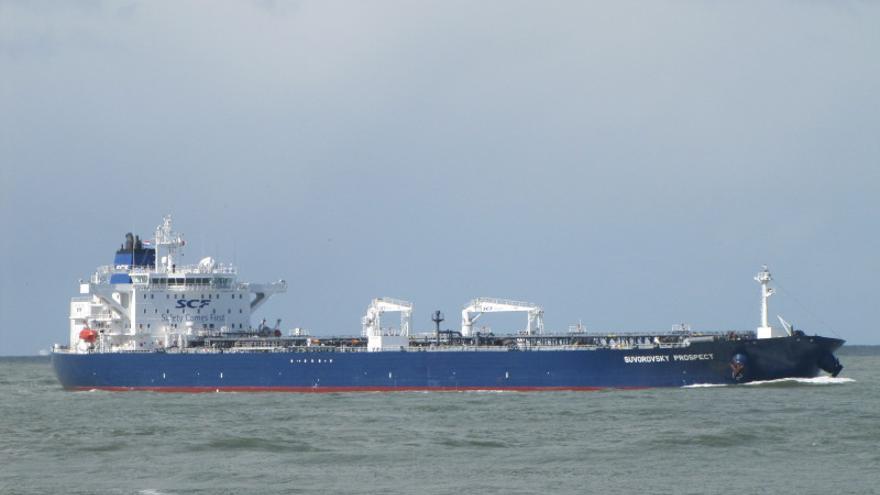
The Russian tanker “Suvorovsky Prospect” (Maritime Optima/Lennart Rydberg)
14ymedio, Havana, 14 July 2022 — In the midst of the harsh sanctions imposed by the West on Russia after the invasion of Ukraine and the deep energy crisis that Cuba is experiencing, a Russian tanker loaded with fuel arrived on the island on Thursday.
According to Reuters, the oil tanker SuvorovskyProspect, with the flag of Liberia, arrived at the port of Matanzas with about 700,000 barrels of fuel, loaded in the Russian port of Ust-Luga. The tanker brings supplies for Cuban power plants and gives Russia “a way out for products rejected by the West,” the British agency explains in its note.
The cargo has a value of about 70 million dollars according to the current price of the product on the market, and the ship is owned by a unit of the main Russian shipping conglomerate Sovcomflot, according to the Equasis maritime database.
Sovcomflot is under British, Canadian and American sanctions, and its fleet lost insurance backed by Western companies as a result of the Russian invasion of Ukraine, which now has gone on for almost five months. Europe and the United Kingdom are moving forward, Reuters says, towards an embargo on imports of Russian crude oil, scheduled for the end of this year.
The Russian oil tanker alleviates a desperate situation on the island, where fuel shortages are experienced in the main cities. In Havana, the official press reports every day on the availability of products at the gas stations the capital. continue reading
Most of the oil that reaches Cuba comes from Venezuela, which, according to Reuters, sent 66,400 barrels per day to the island in June.
In May, exports collapsed due to the changes introduced by the state-owned PDVSA, which requires prepayment for cargo as a result of the non-payment of some buyers. In May, the amounts that arrived in Cuba, which doesn’t pay the charges for the agreements with Venezuela, weren’t made public, but in April it was 32,000 barrels per day.
Translated by Regina Anavy
____________
COLLABORATE WITH OUR WORK: The 14ymedio team is committed to practicing serious journalism that reflects Cuba’s reality in all its depth. Thank you for joining us on this long journey. We invite you to continue supporting us by becoming a member of 14ymedio now. Together we can continue transforming journalism in Cuba.
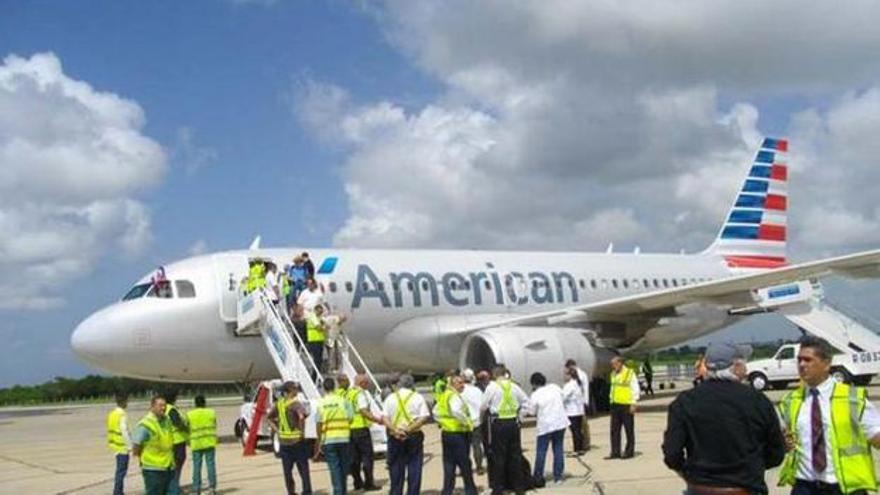
A flight of the US company American Airlines during a commercial trip to Cuba. (EFE)
14ymedio, Madrid, 14 July 2022 — On Wednesday, the United States approved the request of American Airlines to resume flights to five destinations in Cuba. The measure involves the return of the airline to the routes that connect Miami with Santa Clara, Varadero, Holguín, Camagüey and Santiago de Cuba.
American Airlines indicated that, starting in November, there will be two daily flights to Santa Clara and one a day to each of the remaining airports.
Currently, the company maintains six daily flights between Miami and Havana, a schedule that resumed in December 2021, after the reopening of the airspace closed due to the pandemic.
The return of the American Airlines flights was accompanied by several controversies; one of the most recent was the surcharge for the second suitcase. Until May, the second suitcase was charged at $40; now it is charged $65. The charge for the first suitcase, however, was lowered from $50 to $30.
In addition, the number of suitcases allowed if the origin is Cuba is limited to two free ones which, upon return, cost $200. Passengers were very upset with this measure, since travelers from other countries are allowed, for the same price, to take four. continue reading
The company’s return to the island was also marked by the increased price of its tickets, which amounted — in these complicated times — to almost a thousand dollars. In mid-January, the cost was approximately halved and, although it coincided with the start of the low season, US media claimed that the emptiness of the planes were a decisive factor in taking this measure.
American Airlines travel was interrupted in 2019, when the Trump Administration approved the ban on U.S. airlines from flying to eight international airports in Cuba outside Havana.
In June of this year, the Biden administration announced that it was reestablishing the affected commercial flights “with immediate effect.” Secretary of State Antony Blinken maintained that the measure was “in support of the Cuban people and in the interests of U.S. foreign policy.”
In addition to American Airlines, JetBlue and Southwest also fly to the Cuban capital.
Translated by Regina Anavy
____________
COLLABORATE WITH OUR WORK: The 14ymedio team is committed to practicing serious journalism that reflects Cuba’s reality in all its depth. Thank you for joining us on this long journey. We invite you to continue supporting us by becoming a member of 14ymedio now. Together we can continue transforming journalism in Cuba.
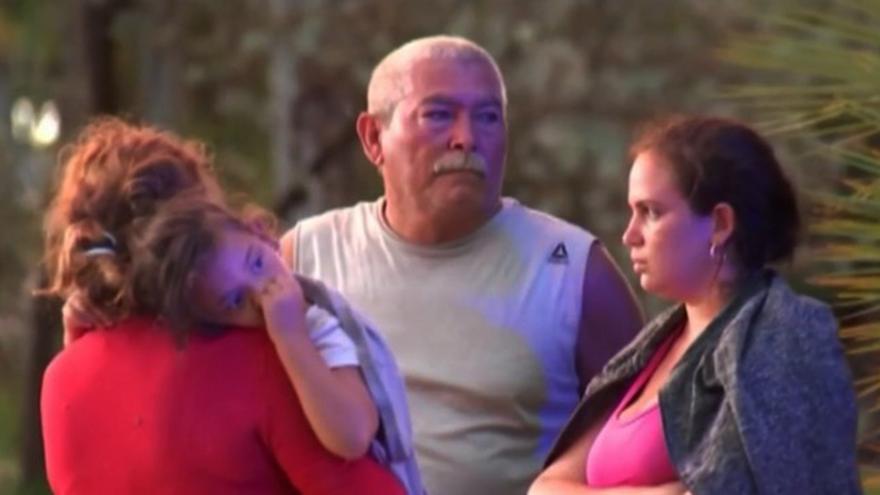
The group of 25 rafters that landed on Tuesday in Florida was taken into custody by the Border Patrol. (Screen capture)
14ymedio, Havana, 14 July 2022 — The United States Border Patrol took into custody 25 Cubans who arrived last Tuesday at a marina in Key Biscayne. The case is being investigated for human smuggling, according to América TeVé.
Immigration lawyer Willy Allen told the Miami media that the Coast Guard is convinced that the rafters were transported in a speedboat. Counsel points out that each migrant pays $10,000, so that at an average of 20 and 25 people, coyotes get $250,000 per trip.
In cases of human smuggling, Allen warned, the justice system could consider migrants as witnesses, so “they can be detained in a federal prison in Miami” to collaborate in the investigation.
Among the Cubans who set foot on land in Key Biscayne are a pregnant woman and a five-year-old girl who, according to the lawyer, may be more likely to receive a humanitarian permit and not be deported.
Augusto Martínez identified his pregnant daughter, Liliana González, 22, and his granddaughter Diana, 5, among the group of rafters. They informed him that her husband was traveling with them and that they had all left the city of Cárdenas, in the province of Matanzas. continue reading
Martínez was told that everything had gone well and although it took some work, they got where they wanted, according to Telemundo. Martinez pointed out that until he can hug his daughter, he will not be calm.
The United States Coast Guard reported that another 77 Cubans were repatriated on Thursday on board the ship Raymond Evans. The rafters were arrested at several crossings in the vicinity of Key West.
Among the images shared by the Coast Guard is a water bike in which three people are observed, who were arrested before reaching their target. Since October 1, 2021, 3,369 Cubans have been intercepted and repatriated.
Translated by Regina Anavy
____________
COLLABORATE WITH OUR WORK: The 14ymedio team is committed to practicing serious journalism that reflects Cuba’s reality in all its depth. Thank you for joining us on this long journey. We invite you to continue supporting us by becoming a member of 14ymedio now. Together we can continue transforming journalism in Cuba.
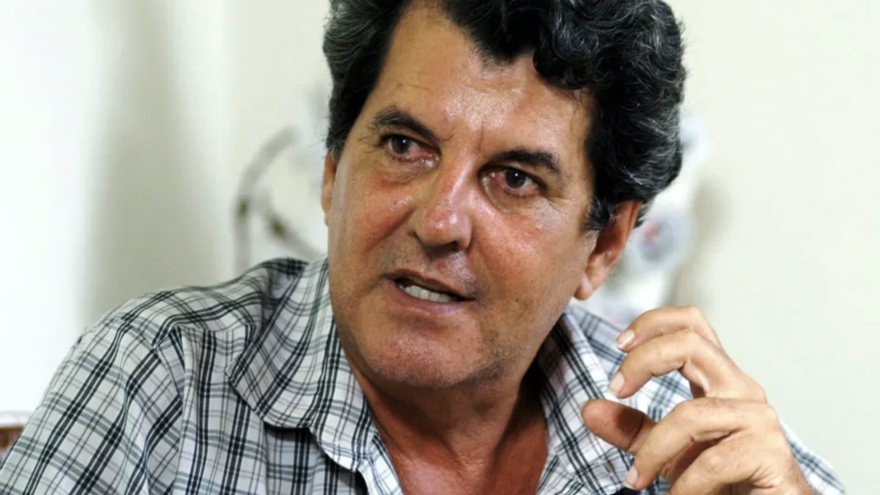
Cuban dissident Oswaldo Payá, in a photograph dated July 28, 2006, in Havana. (EFE/STR)
EFE (via 14ymedio), Miami, 14 July 2022 — Cuban opposition leader Oswaldo Payá, who died 10 years ago this month, will have a street with his name in Miami on the initiative of two commissioners (councilmen) from Miami Dade, as reported by the Payá family to different media.
The inauguration of Oswaldo Payá Sardiñas Way, which will cover the stretch of LeJeune Avenue between 11th and 14th streets northwest in Miami, will take place on July 21, the eve of the tenth anniversary of his death.
The Payá family has denounced to international organizations, including the Inter-American Commission on Human Rights (IACHR), the Cuban State as responsible for the death of the leader of the Christian Liberation Movement.
The bill sponsored by Miami-Dade Commissioners Rebeca Sosa and José Pepe Díaz to give a street in Miami the name of Oswaldo Payá received the support of the governor of Florida, Ron DeSantis, among other elected officials.
Payá’s family hopes that this designation will prompt federal legislators to approve a bill that assigns the name of the late opposition leader to the street of the Cuban embassy in Washington.
The bill was presented last March in the lower house of Congress by Republican Rep. Mario Díaz-Balart and a group of congressmen of Cuban origin, both Democrats and Republicans. continue reading
A similar bill sponsored by Ted Cruz and Marco Rubio, Republicans of Cuban origin, was approved in the Senate in 2021.
In addition to being the leader of the Christian Liberation Movement, Payá was the promoter of the Varela Project, a signature collection campaign carried out starting in 1998 in support of the presentation of an initiative to the Cuban Congress to recognize the rights of the Cuban people.
Payá died along with fellow opponent Harold Cepero in a car crash in Cuba on July 22, 2012. The driver of the car, the Spanish politician Ángel Carromero, was accused by the Cuban justice system of reckless driving and was imprisoned in Cuba, but, by an agreement between governments, he didn’t serve his entire sentence on the island.
“The truth is that they were killed by state security agents on orders that could only be dictated by Fidel or Raúl Castro,” stressed Rosa Maria Payá Acevedo, Payá’s daughter, who is at the head of the Cuba Decide movement, in statements made last March on the occasion of the presentation of a documentary about her father.
The Robert F. Kennedy Center handles the case and represents Payá’s family in the lawsuit filed against the Cuban State before the IACHR along with Harold Cepero’s relatives.
In a virtual hearing held on December 14, 2021, Carromero, of the conservative People’s Party, said that throughout the trip they were watched by State Security vehicles that followed them; one of them forced them off the road with a blow that caused the collision.
Translated by Regina Anavy
____________
COLLABORATE WITH OUR WORK: The 14ymedio team is committed to practicing serious journalism that reflects Cuba’s reality in all its depth. Thank you for joining us on this long journey. We invite you to continue supporting us by becoming a member of 14ymedio now. Together we can continue transforming journalism in Cuba.
Journalist Abraham Jiménez Enoa, co-founder of the independent magazine El Estornudo (14ymedio)
14ymedio, Havana, 14 July 2022 — Cuban Abraham Jiménez Enoa, co-founder of the independent magazineEl Estornudo, is among the last three winners of the International Press Freedom award granted annually by the Committee to Protect Journalists (CPJ). The award is shared with him in 2022 by journalist Niyaz Abdullah, from Iraqi Kurdistan; Ukrainian Sevgil Musaieva, director of UkrainskaPravda, and Vietnamese Pham Doan Trang, who has been imprisoned since last December.
About Jiménez Enoa, who has lived in Barcelona, Spain, since 2021, CPJ emphasizes that he is “a prominent voice” within the Cuban media, that he “provides new perspectives on the challenges for independent journalists” and that he “reports on issues rarely covered by the state media, including racism in Cuba.”
As a columnist for Gatopardo and The Washington Post, he has also collaborated in other international media, such as BBC World, Al-Jazeera and Univision, and Cuban media, such as OnCuba and El Toque.
The Committee recalls that in retaliation for his work as a journalist, Jiménez Enoa has had to face interrogations by State Security and the cut off of access to the Internet, when he lived in Cuba.
In October 2020, the political police threatened to imprison him if he continued to publish in The Washington Post, and to prosecute him for “usurpation of functions*,” months after which he took the path of exile. continue reading
With its award, CPJ recognizes that the island “continues to be one of the most challenging environments in the Americas for the press” and that “a new generation of Cuban journalists who just a few years ago saw a ray of hope for their independent projects face the harsh reality of new restrictions and censorship that make practicing journalism in Cuba more dangerous than ever.”
As for the other winners, the organization highlights the nine years in prison to which Pham Doan Trang was sentenced, in a summary trial, under article 117 of the Criminal Code of Vietnam, which provides for the prohibition of broadcasting news “against the State.” In Vietnam another 23 journalists are in jail, according to CPJ’s census, which mentions that nation as one of the five countries in the world where the most professionals are imprisoned.
With regards to Kurdish freelance reporter Niyaz Abdullah, the Committee highlights the coverage of the repression against Kurdish journalists in 2021, which earned her harassment by the authorities of that territory in northern Iraq and forced her into exile in France.
Finally, CPJ ponders the work done by Sevgil Musaieva at the head of UkrainskaPravda, especially after Russia’s invasion of his country, from which an English version of the newspaper was launched: Ukrainian Truth.
*Translator’s note: “Usurpation of functions” as a term in Cuban law equivalent to “practicing without a license,” and is illegal. In addition, the law requires ‘licenses’ for work not commonly ’licensed’ in other countries, including journalism.
Translated by Regina Anavy
____________
COLLABORATE WITH OUR WORK: The 14ymedio team is committed to practicing serious journalism that reflects Cuba’s reality in all its depth. Thank you for joining us on this long journey. We invite you to continue supporting us by becoming a member of 14ymedio now. Together we can continue transforming journalism in Cuba.
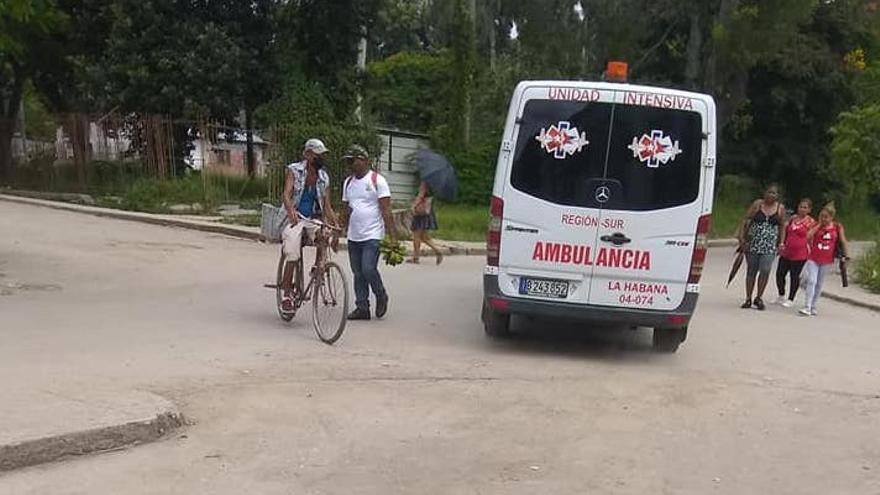
Young Andy Agüero Barrios died, after waiting for an ambulance that didn’t arrive, according to his mother. (Facebook/Maritza Barrios)
14ymedio, Havana, 15 July 2022 — Problems are accumulating for the Cuban authorities, and not even the old jewel in the crown can give joy. The latest worry has been the deaths from dengue hemorrhagic fever of a girl under the age of seven in Cienfuegos and a pregnant doctor. In addition, another minor died in Havana, while waiting unsuccessfully for an ambulance.
These deaths are an example of the bad situation on the island with the disease, which forced the Minister of Health, José Ángel Portal Miranda, to give a press conference this Thursday.
The Paquito González Cueto pediatric hospital in Cienfuegos published a letter defending what they consider an attack on its professionals and the use of a minor’s death by the Miami press. Paola Patricia Rodríguez, seven years old, died on Wednesday in this center after several days in intensive care, and the news circulated a day later amid criticism of the institution for failing to save the little girl.
“Our institution, since the night of last July 13, began to receive attacks from social networks on doctors, pediatric intensive care workers, nurses and other workers,” says the letter, disseminated on the institution’s Facebook account. “Those who are trying to hurt and distort the facts should know that there is no greater pain for a pediatric institution than the death of a girl or a boy. The pain is intensified because we are attached to our patients,” it continues.
The letter calls for an end to the manipulation and use of other people’s pain and claims that patients are important for health professionals. Hundreds of people expressed solidarity with the text, although some comments indicate that the problem is not the hospital workers, but the inadequacy of the human and material resources to treat the patients, a result of the deep crisis that the country is suffering.
The death is in addition to that of Mercy Hernández, a Cuban doctor whose death was reported on social networks by a friend who shared images of her funeral. The cause of the young woman’s death has not been revealed by this person, who only said that her pregnancy was complicated, but a Facebook user in the province commented that the doctor had dengue hemorrhagic fever. continue reading
The epidemiological situation in this regard is worrying, as confirmed by the data indicated by Portal Miranda on Thursday. In the first six months of the year, 3,036 cases of dengue were detected on the island in 12 provinces, and the forecast is not good. The minister was clear about it: “We are not at the worst moment.”
In the coming months, heat and humidity will function as an ideal breeding ground for the spread of the disease, according to the ministry’s forecast. In addition, the incidence rate has grown by 42% compared to the previous period, so the Minister of Health has called for extreme precautions.
Last week, Madelaine Rivera, National Director of Surveillance and Vector Control of the Ministry of Public Health, placed the increase so far this year at 21.7%, so the speed at which the situation is worsening is evident.
“Cuba has experience in the management of dengue, and the health system is prepared to assimilate the number of cases; however, what we don’t do now can complicate the epidemiological scenario in the coming months, which are the most complex for this disease, which is transmitted by the Aedesaegypti mosquito,” said Portal Miranda, although he acknowledged that the situation is problematic and the lack of basic medicines seriously affect the problem.
Several people confirmed to 14ymedio that at least two hospitals in Havana, Calixto García and Manuel Fajardo, are overwhelmed and materials of all kinds, including reagents, are missing. In Santiago de Cuba there is also a lack of bags for transfusions, according to this newspaper’s sources.
No mention was made, however, of the lack of fumigation reported by the residents of the capital, one of the areas most affected by dengue along with Holguín, Santiago de Cuba and Camagüey. The arrival of the mosquito brigades is always a cause of discomfort for citizens, who must leave their homes for the operation, but the effect of their lack is being noticed.
But the problems don’t end with dengue. Portal Miranda warned this Thursday of the increase that is occurring in data on COVID-19 infections. The disease has already reached its subvariant BA.5, derived from omicron, and the whole world is noticing its effects. The strain is transmitted even faster than its “mother,” and although it doesn’t seem to impact hospitalizations and deaths, countries are aware of the effect it can have, since the more people infected, the more chances of cases with complications.
“Although it’s more transmissible, so far it has not had an impact on health services or intensive therapies,” Portal said. However, the authorities have been recommending for days that the habit of a mask not be abandoned in crowded places.
The death of another minor in El Cotorro, Havana, while waiting unsuccessfully for an ambulance, gives emphasis to the situation. Maritza Barrios, mother of Andy Agüero Barrios, asked for help through her Facebook profile due to the lack of transportation to transfer her son, autistic and blind, to the hospital to receive an urgent transfusion. Although it is unknown what afflicted the boy, his mother desperately said that he needed an ambulance that was impossible to locate. A few hours later, according to the mother herself, the child died.
Translated by Regina Anavy
____________
COLLABORATE WITH OUR WORK: The 14ymedio team is committed to practicing serious journalism that reflects Cuba’s reality in all its depth. Thank you for joining us on this long journey. We invite you to continue supporting us by becoming a member of 14ymedio now. Together we can continue transforming journalism in Cuba.
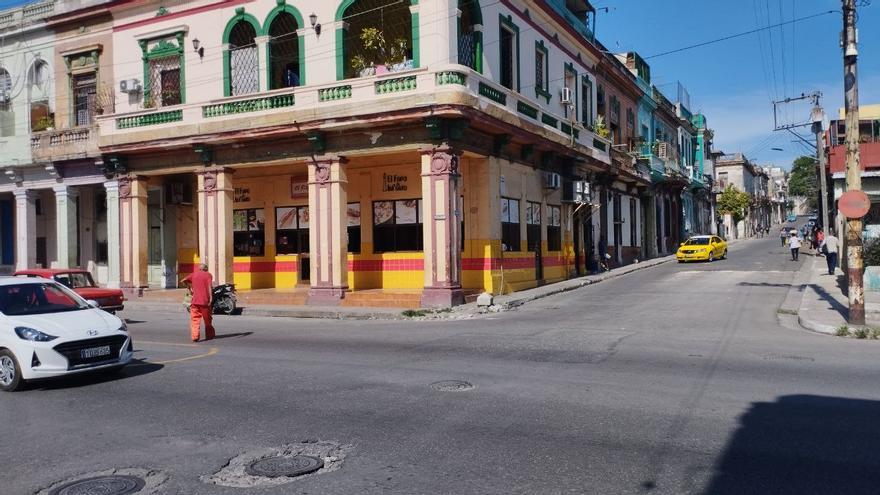
El Faro, one of the state stores that was completely empty this Monday. (14ymedio)
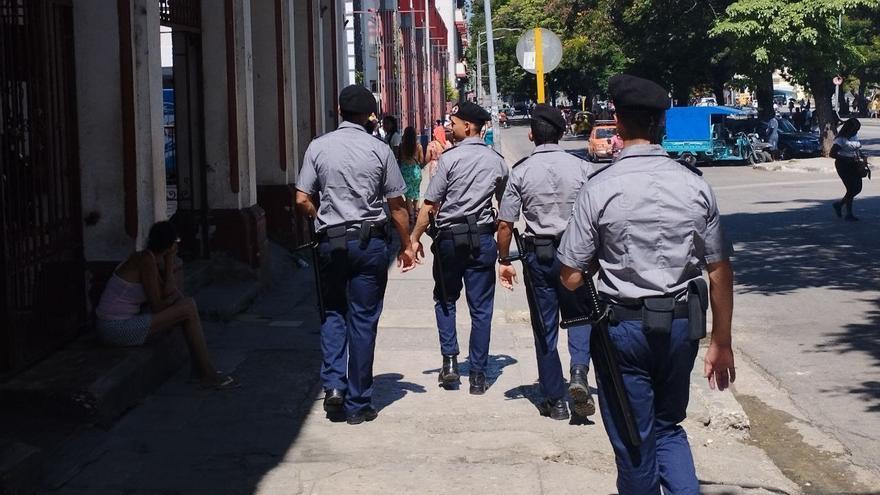
14ymedio, Juan Diego Rodríguez, Havana, 11 July 2022 — The harassment of independent activists and journalists since last week already foretold that this Monday, the one-year anniversary of the historic 11J demonstrations in Cuba, would be a day without disturbances. This is the case, at least in Havana, where numerous police officers, uniform and civilian, are deployed in the streets of the center. In their effort to maintain order, the authorities have even done what seemed impossible: they made the lines disappear.
“There’s nothing available in the neighborhood stores that always have lines in front, such as El Rápido, the Cupet de Infanta or Maisí. It seems that they’ve chosen to avoid the food lines today,” a neighbor of Central Havana tells this newspaper, surprised by the empty shops, the semi-deserted streets and the environment of surveillance.
In the Maisí store, located on Infanta Street, two other women commented that “there’s nothing for sale because, you know, today they don’t want people on the street.” Nor was there anything to buy at H. Upmann, on Zapata and Infanta, and Las Columnas, on Galiano.
At the doors, of course, there were individuals with an inquisitive attitude, who were clearly not there to buy, since nothing was offered. “Today there are more police than people on the street,” a boy murmured when he saw them. continue reading
The police operation was especially visible on Carlos III Street, which was full of officers. In the Plaza of the same name there was one business operating, with chicken and detergent for sale in pesos. On any other day, the line would have been massive; however, on Monday, there were only three people waiting.
Uniformed and civilian agents guarded the streets of Central Havana. (14ymedio)
“Here, here’s the line, they replied to an old man who asked, surprised by the low number. “And why are there so few people?” he asked. “They’ve only allowed the bodegas (ration stores) to be open today,” they explained.
On the door, a sign announced the distribution of the bodegas for the People’s Council of Pueblo Nuevo, the only one that has been open from June 22, without any modification to the rules of last May 20. Since then, purchases have been restricted by municipality and “cycles,” a controversial measure not only to distribute scarce products but also to avoid turmoil in the lines.
“It’s a shame there isn’t even one place open, not even one line, in all of Havana. It’s incredible,” exclaimed a boy also from Central Havana who, in vain, was looking for a place where he could shop paying in national currency.
The strategic points of that neighborhood, one of the emblematic scenarios of last year’s 11J demonstrations, were full of officers on Monday. A woman summarized the situation when passing a group of four Black Berets [Special Forces] walking along Boulevard San Rafael: “Not even one fly is flying here today.”
Translated by Regina Anavy
____________
COLLABORATE WITH OUR WORK: The 14ymedio team is committed to practicing serious journalism that reflects Cuba’s reality in all its depth. Thank you for joining us on this long journey. We invite you to continue supporting us by becoming a member of 14ymedio now. Together we can continue transforming journalism in Cuba.
In some parks in Havana, this same day, schoolchildren were seen singing revolutionary slogans. (14ymedio)
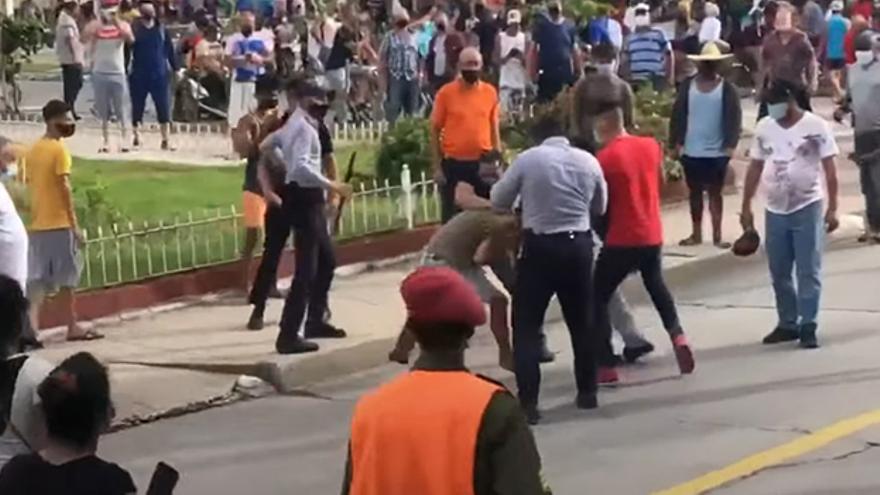
14ymedio, Havana, July 8, 2022 — As July 11 approaches, State Security deploys its tentacles to neutralize any attempt to celebrate the first anniversary of the historic protests that took place in dozens of places throughout the island.
This Friday, independent reporter Luz Escobar was summoned to receive a very clear warning: On July 11, 12 and 13, she will be under “surveillance” at home and, therefore, will not be able to leave.
“The State Security officer who calls himself Ramses, and who frequently represses me, called this afternoon to tell me that I’m summoned tomorrow at 10 am to the identity card office for an ’interview,’” Escobar reported on her social networks on Thursday. “He says that, based on new regulations, they don’t have to give me written notice.”
The journalist confirmed what she predicted: “He wanted to let me know that as a result of the ’complicated’ days that are coming now, I will have surveillance and a group of police on the ground floor of the building to prevent me from going out on the street in those days.” Ramses himself assured her that he would be on duty.
Leo Fernández Cruz, from Guanabacoa, was also quoted this Friday. “On the past July 11, I didn’t take to the streets,” he recalled. Months later, the young man was arrested for six hours, after the frustrated call of the Archipelago platform for the Civic March for Change on November 15.
Likewise, other activists on the island, such as Yerly Velázquez, from Santa Clara, have also been summoned by the political police. The young man, his mother told this newspaper, was accused this Thursday of “contempt” for his posts on social networks and they even asked him to appoint a lawyer for his defense. continue reading
Sources from Cienfuegos say that some schools have been closed since Friday to be able to concentrate police and soldiers in anticipation of this coming Monday.
In some parks in Havana, on the same day, schoolchildren were seen singing revolutionary slogans. “My children have already been summoned to activities in the nearest park, for today, Friday and Monday the 11th,” Juliette Isabel Fernández, wife of journalist and opponent Boris González, who was also threatened by State Security, wrote on social networks. “It would be crazy that, with a father summoned to receive the warning that on Monday the 11th he won’t have the right to leave the house and move through the streets, our children would attend that call,” she said, while reporting that “patriotic music” had been playing in the neighborhood since the morning.
From Sancti Spíritus comes a report that they are “mobilizing” workers to be “guards” in state enterprises. At Alexander Fábregas’ home, reports his brother, U.S. resident activist Néstor Estévez, the whole family is “peacefully quartered,” from this Friday at three in the afternoon until Monday, to protest “inside the house” for the anniversary of July 11.
According to other testimonies, in several buildings in Havana residents have been called this weekend for an “exercise of revolutionary popular surveillance,” consisting of putting up “decorations and flags” as a way to show that “we are still in combat,” in the words of the president of the neighbors’ council of a building in El Vedado.
In addition, since this Thursday, Internet service on the island has been slow at times. It doesn’t go unnoticed that the communication blackout was one of the tactics carried out by the regime, with the help of the state telecommunications monopoly Etecsa, to prevent the repression of 11J from being broadcast in real time, such as the first demonstration of that day in San Antonio de los Baños.
Translated by Regina Anavy
____________
COLLABORATE WITH OUR WORK: The 14ymedio team is committed to practicing serious journalism that reflects Cuba’s reality in all its depth. Thank you for joining us on this long journey. We invite you to continue supporting us by becoming a member of 14ymedio now. Together we can continue transforming journalism in Cuba.
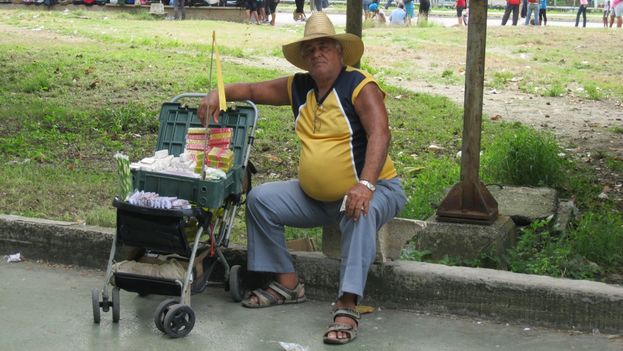
A sole proprietor sells peanuts and sweets in Havana streets. “Businesses” this small were confiscated during the 1968 Revolutionary Perspective. (Luz Escobar)
14ymedio, Elías Amor Bravo, Economist, July 7, 2022 — Before the next International Congress of Business Management and Public Administration to be held in Havana until July 8, the Deputy Minister of Economy, Johana Odriozola, has made statements to the official newspaper Granma that have been published under the title “Transformations in the Cuban business system in order to grow with efficiency.”
It seems that this congress will address how to “change the ways of thinking and redesign production processes to incorporate into the Cuban business system topics such as Industry 4.0, Artificial Intelligence, Big Data, the Internet of Things and cloud computing.” What a great waste of time!
Cuban communists are convinced that in their socialist model it’s possible to develop a business system that is dependent on the state, on what they call a socialist state enterprise, which they want to promote and give a more relevant role within the economic system. But haven’t these socialist companies been protagonists in Cuba’s economic history since 1959?
After the end of the confiscation proceedings initiated in 1959, with the so-called “Revolutionary Offensive” of 1968, all Cuban productive capital passed into the hands of the state without leaving room for private economic activity. The state became the owner of the means of production and the companies, so its ability to influence the economy and society increased significantly. The companies were all state-owned, and there was no room for private enterprise. And this is how the Cuban economy worked until a few years ago when formulas such as self-employment or micro, small and medium-sized enterprises were approved, which, however, have little to do with the concept of private enterprise that we know.
Private enterprise is based on three fundamental elements: property rights, autonomy and profit motive. None of the three are present in Cuban socialist state enterprises, and therefore, the leaders are unable to attract investments for them, or take advantage of the human talent they have, or give as much flexibility as possible, nor autonomy for the exercise of their rights. And this formula is what Mrs. Odriozola wants to present and vindicate at the congress. continue reading
To achieve transformations in the business system, the communists have opened their hand with respect to state enterprise, for example, with measures such as “the elimination of profit distribution limits, the expansion of its corporate purpose, a link with the non-state sector and the creation of state-owned micro, small and medium-sized enterprises.”
Nothing to do with the implementation of a legal framework based on private property rights, as a main reference for the exercise of business activity, much less with decision-making autonomy or the generation of profits. These elements would give the business system a boost, but they are despised by the Cuban communist leaders, who don’t even want to hear anything about them.
Apparently, the leaders of the regime are concerned about the insertion of the new economic actors into the Cuban business system; above all, that the regime might lose the ability to interfere and control the activity of the private sector, within the Marxist philosophy of economic interventionism. It is in the interest of the regime that companies, state or private, be servile and subject to the principles of political hierarchy that establish, of course, who rules and who obeys.
That is why, at the same time that they introduce the previous solutions to lend a hand to the state company, they see the need to keep the new economic actors under control, recognizing that any opening of spaces for state enterprises has its transfer to the private sector.
López Calleja already saw it at the time from GAESA,and that is why he used all his power to limit and stop the development of self-employment in tourism or gastronomy. The problem with the Cuban socialist state enterprise is that it’s inefficient by its own nature, lacks motivation and incentives, and is unable to face private competition when it receives a simple authorization from the state to operate.
Hence, Castro leaders think that the transformations that have been implemented in recent years have benefited private actors, but they haven’t done so to state companies, and, therefore, they want to recover lost space and time. Another thing is that they get it. The intention of the regime, announced by Mrs. Odriozola, is that what remains of the Management Task, the 63 measures of the agricultural sector, the macro programs of the National Economic and Social Development Plan 2030, government management based on science and innovation and territorial development, Díaz Canel’s Strategy — everything will be reviewed to put it at the service of socialist state enterprises.
The deputy minister said that the implementation of these measures has had unexpected and undesirable effects on the regime, citing as an example the informal market with a dollar exchange rate that doesn’t conform to the officially approved rate and that slows down the links between the state sector and private actors. It’s a false argument, which is not sustained, because that informal market was born from the incompetence of the regime to consolidate a fixed exchange rate system by the Central Bank, lacking the necessary currencies.
Other unwanted effects, such as the scarcity of bank financing, are due to the growing demand for financial resources by the state to finance its growing deficit and indebtedness; on the other hand, the idea of streamlining import processes has not worked because the state intermediary agencies created by Malmierca don’t function efficiently.
Therefore, starting to build the house from the roof, as Mrs. Odriozola wants to do, won’t work. To get state-owned companies to “change the ways of thinking and redesign production processes, with topics such as Industry 4.0, artificial intelligence, Big Data, the Internet of Things and cloud computing” requires much more than an international congress. It takes political will, clear ideas and assuming the failure of the socialist business model.
The leaders will not get anywhere if that business system is not consolidated with firm legal bases for the respect of property rights. And there is a long way to go.
Translated by Regina Anavy
____________
COLLABORATE WITH OUR WORK: The 14ymedio team is committed to practicing serious journalism that reflects Cuba’s reality in all its depth. Thank you for joining us on this long journey. We invite you to continue supporting us by becoming a member of 14ymedio now. Together we can continue transforming journalism in Cuba.
Protests motivated by economic and social rights predominated for the second time, totaling 175. (Screen capture)
EFE (via 14ymedio), Miami, July 6, 2022 — Cuba may be the scene of many rebellions in the short-term, according to a report by the Cuban Observatory of Conflicts (OCC) released on Tuesday, which points out that the 258 protests of last June exceeded by 11 those of the same period in 2021.
The June report considers that the possibility of “one or more rebellions of considerable magnitude is extremely high in the short term, whether or not they occur this July.”
The OCC report, an autonomous civil society project supported by the Foundation for Human Rights in Cuba, based in the United States, emphasizes that Havana continues to believe that “without solving the hell of daily life it will prevent new rebellions by cutting off communications among potential rebels.”
In June, protests motivated by economic and social rights predominated for the second time, totaling 175 (68%), while 83 (32%) focused on political and civil rights.
The OCC indicates that, in fact, the largest increase occurred in protests for economic and social rights, 62% more than the previous month. This can be attributed to the deterioration of living conditions, which the OCC classifies as “daily death.”
In addition to the protests against product shortages, inflation and the collapse of the health system, 39 caused by power outages were added.
“These circumstances, together with the sudden death of General (Luis Alberto Rodríguez) López-Calleja and the ever closer eventuality of the death of Raúl Castro, mean that new scenarios of social rebellions can open up in the coming months,” it warns.
The report says that rebellions can have “violent tonalities in the increasingly deteriorated Cuban reality,” creating conditions for a rupture in the chain of command of the Ministry of the Revolutionary Armed Forces and the Ministry of the Interior if there are units that refuse to repress them.
It indicates that the threats to governance in Cuba go beyond the conflict between the population and power, since there are other factors such as the social distance between generals associated with the Grupo de Administración Empresarial S.A (Gaesa) and officers exclusively in charge of military tasks.
The OCC claims to know that there is a growing malaise within Gaesa in the active and retired officers of the Revolutionary Armed Forces (FAR), a multisectoral complex with more than fifty companies that is not accountable to the National Assembly.
’There are indications that this was the factor associated with the abrupt dismissal of General Leopoldo Cintra Frías” in 2021, it emphasizes.
Translated by Regina Anavy
____________
COLLABORATE WITH OUR WORK: The 14ymedio team is committed to practicing serious journalism that reflects Cuba’s reality in all its depth. Thank you for joining us on this long journey. We invite you to continue supporting us by becoming a member of 14ymedio now. Together we can continue transforming journalism in Cuba.
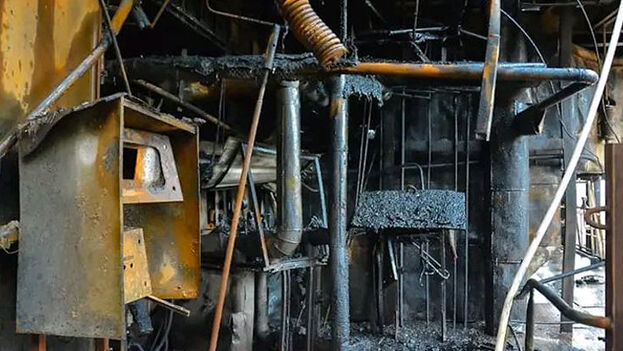
Damage after the fire at the Felton thermoelectric plant. (Periódico Ahora)
14ymedio, Elias Amor Bravo, Economist, 9 July 2022 — We are approaching the first anniversary of July 11, the day when the Cuban people peacefully and courageously expressed that they were in a position to demand a political change for democracy, freedom and human rights in Cuba. And while the regime recreates itself in propaganda and manipulation, in this blog we are going to review what has happened in the Cuban economy during the last year. Because if one thing is true, it is that the accelerated deterioration of the economic situation in 2021 due to the “Ordering Task*” was a catalyst that prompted the people to protest against their rulers and convey an idea: things are not going well and they have to change.
As will be shown in this blog post and the next ones until July 11, Cubans have no reason to think that their complaints have been addressed by the communist regime. Quite the contrary.
Let’s begin with the blackouts. During the last year, at an average of two hours per day without power, the average Cuban has had to endure more than 700 hours of blackouts. That is to say, put all the hours together, and that is the equivalent of more than 30 24-hour days/year without a power supply. So no one can live normally.
It’s true that last year the blackouts weren’t as continuous and intense as this year, and people remain distressed because the situation isn’t adequately explained, nor can it be resolved with their own means. Worst of all, people end up learning about what is happening a posteriori and contemplate with dread the idea that behind the interruption of power there is nothing more than the laziness of the leaders.
As a result of the fire, which caused damage to the unit’s turbine, there was a leak in one of the boiler tubes through which national crude was circulating. Once again, national oil and its disastrous sulfur composition are blamed. So even when the boiler was turned off, the high temperatures inside ended up causing the fire. And as a result of all this, the necessary synchronization with the National Electrical System (SEN) couldn’t be carried out, which meant a loss of production.
Like playing with fire. On this occasion, the regime forced the general director of the thermoelectric plant, in an exceptional situation, to make a statement to the Cuban television news, to explain that workers of the plant and forces of the fire brigade put out the flames in just 45 minutes, highlighting that there were no injuries or deaths.
Viewers were overwhelmed by the appearance of the director on national television. They don’t usually descend to these levels of the hierarchy, and it seems that the regime opted for the saying “each stick holds its candle.” Cubans learned on the news that because of the fire, which occurred at 2 p.m., Block 2 of Felton had damages described as “considerable and not easy to eradicate,” in a clear acceptance that power outages will continue. The photo report in the state press gave a good account of the disaster caused by the flames.
So, as a preventive measure, after the fire that paralyzed Unit 1, which provided stability of around 250 megawatts to the SEN, was put out, production resumed in order to synchronize the power at night. Nothing was said about this alleged return to normality.
Cubans, a year after the July 11 demonstrations, are fed up with so much talk and the technical, anodyne explanations about the origin of the blackouts, and increasingly confused about when the lights will come on, because there is more time of darkness than light. They know that blackouts appear and reach some areas while in others they don’t.
For example, in the most confrontational neighborhoods, where the regime detects a higher level of social unrest in the population, electricity is maintained, while it disappears in the interior areas of the country and where there are medium-sized populations. This is intended to lessen the feeling of anger at the regime, which these blackouts keep alive in large sectors of the population. Blackouts have continued, a year later, with even greater incidence. There is no solution to this problem in the Cuban communist regime.
The blackouts will continue. *Translator’s note: Tarea ordenamiento = the [so-called] ‘Ordering Task’ is a collection of measures that include eliminating the Cuban Convertible Peso (CUC), leaving the Cuban peso as the only national currency, raising prices, raising salaries (but not as much as prices), opening stores that take payment only in hard currency which must be in the form of specially issued pre-paid debit cards, and a broad range of other measures targeted to different elements of the Cuban economy.
Translated by Regina Anavy
____________
COLLABORATE WITH OUR WORK: The 14ymedio team is committed to practicing serious journalism that reflects Cuba’s reality in all its depth. Thank you for joining us on this long journey. We invite you to continue supporting us by becoming a member of 14ymedio now. Together we can continue transforming journalism in Cuba.
Customers have to use the flashlights of their cell phones to be able to check the prices of merchandise. (14ymedio)
14ymedio, Juan Diego Rodríguez, Havana, 2 July 2022 — Private workers who rent state premises in the stores of Central Havana are experiencing martyrdom in these days of intense blackouts due to the imposition of working without electricity. “This is a lack of respect for the amount of money we generate,” one of the self-employed complained this Saturday morning, while fanning himself to relieve the heat.
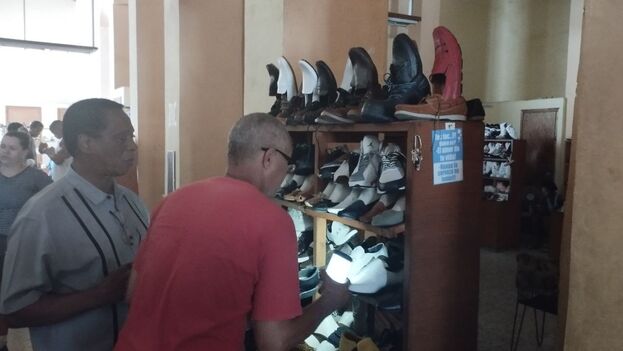
Customers have to use the flashlights on their cell phones to be able to check the merchandise and see the prices. “It’s a lot of work to be able to pay. I had to use the flashlight on my cell phone to give the price to the owner of the business where I bought some shoes,” explains Xiomara.
“It’s like a cave in here, these poor people are working without a fan and so are we, the poor customers. Every time I enter one of these stores I go out dripping sweat,” adds the woman, who had to enter several places to be able to determine which shoes to buy.
“It’s to save electricity,” they say, “It’s the order from above,” “There’s no power because they turn off the switch,” are some of the answers that sellers repeat the most in the face of the anger or restlessness of customers. The affected shops are mainly located on Neptune, Galiano and Monte streets.
“I just entered a store and it’s a sauna,” said a young man who tried to buy some accessories for his cell phone but gave up in the face of the darkness and heat inside the rented space. continue reading
In contrast, the self-employed who work on private premises don’t suffer from this measure. “Everyone has their tables lit, with fans connected. Everything is well lit; the mess is in the state stores,” says a salesman who knows the area.
But it’s not just about heat and darkness. Health problems proliferate where people crowd into poorly ventilated spaces. In recent days, reports of respiratory and gastrointestinal viruses have also increased, and people fear staying for long in the overcrowded and unheated spaces.
Two customers try to look at some shoes in a store on Neptuno and Galiano. (14ymedio)
“They should give you hazardous duty pay,” a customer told sellers at a centrally located, privately managed store on the corner of Neptune and Galiano on Friday. “I was only there for a minute and I left with shortness of breath. I don’t know how they can spend hours inside, to be honest.”
Last April, the Government approved the lease of state premises that were in disuse to the self-employed and cooperatives. Among the measure’s objectives is to “increase participation in the economy, promote development, diversification of production, productive chains and economic and social well-being,” according to the resolution of the Ministry of Internal Trade. Then it became clear that it’s the state that manages these establishments.
Translated by Regina Anavy
____________
COLLABORATE WITH OUR WORK: The 14ymedio team is committed to practicing serious journalism that reflects Cuba’s reality in all its depth. Thank you for joining us on this long journey. We invite you to continue supporting us by becoming a member of 14ymedio now. Together we can continue transforming journalism in Cuba.
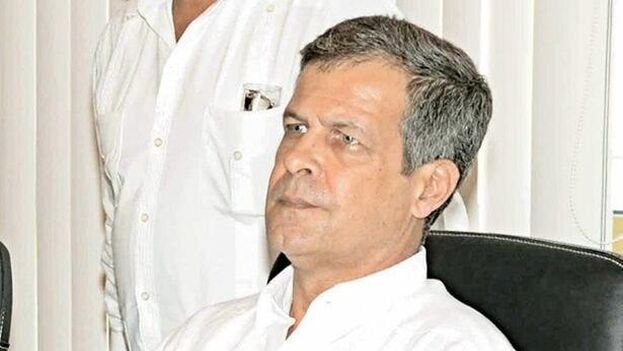
López-Callejas was reported to maintain a low profile despite his powerful positions. (Screen capture)
14ymedio, Elías Amor Bravo, Economist, 2 July 2022 — The bankruptcy of the Cuban economy and the administration of the enormous wealth of the Castro family are two factors in a first assessment of what Luis Alberto Rodríguez López-Calleja’s death means from the economic perspective, and his legacy can be evaluated in terms of these two objective data. The economic crisis is caused by the limitations to growth in the private sector, the SMEs [small and medium enterprises] and the CNAs [Agricultural Cooperatives]. In addition, the State’s absolute control of economic activity (the internal blockade) is one of the worst legacies of the hidden, unlimited power exercised by López-Calleja from the monopoly of GAESA, the Business Administration Group of the Revolutionary Armed Forces, which contributes 80% of the economy’s GDP.
In fact, López-Calleja was, from the shadows of his political position, one of the main opponents of the development of private actors in sectors such as hospitality, gastronomy, transport, small craft trade to tourists, etc., as soon as he saw that they became a counterpower that could curb the spectacular balances of the Regime’s mixed businesses with foreign companies. His man in government, Prime Minister Manuel Marrero, was in charge of making things more and more difficult for emerging private actors.
There is no doubt that López-Calleja was efficient in managing the Castro family’s wealth and income. He maintained the most absolute lack of transparency, moving amounts that are estimated to be spectacular and increasing the results from year to year, which is what is expected of managers.
In fact, thanks to this, he was promoted to the highest levels of the army and even represented the republic in the Assembly, which was interpreted as a direct political statement to Cuban President Díaz-Canel in the face of his possible replacement. The position of “counsel to the president” was a direct and clear message. continue reading
Therefore, the two unknowns of who will be the substitute for these very relevant functions raise, at least for the time being, a scenario of crisis and uncertainty about the political model of the Regime. It’s even possible that Raúl Castro, who is responsible for this decision and who, at an advanced age, may be thinking that life disappears around him at great speed, will ignore these issues. The position that until now was concentrated in a single person could even be divided, and this would also be a challenge for the Regime, accustomed to dealing with a single element for the two tasks.
Apparently, at the time these lines are written, it seems that one of the unknowns has already been resolved, with the alleged appointment of Raúl’s son as the head of GAESA, which implies that the family has blatantly showed Cubans, even more than with López-Calleja, who rules the economy and the country. A false move? Or could it be that there is no one else in the Regime to occupy these decisive positions of great economic and political influence?
As the State newspaper Granma says in the eulogy that has been dedicated to the deceased, “he was a man of high commitment and loyalty to the Cuban revolution” with “great ability to make decisions and take on challenges.” Finding someone with these characteristics is a priority because if they don’t get it right, the bases that support the Regime can falter.
López-Calleja had all the economic power, and if he didn’t want more, it was for his own reasons. In recent years, from the Economic Political Commission in 2006, and later from 2011 in the Government Commission for Attention to the Mariel Special Development Zone, he made a good part of the decisions that have been a brake and an obstacle to the development of the private sector, which in this blog is called the “internal embargo” of the Cuban economy, much more harmful and detrimental than the external one.
Granma concludes his eulogy by saying that “his contributions to the defense of the Homeland and the development of the national economy, together with his attitude in the fulfillment of each of the missions assigned throughout his exemplary life, made him worthy of various decorations and recognitions granted by the Council of State of the Republic of Cuba.” This confirms that closeness to the core of power that acted as an element of pressure and fear in the face of his potential rivals. No one dared to oppose him.
But the official communist newspaper is wrong. It’s not true that López-Calleja’s legacy highlights that “model of business system that serves as an example to the country, for having demonstrated its efficiency.” In reality, the management of political monopolies says very little about who is in charge. It’s an easy task, which, on the other hand, usually has the impact of who has been at the forefront for so long. His substitute, whether Raúl’s son or someone else, will find it difficult. The sale of GAESA to the private sector will always be a possibility if things don’t go as expected, but then, will the sale of the means of production pass to the Cuban people as the constitution says? I doubt it.
Translated by Regina Anavy
____________
COLLABORATE WITH OUR WORK: The 14ymedio team is committed to practicing serious journalism that reflects Cuba’s reality in all its depth. Thank you for joining us on this long journey. We invite you to continue supporting us by becoming a member of 14ymedio now. Together we can continue transforming journalism in Cuba.
The Cuban authorities expected much more from the Biden government than they are getting. (14ymedio)
EP/14ymedio, Madrid, June 21, 2022 — Cuba’s Foreign Minister, Bruno Rodríguez, has reproached the U.S. President, Joe Biden, for not having a policy of his own towards Cuba and for maintaining the “maximum pressure” of his predecessor, Donald Trump.
“President Biden doesn’t have a policy of his own towards Cuba. It shared elements of the previous Democratic government’s policy. If you read the Democratic electoral platform, it contains another policy towards Cuba,” Rodríguez said in a video posted on social networks.
Rodríguez also recalled the electoral promises “in his own voice” of now-President Biden. “He promised U.S. voters and also Cubans living in Florida, but unfortunately the policy applied by President Biden is President Trump’s maximum pressure policy,” he said.
“It’s a policy that not only causes harm and suffering to the Cuban people, that prevents the development of our economy, that encourages irregular emigration to the United States, but it’s also a policy that damages the national interest of the United States,” he said.
During the election campaign, both Biden and Kamala Harris, the current Vice President, announced that they would reverse some of the measures taken by their predecessor in office with respect to Cuba, including limits on remittances, flights and consular services. Those announcements encouraged Havana, which thought that a second thaw would take place, similar to what happened in Barack Obama’s term, in which Biden was Vice President.
However, the White House has strictly complied with its commitment and, in mid-May, it announced the reestablishment of commercial flights to Cuba, which until now arrived only in Havana, the resumption of the family reunification program and the suspension of the $1,000 per quarter limit on remittances. continue reading
Secretary of State Anthony Blinken has argued that these actions are “in support of the Cuban people and in the interests of U.S. foreign policy.”
However, the Administration has maintained the bulk of its policy towards the island, spurred by the repression after the 11J protests, according to senior U.S. officials. The clearest demonstration of that position was the refusal to invite Cuba to the recent Summit of the Americas held in Los Angeles.
Last Thursday, Washington announced that it has taken measures to impose visa restrictions on five unidentified Cuban officials due to their links to the trials and the imprisonment of 11J protesters.
These sanctions, according to the statement, are linked to “unfair trials” and the sentences and imprisonment of protesters. According to the U.S. Government, the Cuban authorities “deny citizens their basic human rights and fundamental freedoms.”
Translated by Regina Anavy
____________
COLLABORATE WITH OUR WORK: The 14ymedio team is committed to practicing serious journalism that reflects Cuba’s reality in all its depth. Thank you for joining us on this long journey. We invite you to continue supporting us by becoming a member of 14ymedio now. Together we can continue transforming journalism in Cuba.
Raúl Castro and Miguel Díaz-Canel during the Eighth Congress of the Communist Party of Cuba. (Revolution Studies)
Elías Amor Bravo, Economist. 16 July 2022 — Another character from the Party, who has decided to enter directly into economic affairs, is Joel Queipo Ruiz, identified in the State newspaper Granma as a member of the Secretariat of the Central Committee of the Party and head of its Economic-Productive Department, a name that sounds like a soft drink.
In Cuba, as you know, nothing is accidental, and if someone enters the arena, they don’t do so by their own decision, but because they have previously been authorized by the hierarchy. This Queipo, according to Granma, visited the province of Santiago de Cuba on June 14, along with more than half a dozen other communist leaders, to check the continuity of the agreements of the Eighth Party Congress. And he even directed his steps to the Antonio Maceo thermoelectric plant, in Santiago de Cuba, at a time when the blackouts have become the main source of concern and criticism of the Regime by the population.
There he became interested in the process of its generating units, and, in particular, “dialogued in the workshops with those who, to keep them running, are true examples of the creative resistance currently called for in the face of the intensification of the blockade.” Granma’s report seems to be tailor-made by someone “promotionable.”
What can I say? Minister Gil [Cuban Deputy Prime Minister and Minister of Economy Alejandro Gil Fernández] must be thinking the same thing as I am, right now. Maybe Cuban president Díaz-Canel is looking for a replacement and some fresh air to buy time. It seems evident that Gil’s team is being identified as the culprit of the current economic situation; its days may be numbered, and this greater attention to Queipo may be related to a spare part in sight. The truth is that you never know what could be better, or worse.
Queipo pointed to the need to achieve the famous “productive chains” of Díaz-Canel, and in the information collected in Granma, he repeated this mantra on several occasions, both with reference to the role that corresponds to “the Party in the current complex scenario,” and in allusion to the conclusions of the Second Economic-Productive Conference Cuba 2022, which he attended as a representative authority.
The fact that a political leader is a prime mover doesn’t sit well. Even more so when the team that runs the Cuban economy is convinced that the responsibility for the current disaster is not theirs, and that all they can do is fold their sails and wait for favorable winds to blow again. continue reading
But that position is suicidal, even in the Castro regime, where 62 years don’t seem like a long period of time. So changes in the economic direction of the country may be closer than ever, as happened once to Murillo when the “ordering task*” guidelines were a real disaster for the economy.
Queipo has entered strongly into this scenario of the economy’s terminal crisis and has declared with a solemn tone “that it is necessary to unify key areas of political-economic assurance to the new economic actors and territorial organisms of the State, and the elevation of the economic culture of the population.” These populist and Party messages mean nothing.
However, he has placed himself opposite Gil, who only talks continually about “fulfilling the plan.” Queipo’s agenda is broader, but it doesn’t go to the core of the problem, which is the economic and social model, and it entertains itself by betting on the “chains” that are considered necessary to increase production and reduce inflation. This shows the same naive interpretation of the fight against price increases, in absolute accord with Gil and his team.
In a populist attempt to reach new entrepreneurs, Queipo proposed the mapping of the Cuban Business Guide to all territorial levels, “so that economic actors from the same locality are recognized and linked,” and asked that the Third Conference multiply its meetings at the local level. By the way, the Business Guide is the result of the joint work of the National Association of Economists and Accountants of Cuba, the Yellow Pages of the Telecommunications Enterprise of Cuba S.A. and the private company SME Dofleini S.R.L.
At the same closing ceremony, Malmierca said the same thing as always “that the socialist state enterprise is at the center of the effort to reactivate the national economy and will continue to strengthen with the linking of the country’s new economic actors.” Not even he believes it. Speculation goes through everything. He knows that he has been amortized for a long time and is wasting chips in a game in which he has little to win.
Reading between the lines of the information in the state press, it seems evident that Díaz Canel is not going through the best political moment of his career and that, once again, he is looking for support in the empty shell that is the Communist Party. When will they understand that the only support they can have is that of the Cuban people in their call for free, democratic and multi-party elections, and then go home?
*Translator’s note: Tarea ordenamiento = the [so-called] ‘Ordering Task’ is a collection of measures that include eliminating the Cuban Convertible Peso (CUC), leaving the Cuban peso as the only national currency, raising prices, raising salaries (but not as much as prices), opening stores that take payment only in hard currency which must be in the form of specially issued pre-paid debit cards, and a broad range of other measures targeted to different elements of the Cuban economy.
Translated by Regina Anavy
____________
COLLABORATE WITH OUR WORK: The 14ymedio team is committed to practicing serious journalism that reflects Cuba’s reality in all its depth. Thank you for joining us on this long journey. We invite you to continue supporting us by becoming a member of 14ymedio now. Together we can continue transforming journalism in Cuba.
 14ymedio, Havana, 14 July 2022 — In the midst of the harsh sanctions imposed by the West on Russia after the invasion of Ukraine and the deep energy crisis that Cuba is experiencing, a Russian tanker loaded with fuel arrived on the island on Thursday.