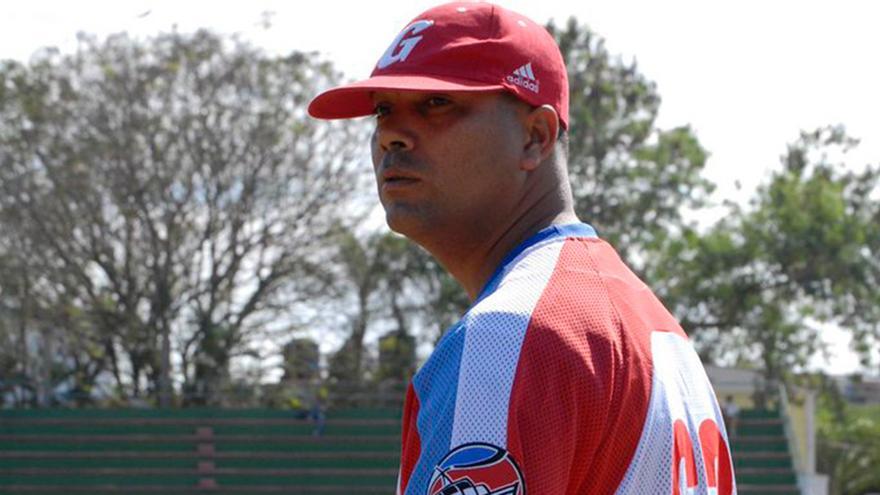
As a player, Ciro Silvino Licea was a leader in pitching in 23 National Series. (ZONA DE STRIKE)
14ymedio, Havana, 18 September 2022 — Former Granma pitcher and pitching coach Ciro Silvino Licea has left Cuba. Last Thursday, the player took a flight at Havana José Martí International Airport bound for Nicaragua, from where, according to journalist Francys Romero, he undertook the journey to the U.S.
The departure of this athlete from the Bayamo municipality was surprising, because he was part of the squad of coaches of the Agricultores team, which in October will play in the Elite League of Cuban baseball. Licea’s absence from Friday’s training made it clear that something was wrong with the team led by Carlos Marti.
The report indicated that the player, who participated in several Cuban teams for more than 10 years, hopes to meet again soon with his wife, “who had also left the Island two months ago.” A relative of the athlete confirmed the crossing, in addition to specifying that his “family, his wife and brother-in-law are in Houston,” Texas.
Licea was a leader among the pitchers in 23 National Series with 208 games won in 3067.1 innings, where he had 1,887 strikeouts with an average of 3.69. He pitches “a difficult slider to hit and a straight of more than 90 miles with a repertoire that over the years was improving,” he recounted on Facebook in Deportes por Modesto Agüero [Sports by Modesto Agüero].
continue reading
Licea’s departure is in addition to that of Adriel Labrada. The former captain of the Avispas team surrendered to the U.S. authorities in Texas after crossing the Rio Bravo through the state of Coahuila, as reported in SwingCompleto.
Before Labrada, on Saturday, September 10, Matanzas’ natural right pitcher, Alain López, arrived in the U.S. This young man was able to achieve his dream thanks to “the family claim way” and settled in Florida, said Francys Romero.
López was a “an effective leader in the 2019-2020 National Youth Championship with Matanzas. He participated in nine victories of his Matanzas team in the last National Youth Championship,” published the portal, BéisbolFR!
A day before López set foot on U.S. territory, it was confirmed that the Cuban Juan Carlos Hernández had arrived in Miami. The former Mayabeque player left the Island and took the route of Nicaragua from where he began his journey until he reached the Mexican city of Piedras Negras, in Coahuila. After 25 days, he was able to cross the Rio Grande.
Translated by Regina Anavy
____________
COLLABORATE WITH OUR WORK: The 14ymedio team is committed to practicing serious journalism that reflects Cuba’s reality in all its depth. Thank you for joining us on this long journey. We invite you to continue supporting us by becoming a member of 14ymedio now. Together we can continue transforming journalism in Cuba.
One of the boats intercepted by U.S. authorities. (Twitter/@USBPChiefMIP)
14ymedio, Pedro Corzo, Miami, 17 September 2022 — El Instituto de la Memoria Histórica Cuba contra el Totalitarismo y Plantados hasta la Libertad y la Democracia en Cuba [The Cuban Institute of Historic Memory Against Totalitarianism and plantados (political prisoners) for Freedom and Democracy in Cuba] recently organized a conference on the different migratory waves driven by Castroism, which was coordinated by businesswoman Carmen Gómez de Toro, with the participation of several people who told their dramatic experiences.
During the event, the solidarity of the Cuban exile was highlighted through the work carried out by the Miami Medical Team, el Hogar Cubano de Caracas [the Cuban Home of Caracas] and the la Casa de los Balseros de Cayo Hueso [the House of the Rafters Key West]. They emphasized that the regime has resorted to all possible ways to expatriate its citizens.
The dictatorship has used emigration as a political and economic instrument since it took power in January 1959, causing, due to the insecurity that was established in the country, the first massive migratory wave in the history of Cuba and, later, by the systematic repression associated with an abhorrent material and moral poverty.
That first wave of exiles ended in 1962. It was mainly composed of a significant number of government officials of the overthrown Fulgencio Batista regime and the majority of the ruling class, businessmen and professional sectors, who never trusted the revolutionary proposals. In addition, there was the peculiar “Operation Peter Pan,” a contingent of 14,000 young people and children taken out of the Island in a large humanitarian operation with the assistance of different charitable organizations in the U.S. and pro-democracy activists, some of the latter of whom ended up in prison. continue reading
The second exodus, in 1965, was made from Camarioca, near Varadero. Closing that boarding point, Washington and the dictator negotiated the departure of Cubans through an airlift. Between 1965 and 1973, the so-called Freedom Flights transported about 300,000 people, with two daily flights for five days a week, all paid for by the U.S. at a cost of 12 million dollars. It was “the largest air operation to transport refugees in the history of this great nation.”
Before being allowed to leave Cuba, many of the participants in this group had to work in the Johnson and Jacqueline Brigades*, a punishment imposed on those who wanted to leave Castro’s paradise. These people, regardless of their qualifications, had to work in the fields and cemeteries until they received their exit permits.
A particularly cruel migratory current was the Mariel Boatlift. This scandal placed the Castro regime in the place it deserved, because people kept voting with their feet. The emigrants were humble people, some educated under totalitarian power.
Some scholars attribute the motivation for a large part of the population to leave the country to the visits of Cubans returning the Island in 1979, banned by the regime for almost two decades. The fact is that the income forced from foreign diplomatic headquarters in Havana increased, the most scandalous of all being that of the Embassy of Peru, an event that led to the Mariel exodus.
The events of Mariel moved the country and further split society. The most orthodox henchmen of the dictatorship, following orders, organized massive rallies of repudiation, humiliating numerous people and injuring many, who, when they visited hospitals to be helped, saw more than one doctor deny them assistance. The repudiation rallies, known since 1959, became more cruel and popular than in the Castro past.
At the end of the 1980s, the inexhaustible exodus created a new tide known as the Rafter Crisis that reached its climax in 1994. Thousands of people left the country on rustic and fragile rafts that, curiously, the authorities watched being built without preventing it, when in the recent past they had sunk boats with refugees, throwing sandbags at them from helicopters. The number of missing on these journeys is incalculable, and the late Arturo Cobo made a wall of mourning to remember them in the Home of Key West.
In the 21st century, the cravings for freedom paired with material needs continue to motivate Cubans to leave their island, with the U.S., for the majority, the final goal. In 2022 alone, more than 140,000 Cubans have entered this country, overcoming infinite hardships.
*Translator’s note: See more here. Partial auto translation: “They were forced to work in jobs outside of their usual duties, mostly in agricultural work for shifts that averaged 14 or 16 hours a day. These individuals were compulsorily housed in barracks that were in terrible sanitary conditions. Surveillance and control in exchange for recognition of the right to leave the country, they served a sentence that fluctuated between three and five years.”
Translated by Regina Anavy
COLLABORATE WITH OUR WORK: The 14ymedio team is committed to practicing serious journalism that reflects Cuba’s reality in all its depth. Thank you for joining us on this long journey. We invite you to continue supporting us by becoming a member of 14ymedio now. Together we can continue transforming journalism in Cuba.
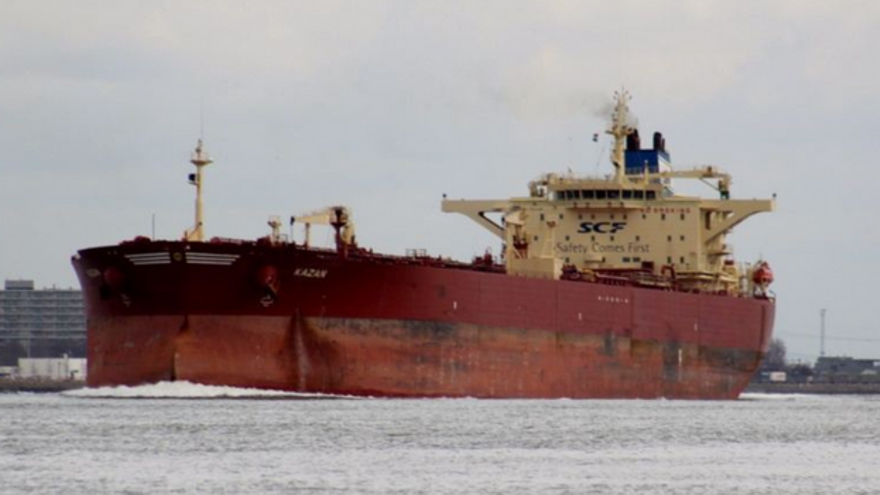
The Kazan loaded 700,000 barrels in the Baltic port of Primorsk, bound for a refinery in Havana. (Vessel Finder)
14ymedio, Havana, 16 September 2022 — Shipments of crude oil from Russia to Cuba are becoming more frequent. The TranssibBridge had barely arrived in Matanzas when an oil tanker of the same company, the Kazan, loaded 700,000 barrels in the Baltic port of Primorsk, bound for a refinery in Havana, according to data from Refinitiv Eikon, released this Thursday by Reuters.
The ship is expected to arrive at the end of this month. It travels with the flag of Liberia and belongs to Sun Ship Management, a unit of the Russian company Sovcomflot, which has been sanctioned by the United States, the United Kingdom and Canada, and has lost the insurance of Western companies for its fleet.
The owner is the same as that of the TranssibBridge, which arrived last Wednesday in Matanzas to unload an undetermined amount of diesel. The tanker left the port of Nakhodka (Russia) with 300,000 barrels and, after passing through the Panama Canal, docked in Cartagena (Colombia). Although it didn’t unload anything in that port, it could be carrying some cargo to another ship, so how much arrived on the Island is unknown.
In July, another Russian tanker, also from Sovcomflot and with the flag of Liberia, arrived at the port of Matanzas with 700,000 barrels of fuel, coming from Ust-Luga. continue reading
Russian fuel is fundamentally contributing to alleviating the energy distress that the Island is currently experiencing, although it’s still insufficient for the needs of Cuba, which this Friday again announced a 42% electricity deficit.
The Electricity Union expects a generation capacity of 2,100 MW and a maximum demand of 2,980 MW for today, but in the afternoon-night it will reach its peak, when 950 MW are missing.
It’s expected, therefore, that the blackouts and power outages will continue unresolved, since thermoelectric power plants continue to suffer constant exits from the National Electricity System, and the energy obtained through generators is also limited due to technical reasons and lack of fuel to power them.
Venezuela continues to send oil to its traditional ally and last August reached 81,000 barrels per day, an amount that hasn’t been recorded in years, motivated mainly by the increase in the production of the state oil company Pdvsa.
Despite international sanctions, Russia is increasing sales to Cuba exponentially, although it’s unknown how the Island pays for this crude oil that, in principle and the opposite of Venezuela, reaches market prices.
Translated by Regina Anavy
____________
COLLABORATE WITH OUR WORK: The 14ymedio team is committed to practicing serious journalism that reflects Cuba’s reality in all its depth. Thank you for joining us on this long journey. We invite you to continue supporting us by becoming a member of 14ymedio now. Together we can continue transforming journalism in Cuba.
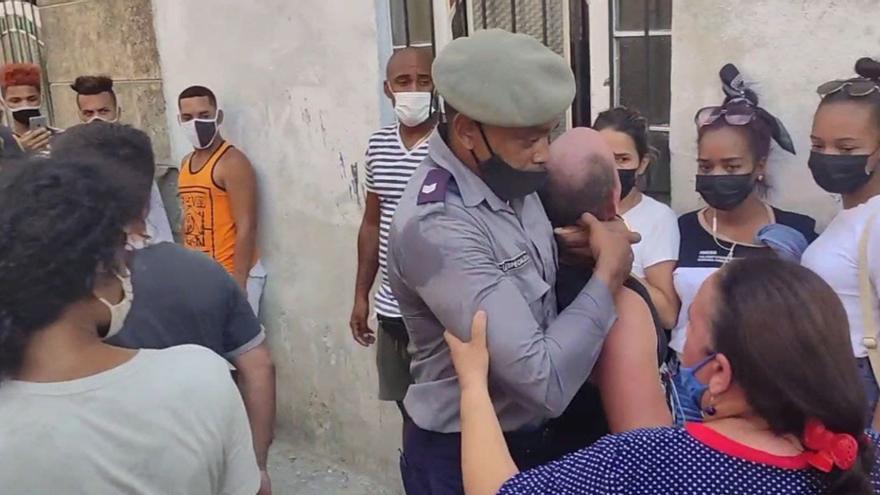
The peaceful demonstrations of July 11, 2021 were crushed by brutal repression. (Image Captura)
14ymedio, Ariel Hidalgo, Miami, 18 September 2022 — That Unburied Corpse that they call “Revolution”* is the title of a small book by the author of this article, ready to be published, about Cuba and its destiny at a transcendental moment of its becoming, that of the turbulent transition to a new Cuba that begins on July 11, 2021, when peaceful demonstrations in cities in all the provinces were crushed by brutal repression. And their motivations have been embodied in an appendix to that book: the Manifesto of Cuban Civil Society, a text that is being signed by hundreds of Cubans.
The demonstrations represented what is generally known as the beginning of a “revolutionary process,” such as those that begin under a regime in terminal crisis, and conclude long after the triumph of the opposition, when radical transformations are made in the structures of society. This stage of transformation is what is generally known as revolution, defined by the Royal Academy of the Spanish Language as “a deep, generally violent, change in the political and socioeconomic structures of a national community.”
A revolution can be a positive transformation for the progress and improvement of a country, but it can also bring greater misfortunes than those that led to the beginning of the revolutionary process. So it can be said that not all revolutions are bad and not all are good, according to everyone’s perspective.
The revolutionary process begins before the collapse of the old regime and also covers the revolution itself, which begins with the triumph of the opposition and ends when the new economic model has finally been established with all the institutions of that new social system. In Cuba, that process ended more than half a century ago, in the 1960s, so it makes no sense to continue talking about that “revolution” in the present time.
But a new revolutionary process is what has begun in Cuba at the dawn of the ’20s of the 21st century. A process always begins when all the conditions are in place for change, not only the objective ones; that is, a deep crisis in every way, but also the subjective ones, when the population has become fully aware of the vital need for change, and that’s what happened on July 11, 2021. continue reading
Generally, the process begins with a shocking event like the one that occurred on that date, which was not only the result of the beginning of that awakening, something that could already be noticed months earlier with the events of San Isidro and the sitting in front of the Ministry of Culture, but is, at the same time, the cause of a large part of the population also awakening, so, although almost always at first glance those initial facts of the revolutionary processes are seen as a failure, deep down they have important consequences for the final victory.
If we analyze the revolutionary process of the fifties, for example, we see that something similar happened with the assault on the Moncada barracks that was a disastrous defeat from the military point of view, but that gave popularity to its leader and inspired many others who created similar movements, such as that of Frank País in the eastern zone, the Student Revolutionary Directory of Havana and others. Also in Venezuela, chavismo began with a failed coup attempt. In all the aforementioned cases, that first attempt sent many of the participants to prison, but then they emerged as key figures in the transformations that were carried out in the country.
We could even mention the rise of Nazism in Germany, since at the beginning of the 1920s there was great unrest among the population, both because of the economic situation and because of the humiliation imposed by the Treaty of Versailles after World War I. Hitler tried to carry out in 1923, in the name of a supposed “national revolution,” what became known as the Munich putsch, which failed and sent him to prison. What happened next is well known.
It will not go unnoticed that all these examples mentioned from the past culminated tragically for their respective populations. If we analyze all these cases, we will realize that they all had one thing in common: they came to power through violence, something that contrasts with other cases. In the definition cited by the Royal Spanish Academy, revolution is “generally violent,” which means that it doesn’t always have to be so. Neither the struggle of the Solidarity Movement in Poland, nor the Velvet Revolution in Czechoslovakia made use of violence, and we see that they didn’t lead to dictatorships.
Why? A prominent human rights defender in Cuba who was a prominent leader of the Student Revolutionary Directory and who later spent more than twenty years in Castro prisons, Jorge Vals, drew this conclusion in his memoirs: “I came to convince myself that violence necessarily involves tyranny; through armed struggle, the revolutionary becomes a puppet of a series of interests that may have nothing to do with the revolution or can even conspire against it.”
In 17th century England there were two revolutions, one violent (1642-1648) that led to a long period of instability, dictatorships and wars; and another peaceful one, the so-called Glorious Revolution, begun in 1688, which gave rise to the Declaration of Rights, the antecedent of other historical declarations such as that of the U.S., that of France and the Universal Declaration of Human Rights of the UN, and the constitutional monarchy, a model so stable that it has lasted to this day.
The Cuban dissident movement never made use of violence. The demonstrations on July 11 were peaceful, and they have continued to be peaceful. Violence, in today’s Cuba, has always been started by the repressive forces, not the opposition. And that’s one more reason for hope.
*Translator’s note: The published title of the book appears to be “El Libro Prohibido: La realidad oculta tras eso que llaman ‘Revolución Cubana'” (The Forbidden Book: The hidden reality behind what they call the ‘Cuban Revolution’). A laudatory review of the book (in Spanish) can be found here. A click of your browser should suffice to translate the review to English.
Translated by Regina Anavy
____________
COLLABORATE WITH OUR WORK: The 14ymedio team is committed to practicing serious journalism that reflects Cuba’s reality in all its depth. Thank you for joining us on this long journey. We invite you to continue supporting us by becoming a member of 14ymedio now. Together we can continue transforming journalism in Cuba.
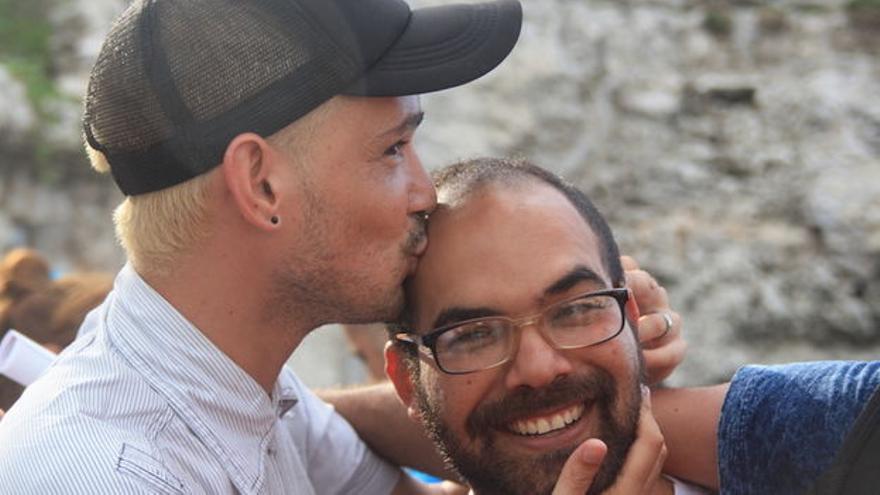
The code establishes prohibitions, and none of them alludes to the fact that it’s forbidden to marry people of the same sex. (14ymedio)
14ymedio, Reinaldo Escobar (Desde Aquí), Havana, 18 September 2022 — Although the term “spouse” etymologically only means to be attached to the same yoke, the Family Code, about to be submitted to a referendum, is reluctant to call those who are affective de facto “couples.” Those who drafted the law seem to believe that by saying “spouses,” they are now talking about men and women.
That’s why the first definition of the term “marriage” is “the voluntarily concerted union of two people with legal aptitude for it, in order to live together, on the basis of mutual affection, love and respect” and specifies: “it is based on free consent and on the equality of rights, duties and legal capacity of the spouses.”
The code doesn’t establish requirements for celebrating a marriage, but prohibitions, and none of them allude to the fact that it’s forbidden to marry people of the same sex. However, nothing has changed, and those Cuban citizens of the same sex who want to formalize their relationship have to resort to the other concept that precedes the spouse: “an affective domestic partner.”
It’s enough to consult Article 305, which says that “by reason of marriage” conjugal states are defined as single, married, divorced and widowed, but when “single” is mentioned, it specifies “those who have not formalized marriage, even if they are in an affective de facto union, instrumentalized or not.” In case there are any doubts, Article 318 makes it clear that neither the instrumentalization nor the registration of a de facto union creates a new marital status. continue reading
Another difference between the two processes (marriage and the instrumentalization of de facto union) is that married people are not required to have spent a previous time of courtship or to have been married for a while to exercise the rights set forth in the Code; however, for the affective de facto union to have the expected legal effect, its members must, among other requirements, “maintain a permanent common affective life project for at least two years.” (Article 308).
There are sufficient reasons to point out that the “rights won” in this Code by people who choose to live with those of the same sex are inferior to those enjoyed by heterosexual couples.
Although their marital status is defined with the category of singles, when they want to appeal to marriage, then they are no longer so single, because they cannot do so if they do not first dissolve their affective de facto union in the corresponding registry. The Code does not include a provision that allows those who have formed this type of union to receive “marital visits” in prisons, nor is this link considered as an element that makes it easier for a foreigner to obtain the right to reside in the country.
If finally the referendum considers the Family Code valid, it’s possible that we will witness notary ceremonies where those who come to instrumentalize their de facto union dress themselves as in a wedding. It’s not ruled out that after having signed the rigorous documents, the friends who accompany them demand that they kiss, that there be photos, the exchange of rings and even a convertible that whisks them off to enjoy a long-awaited honeymoon. But there was no marriage; they will not be married; they will not be spouses, at least under the law.
Translated by Regina Anavy
____________
COLLABORATE WITH OUR WORK: The 14ymedio team is committed to practicing serious journalism that reflects Cuba’s reality in all its depth. Thank you for joining us on this long journey. We invite you to continue supporting us by becoming a member of 14ymedio now. Together we can continue transforming journalism in Cuba.
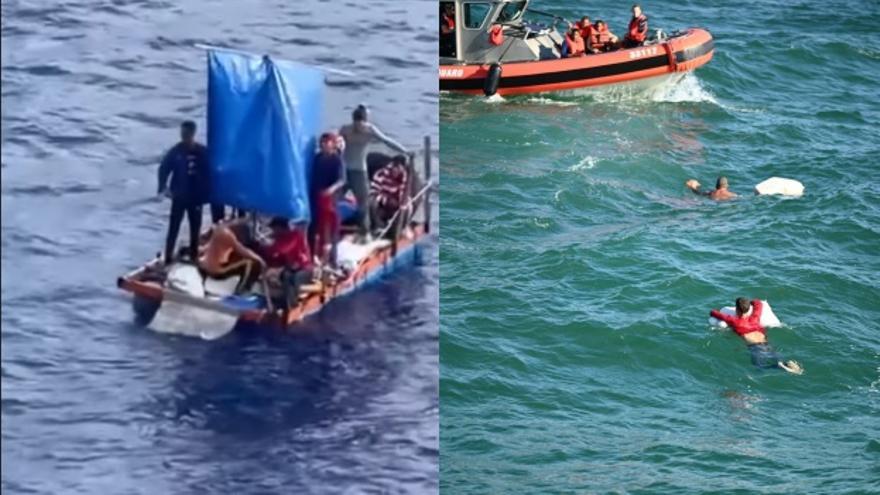
Cuban rafters are rescued in their attempt to leave the Island, which is experiencing one of its worst economic crises. (Instagram/USCG)
14ymedio, Havana, 18 September 2022 — A group of eight Cubans were rescued last Wednesday night by the cruise ship Scarlet Lady, when they were trying to cross the Florida Straits in a small, makeshift raft.
A couple on board the cruise ship, coming from Cozumel and bound for the Bahamas, spotted a raft built with water barrels and air chambers, moved by a blue plastic canvas sail.
My partner and I were among the first to see them say hello. If you look closely, the youngest woman, possibly about 20 years old, is lying on the deck, and a man next to her holds a homemade intravenous bottle. She was injured and was wearing a cast,” one person wrote in a post accompanied by the video where Cubans are seen adrift.
Three hours after the rescue, the United States Coast Guard (USCG) was in charge of the transfer of the migrants. The couple said they didn’t know what happened to them, but “fortunately they received food and treatments.”
The Border Patrol in the South Florida sector also rescued 26 Cuban migrants stranded last Friday in Marquesas Keys, an uninhabited U.S. island west of Key West, Officer Walter Slosar reported. In another operation carried out that day, several people jumped into the water in an attempt not to be arrested, but were finally rescued. continue reading
The U.S. Coast Guard records that between October 2021 and September 2022, 5,689 rafters were intercepted, but this week alone more than 230 were repatriated in different operations.
For the Cuban virologist based in Brazil, Amílcar Pérez-Riverol, the huge upsurge of rafters trying to leave the Island is a “migration catastrophe.” At this rate, 2022 will be the year with the most migrants detained by the authorities since 2016, when 5,396 were intercepted.
The statistics indicate that the migratory exodus already surpasses the 1980 Mariel Boatlift (125,000) and that of the 1994 Rafter Crisis (35,000) together. Pérez-Riverol believes that those who consider that this situation is not serious are “wrong” when they see it as “thousands of more remittances” for the Island.
Translated by Regina Anavy
____________
COLLABORATE WITH OUR WORK: The 14ymedio team is committed to practicing serious journalism that reflects Cuba’s reality in all its depth. Thank you for joining us on this long journey. We invite you to continue supporting us by becoming a member of 14ymedio now. Together we can continue transforming journalism in Cuba.
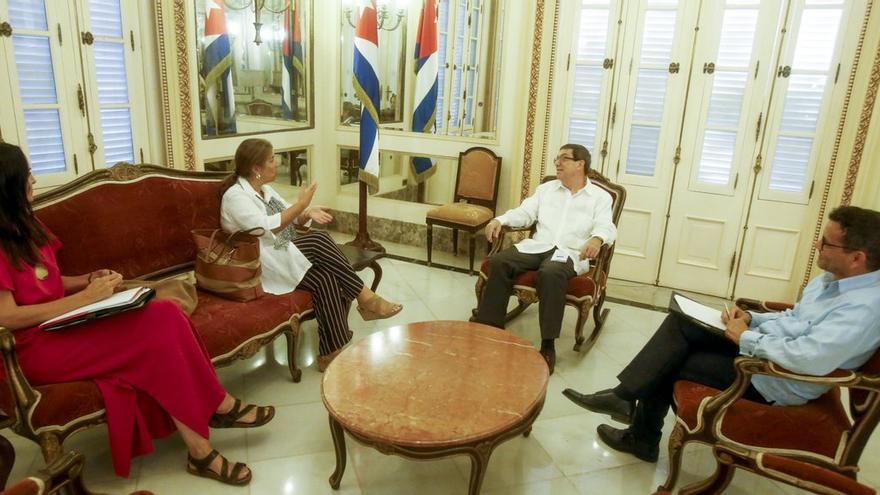
At the center, the diplomatic representative of the European Union in Cuba, Isabel Brilhante, and the Cuban Foreign Minister, Bruno Rodríguez. (Twitter/@BrunoRguezP)
EFE/14ymedio, Havana, 16 September 2022 — The Cuban Minister of Foreign Affairs, Bruno Rodríguez, ratified this Friday the “will” to continue with the Political Dialogue and Cooperation Agreement (ADPC) with the European Union (EU) by receiving the ambassador of the community bloc in Havana.
Rodríguez published the images of the meeting at the headquarters of the Chancellery with the diplomatic representative of the European Union in Cuba, Isabel Brilhante, and added, via Twitter, as he usually does, without further details: “We confirm the importance we attach to Cuba-EU relations and the potential that exist in various areas.”
Cuba and the Twenty-seven relaunched their relations in 2016 with the signing of the ADPC that put an end to 20 years of the so-called “common position,” which was much tougher against the Havana regime. In any case, the pact is conditioned by the EU on the situation of human rights and democracy on the Island.
The negotiations between the Cuban government and the EU were tense last March, after the representative of the European Union for Foreign Affairs, Josep Borrell, reiterated the call “to respect human rights and freedoms,” to which the agreement is subject, in theory. Nor was it a good sign that the European Chancellor demanded that “all political prisoners” be released on the Island.
“The EU is following with great concern the sentences in Cuba against people involved in the events of July 11 and 12 [2021],” Borrell said on behalf of the Twenty-seven. continue reading
In response, the Cuban foreign minister “strongly” rejected Borrell’s statements and affirmed that the European bloc lacks “moral authority to make value judgments about the Cuban reality.”
Rodríguez said at the time that the EU “should deal with its own problems and the frequent human rights violations in its member states.”
The EU has defended the right to demonstrate and asked Havana to listen to the demands of its citizens who say that the trials don’t comply with international standards and ask the Cuban regime to allow European diplomats to attend them.
Translated by Regina Anavy
____________
COLLABORATE WITH OUR WORK: The 14ymedio team is committed to practicing serious journalism that reflects Cuba’s reality in all its depth. Thank you for joining us on this long journey. We invite you to continue supporting us by becoming a member of 14ymedio now. Together we can continue transforming journalism in Cuba.
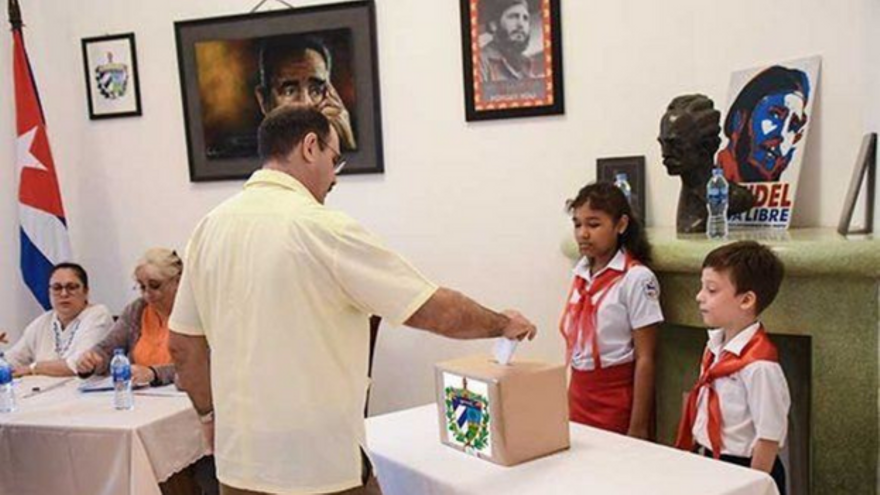
There is a structure to vote outside Cuba, but only members of diplomatic and state missions can exercise their rights. (Cubadebate)
14ymedio, Havana, 17 September 2022 — Cuban emigrants will not be able to participate in the referendum on the new Family Code, despite the fact that the Government has disguised this exclusion by stating that it has 1,000 polling stations and 124 constituencies abroad.
In the official TV program Mesa Redonda [Roundtable] airing this Thursday, the president of the National Electoral Council, Alina Balseiro Gutiérrez, explained that there is a structure to vote outside Cuba, where members of “diplomatic and state missions” can exercise their rights, but she avoided mentioning whether Cuban exiles could go to the Cuban consulates.
The president of the Special Electoral Commission of the Ministry of Foreign Affairs, Gustavo Machín, was also ambiguous in speaking to the Prensa Latina agency about preparations for the “embassies and missions abroad.” According to Machín, diplomats will not be the only ones able to participate, all those who fulfill “official” assignments, such as doctors, teachers and others will also be able to vote.
Like Balseiro, Machín ignored a chance to speak about the possibility of exiles going to the polls, although he did have time to point out that there are 640 polling stations in Venezuela alone, which, according to the figures offered by Balseiro, represents more than half of the 1,000 available in the rest of the world. continue reading
The Island’s consulates and embassies have spread official propaganda about the new Family Code, but they don’t offer practical information on whether Cubans living abroad can vote.
Characterized again and again by the Government as “a broad, democratic and contributory process,” the referendum repeats the electoral strategy of 2019, when emigrants were also prevented from deciding whether or not to accept the new Constitution of the Republic.
That year, several Cuban diplomatic delegations circulated the same message: only members of the missions could vote in the embassies; Cubans who resided abroad and wanted to contribute their vote should present themselves “directly” to their electoral district on the Island.
The impossibility of exercising an inalienable right over Cuban law has led to the creation of several electoral initiatives outside the country that, although they aren’t binding, will constitute, according to their promoters, a first step in the right to vote.
With this purpose, the organizations DemoAmlat and Transparencia Electoralhave organized an electronic voting platform. The objective, according to the official website of DemoAmlat, is to be “an exercise in citizen participation” that allows exiles to express an opinion.
The vote is scheduled for September 25, between 7:00 a.m. and 6:00 p.m., at the same time as the Cuban referendum. Likewise, with the voter registration, they propose to establish “a register of Cubans residing abroad.”
This final record of voters in exile has led to controversy between those who allege the usefulness of the inventory and those who believe that it could become an instrument for espionage by State Security.
Cuban activist Félix Llerena was one of those who defended DemoAmlat’s initiative on Twitter, characterizing it as “a first step in organizing ourselves as a diaspora.” However, other users have described the registry as “something very dangerous,” because it’s a compilation of names whose vote the Government will not consider valid, but which will be useful for the profiling of opponents in exile.
Translated by Regina Anavy
____________
COLLABORATE WITH OUR WORK: The 14ymedio team is committed to practicing serious journalism that reflects Cuba’s reality in all its depth. Thank you for joining us on this long journey. We invite you to continue supporting us by becoming a member of 14ymedio now. Together we can continue transforming journalism in Cuba.
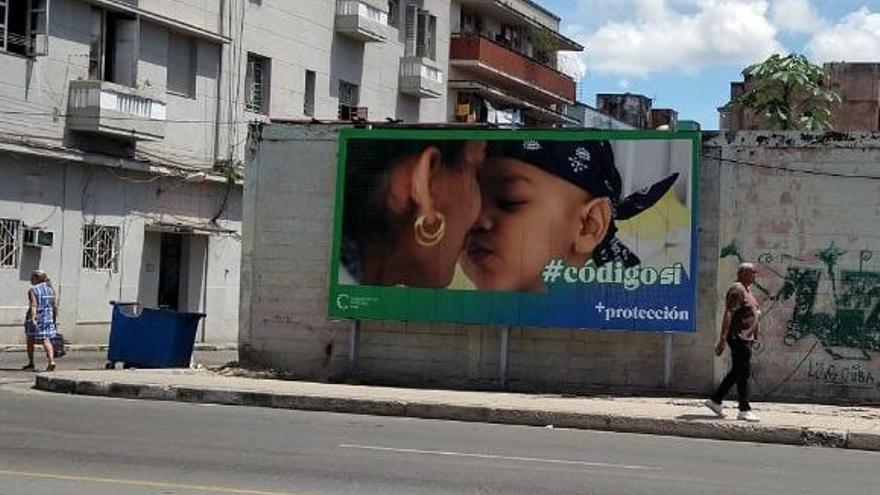
“The only propaganda on public billboards, television spots and the front pages of newspapers is directed at a Yes vote of approval.” (14ymedio)
14ymedio, Reinaldo Escobar, Havana, 15 September 2022 — There are about ten days left before the third referendum promoted by those who have been governing in Cuba for more than 62 years. The first occurred in 1976, to approve the first Constitution of the Republic drafted by the Communist Party; the second, in 2019, when the Constitution that governs today was submitted to the consideration of the electorate; and the third, which will be held on September 25 of this year, for the Family Code.
I exclude from this list the collection of signatures to approve the amendment of the Constitution in the summer of 2002, where the concept of the irrevocability of the socialist system was introduced. That, a maneuver by Fidel Castro to counteract the Varela Project, was not a referendum because there was no option of marking NO on a secretly-filled ballot that was deposited in an urn.
None of the aforementioned consultations has been preceded by a debate where dissimilar opinions emerge. Voters have only relied on the arguments of those who have prepared these texts. Everything different that citizens have been able to hear or read has been restricted to some religious temples and access to social networks and independent media which are the victims of permanent censorship. The only propaganda on the public billboards, the television spots and the front pages of the newspapers is directed at a Yes vote of approval.
This constitutes an act of ideological violence comparable to that suffered by those enrolled in a sect, on whom the opinion of a leader is imposed. It doesn’t matter if the imposed postulates are noble or evil. What’s perverse is the abolition of options. continue reading
Rights, no matter how long they have been violated, shouldn’t be submitted to a referendum. Neither the abolition of slavery, women’s right to vote, or the use of public services without racial discrimination, to give just three examples, had to wait to be approved at the polls. The inclination that human beings have to relate intimately and live as a couple with another human being should have as a restriction only that the will of the other is not violated and that both are in a position to exercise it. It’s a right.
The inclusion in the Code of what has been called an “affective de facto union instrumented in notarial proceedings” and which is interpreted as the legal acceptance of “equal marriage” not only finds followers among the LGBT community, but in all those who recognize themselves as free thinkers. The other points that have been most disputed are the replacement of the concept of “parental authority” by “parental co-responsibility,” the legalization of surrogate pregnancy and the granting to minors of a progressive autonomy that has been seen as a threat to parental authority.
The Family Code partially satisfies some sectors of the population and at the same time alarms others. There are even those who are content with some aspects and frightened by others. People with disabilities, grandparents or women who want to defend the right to have an abortion will be motivated to approve the Code to receive its benefits, but they will have to pay the price of accepting the other articles even if they contradict their religious beliefs, customs or prejudices.
In order not to lose the custom, in case the Yes obtains the majority, it will be exposed as “a victory of socialism, a confirmation of the people’s support for the Revolution and Fidel’s legacy.” That is also ideological violence.
It’s a pleasure that many dissatisfied Cubans, even those who agree with most of the articles of the Code, won’t want to concede to the regime. The curious thing is that those who are on the other side, where the unconditional militate and the macho, authoritarian and homophobic abound, will have to be disciplined, swallow the liberal concessions and mark a cross on the yes grid.
I dare to predict that this exercise at the polls will leave a record of abstentions and that, if imposed, will be processed in the official media as proof of “our democracy,” never as a defeat of the dictatorship.
Translated by Regina Anavy
____________
COLLABORATE WITH OUR WORK: The 14ymedio team is committed to practicing serious journalism that reflects Cuba’s reality in all its depth. Thank you for joining us on this long journey. We invite you to continue supporting us by becoming a member of 14ymedio now. Together we can continue transforming journalism in Cuba.
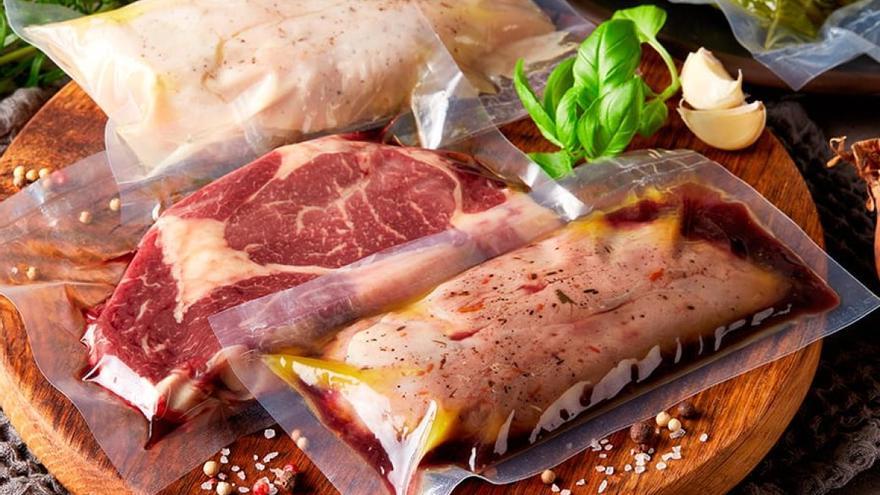
The meat must be properly vacuum packed, otherwise it will be confiscated and incinerated. (CC)
14ymedio, Havana, 14 September 2022 — Cubans will now be able to import fresh meat, sausages, seafood and other foods, as long as they are vacuum-packed for travelers and individuals, according to a resolution released on Tuesday by the Ministry of Agriculture and the National Center for Animal Health. This document relaxes a previous provision, published in August, that prohibited the import of several products whose entry will be allowed from now on.
According to the text, “facilities” will be provided to anyone who brings to the Island any meat in a fresh, frozen, dehydrated and semi-finished state, such as hamburgers and picadillo, on the sole condition that they arrive correctly sealed and identified.
Sausages such as ham, chorizos and salami may be imported, but temporarily, if they are in the same packaging conditions.
Authorization will be maintained for the entry of preserves of any kind, including those of marine products, milk powder, UHT fluid milk (processed at high temperatures) and dairy desserts, as well as pasteurized mature cheeses. continue reading
The entry of unpasteurized milk and dairy products, as well as meat “from wildlife” in any form of conservation, is still “absolutely” prohibited. The purpose of maintaining this restriction is to “avoid the introduction of biological agents that cause diseases harmful to domestic animals, wildlife and man in the case of animal transmission.”
The Ministry of Agriculture also provides a list of “eligible countries” from which these items can be imported, which “could be modified in relation to changes in the animal health situation” of the places of origin of the food.
The countries, whose name must appear clearly on the product label, are Spain, the United States, Portugal, Canada, Mexico, Panama, Costa Rica, Nicaragua, Brazil, Argentina, Chile and Uruguay.
If a traveler brings products “whose packaging suffers some breakage or deterioration,” the text provides for their immediate confiscation and incineration.
The new regulation seeks to alleviate the food shortage in Cuba, which is now immersed in a crisis of large-scale agricultural production. The scarcity and difficulty in finding food, rising inflation and the need to resort to the foreign exchange market, both state and informal, make the food issue one of the most delicate for the population.
This measure is taken weeks after the Government issued a Food Sovereignty Law. The legislation then promised to “produce food in a sustainable way and give the entire population access to sufficient, diverse, balanced, nutritious, harmless and healthy food, reducing dependence on external means and inputs with respect for cultural diversity and environmental responsibility.”
The regulations implemented by the Ministry of Agriculture not only contradict the text on food sovereignty, but also continue to seek abroad the solution to the food problem of Cuba, a country that imports about 80% of the food it consumes.
Translated by Regina Anavy
____________
COLLABORATE WITH OUR WORK: The 14ymedio team is committed to practicing serious journalism that reflects Cuba’s reality in all its depth. Thank you for joining us on this long journey. We invite you to continue supporting us by becoming a member of 14ymedio now. Together we can continue transforming journalism in Cuba.
Nurse Nelly Sánchez Espinosa worked for 30 years in the delivery room of the Maternal and Child Hospital. (Facebook)
14ymedio, Havana, 16 September 2022 — Nurse Nelly Sánchez Espinosa, an employee of the Maternal and Child Hospital in the municipality of Cabaiguán, in the province of Sancti Spíritus, died this week after complications arising from her dengue fever infection.
Her death was confirmed by co-workers on social networks, without the local directors of Public Health having offered an official version. Some comments on social networks allow us to reconstruct the circumstances in which Sánchez Espinosa died.
Social media user Javier Raúl López González offered his condolences for the nurse, whom he described as “indispensable” to the hospital, and confirmed that the cause of death had been dengue fever.
For his part, Manuel Rivero Abella, Provincial Director of Health, said in a note that Sánchez Espinosa had left “her mark” on the delivery room where she worked for three decades, but he didn’t mention the disease that led to her death. The nurse was also part of a Cuban medical brigade in Angola.
The patients who were treated by Sánchez Espinosa also expressed their condolences. “Very professional and affectionate, I have to thank her for helping me so much, at that difficult time that all mothers go through,” Mabileydi Rojas Montes de Oca wrote. continue reading
“Nelly wasn’t just any person in that nursing room of the Maternal and Child Hospital. We felt safe. We didn’t need a gynecologist; she was everything,” added user Odalis Suarez.
This is the second health professional to die of dengue this month. On September 9, physiotherapist Elba Rosa López Nápoles died in the province of Santiago de Cuba. López Nápoles presented complications that couldn’t be treated in time, due to the lack of ambulances in the area.
Her sister, Mercedes López Nápoles, reported at the time that despite having asked for help through the Integrated System of Medical Emergencies (SIUM), the staff of the hospital in the province replied that there was no availability of ambulances and also that she was not registered as a patient in “serious” condition.
Cuba is facing a severe outbreak of dengue, but the government hasn’t revealed exact figures of infections, beyond stating that the Island “is in the context of what is happening in the region,” according to statements by the Deputy Minister of Public Health, Carilda Peña García, released on the same day that the death of physiotherapist López Nápoles was confirmed.
The deputy minister did confirm that Cubans will face a difficult time in the coming months, “the most complex of the disease,” in her words, “because the cycle shows its highest peaks from the end of October and the beginning of November.”
Meanwhile, the BioCubaFarma business group continues its research for a dengue vaccine that can be distributed on the Island. The president of the pharmaceutical company, Eduardo Martínez Díaz, acknowledged that the research process lasts 10 years due to the complexity of the disease. “Today there really is no effective and safe antigen,” he said.
In fact, there is an approved vaccine against dengue with the trade name of Dengvaxia, manufactured by the French company Sanofi Pasteur, but it’s not available in Cuba. This serum is only recommended for people who have already had dengue fever and is used for all four variants of this disease.
Translated by Regina Anavy
____________
COLLABORATE WITH OUR WORK: The 14ymedio team is committed to practicing serious journalism that reflects Cuba’s reality in all its depth. Thank you for joining us on this long journey. We invite you to continue supporting us by becoming a member of 14ymedio now. Together we can continue transforming journalism in Cuba.
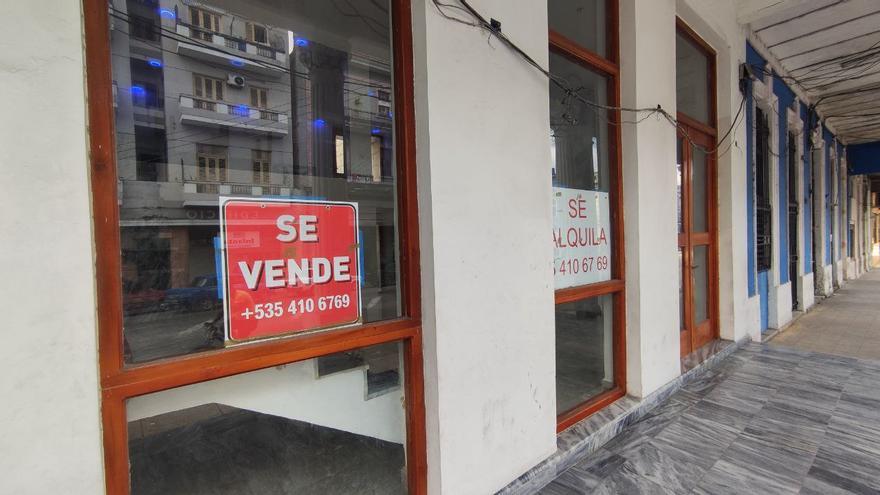
The number of premises for sale or rent has multiplied in recent months. (14ymedio)
14ymedio, Natalia López Moya, Havana, 16 September 2022 — With the doors closed, the interior empty and a “For Sale” sign in the window, a private restaurant on Infanta Street, in Central Havana, is one of the many businesses for sale in Cuba, where the economic crisis and mass exodus have made entrepreneurship an almost impossible path.
The place, where a restaurant was planning to open, never served a single dish because its owners gave up the effort, and they now have put it up for sale for $400,000. “You can rent the whole space for $3,000 per month,” they add via WhatsApp, when a potential buyer is interested.
The closure of the paladar (private restaurant), which didn’t even have a sign with its name, affects the neighbors who were waiting for its opening to see tourists and hard currency arrive in the neighborhood, the money it takes to get out of the hole in which most families have sunk, in an area that doesn’t have the glamour of El Vedado or the attractions of the historic center of Old Havana.
“They didn’t even manage to sell a frying pan, but they spent a lot on the investment, because before this was it very deteriorated,” Pocholo, who lives some doors away from the failed restaurant tells 14ymedio. “They even built a mezzanine to enlarge the space. Then came the ’monetary order’*; tourism didn’t return as expected, and having a paladar is crazy right now.”
Getting the raw materials, paying for what a place open to the public consumes — from toilet paper to electricity — and paying employees has become a chimera for many private business owners on the Island. To this is added the fact that, given the situation in the country, the sale of any possession can help in the extended project of emigrating. continue reading
I’m selling a hair salon with everything inside,” announces Dayana, a 38-year-old Habanera who until a few months ago offered her services in a small space on San Rafael Street, near Galiano Avenue. “I know I’m not going to recover my investment, but I need the money urgently,” she tells this newspaper. “I’m selling for $25,000, and it’s worth almost twice as much.”
Dayana’s living room was equipped as a hair salon and beauty center. “Everything is new, from the bathroom tiles to the water installation. I have put in a heater, a kiwan safety system for water pressure; everything is freshly painted, and I have two floors,” she says. “I’m offering it with all the accessories needed to keep it running and with a very loyal clientele.”
Dayana says she began to transform her house into a private business five years ago. “If someone had told me at the time that I was going to end up selling all this and buying a ticket to Nicaragua, I would have laughed in their face.” But her husband took “the route of the volcanoes” a few months ago, and the rigors of the couple’s separation have been added to the crisis that Cuba is going through.
Interior of a paladar (private restaurant) for sale in Havana. (14ymedio)
“I no longer know how much I’m going to charge people who come to remove hair or have a facial, because I have to buy all the products in dollars or MLC ( freely convertible currency), but I have to charge for the services in pesos. So I can’t work.” She regrets having to shut down what she considers to be “the greatest pride” of her life.
“I’m selling a working cafeteria, located in El Vedado, because I’m leaving the country,” Suselle says emphatically in an ad that she has posted on several classified sites and that she has also sent to friends and acquaintances on Telegram and WhatsApp. “The payment is in dollars to be deposited in the United States.” Since she disseminated the offer, she clarifies, she has received only a couple of calls.
“I understand that there are few people interested because many Cubans want to leave the country, and buying a business of this type is not among their projects right now,” Suselle admits. “But it’s also a good time to invest, because I’m selling this same business for a price well below what it cost.”
On the buying and selling sites, there are ads that are repeated for several weeks or months, and from time to time the price drops a little more. “Reduced to $17,500, take advantage now,” says one that has appeared again and again on the digital sites for more than half a year. “Two in one: house and business of photocopying, printing of documents and copying of movies and series,” it adds.
“I have 24 hard drives full of audiovisuals and two Canon computers.” The salesman emphasizes what so many others say about their businesses: “it’s working and making money,” but few seem interested in the “bargain” that is advertised. “Half of the money here in dollars and the other in the United States,” the announcement ends.
Next to the premises there are also complete kitchen sets, display refrigerators, large capacity fryers, dishwashers, banknote counting devices and cash registers, all the furnishings that accompany restaurants and cafes. “I’m selling more than a business; I’m selling a dream,” says the owner of a rental house for tourists in the city of Holguín.
“Five bedrooms, five bathrooms, garden and swimming pool,” the announcement details. “I’m in a hurry so I’ll listen to proposals, but don’t call me if you don’t have dollars.” In the photos he has posted next to the ad you can see a ranch in the yard, a pool table and a spectacular view of the city. And the message concludes: “The villa is delivered with everything inside.”
*Translator’s note: A reference to elements of the ‘Tarea ordenamiento’, the [so-called] ‘Ordering Task’ which is a collection of measures that include eliminating the Cuban Convertible Peso (CUC), thus leaving the Cuban peso as the only national currency, raising prices, raising salaries (but not as much as prices), opening stores that take payment only in hard currency which must be in the form of specially issued pre-paid debit cards, and a broad range of other measures targeted to different elements of the Cuban economy.
Translated by Regina Anavy
____________
COLLABORATE WITH OUR WORK: The 14ymedio team is committed to practicing serious journalism that reflects Cuba’s reality in all its depth. Thank you for joining us on this long journey. We invite you to continue supporting us by becoming a member of 14ymedio now. Together we can continue transforming journalism in Cuba.
Deployment of official media on August 23, when the sale of hard currency in cash in the Cadecas (currency exchanges) went into effect. (14ymedio)
14ymedio, Havana, 16 September 2022 — “You don’t need to be a guru in the sector to infer that the trigger of emigration via Nicaragua will lead to the dollar reaching 200 pesos in a few weeks.” The quote doesn’t come from any independent page dedicated to tracking the foreign exchange market or from any economic analyst, but from an article in the official Cuban press.
Published this Friday in the newspaper 5 de Septiembre in Cienfuegos, the text doubts the “exchange rate strategy” of the government, which on August 23 established the purchase of cash through exchange houses (Cadecas), and believes that the measure, for now, is performing “below expectations.”
Its author, Julio Martínez Molina, recalls that in a previous column, he pondered the government’s decision, calling it “backed by the citizens,” and warning, at the same time, that its success depended “on the Cadecas’ levels of operations and the daily existence of freely convertible currency in these establishments,” because otherwise, “we wouldn’t be in them.”
After this presentation, he lashes out: “Although it may be too early to evaluate, everything happened as planned, even for those of us who know little about the economy: in the face of the emergence of an exchange rate strategy born seven months ago (because there isn’t enough currency to sell, in total quantity and, throughout the day, in the designated units), the urgent counter response of the informal market would be the elevation, even more, of the burdens on the hard currency.” continue reading
Thus, the article continues, as of Friday, those currencies, which in official establishments have not risen from 123 pesos, are around 165 pesos in the informal market, where they are expected to continue to rise in the coming weeks to 200 pesos. The conclusion is that “the benefit of the measure, up to now, has been quite limited.”
To solve the situation, the author hopes “vehemently” that there will be “some institutional tricks pulled out of the bag,” because “if the schism does occur between the state option, the most favorable by far to the buyer although very small, and the informal one, there will be unimagined distances between them.”
On the same day and the days following the implementation of the measure, this newspaper noted in several places the results predicted by the official writer: the dollars were running out quickly, and the hard currencies began to rise like foam on the black market. But there was another reality, which the Cienfuegos newspaper didn’t mention: the long lines to acquire dollars in the Cadeca, strongly guarded, which have come to join the so many other lines for chicken, bread or a hygiene product.
Translated by Regina Anavy
____________
COLLABORATE WITH OUR WORK: The 14ymedio team is committed to practicing serious journalism that reflects Cuba’s reality in all its depth. Thank you for joining us on this long journey. We invite you to continue supporting us by becoming a member of 14ymedio now. Together we can continue transforming journalism in Cuba.
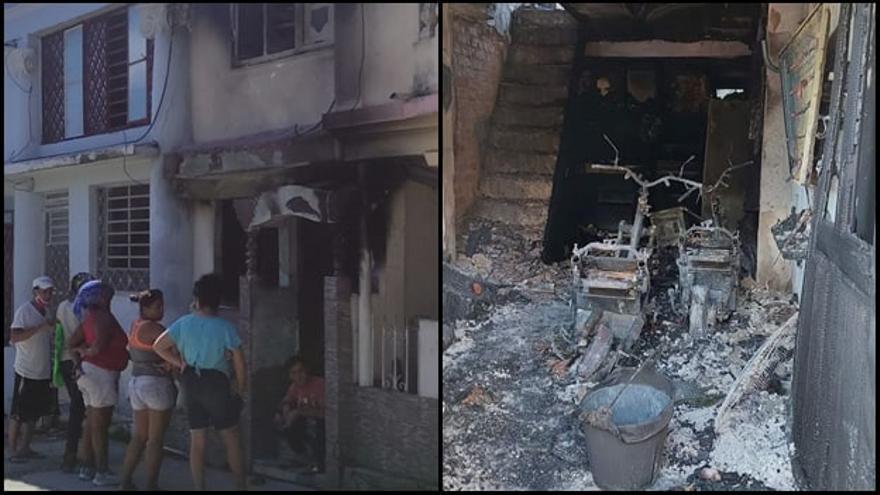
The flames reached a second motorbike and several fuel cans, which quickly reduced the interior of the house to ashes. (14ymedio)
14ymedio, Juan Diego Rodríguez, Havana, 13 September 2022 — Two people were seriously injured in the fire at a house in Luyanó, in the Havana municipality of Diez de Octubre, in the early hours of Tuesday.
According to the neighbors, who spoke to this newspaper, the fire began at four in the morning when an electric motorbike that was charging caught fire. The flames reached a second motorbike and several fuel cans that the family had stored, which quickly reduced the interior of the house to ashes. “Even the floor rose,” a neighbor said.
Inside the building, located on Arango Street, between Manuel Pruna and Rosa Enríquez, were the owner, Fidel González, well known in the neighborhood for working at a nearby carpentry shop, his three children, Denny (15 years old), David and Daniel (twins) and his wife, a Cuban-American visiting Havana.
The accident occurred when Daniel, who works as a taxi driver, was taking a bath after getting home from working. “The boy felt an explosion, and when he went outside, one of the motorbikes was on fire,” says another neighbor. “He alerted everyone in the house who were inside their air-conditioned rooms.”
One of the family’s two dogs, Floppy, stayed in the house and had to be rescued, with injuries, by a firefighter.
Daniel himself was the one who ended up with serious burns. Both he and his wife, who inhaled too much carbon dioxide, were admitted to the Miguel Enríquez hospital, known as La Benéfica. continue reading
Relatives of the family sent a petition via Facebook to all acquaintances to collect aid, because, they regret, they lost “everything: TV, washing machine, refrigerator, kitchen.”
Daniel González, according to the neighbors, was planning to go to the United States by the “route of the volcanoes” (Nicaragua).
Last year, a 60-year-old woman and one grandchild, age 7, were killed in a fire caused by the explosion of a motorbike in Sancti Spíritus, and, months later, another 19-year-old girl died in a similar accident in the city of Matanzas.
Also, fuel storage, which in the case of Luyanó aggravated the accident, is also common on the Island. In many cases, it’s used for the operation of electric generators, some families’ alternative to the everyday blackouts.
In this case, the González family was storing it for the taxi operated by Daniel, in view of the increasingly frequent shortage of fuel in the gas stations.
Translated by Regina Anavy
____________
COLLABORATE WITH OUR WORK: The 14ymedio team is committed to practicing serious journalism that reflects Cuba’s reality in all its depth. Thank you for joining us on this long journey. We invite you to continue supporting us by becoming a member of 14ymedio now. Together we can continue transforming journalism in Cuba.
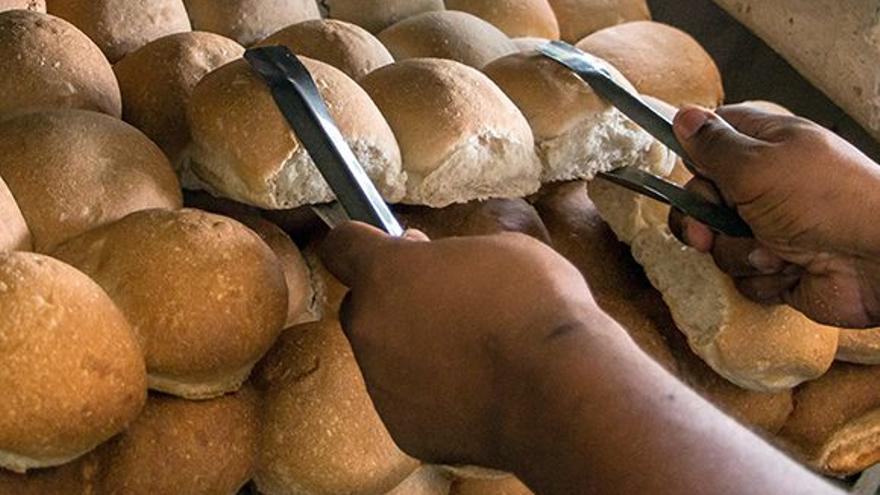
The publication notes that last month the government of Havana recognized that there was a shortage of flour that affected the production of bread. (Cubadebate)
14ymedio, Havana, 14 September 2022 — The scarcity and high price of bread in Cuba are so evident that the official press once again dedicates ample space to the subject this Wednesday. In a report that paraphrases “Our father, Our bread… every day?” Cubadebate criticizes the fact that the product is not even guaranteed in the ration book, the “basic basket.”
To “clarify the doubts of the population on the subject,” the media claims to have sent a request for information to the Ministry of Food Industry on August 31, which hasn’t been answered. “Although we’ve insisted on several occasions, at the time of writing this report, they were still ’processing the request.’ Meanwhile, the discomfort in the population persists, and bread appears less and less and is more expensive,” says Cubadebate.
The publication recalls that last month the government of Havana recognized that there was a shortage of flour that affected the production of bread, but said it would be guaranteed in “the normal family basket,” prisons, hospitals, orphanages, nursing homes and psychiatric hospitals, as well as for the Cuban Bread Chain.
Faced with the numerous comments on Cuban networks, Cubadebate reached a conclusion confirmed for weeks by 14ymedio: “Bringing this food to the table has become an odyssey for Cubans, once again.”
“Several of those interviewed for this report and the readers of Cubadebate agree that not only is the quality of the product bad, but sometimes they don’t even manage to buy the quota of bread assigned per family nucleus in the bodegas (ration stores), something that should be guaranteed,” the article states. continue reading
The media also regrets the high cost of food: “In a quick tour of several non-state bakeries in Havana, it can be seen that the price of a bag of bread costs between 150 and 200 pesos, as does a package of cookies. And the worst thing is that it happens right in front of the decision makers. Is the lack of flour and wheat a reason to exorbitantly raise prices?”
The problems aren’t limited to the capital, the official website emphasizes, but spread “at the national level.” This newspaper, for example, testified that in Sancti Spíritus, due to the deficit of wheat flour, state bakeries are adding up to 20% of rice husk residue to the dough, a mixture that makes it sour and gives it a sandy texture.
Just for Sancti Spíritus, without mentioning the information in this newspaper, Cubadebate brings up the statements given to the Escambray newspaper by an official who said that “there is no justification for private businesses to continue raising the price of a package of cookies and a bag of bread,” and that “the self-employed or the small and medium-sized businesses (SMEs) must have documentation that certifies or endorses the legal origin of the raw material used in the manufacture of such products.”
And, despite its criticism of the authorities, Cubadebate distributes blame to the private sector and the “resellers,” who “wake up in the bakeries and take almost all the product.”
In this regard, they cite an angry customer: “The private bread is from the state bakeries that make the standard bread. How? By taking the bread out of the basic basket. That’s why it doesn’t have the weight, no fat and turns black in 24 hours. It’s a lucrative business.”
The commentator doesn’t mention the many private businesses that buy flour online or the individuals who import it. Or the SMEs that have denounced the Government’s obstacles to importing flour independently, as a group of Sancti Spíritus bakers told 14ymedio at the end of August.
Translated by Regina Anavy
____________
COLLABORATE WITH OUR WORK: The 14ymedio team is committed to practicing serious journalism that reflects Cuba’s reality in all its depth. Thank you for joining us on this long journey. We invite you to continue supporting us by becoming a member of 14ymedio now. Together we can continue transforming journalism in Cuba.