
In Manzanillo, the Windows of Hard Currency Stores Are Covered Against Stones

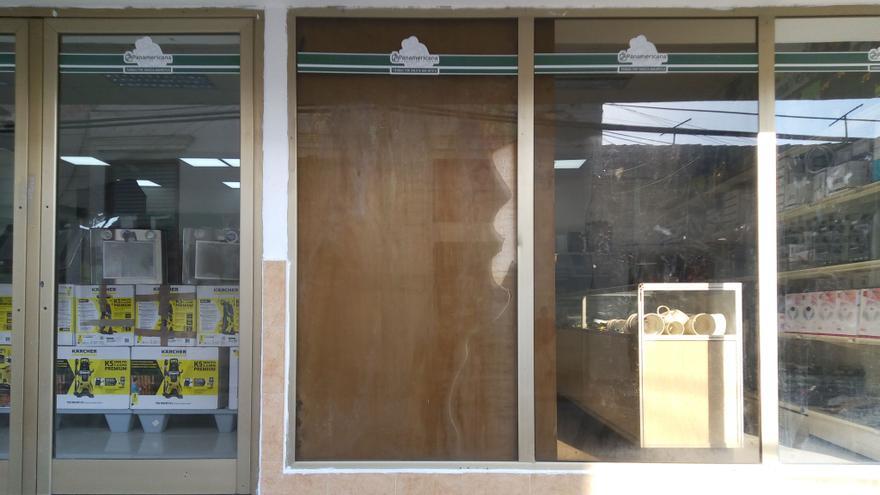
In the Primavera store, on Martí Street, belonging to the State Panamericana chain, the traces of these attacks can be seen. (14ymedio)

14ymedio bigger14ymedio, Juan Matos, Manzanillo, January 16, 2024 – The authorities of Manzanillo, in the province of Granma, have covered the windows of the stores in freely convertible currency (MLC). In recent months, stone attacks on these shops have increased, because of the population’s discontent.

Covering the windows is a temporary measure that seeks to protect the premises and prevent damage to State property, official sources say. In the Primavera store, on Martí Street, belonging to the State Panamericana chain, the traces of these attacks can be seen: a piece of wood covers a broken window.

Now, with part of the outside light cut off, the premises look smaller and darker. This Tuesday, the customers of the El Dandy store, its windows covered by metal plates, walked around in semi-darkness in the rows of water dispensers and Chinese Cheerday beer, very little valued by consumers but one of the most abundant brands in those stores. continue reading

“The covered windows in the MLC stores show how afraid they are, because they know that at any moment a stone might kill them”

One of the street vendors who spent the night in the doorway of the El Dandy store, on Loynaz Street at Martí said “the covered windows in the MLC stores show how afraid they are, because they know that at any moment a stone might kill them.”

In addition to the violent incidents, foreign exchange establishments have seen another phenomenon proliferate: the lack of customers. What at first — when in July 2020 they approved the sale of food and other basic necessities — were corridors full and shiny with imported products, today are empty shelves, with a gloomy atmosphere. “People don’t have dollars, and we get our salaries in pesos, not in MLC [freely convertible money],” a neighbor tells 14ymedio.
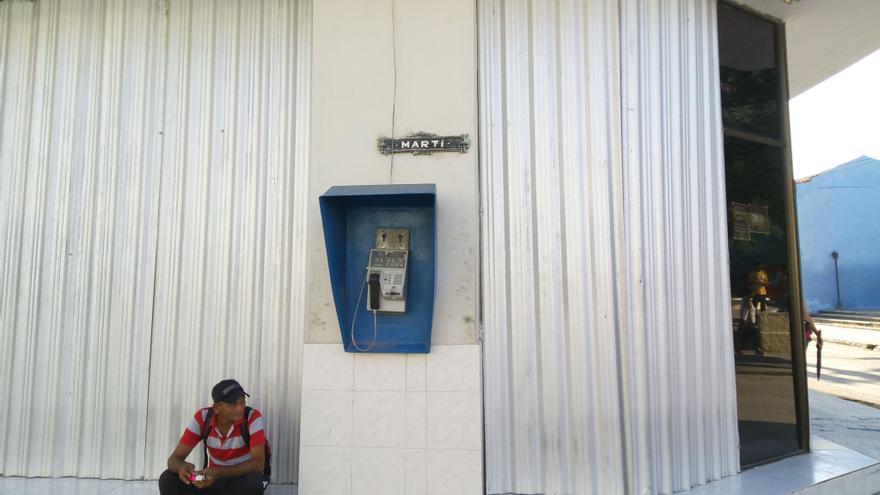
“The covered windows in the  MLC stores shows how afraid they are,” said a street vendor in the doorway of El Dandy. (14ymedio)

People’s lack of money, explains another resident of Manzanillo, is the main reason for the failure of these stores. “Salaries are not enough to cover basic needs and much less to allow superfluous expenses in stores of this type,” the man says. “I prefer to spend the little I have in new ventures, not in State stores.”

However, it is not only the lack of resources that justifies the few customers of foreign exchange stores and their restricted offers. It is enough to immerse yourself in some Facebook groups in Manzanillo to find some of the merchandise that informal merchants have bought in these places and then resell. Flat-screen TVs, freezers of various capacities, washing machines, kitchens and refrigerators crowd the ads.

This Tuesday, the customers walked around in semi-darkness in the El Dandy store, whose windows are covered by metal plates. (14ymedio)

The small packages of cookies “have run out in the stores, but here they have large quantities,” complained a netizen in one of those virtual markets. The response of the group’s administrator was vehement: “Yes, señora, but this is for people who don’t have MLC; it’s for those who only have pesos. They have to buy with us because the State doesn’t sell them any of this.”

The skillful merchant failed to add a detail. Those buying and selling groups on Facebook don’t have to protect themselves from stones. In addition, the products are displayed in full light and color, their windows are the immensity of the internet, and their main customer is the Cuban in need and without foreign currency.

Translated by Regina Anavy

____________

COLLABORATE WITH OUR WORKThe 14ymedio team is committed to practicing serious journalism that reflects Cuba’s reality in all its depth. Thank you for joining us on this long journey. We invite you to continue supporting us by becoming a member of 14ymedio now. Together we can continue transforming journalism in Cuba.
Ciego de Avila Newspaper ‘Invasor’ Once Again Questions the Transparency of the Cuban Authorities

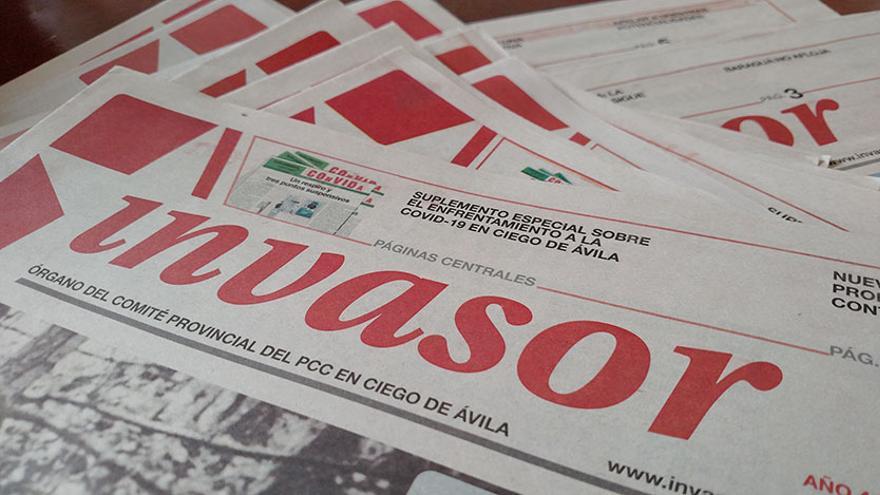
Invasor is the newspaper where some of the most critical texts against the Government have been published in the last year. (Invasor)

14ymedio bigger14ymedio, Havana, January 15, 2024 — The official newspaper Invasor published this Sunday, for the second time in four months, a warning to the officials of the Island. The reason: the lack of transparency of the authorities in the face of requests for information and solutions by the media and citizens. “People have the right to complain, and institutions have a duty to respond,” the newspaper said.

With the statistics from two of its sections, “Speaking Plainly” and “Open Letters,” Invasor gives the measure of the problem. Of the 104 notes published in 2023 in the first section, 93.2% were complaints, and the authorities responded to only 78.3%. In “Open Letters,” out of 13 letters received, only three were answered by officials or institutions.

Transport, Housing, Aqueduct and Sewerage, Communal Services and the Cuban Postal Service are some of the institutions the text mentions

Transport, Housing, Aqueduct and Sewerage, Communal Services and the Cuban Postal Service are some of the institutions that the text mentions, which have evaded on several occasions the newspaper’s requests to respond to the population, showing “non-compliance with the State’s responsibility to the citizens.”

Freeing itself from all responsibility, the official media clarifies that these situations are the “result of poor implementation of the Social Communication Policy, not the lack of insistence of this newspaper.” continue reading

“It is no less true that there are entities and institutions that are in the vanguard when it comes to sensitizing themselves to the problems of the population and will not be concerned, while others will recognize themselves here and some, perhaps, will find out that they have not acted as they should,” says the State media. They also highlight that in the “Speaking Plainly” and “Open Letters” sections, several recognitions were given to “those who have made an effort and want to satisfy the demands of the people, destroying obstacles such as bureaucracy, inefficiency, insensitivity and lack of commitment to the citizens.”

To those who have responded to the complaints without satisfying them, Invasor also dedicates a few lines: “The responses received reveal, in many cases, that the impossibility of the solution is not justified by transparent, logical and convincing  information,” which also constitutes irresponsibility on the part of the authorities.

In a similar article published last October, the media launched its first diatribe against the authorities

In a similar article published last October, the media launched its first diatribe against the authorities. “It was our intention to inform the public [about passenger transport], but at least four times, the managers of the Provincial Transport Company have left us waiting,” it said at the time.

As a shield against possible calls for attention, the media took refuge in the words of Miguel Díaz-Canel: “In the face of a certain situation that is negatively impacting the population, the responsible public servants are obliged to report immediately and by any means possible. For its part, it is up to the press to report first, and responsibly, on any sensitive information.”

Invasor is the newspaper where some of the most critical articles against the Government have been published in the last year. However, the reports always indicate that it is a particular authority, and not the system, that makes “mistakes.”

Translated by Regina Anavy

____________

COLLABORATE WITH OUR WORKThe 14ymedio team is committed to practicing serious journalism that reflects Cuba’s reality in all its depth. Thank you for joining us on this long journey. We invite you to continue supporting us by becoming a member of 14ymedio now. Together we can continue transforming journalism in Cuba.
Not Even the ‘Integrated’ Neighborhoods in Cuba Are Saved From Garbage Piles Everywhere

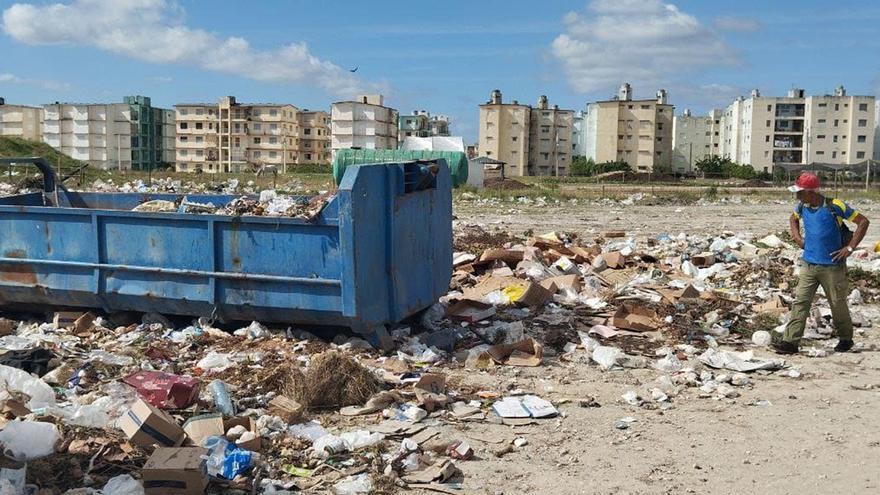
The volume accumulated in the containers is such that it would take several days of work and trucks to clean it up completely. (14ymedio)

14ymedio bigger14ymedio, Miguel García, Havana, 15 January 2024 — Not even the Cuban military are saved from the mountains of garbage that are seen everywhere on the Island. The neighborhoods of Villanueva 2 and Villanueva 3, in the city of Holguín, where hundreds of workers of the Ministry of the Interior reside, is about to be swallowed up by the mountains of waste that accumulate around it. Despite the fact that a few days ago the Comunales [Communal Services] company collected part of the waste, the accumulated volume is such that it would take several days of work and countless trucks to clean it up completely.

Bags flying in the wind, several vehicle beds full of waste and a rotten smell that floods the air is the panorama facing the neighbors in the morning when they leave their homes. “You can’t even have the windows open because the flies get everywhere,” complained a resident in the area, located behind the Pedro del Toro Polyclinic of the Pueblo Nuevo People’s Council. “This started as a little bit of garbage but now it already occupies the space of several buildings.”

The nearby buildings, most of them five floors erected by residents, are of recent construction, and in them, in addition to members of the Ministry of the Interior, live some doctors and people from Holguin who lost their homes during the passage of Hurricane Ike  in 2008 and had to wait more than ten years for a new home. “This is a very politically integrated neighborhood, and people are fuming because we have been abandoned,” a neighbor explained to 14ymedio. continue reading

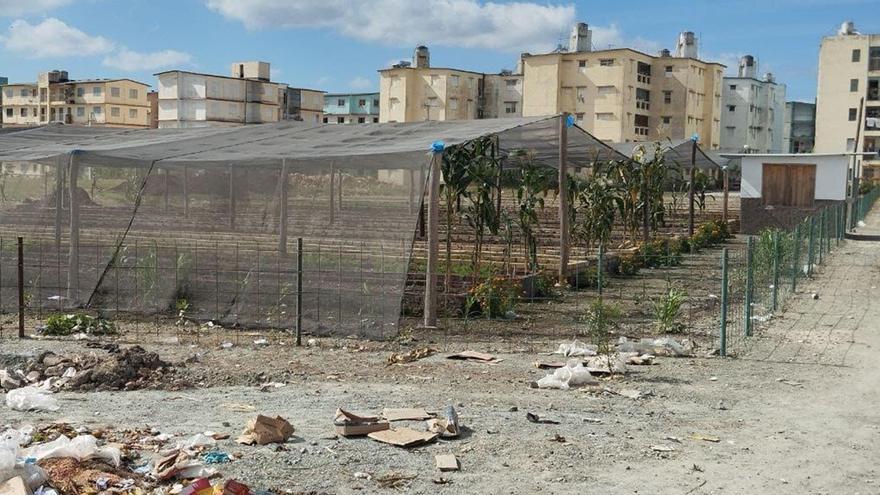
A few meters from the garbage dump, the facilities of an organoponic nursery languish due to the lack of supplies and the absence of personnel interested in working there due to the low salary. (14ymedio)

“When we moved here, this was supposed to be a neighborhood that was going to have special attention but everything has  deteriorated,” claims the holguinera. A few meters from the garbage dump, the facilities of an organoponic nursery languish due to the lack of supplies and the absence of personnel interested in working there due to the low salary.

In March 2021, a report on official television boasted of the resurgence of the organoponics system in the province. The report attributed the revival to the new economic measures, which allowed wages to go above 2,000 pesos and, in addition, the division of profits resulting from the sale of products. In the images disseminated there was no shortage of lettuce, radishes and chives, all freshly grown and available to customers.

Two years later, an entourage led by Ernesto Santiesteban Velázquez, first secretary of the Communist Party in Holguín, visited the surroundings of Villa Nueva 3 where an organoponic nursery was built that would be baptized with the optimistic name of “New Dawn.” The official inspected the areas for the cultivation of vegetables and fruits.

However, this January, instead of the promised cucumbers and kidney beans, the most common product on the lands adjacent to Villa Nueva 2 and 3 was garbage. The harvest of filth is the only one that seems to grow stronger and over-fulfill the plans for this neighborhood.

Translated by Regina Anavy

____________

COLLABORATE WITH OUR WORKThe 14ymedio team is committed to practicing serious journalism that reflects Cuba’s reality in all its depth. Thank you for joining us on this long journey. We invite you to continue supporting us by becoming a member of 14ymedio now. Together we can continue transforming journalism in Cuba.
While the Country Is Sinking, the Cuban Regime Renews the Code of Ethics for Its Cadres

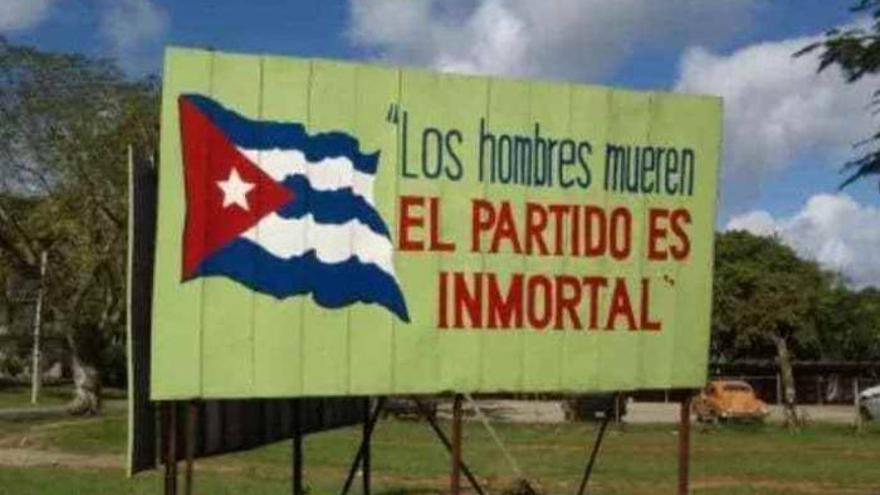
“Men die, the Party is Immortal” – The 2024 Code of Ethics of the Cuban Communist Party (PCC) replaces the previous one, in force since 1996. (laicismo.org)

14ymedio bigger14ymedio, Madrid, 16 January 2024 — After 18 years, the list of rules of conduct known as the Code of Ethics of the State Cadres already has a new version, which entered into force this Monday after its publication in the Official Gazette. The rule emphasizes aspects such as “the honor and duty to defend the socialist homeland, anti-imperialist conduct, the willingness to have permanent accountability and to submit to public scrutiny; and the duty to promote the mastery of the regulations that govern the development of society.”

The framework under which 118,000 people should be governed, according to Miriam Marbán González, a member of the Central Committee of the Communist Party and one of those responsible for the preparation of the document, is shorter than the previous one, which had 27 “precepts” after the preamble, and it has changed its name to the Code of Ethics of the Cadres of the Cuban Revolution, since it also applies to the managerial positions of mass organizations.

The new Code contains the definitions of 17 words that should govern the behavior of the cadres, starting with patriotism, understood clearly as a defense of the Revolution. Those subject to the regulation have the obligation to love the country, its symbols and to put Cuba ahead of themselves, defending it – in line with the Constitution – with weapons if necessary. continue reading

The subjects of the regulation have the obligation to love the country and its symbols and to put Cuba ahead of themselves, defending it – in line with the Constitution – with weapons if necessary

According to the preamble of the Code, the aforementioned guidelines “cultivate the dignity and sensitivity of the people from Marxist, Leninist, Martian [following José Martí] and Fidelist positions, in correspondence with the most noble values in the evolution of the homeland’s history, exposed in a masterful synthesis in the Concept of Revolution expressed by Commander in Chief Fidel Castro Ruz.”

The text asks for reliance on the so-called historic generation and calls for updating “the country’s development model,” taking into account that it is in the middle not only of the “blockade” but also of the “ideological war” that must be fought with “exemplary behavior and “revolutionary concern.”

It is precisely anti-imperialism that is the second guideline to follow, according to the curious regulations which have the rank of law. This concept requires “maintaining vigilance and rejection towards actions that seek the political, economic, technological and cultural expansions lor domination of imperialist powers” and includes attitudes such as denouncing Havanatur’s Santa Claus ads or getting the private restaurant San Pepper’s Burger de Holguín to take down their poster.

This section also contemplates the importance of “basing friendships on coincidence and respect for principles and revolutionary morality,” avoiding neighborhoods such as that of the Ecobios, the series of cartoons that recounted the discussions and affections of two Cubans as diverse as they are similar.

Next, the list outlines a whole series of virtues associated with honesty, honor, professionalism, altruism, humanism and solidarity, although the discipline makes it clear again that everything is subject to following the guidelines of the Communist Party, without being allowed at any time to question or offer any alternative within the system itself. “Promote conscious respect and loyalty to the Communist Party of Cuba, contribute with your performance to compliance with the programs, guidelines and agreements approved by its Congress and other party leadership bodies.”

The document calls for “probity” to be observed, assuming an integral attitude that helps to “foresee, combat and denounce any manifestation of indiscipline, illegality, crime and corruption in the administrative sphere” and “to take into account that corruption denigrates both those who incur it and those who tolerate it,” a section in which the Government has severe problems, since the situations in which the ruling party itself is accused of corruption of a public official are innumerable.

The document warns that non-compliance with the statutes will imply submitting to a “disciplinary analysis” in which responsibilities will be required depending on the severity

The situation has reached such heights, pushed by the denunciations of the independent press and the networks, which prevent containing what was previously barely circulating, that the regime has created its own profiles on Facebook to mention cases of corruption in its own ranks that were punished, but avoiding any analysis of what leads the average citizen to systematically break the law.

The regulations also ask for exemplary behavior in two complicated areas. First, transparency, something that the official press itself is already saying should be intrinsic to the system. Second, austerity in the sense of “refusing privileges and accommodation,” for which the citizens reproach the cadres of the Party whose privileges increases as they climb the ladder.

The document warns that non-compliance with the statutes will imply undergoing a “disciplinary analysis” in which responsibilities will be required depending on the severity.

“The bosses will be responsible for the education of their subordinates and the training of future generations, so that anyone who assumes a management role knows that these principles come first, even above other requirements and the competence that we demand,” said Miguel Mario Cabrera Castellanos, head of the Directorate of State and Government Cadres. He said that this document, which has the rank of law, applies to all those who “professionally work in management positions of political, mass and social organizations. It also applies to state, governmental and administrative spheres, and to those appointed as representatives of the Cuban State in mixed capital companies.”

Translated by Regina Anavy

____________

COLLABORATE WITH OUR WORKThe 14ymedio team is committed to practicing serious journalism that reflects Cuba’s reality in all its depth. Thank you for joining us on this long journey. We invite you to continue supporting us by becoming a member of 14ymedio now. Together we can continue transforming journalism in Cuba.
Two Children, Aged 10 and 15, Die in a Truck Crash in the Cuban Province of Granma

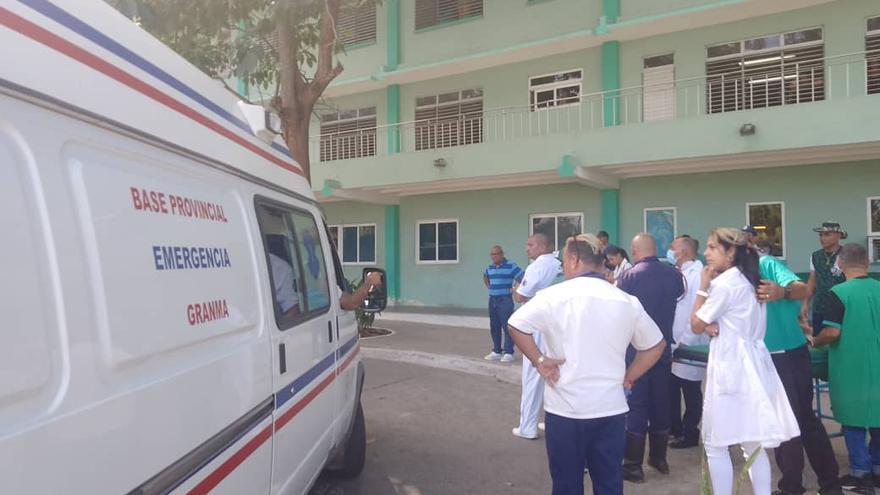
The injured were transferred to the Carlos Manuel de Céspedes hospitals, in Bayamo, and Celia Sánchez Manduley, in Manzanillo. (Radio Bayamo)

14ymedio bigger14ymedio, Havana, January 15, 2024 — At least two minors died and 13 people were injured in a truck crash that occurred on Monday in the municipality of Bartolomé Masó, in the province of Granma. According to the official press, the crash occurred when a passenger transport truck suffered a breakdown while climbing the Loma del Albergue and fell backwards downhill.

The state station Radio Bayamo identified the two deceased minors as Braudis Pujol Pérez, 10 years old and resident in Frío de Nagua, and Yerlis Solano Peña, 15 years old and a neighbor of Unit 4 of Caney de Las Mercedes, both towns in the Granma municipality.

According to the information offered by Eduardo Ramos Reyes, second head of the Police in Bartolomé Masó, a “leased truck” that was transporting passengers this morning from Frío de Nagua to the municipal capital suffered damage to the transmission, could not continue the climb and stopped halfway up the hill. Both the driver and some passengers tried to “maneuver” and stop the recoil of the vehicle “by placing wedges in the wheels,” but the truck ended up rushing backwards, the manager explained. continue reading

The injured were transferred to the Carlos Manuel de Céspedes hospitals, in Bayamo, and Celia Sánchez Manduley, in Manzanillo.

They have not revealed if it was a state company that leased the truck or if this was one of the converted vehicles that often suffer “flaws”   

The authorities have not revealed, however, if it was a state company that leased the truck or if it was one of the converted vehicles that often suffer “flaws” on the roads of the Island.

Crashes reported in the mountainous areas of the east of the country are becoming more frequent. Last September, in the town of La Juanita, in Granma, a truck that transported the workers of the provincial Construction and Assembly company broke its chassis, causing the driver to “lose control” and finally overturn. Two people died and 23 were injured, the authorities revealed at the time.

Also in August, a crash on the Loma La Mariana, in the municipality of San Antonio del Sur, in Guantánamo, left 21 injured. As explained at the time by the newspaper Venceremos, a converted truck for the transfer of passengers belonging to the provincial bus company went off the road and down a ravine.

Days before, the same thing had happened in Santiago de Cuba, when a vehicle of the Armed Forces overturned and caught fire in the municipality of Songo-La Maya, with one dead and 16 injured.

These provinces, due to their geographical peculiarities of abundant hills and roads in steep areas, constitute the region with the highest number of massive crashes, often of converted trucks or passenger vehicles that do not have the conditions to travel on the twisting and narrow roads of the Sierra Maestra. In most cases, the authorities attribute the cause of the crash to the “loss of control over the vehicle” by the driver.

Translated by Regina Anavy

____________

COLLABORATE WITH OUR WORKThe 14ymedio team is committed to practicing serious journalism that reflects Cuba’s reality in all its depth. Thank you for joining us on this long journey. We invite you to continue supporting us by becoming a member of 14ymedio now. Together we can continue transforming journalism in Cuba.
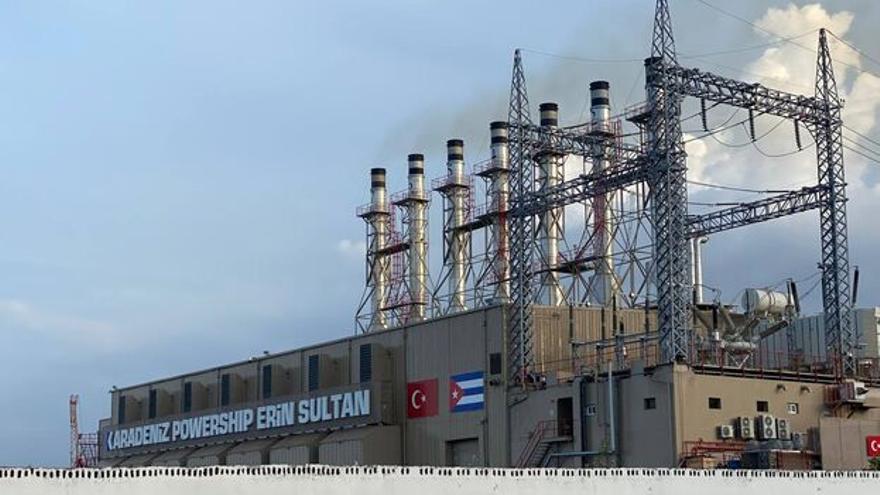
Cuba Celebrates the Day of the Power Plant Worker After a Deficit of 800 MW

The UNE claimed that there was a breakdown in a patana — a floating generator — but the newspaper Trabajadores attributed the failure of the generator to the lack of fuel. (14ymedio)

14ymedio bigger14ymedio, Madrid, 15 January 2024 — Power plant workers celebrated their day this Sunday with a lot to do. In unit 1 of the Lidio Ramón Pérez thermoelectric plant, from Felton (Mayarí, Holguín), synchronization had to be achieved to reduce Saturday’s scandalous deficit, when at least 800 MW were missing in peak hours. And the reason is still unknown.

That day there were breakdowns in unit 5 of the thermal power plant of Mariel, unit 1 of Santa Cruz, unit 5 of Diez de Octubre, and unit 5 of Renté, in addition to the two of Felton. To that should be added two more units in maintenance, unit 8 of Mariel and unit 3 of Cienfuegos. Although the entry of two more sections was expected (in Renté and Nuevitas), an unforeseen event happened with three engines of the patana (floating generator) of Melones and several other generators.

If you look back, five days ago all the plants were working, and there was a reserve of more than 400 MW. Today, five days later, almost all the plants have broken down

“At 09:04 pm there was an internal failure in the patanas of Santiago that triggered service exits of the 110 kV lines of the provinces of Santiago de Cuba and Guantánamo, and at 10:25 pm service was restored. The root cause of the failure in the patana is being determined for its subsequent service,” said the Electric Union of Cuba (UNE) in a statement. continue reading

While this version appeared as official, the newspaper Trabajadores explained that the paralysis of the patana was due to the “lack of fuel.” “The UNE and all its infrastructure are a real disaster. If you look back, five days ago all the plants were working and there was a reserve of more than 400 MW, and today, five days later, almost all the plants are in breakdown, and there’s a deficit of more than 800 MW. It’s like a case of Tras la Huella (Follow the Crime),” said a customer, referring to a detective show on Cuban television.

On Sunday, things had improved and a lack of 227 MW in peak hours was expected, attributed to the “deficit in the distributed generation.” Thus, the Minister of Energy and Mines, Vicente de la O Levy, tried to breathe encouragement into the workers in his area. “Our congratulations, recognition and gratitude to the women and men of the electricity sector. Linemen, operators, technicians, managers, from the anonymous to the most visible, who every day, in difficult conditions, make the power continue to reach all of Cuba. We will win!” he wrote on his social networks.

On social networks, the opinions varied. “The electricity and the blackouts reach all of Cuba,” a user responded on Facebook. There were many that encouraged the employees, who, even in the most difficult conditions and with very poor salaries, have little responsibility for the mismanagement of the country, but many customers lost patience. “Every 20 minutes the current goes out here in Santiago, what a joke,” someone responded to the dozens of posts published on the electricity company’s networks to celebrate the day.

All the provinces had their celebratory events, their delivery of symbols and even their chants for the selfless workers, who are fewer and fewer every day

All the provinces had their celebratory events, their delivery of symbols and even their chants for the selfless workers, who are fewer every day. Last Saturday, the technical director of the UNE, Lázaro Guerra Hernández, gave an interview to the official press in which he declared his pride for dedicating himself to the profession and thanked the dedication of the employees. “And so, to the more than 50,000 workers, each one deserves recognition, and I am one of them. Simply put, I don’t see myself doing anything else but working in electricity.”

It is not yet known how many workers left the sector in 2023, but the worst is feared after more than 15,000 left their jobs between 2021 and 2022. Two years ago, 8,089 workers quit in the first nine months, and it was expected that there would be 10,000 by the end of the year. In 2021, 6,612 power plant workers left their jobs. Many of them did it to leave the country, but there were also a large number who left to look for a job that paid better.

In 2023, the average salary of a power plant worker was between 4,000 and 8,000 Cuban pesos a month. As announced by Pedro Alberto Sánchez Torres, general director of the Fuel Oil Generator Generation and Maintenance Company, in 2023 salaries rose by about 3,000 pesos on average. This is the approximate cost of a carton of 30 eggs in the informal market.

Translated by Regina Anavy

____________

COLLABORATE WITH OUR WORKThe 14ymedio team is committed to practicing serious journalism that reflects Cuba’s reality in all its depth. Thank you for joining us on this long journey. We invite you to continue supporting us by becoming a member of 14ymedio now. Together we can continue transforming journalism in Cuba.
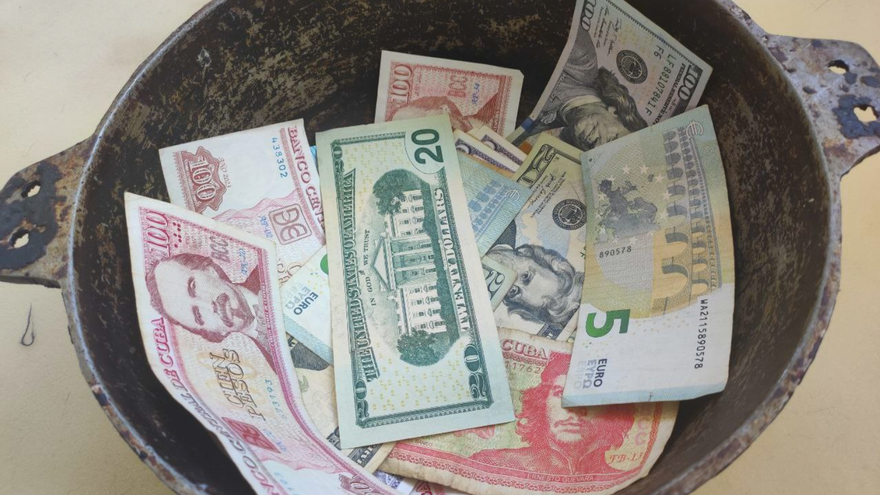
Cuba: The Dollar Breaks a New Record on the Black Market at 275 Pesos

For most people on the Island, the informal market is where they stock up on dollars. (14ymedio)

14ymedio biggerEFE (via 14ymedio) Havana,15 January 2024 — The US dollar set a new record in Cuba on Monday by trading at 275 pesos on the informal foreign exchange market, which deepens the strong depreciation of the local currency since the economic reform of 2021.

This new maximum – recorded by the independent media El Toque – comes after the announcement, in mid-December, of a large macroeconomic adjustment program by the Cuban Government.

Among the measures announced, such as the 500% increase in the price of gasoline and diesel, is the implementation of a new official exchange rate

Among the measures announced, such as the increase of 500% in the price of gasoline and diesel, is the implementation of a new official exchange rate, which since 2021 stands at 24 pesos per dollar (1.045% lower than the informal rate) for companies and 120 for individuals (129% lower than on the black market).

A few days after Prime Minister Manuel Marrero announced the plan in Parliament, the informal rate registered a slight drop to reach 265 pesos per dollar. But in 2024 it has risen again to the levels prior to the announcement, until it broke the record this Monday. continue reading

The need to import 80% of what the country consumes, the strong migratory pressure and the uncertainty due to the serious crisis are some of the main factors that explain the current partial dollarization of the Cuban economy and the consequent depreciation of the Cuban peso.

The Government has recognized on several occasions the failures in the design and implementation of the 2021 reform, called the OrderingTask,* which has not met the objectives of ending the monetary duality of the Island, which used the national currency and the convertible peso (CUC), equivalent to the dollar.

In state exchange offices only up to 100 units of the US currency are sold per person per day

Many people stock up on dollars in the informal market due to restrictions on buying them at state exchange offices, where only up to 100 units of the US currency are sold per person per day, and only if there is availability.

The El Toque index – harshly criticized by the Government for stirring up “speculation” – takes as a reference about 2,000 daily ads for the sale of foreign exchange on several Cuban websites to establish its reference exchange rate, according to this independent media.

In the absence of another type of official indicator, this index has become the benchmark on the street and for economists who study the situation in the country.

*Translator’s note: The Ordering Task is a collection of measures that include eliminating the Cuban Convertible Peso (CUC), leaving the Cuban peso (CUP) as the only national currency, raising prices, raising salaries (but not as much as prices), opening stores that take payment only in hard currency, which must be in the form of specially issued pre-paid debit cards, and a broad range of other measures targeted to different elements of the Cuban economy.

Translated by Regina Anavy

____________

COLLABORATE WITH OUR WORKThe 14ymedio team is committed to practicing serious journalism that reflects Cuba’s reality in all its depth. Thank you for joining us on this long journey. We invite you to continue supporting us by becoming a member of 14ymedio now. Together we can continue transforming journalism in Cuba.
The Delay in Grinding the Sugar Heralds Another Calamitous Harvest in Cuba

The late start of the grinding, the inefficient repairs, the weather conditions and the lack of inputs for the machinery mean that the industry is not functioning. (Adelante)

14ymedio bigger14ymedio, Madrid, 13 January 2024 — The 2023-2024 sugar harvest has just begun in Cuba, but the regime cannot hide that, once again, it will end in a debacle. None of the Ciego de Ávila sugar mills, for example, have begun to grind. In an article published this Friday, the newspaper Invasor says that the delay is due to “different inconveniences,” without giving details, and adds that “compliance with the economic-productive indicators of the territory is in danger.”

At the end of November, the official press announced that of the 25 sugar mills that would be used in the current campaign, only two – Ciro Redondo, in Ciego de Ávila, and November 10, in Artemisa – due to repairs, would begin to grind late, on January 10 and in February, respectively. The others would begin in December. But this has not come to pass.

In Sancti Spíritus, according to an extensive article published on Wednesday by Escambray, they had “an unstable start,” in the words of Antonio Viamontes Perdomo, director of the Melanio Hernández sugar mill, where, they say, the collective “is performing magic to fulfill the plan.” continue reading

The Melanio Hernández sugar mill started six days later than expected, on December 26, but two days later it stopped because of the “cold” brought by the rains

The milling started six days later than planned, on December 26, but, two days later, it stopped because of the “cold” brought by the rains. After resuming its work on January 2, it was only operational for four days, because “we had to stop again to fix a crack in the supply pipes to the boiler.”

Viamontes Perdomo unraveled to the provincial newspaper his litany of problems: “When you stop for many hours everything is complicated because the industrial process uses sugary materials that determine timing and conditions; we do not yet have the bagasse [fibrous residue from the sugarcane stalk] to provide all the steam needed; there is moisture in the fields; there are 13 combine harvesters that have not been incorporated due to the lack of fuel, and those that are working suffer breakdowns. Because of all that, it is very difficult to get concrete data on the industry’s efficiency, but the workers do what is necessary to stabilize the sugar harvest.

Escambray reports that this year only 40% of the planned cane has been planted (1,984 acres of the 4,992 announced). Despite this, the article ends optimistically: “An unstable beginning doesn’t always end badly.”

Las Tunas, for its part, is also late. As reported by the regime, in this eastern province the Antonio Guiteras sugar mill hasn’t yet started. It’s waiting for the coming visit of “a commission designated to accredit the readiness of the system to start grinding.”

In the same territory, it was not until last Sunday that the Majibacoa sugar mill started up, and it is planned to produce 61,500 tons of sugar. As if that were not enough, in the first few days only 66% of the mill’s capacity was ground, according to its director, David Puig Brito, who also pointed out “an interruption as a result of failures in the supply pump of the boilers.”

Las Tunas is also late. The Antonio Guiteras sugar mill has not yet started and is waiting  for the coming visit of “a commission designated to accredit the readiness of the system to start grinding

“It’s terrible to start the harvest so late and then have cane coming from Puerto Padre, Menéndez and Yara, in Granma Province,” a local source tells this newspaper. “Having to bring cane from so far away lowers the output a lot.”

In Villa Clara, the official newspaper Vanguardia reports that the harvest has started “in difficult conditions, with material limitations and organizational deficiencies.” In an article published this Thursday, the newspaper mentioned the visit of the first secretary of the Communist Party in the province, Osnay Miguel Colina, to the three sugar mills in Villa Clara that are working. He warned of  “deficiencies” and “emphasized the need to have an efficient harvest, despite the limitations of resources and the delays, given the late start of the three mills due to lack of inputs.”

What is happening and will happen with the sugar this season, however, is no surprise. Already in September, the authorities of Sancti Spíritus predicted a harvest even worse than the previous year, because the cane had barely been planted. In June, in that province, only 30% of the harvest plan of the more than 123,553 acres available had been met.

In 2022-2023, the harvest reached only 350,000 tons, according to an official report at the time, compared to 473,720 in 2021-2022, which had meant a disaster. The result of that campaign barely exceeded half of what was expected – 911,000 tons – and was not enough to cover domestic demand, 500,000 tons, or export commitments, 411,000 tons.

Translated by Regina Anavy

____________

COLLABORATE WITH OUR WORKThe 14ymedio team is committed to practicing serious journalism that reflects Cuba’s reality in all its depth. Thank you for joining us on this long journey. We invite you to continue supporting us by becoming a member of 14ymedio now. Together we can continue transforming journalism in Cuba.

Colombia Counts on Cuba’s Vote in Its Attempt To Regain the Venue for the Pan American Games

Press conference led by Gustavo Petro, along with several sports managers, after his meeting about the Pan Americans. (Presidency of Colombia)

14ymedio bigger14ymedio, Havana, 13 January 2023 — The participation of the Cuban Professional Baseball Federation (Fepcube) in the Intercontinental Professional Baseball Series is subject to “not singing the National Anthem or using the flag” of Cuba, nor the name “Fepcube Patria y Vida” during the event that is scheduled from January 26 to February 1 at the Edgar Rentería stadium in Barranquilla (Colombia), journalist Yordano Carmona said on his social networks.

“The use of these symbols,” he warned the governing body of Colombian sport, “would be interpreted as a clear violation of Cuba’s constitutional and sports rights.”

Carmona asked if the participation of the Independent Cuban team, Pelota Cubana USA, in the Intercontinental Series was in jeopardy? The Ministry of Sports “has neither a voice nor a vote” in the organization of a “private tournament” such as the series organized by Team Rentería USA, owned by the former U.S. Major League player, Edgar Rentería, and his brother Edinson. continue reading

The Ministry of Sports of Colombia has decided to support the Government of Cuba by rejecting this team of exiles

However, the Ministry of Sports of Colombia has decided to offer its support to the Government of Cuba by rejecting this team of exiles, and this is due to its attempt to recover the venue for the Pan American Games in Barranquilla 2027, which it lost due to the non-payment of 8,000,000 dollars, for “the right of organization” and “the granting of media rights.”

Prior to the trip of the president of Colombia, Gustavo Petro, to Chile, to meet with Neven Ilic, president of the Pan American Sports Organization (Panam Sports) – in charge of designating the venue for the Pan American Games – “somehow the National Institute of Sports, Physical Education and Recreation (Inder) has put pressure (on Colombia),” Carmona denounced.

“It will take the vote of the countries of the area to resume the Pan American Games,” the journalist anticipated about the event in which Peru and Paraguay have also shown interest. “Somehow Cuba has already started with that blackmail,” noting that “they (Colombia) will need that support.”

The Colombian Ministry of Sports deauthorized, on January 9, the event of Team Rentería USA, specifying that “it is not organized by the Colombian Baseball Federation, nor is it part of the events of the World Baseball and Softball Confederation, the only organization endorsed by the International Olympic Committee.”

The athletes see no impediment to complying with the prohibition of using national symbols in exchange for participating

The athletes see no impediment to complying with the prohibition of using national symbols in exchange for participating. “If we have to have a minute of silence, we will do it. If we have to kneel on the floor, we will do it. This is a Cuban exile team. We don’t need either the flag or the anthem; we carry them in our hearts,” stressed Yunel Escobar, a member of the Patria y Vida group, at the end of this Thursday’s training at Miami Dade College.

Days before, Escobar expressed to journalist Francys Romero the “honor” he felt when he was playing with the (Cuban) baseball players who are outside the country and “representing the political prisoners and the people who died at sea, who have suffered the Cuban dictatorship”

In the Fepcube Patria y Vida team are Aledmys Díaz, Alay Lago, Albert Lara, Alex de Goti, Alejandro Rivero, Josuán Hernández, Lázaro Rivera, Luis Avilés Junior, Rangerl Ravelo, Yandy Díaz and Yuli Gurriel. Among the catchers are Edgar Quero, JC Escarra and Harold Vázquez. The outfielders are Henry Urrutia, Lourdes Gurriel Junior, Peter O´Brien, Leonys Martín, Andy Martín, Jorge Soler and Sergio Barthelemy.

Among the pitchers are Aroldis Chapman, Yennier Cano, Cionel Pérez, Daysbel Hernández, Odrisamer Despaigne, Jorge Martínez, Yoanner Negrín, Jesús Balaguer, Pedro Echemendía, William Gastón, Raidel Orta, Yuniesky Maya, Yordan Nodal, Yusniel Padrón and Edilberto Oropesa.

The series will be developed with six guest teams from countries such as Curaçao, the United States, South Korea, Japan and Colombia, who will be represented by Caimanes de Barranquilla, the last champion of the Colombian League.

Translated by Regina Anavy

____________

COLLABORATE WITH OUR WORKThe 14ymedio team is committed to practicing serious journalism that reflects Cuba’s reality in all its depth. Thank you for joining us on this long journey. We invite you to continue supporting us by becoming a member of 14ymedio now. Together we can continue transforming journalism in Cuba.

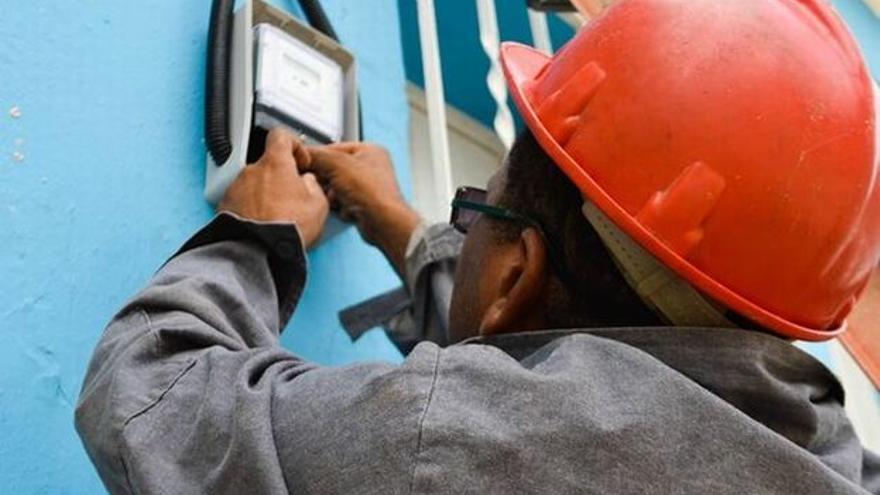
Electricity Thefts and Blackouts Go Hand in Hand in Cuba

Most of the frauds for electricity theft are carried out with the participation of workers of the Electric Union. (Escambray)

14ymedio bigger14ymedio, Natalia López Moya, Havana, 13 January 2024 — Camila, 52 years old, checks the number on the meter up to three times a day. She leaves her apartment in the Wajay neighborhood in Havana, reaches the common area where all the devices of the five-storey building and dozens of apartments are located and takes a photo of the number shown on the screen before returning home. Four weeks ago she dropped out from a mechanism to steal electricity in complicity with an employee of the Electric Union (EU).

“When you get out of this business they punish you,” she tells 14ymedio. “I had been paying “on the left” [the informal market] for two years to get a much lower reading, but I am no longer interested in continuing. Now they are going after electricity frauds, and I don’t want to get stuck in this.” Another reason not to continue with illegal payments in exchange for a receipt with lower wattage: “My two children have emigrated, and my husband and I no longer consume so much electricity.”

For more than three years, Camila was one of the many Cubans who, in collaboration with UNE workers, received an electricity bill well below the amount of energy she actually used. “It wasn’t so much to save money, because at the end of the day I was paying; it was so I wouldn’t be noted as a high consumer,” she says. “My husband has an official position, and it is not convenient for him to get a very high reading.” continue reading

Time passed, and the couple decided to drop out of the fraud, but they fear that the employee involved in the agreement will penalize them. “When you tell him that you don’t want to continue, the next few months a high reading will arrive. It is how they can make you return to the contract and throw you to the inspectors, who suddenly see a strange increase in consumption.”

“A few weeks ago some inspectors descended on us, and it turns out that there was a cable that didn’t go through the meter clock and that we were getting our electricity from it”

Others, like Ismael, 34, entered the list of energy offenders without knowing it. “My mother and I moved from Central Havana to a larger house with a patio in the Cotorro,” he explains. “A few weeks ago some inspectors descended on us, and it turns out that there was a cable that didn’t go through the meter clock and that we were getting our electricity from it.”

Ismael says that it has nothing to do with the illegal installation of the cable. “It was left by the previous owners of the house; we didn’t even know that it existed.” But the fine came anyway. “The oversight cost me 8,000 Cuban pesos, and I did well, because in this neighborhood there are people who have had to pay more. Mine wasn’t so serious because I showed the papers for the permuta (house swap), and they saw that I had been in this house for a short time.”

Like Camila, every now and then Ismael checks his meter because he fears, this time, that some nearby neighbor will “create a bridge” and steal the electricity that he now pays for watt by watt. The crystal case, the numbers that fall as the energy passes to the house and the figure that he writes down with discipline in a notebook keep him attentive. But he warns that “in this area there are many who steal electricity by agreement with the UNE workers than those who do it on their own.”

This Friday, the official newspaper Granma revealed that 266,000 electrical crimes were detected in Cuba in 2023

This Friday, the official newspaper Granma revealed – citing the Minister of Energy and Mines Vicente de la O Levy – that 266,000 electrical crimes were detected in Cuba in 2023. “What is being stolen from the country by electrical fraud is almost as big as what is generated by the Antonio Guiteras thermal power plant, one of those with the largest generation capacity on the Island.”

The complaint came from an announcement that this Saturday there will be blackouts throughout the Island, especially in the “peak hours of night,” due to a deficit of 821 megawatts in the generation. The UNE reported that unit 5 of the thermoelectric plant of Mariel, the 1 of Santa Cruz, the 5 of Diez de octubre, the 1 and the 2 of the Felton and the 5 of the Renté were damaged, a series of key points in the electrical network throughout the country.

Determined to show the “human face” of the UNE official, the official press interviewed the technical director of the company, Lázaro Guerra, who offers a daily report on the situation in front of the cameras of the island’s information system. Graduated from the pre-university vocational Lenin school, from Havana, and with a degree in Electrical Engineering, Guerra was also a leader of the Union of Young Communists.

The official took advantage of the interview to exalt the “exceptional work” of the UNE and said that he had experienced situations of extreme difficulty as a manager. “The most tense moments in my career have come when the system has crashed. This has happened on some occasions due to the passage of cyclones and, in others, due to different causes.”

However, the most memorable line of the interview was his answer to the question of why he was “so serious” on Cuban Television: “I don’t think I can announce a blackout with a smile; I don’t think I can do it.”

Translated by Regina Anavy

____________

COLLABORATE WITH OUR WORKThe 14ymedio team is committed to practicing serious journalism that reflects Cuba’s reality in all its depth. Thank you for joining us on this long journey. We invite you to continue supporting us by becoming a member of 14ymedio now. Together we can continue transforming journalism in Cuba.
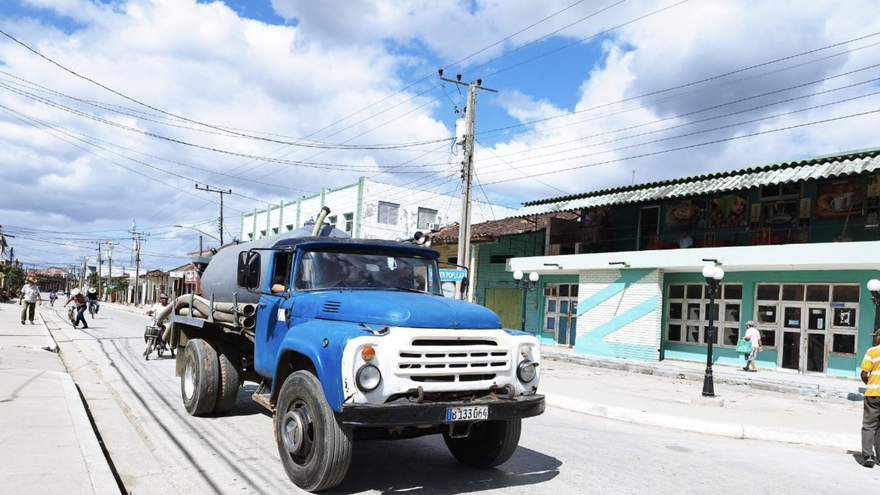
A Week Without Water in the Cuban Province of Sancti Spiritus Due to a ‘Dangerous Leak’

The authorities assure that they have two water trucks ready to supply hospitals and schools. (14ymedio)

14ymedio bigger14ymedio, Havana, January 10, 2024 — A leak in a water pipe in Sancti Spíritus that broke last Thursday leaves the residents of the municipality of Cabaiguán and the capital city without drinking water. The authorities of the province, who initially declared that the supply would be stabilized in two days, no longer know how to explain the delay in the repair to the neighbors, who have been without service for a week.

“Days ago they said that there was a break in the Macaguabo aqueduct, which feeds the northern part of the city, and that they were going to do work to repair it that would take up to two days,” Noelia, 37, tells 14ymedio.

We were without water for a couple of days and suddenly it arrived, and we all assumed that the pipe had been repaired”

“We were without water for a couple of days and suddenly it arrived, and we all assumed that the pipe had been repaired. However, the water had little force, and many people couldn’t save much, as was my case, and when it turned off again we were left without reserves,” she said.

According to Noelia, as the days go by the situation becomes more desperate, and the small water storage tanks have begun to run out. “In my house things are tight. The tank was only half full when the water came, and now my children are tired of me telling them to save, that there is no water.” continue reading

But her situation, she admits, is not the worst: “I know people who are going to the factories to get water, who have their own reserve in wells, tanks or cisterns. Another friend of mine has been taking a bath at work these days because at home the water is for cooking and drinking.”

The patience of the residents is exhausted, she says, and the last update from the authorities declared that they still do not know “at what time the work can be finished, because the pipe is being welded and it will take a long time.”

A few days ago, interviewed by Radio Cabaiguán, Alexei Hidalgo Leiva, director of Aqueduct and Sewerage in the municipality, explained that “on January 4, pumping at the Manaquita reservoir was stopped to suppress two large leaks: one at the entrance of pump three and the other at the exit of the pumping station.” The one at the exit could be repaired, but the one at the pump, he said, could not be finished due to the bad condition of the pipe. “When we started the work on the leak, we discovered that the pipe is rotten. It could not be welded, and it caused that section of the pipe to deteriorate more.”

Since then, the situation only got worse, because the province did not have the pipes and other materials necessary to do the repairs

Since then, the situation only got worse, because the province did not have the pipes and other materials necessary to do the repairs. “We had to close the outlet valve of the dam, because if that pipe goes, it would end up flooding the pumping station, where there is 440 volt electricity, pumps, operators and personnel. It is an imminent danger for the workers there, so the leak has been going on for days,” added Hidalgo, who couldn’t give a tentative date for the completion of the work.

At the moment, he said, in an attempt to give relief to the population, “we have the fuel and two water trucks activated to cover hospitals and state centers, including schools and childcare centers.” However, the Macaguabo Water Plant provides water for 62% of the population in the province.

The umpteenth promise of repair was offered this Tuesday by the official press. “It is expected to finish around 9:30 or 10:00 tonight, Tuesday,” Escambray announced. The reality is different. This Wednesday Sancti Spíritus continues with its reservoir closed while the Aqueduct and Sewerage company says that its workers have spent the last 48 hours repairing the leak.

Translated by Regina Anavy

____________

COLLABORATE WITH OUR WORKThe 14ymedio team is committed to practicing serious journalism that reflects Cuba’s reality in all its depth. Thank you for joining us on this long journey. We invite you to continue supporting us by becoming a member of 14ymedio now. Together we can continue transforming journalism in Cuba.
The Theft of Seeds Leaves Five Cuban Provinces Without Onions and Cabbages

The robbery occurred on August 28 in the Frigorífico 800 warehouse of Sancti Spíritus. (Escambray)

14ymedio bigger14ymedio, Havana, 9 January 2024 — About 5.75 quintals [1 quintal=220 pounds] of onion seeds of the Caribbean 71 variety and 40 pounds of cabbage seeds were stolen last August from the Frigorífico 800 warehouse of Sancti Spíritus. The official press, which revealed the event five months later, does so with its usual objective: to warn State workers that cases of corruption will not be tolerated. The eight involved, meanwhile, are awaiting trial and several years in prison, he emphasizes.

The local newspaper Escambray was precise in the profile of the thieves. “They had a bad social conduct, prone to the commission of criminal acts, and two of them had a criminal record for robbery with force.” Two others were the custodians of the refrigerator.

To steal the “very important booty,” six men entered the entity on August 28, cut the fence with a hacksaw, accessed the number nine refrigerated chamber and broke into a small vault that contained “onion seeds and other quality vegetables that would be used in the current cold season.” “They had bet on the expertise of two former workers of the entity, who acted as guides of the crime,” the media said. continue reading

They had bet on the expertise of two former workers of the entity, who acted as guides of the crime,” the media said

The penalties imposed on the custodians for “the crime of non-compliance with the duty to preserve the property of the State” and on the rest, accused of robbery with force – which is punished in the current code with seven to 15 years of deprivation of liberty – will not be slight. Their greatest transgression, the authorities say, was to steal what belongs to the population. For the time being, the six thieves remain in pre-trial detention, and the ’security agents’ were allowed bail.

“In truth, we feel very concerned, and I’m not talking only about monetary value, but about the fact that the producers were left without seeds, and in the end the population pays the price,” said Orestes Ramírez, director of the Base Business Unit Semillas Sancti Spíritus.

Another situation, however, influences the fact that there is no need to plant this season. “A large number of acres couldn’t be planted in the country, because the onion seed couldn’t be imported this year, given the limitations that we all know, and the Caribe 71 seed was going to be used,” he explained.

The seeds were reserved for the provinces of Pinar del Río, Mayabeque, Granma, Camagüey and Ciego de Ávila

As for the seeds, which were reserved for the provinces of Pinar del Río, Mayabeque, Granma, Camagüey and Ciego de Ávila, the Ministry of the Interior said it had recovered 5.34 quintals of the onion seeds  and 26 packages of cabbage seeds. However, the potential planting of these products could not be carried out.

“The seeds were found in the weeds of a farm where they had hidden them without taking into account the refrigeration measures, so, once returned to the corresponding entities and the laboratory analyses done, it was determined that they had lost germination ability, which brought with it an impact of 1,508,204 pesos to the country’s economy,” Escambray reported.

Weeks ago, in December, the official press dusted off the file of a crime committed in 2020 in Sancti Spíritus. The punishment of the officials who facilitated the theft of more than 23,775 gallons of soy yogurt from the UEB Pasteurizadora contains the same moral as the article on the theft of seeds: the State will not tolerate outrageous behavior in its institutions.

On that occasion, among senior managers of the companies involved, including drivers and warehousemen, 15 people were prosecuted and several of them are currently in prison. The robbery occurred on August 28 in the Frigorífico 800 warehouse of Sancti Spíritus. (Escambray)

Translated by Regina Anavy

____________

COLLABORATE WITH OUR WORKThe 14ymedio team is committed to practicing serious journalism that reflects Cuba’s reality in all its depth. Thank you for joining us on this long journey. We invite you to continue supporting us by becoming a member of 14ymedio now. Together we can continue transforming journalism in Cuba.
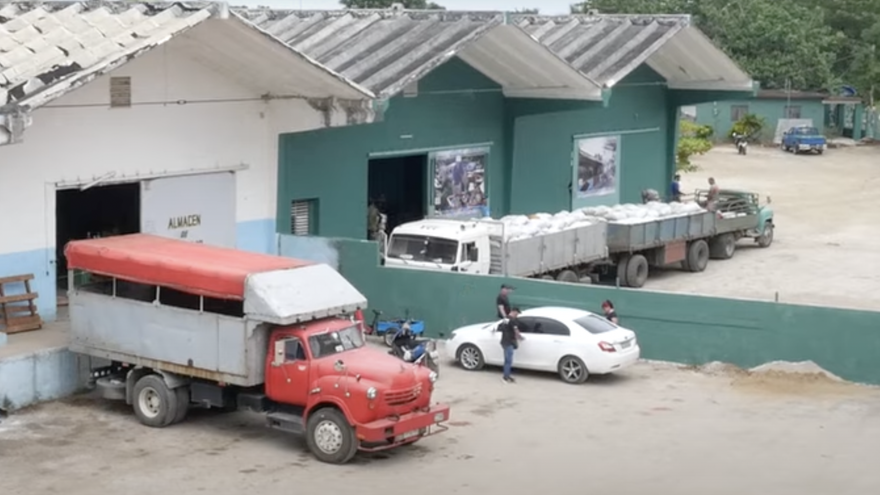
The Cuban Government Will Pay Farmers More for Potatoes

A pound of potatoes in Havana reached 300 pesos this Tuesday and 200 pesos in Holguín. (14ymedio)

14ymedio bigger14ymedio, Havana, 10 January 2024 — The Cuban State will pay more money to farmers this year for every quintal (220 pounds) of potato it buys, a measure whose real benefit – in light of inflation and the difficulty of obtaining agricultural inputs – is difficult to calculate. What will remain stable in 2024, according to the resolution of the Ministry of Agriculture published this Wednesday in the Official Gazette, is the price of potatoes in the retail market, which will continue to cost 11 pesos per pound.

Potatoes harvested with national seed will be paid at 1,204 pesos per quintal (26,175 pesos per ton), while the one grown with imported seed will cost 839 pesos per quintal (18,240 pesos per ton), the authorities reported. The cause: “the increase in prices of the essential inputs for potato production.”

The State cannot afford the luxury of generating “losses” or granting subsidies to producers

The State cannot afford the luxury of generating “losses” or granting subsidies to producers, it adds, so it empowers the Ministry to modify the prices which Acopio – the State Procurement and Distribution Agency – pays for food from the farmers. “The margin for the wholesale marketing of the potato will be shared between the parties by mutual agreement,” says the resolution, repeating the measure of past years. continue reading

This Wednesday, the Ministry’s website published a comment on the resolution in which it recalled its forecasts for the 2023-2024 potato harvest. The goal, they explained, is to plant 12,998 acres of potatoes to obtain an “estimated production” of 107,014 tons. Of the projected acreage, 2,224 will have national seed, and the rest will have imported seed.

“The country’s yields in the last five campaigns exceeded 21.53 tons, considering all the origins of the seed to be planted and the destinations of the production,” says the text, adding that in 40 years, since 1983, 29,564 acres of potatoes have been planted in Cuba.

In 2023, the price of potatoes in the retail market doubled, as it did in the previous year. Until then, a potato cost five pesos; through another resolution, the ministry argued that the increase in production costs forced drastic measures to be taken.

Potatoes harvested with national seed were then paid at 19,261.64 pesos per ton, while those obtained with imported seed had a lower cost, 15,174.52 pesos per ton.

In 2001, the record of 373,682 tons of potatoes was reached in Cuba, high quantities that were maintained for several years

In 2001, the record of 373,682 tons of potatoes was reached in Cuba, high quantities that were maintained for several years until, in 2010, the sale was liberalized. However, in 2015 bad data were recorded, with a harvest of 123,000 tons, which forced the Government to import potatoes to cover demand, mainly from the Netherlands and Canada. In 2017, potatoes returned to rationing, although those bad figures from the middle of the previous decade can be considered even enviable today.

Meanwhile, the black market is unfazed. A pound of potatoes in Havana reached 300 pesos and 200 pesos in Holguín on Tuesday, according to this newspaper. Even so, it is difficult to find the tuber, and, if the buyer succeeds, he encounters small, blackened and wet lumps, “as if the potatoes had been frozen.” This new variety, which the pushcart vendors sell on the street, is called “potato seed” by the people of Havana.

Translated by Regina Anavy

____________

COLLABORATE WITH OUR WORKThe 14ymedio team is committed to practicing serious journalism that reflects Cuba’s reality in all its depth. Thank you for joining us on this long journey. We invite you to continue supporting us by becoming a member of 14ymedio now. Together we can continue transforming journalism in Cuba.
The Plaza de Cuba International Jazz Festival Will Receive Up To 92 Artists From the United States

The Plaza de Cuba International Jazz Festival will be celebrated in Havana and Santiago de Cuba. (EFE)

14ymedio biggerEFE (via 14ymedio), Havana, 10 January 2024 — The 39th edition of the Plaza de Cuba International Jazz Festival, which will be held from January 21 to 28, will receive hundreds of international artists, including 92 from the United States, its organizers reported on Tuesday.

With the slogan “Pa’que flujazz,” the most important event of the genre in the country –  in which more than 60 groups will participate – will be dedicated this year to the 50 year artistic career of the Cuban Joaquín Betancourt.

Likewise, the festival will be held, as usual, both in Havana, with 184 performances, and in Santiago de Cuba, with 74. continue reading

With the slogan “Pa’que flujazz,” the most important event of the genre in the country will be dedicated this year to the 50 year artistic career of the Cuban Joaquín Betancourt

Among the most important international figures who will participate is the American saxophonist and composer Ted Nash; the Mexican arranger Arturo O’Farrill and the American pianist Aaron Goldberg.

“It has grown so much (the Jazz Plaza), that we can say that it is a festival larger than ourselves, and the number of prominent musicians from different countries gives a measure of how, in 2024, Cuba continues to be a center for jazz,” Bobby Carcassés, first president of the Festival, told EFE.

One of this edition’s novelties will be the union of dance and jazz, with two shows. One will feature both Ted Nash and the Cuban collectives Acosta Danza and Malpaso, while at the closing of the Festival, the Cuban pianist Roberto Fonseca will perform together with the National Ballet of Cuba, featuring the director and first dancer, Viengsay Valdés, and the Muñequitos de Matanzas, exponents of the rumba.

Translated by Regina Anavy

____________

COLLABORATE WITH OUR WORKThe 14ymedio team is committed to practicing serious journalism that reflects Cuba’s reality in all its depth. Thank you for joining us on this long journey. We invite you to continue supporting us by becoming a member of 14ymedio now. Together we can continue transforming journalism in Cuba.

Two Thieves Rob the Owner of a Private Business in Holguin and Kill Him With a Machete

Frómeta had a vehicle repair and sales business, in addition to a café. (Facebook/Pedro Frometa)

14ymedio bigger 14ymedio, Havana, 8 January 2024 — Pedro Luis Frómeta, owner of a private business in Holguín, was murdered at his home in the course of a violent robbery in the early hours of Sunday. A source close to the family told 14ymedio that the victim was taken to the Vladimir Ilyich Lenin General Hospital at 3:00 am, bleeding and with fatal injuries caused by a machete.

According to Hortensia, a woman from Holguin who was in the Guard Corps and heard about what happened from Frómeta’s family, the altercation must have occurred between 12:00 and 2:00 am on Sunday morning. “It seems that Frómeta heard noises, his dog was barking , and he got up to see what was happening. He encountered two thieves, and while he struggled with them, his wife attempted to ask for help by phone.”

One of the criminals took the phone away and locked her in a room, says Hortensia

One of the criminals took the phone away and locked her in a room, says Hortensia. “It seems that there was another phone inside, because she managed to call and ask for help. Unfortunately, by the time it arrived, the thieves had already escaped and Frómeta was dead.”

The holguinera explains that the thieves managed to take several items, although she did not give details, and that the victim was left disfigured, with a “cut ear and and his head slashed down the middle.” “He bled to death,” she says and adds that the robbery could have been motivated by “people who knew that he had money.” continue reading

Other versions, such as the one disseminated by YouTuber Niover Licea, indicate that Frómeta had just sold a vehicle and the thieves were looking for the money, so they could be people who knew about it. He also stressed that the victim had been stabbed seven times and that the assailants did not take any objects from the house.

Hortensia, on the other hand, has not heard “anything about a car,” but agrees that the thieves “went after the money” of Frómeta, who was dedicated to the repair of vehicles for sale in addition to running a café in his home. “He had a very nice house on the outskirts of Holguín, before you come to a military unit and very close to the cabaret El Nocturno,” she explains.

“Frómeta lived very well, and his house had good security: padlocks, alarms and, I think, even cameras. The thieves managed to dodge all that,” says Hortensia.

The age of the victim, as well as the name of the business he owned are not known, although some posts on social networks suggest that he was 57 years old.

That is not the only case of violence that has occurred in Holguín. Just yesterday, a woman was assaulted in the cemetery in the city center

“That is not the only case of violence that has occurred in Holguín. Just yesterday, a woman was assaulted in the cemetery in the city center at 9:00 am. The criminals were on a motorbike,” says Hortensia. As she explains, gangs have recently been created in the city of “young boys who go on electric motorcycles assaulting people. They are organizing,” she regrets.

This Sunday in Holguín, a young man was robbed of a motorcycle near the tobacco factory. According to the victim’s wife, who reported it on social networks, three men threatened him with a knife in order to steal his vehicle. “One had a tattooed cross on his face,” she said.

Last December, in a speech to Parliament, Juan Carlos Poey, Minister of the Interior, warned that “in the adverse scenario” of the Island, it is very likely that “crime will evolve to a higher level of organization,” more complex than gangs or small networks of traffickers.

The leader assured that the police would be prepared to face any situation. However, the work of the authorities to stop the wave of violent crimes in recent years makes many doubt: “If they aren’t protecting us now, what can we expect later?”

Translated by Regina Anavy

_______________

COLLABORATE WITH OUR WORKThe 14ymedio team is committed to practicing serious journalism that reflects Cuba’s reality in all its depth. Thank you for joining us on this long journey. We invite you to continue supporting us by becoming a member of 14ymedio now. Together we can continue transforming journalism in Cuba.