
The Pinar del Rio Black Market Scoffs at the Cuban Government’s Warnings

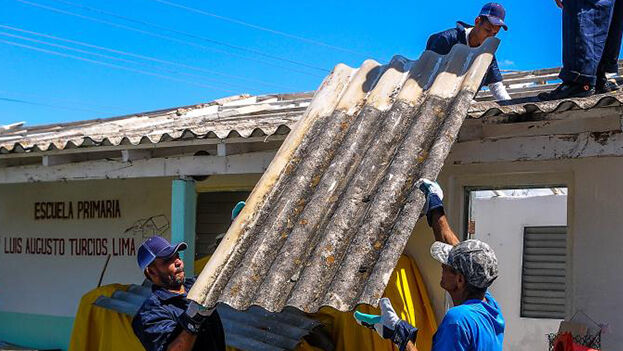
Pinar del Río was the area most affected by Hurricane Ian at the end of September, where there are still 108,000 unrepaired homes. (José M. Correa/Granma)

14ymedio bigger14ymedio, Havana, 1 November 2022 — The threat launched by the Cuban Government against “illegalities, corruption and indiscipline” has had little impact on the informal market of Pinar del Río. A Facebook message on Monday proposing the sale of construction supplies that the authorities reserved for victims of Hurricane Ian received a challenge: “I have tiles for sale privately, call me.”

The “tiles,” actually temporary zinc plates, were marketed through the Ventas Pinar group, where hardware products, household supplies, cell phones, clothing and food — shrimp, cookies, coffee — are  in high demand but scarce in state stores.

More than a month after the scourge of Hurricane Ian, work to rebuild the damaged infrastructure is progressing slowly due to the shortage of construction products on the Island. In Pinar del Río, the area most devastated by the climate event, there are still more than 108,000 unrepaired homes, according to the official newspaper Granma, which reacted with alarm to see that the few materials provided by the Government had already appeared in the informal market.

“Unfortunately, this isn’t an isolated case. On the site itself, and on others that have proliferated taking advantage of the expansion of Internet access, offers of all kinds of goods of ’doubtful’ origin have become commonplace for years, in sight of everyone who wants to look,” says the newspaper. continue reading

The newspaper gives the example that even induction cookers, which are sold in a regulated manner in the pinareña province for families who have been left without equipment, can be found in Facebook or WhatsApp groups at prices six times higher than the official value, about 20,000 pesos.

The harsh government warnings against the black market “do not seem to change” social media sales groups, recognizes the newspaper, which admits that, by informal means, “the most diverse assortments can be obtained, the result of corruption, lack of scruples and lawlessness.”

The shortage of food and basic products on the Island causes distortions that contribute to fueling illicit trade, through which electronic items as well as medicines can be accessed, but at exorbitant prices. Miguel Díaz-Canel has recognized that this happens “in plain sight” of his administration and the Communist Party.

In that sense, in recent days, several operations have been carried out against the informal market and traders who sell their products at prices above the fixed prices. Last week, the Municipal Inspection Directorate (DIM) in the Havana municipality of Playa imposed fines of up to 8,000 pesos on sellers who offered a pound of tomatoes, peppers and carrots at a price of up to 300 pesos.

The Government of Havana also reported that it imposed fines of up to 8,000 pesos on two bakeries in Ciudad Libertad, a neighborhood of the Havana municipality, after it was detected that they sold the standard bread with a weight below that established in the technical quality standards. In another operation in the Lido neighborhood, the inspectors confiscated from sellers several products from the basic basket [ed. note: i.e. the rationed goods allocated to each individual/family] that, the municipal government said, will be delivered to social institutions.

Translated by Regina Anavy

____________

COLLABORATE WITH OUR WORKThe 14ymedio team is committed to practicing serious journalism that reflects Cuba’s reality in all its depth. Thank you for joining us on this long journey. We invite you to continue supporting us by becoming a member of 14ymedio now. Together we can continue transforming journalism in Cuba.
Murdered Cuban ‘Balseros’ Increase to Six and Those Responsible Are Named on the List of Repressors

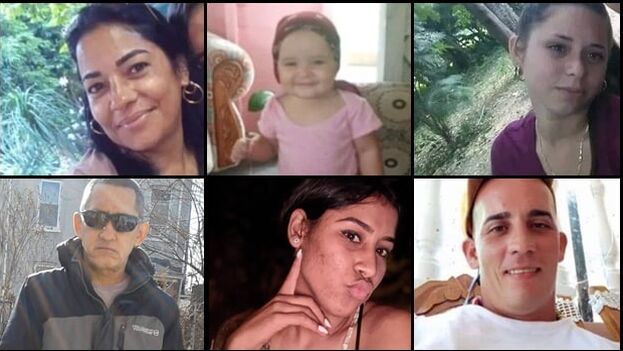
From left right and from top to bottom, Aimara Meizoso León, Elizabeth Meizoso, Indira Serrano Cala, Omar Reyes Valdés, Nathali Acosta Lemus and Yerandy García Meizoso. (Collage)

14ymedio bigger14ymedio, Madrid, 31 October 2022 — There are now six* fatalities from the sinking of a boat by Cuban border guards last Friday. As reported on Sunday by La Hora de Cuba, the most recent one identified is Indira Serrano Cala, only 18 years old and originally from Guane, Pinar del Río.

An anonymous source told the independent Camagüey media that there was a vigil over the body of the motherless young woman, in that same town yesterday afternoon.

This Sunday they also identified another of the deceased, Yerandy García Meizoso, whose body was found a few kilometres away, reported Mario J. Penton from Miami.

The other victims are Nathali Acosta Lemus, Omar Reyes Valdés (the boat driver), Aimara Meizoso León and the little girl Elizabeth Meizoso, only two years old.

Meanwhile, the Foundation for Human Rights in Cuba (FDHC) has included two officers from the Border Guard Troops on its list of repressors for being responsible for what it considers a “cold-blooded murder.” continue reading

In a statement made public this Sunday, the NGO based in the United States confirmed the names of the other deceased, none of whom had been mentioned by the Cuban authorities, who have not offered their condolences for what they consider a “painful act” that occurred because of the “hostile and cruel policy of the US Government against Cuba.”

Raidel Rodríguez López, head of Operations of the Northwestern Detachment of Border Guards, which covers the Bahía Honda area, Artemisa, where the events took place on the night of October 28, and Lieutenant Colonel Leovanys Cutiño Rodríguez, chief of the General Staff of the same detachment, have also joined the list of repressors.

Both are named by the FDHC as responsible for these “murders,” after attacking a boat with 23 people on board. The survivors, the organization recalls, “say that they were sunk on purpose.”

The NGO also attributes responsibilities in this event to General Jorge Argelio Samper Muarra, in charge of the Head of Border Guard Troops of the Ministry of the Interior since 2017, and to Colonel Jorge Luis Navarro Nolasco, head of the Northwest Detachment of the same police force, both previously on the list of repressors.

The two are guilty by the positions they occupy, “for several acts of violence by the troops under their command against Cuban balseros [rafters] on rustic boats, endangering their lives or causing them injuries and even death.”

The story also confirms that this is just another crime against humanity perpetrated in cold blood in the solitude of the sea by the communist regime,” argues the FDHC, which mentions several similar tragedies, such as the bombing of civilians aboard the XX Aniversario boat on the Canímar River, in July 1980; the sinking of the 13 de Marzo tugboat on July 13, 1994, which resulted in 37 dead, including 10 children, and the death of William Padrón Maza, from Avila, on March 1 of this year, from serious injuries received after being rammed by the Cuban Border Guard Troops 11 miles from Cayo Coco, when he was in a speedboat that was stranded.

In its document, the NGO reports that “eye-witness accounts by dozens of survivors attest to the fact that the border guards systematically attack them in the boats that carry men, women and children in their attempt to escape from hell.” It’s a “cruel method of preventing irregular exits by sea,” says the FDHC, which is being carried out “especially now, when the regime doesn’t want anyone leaving that way.”

That was the reason, the NGO concludes, for the “brutal repression” at the end of August in the Artemiseño hamlet of El Cepem, where several residents were prevented from going to sea on rustic boats: “They lie when they blame the Cuban Adjustment Law, when they know that those who are intercepted at sea are repatriated.”

Translator’s note: As of the date of this translation, the number has continued to rise.

Translated by Regina Anavy

____________

COLLABORATE WITH OUR WORKThe 14ymedio team is committed to practicing serious journalism that reflects Cuba’s reality in all its depth. Thank you for joining us on this long journey. We invite you to continue supporting us by becoming a member of 14ymedio now. Together we can continue transforming journalism in Cuba.
Ruben Martinez, the Cuban Pilot who Arrived in Florida After Escaping With a Russian Plane, Will Continue to be Detained

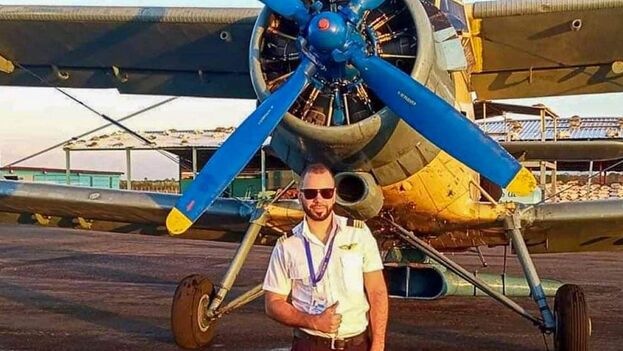
Rubén Martínez in front of the plane he was flying before leaving the Island last Friday the 21st. (Facebook)

14ymedio bigger14ymedio/EFE, Madrid, 31 October 2022 — Rubén Martínez Machado, the Cuban pilot who arrived in Florida last Friday, October 21, after leaving Cuba in a Russian-made Antonov aircraft, must remain detained for the time being, according to his lawyer, Eduardo Soto.

The 29-year-old Cuban had his first appearance today before an Immigration Court in Pompano Beach, Florida, which decided to keep him in the Broward County detention centre, at least until his next appointment next week.

In today’s hearing, according to Telemundo, the judge didn’t set bail for Martínez because the Prosecutor’s Office wasn’t ready to present its case.

“It seems to me that he has a very good case, but I’m not the one who has the last word,” Soto told EFE last week, after pointing out that both he and his defendant are confident about obtaining a positive verdict on the asylum application in court.

This Monday, Maile Díaz, a close friend of the pilot, who doesn’t have relatives in Miami, told Telemundo that if the young man “sets foot in Cuba, he’ll never see the sun again.” continue reading

“He will always be persecuted by the Government. He has now betrayed the State and stolen a very important piece of equipment,” added the woman, saying that Martínez’s mother “is desperate.”

Martínez was a pilot for the Cuban Air Services Company, which belongs to the Cuban Aviation Corporation, and he left the Island from Sancti Spíritus. He  took a selfie next to the plane when he arrived at Dade-Collier Training and Transition Airport in Florida.

The customs agents interrogated the pilot as soon as he landed and placed him in the custody of the authorities, who later took him to the prison, where he remains.

His lawyer pointed out at the end of last week that Martínez feared being returned to the Island, due to the serious danger this would pose to his life, so he is applying for political asylum.

“In Mr. Martínez’s case, they will put him directly before an immigration judge, and he will have the right to seek asylum without having to establish a credible fear,” Soto told the Miami press.

The pilot is accused of illegal entry into the United States; in Cuba he is accused of air piracy.

On the Island, his relatives have sent their best wishes to the young man. “The only thing I want is that you fulfill your dream and that you can stay there. I am happy because I know that you are well and you are where you wanted to be,” said Elsa Padrón, his 85-year-old grandmother, according to Univision.

“I am very grateful to all the people and lawyers for what they have done for you,” his aunt, Diana Rosa Machado, told Noticias 23.

Much more critical was his mother, Elisa Machado Padrón, a worker at the Villa Clara Electric Company, who confirmed the illegal departure of her son by taking the plane. “I do not approve of his decision, but above all he is still my son,” she said.

Translated by Regina Anavy

____________

COLLABORATE WITH OUR WORKThe 14ymedio team is committed to practicing serious journalism that reflects Cuba’s reality in all its depth. Thank you for joining us on this long journey. We invite you to continue supporting us by becoming a member of 14ymedio now. Together we can continue transforming journalism in Cuba.
Cuban-American Entrepreneurs will Attend the Havana International Fair

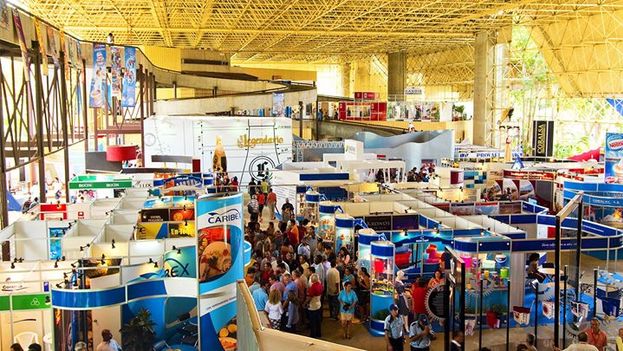
The Fair has not been held since 2019; in 2020 and 2021 it was replaced by a business forum and a virtual event. (FIHAV)

14ymedio biggerEFE (via 14ymedio), Havana, 31 October 2022 — The Havana International Fair (FIHAV) will be attended by Cuban investors residing abroad, especially those based in the United States, the Minister of Foreign Trade and Foreign Investment, Rodrigo Malmierca, said on Monday.

In addition to the participation of Cuban-American entrepreneurs – who, for the first time in the 38 editions of the event, will have their own panel. American companies will also attend, something that has already happened in previous years.

The event, the most important commercial exchange in Cuba since its first edition in 1983, will be held from November 14 to 18 at the Expocuba fairgrounds, in the island’s capital.

So far, delegations from more than 60 countries and about 570 companies, 400 of them foreign, have confirmed attendance at Fihav, according to the organizers. continue reading

The presence of Cuban investors in the United States is confirmed in the midst of an intensification of relations between the island and the US.

“There is no restriction on the Cuban side, but there has always been a kind of taboo about whether Cubans residing abroad can invest or not in Cuba,” Malmierca said.

He also added that the present edition of the FIHAV is designed “specifically so that they will know better what can be done” and “to give them all the information so that they can do business with Cuba.”

The minister recalled that due to U.S. sanctions on the country, American firms that wish to do business with companies on the Island must ask for permission from the Office of Foreign Assets Control (OFAC).

Last week, the Island hosted the Cuba-United States Business Forum, a summit of businesspeople from both countries that had not been held since 2016, during the rapprochement known as the “thaw.”

At that time, Cuban President Miguel Díaz-Canel declared that his Government is open to dialogue with the United States, but on equal terms and with respect for the “sovereignty” and “integrity” of the Island.

“I believe all this confirms that, despite the blockade, the very economic difficulties that Cuba faces, and the situation of the global crisis derived from COVID-19, the world continues to trust the Cuban market,” concluded the head of the Ministry.

During the fair, the V Foreign Investment Forum will be held to present the Portfolio of Business Opportunities.

Also, there will be the presentation of Cuba as the headquarters of the Latin American Integration Association (Aladi).

FIHAV was replaced in 2020 and 2021 by a business forum and a virtual fair. The last edition, in 2019, was attended by more than 4,000 participants from about 55 countries, of which Spain was the most represented with 110 companies, according to official data.

Operating in Cuba are 280 foreign companies from about 40 countries, including Spain, Canada, and China.

The capture of foreign investment is important for the Cuban economy, in the midst of a crisis exacerbated by the tightening of U.S. sanctions and errors in national economic management, among other factors.

Translated by Regina Anavy

____________

COLLABORATE WITH OUR WORKThe 14ymedio team is committed to practicing serious journalism that reflects Cuba’s reality in all its depth. Thank you for joining us on this long journey. We invite you to continue supporting us by becoming a member of 14ymedio now. Together we can continue transforming journalism in Cuba.
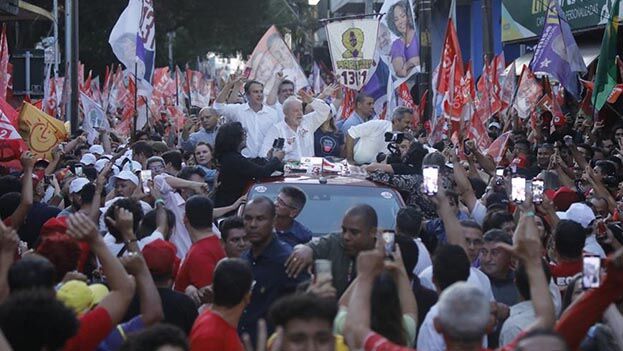
Cuba and Brazil: First Economic Points of Lula’s Victory

Presidential candidate Luís Inácio Lula da Silva salutes followers at a campaign in Fortaleza (Brazil), prior to the election. EFE/ Jarbas Oliveira

14ymedio bigger14ymedio, Elías Amor Bravo, Economist, 31 October 2022 — The Cuban communist state press reacted quickly to Lula’s victory in Brazil’s presidential elections. Díaz-Canel, recovering from his speech to the communists gathered in Havana on the occasion of the XXII International Meeting of Communist and Workers Parties, didn’t miss a moment to congratulate Lula, calling his victory one of “Latin American and Caribbean unity, peace and integration.”

The words of Díaz-Canel resonated to old chants like those spoken by economically-ruined Fidel Castro during the Special Period to a triumphant Chávez in Venezuela, who over time became a source of subsidies for the Cuban extractive economy. Perhaps Díaz-Canel believes that history repeats itself, and hence his joy at the triumph of the left in Brazil, with Lula at the forefront.

But sometimes things don’t go the way you want. They happen in another way. And many of us fear that this Lula, in his second presidential period, will not embark on dangerous operations that might return him to the courts he knows so well.

In fact, in his victory speech, he already worried about making his objectives clear: combating Brazil’s misery and poverty and uniting society after very divisive elections. How he does it and, above all, his appeal to the enormous potential of the Brazilian economy, will be a matter to take into account.

He reiterated his commitment to the environment and announced that he will resume the protection of biomass in the country, especially the Amazon. This is a rough matter, especially if he wants to receive support from the Chinese, whose model of global exploitation has little to do with protecting the environment. This bet takes him away, perhaps without knowing it, from those who could be his main allies in this new stage.

With an agenda like the one proposed by Lula, the position of the Cuban communist regime will be weakened. The failure of the Mariel weighed a lot on the state of economic relations between the two countries. The data is eloquent. continue reading

In 2016, Brazil represented 2.8% of exports and 5.2% of Cuban imports. Five years later, the respective percentages were 0.11% and 2.8%, respectively, bringing along a trade deficit and increasingly reduced trade. There is little business for a country like Brazil, with more than 200 million inhabitants. Exports fell by 96%, imports by 48%.

Regarding tourism, out of the 35,000 Brazilians who arrived on the Island in 2016, there were 416 in 2021, in the midst of the pandemic. Unlike other tourism markets in Cuba, Brazil didn’t register the highest value in 2019, and in 2018, reaching 41,000 tourists, it was barely 0.87% of the total. Compared to the country’s population potential, tourism from Brazil to Cuba is insignificant.

And more data could be offered, all of them equally eloquent. The powerful Brazilian economy has little, scarce interest in what Cuba can offer, and also, Cuba’s purchasing potential is insignificant to sustain a stable framework of relations with Brazil. So between the two countries, the flows of capital and business leave much to be desired.

Can it happen that Lula changes the character of these tendencies? Of course, that’s what Díaz-Canel wants, but is Lula in a position to mortgage the future of Brazil to someone who doesn’t pay or who does it late and badly? What benefit can Lula obtain from the Cuban communist regime located at the antipodes of this national reconciliation project of which Lula speaks? What does Cuba have to offer Lula, besides doctors, spies, coaches, etc.?

Some advisor to Díaz-Canel should have listened to Lula’s victory speech in a little more detail, especially when he said that his victory is “for all women and men who love democracy and want freedom,” and then added clearly that “it’s not a victory for me or the PT (Workers’ Party).” Díaz-Canel’s opportunistic message of congratulations to Lula was along the opposite line, when he said, “but they could not prevent you from winning with the people’s vote. The Workers’ Party of Brazil returns; social justice will return.” This is just what Lula doesn’t want to hear, in search of that unity he talked about. With this type of leftist and radical approach, Cuba and Brazil will not go very far. Time will tell.

It’s evident that there is a clear difference between the speeches of the two leaders, and the impression is that Brazil will go it alone and not show a particular interest to the Cuban communist. It’s enough to listen to another of Lula’s speeches to realize his intention to govern for all. “This is a victory for all women and men who love democracy, who want freedom, who want culture, education, fraternity and equality.” In short, it’s a clear concern about “how to begin defining and repairing this country.” The messages of “decadent capitalism, the victory of socialism, the recovery of the ideas of Marx, Engels and the Communist Manifesto,” and other stupidities enunciated by Díaz-Canel at the meeting in Havana, were not even heard in Lula’s speech. He has learned his lesson. We’ll see how everything ends.

Translated by Regina Anavy

____________

COLLABORATE WITH OUR WORKThe 14ymedio team is committed to practicing serious journalism that reflects Cuba’s reality in all its depth. Thank you for joining us on this long journey. We invite you to continue supporting us by becoming a member of 14ymedio now. Together we can continue transforming journalism in Cuba.
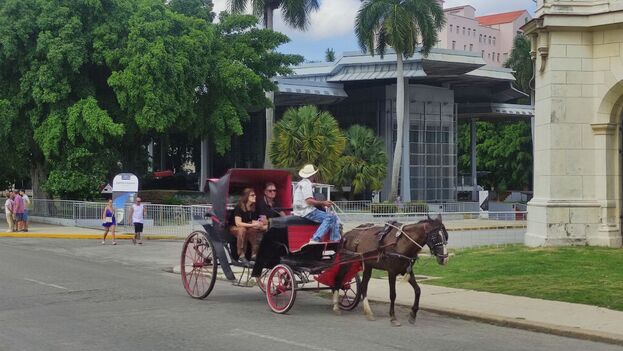
Cuba Extends Tourism Visas for 90 Days in an Attempt to Improve Results in this Sector

Until now, the tourist visa, which is mandatory, allowed a maximum duration of 30 days, which could be extended for one more month. (14ymedio)

14ymedio bigger14ymedio, Havana, 31 October 2022 — Beginning this Tuesday, Cuba will grant tourist visas for 90 days, instead of the 30 days in effect before. The announcement was made this Sunday on Twitter by the Minister of Tourism, Juan Carlos García Granda, and now is on official pages.

In his tweet, García Granda also said that the visa will be “extendable only once for the same period,” that is, that tourists will be able to stay in Cuba for a total of 180 days.

Until now, the tourist visa, which is mandatory, allowed a maximum duration of 30 days, which could be extended for one more month, provided that the change was made one week before the visa’s expiration at the nearest Immigration and Aliens Office, including the postponement of the return flight and the payment for accommodation.

The new measure is made public just over a week after the closure of the Medical Tourism and Welfare Fair in Havana, one of whose main claims was the relaunch of the Island as a health destination. Allowing travelers to stay in the country for up to six months would favor this goal.

Just a few days ago, the Cuban Government acknowledged that it will be impossible to meet the tourism goal it had planned. Compared to the two and a half million travelers it had insisted that the Island would receive during 2022, the year will close with 1,710,000 travelers, according to the Minister of Economy, Alejandro Gil Fernández. continue reading

It was a featured article, reflecting the tourism data of the first nine months of the year. If by September 1,074,814 international travelers arrived on the Island, between October and December, the remaining 1.4 million would have to arrive to reach the forecast, not taking into account that the high season begins in November. It would have been necessary to triple each of the three months the best data of the year, the 152,480 travellers in July.

Also, the director of Consular Affairs and Attention to Cubans Living Abroad of the Foreign Ministry of Cuba, Ernesto Soberón, announced on Sunday that the Government is preparing a “citizenship law” that “works to promote relations with emigrants.”

The official recalled, according to official media, that the 2019 Constitution allows more nationalities apart from the Cuban one but said that this “needs legislation.”

Soberón, who held a meeting with Cubans living in Uruguay, recognized that “the current migratory flow has demographic impacts in a nation with low birth rates.”

In addition, he announced that “for the next legislature of the Parliament, draft laws on passports and foreigners must also be approved.” The official assures that other measures are “under study” on issues of interest to emigrants, including the streamlining of procedures and their participation in socioeconomic development, since the number of Cubans living abroad interested in investing in their country is growing.”

The minister did not provide any data to confirm this alleged desire in the current circumstances of deep crisis and in the absence of solid legal guarantees in favor of private investment.

Translated by Regina Anavy

____________

COLLABORATE WITH OUR WORKThe 14ymedio team is committed to practicing serious journalism that reflects Cuba’s reality in all its depth. Thank you for joining us on this long journey. We invite you to continue supporting us by becoming a member of 14ymedio now. Together we can continue transforming journalism in Cuba.
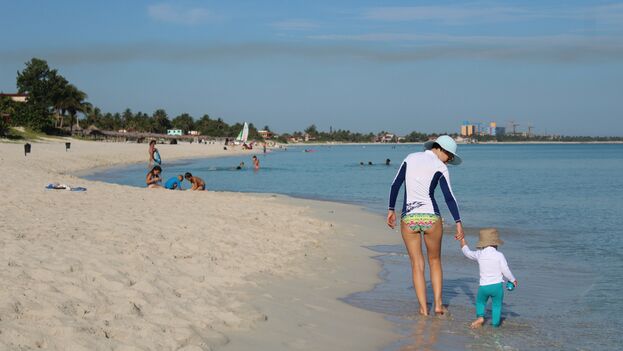
The Cuban Government Acknowledges its Failure to Revive Tourism

Cuban tourists in Varadero. (Roma Díaz)

14ymedio bigger14ymedio, Madrid, 28 October 2022 — The Cuban Government has surrendered to the evidence and now reduces the tourism forecast to no more and no less than 790,000 more travelers this year. At the beginning of the year, the authorities had projected the arrival of 2.5 million foreign visitors, and, until a few days ago, systematically refused to review the figure. But this Wednesday, during the meeting of the Council of Ministers, Alejandro Gil Fernández finally announced that he expects 2022 to close with 1,710,000 travelers.

The news was leaked this Thursday in an article published in the official press that gives a detailed account of the Government meeting the day before. Focused on the “countering of illegalities,” the information hides in a brief paragraph the acceptance of the shipwreck of the country’s main source of foreign exchange — apart from the sale of medical services and remittances — and the one on which the authorities concentrate most of their investments and strategies.

“It’s less than the 2.5 million that we projected in the Economy Plan,” said the deputy prime minister and head of the economy, words that fell short of defining the disaster, especially if compared to the data from the years before the pandemic, with the record 4.7 million international visitors in 2018, and the prospect of reaching 5 million soon.

A little more than a week ago, when the tourism data for the first nine months of the year came out, it was obvious that it would be impossible to achieve the goal. According to the calculations, if 1,074,814 international travelers arrived on the Island through September, between October and December there had to be 1.4 million to reach the forecast, not even taking into account that the high season begins in November. It would have been necessary to triple each of the three months with the best data of the year, the 152,480 travelers in July. continue reading

When in February of this year Russia invaded Ukraine and the European Union began to apply sanctions that Moscow didn’t think it would dare to, including closing its airspace to flights from that country, Revolution Square could have begun to discount travelers from its projections. The Russian market, although not the main one in Cuba, was one of the fastest growing.

In 2017, the number of Russian tourists to Cuba registered an enormous increase, 40% compared to 2018, and in 2019, the increase was 30% compared to 2018. The braking came with the pandemic. The number of travelers from Moscow was still growing, but the Russians began to bet on the Dominican Republic as their preferred destination, confirming the good strategy of the country, whose tourism sector suddenly recovered from the COVID-19 blow, surpassing 2019 data in the first month of its reopening.

Cuba, however, has not been able to recover. From its best years (2017 and 2018), when it received around 4.7 million foreign travelers, in 2019 the amount fell to 4.2 million. In 2020, with the pandemic already underway, the number was barely 1,085,920 million, while in 2021, the worst year of COVID-19 for the Island, the figure reached only 682,411.

The Government’s hope was to overcome the previous disasters this year, once the health crisis was gone. Throughout 2022, the authorities have triumphantly displayed the percentages of monthly growth, which sometimes exceeded 400%. But comparing tourism accounts with 2021, when COVID impacted the data, was a self-deception, as had been warned.

The Minister of Tourism, Juan Carlos García Granda, has stubbornly maintained the 2.5 million outlook, even contradicting Manuel Marrero, his predecessor of 15 years in office and current prime minister, who was the only one to sound the alarm last May, when he said that until 2023 there would not be a real recovery.

It didn’t require his experience in office or relying on monthly data to see that the forecast was not good, but García Granda insisted to such an extent that only a month ago, at the Varadero Gourmet Marrero Festival, he supported the goal of 2.5 million when it was an open secret that this was an impossible achievement.

The latest data show that the enormous investment in the construction of luxury hotels and the diversion of meat and fresh fruit to tourism, to the detriment of the population, have not had the effect hoped for by the Government.

Translated by Regina Anavy

____________

COLLABORATE WITH OUR WORKThe 14ymedio team is committed to practicing serious journalism that reflects Cuba’s reality in all its depth. Thank you for joining us on this long journey. We invite you to continue supporting us by becoming a member of 14ymedio now. Together we can continue transforming journalism in Cuba.
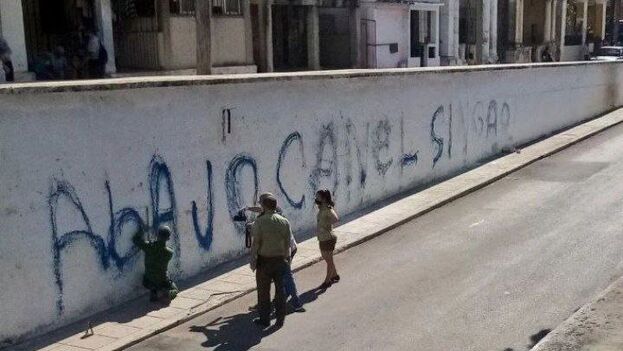
Cuba: The Nicknames of Power

Graffiti against Miguel Díaz-Canel in the Havana neighborhood of Santos Suárez. (Twitter/@ElRuso4k)

14ymedio bigger14ymedio, Yunior García, Madrid, 27 October 2022 — One of the first nicknames that Díaz-Canel received before becoming the visible head of the Cuban regime was when he was the first secretary of the Communist Party in Holguín. He had tried to prevent the farmers from bringing milk into the city. His “dry law” didn’t improve the production and distribution of dairy products in the province, but it did increase the anger of the few ranchers. Some of them preferred to pour the product onto the land, rather than hand it over to the police and inspectors who cordoned off the entrances to the Cuban city of the parks. Canel’s bloodhounds were trained to sniff out all forms of milk trafficking and fiercely punished such an onanistic sin. The inquisitor would be promoted, but in Holguín he was forever baptized as Miguel “Díaz-Condom.”

Epithets existed even before Homer made them famous. Already in the Epic of Gilgamesh, in the Texts of the Pyramids or in the Biblical Genesis, we find the use of appellations that alternate with the name of the character. And although they were generally used to highlight positive qualities, in modern times their usage has been much more pejorative, especially in politics.

The flatterers of power insist on placing bombastic and heroic qualifiers on their leaders, but popular wisdom always adds a little humor to the matter. Thus, the Spanish dictator Francisco Franco, was called  El Caudillo [the Strongman] by his followers; others called him El Cerillita [the Short Straw] because of his short stature. Pinochet was Pinocchio, for those who endured the dictatorship in Chile, and the Dominican Leónidas Trujillo would go down in history as El Chivo [the Fraud].

Nor have the champions of the Latin American left been spared from receiving nicknames. Néstor Kirchner was called El Pingüino [the Penguin], because of his physical resemblance to the character in Batman. Hugo Chávez was El Inombrable [the Nameless]. His heir, Maduro, is well known as Maburro, due to his continuous blunders. Daniel Ortega would be baptized as El Bachi [the Stick] or Mico Mandante [Monkey (Com)mandante], while his wife, Vice President Rosario Murillo, is La Chamuca, a popular name that the people give to Satan. continue reading

Returning to Cuba, almost all the presidents of the Republic were popularly distinguished with some epithet. Tomás Estrada Palma earned fame as tacaño [stingy], and his enemies named him Tomasito, el cicatero [Little Tomás, the miser]. The government of José Miguel Gómez had successes and failures, but the dominant corruption led the leader to be recognized as a tiburön, a shark. The phrase: “tiburón se baño pero salpica” [the shark swims but splashes], is one of those sayings that schoolchildren remember all their lives, beyond the excessive commitment of official indoctrination to narrate the Republic in a simplistic way. Mario García Menocal was known as El Mayoral [the Overseer], Alfredo Zayas as El Chino [the Chinese man] and dictator Gerardo Machado as El asno con garras [the ass with claws]. Nor did Grau San Martín avoid the choteo [joking]. Although his acolytes called him El Mesías de la Cubanidad [the Messiah of Cubanity], others renamed him El Divino Galimatías [the Divine Nonsense].

Fulgencio Batista would be El Hombre [The Man], for many. However, the color of his skin made it impossible for him to accepted by the elites, who called him El Indio [the Indian] and El Negro [the Black man]. After the triumph of January 1, the rebels would place Manuel Urrutia in the presidency, a poor guy who didn’t count for anything and would be nicknamed Cucharita [teaspoon].

Then Fidel Castro arrived to monopolize the national record of nicknames. El Caballo [The Horse] is perhaps his most famous nickname, since that animal occupies number one in the Charada, the Cuban system for picking lottery numbers. But, almost at the end of his existence, his acolytes would insist on calling him Caguairán [a type of hardwood]. The people, however, would use other more ingenious names for him: Fifo, Barba-Truco, Coma-Andante, Comediante en Jefe, El Cenizas or, more recently: La Piedra [Fifo, Beard-Trick, Walking-Coma, Comedian in Chief, Ashes or, more recently: the Stone].

Nor did his little brother, Raúl Castro, escape the nicknames. Tropical machismo insists on calling him La China [Chinese woman], not only for being beardless in the middle of a bearded family, but also because of the countless rumors about his sexuality. Even a late convert, like troubadour Ray Fernández, alludes to this in a theme loaded with malice: “China, search for your tail… of cloud.” Surely the “player” will have to adjust his repertoire to be admitted as a court jester in the cultural activities of the regime.

Finally, we have arrived at Diaska [Polish for “what on earth!”], el ratoncito Miguel [Mickey Mouse], Miguel Mario-Neta [Puppet] the Puesto a Dedo [Handpicked] the CitroneroGuarapero major [old lemon-sugarcane juice], the Dictador del Corazón de La Machi [Dictator of the Medicine Man’s Heart] , KKKanel and DiasContados [Days are Numbered]. Although the best nickname of all, without a doubt, belongs to the authorship of rappers Al2 and Silvito El Libre: Díaz-Canel… Singao [Motherfucker].

Translated by Regina Anavy

____________

COLLABORATE WITH OUR WORKThe 14ymedio team is committed to practicing serious journalism that reflects Cuba’s reality in all its depth. Thank you for joining us on this long journey. We invite you to continue supporting us by becoming a member of 14ymedio now. Together we can continue transforming journalism in Cuba.
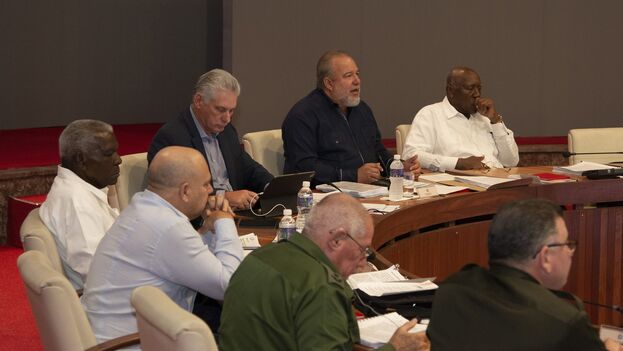
Cuban President Diaz-Canel Describes as ‘Lumpen, Lazy and Corrupt’ Those Who ’Do Not Work and Do Not Contribute’ in Cuba

Meeting this Wednesday of the Council of Ministers. (Estudios Revolución)

14ymedio bigger14ymedio, Havana, 28 October 2022 — The Cuban authorities have deployed 40 measures “aimed at further confrontation with crime, corruption, illegality and social indiscipline,” Prime Minister Manuel Marrero announced this Wednesday in the Council of Ministers.

The plan is centered on three areas. First, the control systems for new “economic actors,” predictably the private companies. In this sense, aspects such as the increase in the imposition of fines, increase in the body of inspectors, attention to complaints from the population — predictably about prices higher than those fixed — and more supervision in the areas where marketing is concentrated are included.

The second is the study and detection of people “with marginal conduct or behavior” and “the population that is detached from study and work.” The last involves the implementation of “options for differentiated insertion” for students in vulnerable conditions.

Third, the prime minister said that there will also be measures for the state sector, allegedly increasing the accountability of the cadres, officials and public employees.

The announcement followed a dogmatic declaration by President Miguel Díaz-Canel, in which he described as “illegal, scoundrels, lumpen, lazy and corrupt” those who “do not work and do not contribute.” However, the official press highlighted the above speech about the measures, still unspecific, and other economic issues that came to light at the meeting, including the poor tourism data, well below the official objective. continue reading

The president, after talking about the corruption and abusive prices suffered by Cubans — in reference not to the state’s stores that only take payment in foreign currency, but to the black market — spoke against “those who do not work, do not contribute and engage in illegal acts, earn more and have more possibilities of living well than those who really contribute. There we are the other way around; we are breaking the concepts of socialism,” he said, later transferring responsibility to the territories “where there is no action against bad things.”

Díaz-Canel assumed that the “revolutionaries” have favored or ignored the corruption that occurs before their eyes and left aside their obligation to act, so he asked officialdom as a whole — from the Government to the mass organizations through all local and provincial ranks — to assume a leading role against this situation.

“No one has a political system like ours that can coherently face these demonstrations,” he said, after denouncing the toleration of illegal activity, which doesn’t favor anyone, and claiming that it’s not that no one has less, but that what there is must be distributed “without allowing space for roguery and abuse.”

The leader added that most people cannot buy with black market prices and that those who can are engaged in the same thing. “We have created a caste in which there is an illegal and corrupt commercial exchange, with an underground and illegal economy. And that’s socialism, that’s what we want? Is that what causes development? No, it’s not,” he maintained.

Díaz-Canel recalled as an example last week’s operation at the bottom of the bridge of 100th and Boyeros in Havana and accused  young people of being responsible for most of these criminal acts. “The Revolution was not made for that and has given every opportunity for young people to study and work,” he said, in the midst of a wave of young adults who leave the country for lack of a future, including many sports stars, artists and even official journalists.

In addition, the president defended the tax system in Cuba, which isn’t  for the rich to be richer, but so that “those who have more give up a share and those who have less are better off,” a principle that, in his opinion, “is not doing well.” The comment, striking in a country that allegedly experienced a revolution to abolish social classes, can also be understood as a self-criticism, if really the distribution of the State’s income — practically unknown, due to the lack of detail about the budgets — is not adequate.

In his allegation, Díaz-Canel also emphasized the difference between a vulnerable person and one who does not want to work; the latter, he insisted, cannot receive from the State without contributing. “Assistance won’t help; you have to provide someone with a job to improve living conditions. These things must be changed now. We have to, little by little, with conviction, explanation, argumentation, adequate government and public  policies, regulate all those elements, because otherwise society is disordered, and we don’t move forward,” he said.

The Council of Ministers also reviewed elements of the agenda such as the export balance, which grew by 108% in September, highlighting honey, mechanized tobacco, rum, lobster and nickel. Globally, Cuba continues to import much more than it exports, $8.431 billion for purchases abroad and just $1.966 billion for sales in 2021. Road safety, the approval of upcoming rules – including the Mediation of Conflicts – and the portfolio of businesses that will be presented at the next Havana International Fair were also discussed.

Translated by Regina Anavy

____________

COLLABORATE WITH OUR WORKThe 14ymedio team is committed to practicing serious journalism that reflects Cuba’s reality in all its depth. Thank you for joining us on this long journey. We invite you to continue supporting us by becoming a member of 14ymedio now. Together we can continue transforming journalism in Cuba.
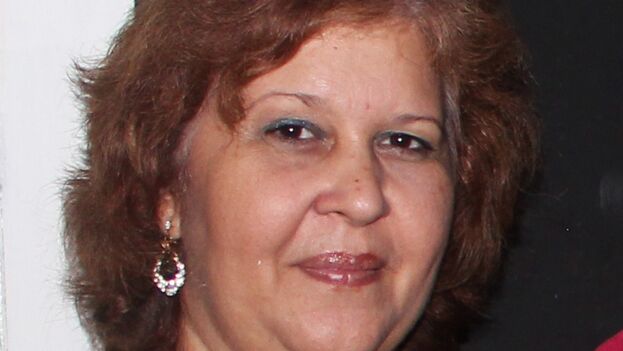
State Security Reverses and Cancels the Summons of a Cuban Teacher for an Interrogation

Professor Alina Bárbara López encourages study of the Criminal Process Law in order to claim arbitrariness. (La joven Cuba)

14ymedio bigger14ymedio, Havana, 27 October 2022 — Professor Alina Bárbara López Hernández, who on Wednesday presented to the Mantanzas Provincial Prosecutor’s Office a “formal complaint and nullity action against the official summons” that State Security had given her, has won this battle. The Police have suspended the summons, and she was informed of this hours later by the head of the station where she was called in for an interrogation required by counterintelligence.

“I imagine that the Prosecutor’s Office intervened in favor of the nullity action I requested. We can defend ourselves against the illegality of the procedures by studying the Criminal Process Law (LPP). Thank you all,” the teacher celebrated on Facebook, where she communicated the news.

López is the mentor of the group of young intellectuals and artists called “The Worst Generation,” censored and persecuted in recent days by State Security. On Tuesday, a person identified as a counterintelligence colonel asked her to speak at the Cuban Association of Artists and Artisans, in Matanzas.

The teacher publicly denounced the facts and warned that she did not intend to settle. “In Cuba, a perverse logic has been enthroned that establishes pressure on people whom there is no reason to prosecute and who are threatened and coerced for political reasons. I will not lend myself to it,” she said. continue reading

After carefully reading the LPP and being legally advised, López concluded that there were no “mandatory legal formalities” in her summons and went to the Prosecutor’s office to present a letter. The prosecutor who examined the documentation told her that she was right and that he would inform “the State Security bodies.”

No citizen can be summoned under the invocation of said law [the LPP] if there is no open criminal process in which he is being summoned as a witness or indicted in an accusation,” the professor explained. Nor is Counterintelligence an actor recognised by the LPP to interact with a citizen. If that legal process were opened, its functions would be different. Likewise, there is no such thing in the LPP as an ’interview’,” she added.

The victory has been very carefully celebrated by the jurist Eloy Viera Cañive, who resigned from his career as a lawyer in Cuba so as not to be an accomplice to the regime; he currently collaborates from Canada with El Toque [an independent online platform]. The lawyer has published an extensive comment on Facebook, shared by the teacher, in which he expresses his respect for López and praises her coherence and reasoned way of dissenting.

“The most important thing is not the result of the nullity action filed by Alina — guided by me — against illegal subpoenas sent to her by State Security. The most remarkable thing for me has been Alina’s sense of civic responsibility and courage to say No to totalitarianism, even knowing the consequences,” he writes.

However, he regrets that her victory is not a paradigm and warns Cubans not to take it for granted that they will be very successful within the law. “The fact that Alina has been lucky (others call it “privilege”) doesn’t mean that others before her enjoyed the same good luck in Cuba. Nor does it mean that the fortune that smiles upon Alina today will be the same that will accompany her in the future. Much less that it will be the same that will accompany those like her who decide to say No, even using their own legal arguments,” he says.

The jurist continues: “I don’t think we can talk about legal victories in Cuba. At least not definitive legal victories in politically motivated processes like Alina’s. In Cuba, the law is not a limit or a guarantee of anything.”

Although, he says, he is a firm supporter of legal activism and considers that López’s case encourages others to follow her example and rebel “in the face of barbarism and arbitrariness,” he also asks that those who assume it “cannot do so with hopes of achieving legal triumphs or the results that the law provides.”

Translated by Regina Anavy

____________

COLLABORATE WITH OUR WORKThe 14ymedio team is committed to practicing serious journalism that reflects Cuba’s reality in all its depth. Thank you for joining us on this long journey. We invite you to continue supporting us by becoming a member of 14ymedio now. Together we can continue transforming journalism in Cuba.
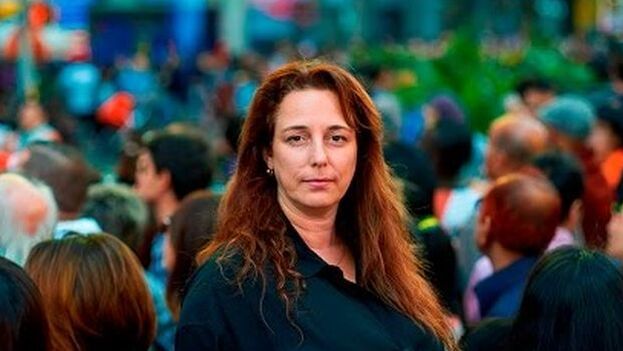
Cuban Artist Tania Bruguera Enters the National Academy of Design of the United States

Bruguera combines her artistic work with activism in favor of creative freedom and expression. (Instar)

14ymedio bigger14ymedio, Havana, 28 October 2022 — Cuban artist and professor Tania Bruguera has been selected to join the U.S. National Academy of Design, along with 16 other figures from the world of architecture and the arts.

The institution, which made its decision last Saturday, defines Bruguera in a statement as “a performance artist who seeks her motivation in politics,” and who explores the link between “art, activism and social change.”

Among the achievements that support her entry into the Academy is her expansion of “the definition and degree of performance art, sometimes alone but very often through participatory events and interactions,” which interpret “the policy of repression and control.”

Bruguera, who currently resides in Queens (New York, USA), was born in Havana in 1968. Her nomination to the Academy, founded in 1825, was promoted by its members, a group of about 450 intellectuals, architects and artists who live and work in the United States.

The winners must offer the Academy some of their most representative work, which then becomes part of the art collection, one of the most notable on the continent, and which will be exhibited in 2023. continue reading

Along with Bruguera, Laurie Anderson, Edgar Arceneaux, Radcliffe Bailey, Deborah Berke, Huma Bhabha, J. Yolande Daniels, Leonardo Drew, Nicole Eisenman, Julie Eizenberg, Hank Koning, Rick Lowe, Jean Shin, Arthur Simms, Michael Van Valkenburgh, Dan Walsh and Nari Ward were incorporated into the Academy.

Tania Bruguera studied in the Cuban capital and at the Art Institute of Chicago. She has been featured in international events such as Documenta Kassel and the biennials of Venice, São Paulo, Shanghai and Havana, in addition to being the founder of the Hannah Arendt International Institute of Artivism.

Her pieces and performances have been exhibited at the Tate Modern in London, the Santa Monica Museum of Art, the Boijmans Van Beuningen Museum in the Netherlands, the New Museum in New York, and the Wifredo Lam Contemporary Art Centre in Havana.

She has earned important international recognitions and awards, such as the Guggenheim Scholarship (USA), the Prince Claus Prize (Netherlands), the Meadows Prize (USA) and the Velázquez Prize (Spain).

Bruguera combines her artistic work with activism in favor of creative freedom and expression. Linked to the creators who protested before the Ministry of Culture of Cuba, on November 27, 2020, she has been one of the most critical voices against the Island’s regime for years.

Translated by Regina Anavy

____________

COLLABORATE WITH OUR WORKThe 14ymedio team is committed to practicing serious journalism that reflects Cuba’s reality in all its depth. Thank you for joining us on this long journey. We invite you to continue supporting us by becoming a member of 14ymedio now. Together we can continue transforming journalism in Cuba.
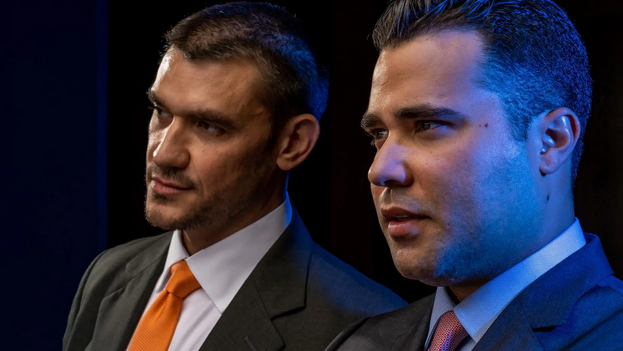
A Play in Miami Revisits the Case of the Cuban ‘Balserito’ Elian Gonzalez

Elián will be performed in English with Spanish subtitles at the Colony Theatre in Miami Beach. (EFE)

14ymedio biggerEFE (via 14ymedio), Miami, 28 October 2022 –The return of the balserito (little rafter) Elián González to Cuba, a fact that divided American public opinion to the point of influencing the 2000 presidential elections, has become a theatrical drama in Miami, and its authors take the controversy for granted.

“We have worked hard. First of all, it’s about an event with which everyone has a very emotional relationship, because it divided the community,” Venezuelan Michel Hausmann, who founded the Miami New Drama company 16 years ago and is in charge of the staging of Elián, told EFE.

Hausmann and the Cuban-American playwright Rogelio Martínez have been working on this play for two years doing “deep research.” The director feels that it’s “the most important” of those that his company has produced.

Elián will be performed in English with Spanish subtitles at the Colony Theatre, in Miami Beach, from Thursday October 29th until November 20.

In November 1999, the little balsero, Elián González, then six years old, traveled with his mother and other Cubans who were trying to reach Florida on a precarious boat; Elián was rescued though his mother drowned. He was caught in a tug of war between the Government of Cuba and the exiles in Miami, which was settled with a ruling by an American judge that allowed his return to the Island and to his father.

Before his return to Cuba, the boy had been welcomed in Miami’a “Little Havana” where he lived with an uncle and other relatives after his rescue by some fishermen in waters near Florida. continue reading

Elián’s removal from this uncle’s home was captured in the famous photo that earned the now-deceased Alan Díaz a Pulitzer, showing little Elián in the arms of one of the fishermen who saved him, Donato Dalrymple, and terrified by the uniformed man in riot gear who is pointing a gun at his uncle.

It was April 22, 2000, and the order to enter the house had been given by Janet Reno, then U.S. Attorney General.

According to the director of the work, Elián will surprise the public with new information about what exactly happened during the hours of negotiations by members of the Cuban exile community in the U.S. and the Democratic Government of then-president Bill Clinton.

The work has real-life characters such as Cuban-American businessman Jorge Mas Santos, prosecutor Janet Reno, lawyer and politician Manny Díaz and former U.S. vice president Al Gore, a Democratic candidate who in 2020 lost the presidential election to Republican George W. Bush.

There are other characters like Lázaro and Marisleysis González, relatives of Elián in Miami, and fisherman Donato Dalrymple, but the child is not represented at the center of this story.

“The work brings together all the political and family figures who participated in this process and their decisions, some pure and others more controversial,” details Martínez, 51, who, like Elián, arrived in this country as a child by sea.

The director specifies that it’s a piece of fiction, and they don’t intend to say that “the conversations were exactly like that.”

“We speak with Manny Díaz, who was one of the lawyers for Elián’s family. Díaz came (from Cuba) to the United States at the age of 6 without his father, who was a political prisoner. When he enters this story he is revisiting his life,” explains Martínez.

Manuel Alberto Díaz (Manny), current leader of the Democratic Party in Florida and former mayor of Miami, is the central character in the play. “More than the character of Elián,” comments  Hausmann.

Two other key consultants were the Cuban-American businessmen Carlos de la Cruz and Carlos Saladrigas, “the Carloses,” as Martínez calls them, who had obtained a line of direct negotiation with the federal prosecutor’s office and were inside the house when the agents took Elián.

According to the playwright and from the research, it all seemed like the boy would stay with his relatives in Miami.

“The fax in the house didn’t work, and the document was ready to be sent, but at the last moment they decided to move everything. The decision that Washington made endangered many people, and both Carlos and Manny could have left their children without fathers,” emphasizes Martínez, one of the authors of “Born In East Berlin,” presented for the first time at the Stasi Museum in Berlin.

Martínez affirms that the case of Elián was key in the tight presidential elections of 2000, which were actually decided in Florida by only 184 votes, in favor of Bush.

Elián González, who is now 28 years old and is an industrial engineer, was handed over by the U.S. to his father, Juan Miguel González, who returned with him to Cuba, where Fidel Castro elevated the child to the category of child hero.

Translated by Regina Anavy

____________

COLLABORATE WITH OUR WORKThe 14ymedio team is committed to practicing serious journalism that reflects Cuba’s reality in all its depth. Thank you for joining us on this long journey. We invite you to continue supporting us by becoming a member of 14ymedio now. Together we can continue transforming journalism in Cuba.

Self-employed Workers in Cuba Will Be Able to Have Up to Three Employees

The same document reminds transport operators who didn’t renew their licenses and those who didn’t make any tax payments that they will be canceled. (14ymedio)

14ymedio bigger14ymedio, Havana, 28 October 2022 — The Cuban Government will stop forcing self-employed workers (TCP) to become a micro, small or medium-sized business (SME) if they have up to three employees. As provided in the rule issued in August 2021, if they haven’t done the conversion within one year from the entry into force of the law (specifically, until September 20), the licenses of those who are self-employed will be canceled.

In a note published this Thursday, the Ministry of Labor and Social Security and the National Office of Tax Administration (ONAT) backed down and announced that they have agreed to “allow those who have up to three employees and have continued to pay their taxes to continue the exercise of their activities.”

The tax authorities don’t explain the decision beyond its being based “on the recognition that such TCPs continue to develop the same activity.” Similarly, they remind the self-employed that they  can’t hire more than three employees, because otherwise they must “convert their business into a company” (SME or non-agricultural cooperative) “or cease the exercise of self-employment.”

In the same document, they remind carriers who didn’t renew their license and those who didn’t make any tax payments that they will be canceled. In addition,  “companies that hire artists and eventual agricultural workers who don’t have another self-employment activity,” “TCPs without employees who carry out one or more economic activities” and the self-employed who, even if they have up to three employees, “own more than one business,” “will be updated ex officio,” that is, automatically converted into SMEs.

For the Cuban economist Elías Amor Bravo, based in Spain, the decision is nothing more than a victory of the workers in the “declared war” with the regime, which forced them “artificially” to become an SME “and thus aim for a political success with the approval of the new regulations of economic actors.” continue reading

“The final balance of the process has meant that the creation of SMEs, about 5,000, has been far below what the leaders expected,” says Amor Bravo, hence the decision of the Ministry of Labor and the ONAT. Meanwhile, in Colombia, more than 300,000 SMEs were created in 2021, and in Chile, more than 200,000 that same year.

However, he believes that with the measure, the Government has also “shown its claws,” by adding the matter of taxation. “The ONAT coming from behind has apparently managed to impose its criterion and set the precedent that, in turbulent times like these, it’s better to collect a peso than comply with a transitional provision of one more decree.”

The low acceptance of converting into a company could be due, among other reasons, to the fear of increased oversight by the Government and the banking system, and the lack of tax incentives.

This same Thursday, the ONAT also announced that it has created a “preventive embargo” on bank accounts “of all entities that didn’t make the payments on account or partial payments of the Value Added Tax and the Return on State Investment Contribution (non-tax income) corresponding to the third quarter of the current year.”

The decision, they explain, “responds to the fact that there are companies that stopped making these important contributions – whose legal payment deadline ended on October 24 — despite all the proactive actions deployed by the country’s tax offices to promote their correct and timely fulfillment.”

Translated by Regina Anavy

____________

COLLABORATE WITH OUR WORKThe 14ymedio team is committed to practicing serious journalism that reflects Cuba’s reality in all its depth. Thank you for joining us on this long journey. We invite you to continue supporting us by becoming a member of 14ymedio now. Together we can continue transforming journalism in Cuba.
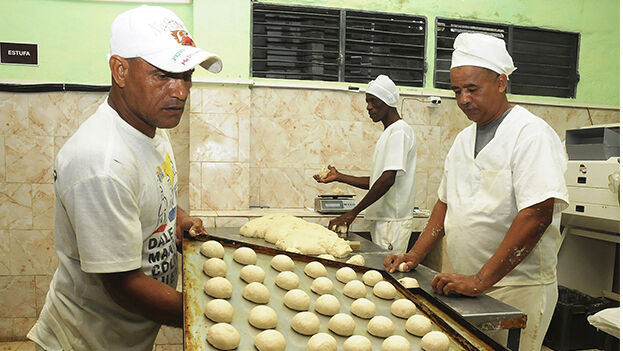
Bread Making is Slowed Down by a Shortage of Flour and Fuel

Guantánamo state bakeries didn’t their fulfill production goals last week due to lack of flour and fuel. (Venceremos)

14ymedio bigger14ymedio, Havana, 25 October 2022 — Bread didn’t reach the tables of Cuban families in several municipalities in the provinces of Guantánamo and Holguín last week. The lack of flour and fuel prevented companies from accomplishing the production needed to guarantee supplies.

In Guantánamo, the director of the Food Industry, Albis Hernández Díaz, recognized that they ended the week with 60,000 units less than what was needed, which mainly affected families in the municipalities of Guantánamo, Baracoa and El Salvador.

Hernández Díaz told the Venceremos newspaper that delays have worsened in the last two weeks due, mainly, to the fact that they don’t have enough fuel in the generators of the service centers, whose machines require large amounts of fuel, up to 10 pounds per hour.

The director said that she has had to restart the wood ovens for manual breadmaking for a smaller number of customers. The blackouts, programmed by the Cuban Government, also “conspire against us,” says Hernández Díaz, because the bread acquires an acidic flavor or doesn’t rise if they delay putting the resting dough in the oven. continue reading

Faced with the shortage of ingredients, Hernández Díaz said that they prioritize the flour available on the market with less fine grains loaded with wheat husks. They also use yeast with low fermentation, so the flavor and color of the bread is different, and this also slows down the production process.

The Provincial Government of Holguín had already warned last Friday through a post on its Facebook page that the lack of fuel and flour was preventing the standardized bread quota from being covered. The municipalities most affected by the shortage of the product were Gibara, Holguín, Calixto García and Sagua de Tánamo.

The shortages and high prices of bread have hit the bakeries and the pockets of Cuban families hard. Meanwhile, the Government recognizes that it can’t make more food derived from flour because what’s available is used only for the basic rationed bread, social consumption and the production of five tons of crackers for communities in remote areas of Guantánamo.

In the midst of the wheat flour deficit, state bakeries have resorted to other types of flour, such as in the province of Sancti Spíritus, where up to 20% of rice husks or yucca is mixed in.

But these mixtures don’t manage to convince customers because of the sour flavor of the bread. “Can you tell me what is this flour? Because this bread is disgusting, they haven’t brought it for three days and when it arrives (…) There is no one to eat it, they are killing people’s stomachs,” replied user Tamara González Serrano in the publication of the Provincial Government of Holguín.

Translated by Regina Anavy

____________

COLLABORATE WITH OUR WORKThe 14ymedio team is committed to practicing serious journalism that reflects Cuba’s reality in all its depth. Thank you for joining us on this long journey. We invite you to continue supporting us by becoming a member of 14ymedio now. Together we can continue transforming journalism in Cuba.
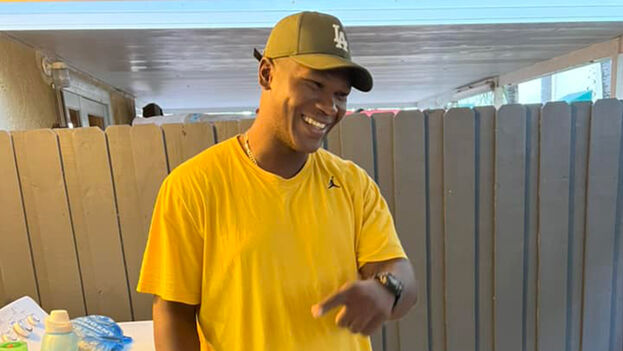
Cuban Boxer Dainier Pero Arrives in the United States After Several Failed Attempts to Flee by Boat

After his defeat at the Tokyo Olympic Games, in 2020, Dainier Peró Justiz withdrew from the national boxing team. (Facebook/Lenier El Justiciero Però)

14ymedio bigger14ymedio, Havana, 25 October 2022 — Cuban boxer Dainier Peró Justiz, considered the best heavyweight fighter of the national team, the Domadores, left the Island and arrived in the United States this Friday. He was received by his brother, the boxer Leinier Peró.

The decision to leave the Island was made by Peró Justiz after his defeat at the Tokyo Olympic Games in 2020, at the hands of the American Richard Torrez Jr., who took the bronze medal from him. At that time, the media site Full Swing said that “the two-time Cuban king, who weighs over 200 pounds, withdrew from the national team to try to emigrate.”

The young man, 23, made several attempts beginning that year to leave Cuba by boat, but all had failed until now. His brother Leinier didn’t know how the boxer arrived in the United States this Friday but commented on his social networks that “a new path” would be opened, after “a week of tension.” continue reading

The sports record of Peró Justiz, born in Camagüey, is impeccable: world champion in the Cadet (2015) and Youth (2016) categories, with experience in Pan American and Olympic Games. Although he is still recovering from the trip, the boxer has already signed an agreement with manager Jesse Rodríguez, who also represents Cuban Yuriorkis Rodríguez, four times world champion in three different divisions, and the young men Yoelvis Gómez and Ariel Pérez de la Torre, also from the Island.

Rodríguez’s plan is to “get him fighting as soon as possible” and take advantage of his “amateur experience,” but first he needs to “make certain adjustments that will allow him to succeed,” the manager told El Nuevo Herald.

According to specialists, Peró Justiz possesses enough qualities to stand out in the U.S. professional championships. “He has a boxing style where his fundamental weapon is the speed of his hands and legs, something that you don’t usually see in the super heavyweights. He has an elusive style and is able to throw strong punches,” said Radio Rebelde, before the athlete travelled to Tokyo in 2020.

In 2018, Dainier Peró Justiz was voted the best athlete of November in Camagüey, for his “outstanding performance” in the V National Boxing Series.

Translated by Regina Anavy

____________

COLLABORATE WITH OUR WORKThe 14ymedio team is committed to practicing serious journalism that reflects Cuba’s reality in all its depth. Thank you for joining us on this long journey. We invite you to continue supporting us by becoming a member of 14ymedio now. Together we can continue transforming journalism in Cuba.