We have spent more than fifty years hearing talk of “the enemy.” All the blame for our deficiencies is charged to this, just like all the evils and misfortunes, product of carelessness, inattention and neglect, also go to his credit.
With that idea they have tried to hypnotize and “idiotize” the population of “our beloved planet,” and regrettably, in many cases they have achieved it. But in spite of all that, when someone thinks about emigrating, it is always to the country of the “enemy” (USA). Also on occasion to others, which they use as a bridge, in order to achieve the same end.
Many of us have resisted letting ourselves be influenced by such fallacy, but even so, due to all the notoriety that precedes the matter and to the prejudices sown around it, we take care not to fall in the ideological trap, and to pander to the representatives of power.
Just a few days ago I received an e-mail from a very dear American friend, where she announced to me the visit of a friend of hers of the same nationality who wished to get to know me, and in turn he was the bearer of a gift that she was sending me. I was very satisfied to meet him and to report that the friend of my best friend, was a charming “enemy.” Empathy soon arose between us and it remains for us to meet next time.
Last Friday afternoon, this one invited us to go to see the traditional ceremony of “the cannon shot,” a custom that exists since the epoch of the brief English occupation, when at exactly nine at night, they closed the doors of the walls that protected the city, and that they now recreate with a pretty representation in the Cabana Morro Tourist Complex. I was pleasantly surprised by how well restored and preserved is this emblematic place, thanks to the work of the Office of City History, the only state entity, that without fear of being mistaken, we can say has been busy rescuing and conserving some of our traditions.
We had a great time in the company of him and his parents. It was what could be called a beautiful night of “walking with the enemy.”
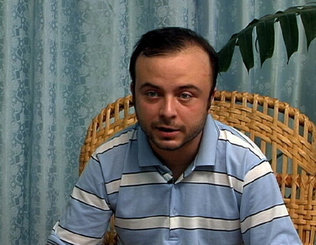
Aini Martin Valero, independent journalist. The photo is by Gustavo Pardo and was taken from Cubanet.
Every day when they go out to report or write some story about daily reality, invisible to official media, the murky Gag Law that can land them in jail for 20 years or more floats over their heads.
It’s not just the legal harassment. There is also their ration of slaps, subtle taekwondo blows in the ribs, insults by fanatics spurred on by the special services, threatening phone calls at the break of dawn or arbitrary detentions.
The further they live from Havana, the more brazen and open is the intimidation. Independent journalists of deep Cuba, after spending several hours in a pestilent cell, are released in the night, far from home, on a hidden roadway surrounded by sugar cane plantations.
None of the free journalists can collate his information with State institutions. All the officials shut the doors in their faces. Nor do they offer you facts or figures. But there is always a way of getting them. Sometimes, employees of state agencies, sick of Fidel Castro’s inefficient socialism, whisper to you first hand information or numbers.
Anonymous people bring you internal regulations, figures about suicides or the analysis of the latest meeting of the provincial Party. In exchange for nothing. They just want to broadcast aspects of the sewers of power. Nonconformist technocrats, beat cops, low ranking military soldiers, prostitutes with years in “office,” marginalized slum dwellers and budding athletes are the true architects of any story or news.
Each text that goes out from the mature laptops of many independent journalists has a dose of review filtered by those deep throats desirous of changing the Cuban political compass. Years of writing under the hostile barrage of fire and harassment have polished the style of these lone wolves.
When one speaks of journalism on the margin of state control in Cuba, some indispensable names must not be forgotten. From human rights activists Ricardo Bofill and Adolfo Rivero Caro, who in years of hard repression reported about the violations of essential rights of man, to Yndamiro Restano, Rafael Solano, Rolando Cartaya, Raul Rivero, Ana Luisa Lopez Baeza, Iria Gonzalez, Tania Quintero and Ariel Tapia, among others.
Rivero Caro is no longer with us. The rest sleep far from their homeland, anguished about the future of Cuba, dreaming that they walk along the Malecon or drink coffee brewed in their Havana homes. The repression, the jail and the harassment by the regime forced them into exile. We have had to get by without them.
There is Luis Cino. I present him to you if you are not familiar with harassment. He has a blog, Cynical Circle and writes high quality chronicles on Cubanet and Digital Spring, a newspaper managed in a Lawton apartment. It is a reference. For the quality of his work and his human condition.
In Downtown Havana, surrounded by empty lots and buildings that scream for repair, cradle of prostitution and con artists, of people who think twice as fast as the average Havanan, bastion of misery, prohibited games, children induced by their parents to beg for coins, stronghold of the sale of melca and imported marijuana, here, in the heart of the capital resides Jorge Olivera.
Tall and quiet mulatto. A softy in every sense of the word. He was one of the defendants of the Black Spring. Not even a walled cell could erase the perennial smile from his face. Seventeen years after beginning as an independent journalist, Olivera has not lost hope of greeting his friend Raul Rivero again and together founding a new kind of daily in a future Havana.
Meanwhile, Jorge keeps firing with his pen. Stories, opinion pieces and poetry drafted at night. In Santa Fe, surrounded by cats, we can find Tania Diaz Castro with a long track record in the Cuban opposition movement. In Regla, among quacks and religious syncretism, a reporter from the barricades, Aini Martin Valero also has a magnet for news.
Juan Gonzalez Febles is another sharpshooter, he currently directs Digital Spring. The lawyer Laritza Diversent lives in a village in keeping with its name: Calvary. According to a state decree, the majority of its inhabitants, natives of eastern provinces, are illegal. They survive in overcrowded cardboard and aluminum shacks.
To relieve legal illiteracy, Diversent opened in the dining room of her home a legal consultancy, Cubalex. And for various digital sites she writes articles on legal topics, without jargon. Some are very popular in her neighborhood.
If he ever aspired to be a councilor, Roberto de Jesus Guerra would succeed. There is no need to know the address of his home. The locals indicate to you the home of this communicator born in the east of Cuba, agile and tireless in the search for information. He ably manages the audiovisual equipment and has the instincts of a detective. It was Roberto de Jesus who got the scoop about the medical brutality that may have cost the lives of 27 psychiatric patients in January of 2010.
Miriam Celaya a reporter of the race. She resides near the “mall” of Carlos III in Downtown Havana. We independent journalists, who agree on almost nothing, do agree that Celaya is one of the best columnists of that other Cuba that the government tries to ignore.
On all the island there are independent journalists, some are better known and have more experience than others. But all report the vision of their community and their country. They are the cry of the citizens who have no echo in the official press.
In the latest edition of Workers, an official newspaper published each Monday, there appears an article about some so-called VII International Colloquium of Philosophy and XV International New Political Science Workshop, to be held these days in Havana.
More than the contents of the first, the second calls my attention where the concept of a new Political Science with southern focus will be presented which departs, according to its creators, from Marx but fundamentally is based on the thought of Lenin and Ho Chi Minh and the national heroes of Latin America. I do not know how this soup (a type of stew in which its components lose their flavors and identities, on diluting in a thick broth with undefined flavor and color) will taste, but I presume that it will be very difficult to digest.
It also announces the presence of more than a hundred participants from all regions of the world, principally from Latin America. It seems that the international retired left and foolish left do not give up, in spite of the many practical demonstrations of the failures of their political concepts, and they try to create other new demonstrations with the objective of keeping themselves on the world stage at all cost. It is striking that those who previously criticized these dilettantes, dubbing them theoretical and impractical, have become the same.
It is true that the so-called western Political Science is not perfect and, starting from its practical application, it constantly finds itself under renovation, but it is not in inventing a new Political Science that it will answer to its limitations. That absurd tendency to try to be the belly button of the world, besides ridicule only causes loss of time and effort. It would be more useful to take advantage of the existing Political Science, learn it and use it, and to abandon the divisive position between North and South, which solves absolutely nothing.
The recovery of the electrical system in the eastern provinces, destroyed by Hurricane Sandy, has been the subject of headlines, articles and commentaries in the various governmental media outlets, pondering the arduous and magnificent work of the Union Electric personnel participating in it. It issomething fair and that must be done, now that they deserve everyone’s appreciation, independently of the accompanying fanfare and of the official flags of the contingents, as if they were setting off to war, but all that must be understood as excesses of our tropical socialism.
If Union Electric is capable of working this way in extreme situations, why not do it in a similar way three-hundred-sixty-five days a year? No one escapes from the continuous outages of ten and more hours, the surprise service interruptions because of pruning (in reality destruction) of trees, maintenance, repairs, changes of line poles, etc., achieved with low productivity and at a slow pace, in any geographical part of the country.
Nor from the rupture of domestic appliances by voltage surges that destroy even the surge protectors. Add to this the poor information offered to clients, limited to the well known: extended maintenance, pruning, extensions, and repairs with no established deadlines. These effects, which no one compensates, besides affecting the citizens in their homes, also affect private businesses, causing sensitive losses. I exclude the State because, when there are outages, their employees are partying because of not having to work.
Sometimes it is tedious to compare with the past but, when the Cuban Electric Company, subsidiary of Electric Bonds & Share with Cuban shareholders, existed, outages were unknown and rarely (except in situations of natural disasters) did we hear about repairs, maintenance and tree trimming because the electrical service was not suspended: apparently these jobs were executed with hot lines.
It is true that the service then did not cover the whole country, but it was in constant development and, without doubt, would have managed it with the passage of the years. The blame for existing problems will be placed, as always, on the blockade (embargo), but in reality it is a problem of organization and stimulation of labor. The difference between an extreme situation and the usual one demonstrates it: it is not the same to work ten or fifteen days at full speed with all the resources and motivated, as it is to do it 365 days a year, without motivation, with miserable salaries and lacking the necessary means.
He works driving a truck for the electric company. He is married, has three kids, and his wife is a nurse at the 10th of October Mother and Child Hospital, better known by its previous name of Daughters of Galicia. The petroleum truck that hedrives all day has no air conditioning, not even a little fan. The heat is great, and the pay is little. The co-worker that they assigned to work with him has a similar financial situation. “In Cuba salaries are symbolic,” they told me while they were getting thebulb out of its new, nylon, factory-packagedbox. That was in front of a house of a friend who paid 30 CUC (more than $30 U.S.) to those workers from the Electric Union (UNE) so that they would replace thebulb of the street light that is opposite her house and that has been blownfor more than two years.
The suicidal “move”took placeat two in the afternoon and soon attracted the attention of the president of the block’s Committee for the Defense of the Revolution, who directed herself to the workers “to communicate to them” that the posts on the corners also had broken bulbs and that it was better to replace those than to put one in the middle of the block.
“For today, we are finished, comrade,” they told her, “because this is the last one we have, but there is an order by the minister to change them all as soon as the boat from China arrives. So don’t worry.”
And the watchful presidentwent awaybetween satisfied and doubtful, because everyone knows that in Cuba general corruption exists, but that at that level it is only enough to survive. So the workers in Cuba go sidestepping the difficulties that the state economic helplessness imposes on them. The majority of those who are linked to the sectors that generate no income in convertible currency have to “invent” in order to be able to make ends meet. With thelow salaries that they receive in national money, they also have to engineer for themselves and buy hard currency in order to feed, clothe and buy shoes for their families.
An unpleasant situation is confronting some friends with the UNE. Their consumption is aboveaverage after the most recent increase. Summer is already past and they continue the same. I ask myself if the arrangements that they make with those who enjoy air conditioning in their homes “are taking by the guts” those who don’t have it.
The bill collector, the intermediary between the UNE and the residential sector, is the friendly face of that business, which undoubtedly must justify before higher agencies the quantity of megawatts that the township consumes.
According to my deduction, the kilowatts they readjust on the bills of those who possess a cooled air system, in order to charge them less and pocket a share of the difference, they must be obligated to distribute them among those who don’t have ar conditioning.
Tired of them taking the kilo in kilowatts, they went to protest at the municipal electric business which is located at Josefina and the 10th of October. Along the way they asked themselves how to defend their right to be charged withoutpenalties for what they consume without betraying anyone.
By luck, they had already hinted to the collector their suspicion of how they believed the mechanism worked so that he could alert his crew, and when they arrived there the clerks were very friendly.
They asked the UNE for areview of the meter and the electric bill and they ended up sending a technician, but he still has not appeared. Some days ago the bill arrived with an amount visibly smaller than the month before.
But the next months? My friends ask themselves if they are going to have to continuegetting annoyedand going to demand periodically that they not steal from them. It is not easy to beat your head without a helmet against the wall of corruption.
The last days of October and the first days of November, besides Hurricane Sandy, have produced two electoral processes: one in Cuba and the other in the United States. The first, more formal than real, where the majority of citizens go vote because of inertia, convinced that their vote will decide nothing, like not electing some delegates from the base, without real power and lacking resources to solve anything, and with the important positions already decided beforehand (how else to explain the continuation of power in the same principal authorities for more than 50 years), happened without pain or glory. The journalists assigned to cover it, seemingly without much enthusiasm, did their jobs, pondering the supposed advantages of the Cuban electoral system, in contrast withall the rest of the world: the most democratic, popular, massive, just, patriotic, civic and all that occurs to them.
The second, in spite of being entirely the responsibility of the American people, seems to have had greater coverage: articles in the written press, television and radio analysis and even Roundtable TV shows. Some brainy journalists, not being able to show their analytical aptitudes in the Cuban electoral process (all is predicted and there are no surprises), didso withthe neighbors, where the voters had the last word on election day.
It is good to remember that, in the era of the republic, the American elections did not much interest us. A Democrat or Republican president was the same: Whichever won, the relations were of good neighbors. Interest grew after 1959. Since then, the American elections became a principal problem for the Cuban authorities, drawing up contingency plans for one winner or another. I am sure that they also have now.
We always hope, although the odds are small, that we will resolve the problems that we have created, and so, every four years, we look North, hoping for some sign, in spite of the fact that every day of the year we rant against it and blame it for all of our problems, the problems of Latin America and of the world.
The hurricanetheelections passed, our authorities will return to the international arena, demanding the end of the blockade (embargo), the liberation of spies imprisoned by the empire and millions in reparations. (In 2011, they valued damages at 3,553,602,645 total dollars, and in the past 50 years at 1,066,000,000,000 dollars. A marvel of calculation worthy of the best destiny!) They will also repeat other themes that have been political propaganda material for years, knowing that they will get nothing, but they will keep serving as entertainment for many gullible Cubans, which, in the first instance, has always been their true objective.
In spite of the internationally offered help, Havana suffers because of damage in the province of Santiago de Cuba caused by Hurricane Sandy. Food is in itself the major preoccupation of the Havanan.
The government has forgotten that it is in charge of keeping economic balance in the streets. Chickpeas no longer circulate, nor beans in general, nor are there any state markets.
Nevertheless private individuals are those who have beans; black, red, kidney or white, garbanzos and lentils. But the unaffordable prices have risen, for example: The black bean, the one most eaten, costs 18 pesos a pound from 12 pesos that it used to cost and the price from the state is 8 pesos a pound.
We Havanans are at the disposal of the Santiago people, let there be not the slightest doubt, but our government’s lack of economic knowledge makes every corner of the country feel the crisis as if it were in the same location as the tragedy.
So, who controls the situation, the self-employed or the government?
Away from the capital and without any contact with the Christian Liberation Movement I thank God who made use of small signs of liberty that came to me from here and there in order to guide me in the middle of the sad and confused Cuban reality. Even in reading from a book as poisonous as “The Dissidents” I realized where good and evil were really found.
Maybe the most significant and influential for me have been the so-called spiritual leaders in exile, Cuban pastors and priests who in Miami, and beyond religious differences, kept very alive their love of Cuba and shared it like a fire in periodic prayer meetings and through joint projects and whose news and messages arrived at the island through radio programs like those conducted by Francisco Santana such as “The Cuban and His Faith” or “Cuba, Your Hope,” or Lenier Gallardo, pastor of the Lutheran Church “Prince of Peace” in spaces like “Yesterday, Today and Forever” or in his classic Sermon of the Seven Words each holy week.
As part of that faith group and representing the Baptists was Marcos Antonio Ramos, very influential as pastor and intellectual in exile and of great reputation among Cuban Baptists. They not only defended the validity of the Varela Project in exile, in the middle of many instances of misunderstanding and confusion but also in an indirect way and thanks to the broadcasting helped to inform many like me on the island.
Whatever happens from here on I will be eternally satisfied that I will not be able to say that they did not knock on my door, and when they knocked I accepted the challenge: I am a signatory of the Varela Project and I refused to endorse the reform of the Constitution that declared the irrevocable character of socialism in Cuba, a clumsy reaction of the regime before the mastery of Paya, celebrated by Carter in his visit to the island as well as various figures from around the world.
The correctness of my citizen decisions I owe in great part to the influence that notwithstanding such obstacles came to me from one Paya with whom I never had the honor of shaking hands, but from whom I always had the joy of finding myself spiritually near, and now more. The arguments that were heard from this brave man, opposing all the useless indoctrination of the regime’s propaganda to which I was exposed during all the years of my childhood, adolescence and early adulthood, made me react to the reality that I had a right to rights, and with me my fellow man, the totality of my fellow citizens, with all and for the good of all.
A week before I presented for the first time my Petition for Foreign Travel in the territorial Office of Immigration and Aliens of Guanabacoa, northeast of Havana, a young official from the State Security went to interrogate my younger son in the National Neurosciences Center, where he works as an investigator. The alleged negotiator wanted to know if I intended to travel with my wife to Spain on a temporary or permanent basis, for the purpose of “promoting my case.”
June 12, three months after such humiliating request and receiving on five occasions the answer: “Refused, you appear on the list of those who cannot travel abroad” — I again presented myself at the immigration office with a document in which I demanded an explanation for such prohibition. That day, the same official who interrogated my younger son at the Neurosciences Center, flew on his Suzuki motorcycle to the home of my older son who lives in El Cotorro and works as a lawyer for the municipal collective office. On that occasion, he tried to explore my possible actions and promised “to expedite the exit.”
At the beginning of November I still have not received an answer to my claim from Major Gricet Alleguis, Chief of the Territorial Office of Immigration in Guanabacoa, nor fromLieutenant Colonel Dania Gonzalez Rodriguez, to whom I delivered a copy of my claim at the National Directorate of Immigration and Aliens, located at 22 and 3ra, Miramar, Havana. Latal Dania advised me that they reserve “the right to give no explanation. . .”
Between June and October, I believe in August, a young official nicknamed Simon knocked at the door of my apartment in downtown Havana, with a citation for an “exploratory contact” with the first operational officer against independent journalism. After the brief and respectful “contact,” achieved at the Police Station located on Dragons Street, Old Havana township, it was clear that I would not leave Cuban if I did not present the petition for “Permanent Exit from the country” instead of the “Permit to Travel Abroad.” The said Simon was a “facilitator” and even gave me his telephone number so that I or one of my sons could communicate to him the beginning of the new process.
Last October 2, I presented the said “Permanent Exit” at the Office of Immigration and Aliens at 17 and K, Vedado, in spite of the expiration of my family reunification visa issued in March by the Spanish Consulate in Havana,which was kind enough to grant me a new visa in less than a month. On presenting myself with the visa on the first of November, an employee repeated to me the film’s chorus: “Refused, you appear on the list of those who cannot travel abroad.”
What list is that? Under what law is it issued? Why does the Castro regime cling to protecting the life of individuals, refusing them the right of free movement, choosing where to live and leave or enter any country, including their own?
I suppose that the Immigration and Alien Unit of Plaza will know how to answer my questions Wednesday the 7th of November at 1 pm. Otherwise I will begin to fight for my freedom in the streets of Havana. Maybe the game of the foreman against the runaway slave will advance or they will put me in stocks in order to comply with the blacklist of the excluded ones, those daring ones who raise their voices personally and try to leave the herd.
A neighbor told me that the re-involution of ’59 had taken property from owners but had not found a substitute. The director of a business will never be the owner, never have the sense of ownership over what he administers. To illustrate that there are more than thousands or millions of examples, it would suffice to offer a country like this one, worn out, a culture where theft is not seen as a crime because to survive death should not be punishable.
A man who, outside the State work plan of his job as a carpenter, makes a curtain rod to sell it and so is able to guarantee the feeding of his child should not be condemned, although for that he has had to use tools of the State, and to take pieces of wood and laces that do not belong to him.
A culture where the concept of “social property” is so foreign and absurd that Marx and Engels would feel so horrified by the result that inspired their theories, that they would not hesitate a second in refuting their communist philosophy.
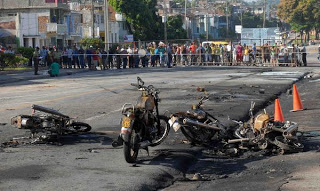
An example of this was when, some days past, a gas station was about to explode in Santiago de Cuba. The video of the events reveals in detail all the ineptitude of the authorities of the place, from their own workers of Cupet, who immediately washed their hands and distanced themselves from the events — that reminds me of “I am returning, Captain,” when abandoning the sinking ship — but the irony of this case was that, thanks to their cowardice, the “Captain” and the workers of the station saved their lives.
The irresponsibility of the firefighters can be seen in the video in spite of their arriving before the police. They parked the firetruck near the incident, and got out with the same hurry with which they might have arrived at the beach on a summery morning. They watched, distantly, the events as if they were not any of their concern. They did not run to spray foam, like one supposes they would do in this kind of fire, they established no perimeter security, they just limited themselves to being part of the watching public, like those children nobody wanted filling the tanks of their motorcycles using their helmets, and how the neighbors came with boxes to stock up on precious liquid, at the expense of paying with their poor lives as the price of such imprudence.
Of course the inevitable happened, what the least mentally capable person could have predicted from the beginning: The explosion! Everything began with the late arrival of the police authorities. They immediately inspired terror. Looking at it coldly: taking that gasoline from a puddle in the middle of the street was not a crime, it was even — if you will — beneficial, because it would be less liquid spilled. But, as if the rural guard had arrived to distribute machetes, those young men decided to keep their distance, and in a hurry they disappeared, still euphoric for having gotten some gains with no apparent sacrifice, they decided to kickstart their motorcycles, and then, with the first spark they detonated the bomb.
That whole group that appears in the video was caught in the fire trap. For the majority it was like the hug of death. The general reaction of the people of Cuba was unanimous and identical: first toward the inactivity of the workers and the Boss of Turno of the gas station at not turning off the electricity in order to so stop the flow of the combustible liquid; then, the uselessness of the firefighters at not assuming, exercising and implementing what is established for those cases; then for the late arrival of the agents of order in their rickety Lada patrol car, which made its entrance like an old cart that comes in search of dead gladiators in the Roman Coliseum. None of these appeared with the quickness required, by the political directors of the Government in order to prevent the fire that approached like the night.
It was such a big chain of ineffectiveness, worthy of being received by the Guinness Records (very similar to the tragedy that occurred in the Chernobyl nuclear plant); but the worst of all is how to understand how great is the misery in which our people subsist that it brought the victims to commit such foolishness. That made me think of all the inhabitants of the Cuban archipelago that have launched themselves at sea, aware of such as an act of suicide. We have assumed a culture of danger where “whatever God wants” is the determining phrase that decides our lives. For the majority of Cuban families, it is very normal to have suffered the loss of a loved one in the Florida Straits, there we have spilled millions of tears and prayers for our missing brothers. All the flowers of all the springs of the world will not manage to honor those who offered up their lives in the effort to cross the agonizing ninety miles of sea that separate us from the promised land in search of a liberty so long dreamed of by our people.
One of the lessons that the explosion in the Santiago de Cuba gas station leaves is that those people lost their lives for a few liters of gasoline, that is to say: five or six Cuban convertible pesos (CUC), that was the value that they gave them. Another lesson is that the ineptitude of the Cuban “Government” was absolute and at all levels. And, if it serves anything, almost with days of differences, to a greater or lesser degree, the explosion in the refinery of Apure in Venezuela, and the gas station of Santiago de Cuba, both events coincide, maybe in an apparent warning from God that with time, Venezuela will become the mirror of Cuba: an ineffective totalitarianism.
May God protect Venezuela because in Cuba many Cubans believe that He already forgot them long ago.
A careless vote is a right lost, and indifference in voting the prelude to despotism. Jose Marti. “Patria.” N.Y. April 16, 1893. “The elections of April 10.”
“This past Sunday, October 21, municipal elections were held in Cuba.” To foreigners who don’t know or don’t follow our affairs, this might look like encouraging news; but for truly democratic Cubans this is the same staging with the same actors from the single party. I remember that since 1976, when this government created its first Constitution — its Magna Carta — and began conducting elections, every time election day came, the ballots were “generously” brought to the elderly “so as not to bother them” with having to go to the polling place. Although the Cuban Constitution states that voting is not compulsory, the leaders of the Committees for the Defense of the Revolution (CDR) of each block knocked on the doors of his neighbors — in all certainty, an insistence — and encouraged them to vote early. There was also an “ideologically healthy” competition between the CDR presidents to finish this “revolutionary task” the soonest. It was natural to see them associating, looking at the relationships of their ’charges’ who hadn’t yet exercised their vote, to go ’affectionately’ pressure them to do so.
I don’t know if this custom is still practiced, because today there is less enthusiasm surrounding the CDR and its block-level managers have lowered the pressure on citizens in this sense. They are advised by the harsh reality that surrounds us, but also ’observed’ by the ’diligent’ ruling class as always, which doesn’t want to move towards democracy so the “pedestal” of their privileges isn’t lost. Everyone knows that those who are reliable or support the interests of the party will “accidentally” be chosen by society for different positions. Looking at who dedicates time to training the people to participate in these elections, for the final counts — and narratives — and we see it will be those who say “you, yes”, “you, no”, and “Alarcon is going to continue to be the President of the National Assembly” — the so-called Cuban Parliament — because the people “willed it” so.
Rafa and I enjoyed our quiet Sunday with our family because we hadn’t planned anything for that day, because for years we’d resolved not to play the regime’s game nor participate in its bizarre elections. When there exists multiple parties in our country, and each can put forward a candidate with his own program of government without being limited or determined to be “revolutionarily integrated”, then we will be among those who awaken early to exercise this right so as not to treat it “carelessly” as Marti suggested, and to not again promote “by voters’ indifference” the prelude to despots. But while a democratic landscape does not exist in Cuba, those of us who love democracy and have freedom of conscience shouldn’t play the dictator’s games.
Careful with those whom you all kill, they can spur a craving for liberty in the people (Oswaldo Paya in an interview by the Hispano Cubana Magazine, No. 16, 2003, p. 122).
Friday, September 7 the launch of the 16th edition of the magazine Voices took place in Havana in the home of Yoani Sanchez and Reinaldo Escobar. Orlando Luis Pardo Lazo was in charge of the introductory words, and not one more person could have fit in the living room and on the terrace of our friends. Thanks to God I was able to be there and also I have the honor of being included in the so heartfelt pages of this singular issue whose special edition is dedicated to the tragic death of Oswaldo Paya and Harold Cepero which occurred July 22 in the vicinity of Bayamo.
I thank greatly the editors of this very daring magazine who, for a second time, have included one of my writings. The first time was in the still recent Voices 14 presented and dedicated to the then imminent papal visit where was inserted my prediction, regrettably correct, “Another Pope, another Cuba and another church.” This time Voices 16 took from my soul “My encounter with Paya” and I feel maybe they are the simplest of the included pages, surrounded as I am there by multiple voices of high quality.
I recommend the reading of the 16 editions of Voices in general (http://vocescubanas.com/voces) and this issue 16 in particular, as singular as the rest, but so special for its being dedicated to two such special souls as Harold and Oswaldo. Regardless of my invitation to read the magazine directly, I will provide in my next post fragments of the writing that I dragged from my heart for Oswaldo Paya in Voices 16.
Cuba’s partisan newspaper, Granma, announced that at nine in the morning on October 5 in the city of Bayamo, Granma province, a public trial would be held of a Spanish citizen, Ángel Francisco Carromero Barrios,accused of homicide while driving a car on a public road. Ángel Francisco, 27 years of age and director of the youth organization of the Spanish People’s Party, New Generations,drove a rented vehicle that on July 22 crashed into a tree in Bayamo. Also travelling in the car were Oswaldo Payá Sardiñas and Harold Cepero Escalante, both of whom died. It was not a coincidence but a strategy that they chose a Friday for the court hearing because press agencies logically would be closed on the weekend and that would lessen the repercussion and impact of the news. Also—fundamentally—because two days later, Sunday the 7th, the Venezuelan elections would be held, and events before, during and after those elections would detract from the political relevance of the event, which incites great interest and is under the global magnifying glass the same day as the accident.
But it seems that the Cuban laws have their concept or definition of when a legal proceeding is “public.” If we stick to the letter—not the spirit, of course—of the announcement, it is presumed that the relatives of those killed in the accident and other people interested in the case could be present in the room where Carromero Barrios would be judged, but this was not to be. Yoani Sanchez and her husband, Reinaldo Escobar, left for the event to report on it, but were intercepted and detained upon their arrival in Bayamo.
Dictatorships only know how to behave as such. That is why they also stopped the children of the late Payá Sardiñas when they were a few meters from the city’s provincial courthouse. Why did they impede the grieving offspring from attending if they had announced that the trial would be public? Some news agencies noted that the big police presence around the courthouse suggested that the person being tried was a criminal confined to a maximum security prison.
The abused and musty pretext of Cuban authorities and their spokesmen seems to me stale—as old as the vulgar Stalinist insult used through the years against opponents and independent journalists—that Reinaldo and Yoani had been instructed by the United States Interest Section in order to influence the legal proceedings against the Spanish politician and create a provocative show.
That is something as hackneyed and worn out as it is speculative,and if it did not concern our liberty, or maybe even our own lives, it would be laughable. Governmental propaganda always publicly mistreats its political adversaries within and outside of Cuba and accuses us of being amoral, traitorous or even terrorists.
The objective is to hang on us a placard of misdeeds in order to discredit us. It is a villainy so recurrent that only their naive followers, their poorly paid militants—those with stable jobs, material possessions and trips around the world—and their overseas supporters who perform “gestures of solidarity” whenever there is some setback, hoping for their gratitude, are the ones who still believe it.
The Cuban authorities have taken great care in this process, because of the fatal human injuries that the crash caused and the damages that on top of the participation and responsibility of another unidentified car, exist. The final judgement should confirm if they will use the Spanish citizen as political detergent to wash away suspicions about the government, and try to leave our image of it untainted. Surely they will take advantage of this opportunity to send the message—nothing subliminal—that revolutionary ethics and justice make no distinctions in the application of the law.They want no doubts to remain about governmental innocence and that it was the high speed, the highway disasters and misfortune that sabotaged the pedals and the steering wheel of the car driven by Angel Carromero on that fateful day.
Public opinion is a term that often appears in the print, radio and television reports whenever the authorities approve some measure to benefit, or not, the population. Our agile reporters, microphones and cameras in hand, go about the task of interviewing citizens—preferably in schools or workplaces, and at sites where people congregate, such as bus stops, checkout lines, etc.—by being where the double standard comes into play and few people dare to say what they really think. If an incorrect opinion happens to be expressed, however, it gets suppressed in the editing.
This means that all opinions that get reported, one way or another, are unanimous in their support for or rejection of—depending on the desires of the authorities—the approved measure. This bit of theater serves to promote the idea that all citizens are in full agreement with the authorities, that these same authorities are capable of addressing our concerns, and that we live in the best of all democracies—one that lately has been described as “indigenous.” This is somewhat of a replacement for the former term “socialist,” which has perhaps lost a bit of its luster.
Now, with emigration reform and the elections underway, something else has occurred. Certain politically chosen opinions—they range from the infantile to the ridiculous, and include the usual gripes and criticisms of “the Empire,”the source of all our past, present and future problems—are now brandished as “the opinion of the people.”
Only when I heard unusual noises next to my house, still before daybreak, did I remember that yesterday they were holding elections for delegates to the People’s Power. The doorway of the house next to mine was restored as a school in order to open from seven in the morning. Without need of knowing the votes, I knew it would turn out that the same delegate was re-elected, who I think is going for her third or fourth term. She is a single mother who adds this additional burden to her work and raising a teenage son, because no one else wants the post.
The nomination assemblies around here were meteoric;hardly any took longerin search of an impressive alternative candidate. My attention was drawn also to the fact that from my neighborhood, in all the places whereIsaw candidate photos, there were two, in contrast with previous years where there appeared a sizeable group of pictures with their corresponding political biographies, but — and this ischaracteristic nationally — no candidatereveals a plan, outlines a job, displays a concrete programon being elected.
As I stopped believing in the project of the government years ago, I do not vote. Yesterday, my neighborsfrom the polling station will have detested us a little (a little more?) because through our fault they kept the college open until the closing deadline. I am one step beyond those who void their ballots orleave them blank, but this year, my son for the first time, was of the requisite age to choose. He has just entered the university as you already know, that’s why I thought he would feel compelled to vote. It was treated as a very personal decision that we did not influence. He decided not to do it, but not for the civic reasons of his mom and dad: As it is a right and not a duty, it does not interest me.
At some point that indifference will stop. That will be when he feels represented, or feels that his vote can make a difference.
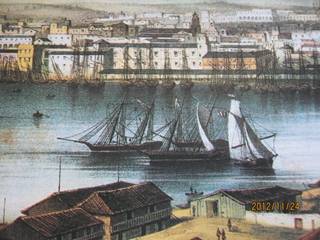
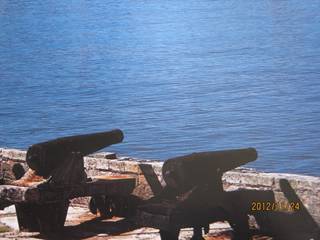 Last Friday afternoon, this one invited us to go to see the traditional ceremony of “the cannon shot,” a custom that exists since the epoch of the brief English occupation, when at exactly nine at night, they closed the doors of the walls that protected the city, and that they now recreate with a pretty representation in the Cabana Morro Tourist Complex. I was pleasantly surprised by how well restored and preserved is this emblematic place, thanks to the work of the Office of City History, the only state entity, that without fear of being mistaken, we can say has been busy rescuing and conserving some of our traditions.


 A neighbor told me that the re-involution of ’59 had taken property from owners but had not found a substitute. The director of a business will never be the owner, never have the sense of ownership over what he administers. To illustrate that there are more than thousands or millions of examples, it would suffice to offer a country like this one, worn out, a culture where theft is not seen as a crime because to survive death should not be punishable.