Cuban Public Health System and "Quality" / Anddy Sierra Alvarez

“There is no greater honor than to be the guardian of public health.” Fidel Castro

Cuba boasts of its public health system, and its hospitals are overflowing with cases of viral dengue fever. This outbreak is caused by this country’s poor performance in supplying water to homes, especially in the capital province.

The township Arroyo Naranjo was one of the most affected by dengue in 2012, after which the measure was taken to suspend the water supply every other day (one day on, one day off).

According to the official version, the supply of water to this area was every four days, because four motors were broken out of six total and the measure taken would prevent the remaining two working motors from breaking down because of overload.

More than seven months passed, and the problem with the water supply continued, the desperate citizens began to store water in pots, tanks, etc.  With passing days, this accumulated water prepared the conditions for the Dengue-carrying mosquito larvae, creating a considerable hatchery in each home.

The sprayings and the groups fighting the mosquitoes were diminishing with each passing month, the visits to the homes and the sprayings were increasingly rare.  Then the cases of dengue began on a grand scale.

The “Covadonga” hospital located in the capital township “Cerro” like the “Julio Trigo” and the “Enrique Cabrera” (National Hospital) were overrun with cases of dengue, but none was  hemorrhagic.

Then!  The government decided to announce that the water would be on every other day for this township, like it had before.  It all happened because the government had no interest in fixing the motors so that the citizens could have safe water.

Only Cuban problems are solved after there is a big, harmful event among the people.  The government’s system has shown this throughout these 53 years of “REVOLUTION.”

Translated by mlk.

September 10 2012

Loving is Over / Cuban Law Association, Esperanza Rodriguez Bernal

Photo: Habana del Este, by Marcelo Lopez

By Attorney Esperanza Rodriguez Bernal

At the Cuban Judicial Association, the cases with which we deal most frequently involve housing.

For a very long time this was the exclusive jurisdiction of the State, which was the only entity with the power to build (or to hand out the rare license to do so). The housing stock was not able to grow for many years and, as a result, we are now confronting dramatic consequences.

The problem is not confined to buildings and houses that collapse when it rains a little, due to a prolonged lack of maintenance. It also occurs when conflicts arise from several generations, or people of unequal levels of education and standards of behaviour, living under the same roof. These conflicts are multiplied exponentially by the fact that there are ever fewer units of housing available for everyone.

The first projects of which I am aware were built in Habana del Este, or “Pastorita,” as it is often referred to. These were constructed with care and by builders who knew what they were doing.

Another wave of construction activity occurred later, as I recall, in Alamar. In contrast to the earlier projects, however, these later constructions in general left much to be desired in terms of quality and urban character.

Alamar is in no way comparable to Habana del Este. The worst thing about this is that this implies a kind of devolution, since it would have been logical to assume that the first projects built just after the Revolution were surpassed by those built later, and not vice versa.

But on top of the physical problem of a shortage of housing, there is the fact that we are now a nation of more than eleven million inhabitants. It is awful to see grandchildren trying to commit their grandparents to an institution in order to be able to live by themselves. Or a recently divorced man trying to evict his ex-wife and children from their home, even when they have nowhere to go, because he is in a new relationship.

And in that struggle it is possible to see everything, from threats and domestic violence to bribery of housing officials to achieve a singular purpose – one’s own roof.

It’s been a long time since I heard a song by Los Van Van, whose chorus goes:

“No one loves anyone, loving is over. . .”

Someone told me that they no longer play this on the radio or television because it has been banned.  I don’t know, but what does seem terrible to me is that we have lost, among so many other things, the love of our neighbors and above all of those closest to us.

Translated by mlk.

September 6 2012

Our Campaigns and the Pacts / Mario Barroso

In 2008 the Mission Board of the Baptist Convention of Western Cuba convened the first Campaign of Fifty Days or Prayer for Cuba. It was an intense journey of prayer that involved believers inside and outside of the island. That same year, 2008, was also significant for another national reason: The Cuban Minister of Foreign Relations, on February 28 in New York City, signed the Pact of Political and Civil Rights and the United Nations Pact of Economic, Social and Cultural Rights which constituted a very laudable act.

After that important year our churches have continued praying for the nation and this year, 2012, our already celebrated Campaign of Fifty Days of Prayer for Cuba — always held between the day of the Resurrection and Pentecost — was the fifth one. But the mission of the believers is not only to pray but also to do everything they can for this world to adjust to divine will; not in vain did the wide Ignacio of Loyola say: Pray as if everything depended on God and work as if everything depended on you. It is in that sense that the believers themselves who pray so intensely for our nation should join a just citizen demand that asks the highest authorities of Cuba to take the necessary steps first taken in 2008, and ratify the signed pacts given that in them the spirit gathers the dignity of all human beings and the respect for their most elemental rights as creatures created in the image and likeness of God.

If the highest Cuban authorities ratify the pacts that they signed in New York in 2008 and take all the steps that implies we can thank God because many of the petitions that we have raised in our campaigns will have been granted. And it is that, a pact, although of man, once ratified, no one invalidates it or adds to it (Galatians 3:15).

Translated by mlk.

August 5 2012

The Two Wings of a Bird / Fernando Dámaso

Archive Photo

From time to time, when a Puerto Rican pro-independent visits Cuba, they will bring up in the corresponding discourses, that image by the Puerto Rican poetess Lola Rodriguez the two wings of a bird and the approach of Jose Marti, the first fight for the independence of Cuba and later for that of Puerto Rico, valid in the 19th century when both territories were Spanish colonies, but subsequently obsolete with the development of historical events, where Cuba obtained its independence and Puerto Rico became an “Associated Free State” of the United States (or the Commonwealth of Puerto Rico, its official name in English).

In the 19th century, apart from its solidarity content, the Martian approach also had an eminently practical objective: to get the Puerto Rican residents in the Union, principally en Key West and Tampa (who were numerous) to help the Cuban cause economically with the commitment of doing the same for them once Cuban independence was achieved. Since then it has rained here a lot.

Today this approach, if one tried to put it into practice, would be considered an interference in internal matters by another state and would receive little support from international agencies. It is logical, no one has the right to decide about a foreign country.

According to the information I have (here these data are not published), Puerto Ricans mostly are in agreement with their status with the United States: in the last referendum held on the topic, some 48% (close to three thousand pro-independents, who voted at the last minute to prevent the country from becoming part of the United States as its 52nd state) were in agreement with keeping the current status of Associated Free State, 48% voted to join the US as a state and only 4% voted for independence. To summarize: 96% agree with the status (in one form or another) and only 4% do not. When they have taken later surveys among the population, 90% are in agreement with the current status and only 10% are not.

The reasons are understandable: the country has never had dictators, nor fratricidal fights, having enjoyed for decades a tranquil social climate and economic development. Besides keeping its flag, anthem and language (Spanish is mostly spoken but also English), its customs, culture, etc., and sharing also those of North America, they possess the same rights as North Americans because they have had US nationality since 1917, including the passport; they can live on the island or in any state of the Union, enjoying a first class health and education system, as well as Social Security.

That’s why, when some clueless person presents in the United Nations the topic of the decolonization of Puerto Rico, many look surprised and ask: How to decolonize someone who does not want to be decolonized, because they do not feel that way? Absurdities of some countries’ foreign policy, where ideology prevails instead of reason. Puerto Ricans of all political stripes have demonstrated that, respecting each other,people can live in peace and successfully develop a country achieving well-being for the majority without social upheavals or violent acts. They make a good example to follow. In November this year they will realize a new referendum to determine democratically what political relationship with the United States their inhabitants wish. Let’s await the results!

Translated by mlk

July 8 2012

EFE with the Cuban News of the Year / Dora Leonor Mesa

For decades the extinct Microbrigades Company of the City of Havana, today Group GECAL, has caused our family deep sorrow and anguish as a consequence of its creation of a warehouse in our backyard. My daughters avoid using the bath and looking out the windows. The usual threats of damage to our property and dispossession of our backyard are real. The mental torture and intimidation continue, we are a mere incident.

Cuba promises in the UN that it will authorize the visit by the inspector on torture.

Geneva, June 1 (EFE). — Cuba has committed today to the members of the UN Committee on Torture to authorize the visit of a special investigator from the United Nations for this matter, Juan Mendez, whose predecessor tried for years without success to get authorization to visit the Caribbean island.

The lawyer and member of the committee, Fernando Mariño, told EFE that the Cuban delegates, participating in the session in which the case of their country was examined, “have committed to arrange a visit” of the current investigator, although they did not specify a date.

If this happens, “there would be an independent and competent international organ that could travel anywhere there are detainees and would report independently about what is taking place there,” he noted.

For Cuba it would mean showing “that there is no political fear to submitting to oversight by outside agencies.”

Additionally, the Committee on Torture expressed concern in its report today about the continuing complaints of arbitrary, brief detentions in Cuba of political opponents, human rights activists and independent journalists.

Cuba has denied that there has been an increase of arrests of this kind without legal authorization.

“It has to do with detaining a person for 24 or 48 hours, then letting him go, but without having taken any legal action, not even by the prosecutor. This is a form of quick political harassment,” explained Mariño.

Contrary to claims by the government in Havana,Mariño said that “it seems that (the practice of brief detentions) has lately become widespread.”

In another section of its report, the group of experts from the UN also complains of the use of “ambiguous criminal laws,” among which it cited “pre-criminal societal danger.”

In this way it justifies “restrictions on freedom of association, invasive surveillance operations, physical aggression, and other acts of intimidation and harassment presumably committed by agents of the National Revolutionary Police and members of the State Security Agency.”

Likewise, it mentions with concern the reports of “acts of repudiation” which continue to take place in front of the dwellings of the members of the so-called “Ladies in White” and the Patriotic Union of Cuba.

The committee expressed regret over “the reticence” of the State to present complete information about the incidents and “about the means taken to avoid these kinds of coordinated actions in which the presumed connivance between the harassers and the police authorities is noted,” says the report.

It also mentions the “lack of detailed data about complaints, investigations, prosecutions and convictions in cases of torture and mistreatment, as well as cases of murder in custody.”

On this topic Cuba noted during the session that the committee had indicated that no case of death in detention during the period studied was determined to be the responsibility of the officials in charge of custody and that no autopsy revealed signs of physical violence.

In response to this position, the committee pointed out that Cuba has not provided statistical information about the causes of those deaths.

It mentions that, according to the “limited information” that it has received between 2010 and 2011, they found 202 deaths in the penitentiary system, a figure it considers “elevated.” EFE

Translated by mlk

June 19 2012

The Cuban Government Before the Committee Against Torture / Dora Leonor Mesa

By Miriam Leiva, Havana 06/07/2012

Extracted from www.cubaencuentro.com

Cuban authorities for more than nine years avoided the analysis of their violations of human rights in the United Nations Committee on Torture; a period that coincides with the uprising of March 2003, when it subjected 75 peaceful protesters to summary trials and shot three young boat hijackers — who caused no bloodshed themselves –as well as the deaths of political prisoners Orlando Zapata Tamayo and Wilman Villar Mendoza on hunger strike, and it maintains strong repression over many members of civil Cuban society.

The 48th Session of the Committee analyzed the report presented by the Cuban Government the 22nd and 23rd of May, fulfilling its commitment as a State that is party to the Convention against Torture and Other Agreements or Cruel, Inhumane or Degrading Punishments (which it subscribed to in 1987 and the National Assembly ratified in 1995). On June 1 the Committee against Torture issued its Final Observations. The Cuban authorities always have denied the use of torture, in reference to the notable physical evidence, but the concept is much wider.

Article 1 of the Convention specifies that “’torture’ is any act by which serious pain or suffering, whether physical or mental,is intentionally inflicted n a person with the goal of getting information or a confession from him or a third person, punishing him for an act he may have committed or is suspected of having committed, or intimidating or coercing that person or others, or for whatever reason based on whatever kind of discrimination, when said pain and suffering is inflicted by a public official or other person in the exercise of public duties, at his instigation or with his consent or approval.”

The Committee against Torture is composed of 10 independent experts, proposed by the countries, but they work in their personal capacity. Their work is to supervise the application of the Convention by the states that are parties to it, which must present periodic reports and respond to questions about the complaints received, as well as take part in the meeting of the Committee for the consideration of the reports. It meets in Geneva twice a year, and on this occasion they analyzed Albania, Armenia, Canada, Cuba, the Czech Republic, Greece, Rwanda, and Syria.

As verified  the reports of the international press agencies, the rapporteurs Nora Sveaass and Fernando Marino Menendez, together with other experts, analyzed the Report and referred in detail to the well documented complaints received. On May 22 and the next day, the Cuban delegation rejected all the accusations.

The Cuban deputy prosecutor Rafael Pino Becquer argued that between 2007 and 2011, 263 complaints of mistreatment in places of detention were answered,by reason of which “46 agents of the security forces were held criminally responsible.” He said that all the complaints about mistreatment were false, denied the existence of overcrowded jails, and said that there had not been a single prison death that could be blamed on the authorities. With regards to the human rights activists’ situation, he repeated the Government’s traditional falsehoods that they “cannot be qualified under that concept, according to the precepts of the UN” because their actions”. . . seek to destroy the internal order of Cuba (. . .) in the service and under the direction of a foreign power. In Cuba, the authentic defenders of human rights are protected. No one in our country has been persecuted or sanctioned for exercising his rights, including those of free expression and association.”

“. . . they look to destroy the internal order of Cuba (…) in the service and under the direction of a foreign power. In Cuba, the authentic defenders of human rights are protected. No one in our country has been persecuted or sanctioned for exercising his rights, including those of free expression and association.”

About the concept of danger, he expressed that it is applied by independent judges under the rules of due process in accord with sufficient proof,”and certainly not because of the political beliefs of the individuals. There only exist detentions under the rules of due process for a citizen or a group that wants to alter the public order, “and certainly not because of political beliefs of individuals. There only exist properly registered detentions for a citizen or a group that wants to alter the public order.”

The document “Final Observations” from the Committee begins showing that the Periodic Report presented by Cuba, more than nine years late, does not fully conform to the established guidelines, and regrets that some of the questions were not answered. It reiterated the recommendation of 1997 that defined the crime of torture in domestic law,as contained in Article 1 of the Convention.

“Final Observations” recommended that all detainees should be guaranteed all of the fundamental judicial rights; that the necessary measures are adopted so that prison conditions meet the UN’s Minimum Rules for the Treatment of Inmates; that diet and sanitary and medical resources are improved; that communication between relatives and a lawyer is guaranteed; that any cruel, inhumane or degrading punishments, such as solitary confinement in deplorable conditions, be completely prohibited.

The Committee raised concern about the legal ambiguity of former prisoners under “parole,” and confirmed the reports received about the arbitrary restrictions of their personal liberty and free movement. It also exposed the need to modify the provisions of the Penal Code regarding pre-criminal social dangerousness, “an ambiguous criminal offense.”

Among otherissues traditionally rejected by the Government of Cuba, the Committee suggested the ratification of the Optional Protocol of the Convention in order to create a system of periodic visits by national and international observers without prior notice, designed to prevent torture or inhumane and degrading punishments, and reiterated its previous recommendation that non-governmental human rights organizations be permitted entry into the country, and to cooperate with them in the identification of cases of torture and mistreatment. It also expressed serious reservations about the three last executions of death sentences, after summary proceedings, carried out April 11, 2003, and called for the examination of the abolition of the death penalty.

The committee started that the State Party should guarantee the impartial and exhaustive investigation without delay of all the deaths of detainees, and the monitoring and adequate medical treatment of detainees who declare hunger strikes. It demonstrated concern because significant changes have not been produced in the judicial system since the presentation of its initial report in 1997, particularly the lack of independence of the executive and legislative powers. It recommended a guarantee with respect to the Basic Principles of Lawyers; called for the end of repression with arbitrary detentions or the application of pre-criminal security measures against political opponents, human rights defenders and activists, independent journalists and other actors of civil society who put themselves and their families at risk.

The Committee sought to guarantee that everyone be protected from the intimidation and violence to which the simple exercise of their freedoms of opinion and expression and rights of association and peaceful assembly could expose them, as well as to authorize enrollment in the Register of National Associations of non-governmental human rights organizations that apply for it. Also, it invited the ratification of fundamental treaties of human rights, in particular the International Pact of Civil and Political Rights, the International Pact of Economic, Social and Cultural Rights, and others.

In Cuba the achievement of this session of analysis has not be published,almost certainly the Government will default on the recommendation to widely disseminate through official news media and non-governmental organizations the report presented to the Committee and its final observations. In any case, one can expect repression of the opposition NGOs that divulge it.

Mr. Manfred Nowak, special rapporteur against torture, could not carry out the invitation to visit Cuba in 2009, the Committee urged repeating it to his successor, Juan E. Mendez. The Cuban government representative stated that he is reconsidering a visit, even though he “had no faith in the sources of information used by the Committee.”

Let us remember the initial illusion of Mr. Nowak, who ended up with a total disappointment, because they gave him excuses and changed the dates of each of his proposed trips, evidently due to his statement that he proposed to visit prisons without prior warning and meet with all Cubans. Now his successor, Mr. Juan E. Mendez, 67, an Argentinian jailed for 18 months during the military dictatorship of the 70’s, could expect a similar situation, above all after the detailed display of the repressive methods of the Government against the Cuban people.

Translated by mlk

June 19 2012

OUR SHARE OF REPRESSION FOR THE VISIT OF BENEDICT XVI / Mario Barroso

The 103rd Annual Assembly of the Baptist Association of Western Cuba, to which I belong, concluded Saturday the 24th at 6:00pm. That was why my wife Yoaxis and I found ourselves in Havana from the Monday before, the 19th of March, separated from our two girls and from the churches in which we work in the center of the island.  Nevertheless the news that arrived from there was not very promising for our return.  Because of the visit of Benedict XVI something inconceivable was launched throughout Cuba: a true human hunt that trapped as common criminals and fearsome terrorists peaceful people who simply worried about the deplorable human rights situation in their nation.  Detained friends, whole families fenced in, telephones cut off, people disappeared; this was the news we got, and it was really happening behind the scenes in contrast with the striking order on the plazas where the Pope said mass.  In such a situation and assuming that some of these repressive variants or several at once could befall us, we decided to stay in the capital against all risk.

We planned as varied as possible an itinerary that on one hand would keep us moving constantly without any fixed site and that on the other hand offered us the possibility of carrying out advantageous activities in the midst of true secrecy.  One of the most outstanding moments was the religious service we participated in on the Havana Malecon with the street church Victory Reach that as part of the international ministry Victory Outreach rescues treasures in the midst of such darkness.

In our very own pilgrimage, giving time for the Pope to leave, and trying to survive without being captured, at nightfall on Tuesday the 27th, we went to the home of a fellow pastor who took great pains in preparing a tasty supper that we shared in lively fashion with his family in his house full of neighborhood children as they prepared for what they call a night of sleepover, completely outside the presence of a Pope in Cuba.

As part of our rigorous schedule we did not permit ourselves to stay more than three hours in the same place and from the house of our brothers in faith we planned to move to an unfixed point on the Havana Malecon from which we could try to contemplate the presence of the other Cuba that also desired to be present amidst so much euphoria, that of the diaspora, through a self ordained Lights of Liberty, that like the other realized in December on the eve of the International Day of Human Rights, would greet Cubans sequestered on this prison island through fireworks.

The supper was almost finished when they knocked on the door of the apartment in which we found ourselves.  It was the State Security, through two of its agents, who had found us and explicitly prohibited my wife and me from participating the next day in the mass that Benedict XVI would offer on the Plaza of the Revolution.

We explained to them that our presence in Havana after concluding the 103rd Annual Assembly of the Baptist Convention was not principally due to our desire to participate in said mass, but to avoid this repression that now finally made itself present here.  Evidently the order that the agents brought was to detain us both, as they were doing with hundreds of others.

The brother that welcomed us and his family all gathered at the door and prevented the detention by expressing to the agents that they were in the best position to offer us their home for the night and to watch the mass together the next day on television.  The agents, a little perturbed by the atmosphere of peace and harmony that was clearly observed, and which in a certain manner they had interrupted, told us that as far as they were concerned, there was no problem, but they had to consult higher authorities.

Asking me to accompany them alone to the stairs of the building, which I did without resisting, prepared for the ordained arrest, the only one of the two agents who the whole time made use of words left me alone a moment in the custody of the other and made a call, I suppose to the command center of the operation, and after receiving confirmation expressed to me that they accepted my presence in that house from which I could not move while they maintained surveillance.

So it was that we spent a fun night of sleepover in the home of our beloved brothers in faith while the agents kept watch.  I cannot count how many there were in total, but do affirm that there were many more than the two who showed their faces.  Something that powerfully called our attention is that the kind of transport they used possessed private license plates (rather than the plates identifying their vehicles as government cars) and included at a minimum two modern, white cars and another green one, plus a Suzuki motorcycle which could not be missed.

Our share of repression for the visit of Benedict XVI, in spite of everything, was not among the highest.  Just before returning from Havana an abject group of all the repressed joined us in the house of a young independent film maker, Ismael de Diego, grandson of the great man of Cuban letters, Eliseo Diego, who also was victim, and there we found out about the infinity of all kinds of abuses, even taking into account that we who met that afternoon of Thursday the 29th constituted the most fortunate as was demonstrated by the fact that we had been able to get there even with our telephones not working.

The great majority of those excluded and repudiated found themselves distant and handcuffed in provinces like ours, where commonly repression is greater and unpunished.  As a result of our meeting we agreed on a document of denunciation that we signed and delivered to the Apostolic Nuncio by means of the Catholic priest Jose Conrado, present among us, also with his cell phone cut off, who dedicated words to us that expressed his profound regret for what had happened to all of us as part of the papal visit.

If anything, the Cuban visit by Benedict XVI showed that the brutal repression within Cuba, and very alarmingly it seems for many in the world also, is seen now as a normal and tolerable phenomenon, very typical of a System considered unworkable even by its own actors, but which nevertheless is granted recognition and consent.

This time the exaggerated operation, coinciding with the fifth-third anniversary of the repressive organs of the State Security, has been baptized as the Vow of Silence, and undoubtedly constitutes the biggest exercise of this type that has taken place since the Black Spring of 2003, and many senses it is only as the preamble of future repressions through which there could very well be, in contrast with this, victims who are never found again.

Let us pray and work to prevent in Cuba a possible bloodbath so typical of decadent regimes like this one.  A peaceful transition to an authentic democracy, as perfectible as it may be, constitutes an issue of survival for many in the middle of a growing, dangerous impunity.

Translated by mlk

April 5 2012

In Defense of the Hustlers / Dora Leonor Mesa

Vices come like travelers; they visit us as guests, and stay as masters.
Confucius

In the old East Germany where I worked years ago as a German translator, I learned,through snobbery,top level cooking in a five star hotel. Later in Cuba, in my debut as a mother, I should have chosen between a promising professional career or resigning myself to being mother and wife. After choosing the longest road, I “got” the title of cook with an European experience, so I could get good jobs, those that pay in convertible currency (C.U.C.) and create on our humble table a culinary culture that would make us proud, in spite of the daily difficulties.

In one of my experiences as cook, a known painter for whom I worked sarcastically called me the English Lady. When I asked him why, his answer perplexed me:

“You cook very well, and you don’t steal or ask questions.”

The saddest thing about the situation is that after changing jobs, because of my employer’s return to his country, my excellent references did not avoid initial suspicions. You often found the house full of garments, another day, delicacies everywhere, sometimes money in unexpected places, “forgotten” digital equipment. . . In the end the favorable judgment, far from being flattering, is embarrassing: We Cubans, at least for some time now, have acquired fame as thieves, hustlers. . .

The controversial issue about the shameful reputation of Cuban as thieves and hustlers is real. You just have to read from time to time the weekly sections of Letters to the Editor of the Granma and the Juventud Rebelde newspapers. Passengers on the public bus avoid paying the fare. There are even citizens who steal electricity or domestic gas. In the stores you can find a cracked toilet bowl for $25 CUC (“La Especial” of Infanta) in a country with an average salary of $20 dollars. And in the farmer’s market, pretending to forget the price and the weight of the products on sale is the best strategy.

The country’s important companies, among them ETECSA, Enterprise of Telecommunications of Cuba, have legalized rapacity: exorbitant rates, discriminatory service. A different kettle of fish is the National Electrical Union, responsible for supplying electrical service to the nation and thus to the residential sector. Frequently, the Cuban magazine Bohemia explains in detail how to read the electric meter and make payment calculations according to the prevailing price rates.

For years my maternal grandmother kept her payment receipts (I do it, too). This habit helped us to discover how the household consumption’s numerical trends rose disproportionately even before the months of highest spending, Christmas holidays, vacations in August. The Company defended itself saying that consumption increases with an increased demand for electricity. Nevertheless, the actual analyzed data do not coincide with those of the receipt. With an Excel table and a simple statistical analysis you saw that the variations were significantly unequal yearly.

Sometimes we had problems with the “electricity” collectors thanks to our valuable table, which predicted when they would try to charge more. On top of that, we had to complain in the municipal billing office several times, where, it is fair to say, they still receive their clients in a friendly way, the bundle of payment receipts from several years, this “weapon”, had to be present, the actual readings and the table of statistical fact on Excel, printed with the pertinent data and graphics.

In our house we had no high-consuming new equipment or air conditioning, but the same two old refrigerators as always, responsible for the increased domestic electrical expense. We never changed them for the new Chinese appliances proposed by the State, very small and expensive. Apparently, there were some adjustments in the Electric Union. For some reason the current cost of domestic electricity is more reasonable.

Payment date / Amount in Cuban pesos

January 2009 $84.40          August 2009 $157.65

January 2010 $71.00           August 2010 $171.20

January 2011 $56.00           August 2011 $137.30

January 2012 $54.80

The Manufactured Gas Company has a history in our family. The charge for gas is really moderate (100 cubic meters cost 11 Cuban pesos, about $0.50), but we have little luck. We had a gas collector who, little by little, began to bring us the bill without the payment stamp, and the consumption readings did not correspond with what appeared on the receipt. Upon confronting her, she arrogantly told us that she was a “cutting edge worker,” that is to say, the best employee.

The first time I went to ask the Provincial Company of Manufactured Gas about the collection procedure, God was with me that day; the director of our corresponding office was there. In front of the clerks of the Office of Customer Service, she highlighted the “efficient collection work” and put into question the quality of my humble stove:

“That is not why! I too spend more than 11 pesos, but by leaving it burning. . .”

After the interview, normalcy returned. Nevertheless we detected that the value of the bill was always the same. The bridge collapsed when the collector told my oldest daughter:

“The next bill will come higher.”

In the rain, for the second time, I approached the Office of Costumer Service of the Provincial Company with all the paraphernalia of several years of payment. A clerk, Jorge L. Galban, compromised to investigate the case. He visited our house, reviewed the gas meter and soon after that, in the month of January, as compensation we did not have to pay the monthly bill. Our bills were being reported as if we had a broken meter.

Eighteen months later, another gas collector appears. The reading of the month of June did not coincide with the real one, the consumption climbed again without excuses. The payment receipts returned with the date of the reading without changes. I tried to convince the worker about the anomaly. I made him come into the kitchen to corroborate the reading of the meter. In truth, three pesos is nothing; we are just a mass, people. Why not clients?

Thousands of Cubans fled over the ocean, so they could feel they are treated as persons. Some made it. Others rest in the ocean. Bryan, my nephew, lives among the fish. I am sure he is happy, surrounded by freedom and beauty. We decided to stay in Cuba. We really like the idea of thinking and acting like people with rights. Previously the boss at the Gas office rejected criticisms from her exemplary collector. An announcer from a television show recommends:

“Follow the path of money.”

“Perfect. Anti-scoundrel clients, FORWARD!”

Translated by mlk

June 12 2012

Violence / Rebeca Monzo

Patchwork by R. Monzo

Much is publicized, even by the United Nations, about Cuba being one of the countries where less violence exists. It is true that we do not have wars or drug trafficking. But what is undeniable, in spite of the fact that the national press does not speak of it, is the domestic violence, like other kinds of violence carried out, due to many reasons.

Recently there occurred a lamentably bloody event, among members of a sector that is supposed to be cultured and refined. The media have not reported anything about it, but now it is popular knowledge, the crime perpetrated by one of the most outstanding musicians of the Philharmonic Orchestra, a young cellist,ranked among the best in the country.

Rumor has it that she had been a victim, like so many other musicians of the despotism with which the Director General of the Amadeo Roldan Complex,Mr. Chorens used to treat them. It seems that the straw that broke the camel’s back was the denial of a trip abroad,highly anticipated by this virtuoso of strings. Expressing her indignation on learning of the refusal, she made public among his companions, the vengeance that he was going to perpetrate: I am going to hurt him where it hurts most, she said.

She went to the house of the Director, knowing that the director’s mother would be there alone, and finished her off with a blade, repeatedly stabbing her until she died.

This is only one example of the many acts of violence that are practiced daily in our country, and about which the media never report.

There is a lot of contained hatred and frustration, any incident can be the trigger to make them explode with the same fury as a volcano expelling the lava contained in its interior. No one talks about it. The worst is that like everything kept hidden, no one is careful, especially not foreigners, who are sold the line about the safest tourist destination.

As long as the press is not free and transparent, we are going to be believe that we are living in a true paradise. I do not like the “police blotter,” but I also do not agree with hiding the news, that one way or another affects us all. Nor am I going to become a spokesman for the same, but this event has upset the artistic sector and still nothing has been published about it.

Translated by mlk

June 10 2012

Project Plapliplo Teacher: Agent of Internal Change / Dora Leonor Mesa

A change that has affected me personally has been the creation of the Cuban Association for the Development of Child Education, referred to hereafter by its initials ACDEI, founded as an association on September 22, 2010. Previously it was treated as a community project called Plapliplo, with students from primary education.

One of the essential objectives of project Plapliplo was to raise the educational quality of low income children. The project aimed to become a base of support for the Official System of Primary Education in the community. It began with pre-school through sixth grade, although in practice it began successfully from first grade through fourth. On that student level, the student body had acquired sufficient abilities to be able to continue its studies without the help of the project. As a teacher, my relationship was limited to that existing between teacher, family and student. The activities were very heart warming and my task was dedicated but much simpler than what came later. The changes introduced in the project may be simplified in the following way: a new focus on how to impart lessons and create the independence necessary in the student body so that it is capable of assuming new academic and social roles.

I must mention that it was not simple to demolish the barriers that are within some Cuban parents in order to achieve what appears to be a good attitude towards the change in teaching strategy. It required an effort of all those involved, the students, their families and me. At the end of four years I discovered that my work had been monitored by education managers of municipalities of the capital. It was simultaneously a surprise and joy; I knew that inside of the group there were parents opposed to the changes although they continued in the project to the end.

No education officials could object to the lessons I imparted and the dosage used; from the beginning I focused on the official program of instruction, and the only thing that I did was change the strategy of the same with the use of technological resources. The families of the students were involved in the introduction of the changes because they had the right to participate in order to feel valued and to take on their commitment with greater pleasure.

I quickly identified the resisters in order to direct efforts especially towards them. I communicated constantly with everyone but in particular with those most distrustful. I was understanding before their fears and firm at the same time. I knew better than they what I was confronting. I always consulted other teachers and was enriched by their experiences. Debates perfect daily work; no teacher should fear them.

Translated by mlk

January 17 2012

Not All in Cuba Are Proud of Being Black / Iván García

A drunk, off duty, enforcement agent, white, justified the racist Cuban police archetype that turns a black or mestizo into a presumed delinquent with an old refrain learned from his mother: “Not all blacks are thieves, but all thieves are black.”

The guy is not a bad person. He is a good father, a high caliber criminologist, and he does not consider himself racist. But it was what he learned in his childhood. Racial prejudices abound within Cuban families. Then they are carried into to real life.

The Havana agent’s attitude becomes that of the National Revolutionary Police on operation and raid days: of every 10 citizens that they stop on public thoroughfares, 8 are black. It is a mentality problem.

A couple of years ago, a friend who worked in a foreign firm told me that he was considering buying skin whitening creams. I did not believe him. “According to a market study, the cream would have great acceptance among Cubans,” he told me.

As I never saw them for sale in the foreign currency stores, I thought I had heard a joke of bad taste. In the book Afrocubans, the historian and anthropologist Maria Ileana Faguagua says that in 2009 a Spanish firm studied that possibility.

Several consulted persons, who are dedicated to the treatment of hair for women of the black race, said that those creams would sell like hotcakes. “One can think what one likes. But I have spent 20 years straightening ’kinks,’ and I’m telling you that many black and mixed women would give anything to lighten their skin and become white,” said a white Havana hairdresser.

Certainly, black pride on the island is not at its best moment. What has happened to black people has not been slight. It is always good to review history.

And it is that since 1886, when slavery was officially abolished in Cuba, blacks were left at a clear disadvantage with respect to whites. They had no property. No money. No lineage. And much less social recognition.

Years later in the Republic, their decisive support in the fight for independence was barely taken into account. In spite of that support, they only got work as stevedores, cane cutters or construction workers.

Many black families did not tranquilly accept their fate to live at the bottom. And some managed to climb the steep and difficult social ladder.

But they were few. Then, as is known, Fidel Castro came to power. And he decided to resolve racial differences by means of decrees and encampments where blacks and whites were mixed and would become “comrades.”

At first it was not bad. But racial prejudices in Cuba were very subtle. They were — and are — very deeply rooted in the minds of the majority. And that cannot be legislated. If you really try to demolish barriers, you need a systematic educational effort, in the long run, and to include blacks and mulattoes in the power structure.

That was already most difficult. One thing was that the personal bodyguards or soldiers sent to the Angolan civil war were the color of petroleum, and another, that they formed part of the status quo.

Although after 1959 blacks gained spaces, and shared carnivals, ball games, scholarships to study at the high schools in the countryside and university studies with whites, later no matter how much talent they had, they remained shackled within the mediocre professional group that retires without having been able to climb socially or politically.

From time to time a black man lands himself a high ranking government or party job. A matter of image. But blacks continue on the lowest social rung.

Of course, they are mostly in jail and on sports fields. With the exception of chess or swimming: according to old racist concepts, blacks are a failure in those disciplines.

Similarly, the dark skinned are good for playing musical instruments beyond the drums. Or singing boleros, Cuban folk songs, salsa, rap and reggaeton.

Now if they aspire to join the company of Alicia Alonso, they are looked at with suspicion. Almost with sadness, an old teacher told me: “I have nothing against blacks, but their anatomy causes them many problems in classical ballet.” She overlooked the triumphs of Carlos Acosta, a black Cuban ballet dancer in the London Ballet.

If in music and sports black usually have the one, also they have known how to get a slice of prostitution. Looking for something different or because of the myth that they are good in bed, many Europeans travel to Cuba to satiate themselves sexually with those of dark skin. Cheap pleasure.

But while the prostitutes are offered in clubs and night zones of Havana for 20 dollars,some black men keep seeing their future in the distance, above all in Europe.

The worst of the worst in Cuba today is to be a black, dissident woman. Ask community activist Sonia Garro. Graduated in nursing with brilliant grades, she suffered the racism in her own flesh from some creole mandarins.

One afternoon, proud of being the first professional in a family whose members had been dedicated to the worst paying jobs, with her best dress and pair of shoes, she went to the Astral theater to get her diploma. When it came time for the group photo, a provincial director asked her to move away: “Those of your color don’t turn out well in photos.”

Years later, Sonia told me that her anger was such that she left without getting her diploma. In a short time, she became a dissident.

Some days before the arrival of the Pope on the island, last March, forces of the political riot police entered her house as if they were terrorists. Using rubber bullets and excessive violence they charged Sonia and her husband, Ramon Alejandro Munoz, also an opponent. They awaited proceedings in harsh prisons. She was in a women’s jail, he in a punishment cell in the Combinado del Este because he refused to put on the prisoner’s uniform.

Blacks in Cuba cultivate their destiny with the few opportunities they have to triumph. Their failures are triple their successes. A high percentage live badly and eat worse. Their patience is exhausted. And they have decided to leave behind being culprits of their race. Like Sonia Garro.

Ivan Garcia

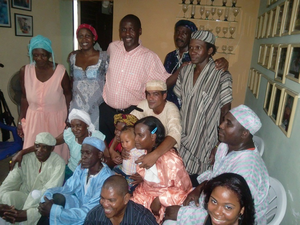
Photo: President of Citizens for Racial Integration, Juan Antonio Madrazo (on foot in the center, with pink shirt) with relatives, friends and members of the Mystery Company of Voodoo, during a celebration of the International Day for the Elimination of Racial Discrimination, last March. They are all proud of belonging to the black race. The woman on foot on the left, with the pink dress and blue handkerchief, is Teresa Luna, Madrazo’s mother, who has received threats from State Security, according to what Leonardo Calvo has denounced.

Translated by: mlk

May 27 2012

They Steal Cows From a Commander of the Revolution / Yaremis Flores

Yaremis Flores

Last Saturday, May 5, in the nighttime hours, at least three cows were taken from a farm belonging to Commander Guillermo Garcia Frias, located southeast of the capital. At dawn the next day, three patrol cars and two Forensic Medicine vehicles were observed.

The non-commissioned officer Alexander Borrero, one of those charged with the investigation, exclaimed, “The people do not learn, they dare to steal from a Commander.” The investigators took pictures and videos of the place. They also gathered statements from some neighbors.

Although some farmers in the community have reported the theft of their animals –a frequently-occurring crime in the area — the police have paid no attention. “Last Monday, May 7, they took one of my horses; I told the police unit, and I am still awaiting the investigation,” said Alfonso Chaviano, better known as Chichi, who added that a horse on the island can reach a value greater than $1000 US.

The cooperative Fernando Garcia Rosales, with more than 400 hectares, belongs to the National Company for the Protection of Flora and Fauna, directed by Garcia Frias. Located in Murgas, a rural neighborhood of the Municipality Boyeros, it counts on all kinds of resources. It is dedicated to some crops, among them sugar cane and moringa, but its basic work is cattle raising.

Osiris, one of the inhabitants of the place, who asked that his last name not be published, spoke two months ago with Miguel Vale, administrator of the farm. “He gave me a lift in his own Willy jeep, identified himself, and bragged about his constant travels to Mexico and Brazil for the purpose of buying heads of pure bred cattle.”
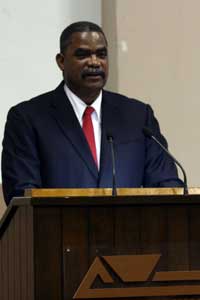
Cuban citizens have no possibility of controlling the profitability or lack thereof of the country’s investments.Much less of deciding the fate of this farm’s production, when it operates with the approval of Fidel Castro, the Cuban ex-leader, who visited the property last January.

In keeping with worldwide farming statistics,average cattle prices at auction fluctuate above $1,300 US. According to the non-commissioned officer Borrero, the head of cattle were pure-bred specimens and weighed between 350 and 450 kilos. Up to now, they have not detained any suspect.

Translated by mlk

May 23 2012

The Sound of Words / Rosa María Rodríguez Torrado

The old Smith-Corona typewriter fights against the rust that ideologicaloxidation imposes on it. It is not only agile or subversive fingers and minds, but the truth, that suddenly breaks through the thicket of pronouns, nouns, prepositions and verbs that are the subject and predicate of the freedom of thought. That’s why the mechanical keyboard beats with the percussion of the letters and dances with the music of the words, whose melody is more harmonious when it overflows the lines of the rigid politicalstaff and does not fear denouncing the horrors of the jails, telling the stories of those who resist waiving their rights and relating it from thecountless Cubans who have written their names in the sea.

The subordinate clauses are insubordinate in the fairness and right of those who do not accept being merchants of adulation nor slaves of set phrases that sound dissonant when reduced to orders. Decades ago inCubawords were melted with lead and walls, and the authorities proscribe other methods ofself expression that do not favor the only existing party. The fear, the executions and the denunciations through more than five decades created a folklore of anti-democratic and paralyzing division that took out of from the closet and internationalized our longings and rights to listen to pluralistic music in this little country of castaways who, more than emigrants, encourages fugitives from totalitarianism.

Translated by mlk

May 22 2012

Without Justice and Without Rights / Yaremis Flores

The Havana capital will welcome the sessions of the Sixth International Meeting of Justice and Law in the Conventions Palace the next 23rd to25th of May. More than 500 delegates will meet; of those, 300 are foreign jurists from 14 nations.

Among the prioritized themes to be discussed are found access to justice on the island, the re-education work in Cuban prisons and criminal due process, according to the note published on the website www.gpalco.com. As with earlier editions, there will be an official presentation about the case of the five Cubans sentenced in the United States for spying for the Cuban government.

Ruben Remigio, president of the Supreme Tribunal, sponsor of the event, said in a press conference offered last Thursday, that the meeting will permit Cuba to show the advances in its judicial plan, in the process of procedures and the transparency of the administration of justice.

“The meeting will be a ’sounding board’ to present a counteroffensive against the orchestrated campaigns for the major press, that tries to discredit Cuba and silence its achievements in the administration of justice,”added the jurist.

Remigio boasted of the victories of the Cuban Revolution in justice as”favoring the exchange of experiences among different judicial operators.” Nevertheless, not all jurists will be represented in this debate. Only lawyers from state sectors have access to the convention. Also, an Organizing Committee is charged with selecting those reports related to political concepts of the government.

Laritza Diversent and this writer, though we are both lawyers, have never participated in this kind of event. “I have not attended the convention. The only objective of the organizers is to paper over the chinks in the Cuban judicial system,” commented Diversent.

Among the missing matters of the congress are the inadequate assessment of proof on the part of the Tribunals, the forced or slave work of the prisoners of the island and the advantages of an independent judicial power. Maybe a deep analysis of these topics will avoid another international meeting without justice and without rights.

Translated by mlk

May 21 2012

A Day in Images / Regina Coyula

Taken at the moment in which the dentist was beginning the torture session

I secretly envy those who achieve those photos that I would like to have made. Before, with the film camera, there was a “roll.” Getting Orwo film from East Germany was a tiresome task: if there were rolls, the 100 ASA did not suit me; I detested the Orwocolor, which always seemed to be expired; but the 400 ASA Orwocromes were hard to get. Developing a roll was a matter of months in the “consolidate enterprise.” They also sold little rolls of slides that were developed with the same delay and had to be viewed with a projector. In the 1990’s Orwo disappeared, and Agfa and Kodak reappeared, but now those came in the other currency that has marked our lives, and my little Minolta camera, a gift from my brother Michael, sits in some drawer, which, if it exists, well I have lost sight of it a long time ago,just as it has been years since I’ve seen a roll of film.

The invasion of the digital camera changed photography forever and was love at first sight, but impossible love. It was not until a little more than three years ago that they gave me a very good digital camera that I dropped on the floor on my trip to Spain last year, and when I took it to a shop for repair, the clerk ended up selling me another.

With that little second-rate camera I entered myself in the competition of aday.org in order to photograph my 15th of May. I got up ready to do a portrait of all that would be my day. In the end I found myself with almost 100 photos from which I had to choose ten (the maximum number admitted in the contest). I decided on a group that reflects occupations. They are not great photos, but in almost all can be seen the attraction of the photographed for the lens. All strangers (except the dentist), they had no objection to being photographed, and even those who do not seem to have, “posed.”

My reality has a decaying beauty that makes the shutter contract. A foreign observer could not perceive the conflicts running through them. My images do not reflect misery, not even evident poverty, but life in one of the best places of the city, and I did not leave home. On the other hand, as is already known, the essential is almost always invisible.

Translated by mlk

May 18 2012