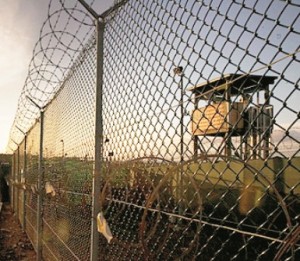
Patient No. 1 in Object 20 of CIMEQ Hospital / Juan Juan Almeida #Cuba

From: http://www.lanacion.com.ve
From: www.lanacion.com.ve

Since the Venezuelan president remains admitted in Havana, conjecture about his health seems to revert against the most conservative sectors, and to undermine the credibility of the serious enterprises dedicated to communication.  It is no coincidence, it is a very well laid out plan; because as my grandmother used to say, “In a game of patience, you have to think like a man who acts, and act like a man who thinks; when your exits are exhausted, the best thing is a strategy.”

About President Hugo Chavez’s state of health, we believe that we know a lot, but we do not know everything.  It is pure and simple manipulation; from one side, we have this reduced group with access to the commander that ably has decided to dispense the truth in order to gain time and legislate; and from the other, those that, consciously or unconsciously speculate with the information.

The Cuban government is expert in managing secrecy in order to boost with it the media roar and profitable mystery that death and immortality always create.  Its bunker par excellence is the quasi-inaccessible, impenetrable and murky “Object 20,” nestled in the labyrinthine CIMEQ Hospital, built in the style of Stalinist gigantism.

With audacious engineering and appalling decoration, since 1986 Object 20 has been a temple to the Egyptian belief in life after death.  A construction attached to CIMEQ Hospital but with its own autonomy, built for the purpose of satisfying the ego and paranoia of power and security.  My experience with that place is stormy; therefore, in my personal opinion, it represents a threat more than a seduction.

Object 20 is a kind of sanctuary. When we enter through the basement, we go directly to a spa designed in accord with the ludicrous taste of whoever still longs for the nights of the erstwhile Communist Moscow. Thick walls, soundproofed and fortified by immense slabs of Jaimanita stone darken the Olympic-sized pool, which the sun never touches; on the side a darkened and unused gymnasium fitted out as an Italian fashion statement follows a musical therapy space, two steam rooms, a sauna, two pools for contrast baths, a jacuzzi, equipment for hydromassage, an area to soothe stress, and a well-stocked pantry. All this is watched by four guards who stay on alert, in front of closed circuit cameras.

Exiting through the rear one finds a squash court and a running track. As the spa is built with very high ceilings, this place has no first floor; on the second are situated the intermediate and intensive therapy rooms.  And on the third and last level, after a room for bodyguards, an infirmary and a pantry, there are five patient rooms from which and through a wide, one-way window (of high impact and German fabrication) that they always keep spotless, one can see a pretty countryside with yagruma trees.

The strategical fort turned into a center of international political relations can only be accessed by obtaining authorization from the office of General Raul Castro. And to top it off, when there is a High class or VIP patient, as is the case, neither doctors nor nurses, service personnel, bodyguards, telephone operators – absolutely no one is permitted contact with friends or relatives, let alone with the outside. The comments that come out, either the Cuban government releases them in order to control opinion, or they are scurrilous inventions.

Of one thing you can be sure, the Venezuelan president is the best attended patient on the planet, with products ranging even beyond the world of medicine and pharmacopoeia. A competent team works unceasingly for his improvement. They know that if the Bolivarian leader were to die in Havana, the cause of death would be questioned immediately, divisions within the ranks of ALBA would be created and the little reliability that remains in the Cuban health system would be destroyed.

Translated by mlk

January 14 2013

The Castro Dynasty Turns 54 Years Old / Ivan Garcia #Cuba

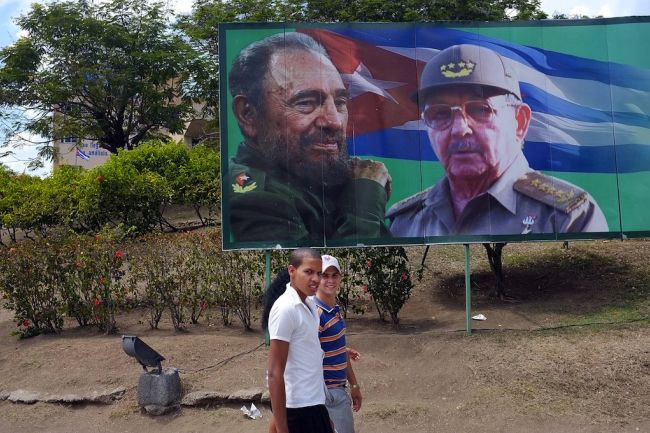
fidel_and_raul_castro

January 1, 2013, the Castro brothers’ autocracy turns 54 years old. That leaves 20 years in order to equal the duration of a Communist Party in power, the CPSU, in the former Soviet Union.

Only North Korea, China, Vietnam or Mexico with the PRI, have been governed longer with the same party. In the succession of its governments, Cuba is comparable to North Korea. With the difference that the Sungs have governed since 1948. It is true that on the island the impressive cult of personality that exists in red Korea is not practiced. But what has made us emulators of the North Koreans has been the continuity of power in a single family. No other communist state has created a dynasty.

Fidel Castro is the indisputable leader of the Cuban Revolution. Founder of the July 26 Movement, no one — or few — knew who he really was when he entered Havana on January 8 of 1959. From his turbulent past, some historiansidentified him as a gangster gunman in his years as a university student.

If he was a Marxist, he never practiced the ideology openly. He did not serve in the Popular Socialist Party. Nor in his letters or dialogues with friends from that period has his support or admiration for the Soviet cause been demonstrated. More likely he was a home-grown guy. Future history will tell us what was his true motive for turning 180 degrees in his democratic and liberal discourse of 1959 and making a giant leap, enlisting in the socialist bloc of eastern Europe.

Anyway, Fidel Castro is a quite anarchic Marxist. At his whim, he conciliated the discourse of the humanist Jose Marti and the quotes of the general Antonio Maceo. And he tried to give his support to the Communist ideology bypromoting and supporting with weapons and money the armed struggle in Latin America and Africa.

Despite Castroism not being a recognized ideology or doctrine, nor existing a text that explains to us what it deals with, in Cuba its followers call themselves “Castristas.” A dangerous cocktail of fanaticism, authoritarianism and personal loyalty. If the leader, as they still consider him, tells them they should mobilize for a war against gringos, here go his partisans to build anti-aircraft refuges and to train with AK-47s. In his name and his revolution, thousands of Cubans were disposed to immolate themselves in the missile crisis of 1962. Or they departed for unknown places in Angola and Ethiopia and involved themselves in civil wars.

For the official discourse, Fidel Castro is synonymous with Fatherland. Whoever opposes him is a traitor and can go to jail. Then in 2006, because of illness, Fidel saw himselfforced to cede power to his brother Raul, a clear dynastic intention pervades the air of the Republic. If the sons and nephews of Castro I, in appearances, are not installed in the estates of power, the offspring and relatives of Castro IIdo have intentions of controlling the State.

Now the brothers from Biran are two grandfathers, 86 and 81 years of age, in full retreat. Cuba’s luck will be decided in the next decade. Maybe sooner. The economic monopoly exercised by the military entrepreneurs and the control of special services by Raul’s son Alejandro Castro Espin permit glimpses of the succession within the power apparatus.

With an illegal, hounded and weakopposition, the designs and plans of the Castro brothers to “perpetuate their revolution” are not preposterous. It remains to be seen how long Castroism is capable ofsurviving when its creators no longer live. It is complicated to make predictions about Cuba’s future. It’s the same for an unexpectedsituation changing the path of the island towards democracy, so in 2059 thousands of Cubans may gather in the Plaza in order to celebrate the 100th anniversary of the revolution.

January 1, 1959, few on the island and in the world thought that a bearded young man of 32 years of age and his retinue of guerrillas would occupy power for the next 54 years. No statesman or dictator in the 20th century governed as long as Fidel Castro. A world record thatnow belongs to him.

Ivan Garcia

Photo: Spencer Platt, Getty Images. Taken from Global Post.

Translated by mlk

January 6 2013

A Painter’s Christmas in Taguayabon / Mario Lleonart

Last Sunday the 16th in our church in Taguayabon we celebrated a Christmas concert that we dedicated to the whole town.  From the doorway of our temple the musical group “Alabanza DC” from “The Trinity” First Baptist Church of Santa Clara offered the most recent of its musical productions in relation to this special season that celebrates the birth of Jesus for all of humanity.  It was exciting to see the front of our church full of people who became partakers of the good news through the musical message as on the original occasion the chorus of angels did for the humble shepherds.

Today Tuesday the 25th, Christmas Day, we again dress in our best.  This time in order to, with our own resources, present the classic Christmas drama “A Painter’s Christmas,” written by our beloved brother Luis Bernal Lumpuy, a Cuban exiled in the United States.  It is now the second consecutive year that we present a work of his.  Last year it was “A Musician’s Christmas” about which we all still have such good memories.  Between the choruses and creative movements a group of amateur actors will give their best to present the beautiful story of a father who returns home for Christmas.  I hope also that on this Christmas so many needed miracles will be performed and so many wrongs will be righted.

MERRY CHRISTMAS!

Translated by mlk

December 25 2012

Again Something From the “Wild West” / Fernando Damaso #Cuba

Photo: Rebeca

Three years ago I went with Rebeca to greet the New Year at some friends’ house, located on Águila Street in the Central Havana district. What happened to us there became the basis of a post in her blog in which she described events in what had to be called the “wild west.” We decided not to repeat that unpleasant experience. This year she is travelling, and since “man is the only animal who trips over the same stone twice,” I accepted our friends’ invitation.

At twelve midnight, at least on Aguila street, the savagery of three years ago was not repeated; this time only water was thrown. Nevertheless, when after one in the morning I decided to retire, I found some adjoining streets — Neptune, San Miguel, San Rafael and others — besides being wet, had bags of waste and other objects scattered along them: the old and healthy custom of throwing water on the streets in order to dispose of the old year, has degenerated, for some, into this barbarity.

The renowned writer Leonardo Padura, wrote an article series not long ago, calling attention to the ruralization of the city of Havana, which has accelerated its deterioration and lack of hygiene. I would go a little further and speak of its marginalization. Abandoned by many of its children — those born here — and occupied progressively by immigrants from other provinces — with natural exceptions, not precisely in many cases their best exponents –it has been subjected to looting and destruction by those who lack emotional ties like identity with the city, and vulgarity, social indiscipline, disorder, physical and verbal violence, mistreatment, lack of respect, rudeness and many other negative phenomena, previously unknown,having prospered. The terrible thing is that all this happens before the complacent gaze of authorities of all levels, who do nothing effective to eradicate it, and also of many Havanans, participants and accomplices in the practices.

Havana is ceasing to be the capital of all Cubans, as the propaganda of a well know local television station says, in order to become the capital of all the marginalized. Do you doubt it? Walk any day through Downtown Havana, El Cerro, Diez de Octubre and other townships, and even through Old Havana, through the non-tourist streets. Like here, officially, the old year is not dismissed nor is the new one received, but only a new year of Revolution — with a little number and everything — and that in itself constitutes a social phenomenon linked to violence. Won’t this be, for some, a popular and original way of paying homage to it?

Fernando Damaso

Translated by mlk

January 1 2013

Christmas Yesterday and Today / Yoaxis Marcheco Suarez #Cuba

By:  Yoaxis Marcheco Suarez

I often remember the lyrics of that song by Carlos Varela, hummed by many of my generation:  “I had no Santa Claus, nor Christmas tree. . .”  And I remember it not only as the popular song from that time in my life, but as the social reality that surrounded my adolescent years.  I have always believed in the Biblical God and of course in the story of his Son who was born in the humble and almost forgotten village of Bethlehem, Jesus Christ.

Although I know that Santa Claus and the Christmas tree are not elements of that first and authentic Jewish Christmas, from childhood they were for me symbols of celebration and joy, like the little hats and the pinata that no child should miss on his birthday.  But in those first years of my life, in Cuba, Christmas decorations and cuttings were strictly prohibited.  It was a capital offense to turn on colored lights in public establishments, whether markets or any other entity, and whoever did it at home ran the risk of being frowned upon by Committee for the Defense of the Revolution neighbors and then that the chief of the block would not recommend them for university study or to get jobs.

Celebrating Christmas was synonymous with being a believer, and being a believer was indicative of being disaffected with the Government, unsuitable for the system, and also discussed by Marxists as: ignorant, incompetent, a person of numbed reason and low intelligence.

Still and all, in contrast with Carlos Varela, I was able to enjoy the emotion of those trees made of natural branches, that started green and ended the Christmas season totally dry, but always full of life, illuminated with dozens of incandescent, 60-watt bulbs, painted with vinyl paint and many times fixed, without being able to blink, because they did not give us resources for so much.

Between the leaves and at the base of the tree, big strips of white cotton simulated snow, and on the top an enormous star, made of cardboard and colored yellow, almost gold, imitated the bright star that shone on the happy night of the birth of the Messiah.  There were no presents, they were times of many needs, although the more ingenious brothers did make little dolls of cloth, small Santas that we children could take home in order to daydream about the chubby little man who rode a sled pulled by reindeer and travelled throughout the world distributing gifts to well behaved children.

I remember the question that one of my childhood friends asked her mother on the occasion of the Day of the Kings:  Santa does not see me behave well, why else does he forget my presents?  I confess that I was incredulous with respect to Santa, although I have always enjoyed the Day of Kings remembering the gifts that the Magi from the East put at the feet of Jesus.

As a girl, it was impossible to believe in the little fat man in the sled, the presents conspicuous by their absence, but in spite of that it was good to see the lights shine on the tree in church and to hear the Christmas carols.

Today when the colored lamps and garlands adorn government agencies and stores, when having a little tree at home is not out of this world, when at least once a year the “militants” from the Council of Cuban Churches offer radio homilies, and televised Christmas concerts within the well controlled framework of official television, it seems that everything is smooth sailing in terms of State-church relations.

Those relations, which are not as smooth as they seem and let alone at at full sail, just let the wise understand that the current Cuban state saves the vinegar for churches and that a considerable number of these last just try to survive and readapt to the apparent coverage that is offered them.

In my own case I long for those dry branches filled with yellowish bulbs, but with churches truly healthy in spirit and centered on Christian love.  Churches that were powerful in little and that gave valuable lessons in courage and dignity when they were voraciously attacked by the revolutionary government.

Still today the same political system of yesteryear prevails in Cuba, it conveniently tries to change its facade, and even go to the extreme of denying what history has left in the mind and memory of many Cuban believers from those fateful times.

But although Christmas has never been allowed to be celebrated in Cuba at any price for sincere believers committed to the faith, Carlos Varela and his famous song continue as a living and unquestionable testament to the not so distant past, when humming a Christmas carol, lighting a tree or putting out a nativity scene, was more objectionable than robbing a bank.

Translated by mlk

December 22 2012

Why the UBPC Cooperatives Failed / Dimas Castellano #Cuba

cpa peopleindexLast August, the Cuban Council of Ministers approved a new General Regulation for the Basic Units of Cooperative Production (UBPC), which was complemented by a packet consisting of 17 measures. The purpose, according to the daily Rebel Youth on September 23, consists of liquidating the dependency of those with respect to state enterprises.

The original Regulation issued in 1993, although it did not recognize the legal character of the UBPC, which is to say, the capacity to acquire rights and contract obligations, stipulated in its foundational points the correlation between production and income and the effective development of management autonomy.

The breach of those and other positive aspects was reflected in the poor results. Of the 170 thousand hectares that the existing 1,989 UBPCs possess, almost 40% of their lands remain idle; although their extent represents 27% of the agriculture surface of the country, they produce only 12% of the grains, tubers and vegetables and 17% of the milk; only 27% have satisfactory results; the rest, to greater or lesser extent, present difficulties; in the year 2010 15% of the UBPCs closed with losses and another 6% did not even present a balance sheet; and their losses exceed 200 million pesos.

The UBPCs were created when it was demonstrated that the concentration of the country’s arable land in the hands of the State had generated disinterest of the agricultural workers, the generalized debasement of agricultural products and enormous expansions of vacant lands infected with the marabou weed. A deplorable picture aggravated by the loss of the subsidies provided by the socialist countries of Eastern Europe.

In that context the country’s authorities decided to convert a part of the unproductive state lands into cooperatives, but without giving the requisite freedoms nor waiving the monopoly of property. The ignorance of the essence of cooperativism and the subordination of economic laws to ideology explain both the cause of the failure and the effort to repair that decision with the recent measures.

The Declaration of Cooperative Identity, adopted in 1995 in the 2nd General Assembly of the International Cooperative Alliance (ACI), defines the cooperative as an autonomous association of people who voluntarily join to address their economic, social and cultural needs and aspirations by means of a business of jointly and democratically controlled property.

In accordance with this definition — of an organism like the ACI, that since1985binds and promotes the cooperative movement in the world — the UBPCs are not classified as true cooperatives since they were not created voluntarily by the owners of land and means of production but emerged from an agreement of the Communist Party.

In spite of the new General Regulation (Resolution 574 from August 13, 2012) the UBPCs will count on legal personality; the power to elect the administrators for the majority of the General Assembly of Partners; to buy products and services from any legal or natural person; to establish direct contractual relations with the input provider companies; and to decide the percentage of the utilities to distribute among the partners; other vital aspects are still missing.

Again it is the State and not the agricultural workers who make the decision to join in cooperatives. If it is added to that that those workers are not owners but usufructuraries (a kind of lessee) of a state property, it is not difficult to envision that we are facing the beginning of a new failure and therefore the need to implement new reforms, good for the current government or good for the successor, until the UBPC members become collective owners of the land they work.

The virtual lack of agricultural cooperatives before 1959 is understandable because of the advances in the sugar industry since the end of the 19th century which had generated enormous landholdings through the dispossession of thousands of small owners. What is absurd is that with a revolution that declared itself socialist, cooperativism, akin to that social system, has been absent and in its place they have experimented with arbitrary and subjective forms applied vertically by the revolutionary State.

Before 1959 there were in Cuba some hundred thousand landowners, to whom were added another hundred thousand to whom the Revolution delivered ownership titles with the First Law of Agrarian Reform of 1959. Those two hundred thousand farmers constituted the basis for the development of a true cooperative movement. Nevertheless, the concentration on the part of the State of 70% of the arable land was a coup de grace to a process of association that had contributed much to the Cuban economy and society.

The first manifestation of state arbitrariness in the agriculture cooperativization was the creation in March 1960 of the sugar cane cooperatives in areas that previously belonged to the sugar mills. Nevertheless, the decision to monopolize landownership made these businesses become property of the State. Then the true cooperativism was limited to a few associations formed over the base of private farmers.

Fidel Castro himself once expressed: “those cooperatives have no real historical basis, given that the cooperatives are really formed with the farmer landowners. In my judgment we were going to create an artificial cooperative, converting those agricultural workers into cooperativists. From my point of view, and maybe applying some of the verses of Marti, slave of the age and the doctrines I favored of converting those cooperatives that were worker cooperatives and not farmer cooperatives into state enterprises.”

Not satisfied with most of the soil in the hands of the State, instead of promoting voluntary cooperativsm, there began a process aimed at diminishing the quantity of independent farmers. In May 1961 the National Association of Small Farmers was created, and a policy aimed at trying to “cooperativize” the 200 thousand farmer owners began. Farmer associations were created, then came the Mutual Help Brigades and next the Cooperatives of Credit and Services (CCS),made up of farmers who maintained ownership of the land and the means of production but lacked legal character.

cpaindexAfter 1975, with the thesis of the 1st Congress of the PCC concerning the need for cooperativization of the land, the development of the Cooperatives of Agricultural Production (CPA) were promoted, formed by farmers who united their farms and other means of production “voluntarily” as a means of socialist development of the countryside.

At the end of 1977 the number of CPAs was 136 and in June 1986 it was 1,369, representing 64% of the farm lands, at the same time that state ownership had increased to 75% of the arable land due to the reduction of volume of land in the hands of private farmers.

The results were not long in coming; Cuba has to buy from outside agricultural products that are perfectly growable in our soil, as is the case with the coffee that we have had to acquire in Vietnam, a country that Cubans taught how to reap the grain. That’s why insisting on reforms of the cooperatives without permitting the farmers to be the ones to voluntarily organize and without counting on the collective ownership of the land that they work, is to insist on failure.

Published Wednesday, November 21, 2012: http://www.diariodecuba.com/cuba/14133-por-que-fracasaron-las-cooperativas-castristas

Translated by mlk

November 26 2012

Part Seven? / Rosa Maria Rodriguez Torrado #Cuba

I do not understand how it occurred to the Sunday staff of the “Art 7″ movie theater to exhibit, on December 9th, an Indian film just when the 34th edition of the Latin American film festival is being celebrated in Cuba! I know that my compatriots from that environment have a high level of professional and cultural instruction and that in order to work in Cuban TV the aspirants must pass through several filters of ideological verification in order to prevent “politically disagreeable accidents” in that vital medium of mass circulation for governmental propaganda. As we all know, to err is human, and that program’s collective committed a blunder like anyone. I just want no upstart to want to take advantage of that slight fumble in order to go whisper in some intolerant ear abouthidden subtexts and intentions where perhaps there are none. Or are there?

Translated by mlk

Spanish post
December 19 2012

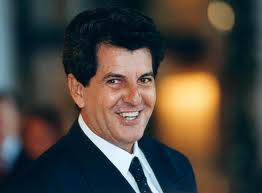
The Effect on My Life of the Death of Oswaldo Paya / Mario Lleonart

opindexThe sacrifice of the precious life of Oswaldo Jose Paya Sardinas and of so many other martyrs that have preceded him in this type of targeted assassination, far from terrorizing me, stimulates me to continue forward in my ministry which cannot exclude the condemnation of this despotic regime.

When I said goodbye to my friend Juan Wilfredo Soto Garcia, beaten to death in May 2011, I was already asking who would be the next victim in one of the posts that I then wrote, and we have buried after him Laura Pollan (October 2011), Wilman Villar Mendoza (January 2012) and now Paya (July 2012).

I am heir to an uncountable multitude of martyrs who preferred dying over refusing to preach or live the liberating faith of Jesus Christ, the same faith that motivated the life and work of the irreplaceable author of Project Varela.  In this sense, as a follower of a Jesus who gave me an example by not shunning the cross, and who asks us to follow him also carrying ours, I do mine, as also Paya did his, his own responding words before the death threats sent by Herod:

And he said unto them, Go ye, and tell that fox, Behold, I cast out devils, and I do cures to day and to morrow, and the third day I shall be perfected. Nevertheless I must walk to day, and to morrow, and the day following: for it cannot be that a prophet perish out of Jerusalem. O Jerusalem, Jerusalem, which killest the prophets. (Luke 13.32-34, KJV)

But throughout history what tyrannies never seem to learn is what Paya himself had already noticed about tyrants:  Be careful with those you kill, they might spur the people’s yearning for liberty.

Translated by mlk

November 21 2012

Primary School in Cuba: Crisis or Regression in Quality? / Ivan Garcia #Cuba

I have a nine-year old daughter, and due to the laxity in primary education, her mother and I have seen ourselves obliged to invest more time and money than we would like in order tostrengthen her knowledge.

When she was in first grade, her teacher, 18-years-old with poor teacher training, used corporal punishment against the students every time she lost her patience. The mistreatment happened often. The girl was vulgar and angry. Besides, she scarcely had any culture and little or no teaching vocation.

Repeated complaints to the director of the school and letters sent to theMinister of Education by some parents provoked a transfer of the teacher to another school. The logical thing would have been to expel her from teaching. But the lack of primary teachers in Cuba caused the educational authorities not to take drastic measures.

My daughter came home fearful because of the screams, blows and insults of her teacher. She began to reject school. She barely progressed in reading and math. After her school day, her mother and I reviewed with her for two hours daily.

For 10 convertible pesos, half the salary of a professional in Cuba, we hired an experienced, retiredprimary school teacher for the purpose of elevating the quality of her instruction. Also, we paid 3 convertible pesosmonthly to an English teacher.

My daughter’s situation is not an exception in Cuba today. I would say it is the norm. Many families surely have a history of complaints to tell about faculty mismanagement.

According to the official press, there is a deficit of 14 thousand teachers in primary and secondary teaching. Fernando Ravsberg, reporter for BBC on the island, says on his blog that it takes great abilityto write an article of 1,400 words about the scarcity of teachers and not oncementionthe low salaries that they earn.

The regression in the quality of education is intimately tied to the ridiculous salaries. A teacher does not earn more than 500 pesos. He receives no extra money in currency. And his social recognition has fallen precipitously. When a young person chooses the teaching career, it is almost always because he has failed in his effort to pass entrance exams in other degrees considered more “prestigious.”

To be a teacher is the last card from the deck. Many men opt to study in lightening teaching courses as a way of escaping military service. It is not rare to see a former primary school teacher washing dishes in a luxury hotel or preparing homemade pizzas in a private business.

A good teacher is one of the most valuable contributions to the country that the GDP does not usually pick up. Who does not remember superb classes in history or literature by a virtuoso teacher? The good teachers are never forgotten and they are not only thanked for what welearned, but also for the way in which they taught us. Behind great professional and honest men, there is always the hand of a great teacher.

At this point we are going backwards. Right now, in the homeland of Felix Varela, Jose de la Luz y Caballero and Maria Luisa Dolz, among other outstanding educators, being a teacher is somewhat trivial. An office of last resort to notswell the unemployment statistics.

If in Finland, a European nation in the vanguard of education in the world, they assign the highest level teachers to primary teaching, in Cuba the opposite happens. The statistics reflect that on the island there are more than a million university graduates. Thousands of technicians. Zero illiterates.

It is laudable. An achievement of Fidel Castro. With his stains: teaching is highly ideological. And on the higher level, if you openly demonstrate your political discrepancies, they might throw you into the street.

In his timid and incomplete economic reforms, Raul Castro must have contemplated an important improvement in the salaries of primary and secondary teachers. An official from the Ministry of the Interior or the Revolutionary Armed Forcesearns a thousand pesos a month. They have a mobile telephone paid by the state.

They can get goods at cost in exclusive stores for officials. And every year they go on vacation at military villas where they pay for their services with very little money. The generals’ club enjoys greater prerogatives. On the other hand, Cuban teachers earn miserable salaries, and their work is not recognized by the government.

Low quality education is now reaping its fruits. Mediocre professionals, with spelling mistakes and incorrect use of language. Youngsters without morals or civics whom school does not motivate. The refrain, you can never know too much, fell into disuse.

The qualitative regression could be stopped if the State dignifies the teaching profession and its role in society. To the contrary, the educational crisis will continue to become more acute. We are going down that path.

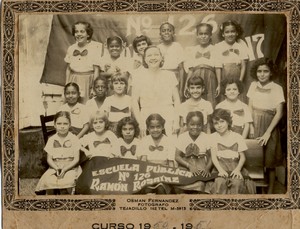
Photo:Year 1950-51. Third grade students in Public School No. 126 Ramon Rosainz, located at Monte and Pila, Havana. They appear with their teacher, Miss Ines. At that time, teachers were very valued and respected by society. Before 1959, in public and private schoolsin Cuba, individual photographersmade portraits similar to this one, which were sold to parents for 50 cents or a peso. The first on foot on the second row, to the left, is Tania Quintero, my mother, then 8 years of age.

Translated by mlk

December 12 2012

Strange Christmases / Rebeca Monzo #Cuba

Workshop of Rebeca

From girlhood, the happiest time of year for me was Christmas. Maybe because the general atmosphere that surrounded that date was happiness and relaxation. All the adults became friendlier, maybe because they received their “bonuses,” which generally equaled another month’s salary,making them more tolerant of the smallest and youngest of the family and of the neighborhood, who back then were like an extension of this.

I always observed with curiosity, but also with the naiveté of a girl, that my aunts and my mother, days before the key dates — Christmas and the day of the Three Kings — would restore old toys and dolls, cleaning them and making them new clothes, so that everything was shiny. I remember that one of my aunts made tin soldiers, which my grandfather later took charge of painting suitably. All this process of pouring the melted tin in the molds fascinated me, and I watched with delight. I never associated this busy workshop with anything but another chore, in a home where everyone was very hard-working. It was not until my cousin Ignacito, the most mischievous of us, approached me in secret and told me: “Cousin, the parents are the Kings. If you want to prove it, the night before stay awake like me to see my father dressed as a King, placing the toys around the Christmas tree.”

After he made this confession to me, I realized that these restored dolls and toys had become the property of other children in the neighborhood from families with fewer resources than ours.

I adored my cousin, he was my hero, and tried to follow him in all his antics. I joined him the night before the anticipated day. Trying to fight sleep, finally Morpheus overcame me before I could see my fantasy shattered. But now things would not bethe same, and in later years, I did not feel like leaving water and straw for the camels. Nevertheless, I do not know for what hidden reason, I continued believing and feeding that illusion for several more years.

I grew, and with my adolescence came the year fifty-nine. The first thing that I saw vanish was that pretty family that I had always so much enjoyed: my aunts and uncles and with them my cousins. That was a strange pain that I had never before felt, as if something was broken inside of me. Later my friends left. No more walks to window shop, no more scent of fresh pine in the doorways of the stores, no more garlands or toys. All that disappeared. I never again heard those Christmas carols and songs, not in the streets or on the radio, much less on television: they were replaced by marches or anthems.

For more than fifty years I longed to again hear a Christmas carol or song. This never happened. Nevertheless, this year, with the new boom in the small businesses and the ingenuity of the self-employed, we have spent the whole summer, until today, listening to the improvised ice cream carts, announcing themselves with music of carols, which evidently (because everyone has the same) have been incorporated, possibly with the music that comes with the garlands, which are sold at the currency raising shops — as we call the hard currency stores.

This has become something like that “you did not want soup, but you drink three bowls.” Nothing, that for more than half a century was a shortage, now has become an overdose. The only signs that it’s Christmas are those little carts and the paladares, the private restaurants.

Translated by mlk

December 8 2012

Eagles Don’t Eat Bird Seed / Rosa Maria Rodriguez Torrado #Cuba

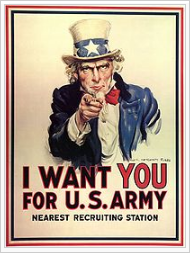
Tío Sam
Taken from “Wikipedia Kiwix”

It is a secret to no one that the Cuban government has fixed its attention on the possibility of negotiations with the United States that could be advantageous to them.  To divide a part of that society and its US investors who want to trade with Cuba seems to be the strategy designed to keep them entrenched at the head of the Antillean country without the threat of politically binding commitments.

They have outlined a plan of selective commercial bites that permit them to have lucrative benefits with capitalist associates, who worry about the enlargement of their bank accounts and are not interested in other matters that could affect their ties with Cuba. That is why they silence we Cuban dissidents who are committed to a process of normalization of relations with the giant from the north.

It is like the irony of asking the United States to lift the embargo, but only that part that impedes their obtaining earnings, not in a complete way. Sometimes it even seems to me that they are thinking of doing the same thing with respect to the Common Position of the European Union, where they prefer to take care with its dividends so that “they do not risk their businesses with inappropriate petitions for rights and freedoms for Cubans.”

It is possible that the planned and “shiny” package, also includes the intention of creating controversy and debate within the US and European societies, in which it is an advantage to them to be treated as an underdeveloped, small, blockaded country, that “fights strenuously to move forward.”

That seems to be the motto they have been repeating for years to the rest of the world, including fundamentally to Washington and Brussels. No one mentions the dictatorship or the embargo on civil and political rights and liberties that the government imposes on its people: whatever does not suit them does not exist. They are victims before the foreigners, victimizers with their fellow citizens; they are humanitarians with others, but with us they have been a barbed whip in almost all aspects of society.

In the almost 54 years of this model, we have learned that they are only effective at militarization, political discourse — not always well founded — strategies for permanent command and control. The militarism established in the early years made it possible for them to be rapacious with their compatriots in the exercise of power and facilitated their systematic violation of the fundamental rights of Cubans.

In the present, they are taking steps in issuing, revising and repealing some laws, and although they are not making all the progress that we need, at least it means a small advance in dismantling old structures and procedures that anchored and formed mentalities with which they cannot advance towards a model a little more human, which seems to be the objective of the leadership of Raul Castro.

They want to reestablish relations with the United States — clearly with conditions — and they were working to pierce the nest that they publicly despised and verbally attacked so many times — and still do — by which they trampled their rights — as well as with those of many Cubans — by confiscating their property without compensation.

It seems that so many years in power have deluded them so much that they believe they can fool their opponents with some few moves on the bilateral political chess board, like easily defeating an opponent with a bishop check. Today they present themselves to US society as innocents and tempting prey, but they only offer bird seed to the rich descendants of the bald eagle, which as everyone knows, are also carnivores.

Translated by mlk

December 6 2012

Cuba: An Economy Does Not Rise Selling Croquettes / Ivan Garcia #Cuba

Some years ago, when the Politburo headed by General Raul Castro was studying alternative ways to apply reforms capable of reactivating the moribund island economy, Marino Murillo, fattened ex-colonel converted to the “czar of transformations” said that Cuba was gambling by using unproven methods in its transformations. It is not bad to think for yourself.

The only thing that the proposal from the same group pompously in power for five decades has demonstrated is the failure of its management. I do not call into question the capability of Cuban economists and technocrats. Although their pioneering theories have never resulted or drawn attention in western academies or on a jury for the Nobel Prize, audacity and experimentation are preferable to the habitual inertia in closed and totalitarian systems.

Something had to be done. The economy had fallen by some35% of GDP, if we compare it with 1989. After crossing a desert, where the mission was to survive, with thousands of people desiring to emigrate, sparse and very bad food, 12-hour power outages and factories turned into museums of idle machinery, Fidel Castro applied some of the advice that Carlos Solchaga — sent urgently by the Spanish president Felipe Gonzalez in order to advise tepid reforms on the island — whispered in his ear.

The patches permitted opening some individual work initiatives and pockets of mixed economy. It was a stream of oxygen. Always with a lone scowling commander watching the car’s advance. When in Caracas there appeared a loquacious anti-Yankee skydiver, declaimer of poems and singer of Venezuelan dance tunes, Fidel Castro understood that the era of facing those insolent gringos was back.

With high taxes, he locked and blocked the work on his own account. He no longer needed that legion of “hucksters.” People who demonstrated that they could live better without the shelter of the State. While the licenses of the self-employed expired, Castro I resumed the discourse of Father State, he unsheathed the saber and anti-imperialist oratory. Thanks to the Venezuelan Santa Claus there was light.

The bearded one was thinking big. Economic alliances with Latin American insurgents that only worked in theory, energetic plans for revolution and discussions about the properties of chocolate bars and baby cereal. Suddenly he got sick. Cuba is like a family farm: after me, my brother. Decided beforehand, it fell to Raul Castro to administer. So it was.

Castro II has his rules. He knows that in order to govern a long time or to cede the dynasty to a son, relative or other trusted person, he needed to ignite the economic plan. He had to make changes.

When one decides to make economic reforms, one must make them. For one overwhelming reason: if the parallel utopia keeps living on news loaded with optimism, inflated macro-economic figures and cheap nationalism, the citizenry might lose fear and furiously explode on the streets.

The General’s theory resumes the popular refrain of “full belly, content heart.” For the official technocrats, the Cuban is happy with rum, women, reggaeton and hot food in the pot, as if we were modern slaves.

With enough food and options for making money, the crowd would ignore that “foolishness about human rights” and not demand democracy or a multi-party system. That is why the sacred premise of Raul Castro is “beans are more important than cannons.”

The native reforms suffer from authentic reformers. It’s the same breed. Another weak point is the incompleteness of those reforms. Except for the authorization to buy or sell a home, where an owner has the right to do what he wants with his property, the other hyped liberalizations have flaws. It is like a house over a swamp.

When Castro II gave the green light for Cubans to have mobile telephones, he wanted to demonstrate that the regime was “democratic.” And he did away with “tourism apartheid” when he permitted citizens to lodge in hotels. On eliminating the two prohibitions, it was discovered that under the command of Fidel Castro we had been third class citizens.

The Lease Law of the land has suffered several amendments in four years. At the beginning land was rented for only ten years and the peasant had no right to construct his home on the parcel. Later it was corrected. I ask myself if it would not have been more viable to start from the beginning with the option of renting the land for 99 years and license to raise a house.

So it happens with the sale of cars. One can buy an old American car 40 or 50 years of age or a ramshackle car from the Soviet era. Now in order to get oneat an agency requires permission from the State. It would be simpler if anyone, money in hand, could buy a new car. It would end price speculation and the framework of corruption that has been created around the sale of cars.

Immigration reform also has deficiencies. To have to pay for a passport in foreign currency is an anomaly. And an absurd law that the regime grants itself, by maintaining a blacklist of professionals, athletes and dissidents.

Another big problem, not approached by the General’s reforms, is the double currency. It has been talked about and debated, but the first thing that should have been done is to implement a single currency. Cuban workers pay the equivalent of 52 pesos for a liter of oil, 235 pesos for a kilo of Gouda cheese and from 360 to 1,200 pesos for a pair of jeans. And they may only earn an average salary of 450 pesos. The honorable worker, who does not steal on the job, lives the worst.

The government says that in order to raise salaries productivity must increase. But the workers think that for so little money, it is not worth the effort to labor with quality and efficacy. A vicious cycle that the regime has not learned or wanted to cut. In four years of reforms and six of Raul Castro’s government, ostensible improvements in the country are unseen. Cafes and trinkets have increased. More than 380 thousand people work on their own account and do not depend on the State to raise their quality of life. That is something good.

But an integrated economy is not built selling bread and cakes. In great measure, the government is to blame for the high prices of many products,by not creating a wholesale market intended for private work and maintaining quotas of 80% of agricultural production that a farmer must sell at laughable prices to the State.

In 2006, when Castro II was designated President, a pizza cost 7 pesos, now the cheapest costs 12. A haircut was worth 10 pesos, now it is worth 20. The list is long. In this rainy fall of 2012, the price of each article and service is higher. Salaries have stayed the same for six years.

There is a crunch in the pockets. The segment of the population that receives hard currency can keep paying for food and products of a certain quality. But their money continues to lose value. 100 dollars in 2004 are worth 60 currently. Due to the 13% state tax on the dollar and the rising prices, currency in the hands of those who receive remittances has devalued.

Nor do people have much confidence in the reform managers. They are the same ones who in one way or another brought the country to the edge of the precipice. Cuba needs reforms. Serious, urgent and profound reforms. According to Mart Laar, who was prime minister of Estonia and was at the head of structural reforms in the ’90’s, the simpler the reforms, the more successful they will be. Laar points out that in politics there is only one sure thing: sooner or later you will be out of power. If fear of reforming deeply is too great, you will leave sooner. And most importantly, you will be out without have done anything.

These are not hollow words. Estonia is one of the nations that took a giant leap, from a communist economy adrift to a functional national project. Another case is Taiwan, where their own citizens initiated changes knowing that they would lose power. Now they have returned it to the government with a fresh start.

It is good think for yourself. But also you should learn from those nations that have triumphed in their reform processes. It is worth it to take account of experience. And logic.

Translated by mlk

December 1 2012

End of the Year and Beginning of Problems / Rosa Maria Rodriguez Torrado #Cuba

Manos esposadas
Image downloaded from: “w-75.com”

In the area where I live we have a shopping center called Monaco that in my childhood was an important and pretty place. Even today, in spite of its ugliness and general neglect, it has a certain importance because multiple private merchants that sell even coffins gather there, and all around are establishments like the theater, ice cream shop, a semblance of an amusement park, pizzeria, farmer’s market, bank, bakery, store and several state kiosks that make it a frequented area in this part of Vibora.

In the dollarized store of that complex,where my husband and I sometimes buy groceries and other basic necessities, they stole the mobile phone of the jam seller barely a week ago. The man, between indignant and surprised, did not explain how they had gotten it from under the counter where he is accustomed to putting it, far, as he believed, from the view and reach of the shoppers. “It’s that the end of the year is approaching and things are tight,” he commented.

This December 1, in the same business they surprised a woman categorized as “good looking,” who on exiting they discovered was stealing two packages of chicken and two tubes of hash. That tropical Aladdin with agile hands and bad fortune, spent, possibly, the worst time of her life, because the store workers called the police. My husband and Ileft without knowing how that ended, but we think they exaggerated in soliciting the presence of the policemen,as everyone imagines how much the people who work in those centers lift daily, like almost all of Cuban society,which is compelled to be on the edge of the law in order to survive.

The last month of the year began and, like every December, thefts are increasing in the capital. There are those who offend because they have chosen that parasitic occupation for obtaining easy money and objects at everyone else’s expense, but there are those who do it because they are tempted by opportunity, generalized poverty, low salaries and the hard currency products displayed like insults in the windows. Also because they are hungry or simply because they want to draw the look of satisfaction that a good lunch brings to the faces of their children or maybe they long to have something to put on the family table on the so-symbolic dates of Christmas and New Year’s. Many of us may celebrate the birth of Jesus or the advent of a new year with some spaghetti or simple bread with ingenuity, but within our families we pray together to strengthen ourselves in faith and honor, which must be two of the fundamental petitions that we believers raise with our pleas on those dates.

Translated by mlk

December 4 2012

Cuba: The Time to Fill the Jails Came Again / Ivan Garcia #Cuba

Trying to analyze the strategy of the Castro brothers is an exercise in pure abstraction. Their way of moving tokens on the political board tends to go against logic. The incarceration of 75 dissidents ordered by Fidel Castro in the spring of 2003 was a miscalculation.Foreign pressure led General Raul Castro to correct the error.

In February 2010, the death of peaceful opponent Orlando Zapata Tamayo after a prolonged hunger strike was the trigger for the government to initiate tripartite negotiations with the national church and the Spanish Foreign Minister Miguel Angel Moratinos.

Committed to tepid economic reforms, the Castro II regime needed international recognition and to attract foreign investment. The liberation and subsequent exile of almost a hundred political prisoners permitted the olive green autocracy to ease pressure, buying time and a little political oxygen.

Not much. Enough to tiptoe across the world stage and mitigate the criticism by western governments for the repeated violations of human and political rights.

Political prisoners constitute a formidable weapon in the Castro regime. They are exchange currency. A valuable piece in any negotiation. It has always been so. After the Bay of Pigs victory in April 1961, Fidel Castro swapped enemy soldiers for stewed fruits and powdered mashed potatoes.

It was common, passing through the Palace of the Revolution, that foreign dignitaries would bring in their pockets lists of prisoners to free in exchange for credit, economic help or support for the regime. A frowning comandante denied or authorized the liberation of an opponent. Not everyone has the same value for local leaders: it depends on the media interest that they have outside of the island.

They are like hunting targets. Armando Valladares, Huber Matos, Eloy Gutierrez Menoyo or the poet Raul Rivero were valued prisoners. Their liberty was measured in greater concessions by European governments and favorable votes in international tribunes. Facts and figures are not known about the quantity of money or long term loans that the release of a dissident has meant in these 54 years.

With a view to negotiate with a favorable wind, the Cuban jails have always been full of dissidents. In the ’70’s there were thousands. Hundreds in the 21st century. These days there is a problem. The jails are empty. Harassment, repression, arbitrary detention of peaceful democrats by special services continue. But behind bars there are no heavyweight dissidents that serve to establish an advantageous deal.

The old and sick gringo Alan Gross is thought to be the one they can get the most for. Obama and Hillary Clinton demand his freedom without conceding anything in exchange. Then they decided to incarcerate an “A-list” dissident. There had to be others on the waiting list from whom the regime thinks it could get better yields. It is here that Antonio Rodiles comes into play.

Miriam Celaya, journalist and alternative blogger, considers that the probable prosecution of Rodiles as a resistance figure encompasses several possible readings. And it could be a trial balloon to measure the international brouhaha.

Also, Celaya thinks, after the presidential election victories by Hugo Chavez and Barack Obama, guaranteed petroleum for six years and the remittance greenbacks from the United States thanks to the measures towards family reunification approved by President Obama, the military mandarins feel strong.

The reporter also analyzes the trajectory reached by Rodiles in his free debates about national issues or his Demand for another Cuba that has put the Havana government on the defensive.

Antonio Rodiles is a liberal dissident, open and modern. Nephew of General Samuel Rodiles Plana, at the front of a legion of combat veterans usually convened to verbally lynch and hand out blows to the Ladies in White and peaceful opponents.

The legal charge brought against Rodiles is a mockery of human intelligence. In what way can a man resist a violent detention surrounded by dozens of guys trained in personal defense techniques? The only manner of resistance that the Cuban opposition has is to scream quite loudly its disagreements and to condemn the abuses. The ration of beatings always comes from the opposite sidewalk.

The presumed conviction of Antonio Rodiles creates a new and bad precedent on the national map. It is a message of coming and going by opponents, independent journalists and bloggers. No one is safe. The regime offers two exits: you either shut up or you buy a one-way airline ticket. Whoever does not accept the rules of the game can go behind bars for some years.

The era of fear returns. The screech of cars with tinted windows outside of the house. The loud knock on the door. The uncertainty of your personal and family life. It is the nature of the regime. Crushing and censuring you with the use of force. The essence of the doctrine based on prison for those who think differently. It was always so.

The time to fill the jails has arrived. Bad times have returned.

Photo: EFE, taken by the Bolivian daily, El Dia. According to information published in the newspaper Granma May 22, 2012, the penal population of Cuba exceeds 57,337 prisoners, of which 31,494 are under closed detention and 25,843 in open installations. From December 2011 to May 2012, through different benefits, some 10,129 inmates have left jail, among them 2,900 pardoned.

Translator’s note: Antonio Rodiles has now been released with a small fine and the charge of resisting arrest dropped.

Translated by mlk

December 1 2012

Members of the internal Cuban Resistance reaffirm their pledge to keep up the fight for democratic change in the streets of Cuba / Jorge Luis García Pérez Antunez

Today is the 27th of November 2012 and after having sung the notes of the National Hymn a group of Cuban resistance members, militants from different organizations of the peaceful opposition, are here in the city of Placetas on the roof top of the home headquarters and we are and are going to give a reading in the voice of Sara Marta Fonseca Quevedo of a joint statement of various organizations about themes of the Cuban resistance.

Statement:

Many opposition organizations gathered in the city of Placetas this November 27, 2012, in order to draft and make known this joint statement in which they express their commitment and collaboration, as well as their reciprocal loyalty in moments in which the regime through its political police becomes embroiled in a dirty and pre-meditated campaign to bleed the vital forces of the Cuban resistance, specifically those who have contributed most to that important breach and earnedareas of freedom.

The Cuban Party for Human Rights affiliated with the Andrei Sakharov Foundation, the Rosa Parks Women’s Movement for Civil Rights, the House of the Prisoner Ernesto Diaz Madruga, the Mario Manuel de la Pena Movement for Human Rights, the Cuban Association of Free Yorubas, the Pedro Luis Boitel National Civil Resistance Movement, want to let emerge in an open and responsible way our resolute decision to respond with unity, commitment and activism to the despicable effort to remove the internal resistance from the streets and public spaces in order to return them to their homes and enclosed places.

Those present here, all promoters of civil disobedience as a fighting strategy, want to make quite clear our unconditional support for any civilian project that may be put into practice, emphasizing our priorityof those initiatives thatfurther international repercussion and other media impacts that may promote change, from the citizen, from the actual phases and taking into account the potential factors for democratic change.

Signed:

Damaris Moya Portieles, Central Opposition Coalition

Yaite Dianeyes Cruz Sosa, Rosa Parks Movement for Civil Rights and Central Opposition Coalition

Orestes Eusebio Hernandez Guevara, Cuban Free Yorubas Association and Central Opposition Coalition

Blas Augusto Fortin Martinez, Mario Manuel de la Pena Movement and Central Opposition Coalition

Yris Tamara Perez Aguilera, Rosa Parks Women’s Movement for Civil Rights and Central Opposition Coalition

Arturo Conde Zamora, Pedro Luis Boitel Civil National Resistance Movement and Central Opposition Coalition

Jorge Luis Garcia Perez Antunez, Orlando Zapata Civil Resistance and Disobedience Front

Also added to this statement:

Jorge Vazquez Chaviano, Cuban Party for Human Rights affiliated with the Andrei Sajarov Foundation and the Central Opposition Coalition

Segundo Rey Cabrera Gonzalez, Cuban Committee for Human Rights and the Central Opposition Coalition

From the Youth Movement for Democracy and the Juan Pablo II Movement for Human Rights:

Roberto Gonzalez Pelegrin

Rodai Matos Matos

Yunier Jimemez de la Cruz

Francisco Luis Manzanet Ortiz

Jorge Leiva Serrat

Jesus Pena Ramirez

Luis Noa Silva

Emilio Almaguer de la Cruz

Reinier Reina Salas

Randy Caballero Suarez

Rolando Rodriguez Lobaina, National Coordinator for the Eastern Democratic Alliance

Donaida Perez Paseiro, Rosa Parks Women’s Movement for Civl Rights and the Central Opposition Coalition

Loreto Hernandez Garcia, Cuban Free Yorubas Association and the Central Opposition Coalition

Luis Enrique Santos Caballero, Central Opposition Coalition

Jose Lino Ascencio Lopez Central Opposition Coalition

Barbara Moya Portieles Central Opposition Coalition

Juana Contreras Aguilar Central Opposition Coalition

Yanoisis Contreras Aguilar Central Opposition Coalition

Xiomara Martinez Jimenez, Rosa Parks Women’s Movement for Civil Rights and the Central Opposition Coalition

Sara Marta Fonseca Quevedo, Cuban Party for Human Rights affiliated with the Andrei Sakharov Foundation

Long live the internal resistance! Viva!

Long live the Cuban Party for Human Rights affiliated with the Andrei Sakharov Foundation! Viva!

Long live the Pedro Luis Boite National Civil Resistance Movement! Viva!

Long live the Rosa ParksWomen’s Movement for Civil Rights! Viva!

Long live the Front! Viva!

Long live free Cuba! Viva!

The streets are of the people!

We are all Resistance!

Attention, attention, we are informing you that before undertaking this activity military troops armed with bladed weapons have just entered thechildren’s circlelocated next to my home, the Golden Age, there is stupor, there is fear, there are several relatives that have approached this circle to take their children and we are blaming the communist Castro tyranny in the person of Raul Jazares, chief of the political police for the psychological damage that the sight of those firearms may cause to those little children.

Jorge Luis Garcia Perez Antunez, Orlando Zapata Civil Resistance and Disobedience Front

We want to highlight that we dedicatedtoday’s celebration to the honor of the eight medical students who one day like today werekilled by the cowardly bullets of the Spanish colonialists.

Jorge Luis Garcia Perez Antunez, Orlando Zapate Civil Resistance and Disobedience Front

Translated by mlk

November 27 2012