We’re at the Summit! / Eliecer Avila

Outside the government press, how Cubans experience the CELAC Summit.

As often happens with more or less important events that take place in Cuba, all of the radio, TV and written press is focused for days on the preparations undertaken to guarantee the success of the 2nd CELAC Summit.

According to the images shown, it’s clear that there have been important investments in preparing locations, the purchase of equipment and all the paraphernalia demanded by the protocols for the occasion.

Meanwhile, on the streets, the corners of the neighborhoods, and inside their homes, just about every Cuban speaks of nothing but CELAC. Which is logical. No one sees in this merely political instrument any kind of practical benefit for daily life.

Similar news coverage filled the screens and the presses didn’t do much to convey to us the daily sessions of the of the World Festival of Youth and Students in Quito-2013. The event left the country with tens of thousands of dollars spent and zero real gain in any area of daily interest.

Now, the press, or the government, announces with special emphasis another meeting where integrationist and anti-imperialist — or more to the point, anti-American — speeches will be delivered, leaving another million dollar bill for Cuba and nothing concrete for Cubans.

If we calculate how many kilometers of highway could be built, or how many buildings could be repaired, or how many buses could be bought with what is spent on the interminable list of international events that the government sponsors every year, and we can imagine how much we might advance of the State’s priority wasn’t, exclusively, politics.

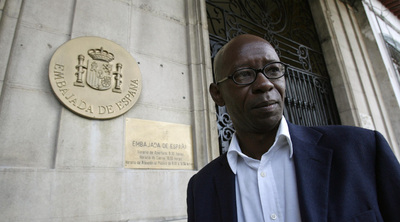
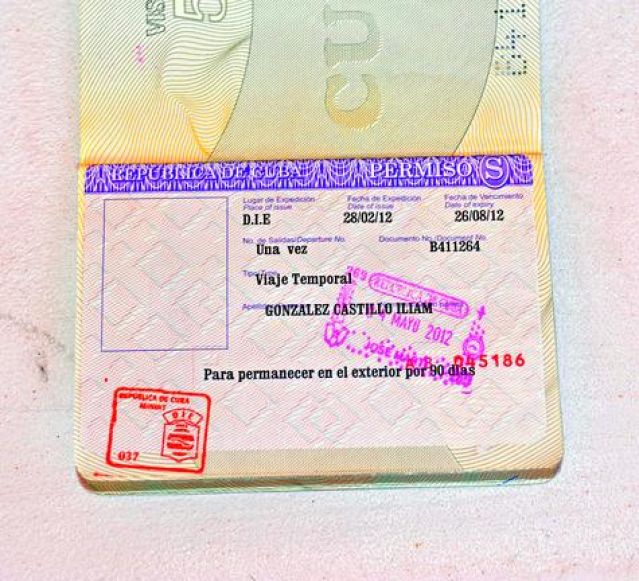
However, interventions, at least rhetorically, have their attractions. They will speak of “brother countries and peoples,” but in practice none of our “brothers” will stop asking us for visas, letters of invitation and exceptional guarantees that make it ever more difficult to complete the paperwork to be able to visit them.

We are very special brothers, however, Venezuelans and Cubans. The rulers just say we share 99% of our genetics, but at the level of the people — with the exception of those who join official missions and travel to the country for this work — we carry ourselves like the most distant strangers. Anyone would think that a decade earlier with the fervor around bilateral relations, today we would have something that seems like a treaty of free movement of citizens, by which a Cuban family could decide to spend a week traveling in any Venezuelan state or vice versa.

This could be extended to Bolivia, Ecuador, Argentina or Brazil. In fact, among the South American countries there are mechanisms that favor mobility, employment, trade, regional tourism, communications, etc… But Cuba, or rather the people of Cuba, continue to be isolated and absent in these concrete and palpable realities; although from within our oyster, we are surrounded by a sea of “defensive” barriers, and we continue to pretend to be the most normal country in the world.

Outside of summits and rare brotherhoods, the issues that in reality concern us beat more strongly than ever; issues that the national press, concerned about official communications, not speaking or doing it in an imperceptible way: the grotesque mockery represented by the issue of car sales, the state crusade against the sel-employed, the ever more

The list is long, but the patience of a people who accept a government with a political agenda totally divorced from the their most pressing needs and aspirations seems even longer.

Diario de Cuba, 27 January 2014, Eliécer Ávila

Queen-Brand Pots, Chinese Refrigerators and the Little Gas Cylinder / Gladys Linares

Hornilla-casera-de-carbón_foto-cortesía-de-la-autora-300x200HAVANA, Cuba, January, www.cubanet.org — With the change of domestic appliances in the so-called energy revolution devised by Fidel Castro, there began for us a series of problems that each day gets worse.

We were warned to exchange old Russian refrigerators and air conditioners, or American ones from the pre-“revolutionary” era, for Chinese equipment supposedly of lower energy consumption, payable through a bank credit that people are paying off still today.

During that period they also sold, in certain locations, fans, water heaters, electric stoves, rice and multipurpose cookers (the so-called Queen brand pots), at the same time that electric rates were increased.  The gas sale cycle for these families was extended to six months for each 20 pound drum (the so-called “little balls”) “just in case some day the electricity flow is interrupted,” which happens quite frequently.

Due to their poor quality, these pieces of equipment quickly broke, and the shortage of replacement parts has obliged Cuban families to adopt different alternatives in order to be able to cook.  Some do it with charcoal; others buy a gas cylinder on the black market. continue reading

Such is the case of Erlinda, who has prepared a little charcoal stove although she complains that sometimes it is difficult to get one; with much difficulty it can be bought on the black market.  She says that now she knows the cause of its scarcity: according to what she read in the Granma newspaper of January 14, charcoal is an export item.

Refill hose for cylinders  -- photo courtesy of the author
Refill hose for cylinders — photo courtesy of the author

For some, the quota of gas is not sufficient, but they don’t have the money to buy a cylinder on the black market, so they try to get a “shot” (the residue) from a neighbor or friend, almost always emptying one drum to another with the appropriate hose, a dangerous operation that has caused more than one explosive accident costing lives and homes.

A while back, one afternoon, Raudel, a gas courier, tried to help a neighbor in this procedure, and although he did the maneuver in the doorway, someone who was passing at that moment lit a cigarette and everyone ended up in the burn room of the Calixto Garcia hospital.

When Raul Castro, in his speech on December 13, 2012, announced that he was increasing the production of petroleum and gas, a rumor began to circulate that its sale would be freed from the rationing system.  But what no one expected is that in order to consume gas by the pound he would have to enter into a contract with the State to rent, for 500 pesos, an empty cylinder, and only with this could he then get it filled for a price of 130 pesos.

During the eighth legislature of Parliament, the deputies Attention to Services Commission voiced the difficulties presented by the electric domestic appliances and recognized that more than 80% were in disuse.

Near Barrio Obrero, gas transport -- photo courtesy of the author
Near Barrio Obrero, gas transport — photo courtesy of the author

As a “solution” to this problem, the State widened access to the bank credits in CUC, applying the prevailing exchange rate (25 Cuban pesos for 1 Cuban Convertible Peso, or CUC) so that those affected might buy their appliances again and undertake more debt, although they also have the “option” of buying the unrationed gas through contract with the State.

On learning the news, a friend exclaimed:  “I don’t know why they are surprised, if this bloodsucking Government takes a step, or makes a change, or applies a measure, it’s only to suck our blood!”

Cubanet, January 29, 2014, Gladys Linares.

Translated by mlk.

Calle Obispo: Look But Don’t Touch / Jose Hugo Fernandez

Two old men play the guitar, and she passes the hat.

HAVANA, Cuba, January, www.cubanet.org — If the caviar leftists from abroad saw what their eyes can see in Cuba, and not only what they want to see, a walk through Old Havana would suffice for them to discover the impassable class wall that the regime has raised between them and our common people.  They do not even need to cover all the historic town.  It will be sufficient for them to walk two or three blocks along Obispo.

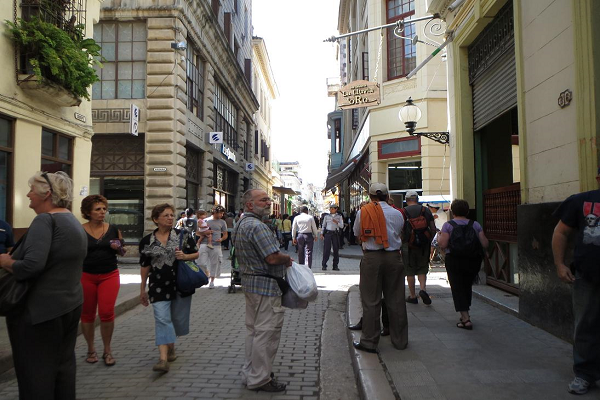
As well as the most prominent tourist corridor, this street is the most populous on the Island.  In no other place do foreign visitors and humble Cubans converge in such a large scale and physically close way.  It seems obvious that the regime, through its viceroyalty in Old Havana, is taking advantage of the history of Obispo as a very busy commercial artery, in order to use it as a propaganda showcase, set aside to disguise the shameful ghetto that common citizens suffer from their status as zoo animals who are barely observed at a distance by visitors.

But it happens that here too the habitual clumsiness of our bosses surfaces. Being the point of closest proximity between Habaneros and visitors, Obispo offers an unequaled occasion to test the abyss the separates them.

Along its twelve blocks, from the banks of the bay to Monserrate, besides being the Cuban street with the greatest number of police spies, it is a unique commercial boulevard. Nevertheless, almost all of its stores sell in foreign currencies. So that the role of the Habaneros is to serve as decorations, placing themselves picturesquely at the site, going to look or looking at those who look, but without being able to touch, because nothing is within reach of their pockets. Also, in some cases, they go with the hope of getting something from the tourists. continue reading

On Obispo there are 39 stores, but none sells in the national currency. There are a dozen restaurants, of which only one accepts the money that Habaneros are commonly paid on their jobs. There are dozens of bars, cafeterias, trinkets, kiosks, almost all dedicated to commerce in “hard currency.” There are barely any self-employed and some small state shops where one can buy (in Cuban pesos) light food of the worst quality.

Beggars and fighters for pesos

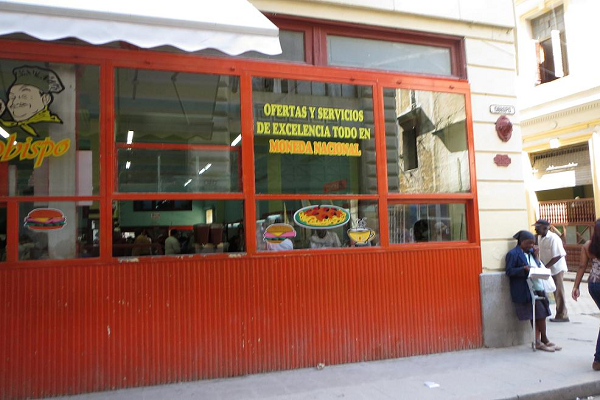
On the corner of Havana there is a type of market and dining room for poor people (the only one in Obispo), which is an authentic dump, dark, dirty, with an interior atmosphere of oppressive misery.  On its facade they have written a kind of ad that is a coarse joke, as much for its consumers as for the tourists:  “Bargains and services of excellence.  All in national currency.”

Only the beggars and fighters for pesos exceed the number of police and tourists on this historic street, which dates from the 16th century, the first in Havana to be paved and also the pioneer in street lighting.  In the current number 462, between Villegas and Aguacate, there lived the illustrious philosopher and priest Felix Varela, in a house where today a small library and a souvenir kiosk for tourists share space.  Also celebrities like Ernest Hemingway, who wrote part of his novel For Whom the Bell Tolls in the Ambos Mundos hotel (Obispo and Mercaderes), spent the night here.

The center of what was called “the little Habanero Wall Street,” Obispo conserves some of its former headquarters, like the current building of the Ministry of Finances and Prices, from 1907, considered the city’s first “skyscraper;” or that in which the first Spanish-American photographic studio was inaugurated (no. 257, between Cuban and Aguiar).  Other historic buildings of this street are currently museums:  the numismatic, the mural painting, natural sciences, the goldsmith, and even the museum of the CDR, which is all a monument to hate.

Especially popular since the 19th century for its commercial establishments, fashion houses, boutiques, confectioners, renowned pharmacies, restaurants, bars, hotels, cafes…  Obispo has not stopped being the place most frequented by Havana residents.  It’s just that today, by the work and grace of the viceroyalty of Old Havana, far from being what it was, it has become a street of infamy.

Photo journalism by Jose Hugo Fernandez


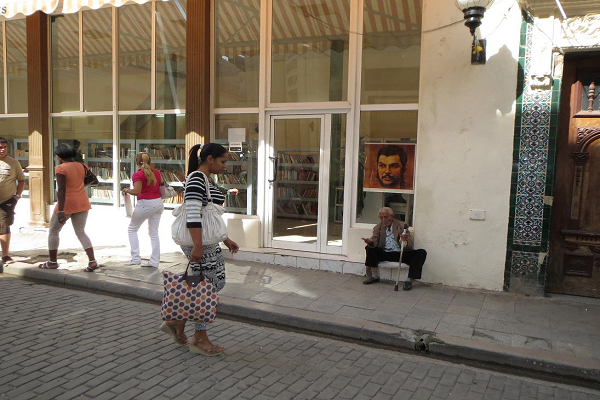
Yesterday perhaps he wanted to be like Che…

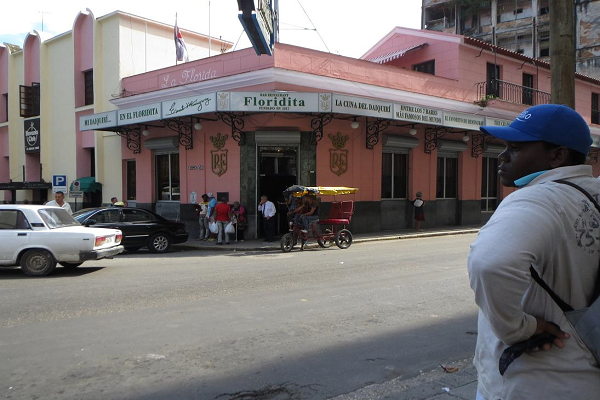
Cuna del Daiquirí, a la entrada de Obispo

Cradle of the Daiquiri, at the entrance of Obispo

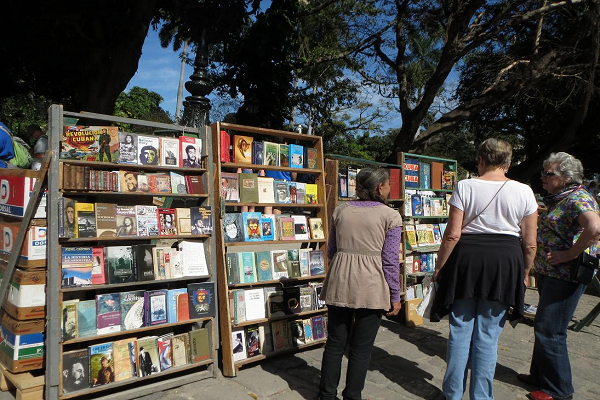
Muy politizada la venta de libros en la mayor librería a cielo abierto, Plaza de Armas, al final de la calle

Very politicized the sale of books in the biggest open air bookstore, Plaza de Armas, at the end of the street.

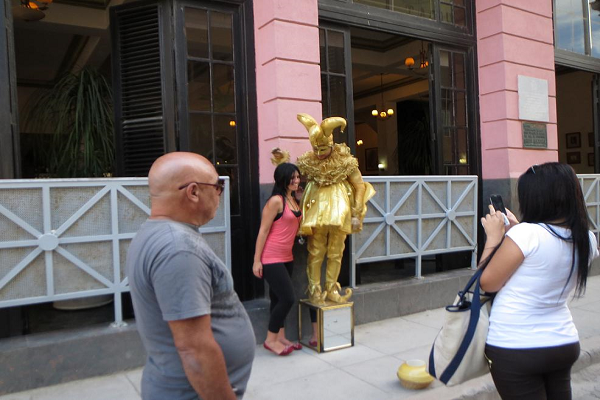
En Obispo también hay "estatuas humanas"

In Obispo also there are “human statues.”

La calle Obispo está llena de policías

Obispo Street is full of police.

Nunca llegó a rascar el cielo el primer rascacielos de Cuba

The first skyscraper of Cuba never got to scrape the sky.

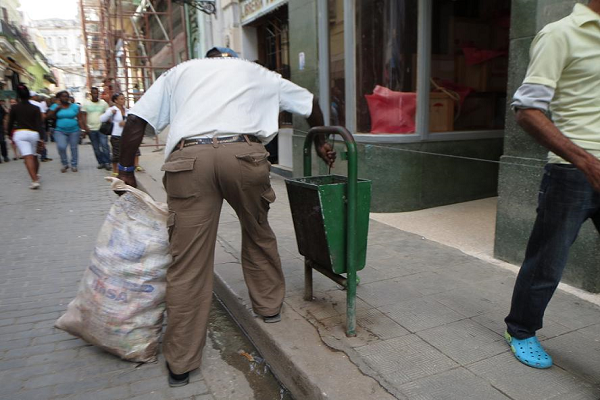
Recogedor de latas vacías

Empty can collector

Único mercado en Obispo para habaneros de a pie

The only shop in Obispo for common Habaneros.

January 24, 2014 / Jose Hugo Fernandez

Note:  The books of this author can be acquired at the following addresses:  http://www.amazon.com/-/e/B003DYC1R0 and www.plazacontemporaneos.com

Translated by mlk.

Detained Half an Hour on Marta Beatriz’s Stairway / Lilianne Ruiz

Community Communicators' Network on the ground floor of the building -- Courtesy of Marta Beatriz
Community Communicators’ Network on the ground floor of the building — Courtesy of Marta Beatriz

HAVANA, CUBA — This last Wednesday, I was walking quickly through Belascoain, disgusted by the odor of urine from the doorways. Every once in a while a peddler called his wares. On arriving at Zanja, crossing the street, the area was deserted. Three men in plainclothes blocked the door of building 409, where Marta Beatriz Roque Cabello lives.

I tried to ignore them and continued. The door was locked.

“Where are you going?”

“Who’s asking?”

The man, with an eastern accent, responded while putting in front of my eyes an identity card with initials in red: DSE.

“State Security Department, my dear,” he said with that lack of professionalism that one cannot imagine.

He did not clarify what it was all about. He again asked me the first question, and I told him that I was going to see Marta Beatriz Roque.

He took my identification and led me inside the building. He called one of his minions, a black man about two meters tall and more than 50 years of age, whom he called “brigade-ist.” And he told him, “Keep her here, she cannot go up to see Martha Beatriz.”

A thermos of coffee on one of the steps of the wide staircase betrayed the complicity of some neighbors with the political police.  Two uniformed policewomen appeared on the scene.  The “brigade-ist” charged one of them with watching me. continue reading

Escalera-de-Martha-Beatriz-Roque_dos-mujeres-policías_foto-tomada-de-internet-300x200I tried to find out what had happened to the boys of the Communicators Network, which was supposed to meet like every Wednesday in the home of Marta Beatriz, director of the group. The answer could be assumed, but getting a statement from the authorities is always the most difficult. I did not get one.

Beginning last November 19 there has been a police blockade around Roque Cabello and the group of community reporters who from their locations in 9 provinces report on events that affects the lives of common Cubans: collapses, evictions, disasters in medical care, and social security. All these testimonies absent from the massive official medial, monopolized by the State.

In all, the members of the Network come to 127. They have a common denominator: They are not afraid; at least this situation has not managed to paralyze them. They have managed to get people to tell their stories with their complete names and photographs! Sometimes even their personal address.

They have a bulletin entitled Hairnet which is published every fifteen days. Hairnet is printed and distributed clandestinely within Cuba.

Other digital sites like Cubanet, MartiNoticias, Diario de Cuba, Miscelaneas de Cuba and Primavera Digital publish their accounts. They have served other independent reporters by identifying items of interest.

Precisely, I had gone there in order to write about the boycott, the physical attacks, acts of repudiation, arbitrary detentions of them; perpetrated by the political policy with the collaboration of some neighbors of the building. The only thing that I could do was try to obtain more information.

I again asked the uniformed policewoman about the members of the Network.

“Are they detained?”

“I do not know. I cannot explain it to you.”

“Can I make a telephone call?”

“No.”

I asked her if she had no doubts that what she was doing was correct.

“You’re going to convince me that what Marta Beatriz is doing is fine?” she asked me.

It seemed to me that she doubted.

“What do you think that Marta Beatriz does?  It’s not going to be the bad thing they have told you,” I said at my own risk.

I got no answer. I went on to explain to her that citizen journalism is a right protected by the Universal Declaration of Human Rights, and that if she was not familiar with the document, I told her that in the civilized world anyone can express his opinions, even against official policy and not be bothered for it. Much less by the police, charged with protecting the tranquility and freedom of citizens.

She ordered me to shut up. A commotion ensued that made the second woman police officer come down the stairs. Until this moment, she had been on the landing obviously in order to impede Marta Beatriz from leaving her home.  The two policewomen and I were arguing with raised voices when we saw Marta Beatriz taking photos on the stair landing. One of the women ran after her, jumping the stairs.  She shrieked, “Stupid, get in the house and don’t even stick your head out!”

They opened the door each time some neighbor entered or left. The terrifying thing was seeing how the tenants greeted the police or simply moved along.

That made me think that, indeed, we would not have to wait to become a majority in order to obtain constitutional recognition.

Marta Beatriz Roque Cabello directs the Cuban Community Communicators Network.

After about 30 minutes, they took me to a patrol car. On arriving at the traffic light of Calzada del Cerro and Rancho Boyeros, they handed me my identity card and I understood that I could go home, when the same policewoman who argued with me said with gritted teeth:

“Freed today.”

On arriving home I called Marta Beatriz.  She told me that that day they had detained 16 people at the door of her home; 15 journalists plus a server.  But those were freed in places as distant as the “La Monumental” highway or the municipality of Caimito in the former Havana province (today Mayabeque).  They left me, I do not know why, at the corner of my house.

January 24, 2014 | 

Translated by mlk.

“Getting Drunk is the Only Way You Can Endure the Problems” / Jorge Olivera Castillo

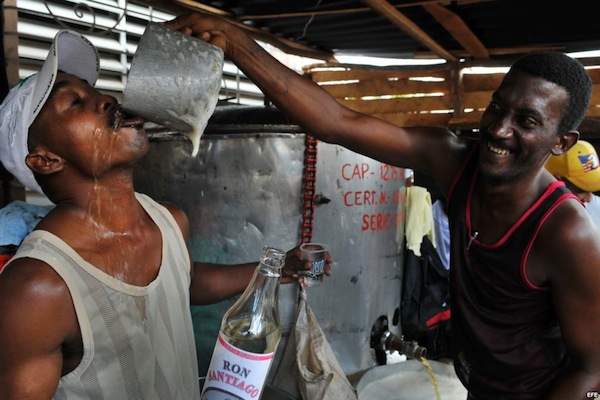
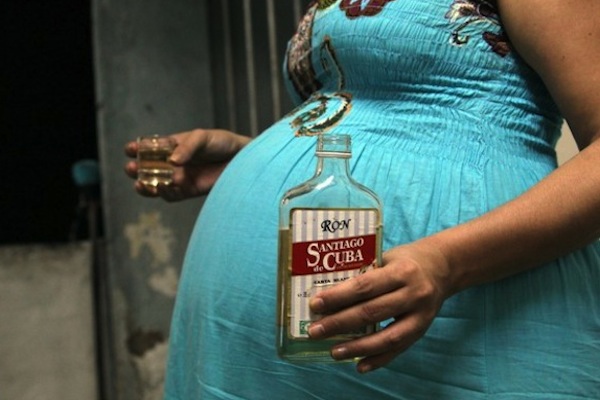
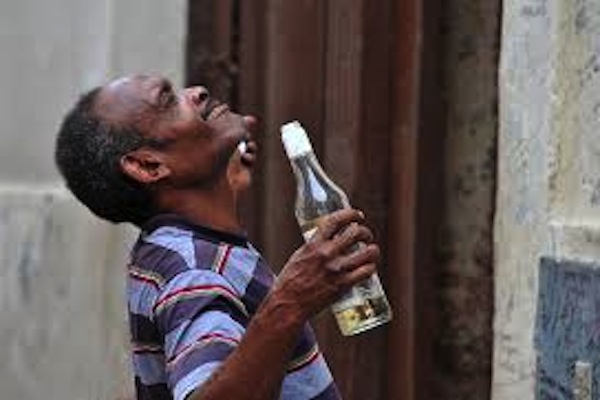
HAVANA, CUBA – In Cuba, every year hundreds of people die from alcoholism. A recently published study on the issue of alcoholism in the Americas, in the magazine “Addiction,” says that the mortality indices affect mainly Cubans between 50 and 69 years of age.

The information, gathered by the Pan American Health Organization and the World Health Organization, is hugely useful in looking at a phenomenon that affects every social strata. The issue could be more dramatic and shown in the study, and also affect youth. It’s well known that alcohol consumption among young people is increasing.

A tour around any area of the capital, especially the neighborhoods in the outskirts, is sufficient to feel discouraged about a solution to the problem.

In addition to the ever increasing amount of alcohol consumed, there is also the constant decline in the quality of the product. There are many clandestine factories where adulterated alcoholic drinks are produced. Whatever drink comes out of these places is full of dirt and rust and it sells like hotcakes.

A good part of the market is supplied by these producers. Even the dollar stores take advantage of the illegal supply of rums and liquors, made with raw materials stolen from the state companies. continue reading

In addition to the painful deaths that result, the addicts who consume these low quality products can suffer long-term neurological and digestive damage over the long time. Assistance programs lack a systemic focus and only reach a tiny part of those affected.

The proliferation of poverty, the increasing spiral of traffic infractions, and the standardization of violent events associated with alcoholism are the affects, apparently irreversible, of a process of political, social and economic collapse.

“Getting drunk is the only way to endure the problems,” I hear from Roberto, a 60-year-old man, just before he takes a plastic bottle filled with cheap rum in a part where he gets together with other alcoholics.

The lack of housing, of fairly-paid work, and the absence of any perspective of the future, are some of the causes of this problem for the majority of Cubans who can’t live without alcohol.

“I have work, and what? My salary doesn’t support me. To live in a house that is on the verge of falling down with nine other people and without any hopes of anything,” says a woman called Marlen, who works as a cleaner at a Ministry of Transport company.

“Alcohol takes the weight off a little. I drink every day I can’t sleep without a swallow. My life is a dead-end with no exit,” she adds.

According to the report, Cuba appears along with Argentina, Canada, Costa Rice, Paraguay and the Unites States among the countries with the highest rates of addiction among the age-ranges cited at the beginning of the article.

This data never appears in the official press. Much less the number of deaths related to alcoholism, the numbers confined to asylums, and those who roam the streets like zombies.

Cubanet, 23 January 2014 | 

Ladies in White Want a Meeting with Insulza During the CELAC Summit

Diario de Cuba, 23 January 2014 — The Ladies in White will seek a meeting with Jose Miguel Insulza, secretary general of the Organization of American States (OAS), during the CELAC Summit in Havana, according to what their leader, Berta Soler, told the AFP press agency this Wednesday.

“We will request a meeting with Insulza, OAS Secretary; tomorrow we will submit the request,” Soler said.

The office of the OAS office in Washington reported Friday that Insulza “responded positively” to the invitation to the Second Summit of the Community of Latin American and Caribbean States (CELAC), on the 28th and 29th of this month.

This will be the first visit by a Secretary General of the OAS to Cuba in half a century, since the island’s membership was suspended in 1962; Cuba refused to return in 2009, when the organization lifted its veto.

At the 1999 Ibero-American Summit in Havana, heads of state and government, foreign ministers and senior officials from Spain, Portugal, Mexico, Uruguay, Nicaragua and Costa Rica, held meetings with dissidents in Havana.

The activist Elizardo Sanchez, head of the Cuban Commission for Human Rights and National Reconciliation, said the visiting statesmen’s agenda is “very limited” and his organization does not foresee any meetings.

“Other times we talked to dignitaries (who come to Havana)  but it was on their initiative,” said Sanchez, one of those most active at the summit in 1999.

He said that “there is some nervousness on the part of the government and there is a police presence on the homes of active opposition” to avoid demonstrations at the meeting.

For his part, former political prisoner Jose Daniel Ferrer, who from Santiago de Cuba leads the Patriotic Union of Cuba (UNPACU)  told AFP: “I will participate on Tuesday the 28th in the second Democratic Forum on International Relations and Human Rights,”  which will be held in Havana, sponsored by Argentina foundation Center for Opening and Development of Latin America (Cadal)

He recalled that the first forum took place in Santiago de Chile, in January 2013 , prior to the CELAC-European Union Summit.

He said the venue of the meeting as het to be decided, but he expects the participation of other opponents.

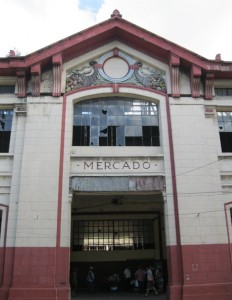
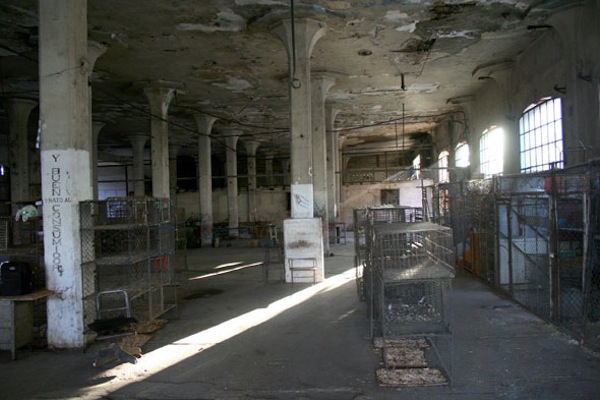
The Cuatro Caminos Market Will be a Museum / Orlando Freire Santana

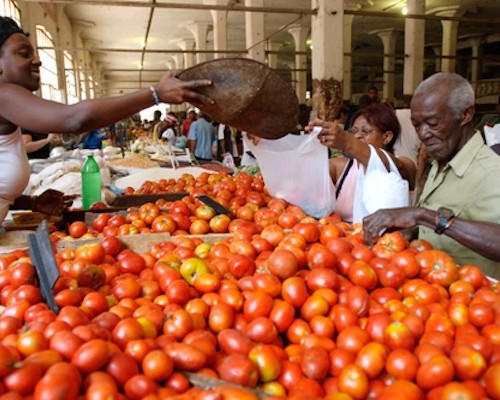
Cuatro-Caminos-2a-500x400HAVANA, Cuba – The Cuatro Caminos (Four Roads) Market, one of the most important of Havana, and pioneer of the system of supply and demand for agricultural products, will close its doors on 2 February. They already met with the employees and told them the site will undergo “repairs” and that they will be relocated to other farmers markets.

Consumers will see one of the few markets displaying a “true range” of products disappear. And, with one less market, the possibility of a decline in the prices paid by the population for fruits, meats, vegetables and meat products becomes more remote.

The official press insists that the problems of Cuban agriculture are transportation and marketing. They repeat that products do not reach the bodegas because there are so many intermediaries between the producer and the consumer. They believe that the reasons that sweet potatoes, yucca and malanga do not reach Cubans’ tables are paperwork, truckers, and vendors.

Certainly the most inefficient of these intermediaries is the state-owned Supply Company, a bureaucratic monster that has never had enough means of transport nor containers to collect the crops, nor has it correctly set prices for purchasing from farmers, but the Supply Company doesn’t deserves all the blame. continue reading

Failed measures

Recent measures to simplify the links between farmers and consumers have revealed that if the peasant cooperatives themselves carried their goods to the sellers themselves, it would neither widen the assortment of products, nor lower prices.

Under Decree 318 — in force since last December in Havana, Artemisa and Mayabeque provinces — 433 large and small markets were leased by Credit and Service Cooperatives (CCS) and Agricultural Production (CPA). As part of the lease,  the cooperatives themselves transport the products to the small markets, and they themselves set the prices for sales to the population.

A recent article in the Granma newspaper (Friday, 17 January) revealed the dissatisfaction of consumers with high commodity prices and shortages at many small markets due to the inability of cooperatives to supply them .

To understand the situation of other ways of managing farmers markets, we headed to El Arroya, a small market located near Jesus del Monte avenue in the municipality of Central Havana.

The upstairs of Cuatro Caminos is already closed

This market is managed as a non-agricultural cooperative. Its employees must buy the products they sell, they assume the site’s administrative costs, and ultimately profits divided among all. But it happens that the main suppliers of this market are several CPAs and CCSs. And according to some of its employees-partners, the supply of these cooperatives is unstable, and the production quality is not always the best.

The other option available to them to stock their stands is to go to the wholesale markets like El Trigo (The Cornfield). But right now, there is no means of transport for it. The day of our visit, all we found at El Arroyo was a few withered pineapples and bananas barely glanced at by the few people who passed by.

From market to museum

Returning to the legendary Cuatro Caminos Market, one of the few where an ordinary Havanan could — very happily — find fresh malanga to make fritters, and even soursop to make smoothies… It is rumored that the Office of the City Historian, led by Eusebio Leal, has been interested in this site that covers an entire block.

It’s said that the Historian is thinking of constructing a complex of buildings there that, besides another farmers market, will include a museum. For now, consumers will say goodbye to their malanga fritters and, with one less market, the possibility of lowered prices for fruits, roots, vegetables and meat products is even more remote.

For lower prices its necessary to increase competition among the various actors of this network: farmers, truckers, traders. And with the closure of the Cuatro Caminos Market, the most important farmers market in Havana, there won’t be much to hope for.

Cubanet, 23 January 2014 |

Difficult Unity at the Summit in Havana / Orlando Freire Santana

celac-cumbreAt first glance, the Community of Latin American and Caribbean States (CELAC) is a laudable mechanism for consultation and integration of the nations located south of the Rio Grande. When it was founded in Caracas in December of 2011, under the leadership of Hugo Chavez, it was thought that it would foster unity among the 33 Latin American countries without the presence of the United States and Canada.

That unifying spirit that transcends the diversity of our region, is what the Cuban government is trying to bring to the Second Summit of the organization, which will be held in Havana on January 28-29. The hosts of this event, like the rest of the continent’s Chavista militant leftists on the continent, yearn for a united Latin American in the ideological environment of 21st Century Socialism, conducive to economic integration within — in the style of ALBA and Mercosur — which favor commercial relations of complementarity rather than competition, and that reject the so-called “neoliberal politics,” and above all that conceive the rivalry with the north through the compass of its foreign policy.

More precisely, the attitudes towards trade, economic integration, and the view of the United States, are some elements of diversity that could bury the consensus. Because a negligible portion of Latin Americans believe in the benefits of economic liberalism, competition, and openness to foreign capital. Also, they contemplate the United States and the European Union as suitable partners with whom to sign free trade agreements. continue reading

So it is not wrong to say that Latin America is divided into two halves: the integration of the left, represented by ALBA and Mercosur, and moreover the Pacific Alliance, which includes Mexico, Colombia, Peru and Chile, all committed to accessing economic growth and development in the context of the market and free trade.

If we examine the internals of each of these integrationist systems, we get an idea of their real potential. The weakest undoubtedly is the Bolivarian Alliance for the Peoples of the Americas (ALBA). Its existence depends solely on petrodollars from the Chavistas in Venezuela. That is, should Nicolás Maduro and his minions exit Miraflores Palace, the rest of the nations of ALBA would be left like shipwrecks in the ocean.

Mercosur, for its part — not taking into account the strong economies such as Brazil and Argentina — has cracks in its operation. Asymmetries between the small economies Uruguay and Paraguay and the two aforementioned are often spoken of. In addition, at the political level, the Paraguayan institutions have sometimes been out of tune in an environment marked by the leftist affiliations of the other countries involved.

The Pacific Alliance, with advantages

Thus, despite the followers of Castro and Chavez, the Pacific Alliance is now the most powerful integration mechanism seen in Latin America. Its four members, Chile, Columbia, Mexico and Peru, if they operated as one country, would be the sixth largest economy in the world in terms of Gross Domestic Product (GDP) per capita. They also account for 55% of the exports of the Latin American subcontinent.

At the same time, there have been many advances with regard to the free movement of people, as visa requirements have been eliminated for the travel of citizens within the alliance. On the diplomatic and consular side, this integration has enabled the opening of common embassies and consulates, allowing them to provide more effective services to the citizens of the Alliance. For example, the Declaration of Cali — the city where the 7th Summit was held in 2013 — led to an embassy shared by the four countries in Ghana, and an agreement between Colombia and Peru to share their embassy in Vietnam. And the Pacific Alliance is expanding: conditions have already been created for Costa Rica , Panama and Guatemala pass to become members.

Of course an integrationist effort such as the Pacific Alliance has unleashed the wrath of the Latin American far left. In the most recent meeting of the Forum of Sao Paulo, the Alliance was described as “an interventionist approach, opportunistic and anti leftist to attack the sovereignty of Latin American nations.”

The president of Bolivia, Evo Morales, has come to define it as “a geopolitical scheme of the United States to oppose the progressive and leftist governments of Brazil, Argentina, Uruguay, Bolivia, Venezuela y Ecuador.”

So when the Havana Summit insists on fighting hunger and poverty, regardless of the apparent consensus, it is likely that each of the halves think of a different way to accomplish the charge. And while ALBA supporters and some of the Mercosur supporters need their leaders to remain in power forever, the Pacific Alliance  recommends alternating in public office, a key element for the rule of law.

Diario de Cuba, 22 January 2014, Orlando Freire Santana

Self-Employed: Don’t Cross the Line / Orlando Freire Santana

HAVANA, Cuba – The echoes of the unfair audits of the Declarations of Personal Income haven’t even faded yet, nor have the prohibitions of the marketing of imported household objects and clothing, and government action again threatened to overshadow the horizon of self-employment.

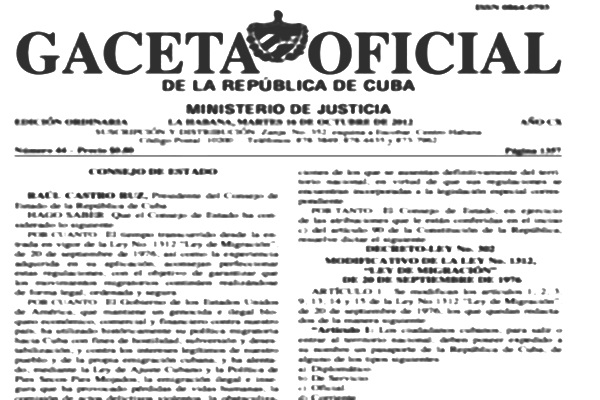
An extraordinary issue of the Official Gazette of the Republic of Cuba just appeared, containing Decree Law 315.  The document, among other things, describes several of the offences that the self-employed could commit in the exercise of their work, among them the marketing of goods or services not contemplated in the descriptions of their respective occupations.

For some weeks now, as a preview of the Decree Law, the Ministry of Labor’s municipal authorities have been visiting the self-employed to ratify what they can and can’t do in the context of their occupations. These meetings always end with the signing of a document by the person visited; a signature that attests that the person has been warned about what could happen to them if they depart from what is established. continue reading

Many think it’s the classic “closing the barn door after the horse bolted,” and so avoid situations like those presented by activities now presented. Without denying this hypothesis, others point to the government’s intention to put roadblocks in the way of the prosperity of the self-employed beyond the expected standards. Something similar to the barriers they apply — through progressive taxes — to discourage the hiring of more than five employees.

With the idea of delving into this topic, we decided to go to the meeting of two self-employed workers who see their opportunities limited by the dispositions of Decree Law 315. One of them Giraldo, is a builder, who raises walls brick by brick, who designs buildings’ water systems, or gives the final touches to a home’s electrical system. However, his self-employment license classifies him only as mason. Therefore, when they visit him they insist that he’s licensed as a mason and not as a plumber, carpenter or electrician.

Every one of these occupants has its specific license, and of course Giraldo, who must pay taxes as a mason every month, even if he has no work, can’t apply for three or four licenses. This forced specialization, according to Giraldo, could close the doors to certain contracts.

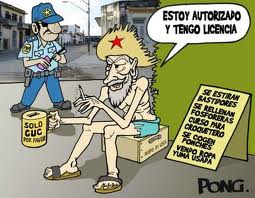
I’m authorized, I have a license

Fernando, for his part, is licensed to teach English. But because he is an expert guitar player, and because some of his students are also interested in learning this musical instrument, he could teach both simultaneously. But the authorities clarified to him that he couldn’t do it while in possession of a single license. In his case there’s the additional problem that the activity “Teacher of music and other arts,” is not taxed by the simplified rules like Language Teacher, but under another that imposes higher taxes, as well as requires the dreaded Affidavit at the end of the fiscal period.

This is, in short, new evidence that, rather than a strategic option of development, the flexibilization of self-employed work, and the remainder of the Raulist changes, are simply tactical maneuvers that seek to adjust Castroism to the current circumstances.

Cubanet, 21 January 2014 | 

Generational Collision in the Alejo Carpentier Charity / Orlando Freire Santana

Havana, Cuba, December – http://www.cubanetorg – It’s not a secret for anybody that, in general, youngsters favour transformations which advance social development. As far as Cuba is concerned, the majority of young people who are academics and researchers urge that the economic changes being implemented by Raul Castro’s government be taken forward more rapidly. And journalism should not lag behind.

This understanding was corroborated in the winding up of the course entitled “Journalism is not a job for cynics”, which took place at the Alejo Carpentier charity. On this occasion, the journalists Jesus Arencibia and Ricardo Ronquillo, both from the newspaper Juventud Rebelde took part in a panel, along with Doctor Graciela Pogolotti, president of the above mentioned cultural institution.

The first one to mention it was the youngest of the panelists, Jesus Arencibia, who, to the astonishment of some of the people present, strongly criticised the present situation of the Cuban press. Responding to the question, “What journalism do we need today in Cuba?”, Arencibia stated that we lack media able to function without approval from above; and, pursuing this line, argued that editorial policy should not be the preserve of a political party. Arencibia also questioned the activities of the official Union of Cuban Journalists (UPEC), who insist on not mixing up journalism with commercial publicity, without saying anything about political propaganda which dominates the work of the news-pages, the radio and the television in our country. continue reading

Right after that, Ricardo Ronquillo, deputy director of the Juventud Rebelde daily chipped in. Although at intervals he tried to continue his predecessor’s critical comments, Ronquillo explained that his suggestions were directed at “ensuring that the Cuban press was equal to the challenge of the revolution.” According to this panelist, we are watching a structural crisis in Cuban journalism; driven by a lack of resources in terms of journalists and the press, as well as the loss of their credibility due to the role they were playing in the service of the governmental institutions.

Referring to a situation which should not be repeated, as it demonstrates the inflexibility which impoverishes the work of the press, Ronquillo recalled what happened subsequent to the revelation of the announcement that Fidel Castro had passed the leadership over to his brother Raul. According to the journalist, it was incredible that no-one in the Cuban press will comment about this significant event. Nevertheless, we can only suppose that past events like that have been brushed to one side in the heat of Raul Castro’s protest against media secrecy.

Doctor Pogolotti, the senior member of the panel, gave us the most conservative presentation. After talking about her times as a journalism student in republican Cuba, she applied herself more to the form as opposed to the substance when it came to assessing the kind of press we need. In her opinion, the Cuban media should abandon headlines which don’t invite you to read; they need to improve the image and graphical design which accompany the information; and they should also be able to count on journalists capable of investigating the most varied aspects of our reality. In essence, this representative said almost nothing about the official culture of government control of the press.

The panelists’ contributions were lengthy and there was not time for the public to express their opinions or ask questions. Notwithstanding, in the door of the institution, I was able to hear the opinion of a young student of journalism:

“We haven’t moved forward at all in eliminating secrecy and self-censorship. It seems as if Mr. Ronquillo has forgotten that, following our government’s official declaration about the capture in Panama of a North Korean ship carrying Cuban arms, not one journalist dared to open his mouth …”

Cubanet, 9 December 2013

Translated by GH

Puzzling Raul Castro in Santiago / Luis Cino Alvarez

HAVANA, Cuba, January, http://www.cubanet.org – General Raul Castro’s speeches are becoming increasingly puzzling. One does not know if he is playing at being Chinese, or playing Russian Roulette.  Before, at least, he used to save us the fright, by letting us know when he was going to make a joke. Now not even that.

It’s not that he was being a ventriloquist, but his speech this past January first in Cespedes Park in Santiago de Cuba, more than his harangues of seven years ago, when he assumed power, seemed like those of Fidel Castro.

The general president assured us that the Revolution continues the same as when it triumphed 55 years ago, with no other commitment than to the people.

And one does not know how to understand this, because if that which some still call “the Revolution” broke its commitment some time ago to anyone, it was precisely to the people, abandoned to their luck in this save yourself if you can… if you are of the elite. continue reading

The commitment will be to Fidel Castro, and the historical leadership, that supra-institutional meritocracy, to the generals, to the orthodoxy, but to the people?

What is the commitment to the people by a government whose methods for updating the economic model, however much they may deny it, increasingly resemble the shock therapy of savage capitalism that came disguised as whatever, without capital or markets, and what is worse, without political freedoms nor the right to say boo?

What commitment is it by a government that, thinking only of its revenues, takes black market prices as the standard and declares illegal the survival mechanisms of an increasingly destitute people?

Of what value are the promises of a petty blackmail system that beats a retreat, that slowly and painfully dissolves in the hot air of the Guidelines of the Sixth Congress?

What does it have to do with the people, the sloppy capitalism of a State as mercantile as that of the absolute monarchies that we faced?

This speech by the general-president, in which he advances backwards, reminded me of the “call” to the Fourth Congress of the Communist Party that the army general made when he was Number Two, in March 1990. Then we understood little and badly. When finally the bloody congress was held, in October 1991, it was all exactly contrary to what was expected. And now we know the consequences.

Many years have passed, and he who was Number Two now is Number One. And it is not good for a ruler to miss so many opportunities.

luicino2012@gmail.com, Cubanet, January 6, 2014

Translated by mlk.

The Law of Those Who Vote With Their Feet / Jose Hugo Fernandez

HAVANA, Cuba, 14 January 2014.www.cubanet.org  – It’s often said that the elimination of the White Card — as the government-issued travel permit was known — has been one of the most significant among the reforms undertaken in Cuba during the dynasty of Castro II. I don’t believe there are a lot of reasons to discuss it. Things are more or less significant according to one’s values, and it’s natural that everyone values them according to their own criteria and interests that influence their circumstances.

In any case, far from being something to be proud of, I find it shameful that the most significant achievement by a government is to abolish a medieval edict, imposed and maintained for decades by its own system of power, when it would have been a museum piece in any other country in the world.

The opposition

Since this patch was applied, we recognize the benefits it has brought us so far. For the opponents of the regime, controversies aside, it paved the way for them to be able to clarify their thinking before the world. Whether they’ve done it well or poorly, or simply squandered the opportunity, is entirely their own concern. For intellectuals and artists it has undeniably gone well, especially for those who have the means or the sponsors to cover the costs. And it has also gone well for people who, with help from abroad, decided to explore the labor markets and the possibilities of settling in the United States, Latin America or Europe. continue reading

Thanks to the Castro II Dynasty’s we were allowed to travel more or less freely, and it also allowed, more or less, the temporary or permanent return of those who left the Island years ago, and has improved, more or less, the ties among the Cuban family, so dispersed and fractured thanks to politics. And the measure was useful, until recently, in supporting some enterprising countrymen in bringing from abroad clothes and other products missing here, to market them outside the inane and bloodsucking State-owned stores.

What this immigration and travel reform has meant for the rest of the population, which the majority, remains to be seen; these are people without resources and without relatives or associates abroad, workers, students, ordinary employed and unemployed, too many of them blacks, people on the margin, for the most part needy.

Since I don’t trust the results of surveys carried out in Cuba, where governmental secrecy and repression mean that anyone can make up the testimony of people whose identities and photographs they’re not obliged to publish, I chose to undertake my own quasi-survey among ordinary people living in the Havana municipalities of Centro Habana, Plaza and La Lisa. So, taking into account beforehand the logical distrust of my readers, allow me to offer some opinions collected through informal chats, on the street and in the homes of  friends and acquaintances.

Young people

For example, among the young people I asked (about 40), there were two typical attitudes that prevailed: those who answered with some nonsense, such as “it fits,” or “it works, it works,” (mid-level students, generally), and those who see the measure as something positive, although they’re worried looking to the near future, that the immigration process cannot be paid for in national currency (Cuban pesos) and that the prices charge aren’t affordable given the real possibilities of most people.

Housewives consulted (58) almost all agreed that immigration and travel reform is low on their list of priorities, compared to other measures, such as the widening of opportunities for self-employment, or like the simple (?!) fact that for the first time in 50 years bread is being sold of the ration book, and it’s better although more expensive than rationed bread, and the bakeries have better hours.

All of them praised the elimination of the White Car. And many said, plaintively, that now the barriers to travel are the embassies of other countries, ignoring, or at least not aware, that the denials of visas is due to the fears of those governments before possible waves of migrating Cubans, which is equally the fault of our dictatorial and impoverishing regime, which people want to flee en masses, especial young people, although not only them.

The right to return

Slightly more than 60 women and men who appeared to be roughly working age, offered substantial opinions, the biggest group in my quasi-survey.

The most common was that as long as it does not resolve or at least alleviate the terrible economic crisis that affects most people, the importance of immigration and travel reform will always be relative. They insisted that everyone sees it as a good measure, but there are few who are directly affected by it. Even those who see it as an option, aren’t interested in it except as another variant of the economic struggle, because the Cuban people are deeply lacking in a culture of tourism.

So this measure, in the end, comes to be seen as the law of those who vote with their feet. Meanwhile, those who choose to live here, or those who are left with no other remedy, even if they got the money required to travel, would need to use it to solve more pressing problems: food, housing, small businesses…

Both these latter as well as the bulk of the other respondents, spoke positively of the right of return (for those who traveled or those living abroad) as another of the most positive elements of reform. Meanwhile, only three — all elderly — said they did not agree with the measure because, according to them, it favors the regime much more than the people. And five of my respondents (two women and three men, one of them young) dismissed it out of hand, saying that the poor didn’t need to travel, they need to eat, clothe themselves, have a home and a job that allows them to live without jumping through hoops.

In summary, there were just over 150 opinions, informally collected among ordinary people, neither professionals, artists nor dissidents. And although it’s well known that 100 swallows do not a summer make in a city of two million, they may serve to give a hint of popular opinion on this matter. If the result is not sufficient or credible, what can I do. I am also bounded by my circumstances, so I could barely make use of the chance to describe the landscape with the traces of paint from a broad brush.

For the rest, whether or not this is the most significant reform of the Castro II Dynasty, I believe that it will go down in history, if not for the law that released us from our state as hostages of the regime, at least as something that slightly improved our status, making us hostages with a legal avenue for escape.

 José Hugo Fernández, Cubanet, 14 January 2014

Note: Books by the author may be found at http://www.amazon.com/-/e/B003DYC1R0

2014: Death Before Birth / Victor Ariel Gonzalez

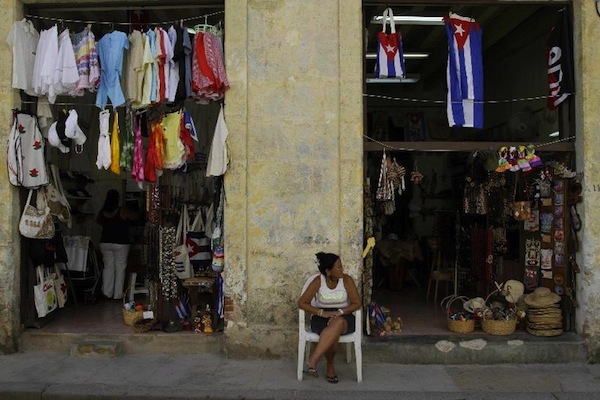
HAVANA, Cuba, January, www.cubanet.org — Doorways where until a few days ago all kinds of clothes and shoes were for sale are now empty. All the usual stalls are closed. It is a return to the recent past, confirmation that the economic openings are not as open, but quite the opposite: they narrow.

The state of opinion on the streets of Havana is negative. Skeptics have multiplied and pessimism is heard in normal conversations. A taxi driver who was driving an old American car, in the dark December nights, predicted to this reporter what the new year would be from his vision at that time. According to him, he’d never seen such a dark end of year, perhaps not even such an infamous December 31, 1994, when a cigar box cost 120 pesos (the entire pay, let’s say, of a secretary).

The man apparently was not mistaken in his forecast that 2014 would be fatal. The first thing that happened is that an important branch of trade is dead. There will be no stalls where the poorest buyers can go looking for something to wear. People are angry, as the Cuban population usually is without any spontaneous social event occurring. continue reading

Taxes will rise this year. They fixed route taxi drivers (popularly known as “boatmen”) must now pay 1000 pesos basic tax instead of the 700 paid to the State. That money does not count in the affidavit that must be paid periodically and is an additional charge. If on top of that the price of fuel continues to rise, as has happened in recent years, it is expected that the fares also shoot up.

Meanwhile, the bus stops appear full at all times. Transport is scarce, as always, and the cars that have recently been put on sale in State dealerships are at ridiculous prices. What Cuban could spend, for one of them, 200,000 in CUCs, about the same as $200,000 USD, or 4 million 800 thousand Cuban pesos? However, senior regime officials have said that the motor vehicles profits will be invested in public transport. What does not fit within their mysterious calculations is that sales volumes are too low, judging from the official price .

This is a government that is trying to get into global capitalism in the most unfavorable way possible, especially for the population. There are fewer products  “subsidized” each year. Every time they make more rationalizations” in public spending. The dubious tendency to improve economically stops, while hopes for reforms also stop. 2014 was sentenced to death in the speeches of late December and the judgment seems to be running through and through .

Víctor Ariel González, Cubanet, 14 January 2014

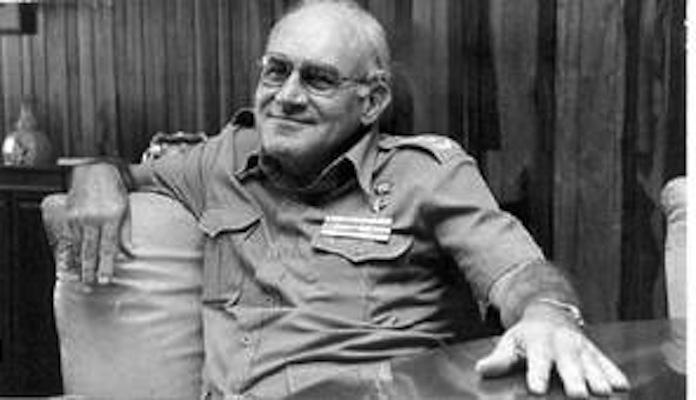
Colome Ibarra, Alias Furry, the Enriched General / Leon Padron Azcuy

HAVANA, Cuba, January 8, 2014. www.cubanet.org – The Cuban Military’s upper echelons are enriched with multiple businesses right in the faces of Cuban citizens. In the block between B, C, 29 and Zapata streets, Army Corps General Abelardo Colome Ibarra, popularly known as “Furry,” exhibits part of his family patrimony which is booming.

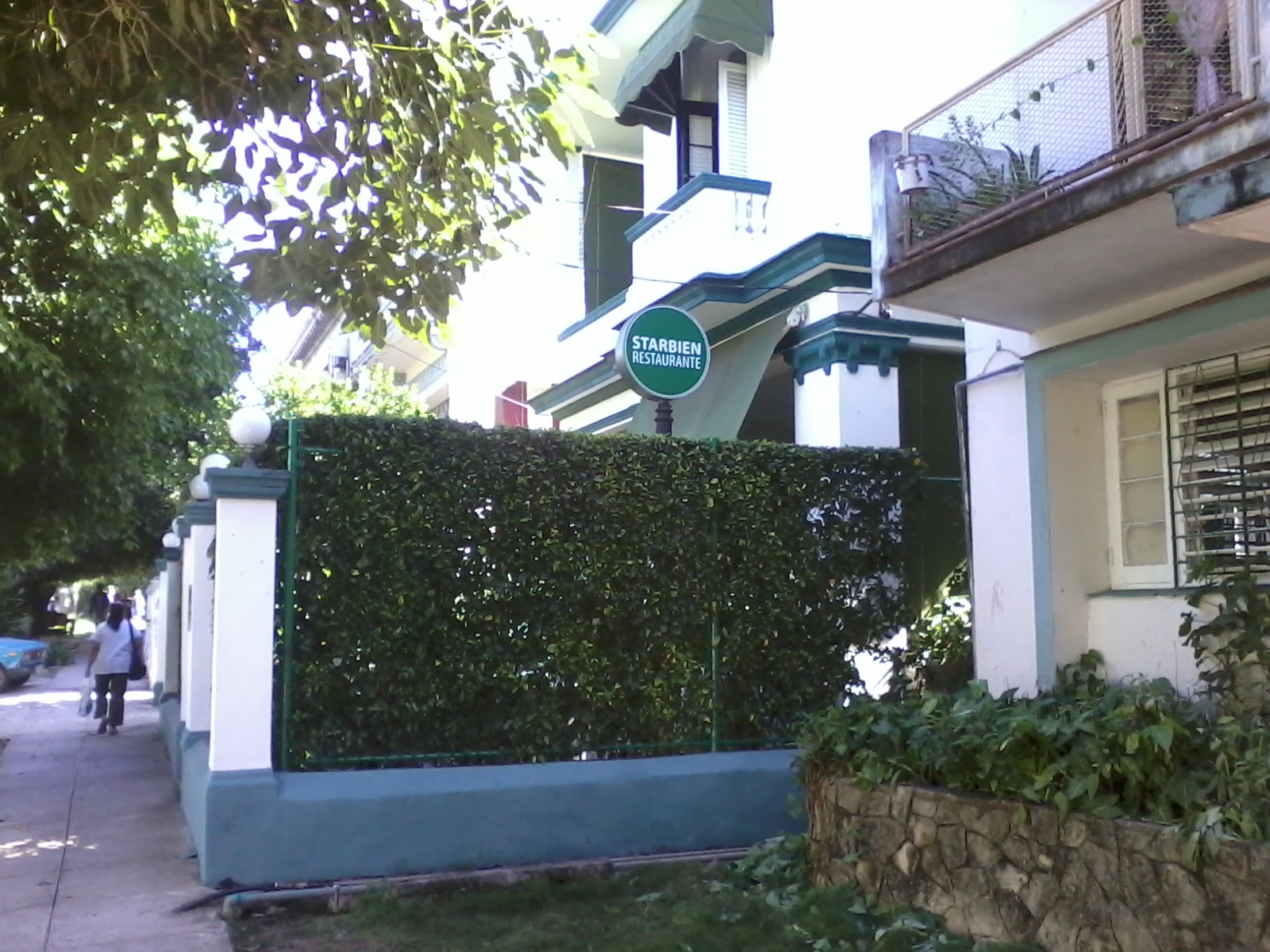
The minister gave his son José Raúl Colome a beautiful two-story house here to use — as do other residents of that area — to rent to foreigners. José Raúl also owns the STAR BIEN restaurant, one of the most patronized by Havana’s elite.

Located at No. 205 29th between B and C, this restaurant was recently renovated to become a jewel of the capital’s culinary establishments, competing in price and quality with the best restaurants in the hotel sector of the capital.

According to some sources who preferred anonymity, the site was acquired behind the scenes, and adding the costs of restoration, equipment, atmosphere, service and decor, the property is valued at no less than 100,000 CUC (about $110k US). continue reading

It has an excellent economic management based an admirable job of marketing and promotion, having priority in the plans of Havanatur and Cubatur (two tourism companies run by the Cuban military) over prestigious restaurants and private establishments such as La Guarida and Gringo Viejo, to cite just two examples.

Meanwhile Havana collapses

Every night tourist buses can be observed at STAR BIEN, which is also surrounded by a long line of the luxury cars owned by the diplomatic corps accredited in Havana, or by well-known artists, athletes and other figured who frequently go there to eat the delicious menu items.

Some residents who found employment at this place, when interviewed, avoided commenting for fear of losing their salary which is obviously higher than in State-owned restaurants. However one of watchmen at Colomé’s properties, whose name I omit for his safety even though he no longer works there, dared to tell me, “It’s humiliating to see that most of the businesses of ordinary Cubans closed or never prospered, because of the weight of the limitations they faced, while the military’s businesses bloom like daisies.”

While a significant number of houses collapse like soldiers in a war, General Colomé’s family, always loyal to the dictatorship, owns several luxury properties, in addition to those mentioned. They also own a comfortable apartment in the building on 705 B Street between 29th and Zapata, a gift from José Raúl to his mother, where the children of the elite communists are taught English and which is sometimes used for holiday accommodations.

It’s a travesty that these generals of Communist Cuba have divvied up our land like a piñata, while leaving for the starving people the rotten slogan: Socialism or Death.

Leon Padron Azcuy, Cubanet, 10 January 2014

Leonpadron10@gmail.com

Legacies of Castroism: The Destruction of the Sugar Industry / CID, Victor Ariel Gonzalez

On December 10, 1868, Carlos Manuel de Cespedes liberated the slaves of his sugar center La Demajagua and invited them to join him in the fight for Cuban’s independence. The Cry of Yara was the beginning of the 10 Years’ War.  These are the ruins of Demajagua.

The great capitals of the Cuban economy were forged within the sugar industry.  This last one and all its surrounding areas constituted a basic feature of the country’s culture, of its identity.  The formation of the Cuban nation is closely linked to sugar production in that it served to form a Creole aristocracy, which with the passage of time was differentiated from the Spanish mother country, still holder of political power on the island even while in the economic sphere it began to lag behind her thriving colony. continue reading

Such was the Cuban economic boom that the railroad arrived here before it did in Spain. And although perhaps core values were still lacking in the insular society, obviously the necessary base of capital equity was created in order to emerge as an independent nation.

Cuba become on of the world’s principal sugar producers, and certainly one of the Latin American nations with the greatest density of railways.  The industry was so strong that it survived devastating wars (rebel military campaigns razed sugar fields in order to destroy the Cuban economy as part of the Spanish empire) and later flourished when it declared itself a republic.  In short, there were centuries of development that preceded the million-dollar harvests of the 50’s during the 20th century, which were the most profitable reported in the country’s whole history. With the Revolution which shook all the country’s institutions in 1959 came the death sentence for the sugar industry which took some decades to execute.  The centralized economy was the principal obstacle against which Cuba’s widest productive line had to fight, making this latter a loser.

A fundamental part of this period is the Messianic nature of Fidel Castro who, without knowing enough about anything — except what is necessary for maintaining absolute power — proposed fantastical projects such as the “10 Million Ton Harvest ” which turned into a spectacular failure: not even 9 of the 10 million tons of sugar initially proposed were reached; besides, the price in the world market fell, and the cost of production was immense, converting the Harvest of the 70’ (as it is also known) into one of the most inefficient of all time.

All that happened later resulted in the closure of almost all the sugar refineries at the national level, which was concluded at the beginning of the present century. Meanwhile, thousands of workers were fired, many communities turned into ghost towns and sugar for consumption began to be imported.

It only took 50 years to dismantle a 100-year old industry, Cuba’s largest. As a contradiction, the price of sugar in the world market has risen during recent years, as has the price of products derived from it.

Regrettably, the case in question has not been a lone example of the destructive legacy of Castro-ism. One need only go out onto the city streets to see the decay that covers everything. The Cuban economy is nothing on the world level, and the misery cannot become worse as it has permeated the soul of the Cuban nation.

By Victor Ariel Gonzalez

Source:  Bloqueo informativo al pueblo cubano, suplemento de La Nueva República

Translated by mlk.

12 January 2014