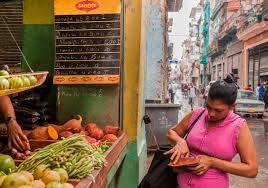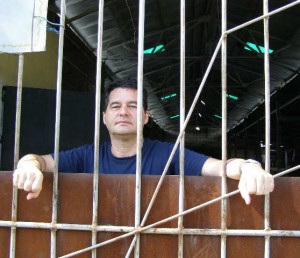
New Business Owners Consider Turning In Their Licenses Due to Lack of Freedom / Alberto Mendez Castello

PUERTO PADRE, Cuba, November, cubanet.org — Officials in charge of overseeing the self-employment sector are updating their documentation of its licensees and subsequently warning them of possible violations.

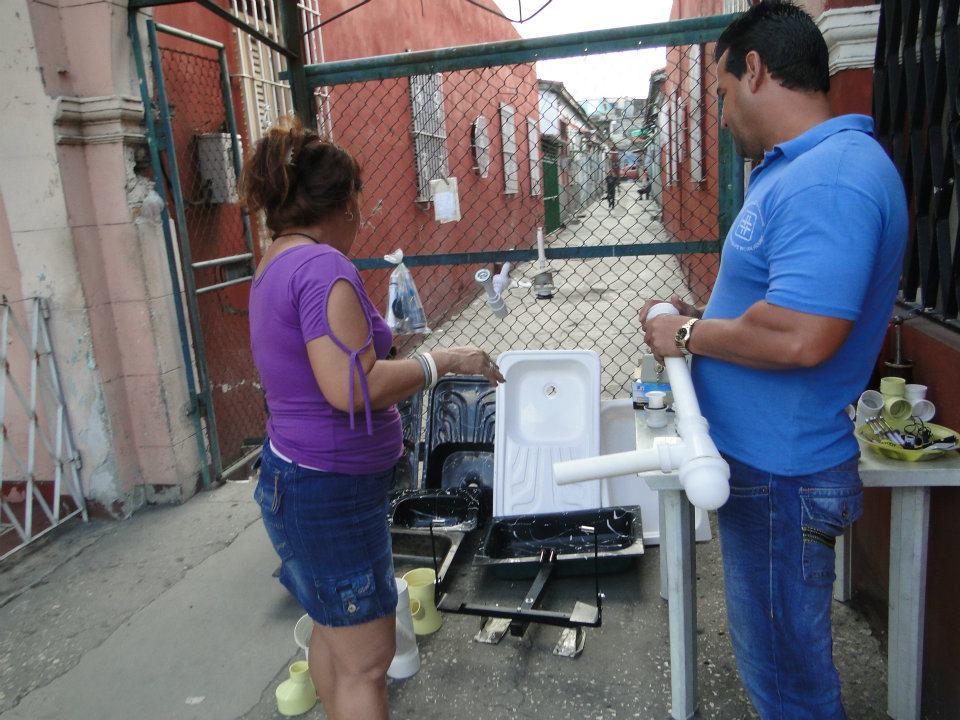
Eddy Vega — a manufacturer and vendor of plumbing supplies, who buys and refurbishes pieces of tubing, accessories and old keys — was warned in no uncertain terms by his interviewer that it is strictly forbidden for anyone but the state to trade in metals. Eddy, a practicing Christian, told this reporter he is thinking of turning in his business license.

Self-employed workers are summoned to the old social workers’ headquarters, where they are interviewed one-by-one.

Similarly, food sellers, carpenters, masons, people who lease out their homes and anyone who is self-employed are called to appear. A carpenter said, “It’s very difficult to work this way. It’s already almost impossible to get wood. There are too many obstacles”

Small hotel operators were summoned by city officials in Viviendas a week ago. One official who requested anonymity said, “We have to exert control… Often lodging crosses the line into prostitution.” One operator, who asked not to be identified, confessed, “I’m going to turn in my license. In the future I will take in guests discreetly like before, without paying taxes. I think I will save up all the money that for months would have gone to paying taxes for paying the fine, if I am ever caught.”

These actions by the authorities serve as a policing tool, as outlined in the Cuban Penal Code: “Those not covered under any of the dangerous categories referred to in Article 73 (habitual drunkenness and alcoholism, addiction and antisocial behavior) with links to or relationships with persons potentially dangerous to society, to other people or to the social, economic and political order of the socialist state, and who may be prone to crime, shall be given warnings by the prevailing police authorities to prevent their engaging in socially dangerous or criminal activities.”

The Penal Code also stipulates that the warning shall, “in all cases,” be issued by written affidavit, explaining the reasons for the warning as well as the response of the person being warned. It also calls for both the person being warned and the attending officer to sign the affidavit.

In spite of the stipulation in the Penal Code, police do not ask those being warned what they have to say in response to the warning. Instead they ask, “What are you involved in?”

Needless to say, self-employed workers here are not allowed to think about why they cannot acquire pieces of tubing and old keys for reconditioning and later resale.

by Alberto Méndez Castelló

Thursday, November 7, 2013 | Cubanet

Spanish post
7 November 2013

Thousands of Unemployed Will Invade the Black Market /Augusto Cesar San Martin

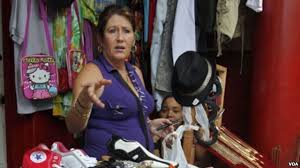
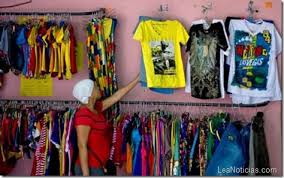
Havana, Cuba, November 2014.  Since the past month the majority of the “Hangers” (points of sale) and rented places in the capital for the sale of clothes have put up signs announcing liquidation sales.

After three years of tolerance, the sale of imported clothes is coming to an end. Passing cuisine, clothing sales is the area where Cubans invested more of their money since Raul Castro announced the new political economy.

In early 2012, the government dealt the first blow to the sale of clothes. They imposed on residents of the island a requirement to pay the customs duties for the import of non-commercial goods in dollars.

Cubans involved in the business struggled with flea market prices in Mexico, Miami, Panama, Peru and Ecuador. They paid the customs demands and the “Hangers” spread throughout the island. The most incredulous opened caricatures of Boutiques or repaired places abandoned by the government in order to rent them.

When appearances indicated government consent with the people’s prosperity, another blow stabbed the self-employed to death.

The Executive Committee of the Council of Ministers set January 2014 as the effective date for the suspension of sales of manufactured clothing under licenses issued for “dressmaking” or “tailoring.”

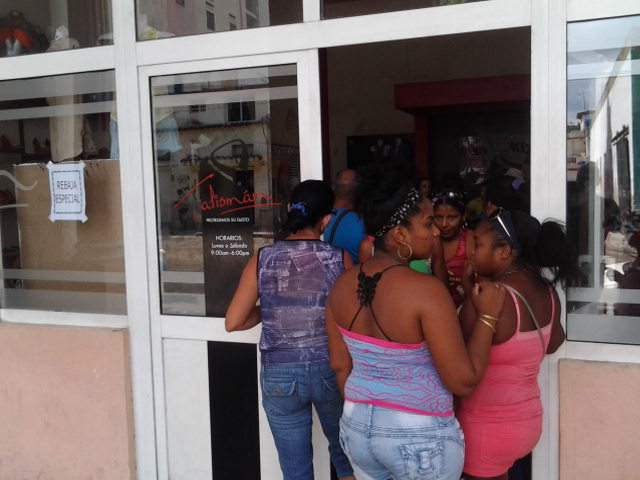
Talisman, a store liquidating its merchandise, repaired by the self-employed at Belascoin and Zanja. Photo: Augusto Cesar San Martín

According to a note in the newspaper Granma, issued last Saturday, the prohibition is based on “the need for corrections to combat impunity, enforce the law and protect self-employed workers.”

The self-employed feel unprotected

Magdalena Carrero, 47, works as a saleswoman at the fair located on Galeano at the corner of Barcelona in Central Havana. The woman approached me while I was interviewing other sellers and asked me to publish a question to the government.

“What are they going to do with all of us left without work?”

She has two children, 7 and 22. She’s had a better standard of living since she started working in the “Hangers.” Her testimony about better salaries in the private sector coincides with what the other vendors say.

Each of them earns more than 500 pesos ($20)* monthly as a contracted salesperson for the owner or proprietor of the “Hangers.”

Maura Estela, owner of the “Hangers” on Galeano Avenue and her employees also disagree with the ban.

“We have no one to defend our rights… the CTC (Cuban Workers Center) holds a lot of congresses but no one represents us,” declares Maura.

The workers in these places note that the measure will leave a lot of people unemployed. One of them who asked not to be identified said that this kind of work attracted young unemployed people prone to crime.

“Clothing attracts youth… Look how many young people sell here, people who don’t meet the requirements to work in the government stores,” she explains.

The clothing vendors consider that their offers and prices are better than the government’s.  Despite the questionably quality of the merchandise, the island has been able to keep up with international fashions for more than a decade.

“They (the government) don’t have what we offer, neither the quality nor the price,” affirms Maura Estela.

“Selling clothing made in Cuba is impossible, we don’t have resources… They can’t even manage the production of school uniforms… Let Murilla show up with underpants made in Cuba and explain why he wears a Rolex,” she added.

In the Central Havana Municipal Labor Office we talked to an official of the sub-branch. The attorney declared that she was not authorized to offer figures about the “Seamstress and Tailor” licenses or forecast data on the unemployment that will be caused by the ban.

Solutions and challenges

The owners of the “Hangers” pay around 960 Cuban pesos (40 dollars) monthly to the government for the space, social security, workers employment plus 10% of monthly earnings. The salaries of the workers ranges between 500 and 1200 Cuban pesos a month.

Owners and workers agree that raising the taxes would be less unpopular. All of them worked, in recent months, with the hopes that the concept of the “Seamstress and tailor” license would be changed to allow the sales.

More than a few are prepared to challenge the ban

Dunia, a vendor at one of the Galiano Fairs, already knows how to support her children, 5 and 18, in 2014.

“If they prohibit the sale of clothing, I’ll go underground like before. Hidden in the stairwell of my home,” she says.

She confesses to having sold clothes illegally before the government tolerated the “Hangers.”

“I spent years juggling the sector head and the inspectors… at that time I earned more,” she says.

Now, 12 vendors pay the government some 2,500 Cuban pesos (100 dollars) monthly, for a 75 square foot space in a parking lot.

A license holder on Carlos III Avenue in the same municipality, who preferred not to be named “to avoid problems,” declared his intention to abandon the business.

She was fined when she sold from a “key” (underground store) and they confiscated her merchandise.

“In this country it’s impossible to lift your head, I’m leaving when I sell everything” she says.

Another owner of a shop located at Industria and Barcelona streets who also declined to give his name, said, “I’d rather they charged us for the license in dollars.”

He and his wife rented the room of a house where they sold clothes they themselves imported. He said they have all their money invested in a “Hanger” and added, “It’s impossible to sell all the clothes before January. We can deal with whatever measures to regulate this kind of work, but to prohibit it is to throw us out in the street, force us into the black market.”

Augusto Cesar San Martin

*Translator’s note: $20 a month is higher than the average wage in Cuba.

Cubanet, 7 November 2013

Rosa Berre’s Great Achievement / Tania Diaz Castro

Havana, Cuba, October, www.cubanet.org – It was a great achievement by Rosa Berre (Havana, 1941 – Miami, 2006) to publicly expose the mass media of Fidel Castro, whose writers were willing to lie in exchange for crumbs.

When, at the beginning of the internet, with the help of an old computer, a fax machine, her ingenuity and her strong personality, she thought about organizing a group of reporters that would write about the truth in Cuba, from the lion’s mouth, many thought that she was insane.

Who would dare to report about the situation of political prisoners, the inefficiency of leaders in governing the country, the systematic violations of Human Rights, the opinions of citizens, and everything that the national press hides?  And what would happen to those who had such tremendous audacity?

From her home kitchen in Coral Gables, Florida, at the beginning of 1994, that lady with a sweet demeanor, but energetic, founded the page Cubanet: A refuge to all those who, marginalized, couldn’t put to use the freedom of speech, a truthful challenge to the long political hand of Castro, that could reach up even from their own neighborhood.

In that year Rosa made her wish come true and as months passed, that group of brave people increased in numbers and professional quality, with the goal of having a Cubanet with a power to influence the emergence of a civil society and inform the world of the Cuban reality.

The history of Rosita, as we used to call her with love and respect, is not well known.  She graduated from the Normal School for Teachers, she studied journalism at the University of Havana, and since she was very young she belonged to that generation that trusted in the Revolution of 1959 as a solution to solve social injustices.  She worked at the Periodico Hoy, which disappeared in 1965, and at the end of the 70’s woke up from the romanticism that so much pain caused to many and she was accused of having “ideology problems,” along with her life companion Carlos Quintela, who died in exile in 2001.

Both of them were expelled from their jobs and punished by being sent to do, agricultural work in Pinar del Rio; they were called “reprobates” by Raul Castro, but they kept going “…with the dignity of those who break with the Revolutionary fallacy from power,” as  our Human Rights champion, Ricardo Bofill, expressed it.

In 1975 Rosita started doing crafts. Looking for the scent of freedom, in 1980 she, her husband and their two young daughters entered the Peruvian Embassy, where this family, dignified and honorable suffered for many long days perhaps the worse nightmare of their history.

Then, she suffered in the flesh the ruthless policy of Fidel Castro of inciting the Committee for the Defense of the Revolution masses to beat and harass everyone who preferred to leave Cuba, in the so-called “acts of repudiation.”

With that bitterness, with that traumatic and sad experience, Rosa and Carlos together undertook the arduous path of exile through the Port of Mariel, from where, in April of 1980, more than 125,000 Cubans began their exodus to the United States.

Today, almost twenty years after its foundation and seven years after Rosa’s death, on 19 October 2006, Cubanet continues their work to support the independent press and the right to freedom of speech and promotes the strengthening of the Cuban civil society, “… a legitimate element of democracy,” as stated by professor Vaclac Havel.

With the physical disappearance of Rosa, many in Cuba thought that Cubanet would also disappear, but, perhaps as if with unknown invisible threads the great friend, committed to Cuba’s freedom, is still protecting us; Cubanet continues to keep her legacy alive.  Needless to say, each new published text in this page constitutes a tribute to Rosa Berre.

Tania Díaz Castro, Cubanet, 17 October 2013

 Translated by LYD

Is Diaz-Canel the Third Power in Cuba? / Orlando Freire Santana

Díaz-Canel-en-la-Cumbre-de-Petrocaribe-300x225HAVANA, Cuba, November, www.cubanet.org -In closed societies, where there is no freedom of information, it’s necessary to read between the lines to break the secrecy imposed from above. Secrecy that, among other things, makes it impossible to know the real share of power of each leader.

When the naming of Miguel Diaz-Canel Bermudez was named first vice president of the Council of States and Ministers was reported, there was no lack of voices, in Cuba and abroad, who claimed to be in the presence of the second-in-line of the Cuban regime.

Soon they became convinced it wasn’t so. Because Jose Ramon Machado Ventura, in his position as second secretary of the Central Committee of the Communist Party, remained Raul Castro’s shadow.

Diaz-Canel appeared to be the third man in the power structure.

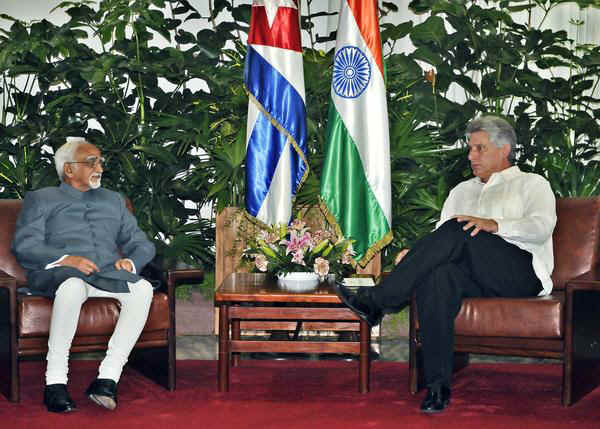
In recent days, however, we’ve observed an event that could tell us the true location of Diaz-Canel in the Castro nomenklatura. It was the hosting of the vice president of India by the General-President, reported by the newspaper Granma on October 31.

Both in the official notice as well is in the photo of the meeting, with the delegations of both countries, Cuban protocol was in charge of strictly locating the personalities in accordance with their political hierarchy.

Next to Raúl Castro was Esteban Lazo, member of the Party’s Politburo and president of the National Assembly of People’s Power; next to him was Díaz-Canel, followed by Rodrigo Malmierca, Minister of Foreign Trade and Investment; and finally, Marcelino Medina, Deputy Foreign Minister.

That is, Mr. Lazo currently has a position senior to Diaz-Canel in the nomenklatura. He is second to Raul in the Government and the Council of State, but his location in the office of the Party’s Politburo — which defines his share of power — seems to be very powerful.

It’s even probably that prominent figures in the Party, like the Minister of the Interior Abelardo Colomé Ibarra (Furry), and the also vice president Ramiro Valdés, and Minister of the Armed Forces, Leopoldo Cintra Frías, are also ahead of Díaz-Canel.

We have to interpret the small details to decipher the secretiveness of the Castrocracia. An element that could shed light on: General Furry is the only one authorized to accompany Machado to the airport when Raul Castro returns from a trip abroad.

Then the ascent of Diaz-Canel to the first vice presidency of the Councils of State and Minister, as well as the media attention he has received lately, far from a climb to the summit of power, would just be the recurring “killing two birds with one stone.”

In these terms, it’s necessary to give the impression that something is moving in the island’s stagnant political landscape, in this case through some “renewal” in the nomenklatura.

On the other hand, Castro II is preparing for the moment of relay, in fact, when other figures assume the reins of power. But for them that moment will come when the historic generation of the Revolution disappears physically. Before then, don’t even think about it.

Orlando Freire Santana

6 November 2013, Cubanet

Cuba Shaken by Rumors of Currency Unification / Orlando Freire Santana

HAVANA, Cuba, October, www.cubanet.org — The official announcement in the newspaper Granma this Tuesday, October 2, with its timeline for instituting the changes regarding currency unification, unleashed a torrent of rumors, which some say circulate faster that news from the Communist Party.

But there wasn’t much to it. There was no change of any importance in the value of the two currencies. Stressed-out Cubans, who must rely on an average monthly salary of some 445 CUP (or Cuban pesos), will still have a “rope around their necks,” worrying about how to pay for goods priced in CUC (or convertible pesos) at the fixed exchange rate of 1 CUC to 25 CUP. Given the sensitive nature of this topic, however, it was inevitable that contradictory analyses would start cropping up first thing Tuesday morning.

Almost everyone believed that there would be a gradual strengthening of the Cuban peso until the two currencies reached parity and the CUC was finally phased out. In the opinion of some, the rate of exchange could be around 1 CUC to 20 CUP within a few months.

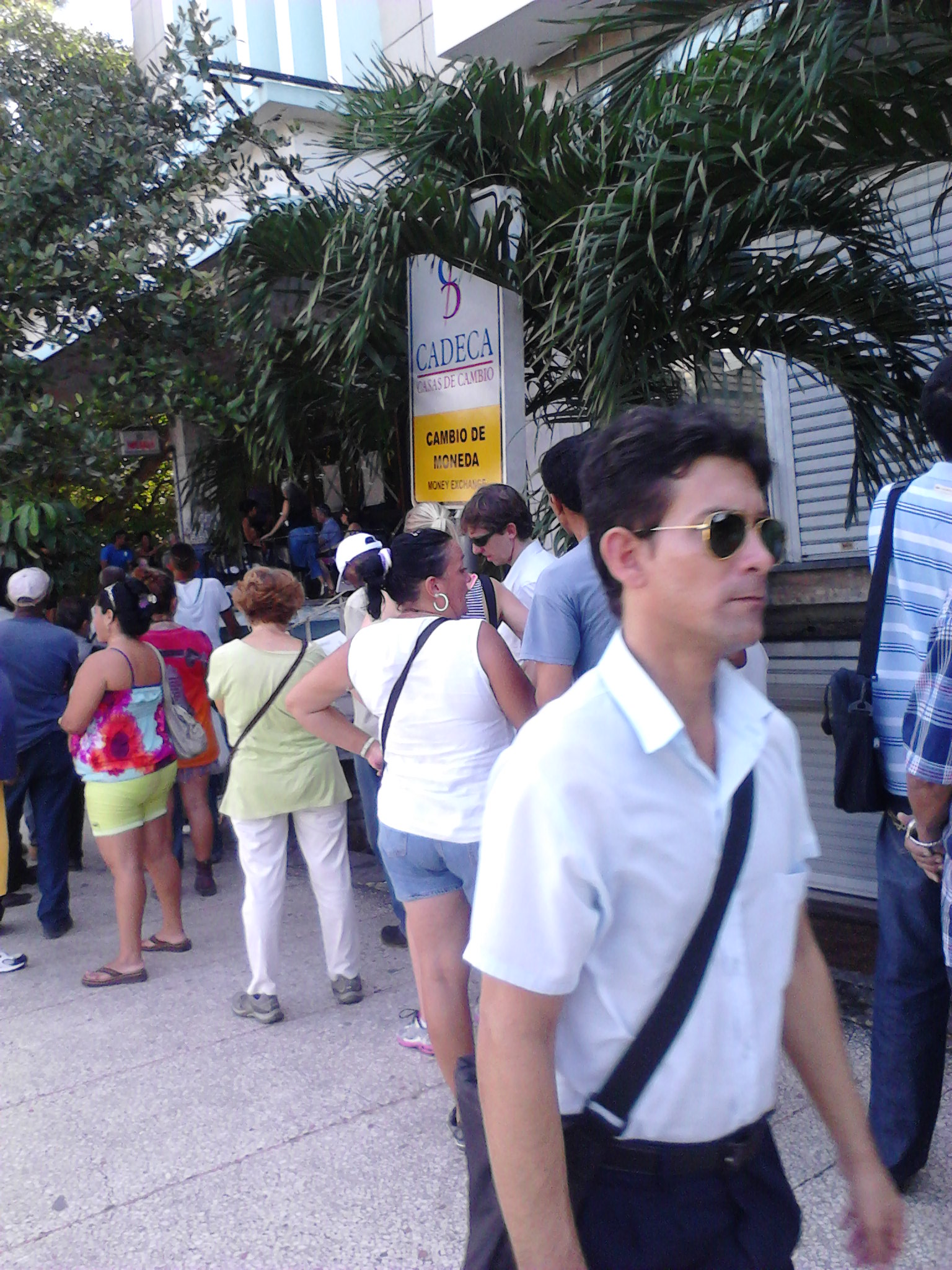
A neighbor in my building, who subscribes to this line of reasoning, noted that this could create pressure on the currency exchange bureaus (CADECAS) if people tried to gradually get rid of their CUCs, especially now that the rate of exchange is still at 1 CUC to 25 CUP.

A diametrically opposite point of view was expressed by a self-employed worker as he was preparing to begin his day. He believed it might be a trap by the government to collect the money in circulation and deal a fatal blow to the new “potted plants.*” According to this worker, a third currency would be created and this would be the one to survive. All Cuban pesos and CUCs would have to be exchanged for it but there would be a maximum amount that could be exchanged. Anything exceeding that figure would represent a loss to its owners. It would be a kind of punishment for those who sold their homes at astronomic prices in hopes of leaving the country.

Twenty-four hours after the release of the official announcement I decided, one way or another, to gauge the public mood by visiting various CADECAS around the capital. There seemed to be a prevailing calm and the lines of customers were no longer than usual at the entrances to currency exchanges in the Focsa building — located at 23rd street in front of Copelia — and at the National Bus Terminal. I joined a line of customers at the latter to exchange some money so that I could make inquiries with the cashiers.

The  two or three people with whom I was able to speak did not completely understand the announcement which appeared in Granma, though I did detect a certain level of anxiety about what could happen. One of the people in line with me, an older gentleman, did not hide his mistrust of the authorities and recalled what happened with the currency change in the 1960s when people lost a substantial part of their savings. For her part, the cashier who waited on me acknowledged that on Tuesday morning people were asking for Cuban pesos with some insistence. However, by Wednesday — the day of my visit — demand was back to normal.

After chatting with some of my colleagues, an interesting point of view emerged. It was felt that this could be a public relations maneuver on the part of the government to calm the many gullible people who believe that, with the end of the dual currency system, the country’s economic problems will be solved. The Party Guidelines indicate that officials contemplated currency unification but they now know neither when nor how to properly pull it off. At least the published timeline shows they are giving themselves a little more time.

Orlando Freire Santana

*Translator’s note: Cuban slang for the nouveau riche.

 Cubanet, October 25, 2013

The New Man, Fraud and Reggaeton / Camilo Ernesto Olivera Peidro

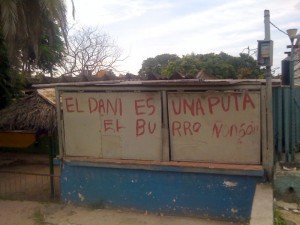
DANI IS A WHORE / THE DONKEY (illegible)
BILLBOARDS OF DECREPITUDE – Photo by Camilo Ernesto Olivera

HAVANA, Cuba, October, www.cubanet.org  A teenager, a wannabe to the “reggaeton fashion,” succeeds in paying for his Spanish Language exam grades on a regular basis: “In my high school you can do business, provided that you are willing to pay well.”  The young man, whose name I was not permitted to disclose, aims to get through the remainder of his high school years  in the same manner. “My older sister supports me since, “jineteando” [prostituting herself], she met a Yuma [foreigner] loaded with “baro” [money] and “got her claws into him.”

He aspires to attain fame in that musical genre, very popular in Cuba.  Because, in his own words “it is very lucrative, faster than going to school and getting a degree or going to a trade school.”  When I asked him what he’ll do once reggaeton is over, he looks at me incredulous:  “That’s never going to happen”.  Then he slowly looks at my long hair and says:  “And you guys, the “frikis” (rockers in the popular jargon), nobody sees you guys in the radio or TV.  But reggaeton everyone supports it, from the Communist party to Lucas on television”.

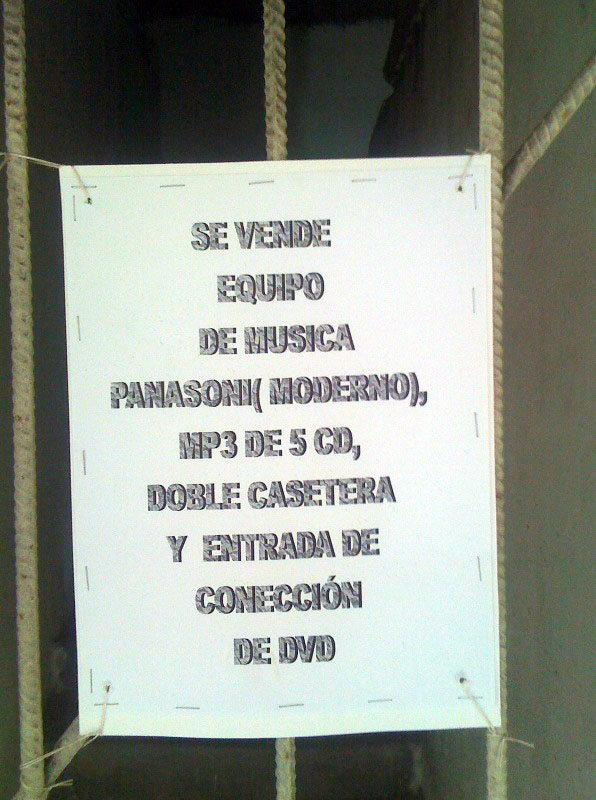
Musical Equipment for Sale…

Lucas, for those who don’t know, is a national television program that transmits musical video clips produced locally. In the absence of internet or other means, this program, directed by Orlando Cruzata, is taken like a barometer of the musical popularity in the island. Everyone knows that the burgeoning producer PMM is the Lord and Mistress of this television program. I try to clarify this last detail to the kid, but he doesn’t even flinch: “Of course, dude, the people with the most money are the reggaeton musicians; look at Daddy Yankee’s last musical video, he has a tremendous Lamborghini.”

Then he explains his point of view about what he considers to be a promising future:  “As soon as I finish 12th grade, if I don’t buy a diploma beforehand; my sister is going to give me the money so I can start my own musical group and buy the entry to a musical company… Then, I make a couple of hit songs so they stick (so they are popular) and I film a hot video clip like Chacal & Yakarta.  They’ll censor it, I become famous like Osmani Garcia and then I go to Miami.”

I listen to him, and think about that chant that we repeated singsong-like in elementary school:  “Pioneers for Communism…” or the other one that would add:  “Where a communist is born, difficulties die.”  Right after, the kid feels comfortable enough and improvises what in his view will be his first super hit on the “Lucasnómetro weekly.”

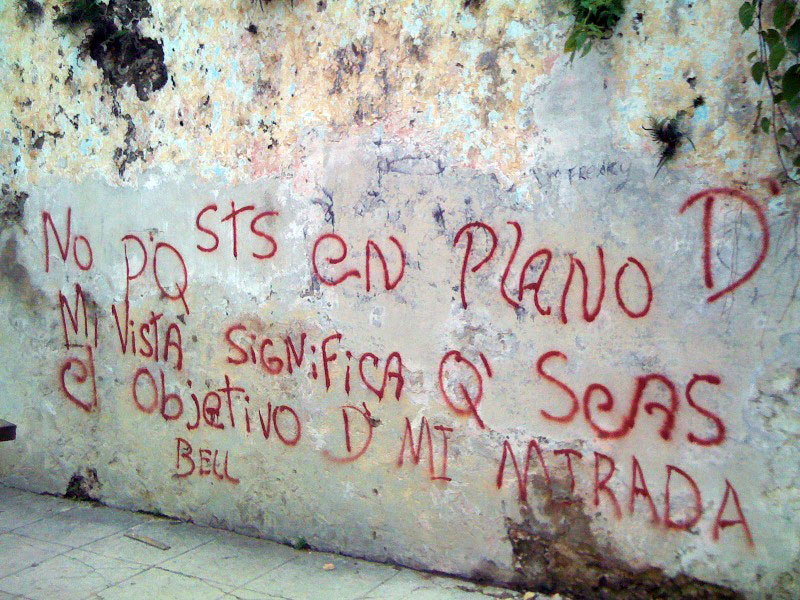
Just because you are in my field of vision doesn’t mean that you are the object of my gaze.

I am in a town on the periphery of the capital, Guanabacoa. It is Sunday, the day is boring and the week depressing.  After this instructive conversation with the “new man of the XXI.century.cubiche.cu”, I conclude that the paleontologists of the future will have a lot to talk about.

I go out to walk the streets.  I observe the overwhelmed faces of the few that challenge the mid-afternoon sun.  I am sweating and the smell of the accumulated garbage piles (“in each block a committee…”) keep me company the rest of the way.  I see a sign that looks like no one has been able to erase it.  It is pretty offensive and I take a picture for you readers.  Then I see others with “spectacular” spelling errors and I do the same.  Then I understand why the “owners of the estate” [the Castro brothers] want to start a battle with the teachers that tutor students privately.

Let’s remember that in medieval times, reading and writing were privileges for the high classes.  As was access to the universities.  The children of the nomenklatura will always have their home tutors. There is and always will be, as is always been, schools for the ordinary Cuban and schools for the children of the generals in charge.

As I am heading back, I stumble upon the “reggeaton superstar”.  I show him the pictures and ask him if he sees anything wrong.  He looks at them for a few minutes, he gives me the camera back and says: “Dude, everything is cool”.

Camilo Ernesto Olivera Peidro,  From Cubanet, 24 October 2013

 Translated by LYD

“I Am a Prisoner Because of a Tantrum by Raul Castro” / Juan Carlos Linares, Angel Santiesteban

Havana, Cuba, October, www.cubanet.org — Without any doubt, the prosecutor at the oral hearing clung to the least of the supposed crimes, “Housebreaking and Injuries,” being proved by the very “witness” who lied.  The farce of a trial was a settling of scores for Santiesteban because of his opposition to totalitarianism, and so he was made to know by the political police officer, named Camilo, a month before he learned the sentence of the Tribunal of Room 1ra. of the State Security, in his special headquarters in Carmen and Juan Delgado: Five years in jail.

How do you describe your transition from famous person of Culture to dissident?

I have always expressed the desire to count on a little corner of the least important newspaper, on the last page, to communicate my views there, wrong or not, as any mortal.  On a trip to the Dominican Republic, the last I could take abroad, the writer and brother Camilo Venegas showed me something that he called a blog, unknown to me, and that affected me. I returned to Cuba with a fire inside, a flame that grew to upset my view of what surrounded me and worried my contemporaries. Trying to be a voice. From that moment, they began to create my dissident and then criminal file.

They applied the most extreme accusations to me, like running over a child in the street with my car and fleeing, attempted murder, armed robbery, wife beater, even rape, and other stupidities that would make you laughter if they had to do with a fictional comedy and not the real life of a man, and by which I am now a captive.

Who did they use against you?

An ex-wife from whom I was separated for more than two and a half years.  She was angry about multiple situations about which I do not scoff.  I have never said this because it embarrasses me.  And I did not expose it at the trial because it intruded on minors.  Today they are adolescents.  My ex knew about my daughter, 32 days younger than our son. Add to that that I never agreed to marry her.  Later I began a relationship with a talented, beautiful, popular actress, which increased her rancor.

My ex spoke horrors to our son of my new partner, even without there having been a simple dialogue between them, and she still hates her. It happened also that at that time my ex was having a relationship with Mayor Pablo, chief of the chiefs of Playa Municipality Sectors, and that’s where they brought him in. I do not know who manipulated whom, or if both parties did it, but they had grudges against me, that is to say, my ex and State Security.

I do know that they employed the instructor, Captain Amauri, who falsified and hid proof in the preparation of my file. I accused him before his superiors in a letter, calling him an illiterate liar. He was expelled from the PNR (police) for bribery, and although he worked my file, they decided not to present it at my trial.  Maybe one day he will tell the truth about what happened.  I trust that time will bring the truth to light, even if making excuses that he was following orders.

How deeply do you feel the damage that they have done to you?

My journey towards opponent has taken me away from literary media, and of course, driven away colleagues that I used to consider “friends,” leaving only a few: enough. I like to think that each one of those few true friends for me are worth more than the whole group of cowards that fled. All that cultural marginality that they have fabricated around me gives me immense pride.

I have passed through punishment cells, and if thinking differently brings this punishment, I believe that I am in the proper place for me.  At least now I feel far from all pretense.  Really my crime was writing an open letter to Raul Castro, challenging him to free Antonio Rodiles, and some days before, the demonstration that we carried out in front of the police station on Acosta Avenue. Those events were the triggers for my incarceration. I am a prisoner because of Raul Castro’s tantrum, of that I have no doubt. I call it a tantrum to make a decision that does more damage than good, to persist in satisfying his ire. You have to be sick with power to carry out the violations that historically the Castro brothers have to hit out against those who have opposed them.

What do you remember about the trial?

A handwriting expert, Lieutenant Colonel, made me copy nothing less than fragments of an economics article in the Granma newspaper.  According to them, by the heights of my letters and the slant, I am guilty.  It sounds like a joke, but it is real.  My lawyer argued that the handwriting proof is not defining.  It is not accepted internationally.  It is a pseudoscience.  The expert insisted that it is a science, which dates to the 17th century, and that it was defining. My lawyer, young, cited several handwriting specialists, whom she did not know, according to what was argued in the trial.  They are on the internet and their literature is found in Havana, which she also did not know. It was evident that she had gone there without preparation, only to follow an order of the State Security. They refused my five witnesses, and did not admit the arguments of manipulation. They imposed a five year sanction on me which was not for the crime that they imputed to me.

How much benefit will you extract from prison as a writer?

It has been a great experience. I try to get the best and greatest benefit. Surrounded by killers, drug traffickers, thieves. I have the best relationships with them. I take advantage by writing and finishing some literary projects.  I finished the novel The Summer that God Slept. I sent it to the Frank Kafka Novels from the Drawer Contest in the Czech Republic, and I received the news that I had won the award. Tremendous happiness!

The book relates the agony of a group of boat people who escape on a raft, the vicissitudes of the sea, picked up by a boat that takes them to Guantanamo Naval Base, life in the camp, the indisciplines, the corrections, the internal problems that emerge, until they decide to return to Cuban territory crossing the mined country that is in the zone.  It has a lot of testimony.

To be in a less rigorous prison setting and to give you a pass, that you received recently, will that be a form of ceding by the government?

To the contrary. I believe that they distanced me from the jail conflicts that I constantly denounced in the prior jails through which I passed. I got involved in inmates’ situations and defended them. For my punishment, I’ve been assigned to the “minimum” incarceration regimen, that is to say, less danger, from what I can tell, by regulation, to be in camp and not in maximum security prison.  Sending me to prison 1580 was a violation of their own laws.

In the camp one leaves with a pass every sixty days.  In seven months here, I should have left many more times, but State Security did not want it.  Here, where I am, the inmates go out every 27 days, but as I do not work or collaborate on re-education, they do not permit me to leave monthly.

On the other hand, I have always had positions in Freemasonry, the latest was at a national level, and I had to dedicate a lot of time; also, the free thinking project of Estado de Sats… I gave that space all the time necessary because it seems to me a laudable and tangible purpose for the political change that Cuba needs.  So once a prisoner, I told myself: Get to work!

Juan Carlos Linares

Translated by mlk

Cubanet, 25 October 2013
Cuba Aspires to Create Their Own Twitter / Daniel Benitez

An Internet space opened to the public last June.

With the goal of expanding access and governmental control of social networks, computer scientists are working to create a microblogging service, modeled after Twitter, for Cuban nationals on the network .cu

According to Kirenia Fagundo, named as leader of the project CubaVa, “Pitazo” is the name of this cyber initiative which will allow network users to exchange short phrases, individual images, or video links.

The information was disclosed by the official Cuban Agency for News and Information and is in keeping with efforts the Island has undertaken to present an image of openness toward internet use and social networks.

Since last June, a total of 118 internet locations are available throughout the country for public access to the internet with the aim of expanding the number of service locations and hours.  However, these operations continue to be controlled by the State monopoly ETECSA and the Minister of Information and Communications (MIC) through the server Nauta to which is added the high cost of connecting.  The browser with plenty of access to the network costs of 4.50 CUCs per hour.

Numerous Cuban users of Twitter are part of what’s called “the swarm”: those members of the media and official institutions who have integrated themselves using false profiles to carry out the “battle of ideas” on the internet.

 Constructing the Store

In addition to Pitazo, the group CubaVa will launch a digital site with the suggestive name El Estanquillo which will apparently post national and international press articles.

In September some Cubans became the first users of a platform of blogs called Reflejos which contains 275 personal pages.

Meanwhile, for the great majority of Cubans, Facebook, Twitter, Instagram and other well-known applications are only news that are difficult to access and at a cost prohibited by their pockets and options.

In a report by the organization Freedom House regarding internet freedom in 2013, Cuban ranks among the worst countries in the world in terms of connectivity and one with immense government regulation.

In Cuba, which has a population of 11.2 million people, 15% are reported connected to the internet according to official statistics.  But, this figure includes those who access only email or the State internet system without the ability to freely navigate the internet.

The last report from the National Office of Statistics (ONEI) indicated that in Cuba there are only 74 computers for every 1,000 inhabitants.  ETECSA has promised to deliver internet access to Cuban homes in 2014.

 From Cafefuerte

 October 23, 2013

Translated by: Marlene Temes

To Have or Not To Have a Car / Fernando Damaso

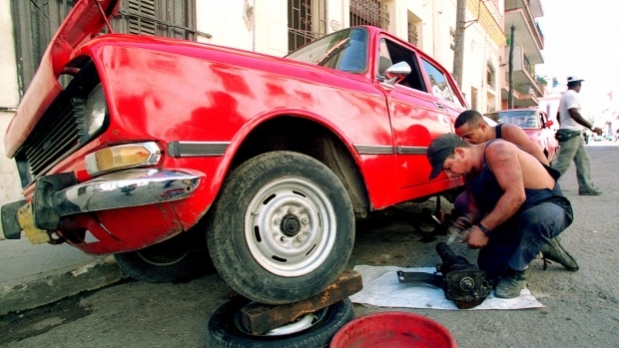
Above: Two men repair a car from the former USSR.

In any country, the acquisition of a car, whether new or used, usually represents a reason for the new owner’s satisfaction.  In Cuba, if acquiring a vehicle demands overcoming numerous obstacles, keeping it functioning requires overcoming many more.

In the first place, new cars can only be gotten if the State grants the right, generally to functionaries of political and governmental agencies, armed forces officers, some professionals (above all from the health sector after completing missions abroad), artists (mainly musicians), some intellectuals and high performance athletes with relevant results in international events.  In all cases, demonstrated loyalty to governmental ideology and politics is an indispensable requisite.

In the second place, the decree that authorizes the purchase and sale of vehicles between citizens — something that was already done in an illegal manner — refers only to those in use for several years.  We are talking about those that have traveled our deteriorated roads and avenues for a long time: vehicles from the ’40s and ’50s, the first known as “almendrones” (from the word for “almond”) mostly of American make, some German and Italian, and the ones built in the formerly socialist camp, largely the extinct Soviet Union and Poland.  In recent years, although in reduced quantities, vehicles from Japan, South Korea, Germany, Brazil and lastly China have been added.

The owner of a vehicle must confront various problems, one of the most important being the acquisition of fuel: he must pay 1.20 CUC in convertible pesos for each liter for regular gasoline and 1.40 CUC for higher octane.  This represents, in the first case, two days’ salary in national currency (29 Cuban pesos, or CUP), and in the second, more than two days’ (33 CUP), based on an average monthly salary of 440 CUP.

The next problem refers to the oils and lubricants, missing in the garages that offer scrubbing and lubricating service in national currency, requiring the car owner to get them in CUC, at elevated prices, in the convertible pesos garages, or in CUC or CUP at a lower price on the black market.

Nevertheless, these problems are trifles compared to those involved in confronting repairs and the acquisition of replacement parts, tires and batteries.  The majority of state mechanic shops disappeared, and individuals not yet authorized, the repairs must be resolved with private mechanics, who are able to work on state premises devoid of equipment (by arrangement with the appropriate administrator), at his home, at that of the car owner, using his own tools and, sometimes, even those of the client.

The prices, as is to be expected, are arranged directly between the mechanic and the car owner, usually being elevated, as much in CUC as in CUP.  The main replacement parts, almost always missing from the state stores, must be gotten on the black market.  Customarily, near the state stores, the presence of the citizens equipped with cell phones that, before any solicitation, immediately locate the searched-for piece or accessory.

In the state stores, depending on the type of vehicle, a tire may cost between 89 and 155 CUC (five or eight months’ average salary) and a battery between 90 and 175 CUC (the average salary of almost five to nine months).  On the black market tires can be acquired for 60-80 CUC and batteries for 90-110.

It seems, although it may not be the intention, that the State, with its elevated sale prices for citizens, stimulates the the existence of the illegality, especially when all or most of these items come from the “misappropriation of resources” and theft from the state stores and warehouses.

And best not to address the issue of sheet metal and paint, because these services, more than the cost of the materials (sheet metal, acetylene, welder, paints, thinners, etc) reach astronomical figures, on the order of hundreds of CUC.

The decision about having or not having a car in Cuba demands a lot of reflection: although it resolves a problem of scarce public transportation and represents freedom of movement, it constitutes too heavy a burden for any pocket and the psyche of the happy (?) owner.

From Diario de Cuba.

23 October 2013

Translated by mlk

Sanguily! Get Me Out of These Ruins! / Lilianne Ruiz

HAVANA, Cuba, October 2013, www.cubanet.org – Amid the ruins, the people living in No. 216 Tulipan, in El Cerro, are convinced they inhabit the same house where Manuel Sanguily lived.

“Sanguily lived here. On the terrace he had coffee with Maceo,” they’re heard to say, excited.

Beyond the myth or the truth, the house is falling to pieces with its inhabitants inside.

Leonila Mirtha Cruz is 61 and was three when she moved into the house. “My grandmother was the rent collector for the rooms.” Her eyes light up when she says, “Indeed, I know the history of this house.”

When it rains she leaves the one room to which her ownership has been reduce, and takes cover with a nylong bag under the eaves of the house across the street, until the rain passes.

If there isn’t too much water, she puts the bed in the corner by the door into the room, where there is still a good piece of roof and falls asleep there listening to the sounds of the stones falling in the false ceiling. “The only place that doesn’t get wet is this little corner.”

Cruz explains the reason for the falling fragments of the roof:

“What I have up there is a grove of trees. A yagruma, a paradise tree, a capuli, and the roots grow at night.”

The roots hang down through the roof and the walls of the abode. Even more than its extravagance for the perception, the growing vegetation of the house, which retains the majesty of the ninetheenth century, contains the exact path to its end.

Uninhabitable patrimony

With the imminent danger of collapse, the house has a demolition order, but the authorities haven’t offered a way out other than eviction.

Cruz relates that, years ago, “they gave homes” to some families living in the rooms of the old mansion. But the bad luck of not having been on this list is to blame for her being alone. Her children left as rafters in 1994 and she hasn’t heard from them. “They left because they couldn’t take it any more,” she says.

According to her account, the house was to be declared a heritage site in 1979. On that occasion, they were told the property couldn’t be touched.

“I’m content with a tiny little room like this,” she says, bringing together the tips of her index finger and thumb. And she adds, “Sometimes I tell myself it’s better to live in a cardboard box, because it’s less dangerous. Living here, a stone could fall on you and kill you. When the dead person has no one to mourn them, it’s worse.”

To shake off the sadness that has overcome her for a moment, Cruz says impishly, “Sanguily, get me out of here please. Find me a better room.”

“A coffin is cheaper”

In another room of the house a family of three gneerations lives together. The children, 10 and 11 years old, were bornthere. When the roof collapsed, they built a small house of roof panels and shingles inside the room.

The two children attend school. The clothesline with clean clothes and a few pots and pans, give a homey touch that speaks of humanity, which resists misery.

The children’s grandfather tries to fix a chair, straightening some nails with a table knife. He breaks the silence, “We have asked for help to fix the house, but it seems a coffin is cheaper.”

He points to the street, “The bosses come by here, the Housing boss, the Sector (police) boss. They say they’re going to tear it down, but without telling people where they’re going to take them.” He concludes, sadly, “This is abandonment, and they treat us as if we were animals.”

Tulipán 14

According to historic data, Manuel Sanguily received Maceo in the No. 14 Tulipan house on the latter’s visit to Havana. Both had fought in the Ten Years War.

In the pause before the War of ’95, specifically in 1889, they organized gatherings at this house, where the patriots discussed the future of Cuba. Sanguliy was considered by Maceo to be the exemplary figure of democracy.

With urban growth, the street numbering changed on Tulipan. What was once No. 14 Tulipan, now might be No. 216. But they no longer speak of democracy there. Its inhabitants are content to have survived the last downpour.

Lilianne Ruíz

See related story of the “1889 Newspaper with a photo of the house” here.

From Cubanet, 23 October 2013

First Report of the Advisory Group / Cuban Civil Society Advisory Group

A brief summary of topics that describe the situation of Cuba in late 2013 could be summed up in two words: reform and repression.

The reforms have been directed mostly in the right direction, but in a superficial way and excessively slowly. In addition to trying to alleviate an economic situation caused by years of volunteerism and contempt for the most basic economic laws, the reforms try to formalize the assignment of minimum space to entrepreneurs who were already earning from the illegal activities, perhaps so that they don’t feel incentives to leave the country or join the opposition.

 The repression has been characterized by increased brief and arbitrary arrests and systematic maintenance of the acts of repudiation in which a portion of the population is driven by pressures and incentives to attack and insult to other citizens who peacefully express their disagreement with government policy. This undoubtedly constitutes incitement to commit acts that qualify as hate crimes. One of the objectives of repression is to isolate and terrorize malcontents who have not yet dared to cross the fuzzy line between loyalty and opposition.

A Reform to Delay “The Change” and Encourage Entrepreneurs

The list of the substantive reforms implemented by President Raul Castro since he formally took over the country in early 2008 is well-known:

Access to cell phone, permission to stay in hotels, buying and selling of cars and houses, expanding the list of jobs allowed to the self-employed, expanding the leasing of land under the concept of usufruct, the abolition of the exit permit and the concept of Final Exit, opening the Nauta network for connecting to the Internet, the so-called non-agricultural cooperatives, the ability to hire labor, the tacit acceptance of professionalism in sports, and other measures of greater or lesser importance. All of this could raise a wave of optimism to make people believe that the changes could ultimately anticipate The Change.

The limit that hampers this platform of changes is that it doesn’t touch the essentials. By not explicitly accepting private ownership of the means of production, nor merchant activity in the broadest sense, it impedes the emergence of small and medium businesses that would generate the appearance of a middle class country. It lacks a political commitment to make it clear that prosperity will not be criminalized. The decision not to allow the concentration of ownership, clearly raised in the Guidelines of the 6th Congress of the Cuban Communist Party, leaves a very narrow framework and becomes a straightjacket for the development of the nation to emerge from the exhausted paths of socialism.

The country’s economy remains a stronghold of State decisions, especially foreign trade, industry and banking. The debts between companies, inflated payrolls, lack of productivity, lack of diversity, the absence of initiative, are still hallmarks of what is known bureaucratically as the “State sector.”

Moreover, the dual currency, the lack of a living wage, excessive taxation, the unaffordable prices of staples, and widespread corruption create an atmosphere of mistrust and insecurity that drives away potential foreign investors.

As long as there is no sound legal basis that enshrines the right to property and provides guarantees to domestic entrepreneurs, the reforms will seen be with suspicion and mistrust, as mere instruments to gain time and to keep the ruling elite in power. However, these reforms have no significant effect on the life choices of the population. The fact that around 400,000 Cubans are engaged in self-employment and no longer depend on the State, opens sociological perspectives that were unthinkable just a decade ago.  continue reading

In this dynamic of reform and repression, self-employment is seen from the more radical sectors of officialdom as a necessary evil, far from the utopian aspiration of the “New Man”; a noxious weed that the 1968 Revolutionary Offensive of 1968 tried to eradicate and that now resurges as a new class to emphasize the inevitable inequalities. Paradoxically, from the most radical opposition sectors, the self-employed are often described as “complicit with the dictatorship,” people who neither protest nor collaborate with any opposition activities, in order to keep their businesses afloat. Indeed, with their lights and shadows, the self-employed are the most dynamic sign of this time. Their existence and growth belies all the political discourse of half a century.

In mid-2013 , as part of these reforms, the Cuban government announced the opening of 118 Internet access points throughout the country. Under the name of Nauta, the new service includes email and browsing at prices ranging between 1.50 Cuban Convertible Pesos (CUC) and 4.50 CUC per hour of connection time. The measure, insufficient but welcome , enabled more than 100,000 Cubans to become users of this service in just two months. However, such flexibility does not live up to expectations for the fiber optic cable between Cuba and Venezuela. The majority consulted on this issue said they had hoped to allowed Internet access, without ideological considerations and priced in Cuban pesos (CUP), from home.

Still, one can speak of an increase in new connectivity alternatives promoted by the development of technology rather than by government permissiveness. The emergence of wireless file sharing; the consecration of USB flash memory as a mechanism for transferring information; the so-called “combos” or “packages” of videos circulating in the self-employment market; and the illegal satellite dishes to pick up the television signals from nearby countries, among others, are some of the parallel paths used by the Cuban population to access news, documentaries, digital books and information taken from websites.

The official media have opened some spaces for criticism and debate in the last five years. Among these are the letters to the editor pages of the newspaper Granma. Analysis segments have also appeared on national television news programs, pointing to an intention to approach the reality but without mentioning either the lack of legitimacy of the rulers or the infeasibility of the system. Consequently, there remains a strict Party monopoly on the mass media. There have been no legal advanced with regards in allowing the existence of a press not associated with the Communist Party. However, in the last five years, there has been a great increase in the number of websites, newsletters, periodicals and blogs created without official permission and from the critical sector.

Repression as a Means of Control of Citizens Without Rights

The main unresolved issue of the so-called Raulista reforms is in the field of political and social rights. Freedom of expression and association are the most violated, but the effects on freedom of religion also persist and, despite modest advances, signs remain of discrimination with regards to race, gender and sexual preferences.

Members of the Ladies in White, members of the Patriotic Union of Cuba, the activists of the Citizen Demand For Another Cuba – demanding that the government ratify the United Nations covenants on rights – and numerous independent journalists and librarians, have all been victims of police harassment. There have been verbal aggression, threats, beatings and abuse of all kinds. According  to data documented by the Cuban Commission for Human Rights and National Reconciliation, since January of this year to the date of this report, arbitrary arrests are hovering around the 4,000, data to which must be added to the 12,800 cases reported since 2010, the year the release of political prisoners from the 2003 Black Spring began.

The spiritual life of the Cuban people, rich in nuances and traditions, was terribly damaged by decades of official imposition of atheism. Only after 1991 were there signs of some tolerance, but rigid control exercised from the Office of Attention to Religious Affairs of the Cuban Communist Party was still maintained. This entity, despite being legitimized as a partisan branch, exercises governmental functions over religious hierarchies or fraternal associations, regulates permits for repairing churches, the import of goods, the licensing of bank accounts and other administrative functions, whose main purpose is to put political conditions on the development of spiritual life.

The issue of racial discrimination in Cuba cannot be reduced to a simple comparison with the times before the Revolution. In conflict with partisan agreements and ministerial resolutions, the Cuban prison population remains predominantly black and the same can be said with regards to people with less income. Prisoners are also those who are less likely to have a presence in academic, scientific, diplomatic and political environments. In the media, in commercial advertising (rare, but it does exist) the presence of racial diversity does not match, or even come close, to the mixture that defines us.

With regard to discrimination based on gender or sexual preference, it should be noted that the role of masculinity remains predominant, with a discourse in which virility is expressed as a virtue. There is only one authorized women’s organization that functions in the classic way of being a mechanism to impose on women whatever is convenient for the State according to the circumstances, whether with regards to work or breastfeeding. Only in recent years, timidly and late, have they been promoting acceptance of diversity of sexual preferences, but it is recognized that these proposals come not from within the LGBT community, government institutions dictate what should be done and how far it should go.

The national educational system, taken over by ideology, turns the most innocent elementary school reading class into political indoctrination that parents cannot prevent. The motto that “the universities are for revolutionaries” is not a simple slogan of a student organization, but official policy. Even today there are cases of university students expelled with no recourse for political reasons and many more who are forced to wear a mask of simulation to finish their studies.

Citizen Responses to Reform and Repression

In all this time, neither alternative civil society nor political opposition groups have managed to articulate an effective response against the deficiencies of the reforms or the excesses of repression. The Party-Government that rules the destiny of the country, or at least tries to lead it, had a platform no longer based on ideology but rather a single chorus, repeated endlessly: Order, Discipline, Demand. In the midst of a panorama of deterioration and loss of ethical and moral principals, the delayed struggle to rescue these values is now an indissoluble part of the government slogans. This battle is the result of a hijacking of the discourse of the opposition, and the same can be said for the migratory reform and most of the measures taken by the government, applied, that is, in a superficial media-focused way, without the depth proposed by the opposition.

The challenge now for civil society and the peaceful opposition is not to deny the existence of these reforms, but to take advantage of them in creative ways. It is not about uncritically applauding them, but exposing their inadequacies and unmasking their traps, which are many. Only peaceful citizen resistance can confront the repression: the timely and accurate denunciation of every event in solidarity with those who can make sure your message is heard by others.

There is great diversity among the projects undertaken Cuban civil society and a slight but growing tendency to find common ground, although in principle there can be only minimal consensus. Among these the most important are the need for respect for all the issues listed in the Charter of Human Rights, the call for democracy, full respect for the plurality of opinions, and renunciation of violence.

This first report, which doesn’t pretend to cover everything, is a modest attempt to understand problems from a shared perspective, and is an invitation to debate and find solutions.

16 October 2013

Center for Support of the Transition Created in Havana / Rinaldo Emilio Cosano Alen

Durante-la-presentación-del-CAT-de-izq.-a-derecha-Frank-Ernesto-Carranza-Héctor-Maseda-y-Roberto-Díaz-Vázquez_EFE
Photo taken during the presention by CAT. From left to right: Frank Ernesto Carranza, Héctor Maseda and Roberto Díaz Vázquez.

HAVANA, Cuba, October, http://www.cubanet.org — On October 5 a press conference took place in Havana announcing the formation of the Center for Support of the Transition (CAT). During a break we talked to its coordinator, attorney Roberto Díaz Vázquez.

Cubanet: What is CAT trying to achieve?

Díaz: Citizens should not only recognize they have rights but should also put them into practice. They should value those rights so they can advance economically, socially and politically. They should be in charge of the changes we so need.

Cubanet: What is its relationship with the government, assuming there is one?

Díaz: CAT has no ambition to have a dialog with the government because we are a parallel organization to the State. CAT would like the population to recognize that it has the opportunity to decide upon and put into practice the economic, social and political order that the institutional changes taking place in Cuba entail. This is especially true in the case of the private micro-businesses that could develop into medium-sized businesses in the not to too distant future and into large-scale businesses in five to ten years. This would have undeniable consequences for the decentralization of power brought on by the international and domestic financial crisis and the lack of visible support from Latin America and Europe.

The temporary solution on which the regime has settled is to develop micro-businesses, which today account for more than 40,000 so-called self-employed workers, those we prefer to call micro-entrepreneurs. Small-scale businesses could grow into large-scale business and become the economic engine of the country.

Cubanet: Does CAT have a support program for micro-businesses?

Díaz: There are various programs to help micro-businesses. One is the Guillermo Cabrera Infante Center, which sponsors courses, workshops and post-graduate conferences on economics, accounting, business management and feasibility studies. There is also the José Agustín Caballero Institute for the Education of Free Thought, which I head. It is involved in short, medium and long-term projections on the creation of micro-businesses. There is also the Independent National Workers’ Confederation of Cuba (CONIC), which brings together a sizable number of workers interested in encouraging an independent labor union movement, which is at last responding to the growing tide of change in our lives.

Cubanet: What are  the functions of the institute over which you preside?

Díaz: It is having a profound impact on society. We work in close cooperation with CAT to make sure that the social gains which have been achieved are maintained through analysis, research, courses on economics and financial planning. We have a multi-disciplinary team made up of seven instructors from different branches of higher education and with different areas of expertise who can impart useful knowledge.

 Cubanet: What support might the government give to micro-businesses? 

Díaz: Where possible, it should be allowing investment in small-scale businesses. We can see what might be allowed if we look at production cooperatives and non-state services.

Cubanet: Officials at the Cuban Interest Section in the United States made statements in Florida several months ago that Cuba might allow investment by Cubans living overseas, including the United States. What is your opinion about this?

Díaz: It is interesting but it is not enough to overcome the restrictions of the American embargo. And the Cuban government, at least for now, will not provide this opportunity because it can’t. It knows what would happen if it were to allow foreign investment on a small scale. Politically it would mean losing control of the gold mine that state control of micro-businesses represents. Metaphorically speaking, Cuba would have a million investors in a very short period of time. It is a figure worth considering. According to the official trade union, the Workers’ Central Union of Cuba (CTC), in the event we reach a point where there are between half a million and a million independent workers, the State would have to sit down and fully analyze the situation with regard to medium-sized businesses. It would have to begin the process of political decentralization starting with economic management.

Cubanet: Are the regime’s current reforms having any influence on the official ideology?

Díaz: For years socialist philosophy has been characterized by a clear awareness of material assets. It remains bound up with the greatest corruption scandals ever uncovered in Cuba. These include the scandals involving Habanaguarex S.A., a company assigned to the Office of the Historian of Havana, and Cimex, S.A., which is under the control of the military. None of the higher-ups want to miss out on a piece of the pie. The juicy businesses are those funded with mixed capital or capital from overseas. This is what CAT is fighting for. Economic development in the United States and the advanced countries of Europe was essentially an outgrowth of small and medium-sized industry. We must adapt this experience to circumstances in today’s Cuba because our people want to find their own way forward.

 Cubanet: Many thanks.

Reinaldo Emilio Cosano Alén, cosanoalen@yahoo.com

From Cubanet, Octuber 11, 2013

The Opposition Needs Something More Than Courage / Jorge Olivera Castillo

HAVANA, Cuba , October, www.cubanet.org – I have heard more than once that the opposition is nothing more than a symbolic “testimonial,” which will fail to turn itself into an important political reference in the short and medium term.

Most significant are not so much the affirmations, as the people (Cubans and foreigners) who make them, many of them on the condition of anonymity and without knowledge of the subject .

It has not been easy to resist in the midst of so many difficulties, and even to advance agendas that would seem impossible in such adverse circumstances. However, despite the many mistakes committed in tactics and strategies, the government repression and the unending flow of leaders into exile, the Cuban opposition has a moderate margin of credibility.

To say that all the effort of more than three decades has been a failure, would be false. Along with the many setbacks, there are successes; not many, but they represent the moral fortitude and resilience of opposition groups.

Unfortunately, many of our initiatives attest to the courage and determination of the opponents, but failed to extend our struggle to a substantial part of the people. Nor is there unity among opponents. The egotism of some and their persistence in undertaking unrealistic and overly ambitious plans continue to damage our struggle.

The regime, despite its talent for repression, is recognized in international forums. The denunciations of flagrant violations of human rights, in addition to being ignored by the mainstream press, don’t receive attention from other governments or these forums.

The hundreds of arbitrary arrests every month, the increase in the numbers of political prisoners and the beatings of peaceful opponents in the public streets, pass before the eyes of the world without consequences for the dictatorship.

To move forward we must “professionalize” our struggle. We need the humility to recognize what we are lacking and our potential. If we don’t correct our tactics we will not achieve legitimacy for our aspirations.

With our divisions, our ambitious goals, and the discourse that clamors for external corrective measures, including military intervention, the opposition grows the vicious circle.

We must maintain our fundamental principles, but readjust our strategies, and look for new, more effective, methods.

Jorge Olivera Castillo,  oliverajorge75@yahoo.com

From Cubanet, 23 October 2013

Mariel: A Port For If And When They Eliminate the Embargo / Arnaldo Ramos Lauzurique and Martha Beatriz Roque Cabello

Havana, Cuba, October, www.cubanet.org – This coming November 1st the legislation published in the Official Gazette regarding the Mariel Special Development Zone will go into effect. As usual with the regime, the Council of State and of Ministers, and the Ministers of Science, Technology and the Environment, or Finance and Prices, of Interior and Labor, and of Social Security will also issue their corresponding regulations. A more than 30-page binder of regulations, very difficult to assimilate, even by the writers themselves.

But what it does make clear is that Cubans living on the island have no right to invest, they can only serve as workers.

There are some features which are obvious and which ensure that the Zone is not intended for now, but for the future; there appears to be something like a  hope for an understanding with the Americans, because it could be a base for ships to enter the United States of America, coming from Panama Canal.

However, it does not address how they are going to attract a massive infusion of capital, technology and the transfer of goods to the nearest principal market, the U.S., without having resolved the embargo.

Will it benefit ordinary Cubans?

The Zone covers 180 square miles and could be determined only by persons having a knowledge of cartography, on a map, that in order to show the site details a footprint consisting of points, which in turn are coordinates. The municipality of Mariel is only 150 square miles, ranking 139th in the country in size, and the local population that would benefit would be very few, since the whole of the province Artemisa has just over half a million people.

Perhaps the reason for choosing this Zone was to reduce the impact on the population of such a large area of foreign businesses, although thinking that no immediate development is expected.

The payment for a workforce will be agreed upon between the designated Cuban entity and the concessionaire in Cuban pesos (CUP), considering jobs of similar complexity in the demographic area of the foreign user, salaries paid to workers in Cuba and the expenses incurred by the employer in management to guarantee the supply of a qualified workforce, which involves recruitment, selection and training among other aspects.

Separating Cuban workers from the money they earn is guaranteed, when it’s stated that wages paid will start from a minimum, equivalent to the average wage at the end of the previous year in Havana province, at the time negotiations occur. It is clear in the legislation that neither the workers nor the unions will participate in these negotiations, as there isn’t the slightest attempt to address the working class and its representatives.

The Zone is subordinated directly to the Council of Ministers, giving them wide autonomy, and making no specific reference to its command structure. Presumably, it’s principal leaders are already designated, because the chief is equivalent to a minister, with great power; but nothing has been disclosed.

We can get an idea of the decision-making power of the Chief of the Office, at the national level, in the fact that he has the power to summon the bodies of the Central Administration of the State and of the governing bodies of each of the activities that take place in the Zone; and relations with the Provincial Assembly of Artemis and local governments are not subordinate, implying that these governing bodies lose almost its jurisdiction in the Zone.

Although we will have to wait to find out the extent all these changes will have on that Zone, it is clear that within it the the long road from socialism to capitalism is circumvented, which as we know well is not built.

Arnaldo Ramos Lauzurique and Martha Beatriz Roque Cabello

From Cubanet, 22 October 2013

The Pittance That Cubans Earn / Osmar Laffita Rojas

HAVANA, Cuba, October, www.cubanet.org – After five years of the presidency of General Raul Castro, the country remains trapped by severe economic problems. Instead of improving, the economy is worsening.

The Cuban economy isn’t even treading water. It’s enough to look at the low salaries of the workers, which in the period of 2008-2012, according to the National Office of Statistics and Information (ONEI), nationally averaged 17.70 dollars per worker.

The unions, directed by the government’s Cuban Workers Union (CTC), limit themselves to suggesting that salaries will increase when productivity increases.

To that we add the dual currency system, in force for twenty years.

The disastrous results in the first half of this year have led to the decapitalization of a great part of the system of production and basic services. From the monetary and financial point of view there are no real conditions to proceed with the elimination of the Cuban Convertible Peso (CUC), leaving the Cuban peso as the only currency, and much less for it to circulate with parity to the U.S. dollar.

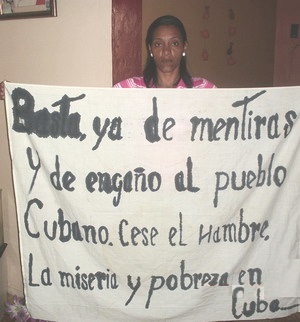
Enough already with the lies and fooling the Cuban people. End hunger, misery and poverty in Cuba.

Let’s look at how wages behaved (in dollars) by province and sector in 2012.

According to the National Office of Statistics and Information, of the 15 provinces plus the special municipality of Isla de la Juventud, those reporting higher average monthly wages per worker were Ciego de Avila ($ 20.60), Matanzas ($19.32), Cienfuegos ($19.00), Sancti Spiritus ($18.92) and Pinar del Rio ($18.84).

Those who reported the lowest monthly wages were Isla de la Juventud ($18.04), Guantanamo ($17.36) and Santiago de Cuba ($17.32).

The sectors with higher wages paid in 2012 were construction ($23.20), Mining and Quarrying ($22.64), Electricity, Gas and Water ($20.80) and Agriculture and Fisheries ($20.52).

The poorest paid sectors were Services Companies ($17.28), Community Services ($17.00) and Trade, Food and Hotels ($15.04).

Such miserable salaries, that aren’t even enough to eat badly for two weeks, are the cause of the black market and corruption.

The salaries are even lower in Santiago de Cuba and Guantanamo. In both provinces in the last five years there have been no new sources of employment, young people, on reaching working age, decide — at whatever cost — to emigrate to Havana, although they have to pass through a thousand and one nights.

Young people work miracles to get a place as a shopkeeper, a worker in a snack bar or restaurant or to achieve the golden dream of a being staff in a tourist hotel. The dollars they “find” (generally no less than $200 a month), not infrequently with shady under the table deals, allow them standards of living that are horrifyingly different from what a doctor or any other professional earns.

The monetary union that the government says it is going to carry out will change nothing about the miserable salaries Cubans earn.

Osmar Laffita Rojas ramsetgandhi@yahoo.com

Cubanet, 22 October 2013