Wi-Fi zones are disappearing, mobile coverage is failing, and customers are chasing an increasingly scarce signal.
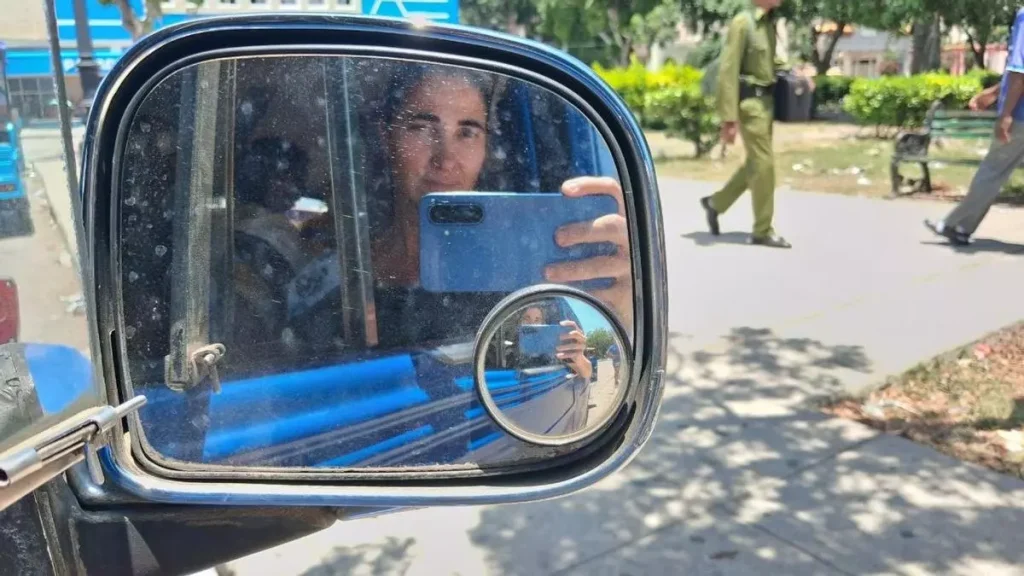
 14ymedio, Yoani Sánchez, Havana, June 29, 2026/ Galiano and San Rafael Park is packed this Monday with people staring at their cell phone screens. “I got lucky,” I say with relief after passing through several Wi-Fi zones where there’s neither signal nor antenna left. But the joy is short-lived on the Island of the disconnected, and a young woman explains to me that there’s no longer any wireless internet service installed at that central corner. “We’re here chasing a 4G signal because in Central Havana there’s almost no coverage.”
Without saying it, without prior announcements nor public justifications, the state telecommunications monopoly Etecsa has been dismantling those parks that, for many Cubans, were the first place they encountered the vast global internet. “People come early because it seems there’s still tower nearby that still functions,” adds the woman, hurrying through the conversation so as not to miss a single second of connectivity. The internet has once again become a scarce and hard-to-obtain commodity, so we have to take the maximum advantage every time the messages start downloading, the web pages open, and the notification sounds return to our phones.
The scene reminds me of 20 years ago, when the only internet cafes in Havana accepted only foreign customers.
The scene reminds me of 20 years ago, when the only internet cafes in Havana accepted only foreign customers. In one of them, located in the Capitol building, passing myself off as a tourist, I published the first post of my blog, Generation Y. But now, no foreign passport is worth anything. When travelers leave their hotels, they’re just as disconnected as we are. Their cell phones, with the Cuban SIM cards they bought at the airport or at some Etecsa office, also remain silent for most of the day.
I decide to walk up Galiano Street, meanwhile thinking about how long it’s been since I last checked social media. I’ve been abandoning my profiles on X, Facebook, and LinkedIn, only accessing them in the early morning to post my podcast, reply to a few comments, and occasionally wish a friend a happy birthday. I watch the people sitting in doorways along the central avenue, selling trinkets, begging, or scrolling through their phones trying to refresh a frozen page.
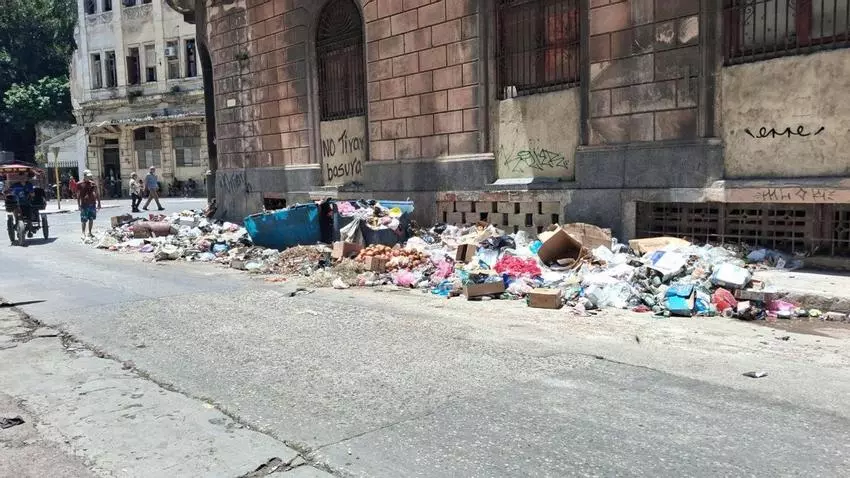
I pass by the Moure building, my favorite in Havana. It’s shaped like a ship, and at its base, a mountain of garbage already spills out toward the entrance. A man is rummaging through the trash.
At the top of Reina Street I flagged down a tricycle. The back was packed with passengers, but the driver offered me a seat so I could sit next to him. Necessity multiples the spaces in these vehicles. “If they let me, I’ll add a second level to carry more people,” he joked. A classic Ford, in use as a private taxi, honked loudly nearby. The rivalry between the classic American cars and the recentlyarrived tricycles was evident. Some accused the others of constantly taking up the middle of the road. Others insisted that the old cars from the beginning of the last century move around the city with arrogance because “they’re tougher than a tank and can crush these sardine cans.”
I avoid taking sides. I’m one of those walkers who tries to go everywhere on foot, and when tiredness or haste gets the better of me, I feel just as blessed whether a nearly hundred-year-old Chevrolet stops for me, or an electric scooter with a seat so narrow I have to hold on tight to the driver to avoid falling off. Finally, I get off in front of Plaza de Carlos III. As a child, I loved this place. There was a shop window with mannequins that reproduced the inside of the human body: models of livers, lungs, and a face, made of plaster, half normal and half skinned.
All those objects belonged to a state-owned company that, in the upper floors of the Plaza, produced supplies for medical schools and the high school or pre-university classrooms where biology was taught. I was fascinated, staring at them while my mother hurried me inside to buy sweet potatoes or some green papaya, which were the only things sold outside of the ration book in those years. Then came the 90s, and the market was dollarized. They named it after a king of Spain, like the street that runs in front of its entrance, although years earlier the authorities had renamed the avenue Salvador Allende.
Today, when I enter the Plaza, I’m hit by the heat from the air conditioning set to its lowest setting. The store has switched back to dollar-based pricing, but there’s very little to buy.
Today, when I enter the Plaza, I’m hit by the heat from the air conditioning on its lowest setting. The store has switched back to dollarization, but there’s very little to buy. The smell of dampness and mold is everywhere. In the food market, there are only a few products, and the sporting goods store barely displays a single bicycle. Looking at the household goods section, it seems that we Cubans only need curtains and pillowcases. And don’t even get me started on the frozen food section, with its empty freezers.
I continue climbing the spiral ramp by inertia , the one I loved running up as a child. The cell phone signal inside the Plaza is minimal, and the data service is practically nonexistent. When I reach the top, I come across Raúl Castro’s face on a wall. He’s clasping his hands in a victory gesture. An employee is watering the plants near a sign that says one should dedicate oneself “modestly and without fanfare” to one’s assigned role. I leave the market with an empty bag.
I manage to climb into a bright blue almendrón, a classic American car. Next to me, an elderly man with a cane is carrying an enormous plastic water jug. “In my neighborhood we haven’t had a drop of water for almost 20 days,” the main justifies, unable to prevent the jug from resting partially on one of my legs. A tricycle passing nearby cuts in front of our car. The driver’s curse echoes inside. Every time we stop at a traffic light, some passengers automatically swipe their thumbs across their phone screens to see if they’ve gotten a signal. But not a single notification pops up.
Previous Havana Chronicles:
Under the Shadow of a Giant Syringe, Cuba Remains the Land of Waiting
The Time For Reforms Has Passed
Surrounded by Garbage, Miramar Is No Longer the Glamorous Neighborhood It Once Was
A Circus Facing Off Against Power, and a City Growing Increasingly Lonely
Chronicle of a Monday That Feels Like Wednesday
“We Used to Complain About the ‘CUC’, But Now We Miss It”
The Roar of Despair of a Cuban Woman Returning to Her Country After Many Years
The Tulipán Market Closed: “They’ve Given the Order To Go to the March for Raúl”
Along Carlos III Street and towards Ethiopia
Sleeping Is Also a Privilege in Havana
A Desperate Plea in the Middle of the Dark Havana Night: ‘Light!’
Under a Picture-Postcard Blue Sky, the Country is Crumbling
Fatigue Barely Allows One to Enjoy the ‘Lights On’ in Havana
Dollars, the Classic Card, and a Havana Without Tourists
A Journey Through the Lost Names of Havana
The Shipwreck of a Ship Called “Cuba”
Havana Seen From ‘The Control Tower’
In Havana, the Only Ones Who Move Are the Mosquitoes
Reina, the Stately Street Where Garbage is Sold
Searching for Light Through the Deserted Streets of Havana
The Death Throes of ‘Granma’, the Mouthpiece of a Regime Cornered by Crisis
The Anxiety of the Disconnected Cuban
One Mella, Three Mellas, Life in Cuba Is Measured in Thousands of Pesos
It Is Forbidden To Leave Home in Cuba Today Because It Is a “Counter-Revolutionary Day”
Vedado, the Heart of Havana’s Nightlife, Is Now Converted Into a Desert
_________________
COLLABORATE WITH OUR WORK: The 14ymedio team is committed to practicing serious journalism that reflects Cuba’s reality in all its depth. Thank you for joining us on this long journey. We invite you to continue supporting us by becoming a member of 14ymedio now. Together we can continue transforming journalism in Cuba.