Leaving us out in the sun rather than allowing us into the air-conditioned room feeds the custodian’s authority and might even give him a dopamine rush.
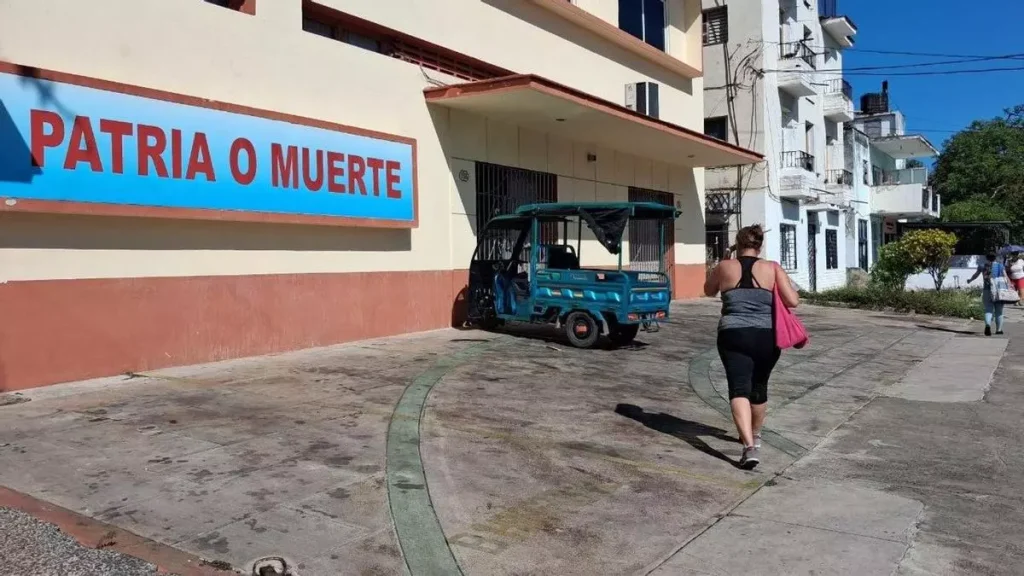
 14ymedio, Yoani Sánchez, Havana, May 28, 2026 / After more than two decades in Stockholm, a childhood friend has recently returned to Havana. The death of her grandmother brought her back to an island where she had only spent a few days on vacation since emigrating. Acting as a guide for a Cuban living abroad is a bitter task. The first thing is to make it clear that the country she remembers no longer exists, that the nation she cherishes in her memory disappeared long ago.
For the first few days, my friend enjoyed everything. She told me she felt relieved to barely be able to communicate on the internet and hardly at all by phone, after years of overexposure to social media in Sweden. She savored a mamey and felt like she was in heaven. She tasted a cherimoya and fell into a trance. But that naive joy soon ended. Reality seeped like corrosive acid through the cracks of her illusion.
Empowered with a foreign bank card, my friend decided to go shopping for groceries to prepare a family dinner. I reluctantly accompanied her, knowing that frustration is the most common commodity found in those stores that operate in dollars. We walked up the hill on Tulipán Street and then down to La Mariposa. Inside, all the refrigerators were empty. There was no meat, no butter, no sausages, and certainly no fish. My friend pouted like a Swede in distress.
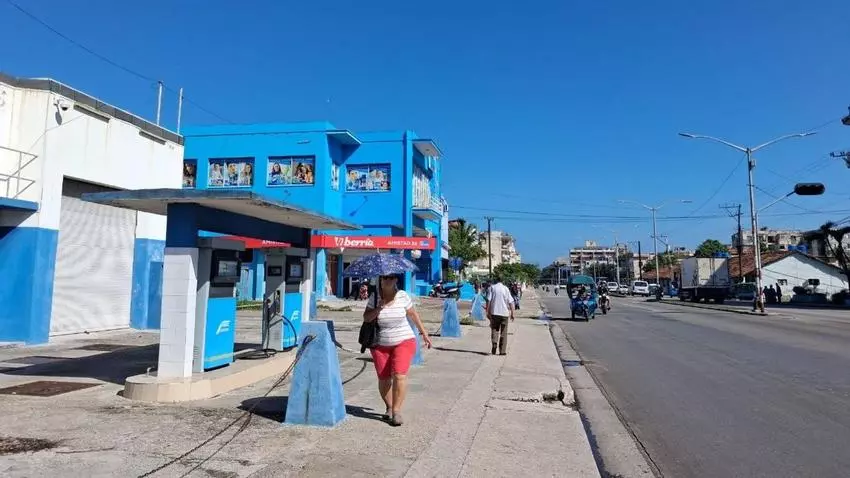
Then, with that indefatigable energy that comes from eating well for the last quarter of a century, she told me we should go to a market on 26th Street. “I read online that it has Spanish products and is well-stocked,” she explained to me. My face responded with a skeptical expression. We passed the Acapulco movie theater, and then she told me that’s where she had her first kiss with her high school sweetheart. The dark lobby, the marquee without advertisements, and a faint whiff of urine wafting from under the door brought her back to the present.
Near the Chinese cemetery, a man under 30, dressed in rags, caught up with us and gave each of us an azalea flower. “Something to eat,” he said immediately after handing us the fragile, purple petals. My friend didn’t have any cash, but she gave him a bag containing a can of soda and a ham and cheese sandwich. The young man started crying like a child, and she couldn’t tell if it was from emotion or because she had offended him by giving away her snack. “Those are the tears of hunger,” I had to explain to her.
Across from the building that was once Raúl Castro’s home, an intense blue facade marks the dollar market in that neighborhood. A dozen people crowded around the small doorway. There wasn’t room for another soul in the shade, so we waited outside. No one was going in, no one was going out. “They’re inputting yesterday’s sales into the cash register because they didn’t have electricity and had to process them by hand,” an elderly woman who was also waiting explained to me.
Reality seeped like corrosive acid through the cracks of her illusion
After about half an hour, several people waiting to enter decided to leave. My friend’s face was bright red; I don’t know if it was from the blazing sun or from the frustration caused by all the nonsense. Then the power went out. Everything inside went dark. An employee came out to explain that they couldn’t process card payments anymore because “when there’s no power, the reader doesn’t work.” The Cuban-Swedish woman next to me looked like she was fuming.
In most of the dollar stores that the Cuban military has opened across the country, sales made with debit cards are canceled when the electricity goes out. The explanation, after inquiring with employees and managers, boils down to the fact that the POS (point-of-sale) terminal loses power and cannot communicate with the bank to process the transaction. The cash registers also shut down, and each purchase must be recorded by hand on endless forms with an original and a copy.
I do a quick calculation. A battery to power the POS and the cash register for several hours would cost, at most, a few hundred dollars. In other words, Gaesa loses tens or hundreds of thousands of dollars every day by not investing in small backup power plants. This mix of rapacity and stinginess has characterized the military conglomerate for decades. Quick to squeeze foreign currency out of people’s pockets, it’s also profoundly inefficient at improving its services. Greed and negligence; predation and incompetence, all together and packaged in an olive-green uniform from which the businessman’s tie awkwardly peeks out.
In El Laguito, they must be having nightmares about a mob storming through the gates of the dollar markets, the ministerial offices, and the government palaces.
Then my friend and I walked to another store, the same kind, in El Vedado. A security guard closed the door right in front of our faces. Inside the store there wasn’t a single customer, but we had to wait outside for more than ten minutes. Everyone with any power in Cuba tries to squeeze every last drop of that power out of others. Leaving us out in the sun rather than letting us into the air-conditioned store feeds their authority and maybe even gives them a dopamine rush. Prohibiting, blocking access, and scolding reinforce the small sphere of control held by the security guards, doormen, and the CVP (Surveillance and Protection Corps).
I sit on the curb to wait. I notice that of all the wide glass doors this market used to have, only one small one is open. The rest have been boarded up, and some are covered with metal plates to protect them from stones. Castro’s regime has always been afraid of the people. In El Laguito, they must have nightmares about a mob storming through the gates of the dollar markets, the government offices, and the presidential palaces. Blocking the flow of the masses means walling off every space through which a crowd could enter.
My friend lets out a roar of desperation. I look at her; her eyes are narrowed, she’s biting her lower lip, and she’s about to swear—no one knows if in Swedish or in the Spanish of La Timba, where she was born and raised. “Let’s go, I can’t take it anymore,” she begs me. I haven’t had to explain much. Reality itself has made it clear that the country she remembers no longer exists.
Previous Havana Chronicles:
The Tulipán Market Closed: “They’ve Given the Order To Go to the March for Raúl”
Along Carlos III Street and towards Ethiopia
Sleeping Is Also a Privilege in Havana
A Desperate Plea in the Middle of the Dark Havana Night: ‘Light!’
Under a Picture-Postcard Blue Sky, the Country is Crumbling
Fatigue Barely Allows One to Enjoy the ‘Lights On’ in Havana
Dollars, the Classic Card, and a Havana Without Tourists
A Journey Through the Lost Names of Havana
The Shipwreck of a Ship Called “Cuba”
Havana Seen From ‘The Control Tower’
In Havana, the Only Ones Who Move Are the Mosquitoes
Reina, the Stately Street Where Garbage is Sold
Searching for Light Through the Deserted Streets of Havana
The Death Throes of ‘Granma’, the Mouthpiece of a Regime Cornered by Crisis
The Anxiety of the Disconnected Cuban
One Mella, Three Mellas, Life in Cuba Is Measured in Thousands of Pesos
It Is Forbidden To Leave Home in Cuba Today Because It Is a “Counter-Revolutionary Day”
Vedado, the Heart of Havana’s Nightlife, Is Now Converted Into a Desert
______________________
COLLABORATE WITH OUR WORK: The 14ymedio team is committed to practicing serious journalism that reflects Cuba’s reality in all its depth. Thank you for joining us on this long journey. We invite you to continue supporting us by becoming a member of 14ymedio now. Together we can continue transforming journalism in Cuba.