
Prisoners Defenders Report Finds that the Cuban Government Limits Religious Freedom and Creates ‘Imposter’ Associations

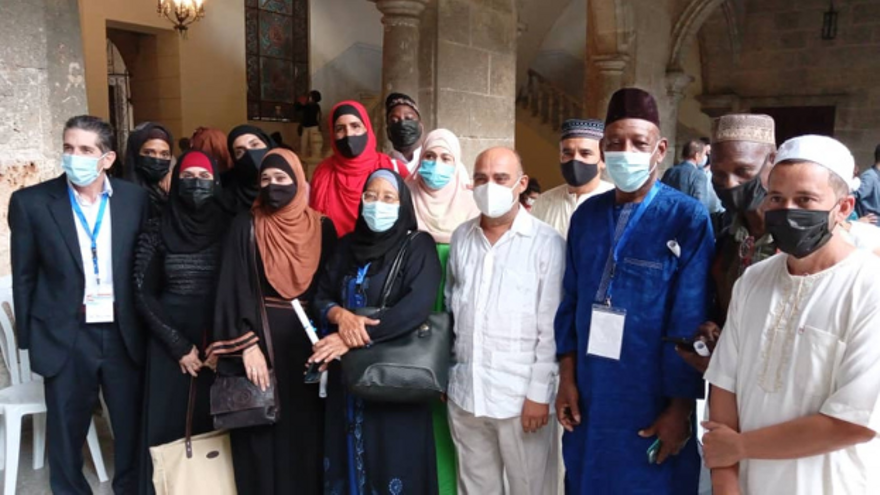
Members of the Council of Churches and the Islamic League of Cuba, two government-affiliated institutions, according to Prisoners Defenders. (Islamic League of Cuba)

14ymedio bigger14ymedio, Havana, 2 August 2022 — On Thursday, Prisoners Defenders shared their report, Constitutional Reform and Religious Freedom in Cuba, a companion document to accompany the evaluation conducted by the U.S. Commission on International Religious Freedom (USCIRF).

In this new document, Prisoners Defenders, which contributed to the U.S. report, analyzed the testimonies of 56 religious leaders and lay Cubans from the four major religions in the country: Catholics, Protestants, Yorubas and Muslims.

The document highlights the complete or partial violations of rights associated with the optimal exercise of religious freedom, by government authorities, police and the Office of Religious and Communist Party Affairs, in particular. These include the right to freedom of expression, assembly, association, privacy/intimacy, non-discrimination and movement.

Some “considerations on the Constitution” detail legal issues related to religious freedom in the Cuban Constitution of 2019. To this end, Prisoners Defenders conducted an analysis this year, which concluded that “compared to the Constitution of 1976, the current Constitution represents a slight backsliding related to normalization of the legal framework on religious matters.”

Publishing of the new Constitution eliminated the possibility of drafting a Religions Law, a “pending task” since 1976. Furthermore, in proclaiming that “the Communist Party” is the superior political force leading society and the State,” the constitutional text limits its own field of action and confers upon the Party a “supra-constitutional” status.

According to the report, the Party as well as its Office of Religious Affairs are “dark organizations and work in the absence of legislation.”

One extensive section on repression provides specific data on the frequency with which religious leaders receive police summons, prohibitions of any kind, arbitrary detentions, acts of repudiation, surveillance, and expressions of hate. Several cases also refer to the inability to conduct processions, public rituals, burials and visits as well as obstructing travel, donations and constructive works. continue reading

Prisoners Defenders describes the process through which the Cuban government has historically attempted to create “false institutions” which supplant the international representativeness of religious associations.

“In the case of Christian Churches it created the Council of Churches; in the Yoruba religion, the Yoruba Cultural Association; and in the Islamic religion, it created the Islamic League of Cuba. All three organizations are controlled by State Security,” the document states.

It also states that, although the “techniques” vary from one statement to the other, they share the same pattern of repression. However, the government “protects itself” against frontal attacks, especially toward the Catholic Church, due to the “organization and international protection said church has.”

With regard to Protestant churches, the repression “takes a more obvious form” in two phases. The objective of the first is to de-link a pastor’s activism from his superior leader, often at the international level, by means of blackmail. The second phase includes social isolation of the pastor, which typically ends in jail or exile.

With regard to the Yoruba religion, the report states that it is “pampered” by the government, however it is “illegal and has never been allowed or officially legitimized.” This drives the priest or babalawo to practice his religion “behind the law’s back, under unlawful conditions, perfect for blackmail at any moment.”

Repression of Islam is “a special case” according to Prisoners Defenders, as the government “created a registered institution with fake Muslims — State Security agents loyal to government officials,” as a maneuver to overshadow the work and prestige of Imam Hassan Abdul Gafur (Ernesto Silveira Cabrera), a driving force of the Muslim religion on the Island. Authorities systematically and internationally announced that Silveira was the creator of the official Islamic League, which contributed to the organization’s prestige.

The League provides added value, as it allows the Cuban government to claim, at an international level, that it is a “country that respects Islam”, which bought it favor in dealings with Muslim nations. All of the Islamic leaders interviewed were in agreement that the League has “an official political agenda” and that it is one of the religious arms of State Security.

In its report, Prisoners Defenders includes USCIRF’s conclusions regarding the limitations of religious organizations to perform charity, relying on communications media spaces and carrying out constructive reforms.

Furthermore, the report reiterates the considerations of the United Nations’ Special Rapporteur on Freedom of Religion or Belief on religious freedom on the Island. “The evaluation team determined that Cuba does not comply with 33 [indicators] and partially complied with three indicators,” indispensable for the free exercise of this right.

Translated by: Silvia Suárez

____________

COLLABORATE WITH OUR WORK: The 14ymedio team is committed to practicing serious journalism that reflects Cuba’s reality in all its depth. Thank you for joining us on this long journey. We invite you to continue supporting us by becoming a member of 14ymedio now. Together we can continue transforming journalism in Cuba.

Miguel Mouse, ‘Che’ Guevara and Marianao’s Jokers

For Caignet, writing ’Miguel Mouse” during the time of Gerardo Machado resulted in a brief but notorious stay in prison.

14ymedio bigger14ymedio, Reinaldo Escobar, Havana, 29 June 2022 — Félix B. Caignet, considered the founder of radio soap operas, also wrote children’s songs and was an opponent of the first dictatorship suffered by Cubans. Among his contributions is the musical theme known as El ratoncito Miguel [Miguel Mouse], which, in the time of Gerardo Machado, resulted in a brief but notorious stay in prison.

Even at the end of the 1950s, when we endured the second dictatorship in our history, those of us who were then children raised our voices on the occasion that was propitious to emphasize the verse that said:

The thing is

that it horrifies and really scares

And you’ll see

how a mouse will die of hunger

There’s no cheese anymore

much less a slice of ham

Let’s see

who is going to tear out Misifú’s heart.

Mistifú wasn’t a cat, but the repressor on duty. Tearing out his heart meant overthrowing him from power, and the “let’s see” was related to the one who bells the cat. Cross-references that are the essence of every culture.

Years later, an Argentine who believed he knew the essence of the Cuban pontificated that the original sin of our intellectuals was summarized in the fact that they were not revolutionaries. Ernesto Guevara said it in an article entitled “Man and Socialism in Cuba,” where he labeled the entire intelligentsia of a country through his tunnel vision of a classist, Marxist revolutionary.

Today there is no shortage of those who evaluate with Guevarist criteria the behavior of those who appeal to irony and sarcasm to criticize the dictatorship. They are the same ones who don’t forgive anyone who writes the word “government” where it should say “dictatorship.”

They are the ones who don’t stop understanding that, if they’re not a government, they’re not a dictatorship.

The best joke of the year, if that contest existed, would have as winners those young people who identified Marianao* as the territory where all the promises of the dictatorship were fulfilled.

Félix B. Caignet would feel a healthy envy if he found out that his little mouse has found another way to make fun of the cat.

*Translator’s note: In the linked video two young people on a motorcycle, responding to a question from Cuban State media, say everything is fine in the Marianao neighborhood in Havana — there are no shortages, no blackouts, ‘there is everything.’

Translated by Regina Anavy

____________

COLLABORATE WITH OUR WORK: The 14ymedio team is committed to practicing serious journalism that reflects Cuba’s reality in all its depth. Thank you for joining us on this long journey. We invite you to continue supporting us by becoming a member of 14ymedio now. Together we can continue transforming journalism in Cuba.
Belarus Agrees with Cuba to Distribute the Soberana Plus Vaccine

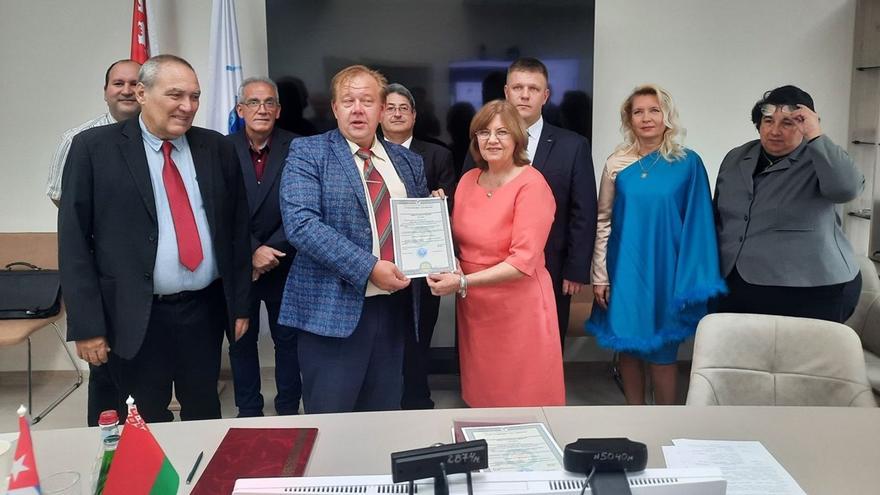
With the approval of Soberana Plus, Belarus joins the axis of countries that, like Iran, Venezuela, Nicaragua and Mexico, have agreed with Cuba to distribute or produce its vaccines. (Finlay Institute)

14ymedio bigger

14ymedio, Havana, 27 July 2022 — Belarus became the first country in Europe on Wednesday to approve the use of the Cuban-made Soberana Plus COVID-19 vaccine. Dmitry Vladimírovich, director of the Expertise and Testing Center of the Ministry of Health of Belarus, met in Minsk with a delegation of officials and scientific staff from the island, present in the Slavic country until July 28.

During the meeting, Vladimírovich delivered the certificate, which supports the use of the drug in Belarusian territory, to Vicente Vérez Bencomo, director of the Finlay Institute of Vaccines, and to Olga Lidia Jacobo, who chairs the Center for the State Control of Medicines, Equipment and Medical Devices of Cuba.

The island’s ambassador to Minsk, Santiago Pérez Benítez, also received the endorsement of Soberana Plus. For his part, the rector of the State University of Medicine of Gomel, Ígor Stoma, talked about the experience of the use of vaccines in Belarus so far.

The Cuban delegation also held a discussion with the Belarusian Minister of Health, Dmitry Pinevichs, to evaluate subsequent contracts in the field of medicines and pharmaceutical cooperation from Havana. continue reading

According to the Ministry of Foreign Affairs of Cuba, Pinevichs referred to the “issues related to cooperation in the field of the circulation of medicines and medical products, in particular the location of Cuban medicines and vaccines in the territory of Belarus, as well as the possibility of exporting Belarusian pharmaceutical products to Cuba.”

The delegation also visited a pediatric hospital in Minsk, where a lecture was given on the application of the Soberana vaccine to children.

Neither Vladimírovich nor the Minister of Health of Belarus resisted the temptation to politically qualify the medical agreements with Cuba. The director of the professional training center said that he had been chosen on July 26 to sign the registration of the vaccine as a tribute to the “Day of National Rebellion.”

The president of Belarus, Aleksandr Lukashenko, also referred to the date in a message addressed to Cuban President Miguel Díaz-Canel, in which, handling the usual topics about the 1953 assault on the Moncada barracks, he also stated that his Government’s “economic and commercial cooperation” with the island was assured.

With the approval of Soberana Plus, Belarus joins the axis of countries that, such as Iran, Venezuela, Nicaragua and Mexico, have agreed with Cuba to distribute or produce its vaccines against COVID-19.

The signing of these commitments is not only restricted to the medical aspect, but also bring with them other requirements of a political, economic, military and commercial nature, deeper and longer-term, among the countries involved.

The Cuban Government itself has placed the vaccines produced at the Finlay Institute at the forefront of its international propaganda. Campaigns, concerts, conferences, academic events and exchanges with delegations similar to the one that came to Minsk this month are an effective point of diplomatic contact with the countries that agree to distribute pharmaceuticals from the island.

Translated by Regina Anavy
____________

COLLABORATE WITH OUR WORK: The 14ymedio team is committed to practicing serious journalism that reflects Cuba’s reality in all its depth. Thank you for joining us on this long journey. We invite you to continue supporting us by becoming a member of 14ymedio now. Together we can continue transforming journalism in Cuba.
The 54 Cuban Doctors in Nayarit, Mexico, Still Can’t See Patients

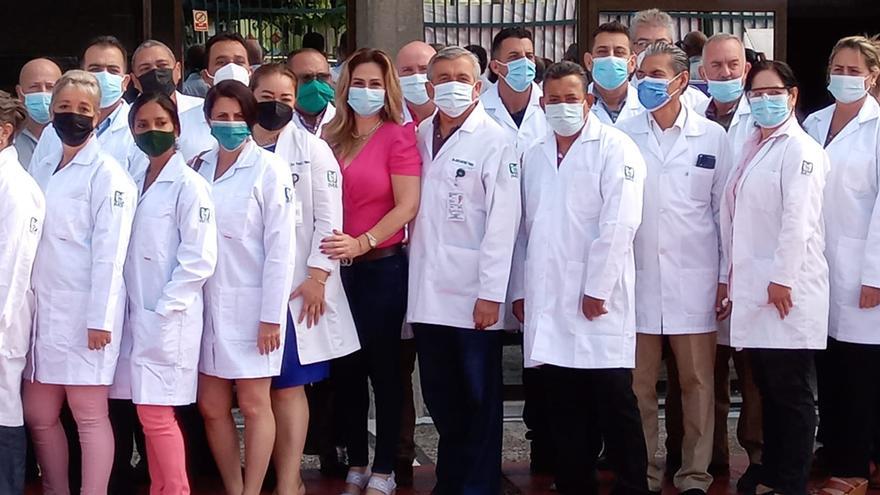
The delegation of Cuban doctors is housed in a hotel in downtown Tepic, in the Mexican state of Nayarit. (Twitter/@MarcosRguezC)

14ymedio bigger14ymedio, Ángel Salinas, Mexico, 29 June 2022 — Almost a week after the arrival of 54 Cuban doctors in the state of Nayarit, they are not yet allowed to see patients in the territory. A source from the local health sector confirmed to 14ymedio that they must undergo “study evaluations” before providing services in the hospitals in the seven marginal areas and the Tepic clinic to which they were assigned in Mexico.

On Thursday, the Secretary of Health of Nayarit, José Francisco Munguía, agreed to have the island’s doctors evaluated. “The [test] they do today defines if they are already ready,” he said, because, although “they are already demanding them from me” in the units, Cuban health workers must have a “leverage in the Directorate of Professionals,” a document that is also required of national doctors.

Article 5 of the Mexican Constitution establishes that, for the “exercise of one or more specialties, authorization from the General Directorate of Professions is required.” The retired minister of the nation’s Supreme Court of Justice, José Ramón Cossío, explained that to qualify for this permit, Cuban health workers “have to obtain the corresponding certificate.”

Sofía, a Mexican specialist who has had contact with the Cuban brigade, questioned the validity of the evaluation: “What they have received are lectures by some colleagues on specific topics and administrative training.”

One of these lectures was given by cardiologist Alejandra González, from the High Specialty Cardiological Unit. This specialist said that during the exchange of views on the treatment to be followed in patients with acute infarction, she was able to calibrate the level of the Cuban health workers. continue reading

“There I knew that there was nothing to discuss, that we are in two parallel worlds, different worlds in which the Mexican Government romantically wants to see the doctors of a third world country as a salvation,” Gónzalez said on her social networks.

The Mexican cardiologist specified: “Medical specialists asked me for the PowerPoint [slides] file to read again from there! I am perhaps more disappointed than annoyed, and maybe I am judging and generalizing, but if we examine them, I don’t think they’re ready.”

The lack of preparation of the doctors was also questioned by Gabriel Quadri, a deputy opposed to the Government of Andrés Manuel López Obrador, who also filed a complaint in March with the Office of the Attorney General of the Republic “for human trafficking, labor exploitation and forced labor,” when the hiring of 500 Cuban doctors by the Government of Mexico was confirmed.

A report revealed that the doctors on the island who arrived last year to support Mexico during the pandemic limited themselves to “making beds, taking vital signs, conducting surveys and passing sponges to patients to bathe.”

14ymedio verified that the 54 Cuban doctors who are currently in the country remain at the La Palomas hotel. “We have a crowd due to a doctors’ convention, but as of August 1, there is availability in the 75 rooms we have,” the receptionist said, by phone.

The hotel, which costs from $52 to $83 per night, has 67 standard rooms, six junior suites and two suites, all with cable TV, telephone, air conditioning and wireless network. Guests have free access to the pool and a jacuzzi.

The deputy of the opposition National Action Party, Mariana Gómez del Campo, expressed her disagreement with the hiring of 500 Cuban health workers by the Government of Mexico, “since the purpose of these missions is to enslave and exploit people.” According to her, in order for them to practice “they need a Mexican professional card” that they “don’t yet have.”

In Ixtlán del Río, one of the municipal capitals of Nayarit where health workers are expected to arrive, a residence has already been set up for two internists and two Cuban pediatricians. In the municipal presidency they are aware that the delay is due to an administrative obstacle.

In the hospital of the municipality of Rosamorada, however, they claim to be unaware of the causes for the delay. In this health center, which will be attended by eight Cuban doctors, 30 to 34 specialized consultations are offered, and up to three surgeries and three deliveries have been performed per day.

Translated by Regina Anavy

____________

COLLABORATE WITH OUR WORK: The 14ymedio team is committed to practicing serious journalism that reflects Cuba’s reality in all its depth. Thank you for joining us on this long journey. We invite you to continue supporting us by becoming a member of 14ymedio now. Together we can continue transforming journalism in Cuba.
Several Relatives of July 11th (11J) Detainees are Arrested at the Cathedral in Havana, Cuba

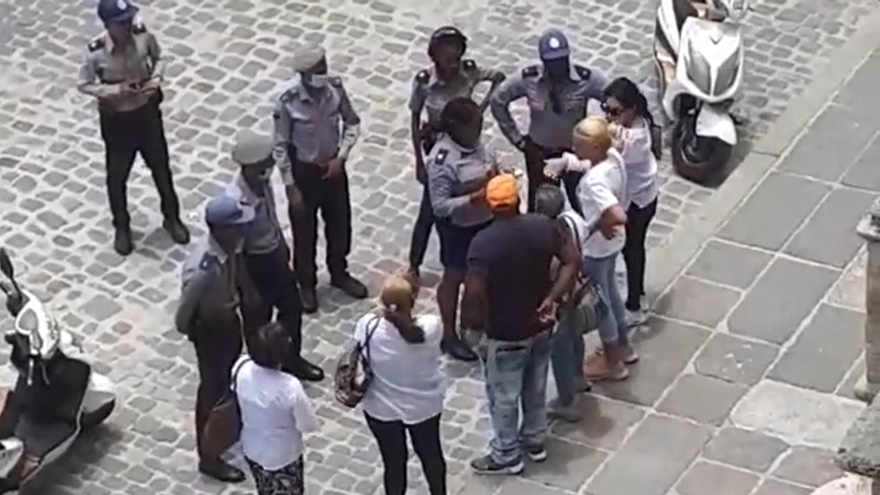
Several police officers approach the group and demand to see their IDs. (Capture)

14ymedio bigger14ymedio, Havana, 1 August 2022–Several relatives of 11J (11 July 2021) detainees were arrested on Monday after conducting a peaceful protest at the steps of Havana’s Cathedral. The protesters have been identified as: Liset Fonseca Rosales, Marta Perdomo Benítez, Ailex Marcano Fabelo, Delanis Álvarez Matos, Saily Núñez y Wilber Aguilar, who were taken to the police station at Cuba and Chacón in Cuba’s capital.

Fonseca is the mother of Roberto Pérez, who was sentenced to 10 years in prison while Marta Perdomo is mother to Nadir and Jorge Martín Perdomo, brothers who are serving 6- and 8-year prison sentences, respectively.  Aguilar is the father of Walnier Aguilar (a 23 year sentence), and Núñez is the wife of Maikel Puig (a 14 year sentence).

A video posted on Twitter by Albert Fonseca, a Cuban activist based in Canada, who is Roberto Pérez Fonseca’s brother and Liset’s son, shows the group yelling slogans such as “Patria y Vida [Homeland and Life]” and “Libertad [Freedom]” while someone dressed in civilian clothing, whose identity is unknown, attempts to silence them.

Later, several police officers approached the group and demanded to see their IDs. After the protesters had apparently dispersed, Fonseca himself denounced his mother’s arrest, along with that of the other  protest participants, stating that he held “the Cuban dictatorship” responsible.

Moments before the arrest, I’m asking for freedom they are just parents and spouses asking for the release of their political prisoner relatives.

During a livestream, Fonseca explains that, “it was all planned to be a protest at the Capitol building.” “We don’t know if they were infiltrated,” the activist suspects because “it was teeming with police.”

The family members then decided to look for an alternative, and, taking into consideration the public visibility factor, they marched to the Cathedral plaza in Havana.

“The protest did not last any longer than that,” added Fonseca, who believes that the progressive opening to tourism and recurrent protests have spurred, “a lot of police movement.” Although the camera could not record the moment of the arrest, as soon they demanded their IDs, the police officers arrested the family members. continue reading

According to Fonseca’s sources, officer Yoel Argüelles will be in charge of investigating the the family members’ case. “He is one of the oppressors in charge of activists and their family members.”

Before concluding the livestream, the activist added that this is the moment to pressure the regime through peaceful protests, since the economic crisis and the presence of international tourism on the Island increase the visibility of the situation.

Today, at the Cathedral of Havana, I demand freedom for all those brave family members of  political prisoners.

Fonseca promises to share more images but stated that he needs to edit them, so as to not jeopardize his sources.

Since the 11J protests, several people have been detained for protesting in favor of freedom for their family members. Some family members of political prisoner, Andy García, who is being held in Villa Clara, have been harassed and interrogated by State Security on several occasions over the last year.

In February, Yudinela Castro Pérez, mother of 18-year-old Rowland Castro, was arrested for demanding her son’s release. This also happened to Migdalia Gutiérrez Padrón, mother of one of the protesters at La Güinera, arrested by police on the anniversary of 11J for dressing in white.

Bárbara Farrat, mother of Jonathan Torres Farrat, who is only 17 years old, was jailed for several hours on December 24, 2021 for demanding that Cuban families be together during Christmas and the end of the year. Several times State Security has threatened Farrat with the possibility of charging her with sedition.

Translated by: Silvia Suárez

____________

COLLABORATE WITH OUR WORK: The 14ymedio team is committed to practicing serious journalism that reflects Cuba’s reality in all its depth. Thank you for joining us on this long journey. We invite you to continue supporting us by becoming a member of 14ymedio now. Together we can continue transforming journalism in Cuba.
Cuban Doctors Already in Nayarit, Mexico, Aren’t Yet Seeing Patients, With the Hiring of Another 60 Cuban Doctors Already Announced

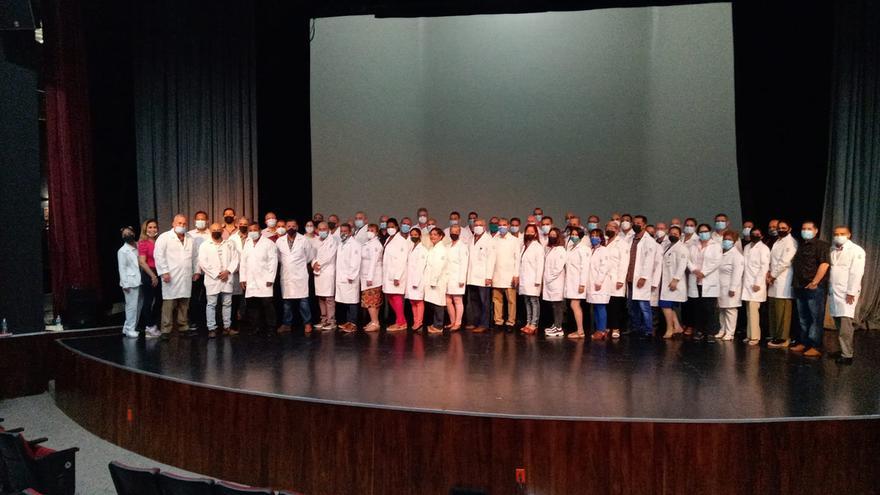
The brigade of 54 Cuban doctors that arrived in Nayarit, Mexico, last week still can’t join the hospitals in marginalized areas. (Twitter/@MarcosRguezC)

14ymedio bigger14ymedio, Ángel Salinas, Mexico, 1 August 2022 — The Institute of Health and Welfare (INSABI), an agency of the Government of Mexico, plans to cover the lack of 66 national specialists for the state of Colima with the hiring of another 60 Cuban doctors. The doctors will be assigned to rural areas, where there is a shortage of medicines, and 21% of the population (about 153,592 inhabitants) don’t have access to health services.

According to data offered to 14ymedio by an INSABI worker, doctors on the island will receive 2,042 dollars per month with “contracts of six months and one year of stay,” although it’s not known if the Government of Cuba will be the manager of the agreement and the one who distributes the salary, as happens in other medical brigades.

In Colima, the next arrival of Cuban gynecobstetricians, internists, anesthesiologists, pediatricians and surgeons is expected, “whose hiring will take place along with the regularization of 870 temporary workers,” doctors and nurses who were already working in state clinics.

This announcement is made a week after the arrival in the Mexican state of Nayarit of 54 doctors from the island, whose incorporation into second-level hospitals remains unknown, as well as the results of the evaluations to which they have been subjected, which will serve as a “leverage in the Directorate of Professionals,” a document that is also required of national doctors, according to the Secretary of Health of Nayarit, José Francisco Munguía.  A source from the local health sector assures this newspaper that “some procedures have yet to be covered.”

“It was planned that, this Monday, at least part of the brigade was now going to join the hospitals in which they were assigned to start providing consultation,” says the local official. The federal health sector says it doesn’t know the reasons for the delay. continue reading

In the hospital, located in the town of Las Varas, in the municipality of Compostela, the health authorities also ignore the date of arrival of the Cuban doctors. “When do they arrive? No one knows,” says Rocío, a nurse from this town in the state of Nayarit who was contacted by 14ymedio. “All support is always welcome, but it bothers us that it is now that they pay attention to our hospital, which has so many needs, and all because of the arrival of Cuban doctors. Anyway, I hope they arrive soon.”

Nor have the residents of Puente de Camotlán (La Yesca), Jesús María (Del Nayar), San Francisco and Tondoroque (Bahía de Banderas) and the municipal capitals of Santiago Ixcuintla, Rosamorada and Ixtlán del Río received specific news about  the Cuban doctors.

This Sunday, Xavier Tello, a doctor and health policy analyst, explained that in order for the Cubans to be able to practice their profession in Mexico, they require “a Mexican professional card to accredit their studies, and, in the case of specialists, they must have a certification from the Council of their specialty.”

Tello noted in an interview with Radio Fórmula that “the only way they can take care of a person is under the direct supervision of a Mexican doctor with a professional card, but they cannot issue a prescription or offer a diagnostic opinion.”

For the analyst, “the reality is that the Government of Mexico wants to give money to Cuba, period.” This will be done, according to Tello, through two channels: “Training these doctors and sending some Mexican interns to study on the island.”

This newspaper tried to contact, without success, the Cuban health workers, hosted until further notice at the La Palomas hotel, in Tepic. “They can’t take calls,” said the receptionist, who pointed out that they leave the hotel early and spend almost nine hours at the headquarters of the state delegation of the Mexican Social Security Institute of Nayarit.

Translated by Regina Anavy

____________

COLLABORATE WITH OUR WORK: The 14ymedio team is committed to practicing serious journalism that reflects Cuba’s reality in all its depth. Thank you for joining us on this long journey. We invite you to continue supporting us by becoming a member of 14ymedio now. Together we can continue transforming journalism in Cuba.
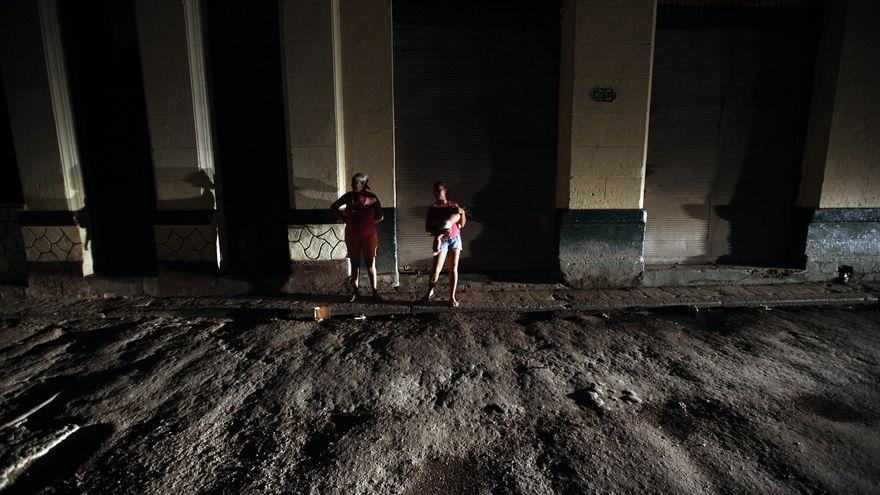
The ‘Misunderstanding’ of the Cuban People

Havana must accept power outages in solidarity, the authorities ask. (EFE)

14ymedio bigger14ymedio, Reinaldo Escobar, Havana, 1 August 2022 — Fidel Castro had not yet assaulted the Moncada barracks in Santiago de Cuba when, in communist Germany, on June 17, 1953, the people took to the streets to protest against the system that, eight years later, that future assailant implanted in Cuba.

The Germans who rejected socialism were not expropriated capitalists or petty bourgeois, but construction workers. The poet and playwright Bertolt Brecht, after reading the pamphlets that the Writers’ Union distributed on Stalin Avenue indicating that the people had lost the confidence of the Government and that they could only win it again “with redoubled efforts,” asked himself, ironically, the following in the last verses of his poem, “The Solution.”

“Wouldn’t it be simpler

in that case for the Government

to dissolve the people

and choose another?”

Obviously, the solution to the disagreements of the governed with the measures of the rulers is not that those who rule seek new subjects, but that new policies are proclaimed and, better yet, that it’s others who dictate them.

People don’t have to be sympathetic to their rulers, whether they are democratically elected or hand-appointed by the only party allowed.

If the policies drawn up by those who hold government positions produce enemies in relations with other nations, if as a result of those bad relations it’s difficult to commercialize what the country can sell and acquire what it needs to buy, if the laws make it difficult  to prosper and suffocate entrepreneurs and if, to top it off, dissent becomes a crime, being understanding becomes an act of complicity. continue reading

They want to convince Cubans that people, Party and Government make up an indissoluble Holy Trinity, and that any fissure constitutes a contribution to the enemy. Therefore, understanding is not enough for those who rule: they demand applause and that the people pretend to be enthusiastic.

At the climax of that claim, to justify the inevitable power cuts in the capital in the midst of the blackouts that mainly overwhelm the cities of the interior, they have appealed to the “solidarity” of the people in Havana, who will have to accept, almost celebrate, the absence of electricity so that the people in the provinces suffer less.

The capital’s solidarity could have another less understanding face so that the inhabitants of the interior are not left alone when it comes to protesting. But then, those would be the people that the Government would like to dissolve.

Translated by Regina Anavy 

____________

COLLABORATE WITH OUR WORK: The 14ymedio team is committed to practicing serious journalism that reflects Cuba’s reality in all its depth. Thank you for joining us on this long journey. We invite you to continue supporting us by becoming a member of 14ymedio now. Together we can continue transforming journalism in Cuba.
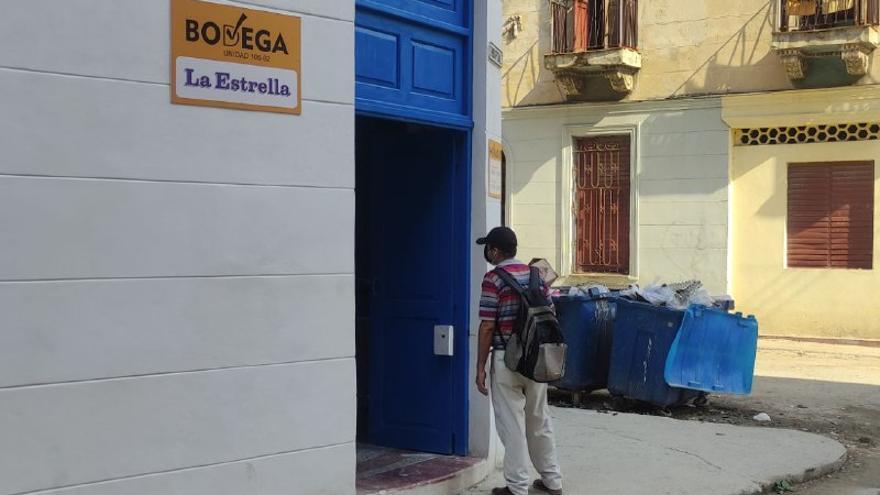
Cuba: ‘A Gleaming Bodega with Hardly Any Food and a Lot of Revolutionary Will’

The bodega (ration store) looked renovated yesterday in salute to the official party on July 26. (14ymedio)

14ymedio bigger14ymedio, Juan Diego Rodríguez, Havana, 27 July 2022 — “Come neighbors, buy something. Sheets, towels, dessert plates, keep coming in.” The proclamation, which was heard this Tuesday where Hospital Street meets Jovellar, came from the woman who runs the bodega (ration store) located on that corner, which yesterday looked renovated, in salute to the official party on July 26th.

Everything had been arranged for the expected date: the painted walls, the polished counter and the neat and clean shelves, exhibiting two bottles of oil, a package of rice and another of sugar. At their side, contrasted other unusual items in the ration stores: sets of sheets at more than 2,000 pesos, towels over 800, plastic plates at 35 and even pens are offered in the local restaurant.

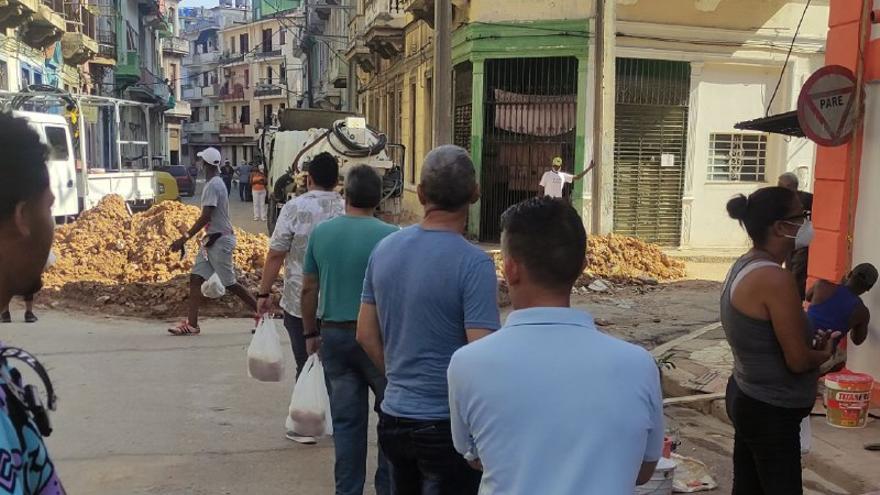
“Oh, but what a cool name they gave it, La Estrella [The Star],” a neighbor joked, pointing to the new sign for the ration store. “It would have been better if they had named it The Muddy Firefly. In the midst of so much land, holes and putrefied waters, didn’t they have another better investment to make?” A woman replied from the line to buy bread in the private cafeteria across the street.

The two establishments are separated by a huge fetid hole, full of sewage from the surrounding buildings that tarnishes the remodeling. (14ymedio)

The two establishments are separated by a huge fetid hole, full of sewage from the surrounding buildings that tarnishes the remodeling. The works began days ago and the street is open to start the repairs but, as often happens, there is no progress to be seen and there are neighbors who are without gas and waiting to see the area cleaned up. continue reading

“We have a gleaming bodega where there is hardly any food, but there is revolutionary will,” the forklift operator who sells agricultural products on that block comment sarcastically. “I would like to know when they are going to fix ours, which is just a block away, in San Lázaro, full of leaks and in danger of collapsing,” replied a customer while she bought an avocado. Sometimes, she tells the street vendor, the poor condition of the establishment prevents her from completing the errands in the ration book. “The ration store guy tells me, for example, that he can’t give me the sugar because it got wet, due to leaks,” she says annoyed.

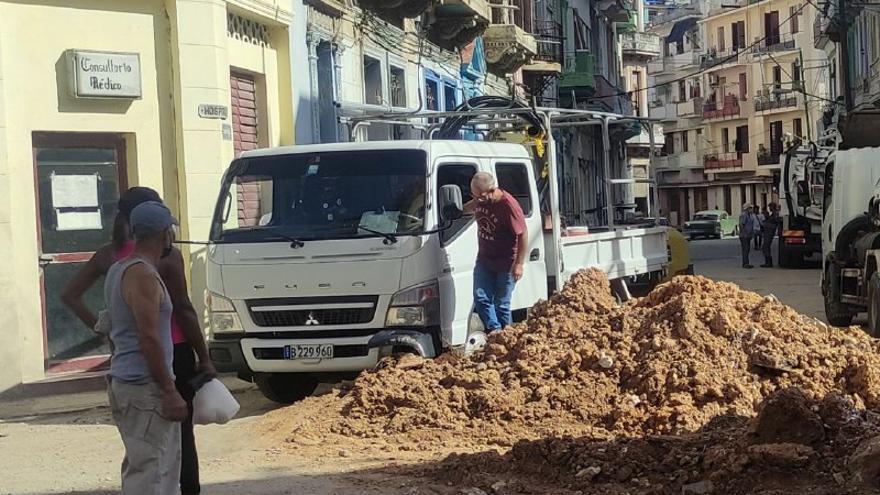
Suddenly, conversations are interrupted and attention is drawn to a truck that has just become entangled in the debris on the street and has lost a piece of its bumper. The driver accelerates furiously after managing to free the vehicle, while someone yells at him: “Wow! The 26th is your party too!”

Attention is drawn to a truck that has just become entangled in the debris on the street and has lost a chunk of its bumper. (14ymedio)
Attention is drawn to a truck that has just become entangled in the debris on the street and has lost a chunk of its bumper. (14ymedio)

____________

COLLABORATE WITH OUR WORK: The 14ymedio team is committed to practicing serious journalism that reflects Cuba’s reality in all its depth. Thank you for joining us on this long journey. We invite you to continue supporting us by becoming a member of 14ymedio now. Together we can continue transforming journalism in Cuba.
As August is About to Begin, the Electricity Supply is Still Ailing in Cuba

Despite the blackouts, the official press doesn’t hesitate to affirm that the Cienfuegos thermoelectric plant is “one of the most stable in the country.” (Cubadebate)

14ymedio bigger14ymedio/EFE, Havana, 28 July 2022 — The Electric Union of Cuba announced on Thursday a deficit of up to 20% in the energy supply, after three days of relative stability during the official holidays on July 26.

The deficit this Thursday will be 17.9% in prime time, with an availability of 2,502 megawatts (MW) and a maximum demand of 2,950 MW, the state company reported in its usual statement.

On Wednesday, the deficient electricity supply began to affect users from 10:42 and was restored at 22:30. The company also reported that eight units out of a total of five thermoelectric power plants in the country are out of service due to breakdowns or maintenance.

On July 22 in a speech to Parliament, Miguel Díaz-Canel acknowledged the discomfort among the population over the cuts, which have been intensifying in recent months. He added that those who blame the Government for its handling of the prolonged blackouts “are responding to what the counterrevolution wants.”

The Government affirms that the cuts in supply have been caused by breakages in the plants, the shortage of fuel for generation and scheduled maintenance. Despite the state rhetoric, which affirms that everything possible is being done to avoid blackouts, and the deals with foreign companies to repair thermoelectric plants, the crisis of the Cuban energy system doesn’t seem to have an immediate solution. continue reading

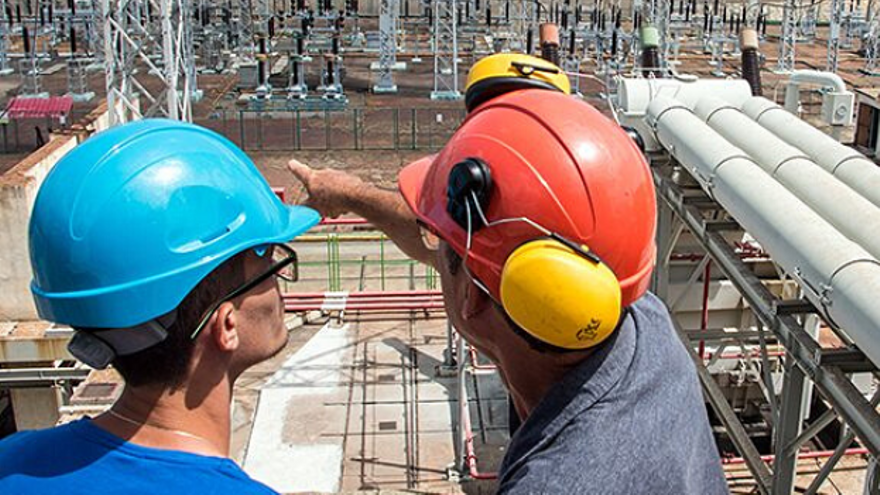
A report published today in Cubadebate collects the testimony of workers of the Cienfuegos thermoelectric plant. Affected by rust and marine microorganisms, the machinery repeats the pattern of other plants in the country: lack of spare parts and lack of adequate maintenance.

In a thermoelectric plant “we work many early morning hours, many Saturdays, Sundays, many carnivals; maintenance is twenty-four hours,” says a 72-year-old technician.

“The units aren’t given the maintenance they need, so each operation becomes more complicated,” another operator admits to the official press. “There’s a lot of instability in parameters; we are working with parameters that aren’t in accordance with the plant system. You have to keep your eyes wide open. One mistake from us and the plant is gone.”

“I left work one morning and arrived home without electricity. I can’t sleep. I’m also suffering,” adds another.

However, Cubadebate has no qualms about stating that the Cienfuegos thermoelectric plant is “one of the most stable in the country.”

At the beginning of July, the Felton thermoelectric plant, in the Holguin municipality of Mayarí, suffered considerable damage due to a large fire. This accident meant an even greater deterioration of the national electricity system, unable to implement the necessary actions to achieve energy stability in the short term.

The blackouts were, along with other serious economic and political problems, the cause of the massive protests of July 11, 2021. They have also been the triggers for recent demonstrations  against the Government, such as those that took place in Los Palacios (Pinar del Río), or smaller ones in other municipalities of the country.

Translated by Regina Anavy

____________

COLLABORATE WITH OUR WORK: The 14ymedio team is committed to practicing serious journalism that reflects Cuba’s reality in all its depth. Thank you for joining us on this long journey. We invite you to continue supporting us by becoming a member of 14ymedio now. Together we can continue transforming journalism in Cuba.
The Motorcycle of the Murdered Cuban Professor Santiago Morgado Was Sold for 200,000 Pesos

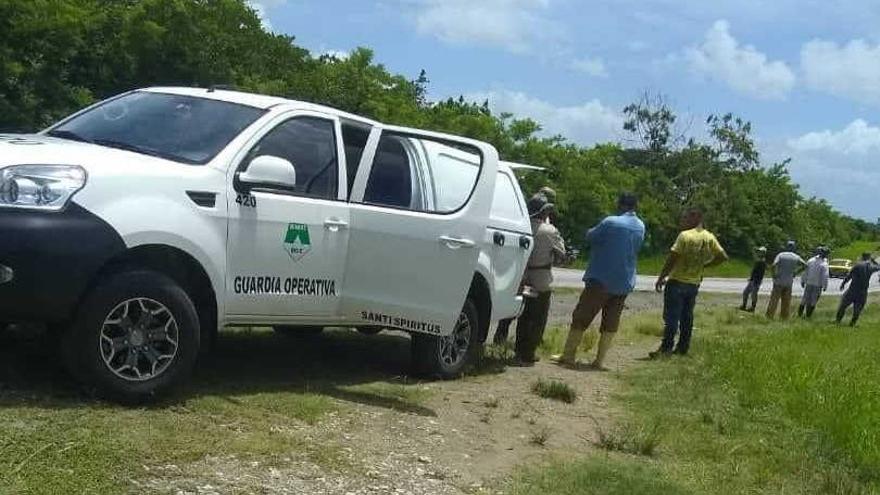
Photograph disseminated by the official press about the search for Santiago Morgado, in Sancti Spíritus. (Escambray)

14ymedio bigger14ymedio, Havana, 28 July 2022 — Professor Santiago Morgado was murdered for 200,000 pesos. It’s the price for which the Suzuki motorcycle that was stolen on July 1 at Sancti Spíritus was sold. The news was revealed along with other details of the crime by the official newspaper, Escambray.

According to the investigation, of the five involved in the death of the professor — all of them in pretrial detention since their arrest on July 11 — two were the material authors. One of them, apparently, habitually hired Morgado’s transport service and knew him well, so he sensed that it would be easy to take him to a point where he could perpetrate the crime.

The first of the alleged murderers led Morgado to El Capitolio, a town of the People’s Council of Banao, where, hidden among the undergrowth, the second man was waiting. The attackers used a stick and a stone, in addition to two pieces of agricultural machinery that they used to immerse the teacher’s body in a well up to three meters deep.

A third man was in charge of driving the red Suzuki to Vertientes, in Camagüey, where the fourth involved tried to sell it for 800,000 pesos, but finally had to make a considerable reduction. The fifth detainee was the intermediary of the sale. continue reading

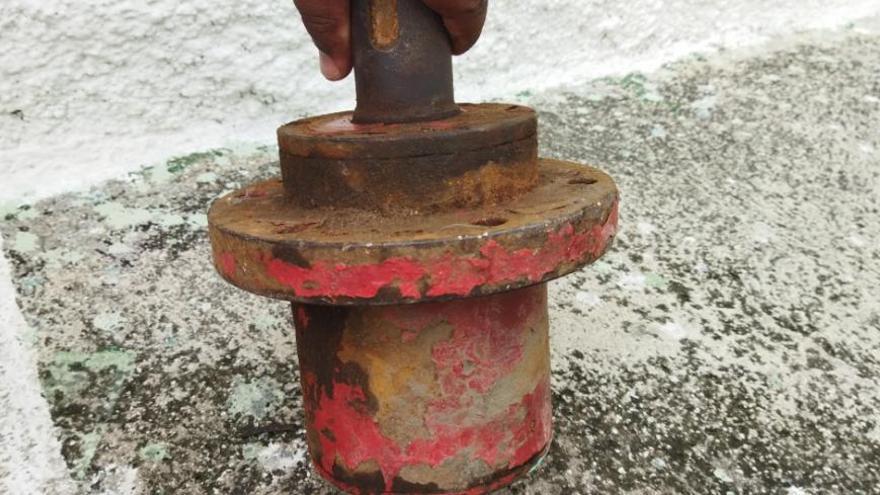
Metal piece with which the body was thrown into the well. (Yosdany Morejón/Escambray)

Sources from the investigation said that the trail of the helmet, found by the professor’s acquaintances, was decisive in reaching the well and finding the metal parts that helped clarify the case.

Of the five involved, between the ages of 28 and 45, three are residents of Banao, one in the same town, another in El Pinto and the third in El Capitolio. The other two are from Vertientes, from which it follows that the crimes occurred in places they knew well.

With the participation of the two direct authors, the reconstruction of the facts was carried out, a process in which it was demonstrated that they used the rental of the motorcycle with the intention of murdering its owner to steal it and subsequently sell it.

In Escambray’s note, the authorities insisted on admitting the relevance of citizen collaboration to clarify the crime. Family and friends carried out the first investigations and initially complained that the police were lagging behind.

Morgado, 62, disappeared at noon on July 1, and his acquaintances were the ones who found his biker’s helmet on the road through El Pinto. Three days later, on Monday 4, they found his glasses and a shoe near the well where, hours later, the firefighters recovered the body.

Although the official newspaper insists that Morgado’s murder was an “event that by its violent nature kept residents on alert,” it had been three days since the independent press reported the event when it was finally repeated in Escambray.

Translated by Regina Anavy

____________

COLLABORATE WITH OUR WORK: The 14ymedio team is committed to practicing serious journalism that reflects Cuba’s reality in all its depth. Thank you for joining us on this long journey. We invite you to continue supporting us by becoming a member of 14ymedio now. Together we can continue transforming journalism in Cuba.
Cubans Will be Able to Import Five Cell Phones, Three Computers and Two Motorcyles

On Thursday, the new rules for non-commercial imports made by natural persons were announced. (Granma)

14ymedio bigger14ymedio, Havana, 28 July 2022 — The new provisions of the General Customs of Cuba on imports from individuals on a non-commercial basis have been announced this Thursday. The Official Gazette specifies that Cubans will be able to import up to five cell phones — versus the two that were allowed — two electric generators, two motorcycles, and a third if it is through the shipment of cargo, in addition to two electric bicycles.

“That doesn’t solve the big problem of the economy. The commercial character must be extended to all people who want to establish small and large businesses with all the freedom that exists in the world,” Pavel Otero, a musician from Havana, said in an article in the official media Cubadebate. “You have to think big and not little.”

As part of the provisions, which enter into force on August 15, the non-commercial nature of imports must have to do with “the functions of an article,” and the repetition of imports “must not show the purpose of trade.” In case this happens, General Customs can confiscate the products.

This measure is also a hard blow to ’mules’ traveling abroad to buy all kinds of products and resell them on the island’s black market. Despite the very high prices, this informal trade has given Cubans a break. Personal hygiene products, food and medicines are tax-free until December under a government resolution that freed them from paying taxes. continue reading

“What crazy people do: ’Non-commercial’ in a country that has nothing and doesn’t produce anything. Of course, most of those items will end up in ’garage sales’ and other sales. They have finished with opening completely and don’t give any more detours,” the netizen identified as Altair Urizen also commented in Cubadebate.

The new regulations ratified what Economy Minister Alejandro Gil Fernandez announced about the increase of the import limit through shipments, from 10 to 20 kilos, the decrease in the tariff per kilo imported, from 20 dollars to 10 dollars, as well as the exemption from the payment of taxes of up to three kilos for items to which the value-weight is applied, and the 30% reduction to customs tax, which is currently 100%.

Regarding the import of parts and accessories of motor vehicles, it is specified that the quantity “must not exceed that required by a vehicle for repair and maintenance.” In the case of tires, up to five light car tires, seven heavy vehicles and three motorcycle or moped tires are allowed.

Customs also allows up to three computers, laptops, tablets and network devices including the accessories or peripherals of computer equipment (mouse, keyboards or others). “For flash memories, parts and pieces of computers, mobile and fixed telephony, printers, photocopiers and other equipment, the value-weight alternative is used, and whenever there is diversity in the products.”

Customs classifies as “miscellaneous” footwear, clothing, food, personal and household toiletries, costume jewelry, perfumery and the like, and specifies that their import is allowed only if the products are of different types.

Translated by Regina Anavy

____________

COLLABORATE WITH OUR WORK: The 14ymedio team is committed to practicing serious journalism that reflects Cuba’s reality in all its depth. Thank you for joining us on this long journey. We invite you to continue supporting us by becoming a member of 14ymedio now. Together we can continue transforming journalism in Cuba.
In Camaguey, Cuba, Another Protest Against Blackouts While More Luxury Hotels are Announced

Protest in Nuevitas, Camagüey, this weekend. (Captura)

14ymedio bigger14ymedio, Havana, 1 August 2022 — Block 5 of the Nuevitas thermoelectric plant, in Camagüey, left the electrical system a few hours after it was incorporated. Official journalist Lázaro Manuel Alonso confirmed the news through his Facebook account and warned of the increase in the energy deficit that the new incident would entail.

“That unit synchronized last night,” recalled the reporter, who added that “they’re investigating why it happened.”

Unit 5 of Nuevitas, which had been out of service the previous days due to a breakdown, like unit 4 of the same plant, was synchronized on Saturday during peak hours, as announced by the Unión Eléctrica de Cuba. But the relative joy didn’t last even a day, and the 105 MW generated by that block are lost again.

For Sunday’s peak, the state company had predicted a 20% deficit in the generation, but the problem in Nuevitas worsened in the night, and the population took to the streets again. Several videos posted on Facebook record a protest in the city of Camagüey in which the slogan “turn on the power, pricks” that was born in the same province when the residents of the university campus exploded after more than 10 hours without electricity and hardly any water, was heard again.

Social networks are also serving as a thermometer to measure the state of a population more than tired of the power outages they have suffered this summer. “In Minas, Camagüey, the power has been off since before 5pm, and now there is nothing until dawn, with this heat and mosquitoes,” commented one user late at night.

“In Santa Cruz del Norte, Mayabeque, there was also a 6-hour blackout, but no one goes out to protest,” added another. “I am from Santiago de Cuba and my children are desperate and crying with the heat and mosquitoes,” said one mother. “The power has been off in Cienfuegos since this morning, for everyone,” claimed another. Messages come from all the provinces, and the discomfort is huge. continue reading

Meanwhile, in Camagüey itself where citizens cannot sleep, the reopening of the Valentín Cayo Cruz hotel, a luxury resort located in the north of the province, on an islet of just 26 square kilometers, has just been announced. The establishment, managed by the Spanish hotel company Iberostar, is receiving guests again with the arrival of the high season, on November 1.

The five-star hotel has 546 all-inclusive rooms and is for adults only. According to Radio Cadena Agramonte, the space “is part of the tourist development that is carried out in that important destination, and to contemporary design are added the recreational, cultural, gastronomic and sports proposals, always taking advantage of the benefits of the beach and the identity values of the island.”

The Ministry of Tourism has planned in the Jardines del Rey archipelago, to which Cayo Cruz belongs, the largest hotel project in the country, with more than 20,000 rooms, despite warnings from several economists about the pessimistic prospects of a sector that was, before the pandemic, Cuba’s third largest generator of foreign exchange after the sale of medical services — sending doctors abroad — and remittances.

Translated by Regina Anavy

____________

COLLABORATE WITH OUR WORK: The 14ymedio team is committed to practicing serious journalism that reflects Cuba’s reality in all its depth. Thank you for joining us on this long journey. We invite you to continue supporting us by becoming a member of 14ymedio now. Together we can continue transforming journalism in Cuba.
Someone is in a Hurry With the Rules for Non-commercial Imports by Natural Persons

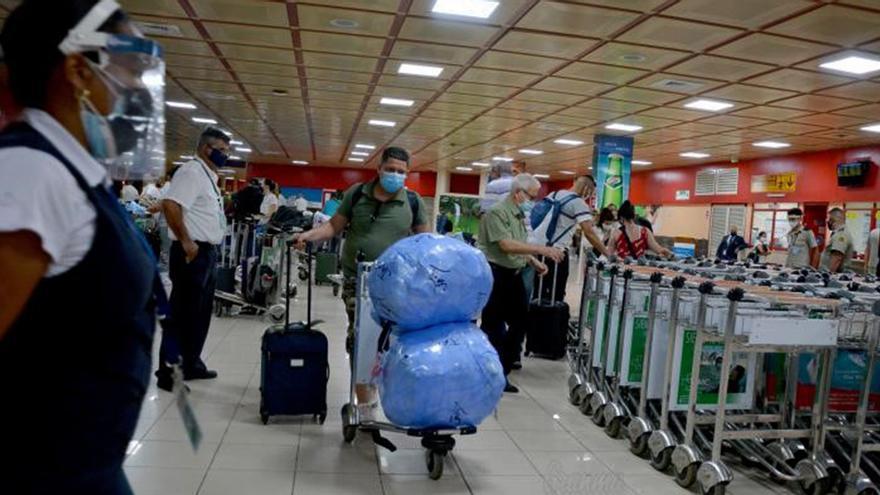
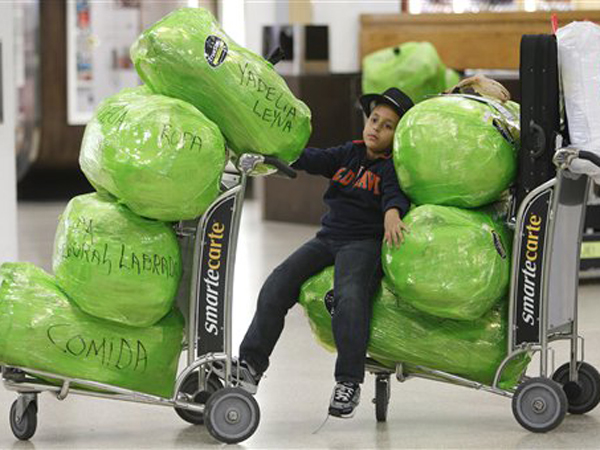
A young Cuban-American waits with his family’s luggage to board a plan to Cuba. (AP Photo/Lynne Sladky)

14ymedio bigger14ymedio, Elías Amor Bravo Economist, 29 June 2022 — They hurried. Said and done. The words of Minister of Economy and Planning Alejandro Gil Fernandez still resonated announcing to the National Assembly the 75 measures to “revitalize the economy” and the resolutions of the Ministry of Finance and Prices (MFP) and the General Customs of the Republic establishing the processes related to the flexibility of non-commercial imports by natural persons were already published in the Official Gazette.

The economic situation is tightening. Cubans are having a very hard time in this summer of 2022. So much so that some already see signs very similar to those of the so-called “Special Period,” and the immediate reaction of the people, once again, is to leave the country, losing confidence that the situation will change.

If the communist model imposed by the so-called revolution since 1959 in Cuba has failed in anything, it is trade. Private commercial intermediation was destroyed by communist reforms; Cubans don’t have freedom of choice and live overwhelmed by a permanent shortage of everything. They are forced to survive with an increasingly meager ration book or regulated basket of goods, and see how, on top of that, the only goods and services that abound have to be bought in well-stocked stores which accept only freely convertible currency or in informal markets, in dollars.

Therefore, taking into account the disaster of state supplies of goods and services, communists who won’t accept that private companies recover wholesale or retail commercial activity, have opened their hands to this formula of non-commercial import, known for a long time to the regime, and decide to extend over time rules that, in principle, were going to be for a short period of time.

And they are in a hurry to do it. The measures enter into force on August 15; that is, right now, with new tariffs to be paid by natural persons who receive non-commercial air, sea, postal and courier shipments in the national territory; as well as the rules for non-commercial imports made by natural persons. Everything is highly regulated and controlled, so that no one escapes. continue reading

There is everything in these measures. For example, according to MFF resolution 204/2022, natural persons who receive non-commercial air, sea, postal and courier shipments in the national territory are exempt from the payment of customs tax for the first 30 dollars of the value or its equivalent weight, on up to three kilograms of the shipment, in the value/weight ratio, established by Customs. With 30 dollars, little can be taken away. Seeing the packages that arrive at Cuban airports, three kilograms seem like little.

Therefore, the rule says that natural persons who receive items in excess of 30 dollars and up to a value of 200 dollars, will have a tariff rate of 30%, adding that the calculation of the customs tax to be paid is carried out by applying, to the import value, the established tariff rate, and its result is converted into Cuban pesos, according to the current exchange rate. At the official rate, of course, of 1×24.

For its part, Customs resolution 175/2022 develops the rules for non-commercial imports made by natural persons, “taking into account that these are carried out occasionally for their personal, family or household use, through luggage, shipments, household goods or other authorized charges.” Actually, that occasional use is quite questionable, since these imports are the ones that then make up the mercantile mass of goods and products that are traded informally in the country, but this is the least interesting thing to the regime.

The rule states that “items and products to be imported by natural persons will be admitted as long as they correspond to a non-commercial import; the quantities to be imported are declared transparently and varied; that their import does not exceed the limit of what is established as appropriate; and that the nature and functions of an article or the repetition of the imports made do not show the nature or commercial purpose of its import.”

Everything is so open and subjective that in this way you can bring practically everything into the country. Otherwise, as is always the case in these cases, it is up to Customs to decide whether the import is carried out on a commercial basis and to apply the sanction provided for in customs regulations.

The resolution establishes, under these conditions, that “when the customs authority determines that there is a commercial nature due to the repeated non-commercial imports, it notifies the infringer of the sanctioning decision and the period in which, from that act, his right to import is limited.” Now we will see who pays, and how much. The possibility of sanction is there, but in these cases, and in many others, the law is made, the trap is set.

The aforementioned resolution also establishes that when an item or product is not defined in the reference values, the referential price available, including that of sale in domestic commerce and in other origins, is taken as a basis, in accordance with the provisions of current legislation. Once again, it is Customs that is authorized to apply the value-weight alternative method for all those items that, due to their characteristics and value, can be valued by that method, as legislated.

To household appliances, computer and communications equipment and other durable items are applied, as a method of valuation, the Customs declaration, the purchase invoice or the reference value, without prejudice to applying the provisions of specific provision or what is requested by the person, in which case the acceptance of weighing it or not is evaluated.

On the other hand, Customs Resolution 176/2022 uses the value-weight alternative method for the determination of the Customs value of items that are classified as miscellaneous and others where, due to their characteristics, it is applicable, items that are imported non-commercially by natural persons through shipments, applying the equivalence of one kilogram equal to ten US dollars.

For the determination of the value of shipments through this alternative, values that are based on automated dispatch, in which the weight of the miscellaneous of the shipment is obtained, are taken into account. The items contained in the shipment for which the value-weight method is not applied are individually valued and considered within the established import limit.

The annexes to the resolution include specifications on the rules for non-commercial imports of natural persons, aspects to be taken into account in the classification of other items or products that are not considered miscellaneous and the list of reference values for non-commercial imports that are made by any means.

Finally, a list of reference values is published for non-commercial imports made by natural persons by any means, products that are not distributed by “legal” trade and that go through the vicissitudes of these Castro rules. Photographic products whose valuation is less than 50 USD: the value-weight alternative applies. Non-durable household and hardware items: up to five items of each type that are classified as hardware, provided that their value does not exceed 50 USD; and for those that exceed that value up to three are admitted. Paints, varnishes, pigments and thinners, provided that the total sum of the contents of their containers does not exceed 20 liters. Household appliances: provided that they are varied, accepting up to two items of the same type, provided that the sum of their values does not exceed the limit established for the importation of luggage. Computer and telecommunications equipment: up to three items related to telecommunications and network devices, including accessories or peripherals of computer equipment.

Cell phones or smartphones: up to five units.

Musical instruments: up to three items, in all cases in accordance with the import limit. Furniture: up to five items of each type that are classified as home furniture, as long as their value does not exceed 50 USD.

Motor vehicles, their parts, parts and accessories: it allows the importation as luggage of up to two items of the so-called electric mopeds of up to two seats or one by means of shipments. Bicycles, electric and pedal-assisted bicycles, electric skateboards or the like: up to two items.

Nothing is left to improvisation. A package of resolutions like this was already being drafted and in the process of being launched long before Minister Gil announced it in the National Assembly. The regime is aware of its failure and that it is in a terminal phase in which multiple anomalies that are impossible to solve with the communist economic model accumulate. The question is, will we see more in this torrid summer?

Translated by Regina Anavy

____________

COLLABORATE WITH OUR WORK: The 14ymedio team is committed to practicing serious journalism that reflects Cuba’s reality in all its depth. Thank you for joining us on this long journey. We invite you to continue supporting us by becoming a member of 14ymedio now. Together we can continue transforming journalism in Cuba.
Cuba, Summer 2022: Clay for Children or a Vaccine Against COVID-19?

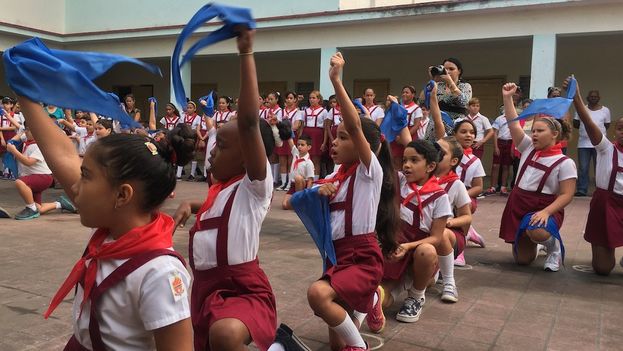
Cuban schoolchildren during the ceremony where they take on the red scarf. (14ymedio)

14ymedio bigger14ymedio, Elias Amor Bravo, Economist, 31 July 2022 — Cuba’s State newspaper Granma wants to leave behind this month of July, of accumulation of anomalies for the regime, with some news that aims to mean a return to normality. Not so much to justify that 10.9% GDP growth that Economy Minister Alejandro Gil Fernandez said occurred in the economy, but so that people breathe and can regain some calm after so many blackouts, lack of food, insecurity for the future and absolute loss of confidence in the leaders. The first news is that there is a return to the production of children’s modeling clay, with the manufacture of about 200,000 sets of colored clay intended for day care centers throughout the country. The Education Media Production Company (EMEG), after a period of difficulty, has assumed the delivery of this educational material to the Ministry of Education (MINED).

This return to normality has been possible “after part of the production process was stabilized with the entry of imported raw materials (whose availability was affected during the stage of confronting COVID-19 in Cuba).” Apparently, Cuban clay manufactured by EMEG depends on raw materials that can only be obtained outside the country, which affects its final quality. Since 1989, the company has been manufacturing a product with a better quality and longer lasting duration than other imported clay, but it depends on those raw materials that, apparently, no one has ordered to be manufactured in Cuba.

Clay, the national one, due to the vicissitudes of the moment, is only limited to commitments to MINED. If a child wants to play at home with this clay, he can’t do it, since the regime decided that it couldn’t be bought in stores. In this way, the authorities limit the growth possibilities of the state company that, if it could produce more, would do so at lower unit costs, be more competitive, meet unmet demands, and who knows if it wouldn’t be able to export its surplus to other countries in the area? If the clay is so good and no one doubts its quality, why not sell it to children in the Dominican Republic or Costa Rica? What does it matter, who cares about all this in Cuba? continue reading

And just like colored clay, Granma announces with great fanfare that the Center for Genetic Engineering and Biotechnology (CIGB) already has the Cuban vaccine candidate against the Omicron variant of SARS-COV-2 ready. Now it seems that it’s so, although you have a certain feeling of déjà vu when reading this news for the umpteenth time.

And as usually happens in these cases, the information was given by the member of the Political Bureau of the Central Committee of the Party and the General Director of the CIGB, Dr. Martha Ayala Ávila, during a technical meeting with the highest authorities of the BioCubaFarma Business Group. The party is always behind this kind of thing, even with the production of clay.

Apparently, it was also said that they will continue with preclinical and toxicological evaluations in animal models and then move on to the clinical trials phase, in conjunction with the Center for the State Control of Medicines, Equipment and Medical Devices (CECMED) and the Ministry of Public Health (MINSAP). In other words, in a few months we will have the vaccine ready again. As you can see, Dr. Ayala doesn’t answer to a board of directors, usually little given to this news of fireworks, but the regime is only interested in certain facts.

The world offered a master lesson in 2020 when the COVID pandemic broke out, and large drug manufacturers worldwide began a race to identify vaccines to curb the disease. And they did it, each country at its own pace and according to its needs. There was even plenty of international cooperation to fight COVID-19. The Cuban communist regime made its own decision to advance its vaccination candidates, and here we are. The new vaccine candidate is based on the RBD sequence; that is, the receptor binding domain of human cells, through which this type of coronavirus penetrates, which has already had extensive development and practical application in the millions of people vaccinated with the second and third doses.

In Cuba, immunogenicity is now being evaluated in animal models, to check if the vaccine has the ability to induce a high immunogenicity. From there to being in a position to address the development of this vaccine candidate and then decide when to use it in the population is a stretch, probably a long one. It was said that the CIGB has the capacity to produce this vaccine candidate in its plants, to link with AICA Laboratories and carry out clinical studies in coordination with MINSAP, always with the approval of the Cuban regulatory authority, which may mean that the regime is studying the possibility of marketing the vaccine abroad through more exports. To do this, it will need some type of WHO approval that, it should be remembered, still hasn’t happened for the first vaccines given to the population in Cuba.

That they get to it right now and that Granma turns it into a great announcement is smoke in the wind, and has a lot to do, like children’s clay, with that feeling of a terminal phase that the regime uses to counteract this warm and torrid summer for millions of Cubans. The distance of the population from the leaders is opening up more and more, and this type of news does nothing but increase the gap. There is little to celebrate for Raúl Castro to gain time, and in his 91 years he won’t have to see the collapse of the mammoth built by his brother and him. The end is near, even if it’s built out of clay. Granma doesn’t know what to say anymore.

Translated by Regina Anavy

____________

COLLABORATE WITH OUR WORK: The 14ymedio team is committed to practicing serious journalism that reflects Cuba’s reality in all its depth. Thank you for joining us on this long journey. We invite you to continue supporting us by becoming a member of 14ymedio now. Together we can continue transforming journalism in Cuba.
Mariela Castro and Her Aunt Emma Inaugurate the Angel Castro Birthplace in Galicia

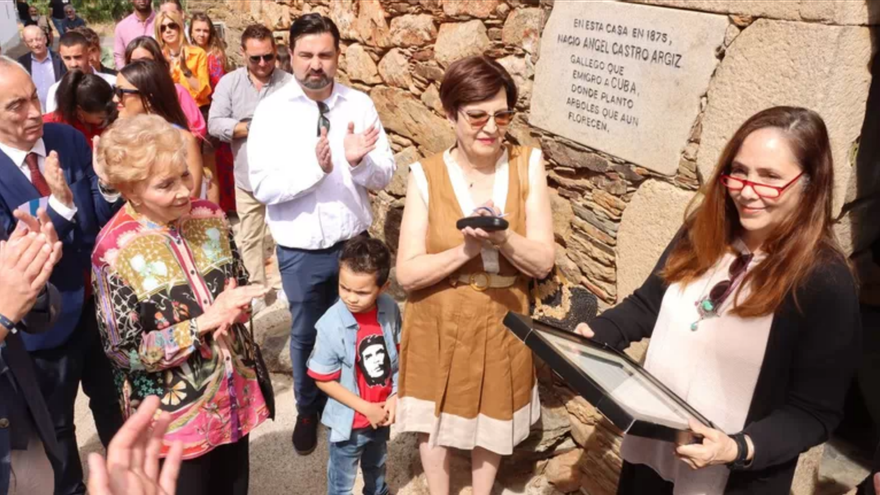
Mariela Castro at the door of the birthplace of her grandfather, Ángel Castro, and her aunt Enma (wearing a multi-colored shirt). (TheVoice of Galicia)

14ymedio bigger14ymedio, Madrid, 29 June 2022 — Mariela Castro, deputy to the National Assembly of Peoples Power, director of the National Center for Sex Education (Cenesex) and daughter of Raúl Castro, on Thursday accompanied her aunt, Enma Castro at the inauguration of the Ángel Castro House Museum in Láncara, Lugo. The museum finally bears the name of Fidel Castro’s father, versus the name Casa Láncara that appeared on its website.

A chronicle published in the newspaper La Voz de Galicia gives an account of the tour carried out this Thursday in the small Galician town, beginning at 11 in the morning when the Municipal Council received the Island’s ambassador to Spain, Marcelino Medina González, and the two women, accompanied by several other members of the extended family. Local and regional authorities were also present at the event.

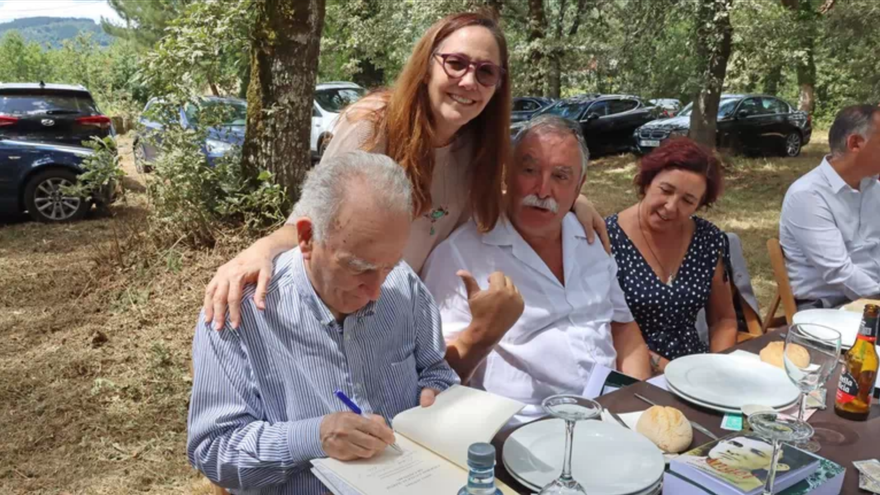
“Half of my blood is Galician. Here I thank God that I had Don Ángel as my father, who together with my mother bequeathed us values ​​that have helped me a lot in life,” Enma Castro said emotionally when signing the book of honor.

The words of her brother Raúl were also heard through the voice of Mariela Castro, who read a letter written for the event by her father. “I remember Fidel’s visit in 1992 and mine in 2005 to the old family home in whose house a plaque remembers Ángel as the Galician who emigrated to Cuba where he planted trees that still flourish,” the letter said. continue reading

The guests enjoyed a meal in the open air in an oak grove. (The Voice of Galicia)

Raúl Castro also celebrated the destiny of what was his father’s birthplace, hoping that it would be a tribute “to the children of Galicia who crossed the Atlantic and to their descendants.”

The reading of the letter took place after the cutting of the inaugural ribbon, in front of the new museum, and after a stop at the Plaza Cívica, where the emigration exhibition has been installed.

Several images portray the festive day, with outdoor food included, in which the deputy danced to the sound of bagpipes.

The president of the Láncara-Cuba Friendship and Solidarity Association, Antonio Rubén Sobrado Carballo, stressed that the inauguration had been planned by choosing “a very special day, an important day” for Láncara. “It is no coincidence. It coincides with the thirtieth anniversary of the visit that Fidel Castro and Manuel Fraga made to the house at the time,” he stated.

Sobrado highlighted the work that was done to recover the house by maintaining “the same architectural system that it had in the past,” so that elements such as “the walls, the roof, the wood are almost intact. In addition, he thanked the Office of the Historian of Havana for its role in structuring the museum content, since it took care of “the infographics” and part of the “museum content.”

____________

COLLABORATE WITH OUR WORK: The 14ymedio team is committed to practicing serious journalism that reflects Cuba’s reality in all its depth. Thank you for joining us on this long journey. We invite you to continue supporting us by becoming a member of 14ymedio now. Together we can continue transforming journalism in Cuba.