United Nations Acknowledges Freedom of Speech Crisis in Cuba / Cubalex

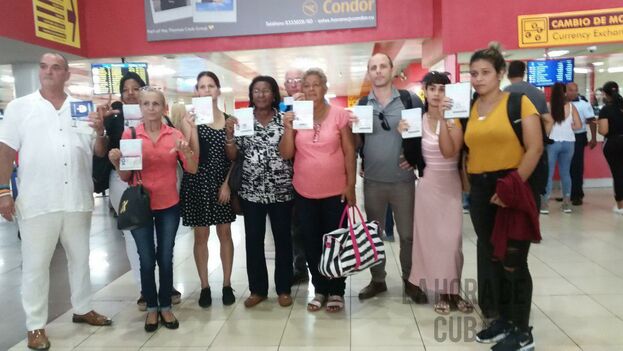
A group of Cuban independent journalists and activists all stopped at the airport on the same day in October of this year, and prevented from leaving the country. (Inalkis Rodríguez / La Hora de Cuba)

Cubalex, 10 November 2019 — Cuba and Venezuela  were flagged up by the United Nations as the countries in the region with the worst indicators in regard to promotion and protection of freedom of speech.

For years, both countries have been evidencing a crisis in freedom of speech, according to the UN special rapporteur.

The suppression of independent communicators and political activists has increased in the last year on the island. There have been 54 aggressions against unofficial reporters, 11 of which were women, as reported to th Association for Press Freedom (APLP) as of June 2019. continue reading

As a part of these aggressions, the reporters are intimidated, have their homes observed, their houses broken into, they are confronted in the street, and have their means of work confiscated. They are also arbitrarily detained by state security, normally for hours or days on end.  In late March, the journalist Roberto Quinones was detained, and they took action against him, resulting in his being locked up for a year.

This case was denounced by independent Cuban organisations and media. The  conviction of this Cuban journalist has been included in OneFreePress’s list of the ten most serious cases of injustice against journalists, and Amnesty International named him as “prisoner of conscience.”

On top of all these measures, there is refusal of permission to leave the country for random periods. This year, nearly 200 Cuban citizens have complained of their “regulated” status.

Another coercive measure against free speech is contained in Cuba’s own legal code. Law 88, better known as the “gagging law” threatens decades of imprisonment for those who contravene it.

Law 88 decrees the suppression of private reporting if it tries “to subvert the internal order of the state and destroy its political, economic and social system.” The last time this repressive measure was applied was during the Black Spring in 2003. At that time 75 people were locked up, and nearly a third were reporters.

Last May, the president of the Supreme Popular Tribunal, Ruben Remigio Ferro, reported on his Twitter account that the gagging law remains in force and could be applied again in the country.

First published in Cubalex.

Translated by GH
Individuals May Sell Their Surplus Renewable Energy to the Cuban State

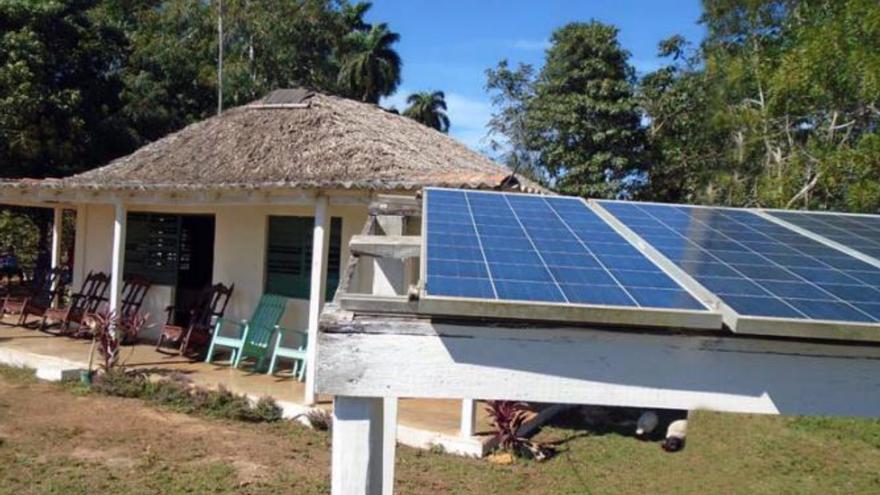
The new rules apply to state-owned companies and individuals, with an emphasis on solar photovoltaic systems in tourist facilities. (Radio Progreso)

14ymedio bigger14ymedio, Havana, 29 November 2019 — On the eve of the climate summit, which begins next Monday in Spain, the Cuban government has announced a small step in favor of the almost non-existent renewable energies, allowing the sale by private producers of electricity generated from this type of source.

Decree Law 345, published this Thursday, does not modify the state monopoly of the Electric Union (UNE), which will be the only one authorized to buy, distribute and commercialize energy of private origin.

“The Ministry of Energy and Mines promotes the production of energy by consumers, which includes the residential sector, based on the use of technologies that take advantage of renewable energy sources for self-supply and the sale of surpluses to the National Electric System National,” specifies the new legislation. continue reading

The new rules apply to state-owned companies and individuals, with an emphasis on solar photovoltaic systems in tourist facilities. The decree describes as “strategic objective […] the production of equipment, media and spare parts for the development of renewable energy sources”.

In view of the drastic reduction in Venezuelan oil deliveries, companies will be required to include in their investment plans the installation of renewable energy sources. To comply with this requirement, equipment may be purchased through bank credits.

However, the new legislation has not come accompanied by flexibilizations of the General Customs of the Republic (AGR) for the importation by the private sector of equipment to produce clean energy, as is the case with photovoltaic panels.

Recently, Raiza Martínez Elizondo, head of the Normative Group of the Customs Technical Directorate, reiterated to the travelers’ questions that solar panels can be imported into the country as objects analogous to power generating plants. Only one panel can be entered at a time and paying the same taxes that apply to equipment that uses hydrocarbons.

Thanks to the strong solar radiation practically all year round, solar panels are a promising alternative to reduce the frequent power cuts suffered by many communities in the country.

In 2017, the authorities announced that they planned to produce solar panels for private homes in the Electronic Components Company of Pinar del Río, but they have not yet gone on the market.

Currently, photovoltaic solar energy produces only 96 MW in Cuba. The British company Hive Energy is building a solar park, the first of its kind, in the Mariel Special Development Zone (ZEDM). The objective of the Cuban Solar Plan is to reach 700 MW by 2030.

___________

COLLABORATE WITH OUR WORK: The 14ymedio team is committed to practicing serious journalism that reflects Cuba’s reality in all its depth. Thank you for joining us on this long journey. We invite you to continue supporting us by becoming a member of 14ymedio now. Together we can continue transforming journalism in Cuba.

The Fertile Imagination of the Repressors

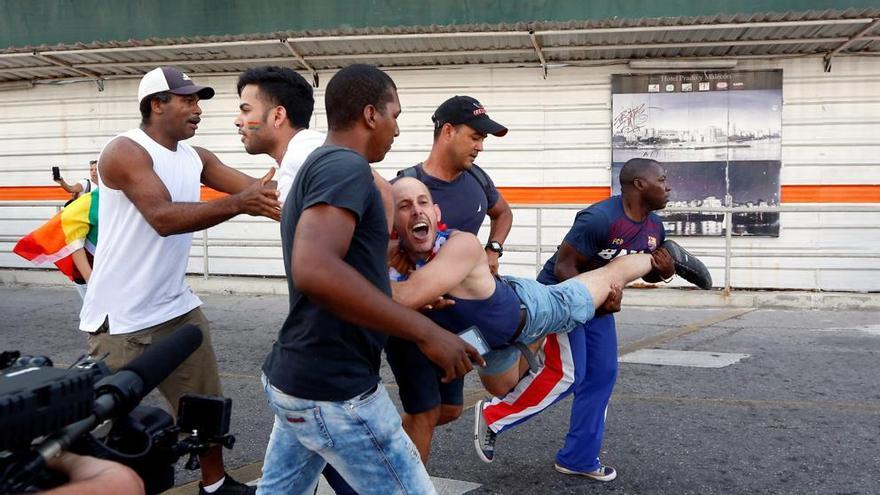
Police repressed the march for LGBTI rights in August in one of their most controversial interventions this year internationally. (Ernesto Mastrascusa / EFE)

14ymedio bigger14ymedio, Reinaldo Escobar, Havana | 25 November 2019 — The incessant creativity of repressors in Cuba shows the tendency to seek legal formulas that justify, or at least explain, the harassment to which those who, not satisfied with simply thinking differently, manifest this thinking in some way.

To those who practice independent journalism they apply Article 149 of the Criminal Code whose original purpose was to punish those who “perform acts of a profession for whose exercise they are not duly authorized.”

Meanwhile, the detainee who causes damage to the knuckles of a police officer with his body is accused of an attack under Article 142; and the one who defends himself against a pair of stocky young men who, without identifying themselves, force him into a car, is accused of resistance based on Article 143. continue reading

The most recent innovation now appears to be to punish those who leave their homes without knowing that they have a State Security operation around their residence: they are fined for a non-existent contravention called “violating the police cordon.”

At least that was the verbal explanation they gave Nancy Alfaya, an activist for the Women’s Equality Network, when she was released from her most recent detention at a police station last week.

The fine, which reaches 100 pesos, is covered in Subparagraph H of Article 2 of Legal Provision 141. This text was signed in March 1988 by Fidel Castro himself and his then Minister of the Interior, José Abrantes.

What does this legal section really say?

The aforementioned Article 2 sanctions those who contravene the norms of collective security, and in particular its Subsection H cites: “destroys, deteriorates or suppresses the security devices that prevent the commission of crimes.” Violators are fined “100 pesos and the obligation to restore them [the devices], repair them or pay their cost.”

Obviously it is designed to protect the physical integrity of fences, containment barriers, lighting, cameras and other accessories installed “to prevent the commission of crimes.” It does not include the act of mocking (consciously or unconsciously) the agents who comply with the order not to let a citizen leave their home.

Article 9 of that text clarifies that it is the members of the National Revolutionary Police who are empowered to impose fines and other measures. In the case of Subsection H, the officials of the Physical Protection body of the Ministry of Interior are included.

Appeals that are filed “will be resolved by the head of the municipal unit of the National Revolutionary Police corresponding to the place where it was committed” or, and it’s the same thing, the appeal is resolved by the culprit.

The recent enactment of Decree Law 389, published this November 18 in the Official Gazette, which regulates covert investigation techniques, includes among other details the interception of communications and the installation of hidden cameras and microphones.

If the legislative fantasy of the Government continues in progress, we are probably on the eve of seeing the film prophecy made in 2004 by the director Eduardo del Llano in his fiction short film called Monte Rouge come true, in which an agent appears at Nicanor’s house with a shocking announcement: “I come to install the microphones.”

If a citizen without a criminal record, without being subjected to an investigation or judicial process is fined because a practically invisible fence is ignored, now it is expected that the political police have the ability to fine those who speak softly or use cryptic language when talking on the phone to obstruct, in their own homes, the devices that they discover.

Luckily, imagination is not a monopoly of the repressors.

__________

COLLABORATE WITH OUR WORK: The 14ymedio team is committed to practicing serious journalism that reflects Cuba’s reality in all its depth. Thank you for joining us on this long journey. We invite you to continue supporting us by becoming a member of 14ymedio now. Together we can continue transforming journalism in Cuba.

Rapper ‘Pupito en Sy’ Sentenced to One Year in Prison for "Spreading Epidemic"

The rapper was in prison until last August, for more than nine months, after an incident with an officer. Text of sign: “Talking about me is easy, being like me is hard.” (14ymedio)

14ymedio bigger14ymedio, Havana, 26 November 2019 — Lázaro Rodríguez Betancourt, known as Pupito en Sy, was sentenced Tuesday by the Municipal Court of Centro Habana to a year of deprivation of liberty for not allowing an epidemiological inspection in his home. This was reported by the rapper to 14ymedio at the end of the trial.

In addition, he said that he will be a plantado — a political resister — as of tomorrow and that, although he had witnesses willing to testify in his favor, they were not allowed to participate in the trial.

According to the penal code, the crime of Propagation of Epidemics is punishable by imprisonment from 3 months to 1 year, with a fine of 100 to 300 ’shares’* or both. continue reading

Speaking to 14ymedio, he explained that in the middle of last week, a Public Health inspector arrived at his house who, in the face of the artist’s refusal for the man to enter his home, reacted disrespectfully. “I explained that for weeks here there has been no water service inside the house and that all our water tanks [which might harbor mosquito larvae] are outside so he had no reason to enter,” he added.

According to the artist’s version, after a while the inspector returned accompanied by an officer of the Ministry of Interior to press him and that the man entered his house but he closed the door and denied them entry.

Complying with a subpoena, he showed up at the Zanja police station unit and was arrested and handcuffed there, as he reported to this newspaper. It was at that time that he was told that he would be accused of “spreading epidemics” because he had refused the sanitary inspection.

He also explained that his family wanted to present some witnesses who witnessed everything that happened but Captain Rolando Abad refused “in very bad form” to listen to those people who say the rapper “never disrespected anyone.”

Pupito en Sy was transferred to El Vivac de Calabazar prison last weekend after being arrested last Thursday at the Zanja police station.

The rapper was in prison until last August, for more than nine months, after an incident with an officer a few days after participating in the concert at the Madriguera where he and other artists expressed their rejection of Decree 349, a measure that restricts artistic freedom in Cuba and that motivated criticism of artists inside and outside the island.

He also said that since he left prison three months ago, State Security has been following him to “neutralize” all his actions through permanent surveillance and repression.

*Translator’s note: In Cuba’s penal code fines are expressed as “shares” so that fines can be increased by a single edit redefining the value of one share, which then applies to the entire code.

___________________

COLLABORATE WITH OUR WORK: The 14ymedio team is committed to practicing serious journalism that reflects Cuba’s reality in all its depth. Thank you for joining us on this long journey. We invite you to continue supporting us by becoming a member of 14ymedio now. Together we can continue transforming journalism in Cuba.

The Man at the Door Won’t Let Me Leave

14ymedio bigger14ymedio, Luz Escobar, Havana, 26 November 2019 — It was a Saturday, it was a Monday, but it could be any other day of the week. The man at the door of my building barely articulates a word, just mutters “Luz Escobar, you can’t leave.” I ask the reasons for home confinement and demand that he identify himself. But he flashes his card in front of my eyes so fast that I can only see huge letters DSE [Department of State Security].

I take out my cell phone to take a picture, but when he sees the phone, the man turns his back, runs and hides behind a column.

My daughters laugh nervously, it’s Monday and they know that what is happening is exactly the same as the last two Saturdays. The one who gives the alarm is Paula, who arrives from the school shouting: “Mommy, mommy, there is Ramses* down there again.” She comes home hungry, as always, and we go down to find bread and sweets, but ‘the man at the door’ prevents us, with his body, from going out. My other daughter is studying at a friend’s house. continue reading

For some reason, the little girl, at nine, knows she is untouchable and asks me for my wallet. While she goes to the bakery I stay on the ground floor of the building waiting for her. The man, who wears a black backpack on his shoulders, walks left and right while talking on his cell phone. “I am here in the lobby with her, but it seems that no, she will not go out,” I managed to hear.

When Paula returns, we go up in the elevator and a lady asks: “What did that man say to you?” I explain what happened, but she is silent with a smile on her mouth whose motive I can’t guess. There is a huge sign on the door of the building with the face of Fidel Castro, the third anniversary of his death is commemorated.

That happened yesterday, but last Saturday we couldn’t leave, on that occasion to go to lunch with my daughters’ paternal grandmother, an important meal, because it is routine and the routines are respected. They make us what we are until the day we decide to break  them and create others. I didn’t want to break anything that day, but the man at the door didn’t let us out.

Another Saturday, back on November 16, when the 500th anniversary of the city was celebrated, we could not go to lunch with Grandma. The fireworks they launched for the celebration we had to watch from the window of our home.

The first time my daughters saw this man on the ground floor of our building was the day of Jaime Ortega Alamino’s funeral. I left with my camera to go the cemetery and they were going to skate in the park, when the man approached me and them at the same time. “Luz, you can’t go out,” he said.

The girls asked me questions that I answered vaguely: “Don’t worry, it’s just that he doesn’t want me to go outside.” The youngest girl says: “But he’s not your dad.” The big one adds: “What you have to do is call the police.”

In addition to being a citizen and mother, I am a journalist. When I am prevented from leaving, they are not only violating my civil rights, but also labor rights. It limits my freedom of movement and also my freedom of expression.

The man on the ground floor of the building may also be the man at the border. Last May, when I was going on a trip to Washington, a migration officer also looked me in the face and said, “You can’t travel.” It was difficult to explain that to my daughters when I returned home. It had never happened.

At this point, with 42 years and five as a reporter, nothing will change my mind. No pressure will let the vocation that was born the first time I wrote a chronicle about a neighborhood bus. Nor do I stop capturing with the camera of my cell phone pieces of my country’s life, testimonies of women and men living in Cuba today.

I don’t dream of Luz exiled, nor silenced. The journalistic work that I do every day when I wake up will continue, like that old dinosaur that makes us a postcard of the past and that we have just not extinguished. This is an endurance race.

To others, those who love and respect me, I say that when a new Cuba is born I will also be here to tell it.

*Translator’s note: A previous State Security agent that prevented Luz Escobar from leaving home identified himself as “Ramses.”

_______________

COLLABORATE WITH OUR WORK: The 14ymedio team is committed to practicing serious journalism that reflects Cuba’s reality in all its depth. Thank you for joining us on this long journey. We invite you to continue supporting us by becoming a member of 14ymedio now. Together we can continue transforming journalism in Cuba.

Of the 702 Cubans on the Medical Mission in Bolivia, Only 205 Were Qualified Healthcare Providers

The Bolivian Government is auditing the Cuban medical mission to more accurately understand its expenses and operation. (Minrex)

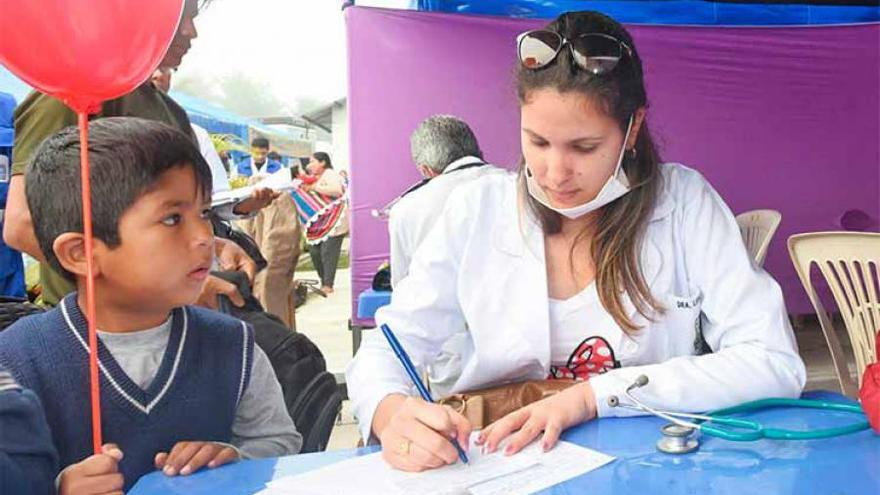
14ymedio bigger14ymedio, Havana, 29 November 2019 — Only 205 of 702 Cuban doctors who were deployed in Bolivia were qualified healthcare providers, as revealed on Thursday by Aníbal Cruz, Bolivia’s Minister of Health. Bolivia’s provisional Government under Jeanine Áñez has reviewed the documents of these professionals and concludes that the majority, in fact, were technicians or drivers, with doctors representing a small number. However, everyone was charged for as medical professionals.

As of October 2019, the Bolivian Government had spent about 7.7 million dollars on the Cuban mission according to the available data, although the Health authorities have commissioned an audit to fully understand its operations and the economic expenditure it represented for the Bolivian State. The study will also cover the Health Services Department.

“This year approximately 78,764,889 Bolivian pesos ($ 11,390,426) have been used and 53,121,000 Bolivian pesos ($ 7,681,987) have been paid for this personnel,” Cruz denounced in an interview in Unitel.

“Instead of economic aid to the country it was a damage, but it benefited Cuba economically.”

The diplomatic mission of Cuba refused to respond to the Bolivian press when it tried to gather reactions to these statements from the minister.

The Cuban health minister, José Ángel Portal Miranda, described the Bolivian authorities as “coup plotters” and said they were lying in relation to the medical degrees. “The Cuban cooperators worked there in 35 integral community hospitals, 119 medical offices and 5 ophthalmological centers. Of these, 406 are doctors and 258 graduates in nursing, imaging and electromedicine,” Portal wrote on Twitter.

For each professional, the Government of Havana received $1,032 through the heads of mission, who received it, in turn, from the Government of Bolivia. As usual, the Cuban authorities retained at least 70% of the salary paid for each professional, and in some cases more.

In Bolivia there were 725 Cuban personnel, according to data from both governments, who had to leave the country after Evo Morales left and once the agreements were broken.

Cuban Foreign Minister Bruno Rodríguez and his counterpart Karen Longaric agreed to the “timely and necessary” departure, in the words of the Bolivian, to maintain respectful relations between the two nations.

The new Executive has declared her suspicions that part of the Cubans assigned to medical mission were personnel of the security apparatus of the Plaza of the Revolution. The Foreign Minister also referred to the then relationship with Venezuela.

“We are going to take action, but everything is aimed at withdrawing the officials we have in Venezuela and reconstituting Bolivia’s relations with that country, but in a framework of democracy and fundamental respect for the principles of international law and fundamentally for the respect of human rights,” she added.

On Saturday, November 16, a group of 226 Cuban doctors returned to the Island, thus beginning the return of the whole delegation, which is already complete.

The Island’s health professionals had been in the Andean country since February 2006, serving under the agreements signed between the Morales government and Havana. The doctors served, as usual, in rural areas where the local mayors’ offices provide food and housing.

Some Cubans abandoned the ‘missions’ and denounced the miserable salary received, the forfeiture of their passports and documentation, the falsification of statistics and use of their families in Cuba to tie them to the contract.

_____________________

COLLABORATE WITH OUR WORK: The 14ymedio team is committed to practicing serious journalism that reflects Cuba’s reality in all its depth. Thank you for joining us on this long journey. We invite you to continue supporting us by becoming a member of 14ymedio now. Together we can continue transforming journalism in Cuba.

"People Go Crazy"

14ymedio bigger14ymedio, Marcelo Hernández, Havana, 28 November 2019 — The man on the motorcycle didn’t respect the stop sign and a vehicle hit him with such force it threw him several yars. Everyone ran to help the injured man and a gentleman offered his car to take him to the hospital. On the asphalt is a huge puddle of gasoline and a few drops of blood.

As the end of the year parties approach, “people go crazy,” pedestrians comment.

Despite the announcements and warnings to take precautions and keep alcohol consumption away from the drivers, many families will see their Christmas celebrations tarnished by the loss of a family member in a traffic accident or will have to spend holidays at the hospital taking care of a son, sister or father who was injured.

An crash occurs on the Island every 55 minutes, one person dies every 15 hours and another person is injured every hour and 15 minutes. According to official data, in the first ten months of the year 7,800 traffic accidents occurred, 460 fewer than in the same period of 2018.

_______________________

COLLABORATE WITH OUR WORK: The 14ymedio team is committed to practicing serious journalism that reflects Cuba’s reality in all its depth. Thank you for joining us on this long journey. We invite you to continue supporting us by becoming a member of 14ymedio now. Together we can continue transforming journalism in Cuba.

In Mid-Millenium: The Other Havana / Cubanet, Miriam Celaya

Restoration will benefit Teatro Campoamor (Author’s photo)

Cubanet, Miriam Celaya, Havana, 16 November 2019 — The Cuban capital is preparing to celebrate its half millennium, and although it is obvious that this November 16th many of the construction plans will be unfinished, numerous building facades on the main avenues will not be painted (as had been planned) nor will all the details for the restoration of the National Capitol — the undisputed star of the party — be 100% completed, the grandstand at the foot of the majestic staircase is being prepared for the solemn act and for the speeches of the occasion.

“Havana is real and it’s wonderful,” has been the kind of mantra throughout the year behind which authorities have struggled to exalt and recover only the relevant and original beauties of the most iconic buildings in the old city.

For foreign and national visitors who don’t know Havana, the vision of one of the most scenic spaces of the city will seem like a marvel: the profusely lit Paseo del Prado and the beautiful buildings from the republican era adjacent to the majestic Capitol, Parque Central and Parque de la Fraternidad flanking the ends of the future seat of Parliament. From that spacious and majestic setting, the belt of poverty that runs nearby is invisible: the dirt of misery will have been swept under the rug. continue reading

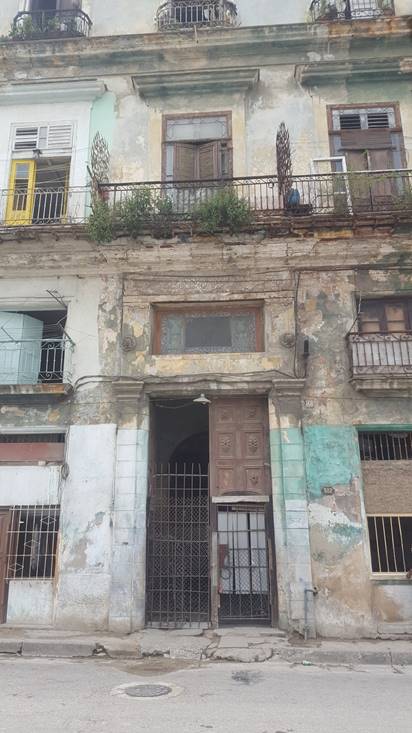
However, one would only need to walk around in daylight through the adjoining neighborhoods to discover the real Havana, abandoned to its own fate, that which, in official documents and institutions, is standardized under the label of “housing stock” or “domestic sector” and that  ̶  judging by the neglect and ruin — seems to suggest a perverse government policy: to ensure that in the short and medium term the dilapidated buildings end up collapsing or having to evict their residents by force, leaving  those spaces available for tourism and investment opportunities, which the old part of the capital and its popular neighborhoods are becoming, in a kind of theme park for the enjoyment of foreign visitors.

It is really notorious that none of the many multifamily buildings in Old Havana and Centro Habana have been favored by the restorations. In fact, the run-down houses of the early twentieth century turned slums, which are the most abundant and typical buildings in the area, have not even had the benefit of a measly paint job.

Corner of Industrias and Barcelona. The building is being held up miraculously by wooden braces. Author’s photo.

In the midst of the general deterioration, there are only rescue and reconstruction plans for buildings of State interest. The Campoamor Theater is among them, located behind the Capitol at the corner of Industrias and San José streets, with only its curved facade preserved, for whose restoration an important investment project exists. Currently, it is surrounded by a fence that displays photographs of celebrities who once performed on its stage: an unequivocal sign that it will be rescued.

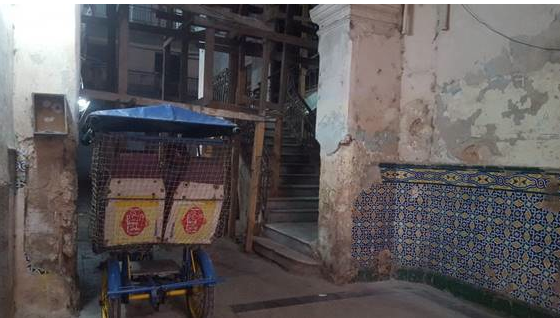
However, a few steps away from it, on Industrias Street itself, corner of Barcelona, there is an old multi-family building, peculiar because it’s the site of the installation of the first Otis elevator. Several families are crammed in the space, under threat of a possible collapse, since the property’s construction has suffered major deterioration.

In this building, behind the Capitol, the first Otis elevator for residential buildings was installed in Havana. (Author’s photo)

Some old hotels in the capital also became residential buildings years ago and are now in a dire state, precariously supported by wooden struts and in imminent danger of collapse. It is, to cite an example, the case of the nearby hotel Perla de Cuba (Amistad and Dragones streets), where families still live in the lower floors, as can be seen in the photographs.

For greater uncertainty of those who inhabit these dilapidated spaces, a significant part of them are in legal limbo due to their status as “illegal,” since they have come from the interior provinces and have not been able to change the status of their residence in the capital. Decree 217 functions as a kind of “green card,” legitimizing a humiliating segregation among the nationals of this Island.

In these cases, not only is their helplessness reinforced  ̶  since they can be deported at any time to their places of origin using police force against them ̶    but their inability to repair their homes legally, since on one hand they do not have access to building licenses or financial credit, while on the other, these buildings are mostly declared as “uninhabitable, non-repairable” by the Housing Institute, which eliminates any legalization process.

For their part, the “privileged” who are native to the capital or have obtained the grace of legal residence, although they might risk repairs of a cosmetic nature often lack sufficient capital to undertake structural improvements, which are extremely expensive and require state intervention.

A circle that closes and seems to be sealing the fate of thousands of families that, 500 years after Havana was founded, do not have much to celebrate. The gap between the beautiful and the ruins, the political power and the “governed,” the poor and the rich, the ordinary Cubans and the privileged elite continues to widen. The benefits of the imaginary “socialist model” have turned out to be increasingly bogus and unrealizable.

Translated by Norma Whiting

Tomato Production in Cuba Tanks and Prices Soar

Tomato production in Cuba fell precipitously in 2019 due largely to the lack of fertilizer. (Photo: V.C. Nisida)

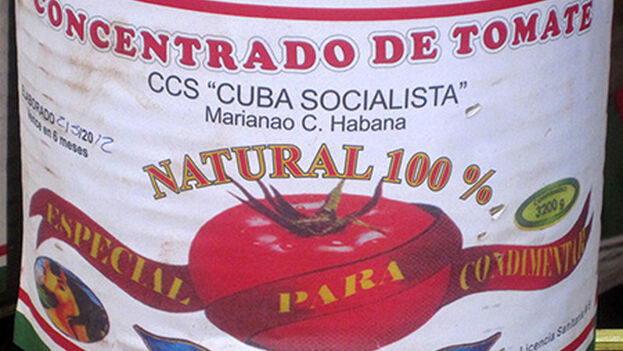
14ymedio bigger14ymedio, Marcelo Hernandez, Havana, November 24, 2019 — One of the products most sought-after by the throngs of people inundating the Cuatro Caminos Market has been the tomato, an essential ingredient in many recipes. With supplies scarce and prices for the product high, prepackaged tomato concentrate is the only option for customers who want to prepare pasta, season chickpeas or make a chicken fricasée.

Those anxiously searching for this popular item already know that the news this year has not been good. Domestic tomato production has been falling dramatically all year. The causes range from the inability to obtain fertilizer and seeds, difficulties with fuel and a delay in the planting season due to climate issues.

The official press reported that “the Ministry of Agriculture planned on delivering 79,940 tons of tomatoes” but produce markets received only 22,814, barely 28% of the planned total. continue reading

Far from the offices of official newspaper editors, long-time tomato farmers are feeling the impact that this is having on their lives. In Lajas (in Cienfuegos province), Remberto Godinez has had to devote part of his land, which six years ago was idle, to planting yuca and malanga instead of tomato, a crop which used to reign supreme on his farm.

“There’s no fertilizer, so it’s difficult to get a crop going,” Godinez explains.

“Also, insect infestations have plagued the crops this year and we have no way of combatting them. And thinking about growing a tomato under netting is just crazy. Where would we even get the cloth?”

Two years ago Godinez began experimenting with growing an “impaled” tomato, a technique that allows the plant to grow vertically. Though little used on the island, the strategy was providing Godinez with good yields and a more marketable product. “I had to give it up because finding the planting stakes was proving difficult,” he explained by phone.

He does not envision an optimistic forecast in the coming months. “It rained a lot in October so we couldn’t set up the seed beds and planting was very delayed. There won’t be as many tomatoes at the end of this year as in the past,” he notes. “I think that any family that can eat a tomato at Christmas should feel very fortunate.”

Tomato puree concentrate, known as “tomato paste,” is a popular option for many Cubans. (G. Bonomi)

The high prices for tomatoes listed on chalk boards at local produce markets back up Godinez’ claims. At Havana’s best-stocked markets — examples include the one at San Rafael Street in Central Habana, and the one at 21 and B in Vedado — for several weeks the price for tomatoes has not fallen below 25 Cuban pesos per pound, equivalent to the daily salary of a professional. In Artemisa province, where the plant is also widely cultivated, prices have exceeded 30 pesos per pound. And in Trinidad, a tourist area with high demand from restaurants and hostels, they go for 50 pesos.

Even Cuba’s most important tomato growing province, Ciego de Avila, has not escaped the crisis. According to figures published in the local press, 33,945 tons of the crop were harvested there in 2019 but ultimately only 12,450 tons were recovered from the fields.

The situation in Ciego de Avila is also reducing supplies of tomato-based products — sauces, purees and a wide variety of canned goods — because Ceballos, the country’s largest industrial processor of tomatoes, is located in the province and consumes a signficant portion of the local production.

“The technological supplies didn’t get here on time and, when they did arrived, we didn’t get everything we needed, especially nitrogen fertilizer,” says Nancy Palmero, a producer who, along with her husband and two sons, raises tomatoes on the outskirts of Moron. “We have trouble getting the tomato crop from the field because there isn’t enough fuel, or even crates.”

The worsening energy crisis Cuba has been experiencing in recent months is having a very negative impact on agriculture, a sector hit by other shortages. At the root of the crisis are dwindling supplies at gas stations and a resulting higher demand, which is partially met by black market diesel that has been illegally diverted from the resources of state farms and cooperatives.

The Ceballos company itself confirmed the setback in a recently published report. Last year the industry produced 4,565 tons of tomato-based products, including pasta, puree, sauce and other items. In the first nine months of 2019, however, the figure was only 1,339.

“The few tomatoes we manage to produce we sell out of our house,” says Nancy Palmero. “People are so desperate just to get tomato puree that they snatch them from our hands.”

__________________

COLLABORATE WITH OUR WORK: The 14ymedio team is committed to practicing serious journalism that reflects Cuba’s reality in all its depth. Thank you for joining us on this long journey. We invite you to continue supporting us by becoming a member of 14ymedio now. Together we can continue transforming journalism in Cuba.

Without Mentioning Cuba, ECLAC Urges Improved Statistics

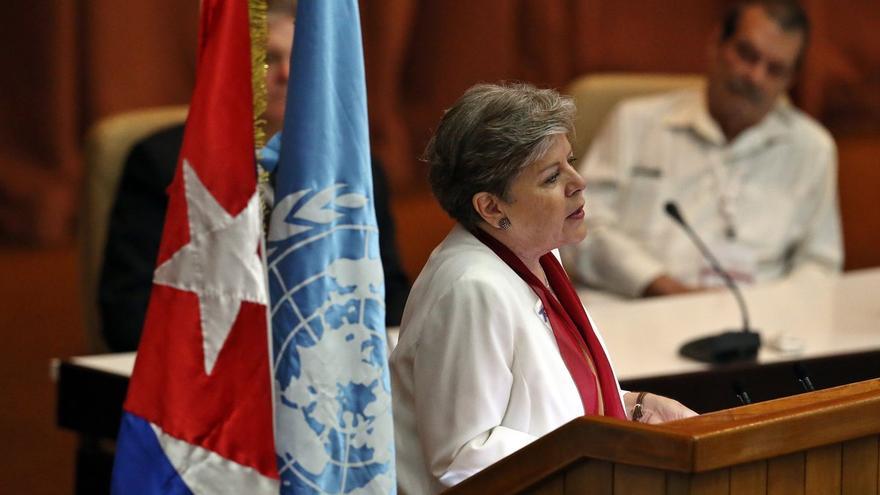
Alicia Bárcena avoided giving examples of countries that hide their true indicators. (@cepal_ONU)

14ymedio bigger14ymedio, Havana, November 20, 2019 — Alicia Bárcena, Executive Secretary of the Economic Commission for Latin America and the Caribbean (ECLAC), warned on Tuesday that “timely and quality statistical information is an essential condition” for the government to perform effectively. The official called for a break in statistical silence in a region where many countries make up or hide their figures.

Without mentioning particular cases, Bárcena urged countries to “more faithfully portray” their realities and also to “look for more and better data to respond to the enduring demand for sustainable equitable development,” during her speech at the Tenth Meeting of the Statistical Conference of the Americas, which is being held in Santiago, Chile until Thursday the 21st.

The senior official stressed that “it is essential for policy to be based on evidence from national statistical systems that add increasingly autonomous statistical institutes, central banks, health, economic and environmental agencies, among others.” continue reading

Although Bárcena avoided giving examples of countries that hide their true indicators, among the most striking cases in the region is Cuba, which for more than half a century has retouched or kept under secrecy the real figures of malnutrition, unemployment, criminality and gender violence, among others. Economic data are also frequently retouched or inflated by Havana.

On several occasions ECLAC has lamented that “Cuba’s main economic statistics have an annual timeliness and are published with a lag of several months and even years.” It’s a situation that continues to repeat itself despite the fact that the publication of reports by Cuba’s National Statistics Office was given more prominence since Raul Castro took power in 2008.

Last August ECLAC predicted that the Cuban economy would grow by just 0.5% in 2019, contrary to the optimistic forecasts previously announced by the government of the island. A month earlier, Miguel Diaz-Canel assured the National Assembly of People’s Power that the GDP would grow 2.2% this year.

For decades, economists have questioned the reliability of official statistics reported by Cuba and used for their analysis by international organizations such as ECLAC, the World Bank or the International Monetary Fund.

“The bias in Cuban GDP dollar estimates does not only derive from the Cuban government,” warned economist Pavel Vidal, “but from multiple institutions that have tried to approach the issue and have found it difficult to reach a number, due in part to the dual exchange rates and the absence of comparative statistics on prices.”

Another indicator that the Cuban government has hidden for decades has been the figures on poverty. Although “a survey in 2000 indicated that 20% of Havana’s population was poor, and that figure was probably higher in the rest of the country,” says economist Carmelo Mesa-Lago.

Translated by: Rafael Osorio

______________

COLLABORATE WITH OUR WORK: The 14ymedio team is committed to practicing serious journalism that reflects Cuba’s reality in all its depth. Thank you for joining us on this long journey. We invite you to continue supporting us by becoming a member of 14ymedio now. Together we can continue transforming journalism in Cuba.

At Havana’s Mid-Millennium: The State of the Central Railway Station / Miriam Celaya

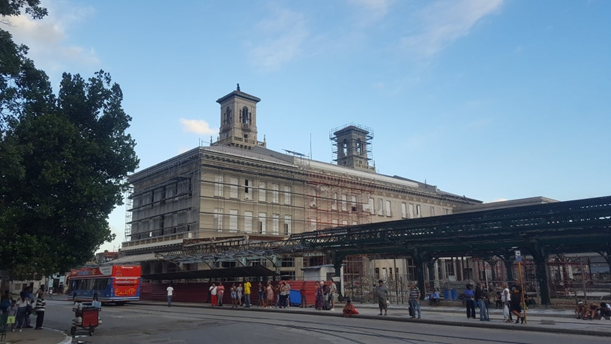
Central Railway Station. Restoration works have stopped (Photo by the author)

Cubanet, Miriam Celaya, Havana, 20 November 2019 — Seventy-five years after the opening of the first railway station in Cuba (Bejucal, 1837), Havana’s Central Railway Station was built and inaugurated, and its construction – finished in just two years – was carried out under the government of José Miguel Gómez by The Frederick Snare Corporation, an American company.

The brand-new station – completed on November 30, 1912 – was an imperative for the capital, since the old Villanueva station (1859) did not meet the requirements of a growing population. Equipped with a colorful four-story building, a mezzanine, a large 151,000 square feet train yard and a colorful eclectic façade with two elegant towers, central clock and craft decorations of shells and shields on the wall, the “Train Station” – as it is known by Havana’s residents – stands on the corner of Egido and Arsenal Streets, in the historic area of the capital.

In 1983 it was recognized as a National Monument for “its architectural and historical values,” but even this jewel of Havana’s architecture could not escape official neglect or the system’s own decline, especially when accelerated by the fall of the USSR, which marked the beginning of the economic crisis of the 1990’s. continue reading

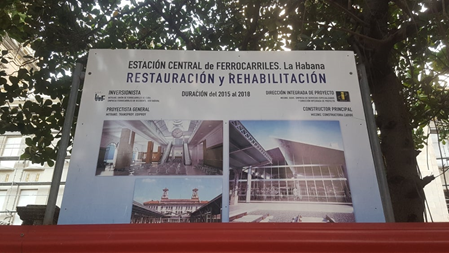
The deterioration of the rail passenger transportation service and the Central Station itself occurred simultaneously, and after some cosmetic refurbishment, works that did not solve the constructive or functional problems that already demanded major investments, it finally stopped providing services in 2015. It was then closed for restoration and rehabilitation, to confront the major repairs that are now being carried out, which should have been completed in 2018, as is indicated by a large sign placed on the fence that surrounds its façade.

Restoration was supposed to be completed in 2018 (author’s photo)

However, it’s enough to walk near the vicinity of the building and its related facilities to realize that not only have the completion deadlines have been breached, but that we will not be able to attend its re-inauguration at any time in the remainder of 2019, though in February of this year an optimistic report of the official site Cubadebate assured us that workers were laboring intensely in double shifts in order to deliver the finished work in time for the celebration of the 500th anniversary of Havana.

Back then, there was talk of “a 100-day delay” with respect to the original program, due to “the importation of steel for the stabilization of the north tower, as well as other materials for the façade,” to which should be added such complexities as the works required to strengthen the towers; the remodeling of the façade, retaining all its decorative and traditional values; the renovation of the blacksmith and carpentry shops; the creation of new rooms; the installation of escalators; the installation of new air conditioning services; lighting; and comfortable furniture sufficient to meet the demands of “more than 16 thousand daily travelers.”

Among the “renewal pride” which will be added to the services, the referenced report mentioned Wi-fi service and retail shops, which — it stated – would place the Central Station at the same level as its world peers.

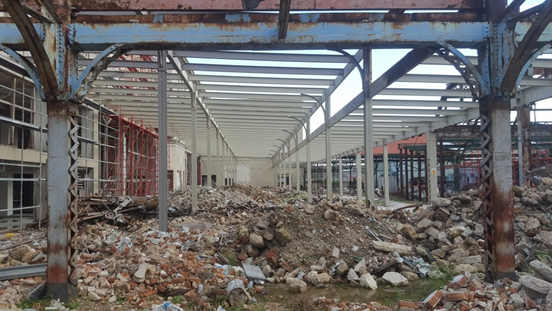
On the other hand, it is said that the platforms are also undergoing restoration, but though the report ensures that “all their steel was restored” and that “the pluvial system was rebuilt from scratch,” in fact, today the train yard offers an image of chaos and debris scattered throughout almost all of its spaces. Nothing evidences the existence of platforms, much less rain lines or systems.

Partial view of the train yards (author’s photo)

Obviously, if it were the restoration of one of the “mixed capital” hotels or some other work of greater interest to the authorities, the delivery program could have been fulfilled. But in the case of an installation designed to serve primarily nationals – and therefore not constituting a promising source of hard currency income, at least as long as there are no more efficient and comfortable locomotives and cars that meet the standards for foreign visitors. Thus, to date, there are no foreign investors who will inject enough capital to complete the work.

If the published data is assumed to be true, in this case the construction work of the Central Station – whose project was formulated by Cuban architects and engineers in coordination with the Office of the Historian – is the responsibility of the Transportation Ministry, the Union of Railways of Cuba, the Ferrocarriles de Occidente Company and the Havana Base Business Unit, so there is no need for much optimism.

This November 19th will be the 187th anniversary of the inauguration of the first railway station in Cuba and the beginning of this means of transportation on the Island; the second one in this Hemisphere – just behind the US railroad – and the first railroad system in Latin America.

The anniversary, however, should be a cause of shame and not pride. The collapse of the Cuban railways, evident in the rail infrastructure, as well as in locomotives, freight and passenger wagons and stations, is an incontestable sample of the destructive capacity of a socio-political and economic system that only needed 60 years to destroy what was built over the previous 127 years.

Moreover, the Castro regime not only spoiled the previously efficient railway capability of the Island, but it also interrupted the existence of a sector with a long working tradition in Cuba.

The building has been partially rehabilitated (author’s photo)

Today the workers of the depressed railway sector ignore that it is next Tuesday, November 19th – and not January 29th, the date imposed in 1975 by Fidel Castro’s egomania – when they should be honored. Recovering the rail efficiency achieved during the 19th century and the beginning of the 20th century, almost 200 years after the first train circulated in Cuba, remains an aspiration.

Translated by Norma Whiting

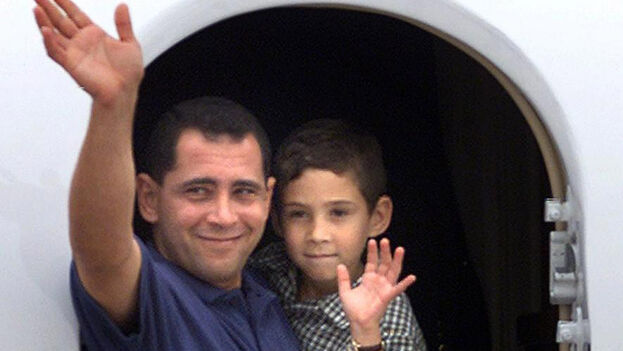
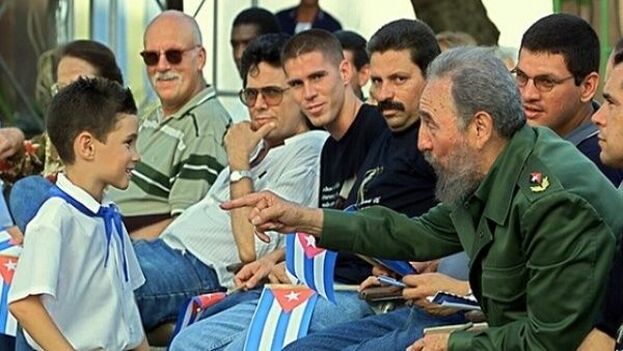
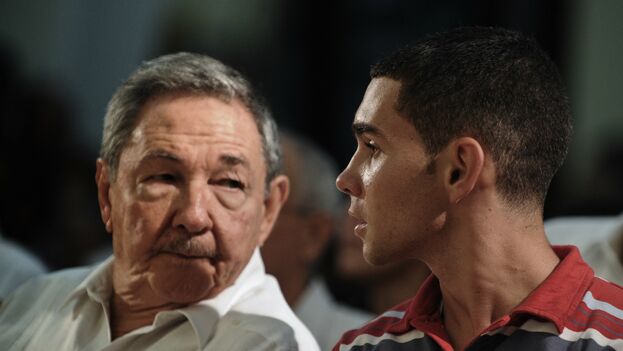
Twenty Years Since the Rescue of the "Miracle Boy" Turned Revolutionary Icon

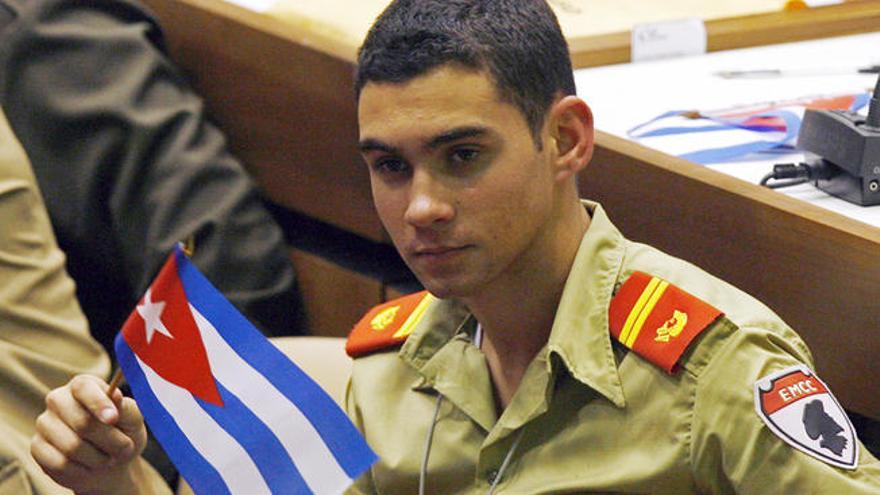
The Elián Gonzalez during his time as a military student in Cuba. After the death of Fidel Castro he compared Fidel to a superhero. (Archive)

14ymedio biggerEFE (via 14ymedio), Ana Menghotti, Miami | November 24, 2019 — Twenty years ago the “little rafter” Elián González was saved from drowning, as his mother and other Cubans who were trying to reach Florida had, but was left in a tug-of-war between the Cuban government and the exiles in Miami. The tug-of-war was settled with an American court decision that made possible his return to the island.

“I would again defend a defenseless child against a dictatorship,” said Ramón Saúl Sánchez, one of the leaders of the protests in which Cubans in Miami fruitlessly tried to stop Elián, who was five when he crossed the Florida strait aboard a raft, from being returned to his father and to Cuba.

“It was an ethical duty, we didn’t do it out of politics or for any other reason. Whoever has gone through an experience like us (the exiles) knows that we were obligated to defend that boy,” adds the leader of the Democracy Movement. continue reading

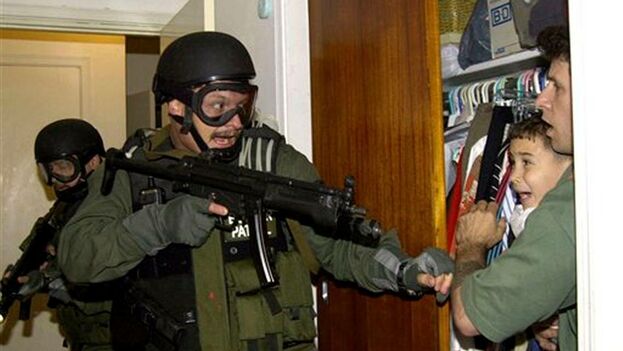
In this iconic photo, Donato Dalrymple protects Elián in a closet from the federal agents who were searching the house of his family in Little Havana on April 22, 2000. (Archive)

In front of the house in Little Havana where the boy lived with a maternal aunt and other family members after his rescue by fishermen in waters near Florida on November 25, 1999, Sánchez recalls the blow that he received in that house on that day US federal agents burst in to take Elián.

It was April 22, 2000 and the warrant had been given by Janet Reno, then the attorney general of the US and for many exiles the “bad guy” in this “film.”

That day Sánchez found out that the slogan “Elián isn’t leaving,” which had been popularized in the protests, wasn’t going to be reality.

Considered in Miami a “miracle” boy not only for having been saved from the shipwreck but also because his rescue was on the day of Thanksgiving, Elián González, was turned into a symbol of the Revolution and its triumph over capitalism, and returned to Cuba on June 28, 2000 after many negotiations and to-ing and fro-ing in the courts and mass demonstrations in Miami and on the island.

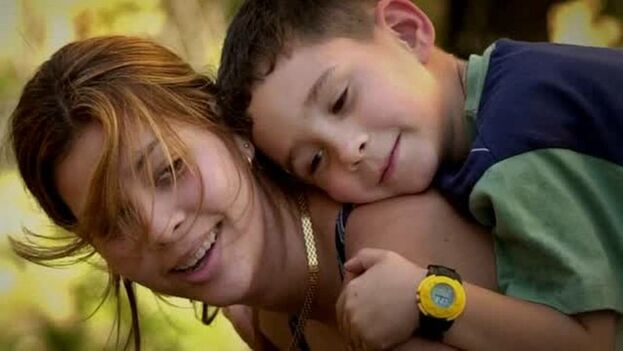
Elián González with his cousin Marisleysis Gonzalez in Miami. (Miami Herald)

Fidel Castro personally became involved in what in other circumstances and countries would have been only a family dispute over the custody of a child whose mother took him from the country without the permission of the father, who wanted to get him back and raise him in Cuba.

Sánchez believes that Castro, knowing that in the United States the “law is respected,” took advantage of the Elián case to “project himself as a defender of childhood,” although “he wasn’t,” while at the same time “deal a blow of international dimensions to the exile community.”

The organizer of “human chains” and actions of “civil disobedience” for Elián says that he always thought that it was the maternal and paternal family members of the boy who should have come to an agreement about his future, not the governments.

However, he says, there was a fact that couldn’t be forgotten: Elián’s mother decided to leave a country in which “a dictatorship was suffocating, and is still suffocating, the people.”

The boy became the center of the dispute between the Cuban exile community in Miami and Fidel Castro’s regime. In this photo his father brings him back to Cuba.

If Cuba wasn’t “a dictatorship,” the people wouldn’t embark upon the sea, says Sánchez, who blames the “regime” for every one of the deaths of Cuban rafters whose “American dream” ended when the precarious boat on which they abandoned their country foundered.

The so-called “rafter crisis” was in 1994, but in 1999, the year in which Elián’s raft foundered, there was another massive departure of precarious boats toward the US without the Cuban government trying to stop them, according to information from the time.

Castro celebrated Elián González’s birthday. (Archive)

From January 1 until November 27 of 1999, 940 Cubans were intercepted on the high seas, according to data from the American Coast Guard gathered from the news at the time.

In the fiscal year of 2019 (concluded the last day of September), approximately 454 Cubans attempted to illegally enter the United States by sea, the Coast Guard reported. Sánchez has no doubt that the reason that fewer rafts were intercepted is that the so-called wet foot/dry foot policy is no longer in force. The policy allowed Cubans who managed to touch US ground to remain in the country and condemned those who were detained in the water to be repatriated.

That policy was eliminated by Barack Obama’s administration during the “thaw” with Cuba and is one of the few things that Donald Trump, his successor in the White House, has left in place from that attempt at normalizing relations.

González still appears at official events and hobnobs with Castro’s successors. In this archive image he can be seen with the ex-ruler Raúl Castro.

On the Elián raised in Cuba, Sánchez stresses that he was “brainwashed” by “those responsible for his mother’s death” and for that reason he seems “almost an automaton,” always “in a bad mood.”

The most remembered face of the “little rafter” is, however, that of the day on which he was taken from the house of his uncle in Little Havana in Miami by a group of US marshals. The famous photo, taken by the now deceased Alan Díaz, photographer for the American agency AP and winner of a Pulitzer, shows a small 6-year-old Elián in the arms of one of the fishermen who saved him, Donato Dalrymple, terrified in front of the uniformed and helmeted agent with enormous protective glasses pointing a gun at them.

The Elián case, which is seen as one of the many disagreements between the United States and its neighbor Cuba, is, for Sánchez, one chapter more in “the long fight of Cubans for their liberty.”

Translated by: Sheilagh Herrera

___________________

COLLABORATE WITH OUR WORK: The 14ymedio team is committed to practicing serious journalism that reflects Cuba’s reality in all its depth. Thank you for joining us on this long journey. We invite you to continue supporting us by becoming a member of 14ymedio now. Together we can continue transforming journalism in Cuba.

I Can No Longer Stay Silent

Bruzón is presently living in Missouri in the United States and is a member of the chess team at the University of Webster.

14ymedio bigger14ymedio, Lázaro Bruzón, Missouri, 21 November 21 — The final blow was my conversation with someone very special in my life. Now I need a catharsis, first to clear my mind and then to be able to sleep well and release a weight from my shoulders that I’ve been carrying around for some time.

I’m also doing it in case it helps someone who can identify with my words. I would like to share some ideas. Putting everything in print won’t be easy, but I’ll try. I’m participating less and less in social networks because it costs a lot to give an opinion and ends up being extremely stressful. Even as I do it, I wonder if I’m contributing something useful or just satisfying my ego.

Sometimes I think that Cuba is not a country but rather a planet, and we Cubans are an alien species. Why is everything that happens with Cuba and Cubans so out of the ordinary? Why are things that should be simple and are so in every part of the world become totally chaotic when it comes to Cuba? In my opinion, all Cubans in one form or another are very much affected. When I analyze society and how we behave on social networks, I see many feelings of frustration, hatred, impotence, aggression, and above all else, fear: We have a lot of fear.

Sometimes we don’t “Like” a post for fear of repercussions. It’s unhealthy. continue reading

For a long time I didn’t pay attention to politics. There are many reasons, and each person has to follow his own path and that’s what I did. Today, without thinking I’m more patriotic than anyone else, I want to add my two cents to the subject of Cuba and give my opinion, with respect but above all with sincerity and transparency.

For this reason, ever since I came to the United States, I searched for all the information I could find on Cuba, trying to understand certain things about my country. I had some general knowledge about certain subjects but only that. Being the obsessive person that I am, I invested hundreds of hours, enough to reach certain conclusions that today make me critical of the system and the laws of my country.

Once you learn about freedom, respect for different opinions, and being able to express yourself without being questioned, nothing can ever be the same. There is no worse prison than having to censor your ideas for fear of reprisals by the simple act of giving an opinion. That is what happens in Cuba to those who think differently.

Before, when I heard the words opposition, dissident, they were immediately accompanied by adjectives like mercenaries, enemies, criminals, and all that propaganda they have told us for such a long time. Today I know there are many good people, people who struggle for civil rights and are mistreated, imprisoned, fired from their jobs, and their lives made impossible by the simple act of not agreeing with the system in Cuba. (Moreover, for those who argue there are many in the opposition making money from the struggle in Cuba, that does not take away from the strength or the truth of their message.)

Today I condemn all that on principle, and I don’t accept it. I can’t say the Cuban Government protects a majority while it crushes a minority, reducing it to zero: This is criminal. All the social victories that we have always displayed with pride are overshadowed totally by these persecutions.

For how long will the Cuban Government continue to put ideology over the objective reality of the Cuban nation? Perhaps they can’t see what is happening. The general discontent, the number of Cubans who leave and those who want to emigrate to anywhere else. Is it too complicated for them to see that a country that prioritizes ideology and propaganda in every sphere cannot progress? How much do they spend on ceremonies and massive marches?

In a country like ours facing so many economic problems, is that what we need the most? When are we all going to ask ourselves honestly if this is the country we really want or if it can be made better, if we can aspire to something better?

What are the hopes and dreams of Cubans? It’s unsettling to see how much we conform, especially those who are the most affected. The ordinary Cuban, who each day manages to survive on his salary, has to wake up and realize that other possibilities exist. He must not keep thinking that the ”blockade” is to blame like they’ve been telling us. You don’t have to resort to violence to demand your rights and oppose injustice, but it’s difficult to recognize that we’ve been wrong, that we’ve been deceived.

I could also keep quiet by convenience. Most of us turn a blind eye knowing what is going on around us, and we act only when they tread on our toes, but I can no longer do that. I’m one more who thinks things can be better for all Cubans.

Our nation needs more justice, that we all be treated equally before the law, which includes all Cubans, that we live in peace in spite of ideological differences and political disagreements, so that dissenting is not a crime, so that Cubans aren’t prohibited entry to their country without a good reason or prevented from leaving because they think differently. So that Cubans can live honestly from their salaries; that the Constitution of my country not be a servant of the Communist Party, and that those who don’t identify with this system not be marginalized. That isn’t correct.

I want to clarify that this is a positive message, one of love, and my personal opinion. These are my thoughts, and no one else is behind this statement. I know the weight of my words and assume all responsibility for my acts.

Once again I repeat that I’ll always be grateful for everything positive my country has given me, but I can’t be quiet about what I feel forever. What I say or do is based on respect and in search of tolerance. If someone wants to distance themselves from me, I have no problem. There have been already been many, and I understand. Whoever really knows me knows that I prefer to disappoint people by being honest and consistent rather than hiding things so I don’t hurt certain people—above all those I hold dear who don’t share my ideas. I prefer to take off my mask once and for all.

Editor’s note: This text was published on Facebook by the author, who gave us permission to reproduce it in 14ymedio

At only 18 years old, Lázaro Bruzón, originally from Las Tunas, was world junior chess champion. He became a Grand Master in 1999, and shortly thereafter  obtained the highest title in the International Chess Federation. In September 2018, at age 36, he was expelled from the national chess preselection for refusing to return to Cuba. At present he lives in Missouri in the United States and is part of the chess team at the University of Webster.

Translated by Regina Anavy and Alberto de la Cruz

__________________

COLLABORATE WITH OUR WORK: The 14ymedio team is committed to practicing serious journalism that reflects Cuba’s reality in all its depth. Thank you for joining us on this long journey. We invite you to continue supporting us by becoming a member of 14ymedio now. Together we can continue transforming journalism in Cuba.

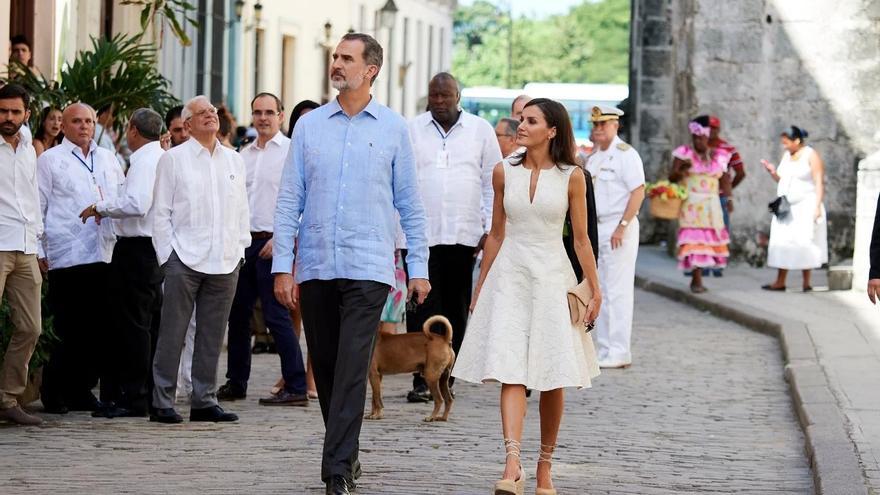
Strays and Kings

A stray dog that resisted the authorities slipped in the photo of the Kings of Spain walking through Old Havana. (EFE)

14ymedio bigger14ymedio, Marcelo Hernández, Havana, 15 November 2019 — The fact that the Zoonosis Canine Observation Center circulated its vehicles through several Havana municipalities to clean the city of stray dogs a few days earlier, was of little use.

The idea of a clean, organized city with no abandoned animals broke down in a second, when the Spanish royals Queen Letizia and King Felipe VI made their way through the historic center of the Cuban capital accompanied by a stray mutt that even the entourage of bodyguards, officials and journalists who accompanied the royals was not able to remove.

Some say that the dog that crossed their majesty’s path was simply a character intended to clean the image left behind by the massive collection and subsequent sacrifice of abandoned animals before the arrival of the royal couple. continue reading

Others prefer to interpret its presence as a symbol of resistance and claim of creatures that have suffered neglect, abuse and the absence of rights forever. For them, that mongrel represented all the dogs and cats that are waiting for an Animal Protection Law, regulations that more and more activists loudly demand.

So next to Felipe’s guayabera and Letizia’s impeccable dress, the tanned and somewhat dirty spine of this Havana mutt passed by. His daring presence in the real photos was overshadowed by the uproar caused by the dress of the Cuban first lady, Lis Cuesta, who stole the prominence of the day due to her inappropriate attire for the steamy Cuban sun. Regardless, whatever you want to call him: Spot, Rex, Lucky, Sparky or Champ… although it is very likely that he has no name, he slipped into the visit of the Spanish royals to Cuba.

They will leave, but he must continue to deal with the hard life on the streets of Cuba.

_________________

COLLABORATE WITH OUR WORK: The 14ymedio team is committed to practicing serious journalism that reflects Cuba’s reality in all its depth. Thank you for joining us on this long journey. We invite you to continue supporting us by becoming a member of 14ymedio now. Together we can continue transforming journalism in Cuba.

Cuban Authorities Blame "Hoarders" for the Incidents in Cuatro Caminos Market

State television has taken two days to pronounce, but finally it has done so, partly driven by the spread of information on the internet. (Capture)

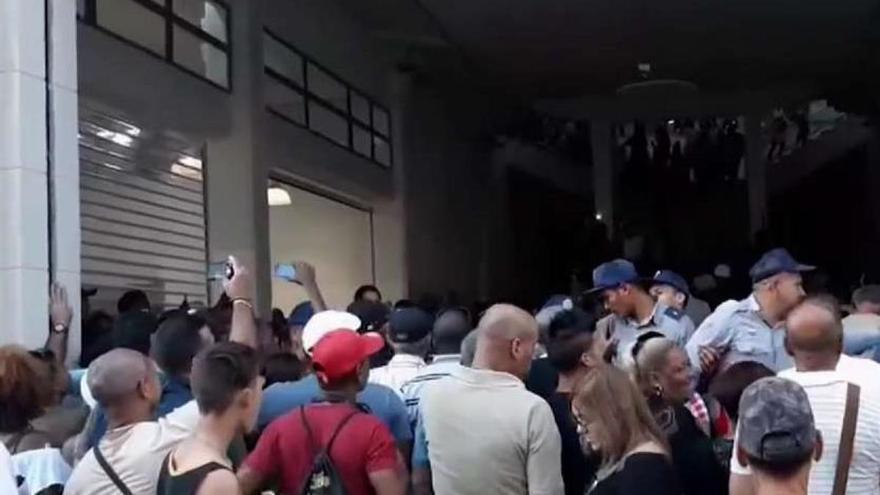
14ymedio bigger14ymedio, Marcelo Hernández, Havana, 19 November 2019 — “Hoarders” and an “uncontrolled avalanche” are the adjectives with which Cuban Television described the crowd gathered last Saturday at the reopening of the Cuatro Caminos Market. The official response to the riots has taken 48 hours to appear and has come through information issued on Prime Time News and prepared by the journalist Talía González.

The official information indicates “violations of the established norms for the entrance to a commercial establishment” and “the breakage of some structures and also quarrels.” In the emblematic building, built in 1920, “there were unpleasant acts of hoarding” of people “acting with total impunity,” adds the TV news.

At least one woman suffered a fracture during the stampede through the interior aisles of the mall, reopened after five years of repairs. In addition, two doors were shattered by the crowd and there was shoving and fights that forced administrators to decree the closure of the facility for several days. continue reading

“Those who caused these unfortunate incidents did not go there only to buy products for use in their homes,” but they are “part of a phenomenon that has not yet had a solution,” said the journalist, considered a voice very close to the high hierarchy of the government.

González denounced “the hoarding and subsequent resale on the street at exorbitant prices,” a black market that for decades has been one of the main sources of supply for Cubans.

The official news attributed part of the responsibility to the market managers, who did not take the appropriate measures to control the flow of customers at the entrances.

However, according to the report, the public behaved in an “uncivilized manner” and many “dedicated themselves to recording everything with their cell phones and then showing them in smear campaigns on social networks.”

In the images that have been coming to light since last Saturday, many people are seen filming the flood of customers, the blows and shoves with their mobile phones.

The dissemination through social networks of news events has forced the official press to address issues that were previously kept under control, if not hidden. The protest of the resident of Regla against the caravan of Miguel Díaz-Canel after the tornado last January and the death of the young girl, Paloma, after being given a vaccine, are some of the information that has come to light thanks to the internet.

Cuban Television considers this immediacy an “evil that we experience these days” and regrets what happened despite the efforts of the workers who had been setting up the market for reopening to the public, the day of the 500th Anniversary of Havana.

During the last months the shortage of essential products, such as food and cleaning supplies, has worsened in Cuba. In an attempt to alleviate the situation, the authorities decreed rationing in the sale of various merchandise in stores in convertible pesos, especially frozen chicken, sausages and beer.

However, the measures have failed to prevent compulsive purchases or those that aim to accumulate products and then resell them in informal networks. “It is true that the shortage of necessities during the last months in the network of stores resulted in consumers having an expectation of accessing them in the highly stocked Cuatro Caminos Market,” it acknowledges.

“But nothing justifies what happened there,” said González, who calls for  measures “to make an example of” those who provoke situations such as that experienced on Saturday in the so-called Single Market.

According to information provided by CIMEX to the official press among the most important economic damages are the breakage of three rolling doors, one of the panels of the glass door located at the entrance, and some traffic barriers that are estimated at a cost of more than $2,000. In addition, the same sources ensure that there were “losses of approximately 5,000 CUC” in damaged or stolen products.

See also:

The Cuatro Caminos Market Closes Until Next Week Due To Social “Indiscipline”

The “Resurrection” of the Cuatro Caminos Market and Free Trade in Cuba

Why the Reopening of the Cuatro Caminos Market Failed

The Cuatro Caminos Market Will be a Museum

Without Its Market Cuatro Caminos Seems Lost

_________________

COLLABORATE WITH OUR WORK: The 14ymedio team is committed to practicing serious journalism that reflects Cuba’s reality in all its depth. Thank you for joining us on this long journey. We invite you to continue supporting us by becoming a member of 14ymedio now. Together we can continue transforming journalism in Cuba.