Cuban Independent Journalist Luz Escobar Under House Arrest for the Second Consecutive Saturday

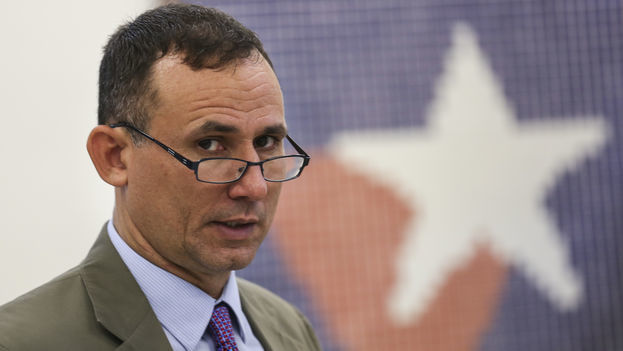
14ymedio bigger14ymedio, Havana, 23 November 2019 — The journalist Luz Escobar, a member of the 14ymedio team, is under house arrest for the second consecutive weekend. This Saturday, while trying to leave for a family lunch, a State Security agent stationed on the ground floor of her building warned her that he had orders not to allow her to go outside.

The man, dressed as a civilian and who identified himself as Ramses, did not offer any legal reason for the exit ban. A while later the operative was relieved and the agent’s place ]was occupied by the same man who, on November 16, prevented Escobar from going outside.

At the insistence of the reporter to know the reasons for her house confinement, the agent, who would not remove his hand from his face, stressed that if she left she would be “arrested” and that “in due course they will explain it,” but without mentioning the names or positions of those who would provide the explanation. continue reading

Last Saturday, in the framework of the celebrations for the 500th anniversary of the city of Havana, State Security prevented numerous independent activists and journalists from leaving their homes on the grounds that they must be prevented from undertaking “harmful acts” during the activities organized for the anniversary.

Luz Escobar was one of those affected then by the ban, as were the journalists Yoani Sánchez and Reinaldo Escobar, who had an operative on the ground floor of their building in Havana for two days.

Reinaldo Escobar recorded the moment when one of the agents, who did not identify himself, explained the reason for his presence: “Today it is likely that you stay at home, right? To avoid arrests, to avoid a group of things, so as not to reach other extremes.”

Home arrests are a repressive practice widely used by State Security to prevent independent activists, opponents and journalists from attending activities or covering any news. With these actions the political police incur the crime of “duress” according to article 286 of the Criminal Code.

As of May of this year Luz Escobar has also been “regulated,” the official euphemism to designate citizens who have a ban on leaving the country. About 200 people, among them reporters, activists and political opponents are “regulated.”

_____________

COLLABORATE WITH OUR WORK: The 14ymedio team is committed to practicing serious journalism that reflects Cuba’s reality in all its depth. Thank you for joining us on this long journey. We invite you to continue supporting us by becoming a member of 14ymedio now. Together we can continue transforming journalism in Cuba.

Big Brother Legalizes Electronic Surveillance Of Cubans

In Cuba, the information obtained from “electronic or other surveillance” is legitimized during the criminal process. (Dreamstime)

14ymedio bigger14ymedio, Yoani Sanchez, Havana, 22 November 2019 — A decade ago, Cuban official television broadcast a series of programs to try to discredit opponents, independent journalists, activists and bloggers. In several episodes of that series private emails, telephone recordings and intelligence footage were aired that “showed” the alleged crimes committed by these citizens.

Few viewers were surprised that the emails, calls or text-only messages of the victims of the official propaganda apparatus were made public. We have been so accustomed to the Cuban Big Brother stalking everywhere that it seems normal to many that State Security rummages through our mobiles, records in our own homes and monitors our electronic correspondence.

This week, the State Council set out three legal rules that capture what has been done in the shadows for decades. Decree-Law 389, published this November 18 in the Official Gazette, modifies the Criminal Code, the Law of Criminal Procedure and the Law of Acts against Terrorism, to regulate covert investigation techniques. continue reading

Now, the figure of the effective collaborator has been put in writing, in addition to formalizing electronic or other surveillance, along with the calls monitored. Practices that will be carried out in the face of criminal acts that, “due to their seriousness, connotation or organization, require it, including operations whose origin or destination is outside the country.”

Thus, the information obtained from the “electronic or other surveillance,” which was already used to judge and condemn an ​​individual, is now sanctified by law and even wrapped in a rhetoric of protection of citizenship and national sovereignty.

In a court the alleged evidence that provides “the listening and recording of voices, location and monitoring, photographic fixations and filming of images, intervention of communications of any kind, access to computerized systems and other technical resources that allow knowing and prove the criminal act.” It will not be necessary for a judge to previously authorize these procedures.

We will have to wait to check the scope and effectiveness of these new regulations. Because, in recent years, we have added new tools to the old methods to protect ourselves as citizens, especially focused on protecting our presence in the networks. I imagine that after the publication of this decree, these practices will increase significantly.

If before we put the television at full volume when we were going to have a “complicated” conversation, now we must add to that trick the armoring of our mobile phones with VPN services and “firewalls” that prevent, or at least reduce, the police snooping. To the gesture of hiding the bag with the merchandise from the black market from the eyes of our neighbors, we have now added covering the laptop camera so that they do not film us through it without our realizing it.

After every step taken by the political police to get into our lives, citizen countermeasures have emerged. The metaphors have proliferated and the messages have been filled with phrases such as “the corner light is still on” to warn an activist that he is being watched, while some Cuban engineers already market devices to detect hidden microphones, or to isolate a cell phone and prevent it from being used remotely to listen to us.

However, Big Brother has all the mechanisms to delve into our lives. In the end, he owns the only existing telephone service in the country, he has a large army of informants, controls all the terminals that offer web browsing service in state premises, has trained thousands of potential cyber-police at the University of Computer Science and lacks any ethical limit when it comes to handling private information.

Faced with this ruthless offensive against freedoms on the part of the Plaza of the Revolution, there is no Faraday cage to protect us.

_________________

COLLABORATE WITH OUR WORK: The 14ymedio team is committed to practicing serious journalism that reflects Cuba’s reality in all its depth. Thank you for joining us on this long journey. We invite you to continue supporting us by becoming a member of 14ymedio now. Together we can continue transforming journalism in Cuba.

The Convertible Peso Does Not Exist at Havana’s Airport

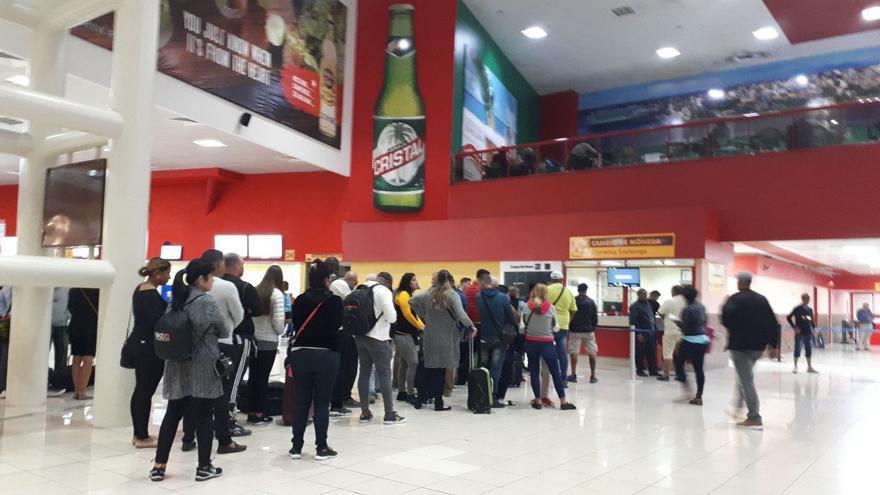
The ban on taking convertible pesos (CUC) out of the country has led to long lines at currency exchange booths outside the boarding area, even at dawn. (14ymedio)

14ymedio bigger14ymedio, Zunilda Mata, Havana, 21 November 2019 —  The first thing a traveler notices upon entering the boarding area at the Havana airport is that the convertible peso (CUC, or, as popularly known, el chavito) is no longer accepted in the duty-free shops. Now purchases can only be made with the Cuban peso (CUP) or major foreign currencies.

When it comes to putting an end to the country’s cumbersome two-currency system, the government seems be following Raúl Castro’s philosophy of doing it “without haste but without pause.”

The ban on the import or export of CUCs took effect last Friday, after the measure was officially announced on October 23. A sense of urgency marks those passengers who want to unload their convertible pesos before going through the emigration check and boarding their flights. continue reading

Lines at airport currency exchanges have grown dramatically. Even at dawn, the wait can be as much as an hour.

The CUC’s decline has been gradual. It began with the closure of currency exchanges. Then shopping malls began allowing customers to pay in CUPs. And in recent weeks the dollar has surged. Blow after blow, the convertible peso is becoming increasingly less relevant. Cubans are already preparing for its ultimate demise.

“At the duty-free shops I can now buy a bottle of rum or a bag of coffee with euros, dollars and even CUPs. But I can no longer pay for them with those little [CUC] bills,” says Genaro, a Cuban with Spanish citizenship who travels frequently to Panama and Mexico to bring goods back for resale. “When I left last week, I was surprised to find they weren’t accepting CUCs in the store at Terminal 3 [in Havana’s Jose Marti International Airport].”

“May I give you some of your change in euros and some in dollars?” asked an employee at a cafe near the departure gate. The customer had paid with a ten-euro note and got back five euros and two dollars in change.

Those most affected are the employees who clean bathrooms in the boarding area, hovering around travelers using the facilities in hopes of getting a tip. “Around here no one is giving us CUCs because it’s forbidden. But a tip in euro or dollar coins doesn’t help because we are only allowed to exchange bills.”

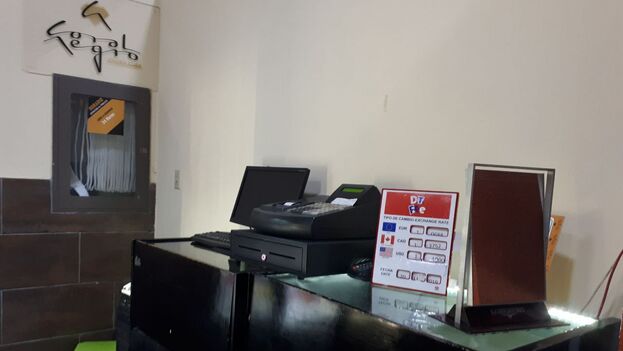
The convertible peso (CUC) is no longer one of the payment options for products sold in the departure area at Jose Marti International Airport in Havana. (14ymedio)

The convertible peso (CUC) is no longer one of the payment options for products sold in the departure area at Jose Marti International Airport in Havana. (14ymedio)Rejection of the CUC can also be seen on the streets. “I only accept Cuban pesos,” reads a sign inside a collectively owned taxi which operates between Brotherhood Park and the suburb of Marianao. “The days of the chavito are numbered and I don’t want to be stuck with money that’s useless,” explains the driver to some disgruntled customers.

But the CUC “has more lives than a cat,” claims a taxi passenger. For a decade the prospect of merging the two currencies became an increasingly important topic in official discourse. “There were times when it seemed the CUC was on its way out but nothing happened. It should never have existed. It has produced more problems than it has solved,” she adds.

In early 2018 the European Union offered to help the island unify its two currencies by sharing its own experience of transitioning to the euro. But months went by and the CUC kept setting the pace of the island’s battered economy. A transition schedule has been in place since 2013 but, so far, it is anyone’s guess as to when it will happen.

Given the multiple indicators signaling the CUC’s end, self-employed workers and Cubans with savings are seeking shelter in the dollar, whose value has risen in the informal currency market to the rate of nearly 1.20 CUC to the dollar. The decrease in American tourism to the Island has been another factor that has led the fall in the currency’s use and a change in its value.

It’s already dead. The only question is when to bury it and how much pain people will feel in their wallets,” says Juan de Marcos, a vendor of sweets and empanadas on bustling Monte Street. Among the most widespread fears, he believes, are that authorities will “eliminate the chavito before the end of the year, causing tremendous confusion” and will “strictly limit the amount that can be exchanged.”

Juan de Marcos only accepts payment in Cuban pesos and says he has gotten rid of all his CUCs. “I have no need for them except to paper my walls or to give them as souvenirs to my grandchildren,” he jokes.

______________

COLLABORATE WITH OUR WORK: The 14ymedio team is committed to practicing serious journalism that reflects Cuba’s reality in all its depth. Thank you for joining us on this long journey. We invite you to continue supporting us by becoming a member of 14ymedio now. Together we can continue transforming journalism in Cuba.

The Real Havana, Painful Wonder

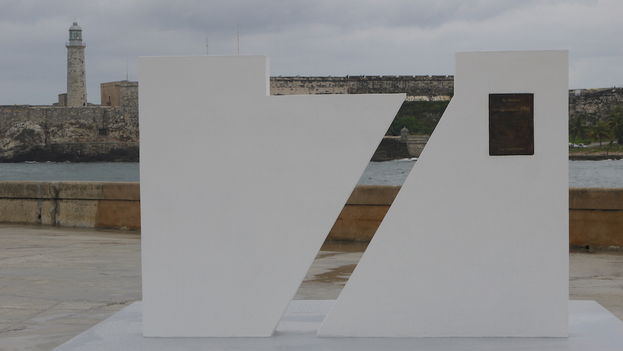
Commemorative notch of the declaration which placed Havana as one of the new wonder-cities of the world. (14ymedio)

14ymedio bigger14ymedio, Miriam Celaya, Havana, 16 November 2019 –On the esplanade of the Castillo de San Salvador de la Punta, just at the entrance of Havana Bay, a plaque recognizes Cuba’s capital as one of the seven “wonder cities” of the modern world, after its selection, in June 2016, in the contest of the Swiss foundation New Seven Wonders.

Such a high merit was based on “the mythical appeal, the warm and welcoming atmosphere, and the charisma and joviality of its inhabitants.”

The news, however, surprised not a few Havana residents. Is our city really wonderful? They pondered. The answer is a resounding yes if we refer to its architectural wealth, to the imposing majesty of its colonial fortresses, to its old squares, to the beautiful Malecón that borders almost five miles of coastline, to the prosperity reflected in modern Havana of El Vedado and the comfortable residences, both in the classic and rationalist* styles in The Kholy and Miramar neighborhoods, and the well-ordered way that distinguishes its different spaces and neighborhoods, which seems to narrate the constructive styles and the economic and cultural history of our metropolitan area, as if traveling through time. All this, added to the also peculiar idiosyncrasy of Havana’s locals, imprints a particular spirit to the city. continue reading

Is our city really wonderful?  They pondered. The answer is a resounding yes when we refer to the architectural richness of our city

As usual, the designation of “Wonder City” was welcomed by Cuba’s authorities as if it were their own merit, as if the capital “of all Cubans” – which foreign visitors enjoy at will, but from which they expel as “illegal” those nationals who do not have permanent residence in it – would have retained its most valuable and distinctive features thanks to “the Revolution”, and not (as is the case) in spite of it.

But Havana is really a painful wonder. Founded 500 years ago, besieged and attacked several times by pirates and privateers during the sixteenth and seventeenth centuries, it began to thrive from the eighteenth century on, in a gradual but steady boom that only stopped abruptly with the coming to power of Fidel Castro and the imposition of his socialist state system. The “revolutionary” sign first caused paralysis and then, systematically, the destruction of most of a city in which more than two million souls live, with particular impact on a visibly insufficient and deteriorated housing stock.

Six decades of established neglect and abandonment, almost as State policy, against a city despised and humiliated by political power, the corrosive effect of the Castro regime has perhaps only before been surpassed in history by the attack of the pirate Jacques de Sores, who in 1555 sacked and razed the then small village, destroying it to its foundations.

The task was relatively easy for that famous outlaw, taking into account the weakness of the buildings of the time, as well as the meager population and the precariousness of its rudimentary and scarce fortifications. Paradoxically, pirate attacks were, in great measure, the catalyst to make the city bigger, stronger and safer and to strengthen the defenses of its splendid harbor.

Half a millennium later, however, none of the places that make Havana a wonderful city is the work of this mediocre socialism, but rather, survivors of it. The old fortresses and squares, the stately mansions, the National Capitol, the Grand Theater, the Paseo del Prado, The Malecón, the Presidential Palace, the Central Railway Station, the majority of the hotels that they now restore and “inaugurate” as if they were new, and even the Civic Square itself (or as they now call it “of the Revolution”) with its controversial tower known among locals as La Raspadura (the Grater), are all works prior to 1959, and taking pride in them is not attributable to the Castro regime.

 All that makes Havana beautiful belongs to that “ominous”, “colonial” or “pseudo-republican” past, and not to the scourge that took power and became a privileged elite

Everything that makes Havana beautiful belongs to that “ominous,” “colonial” or “pseudo-republican” past – a horrible word to call the most prosperous period in our history – and not to the scourge that took power in 1959 to become a privileged elite that now takes advantage of it.

Additionally, these days when the Cuban capital celebrates the half millennium of its foundation, and while the authorities appropriate the wonders they were not able to create, it is imperative to look at the other Havana, the real one, inhabited by tens of thousands of Cuban families who do not have the resources to restore their precarious homes – most of them also built more than six decades ago – who live in overcrowded conditions among the filth of the dumps, the unhealthy plumbing spills that accumulate in the busy sewers and in street potholes, who suffer from a shortage of drinking water, and who, 500 years after their city was founded, will have to settle for standing in line in front of the Templete  of the Plaza de Armas to circle La Ceiba three times and ask, perhaps of  God, or maybe of the Orishas, for the arrival of the day when they will enjoy, at the very least, the security of decent housing with the guarantee of basic services.

Only if that dream were ever fulfilled would Havana be, rightfully so, a “Wonder City.”

*Translator’s note: Rationalism in architecture refers to the use of symmetry and mathematically and geometrically defined structures with low ornamentation. The ideas first appeared in ancient Greece and Rome and were organized into formal styles in the Enlightenment of the 17th century.

Translated by Norma Whiting

________________

COLLABORATE WITH OUR WORK: The 14ymedio team is committed to practicing serious journalism that reflects Cuba’s reality in all its depth. Thank you for joining us on this long journey. We invite you to continue supporting us by becoming a member of 14ymedio now. Together we can continue transforming journalism in Cuba.

’When They Said ’Welcome,’ My Soul Returned to My Body"

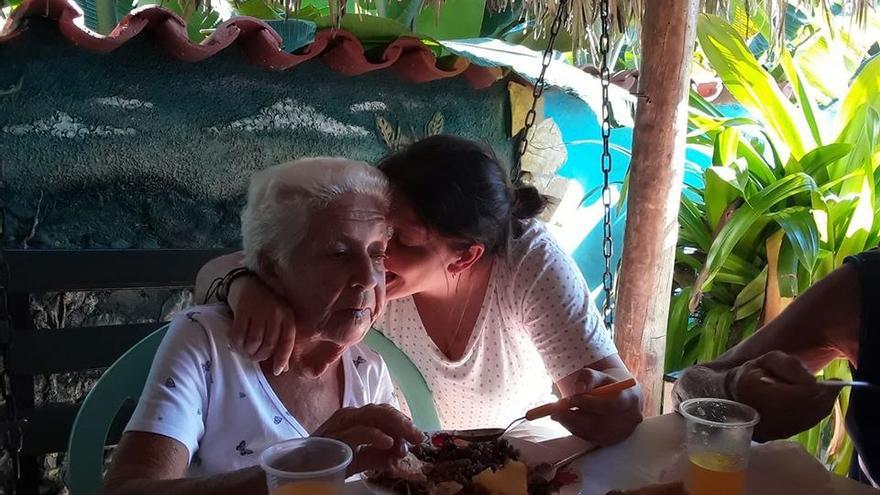
Jennifer Pérez greets her grandmother in Cuba. (Courtesy JP)

14ymedio bigger14ymedio, Havana, 12 November 2019 — Less than three months ago Jennifer Pérez was desperate. The chess player had been declared a “deserter” by the Cuban authorities after she stayed to live in Ecuador, a country she traveled to participate in an international tournament. Unable to see her family for six years, the Villaclareña decided to report her situation through social networks and in an interview with 14ymedio.

This November, Pérez has been able to return to Cuba and embrace her family, travel the streets of the city where she first moved chess pieces on the board, and see how much unites or separates her from this reality.

14ymedio. What has changed since last August’s interview so that you were able to come Santa Clara and walk the streets?

Pérez. Some time after this event, I resumed conversations with the Cuban consul in Quito and told me that I should proceed to submit my humanitarian visa application again in order to enter the country. In September the paperwork was completed by my relatives on the Island and in October they notified me that it had been approved. continue reading

14ymedio. What was the bureaucratic process like prior to boarding the plane to Cuba?

Pérez. It was all very fast. I waited a while to know the response to the paperwork, until the consul notified me that I could return and that I should travel to Cuba as soon as possible. That news changed my life.

14ymedio. What did you feel when you entered the country?

Pérez. I was really very nervous, I didn’t know what was going to happen. When I went through Immigration, they knew immediately that I had left a mission, they told me. The agent called his supervisor and verified that my entry was really authorized. A few minutes elapsed which for me were like an eternity. When they said “welcome,” my soul returned to my body.

14ymedio. And the reunion with your family?

Pérez. It was very exciting to see my whole family after so many years. I experienced many emotions and feelings. My grandmother could not believe that she was hugging her beloved granddaughter after such a long absence.

14ymedio. During your stay will you have contact with Cuban sports authorities, national and provincial chess representatives or colleagues?

Pérez. I have come for a few days. Before I was notified that I had the entry permit, I had confirmed my presence in the Continental Women’s Championship of Mexico as of November 19. My trip to Cuba has been entirely family-focused and I have not been able to contact the chess people. I went through the Academy of Santa Clara and the Chess Palace, but I have not seen many people although I hope to meet some of them before my departure.

14ymedio. Have the sports authorities made any offer to become part of the Cuban team?

Pérez. No, and I don’t think they know I’m here.

14ymedio. What is the final flavor that this trip to Cuba leaves?

Pérez. Bittersweet. Nothing is the same as when I left, things have changed a lot. It is no secret to anyone that life in Cuba is very hard because of all the shortages and needs that currently exist, but I am happy to have seen my relatives and my grandparents who are very sick. It was what I longed for the most for years. Now I hope that the eight years of punishment will finally end so that I can continue returning to my home, to my family and to my roots without any restrictions.

14ymedio. Will we see you soon in front of a chessboard representing the Cuban flag?

Pérez. Honestly, I don’t think it’s possible, due to different situations beyond my control and my desire.

_______________

COLLABORATE WITH OUR WORK: The 14ymedio team is committed to practicing serious journalism that reflects Cuba’s reality in all its depth. Thank you for joining us on this long journey. We invite you to continue supporting us by becoming a member of 14ymedio now. Together we can continue transforming journalism in Cuba.

The Permanent "Temporary Situation"

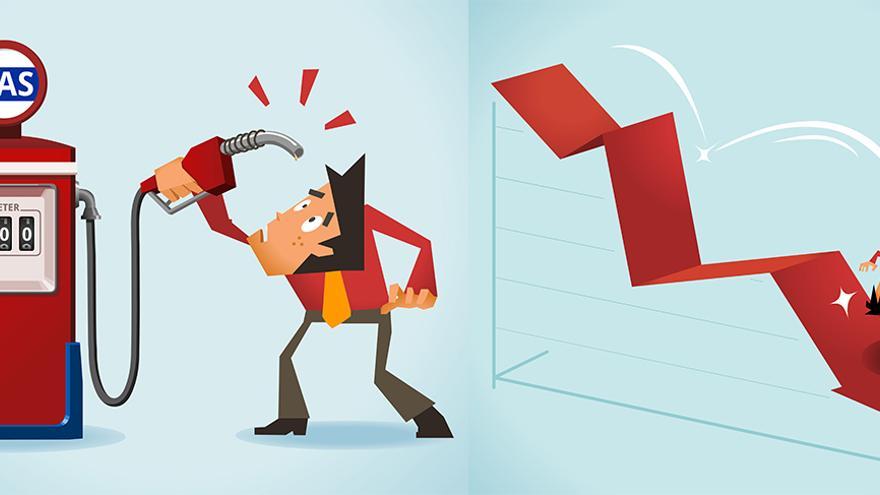
The lines to buy fuel in Havana have been extended again this week. (Alejandro Yanes)

14ymedio bigger14ymedio, Marcelo Hernández, Havana, 8 November 2019 — In the last week the long lines have returned to the gas stations in Havana, but this time without prior official announcement of a bad energy “temporary situation” or of an oil ship that is late reaching the island. The deficit has not been accompanied by appearances of ministers on television, speeches by Miguel Díaz-Canel or newspaper headlines calling on Cubans to “resist.” It is a shortage without narrative.

Although the national press does not mention the problem, in the long lines, which extend hundreds of yards, the annoyed customers endlessly speculate and try to find answers to what is going on. There is no shortage of the pranksters who say that “the Venezuelan ship has flat tires” and that is why it has not been able to arrive on time, or those who, in the tone of international analysts, assure that after the president’s trip to Russia, now “the freighters come from further away.”

Jokes aside, the most shared feeling in the streets is that the fluctuations in the fuel supply are a problem that has come to stay for a long time in the Cuban reality. A difficulty that does not seem to have a medium- or long-term solution. One that is as long as the lines that are now formed just outside the service stations.

_________________

COLLABORATE WITH OUR WORK: The 14ymedio team is committed to practicing serious journalism that reflects Cuba’s reality in all its depth. Thank you for joining us on this long journey. We invite you to continue supporting us by becoming a member of 14ymedio now. Together we can continue transforming journalism in Cuba.

Ecuador Ends its Medical Agreements with Cuba

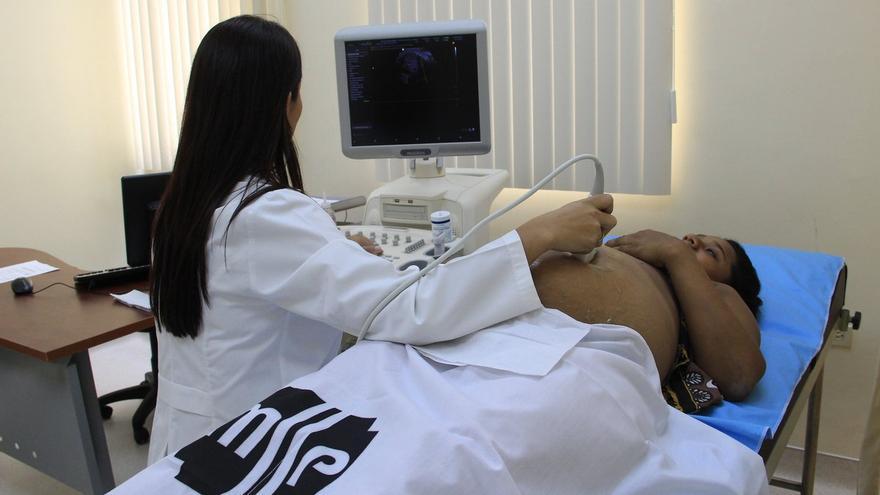
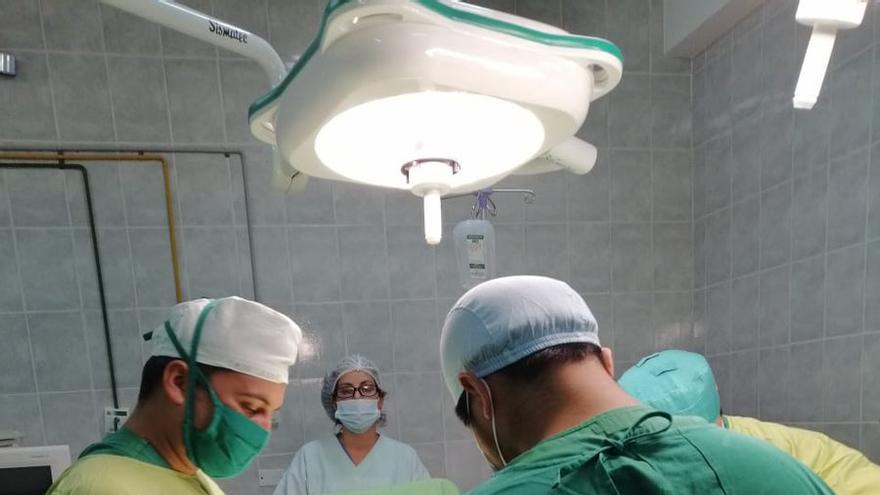
The Government of the South American country called on Ecuadorian doctors to apply for vacancies left by Cubans. (@Health_Ec)

14ymedio bigger14ymedio, Havana, 12 November 2019 — The Ecuadorian government of Lenín Moreno has put an end to medical agreements with Cuba, in which about 400 doctors were hired from the Island. The Minister of Government, María Paula Romo, argued that at least 250 people with an official Cuban passport entered the country during the violent protests in early October.

“The government of each country has the power to give a citizen an official passport and that is the decision of the government of each country. We are working from the Foreign Ministry with the Cuban embassy to know what was the use that had been given to this type of passports. In most cases this is related to Cuban doctors,” Romo said.

The Government of the South American country called on Ecuadorian doctors to apply for vacancies left by Cubans. continue reading

The agreements between Ecuador and Cuba date from 2013, when Ecuador’s then president Rafael Correa, a political ally of Havana, asked the Cuban authorities for help to expand his country’s social programs.

As in all operations with Cuban doctors, the Government of the island keeps 75% of the payments made by the Ecuadorian State. “Cuba pays us between $700 and $800 of the $2,641 it receives from Ecuador. It also continues the salary we had in the national health system and guarantees us housing and a month of vacation. We know that it is not ideal, but at least it is more than we earn [in Cuba],” a specialist who prefers not to reveal his identity for fear of reprisals told the Nuevo Herald.

Last year, the Island received more than six billion dollars from exported services, including doctors, teachers, artists and military technicians, among others.

In Ecuador, more than 800 Cuban health professionals came to serve, many of them in remote regions.

After Lenín Moreno’s arrival to power in Ecuador and his rapid turn to the right in international politics, relations between Ecuador and Cuba cooled, the presence of Cuban doctors diminished and Havana expressed its support for ex-president Rafael Correa, who claims to be a victim of a political persecution.

Last October, Moreno eliminated gasoline subsidies, which generated a wave of protests that provisionally forced the government to move from Quito to Guayaquil. The Ecuadorian government then insisted that it was the target of a destabilization plan orchestrated from Venezuela in collusion with Correa.

Juan Fernando Flores, president of CREO Latino, an opposition party in Ecuador, said, in his opinion, that “Correa plotted the removal of Moreno from Cuba and Venezuela.” In those days Correa traveled frequently between Caracas and Havana.

The Cuban medical missions suffered a severe blow when Jair Bolsonaro’s government in Brazil demanded that Havana pay the 8,300 doctors working in Brazil the full amount being paid by Brazil for their services.

Bolsonaro also demanded that, as mandated by Brazilian law, foreign doctors had to do a revalidation exam to keep practicing medicine. Cuba unilaterally decided to break the agreement with Brazil and withdraw the doctors.

There are also doubts about the fate of 701 Cuban doctors stationed in Bolivia. After the resignation of President Evo Morales, pushed to flee the country after massive protests over an alleged electoral fraud, the professionals of the island have been told to remain in their homes and wait for directions from Havana.

“We stay informed, all the security measures taken, in our homes, for protection, everyone has their food and resources to stay in the country. But also, we keep in constant communication, receiving indications from our country,” said Yoandra Muro, head of the mission in the Andean country, to official Cuban press.

_________________

COLLABORATE WITH OUR WORK: The 14ymedio team is committed to practicing serious journalism that reflects Cuba’s reality in all its depth. Thank you for joining us on this long journey. We invite you to continue supporting us by becoming a member of 14ymedio now. Together we can continue transforming journalism in Cuba.

How Do We Emerge From the Crisis in Cuba?

The contest carries a first prize of $300, three second prizes of $100 and four honorable mentions of $50.

14ymedio bigger14ymedio, Havana, November 8, 2019 — Cuban economists have spent years coming up with ideas on how to emerge from the permanent crisis that exists on the Island, now aggravated by the economic meltdown of the friend that has fundamentally sustained the Revolution: Venezuela. The Cuban Conflict Observatory is now pushing citizens to come up with ideas by organizing a contest: “How can Cuba emerge from the economic crisis?”

The purpose is for participants to assess and complete a series of ideas offered expressly for the competition by experts. The candidates can choose the proposals they mostly agree with or that seem the most relevant, can bring up new measures that haven’t been referenced and can explain briefly what people must do to get the Government to approve them.

Only Cubans who reside on the island can participate in this competition, preferably by sending 500 words to put forth their proposal, although the word limit can be exceeded if necessary. In addition, their argument may be accompanied by audiovisual or multimedia material. continue reading

The deadline for proposals is midnight, December 15, and should be sent via email to nextcuba2019@gmail.com.  Applicants will be contacted by email.

The winner will be announced to participants by the press and email on December 20, 2019, and will receive a prize of $300. There will also be three second prizes with each person receiving $100 and four honorable mentions of $50 each.

Although it is not necessary to identify yourself, the organizers propose that at least you mention your province, sex and age.

The economists present the following proposals for the contest:

1. Expand the list of professions approved for self-employment and eliminate the prohibition for professionals to work for themselves in their specialty.

2. Have the right to begin and direct private businesses and non-agricultural cooperatives and services.

3. Eliminate the employment agency imposed on foreign companies and permit them to directly contract and pay their employees. [Foreign companies operating in Cuba must hire (and pay) their Cuban employees through the government, which takes a cut of the wages.]

4. Approve private exportation and importation so private companies can buy, obtain technology and sell their products abroad.

5. Transform State enterprise by making it autonomous, independent and competitive in order to eliminate State subsidies.

6. Give land to the farmers and let them decide what to plant, where to sell and how to price their products.

7. Legalize fully independent agricultural cooperatives.

8. Remove bureaucratic obstacles and provisions from agriculture, including the State monopoly on collection and distribution, and create private farmers’ markets.

9. Remove the 10% State tax on the U.S. dollar for exchanging it for Cuban Convertible pesos.

10. Unify the currency. [Currently Cuba has two currencies, the Cuban peso (CUP) and the Cuban Convertible peso CUC).]

Translated by Regina Anavy

________________________

COLLABORATE WITH OUR WORK: The 14ymedio team is committed to practicing serious journalism that reflects Cuba’s reality in all its depth. Thank you for joining us on this long journey. We invite you to continue supporting us by becoming a member of 14ymedio now. Together we can continue transforming journalism in Cuba.

’Granma’ Highlights the Opposition Figure Jose Daniel Ferrer

The leader of the Patriotic Union of Cuba, José Daniel Ferrer, has been detained for 50 days. (EFE)

14ymedio bigger14ymedio, Havana, November 20, 2019 — International pressure over the case of José Daniel Ferrer seems to have given a relevance to the opposition figure that has led the newspaper Granma to mention him, a milestone in the official press, determined to cover up the proper name of activists whom it depersonalizes and collectivizes by grouping them together with the epithet of counterrevolutionaries or mercenaries.

This Wednesday, the official organ of the Communist Party spoke of the leader of the Patriotic Union of Cuba (Unpacu), identifying him specifically and offering the official version of his judicial situation.

According to Granma, Ferrer is a common prisoner arrested for a crime of aggression following the complaint of a man who accuses him, along with three other “individuals” — the activists Fernando González Vaillán, José Pupo Chaveco, and Roilán Zárraga — of having “kidnapped him for an entire night and given him a severe beating that left him hospitalized.” continue reading

The text emphasizes that the opposition figure does regular physical exercise, and is receiving the medical care he needs (Ferrer suffers from chronic gastritis), and even religious attention in response to a request.

The secretary of the archbishop of Santiago de Cuba, Dionisio García, assured 14ymedio that for his part there had not been any kind of religious attention for Ferrer, but that it is in process and is being discussed. “It’s going to be given to him, but we cannot say at this time that it already happened,” she said.

“Ferrer is awaiting trial. He has received a visit from his wife and his children, according to the norms of his legal situation. All references to his physical disappearance, to supposed physical mistreatment, to torture or that he is receiving insufficient food are pure lies deliberately conceived and guided by the government of the United States and its Embassy in Havana,” indicates the note.

The text, entitled New slander campaign by the US against Cuba, is nevertheless focused on claiming that the case of José Daniel Ferrer is part of a campaign of discredit and slander organized from Washington with the aim of justifying new sanctions and depriving the island of fuel.

“The United States Embassy in Cuba has been the main vehicle of attention, guidance, and financing of the conduct of José Daniel Ferrer, in a clear demonstration of interference in the internal affairs of Cuba and of an open instigation to violence, to public disturbance, and to the contempt for law enforcement of this citizen. The head of the diplomatic mission personally conducts this performance,” maintains the note.

The Unpacu leader was arrested on October 1 during an operation against several homes of activists of the organization in Santiago de Cuba. Since then he has been several times in police facilities with his relatives unaware of where he is, and thus deprived of visits and personal effects, as well as his medications. His family members were able to see him on Thursday, November 7, and corroborated his deteriorated state of health because of the conditions in which he is being held in prison.

Last Friday the District Attorney of Santiago de Cuba delivered an injunction to Nelva Ortega, the opposition figure’s wife, which details the measure of provisional imprisonment for the supposed crime of “injuries,” but his relatives believe that what is written in the document is a manipulation by the District Attorney and State Security that reflects a version that is “far from reality.”

Translated by: Sheilagh Herrera

_________________________

COLLABORATE WITH OUR WORK: The 14ymedio team is committed to practicing serious journalism that reflects Cuba’s reality in all its depth. Thank you for joining us on this long journey. We invite you to continue supporting us by becoming a member of 14ymedio now. Together we can continue transforming journalism in Cuba.

Cuban State Media’s Hemiplegic Plot

José Daniel Ferrer, leader of the Patriotic Union of Cuba. (Matias J. Ocner for 14ymedio)

14ymedio bigger14ymedio, Yoani Sanchez, Generation Y, Havana, 20 November 2019 — Help me understand this: Granma, a Cuban newspaper of national scope, financed by the state coffers and with its journalists based within Cuban territory, publishes an article against a citizen, resident on the Island and held in a prison, which describes him as a criminal and accuses him of criminal acts.

However, to prepare the text, the reporters of the official organ of the Communist Party have not contacted José Daniel Ferrer, his relatives or his activist colleagues to offer their testimony and opinion on the events that took place on October 1, that ended up sending the leader of the Patriotic Union of Cuba to prison. continue reading

Do Granma journalists have resources to make a phone call to Aguadores prison? Why did the newspaper’s management not send its correspondent in Santiago de Cuba to Ferrer’s house to obtain the version of the facts that his wife wields, facts that contradict those published this Wednesday in the official newspaper? Did the reporters request a meeting with the prisoner from the Directorate of Corrections?

Sadly, the shortcomings of the article in Granma are not due to economic problems of the newsroom of the main Cuban newspaper, nor to the absence of permits to access the prison. The argumental hemiplegia of this note is evidence of the abuse of power of an entire apparatus that believes it has the right to crush an individual’s reputation, demonize and defame him without his being able to defend himself in national media. This is the old strategy of reputation execution, but using the state structures themselves, the official voice and the institutional speaker.

That is not journalism, nor press, much less information. We are facing a typical act of propaganda and slander… and of shameful complicity by some who call themselves journalists and editors.

___________________

COLLABORATE WITH OUR WORK: The 14ymedio team is committed to practicing serious journalism that reflects Cuba’s reality in all its depth. Thank you for joining us on this long journey. We invite you to continue supporting us by becoming a member of 14ymedio now. Together we can continue transforming journalism in Cuba.

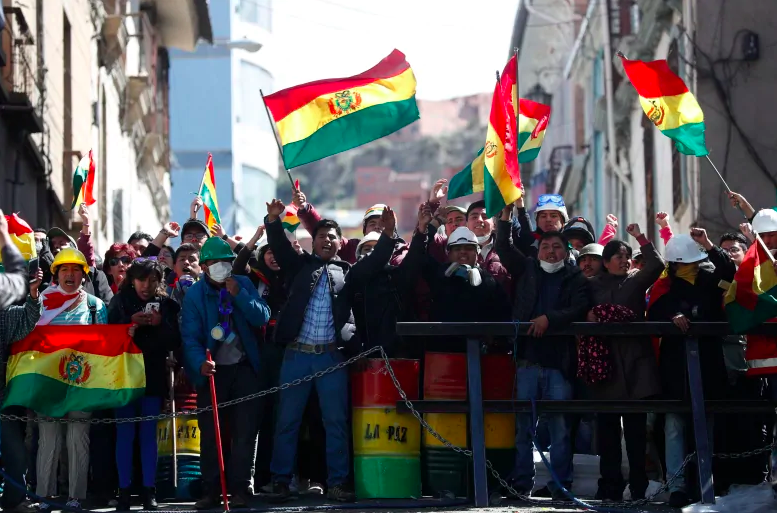
Lessons Bolivia Left Us / Cubanet, Miriam Celaya

The lessons Bolivia left us. Photo: Juan Karita/AP

Cubanet, Miriam Celaya, Havana, 12 November 2019 — The usual weekend informative spasm was broken this Sunday, November 10th, with bombshell news: after accepting the results of the audit of the Organization of American States (OAS) – requested by the president himself for the review of the elections of October 20th – and announcing that new elections would be called, Evo Morales has just resigned from Bolivia’s Presidency.

Just a few hours passed between the call for new elections and the resignation of the president. Such a decision, however, was not the result of a sudden epiphany or a mandate from Pachamama (an Incan deity), but rather the epilogue of a process that began after Mr. Morales’s unfortunate decision to present himself as a candidate for a fourth term, in rampant contempt of the popular will that had withdrawn authorization for him to do so in the referendum of February 21, 2016.

Unhappy with the setback suffered then, Evo Morales got approval from the Constitutional Court – openly his supporter – that gave him the possibility of running for elections for the fourth time. He also ensured that the Supreme Electoral Tribunal (TSE) was made up of officials who were loyal to him. continue reading

Despite this, the results of the elections were altered by the TSE itself to grant a narrow and controversial “victory” to Morales, thus opening the door to the political crisis that has been shaking Bolivia for three weeks, with violent clashes between supporters of the opposition and those of the President, a crisis that would have continued indefinitely with unpredictable consequences.

The days to come will show if the action of the commander of the Armed Forces, General Williams Kaliman – who kindly and without pointing a gun at him suggested to the president he should resign – managed to cut these weeks’ spiral of violence and avoid greater ills to the country.

Together with Morales, his vice president, Álvaro García Linera, resigned. Both denounced the consummation of “a civic, political and police coup,” but the truth is that neither the army nor the national police used force against the President. If we were really witnessing a coup d’etat, it should be recognized that – despite the fact that at least three deaths and thousands of injuries have been reported in the confrontations between the protesters in favor of one side or the other – it has been the least violent coup that has ever taken place in this Hemisphere.

Looking at the facts from an ethical and political logic, it would have been a contradiction that the same candidate who was favored through fraud could present himself for a new election. Fraud in itself is a serious crime that disqualified Morales in the race for the Presidency, so that the president  himself summarizes the cause of the crisis and the consequence of his excessive ambition for political power at the same time, although now the most rabid continental left – with Havana at the helm – cry out against “the coup d’état of the anti-Bolivian right, orchestrated from Washington.”

And this leads us directly to the outright ridiculousness of the insular ruling dome. Just two days before the television news of the official press monopoly overflowed with jubilation and proclaimed two “resounding victories”: that of the “Resolution Against the Embargo,” presented (again) before the UN General Assembly, and “Evo’s overwhelming victory in the Bolivian elections.” The sagacious political analysts could barely contain their jumping for joy amid the most absolute triumphalism.

For greater scorn, Morales’s resignation comes just a day after the Cuban Foreign Ministry, in open interference in the affairs of the Andean country, made an Official Declaration, publicly “vigorously denouncing the coup in progress against the legitimate president of Bolivia” orchestrated by the Bolivian right “,with the support and leadership of the US and regional oligarchies,” and called for all involved sectors to stop this dangerous maneuver which constitutes a threat to the stability of Bolivia and the whole region.

“Evo’s historic victory, against the maneuvers of the internal and regional right, the Imperialism and an intense media war, is also a triumph of the entire Great Motherland,” proclaimed the pamphlet. And it commended the Bolivian president that “in a further demonstration of equanimity and political stature, he summoned the political forces to the dialogue table for Bolivia’s peace, and called the organizers of the violent protests to deep reflection and urged the people to mobilize to defend democracy.”

What idiocy for the revolution’s “common cause” that after so much fuss, the once-hardened indigenous should crack like a reed.

Undoubtedly, the Palace of the Revolution would have preferred a thousand times for Evo to immolate heroically, Salvador Allende style. At least then it would have been possible to count on a new martyr – indigenous and of humble origin, to boot – whose ghost could be opportunistically shaken against the imperialist enemy.

How mean, Evo, not sacrificing yourself for the continental glory of the Castro regime and its measles epidemic of radical lefts and not letting you burn at the stake of the progressive ideals, so passionately defended by the high ruling Cuban bourgeoisie from their comfortable mansions at El Laguito. What a disappointment, Evo… we expected more from you!

However, the most immediate balance of the latest events in Bolivia is the moral of the story that politicians in this region should capture. The defeat of Evo Morales comes against the progress made in the country during his tenure. Bolivia certainly has remarkable economic growth and can exhibit amazing social achievements in health and education, especially for the humblest sectors.

But just as the leader of the coca growers is responsible for these advances, he is also responsible for the political crisis that he caused when he presented himself for the elections of last October, and to a certain extent, for the direction the country takes in the immediate future.

It is the cost of those who impose a personal government and set out to appropriate political power ad infinitum. Because the masses can be faithful and enthusiastic, but they are also often fickle. In this sense, Bolivia’s experience can be a very useful lesson for both rulers and the governed.

Let’s take note.

Translated by Norma Whiting

Revolucionaries: The “Good” Terrorists

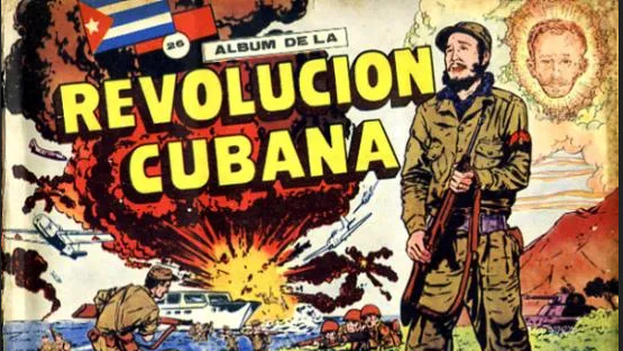
Album of the Cuban Revolution

14ymedio bigger14ymedio, Miriam Celaya, Havana, 4 November 2019 — In these times when political correctness in language usage has become fashionable, few terms are as ambiguous as “terrorism.”  The use and abuse of this concept for political purposes has led to numerous inaccuracies and interpretations, which often confuse the supposed legitimacy of motivations with terrorist actions.

The violent nature of terrorist acts by groups, organizations or governments has the effect of altering public peace and destabilizing the institutional and economic structures of the State.

Intimidation, kidnappings, bomb attacks, coercion, sabotage, selective or massive killings, torture, extrajudicial executions and destruction of private and public property are common tactics of terrorist groups of the most diverse nature – whether they are religious, ethnic, political or simply gang criminals – whose objective is to gain domination through social terror, whether at the national or the regional level, even affecting power structures and relationships at the international level. continue reading

The violent nature of terrorist acts by groups, organizations or governments has the effect of altering public peace and destabilizing State institutional and economic structures

The violent nature of terrorist acts by groups, organizations or governments has the effect of altering public peace and destabilizing State institutional and economic structures. In addition, they cause deep damage at the human level, taking into account that the majority of their victims are innocent civilians. These are, then, unjustifiable facts beyond ideological foundations.

Thus, the “action and sabotage groups” of the Revolutionary Directory — clandestine organization founded on February 24th, 1956 by university student leader José Antonio Echeverría with the aim of supporting the guerrilla Fidel Castro that operated in the Sierra Maestra — have simply been renamed as “action groups,” as if those young people, instead of simply placing bombs in the capital and in important cities of the interior in public places, had limited themselves to the innocuous task of delivering anti-government proclamations, shouting slogans or orchestrating rallies in favor of the Revolution.

It is clear that if we applied the current standards to the events that marked the Cuban Revolution, the assault on a military headquarters of the constitutional army starring a handful of men in charge of Fidel Castro is a definitely terrorist act.

The taking of a radio station at gunpoint was also terrorism – in the best American gangster-style film – by the aforementioned José Antonio Echeverría who, thanks to that fact became perhaps the author of the most famous fake news of the time when announcing the death (supposedly an execution) of the dictator of the day, Fulgencio Batista.

Their evolutionary character is another level of the term that should be added to these general considerations. Decades ago, for example, revolutionary violence against political power in Cuba was not defined exactly as terrorism, although it should have been, in light of current considerations. This explains why the violent events that took place fundamentally in the second half of the 1950’s have been omitted or reinterpreted, though without abandoning indoctrination.

It is clear that if we applied the current standards to the events that marked the Cuban Revolution, the assault on a military headquarters of the constitutional army, starring a handful of men at Fidel Castro’s command, was definitely a terrorist act.

The overtaking of a radio station at gunpoint was also an act of terrorism – in the best gangster-style of American films – by the aforementioned José Antonio Echeverría, who thanks to that fact became perhaps the author of the most famous fake news of the time when announcing the death (supposedly an execution) of the dictator of the moment, Fulgencio Batista.

In the eyes of the Castro regime, everyone in its opposition is susceptible to being accused of terrorism in the service of a foreign power. These are bad terrorists

The list bearing the terrorist symbol that has marked our history would be endless, but it would not make much sense to delve into it, given that – for better and for worse – justice is not retroactive.

However, the instrumental utility that the Cuban Government makes of this term is notorious. For the Castro regime, everyone opposing it is susceptible to being accused of terrorism in the service of a foreign power. These are bad terrorists. And, under the pretext of safeguarding that superior value, the Homeland-Revolution (besieged, stalked, threatened by a powerful external enemy), they apply with impunity the violence of repressive bodies, repudiation rallies, prestige stoning, disqualification, harassment, jail, death and banishment.

Currently, and in proportion to the deepening of the structural crisis of the system, there is a rebound in Cuba of what, in other situations and scenarios, would be considered State terrorism. Today’s coercion, intimidation and repressive terror are not limited to opposing and dissident groups but are directed against all civil society, including renegade artists, uncomfortable citizens or groups of independent entrepreneurs who question the dispositions of power in any way.

And, as if the repressive spiral silenced in the official media were not enough, some signals radiating from the government television monopoly tend to revalue and legitimize “revolutionary” terrorism in the social imagery.

This was evidenced on October 30th during the regular broadcast of the Cuban soap opera Delivery, which is being broadcast on Mondays, Wednesdays and Fridays in the country’s main channel (Cubavisión) at 9pm, prime time.

In a completely expendable scene, a History professor at a high school in the capital was making an apologetic reference to Urselia Díaz Báez as “the first heroine of the clandestine world,” who died September, 1957 at Havana’s Teatro América in Calle Galiano because of a bomb explosion attached to her thigh which exploded before she had time to place it under some window or in the bathroom, where her shattered body was ultimately found.

The undisguised message is that terrorism is lawful, provided it is done for the sake of the Castro revolution

The omen-of-death professor did not limit himself to appealing to the memory of that 18-year-old girl perfectly unknown to the vast majority of Cubans, but instead challenged his students to have the courage of that clumsy terrorist when defending the Revolution. “Which of you would dare to ride with a bomb under your clothes?” The teacher asked his teenage students. The undisguised message is that terrorism is lawful, provided it is done for the sake of the Castro revolution.

Whether slip, carelessness or deliberate strategy, it is wrong, at this point in the 21st century, in a society of long accumulated tensions and frayed by resentment, polarization and frustrations, to influence young viewers in the culture of violence through the powerful official media.

And it is also a double-edged sword, because if today’s Cubans internalize violence as a legitimate method to achieve their aspirations and freedoms, they could, in their day, turn against the power that is clipping their wings and against its institutions, with unpredictable consequences. If, in the midst of widespread social unrest, the Cuban Government continues to tighten the rope, perhaps it will have an occasion to regret it.

Translated by Norma Whiting

___________________________________

COLLABORATE WITH OUR WORK: The 14ymedio team is committed to practicing serious journalism that reflects Cuba’s reality in all its depth. Thank you for joining us on this long journey. We invite you to continue supporting us by becoming a member of 14ymedio now. Together we can continue transforming journalism in Cuba.

Cuba Withdraws Its Doctors From Bolivia After Accusations Of Interference

The Ministry of Foreign Affairs insists that “permanent contact has been maintained with these Cuban voluntary aid workers, via the Cuban Embassy in La Paz and the leadership of the Medical Brigade.” (@CupacooperaBo)

14ymedio bigger14ymedio, Havana, November 15, 2019 — Cuban authorities announced this Friday the immediate departure for “security reasons” of 725 professionals fulfilling a mission in Bolivia, the majority of whom are medical personnel. Havana also demanded the release of four of these professionals detained for allegedly financing the protests organized by the supporters of the ex-president Evo Morales, who was obligated to resign last Sunday.

In an interview with the Bolivian newspaper El Deber, the new Minister of Foreign Affairs, Karen Longaric, said that she had spoken at length with the Cuban Minister, Bruno Rodríguez. “He told me that to avoid great friction Cuba will withdraw 725 workers fulfilling cooperation activities in the fields of medicine, communication, and others. They will withdraw their workers starting tomorrow (this Friday November 15) and will conclude the process on Wednesday.”

Are they leaving or being thrown out? “Cuba has understood that we must redirect diplomatic relations in a climate of mutual respect,” answered the minister, “but the Cuban minister asked for protection for the workers throughout the process.” continue reading

The Cuban Ministry of Foreign Relations “rejects the false accusations that these comrades encourage or finance protests, which are based on deliberate lies without any basis,” pointed out a statement distributed by the Ministry in which it demands that the bodily integrity of these professionals be guaranteed.

The Ministry described as a “slanderous allegation” the accusation against the four Cubans detained this Thursday in El Alto and who at the moment of their arrest were carrying 90,000 bolivianos (some $13,000) in the currency of that country. A figure that “coincided with the amount taken out regularly every month” and was meant to “pay for basic services and rentals for the 107 members of the Medical Brigade in that region.”

The official Cuban version contrasts with that published in the Bolivian press which gathered testimonies from residents of El Alto who assured that the Cubans, three men and one woman, paid demonstrators close to Evo Morales’s party, the Movement for Socialism (MAS), who were going in a protest to La Paz.

The collaborators detained in Bolivia are Amparo Lourdes García Buchaca, a graduate in electromedicine; Idalberto Delgado Baró, a graduate in economics; Ramón Emilio Álvarez Cepero, a specialist in intensive therapy and endocrinology; and Alexander Torres Enríquez, a specialist in comprehensive general medicine.

The Ministry of Foreign Affairs insists that “permanent contact has been maintained with these Cuban voluntary aid workers, via the Cuban Embassy in La Paz and the leadership of the Medical Brigade.”

“It has been decided to return the Cuban collaborators to Cuba immediately,” stresses the note, which calls for “stopping the exacerbation of irresponsible anti-Cuban expressions and of hatred, defamations, and instigations to violence.”

Havana demands the immediate release of the detained workers and that Bolivian authorities guarantee the physical integrity of all the others.

The new interim government of Bolivia accused Cuba and Venezuela of being behind the violence in the country in support of Evo Morales. The Minister of Communication, Roxana Lizárraga, affirmed that the Cuban Ambassador to Bolivia, Carlos Rafael Zamora, is part of the Cuban intelligence that intervened in conflicts in Nicaragua and Ecuador.

After Morales’s exit from power, the official Cuban press assured that the 701 voluntary workers from the island in Bolivia were “safe.” “We will continue lending services in those places where they are required, as a demonstration of solidarity and an act of hope,” it said at that time.

Since February of 2006 Cuban doctors have been deployed in Bolivia performing services that were described as a “provision” of the agreements signed between Morales’s government and that of Havana. The doctors were staying, as is normal, in rural areas whose mayors’ offices provided lodging, food, and supplies.

The doctors would receive for their services around $1,000 monthly, according to the Bolivian press, so, according to the normal scheme of those bilateral agreements, the Cuban government was left with 75% of the salary of every one of those professionals, some $3,000.

Translated by: Sheilagh Herrera

_______________

COLLABORATE WITH OUR WORK: The 14ymedio team is committed to practicing serious journalism that reflects Cuba’s reality in all its depth. Thank you for joining us on this long journey. We invite you to continue supporting us by becoming a member of 14ymedio now. Together we can continue transforming journalism in Cuba.

Program in Netherlands Offers Refuge for Three Months to Human Rights Activists

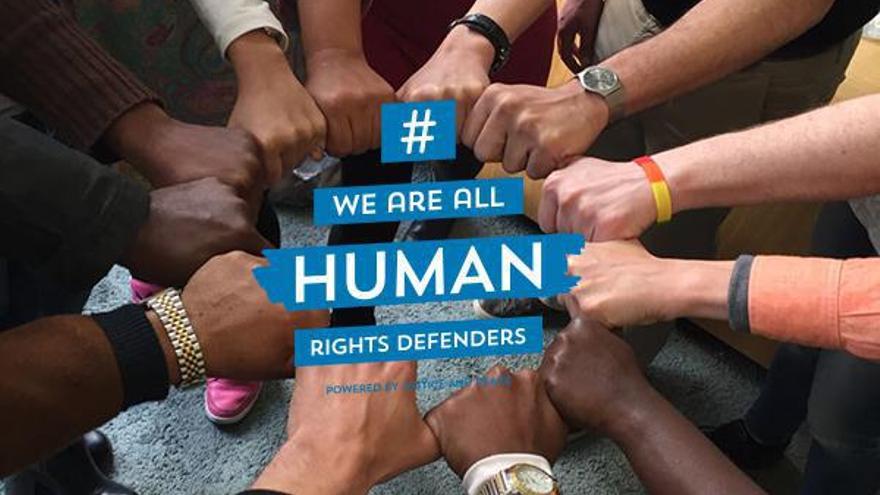
14ymedio bigger14ymedio, Luz Escobar, Havana, November 19, 2019 — The organization Justice and Peace has announced a program that will provide a stay of three months in a city in the Netherlands for human rights defenders who find themselves in a dangerous situation. Candidates can send their applications for this program, Shelter City, until November 29.

To participate, candidates must fill out an online application and the organization will evaluate if they fulfill the requirements, among them the defense of human rights from a nonviolent focus, being threatened or pressured for their work, being willing to talk about their experience and express themselves in English. Additionally, they must be prepared to travel in March 2020 to the Netherlands, have a passport and visa, not be subject to decisive judicial measures, and commit to returning after three months and not be accompanied.

Justice and Peace can help cover the costs for the issuance of passports and/or visas, but does not guarantee they will be obtained. Also, those selected will receive a monthly economic contribution to cover the expenses of participants, their lodging, medical insurance, and airfare. They will also offer personalized accompaniment to the participant during the stay in the Netherlands. continue reading

The program allows participants to rest, continue their work in safe conditions, attend training workshops, expand their support network, and share information on the human rights situation in their country. Other activities are meetings with NGOs and public authorities, conferences, free and leisure time or treatment for problems related to work, in addition to “activities to raise awareness on human rights” for the public of the Netherlands.

For that, “they will participate in local initiatives organized by the municipality and the host organization,” says the announcement. At the end of the program, it is expected that participants will return with new tools and energy to continue their work in their country of origin.

The program is open to activists, journalists, academics, writers, artists, lawyers, defenders of civil and political rights, independent media professionals, members of civil society, and other persons who work peacefully to promote human rights and democracy in the world.

Translated by: Sheilagh Herrera

__________________

COLLABORATE WITH OUR WORK: The 14ymedio team is committed to practicing serious journalism that reflects Cuba’s reality in all its depth. Thank you for joining us on this long journey. We invite you to continue supporting us by becoming a member of 14ymedio now. Together we can continue transforming journalism in Cuba.

Havana’s Capitol: The Other Face of the Restoration

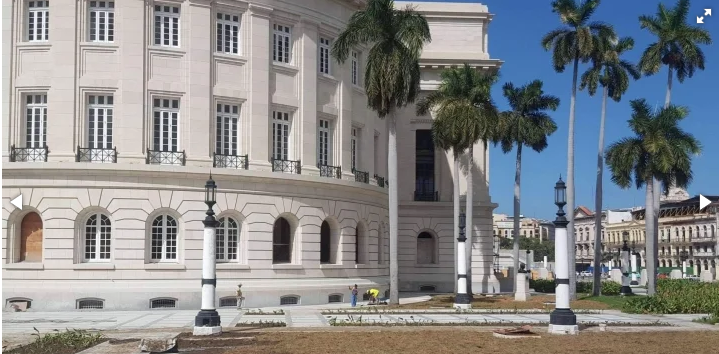
Two weeks before the 500th anniversary of the founding of Havana, the Facade and Rear Gardens of the south side of the Capitol (photo: Amelia)

Cubanet, Miriam Celaya, Havana, 4 November 2019 — There are those who would swear that everything in Cuba, from the most solemn to the most mundane act, has an air of a one-act farce. The dramatic and the jocular intermingle in a scenario full of contrasts and absurdities, in a reality that far exceeds any fiction plot.

These days, the metal fences that covered the gardens of the southern area of the National Capitol were finally removed, and the neighbors who reside in the popular (and populous) neighborhood that runs behind the monumental building, glance curiously at the feverish restoration activity. There is an intense agitation, since there are only two weeks left for the 500th Anniversary of the Cuban capital, to be celebrated on November 16th, and the delivery of this iconic building is one of the highlights of the event.

“I think they will not finish it on time”, says a septuagenarian of humble appearance who says he is a retired construction frame worker, who returns daily to contemplate the work. “I, who worked all my life in construction, tell you that a lot of work is still missing. Now they are in earthworks because they removed all the old tiles in the garden in order to restore them. Then they have to tamp, press them firmly and fuse them so that these tile slabs remain fixed. Add to that all the landscaping, and not counting the windows that have yet to be installed and the facade that is still covered and must be finished.” continue reading

And he points to a huge mesh cloth that covers a portion of the rear facade and numerous empty openings where all the blinds should already be in place. “They are going to have to work in 24-hour shifts and still doing it that way they might be able to complete just what shows. Just cosmetic work, the same as always happens.”

Nearby, there is a standing policeman on duty facing the work.  Police surveillance is permanent, as well as the presence of guards at a nearby checkpoint, to prevent the usual shoplifting of construction materials: the illegal sale of cement, stone dust, joists, etc., is a constant in every construction job in Cuba.

“This has been difficult here from the beginning,” says a lady who also watches the work. “I live here back on Amistad Street, and several neighbors of mine tried to get some cement and other things… but nothing. There is great vigilance with that, and there are people in this neighborhood whose houses need repairs, because they are falling down… There are no materials for the unfortunate.”

Occasionally, some official media have made reference to the intervention of foreign capital and the support of private institutions to achieve the restoration of this building, paradoxically the most important symbol of Republican Cuba, crushed after the 1959 revolution.

The Castro regime, unable to create their own symbols that can compete in quality and beauty with those of the past, is trying now to appropriate allegories that are completely alien to them. Since they failed to completely destroy the city that they despise – and those who despise them – they prefer to make use of its meaning and its unyielding architectural wealth.

According to government sources, the German company MD Projektmanagement, owned by Michel Diegmann, is responsible for the restoration work. However, nobody fully knows the total amount of the investment, although everyone infers that the sum must be in the millions. “With half the money that this cost, a lot of buildings in Centro Habana could have been repaired,” the same woman muses next to me.

The restoration of the dome alone, exquisitely coated with pieces of gold leaf on copper sheets, is the result of a large donation from the Russian Federation. The work undertaken to return it to its former splendor was carried out by specialists from that country, assisted by Cuban personnel.

The southern facade of the building is still missing windows and the gardens need to be completed (photo: Amelia)

Re-inaugurated August 30th by the City Historian, the golden dome contrasts sharply since then with the poverty of its “backyard”, that is, the collapsed roofs and facades of the adjoining buildings, hidden behind the architectural magnificence not only of the Capitol, but also of the Havana Prado, the Havana Lyceum, the Grand Theater, the Saratoga Hotel, the Fountain of the Indian Woman, and the Central and Fraternity parks. A majestic urban complex that flanks and conceals the ugly face of gloom, the crust of decay, accentuated after 60 years of neglect that the authorities do not want the world to see.

And it is not that it is wrong to rescue those symbols, buildings, squares and spaces that made this city beautiful; quite the opposite. We just need to not forget that Havana, like any city, is much more than the sum of its architectural symbols and historical spaces.

The beauty of cities, what makes them peculiar or “marvelous”, lies in the soul of their people, in the spirit of those who inhabit them. To artificially brighten the old trappings of our city for one occasion, as if it were a showcase to display it to the world, while prosperity and freedoms are still forbidden to Cubans who live it, love it and suffer it, it’s not worth a thing.