
Sixty Years After the Drunkenness

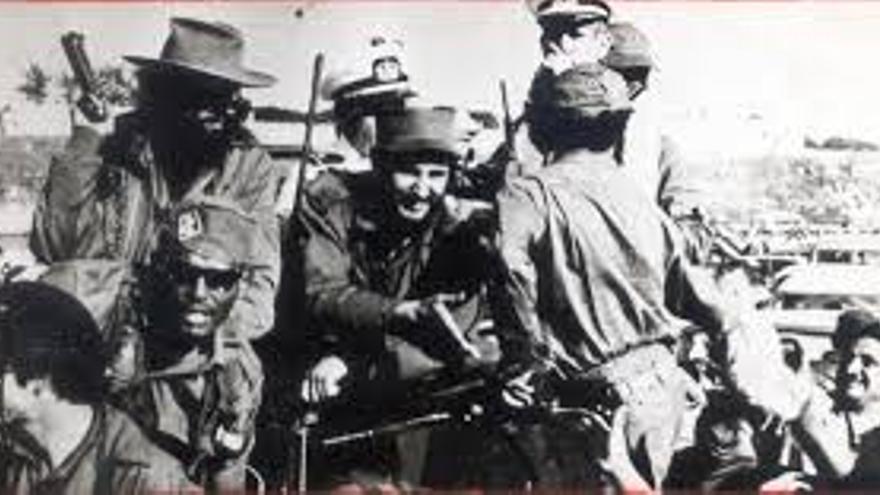
“We were in the hands of some ’enlightened’ revolutionaries, guided by slogans learned in coffee shops,” says the author. (Archive)

14ymedio bigger14ymedio, Carlos Alberto Montaner, Miami, 22 December 2018 — On January 1, 1959, Fulgencio Batista fled Cuba and the Cuban Revolution began. It has been six decades since that ominous date. A group of us boys got together. I was 15 years old and I was a skinny, hopeful and politically illiterate kid. I felt very happy. I do not know how, where or why we went to see, or found, the lawyer Óscar Gans. He had been Prime Minister for Carlos Prío, the last Cuban constitutional president. He had a reputation for being honest and intelligent.

Gans listened with interest to our excited chatter and only managed to say to us an enigmatic phrase that I have not forgotten: “Revolutions are like great drunkenness… the problem is the hangover.” The hangover was the feeling of weariness, of satiety, of bad digestion, of “why did I get drunk and ingest that absurd mixture of alcohols that makes me feel so bad today.” The hangover is what in other latitudes they call the “mouse.” continue reading

A few months later I understood what Gans had wanted to convey to us. The hangover started. We were in the hands of some “enlightened” revolutionaries, guided by slogans learned in the coffee shops, ready to change at gunpoint the hallmarks of a society that was several centuries old. A country that, until that moment, with its ups and downs, had been a net recipient of immigrants, the best known index to measure the quality of any human conglomeration.

Fidel, Che, Raul Castro, and a few other types, bold and ignorant, were determined to liquidate an imperfect liberal democracy, governed by a social-democratic Constitution, fully perfectible, and transform that State into a pro-Soviet dictatorship without private property, or human rights, and much less separation and independence of powers. Simultaneously, they put on the shoulders of Cubans the responsibility of “confronting Yankee imperialism” and transforming the planet, to impose by blood and fire the “marvelous” social model spawned by Moscow in 1917.

They acted quickly. Within 20 months they had achieved 90% of their domestic goals. In October 1960 there were no vestiges of press freedom. There were no political groups other than the “single movement” created and in the iron grip of the Maximum Leader, so that, at the time, it was easy for them to call it the “Communist Party.” There were no private schools or universities. There were also no medium or large companies held by “civil society.” All were assumed by the State through a simple decree. The totalitarian dictatorship had been consummated, I repeat, by 90%.

The remaining 10% occurred on March 13, 1968. On that date, Fidel Castro gave an extremely lengthy speech in which he announced the “Revolutionary Offensive.” It did away with any private businesses or self-employment. In one fell stroke, almost 60,000 micro-businesses were swallowed, and the island was turned into the “most communist country in the world.” To fix an umbrella, a pair of shoes or a fan you had to turn to the State. Logically, the disaster was absolute and the nation became a waste dump. The thousands of brave people who opposed that fate were shot or imprisoned for many years.

How was that revolutionary madness carried out? Three “enlightened” ones are not capable of performing a task of this magnitude. Simple: putting their hands in the pockets of the likely adversaries. First, they created a huge political clientele by giving “to the people” everything that did not belong to the Commander.

They reduced rents and the cost of electricity and telephones by 50%. They disposed of the land as they pleased. They knew that the economy would collapse as a result of the manipulation of prices, but the goal was not to achieve prosperity, but to create a legion of grateful stomachs that wouldn’t hesitate to tighten the screws.

While they were disposing of the property of others (and they kept the best houses, cars and yachts for themselves), they gave over to the Soviets the repressive mechanisms. From the beginning the political police and the heart of the Ministry of the Interior were assigned to the comrades trained by the KGB.

A few weeks after the Castros were installed in the government house, the always discreet “brothers of the socialist camp” began to arrive. In mid-1962 there were just over 40,000 advisers. When the “bowling pins” — as the Russians were irreverently called on the Island — went away, they left the cage installed. Embraced within it, millions of fearful and obedient Cubans.

Sixty years later the Castroists know that the “Cuban model” is totally unproductive and unfeasible. They are slave-owners who live by renting professional slaves from which they extract a surplus value of 80%. Or policemen who assemble on a turnkey basis the new dictatorship, as they have done in Venezuela. And they live on the remittances from the exiles, on the donations from the churches, or on the tourists in collusion with foreign businessmen who do not care about the local partner’s name, as long as it makes them profits. That’s what revolutionary hangovers are like. They tend to be very long and very sad.

 ____________________________

The 14ymedio team is committed to serious journalism that reflects the reality of deep Cuba. Thank you for joining us on this long road. We invite you to continue supporting us, but this time by becoming a member of 14ymedio. Together we can continue to transform journalism in Cuba.
Nineteen Independent Cuban Organizations Campaign for a "No" Vote on the Constitution

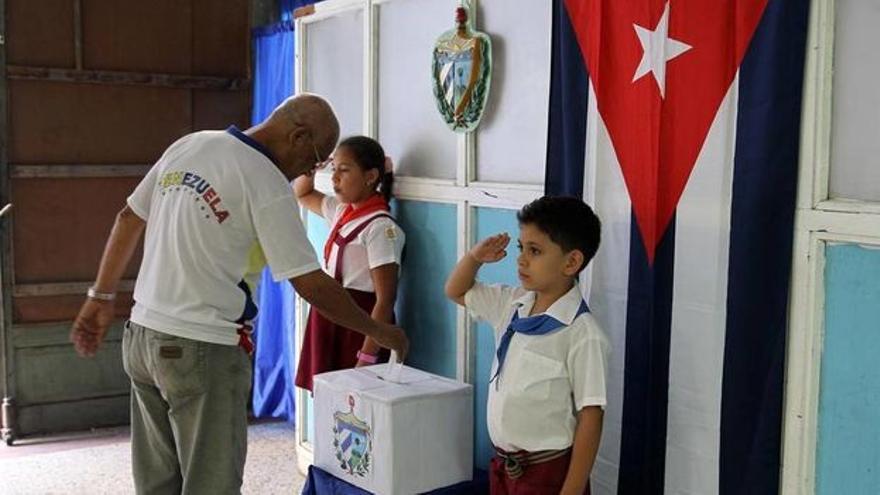
Several independent organizations have come together to promote a NO vote in the constitutional referendum. (File EFE)

14ymedio bigger14ymedio, Havana, 22 December 2018 — Several opposition parties, civil society groups and human rights organizations, totaling nineteen independent Cuban organizations, describe the revised Constitution as “undemocratic” in a statement published this Saturday. The signatories add that they have united to promote a “No” vote in the constitutional referendum.

“Compatriots: we ask you to vote NO in the referendum, because this Constitution is a mask for the world and does not solve your problems,” says the call, which was distributed a few hours before the deputies of the  National Assembly of People’s Power finally approved the text of the Constitution that will go to referendum on February 24. continue reading

The activists who support the declaration, including organizations such as the Patriotic Union of Cuba (Unpacu) and the United Antitotalitarian Forum (Fantu), explain their reasons for a No vote and list the serious problems that affect the Island. “It is increasingly difficult to get food, salaries is not enough and our homes fall in on us. “

“Hospitals today are not functioning because of the lack of doctors, the shortage of medicines and the terrible conditions,” the text adds, “The education system is getting worse. The regime maintains repression against those who demand their rights,” and so “it is time for us to start facing up” to the authorities.

“We ask our fellow citizens to vote NO on a Constitution that is undemocratic and ignores the plurality of Cuban society,” demand the organizations that have signed the call, among which are also groups that defend access to information, such as the Pro Freedom of the Press Association.

“We know that this will not be a referendum in democratic conditions,” say the signatories, who predict that “the Cuban government will not allow equal opportunities between the campaigns for YES and NO, in terms of resources, participation in communication media and public events.”

Despite this disadvantage, they ask people not to ignore “the loud and clear message coming from an important part of the citizenry that is tired of 60 years of failures.” The text proposes the use of hashtags in social networks, in the style of #YoVotoNo #VotaNo #ApuntaNo and #CubaVotaNo.

In recent weeks several activists and opposition leaders have expressed their criticism of the reform of the Constitution. At the center of the controversy is Article 5, which states that “the Communist Party of Cuba, following José Martí, and Marxist-Leninist, organized vanguard of the Cuban nation, is the leading force of society and the State.”

Opponents denounce that the new Constitution does not incorporate modifications of the political system, although it recognizes private property and the importance of foreign investment and establishes the office of prime minister, among other changes.

List of organizations that have supported the declaration, in alphabetical order:

-Artistas contra el Decreto 349 / Artists against Decree 349

-Asociación Damas de Blanco / Ladies in White Association

-Asociación Pro Libertad de Prensa (APLP) / Pro Freedom of the Press Association

-Asociación Sindical Independiente de Cuba (ASIC) / Independent Unions Association of Cuba

-Comité Ciudadanos por la Integración Racial (CCIR) / Citizens Committee for Racial Integration

-Cuba Independiente y Democrática (CID) / Independent and Democratic Cuba

-Cuba Piensa / Cuba Thinks

-Foro Antitotalitario Unido (FANTU) / United Antitotalitarian Forum

-Fundación Cubana por los Derechos LGBTI / Cuban Foundation for LGBTI Rights

-Mesa de Diálogo de la Juventud Cubana (MDJC) / Cuban Youth Dialog Roundtable

-Movimiento Ciudadano Reflexión y Reconciliación / Citizen Reflection and Reconciliation Movement

-Movimiento Cubano Reflexión / Cuban Reflection Movement

-Movimiento Maceista por la Dignidad / Maceista Movement for Dignity (The name refers to Antonio Maceo)

-Observatorio Cubano de Derechos Humanos (OCDH) / Cuban Observatory of Human Rights (OCDH)

-Observatorio de Derechos Electorales  (ODE) / Observatory of Electoral Rights (ODE)

-Partido por la Democracia “Pedro Luis Boitel” / Pedro Luis Boitel Party for Democracy

-Project Di.Verso / Project Di.Verse

-Red de Apoyo OCDH (Camagüey) / Cuban Observatory for Human Rights Support Network (Camagüey)

-Unión Patriótica de Cuba (UNPACU) / Patriotic Union of Cuba

_________________________

The 14ymedio team is committed to serious journalism that reflects the reality of deep Cuba. Thank you for joining us on this long road. We invite you to continue supporting us, but this time by becoming a member of 14ymedio. Together we can continue to transform journalism in Cuba.
Currency Exchanges Cut Employees’ Salaries to Repair Their Premises

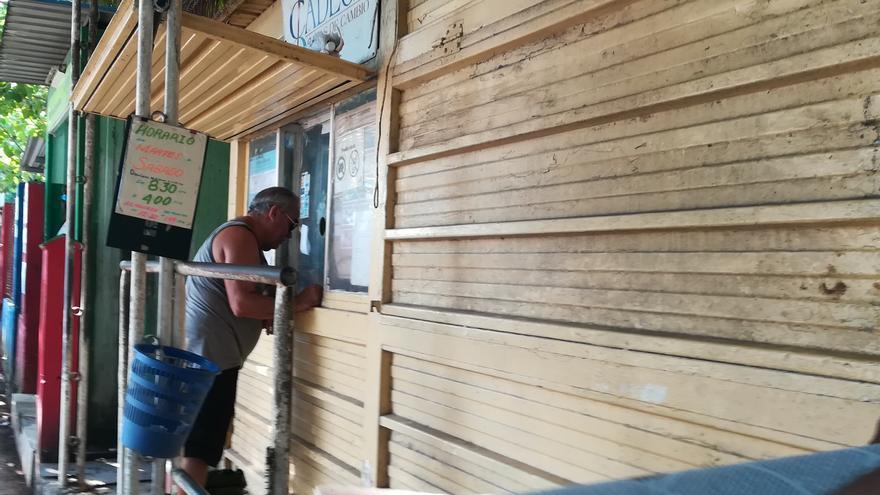
Created in 1996, for years the “Cadecas” have been the places most visited by Cubans when they want to sell foreign currency. (14ymedio)

14ymedio bigger14ymedio, Marcelo Hernandez, Havana, 18 December 2018 — All of the employees at the state operated currency exchanges (known as Cadecas), will receive 40 Cuban pesos (CUP) less in salary in December, according to reports from several employees speaking to 14ymedio. The amount deducted will be used — according to what they’ve been told — to repair the premises where they work, which have deteriorated over the years due to lack of investment.

Created in 1996, for years the Cadecas have been the places most visited by Cubans when they want to sell foreign currency or exchange Cuban pesos (CUP) and convertible pesos (CUC). continue reading

“This month they are deducting 40 pesos from each employee because they are going to use that money to improve the situation where we work,” an employee of an exchange office on Belascoaín Street in Havana told this newspaper. “With that money we can have a bathroom because we have to be here eight hours every day and we do not have bathrooms.”

The Cadecas are the state centers in Cuba that earn the most money for their services. The Government imposes a 13% tax on the exchange of dollars to convertible pesos, with the customer receiving only 0.87 CUC for each dollar instead of the official rate which is 1 CUC per dollar.

In a country where remittances received from abroad totaled 3.354 billion dollars in 2015, according to The Havana Consulting Group (THCG), the Cadecas have become the main recipient of this currency, which is also changed in the informal market.

“With all the money we move, we have to work under very difficult conditions,” Jose Ignacio, a former Cadeca guard with ten years experience in security matters, explained to 14ymedio. “The premises are not safe, technology constantly suffers failures and digital communications with the bank are not stable,” he says.

However, it is in the issue of “attention to the workers” where there are more unaddressed issues, says José Ignacio. “The lunch they give us is very bad, transportation to the premises fails all the time and we do not have access to a bathroom to meet our needs,” he laments.

However, the officials of the Currency Exchanges insist that these premises have become less important because more and more state stores now accept payment in both currencies, CUC and CUP, thus taking away the exchange business of the Cadecas.

Dozens of Cadeca workers have joined together and sent a letter to the State Council complaining about the deduction from their salary this month. In the letter they note the strategic nature of the sector in which they work and recommend the Government annul the decision.

“Most of the money that moves in our country passes through these hands,” explains Loreta, a cashier in a Cadeca housed in a metal container structure located in Havana’s El Vedado district. “Every day I count thousands and thousands of dollars or convertible pesos, but when they pay me I receive less than 40 CUC (monthly),” she says, outraged.

“If this were a cooperative it would not be bad if we put part of our salary to the common benefit, but we are employees of a state company and this is a very difficult month to take away part of our salary, it is not right nor is it the time,” the worker points out.

The employees of the Cadecas are considering appealing to independent unions. “What we are asking for is nothing extraordinary, only that our salary is respected and that the money that should go into our pockets is not used for something that the State must assume,” Loreta adds.

A copy of the letter sent to the Council of State will also be sent to the Cuban Workers Center (CTC), the only union allowed in the country. In July of last year, the secretary-general of the CTC, Ulises Guilarte de Nacimiento, acknowledged that salaries on the island are “insufficient” to meet the needs of the worker, which causes “apathy,” “disinterest” and “important labor migration.”

“The trade union movement demands confidence from its workers, we have to resist a little more to finish solving this problem, which for us continues to be a priority to solve in the shortest time possible,” Guilarte emphasized months later.

 _____________________________

The 14ymedio team is committed to serious journalism that reflects the reality of deep Cuba. Thank you for joining us on this long road. We invite you to continue supporting us, but this time by becoming a member of 14ymedio. Together we can continue to transform journalism in Cuba.
Young Woman Denounces State Bus Driver for Racist Insult

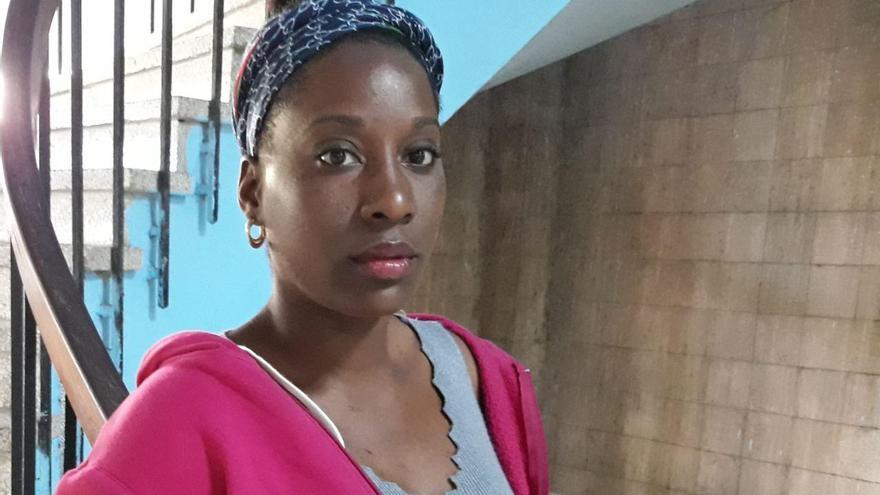
Gelaisy Cantero de los Santos filed a complaint against the driver of a state-run bus in Havana who insulted her with a phrase with racist connotations. (14ymedio)

14ymedio bigger14ymedio, Luz Escobar, Havana, 22 December 2018 — Gelaisy Cantero de los Santos, a young woman of 31, filed a complaint Thursday against the driver of a state-run bus in Havana who insulted her with a phrase with racist connotations, she herself reported to 14ymedio.

Cantero, who has a degree in Physical Culture and Sports, believes that she was the victim of discriminatory offenses when, on Wednesday afternoon, while traveling on the P5 route from the Playa municipality to the Vedado neighborhood, the bus driver repeatedly shouted at her “Shut up, monkey!” continue reading

According to the young woman, when she got on the bus she noticed that the lady ahead of her had a 50 CUP note in her hand, a high amount for a fare that costs 0.40 CUP. Cantero offered to pay for both their fares with 1 CUP (roughly 4¢ US) and thus avoid the cumbersome process of currency exchange.

However, the driver did not accept the offer and when the young woman insisted on helping the other passenger, the man shouted “Shut up, monkey!” Stonecutter claims to have been “perplexed” by the insult. “I did not enter into a debate because I thought there had to be some way to denounce and make public this offense.”

The driver continued insulting the young woman, calling her names such as “stupid, busybody, illiterate,” before the astonishment and inaction of most of the passengers in the bus. The state employee also reproached her for using the public bus and not taking a taxi.

Cantero took a photo of the aggressor, an image that has been included in the legal complaint that she has just presented. “I turned to a group that defends the rights of women and the LGBTI community, as well as fighting against violence against women and racism.” The Afro-Cuban Alliance assisted her in presenting her claim to the Prosecutor’s Office and the Provincial Department of Transportation, in addition to a complaint to the National Revolutionary Police (PNR).

The Office of the Prosecutor will evaluate the case and, within a period that expires on January 15, Cantero will have an answer on the next steps that must be followed. Meanwhile, the Provincial Department of Transportation can take up to 60 days to analyze what happened and determine a penalty against the employee.

This Friday Cantero visited the facility the P5 operates from and met with the directors and the aggressor. The employee admitted what happened and apologized, but the young woman has decided to continue with the complaint because she considers that her case is not an isolated incident.

“Racism exists,” she stresses. In any place or institution “we are attacked all the time, out of racism, attacks against an adult person, against women, homosexuals, it is a constant aggression.”

“The driver made a mistake because I’m not going to shut up, I’ll take it as far as it goes, for me and for people to realize that they have the right to complain,” the woman concludes.

In July of last year, a private transporter was denounced by law student Yanay Aguirre Calderín after the man told her that “every time a black person rides in my car it’s the same” and that’s why he could not stand them.

In an unprecedented journalistic gesture, the case reached the official media. After the accusation of the young woman the man faced a complaint for the Offense Against the Right of Equality, established in article 295 of the Penal Code.

 __________________________

The 14ymedio team is committed to serious journalism that reflects the reality of deep Cuba. Thank you for joining us on this long road. We invite you to continue supporting us, but this time by becoming a member of 14ymedio. Together we can continue to transform journalism in Cuba.
The Fate of the Payret Cinema, in the Hands of Tourism

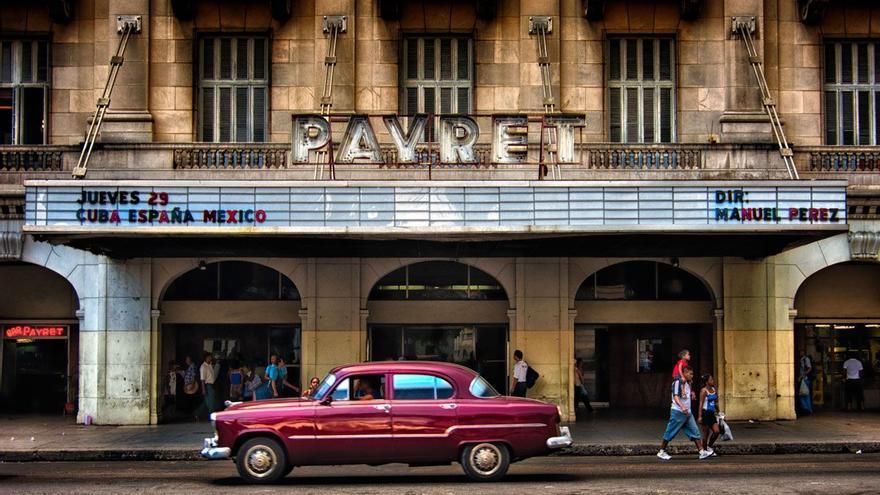
14ymedio bigger14ymedio, Havana, 21 December 2018 — After days of intense controversy, the Ministry of Tourism Director of Development, José Reinaldo Daniel Alonso, has had to respond to the speculation about Payret cinema in Havana. “It will be studied, it will be seen and decided, at the appropriate time, if the cinema stays or not,” the official said about the possibility of being its converted into a space for tourists.

After the publication of an article in the digital newspaper Cubanet warning about the remodeling of the whole block where the movie theater is located and the demolition of the Kid Chocolate sports center to build the Hotel Pasaje, an avalanche of criticism emerged in the social networks and it has only been increasing with the passing of days. continue reading

A sign a few yards from the movie theater announces the site of the Manzana Payret Complex and the Hotel Pasaje, which are being built to commemorate the 500th anniversary of the City of Havana. On the signboard you can read a phrase from Eusebio Leal, Havana City Historian, in which he says he does not hold a grudge against the past but believes in the need to “go to the future from the past.”

The adversaries of the idea claim the patrimonial value of the Payret, founded 142 years ago, and the need to preserve the property as a movie theater in view of the notable decrease in such places in recent years. Critics are also wondering if the Ministry of Tourism has the power to determine the use of the building.

“We are not going to violate anything that is established,” press official Daniel Alonso responded on Thursday. The tourist investment project linked to the Payret cinema is still under study and must first pass “all the controls” necessary for its approval.

The old property is listed as available in the portfolio of foreign investments, which total 300 million dollars made available to foreign entrepreneurs. The project is a few yards from Central Park and in front of Havana’s famous Capitol building, a tourist area where several new hotels have recently been inaugurated, including the luxurious Manzana Kempinski.

Among the voices most critical of converting the theater, inaugurated on 21 January 1877, into a tourist site, had been the singer Haydée Milanés, who on her Facebook page asked if they are going to turn the Payret into a hotel and claimed: “We can not allow it!”

The writer Norge Espinosa also expressed his dissatisfaction in Café Fuerte and noted that “an intelligent restorer, capable of understanding that the new use of a values heritage site (as is the Payret) must also protect its history, could restore it as a arena, and this, at least, it would alleviate the loss of other things around it.”

“They are turning our city into a theme park of socialism for tourists,” one reader denounced in a comment.

Ernesto Estévez Rams, another reader, labeled Daniel Alonso “arrogant” for his statements and called for a “collection of signatures” so that those “who are affected can have a local or provincial or even national consultation to democratically decide on a path” for the fate of the Payret.

Currently the cinema has been closed for several years and both its interior and its façade have suffered an accelerated deterioration. The marquee shows rust stains, the walls are blackened by soot and the interior carpentry has been destroyed and systematically sacked, some of the signs of its fall from grace.

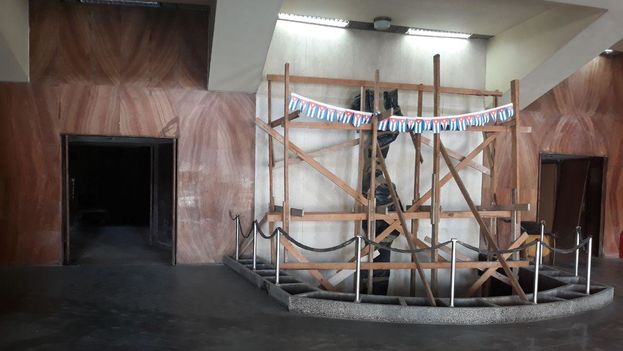
The sculpture ‘The Illusion’, created by the artist Rita Longa, welcomes those who enter the Payret cinema. (14ymedio)

In its almost century and a half of existence, the Payret has undergone innumerable architectural adaptations and traversed periods of clear decline, but since the 1950s it has become one of the most iconic cinemas in Cuba.

With a cabaret located on the lower floor, rounded staircases that attract the eyes of everyone who enters and a projection room adorned on its sides by a sculptural complex of nine muses created by the artist Rita Longa, who also made the The Illusion piece located in the lobby, the building is also an architectural symbol.

 ______________________________

The 14ymedio team is committed to serious journalism that reflects the reality of deep Cuba. Thank you for joining us on this long road. We invite you to continue supporting us, but this time by becoming a member of 14ymedio. Together we can continue to transform journalism in Cuba.
Goodbye to the Kid Chocolate Room

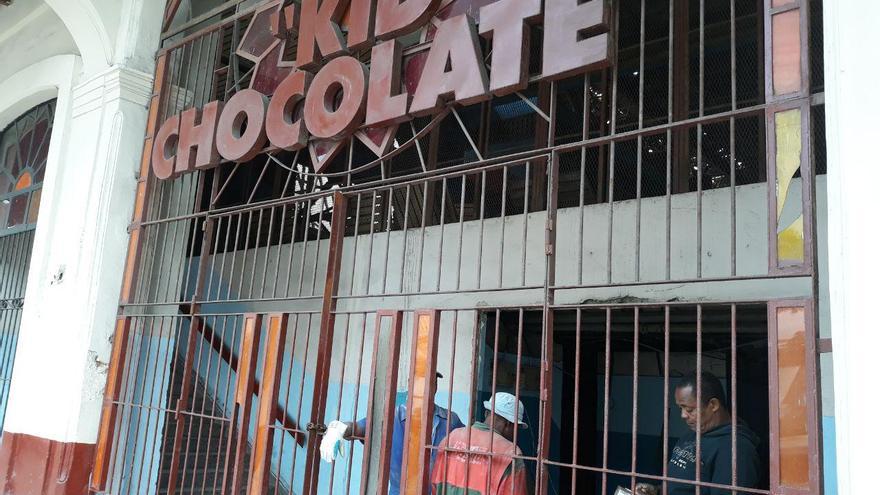
14ymedio bigger14ymedio, Marcelo Hernandez, Havana, 13 December 2018 — The builders dismantle panels, pile up fragments of the flooring and begin to remove the screws that connect large areas of the stands. The work is taking place inside the Kid Chocolate Room, in front of Havana’s Capitol building, a venue that until recently served for boxing, indoor soccer and judo tournaments. It is the end of one of the most important sports competition venues in the city.

Now, the block where Kid Chocolate is located is a construciton site because the Pasaje Hotel will be erected on the perimeter and the entire block, where the Payret cinema is also located, will undergo an intense remodeling. The dismantling of “la Chocolate,” as the place is popularly known, is not a surprise to anyone, due to its growing state of abandonment.

Built in 1991 when the Cuban capital hosted the XI Pan American Games, the sports center opened its doors amidst the worst economic crisis the island has experienced in recent decades. After that event the structure began to deteriorate, until it reached a point where the room was no longer safe for the athletes and the public.

“It was raining more inside than outside,” recalls a boxing fan who a few years ago got soaked while watching a national match while a downpour fell on the city. The man says that the time of sports venues “at subsidized prices and open to the public” is over and now Cubans live in “the era of hotels for tourists with pools and roofs that have no leaks,” he adds sarcastically.

One of the last events that took place in the premises, last May, was the Giraldilla Cup of university football, where several games had to be temporarily interrupted when the players fell as they slid around on the wet floor.

___________________________

The 14ymedio team is committed to serious journalism that reflects the reality of deep Cuba. Thank you for joining us on this long road. We invite you to continue supporting us, but this time by becoming a member of 14ymedio. Together we can continue to transform journalism in Cuba.

Supporters and Opponents of Gay Marriage Both See a Government Maneuver on the Constitution Referendum

Cuba’s Family Code will be what determines who will be allowed to marry, after this issue has been removed from the constitutional reform. (David Himbert)

14ymedio bigger14ymedio, Havana, December 19, 2018 — Religious groups that were pleased by the announcement of the National Assembly’s announcement that Article 68, which would open the door to marriage equality, would be removed from the constitutional reform, have announced this Wednesday their intention to mobilize against the Government’s project to include, within two years, that same concept in the Family Code.

“The news that the National Assembly of People’s Power has discarded the proposal of Article 68, because it was shown that a majority of the Cuban population rejected it, gives a measure of how strongly the thinking of the Evangelical Church of Cuba represents the Cuban People,” the Methodist Church of Cuba wrote on its Facebook page. continue reading

This declaration is a response to National Assembly deputy Mariela Castro, director of the National Center of Sexual Education (Cenesex), which has explained via its Facebook account that Article 82 will now define the institution as a fundamental union “in free consent and in equality of rights, obligations, and legal capacity of the spouses.”

The daughter of ex-president Raúl Castro assured that the “new formula retains the essence of the formerly proposed article (68), since it erases the binary of gender and heteronormativity with which marriage was defined in the Constitution of 1976. There’s no going back, the essence of Article 68 remains, the fight continues, now let’s say YES to the Constitution.”

Mariela Castro attributes the confusion of recent hours to poor communication from the National Assembly. “The Commission proposes deferring the concept of marriage, that is to say, that it is removed from the Project of the Constitution, as a form of respecting all opinions. Marriage is a social and legal institution. The law will define the rest of the elements,” said the Parliament on its Twitter account.

“Unfortunately the message tweeted by our legislative body mutilated the new proposal and with an inappropriate approach threw into the fray what many people are interpreting as a retreat,” clarified Mariela Castro.

The news had fallen like a bucket of cold water among the defenders of marriage equality who viewed the decision as a step back.

One of the first to react was the journalist Francisco Rodríguez Cruz, who has the blog Paquito el de Cuba. “Neither between man and woman nor between two people: the Constitution will not say what marriage is. The future Law will,” he detailed on Facebook. “To say it politely: take your marriage and shove it!” the activist also added.

The new wording opens, also according to Mariela Castro herself, the door to legalizing other types of couples. “It places domestic partnerships as a novel element, without tying them to a specific gender; this form, in the long term and according to statistics, is [currently] the most used in our society,” she reminded.

From Placetas, Villa Clara, on Facebook Live the journalist and LGBTI activist Maykel González Vivero said that the news had not taken him by surprise. “Some people close to Cenesex had notified us that article 68 wouldn’t be in the project of the Constitution.”

“It’s clear that the Family Code as well will be submitted, within a period of two years, to a popular consultation. At the end of the day what the National Assembly has done is prolong and delay the moment in which the right to marriage will be established for everyone in Cuba,” laments González, director of the independent publication Tremenda Nota.

Pastor Bernardo Quesada, one of the most fervent opponents of article 68 as it was worded in the project of the Constitution, doesn’t feel satisfied with the change announced in Parliament, although he minimizes its importance.

“More important than the issue of marriage, it worries us that neither freedom of association nor freedom of religion is specified,” reports Quesada to 14ymedio. The pastor recognizes that there is “much confusion” with the news that has been coming out in recent hours about a parallel popular consultation, to include the definition of “marriage” in the Family Code.

“It’s a maneuver to seek the approval of the Constitution in the referendum, because of that our churches are going to reject that. At least those of us who have five senses are not going to be tricked nor convinced to approve this Constitution,” he explains.

In July five Cuban evangelical denominations made public a declaration against marriage equality. The document affirmed that the “ideology of gender” had no relation with Cuban culture “nor with the historic leaders of the Revolution.”

In temples and Christian churches all over the country article 68 was openly criticized, a situation that made the Government fear a massive No vote against the Constitution. Evangelicals have had a rapid growth in recent years and it is calculated that the Methodists alone count more than 80,000 faithful in the entire country. Additionally, the Cuban Episcopal Conference also rejected allowing persons of the same sex to marry.

With this turn, the Government postpones the controversy and casts off an issue that could have brought No votes to the constitutional reform.

Translated by: Sheilagh Carey

___________________________

The 14ymedio team is committed to serious journalism that reflects the reality of deep Cuba. Thank you for joining us on this long road. We invite you to continue supporting us, but this time by becoming a member of 14ymedio. Together we can continue to transform journalism in Cuba.
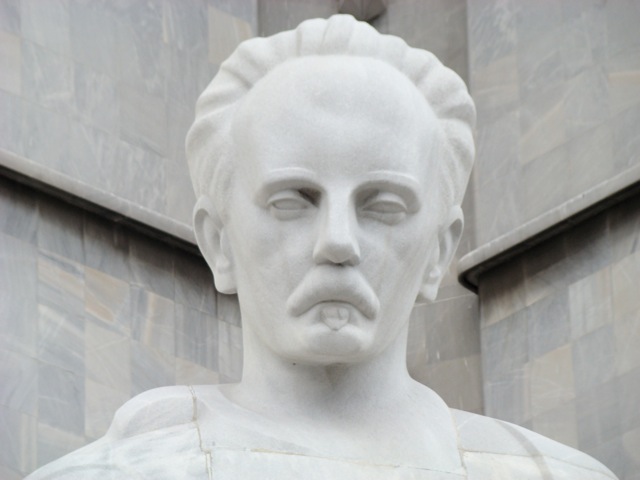
Jose Marti and the Single-Party Political System / Regina Coyula

Jose Marti in the Plaza de la Revolucion

Regina Coyula, 31 August 2018 — Given that the subject is fashionable and that, in support of it, Fidel Castro’s speech has been quoted in the press, I quote José Martí — better positioned in the ranking of national public opinion — on the topic:

 “… The Republic … will not be the unfair dominance of one class of Cubans over others, but an open and sincere balance of all the real forces of the country, and of the free thought and desire of all Cubans.

“Every public party must adjust itself to its people.

“The Revolutionary Party, whose prior and temporary mission shall cease on the day when Cuba does its share of the war it has agreed on with the island, has no heads to raise, nor old or new bosses to impose on those of the country, or aspirations which would be swept away in one breath by the prior right of the first republic, and the new, supreme right of the country.”

Dozens of Passengers Protest at a Bus Stop in Havana

14ymedio bigger14ymedio, Havana, December 20, 2018 — This Thursday afternoon dozens of people circled a bus that was traveling on Calle Monte in Havana to demand that the doors be opened and that it transport those who were waiting at the stop. The passengers positioned themselves in front and on the sides of the bus to keep it from continuing its route and, a few minutes later, the police intervened to break up the protest.

The events occurred before it started to rain in the city, affected by the arrival of a cold front that has brought abundant rain and the danger of coastal floods to the west of the country. The passengers demanded to be transported toward their destination after the bus driver did not stop at the bus stop. continue reading

When the downpour started the people ran to the covered sidewalk to keep from getting wet and the driver took advantage of that to depart, leaving the passengers at the mercy of the rain.

An hour after the incident several police cars were continuing to circle around the area to avoid a second protest.

In the last few weeks the public transportation situation in the Cuban capital has gotten worse after the Government implemented on December 7 a series of measures to regulate private taxis. The self-employed transport workers responded to the new regulations with a strike that paralyzed the country’s biggest city for 48 hours.

Although in recent days some of these private vehicles have started circulating again, transportation is still very affected because hundreds of drivers refuse to take up the job again under the current circumstances.

The drivers are demanding freedom of movement, right to work all over the country, access to a wholesale market, the ability to import parts, and permission to have independent unions, among other demands.

Translated by: Sheilagh Carey

__________________________

The 14ymedio team is committed to serious journalism that reflects the reality of deep Cuba. Thank you for joining us on this long road. We invite you to continue supporting us, but this time by becoming a member of 14ymedio. Together we can continue to transform journalism in Cuba.

The Cuban Economy Does Not Grow or Crash

The private sector still has obstacles preventing it from adequately thriving. (14ymedio)

14ymedio bigger14ymedio, Madrid | December 18, 2018 — The Cuban economic machine has made no progress in 30 years but it does not “totally crash,” according to expert Pavel Vidal, in an analysis published this week on the Web page of Cuba Posible titled “The Cuban Economy in 2018: Another Year without Crashing and with no Progress”

The Cuban economist, who works at Pontifical Xavierian University in Cali (Colombia), stated that, according to information provided by the Minister of Economy and Planning, Alejandro Gil, the gross domestic product (GDP) has recorded a growth of 1% in 2018, well below the officially forecasted figure of 2%. continue reading

While the Government attributes the poor results to the shortfall in export earnings, the high level of indebtedness, the international context and weather factors, Vidal showed that the issues are deeper still.

“It must be acknowledged that the [Cuban] system has proven to be effective in managing the crisis and in avoiding financial collapse, and has as well been ’effective’ in limiting private initiative, innovation and a boom in productivity. It is a system which holds the record of keeping the country at the lowest rates of investment in Latin America. The Cuban productive machine has been kept this way for nearly 30 years: it does not completely crash, nor does it show economic progress,” is how Vidal summarized the domestic economy’s state of stagnation.

The information relating to “discreet” growth, as labeled by President Miguel Díaz-Canel, results in something closer to recession. As indicated by the economist, “the dearth of basic commodities and the price dynamics of the consumer goods match up less and less with the official statistics regarding the GDP and the Consumer Price Index.”

Pavel Vidal finds it astonishing that the Government has managed to keep the accounts under control in the context of the spectacular crash of its main trading (and political) partner on which it largely depends. While Venezuela has lost half of its GDP over the last five years, Cuba has grown at an average rate of 1.7%.

In his opinion, the protracted experience of State centralization, control of resources and financial and exchange regulations have managed to maintain an allocation of resources which has dampened what he calls the “Venezuelan shock.”

But the main control pathways used by the Government to achieve this throughout this period of time have been tourism and expansionist tax policies, both of which are at a delicate juncture.

Tourism, which skyrocketed with the U.S. thaw in relations, has registered an average growth of 16% over a three-year period, which has been sufficient to obtain foreign earnings and to influence foreign investment and the private sector.

“Between 2015 and 2017, the arrival of U.S. visitors (including Cuban-Americans) had been growing at an average yearly rate of 44% and had doubled the participation of the total number of visitors to the Island,” according to Vidal.

But 2018 has turned out to be more adverse, despite the improvement of the last months. Tourism global figures, approx. 2.5 million visitors, dropped by more than 5% between January and June, 2018. Taking into account U.S. tourists alone, the drop throughout the six-month period amounted to 24%. The Trump Administration’s restrictions, added to the the issues stemming from the so-called “sonic attacks,” which caused problems to the health of several U.S. diplomats on the Island, accounted for the slowdown in that key sector to the Cuban GDP.

According to the Cuba Standard Economic Trend Report, the impact amounts to 557 million dollars in income not yet received, almost double the estimate, which is the figure mentioned by Vidal that the Island will fail to receive for the cancellation of Cuba’s participation in the Mais Medicos (More Doctors) program in Brazil (U.S. $300 million).

Vidal also quoted the implementation of an expansionist tax policy as a dampener on the effects of the Venezuelan crisis. As pointed out by the economist, after several years’ austerity, [the Administration] has resorted to tax expenditures since 2015 and, to reduce the potential inflationary impact of this expansionist tax policy, the Ministry of Finances and Prices has resorted to government bonds rather than the creation of new money. The issue is that the tax deficit grows and has created a hole of 12 billion pesos (12% of GDP) in 2018. Even though this will contribute to short-term growth, it is based on a financial bubble by way of government bonds.

The fact remains that despite the Government’s trying to keep its composure, thanks to its iron grip on the State’s economy, the biggest issue is that it is unable to generate structural changes allowing to create new expectations. The dual currency system, the inefficiencies of the state’s business sector, the restrictions to farming and the private sector prevent, in his opinion, building up more physical capital and making intensive use of technology and human capital.

According to Vidal, both the President and the Party refuse to undertake deep reforms and merely undertake cursory ones. Thus, they minimize the ideological and political issues which a great transformation entails and they can launch a message that something is changing. It could seem like a method in which there is every advantage, but the fact remains, Vidal points out, that it is the perfect recipe for failure.

“If ten things need changing in order for a productive sector, market or economic mechanism to efficiently work, the Cuban government will only change two things, and those two things will never be the most important ones (…). They spend time and energy in bringing about changes which do not have the chance of offering significant results, since the eight other things preventing an efficient operation have not been changed,” indicated Vidal, while providing some illlustrative examples.

Despite this picture of stagnation,  Vidal believes that the arrival of 3G internet connectivity may entail a significant change and have an impact on the private sector, even though — and he warns — “a requirement in order to do so is for public policy to think outside the box and to create an adequate regulatory framework to promote, rather than restrain, expansion in one of the areas of the so-called orange economy having a greater global dynamism.”

_____________________________

The 14ymedio team is committed to serious journalism that reflects the reality of deep Cuba. Thank you for joining us on this long road. We invite you to continue supporting us, but this time by becoming a member of 14ymedio. Together we can continue to transform journalism in Cuba.
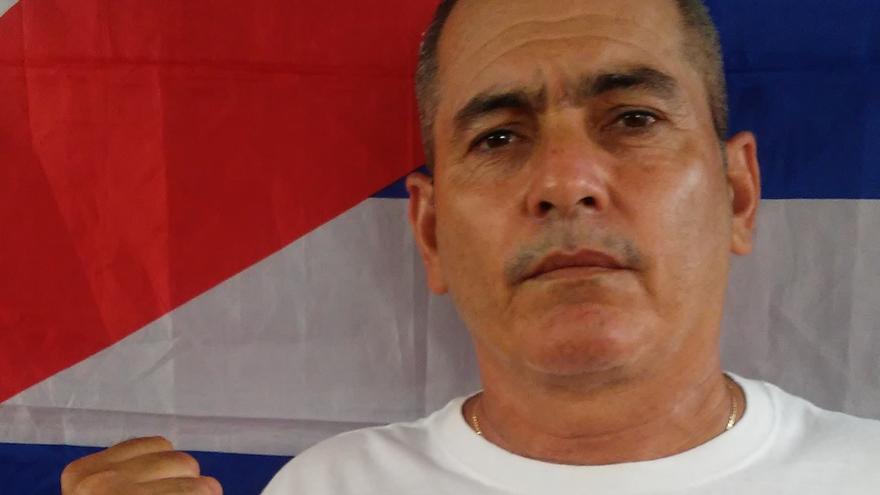
Activist Hugo Damian Prieto Sentenced to One Year Imprisonment for “Pre-Criminal Dangerousness”

Activist Hugo Damián Prieto Blancowas sentenced for the crime of “pre-criminal dangerousness.” (Courtesy)

14ymedio bigger14ymedio, Havana, December 20, 2018 — Activist Hugo Damián Prieto Blanco, leader of Frente de Acción Cívica Orlando Zapata (Orlando Zapata Civic Action Front), was sentenced Tuesday to a year imprisonment for the crime of “pre-criminal dangerousness” to society, as confirmed to 14ymedio by his wife, Lázara Bárbara Sendiña.

Prieto was arrested this last November 29 after taking part in a protest in the vicinity of Havana’s Capitol; he was subsequently released and later, on December 3, the police searched his home and arrested him again. continue reading

Prieto was held in cells at various police stations until he appeared before the Court in Marianao where “he was subject to a very summary trial,” complained Sendiña.

His wife is of the opinion that the charged crime “is a legal gimmick by the Government to put their opponents in jail without showing that they have been convicted of a political crime.” Sendiña maintains that Prieto was tried while “violating all due process” and that he will not have the right to appeal.

By 8:01 a.m., just when the doors of the Courthouse were being opened, Hugo Damián had already been tried and was being led to the Valle Grande prison, where he is supposed to serve out his sentence,” as reported by his wife.

Throughout this time, the activist has not been able to access the medication he needs to treat a chronic cardiomyopathy. In addition, Prieto suffers from pancreatitis. “He cannot eat any type of cold cuts or greasy foods, but he has to eat whatever he is given in prison,” his wife complained.

Members of the organization led by the dissident launched a campaign to demand his release, and this Thursday the police called Lázaro Mendoza García, one of the executives of Frente de Acción Cívica Orlando Zapata, in order to question him.

A group of eight activists went with Mendoza to the police station located in La Lisa. One of those who arrived at the scene, José Antonio Pompa López, told this daily that the police threatened him with prosecuting all of them in court if they persisted in holding protests to demand Prieto’s release.

Amnesty International and the Inter-American Commission on Human Rights have denounced that Cuban law punishes citizens, with sentences of one to four years’ imprisonment, for an alleged crime they have not yet committed, pursuant to Sections 73 to 84 of the Criminal Code.

According to independent attorney Laritza Diversent, in the case of individuals sentenced under that legal concept, “the commission of such crime is not proven, [since] the authorities, shielded by subjective criteria and ideological parameters, consider that the conduct of such individuals must be reformed.”

___________________________

The 14ymedio team is committed to serious journalism that reflects the reality of deep Cuba. Thank you for joining us on this long road. We invite you to continue supporting us, but this time by becoming a member of 14ymedio. Together we can continue to transform journalism in Cuba.
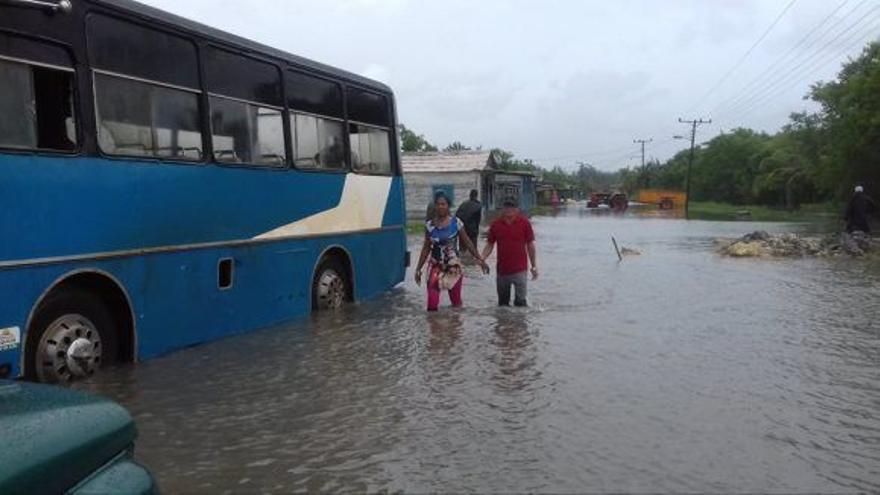
Civil Defense Warns of Possible Coastal Flooding in Eastern Cuba

Hurricane Michael left widespread coastal flooding this October in Cuba’s Artemisa province. (14ymedio)

14ymedio bigger14ymedio, Havana, December 20, 2018 — The Forecast Center of the Meteorology Institute warned of possible coastal flooding in eastern Cuba with the arrival of an extratropical storm formed on Wednesday morning. Since early Thursday morning the winds from the south, between 30 and 45 kilometers per hour and with higher gusts, will affect the eastern provinces and Isla de la Juventud.

Faced with this situation the National General Staff of Civil Defense issued an “early alert” warning and has called on all governing bodies, state bodies, economic entities, and social and territorial institutions to “fulfill the planned measures in your respective plans for risk reduction in disasters.” continue reading

Civil Defense insists in the call that the population be alert, “pay attention to information from the Meteorology Institute and Civil Defense, and obey with discipline the guidance of local authorities.”

According to the report from the Forecast Center, this weather situation will cause swells on the southern coast from Pinar del Río to Cienfuegos, including the special municipality of Isla de la Juventud, causing coastal flooding.

The sea could penetrate up to a third of a mile inland in Batabanó, and two-thirds of a mile in the low zones of Artemisa province.

It’s expected that, with the advance of this system, early Friday morning the winds will persist for a period of approximately 24 hours, with strong coastal floods predicted in low zones along the coast, including the Havana breakwater, starting the same morning.

In a broadcast from the Havana Channel the forecasts warned that the coastal flooding in the city could reach as far as Calle Línea in the lowest areas.

Translated by: Sheilagh Carey

______________________________

The 14ymedio team is committed to serious journalism that reflects the reality of deep Cuba. Thank you for joining us on this long road. We invite you to continue supporting us, but this time by becoming a member of 14ymedio. Together we can continue to transform journalism in Cuba.

A Decree That’s Not All It’s Cracked Up To Be / Fernando Damaso

Máscara [Mask].  Work by Rebeca Monzó, Havana.
Fernando Damaso, 16 December 2018  — Decree 349, which concerns regulations governing the broadcast, exhibition and promotion of artistic products, has created much concern among creators. The problem is not about “the enemies” making propaganda against it, but rather the real danger that the decree represents.

The danger consists in that, under its shelter, the authorities could establish censorship over what is authorized, as well as over the strict political/ideological criteria used–in place of intrinsic value–by those who evaluate artistic products. continue reading

This is not a new phenomenon and it has, in our country, its closest antecedent in the sadly known “grey decade,” during which the cultural bureaucrats of the National Cultural Council approved or disapproved creations, taking into account the creators’ militancy, or lack thereof.

The phenomenon had already been manifested before in the now-extinct USSR and other socialist countries, when everything new and innovative was persecuted and prohibited, shielded by the supposed defense of the socially convenient. Further back, it had emerged when the so-called “academies” refused the works of the Impressionists, Cubists, abstractionists and modernists in the fine arts, and the new tendencies in music and dance.

In other words, the concern is valid.

I ask myself, who are the “superfunctionaries of culture” selected to determine the good and the bad, and what should be authorized or prohibited? I don’t believe they exist.

To date, just as has occurred in the economic sector, I only know bureaucrats who strictly comply with the orders from the powers that be in defense of their political/ideological interests–which are not necessarily those of the majority of the citizens. Besides, we Cubans tend, by custom, to hold back or overdo it–more often the latter than the former.

Translated by: Alicia Barraqué Ellison

National Identity / Fernando Damaso

Fernando Dámaso, 21 November 2018 — The theme of national identity, along with that of sovereignty and independence, form the favourite triad of the official idiotology.  Everyone talks about that.

National identity is not an ideological abstraction, but a historical reality, which comes loaded with its baggage of events and personalities from the colonial era up to the present day, without artificial black holes or spaces edited out for political convenience. continue reading

It is made up of the good, the bad, and the ordinary. Intelligent people and stupid people. People who get things done, and those who don’t. Pimps, prostitutes, thieves, liars, and decent people, of either sex. Also, people with different political, ideological, economic, social, sexual opinions, sportsmen and artists.  This mixture of different people makes up the national identity.

No-one has done more to attack the national identity than the regime founded in January 1959, dislocating the national, provincial and municipal structures, with absurd changes and transformations to economic, political and social levels.

Now, our towns and villages aren’t anything like the way they used to be, with only little bits surviving which have been saved by municipal and provincial historians. Popular traditions have been lost or adulterated, all the economic and commercial structures have been taken apart, along with their well-known factories, businesses and establishments. Most of them disappearing, or given new names without meaning or popular support.

The streets and avenues have not escaped the ideological cruelty, losing their familiar historic names in favour of less  important ones, or those indicative of cheap political messing about. Nor have the arts or sport escaped, with renowned figures, who form a legitimate part of the national identity in their own right, wiped out. The same thing has happened to education and health centres.

A time traveller from the 19th century or the first half of the 20th, would find themselves completely lost in today’s Cuba, with almost no discernible references to the past or to those who constructed it or graced it with their presence.

Everything has been replaced with stuff done in the last sixty years. A monster born of chaotic thinkers and worse doers, elevated into decision-makers, ruling by economic and political power, in the name of an obsolete ideology and a failed system, which has destroyed the country, converting it into a sad residue of what it used to be.

Translated by GH

The Nicaraguan Press in the Eye of the Hurricane

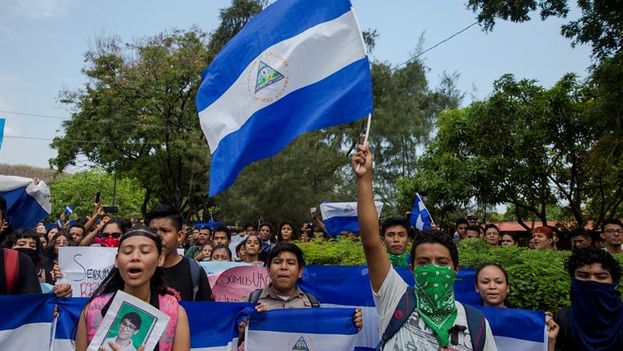
The repression against the press is occurring in the midst of a sociopolitical crisis that has resulted in between 552 and 558 “political prisoners” after demonstrations against Ortega. (EFE)

14ymedio bigger14ymedio, Yoani Sanchez, Generation Y, Havana, 20 December 2018 — It wasn’t enough for them to extinguish social protests with blood and fire, nor to imprison hundreds of young people for exercising their right to protest. Daniel Ortega and Rosario Murillo needed to go further.

In December of this year, the Nicaraguan police assaulted the offices of the Confidential newspaper and of the television programs Esta Semana (This Week) and Esta Noche (Tonight), in an attempt to silence the chroniclers in a country where freedom of expression has been in serious danger for years. continue reading

Why this blow against the media? What is the point of lashing out against journalists and earning the unanimous rejection of the profession on an international level? In part, because there is nothing more uncomfortable for an authoritarian regime than the conscientious reporting of its excesses and timely information about its outrages against the population.

For tyrants, the reporter is public enemy number one in that he or she has the ability to put in writing those details of reality that the Government wants to sweep under the carpet and hide from the public eye. The reporter is the uncomfortable witness, willing to disseminate what some want never to be known.

Now, with this turn of the screw, Ortega has entered a new phase of repression. In this stage, his apparatus of control focuses on dismantling any vestige of independence that may remain in civil society.

This is why non-governmental organizations, civic groups and newspapers are at the center of his onslaught. Everything that can be useful to citizens to unite their efforts and keep abreast of what is happening will be eliminated or, at the very least, this is what the former guerrilla turned tyrant will attempt.

That is why the solidarity of other media and information professionals everywhere in the world, and especially in Latin America, is so important. To level the newsroom and take away the working tools of a newspaper is like gagging thousands of people in a single second, like closing hundreds of throats so they can not express themselves. In the pages of all the newspapers and on the broadcasts of all the television stations of this region of the world, we should mourn our Nicaraguan colleagues this week and also make felt our indignation about the dangerous step Ortega has taken.

But, above all, in every digital medium, printed newspaper, magazine or television channel we must remember that in the imperfect Latin American democracies – and even in the countries in this part of the world still under authoritarianism – the press has been an important pillar to give a voice to the people and narrate the excesses of the authorities. The fragile republics born after the wars of independence and the freedoms that were restored after the military dictatorships would have been much more ephemeral without the work of the professionals of the press.

__________________________

Note: This column was originally published in the Latin American edition of the Deutsche Welle chain.

The 14ymedio team is committed to serious journalism that reflects the reality of deep Cuba. Thank you for joining us on this long road. We invite you to continue supporting us, but this time by becoming a member of 14ymedio. Together we can continue to transform journalism in Cuba.