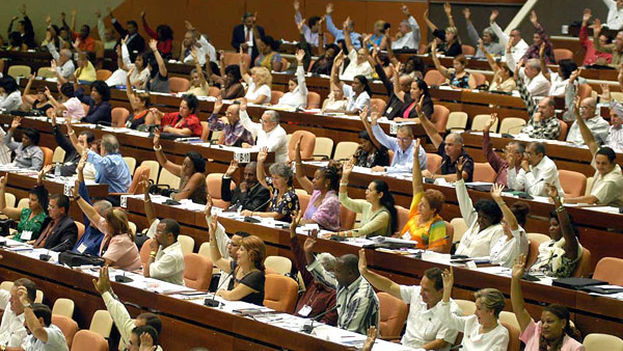
A session of Cuba’s National Assembly of People’s Power, showing the deputies voting unanimously, as is the norm.
14ymedio, (With information from EFE), Havana, 27 December 2016 – The Cuban economy closed the year with a 0.9% contraction in GDP, well below the 1% growth forecast, according to an announcement from Ricardo Cabrisas Ruiz, Minister of the Economy and Planning, during the final 2016 session of the National Assembly on Tuesday, 27 December.
The minister acknowledged that the island experienced “financial constraints” throughout the last 12 months, due to the decline in income from exports, the economic difficulties of some of the country’s main partners, which were related to the fall in oil prices and the reduction in the amount of fuel supplied from abroad, as well as the ongoing trade embargo imposed on Cuba by the United States. continue reading
In 2016, mining revenues fell by 5%, and the minister also confirmed that there is “a tense situation with the availability of hard currency, a shortfall in earnings predicted from exports, and an insufficient supply of fuel,” caused by the reduction in shipments of crude oil from Venezuela.
Cabrisas, however, predicted that GDP would grow by 2% in 2017, thanks primarily to the growth of the sugar industry and the hotel sector, as well as transport, warehousing, communications, supplies of gas and water, agriculture, forestry, trade and manufacturing.
The minister stressed that in 2016 electrical energy generation grew 4.2%, and he estimated that in 2017 the use of renewable resources could grow up to 4.65%. With regards to food imports, according to official forecasts the year’s total will reach 1.75 billion dollars, an increase of 82 million dollars compared to last year. He insisted that the theft of fuel must be avoided, but that “unfortunately it is happening” in the state sector in Cuba, which “comes to light in the controls.”
Cabrisas acknowledged that the share of foreign investment remains very low and represents just 6.5% of the total desired.
The Minister of the Economy also stressed the need to develop a medium-term program to “reverse the critical situation of the food industry” and to “avoid the payment of wages without productive support.”
After growing by 4% in 2015, the Cuban government forecast a GDP growth of 2% for 2016, a target that was lowered midyear to 1% due to “short-term financial difficulties.”
The current crisis in Venezuela caused that country to reduce its shipment of subsidized oil to the island in the first half of 2016, forcing the Government of Havana to contact allies such as Russia, Algeria and Angola in search of new business partners.
Given this situation, economic analysts have predicted a probable economic recession in the country, which could delay the progress of Raul Castro’s reforms.
However, the Economic Commission for Latin America and the Caribbean (ECLAC) predicts that in 2017 Cuba’s economic growth will gradually accelerate due to the regularization of fuel shipments from Venezuela and improvements in telecommunications, tourism, construction and farming.
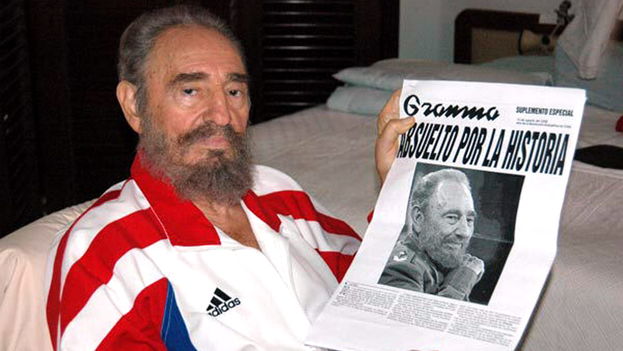
Castro with a photocopy of the newspaper Granma, with the headline “Absolved by History,” on August 12, 2006, a few days after he underwent an intestinal operation. (Networks)
14ymedio, Mario Penton, Miami, 27 December 2016 — The Cuban parliament unanimously approved a bill on Tuesday stating that the name of the deceased former president Fidel Castro cannot be used to designate public spaces and it is forbidden to market his image.
“They want to keep the image of Fidel Castro with that halo of mystery that always characterized him. They were in charge of presenting him to the people as a superman, about whom we had little information regarding his private life; we have to pay attention because they could be trying to maneuver into converting him into one more national symbol,” said the columnist Miriam Celaya from Havana. “They don’t want it to be the same as what happened with Ernesto (Che) Guevara,” she said.
Che’s image has been indiscriminately commercialized and turned into a symbol of rebelliousness and belonging by the entire world’s left wing movements. You can find everything from underpants to national flags with his image. In Cuba, a good share of the handicrafts sold to tourists bears the image of the Argentinian guerilla. continue reading
The law, the discussion of which had been announced at Castro’s funeral rites, supposedly corresponds to the will of the deceased, who asked that his name not be used for plazas and avenues, and also prohibits the raising of statues or the minting of coins with his image.
Although the deputies believed that Castro deserved “these traditional forms of homage, or even greater ones,” they decided to abide by his will as proposed by his brother, Army General and President Raul Castro.
“Only the sacred respect for his will, an expression of the humility and modesty that characterized him, and the fact that he always honored Marti’s preaching that all the glory of the world fits into a kernel of corn, leads us to adopt a legal text of such nature,” said the deputies, according to the official press reports.
The National Assembly, however, excepts the use of the name of Castro for the creation of some educational institution on “his invaluable trajectory.”
“They want to avoid the fact that once the tyranny is destroyed, his statues would be torn down by a free country,” says José Daniel Ferrer, leader of the Patriotic Union on Cuba (UNPACU), an opposition organization in the east of the island.
For Ferrer, the approved law seeks to “justify” the cult of personality that the government has imposed on the nation, a cult that the UNPACU leader describes as “sick.”
“The country has been filled with his images and slogans for decades. As Castro knew, when tyrants fall their symbols disappear; it seems he wanted to avoid a spectacle like what happened in the former USSR,” he commented.
For Elisa Valdés, a housewife in Cienfuegos province, the law puts the name of Fidel almost on a par with that of God. “It’s like it’s sacred,” she says on the phone. Instead of “you will not take the name of God in vain, we will now have to say: you will not take Fidel’s name in vain,” she says wryly.
The legislation also prohibits “the use of names, images or allusions of any nature referring to the figure of the Commander in Chief Fidel Castro Ruz for use as a trademark or other distinctive signs, domain names and designs for commercial or advertising purposes.”
It is not clear if all the artistic photos and images of Fidel Castro that are sold in the tourist areas, from postcards recalling the deceased leader to T-shirts with his effigy, will be eliminated.
According to the Cuban press, it would be a question of “avoiding the use of the figure of the leader of the Revolution in commercial traffic or for commercial advertising purposes,” although it would not limit artistic use or the photographs and banners used up until now in state companies, walls, propaganda billboards, and even stones on the edges of the streets.
“For all those who are grateful that they will always accompany compañero Fidel, the homages they render him will be few,” said the more than 600 deputies who make up the unicameral body, speaking in the last session of this year.
14ymedio, Yoani Sanchez, Havana, 27 December 2016 — The car is about to come apart at the seams every time it hits a bump in Havana’s crumbling streets. The passengers in the shared taxi vibrate with the rattling of the vehicle and the reggaeton blasting from the speakers. It is the music of the early 21st century, a genre of raw lyrics and explicit sexuality that accompanies every minute of our reality.
With a paternity shared between Puerto Rico and Panama, this urban sound marks the birth of the millennium. It has added a naked touch and a certain lascivious rhythm to the times we live in. The lyrics of the songs venerate ostentatiousness as a virtue, celebrating a world where the size of your watch and the thickness of your gold chains are ever more important.
Reggaeton has won out over the protest song of so many social dreams born in Latin America, most of them failed. Its raw materiality has also displaced those anthological boleros that had us weeping on our bar stools, and the carols that overwhelm us at the end of the year. The singers of this fierce music don’t want to be seen as heroes nor as broken-hearted lovers. Rather, they want to convey an image of cynical survival, of calculated lightness. continue reading
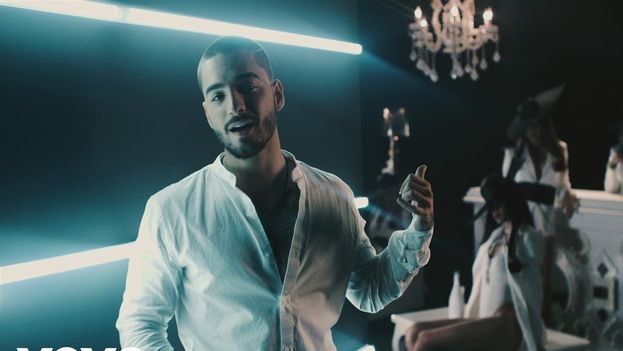
Hence the fuss kicked up by some in response to the impudent lyrics of Cuatro Babys, a song from the Colombian Maluma, where he brags about having four women at his beck and call. The repulsion gets buried in the 200 million (and counting) views the video has enjoyed on YouTube. These are times of hits… not of indignation.
Maluma’s assertions do not scandalize the followers of the rhythm, who see him as the chronicler of a tangible and known reality. It is not reggaeton, it is life that has not taken hold as it should. The Colombian is only the loudspeaker of such a distrubing but common message that doesn’t raise a single eyebrow around here. Blushing does not change the environment.
Reggaeton has become a way of looking at life, in a cosmogony lacking in delicacies or half-tones. It doesn’t matter whether you follow it or not, if you like it or not, there is no way to cover your ears and ignore it. It is here, there, everywhere. Our children hum its choruses. “Tengo money,” repeats a seven-year-old girl in a Cuban classroom, using the English word for cash; and her classmates complete the phrase of a popular reggaeton song. A few minutes earlier they had been shouting a slogan in the school’s morning assembly: “Pioneers for communism, we will be like Che!”
Speaking and understanding the codes of reggaeton is essential to communicating with the younger generation, but also with many of their parents. Minimizing and censoring it only strengthens it, because it has become the compass that expresses rebellion. It has lasted longer than any other genre pushed by record labels or cultural policies.
At the end of the last century, very few would have predicted that for nearly two decades already this urban rhythm would dominate the music that is played at nightclubs, private parties and on the devices we attach to ourselves with earbuds. But it has stayed with us, grabbing us with its wild impudence. Perhaps it only interprets what beats down below, far from the lights of the ceremonies, the outfits for special occasions and the opportunism.
Who would have said it? From the songs of Victor Jara to the catchy phrases of Don Omar, from the utopian Silvio Rodríguez to the emaciated Cuban musicians Yomil and El Dany. “My Blue Unicorn” grazes now in a meadow of minuscule bikinis and hundred dollar bills. Those who hummed they would “give their heart” have decided to trade it in for swimming pool in which a thousand and one nymphs frolic and don’t say a word.
To reject reggaeton, this rhythm incubated in the “New World,” is like rejecting the potato domesticated in the high plateaus. Sooner or later you will end up eating it, sooner or later you will end up dancing. Even at the most glamorous parties, the dresses are hitched up, the makeup runs, and the social climbers, the nerds, the “good kids,” end up dancing doggy style, sweating in a spasm of lust and oblivion.
Fought against far too often with the dictionary, the academy and too much café con leche, the reggaetoners are teen idols and set the styles, the customs and the forms of speech. They do not travel in yellow submarines but rather in luxury cars, surrounded by alcohol and kisses. These are not the psychedelic years, but the years of touching down, when the lower the fall and the deeper the plunge into the abyss of excess the more tracks they will sell.
Reggaeton is also a lingua franca, a common language like Esperanto once hoped to be, like HTML code did manage to be. All its followers descend or ascend to the same level when they dance. The hips that touch under its influence don’t understand ideologies, social classes, the exploitation of man or capital gains. It is the universal language of sheer pleasure, the jargon learned before birth, which we pass on with confidence.
Not by chance did Barack Obama, in his historic speech in Havana, allude to the contagious rhythm when he said, “In Miami or Havana, you can find places to dance the Cha-Cha-Cha or the Salsa, and eat ropa vieja. People in both of our countries have sung along with Celia Cruz or Gloria Estefan, and now listen to reggaeton or Pitbull.”
A lyrical battle, where reggaetoners tackle the stage and confront the microphones, fighting for the audience as if it were a reality show. The crude lyrics and machine gun blasts in their productions reinforce the sense of combat. A contest where everything is achieved with pelvic sweat.
Reggaeton has proved to be the unexpected antidote against the malaise of a culture diagnosed by Sigmund Freud. It represents, like few phenomena, the end of innocence. Was there any left? A workhorse that returns us to the state which perhaps we never left, a moment when we are only flesh and guts.
_______________________
Editor’s note: This text was published on Tuesday, 27 December 2016 in the newspaper El País.
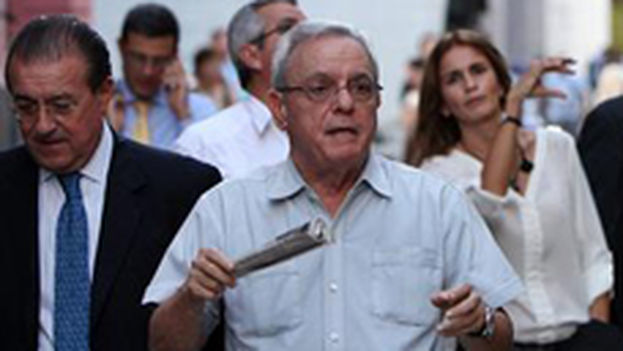
Eusebio Leal walking the streets of Havana. (screen capture)
14ymedio, Havana, 25 December 2016 – Cuban Faces of 2016: With a doctorate in Historical Sciences and a specialty in Archaeological Sciences, in 1967 Eusebio Leal Spengler was appointed Director of the Museum of the City of Havana. He is considered to be the main promoter of the restoration of Old Havana and has a figure very closely tied to officialdom, and especially to the former President Fidel Castro.
In October Leal Spengler received the title of doctor honoris causa of the University of Havana. For years the historian has had diabetes and in February underwent a surgical operation to extract stones from his gallbladder. In the last months his health has deteriorated and while the tributes to his professional work have increased.
Cuban General-President Raul Castro accompanied by Miguel Díaz Canel, vice-president, on the first of May. (Archive)
14ymedio, Reinaldo Escobar, Havana, 26 December 2016 — A popular joke inquires about the color of a train that arrives late at the station. The answer is a play on words: de morado.* Raul Castro has dressed in just that tone in relation to his obligations for the end of the year. The delay in keeping certain commitments threatens the image of punctuality and pragmatism that the General President has wanted to present.
The plenary session of the Communist Party Central Committee planned for this December still doesn’t have a date. The partisan meeting should approve the expected Conceptualization of the Economic and Social Model, as well as the 2030 Economic Development Plan, but there are only five days remaining for it to fulfill its promise. continue reading
A telephone call to the Central Committee of the Communist Party of Cuba (PCC) clarifies few doubts. The secretary for Olga Lidia Tapia Iglesias, a member of the Secretariat responsible for the Department of Education, Science and Sport, confirmed to 14ymedio that “they have not set a date” for the pending meeting.
Both documents were debated by the PCC membership and the Young Communist Union (UJC), as well as the leadership of the mass organizations and trade unions. The official press emphasized that currently there is massive agreement with the texts as presented, although it reported several proposals to modify or add to them.
Point 104 of the Conceptualization document raised a stir; the point reaffirms an idea raised in the PC Guidelines. The cold water for local entrepreneurs focuses on the statement that “concentration of property and wealth in natural or non-state legal persons is not permitted.” A proposal that must be accepted or rejected this December.
If the plenary session is not held, the seriousness that Raul Castro has wanted to imprint on his official acts would suffer a serious blow. He would also be obliged to publically justify the informality. Hurricane Matthew, the surprising election of Donald Trump as president of the United States and the death of Fidel Castro could be among the official excuses.
The number of days remaining in December is the same as the number of fingers on one hand. At least two of them will be used for the upcoming session of the National Assembly of People’s Power. Given the traditional confusion of roles between the Government, the Parliament and the Party, perhaps in the sessions with the deputies the date of the party conclave will be reported.
But if it does not happen before the end of the year, Raul Castro will need to show a very convincing explanation.
*Translator’s note: “Morado” means purple, and “de morado” means delayed.
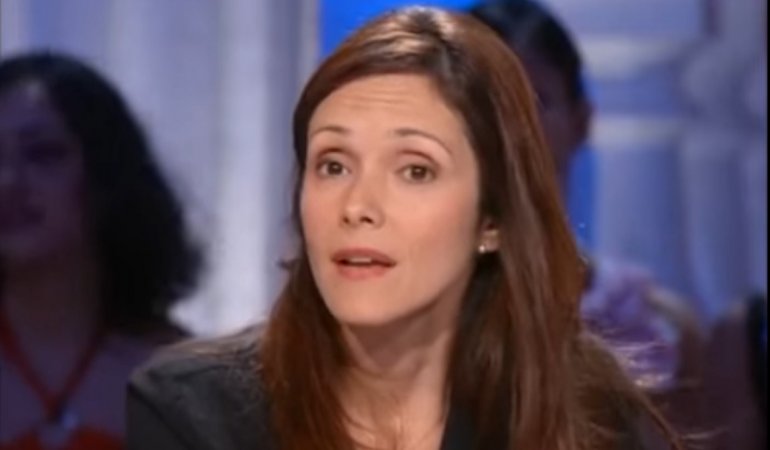
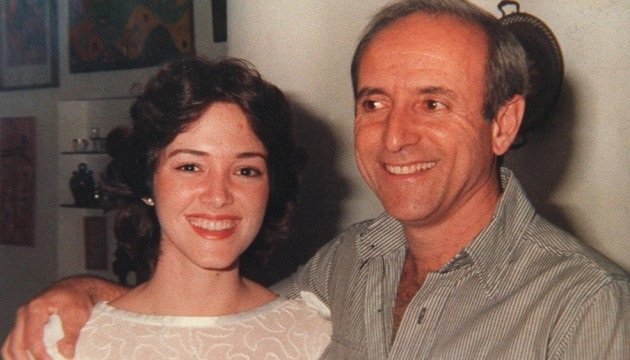
Juan Juan Almeida, 16 December 2016 — Twenty-seven years after Cause Number 1, the judicial proceedings that resulted in the deaths by firing squad and arrests of several high officials of the Cuban army and secret services, Ileana de la Guardia–daughter of the then-colonel of State Security of the Havana regime–believes that the decision to execute her father was made by the Cuban dictator to teach a lesson.
According to De La Guardia, who lives under asylum in France, Castro did not accept the critiques that her father and others, such as the general Arnaldo Ochoa–also executed–made regarding the need for changes in the country. She affirmed that the deaths of her father, Ochoa, and two other officials served as a way to cast the blame on them for the charge by United States Drug Enforcement Agency (DEA) that Cuba was involved in international drug trafficking.
Ileana de la Guardia with her father.
Until the time of your father’s trial, who was Ileana de la Guardia, how did you learn of the trial, how did you experience it?
At that time I was living in Cuba, had finished my university studies, and was a psychologist. I learned of the seizures of my father and my uncle, Patricio de la Guardia, on the same day. We did not know where they were nor what the charges were. Eventually, we learned that they were being held at Villa Marista [Central Offices of Cuban State Security], and we went there. Upon arriving we were told that they were being detained, that they were not arrested, that we had to leave, and that nobody could tell us what the charges were. This is how justice works in Cuba–“justice” in quotation marks, that is, because it is not justice. continue reading
A week went by, and I was given the authorization to see my father. I asked him if he knew what he was being accused of and he told me no. I also asked him if he would be tried, and he said he didn’t know. That same day in the evening, when I arrived at my grandparents’ house, I learned from a phone call that I was required to appear in the auditorium of the Armed Forces (FAR) the next day because that was where the hearing would take place.
Imagine receiving this news without them having the right to have their lawyers present. The lawyers who were there were “public” defenders. The one assigned to my father told me that he was ashamed to represent him. The one for Patricio told us that he had not had time to read the file and did not really know how to defend “that gentleman.”
That was when we knew that they were all lawyers with the Ministry of the Interior (MININT). Before starting the proceedings, before trying them, Granma newspaper ran headlines announcing the death penalty. The front page said, “we will cleanse with blood this offense to the fatherland.” It was clear that the decision to execute them had already been made.
The trial was a kind of circus in which all were accused or accused themselves. Later we learned that they had been blackmailed, that they had to incriminate themselves to escape the death penalty–and to protect their families–there was a lot of blackmail with regard to the families. Thus the trial went until the end.
Our family wanted to appeal, but we were denied. Later, the Council of State, fully and unanimously, came down in favor of execution. They were executed exactly one month after being arrested: General Arnaldo Ochoa; Martínez, the assistant; my father, Colonel Antonio de la Guardia; and his assistant, Amado Padrón.
The memory of that trial brings back images of confusion and much division within the high military command. How do you remember it, and what were the repercussions for you, your family?
The consequence for our family was being watched all the time. There were always cars parked near where we lived, and when we went out, these cars would follow us with officials inside them who would watch us. There were also cameras filming us from the houses across the street from ours.
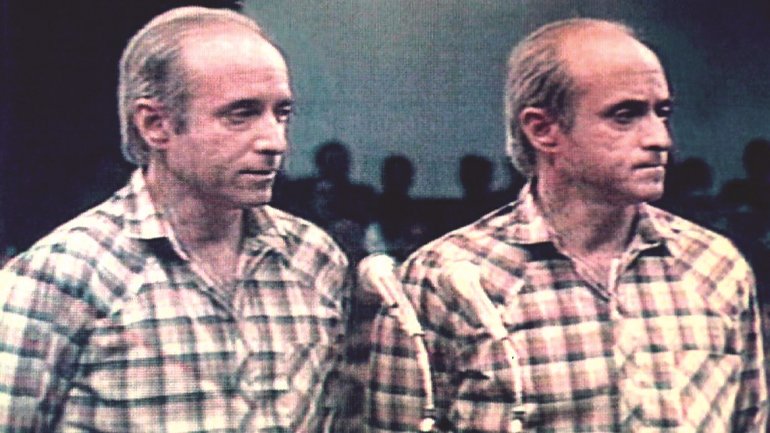
The de la Guardia brothers were twins.
Your father, as well as Patricio (the brother of your father, Antonio de la Guardia), and General Arnaldo Ochoa were well-known and admired men. Throughout that trial, what happened with their friends?
I could not say that all the friends stopped seeing us; I believe some people were afraid, others were not. I maintained relationships with many people who continued coming to see us. I know that many people were let go from the MININT, many officials, a high percentage. That ministry was taken over by Abelardo Colomé Ibarra, who up until that moment was in the FAR. There was a takeover of the Interior Ministry by military officials.
What information do you have about the real reason that your father and the other defendants in Cause Number 1 of 1989 were executed?
From the beginning, I knew immediately that the charges against Ochoa and Patricio, who were in Africa, were trumped up. All of them were charged with drug trafficking, which made no sense. If they were working in Africa throughout so many years, directing the Cuban troops in Africa, how were they going to be accused of something that they couldn’t control? If drug trafficking was going on, and the ships were docking in Cuba, it was happening while these men were in Africa.
Later we realized that Raúl Castro, in a speech to the armed forces that was broadcast on television, had said, “those officials who are criticizing, let them go to Eastern Europe,” and then, “down with Ochoa.”
Then, connecting the dots, we realized that Ochoa and the group of officials around him criticized Fidel Castro and the regime a great deal because of the need for changes. This reached the ears of Fidel and Raúl because Ochoa had made sure to make it public, within the army and in family gatherings–besides telling them directly.
This is the fundamental reason why Fidel decided to eliminate these officials: because of the political aspect.
Meanwhile, the DEA was accusing Cuba of involvement in drug trafficking to the United States, and Castro found the perfect excuse to eliminate these military men while at the same time eliminate the DEA’s accusation of the Cuban government.
Prior to these events, what would you hear your father say about Fidel Castro?
As of 1986 or 87, there were very critical articles starting to appear in the press in Cuba, in the [Spanish-language Soviet] magazines Sputnik and Novedades de Moscú, which spoke of glasnost and about how Gorbachev was trying to make rapid changes.
People read these publications and these topics were discussed a great deal in my father’s house, we would speak of it on the patio. They thought the place might be bugged but they didn’t care.
The fact of being at a high level of command and knowing that the Soviets were already changing the system made them think that Fidel Castro would accept this. They thought that he couldn’t be so crazy as to oppose the changes. “He has to realize that this doesn’t work anymore, people must be given freedoms to express themselves, to travel, to have human rights”–they talked about all of this.
When I left Cuba–first to Mexico and later to Spain–it was very difficult to talk about this because we were still undocumented, we had no residency anywhere, no political asylum. It was in France, where we received support, including political asylum, where I decided to speak publicly. Articles started to come out, journalists started to investigate, and other facts emerged. We learned that there are officials in Russia who say that Ochoa met in private with Gorbachev in Cuba. Ochoa spoke Russian, there was nobody else present, Gorbachev wanted to speak only with Ochoa. Fidel could not stand this.
Ochoa never kept quiet about anything. One day, right in front of me at Patricio’s house, he said, “This has to change, it cannot go on this way, that man is insane, what are we going to do with the crazy man.”
In Cuba, it was always said that the writer Gabriel García Márquez, winner of the Nobel Prize in literature and personal friend of Fidel Castro, tried to intercede so that they would not execute your father and Arnaldo Ochoa. Is this true?
What I know for sure, because my husband Jorge Masetti and I went to see him, is that we took García Márquez a letter from my grandmother, asking him to intervene so that these officials, including my father, would not be put to death.
He told us, “I will do everything possible, I believe that this is not a good idea, and I have tried to get across to Fidel Castro that it is not a good idea for him personally.” But I never had proof that he did this.
After the execution, did you ever see García Márquez again? Did he tell you anything about this matter?
No, never again. I was now the daughter of a traitor. García Márquez was a powerful man, friend to powerful men. After being executed, my father was no longer a powerful man, he was a victim.
Did you have the chance to speak with your father after the sentence and before the execution?
Yes, before the trial, then during the trial I had a visit, during which he gave me to understand that they asked him to take responsibility and then they would not execute him, but that there was blackmail regarding the family and also with his life, and if he did not say that [incriminate himself], they would execute him.
And they did execute him. During the visit prior to the execution, which was very personal, he said, “things are going to get bad, but very bad, in this country.” Later came the “Special Period [grave economic crisis].” He knew what was awaiting Cuba.
Have you had any further news of your uncle Patricio, where he’s living? Does the government provide him with any retirement pension?
I cannot speak about this very much because it is a bit sensitive. What I can say is that he paints, because they [Antonio and Patricio de la Guardia] were painters before being military men, and they studied at an art school in the United States. He paints very well. He lives in the family home, it is not a house given to him by the Cuban state. Our family had properties before 1959. I don’t speak much about him these days, because if I say where he is or if I say too much, they will throw him in jail again.
Do you have contact with the family of General Ochoa or any of the other executed officers?
No, none.
In 2006, because of illness, Fidel Castro gave over the command of the country to his brother, Raúl. The day after this announcement, I entered the cafeteria of the Karl Marx Theater in Havana, ran into one of the daughters of General Ochoa, and she told me, “I don’t want him to die, I want Fidel to suffer at least the half of what my family has suffered.” What did you feel at that time, when you heard this announcement, and what was your reaction when you found out that Fidel Castro had died?
At first, I didn’t believe it. When they called me from the US and my husband answered the telephone, I said to him, “He died again? I want to continue sleeping, leave me in peace.” Later when I got up and realized that it was true, it was like a sense of relief.
My husband asked me, what do you feel? I told him an enormous relief. The matter is that for me, it’s as if I had died spiritually. Besides, I already knew that he was ill and that he had lost his senses somewhat, given the things he would say. For me, he was like a shadow, a ghost. But that sense of relief was also because that symbol of the repression is no more, he doesn’t exist.
Does the death of Fidel Castro modify or change what 13 July 1989, means to you and your family?
To a certain point, I will tell you that for me, it is a relief that the one responsible, who decided the death of my father, has died, and in a certain way it gives me joy, I must admit. I cannot say that the death of him who ordered my father to be executed makes me sad, that would be absurd. That would be hypocrisy.
What does Raúl Castro mean to you?
For me, Raúl Castro represents the continuation of the system, with certain attributes different from those of his brother. They are two different people and have different command styles. The two have that ideologically dogmatic aspect, but perhaps Raúl is a bit more pragmatic, thus the changes that have been made on the economic level.
This is why I have been in favor of Obama’s visit, the opening of tourism, and of certain exchanges because it is the Cuban people who will benefit from this. Unfortunately, the regime takes advantage of this situation, but so does the average Cuban, those who have been able to start a business derive benefit and thus are able to help their families and other Cubans. And it is better than nothing, the problem is that it is not enough.
The country will not change until there are real political changes.
After the execution of your father, have you talked with or run into any of the children of Fidel or Raúl? If this were to happen, what would you say to them?
No, never, no. I didn’t know them. I never went anyplace where the children of Fidel Castro might be. I did meet two of Raúl’s daughters, but they were not friends of mine, we ran into each other somewhere. Mariela also studied psychology, so one time we coincided in some place.
How do you see Cuba’s immediate future?
In the short run, as things are now, the growth of tourism and Cubans surviving. This is what for now the government wants so as to not have social conflicts with the people because of the difficult economic situation.
At the political level, they are demonstrating that if they have to repress people for taking to the streets, for writing certain things in the blogs, they will do so. They will try to maintain control that way. We will have to wait and see if they realize that a country cannot develop without liberty.
Your family, like many others, is scattered around the world. Do you think that you will ever reunite again in Cuba?
I don’t know, the truth is that this is very difficult to answer. Seeing how things are, knowing that Raúl Castro has placed his children and relatives into the most important sectors of the country, taking control of the country with a view towards the future. Truly, I cannot give you a yes or no answer if I do not know what will happen. It would have to be a situation that would allow the return to a place with certain guarantees of justice and legality.
Would you delay, then, being able to give your uncle Patricio a hug?
For now, it will be delayed, if they don’t make changes and accept that one can go there having different opinions, which I have stated publicly outside. I don’t believe that I can go.”
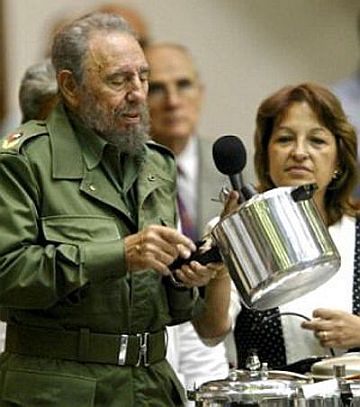
Fidel Castro once devoted a significant part of a 5 hour and 45 minute speech talking to Cuban women about rice cookers and pressure cookers.
Fernando Damaso, 25 December 2016 — Some official journalists, who seem to be following orders from on high, have taken against the self-employed and their prices, which they consider too high for the ordinary citizen.
Of course no one has written a single line or even a word about the prices in the state sector, which are much higher than those charged by the self-employed.
It is no secret to anyone that the Ministry of Finances and Prices fixes prices, two, three, four and many more times above the cost of the products, usually of low quality, which are produced or imported and sold in the network of State stores. continue reading
The case of Haier refrigerators, which are purchased at rock bottom prices in China, due to their obsolete and discontinued technology, are sold to Cubans at elevated prices (and in addition you can only get one if you trade in a working refrigerator for which you are not given a single cent), constitutes the palpable demonstration of a shameless scam.
The Haiers, without spare parts and without any ability to repair them, break down and languish in houses whose inhabitants haven’t even finished paying for them.
DVD equipment, TVs, air conditioners, rice cookers, “Queen” pots, electric cookers, exploding coffee pots and other poor quality articles at high prices, are added to the long list of official robberies. The same thing happens with dozens of plastic items, which the state buys at ridiculous prices and sells as if they were made out of gold, silver or porcelain.
With regards to these outrages, which affect and bleed the pockets of ordinary Cubans, official journalists remain silent and complicit and, if questioned, repeat that healthcare and education are free, something completely false, because both services are paid for by every Cuban, with what they don’t receive for their labor in their miserable wages.
This reality is very difficult to hide. If anyone has any doubts, make a tour of the hard currency stores and — why not? — also those that sell in Cuban pesos, where a single screw costs three pesos, one brush eighty, a gallon of emulsified paint 85 to 120, and enamel paint 280, and so on.
Distinguished journalists, here are the abuses to the pockets of all citizens and not just ordinary ones.
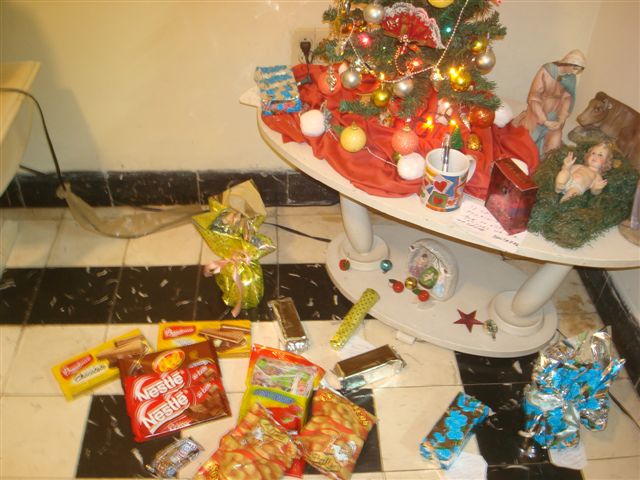
Somos+, Javier Cabrera, 24 December 2016 — I was an atypical Cuban child because I always had Christmas. My mother, whom they tried to expel from her teaching job once because Christians didn’t have the morals to teach classes to the “New Man,” said that she wasn’t going to let a man tell her whether or not to celebrate Christmas or the Three Kings in her own home.
In those Decembers, she took out the little tree from her childhood, with what we called “the balls from before ’59,” and bought gifts with whatever she could. I remember perfectly that the gifts were increasingly fewer, and in the ’90s moved from the floor to the little table. Of course, the celebration was never interrupted, not even in 1994, a year to forget. continue reading
For me, the year started to come to an end when Christmas showed up in our house. And I suffered many conflicts in kindergarten and elementary school, because I couldn’t understand that I lived in a country that was so equal, and so different.
Today I look back and understand that the best Christmas gift I got was this: “No one has the right to tell you to celebrate or not to celebrate. Your freedom ends when you let one group of the ‘enlightened’ impose their celebrations, wakes, or whatever they want.”
Earlier this year, I landed a few hours apart in the same airport where the Chapecoense team’s plane crashed. I was going to work, and I was warned that there was a huge local party. I heard some fireworks set off in celebration, but not even 3% of what was normal. In general, without imposition, or fines, or prohibitions, I saw a people in pain come together to fill stadiums.
An image in complete contrast to the imposed mourning that same week in Cuba, mourning that they are now trying to extend indefinitely, annulling our freedom to celebrate, or choosing not to participate without facing the loss of one’s job, which in any event only pays a pauper’s wages.
Christmas is many things, but above all it is home, family and celebration. Today it is no longer completely banned, and even so it is scandalous that no one has asked an entire people for forgiveness for forcing them to cancel it.
Today, Christmas day, I remember my mother a lot and thank her for not allowing them to tell her what to do. I also remember friends who didn’t dare, and who didn’t even hear about Christmas until they were older.
Today is a good day to tell the mother of all of us, Cuba, that we celebrate and we celebrate with her. That she gives us once again the ability not to listen to those who would bother a united family that celebrates. To them, as a nation, she also gives the freedom to celebrate their frustrations where no one interferes with them.
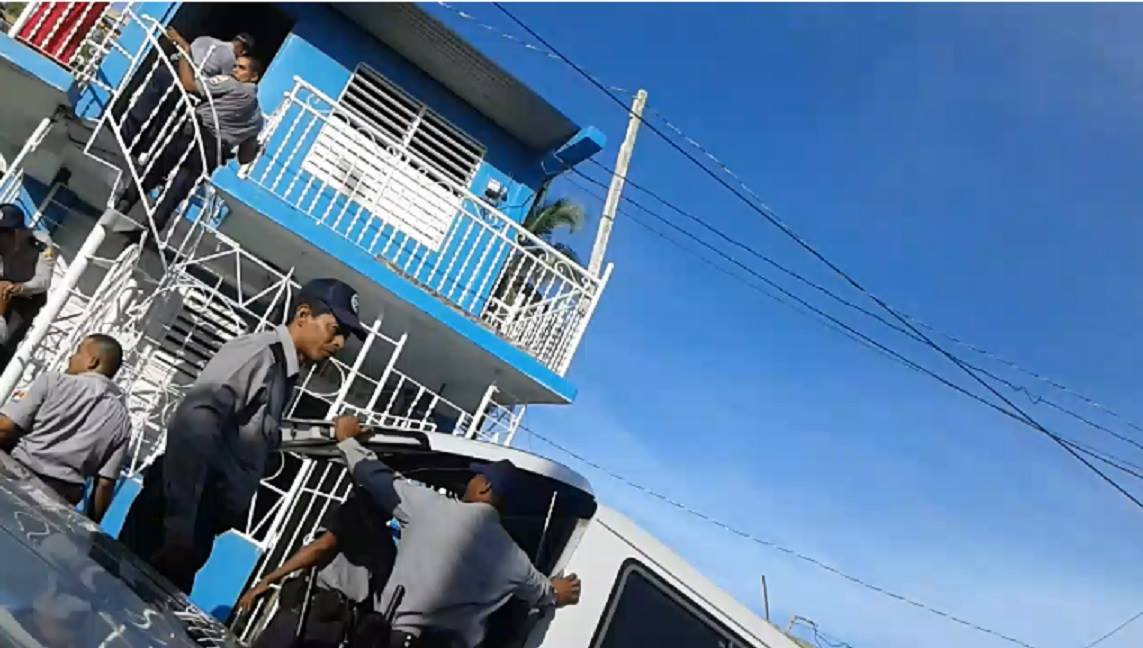
Police raid the home that serves as UNPACU headquarters in Santiago de Cuba on Sunday, December 18. Photo: @patriotaliu
Luis Felipe Rojas, 20 December 2016 — Today I am going to tell you something you absolutely are not going to believe. But I don’t care, the military dictatorship violates human rights in cold blood and many don’t even want to know. Great is the fool who defends them.
The brothers Geordanis and Adael Muñoz Guerrero are two activists of the Patriotic Union of Cuba (UNPACU), an opposition organization located mainly in Santiago de Cuba. The Muñoz brothers were convicted of contravention: they didn’t pay the 24,000 peso fines imposed on them when they appeared with anti-Castro signs in their neighborhood of Rancho Grande, Palma Soriano, where they live.
Geordanis’s wife told me on the Radio Marti program Contacto Cuba (Minute 12:43), what happened to them on 3 November, when they were both in prison in Aguadores. An official from State Security named Dainier Suarez Pagan came to them. He ordered Geordanis handcuffed behind his back, took him down from Detachment 1, and he himself gave him a hard beating. continue reading
Yenisei Jiménez told me herself, her voice breaking, because she became furious telling about the abuse.
On 9 September 2015 these activists tried to go to the Shrine of the Virgin of Charity of Cobre. On the way they were detained by the police, civil officials and members of the Rapid Response Brigades — ’ordinary’ citizens who supposedly rise up spontaneously to repress their fellow citizens — and they saw them in an unusual way.
Pagán, the bad man who beats women and men in Santiago de Cuba, took charge of the humiliation. He undressed Geordanis and beat him with a rubber cane and told him if he wanted he could put it on the social networks. As this young regime opponent is not ashamed of being martyred for the freedom of his homeland, he let a photo be taken of his bruised buttocks and handed it over to Jose Daniel Ferrer (UNPACU’s leader and former prisoner of the Cause of 75 from the Black Spring of 2003) and he posted it on his Twitter account.
Geordanis Muñoz was beaten by the G2 (State Security) agent Dainier Suarez Pagán who told him he could put a photo on the social networks.
The Muñoz Guerrero brothers were sentenced to prison in October for 6 months (Adael) and one year (Geordanis).
Geordanis Muñoz Guerrero leads the “Pedro Meurice Estiú” cell in Palma Soriano and had twice gone to Argentina invited by the Center for the Opening and Development of Latin America (CADAL). He participated in workshops on Human Rights and ’nonviolent’ struggle, put on by the young Serb Srdja Popovic, leader of the OTPOR movement.
There is more. Both brothers were fined again, but this time — you won’t believe it — inside the prison. They were fined 2,000 pesos because Geordanis sent a note outside about the bad conditions suffered by common inmates in the prison.
What will the hundreds of Cuban attorneys who know that a G2 official violates all the protocols of Prison Control, Prison Security, Internal Order, Reeducation and sees and mistreats his victims in cold blood do about it?
When are Cuban lawyers, with their law degrees, going to get off the fence?
The henchman Dainier Suárez Pagán is a particularly bad man. He has beaten dozens of opponents throughout the province of Santiago de Cuba. The little that is known of him is that he has the rank of first official (that is, Major or Lieutenant Colonel) and that he comes from the town of San Luis.
Ferrer wrote to the Cuban bishops, hoping to hear, but he has had no response. He did this on 11 September 2015 and started his letter in an elegant way: “Respectable Pastors: (…)” but the prelates turned a blind eye.
Ferrer, who denounces every injustice that happens to his activists, included this paragraph in the letter: “… In those hills (known as” La Tanqueta”), political police agent Dainier Suárez Pagán, with his subordinates, has beaten, injured and harassed more than a dozen activists. They have been stripped and forced, with pistols placed against the heads of these victims, to assume humiliating positions while they threaten to rape them sexually. They have also brought the flame of a match to their chin to force them to shout against their own organization while filming them with a mobile phone.”
Each bishop to his bishopric, all are silent. And the soldiers beat Cubans.
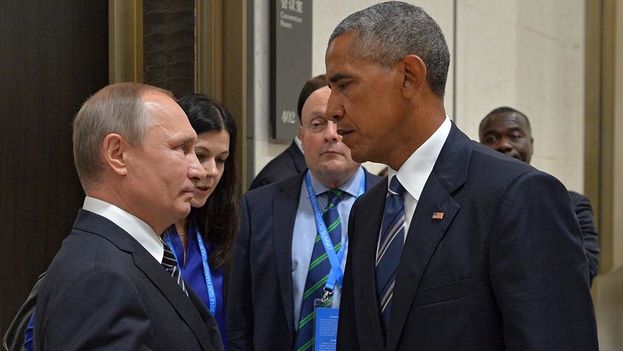
The icy look with which Barack Obama demonstrated the state of bilateral relations to his Russian counterpart Vladimir Putin. (EFE)
14ymedio, Carlos Alberto Montaner, Miami, 25 December 2016 — Exactly one quarter of a century ago, the Soviet Union disappeared. The hecatomb occurred on Dec. 25, 1991, the direct consequence of the prior (and failed) coup in August of that year. Vladimir Putin believes that it was the worst disaster that has happened to his country, but at the time most of the Russians perceived it as something convenient.
I remember it clearly. Around that time, I visited Moscow rather frequently to take part in academic acts leading to discuss the convenience of ending the costly subsidy to the bellicose Cuban satellite. continue reading
I remember being considerably intrigued after repeatedly hearing a nationalist slogan that ended up as a political reality: “We have to liberate Russia from the weight of the Soviet Union.”
The USSR had been born in 1922, stimulated by Lenin in the midst of a hopeful All-Russian Congress of Soviets. He added Marxist ideas to the imperialist spasm that, in a few centuries, had turned the small Principality of Moscow — then animated by the superstition of being the “Third Rome,” the heir of Bizantium’s Christianity — into the world’s largest nation, roughly speaking twice the size of the United States or today’s China.
To Lenin and his communists, the USSR did not intend to abandon the Russian imperial momentum, of which they were secretly proud, but to refocus it on a new ideological project of world conquest based on the harebrained ideology of Karl Marx, a German philosopher who lived much of his existence in London, a city where he died in 1883.
Naturally, the newly created structure — Russia plus Georgia, Armenia, Azerbaijan, Ukraine, Byelorussia and later Uzbekistan, Turkmenistan and Tadjikistan — served for that purpose and for another one, of a defensive nature. The USSR would protect communist Russia’s conquests and would be another obstacle to impede a hostile reaction from nations that opposed the bloody revolutionary experiment that emerged in 1917.
To that end, Lenin and later Stalin (after Lenin’s death in 1924) helped to create a worldwide federation of communist parties whose primary objective was to protect Moscow, the motherland of communism, even if their national interests were in conflict with those of the distant Russia. Beyond staging a revolution carbon-copied from the Bolshevik upheaval, the grand task of the local communist parties was to serve the Russian Big Brother.
As things stood, the national communist parties, Moscow’s shields, took on the task of persecuting Trotskyites and exterminating those who disobeyed the directives from the Comintern, as people called the Third International, the structure also created and financed by the Russian communists for their own benefit, as they had done with the USSR.
This was seen very clearly in Spain during the Civil War (1936-1939) and even before, when the Cuban communist leader Julio Antonio Mella, a dissenter from the official line, was murdered on a Mexican street in 1929, a prelude to what would happen to Trotsky himself in 1940. Trotsky was assassinated by Ramón Mercader, a Spaniard in the service of Stalin, son of a fanatical Cuban communist woman.
A quarter of a century after the USSR disappeared, Vladimir Putin is threatening to rearm Russia’s nuclear arsenal to foil the shield of protective missiles with which the United States has endowed the West’s defenses and its own. His words were not only those of a nostalgic former communist but also those of a Russian convinced of his homeland’s hegemonic fate.
According to the former KGB agent, now his country’s political leader, the U.S. and the European Union cannot prevent the total destruction of their defensive barriers (and the E.U.’s) by an attack by the so-called triad: the effect of land-based nuclear missiles, the action of submarines carrying atomic bombs, and bombs dropped from planes.
Oddly, Putin’s bullying will have a positive strategic effect on the West. To begin with, Trump will realize that Vladimir Putin is not his friend, to the extent that Putin repeats Russia’s old imperial habits. Likewise, he will realize that NATO continues to be the best instrument to keep the planet from being incinerated by Moscow and will refrain from weakening or demolishing it.
Evidently, we’re at the start of the Second Cold War.
Note: English text is directly from CA Montaner’s blog.
Independent economist Karina Gálvez, editor of the magazine ‘Convivencia’ (Coexistence). (Courtesy)
14ymedio, Havana, 24 December 2016 – Karina Galvez Chiú, editor of the magazine Convivencia (Coexistence) was questioned Saturday about her travels outside Cuba, during a meeting with the Department of Immigration and Nationality of Pinar del Rio. Two interior ministry officials demanded information from the economist about her participation in an internet governance forum in Guadalajara, Mexico.
Galvéz related to 14ymedio that the officers who questioned her identified themselves as Lieutenant Colonel Beune and Major Joaquin. “They tried to act friendly,” says the editor, but warned that police citations could be repeated every time she left the country. continue reading
“The whole time they wanted to make clear that they wanted a dialogue,” says Galvez, who replied that they could not consider it a dialogue when she was forced to attend.
“If they eliminated the white card [former exit permit] and the exit permit why do I have to go through this every time I leave the country,” the activist asks in reference to the immigration reform that came into force in January 2013, easing travel abroad which previously required every traveler to apply for a permit to travel outside the country, which often was not granted.
Recently Galvez also visited Washington D.C., a trip about which the interrogators wanted details.
Also summoned by the police this Saturday was the editor of Convivencia, Rosalia Viñas Lazo, who protested the date chosen. On December 24 many Cuban families gather around for Christmas Eve festivities, especially the Catholic community of the Island.
The officials agreed to schedule the meeting with Viñas Lazo for next Monday.
In recent months members of the magazine Convivencia have been subject to interrogations, pressure and warnings. Dagoberto Valdés, director of the independent publication, was subjected to an intense interrogation in October of this year in the police headquarters on San Juan Highway in Pinar del Río. “From today,” the uniformed officers warned, “your life will be very difficult.”
On November 25, State Security prohibited the meeting of the Center for Coexistence Studies (CEC), linked to the magazine, the topic of which was intended to be: Culture And Education In The Future Of Cuba: Vision and Proposal.
On Cuban streets, the word “felicidades” is heard everywhere. (14ymedio)
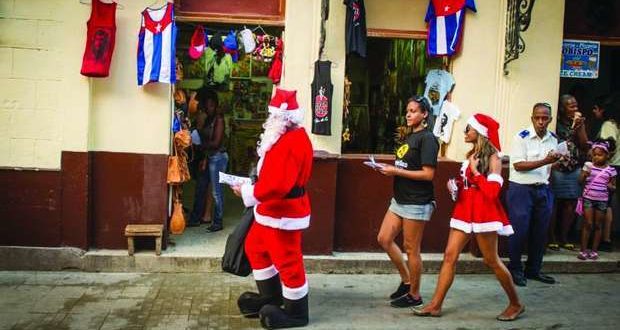
14ymedio, Havana, 24 December 2016 — Few details reveal that it is Christmastime for Cubans. The austerity imposed this year-end, promoted from the Government due the recent death of former President Fidel Castro, but also because of the economic situation that has citizens worried. Faced with high food prices many opt for more low-key celebrations.
However, the word “felicidades” is heard everywhere in the streets. As if it were a “watchword,” Cubans offer good wishes accompanied with a complicit smile when they pronounce the word. Is it a way to mock the official sobriety? A sign of the desire not to let the Christmas festivities fade completely away?
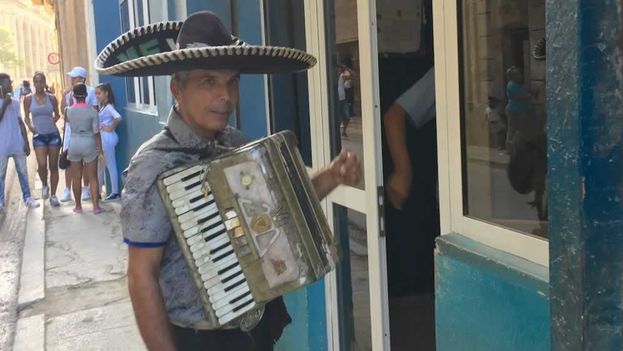
Said in an undertone, shouted balcony to balcony, or intoned to the rhythm of Mexican music, like the “mariachi” in the photo, the phrases of this happy greeting take the place of the lack of garlands, the few houses in Cuban streets that display seasonal lights, and the absence of public dancing, otherwise typical of this time of year.
The Faces of 2016: Carlos Lechuga, filmmaker. (Facebook)
14ymedio, Havana, 24 December 2016 – Cuban Faces of 2016: The film Molasses (2013), director Carlos Lechuga’s debut, garnered much applause, but it was his second feature which placed him at the center of public attention. The film Santa and Andrés was excluded from the 38th edition of the Havana Film Festival, for political reasons.
The film tells the story of a homosexual writer who, at the beginning of the 1980s, is isolated from society in a remote spot on the east of the island. The authorities there assign a peasant woman to watch over him, but after a time, an unforeseen relationship between them is born.
Lechuga spoke out against the censorship of the film from his Facebook profile and also raising their voices were the directors Jonathan Jakubowicz, Fernando Perez, Enrique Alvarez and film critic Dean Luis Reyes, among others. However, the president of the Cuban Institute of Cinematographic Art and Industry (ICAIC), Roberto Smith, claimed a “question of principles” to prevent its distribution.
Santa and Andrés has been exhibited in prestigious festivals such as Toronto, San Sebastian and Chicago, but in the native country of its director it will have to circulate by alternative methods through the popular “weekly packet” in which Cubans receive much of their entertainment.
Ivan Garcia, 23 December 2016 — Every time Christmas approaches the private restaurant managed by Leonel, south of Havana, overflows with decorations and lights on the facade and over the door.
The staff don red caps threaded with white and the music resonates in the doorway. The smell of turkey and roasted pig awaken the appetite and invite you to come in and have a look at the menu. The relaxed atmosphere reminds us that the end of the year is approaching.
December is the most anticipated month in Cuba. People relax and even say good morning when riding in a collective taxi. Retirees and housewives are starting to line up at the state markets, to see if they can buy the pound of pork a little cheaper. Citizen criticisms increase because of food prices. And a large segment of the population can only look at the nougats, ciders and clusters of grapes in the “shoppings” — a word Cubans use in English — or in the hard currency stores. continue reading
But if there is a month when the city becomes a cornucopia it is in December. Reggaeton, timba and the lilt of salsa is heard wherever you go.
This year is different. By official decree, public festivities are suspended until further notice. Fidel Castro is not here, but his shadow remains, regulating the national life as if he were a traffic light.
The families with full pockets, who normally celebrate with Christmas dinner on Christmas Eve and during the days of Christmas drink a collection of drinks and beer between the din of music and mutual congratulations, have had to change their plans.
“We have to be quiet. We can not show jubilation even on December 31st. It’s shut down. Fidel couldn’t die another time?” asks Raidel, an artisan, who along with his family likes to welcome the coming of the New Year in grand style.
According to Eladio, manager of a nightclub west of the capital, “We received a circular that clarifies that we should stop the sale of alcoholic beverages and music on those dates. When Fidel died, on November 25, we were closed for nine days. That affects the pocket of employees, because the profits depend on sales. They even have scheduled inspections without warning, to see if they can catch us off base. If there are no drinks or cash, you can forget about it.”
An official from the Young Communist Union said, “People on the street are exaggerating. There’s no ban on parties, it’s because of the pain our people are feeling for the death of the comandante, that we ask them to be discreet about the celebrations. It’s true that the state establishments won’t have any parties, there won’t be any orchestras or dancing. People can celebrate at home, but with the music turned down low.”
“I would really miss it if I couldn’t celebrate Christmas Eve, Christmas and could see in 2017. Mourning for Fidel was nine days, people said their goodbyes, some cried, others didn’t. But now we must turn the page. I hope that now the police, the extremists and the intransigents of old don’t get into a big drama over people having fun and they feel they have to repress them,” says Oscar, a resident of the Lawton neighborhood.
If we give credit to the state ukase, each provincial government has the power to regulate the prohibitions according to the peculiarities of its municipalities. “It is not the same as it is in neighborhoods like Plaza de la Revolución, Playa or Old Havana, where thousands of tourists and foreigners circulate. In neighborhoods like San Miguel del Padrón, Arroyo Naranjo or Diez de Octubre there are no hotels or resorts. In any case, the music that will be heard in state-owned hotels, cafes and restaurants will be patriotic, symphonic or peasant music,” says Yadira, a worker at the headquarters of a municipal party.
In an attempt to silence the discomfort, the rumors of prohibitions and a supposed “extended mourning” for the passing of Fidel Castro, the Granma and Juventud Rebelde (Rebel Youth) newspapers, in separate articles dedicated to praising the upcoming 58th anniversary of the Triumph of the Revolution, clarified that Cubans could celebrate New Year’s, but ’in moderation’. Neither text referred to the celebrations for Christmas Eve and Christmas.
Popular festivities with more than a century of tradition, such as the Parrandas de Remedios and Charangas de Bejucal, which have always been held in December, have been moved to the month of January.
“In Cuba, when it doesn’t come, it’s over. It’s hard for a Cuban not to celebrate the end of the year. I put on music in my house and at midnight on 31 December I go out with my wheeled suitcase and walk around the block, to see if 2017 will give me a foreign trip and I just take off. No one can stand this. This mourning imposed by others,” says Liudmila, a prostitute.
José Antonio, a construction worker, is more sarcastic. “Didn’t people chant ’I’m Fidel’? Because they already have it, they continue being Fidel.”
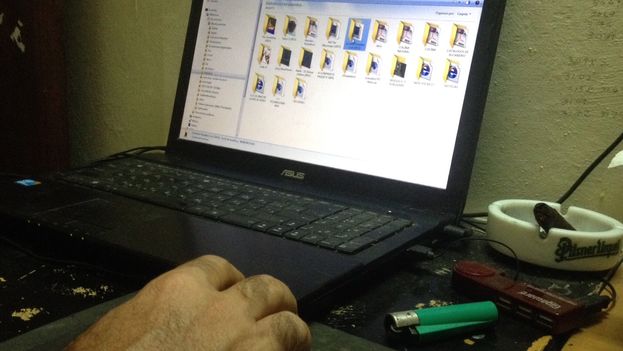
A Cuban accessing the packet from his laptop. (14ymedio)
14ymedio, Luz Escobar, Havana, 23 December 2016 – “Over my dead body!” echoes across a living room in Florida, Camaguey, Cuba, the day Jorge Angel discovered his family absorbed in the weekly packet. Now the wife sneaks to watch the reality shows that come in the weekly audiovisual compendium so as not to annoy the family’s Communist Party militant.
Criticized by officialdom, and in ever growing demand among customers, the packet is caught in the crossfire. After several weeks of programming on national television marked by tributes to the recently deceased Fidel Castro, demand for movies, TV shows and documentaries has skyrocketed in the informal market, while institutional hatred against the packet has intensified. continue reading
In Central Havana, the most densely populated municipality in Cuba, the impact of the packet is everywhere. Outside La Candeal bakery, two women were talking this Thursday about a Colombian telenovela that arrives in one of the 40 folders included in the popular compilation.
“This is the zone of satellite dishes and the packet,” explains a messenger for Copypack, a place that sells the product put together by an enterprise calling itself Omega. The young man says that over the last three weeks the number of clients has grown, as they “come looking for anything, so long as they don’t have to watch [state] television.”
Distributors have avoided including in the latest compilations material critical of the former president and the popular programs on South Florida channels. “There’s no reason to stick your finger in the eye of the beast,” says the employee.
The caution of the informal producers and distributors has not prevented the authorities from renewing their offensive against the most important competitor to official programming.
This Thursday the newspaper Juventud Rebelde (Rebel Youth) published an article on the subject, signed by journalist Miguel Cruz Suarez under the title The Sweet Poison In The Ostrich’s Hole. The author acknowledges that “thousands of Cubans” prefer audiovisual content that is distributed on flash memories and DVDs, a practice that exposes them to the “disparate scenarios of capitalist entertainment,” he says.
The reporter also points out the dangers of “cultural naiveté” opening the doors to “the guest of banality and consumerist egotism,” although he acknowledges that there are already “some manifestations” of this scourge on the island.
Among the bitterest enemies of the packet is Abel Prieto, Minister of Culture, and Miguel Barnet, President of the National Union of Writers and Artists of Cuba (UNEAC). Both have complained about the poor quality of content consumed, versus that of the state television programming, is content they consider “junk” and “pseudo-cultural products.” Prieto recently warned that the phenomenon could end up expanding in the country “the frivolity of the culturally colonized,” people who “have already given up the pleasure of intelligence.”
However, among ordinary people on the street there are other critics whose voices are also being heard. “The packet has become very cowardly, I don’t watch it,” says Jonathan, who has a degree in History. He explains that “it used to include more interesting and controversial topics, but now it is a little lightweight.”
Wilfredo and Niurka, a couple residing on Monte Avenue in Havana, share this view. “We decided to buy the satellite dish because we want to watch the news and Miami programs that no longer come in the packet,” the wife says. Both believe that the compendium “has become annoying, it’s already as ‘controlled’ at the (state) Cubavision channel.”
 14ymedio, (With information from EFE), Havana, 27 December 2016 – The Cuban economy closed the year with a 0.9% contraction in GDP, well below the 1% growth forecast, according to an announcement from Ricardo Cabrisas Ruiz, Minister of the Economy and Planning, during the final 2016 session of the National Assembly on Tuesday, 27 December.