Five Luxury Hotels in Cayo Cruz, Cuba Are Closed Due to a Water Main Failure

Tourists, mostly Canadians, have been transferred to other facilities in the northern cays.


Canadian tourists at the Sanctuary White Sands Hotel in Cayo Cruz, Camagüey. / Facebook/Dairon Castro

14ymedio bigger14ymedio, Havana, 29 July 2025 — All the hotels on Cayo Cruz, in Camagüey, Cuba are closed due to a lack of drinking water. The reason was a “breakdown in the main water line” at the tourist resort, according to Dairon Castro, social media manager of Sanctuary White Sands, one of the luxury establishments, who told foreign tourists who learned of the news over the weekend and inquired about its veracity.

Alexis Torres, marketing director for Iberostar Cuba, which has two hotels in the Camagüey tourist resort, reported on Sunday that both his property and nearby hotels “have experienced technical problems with the water supply,” and that work was underway “to resolve this as soon as possible.” He also said, without specifying the destinations, that guests had been transferred to nearby hotels “that maintain the same quality standards, ensuring they continue to enjoy their vacations.”

In other comments, several visitors, mostly Canadians, reported being transferred to hotels elsewhere in the northern cays, especially Cayo Coco. “All travelers will be transferred to other hotels this afternoon,” Amelie Prince advised guests of the Sanctuary White Sands on Friday. For those who had traveled with the Canadian airline Sunwing, she specified that they would be transferred to Luxury Cayo Guillermo.

“We could see this coming, because water had to be rationed more and more.”

“We could see this coming, because we had to ration water more and more,” a worker at one of the hotels in Cayo Cruz, who requested anonymity, told 14ymedio. “We employees are floored,” she continued, “because if there are no customers to tip us, it’s much harder to make ends meet with our salaries.”

Just last year, authorities boasted about work on the now-damaged pipeline —the installation of a 500-millimeter-diameter valve—that would allow for “improved water supply operations.”

Neither the official media nor the Ministry of Tourism have provided any information. In a call to a travel agency booking several accommodations, including the Sanctuary White Sands, they responded that they had no news of closure, either for that establishment or others. “So few customers go there, we don’t know anything,” commented the employee on the other end of the phone. continue reading

The latest update was from Dairon Castro, two days ago: “We continue to work intensively, day and night, to resolve the situation with the water supply at the Cayo Cruz hub as quickly as possible. Thank you all for your understanding, and we apologize for the inconvenience.” Repeated questions from travelers about to visit Cuba go unanswered.

“We continue to work intensively, day and night, to resolve the situation as quickly as possible.”

“I have guests who were supposed to arrive at Selection this Wednesday. Is there any chance it will reopen? And I’m arriving at Coral on the 6th with a group of 20 people… Should I try to relocate them?” France Fleury asked Alexis Torres of Iberostar on Tuesday. “Has the main water line break been fixed?” Francis Desjardins also asked yesterday about Sanctuary White Sands. Only other guests responded, not hotel managers: “Sunwing was still relocating guests yesterday, who were supposed to arrive at another hotel today.”

This incident adds to the long list of woes facing Cuban tourism facilities—including the poor condition of some airports—summarized by the minister himself, Juan Carlos García Granda, two weeks ago in the National Assembly. There he asserted that for tourism, “this has been the worst time since the collapse of the Twin Towers in 2001, not counting the pandemic period.”

The principal reason given by both García Granda and his colleagues from the Food Industry, Alberto López, and Agriculture, Ydael Pérez Brito, was that there is a current “inability” in production to meet tourism demand.

It was Fidel Castro’s visit to that cay in 1989 that marked the beginning of “the strategy for the development of tourism in that beautiful region.

Nor will the damage help relaunch Cayo Cruz, as the government intended in 2023, as one of the island’s “trendy destinations .” At that time, Alexis Torres himself told Prensa Latina that Iberostar, which operates hotels for the state-owned Gaviota group—owned by the military conglomerate Gaesa—intended to focus on Cayo Cruz and Cayo Paredón, between the provinces of Ciego de Ávila and Camagüey, which he defined as “cays that have remained in the image of clients and tour operators” and “more than 26 kilometers of beach, a lost oasis.”

In effect, the spectacular beaches of Cayo Cruz are praised by travelers on social media, despite the ecological disaster posed by the 43-kilometer causeway that connects it to the mainland built in the 1990s. According to one of the regular eulogies in the official press, it was Fidel Castro’s visit to the cay in 1989 that marked the beginning of “the strategy for the development of tourism in this beautiful region in the north of the province.”

There are several hotels in the area. In addition to the Sanctuary White Sands Resort and the Iberostar Selection Esmeralda and Coral Esmeralda hotels, there are also La Marina Plaza & Spa and Valentin Cayo Cruz.

____________

COLLABORATE WITH OUR WORK: The 14ymedio team is committed to practicing serious journalism that reflects Cuba’s reality in all its depth. Thank you for joining us on this long journey. We invite you to continue supporting us by becoming a member of 14ymedio now. Together we can continue transforming journalism in Cuba.

Feeding Oneself in Cuba Depends on Ingenuity More Than Income

For a couple to eat with dignity in Havana, more than six average salaries are needed.

The basic food basket and the ration book are two concepts that barely touch each other today. / 14ymedio

14ymedio bigger14ymedio, Havana, 30 July 2025 — “The list doesn’t match the bill”—a stinging, resigned popular phrase—summarizes Cuba’s food tragedy better than any speech. And although the bureaucrats in power try to ignore it, any parent knows that the basic food basket (CBA) and the ration book are two concepts that barely touch each other today. A recent study by the Food Monitor Program makes it clear: for a couple to eat with dignity in Havana, more than six times the average salary is needed.

While the average national salary rose nominally from 4,648 pesos in 2023 to 6,506 in 2025—according to official figures—food prices soared much faster. Eggs, milk, chicken, or any basic product on the private market can devour an entire pension in a single fell swoop. Meanwhile, the ration book—that tired symbol of yesteryear—distributes less and less rice, bread, and sugar, and with unpredictable frequency. It’s no surprise that 96.6% of Cubans believe that subsidized products don’t meet their needs or tastes, and one in three rate them as “terrible.”

National agricultural production has fallen by 67% in recent years

Trying to calculate a CBA in Cuba is like playing dominoes with the pieces constantly changing value. Official consumption patterns are based on what is available, not what is needed. Bureaucratic statistics ignore the prices in informal markets, small businesses, and street vendors, who are currently the main source of supply. Added to this is a more striking fact: national agricultural production has fallen by 67% in recent years. As a result, fruits and vegetables have disappeared from most people’s menus.

The Food Monitor Program conducted a field study in Havana and Cienfuegos between the end of 2024 and the first half of 2025, monitoring prices, quality, and availability of 29 basic products distributed across eight groups. The analysis is based on a minimum monthly diet of 54,000 calories for women and 66,000 for men. It also adjusts for specific limitations, such as irregular access to water, electricity, and fuel. These factors increasingly determine what, how much, and how people cook.

In Havana, a minimum CBA for two people is around 41,735 pesos, equivalent to 6.41 average salaries.

The results show that, in Havana, a minimum CBA for two people is around 41,735 pesos—equivalent to 6.41 average salaries. In Cienfuegos, the figure drops slightly to 39,595 pesos, or 6.09 salaries. In other words, for two people to eat, they need the wallets of four other people. And that doesn’t include clothing, transportation, hygiene products, gas, or medicine. Just food. Hardly the bare minimum.

in parallel, cumulative inflation since 2021 has reached almost 191%, and real wages have plummeted by 35%. The subsidy model, sustained for decades as a social shield, has become unsustainable. The government itself has acknowledged that 80% of the ration book’s contents are imported, and maintaining its coverage is unviable. The solution? Shift the burden to the informal market, to remittances, to exiled families. What remains is a fragmented, unequal, and chaotic system: an “administrative capitalism” where everything must be paid for, and where nothing is enough.

Cumulative inflation since 2021 has already reached almost 191%.

In this context, the basic food basket ceases to be a technical instrument and becomes a mirror of failure. It reflects not only how much it costs to live, but also who can afford it. Eating decently in Cuba is increasingly a privilege.

The Food Monitor Program proposes thinking of the CBA not as a list of minimum products, but as an ethical threshold. A map of what should be possible. Because in Cuba, where food depends more on ingenuity than income, the basic food basket is not an economic calculation, but rather the x-ray of a fracture. And what it reveals is as clear as it is bitter: in today’s Cuba, dignity is rationed—like everything else—in impossible slices.

____________

COLLABORATE WITH OUR WORK: The 14ymedio team is committed to practicing serious journalism that reflects Cuba’s reality in all its depth. Thank you for joining us on this long journey. We invite you to continue supporting us by becoming a member of 14ymedio now. Together we can continue transforming journalism in Cuba.
The Cuban Regime Continues Its Offensive Against Masonic Leaders by Prosecuting Them for ‘Currency Trafficking’

“We have no concerns,” say Viñas Alonso and Kessel Linares.

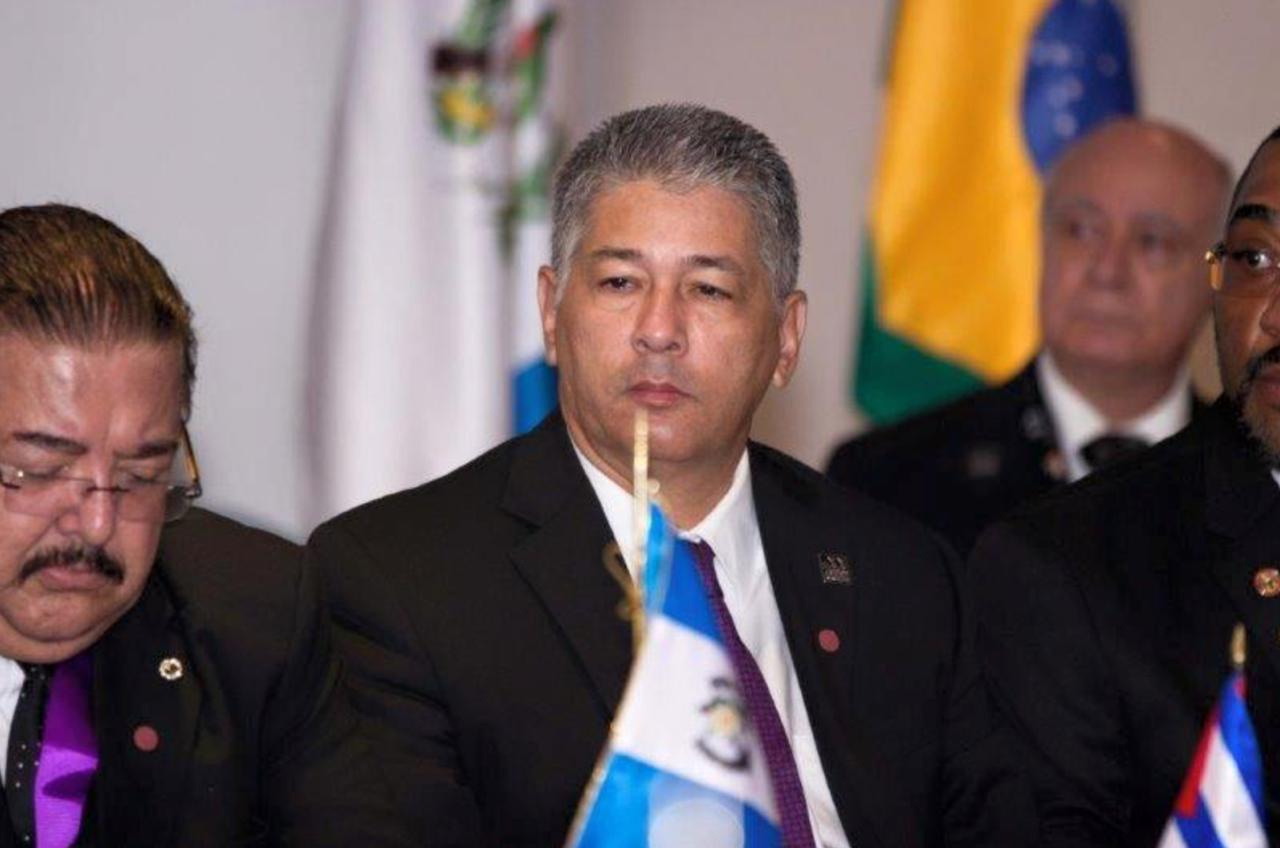
The re-elected Sovereign Grand Commander of Freemasonry, José Ramón Viñas Alonso (center). / Facebook/Supreme Council of the 33rd Degree

14ymedio bigger14ymedio, Havana, 30 July 2025 — After attending a summons that turned into a police interrogation, the Sovereign Grand Commander of Freemasonry, José Ramón Viñas Alonso, and the elected Grand Master, Alberto Kessel Linares, were released with pending criminal proceedings. According to the former’s social media post after returning to his home, they were also “placed under restraint” as a precautionary measure and were subject to a movement restriction that allows them to leave their homes only to go to work.

According to Viñas, during his interrogation at the Costa and Diez de Octubre police station in Havana, authorities questioned his “many” trips abroad and asked him where he got his money. Ultimately, a criminal case was opened against him for “currency trafficking.”

“They are trying to tie me to a non-personal agreement, but one that the Board of Trustees unanimously agreed upon due to the need to cover various expenses in local currency at the care home and the lack of this currency. The exchange was agreed upon twice this year (with this exchange being carried out among the members of the Board of Trustees), where $100 was exchanged for local currency,” he explained. The authorities consider this to be trafficking, as the exchange was made on the “black market,” at 1 dollar for 370 pesos—as the institution did—and not in a bank at the exchange rate of 1 dollar for 120 pesos.

He also said that State Security informed him that this crime could result in a prison sentence of between two and five years.

“We have no concerns,” he said, referring to both his own and Kessel’s situations, “because as citizens, we don’t even have a single traffic ticket, and we know what’s being attempted with all of this. It will be what it will continue reading

be, but I declare our innocence to my brothers,” Viñas concluded.

State Security informed him that for this crime he could be punished with between two and five years in prison.

Under threat of freezing the organization’s bank accounts, Cuban authorities rejected Viñas’s reelection as leader of the Supreme Council and appointed babalawo Lázaro Cuesta as the candidate for the position. So far, the Supreme Council has shown no signs of experiencing a leadership crisis similar to the one the Grand Lodge is experiencing.

Few details are available regarding Kessel’s case, but they were shared by an anonymous source close to the Grand Lodge: he was also summoned to Picota station and accused of allegedly violating his movement restriction for having “passed near the Grand Lodge on Sunday, July 6 , when the Freemasons protested there.”

According to the independent media outlet, both Freemasons are prohibited from holding meetings at the Grand Lodge or the Supreme Council of the 33rd Degree. “All proceedings are being handled by State Security,” the source added.

Writer and Freemason Ángel Santiesteban denounced the summons to Kessel and Viñas on social media, and attributed the police investigations to another attempt by the Ministry of Justice and the regime to intervene in the fraternity’s affairs, something that Justice Minister Oscar Silvera had previously asserted was not happening.

The most recent Masonic crisis—the brotherhood has been the subject of heated controversy since at least 2023, with the departure of its Grand Master to Mexico—occurred at the beginning of July, when several members gathered at the Grand Lodge’s entrance to protest the decision to hold a session of its High Chamber, which they considered illegitimate.

The meeting had been called by Mayker Filema Duarte, who was removed from his position as Grand Master

The meeting had been called by Mayker Filema Duarte, who was “irrevocably” removed from his position as Grand Master in May, but under the protection of the Ministry of Justice he refuses to relinquish his leadership of the order.

“All the brothers who are here know that the spurious Upper House meeting will be held today, and we are here, once again, to let you know that what we did on May 25th is irrevocable,” said one of the Masons who made up the group, addressing the rest, in front of the doors of the Grand Lodge and referring to the last session of the body in May, where the decision was made to remove Filema.

The protest escalated when those inside the lodge tried to block the entry of the Masons, who forced their way in, claiming the lodge belonged to them.

The day before, Kessel, who was elected by the Masons to the position of Grand Master, and Victor Bravo Cabañas, elected Grand Secretary, had been summoned by the police to the Picota station for an interview, from which they emerged with warnings for having called on members of the fraternity to protest against the assembly of the Upper House.

A few days later, despite the arrests and warnings, the Ministry of Justice assured that it maintains a “historical relationship of closeness and respect” with the fraternity and that it does not interfere in its affairs.

Calls for Mayker Filema Duarte’s resignation have been frequent since he assumed the position of Grand Master following the departure of his predecessor, Mario Urquía Carreño, who was accused of stealing $19,000 from the Grand Lodge.

____________

COLLABORATE WITH OUR WORK: The 14ymedio team is committed to practicing serious journalism that reflects Cuba’s reality in all its depth. Thank you for joining us on this long journey. We invite you to continue supporting us by becoming a member of 14ymedio now. Together we can continue transforming journalism in Cuba.

Vietnam Complains of Difficulties Getting Money out of Its Cuban Bank Accounts

Hanoi usesd the occasion of Deputy-Foreign Minister Gerardo Peñalver’s visit to call for “the removal of obstacles” to businesses in Cuba.

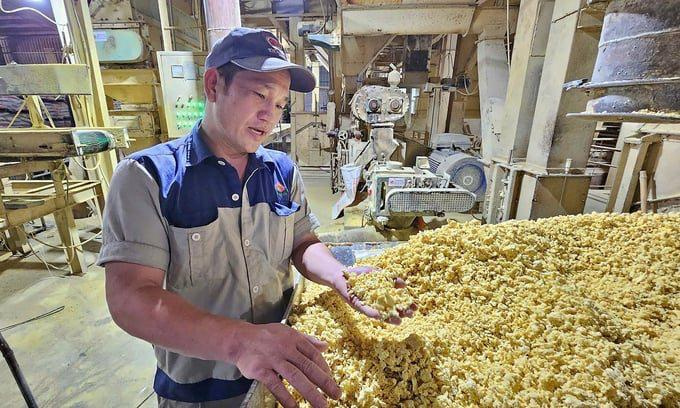
In addition to growing rice, Agri VMA also produces animal feed. / Bao Thang

14ymedio bigger14ymedio, Havana, July 24, 2025 — Behind the smiles, there were some recriminations at Wednesday’s meeting in Hanoi between Vietnamese Foreign Minister Bui Thanh Son and Cuban Deputy Foreign Minister Gerardo Peñalver. The friction between the two communist countries was reflected in a letter from Agri VMA — a Vietnamese company with operations in Mariel — to which 14ymedio had access.

The document, dated May 28, 2024, highlights the broad range of “difficulties and obstacles,”as the Vietnamese foreign minister put it, that his country’s companies face on the island. In a desperate plea for relief, Agri VMA wrote to three Cuban ministers, explaining the company’s urgent need to access funds frozen in an account at the state-owned International Finance Bank in order to transfer $300,000 to its parent company in Vietnam.

It was discovered in early 2025 that Cuba would freeze the bank accounts of foreign firms operating in the country

The Cuban government has been restricting this type of transaction since early 2025, when it was learned that it would freeze the accounts of foreign firms operating in the country — preventing them from repatriating their earnings — in exchange for certain compensations. However, the Agri VMA letter confirms that, in practice, Havana had been controlling its partners’ finances continue reading

long before then, preventing the company from making transfers without express authorization.

The letter was sent to Joaquín Alonso Vásquez, the minister of Economy and Planning, as well as to Ydael Pérez Brito and Oscar Pérez-Oliva Fraga. It stated that, Agri VMA needed the funds to “buy raw materials and guarantee the optimal continuation of our services.”

“As you well know, because of logistical issues, we had to reduce our production activity to 10% a few months ago due to a lack of raw materials. Maintaining stable and efficient production for both parties is our top priority. However, we understand that unforeseen circumstances or oversights can sometimes cause delays. With this in mind, we request your support and assistance,” reads the letter from Agri VMA.

“The transfer is vital since it allows us to maintain the high level of service that we strive to provide”

Company executives also reminded the minister that the firm is an important partner, “actively working since 2022 to produce animal feed in Cuba, with a plan to set up a factory with a production capacity of 30,000 tons of feed per year in the Mariel Special Development Zone.” After providing the necessary information for the transaction, the letter concludes: “The transfer is vital because it allows us to maintain the high level of service we strive to provide. We highly value the benefit we bring to the partnership and look forward to your help and support in resolving this matter.”

It is not known if the transfer was ultimately approved but it is clear that Havana has become much more careful in its dealings with this ally, its second largest trading partner in Asia after China, and the first in investments on the island. AgriVMA itself has been making headlines for its “successful” rice program. In January it became the first foreign company to be provided with farm land by the Cuban government.

However, Havana continues to feel pressure from Hanoi, as well as from companies already operating on the island, to provide more flexibility to foreign businesses. In June, Agri VMA requested more land from the government to expand its planting area. And unlike what it does with other foreign businesses, the government has allowed the company to hire Cuban employees directly rather than through a state-owned intermediary.

Vietnamese companies producing personal hygiene products have also set up shop in Cuba

In addition to agriculture, Vietnamese companies have set up personal hygiene, construction and fertilizer companies on the island. Both countries also recently announced they were looking for ways to partner in the renewable energy sector.

In an April interview with the official news outlet Vietnam Plus, the president of the Cuban Chamber of Commerce, Antonio Luis Carricarte Corona, stated that, while trade between the two countries has not returned to pre-pandemic levels, it has grown stronger. The key, he said, has been the diversification of businesses beyond the sale of rice, almost the only product that Cuba receives from Vietnam.

“Vietnam’s assistance will undoubtedly be essential in pork, chicken, and egg production as it has already been in aquaculture, where we have gained a great deal of experience from Vietnam, as well as in coffee, grain, and rice production,” Carricarte said.

China has criticized the Cuban leadership for its “unwillingness to decisively implement a market-oriented reform program”

In exchange, the Chamber of Commerce’s president offered Cuba’s experience in fields such as medicine and biotechnology. He also touted Cuba’s position as a potential launchpad for Vietnamese commerce into Latin America. “Cuba has excellent conditions for joint production and for facilitating access to the region . . . Products manufactured in Cuba in partnership with Vietnam can be certified as being from of Cuba and thus benefit from the more than twenty trade agreements we have with different countries. This would allow tariff-free entry of these products, providing additional advantages for Vietnam,” he explained.

Hanoi is also not the first US partner to criticize Havana’s lack of business flexibility. Late last year, a U.S. intelligence official told the Financial Times that, behind closed doors, China has criticized the Cuban leadership for its “unwillingness to decisively implement a market-oriented reform program despite the obvious dysfunction of the current situation.”

____________

COLLABORATE WITH OUR WORK: The 14ymedio team is committed to practicing serious journalism that reflects Cuba’s reality in all its depth. Thank you for joining us on this long journey. We invite you to continue supporting us by becoming a member of 14ymedio now. Together we can continue transforming journalism in Cuba.
Brave Journalism and Dying Democracies

What the public demands is professional integrity, and that is the least a journalist can and should offer them.

Unfortunately, rather than uncovering and exposing the truth, some people do their work to justify their own theories. / Pxhere

14ymedio bigger14ymedio, Federico Hernández Aguilar, San Salvador, 28 July 2025 — Referring to his fellow countryman, the priest and writer Benito Feijóo, Don Marcelino Menéndez y Pelayo, the most influential Spanish academic of his time, wrote with irony that he did not want “to do him the affront of calling him a journalist, although he has something of that in his worst moments.”

This fact is curious for two reasons: first, because it illustrates how much animosity the journalistic profession caused among Iberian intellectuals at the beginning of the 20th century—considered by many of them to be the devaluation of literature—and second, because Menéndez y Pelayo always enjoyed, while he was alive, what today we would call a “good press.”

Don Marcelino was far from imagining that journalism would become, by dint of demonstrating it, not only an unavoidable social power, capable of shaping culture, but also a primordial space for deciding the strengthening and even the permanence of democracies in the modern world.

The value of opinion, as well as the vehicles that transmit it, is unquestionable. In his immortal 1859 work, On Liberty, John Stuart Mill provides the classic liberal argument on the subject: “If an opinion were silenced, that opinion, so far as we know, might contain the truth. To deny it is to assume our own infallibility. In the second place, even if the silenced opinion were erroneous, it may well contain—and indeed frequently does contain—part of the truth; and as the general or dominant opinion on any subject is seldom the whole truth, it is only in the free clash of opposing continue reading

ideas that the opportunity arises of attaining the rest of the truth.”

Journalism in this era continues to face powerful enemies, from those who fill prisons with critical informants to those who silence opinions with more sophisticated methods.

Hence the importance of freedom of expression and its guarantees, as well as the struggle that people must wage to preserve it. Journalism in this era continues to face powerful enemies, from those who fill prisons with critical informants to those who silence opinions with more sophisticated methods, such as resorting to digital intimidation or paying for the disseminators of fake news.

The 1989 Nobel Prize winner for Literature, Camilo José Cela, without any gratuitous concessions, directed his wit toward a greater understanding of the journalistic profession, predicting success for communicators who aspired to “intellectual understanding and not a visceral feeling of events and situations,” in a constant (and healthy) review of their personal attitude toward reality. Considering the variety of circumstances that complicate the relationship between the news professional and the shifting terrain of facts, this reflection is timely.

Of course, the ways in which a media outlet, exercising its freedom, responds to the obligation to report truthfully differ. What should be uniform is the effort—not only constant, but growing—to achieve that minimum level of awareness and responsibility that should ideally underlie any honest search for the truth. It is there, in that small gap, where credibility is gained or lost.

Quoting Cela’s Dodecalogue again, it states: “Respect for the truth, the simple and immediate homage that must be paid to the truth day after day, must guide the steps of the journalist who aspires to play his role with dignity, grandeur, and effectiveness…” And indeed, the duty of editorial conscience to ask, amid the daily hustle and bustle, what criteria define what is considered to be in the public interest and how these criteria will be applied in the articulation of the news belongs to the realm of editorial conscience. And there, as in almost everything, the proposals are as diverse as the thoughts, experiences, and even prejudices.

The problem, many times, lies not in defining what truth is being told, but in how much truth is being ignored. What provokes distrust, for example, is the attitude of what I call the “journalist fly,” that type of news prowler who goes to the truth with the same avidity as flies in gardens: seeking only and exclusively the garbage. This coprophagous instinct doesn’t limit itself to “feeding” on rot; it presents it as the most emblematic thing in the surroundings. What’s questionable here isn’t the desire to talk about the filth that may be in a garden, but the attempt to turn that filth into the entire garden!

In highly controversial cases, partially exposing the truth can be as unethical as not exposing it at all. Depending on the scope of their story, a professional journalist knows that context is an inescapable duty.

In highly controversial cases, partially exposing the truth can be as unethical as not exposing it at all. Depending on the scope of their story, a professional journalist knows that context is an inescapable duty. And contextualizing means offering the public a true perspective of the garden before their eyes, presenting without exaggeration the distance between fragrant roses and excrement.

Hubert Beuve-Méry, founder of the newspaper Le Monde, once said: “In journalism, objectivity doesn’t exist; honesty does.” Unfortunately, rather than uncovering and exposing the truth, some people do their work to justify their own theories. In exchange for their attention or preference, however, what the public demands is professional integrity, and that is the least a journalist can and should offer.

If we delve into the complexities of human nature, it should come as no surprise that freedom of expression is one of the most vulnerable achievements of modern civilization. Despite this fragility, however, it must be emphasized that honest journalism, practiced courageously, may well be the last bastion of dying democracies.

____________

COLLABORATE WITH OUR WORK: The 14ymedio team is committed to practicing serious journalism that reflects Cuba’s reality in all its depth. Thank you for joining us on this long journey. We invite you to continue supporting us by becoming a member of 14ymedio now. Together we can continue transforming journalism in Cuba.

Haydée Santamaría’s Farewell Letter

Haydée Santamaría committed suicide two days after the 27th anniversary of the Moncada Barracks attack. (Celso Rodríguez)

14ymedio bigger14ymedio, Reinaldo Escobar, Havana, 28 July 2020 [delayed translation] — Forty years ago today, Haydée Santamaría Cuadrado committed suicide.

Her self-immolation occurred two days after the 27th anniversary of the Moncada Barracks attack. That commemorative event was held in the plaza named after her brother, Abel Santamaría, in the province of Ciego de Ávila. It was also the birthday of Melba Hernández, the other woman linked to that attack.

The official version states that she died in the house she shared with her children as a result of a gunshot wound to the head. Despite being considered a heroine and a member of the Council of State and the Central Committee, her remains were not laid to rest in the Plaza de la Revolución, as they should have been, but rather in a funeral home in Vedado, Havana.

In the political code of those who rule in Cuba, suicides do not deserve to be honored, perhaps for this reason those who attended her funeral shared the feeling that they were committing an act of disobedience. continue reading

The reason for her decision is attributed to the fact that her physical and mental health was very deteriorated, as she had never been able to overcome the trauma of having lost her brother and her boyfriend in that action in Santiago de Cuba on July 26, 1953.

Her depression, almost permanent, was affected by what happened a few months earlier when the Peruvian Embassy was taken over by more than 10,000 Cubans who no longer wanted to live in Cuba.

Her depression, almost permanent, was affected by what happened a few months earlier when the Peruvian Embassy was taken over by more than 10,000 Cubans who no longer wanted to live in Cuba, and then more than 100,000 embarked through the port of Mariel for the United States. The infamous repudiation rallies, in which the protesters were humiliated and mistreated, must have seemed like an atrocity to her. Her colleagues at Casa de las Américas, which she chaired, noticed that she would spend weeks at a time without going to her office.

It’s hard to believe that in the final minutes of her life, Haydée Santamaría didn’t want to leave a written  record of the profound reasons for her dramatic decision. It is significant that no one has ever dared to deny the existence of a letter that was most certainly addressed to Fidel Castro.

Cubans under fifty today are probably no longer interested in learning the content of a probable confession of disappointments. They barely care about knowing anything about the lives of those who dreamed of a utopia, much less the reasons they had for killing themselves. What does it matter, since today almost everyone is disappointed?

This disinterest, this neglect, is like the second death that awaits those who founded a project without a future. If that letter, which those of us who wanted to know about it never saw, is ever declassified, it will remain a historical curiosity… and it’s only been forty years.

____________

COLLABORATE WITH OUR WORK: The 14ymedio team is committed to practicing serious journalism that reflects Cuba’s reality in all its depth. Thank you for joining us on this long journey. We invite you to continue supporting us by becoming a member of 14ymedio now. Together we can continue transforming journalism in Cuba.
Haydée Santamaría, An Almost Forgotten Symbol of a Revolutionary Suicide

In 1980, the human stampede towards the Peruvian embassy left her stunned.

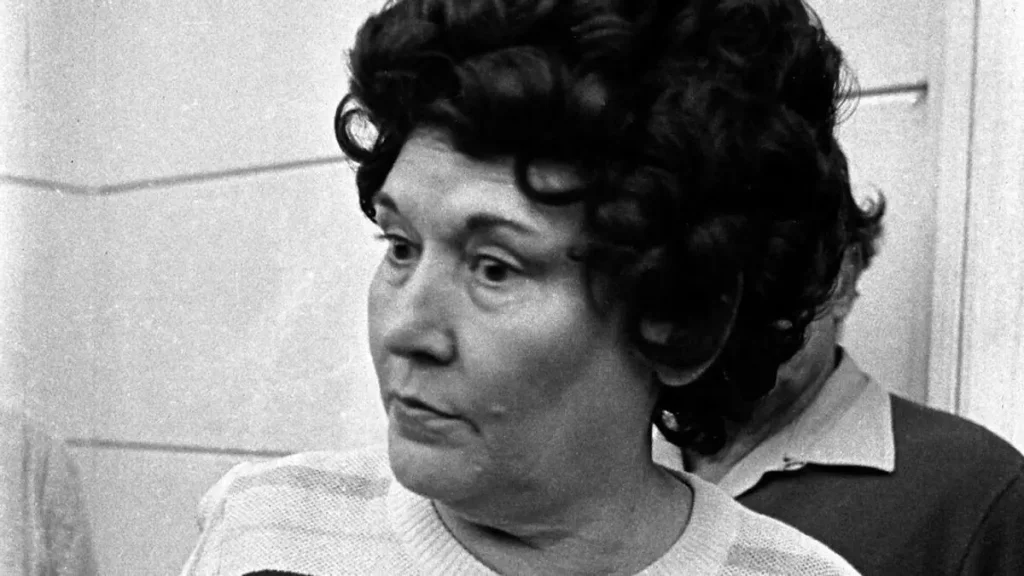
“That tall guy who dropped his cigarette ash all over the floor I had cleaned.” Haydée Santamaría 3rd from left. / Cubadebate

14ymedio bigger14ymedio, Yunior García Aguilera, Madrid, 28 July 2025 — Haydée Santamaría Cuadrado shot herself in the head on July 28, 1980, two days after the 27th anniversary of the Moncada barracks attack. It’s even said that the bullet could have been fired on the 26th itself, but the hairy men of the nomenclatura would never allow a suicide to spoil their celebration.

There were no honors in the Plaza. No national mourning was declared. Nor was there any mention of the weapon, the farewell note, or the most serious wound, that of disillusionment. She was bid farewell with a routine phrase in the official newspaper Granma: “after a prolonged physical and emotional illness.” A small feat for a founder of the Revolution, for one of the few “heroines” of a testosterone-doped process.

She was probably a Fidelista until the last minute of her life. In a sect, nothing is allowed but fanatically and unconditionally worshipping the leader. But there are also no second chances for a first impression. And when Yeyé — as she was called — met Fidel, she saw him as “that tall guy who left his cigarette ashes all over the floor I had cleaned.”

Dozens of women – including 14 mothers – who remain in Cuban prisons today could well remind their jailers of this fact.

It is well known that, after the failure of the Moncada attack, her brother and boyfriend—Abel Santamaría and Boris Luis Santa Coloma—were killed. What the official press doesn’t often repeat is that the cruel dictator Batista only sentenced her and Melba Hernández to seven months in prison. The dozens of women—including 14 mothers—who remain in Cuban prisons today for peacefully protesting against the regime might well remind their jailers of this fact.

When Haydée was released, she was sent to the United States to buy weapons from the mafia. Although she later confessed to feeling “terrified,” she did so without remorse. She also proudly recounted how she entered Cuba with her skirt full of fake pockets… and bullets. With a profound humanist vision, she also recounted her role in organizing attacks: “When someone had to plant a bomb during the struggle, and even in the underground, sometimes I was the one who had to decide who would do it […] I always chose the best, the one with the greatest conscience, the best human qualities, so that whoever it was wouldn’t get used to planting bombs, wouldn’t feel pleasure in planting them, so that it would always continue reading

hurt them.”

It is fair to recognize that she protected, as far as possible, some Cuban artists that the macho-Leninist sugar mill itself was trying to turn into guarapo 

Perhaps it was her semi-illiteracy—she barely completed sixth grade—that allowed her to shine at the head of the Casa de las Américas. There she received Mario Benedetti, Cortázar, and Galeano. She protected those who wrote strangely, those who thought differently, as long as they didn’t challenge dogma too much. It is also fair to recognize that she protected, as much as possible, some Cuban artists whom the same macho-Leninist sugar mill was trying to turn into guarapo [sugarcane juice].

But by the late 1970s, Haydée no longer believed. She had learned to keep quiet inside. The repression was getting tougher; the culture was becoming more and more instrumental. And in April 1980, the human stampede toward the Peruvian embassy left her stunned. Cuba was beating those who left. Repudiation rallies were organized. Mobs shouted insults at the “worms” from the doors of the revolutionary vigilance committees.

Haydée broke down. She sent a letter to Fidel. She asked him to reflect. She denounced the violence in the streets. But she never received a reply.

Those who knew her say that her gaze was already hollow, that she spoke little, that she had lost hope.

She no longer attended meetings. She kept to herself in her home. She had been in a car accident shortly before. Those who knew her say her gaze was already hollow, that she spoke little, that she had lost hope. Until that July morning, she asked her driver to leave her alone. She closed the door. She took out the gun she had kept since her years in hiding. And fired.

Fidel didn’t utter a single public word. Nor did Raúl. Juan Almeida was the only one who dared to say it clearly: “In principle, we revolutionaries do not accept the decision to commit suicide. The lives of revolutionaries belong to the cause and the people. But those of us who knew her… knew that the wounds of Moncada had not healed.” It was an exception to the official silence.

Lamentably, the tragedy continued

Her two children, Celia Hart Santamaría and Abel Hart, died in a mysterious car accident.

Twenty-eight years later, on September 7, 2008, her two children, Celia and Abel Hart Santamaría, died in a mysterious car accident in Havana’s Miramar neighborhood. They were traveling in the same car. The vehicle crashed into a tree, and both died instantly. The official press reported the incident briefly. No in-depth investigation was conducted. Nor was there a memorial service.

After the accident, rumors began to swirl. Was it a real accident? A planned suicide? A desperate act in the face of ideological suffocation? There’s no proof. But the tragedy resonated like the echo of their mother’s gunshot.

The death of Haydée and her children are not isolated episodes. They are chapters in an emotional story that has never been told before. A story that doesn’t fit into school textbooks or official museums. It is the story of the human price of silence, of dogma… and of disillusionment.

____________

COLLABORATE WITH OUR WORK: The 14ymedio team is committed to practicing serious journalism that reflects Cuba’s reality in all its depth. Thank you for joining us on this long journey. We invite you to continue supporting us by becoming a member of 14ymedio now. Together we can continue transforming journalism in Cuba.

Boluarte Says She Avoided ‘A Failed Country Like Cuba, Venezuela, and Bolivia’

“Out of my deep love for our country, I resigned from a political project that led to unhealthy polarization.”

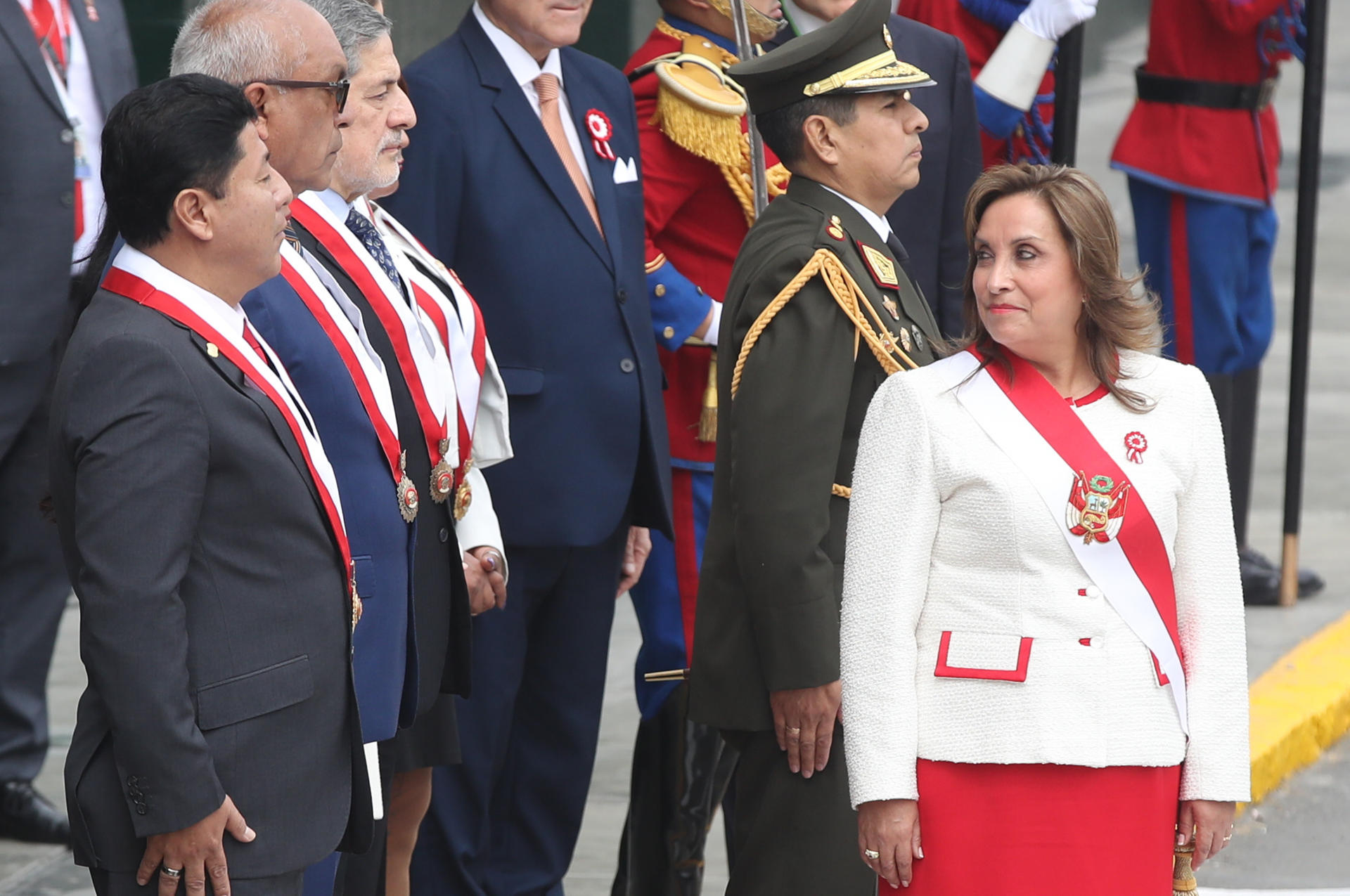
Peruvian President Dina Boluarte reviews troops upon her arrival at Congress in Lima on Monday. / EFE/Paolo Aguilar

14ymedio biggerEFE/14ymedio. Lima, 28 July 2025 — Peruvian President Dina Boluarte asserted this Monday, during her final address to the nation, that upon coming to power from the vice presidency after the impeachment of former President Pedro Castillo, she prevented Peru from becoming “a failed country like Cuba, Venezuela, and Bolivia” by renouncing “a political project that was leading to destruction.”

In her speech before the full Congress, interrupted several times by cries of “murderer, murderer” and banners from leftist groups demanding Castillo’s freedom, Boluarte asserted that “it was not this president who sought to disrupt the constitutional order to place Peru on the path of destruction and failure.”

The head of state was referring to Castillo’s failed coup attempt on December 7, 2022, which led to his removal from office and imprisonment. Boluarte, who was his vice president, took office amid a wave of protests whose repression left more than 50 dead. continue reading

“”What would have happened if I hadn’t taken office and acted with full respect for democratic order and institutions?”

Boluarte, who was elected in 2021 as Castillo’s vice president for the Marxist Peru Libre party, decided to remain in office with the support of a group of conservative forces, mostly right-wing, that control Congress.

“Out of my deep love for our country, I resigned from continuing a political project that led to unhealthy polarization, fratricidal confrontation, and the destruction of Peru,” the president said.

“Many criticize me for having preferred the constitutional duty to preserve democracy, freedom, property, respect for human rights, and democratic institutions,” Boluarte stated, amid frequent interruptions from leftist parliamentarians who shouted “murderer, murderer” at her while demanding Castillo’s release.

“What would have happened if I hadn’t taken office and acted with full respect for the democratic order and institutions? The country would be mired in a power vacuum, with serious consequences, elections held amid violence and an authoritarian and improvised government to draft a new Constitution, a pretext for those who are traitors to the country,” she added.

The leader considered that during her term she has been “the target of constant criticism and motions for impeachment not motivated by objective facts.”]]

The president insisted that those instigating the protests against her “wanted to turn Peru into a failed country, that is, into an international pariah.”

“However, between preferring the incomprehension of some and my mandate to the country, I chose to fulfill my duty to recover the country,” she reiterated. Boluarte added that “in Peru, there will never be ration cards with which the State tells citizens what and how much they should eat.” “We achieved this by staying united,” she added.

The leader considered that during her term she has been “the target of constant criticism and motions for impeachment motivated not by objective facts, but by other types of interests.”

“The narrative that has been constructed has sought to turn the president into a scapegoat. (…) History will judge these unhealthy intentions that do not weaken us in our quest to save the country. We will remain steadfast,” she commented.

She noted that her decision to remain in power in the face of criticism meant facing “the powers that be and countless investigations and prosecutions.”

“They thought that by extending this harassment of officials in my government and members of my family, they would weaken my commitment to all Peruvians, but I am a president firm in the face of adversity and I remain standing in service to the Peruvian people, with my unwavering commitment,” she concluded.

The president enters her final year in office as the most unpopular president in Latin America, with an approval rating that, according to polls, hovers between 2% and 3%.

Boluarte faces several open investigations by the Attorney General’s Office for deaths during protests, for receiving luxury gifts such as Rolex watches, for undergoing a series of surgeries without publicly announcing that she would be temporarily incapacitated, for alleged prohibited financing of political organizations, and for allegedly covering up for fugitive Vladimir Cerrón, leader of Perú Libre.

____________

COLLABORATE WITH OUR WORK: The 14ymedio team is committed to practicing serious journalism that reflects Cuba’s reality in all its depth. Thank you for joining us on this long journey. We invite you to continue supporting us by becoming a member of 14ymedio now. Together we can continue transforming journalism in Cuba.

A Cuban Grandmother Receives a Deportation Order After 30 Years in the US

She worked for 27 years at the University of Tampa and fears being sent to a third country because her Cuban passport has expired.

Pérez fears leaving her children and grandchildren behind. / Screenshot

14ymedio bigger14ymedio, Havana, 27 July 2025 — Yelenis Pérez, a 63-year-old Cuban resident in Florida, is facing a deportation order issued by Immigration and Customs Enforcement (ICE) after living in the United States for three decades and working for 27 years at the University of Tampa. The decision, which surprised her family and colleagues, was announced at her last immigration appointment on July 14.

Pérez was under a C18 migratory status, a category that allows a permanent supervised stay in the U.S. despite having a final deportation order, as long as immediate removal is not viable. However, according to Noticias Tampa Hoy, on this occasion, the ICE officer informed her that she must leave the country within 90 days.

“Since that day, I’m not the same. My life has changed completely,” the Cuban woman confessed through tears in an interview with local media. “I’ve never failed, I’ve always done my part. You can check my papers, my history. I’ve been 100% honest with my case.”

“Since that day, I’m not the same. My life has changed completely.”

One of the main obstacles she now faces is renewing her Cuban passport, which has expired. She explained that the Island’s consulate informed her that the process could take months. Furthermore, since April 1, 2025 , the Cuban government has not allowed citizens with expired passports to enter the country, placing Pérez in immigration limbo.

“My fear is that Cuba won’t accept me and then ICE will decide which country to send me to. That’s what I don’t want,” she said. If she fails to continue reading

renew her document within the established deadline, immigration authorities could consider deporting her to a third country. Recently, two Cuban migrants lost their appeal in the US and were unable to avoid being sent to South Sudan.

Pérez has publicly asked the Donald Trump administration to reconsider her case. “I would like to stay in the country because I have my children. What will become of them without me?” she said, referring to her family in Florida, which also includes her husband and grandchildren.

The case has sparked a wave of reactions on social media and among immigrant rights advocates, who are calling for a humanitarian review. Meanwhile, uncertainty grows for Pérez.

____________

COLLABORATE WITH OUR WORK: The 14ymedio team is committed to practicing serious journalism that reflects Cuba’s reality in all its depth. Thank you for joining us on this long journey. We invite you to continue supporting us by becoming a member of 14ymedio now. Together we can continue transforming journalism in Cuba.
Cuban Workers Regret Having Voted To Eliminate the Cafeterias

The decision was approved in line with Raúl’s policy of eliminating subsidies, but now, in the midst of the current crisis, it is creating a hard time for employees.

An employee displays the broken and dirty plates that no one wants to eat off. / Trabajadores

14ymedio bigger14ymedio, Madrid, 28 July 2025 — More than 15 years ago, 85% of Cuban workers did what was expected of them: they ratified the proposal from above to eliminate the workers’ cafeterias. The idea, framed within Raúl Castro’s plan to eliminate subsidies, included a compensation measure that seemed very convincing to the employees at the time: they would receive a “stipend” of 15 pesos a day in return, which could double their salary.

At the time, a worker told the Associated Press, “For me, it’s much better if they give me the money and I manage. I don’t eat what they give me now; it’s awful, and I bring my lunch from home.”  The older workers viewed the measure with skepticism, “but it will be good for the country,” the man said. Nothing could be further from the truth. During the time of the Ordering Task, these payments were required to be limited to no more than 18 pesos, while the price of meals only increased, and today the situation has deteriorated so much that the Special Period brings back fond memories.

“This is an issue that the unions need to revive. This was achieved during the toughest years of the Special Period, thanks to the initiatives of cooks, assistants, and employers,” says Roberto Betharte Mazorra, head of the Labor Affairs Department of the Cuban Workers’ Central Union—the only legal union in Cuba—who blames the situation on the organization of which he is a leader. This Monday, the newspaper Trabajadores published a report reviewing the state of the workers’ cafeterias and their precarious operation in the places where they have been maintained.

“This is an issue that the unions must revive. During the toughest years of the Special Period, this was achieved thanks to the initiatives of cooks, assistants, and employers.”

Among the reported cases, one of the most notable is that of the Special Workshop for People with Disabilities in Holguín, which maintains its service more in theory than in practice. Nelvis Pérez Rodríguez and Maylén Batista Almira—the center’s manager and cook—claim that they have lost their status as a protected sector and reveal that since February, they have not received rice or peas, there is only sugar to make tea, they have no cooking gas, and the electrical appliances they could use to cook in—if the blackout allowed—are in very poor condition. continue reading

In Matanzas, contracts with MSMEs (private businesses), the self-employed, and some state-owned meat and vegetable companies are keeping 22 soup kitchens and 43 distribution points open, feeding employees of the Ministry of Energy and Mines. According to the provincial Director of Economy and Planning, Gilberto Castel, the priority of these “allocations” is for childcare centers, hospitals, nursing and maternity homes, and hospitalized children and residential education centers. The rest must make do “with local, indigenous production and thus compensate for the shortage of rice, grains, and cooking oil,” the official urges.

This is why the director of the company that feeds energy sector employees, Inti Tabares López, has even traveled to Camagüey himself to buy rice. “I need eight sacks a day, and the Wholesale Food Products Company hasn’t supplied anything for over a year, while the Oil Services company, to which we belong, provides us with some soft drinks, sometimes meat and grains, and we are consistent with our responsibility to guarantee four to five meals a day. Our workers deserve the best,” he laments to the official weekly.

Workers and union leaders claim that the credit for these employees—including those working on the recovery of the Supertanker Base, which was burned in 2022—being among the few who eat well in Cuba is due to Tabares himself, thanks to his strategy. “The workers eat very well here; they are offered two main courses… the service is of high quality, and the charge is only 18 pesos, despite the high cost of the menu. The company covers the rest,” they explain.

That is why the director of the company that feeds employees in the energy sector, Inti Tabares López, has personally traveled to Camagüey to buy rice.

The same thing happens at the Cuban Medical Equipment Company in Havana, where they generate enough profit to cover the cost of the cafeteria. “For a meal that costs around 200 pesos, the worker pays 18,” they explain. Although such cases are not common.

At Antillana de Acero, the industry revived with Russian collaboration, the cafeteria is functioning, but complaints abound. Trabajadores complains that the food is repetitive: rice and minced meat. More serious, however, is what one of the employees interviewed reveals: no one wants to use the broken and dirty plastic plates they distribute, and the workers bring their own dishes.

Michel Cabrera Madrazo, general secretary of the company’s union bureau, states that the quality of the food is questioned at every meeting, but the director of the factory that produces it—located in the factory itself and serving six others—stands by her words. “We never go below three courses; the snacks remain stable, although the soft drinks have fluctuated slightly. Based on suggestions from members of the contingents, who are working on the structural improvements of the facility, they have been offered optional food, and workers who choose to eat it pay directly,” she maintains.

The official unexpectedly reveals a detail that, despite the country’s dire state, is still surprising. Inputs are expensive, and her efforts are aimed at ensuring that the company, “which is going through a difficult economic situation because it is not producing,” does not exceed its budget. Antillana de Acero, located in Havana, reopened in 2023 thanks to a multimillion-dollar Russian investment —an initial $111 million—and its inauguration received significant coverage in the official press, which highlighted its potential to employ more than 500 people and produce “between 220,000 and 230,000 tons of liquid steel annually.” There were warnings at the time that the factory would not be fully operational until 2024, but statements by Tania Caridad Rodríguez Tellería indicate total inactivity.

The inputs are expensive and their efforts are aimed at ensuring that the budget allocated by the company, “which is going through a complex economic situation because it is not producing,” is not exceeded.

“When many gave up and removed the cafeteria, it remained in Antillana despite everything,” says a union leader from the center. According to Trabajadores, the majority of companies that decided to maintain the workers’ cafeterias—despite the high costs and complaints—were industrial and nickel companies, while others eliminated them, to the chagrin of their current employees.

“It gave me something hot to eat,” says one worker who voted in favor of the newspaper’s elimination. “After the Ordering Task, my workplace cut off food payments, and we had to bring lunch from home. To that expense, I have to add the transportation to my center, and the math just doesn’t add up,” laments another. Norquides Guerra Montoya, a mechanic who voted against, remains in his position even though it’s useless.

“At the bucket factory in our sector, they complained and they brought it back. Why isn’t the same thing happening here? We’d be better off not having to go out and see what we could find, with everything being so expensive. What if I raised it with the union? Of course, and nothing gets resolved. Nothing.”

Roberto Betharte Mazorra says the intention was never to eliminate cafeterias, “but rather to eradicate subsidies, relieve the State of all free services,” and encourage companies to create gardens, self-consumption measures, and other options. “In the case of global organizations, the State assumed a stipend that, after the regulation, appeared to be included in salaries. It is no less true that, given current conditions and the prevailing speculative prices, this tends to be a permanent demand…” he adds.

____________

COLLABORATE WITH OUR WORK: The 14ymedio team is committed to practicing serious journalism that reflects Cuba’s reality in all its depth. Thank you for joining us on this long journey. We invite you to continue supporting us by becoming a member of 14ymedio now. Together we can continue transforming journalism in Cuba.

José Martí Was Not the Mastermind Behind the Attack on Cuba’s Moncada Barracks

In the early years of his tyranny, Fidel Castro attributed to José Martí all imaginable civic virtues, not out of respect for the patrician, but to use him as a wild card in the construction of the totalitarian system.

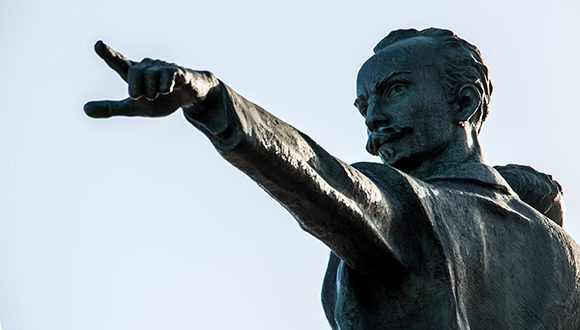
Statue of José Martí / Abel Padrón Padilla/Cubadebate

14ymedio bigger14ymedio, Pedro Corzo, Havana, 27 July 2025 — I have the firm conviction that one of the most regrettable events in the history of Cuba, with grave repercussions in numerous countries far from our shores, was and is the 26th of July 1953, the date of the attack on the Moncada Barracks and the day Fidel Castro entered national history to destroy the future of a now-defunct republic.

Fidel Castro, since his days as a university gang member, counted on a small following of loyalists, but he never enjoyed the popular support to achieve any of the many elected positions he always aspired to, including the presidency of the University Student Federation (FEU), or the same position in the Faculty of Law, or Representative to the House of Representatives, the latter ambition cut short by the disastrous military coup of March 10, 1952.

It is presumed that Castro welcomed the military coup. His many failures in the electoral races convinced him that it was easier to fight with arms than to participate in an electoral contest in which the loser disappeared ingloriously and the winner had to periodically submit to the popular will.

Hence, one of his first slogans, on the very days of the attack on the barracks, was that “José Martí is the intellectual author of this revolution.”

In the early years of his tyranny, Castro attempted to diminish the historical value of our wars of independence, arguing that the patriots had acted out of petty interests, excluding only Martí, to whom he attributed every imaginable civic virtue, not out of respect for the patrician, but to use him as a wild card in the construction of the totalitarian system. Hence, one of his first slogans, on the very days of the attack on the barracks, was that “José Martí is the intellectual author of this revolution.”

Castro, a notable disciple of the best propagandists of Marxism and fascism, loudly proclaimed the virtues of Martí, constantly claiming that the Maestro had been his inspiration while denying one of the apostle’s* most sublime thoughts: “Let us place around the star, on the new flag, this formula of triumphant love: With all, and for the good of all.”

Castro’s lies and the usurpation of Martí’s life and work to justify continue reading

totalitarianism led Carmen Gómez de Toro to organize a conference with scholars specializing in the life and work of this eminent Cuban, which she later compiled and published under the title we have hijacked for this column.

In the introduction to her book, Gómez de Toro affirms aspects of Martí’s gospel, such as freedom, sovereignty, and human dignity, which are diametrically opposed to the Cuban totalitarian system. She reminds us of the apostle’s comment: “The right of the worker can never be the hatred of capital; it must be harmony, conciliation, and a common understanding of one another.” She adds that Martí divided men into two camps: “those who love and build, and those who hate and destroy,” as has been the result of Fidel Castro’s life and work, which devastated lives and property.

Castro’s lies and the usurpation of Martí’s life and work to justify totalitarianism led Carmen Gómez de Toro to organize a conference with scholars specializing in the life and work of this eminent Cuban

The scholars on José Martí’s life who participated in the conference were Eduardo Lolo, José Raúl Vidal, Emilio Sánchez, and Daniel Pedreira, who demonstrated in their respective presentations that this first slogan of Castro’s totalitarianism is a fallacy without the slightest semblance of authenticity.

In the book, Dr. Emilio Sánchez states: “The distortion of José Martí’s ideas for political purposes immediately emerges upon a careful reading of his splendid work.” Dr. Eduardo Lolo, for his part, notes: “A revolution is still necessary, one that does not make its leader president, the revolution against all revolutions.”

This approach to José Martí, sponsored by Carmen de Toro, is further enriched by the expression also recalled by Dr. Daniel Pedreira: “The homeland belongs to no one, and if it belongs to anyone, it will be, and this only in spirit, to the one who serves it with the greatest selflessness and intelligence.” The book closes with a lecture by a young Cuban, José Raúl Vidal y Franco, who, although he grew up under totalitarianism, had the intelligence and courage to free José Martí from the slanderous lies of Castroism, recalling a fragment of what the illustrious Cuban wrote about Karl Marx upon his death: “The task of casting men upon men is terrifying.”

*Martí was and is referred to as the “Apostle of Cuban Independence”
____________

COLLABORATE WITH OUR WORK: The 14ymedio team is committed to practicing serious journalism that reflects Cuba’s reality in all its depth. Thank you for joining us on this long journey. We invite you to continue supporting us by becoming a member of 14ymedio now. Together we can continue transforming journalism in Cuba.

These Poor People Who Annoy the Cuban Government So Much

These poor people who annoy the Cuban government so much.

____________

See also:

‘There Are No Beggers in Cuba, These Are People in Disguise,’ Insists the Minister of Labor

The Regime Dismisses the Minister Who Said There Were No Beggars in Cuba, Only People “Disguised” as Beggers

____________

COLLABORATE WITH OUR WORK: The 14ymedio team is committed to practicing serious journalism that reflects Cuba’s reality in all its depth. Thank you for joining us on this long journey. We invite you to continue supporting us by becoming a member of 14ymedio now. Together we can continue transforming journalism in Cuba.
Pepe Mujica, the Revolutionary Who Criticized Authoritarian Excesses, Dies

Upon learning of his passing, I couldn’t help but remember how close I was to shaking his hand, but the demons of political intolerance prevented it.

José Mujica, former president of Uruguay and emblematic figure of the Latin American left, has died at the age of 89 / EFE/ Gastón Britos

14ymedio bigger14ymedio, Yoani Sánchez, Generation Y, 14 May 2025 [delayed translation] – – This Tuesday, one of the few Latin American leaders who, after serving as president, maintained a regional prestige free of accusations and scandals, died. He had been a man who was a model for the politics of service so lacking on our continent. José Pepe Mujica, former president of Uruguay and emblematic figure of the Latin American left, passed away at the age of 89. Upon learning of his passing, I couldn’t help but remember how close I came to shaking his hand, but the demons of political intolerance prevented me from doing so.

It was 2015, and I was visiting Montevideo, invited by the local journalists’ association. The tour’s agenda included visits to media outlets, conversations with reporters and graphic artists, and an extensive cultural program that lasted late into the night. One of the highlights of that stay in Uruguay was, precisely, meeting Mujica, a respected political oracle who delivered opinions and teachings with great ease and a fair amount of authenticity. The moment was also transcendent.

That year, hopes for a possible democratic transition in Cuba had reached a peak. Just a few months earlier, in December 2014, a diplomatic thaw between Washington and Havana had been announced, and the world’s eyes were focused on what was happening on the island. Fidel Castro, recovering from the illness that removed him from power in 2006, barely received visitors, and Mujica was one of the few chosen to access Punto Cero, the heavily guarded estate where Castro spent his final years. The Uruguayan was very reserved about those encounters, but had begun to slip in criticism of the authoritarian nature of the Cuban model. continue reading

Talking to Mujica was an opportunity for me to hear the opinion of an informed and sincere political actor who knew my country closely and had a vision of everything that was happening in the region.

Talking with Mujica was, for me, an opportunity to hear the opinion of an informed and sincere political figure who knew my country closely and had a vision of everything that was happening in the region. But we were never able to have that conversation.

One day before the scheduled date for the exchange of views, Pepe told the event organizer that he had to travel a few weeks later to a tribute where he would receive at the Casa de las Américas in Havana. “You know how Cubans are; I don’t want any trouble with them,” he excused himself before canceling the meeting, alluding to the Cuban regime’s traditional intolerance toward any gesture of dissent. The journalist who heard that excuse later told me that the former president was embarrassed and annoyed at having to accommodate the sensitivities of the Castro regime.

That official tribute took place, and Mujica shone before the audience with his ease, but in the years to come, the Uruguayan increasingly distanced himself from the Cuban establishment. In an interview, he revealed part of the chasm that had opened between the pluralism he had embraced and the single party imposed by Castro. “It doesn’t work, this doesn’t work,” he declared with his usual frankness. Reading his words, I felt I was listening to him, and that frustrated meeting had, in fact, taken place, and that we had been talking in Montevideo or Havana for long hours about life, liberty, and the future. Buen viaje, Pepe.

__________________

Editor’s Note: This article was originally published in Deutsche Welle in Spanish.

____________

COLLABORATE WITH OUR WORK: The 14ymedio team is committed to practicing serious journalism that reflects Cuba’s reality in all its depth. Thank you for joining us on this long journey. We invite you to continue supporting us by becoming a member of 14ymedio now. Together we can continue transforming journalism in Cuba.

I Like, Pepe, That You Dislike It

“I haven’t cultivated hatred in my garden for decades, because I learned a hard lesson that life imposed on me: that hatred ends up making you stupid,” said Mujica.”

José Mujica on the farm where he lived for more than 35 years and asked to be buried. / EFE/ Sofía Torre

14ymedio bigger14ymedio, Federico Hernández Aguilar, San Salvador, 19 May 2025 [Delayed translation] —  It is not easy to find balanced obituaries when certain public figures die. Some are praised or disparaged, sometimes without nuance, depending on the ideological radicalism of the person writing about them. Sometimes, these somewhat hasty words, cobbled together by journalists and columnists in the wake of a recent death, tell us more about their authors—their likes and dislikes—than about the figures being profiled. This has been no different with former Uruguayan President Pepe Mujica, who died of cancer on May 13.

I open the digital version of a newspaper that includes the word derecha— right—in its name and find the following headline: Pepe Mujica, the man who hid a past stained with blood and violence. The article criticizes the “wise peasant” and “pacifist grandfather” profile that the former Tupamaro leader has “sold,” reminding us that his guerrilla organization was responsible “for multiple acts of armed violence in the 1960s and 1970s.” Later, the article states that Pepe “did not show a single gesture of remorse for his crimes” nor did he apologize to the victims of his attacks. The final sentence is damning: “Mujica was not a hero: he was a terrorist recycled as a president.”

In another newspaper that includes the word izquierdo—leftin its name, the column I’m reading calls the former Uruguayan president a “repentant revolutionary” in its headline. Nor does this obituary—written from the opposite side of the street—offer its readers much room for maneuver either: Pepe was a “defender of the institutions of the capitalist system,” an “extreme expression” of a deradicalized Latin American left, and someone who “played a central role in reconciliation with the military responsible for crimes during the dictatorship.” The author describes Mujica’s speech as one that served as “a defeatist and disciplinary message (sic), which contrasts drastically with the revolutionary ideals of his youth.” continue reading

In another newspaper that includes the word “left” in its name, the column I read calls the former Uruguayan president a “repentant revolutionary” in its headline.

I recognize the interest aroused in me by the confrontation of these feverish obituaries, so completely separated by their respective ideologies and yet so unusually united in their contempt for the figure. I confess, I like the disgust that Pepe Mujica provokes at both ends of the Spanish-American ideological spectrum. The old man must have done something right, I imagine, for the reptilians on both sides to rush to criticize his legacy, portraying him as an unrepentant bloodthirsty man who should be given no credit, or as a shameful comrade who ended up sugarcoating the socialist ideal for which he had fired rifles and dropped bombs.

I suspect radicals have many reasons to feel uncomfortable with Mujica. They find it very difficult, for starters, to claim him as their own. No one who still believes in Marxist postulates about violence could explain why Pepe, toward the end of his life, spoke more about the great ethical battle of our time than about the Jurassic class struggle. “The old left,” he wrote, “lives too much on nostalgia… It has a hard time understanding why it failed and has great difficulty imagining new paths.”

On the other side, it also stings that Mujica was a living example of moral coherence. He challenged what he called the “culture of selfishness” with more than just catchphrases, embodying sobriety in countercultural, almost lacerating ways. Body and soul, he lived contradicting the atavistic desire for profit and luxury. “The poor are those who want more,” he said, “those who can’t afford anything. Those are the poor, because they’re in an endless race.” Someone so detached from all baggage, of course, hardly fits in anywhere.

But without a doubt, the worst burden Pepe shed was hatred. In his days as a guerrilla and criminal, hatred for those who thought differently was an indispensable condition for struggle. Che Guevara, in those chilling words addressed to the Tricontinental (1967), granted the revolutionary legitimacy that was the cloak of that youthful criminal fury: “Hatred as an element of the struggle; a relentless hatred of the enemy, impelling us over and beyond the natural limitations that man is heir to and transforming him into an effective, violent, selective and cold killing machine. Our soldiers must be thus; a people without hatred cannot vanquish a brutal enemy.”

That’s why he went so far as to say that Venezuela and Nicaragua were “indefensible,” accusing their leaders of “playing at democracy” while perpetrating electoral fraud.

Upon his release from prison in 1985, however, Mujica had also freed himself from the mental shackles that justify excess. And he never again yielded to them. That is why, last year, he once again distanced himself from the “dictatorship of the proletariat” entrenched in Cuba for more than 60 years with two words: “It’s useless.” That’s why he went so far as to say that Venezuela and Nicaragua were “indefensible,” accusing their leaders of “playing at democracy” while perpetrating electoral fraud.

That is why, upon leaving his seat in the senate in 2020, he recalled that, although he had many flaws, there was one he was proud of redeeming. “I’m passionate,” he said then, “but I haven’t cultivated hatred in my garden for decades, because I learned a hard lesson that life imposed on me: that hatred ultimately makes us stupid, because it makes us lose objectivity in the face of things. Hate is blind like love, but love is creative, and hatred destroys us.”

Due to ideological distortion and historical inertia, socialists have gardens littered with corpses because resentment has taken over their consciences. Pepe Mujica understood, with a stroke of clarity, that it is impossible to change the world this way. And his lesson is everlasting.

____________

COLLABORATE WITH OUR WORK: The 14ymedio team is committed to practicing serious journalism that reflects Cuba’s reality in all its depth. Thank you for joining us on this long journey. We invite you to continue supporting us by becoming a member of 14ymedio now. Together we can continue transforming journalism in Cuba.

Official Data Reveals the Magnitude of Cultural Decline in Cuba

In 2024 a general decline was recorded in almost all of the country’s cultural indicators: in production, creativity, active spaces and audience attendance.

Archive image of film production organised by independent producers in Cuba. / Cubadebate

14ymedio bigger14ymedio, Yunior García Aguilera, Madrid, 18 July 2025 – A nation’s culture is not measured in kilowatts, but when the lights go out in its theatres, its libraries and its cinemas, the resulting darkness has no need of metaphors. And even if artistic quality doesn’t figure in any quantifiable economic indicators of state, the coldness of the numbers is enough to illustrate a map of the disaster. Cuba’s 2024 Statistical Yearbook offers a cold but revealing picture of the structural deterioration that the nation’s cultural ecosystem is suffering.

The diagnosis is severe. Data from the National Office of Statistics and Information (Onei) shows a general fall in almost all cultural indicators: production, creativity, active spaces and audience attendance. But among all the headlines, the one concerned with books destroys any triumphalist speeches given by Alpidio Alonso – head of Culture – who comes precisely from the book sector himself. Whilst in 2023 six million book copies were printed in Cuba, in 2024 the figure fell dramatically to 1,355,500. It isn’t just down to a shortage of paper, but a shortage of political will, and priorities.

Cinema, for its part, confirms the sombre tone. In 2024 there were 6,647 fewer screenings than in the previous year, and 15 cinemas completely disappeared from the map. Production contracted in size too: there were fewer shorts produced and the overall total of animation films was reduced. continue reading

According to the Onei itself, not one feature film was actually completed – a statement contradicted however by the actual facts themselves

According to the Onei itself, not one feature film was actually completed – a statement contradicted however by the actual facts themselves: at least two films were recognised by critics as being the best films of the year: ’An Evening With the Rolling Stones’, by Patricia Ramos; and ’Maisinicú, Half a Century Later’, by Mitshell Lobaina. Both productions, completed in 2024 under the hallmark of the Cuban Institute for Art and Cinema (Icaic), were simply ignored in the official figures, which – it’s worth adding – are compiled using data from the Ministry of Culture.

The lack of insight goes even further when you look at independent filmmaking. Invisible for the Art & Cinema Institute, the National Office of Statistics, the state-run media and all the state-run cinemas of the country, this sector develops audiences beyond the usual margins – at international festivals or on digital platforms. Two titles particularly stand out in this area: the documentary ’Cronicles of the Absurd’, by Miguel Coyula, and the fiction debut of director Marcos Díaz Sosa, ’Natural Phenomena’. Two works which demonstrated that, even if they didn’t cross the thresholds of the national cinemas, art itself needs no permission to exist.

And theatre, traditional object of suspicion and censorship by the cultural police, has also given ground. Although the number of venues increased marginally, from 85 to 87, more general figures invite pessimism. 48 actual theatre companies were lost, along with 440 professionally-active performers (reducing from 2,103 to 1,663). The country registered a deficit of 1,205 performances, and 195,700 fewer theatre attendances than in the previous year. Neither the heroic efforts of theatre creators nor the enthusiasm of loyal theatre audiences have been able to reverse the decline.

Music is suffering a parallel fate. Some 334 bands disappeared and there were 1,691 fewer working musicians than there were in 2023. The number of live concerts, clubs and related cultural activities decreased from 90,033 to 62,162 – an equivalent loss of more than 6 million concert attendances. The silence is not only falling upon theatres but also on parks, cultural centres and community spaces.

Music is suffering a parallel fate. 334 bands disappeared and there were 1,691 fewer working musicians than there were in 2023

This newspaper has monitored complaints from musicians across a number of provinces, many of whom are victims of prolonged outstanding payments from state entities such as Artex. Some artistes have gone for months without pay, whilst the company boasts about an optimistic balance sheet. The paradox is revealing: company income is growing but cultural activity is decreasing. They are saving on culture, as though culture were something dispensable. Even worse, the company (state-run, ’socialist’, so they say) gets richer, whilst its artistes are exploited and go unpaid.

Geographical inequalities are also notorious. Holguín survives with just one theatre. Las Tunas is seeing its network of cinemas and libraries diminish. In Mayabeque some libraries are barely managing to cling onto existence. Ciego de Ávila turns out to be the province with fewest museums, and Sancti Spíritus has only hung on to two art galleries. Beyond the larger urban centres, culture has been reduced to mere wreckage and nostalgia.

So 2024 was more than just a poor year for culture, it was a year of cultural famine and darkness. Not for a lack of cultural creatives, nor through any public apathy, but because of a worn out model that administers culture as though it were just another office of state. What the National Statistics Office can’t measure – nor dares even to name – is the spiritual price of this shutdown. And as they’re so keen to quote José Martí so often, they ought also to remember this one: “The mother of decency, the lifeblood of liberty, the conservation of the Republic and the solution to all its ills is, above all else, the propagation of culture”.

Translated by Ricardo Recluso

____________

COLLABORATE WITH OUR WORK: The 14ymedio team is committed to practicing serious journalism that reflects Cuba’s reality in all its depth. Thank you for joining us on this long journey. We invite you to continue supporting us by becoming a member of 14ymedio now. Together we can continue transforming journalism in Cuba.