Hanoi usesd the occasion of Deputy-Foreign Minister Gerardo Peñalver’s visit to call for “the removal of obstacles” to businesses in Cuba.
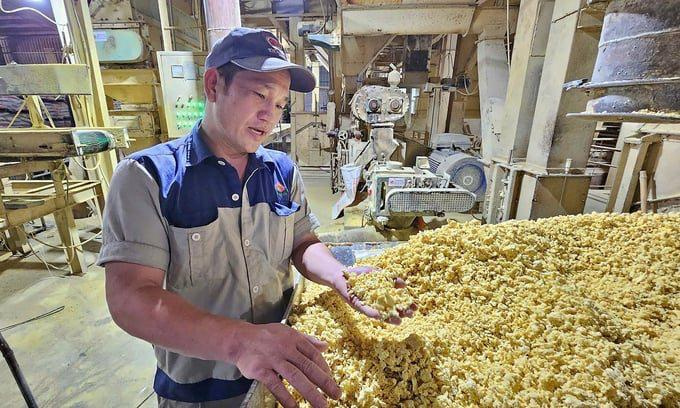
 14ymedio, Havana, July 24, 2025 — Behind the smiles, there were some recriminations at Wednesday’s meeting in Hanoi between Vietnamese Foreign Minister Bui Thanh Son and Cuban Deputy Foreign Minister Gerardo Peñalver. The friction between the two communist countries was reflected in a letter from Agri VMA — a Vietnamese company with operations in Mariel — to which 14ymedio had access.
The document, dated May 28, 2024, highlights the broad range of “difficulties and obstacles,”as the Vietnamese foreign minister put it, that his country’s companies face on the island. In a desperate plea for relief, Agri VMA wrote to three Cuban ministers, explaining the company’s urgent need to access funds frozen in an account at the state-owned International Finance Bank in order to transfer $300,000 to its parent company in Vietnam.
It was discovered in early 2025 that Cuba would freeze the bank accounts of foreign firms operating in the country
The Cuban government has been restricting this type of transaction since early 2025, when it was learned that it would freeze the accounts of foreign firms operating in the country — preventing them from repatriating their earnings — in exchange for certain compensations. However, the Agri VMA letter confirms that, in practice, Havana had been controlling its partners’ finances long before then, preventing the company from making transfers without express authorization.
The letter was sent to Joaquín Alonso Vásquez, the minister of Economy and Planning, as well as to Ydael Pérez Brito and Oscar Pérez-Oliva Fraga. It stated that, Agri VMA needed the funds to “buy raw materials and guarantee the optimal continuation of our services.”
“As you well know, because of logistical issues, we had to reduce our production activity to 10% a few months ago due to a lack of raw materials. Maintaining stable and efficient production for both parties is our top priority. However, we understand that unforeseen circumstances or oversights can sometimes cause delays. With this in mind, we request your support and assistance,” reads the letter from Agri VMA.
“The transfer is vital since it allows us to maintain the high level of service that we strive to provide”
Company executives also reminded the minister that the firm is an important partner, “actively working since 2022 to produce animal feed in Cuba, with a plan to set up a factory with a production capacity of 30,000 tons of feed per year in the Mariel Special Development Zone.” After providing the necessary information for the transaction, the letter concludes: “The transfer is vital because it allows us to maintain the high level of service we strive to provide. We highly value the benefit we bring to the partnership and look forward to your help and support in resolving this matter.”
It is not known if the transfer was ultimately approved but it is clear that Havana has become much more careful in its dealings with this ally, its second largest trading partner in Asia after China, and the first in investments on the island. AgriVMA itself has been making headlines for its “successful” rice program. In January it became the first foreign company to be provided with farm land by the Cuban government.
However, Havana continues to feel pressure from Hanoi, as well as from companies already operating on the island, to provide more flexibility to foreign businesses. In June, Agri VMA requested more land from the government to expand its planting area. And unlike what it does with other foreign businesses, the government has allowed the company to hire Cuban employees directly rather than through a state-owned intermediary.
Vietnamese companies producing personal hygiene products have also set up shop in Cuba
In addition to agriculture, Vietnamese companies have set up personal hygiene, construction and fertilizer companies on the island. Both countries also recently announced they were looking for ways to partner in the renewable energy sector.
In an April interview with the official news outlet Vietnam Plus, the president of the Cuban Chamber of Commerce, Antonio Luis Carricarte Corona, stated that, while trade between the two countries has not returned to pre-pandemic levels, it has grown stronger. The key, he said, has been the diversification of businesses beyond the sale of rice, almost the only product that Cuba receives from Vietnam.
“Vietnam’s assistance will undoubtedly be essential in pork, chicken, and egg production as it has already been in aquaculture, where we have gained a great deal of experience from Vietnam, as well as in coffee, grain, and rice production,” Carricarte said.
China has criticized the Cuban leadership for its “unwillingness to decisively implement a market-oriented reform program”
In exchange, the Chamber of Commerce’s president offered Cuba’s experience in fields such as medicine and biotechnology. He also touted Cuba’s position as a potential launchpad for Vietnamese commerce into Latin America. “Cuba has excellent conditions for joint production and for facilitating access to the region . . . Products manufactured in Cuba in partnership with Vietnam can be certified as being from of Cuba and thus benefit from the more than twenty trade agreements we have with different countries. This would allow tariff-free entry of these products, providing additional advantages for Vietnam,” he explained.
Hanoi is also not the first US partner to criticize Havana’s lack of business flexibility. Late last year, a U.S. intelligence official told the Financial Times that, behind closed doors, China has criticized the Cuban leadership for its “unwillingness to decisively implement a market-oriented reform program despite the obvious dysfunction of the current situation.”
____________
COLLABORATE WITH OUR WORK: The 14ymedio team is committed to practicing serious journalism that reflects Cuba’s reality in all its depth. Thank you for joining us on this long journey. We invite you to continue supporting us by becoming a member of 14ymedio now. Together we can continue transforming journalism in Cuba.