Deputy Foreign Minister Ryabkov Denounces the United States’ “’Obsession’ With Expelling Russia From the ‘Western Hemisphere’

Moscow reiterates its “100% solidarity with Cuba” and its intention to remain in the region
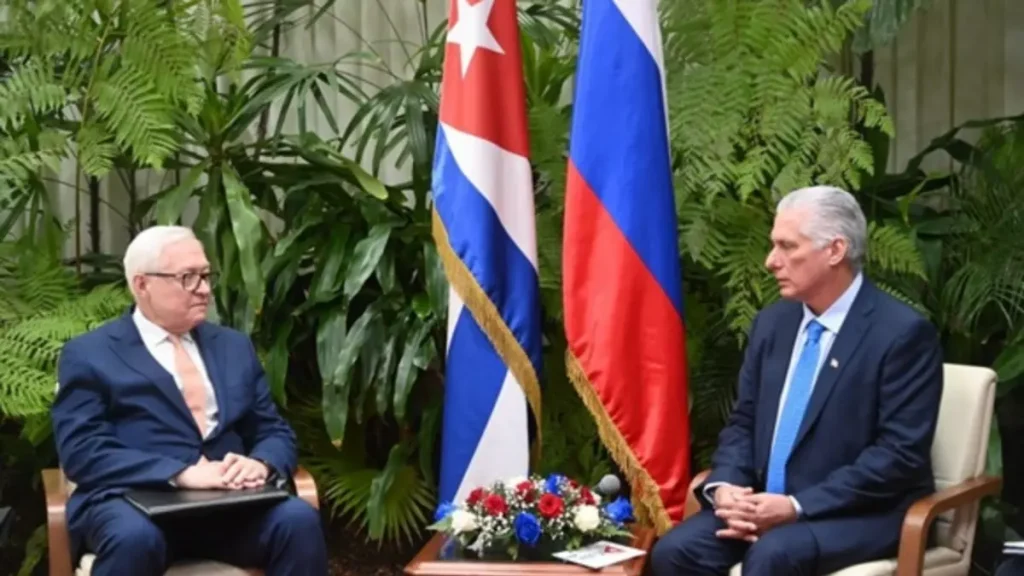

Díaz-Canel conveyed to Sergei Ryabkov a hug for Putin. / Cubadebate

14ymedio bigger14ymedio, Madrid, April 10, 2026 – Nine days after the Anatoly Kolodkin docked at the port of Matanzas with 730,000 barrels of crude oil, Russia’s deputy foreign minister, Sergei Ryabkov, entered the Palace of the Revolution ready to receive praise from Miguel Díaz-Canel. “There is value in countries like the Russian Federation in not allowing themselves to be subjected to imperial policies,” said the Cuban leader.

The meeting also comes after Moscow announced the shipment of a second tanker to the Island, although it has not provided details about it. “Russia is not going to abandon the Western Hemisphere, no matter what they say in Washington, which is obsessed with the idea of expelling Russia, as well as China, from this region,” he said.

“At the present time, Russia is one hundred percent in solidarity with Cuba; despite the complexity the country is going through, we are by your side,” Ryabkov told the Cuban leader.

Díaz-Canel thanked the deputy foreign minister for his support and stated that “it is proof that Cuba is not alone.” According to the Cuban leader, the shipment of crude oil to the Island “supports a concept that we are defending, which is that we have every right to receive oil and that other countries have every right to export oil to Cuba.” continue reading

“It supports a concept that we are defending, which is that we have every right to receive oil and that other countries have every right to export oil to Cuba”

The decision to send the tanker Anatoly Kolodkin to the Island seemed like an impossible mission at the time it became known. After the order signed by President Trump at the end of January imposing tariffs on countries that sent oil to the Island, none were willing to take the risk, even though both Russia and Mexico stated several times that they were seeking solutions. The decision by the Supreme Court, which declared the mechanisms by which Washington intended to apply those tariffs illegal, seemed to open a window, but no one made a move knowing there were other possible penalties.

Another possibility opened with the announcement by the United States of suspending sanctions on Russian crude for one month to ease energy problems resulting from the closure of the Strait of Hormuz. The Sea Horse, flying the flag of Hong Kong (China) but loaded with Russian oil, began heading discreetly toward the Island but changed course almost at the same time that the White House added an amendment stating that Iran, North Korea, and Cuba were excluded from that relief.

However, the Anatoly Kolodkin continued its route without opposition from the United States. “They have to survive! (…) I have no problem,” Trump himself said when asked about that ship. “I said, if a country wants to send oil to Cuba right now, I have no problem with it. Whether it’s Russia or not,” he added. Subsequently, the White House clarified that it was a humanitarian decision and that it would be reviewed case by case, making the future of that second shipment announced on April 1 by Russian Energy Minister Sergei Tsiviliov unpredictable.

Ryabkov spoke yesterday of the “special nature” of relations between Havana and Moscow and described as “very productive” the meeting of political consultations between the foreign ministries of both nations held that day, which he considered “very useful in carefully evaluating different issues.”

Translated by Regina Anavy

______________________

COLLABORATE WITH OUR WORK: The 14ymedio team is committed to practicing serious journalism that reflects Cuba’s reality in all its depth. Thank you for joining us on this long journey. We invite you to continue supporting us by becoming a member of 14ymedio now. Together we can continue transforming journalism in Cuba.

March Rumors Fantasized About Russian Oil and the Fall of Díaz-Canel

La ‘bola’ — the rumor  — about free internet access through Starlink revealed that more and more Cubans and small private businesses are obtaining this expensive and illegal system

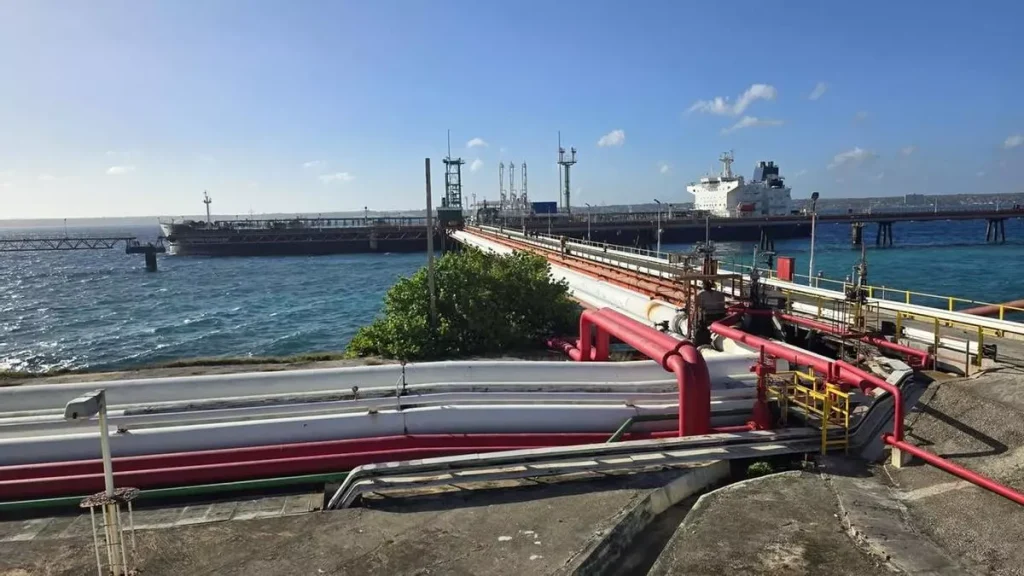
The Russian tanker Anatoly Kolodkin at the dock of the Supertanker Base in Matanzas / Facebook/Oliver Zamora Oria

14ymedio bigger14ymedio, Havana, April 10, 2026 – March once again showed that in Cuba, rumors are not mere gossip but a way of surviving informationally in a country where official silence takes up too much space. In the absence of data, institutional opacity, and the habit of announcing everything after it has already happened, people fill the gaps with conjectures. Rumors circulate by word of mouth, jump from a WhatsApp chat to a Telegram group, and become the soundtrack of daily life. This month, amid blackouts, lines, and geopolitical shocks, rumor-mongering reached an intensity rarely seen.

The undisputed protagonist of March was the Russian oil tanker Anatoly Kolodkin. Since it set sail from Primorsk at the beginning of the month, every mile it advanced toward the Caribbean fueled new speculation. In Havana neighborhoods, its position was discussed as if it were a hurricane during cyclone season. Some claimed that Washington would prevent its arrival, in compliance with the executive order signed by President Trump at the end of January, which imposes tariffs on countries that supply fuel to the Cuban regime. Others, more dramatic, spoke of a possible military confrontation between the United States and Russia in waters near the Island. Ultimately, the tanker docked in Matanzas without issue.

Others, more dramatic, spoke of a possible military confrontation between the United States and Russia in waters near the Island

Another rumor that gained traction in March was the supposed political decline of Miguel Díaz-Canel. Since the leader himself publicly confirmed negotiations between Washington and Havana, an open secret already reported by international media and the independent press, many began to see him as a leader on his way out. The question is not whether he will fall, but when and how. Will he leave the country on a discreet plane? Will he be removed by the Castro clan to make way for a figure more acceptable to Washington?

Recent statements by Sandro Castro, grandson of Fidel Castro, claiming that Díaz-Canel “is not doing a good job,” were interpreted as a sign that the president has become a fuse ready to be burned. In political circles and in bread lines, his fate seems sealed long before any official announcement. continue reading

Militarization also occupied a prominent place in the month’s rumor mill. Drivers traveling at dawn along interior highways reported convoys of trucks loaded with soldiers and equipment. In Havana, military exercises and explosions associated with defensive maneuvers caused concern among residents. Helicopters flying over urban areas, practice gunfire, and unusual movements in military facilities reinforced the sense that something is being prepared behind the scenes. In a country accustomed to secrets, any loud noise becomes a coded message.

Amid so much speculation, one of the most frustrating rumors for Cubans was the one claiming that access to the Starlink internet system had been opened on the Island. For several days, social media filled with messages promising fast and stable connection just by activating a mobile phone. The illusion did not last long. To use the service, a reception kit is still required, an expensive piece of equipment pursued by the General Customs Office of the Republic, along with a monthly subscription unaffordable for most people on this Island. The promise of free internet once again turned out to be a technological mirage.

The promise of free internet once again turned out to be a technological mirage

Statements by Donald Trump, in which he said he hoped to “take” Cuba soon, also unleashed a wave of conjecture. Some imagined discreet negotiations that would lead to an orderly political transition. Others spoke of more violent scenarios, from a military intervention to an internal collapse of the regime.

The social outbreak in Morón, Ciego de Ávila, was another focus of speculation. After the burning of items at the municipal headquarters of the Communist Party and the subsequent internet blackout in the locality, versions began to circulate about mass arrests and a strong military presence in the area. There was talk of young people being pursued in their homes and of fear spreading throughout the community. The lack of official information and restrictions on connectivity fueled distrust, reminding many of what happened during the Island-wide protests of 11 July 2021.

Precisely, problems with internet connectivity have become a constant rumor. Every digital blackout generates suspicions of deliberate censorship. Many Cubans believe that interruptions are not only due to technical failures or the energy crisis but also to the intention of preventing citizens from organizing and sharing information in real time. In a country where social media has become a public square, disconnecting the signal is equivalent to closing the street.

Translated by Regina Anavy

______________________

COLLABORATE WITH OUR WORK: The 14ymedio team is committed to practicing serious journalism that reflects Cuba’s reality in all its depth. Thank you for joining us on this long journey. We invite you to continue supporting us by becoming a member of 14ymedio now. Together we can continue transforming journalism in Cuba.
The IACHR Demands Explanations From the Cuban Regime Over the Imprisonment of the Minor Jonathan Muir Burgos

The organization gives the Cuban State five days to report on the situation of the teenager imprisoned for participating in the Morón protests, accused of the crime of sabotage

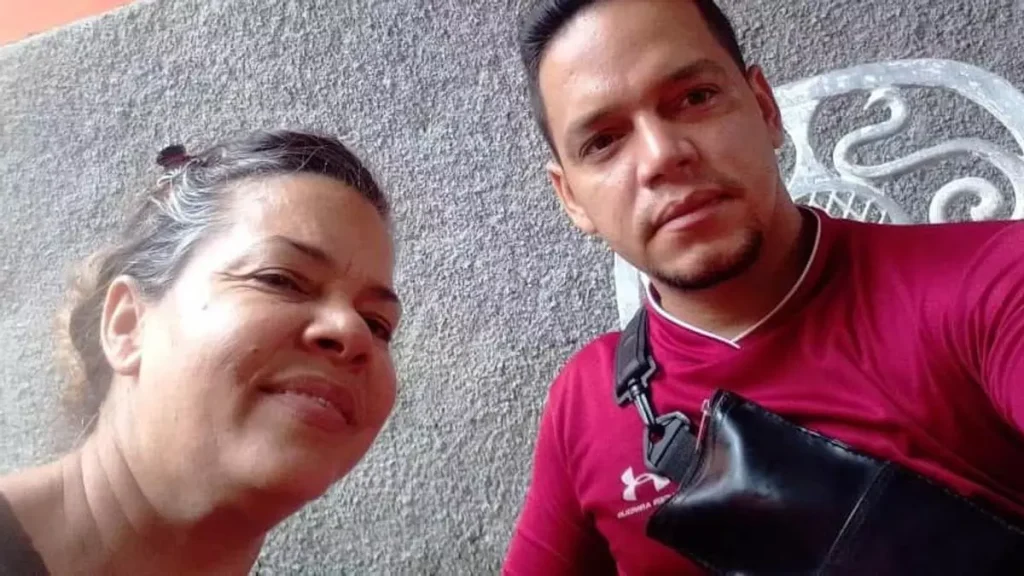
Jonathan Muir is being held in a maximum-security prison under conditions not officially clarified.

14ymedio bigger14ymedio, Havana, April 10, 2026 – The Inter-American Commission on Human Rights (IACHR) sent an official request to the Cuban Government demanding urgent information about the situation of Jonathan Muir Burgos, the 16-year-old who remains deprived of liberty after participating in the protests last March 13 in Morón, Ciego de Ávila.

The request, addressed Thursday to the Minister of Foreign Affairs, Bruno Rodríguez Parrilla, gives a period of five days for the State to respond about the conditions of Jonathan Muir’s detention, his state of health, and the measures adopted to guarantee his integrity.

The IACHR clarifies that this request does not yet imply a decision on the granting of such measures but underscores the urgency of verifying the teenager’s situation. The request has been made following a petition for precautionary measures submitted by the organization Cuba Decide (Defensa CD).

“The case of Jonathan has ceased to be an isolated complaint and has come under formal international observation,” Juan Carlos Vargas, executive director of Cuba Decide, told Martí Noticias. “The regime now has to respond within a very short timeframe. What is happening with a minor who is imprisoned, held incommunicado, and at risk?” he added.

“The regime now has to respond within a very short timeframe. What is happening with a minor who is imprisoned, held incommunicado, and at risk?”

The teenager’s family is denouncing what they consider a pattern of torture. Initially, the calls Jonathan was allowed to make from prison took place at 1:00 a.m. Both the time and his cries describing his situation and his pleas – “Please, get me out of here” – were unbearable for his parents. But since Thursday, April 9, those calls have stopped completely. Furthermore, the first scheduled visit was canceled, which has heightened the family’s concern. continue reading

In its request, the IACHR asks the Cuban authorities for clarification on three key aspects: the official position regarding the request for international protection; a detailed report on the conditions of detention, including access to medical care since Jonathan suffers from skin conditions and is not receiving treatment for them in prison, according to his relatives; and a risk assessment detailing whether the competent authorities have analyzed the danger the minor faces and what measures have been adopted to guarantee his safety.

Jonathan David Muir Burgos was charged with the crime of sabotage, an accusation that could cost him at least seven years in prison. The authorities ordered his transfer to Canaleta prison, a facility that in February was the scene of a riot violently repressed by regime forces after a young man committed suicide following complaints about the prison’s poor food.

While the dictatorship responds or not, Jonathan remains inside a maximum-security prison. Time is running against him

The teenager is one of the cases of several minors detained in Cuba in the context of the anti-government protests that have taken place since last March 6, following the deterioration of the already serious energy situation. Jonathan Muir is being held in a maximum-security prison under conditions not officially clarified. Relatives and civil organizations have reported psychological pressure against the young man and mistreatment in the conditions of his confinement.

“While the dictatorship responds or not, Jonathan remains inside a maximum-security prison. Time is running against him,” Vargas warned Martí Noticias. “This request is not just another procedure; it is an urgent tool to prevent the situation from escalating into something irreparable.”

Translated by Regina Anavy

______________________

COLLABORATE WITH OUR WORK: The 14ymedio team is committed to practicing serious journalism that reflects Cuba’s reality in all its depth. Thank you for joining us on this long journey. We invite you to continue supporting us by becoming a member of 14ymedio now. Together we can continue transforming journalism in Cuba.
Díaz-Canel Disliked the NBC News Question About “His Willingness to Resign to Save Cuba”

The president asserts that only the Cuban people can remove him from the Presidency if they believe he is “incapable” or not “up to their standards”
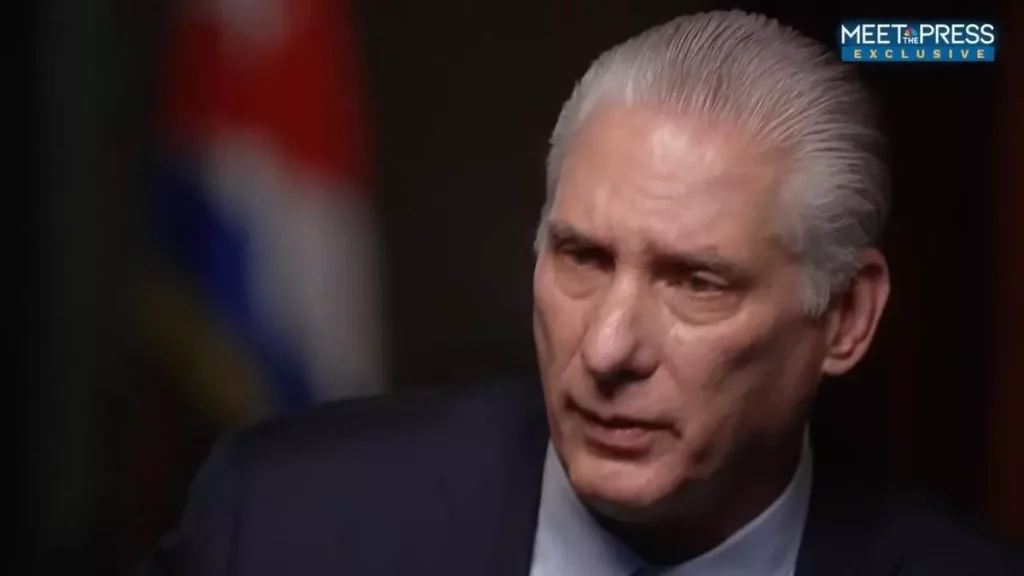
Díaz-Canel during the NBC News interview, which will air in full on Sunday / Screenshot

14ymedio bigger14ymedio, Madrid, April 10, 2026 – “Resigning is not part of our vocabulary,” Miguel Díaz-Canel told Kristen Welker, host of NBC News’ Meet the Press, in a preview of an interview that will be broadcast in full next Sunday. The last time a Cuban leader was interviewed by this U.S. television network was in 1959, when Fidel Castro appeared on that very same program.

The clip begins with a moment of high tension between the president and the interviewer. “Would you be willing to resign in order to save Cuba, the Cuban people?” Welker asks. Díaz-Canel, dismissing the critical questions, spends more than a minute pushing back against the journalist, insisting on whether she asks that type of question to other presidents, whether she is doing so on behalf of the State Department, and whether she would ask it to Donald Trump, apparently ignoring the strained relationship between the U.S. president and NBC. Welker, unfazed, clarifies what everyone knows: “I ask very tough questions to the president.”

With that settled, Díaz-Canel addresses the issue. “In Cuba, the people who hold leadership and government responsibilities are not chosen by the Government of the United States, nor are they appointed by the Government of the United States. We are a sovereign, free state. We have self-determination, we have independence, and we do not submit to any dictate of the Government of the United States,” he argues.

“We are a sovereign, free state. We have self-determination, we have independence, and we do not submit to any dictate of the Government of the United States,” he argues

The president then defends his humble origins and reaffirms Cuba’s electoral system. “Any one of us, in order to hold a responsibility, must be elected at the grassroots level in an electoral district by thousands of Cubans and then the Cubans who represent those others in the National Assembly of People’s Power elect those positions through indirect voting, as happens in other countries around the world,” he repeats.

He does not clarify, however, that it is impossible to be elected if continue reading

one does not belong to the Communist Party or one of the organizations endorsed by the regime. On the contrary, he defends the single-party system. “When we assume a responsibility, we do not do so out of personal ambition, nor corporate ambition, nor even for a party position, because our party is not electoral. We do it by a mandate of the people, and in the concept of revolutionaries, surrender is not an option.”

Díaz-Canel, despite being fully aware that he is not a popular leader —  unlike his more charismatic predecessors — asserts that the population can show him the door. “If the Cuban people believe that I am incapable, that I am not up to their standards, that I do not represent them, they are the ones who must decide whether I should be in leadership or holding the position of president or not,” said the man who governs a country where criticizing him personally constitutes a crime of “propaganda against the constitutional order,” punishable by long prison sentences.

The president continues by saying that policy in Cuba is decided by collective bodies and that under no circumstances can the United States demand anything of him, especially given what he describes as decades of “hostile” policy toward the Island. “They do not even have the moral authority to say they are concerned about the situation of the Cuban people and that the Cuban Government is the one that has led Cuba to this situation when they bear all that responsibility,” he continues, urging Washington to take a critical look at itself and see “how much their policies have cost the Cuban people in suffering and limitations, and how much they have deprived the American people of a normal relationship with Cuba.”

Díaz-Canel has maintained, as in all his recent appearances, that the regime is willing to engage in dialogue, as long as it is not conditioned on changes to the system. “We would not demand changes to the American system, about which we have endless doubts and endless criticisms,” he argues, and he calls for talks to focus on what can unite both countries. “Once again, I repeat, to avoid confrontation and to have a future for both peoples of benefit, of relationship, of friendship, and also of solidarity,” he concludes.

The excerpt of the interview was broadcast alongside a message the president sent to the II International Conference on Unilateral Coercive Measures, held in Geneva, in which he again denounces the “strangulation” that the United States imposes on the island. “Cuba is the victim of a prolonged collective punishment that seeks to bring its people to their knees through hunger, disease, and severe shortages of basic supplies,” he said in a video.

“Cuba is the victim of a prolonged collective punishment that seeks to bring its people to their knees through hunger, disease, and severe shortages of basic supplies”

The president reviewed some of the consequences he attributes to the worsening energy situation following Trump’s oil blockade. Among them, he cited the suspension of surgeries for more than 96,000 people (including 11,000 minors), 19,000 patients who are undergoing oncology or hemodialysis treatments being at risk, shortages of gas and water, and industrial production at minimal levels. “What right does the world’s leading economic power have to commit such an abuse against a small country?” Díaz-Canel asked, describing the situation as a return to “barbarism and servitude.”

“It is impossible to quantify the physical and psychological exhaustion, the daily shortages, the postponement of dreams, and the media war that is inflicted, out of sheer malice, on a noble, resilient, and supportive people like ours,” he argued, also taking a few minutes to thank those who have chosen to stand by Cuba, such as Mexico and Russia, coinciding with the announcement that a new oil tanker from that country will arrive on the Island, although Moscow has not indicated a date.

Translated by Regina Anavy
______________________

COLLABORATE WITH OUR WORK: The 14ymedio team is committed to practicing serious journalism that reflects Cuba’s reality in all its depth. Thank you for joining us on this long journey. We invite you to continue supporting us by becoming a member of 14ymedio now. Together we can continue transforming journalism in Cuba.
After Nearly Two Months Imprisoned Without Evidence, the Cuban Regime Releases a Man Accused of Graffiti Against President Díaz-Canel

Moisés Legrá Díaz was held in conditions of overcrowding and malnutrition despite a police expert report that exonerated him

Moisés Legrá Díaz’s mother denounced the poor conditions in which he was being held. / Social media

14ymedio bigger14ymedio, Havana, April 9, 2026 – Moisés Legrá Díaz was released by the regime on April 7, after spending nearly two months deprived of liberty under pretrial detention as a precautionary measure, accused of the crime of “propaganda against the constitutional order.”

The arrest had taken place on February 13 in Havana, after the young man responded to a summons from State Security in Villa Marista, following the appearance of graffiti in the municipality of Arroyo Naranjo with the phrase “Patria y Vida” and insults against President Miguel Díaz-Canel. From the political police operations center, he was transferred to Combinado del Este, a maximum-security prison.

According to Javier Larrondo, president of the NGO Prisoners Defenders, speaking to 14ymedio, the precautionary measure was lifted after handwriting analysis could not prove that the posters matched his writing. Therefore, he clarified, Legrá Díaz’s release is not part of the 51 political prisoners the regime promised to release after the agreement reached with the Vatican last March. Nor is it part of the 2,010 prisoners that the Cuban government announced it would release starting this April, who so far are all common prisoners.

Legrá Díaz, a father of three with no criminal record, was released as innocent. However, he had been held since his arrest in conditions of overcrowding and malnutrition, according to complaints by his mother and civil organizations. During the weeks he remained in pretrial detention, activists and relatives warned about the deterioration of his health. continue reading

During the weeks he remained in pretrial detention, activists and relatives warned about the deterioration of his health

One of these independent organizations was Cubalex, which denounced that, although Legrá had undergone handwriting analysis to determine whether he authored the posters, with a negative result, he remained detained.

Legrá Díaz’s return to his home, where his family was waiting for him, was confirmed by a call from his mother to Martí Noticias: “Since around two in the afternoon Moisés is now here at home with the children,” who, she describes, “cried and hugged their father.”

The criminal offense of “propaganda against the constitutional order,” incorporated into the 2022 Penal Code, penalizes any expression of criticism that the State considers “incitement against the social order or the socialist State,” without clearly defining which acts constitute the crime, making it a legal instrument to persecute dissent.

The case exposes the abusive use of pretrial detention as a preventive punishment, as well as the use of ambiguous criminal charges to target freedom of expression

Cubalex points out that the case of Legrá Díaz, a family man with no criminal record or activist background, exposes the abusive use of pretrial detention as a preventive punishment, as well as the use of ambiguous criminal charges to persecute freedom of expression.

The same offense has been applied, with prosecutors requesting up to nine years in prison for posters or street graffiti, as in other recent cases reported by 14ymedio, but also for social media posts or direct criticism of the government, among which the example of the conviction and imprisonment of the young creators of the digital collective El4tico stands out.

Translated by Regina Anavy

______________________

COLLABORATE WITH OUR WORK: The 14ymedio team is committed to practicing serious journalism that reflects Cuba’s reality in all its depth. Thank you for joining us on this long journey. We invite you to continue supporting us by becoming a member of 14ymedio now. Together we can continue transforming journalism in Cuba.

Imports of Chicken From the U.S., the Main Source of Protein for Cubans, Have Fallen by Nearly 50%

Food sales are declining overall, while car deliveries are holding steady, and, for the first time, small private businesses are authorized to purchase fuel

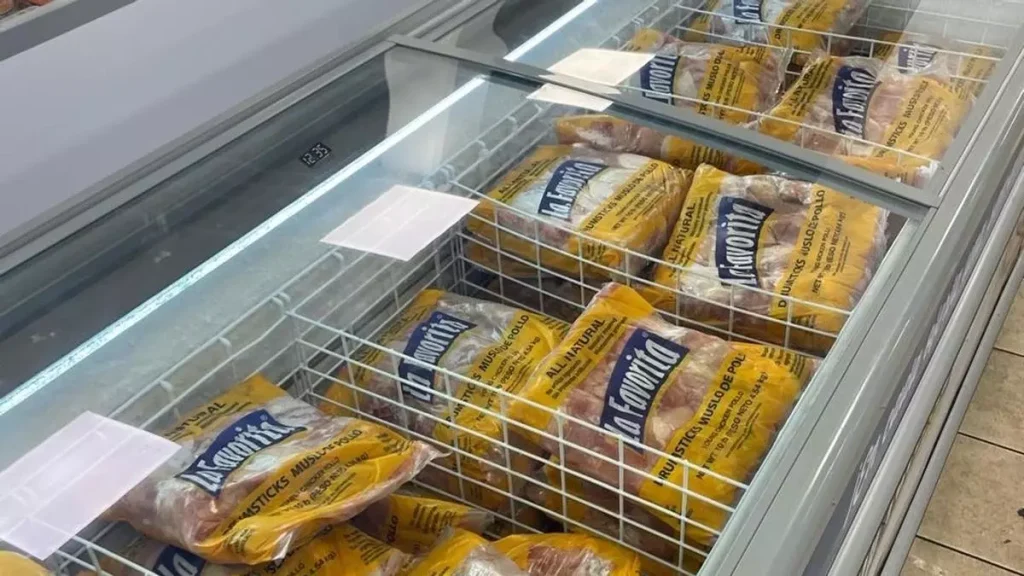
Frozen chicken has been the most imported food product into the country since 2012 / 14ymedio

14ymedio bigger14ymedio, Havana, April 9, 2026 – The crisis in Cuba is also being reflected in the drop, since the beginning of this year, in food imports from the United States. Chicken, the product most purchased by both the State and small private businesses since records have been kept, plummeted this February both in tonnage and value compared to the previous month.

A total of 13,121 tons were purchased for 15.87 million dollars, a drop of 19.6% in quantity and 21% in value compared to January. Moreover, compared with the month of December, when around 23,000 tons arrived, the situation is much worse. Regarding the year-on-year decline, in February 2025 Cuba imported 25,474 tons for 32.46 million, which means that the availability of the Island’s main source of animal protein has been reduced by nearly half in one year.

The data comes from the U.S. Department of Agriculture and reflects limitations in the purchasing capacity not only of the State, but also of private actors. Long blackouts, which prevent the maintenance of the cold chain, and distribution difficulties from ports, as a result of the oil restrictions imposed by the U.S. on the Island at the end of January, are worsening the already diminished purchasing options for the population.

The data comes from the U.S. Department of Agriculture and reflects limitations in the purchasing capacity not only of the State, but also of private actors

The figures are consistent with those also published this Wednesday by the U.S.-Cuba Trade and Economic Council, which revealed a 36.6% drop in imports of food and agricultural products, including frozen chicken, compared to February 2025. In the second month continue reading

of the year, the Island paid 30,187,420 dollars for food, down from 47,636,633 dollars last year, although slightly above what was reported in February 2024, at 27,204,788 dollars.

In the first two months of the year, the value reached 65,831,522 dollars, also below the 93,168,816 dollars recorded in the same period of 2025, equivalent to a year-on-year contraction of 29.3%.

The report shows that frozen chicken continues to be, since 2012, the most demanded product by Cuban importers and accounts for nearly half of total food purchases in February. Next on the list is rice, with 1,926,996 dollars. It is followed by sweetened milk and cream, frozen pork, juice mixes, roasted coffee, and bone-in pork cuts.

In total, the 10 main products purchased in February amounted to 22,140,544 dollars, which represents 73.3% of the total exported by the United States to the Island under the framework authorized by exemptions to the embargo, which mainly allow the import of food, health products, and automobiles, always paid in cash and in advance.

The figures continue to show that the much-discussed food sovereignty remains far from being achieved. During the first nine months of 2025, Cuba imported 355 million dollars in agricultural products from the United States, 15% more than recorded in the same period of 2024, according to figures from that country’s Department of Agriculture. At that time, one of the products that increased the most was pork. Between January and September last year, the Island purchased 33.6 million dollars of that product from its northern neighbor, more than double the same period in 2024, when it spent 16.3 million dollars.

This month’s report also notes that, once the Trump Administration added fuels to the list of products authorized for export to private actors in Cuba, there were purchases totaling 2,573,594 dollars.

This month’s report also notes that, once the Trump Administration added fuels to the list of products authorized for export to private actors in Cuba, there were purchases totaling 2,573,594 dollars

In that regard, growth in exports of cars from the United States is also reported, with a total amount of 16,238,357 dollars in the first two months of this year. The cumulative value since 2022, when the first license to import vehicles to the Island was issued, exceeds 416 million dollars. Of this figure, more than 243 million correspond to electric and gasoline vehicles, both new and used, as well as bicycles, trucks, motorcycles, and mopeds, in addition to parts and components. The year with the highest spending on these products was 2025, closing at 149,413,031 dollars.

The spending figures presented in the report only include the price of products exported from the United States, without including transportation or other associated charges.

In February, Cuba also ranked 51st among 215 U.S. agricultural export markets. In 2004 it reached position 25 in annual data and 29 in 2008, before falling to 49 in 2024 and 2025.

Translated by Regina Anavy

______________________

COLLABORATE WITH OUR WORK: The 14ymedio team is committed to practicing serious journalism that reflects Cuba’s reality in all its depth. Thank you for joining us on this long journey. We invite you to continue supporting us by becoming a member of 14ymedio now. Together we can continue transforming journalism in Cuba.
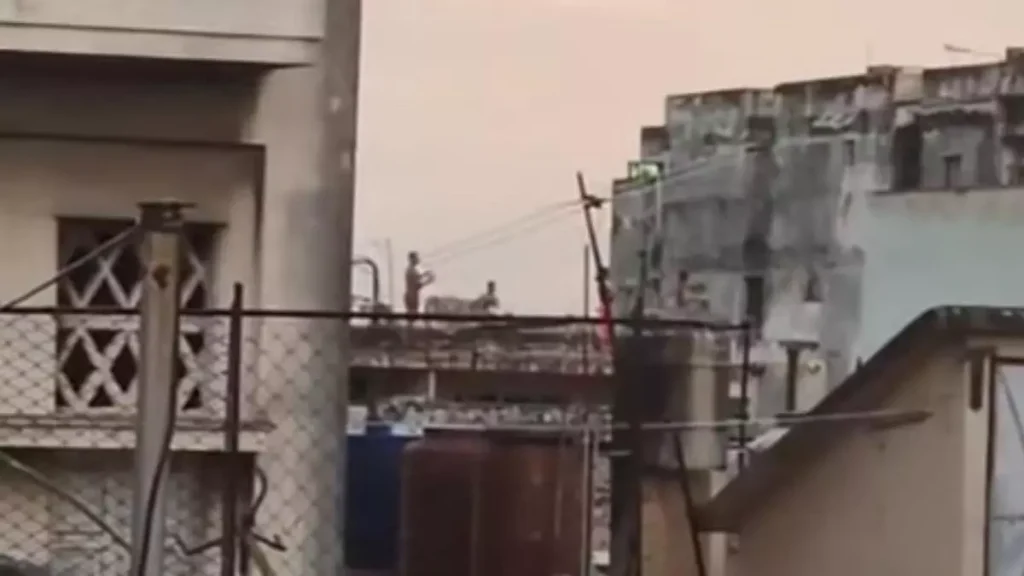
Cuba: Acopio Loses Its Monopoly, but the State Retains Partial Control Over the Sale of Agricultural Products

The Government reserves the most profitable sectors, such as tobacco and honey, and maintains control over exports

The obligation ends for farmers to have no choice but to rely on the State company Acopio, with its endless debts and non-payments. / 14ymedio

14ymedio bigger14ymedio, Madrid, April 9, 2026 – The commercialization of agricultural production will no longer be a monopoly of the Cuban State company Acopio, as it has been for 40 years. According to the regulation published this Thursday in the Official Gazette, producers will have more freedom to sell directly in the national market, although the State reserves the most profitable sectors and maintains control over exports.

The main novelty is, without a doubt, the recognition of small and medium-sized enterprises (mipymes [MSMEs in English]), cooperatives, self-employed workers, and individual producers as possible intermediaries. Thus, Decree 143/2025 and Resolution 16/2026 establish that any economic actor may manage markets, lease State premises, and sell both wholesale and retail goods.

Acopio is now just one more entity, although with considerably greater infrastructure than any private company in the country. As such, it must be able to fulfill contractual obligations regardless of whether it has financial resources or not. If it encounters logistical or financial problems, it is required, like all others, to inform the producers with whom it had contracts, who are then free to market their products with other natural or legal persons. According to this principle, the obligation ends for farmers who have no choice but to turn to the State company, with its endless debts and non-payments.

Producers are now authorized to make direct sales to the national balance, tourism, or mini-industries

Producers are now authorized to make direct sales to the National Balance, tourism, foreign-currency border sales, the national food processing industry, and mini-industries. However, exports continue reading

have several particularities. Although the producer can choose the product and where to sell it, commercialization must be carried out through intermediaries approved for that purpose, presumably due to their specialization.

In addition, there are a number of products that are outside this freedom of sale, as they are considered strategic sectors for the country. The list currently includes tobacco, charcoal, honey, cocoa, and coffee, although under the category “others,” the door remains open to include any that may be considered in the future.

The regulation includes a significant change in contracting committees, an entity that already existed but now, especially with the inclusion of private actors, represents the decentralization of the commercialization system.

These territorial groups will consist of a president, the Governor (at the provincial level) or the Mayor (at the municipal level), and permanent members who are representatives of the Agriculture Delegation, State and private companies, cooperatives, producers, and guests who are representatives of the Bank, Finance and Prices, the National Association of Small Farmers, and the sector’s labor union.

Their role is now decisive, compared to before when it was more deliberative without final decision-making power. They are now responsible for setting prices for non-centralized products, using local costs and market behavior as references. Their functions also include determining production priorities, social consumption and State markets, preparing balances and future estimates, as well as resolving conflicts. According to the latter, if a buyer of a product reports that they do not have funds to purchase what was agreed upon, these committees will determine its new destination “without this implying increased costs for producers or exempting the contract violator from responsibility.”

The new regulation includes some economic control mechanisms, including full banking of operations and the use of the Information System for Agricultural Planning (SIPA)*

Another important body is the public procurement committees, responsible for supplying entities of social consumption such as hospitals, nursing homes, and schools. These committees, which must be established in each center, are chaired by the head of the institution and include an odd-numbered team of its own staff responsible for managing each purchase.

The biggest change is the end of State allocation and the establishment of bidding and competition mechanisms. Each hospital, school, or other entity must issue a call in which any economic actor, whether a State company, cooperative, small business, or individual producer, can submit an offer on equal terms. The committee must evaluate proposals and select the supplier based on the best balance of quality, price, and delivery timing, issuing a formal decision that results in a legal contract and is subject to oversight, theoretically to prevent cases of corruption or favoritism.

The new regulation includes some economic control mechanisms, including the full banking of operations and the use of the SIPA information system to register contracts and transactions, a potential issue due to the distrust citizens feel toward the political and economic system.

*An IT tool adopted by the Ministry of Agriculture

Translated by Regina Anavy

______________________

COLLABORATE WITH OUR WORK: The 14ymedio team is committed to practicing serious journalism that reflects Cuba’s reality in all its depth. Thank you for joining us on this long journey. We invite you to continue supporting us by becoming a member of 14ymedio now. Together we can continue transforming journalism in Cuba.
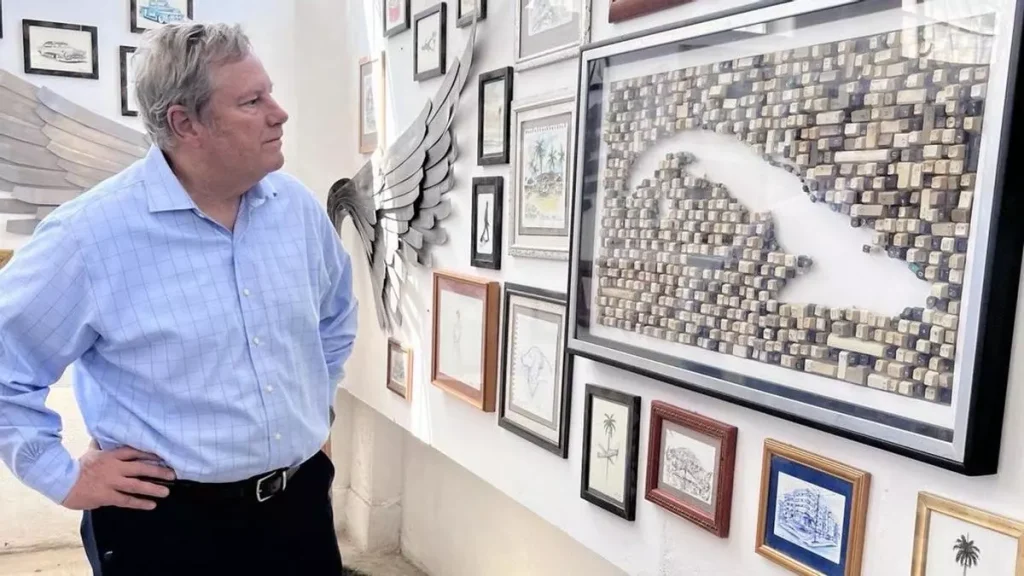
Pot-Banging Protests Erupted in Broad Daylight During Wednesday’s Demonstrations in Havana

“At this rate, five Cubans with pots and pans could very well open the Strait of Hormuz.”

Neighbors protesting with pot-banging on a rooftop in Havana, this Wednesday.

14ymedio bigger14ymedio, Havana, April 9, 2026 — Protests against the prolonged power outages, involving banging pots and pans, are no longer confined to nighttime. This Wednesday, the pot-banging protests took place again in several neighborhoods of the capital, with the difference that some of them occurred in broad daylight.

A resident of Santos Suárez, in the Diez de Octubre municipality, recounts on Facebook with a touch of humor: “Five blocks from here, around 3:00 pm, following the number 1 concert in B-flat for pot and pan, performed by the neighbors in that area, the police arrived and immediately the lights came back on!” As has happened on other occasions, the authorities have responded to the pot-banging protests by restoring electricity, always temporarily.

“Did the fuel appear only for that little bit of neighborhood?” the same woman asks, adding ironically, “At this rate, five Cubans with pots and pans could very well open the Strait of Hormuz.”

Videos circulating on social media show residents banging pots and pans during the day in that neighborhood, but also in Central Havana and others, where blackouts have lasted up to 30 hours.

We want food, we want light, we want water

Other testimonies gathered by Martí Noticias confirm the pot-banging protests that could indeed be heard in various neighborhoods of Diez de Octubre in the afternoon, accompanied by slogans such as: “We want food, we want electricity, we want water.” The same news outlet quotes a resident as saying: “We’ve been without electricity for a day and a half. It’s madness, we can’t sleep.”

During the night, similar demonstrations were also reported in other parts of the capital. In the Bahia neighborhood, videos circulating online show that, in addition to the banging of pots and pans, church bells were ringing as a form of protest against continue reading

the more than 24-hour power outage.

In the Zamora neighborhood of the Marianao municipality, after three consecutive days of power outages lasting more than 12 hours, residents also banged pots and pans in protest. According to published accounts, electricity was restored almost 20 minutes after the protest began.

Repressive forces were deployed, including trucks with black berets, plainclothes police officers, and around five patrol cars.

On Tuesday night, pot-banging protests were also reported in Guantánamo, in the Caribe and Norte neighborhoods. The intensity of the protest prompted a police presence, which the independent legal organization Cubalex warned of as a “risk of repression, arbitrary arrests, and other human rights violations,” following arrests reported in the context of daily demonstrations that began on March 6.

“Repressive forces were deployed, including trucks with black berets, plainclothes police officers and around five patrol cars,” Cubalex reports in its publication, accompanied by videos documenting the demonstration and the police presence.

According to a report by Martí Noticias, authorities restored electricity to quell the protest. But the service only lasted for an hour. Then the blackout resumed, accompanied by an internet outage that lasted until the following morning.

The pot-banging protest in Guantánamo took place about five blocks from the provincial headquarters of the Communist Party of Cuba (PCC). The PCC’s first secretary in the province and officials from the Ministry of the Interior were present. This deployment reflects fears that the protests could take on a political dimension.

Although no arrests were reported during these latest protests, it has been noted that arrests often occur days later.

The demonstrations, sparked by shortages of basic services, have taken on a political character, with slogans blaming the state administration for the crisis. Several have featured chants of “Freedom!” and “Down with communism!” along with insults directed at Cuban President Miguel Díaz-Canel.

Although no arrests were reported during these latest protests, it has been noted that arrests often occur days later, as happened after the March 13 demonstrations in Morón, with more than 16 people subsequently arrested, including minors, such as the case of teenager Jonathan David Muir.

The lack of electricity makes it impossible to pump water, preserve food, and sleep in the spring heat on the island. Mosquitoes and the weather exacerbate the discomfort, making it increasingly difficult to lead a basic daily life amidst the energy crisis.

The National Electric System (SEN) has been severely affected recently by the breakdown this Monday of the Antonio Guiteras thermoelectric plant – the largest generating plant in the country – and the failure that caused the disconnection of unit 1 of the Che Guevara plant, in Villa Clara, already restored by this time.

The National Electric System (SEN) continues to fail to meet basic demand due to the accumulated wear and tear on its plants and a lack of maintenance.

Today’s report from the Cuban Electric Union (UNE) indicates that Unit 2 of the Felton thermoelectric plant is offline due to a breakdown, while Unit 5 at Mariel, Units 5 and 6 at Renté, and Unit 5 at Nuevitas remain out of service for maintenance. This results in a projected deficit of 1,775 MW during today’s peak hours, compared to a national demand of 3,020 MW.

Despite the recent arrival of the Anatoly Kolodkin tanker to the island with 100,000 tons of Russian crude oil, the National Electric System (SEN) still cannot meet basic demand due to the accumulated wear and tear on its plants and a lack of maintenance. The fuel shortage, exacerbated by the sanctions and tariffs imposed on Cuba by the United States, further worsens the country’s energy crisis.

______________________

COLLABORATE WITH OUR WORK: The 14ymedio team is committed to practicing serious journalism that reflects Cuba’s reality in all its depth. Thank you for joining us on this long journey. We invite you to continue supporting us by becoming a member of 14ymedio now. Together we can continue transforming journalism in Cuba.
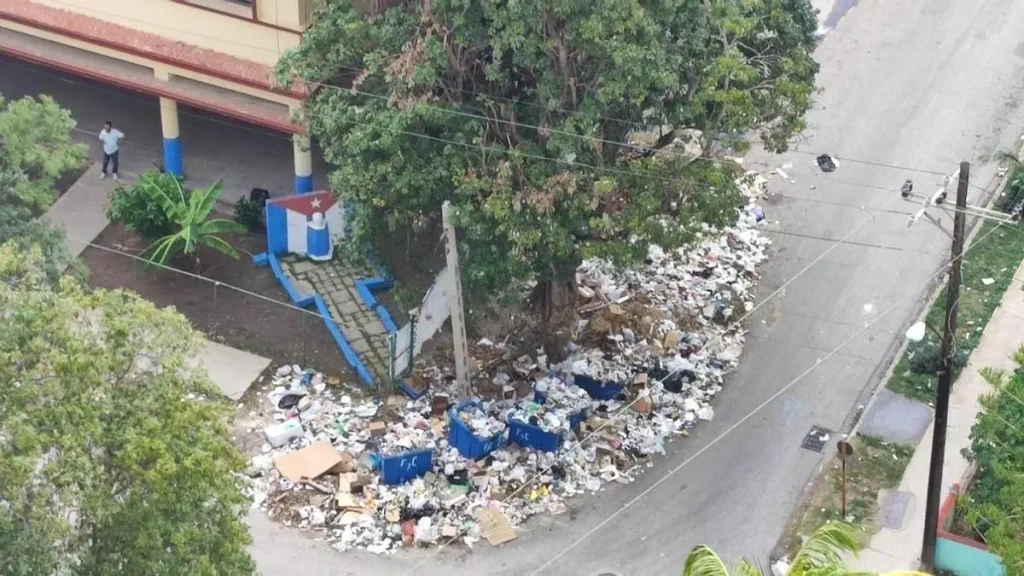
Mike Hammer Expresses Washington’s Support for the Imprisoned Members of El4tico in Cuba

“We will continue to insist that freedom of expression be respected and that all those unjustly detained be released,” Hammer said.

Mike Hammer has gained prominence on the island since Trump’s return to the White House / X @USEmbCuba

14ymedio bigger14ymedio, Havana, April 8, 2026 — Mike Hammer head of the U.S. diplomatic mission in Havana, expressed his concern over the February arrest of Ernesto Medina, known as Tico, and Kamil Zayas, members of the El4tico project, for publishing content critical of the government. In a video posted Wednesday on the social media account of the U.S. Embassy in Havana, the diplomat is shown on a video call with Doris Santiesteban, Medina’s wife, telling her that the activists and their families have “Washington’s support.”

During the conversation, Santiesteban points out that all legal actions taken on behalf of the detainees have failed. “Every legal recourse we’ve pursued has been rejected. Changes to pretrial detention, a complaints,  they’ve all been denied,” she states in response to Hammer’s direct question.

Regarding the physical condition of her husband and Zayas, the woman replied: “Well, they are thin, they are skinny.”

Then, the head of mission, who since his appointment has been constantly traveling throughout the island and visiting activists, independent journalists , and ordinary Cubans in their own homes, points out that “on behalf of the United States Embassy in Washington, we are very concerned about them. We will continue to insist that they should be released, like all political prisoners. They have done nothing wrong.” continue reading

“We will continue to insist that they should be released, like all political prisoners. They have done nothing wrong.”

Before ending the conversation, Hammer wishes Santiesteban “strength and courage,” and adds that at the diplomatic headquarters “we are always thinking of Tico and Kamil.”

“I also thank you and the United States embassy for the support and solidarity,” Santiesteban later said.

The diplomatic mission accompanied the 53-second video with the message: “We will continue to insist that freedom of expression and thought be respected and that all those unjustly detained be released.”

Ernesto Medina and Kamil Zayas were detained on February 6 in an operation in Holguín that resembled a raid against armed and dangerous criminals, including a search of their home and the confiscation of work equipment such as a cell phone, laptop, camera, tripod, router, and other devices. The harassment they endured at the hands of the repressive forces was recorded and shared by the journalists themselves in their online stories.

Nearly a week later, the Holguín Provincial Prosecutor’s Office justified its decision to open a criminal case against the platform’s creators. They were accused of “propaganda against the constitutional order” and “incitement to commit crimes” through publications that incited the population and members of the Armed Forces and the Ministry of the Interior to change the constitutional order and “they defamed state institutions.”

It accused them of “propaganda against the constitutional order” and “incitement to commit crimes” through publications

The call between Hammer and Santiesteban took place two days after artist and political prisoner Luis Manuel Otero Alcántara ended an eight-day hunger strike in Guanajay prison, Artemisa, as confirmed by his Facebook page.

The hunger strike was a direct response to the death threats he received from agents of the Department 21 of State Security during an inspection at the prison on March 28, and the regime’s refusal to release him early despite legal efforts by Cubalex, an independent, non-profit organization dedicated to defending and promoting human rights in Cuba

Days before undertaking it, he had begun a 12-hour daily fast, which he planned to end on March 31. However, when that date arrived, he upped the ante.

Cuban artist Anamely Ramos, who announced the new hunger strike at the time, pointed out that Otero Alcántara’s decision was based, in addition to the recent death threat,  on the fact that “he already suspects that they will want to extend his sentence beyond the five years, which end completely in July.”

“He already suspects that they will want to extend his sentence beyond the five years, which end entirely in July.”

On Wednesday, Human Rights Watch (HRW) condemned the Cuban government’s announced release of 2,010 people, noting that it excludes political prisoners. In a statement, the NGO said that, “while the announcement raised hopes among many families of political prisoners, neither Human Rights Watch nor other civil society groups, including Prisoners Defenders and Justice 11J, have identified any political prisoners among those released.”

He emphasized that Havana would exclude, among others, people convicted of “crimes against authority,” which can include “contempt,” “propaganda,” and “assault,” “which the government has used for decades to persecute and arbitrarily prosecute opponents.”

In this regard, HRW indicated that more than 700 political prisoners remain behind bars in Cuba, “and hundreds more suffer house arrest and other restrictions.”

______________________

COLLABORATE WITH OUR WORK: The 14ymedio team is committed to practicing serious journalism that reflects Cuba’s reality in all its depth. Thank you for joining us on this long journey. We invite you to continue supporting us by becoming a member of 14ymedio now. Together we can continue transforming journalism in Cuba.
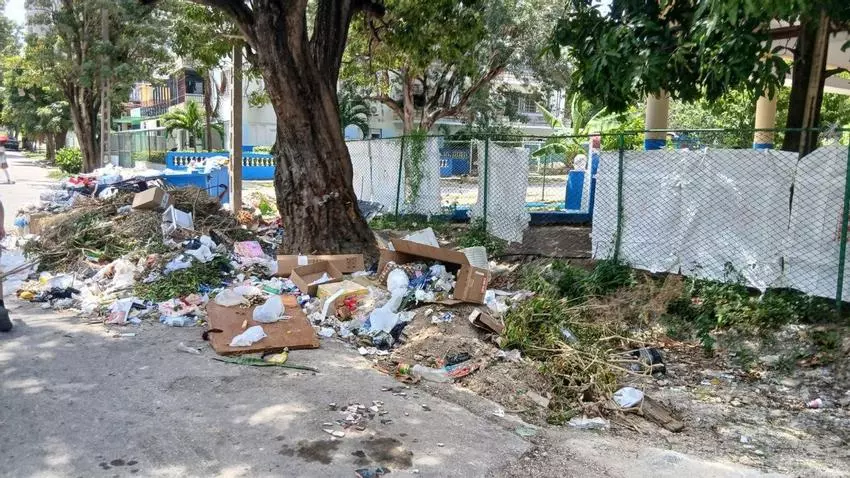
The Prohibited Photo

Rather than cleaning the corner of Factor and Conill, Cuban authorities prefer to prevent anyone from taking pictures of it.

From the balconies of our building, the view is complete: an unintentional monument to neglect, an altar where the homeland coexists with the abandoned. / 14ymedio

14ymedio bigger14ymedio, Yoani Sánchez, Generation Y, Havana, April8,2026 — Employees of the state-run warehouse on Factor y Conill Street in Nuevo Vedado have been orientado [instructed] to cover the fence around the corner with sacks. The order aims to prevent neighbors from taking photographs of the immense mountain of garbage that grows there every week, with the bust of José Martí in the background and the Cuban flag in the gardens of the warehouse, products destined for the rationed market are stored, as a backdrop. However, clearly visible from the heights of my building is the triptych formed by the Apostle, the solitary star, and the garbage.

The scene has something of farce and unintentional comedy about it. While the sacks have been hung with diligence, as if it were a national security operation, flies continue to come and go without asking permission, and the smell of decay rises through the windows with a punctuality that public transportation could only dream of. The garbage, undisciplined and stubborn, doesn’t care about directions or makeshift curtains.

Sackcloths hiding the statue of Martí at the corner of Factor and Conill streets in Nuevo Vedado. / 14ymedio
One would think the problem is the pile of waste, but apparently not. The real enemy is the photograph. The image circulating on WhatsApp, leaking onto social media, and contradicting the official narrative seems to be the biggest concern for officials and bureaucrats.

From the balconies of our building, the view is complete: the sculpture of a head, reached by a path of stones that no one uses, the blue stripes with their red triangle and, a few meters away, a string of torn bags, damp cardboard, and plastic scraps spilling onto the sidewalk. An unintentional monument to neglect. An altar where patriotism coexists with abandonment. continue reading

Appearances are so important to this regime that it is willing to spend time, energy, and resources covering up an image and obscuring a shot, rather than using those same resources to clean the city and prevent the diseases that spread from these open-air dumps. In the end, it is not about eliminating the garbage, but about hiding it. Like so many other things in this country.

______________________

COLLABORATE WITH OUR WORK: The 14ymedio team is committed to practicing serious journalism that reflects Cuba’s reality in all its depth. Thank you for joining us on this long journey. We invite you to continue supporting us by becoming a member of 14ymedio now. Together we can continue transforming journalism in Cuba.

Spain’s Vima, With Business in Cuba, Doubles Its Revenue Despite the Crisis on the Island

The company sells low-quality products at high prices in the stores of the Cuban military conglomerate Gaesa

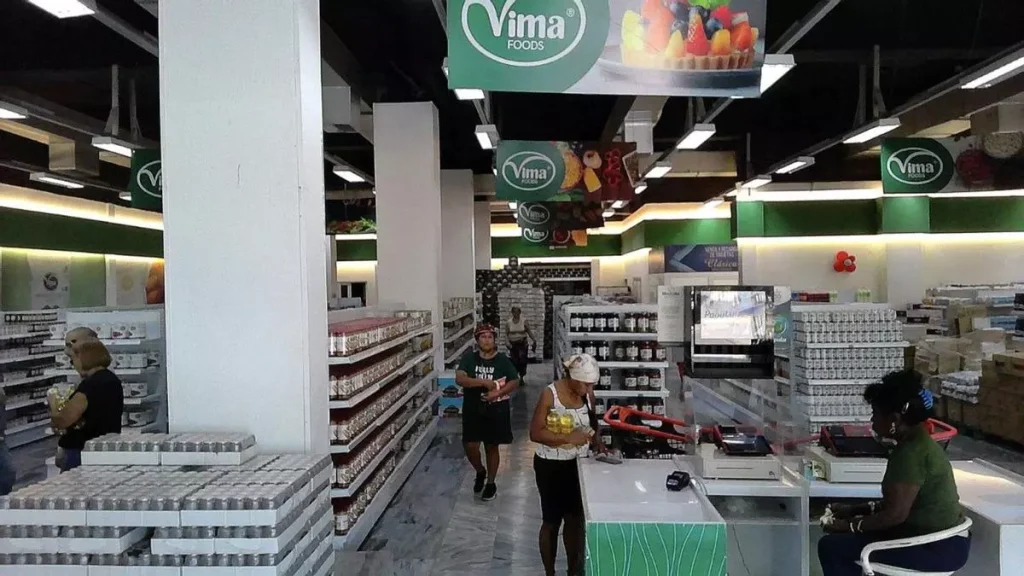
State store of Vima and Cimex at Infanta and Santa Marta, Centro Habana. / 14ymedio

14ymedio bigger14ymedio, Havana, Juan Diego Rodríguez/Olea Gallardo, April 8, 2026 – The Vima Foods group, known in Cuba for its low quality food products, expects revenue of 250 million dollars (216 million euros) in 2026, a figure higher than last year and more than double what it reported in 2024. In a statement distributed to the media this Tuesday, the Spanish company also states that it plans to double those revenues in five years, thanks to the expansion of its businesses in the Americas and its “leap” into European and African markets.

Thus, by 2030 the firm, whose name comes from the combination of the initials of its founder, Víctor Moro Suárez, aims to reach 500 million dollars (432 million euros), driven by “its recent change in visual identity and its positioning as a trusted partner” in what the sector calls the “horeca channel”—an acronym for hotels, restaurants, and catering—and in retail sales “worldwide.”

This year they also plan to become a “comprehensive distribution solution” for Spanish and international brands “with expansion strategies in global markets.” This offer to serve as a “bridge between Spanish production and global demand” is considered by Vima as “a step forward,” supported by “its consolidated infrastructure, its knowledge of local markets, and its network of relationships with operators, supermarkets, and distributors in more than 30 countries.

The company boasts of operating “in more than 10,000 points of sale” and of being “in the main supermarket chains in the Americas”

The company boasts of operating “in more than 10,000 points of sale” and of having a presence “in the main supermarket chains in the Americas such as Walmart, Chedraui, Rey, Éxito, Soriana, and Carrefour.” Likewise, it notes that it supplies “the main hotel chains in the region.”

In its statement, it does not detail how business is distributed among the seven countries where it claims to have distribution centers: Spain, the United States, Mexico, the Dominican Republic, Cuba, Panama, and China, listed in that order. However, according to last year’s figures, the Island is its main market, accounting for nearly half of its business continue reading

volume. At that time, they reported that of the nearly 106 million euros in business volume of the group’s Coruña-based subsidiary, Corporación Alimentaria Vima, 49 million euros corresponded to operations with Cuba, followed by the Dominican Republic with 33 million and Mexico with 15.4 million. This implies a very minor margin, about 9 million euros, for the rest of the world where it claims to operate.

In Cuba, Vima products, ranging from frozen vegetables to prepared foods, including canned vegetables, jams, and grains, are as ubiquitous in stores as they are criticized by buyers. To the poor reputation for quality is added, in the midst of the unprecedented crisis in the country, the high prices at which they are sold in Cimex’s dollarized stores, which belong to the Grupo de Administración Empresarial (Gaesa), the conglomerate of the Armed Forces.

A 1.5-liter bottle of water costs one dollar, double what it costs in a private shop, and rice is 1,000 pesos per kilogram, when it is 600 in small private businesses.

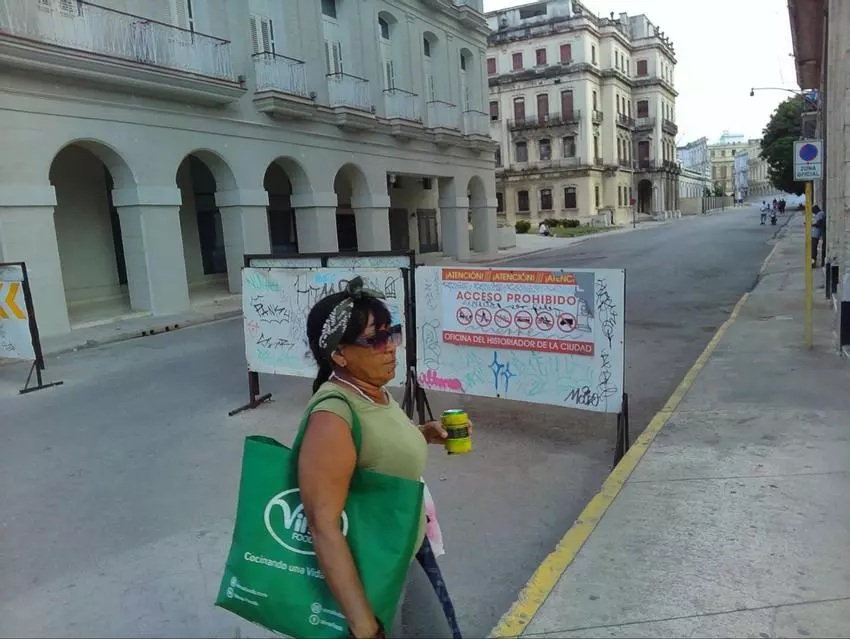
Vima bags have become a clever form of advertising paid for by users of state-run stores. / 14ymedio

Another thing that has proliferated in recent times, not only in Vima’s own establishments but also in other dollar stores, is reusable green bags with the Vima logo. Their price is 40¢ (US), and since there are almost never free plastic bags in these markets, the customer is forced to buy one, a clever form of advertising paid for by users of the state-run stores where the Spanish company sells its goods.

The products of this brand, moreover, are not found in Spanish supermarkets, nor in Mexico City, but one would not guess this from reading its corporate information, where the Island appears to occupy just another space, and not the pillar of the conglomerate.

Vima insists on describing itself as a “family business whose roots are linked to the Galician fishing sector,” despite being little known in that region, while emphasizing its renewed expansionist ambitions. “One of our crucial markets continues to be the Americas, where we already have a very consolidated presence from north to south. However, our vocation is global; we are preparing the ground for large-scale expansion into Europe and Africa,” Víctor Moro Morros-Sarda, vice president of the conglomerate and son of the president and founder, Víctor Moro Suárez, is quoted as saying in the text.

His statements continue, emphasizing the company’s future ambitions: “We want Spanish and international brands to see Vima Foods not only as a distributor, but as a strategic ally. We have the infrastructure, local knowledge in complex markets, and the logistics necessary to bring the quality of our products to any corner of the world.” And they conclude: “Our recent participation in the Alimentaria trade fair has been the turning point to showcase this new identity and our capacity to scale the business exponentially through 2030.”

“We have the infrastructure and logistics necessary to bring the quality of our products to any corner of the world”

Except in this statement, moreover, the Moro family has never hidden its ties to the Island. Moro Morros-Sarda held a lavish wedding in Havana in December 2023, and his father, the son of Víctor Moro Rodríguez, a politician of Spain’s Transition, who died in 2021 and also headed a frozen packaged goods conglomerate, lived for more than 25 years in Cuba, where he was president of the Association of Spanish Businesspeople in the country.

Last year, in a report published by the local press, they highlighted a “new subsidiary” created by the group on the Island, Vima Caribe, intended to channel “all commercial operations into a new branch, a company with 100% foreign capital, responsible for the import, storage, commercialization, and distribution of the group’s products in Cuba.”

It thus became clear that the “collaboration project” between Vima and Gaesa, signed in 2024, went beyond the management of several “dollarized” stores. It involved the legal creation of a new company, which has not been reported by the official Cuban press.

In the same report, Economía Digital provided other details about the ups and downs of Vima Foods’ subsidiaries, not for nothing referring to it as “a highly dispersed conglomerate.” For example, it said that Corporación Alimentaria Vima had “transferred” its corporate employees in Spain to a new company, CS Vima, based in Madrid. It is in the Spanish capital where the head of the conglomerate is registered, that until March 2023 was located in Panama.

That same year, as recorded in the Commercial Registry, the group moved its registered office to Spain and transformed from a public limited company to a limited liability company, something that, above all, further strengthens the family’s control over the company and external investors.

In 2001, its revenues had been, as detailed, 25 million euros. That is, in a quarter century, the business has multiplied nearly tenfold

Even more opaque is the origin and growth of its multimillion-dollar business. The Panama Papers, the publication of the Mossack Fonseca law firm database by the International Consortium of Investigative Journalists (ICIJ), revealed in 2016 that Vima World, whose name has changed several times since it was founded, appeared among companies registered in tax havens.

In the ICIJ database, it appears as founded in January 1994 in the British Virgin Islands. However, Moro Suárez himself admitted in an interview with the Galician press in 2006 that his empire began in Cuba. When asked by the journalist how he “learned” to manage “one hundred sixty employees who serve twenty million meals worldwide,” the businessman replied: “I found a niche in the Caribbean area, starting from Cuba, and that circumstance led me to organize this group of companies.”

Another earlier report, published in La Voz de Galicia, also confirmed this: “Vima was born in Havana in 1994, to take advantage of the opening of the Cuban market to tourism investment, and become the main distributor to hotels and restaurants.” In 2002, the report stated that Vima World, “a distributor based in Vigo and 100% owned by the Galician Moro family,” was the leader in the sector in Cuba, controlling 15% of food distribution and 25% of supply to hotels. In 2001, its revenues had been, as detailed, 25 million euros. That is, in a quarter century, the business had multiplied nearly tenfold.

How a company could be founded in Cuba, run by a foreigner in the mid-1990s, and reach those figures in just a few years is one of the questions raised about Vima, which began appearing in establishments on the Island precisely at that time, the era of dollarization and the desperation of the Special Period. The answer may lie in that 2006 interview, in which the journalist wrote that, according to what he had been told, Moro Suárez had connections with figures of the regime, including Fidel Castro himself.

Translated by Regina Anavy

______________________

COLLABORATE WITH OUR WORK: The 14ymedio team is committed to practicing serious journalism that reflects Cuba’s reality in all its depth. Thank you for joining us on this long journey. We invite you to continue supporting us by becoming a member of 14ymedio now. Together we can continue transforming journalism in Cuba.

Human Rights Group Denounces ‘Violations of Labor Rights’ in Cuba’s Medical Missions

Doctors have experienced “practices of income retention, long working hours, and the assignment of tasks unrelated to healthcare work”

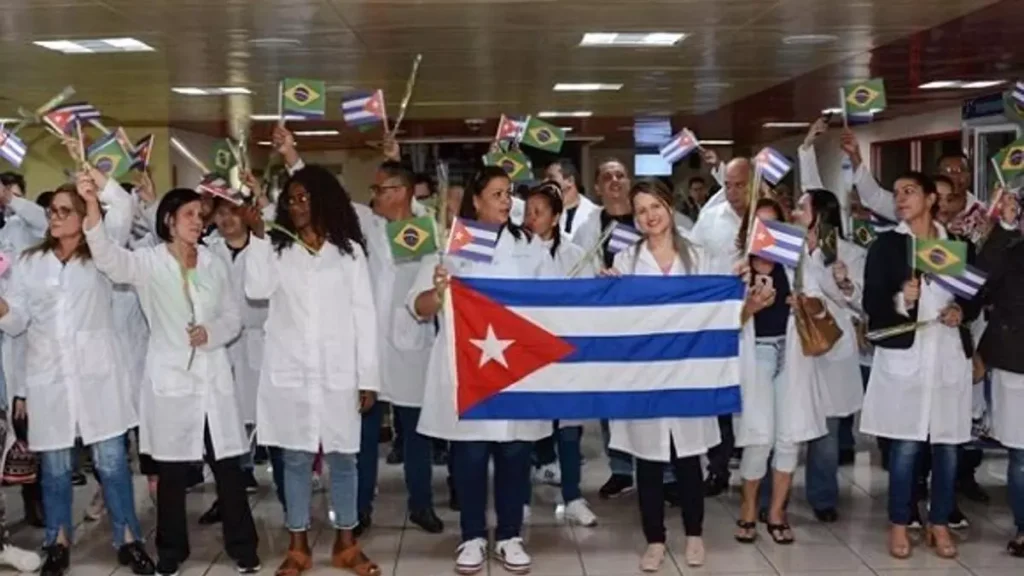
The Inter-American Commission notes “differential treatment and remuneration that could be insufficient” / Cubadebate

14ymedio biggerEFE (via 14ymedio), Havana/Miami, April 7, 2026 – This Tuesday the Inter-American Commission on Human Rights (IACHR) denounced “violations” of a structural nature of “labor, union, and human mobility rights” of professionals participating in Cuba’s medical missions abroad.

The report by this body of the Organization of American States (OAS) coincides with a pressure campaign by the United States on Cuba and, in particular, on its controversial medical missions and other sources of foreign currency.

The document, prepared jointly with the Special Rapporteurship on Economic, Social, Cultural, and Environmental Rights (REDESCA) of the IACHR, refers to “the existence of structural challenges in terms of decent work in medical missions.”

It includes testimonies from participants in these missions who reported violations related to “differential treatment and working conditions characterized by levels of remuneration that could be insufficient.”

Doctors also face the “absence of contracts or lack of knowledge of working conditions”

The text details that doctors also face the “absence of contracts or lack of knowledge of working conditions, lack of union freedom, as well as working conditions that do not ensure the dignity of the worker.”

Professionals participating in Cuban missions abroad have experienced “practices of income retention, long working hours, and the assignment of tasks unrelated to healthcare work,” the report specifies.

Nevertheless, the IACHR also recognizes the importance of the work of Cuban healthcare personnel in these mechanisms “in the provision of essential services for populations in vulnerable situations.”

The study also notes that the recipient states of these brigades regard them as a form of cooperation that “contributes to strengthening their public systems in contexts where medical care is limited or insufficient.”

In addition, the report says that, despite criticisms of their working conditions, doctors earn a salary in dollars that is better than what they would receive in their own country, and the Cuban Government generates foreign currency (which it says it uses in its own healthcare system).

Havana keeps an average of 85% of the payment from host countries

However, according to Prisoners Defenders, Havana keeps an average of 85% of the payment from host countries, retains doctors’ passports abroad, and penalizes those who leave the mission before the agreed time. continue reading

The 2024 Trafficking in Persons report by the U.S. State Department places Cuba’s income from the export of professional services between 6 and 8 billion dollars.

According to Cuba’s National Office of Statistics and Information (ONEI), exports of professional services represented more than 40% of the Island’s total external sales between 2018 and 2020.

Cuban medical brigades, established more than six decades ago and with more than 600,000 professionals deployed in 165 countries, according to official figures, have been one of the focal points of U.S. policy toward Cuba under President Donald Trump’s administration in his second term.

In recent months, and under pressure from Washington, Honduras, Guatemala, Jamaica, Antigua and Barbuda, the Bahamas, Grenada, Guyana, and Trinidad and Tobago have suspended their medical cooperation with Cuba or reformed its terms.

The Cuban Government has denied these criticisms of Cuban medical missions and has described Washington’s pressure on Latin American and Caribbean countries as “fierce pressure” and “blackmail.”

Translated by Regina Anavy

______________________

COLLABORATE WITH OUR WORK: The 14ymedio team is committed to practicing serious journalism that reflects Cuba’s reality in all its depth. Thank you for joining us on this long journey. We invite you to continue supporting us by becoming a member of 14ymedio now. Together we can continue transforming journalism in Cuba.

Bureaucracy and Corruption Hinder the Official Campaign in Favor of Solar Panels in Homes

In addition, the exodus has drastically reduced the number of trained experts authorized to approve these systems

Workers from a small private enterprise carry out solar panel installation work in Havana. / EFE/Capture

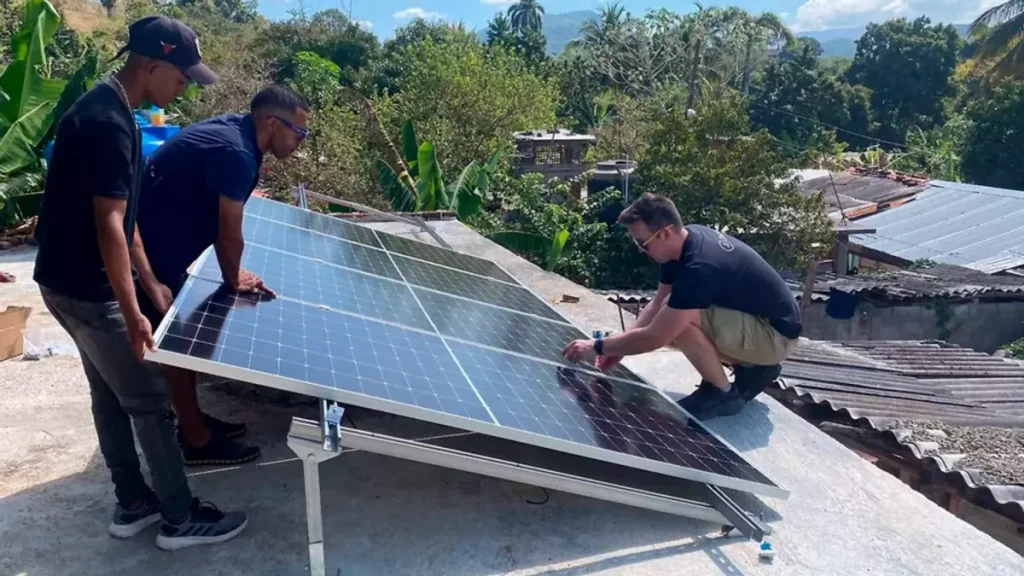
14ymedio bigger14ymedio, Madrid, April 7, 2026 – The controversy has not ceased since Julio César Hernández Santana, head of the Municipal Directorate of Territorial Planning and Urbanism (INOTU) in Matanzas, tried to clarify on local television the regulations for installing solar panels in homes, and a monumental mess ensued.

The official explained the mechanism, expressed in a directive from INOTU, which requires that the citizen begin the process at the Physical Planning offices, from where they will be referred to the community architect to draft a technical project. This preliminary step is essential for safety, as it evaluates the load-bearing capacity of the building and the specific location of the equipment.

Once the property documents and technical certification are submitted, the institution has a period of ten working days to issue official authorization, which costs 68 pesos, although the problem is more closely linked to the architectural project, which ranges between 700 and 1,500 pesos.

The problem is more closely linked to the architectural project, which ranges between 700 and 1,500 pesos

The regulation recognizes roofs, terraces, patios, garages, and porches as areas where panels can be installed, provided they are private spaces and do not harm neighbors. This complicates the situation for multifamily buildings, where residents’ agreement is required and space is scarce. The condition of the buildings is also a significant issue, since damaging the continue reading

waterproofing layers of the roof is possible, with leaks and neighborhood disputes as potential consequences.

In the case of panels already installed, about 33,000 in Matanzas, there is what Hernández called flexible retroactivity, meaning there will be no fines when the regulation comes into force, but the panels must be regularized. Responsibility for safety will fall on the owner, but obtaining authorization will provide protection in case of a complaint if something happens.

Although authorities acknowledge the urgency and necessity, the procedure adds complexity that has not been well received, above all, as they themselves admit, because the crisis on the Island is multisectoral. Families lack the financial resources to buy the expensive panels, and now procedures are added that increase the cost. The conditions of the buildings is often deplorable; transportation is also poor, and staffing is reduced due to the exodus that has occurred on the Island over the past four years. In Matanzas there are barely three community architects, making it almost impossible to process everything within a reasonable time.

Yuni Moliner, the journalist responsible for the controversial interview, was the first to highlight the issue by the title of the report: ORDERING or more BUREAUCRACY? The author notes that “the measure attempts to introduce control in a practice that has grown rapidly and, in many cases, improvised. However, it comes at a time when solar panels are not just an option, but an immediate energy necessity for thousands of families,” and emphasizes that, looking ahead, it provides legal certainty, but in an emergency situation only complicates matters.

One of the most well-founded comments came from energy expert Juan Carlos Subiaut, who raises additional problems beyond the already mentioned lack of human and material resources. Among them he highlights the well-known inefficiency of the institution due to its “ineffectiveness, corruption, voluntary and involuntary loss of documents,” lines, errors, and “other etceteras.” In addition, the specialist considers that it is not consistent with the government’s own policy, which, although it has eliminated tariffs and other taxes and created specific loans, in this case authorities are “quick to create problems for a solution that is, today, imperative.”

Subiaut adds that there are countless problems in cities, ranging from garbage dumps to water leaks and other misuse of resources that “occur under the passive gaze, I won’t say complicit, of that agency, but it has not spoken out about those illegalities.”

Subiaut adds that there are countless problems in cities, ranging from garbage dumps to water leaks and other misuse of resources that “occur under the passive gaze, I won’t say complicit, of that agency

These measures are joined by urban planning and architectural regulations, including those affecting historic centers, which involve additional authorizations from the Office of the Historian, among others, those governing respect for the urban image such as alterations to façades, and compliance with fire safety and discharge regulations.

The debate sparked by these regulations has generated thousands of comments on social media in which many citizens are expressing their discontent, already heightened by the many months of long blackouts with no solution in sight. “You really have to be shameless for this. People are installing panels not because they want to, but because necessity has driven them there,” says one user. “What they should do is provide electric service like all countries in the world do and stop making our lives harder,” adds another.

Experts have also become active and try to explain that the State is right to regulate these issues, but the timing should lead to relaxation or a moratorium, expressing more measured opinions. Meanwhile, Cuba’s Electric Union has again forecast a deficit of 1,840 megawatts for this Tuesday, one day after the Guiteras thermoelectric plant in Matanzas went offline again.

The two Turkish floating power plants [‘patanas‘] that were widely discussed this Monday and which, as the government itself has denied, are not more than those already on the Island, will have to wait until mid-April to receive the Russian oil that arrived a week ago and whose refining is yet to begin. The Belgin Sultan, moored in the port of Havana, has a production capacity of just 15 megawatts (MW), while the Erol Bey, located in Regla, contributes 63 MW to the national electrical system, which requires more than 3,000 MW to meet daily nationwide demand.

Translated by Regina Anavy

______________________

COLLABORATE WITH OUR WORK: The 14ymedio team is committed to practicing serious journalism that reflects Cuba’s reality in all its depth. Thank you for joining us on this long journey. We invite you to continue supporting us by becoming a member of 14ymedio now. Together we can continue transforming journalism in Cuba.

Widespread Suspicion Over the Official Announcement of the Delivery of Remittances in Dollars in Cuba

Fincimex does not provide details about commissions or the procedure for delivering currency in banknotes at Cadeca offices

Cadeca in Sancti Spíritus. / 14ymedio

14ymedio bigger14ymedio, Havana, April 7, 2026 – The Financiera de Cimex (Fincimex) announced this Tuesday that remittances can be received in cash dollars through the state-run exchange houses (Cadeca). With several exclamation marks, the corporation, sanctioned by the U.S. and belonging to the conglomerate Grupo de Administración Empresarial (Gaesa) of the Armed Forces, stated on its social media: “Remittances in cash dollars! From anywhere in the world, in minutes! Now, at Cadeca, you can receive your remittances in cash in USD!”

In a phone call to Cadeca’s central office, an employee tells this newspaper that “they are still studying it” and directed them to contact Fincimex “about receiving cash.” The exchange houses, she asserted, have not yet implemented it. We have to wait.”

One would not say the same about Fincimex’s enthusiastic and brief statement. In it, it also indicates that “you could always, at your discretion, deposit them totally or partially into your Clásica account,” referring to the Cimex card, the tool created by Gaesa to capture dollars, which allows payment at gas stations and state stores in Cuba, as well as wholesale services, such as the purchase of cars and imports. continue reading

“Good news is always for you, because if I need cash from the same card they don’t give it to me, plus what they deduct from you for loading it”

If this option is chosen, they say they will offer “discounts and additional advantages,” although these are excluded from gasoline purchases. Asked about this by a user, the financial entity responds that those discounts will be, depending on the business, between 4% and 10%.

The payment of remittances in cash on the Island is nothing new and is done directly at the beneficiary’s home. In fact, companies such as Cubamax, Cuballama, Sendvalu, or Bagalso, recently authorized by the Central Bank, do this, although outside Gaesa and its subsidiaries, which are sanctioned by the United States.

Not only because of that but also because the lack of foreign currency in cash in the country is well documented, hundreds of comments on Fincimex’s post express their suspicions about the new measure. “Good news is always for you, because if I need cash from the same card they don’t give it to me, plus what they deduct from you for loading it,” says Ivan Betancour. The corporation replies by insisting: “It is good news for remittance beneficiaries to access a remittance in USD cash,” to which another commenter retorts: “That must be why the sale of USD in Cadecas is halted. Since January 28 that line hasn’t moved.”

“Now there is cash?” Livan Orelly asks with laughter, ending up in an exchange with Fincimex. “The service is activated based on the Clásica service and its proven capacity for collection,” the state entity assures, and Orelly presses again: “Proven capacity just like gasoline with Clásica and there is no gasoline?”

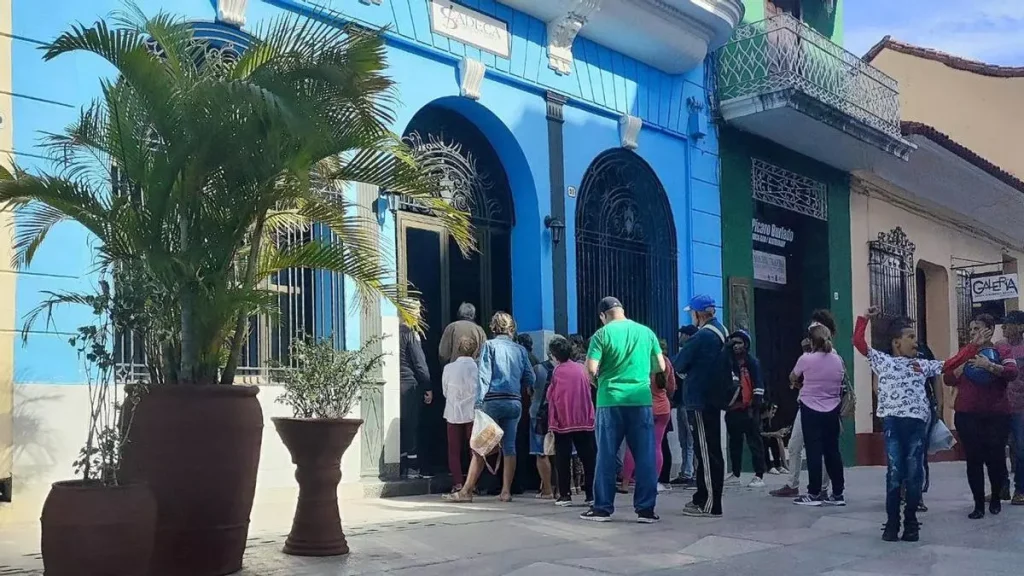
Users raise all the doubts that any ordinary Cuban might have. When does the service start? How much do they charge in commission? From which countries can those remittances be sent? What will the exact procedure be? are some of them. “The announcement is very incomplete,” summarizes an elderly woman from Centro Habana with a daughter in Spain. “If loading money onto the Clásica is already a headache, with the few places there are, the blackouts, the connection problems, I don’t want to see what it will be like to receive a remittance and put it on the Clásica in the same operation.”

Along the same lines, another Facebook commenter said: “If it’s a pension payment day, it’s pointless, because with the lines, the blackouts, and the crashes of Cadeca’s computer systems, the headache for that kind of action is immense.” Fincimex gave another optimistic response: “It will gradually expand to other networks.”

Translated by Regina Anavy

______________________

COLLABORATE WITH OUR WORK: The 14ymedio team is committed to practicing serious journalism that reflects Cuba’s reality in all its depth. Thank you for joining us on this long journey. We invite you to continue supporting us by becoming a member of 14ymedio now. Together we can continue transforming journalism in Cuba.

‘Ingenuity Is the Main Fuel,’ Cuban Authorities Boast in the Face of Thermoelectric Plant Failures

The Cuban regime celebrates the 60th anniversary of Renté, its most obsolete plant, while announcing a new breakdown at Guiteras

Thermoelectric Plant Antonio Maceo, known as Renté, in Santiago de Cuba. / TV Santiago

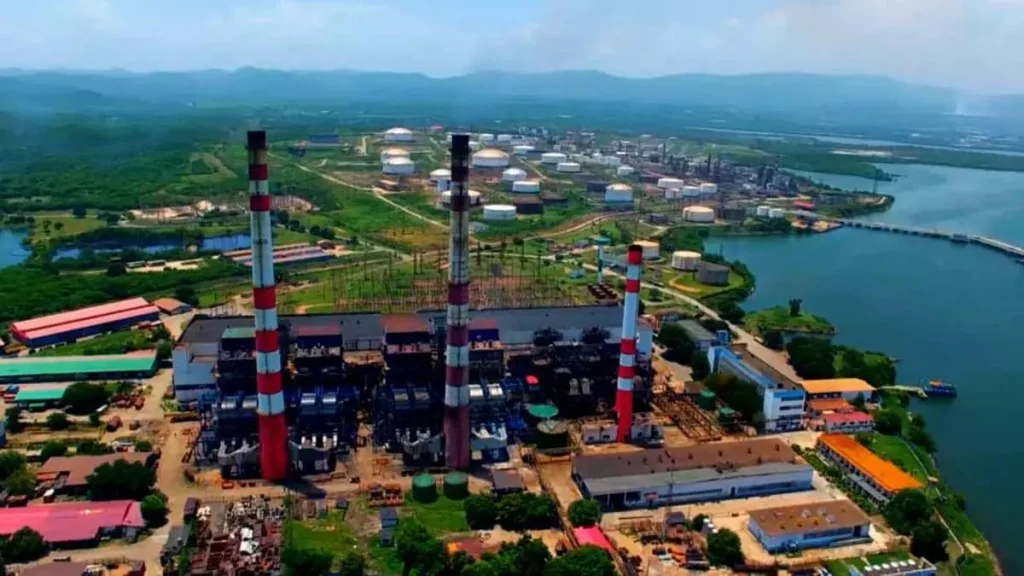
14ymedio bigger14ymedio, Havana, April 6, 2026 – This Monday, while Cuba’s Electric Union (UNE) announced the shutdown of the Antonio Guiteras thermoelectric plant, the country’s largest power generator, due to a “boiler puncture,” the official newspaper Granma proudly celebrated the 60th anniversary of the Antonio Maceo Grajales plant, known as Renté, in Santiago de Cuba, a facility whose useful life expired 30 years ago. Since then, the plant has accumulated serious breakdowns and has all three of its only operational units out of service.

Román Pérez Castañeda, general director of the Guiteras plant, reported that the cooling process will take between 30 and 36 hours, and only then will specialists be able to access the area, determine the extent of the damage, and proceed with repairs.

The new breakdown at the Matanzas plant once again places the national electric system (SEN) in a critical situation. At the time it went offline, the plant was generating 170 MW. With this failure, combined with other incidents reported by UNE this Monday, a deficit of 1,845 MW is expected during tonight’s peak hours, for a national demand of 3,020 MW.

Each repair outage has been temporary as the plant fails again shortly after being reconnected to the system

The plant, with more than 36 years of operation, suffers from insufficient maintenance, a shortage of spare parts, and chronic deterioration that authorities have been unable to resolve. Each repair shutdown has been only provisional: the plant breaks down again soon after rejoining the system. Its repeated disconnections have caused most of the nationwide blackouts over the past year and a half. continue reading

It is known that Guiteras was designed, manufactured, and assembled by the French firm Alstom. Starting in 2015, when the U.S. company General Electric acquired the French company, access was lost to a French credit line that had channeled all supplies and spare parts.

Public outrage, reflected in comments on UNE’s Facebook page, emphasizes that the energy crisis, which the Government attributes to the U.S. embargo, existed long before, due to structural failures within the system itself.

Meanwhile, almost mockingly, Granma celebrates that “ingenuity is the main fuel,” listing makeshift solutions to cope with the deterioration of the six-decade-old Renté thermoelectric plant in Santiago de Cuba.

The official tribute, similar to the one paid last year, resembles an industrial survival manual for a plant that has already doubled its expected lifespan and survives amid constant failures. According to UNE’s report this Monday, Unit 5 at Renté is broken down, while Units 3 and 6 are out of service for maintenance.

These incidents add to a long list of failures reported today by the UNE: a breakdown in Unit 3 of the Felton plant, another in Unit 6 of Diez de Octubre, the aforementioned failure at Guiteras, and maintenance shutdowns of Units 5 and 6 at Mariel and Unit 5 at Nuevitas.

In the 1990s, after losing its Soviet suppliers, the plant was modernized with technological assistance from French companies to rehabilitate two of its units

The thermoelectric plant being celebrated for its longevity—called “La Renté,” after the peninsula where it is located—was founded in 1966 with Soviet assistance and designed to generate energy from fossil fuels.

In the 1990s, after losing its Soviet suppliers, the plant was modernized with technological assistance from French companies to rehabilitate two of its 100 MW units and make it operate with domestic crude oil, to avoid importing fuel. The name of the French company and the cost of the operation have never been disclosed.

Although the total capacity of the Antonio Maceo plant has not been reached for decades due to a lack of resources for maintenance and repair, it is still considered essential for sustaining the national grid in the eastern region of the country.

The plant’s general director, Jesús Aguilar Hernández, admits that the passage of time has made it impossible to contribute the 500 MW the plant provided in its best years: “with Units 3, 5, and 6nat maximum capacity, only 285 MW can be reached.” These are the same units currently out of service, according to UNE’s report.

According to Ecured, since 2023 the only operational units at Renté have been 3, 5, and 6, as Unit 1 was retired and Unit 4 was temporarily taken offline.

In statements to Granma, Aguilar boasts that before 1959 “the country was barely electrified,” an ironic reminder in the face of prolonged daily blackouts in today’s Cuba, and that it is a “privilege” for the plant to reach 60 years of operation.

“It constitutes a challenge left to us by previous generations and one we must pass on to future ones,” Aguilar boasts, suggesting the plant’s continued operation, and adds: “More than the equipment, what endures is the quality of its workforce.”

Faced with fuel shortages, lack of spare parts, and frozen imports, Aguilar insists that they “expect nothing from abroad, when solutions can be generated here,” adding, almost as if they were oil alchemists with psychic powers, “The slogan is not only to operate, but to create everything possible, because ingenuity is the main fuel.”

Due to the lack of parts, workers themselves are forced to improvise replacements

Regarding Units 5 and 6, which are currently offline with 5 broken and 6 under maintenance, Ángel Fabars Borlot, electromechanical chief at the Power Plant Maintenance Company (Emce), admits: “Unit 6 is slated for an extended repair, and in Unit 5 we had to deal with a failure in the generator’s hydrogen seals.”

“These are extremely complex tasks because these are enormous machines. The smallest part weighs tons, and tolerances are measured in millimeters,” Fabars Borlot confesses, without explaining how ingenuity will solve such problems.

Given the lack of parts, workers themselves are forced to improvise them. Eduardo Morales García, head of the machining workshop and soon to receive a medal for 40 years of service explains: “When a job comes in, we have to make almost everything: the cutting tool, the bar, the material, even the hacksaw blade to cut the pipes.”

Morales cites as an example the manufacturing of shafts for the water pumps of Unit 5, “a part that used to come from Russia, but we were tasked with making it here.”

Mayra CcCalle Irsula, an industrial maintenance specialist at Renté, an engineer who has dedicated more than 35 years of her life to the plant, stated that the main conditions to “guarantee continuity in generation” are remote work and telework, when possible, and consolidating “operators, kitchen staff, security, and technicians into a single transport system.” She did not explain, however, that these are measures ordered by the Ministry of Labor to avoid layoffs in state companies, due to the unprecedented crisis facing the country, aggravated by the U.S. oil embargo.

Fuel shortages not only shut down machines; they also paralyze transportation, disrupt shifts, and put operations at risk. The lack of personnel, due to transportation problems, slows processes. “The response is slower because we don’t have the necessary number of people,” admits the Emce electromechanical chief.

Maximiliano Guisande Agüero, head of Dynamic Equipment with 56 years at Renté and leader of the repair of the damaged Unit 5, says he is trying to attract and retain young workers through agreements with pre-university schools, polytechnics, and the University of Oriente, involving students in internships and training. This strategy, he says, could help address staff shortages, although for now the results remain uncertain.

Translated by Regina Anavy

______________________

COLLABORATE WITH OUR WORK: The 14ymedio team is committed to practicing serious journalism that reflects Cuba’s reality in all its depth. Thank you for joining us on this long journey. We invite you to continue supporting us by becoming a member of 14ymedio now. Together we can continue transforming journalism in Cuba.