Beggars Resist Getting on the Bus That Picks Them Up on the Streets of the Cuban Capital

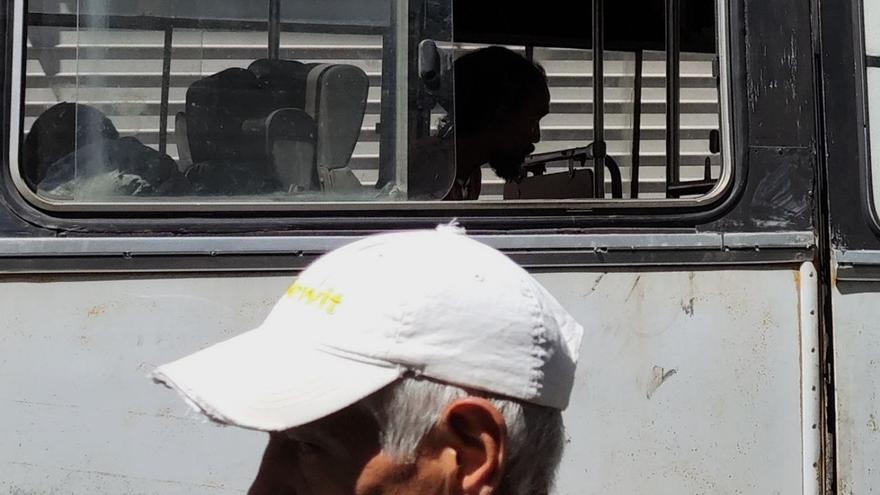
The agent snatched a bag from the beggar, who immediately ran after him, berating the police officer with loud insults. (14ymedio)

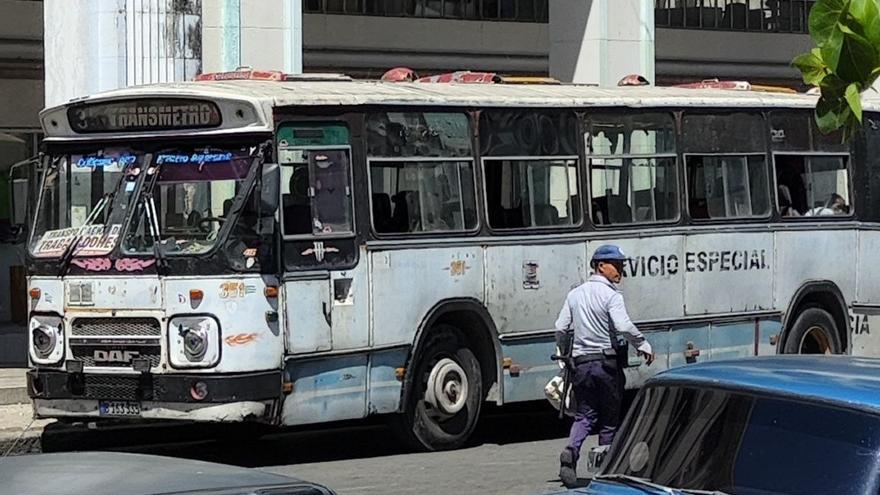
14ymedio bigger14ymedio, Juan Diego Rodríguez,  Havana, 19 September 2023 — The dilapidated Transmetro bus parked on Carlos III Avenue in Havana, this Monday, seemed to be destined for what the sign on its windshield said: “Transportation of workers.” However, it was striking that a woman dressed in civilian clothes and with a folder in her hand was helping a dirty old man with a cane to climb up. The vehicle was not transporting workers but beggars. ##A dozen of them, all unclean, some handicapped, most of them black, were piled up in the back seats, as if they were prisoners.

Before reaching another stop, near San Rafael Boulevard, a man warned a needy person in a wheelchair and carrying an image of San Lázaro: “Hey, move, move, move! The bus is coming that is picking up [people].” The man was able to avoid the raid, unlike three other beggars, who were brought in by the police officer who was also traveling in the vehicle. “Come on, let’s go,” the officer repeated with reluctance.

Upon seeing the bus, half rusted and aged, a woman who witnessed the scene said: “At least they have improved transportation, I remember once when a community services truck picked them up.”

Later, in the Galiano area, the vehicle stopped again at a place where several beggars usually sell things. After boarding them, the police officer went to the Fe del Valle park, where he addressed another homeless man who continue reading

refused to accompany him. Then, the agent snatched a bag that the man was carrying, who immediately ran after him, berating the police officer with loud insults. It was of little use to him, since the homeless man ended up, like the rest, in a seat of the vehicle, which continued to lose itself towards Monte Street.

A dozen of them, all unclean, some handicapped, most of them black, were piled up in the back seats, as if they were prisoners. (14ymedio)
A dozen of them, all unclean, some handicapped, most of them black, were piled up in the back seats, as if they were prisoners. (14ymedio)

The authorities usually pick up the needy who flood the capital from time to time to take them to the Social Protection Center located in El Cotorro, known as Las Guásimas, where, in the words of the regime, “people with wandering behavior” are cared for. There, they bathe them, shave them, cut their hair and give them some second-hand clothes. “They are only here for a few days,” a resident near the center tells this newspaper. After a few days, they are returned “clean” to the streets, populated with more misery every day.

____________

COLLABORATE WITH OUR WORKThe 14ymedio team is committed to practicing serious journalism that reflects Cuba’s reality in all its depth. Thank you for joining us on this long journey. We invite you to continue supporting us by becoming a member of 14ymedio now. Together we can continue transforming journalism in Cuba.
The G-77 Summit in Cuba Has Ended, and the Blackouts Return With a New Breakdown in La Guiteras

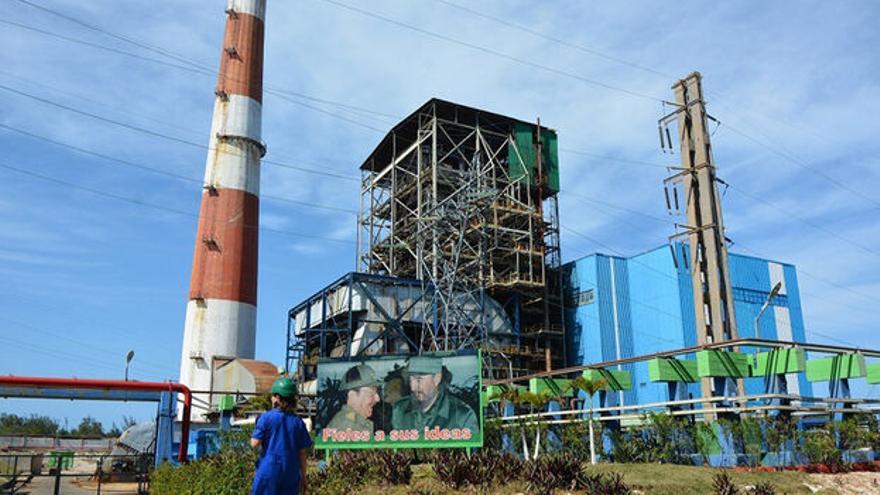
The plant, which received a capital repair three months ago, fails to offer stable service. (Cubadebate)

14ymedio bigger14ymedio, Havana, September 18, 2023 – A few hours had passed since the closing of the G-77 plus China Summit, held in Havana, when the Antonio Guiteras thermoelectric plant, located in Matanzas, left the National Electricity System (SEN), which this Sunday had a deficit of 274 megawatts (MW); today, Monday,  it foresees the lack of 525 MW. “The Intelligent thermocouple only worked during the summit. When it was ended, we had an unforeseen event,” one of the dozens of customers who protested against this Monday’s report from the Electric Union commented with irony.

The breakdown of the Guiteras, around nine o’clock this Sunday night, was initially announced by several official journalists on their social networks. “The Antonio Guiteras CTE left the National Electric System unexpectedly. Electricity service begins to be affected due to a generation capacity deficit,” Lázaro Manuel Alonso wrote on his Facebook profile.

“The summit ended and the blackouts began, a perfect combination. What a coincidence,” commented a user with sarcasm on the page of the Electric Union, which did not offer the cause of the breakage in the Matanzas plant. “Díaz-Canel took the light to New York,” added another, alluding to the Cuban president’s trip to the United States just a few hours ago.

Another reader ironically asked for applause for the power plant that “heroically resisted during the summit”

Another reader ironically asked for applause for the power plant that “heroically resisted during the summit. You couldn’t ask it for more,” he remarked. continue reading

Weeks before the leaders arrived in Havana, Cubans already mocked the “make-up” with which the Government concealed the city’s building collapses. The collection of garbage and repair of the main arteries, which were not even done after the passage of Hurricane Idalia, brought indignation more than relief.

A habanero interviewed by 14ymedio explains that nothing amazes him anymore. “Now we have to go out to see the ’new normal’ after the summit. We will return for sure to having blackouts and seeing piles of garbage everywhere.”

This Monday, the Electric Union also announced the departure of the SEN from unit 2 of the Felton (Holguín) and the 6 of the Boca de Jaruco (Mayabeque). “With this forecast,” they warned, four engines of the Patana de Melones (Havana) with 70 MW will be put into operation, which are not enough to supply even half of the forecast deficit on the Island.

On September 11, the company warned that the Guiteras thermoelectric plant, which had received a capital repair three months earlier, had stopped generating energy due to a “boiler failure.” Put into operation just a day before, the plant only managed to work a few hours. That day, at least 14% of the population suffered power outages.

The mishaps in the Guiteras, especially in the last month, have provoked an angry reaction from Internet users who have filled the Electric Union’s Facebook page with mockery and insults. Many of them demand “more respect” from the authorities or, at least, the work of “qualified people” in the repair of the plants.

Translated by Regina Anavy

____________

COLLABORATE WITH OUR WORKThe 14ymedio team is committed to practicing serious journalism that reflects Cuba’s reality in all its depth. Thank you for joining us on this long journey. We invite you to continue supporting us by becoming a member of 14ymedio now. Together we can continue transforming journalism in Cuba.

Eight Cuban ‘Swans’ of the Classical Ballet Stayed in Spain and 22 Returned Home

Between the Teatro Apolo in Barcelona and the EDP Gran Vía in Madrid, the Ballet Clásico de Cuba offered a total of 43 performances between July and August, from Thursday to Sunday. (Adelante)

14ymedio bigger14ymedio, Madrid, 18 September 2023 — Eight dancers of the Ballet Clásico de Cuba (formerly Ballet de Camagüey) stayed in Spain in August, after performing Swan Lake in Barcelona and Madrid. The director of the group herself, Regina Balaguer, reported this to an official newspaper, just a month after complaining to the Spanish press that the only thing that is talked about when they go on tour is the dancers who escape.

“We are not going to tie them up either, each one owns their life, but the most important thing is that they finished the engagement, except for two,” Balaguer told the Camagüey newspaper Adelante, without giving the names of the artists. “If it can’t be 24 swans, it will be 12, it will be 8, as in other companies,” she said. “It will not be the first time that we add second-year and third-year students,” she proposed as an “alternative,” and threw a dart at the deserters: “Most of us have a sense of belonging.”

In the interview with the provincial newspaper, the official acknowledged that the “exodus” is a “complex problem,” recalling that, although at this time it is “much more intense,” it has happened to the Camagüey Ballet throughout its history. continue reading

When she was a dancer, with Fernando as the director, on one occasion 13 solo dancers left,  and the company continued. In 1994 in Monterrey, 12 returned, and the company ran out of men

In this regard, she made the count: When she was a dancer, with Fernando [Alonso, Alicia Alonso’s first husband] as the director, on one occasion 13 solo dancers left, first soloists, and the company continued. In 1994 in Monterrey, 12 returned, and the company ran out of men. “We went to Mexico in 2004 and six stayed, but in 2018 we were in Switzerland and Spain and no one stayed. Unfortunately, eight dancers have now stayed behind.”

Balaguer had alluded to the “success” of no dancer staying in 2018, at the beginning of last August, in an interview with the Spanish newspaper El Confidencial, in which she tried to avoid political and economic issues in the face of the journalist’s questions.

Between the Teatro Apolo in Barcelona and the EDP Gran Vía in Madrid, the company offered a total of 43 performances between last July and August, from Thursday to Sunday. This weekend’s report in Adelante reveals the harsh conditions on the tour of Spain. “Ninety-seven percent of the dancers were on stage for the first time. There were injuries due to exhaustion but everything was solved,” Balaguer explained. Stage manager Rafael Saladrigas said: “For me it has been the hardest tour. We were 30 dancers and 6 technicians,” when a performance like this requires 40 people on stage.

Very little space in the report is dedicated to the desertions of artists, which are, as with athletes and other professionals, recurring, but not recorded. In 2019, when Vigensay Valdés took over the National Ballet of Cuba – the first important company on the Island – there were 40 dancers who had applied for asylum in the United States and other countries, according to the statistics of the Cuban Classical Ballet of Miami.

Just a year ago, in another field of dance, a highly commented mass desertion took place when, at the end of July, eight members of the company Lizt Alfonso Dance Cuba left the delegation and stayed in Spain, after finishing their tour of Europe.

Translated by Regina Anavy

____________

COLLABORATE WITH OUR WORKThe 14ymedio team is committed to practicing serious journalism that reflects Cuba’s reality in all its depth. Thank you for joining us on this long journey. We invite you to continue supporting us by becoming a member of 14ymedio now. Together we can continue transforming journalism in Cuba.

Iconic 1960s Havana Restaurant, Now in Private Hands, Is Reborn

La Carreta Restaurant, located at the corner of 12th and K streets in Havana’s Vedado district.

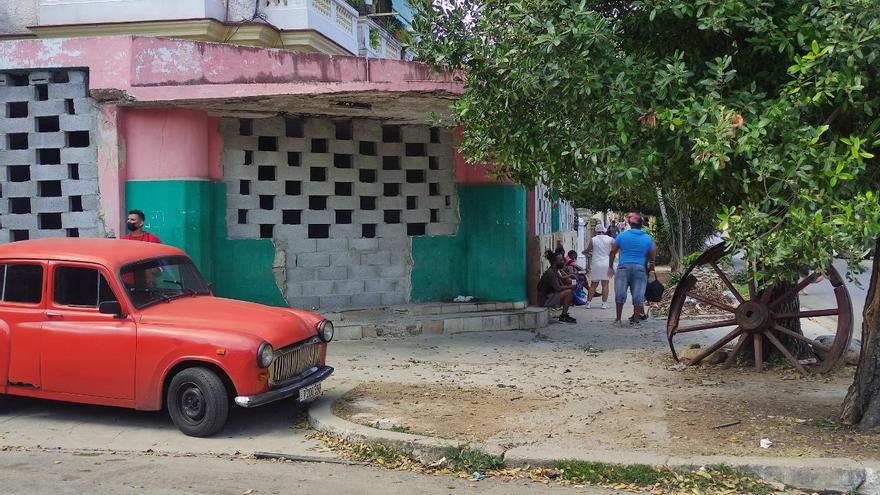
14ymedio bigger14ymedio, Juan Diego Rodriguez, Havana, 17 September 2023 — The cartwheel in front of La Carreta is back where it used to be. The restaurant had been closed for years until last June, when it reopened as a privately owned restaurant. The cartwheel itself sat under a tree at the corner of 21st and K streets — half buried in the ground, in the heart of Havana’s Vedado district — until it was removed in November 2022. Now it is back, intact and recently restored, atop a new polished sidewalk.

To be honest, neither the cartwheel nor the establishment is anything like the ruin the place became when it was in state hands. Closed nearly seven years ago after a long, slow decline, the building was bricked up in March 2022. It made for grim sight at the time.

The wheel that served as its emblem was removed from the site six months later. At the time, the rumor that it had been stolen spread like wildfire on social media. Shortly thereafter, in November, the interior was demolished so that renovation work could begin.

People living near the restaurant, located a few yards from the iconic Coppelia ice cream emporium, watched construction work move forward at full throttle, especially in June. When asked about the fate of the well-known restaurant, the construction crew was straightforward: “It will have the same name but it will be privately owned.”

Neither the cartwheel nor the new establishment itself are anything like the ruin the place became when it was in state hands. (Photo: April 2022, 14ymedio.)

Before the work was completed in mid-June, food was being sold from a counter on the side. The quality of the service and the products – natural fruit juices with no added sugar, for example – was a rarity for the island’s depressed services sector.

Once opened, it more than met expectations. “Just walking inside is wonderful. The climate, the aroma, the service,” observes Ariel, who has been a regular customer since La Carreta’s renovations were complete. “It didn’t look like Cuba,” jokes his girlfriend Martha. “And it has been very successful. At first, it was empty, but it’s getting harder and harder to get a table. It’s always full!” continue reading

The question any first-time visitor asks is, “Who is behind this new operation?” An easy question to answer since the owner is on the premises every day, welcoming customers with a smile. He is Obel Martinez, who also runs the Mojito Mojito bar in Plaza Vieja, Havana’s historic center.

According to those who frequent La Carreta, civility is very important to Martinez. “He is a very proper man,” says Ariel. “Once I heard him tell the employees that you have to treat the customer well, that if someone comes in badly dressed, for example, you can’t tell him that he is badly dressed. You have to do it in some other way. Let him come in and see the place. I mean, that should be normal but in this country it’s not.”

The restaurant is decorated in a rustic style, with waiters dressed like Texans, politely welcoming guests. Diners are also often entertained by a professional musical trio who sing traditional Cuban and Mexican songs.

It’s true that the prices are not within everyone’s reach,” admits Martha, “but the portions are large.” As an example, she mentions the starter: “picando con guajiros” — it includes croquettes, stuffed tostones, fried taro, chicharrones, cassava bread and chunks of tamale — for 1,200 pesos. “With that and some fruit juice, you’re full,” confirms Ariel. “And the desserts are wonderful.” These range from ice cream, for 250 pesos, to more refined pastries such as the lemon and cream sandwich, for 600.

The couple describe how Obel Martinez once told them that his intention was not to do “gourmet cuisine” with small portions because “we Cubans want to eat well.”

Places like this, like Mojito Mojito, always raise suspicions. How was Obel Martinez able to set up shop in these desirable enclaves and become a successful businessman? Neither Ariel nor Martha nor any La Carreta customers questioned by 14ymedio had the slightest complaint. “We can’t say anything bad. I wish all privately owned restaurants were like this and didn’t act like they were doing you a favor.”

____________

COLLABORATE WITH OUR WORKThe 14ymedio team is committed to practicing serious journalism that reflects Cuba’s reality in all its depth. Thank you for joining us on this long journey. We invite you to continue supporting us by becoming a member of 14ymedio now. Together we can continue transforming journalism in Cuba.

Anti Diaz-Canel Protest Grafitti Appears on a Wall in Santiago de Cuba

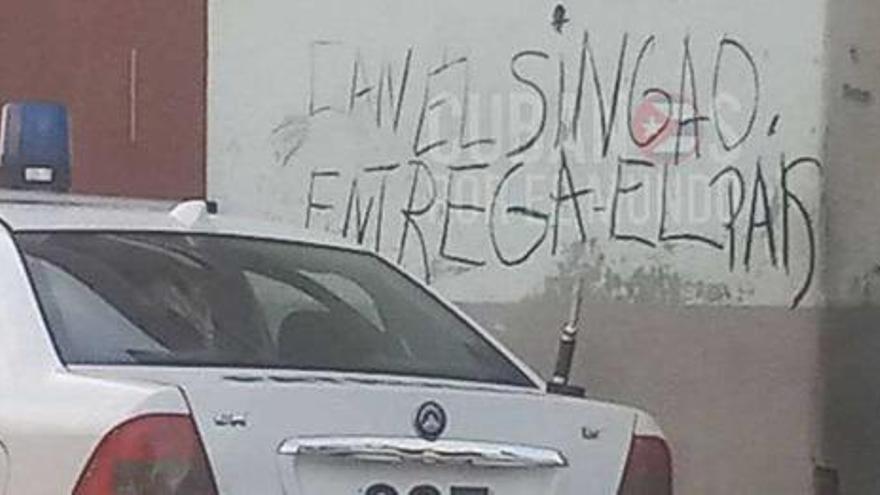
The sign appeared this morning along a street in Palma Soriano, a downtown area of Santiago de Cuba. (Cubanos por El Mundo)

14ymedio bigger14ymedio, Santiago de Cuba, 14 September 2023 — On Thursday, a sign with the phrase “Canel, you asshole, hand over the country” was scribbled on an exterior wall in Palma Soriano, an area in downtown Santiago de Cuba. Sources living in the area confirmed the graffiti can be found near a very busy intersection where Lora Street crosses Libertad Avenue.

“It was before the markets were open, in a well-travelled area near where cars drive by. It’s full of police and State Security agents,” says a local resident who prefers to remain anonymous.

Though several reports on social media as well as sources from the Santiago neighborhood confirmed  there had been a power outage in the area lasting several hours, the previously mentioned source speculated there could be other reasons for the graffiti: “It’s not just because of the blackouts. It’s for several reasons. It’s because of all the problems we’ve been having here.

According to Cubanos por el Mundo [Cubans for the World], the graffiti appeared on the house of Pastor Lorenzo Rosales Fajardo, who is serving a seven-year prison sentence for participating in the 11 June 2021 demonstrations. The publication claims that three other people from the same block are also serving time for the same protests. continue reading

Palma Soriano was the second area to erupt in protests on 11 July 2021 after the massive demonstration in San Antonio de los Baños went viral. The young man who livestreamed it, Yoan de la Cruz, was released last May after almost 10 months in prison. First sentenced to six years in prison, his sentence was reduced to five years of house arrest.

The people seen on the streets of Palma Soriano on June 11 were mostly young. Commander Ramiro Valdés, who was visiting the area on that day, was heckled by the crowd according to videos released by critics of the government.

Fifteen area residents were arrested in a police roundup after the protests. They were charged with public disorder, contempt and battery, and received sentences of up to 12 years in prison.

____________

COLLABORATE WITH OUR WORKThe 14ymedio team is committed to practicing serious journalism that reflects Cuba’s reality in all its depth. Thank you for joining us on this long journey. We invite you to continue supporting us by becoming a member of 14ymedio now. Together we can continue transforming journalism in Cuba.

Are Cubans Ready to Break the Chains?

Members of the Solidarity Resistance Group during a meeting on December 3, 2022 in Warsaw. (Government of Poland)

14ymedio bigger14ymedio, Ariel Hidalgo, Miami, 17 September 2023 — When millions of workers peacefully took to the streets in Poland in 1981, the general secretary of the Communist Party resigned, and his successor agreed with the Solidarity movement in rather typical terms of a surrender. The communist regime had collapsed.

But at that time it was not convenient for Solidarity to take power because the Russian troops were on the border willing to repeat the bloody scenario of Hungary in 1956 and Czechoslovakia in 1968. For the same reason, a Polish general staged the coup d’état and took his leaders to jail, and both of them had to wait a few years until Gorbachev declared the end of interventionist policy.

Why was Solidarity able to mobilize so many people? Mainly due to two factors:

The great influence of Catholicism on the population, together with the support of a Polish Pope.

And the influence of the struggles of a dissent that had already been preparing for years the conditions for a mass trade union movement: in particular, the struggle of the Workers’ Defense Committee (COS-COR) founded by a fighter later known as “the godfather of the Polish opposition,” Jacek Kurón. continue reading

When millions of workers peacefully took to the streets in Poland in 1981, the general secretary of the Communist Party resigned, and his successor agreed with the Solidarity movement in rather typical terms of a surrender

Sometimes providence pulls its strings in a strange way. That general, Wojciech Jaruzelski, in his childhood, was forced to flee from the communists with his whole family to Lithuania, when the Soviet Union seized part of Poland, for fear of being deported to Siberia where his father had died in a hard-labor camp. And that dissident leader had been a prominent militant of the Polish communist youth).

The conditions of Cuba, today, are not the same as those of Poland in 1981.

It was 132 years ago that José Martí, with the clairvoyance that characterized him, wrote these words: “When a problem arises in Cojímar, the solution is not going to be sought in Danzig.” Danzig is the current city of Gdansk, where almost a hundred years later the Solidarity union emerged, which implied that our problems had to be solved based on our own conditions.

We Cubans do not have that strong Catholic influence nor a Pope to support us, nor do we have a broad trade union movement. However, Cuba today has other advantages:

No country in the European socialist camp had a dissidence with as long an experience of struggle as the one in Cuba. It’s a broad movement, not trade unionist but of human rights, which contributed to the formation of a civic consciousness. Of all the social explosions in Latin America in those years, the only one carried out peacefully outside Cuba had a lot to do with an opposition that, from its beginning, declared itself peaceful, the only opposition movement that the regime has not been able to exterminate.

The Cuban people today have a resource that the Poles could not use because at that time it did not exist: the great advances in telecommunications technology, which allowed the existence of social networks, blogs, mobile phones and digital periodicals.

And not least: the absence of Russian troops at the borders that prevented or postponed the liberation of countries such as Hungary, Czechoslovakia and Poland. The Cuban leadership has only Cuban troops, whose families are part of those suffering the same calamities, so the leadership does not trust one hundred percent of those officers, especially the youngest.

To all the above should be added the objective conditions; that is, the structural and permanent economic crisis of a failed, dysfunctional economic system, which forces the leadership to periodically seek — in order to sustain itself with subsidies — powerful external allies. The hard periods described with euphemistic names such as “Special” or “conjunctural” — i.e. ’temporary’ — occur when that powerful ally is missing. Poland did not reach the calamitous extremes of present-day Cuba, because at that time it had the benefits of COMECON* and the Soviet Union.

Did all these conditions already exist when the outbreak of July 11 occurred in 2021?

Precisely, thanks to the fact that almost all those conditions had matured, that explosion of thousands of people took place in the streets. Why have we added the word “almost” in the previous sentence? Because the thousands of 11 July 2021 (“11J”), cannot be compared with the millions of Poland on the streets. That tells us that this awakening of the consciousness of freedom, despite the fact that it had already developed in a large part of the people, had not been widespread enough to reach the final victory. However, that fact, by itself, despite having been thwarted by a brutal repression, awakened many people who until then thought it was impossible to break those chains.

Difficult periods qualified with euphemistic names such as “special” or “conjunctural” [temporary] occur when that powerful ally is missing. Poland did not reach the calamitous extremes of present-day Cuba, because at that time it had the benefits of COMECON and the Soviet Union

The same thing happened in all the great feats of our history: the first battle of the glorious 30 years of independence struggles in our country had been a resounding failure from the military point of view. In Carlos Manuel de Céspedes’ attempt to take the fort of Yara, only twelve men survived. But that simple fact, known in our history as El Grito de Yara [Yara’s Scream], impacted the population in such a way that many people began to join that small group, and soon after they achieved their first great triumph, the capture of the city of Bayamo.

Something similar happened with the assault on the Moncada barracks that began the fight against the Batista dictatorship with a large number of deaths and imprisonment.

Should we regret that liberation didn’t come on11 July 2021? Everything happens for a reason. It was indispensable that this awareness be generalized, if not in the entire population, at least in the vast majority, for a secure and definitive victory for all time.

What does this mean? We Cubans have been repeating from colonial times the same cycle as the myth of Sisyphus: the dictatorship leads us to insurrection and insurrection to another dictatorship, which leads us, in turn, to another insurrection, and this happens to us, precisely, because of the lack of a true civic conscience. First, we must not give anyone all the power, due to fanaticism and cult of personality, and second,  we must be aware that we are born with the right to freedom and, therefore, can practice that right regardless of the obstacles we encounter, even if it is within the walls and bars of a prison.

That gestation has been developing in Cuba for more than 40 years and is now about to mature. When this happens, no one will be able to stop the people on the way to their destination, because when the light of freedom is lit, it never goes out

Both the human rights activists and the political prisoners  practiced that freedom without fear of saying what we thought, so we were freer than the jailers who guarded us. True freedom does not need to be decreed by any government, nor is it a goal to be achieved, but a path. When the vast majority of the population decides to act freely, not even the most powerful army in the world will be able to stop it. A government only governs when the governed obey. If they don’t obey, those who govern stop governing.

But this requires the awareness of that vast majority. This is what Martí was referring to in his famous criticism of Karl Marx: “But he walked in a hurry and somewhat in the shadows without seeing that they are not born viable, neither from the bosom of the people in history, nor from the bosom of a woman in the home, the children who have not had a natural and laborious gestation.”

That gestation has been developing in Cuba for more than 40 years and is now about to mature. When this happens, no one will be able to stop the people on the way to their destination, because when the light of freedom is lit, it never goes out.

*Translator’s note: COMECON (1949-1991) was an organization led by the Soviet Union comprised of the Eastern Bloc countries and other socialist states.

Translated by Regina Anavy

____________

COLLABORATE WITH OUR WORKThe 14ymedio team is committed to practicing serious journalism that reflects Cuba’s reality in all its depth. Thank you for joining us on this long journey. We invite you to continue supporting us by becoming a member of 14ymedio now. Together we can continue transforming journalism in Cuba.

A Hundred Cuban Migrants Ask for Legal Status in Miami To Be Able To Stay in the United States

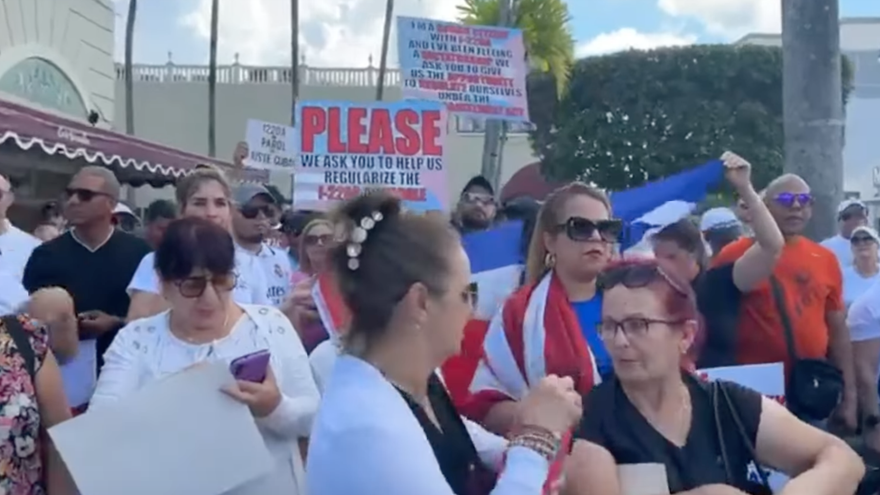
About a hundred people gathered in front of Miami’s Versailles restaurant to ask for changes in the application of immigration rules. (Cubans in Miami/ Capture)

14ymedio bigger EFE (via 14ymedio), Miami, 18 September 2023 — A hundred Cuban migrants demonstrated this Sunday in Miami (Florida) to ask for legal status to stay and work in the United States after a court ruling that limits the ways to obtain permanent residence.

The protesters gathered in the central Versailles restaurant to ask the Secretary of National Security, Alejandro Mayorkas, to consider the I-220A country entry form as a valid way to obtain permanent residence (known as the “green card”).

This form, also known as the “order of freedom under parole,” is given to certain people who were detained by immigration officials when they entered the country irregularly and were then released.

We are asking with humility, not demanding, asking the United States Government to legalize us, to allow us to work

“We are asking with humility, not demanding, asking the United States Government to legalize us, to allow us to work,” said one member of the protest, in which they showed posters requesting “freedom for political prisoners in Cuba.” continue reading

On September 12, the Superior Board of Immigration Appeals of the United States Department of Justice ruled against the I-220A being considered as a humanitarian permit to stay in the country.

It is a decision based on an appeal by the Department of Homeland Security (DHS) on a specific case, that of Olty Cabrera Fernández, processed with an I-220A upon entering the country.

The decision of the appeals court agreed with the U.S. Government, which considers that the only option to benefit from the Cuban Adjustment Act, established in 1966, is a humanitarian permit, which is currently obtained with a legal sponsor within the United States.

The court ruling could affect tens of thousands of Cubans who arrived in the United States through the different border points since 2021, who were given the I-220A document after being released by the immigration authorities.

Immigration lawyer Willy Allen said that he does not believe that people who have the I-220A are in any danger of being detained or deported immediately

However, in statements to local media, immigration lawyer Willy Allen said that he does not believe that people who have the I-220A are in any danger of being detained or deported immediately.

Allen considered that this is a particular case that can be appealed.

For her part, Cuban-American congresswoman María Elvira Salazar, of the Republican Party, asked the Secretary of National Security to recognize the I-220A as a humanitarian permit.

Translated by Regina Anavy

____________

COLLABORATE WITH OUR WORKThe 14ymedio team is committed to practicing serious journalism that reflects Cuba’s reality in all its depth. Thank you for joining us on this long journey. We invite you to continue supporting us by becoming a member of 14ymedio now. Together we can continue transforming journalism in Cuba.

“There Are Dozens of ‘Regulated’ Doctors in Guantanamo Who Want to Leave Cuba”

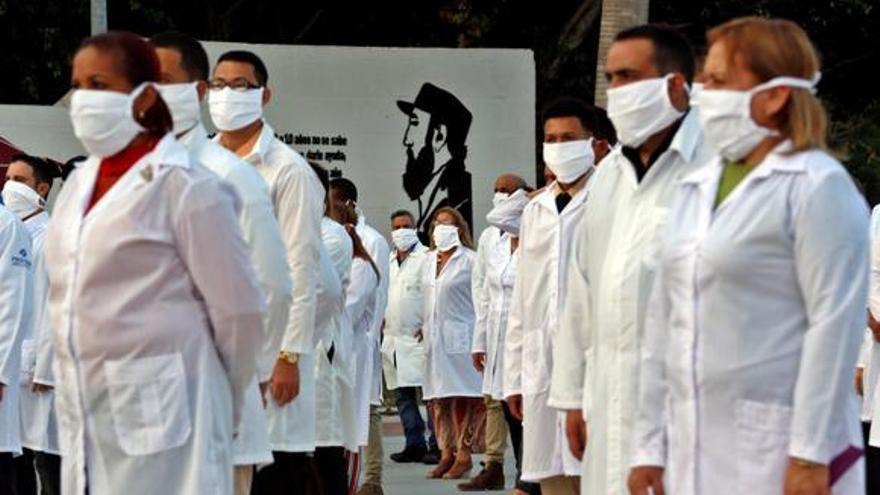
The ‘regulation’ of specialists seems to be applied arbitrarily today. (EFE)

14ymedio bigger14ymedio, Natalia López Moya, Havana, September 18, 2023 — Aníbal has been planning his departure from Cuba for months. A relative abroad will help him with the ticket to Managua, and from there he will make his way to the United States. But this 29-year-old doctor from Guantánamo has encountered an obstacle that has paralyzed his departure: he is “regulated” by the Ministry of Public Health; what the regime means by the term “regulated” is that the person cannot leave the Island.

“I found out when I went to get my passport; the office employee told me: ‘Pipo, you are regulated by the MINSAP (Ministry of Public Health); you can’t even have a passport’. That was six months ago, and no one warned me before,” complains Aníbal, (name changed to avoid reprisals). “In Guantánamo there are dozens of us doctors in the same situation, and no one gives us an answer; we only get responses that are evasive.”

Aníbal graduated more than six years ago from the Faculty of Medicine of the city of Guantánamo but now practices Integral General Medicine (MGI) for the second year, a field chosen precisely because he knew that the specialists were being ‘regulated’. “Since I had known for a while that I wanted to emigrate, I preferred to work as an MGI,” he tells 14ymedio.

Hannibal practices Integral General Medicine for the second year, precisely because he knew that the specialists were being ‘regulated’ – forbidden to leave to leave the island

“I made a complaint to the Department of Human Resources of the Ministry of Health here in Guantánamo, but everything remains the same. Two months ago I checked again, and I can’t even get my passport,” says the young doctor. “Margarita, the head of the department, is the one  who attends to the ‘regulated’. She is supposed to send emails to the ministry in Havana to unlock our cases, but we’ve waited for months and nothing changes.” continue reading

Aníbal’s story contradicts a statement made by MINSAP last August, when it denied the information circulating on social networks about alleged new regulations for the entry and exit from the country of workers in the healthcare sector. Georgina Álvarez, director of communications for MINSAP, warned against believing any rumor like this that was not confirmed through official channels.

But that denial did not calm minds and uncovered a wave of testimonies that indicated just the opposite. “I have not been practicing as a doctor for more than a year, and after that time I asked for ‘permanent deregulation’ for family reunification and was denied,” wrote a commentator who identified herself as Beatriz in the footnote published in the official media.

This newspaper tried, unsuccessfully, to get an answer about regulated doctors through the Facebook page of the Ministry of Public Health in Guantánamo and other provinces. The situation seems to be unequal depending on the territory and “the contacts that the doctor has,” says Hannibal.

The situation seems to be unequal depending on the territory and “the contacts that the doctor has,” says Hannibal

The Guantánamo Human Resources office attends every Thursday to the doctors who are in a situation similar to that of Hannibal. “Every time I go, the lines are immense. Many of them are there for the same reason, so I calculate that there are dozens, if not more than a hundred of us, who are regulated in this province,” he adds. “I was there at six in the morning, and at that time there were already people.”

“It is arbitrary because most of us who are regulated appear on paper as specialists or residents, even if we aren’t,” Aníbal said. “Those in that situation are more limited to travel, but now the ban has been extended to others who do not even meet those requirements.”

The doctor also recognizes that many of his colleagues choose to stop working in the sector for fear of not being able to leave the Island. “Those who stand in line complain because they are prevented from leaving the country or taking a leave from Public Health, which is almost the same, because many ask for leave to be able to emigrate later.”

In his opinion, the version of the head of the Department is false, and the intent is to prevent doctors from continuing to leave. “Not by improving the salary or working conditions, but by force, by obligation.” Aníbal also questions why his colleagues have not joined together to protest to the Health authorities. “Here the way that some of us have found is to denounce the situation in the independent media, but nothing more.”

In his opinion, the version of the head of the Department is false, and the intent is to prevent doctors from continuing to leave. “Not by improving the salary or working conditions, but by force, by obligation

“From my career year there are few in practice, and those of us who are working as doctors are regulated. The others are selling pizza, food,” he explains. “I should have taken a vacation myself, but I don’t think I’m going to because I can’t take it anymore. They are pushing me to ask for leave. At the moment, working in Public Health and wanting to travel is not compatible.”

In his case, the decision was made years ago: “Honestly, I want to travel in order to emigrate. I plan to go through Nicaragua, from there to Mexico, and from that country, my family in the United States will help me obtain the humanitarian parole to get to Miami.”

Anibal does not lose hope, seeing that some of his colleagues have managed to resolve their situation. This is the case of a nephrologist with more than 20 years of experience, who stopped practicing in 2020. “She knew that to get out of here she couldn’t continue in Public Health,” says her daughter Dayana. “She was regulated for a long time, but a few weeks ago they allowed her to get a passport, so it seems that she will be able to emigrate.”

Dayana is a fourth-year medical student, but she has just left the Guantánamo faculty. “I should have started my fifth year now but decided not to do it, because everyone in my family is waiting for the parole to arrive, and I feared that the ban on leaving the country would be extended to students.”

Translated by Regina Anavy

____________

COLLABORATE WITH OUR WORKThe 14ymedio team is committed to practicing serious journalism that reflects Cuba’s reality in all its depth. Thank you for joining us on this long journey. We invite you to continue supporting us by becoming a member of 14ymedio now. Together we can continue transforming journalism in Cuba.

Varadero Resort For Cubans ‘All Inclusive Scam’

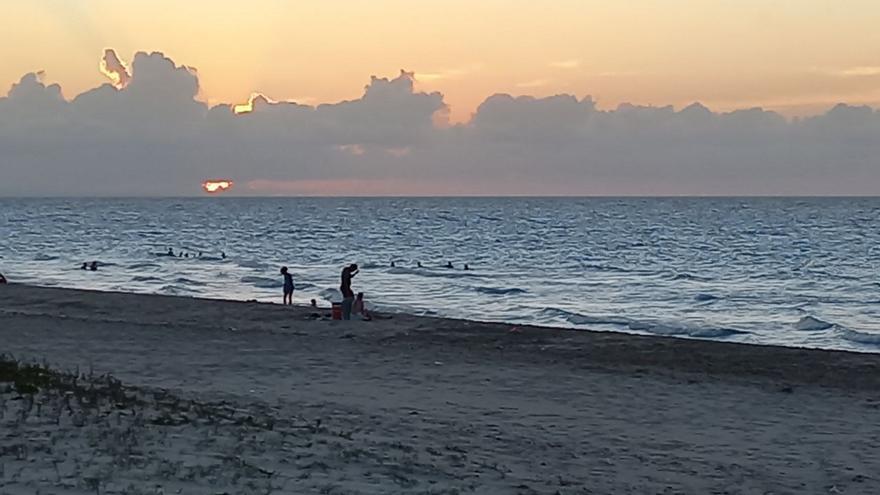
The once luxurious resort of the Hicacos peninsular has been feeling the shadow of what it once was for quite a while. (14ymedio)

14ymedio bigger14ymedio, Juan Diego Rodríguez and Olea Gallardo, Havana, 14 September 2023 – In the bus back home to Havana from Varadero, Manuel and his wife, like many other local tourists, talked about nothing else. Every one of them, though having stayed in different hotels, felt that they had been swindled; that despite the stratospherical amount of money they had had to pay for their holiday, in return they had seen only food shortages and terrible service.

Manuel doesn’t even want to remember the name of the establishment where he stayed for four nights in August and payed almost 40,000 pesos for “all inclusive”. “All inclusive? All inclusive scam. All that was available to eat every day was cod or chicken in fricassee, or in sauce, but no pork or beef”, he tells this paper. And he goes on: “The rice was hard, the soft drinks weren’t even the normal canned ones but made up from squash, and the beer was warm, with just a whiskey here or a rum there, terrible, that was all there was to drink.

So, in the end, the couple ended up spending an extra twenty-odd thousand pesos on food from other restaurants, “which in themselves weren’t any big deal”, says Manuel. Even there they didn’t find much satisfaction as the ones that accepted Cuban pesos were the ones that offered limited menus and smaller portions.

In addition, the man lamented: “The room they gave us was dirty, full of hair, with just one tiny towel and nothing else to dry ourselves on. It doesn’t surprise me that we hardly saw any foreign tourists, if they go to Varadero they’re going to be shocked. continue reading

“The room they gave us was dirty, full of hair, with just one tiny towel and nothing else to dry ourselves on”

The once luxurious resort of the Hicacos peninsular has been feeling the shadow of what it once was for quite a while. The most recent decline began during the Covid pandemic, when the country’s borders were closed and the tourist industry was paralysed worldwide, and the residents of Varadero were confined in their homes to avoid infection. The resort has not yet managed to crawl out of this hole, a hole which the so called Tarea Ordenamiento — the ’Ordering Task’* — itself has contributed to, as reported by this paper repeatedly in recent years.

Foreign tourists have abandoned the option of Varadero, says a Spanish tourist, Francisca – who travelled to Cuba in July on a tour which took in the entire island but didn’t include the resort in the Matanzas bay area. “We didn’t go there, on the advice of a relative who had just been there and told us that the beach was disgusting, with a lack of services”, she said. “And actually all the ones we did go to – Costa Verde (in Holguín) and Cayo Santa María (in Camagüey) – also seemed very dirty to us”.

In the face of depleted numbers of international tourists, hotels tried to throw themselves into internal tourism, which, viewing general commentary on social media, hasn’t resulted in a satisfied clientele. And the complaints are not limited to Varadero.

One customer of the Starfish Hotel in Cayo Largo said that the buffet at this five star establishment left “much to be desired” and she did not reccomend the place. Another said: “I’ve just come from the Starfish Cayo Guillermo and there was no sugar even for coffee, I had to bring my own flour so that they could bake me a mini cake because they didn’t have flour either, and they were using honey as a sweetener”.

A third Cuban settled the matter of the island’s beach hotels saying: “My opinion is don’t go to any of them. They’re all bad and what’s more, expensive. There’s no correlation between what you pay and the actual quality, especially with the food”.

*Translator’s note: The “Ordering Task” [Tarea Ordenamiento] is a collection of measures that include eliminating the Cuban Convertible Peso (CUC), leaving the Cuban peso as the only national currency, raising prices, raising salaries (but not as much as prices), opening stores that take payment only in hard currency which must be in the form of specially issued pre-paid debit cards, and a broad range of other measures targeted to different elements of the Cuban economy.

Translated by Ricardo Recluso

____________

COLLABORATE WITH OUR WORKThe 14ymedio team is committed to practicing serious journalism that reflects Cuba’s reality in all its depth. Thank you for joining us on this long journey. We invite you to continue supporting us by becoming a member of 14ymedio now. Together we can continue transforming journalism in Cuba.

Trade Unionists Request a Meeting With Brazilian President Lula in Havana To Talk About the Absence of Trade Union Rights in Cuba

Iván Hernández Carrillo, secretary general of ASIC, asked Lula to do away with the ideological biases that hinder dialogue. (ASIC)

14ymedio bigger14ymedio, Havana, September 13, 2023 — The Independent Trade Union Association of Cuba (ASIC) sent a letter to Brazilian President Luis Inácio Lula da Silva on Tuesday requesting a meeting with the president during his attendance at the G77 plus China summit, which will be held in Havana on September 15 and 16.

According to the letter, signed by Iván Hernández, general secretary of the organization, the objective is to discuss “the serious labor and union situation of the Island.” The letter, shared by Hernández on the social network X (Twitter), appeals from its first paragraphs to Lula’s past as a union leader during the military dictatorship in the 1970s. “Aware of your actions in defense of trade union rights (…) during your time as a metallurgical worker (…), we ask you for a brief space in your busy schedule,” the document states.

The secretary of ASIC also described the conditions of helplessness of Cuban workers, who “are devoid of mechanisms to channel their demands,” and said that, “on a regular basis,” trade union rights activists suffer harassment from Cuban counterintelligence – which threatens to fire them from their jobs or imprison them – as well as from the very institutions that should protect them.

“The Workers Central Union of Cuba (CTC), the only trade union organization allowed and which is controlled by the State, shows a high level of obsolescence (…) that keeps the worker in permanent distress by not having the basic resources for a dignified existence,” the text continues.

The activist complained about the current relations between workers and the State institutions, which, he said, insist on “taking positions that don’t allow for possible solutions” that would alleviate the country’s economic crisis. continue reading

Hernández invited the president to remove any “ideological” prejudice that may hinder his treatment with the ASIC, frequently discredited by the Cuban regime, and urged him to review the policies of Havana

“We address you as a supporter of the workers’ struggle,” the document states, reminding the president that basic guarantees such as the right to strike and collective bargaining, which are respected in Brazil, are “non-existent” in Cuba, which facilitates “the predominance of bureaucracy and corruption to the detriment of a climate that generates productivity, efficiency, fair wages and new jobs that overcome widespread underemployment,” he continues.

Hernández invited the president to remove any “ideological” prejudice that could hinder his dealings with ASIC, frequently discredited by the Cuban regime, and urged him to review the policies of Havana that, the activist says, “favor stagnation and lack of hope for a better future.”

Skeptical of the possibility of the Brazilian president agreeing to meet with an opposition organization, people commenting on the letter on social networks argued that Lula is one of Miguel Díaz-Canel’s closest allies. On X, a user wrote: “I think he’s asking the wrong person. Lula is an accomplice of this regime.”

Another called the document “worthless paper,” which will not even get an acknowledgment of receipt from the president. “But do they write to the thief Lula? The greatest ally of the dictatorship? The one who is raising taxes in Brazil and giving himself a great life with the people’s money? I didn’t understand,” said a third user.

Last February, the Alternative Democrática Sindical de las Américas (ADS), an association that brings together workers from the region, denounced the “arbitrary” detention of seven of their affiliated ASIC members for their opposition to the Cuban government.

According to the organization, the arrested trade unionists – among whom was Hernández himself – were accused of poisoning the water of several children’s daycare centers.

The ADS then stated that it has frequently denounced and rejected before international authorities and organizations the “permanent campaign of discredit, persecution and violation of human rights,” and pointed out that arbitrary detention was just one more strategy of the Government to “annihilate independent trade unionism.”

Translated by Regina Anavy

_______________

COLLABORATE WITH OUR WORKThe 14ymedio team is committed to practicing serious journalism that reflects Cuba’s reality in all its depth. Thank you for joining us on this long journey. We invite you to continue supporting us by becoming a member of 14ymedio now. Together we can continue transforming journalism in Cuba.

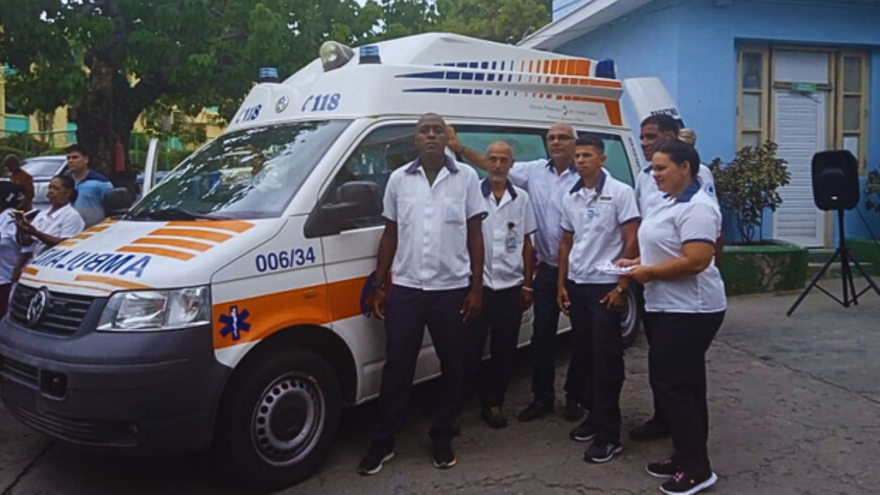
Italian Friends of the Cuban Regime Finance the Sending of Ambulances With the Sale of Cuban Coffee and Rum

The official press announced the donation to Santiago de Cuba of four Italian ambulances, two of them still waiting to be picked up at the port.  (Sierra Maestra)

14ymedio bigger14ymedio, Havana, 16 September 2023 — The left-wing Italian association Filorosso has financed the shipment to Cuba of used ambulances and medical supplies with the sale, in Italy, of coffee, rum and food made on the Island. The most recent shipment provided by the organization, based in the city of Lavis (province of Taranto), arrived last Tuesday in Santiago de Cuba.

Founded as a “non-profit” and “social and health assistance” entity in 1997, Filorosso sells a dozen Cuban products that are almost impossible to obtain on the Island itself.

One kilogram of coffee beans from the Frente Oriental brand – which is produced in Santiago but is not marketed on the Island – is sold for 15 euros, while a 250-gram package of that product, ground, costs 4.50. Tierra Libre chocolate powder, made in Villa Clara, is worth 3 euros, and a jar of honey of the same brand reaches 4.50. There is sugar at 3 euros, guava candy bars also at 3, habanero chili at 4 and peanut nougat, made by the private company Bormey de Santa Clara, at 2.50. The most expensive product is the bottle of Varadero rum – 3, 5 and 7 years old – which rises to 18 euros.

Filorosso sells a dozen Cuban products that are almost impossible to get on the Island itself

The purchase of these items is made by calling and picking up the product at the organization’s headquarters. In a promotional video, Tiziano Giongo, executive secretary of Filorosso, says that the money resulting from the sale of the products “will facilitate the economic situation of Cuba.” continue reading

Filorosso, in collaboration with other Italian organizations such as the Agency for Cultural and Economic Exchange with Cuba, maintains regular contact with the Government of the Island and with the authorities of those provinces from which it extracts most of its products: Villa Clara and Santiago de Cuba.

On Tuesday, the official press announced the donation of four ambulances – two of them still waiting to be picked up at the port – to the Department of Medical Emergencies of the Santiago municipality of Contramaestre and the provincial capital. These are used vehicles in “excellent state of conservation.” They also have cardiovascular monitors, pulmonary ventilators, resuscitators and equipment for intubations, all funded by Guido Gasperotti, president of Filorosso, said one of the ambulance drivers.

Although the authorities affirmed that this is “the first of the shipments that are being made as a contribution to the health system,” Filorosso had already sent two other ambulances to Villa Clara on April 15. As in the case of Santiago, the cities benefited were two: Sagua la Grande and Santa Clara.

Several posts on Filorosso’s Facebook page show that the shipment of ambulances is paid for with the benefits from the sale of Cuban products. An announcement by the association in March asked its members to buy an Easter egg, made with Cuban chocolate, for a price of 15 euros. The total amount of the purchase, they promised, would be dedicated to the project “Health emergency: ambulances for Cuba,” which plans the delivery of seven vehicles in total, with “residual utility.”

The purchase of these items is made by calling and picking up the product at the organization’s headquarters

In 2017, Filorosso invited Aleida Guevara, daughter of Ernesto Che Guevara, to give a lecture on “Economic Reform, the Blockade and Health in Cuba” to the members of the Italy-Cuba Friendship Association, which has a Che Guevara Center in Trento.

Last May, Filorosso sponsored the presentation of the book Sol y Revolución, by the writer Roberto Vallepiano, dedicated to “discovering the spell” of Fidel Castro’s Revolution and its impact on Latin America. Finally, this July, they financed a “Cuban party” on a ranch in the countryside of Trento, also for “humanitarian purposes.”

The closeness of Filorosso and the Agency for Cultural and Economic Exchange with Cuba is such that Cuban President Miguel Díaz-Canel dedicated a mention to its young members, members of the Gino Doné brigade, during his speech at the Moncada barracks on July 26.  Last August, young Italians were photographed carrying red and black flags and slogans in support of the Havana regime.

Translated by Regina Anavy

____________

COLLABORATE WITH OUR WORKThe 14ymedio team is committed to practicing serious journalism that reflects Cuba’s reality in all its depth. Thank you for joining us on this long journey. We invite you to continue supporting us by becoming a member of 14ymedio now. Together we can continue transforming journalism in Cuba.

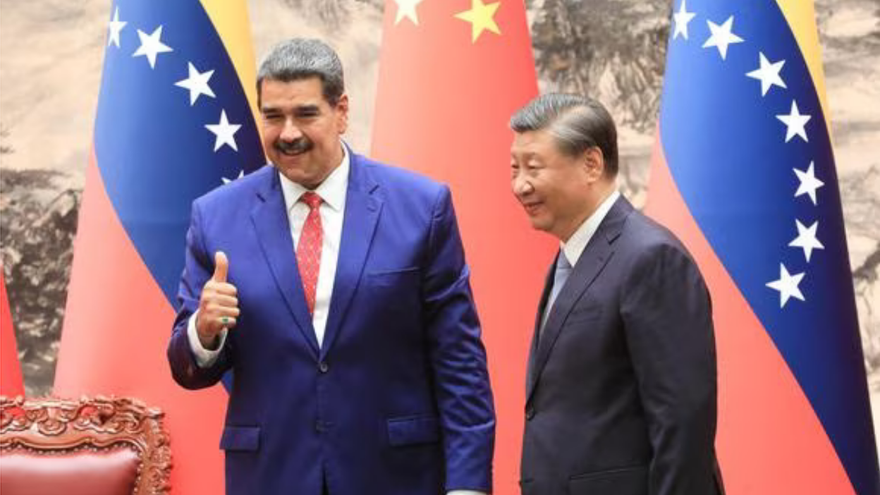
Venezuela in the Orbit of China

Nicolás Maduro this Thursday, during his meeting in China with Xi. (EFE)

14ymedio bigger14ymedio, Juan Pablo Cardenal, 15 September 2023 — Nicolás Maduro’s fifth official visit to China concludes. A trip of almost a week that has taken the Venezuelan president through several cities of the Asian country and whose finishing touch was the meeting with his counterpart Xi Jinping, who gave him an audience in the Great Hall of the People in Beijing. A solemn and symbolic enclosure, as it shows a paradigmatic of totalitarian architecture, chosen for both leaders to announce the new status of their bilateral relationship: a “strategic association at all challenges and all times.”

As Beijing’s diplomatic tradition dictates, the meeting with one of its most faithful Latin American allies was wrapped in a well-calculated rhetoric of friendship, to which Maduro responded, alluding, in each public appearance, to his fascination with the Asian “economic superpower” and his brotherhood with Beijing for their ideological closeness and anti-American vocation. So much reverence reveals the priority of the trip: Caracas’ plea for China to expand its investments and diversify its economic presence in the country.

The forced exile in search of a better life of more than seven million people clearly exposes the magnitude of the political, economic and humanitarian crisis that Venezuela is experiencing. Since 2007, China has granted it at least 67 billion dollars. It supplied healthcare material and vaccines to fight the pandemic, and is today the main buyer of Venezuelan oil, about 430,000 barrels a day, or more than 60% of Venezuelan exports. Despite his increasing dependence, Maduro wants more. Beijing is his lifeline. continue reading

The Chinese government thus picks up the gauntlet and extends the red carpet of the strategic alliance for Caracas to enter the club of China’s great friends. There are Russia, Pakistan, North Korea and many others

The framework in which bilateral ties are supposed to be strengthened is the “strategic partnership at all times,” whose meaning and scope is confusing even in its original expression in English (all-weather strategic partnership), although it is impossible not to guess for Venezuela a future increasingly subordinate both politically and economically to Beijing. The Chinese government thus picks up the gauntlet and extends the red carpet of strategic alliance for Caracas to enter the club of China’s great friends. There are Russia, Pakistan, North Korea and many others.

That Venezuela enters the orbit of Beijing grants it, in addition to preferential access to the Venezuelan market and resources, an additional benefit: an unconditional geopolitical ally in the midst of the growing rivalry (and hostility) with the United States and the rest of the Western world. A benefit that is also reciprocal: in his crusade against Washington, the Venezuelan president celebrates the “birth of a new world,” by the hand of China, that lays “the foundations that leave behind the old world of colonialism and imperialism.”

In its claim to position itself as the leader and benefactor of the so-called Global South against the United States, the Chinese Government thus supports Caracas’ desire and efforts to join the BRICS group, since it serves its objective of expanding its sphere of influence around the world. Beijing aspires to change the current world order, which it considers hegemonic for the United States and exclusive for China. Not to make it necessarily more multilateral or fairer, as official propaganda disseminates, but to influence it in order to make it safer for its interests. Therefore, this fraternal friendship with China has a price for Venezuela: to act as a crutch in the Chinese geopolitical strategy and deepen its economic dependence.

_________________

Editor’s note: The author is a journalist and writer specializing in the internationalization of China and the editor of Análisis Sínico at www.cadal.org

Translated by Regina Anavy

____________

COLLABORATE WITH OUR WORKThe 14ymedio team is committed to practicing serious journalism that reflects Cuba’s reality in all its depth. Thank you for joining us on this long journey. We invite you to continue supporting us by becoming a member of 14ymedio now. Together we can continue transforming journalism in Cuba.

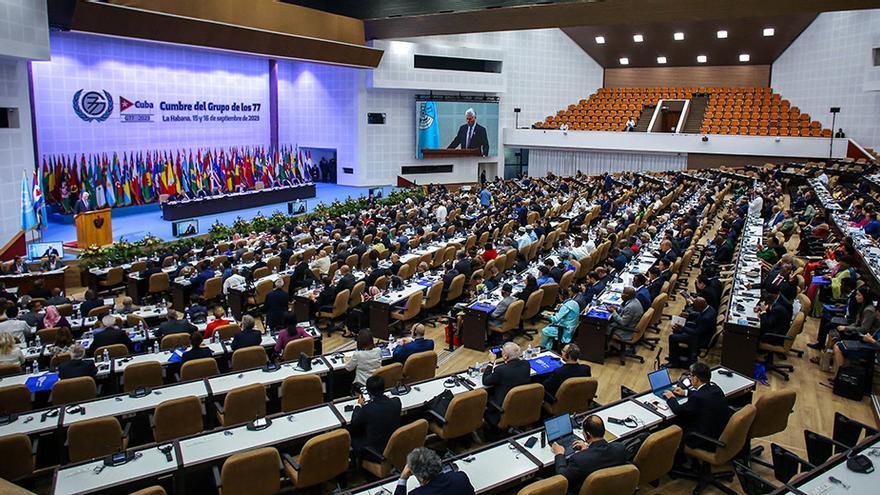
Guarded Streets and Arrest of Opponents: Cuba Prepares for the Summit of the 77

Summit of the Group of 77 plus China, hosted by the Cuban regime iin Havana. (Cubadebate)

14ymedio bigger14ymedio, Havana, 16 September 2023 — Without surprises or uncomfortable statements for the Havana regime, the leaders of the Group of 77 plus China have paraded this weekend through the visitor gallery of Havana’s Palace of Conventions. Raúl Castro has abandoned his retirement to meet several world leaders, and the atmosphere in the city is tense. Discreet buses of members of the Ministry of the Interior patrol the most central streets, and since Friday, the presence of people on the streets has decreased significantly.

The preventive detention of several dissidents has underlined the message of the authorities: everything must be under control during the Summit, not only in the capital but also in the provinces. Opponent Guillermo Fariñas was arrested this Friday in Santa Clara, hundreds of miles from Havana, “because there was an order that he could not leave” during the weekend, he told the media.

Fariñas, 61, was not even interrogated during the six hours he remained in the Criminal Investigation Unit. They arrested him on his way home from a friend’s, and, when he was released, they warned him that he could not leave his home again. On the social network X (formerly Twitter), Fariñas protested by stating that his house was not a cabozo [jail] and that he planned to go out again.

X/Twitter text: Several Cuban civil society activists are besieged, under the supervision of State Security, while the Group of 77+ China Summit begins in Havana. We are opening a thread about repressive acts. — Cubalex (@CubalexDDHH)

According to Cubalex, other activists and opponents have been harassed to prevent them from protesting during the Summit. This is the case of former political prisoner Rolando Kessel and activists Yanet Martínez and Félix Valdés – “sitting at home” – in addition to Pedro Quiala and Carlos Milanés, who are “under the surveillance of State Security.” Most of the opponents living on the Island have reported Internet outages since this Friday. continue reading

Connectivity problems have not only affected dissidents but have also spread throughout the country. Difficulties in accessing the Internet have been more evident when posting or viewing images and videos on Facebook. In addition, instant messaging services such as Telegram and WhatsApp have been at half-speed for the whole week.

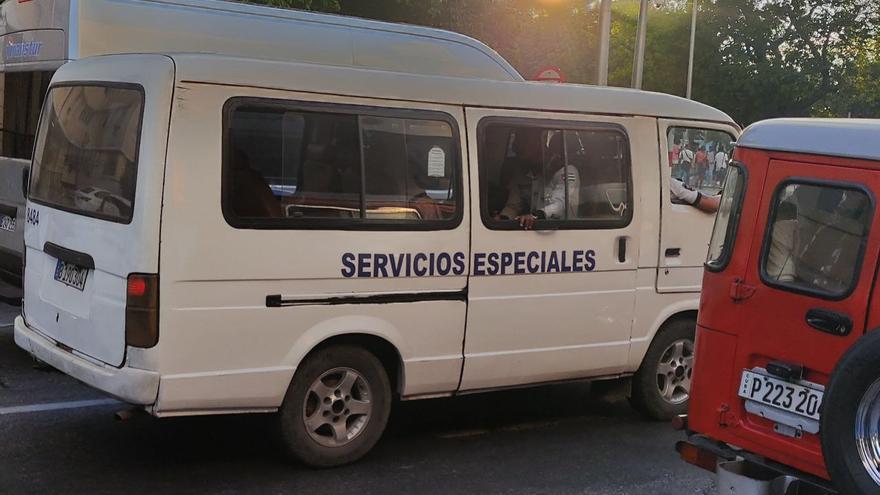
Este diario captó a un vehículo de los Servicios Especiales del Ministerio del Interior mientras recorría las calles de la capital cubana. (14ymedio)
A Ministry of the Interior Special Services van roamed the streets. (14ymedio)

This newspaper captured a video of a vehicle of the Special Services of the Ministry of the Interior as it roamed the streets of the Cuban capital. Halfway between a minibus and a white van, it is not the one usually used by the Cuban military, who travel in black vehicles.

Inside the Palacio de las Convenciones, guests to the Summit from the 134 member countries have praised the hospitality of Havana. In his speech to the leaders, Miguel Díaz-Canel alleged that international relations needed more “democratization,” a statement that was applauded by the Secretary General of the United Nations, António Guterres.

He also asked that the world economic “rules of the game” be changed, to favor underdeveloped countries such as Cuba, which he described as a “victim” of international finance.

Although the celebration of an event of this caliber is a logistical challenge for any country, the Island has not missed the opportunity to preside over the Group of 77. Several of its most important allies have converged in Havana, such as Venezuelan President Nicolás Maduro, Nicaraguan Daniel Ortega, Argentine Alberto Fernández, Brazilian Luiz Inácio Lula da Silva and Colombian Gustavo Petro.

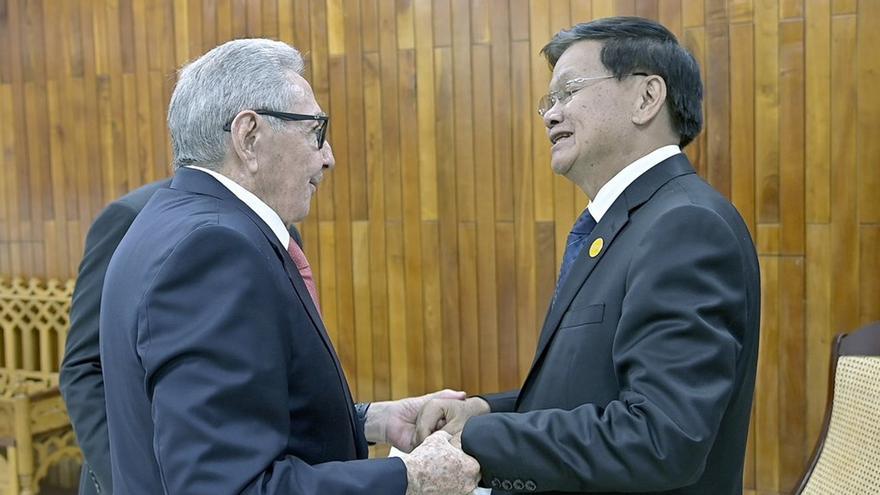
Raul Castro met with several of the personalities attending the summer, among them the president of Laos, Thongloun Sisoulith. (@PresidenciaCuba/Twitter)

The great “attraction” for many of the foreign visitors has been the presence at the Summit of Raúl Castro, who abandoned his traditional military uniform to wear a suit during his meetings with several leaders.

Castro met with Guterres this Friday, in addition to Mexican Chancellor Alicia Bárcena, the president of Laos, Thongloun Sisoulith, and the president of Mongolia, Khurelsukh Ukhnaa. However, the official press offered few details about these meetings and limited itself to stating that Castro had promised the UN Secretary-General to work for “sustainable development” in Cuba. This Sunday, the Summit will hold its last working session.

Translated by Regina Anavy 

____________

COLLABORATE WITH OUR WORKThe 14ymedio team is committed to practicing serious journalism that reflects Cuba’s reality in all its depth. Thank you for joining us on this long journey. We invite you to continue supporting us by becoming a member of 14ymedio now. Together we can continue transforming journalism in Cuba.

Brazil Will Sign an Agreement With Cuba To Jointly Develop Medicines

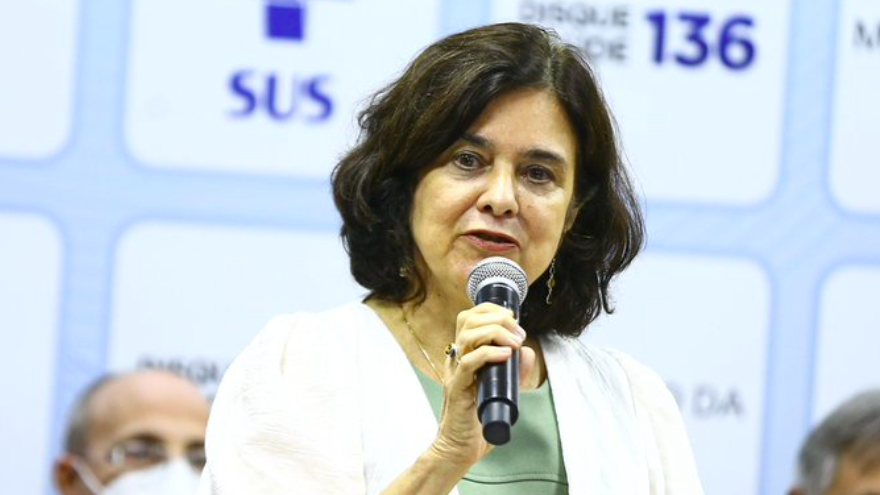
The Minister of Health, Nísia Trinidade, stated at a press conference that the agreement will include developing innovations in vaccines and medicines. (EFE)

14ymedio biggerEFE (via 14ymedio), Havana, 16 September 2023 — The Government of Brazil announced this Friday in Havana that it will sign an agreement with Cuba to “exchange” knowledge in science and technology, and to develop medicines “jointly.”

The Minister of Health, Nísia Trinidade, said at a press conference that the agreement will include developing innovations in vaccines and medicines for chronic diseases such as Alzheimer’s and diabetes.

In addition, the two countries will again form a binational committee with health authorities, which was created in 2002, and to which, according to Trinidade, the Government of Jair Bolsonaro (2019-2022) did not give “continuity.”

This committee will define “the work agenda” for a collaboration that the minister described as “a win-win” for both sides, although she did not mention how much will be invested in the agreement.

Trinidade said that Brazil will benefit from the “leading knowledge that Cuba developed” and the Island, in turn, from the Brazilian ability to “produce medicines at scale.” continue reading

The Minister of Science and Technology put on the table the possibility of training Cuban professionals in the management of satellite surveillance systems

Beyond drugs, the Minister of Science and Technology, Luciana Santos, put on the table the possibility of training Cuban professionals in the management of the satellite surveillance systems available to Brazil to prevent natural disasters and support agriculture.

The ministers are part of the entourage of the Brazilian president, Luiz Inácio Lula da Silva, who arrived this Friday in Havana to participate in the G77+China meeting, a group that Cuba presided over last year.

This is the first visit of a Brazilian president to the Island since 2014, and the first since Lula assumed his third term in January (he already visited in 2003, 2008 and 2010 during his first two terms).

The previous president, Jair Bolsonaro, was openly hostile to the Cuban government. He had no qualms about calling it a “dictatorship” and froze a program that brought hundreds of Cuban doctors to Brazil.

Translated by Regina Anavy

____________

COLLABORATE WITH OUR WORKThe 14ymedio team is committed to practicing serious journalism that reflects Cuba’s reality in all its depth. Thank you for joining us on this long journey. We invite you to continue supporting us by becoming a member of 14ymedio now. Together we can continue transforming journalism in Cuba.

Castroism and Human Trafficking

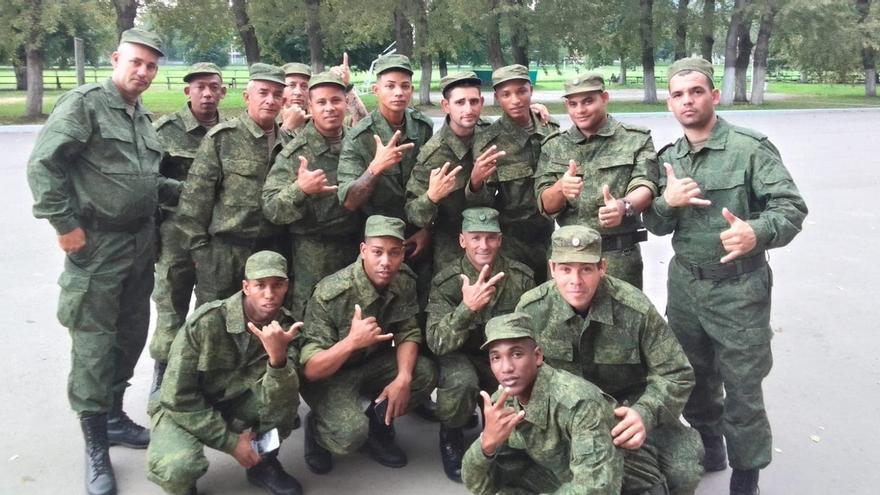
A group of Cubans who were recruited to fight on the Russian side in the war in Ukraine. (Mario Vallejo/Facebook)

14ymedio bigger14ymedio, Pedro Corzo, Miami, 16 September 2023 — Human trafficking is one of the greatest aberrations that people can do, but when a government does it, it’s hard to find a qualifier.

The Cuban authorities have always trafficked their citizens; even worse, they have integrated into the population the idea that this commerce is a legal and moral practice. For the regime, as long as it is profitable, it is something positive for the government to provide mercenary services to a foreign nation or to any military force that requests it.

At least a large sector of two generations of Cubans grew up under the influence of their parents, who participated in mercenary wars in the service of the extinct Soviet Union and the imperialist will of Fidel Castro. The last Spanish-speaking imperialist army in the world was Cuban, not Spanish.

Castro’s totalitarianism has historically participated in any criminal activity that benefits it regardless of how many moral or legal parameters are broken. It has always been associated with three of the most criminal transgressions: narcotics trafficking, human trafficking and terrorism. continue reading

The Cuban authorities have always trafficked their citizens; even worse, they have integrated into the population the idea that this commerce is a legal and moral practice

This sowing of false values, greed, selfishness, impunity and injustice, to refer to just a few, is showing itself with all its indignity in the close collaboration that Cuba lends to Russia in its war of aggression against Ukraine, again using its citizens as cannon fodder to please Moscow.

It is not surprising that Castroism sells this to its citizens, but it must be a concern that young people are willing to participate in an unjust war, contrary to the values proclaimed by José Martí. It must hurt us that they die and kill, not to defend their homeland but to obtain benefits to which any citizen in the world has the right: to leave the land in which they are unhappy.

Cuban youth, certainly, suffer from an overwhelming level of frustration that leads them to act in search of the level of survival they want without dwelling on the damage they cause, as shown in a report by Radio Martí, by filmmaker and journalist Luis Guardia, with the collaboration of colleague Ivette Pacheco.

In the report, Caridad Díaz says that her son, Alex Rolando Vega Diaz, at the time at a Russian military base, told her that he preferred to “die from Ukrainian bombs than from hunger and sadness in Cuba,” which shows the degree of despair that the population of the Island has reached due due to Castroism.

The regime’s reaction to these events does not surprise anyone. It repeats the same script as when the ruling leadership was accused of drug trafficking, such as Causa Nº1, in which henchmen from the upper echelons of totalitarianism were prosecuted.

The staging is similar. Havana claims to have arrested several people linked to the operation. In other words, a totalitarian government like the Cuban one, which boasts of the social control it exercises in the country, was unaware of an operation in which the main beneficiary was its most important ally, Colonel Vladimir Putin.

Cuban youth, certainly, suffer from an overwhelming level of frustration that leads them to act in search of the level of survival they want without dwelling on the damage they cause

This farce of the arrests led the activist Jaimiel Hernández to wonder when Díaz-Canel will start Causa Nº2, adding that Raúl Castro, again, will be the main accuser of regime officials who are guilty, saving the scarred face of the dictatorship.

Miguel Díaz-Canel, once again, proves to be the most faithful servant, although without talent for inventing new scoundrels. It is and will always be the wildcard that ensures that the new class created by the fateful Castro brothers continues to perpetuate itself in power, destroying the Cuban nation.

For Castroism, the only mercenaries are those who oppose it; those who repress and kill when they are at its service are honorable people who should be imitated. Doctrinal education and manipulation are leaving a very negative sequel for the future of the Cuban nation, with a pernicious mafia that will survive the regime and that we will painfully know as the Cuban mafia when it should be called the Castro mafia.

Translated by Regina Anavy
_______________________

COLLABORATE WITH OUR WORKThe 14ymedio team is committed to practicing serious journalism that reflects Cuba’s reality in all its depth. Thank you for joining us on this long journey. We invite you to continue supporting us by becoming a member of 14ymedio now. Together we can continue transforming journalism in Cuba.