
Mexico Will Give 6,960 Appointments for Visas for Cubans Starting Next Monday

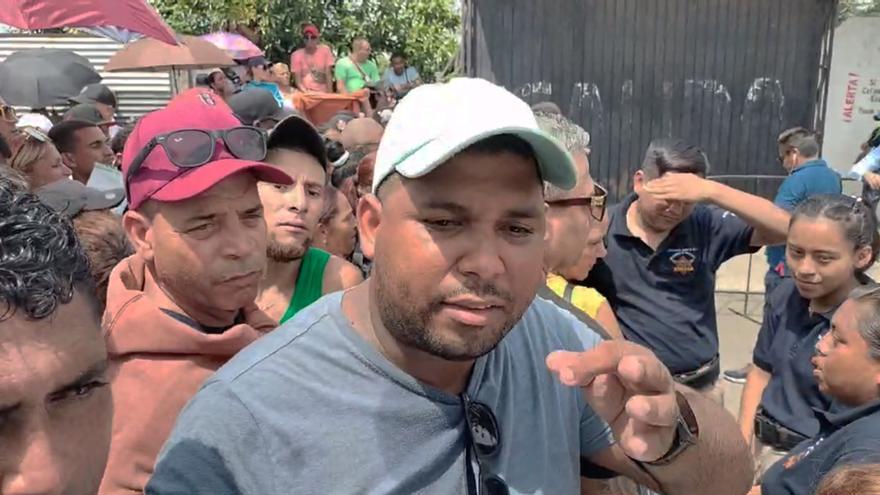
While the Ministry of Foreign Affairs of Mexico announces more consular appointments in Havana, thousands of Cubans are stranded in Tapachula (Mexico). (Capture/Border Portal)

14ymedio bigger14ymedio, Havana, 21 September 2023 — The Ministry of Foreign Affairs of Mexico will assign 6,960 appointments for Cubans to process their visas at the Mexican consulate in Havana from this coming September 25. This process will be based on “user registration order, privileging family reunification, work and study visas,” according to a statement.

The Secretariat of Foreign Affairs clarified that people who already have a user in the Citas Cuba system “will not need to create a new account or perform additional steps.” In the month of December, appointments will be scheduled for the first quarter of 2024.

The Mexican agency specified that this online system “automatically assigns appointments to previously registered people in chronological order and until the availability is exhausted.”
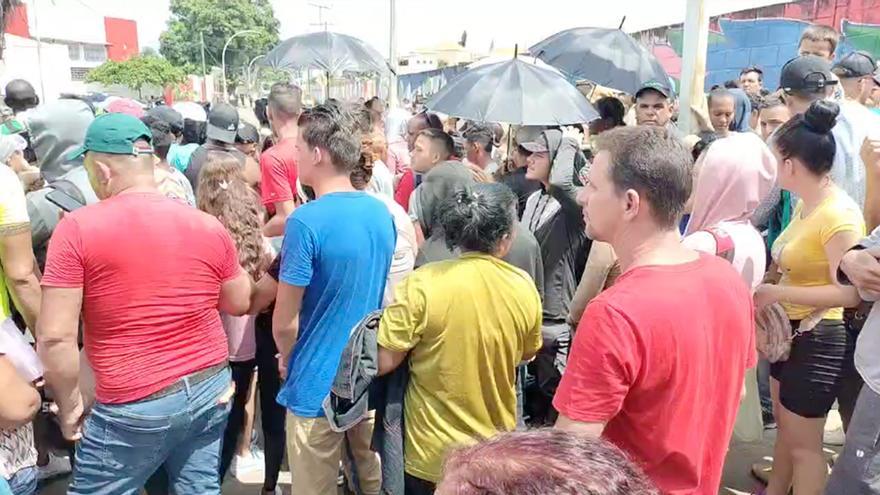
Cubans waiting to be served at the Migration offices in Tapachula. (Border Portal video capture)

The platform, however, has provoked complaints from users about the slowness of the process. In April of last year, several Cubans spent hours in front of the computer without being able to obtain one of the 16,000 appointments that were delivered at the time. To this was added the annoyance of the drop in internet browsing speed. continue reading

The Mexican Foreign Ministry reiterated that “the appointments are free, personal and non-transferable,” in addition to the fact that any “suspicious” appointment will be canceled, and the user will be “blocked.” Therefore, it recommended avoiding sharing personal data with third parties who offer to schedule appointments on another person’s behalf. If the process is detected, “the appointment will be canceled without prior notice.”

Those who are not registered users in the Citas Cuba system must access the website through this link and enter their biographical data, the procedure they require and wait for an appointment to be assigned.

The announcement of appointment allocations coincides with a new saturation of migrants on the southern border of Mexico. In Tapachula, Cubans have complained that those who have a confirmed CBP One appointment are being denied a flight permit, despite the fact that the National Institute of Migration (INM) authorized it last March.

These same Cubans were waiting for an appointment in the offices of the Mexican Refugee Aid Commission and were  deceived by an alleged official, who informed them that the INM will issue them a Multiple Migration Form “so that you can move around the interior of the country.” The Cubans then went to Migration headquarters and were told that it was not delivering any documents.
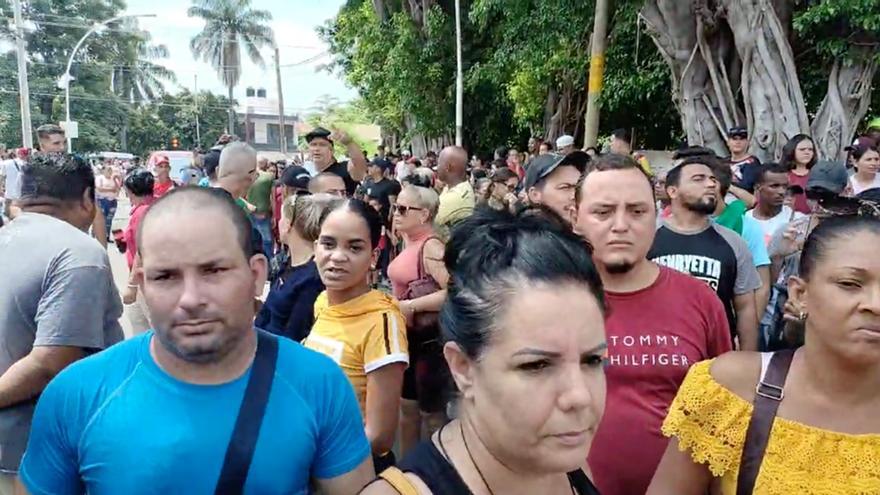
There are at least 20,000 Cubans stranded in Tapachula. (Border Portal video capture)

In Tapachula, about 20,000 Cubans are stranded waiting for a document that allows them free passage to reach the border with the United States.

On the other hand, the U.S. border city of Eagle Pass (Texas) declared a state of emergency after thousands of migrants crossed through the Mexican state of Coahuila on Wednesday. “The declaration of emergency gives us the ability to request financial resources to provide the additional services caused by the influx of undocumented migrants,” said Mayor Rolando Salinas.

The United States Customs and Border Protection (CBP) scheduled a vehicle closure at 6 p.m. on Eagle Pass Bridge 1 with Mexico. The CBP also has suspended cargo processing at the port of entry of the Bridge of the Americas (BOTA) in El Paso (Texas) since last Monday, which is usually open from 6 a.m. to 2 p.m. Monday through Friday.

The temporary suspension was also ordered to send the agents to help the Border Patrol of the El Paso sector to process the migrants.

Translated by Regina Anavy

____________

COLLABORATE WITH OUR WORKThe 14ymedio team is committed to practicing serious journalism that reflects Cuba’s reality in all its depth. Thank you for joining us on this long journey. We invite you to continue supporting us by becoming a member of 14ymedio now. Together we can continue transforming journalism in Cuba.
Due to Mismanagement of a Factory, the Producing Provinces in East Cuba Are Left Without Coffee

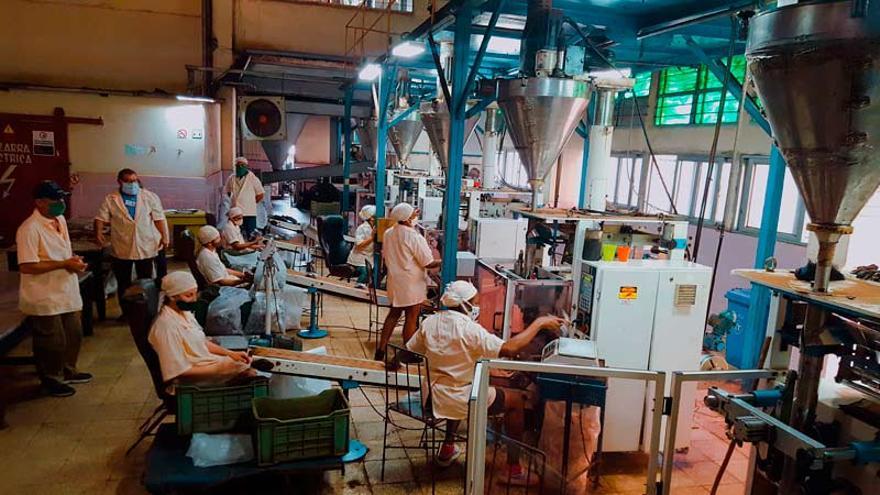
Torrefactora Reynerio Almaguer Paz, in Hoguín. (Casa Dranguet)

14ymedio bigger14ymedio, Havana, 21 September 2023 — It’s been more than four months since the roaster Reynerio Almaguer Paz, from Holguín, produced coffee. According to the explanations that its directors offered to the official press, the last time the factory ground coffee, during July and early August, was thanks to the fact that the producers agreed to sell the State the share that corresponded to their “self-consumption.”

The provincial newspaper ¡Ahora! also revealed that the situation, which has continued since May, not only affects the population of Holguín, but also that of Granma and Las Tunas, and it will not be alleviated until the end of the year.

“From the month of November, the raw material starts being delivered, after the [grain] collection stage. In that month you must restart the production and the subsequent distribution of coffee. Other alternatives are being studied to contribute to the gradual solution of the current limitation, but November is the date we now have,” the director of the roasting plant, Rider Sánchez, told the media.

Last July, Reynerio Almaguer packed 30,000 half-pound coffee sachets from the Isla Grande brand

Last July, when the factory processed the raw material bought from producers,  Reynerio Almaguer packaged 30,000 half-pound coffee packs from the Isla Grande brand. But, instead of taking advantage of the surplus to alleviate the delay in the standard sale, the roaster decided to sell them at the agricultural fairs that are held in the province on weekends for a “differentiated” cost of 100 pesos, when the ’basic basket’ price, through the ration stores, for the same package is 11 pesos. continue reading

The pretext for not selling it “on the ration book,” Sánchez explains, was that the coffee produced was not enough to meet demand. “Our initial idea was to market it to the ration stores, like so many other goods that arrive by that route, but the amount we could access did not supply even half of the municipality of Holguín, so it was decided to sell it at fairs,” he said.

However, the shortage of the product among the population is so drastic that the director of the industry says that, during the days they marketed the coffee, they managed to dispatch between 4,000 and 5,000 bags per week.

Another cause of the production debacle, the official admitted, is the bureaucracy that is established within the industry itself. “I can clarify that the result of the harvest does not reach us directly, since it is intended for the coffee processors Asdrúbal López, from Guantánamo, and Rolando Ayud, from Contramaestre, in Santiago de Cuba, who are our suppliers,” he explains, adding that through importation – another channel for the raw material – they have not received anything so far this year.

To avoid stopping the industry and sending the workers home, the roaster has resorted to “alternative productions”

To avoid stopping the industry and sending the workers home, the roaster has resorted to “alternative productions,” although so far the efforts are not profitable. “We promote the search for agricultural products, such as corn, peanuts and rice, to make derivatives of them. We continue to evaluate these possibilities due to the high cost of acquiring [raw material],” says Sánchez.

The industry also tried to enter the market of pre-prepared food and to promote self-consumption farms. Both routes have been “valued” without major results. However, the manager assures, an attempt is being made at all costs to maintain service to the population.

The lack of coffee is not exclusive to the eastern provinces. In several neighborhoods of Havana, at the other end of the Island, people have not received coffee since May, when it last arrived at the ration stores, according to 14ymedio. The situation contrasts with the regime’s import figures for the month of July, when the country dedicated almost two and a half million dollars to buying coffee from the United States.

On the other hand, the Italian association Filorosso, which recently financed the shipment of ambulances to Santiago de Cuba, collects for its “donations” to the Island in kind. On its website, the organization offers at least a dozen Cuban products, including various foods such as chocolate, rum and coffee, all of which are impossible to get in Cuba except at prohibitive prices.

One kilogram [2.2 pounds] of coffee beans from the Frente Oriental brand – which is produced in Santiago but not marketed on the Island – is sold on the Italian website for 15 euros, while a 8.8-ounce package of that product, ground, costs 4.50.

Translated by Regina Anavy

____________

COLLABORATE WITH OUR WORKThe 14ymedio team is committed to practicing serious journalism that reflects Cuba’s reality in all its depth. Thank you for joining us on this long journey. We invite you to continue supporting us by becoming a member of 14ymedio now. Together we can continue transforming journalism in Cuba.

Cuba Loses a Possible Pan-American Medal in Wrestling After the Escape of an Athlete in France

Coach Filiberto Delgado included Hangelen Llanes in the team of 11 athletes training in France. (Video capture/Jit)

14ymedio bigger14ymedio, Havana, 20 September 2023 — Last Monday night  Cuban sports suffered another defeat. The wrestler Hangelen Llanes, gold medalist in the XXIV Central American and Caribbean Games, in the 150 pound category, escaped in France. The habanera, according to coach Daniel Gómez, left the team in Paris before traveling to Serbia. “Welcome to freedom,” Gómez wrote in a post on Facebook.

Llanes was included, along with Laura Herin, by coach Filiberto Delgado, in the team of 11 athletes who were based at a training camp in France. The intention was for them to continue their training for the Pan American Games in Santiago de Chile, which will take place between October 20 and November 5.

The coach’s goal, as he told the official radio station Radio Rebelde, was that the athletes could “have a good rest and an excellent diet, in addition to training with European wrestlers.” In the team that will travel to Santiago are Ángela Álvarez, who won gold at the University Festival in Russia, and María Fernanda Santana. Both train at the Cerro Pelado Higher School of Training of High Performance Athletes, in Boyeros.

The escape of Llanes, who last year was distinguished as one of the most outstanding athletes in the discipline, leaves Cuba without the possibility of a medal in the 150-pound category in the Pan American. continue reading

The escape of Hangelen Llanes joins the more recent escapes by wrestlers Yoannia Pérez and Liliana Duane, who in March of this year took advantage of a stopover in Mexico to leave the island’s delegation

At the moment, Filiberto Delgado has no other athlete who can fill this space. Hangelen Llanes had been reaping triumphs since 2022. In May of that year, she won the silver medal in the Pan American Wrestling Championship, which was held in Acapulco (Mexico), after falling in the final against the Venezuelan Soleymi Antonieta Caraballo.

At that event, between May 3 and 7, Ismael Borrero, Leonardo Herrera and Amanda Hernández escaped. The first one who to escape was Borrero, on the same day they arrived in Mexico. He was followed by Leonardo Herrera, the athlete who had been chosen to replace the Olympic champion Luis Orta. Amanda Hernández was the last to escape.

On that occasion, Hangelen Llanes returned to the Island. Seven months later, in December 2022, she won the gold medal in the contest held in the Parque del Este of the Dominican Republic. This was repeated in San Salvador 2023.

Llanes also attended the Pan American Wrestling Championship held in Argentina last May, where she won the bronze medal.

The escape of Hangelen Llanes joins the more recent escapes by wrestlers Yoannia Pérez and Liliana Duane, who in March of this year took advantage of a stopover in Mexico to leave the island’s delegation

Translated by Regina Anavy

____________

COLLABORATE WITH OUR WORKThe 14ymedio team is committed to practicing serious journalism that reflects Cuba’s reality in all its depth. Thank you for joining us on this long journey. We invite you to continue supporting us by becoming a member of 14ymedio now. Together we can continue transforming journalism in Cuba.
Indications Are the New Banking Reform Measures Are Failing but Cuban Officials Still See Them as Necessary

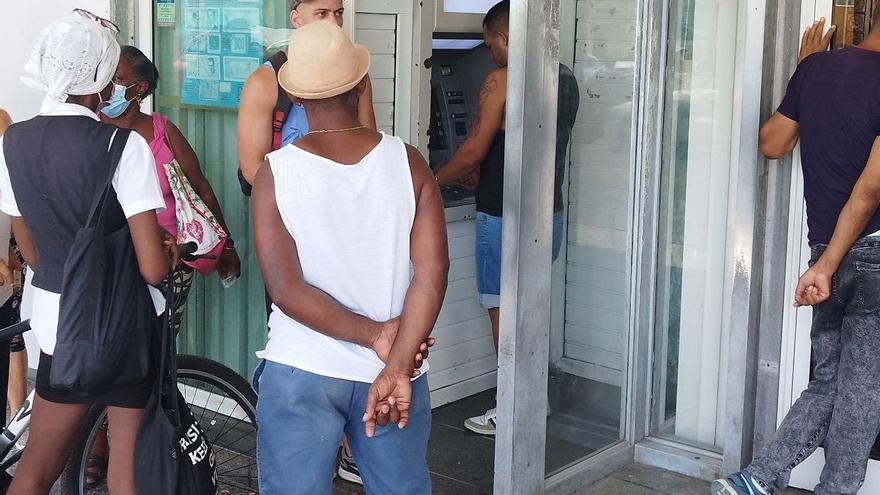
A Banco Metropolitano branch ATM on the corner of Belascoaín and Zanja streets in Central Havana. (14ymedio)

14ymedio bigger14ymedio, Madrid, 20 September 2023 — It has been a month and a half since a series of measures referred to as bancarización took effect and opinion on the street remains unchanged. This government effort is intended to encourage businesspeople and consumers to use electronic payment options rather than cash. “I don’t understand how it works. For small purchases, it doesn’t make sense” says Luis, a retiree. He was one of several Havana residents interviewed for an article published on Wednesday by Cubadebate, a state-run news website which sampled public opinion on the issue. The responses suggest officials have a long way to go in selling the public on this new way of doing business.

“The Cuban economy does not currently have all the cash resources it needs to operate or to meet public demand,” the article concludes. “One of the the expected benefits of bancarización, therefore, is a gradual decrease in the amount of cash in circulation, which is very expensive to print, transport and handle.”

This is the goal but it has run up against reality in way that even many government supporters had warned would be an issue. Cuba’s private sector operates on a cash basis as the article acknowledges. “I currently spend around 50,000 pesos on soft drinks but my supplier doesn’t take electronic payments. It’s a big hassle for him to withdraw the money in cash and exchange it for the hard currency he needs,” explains Raul León, the manager of a Havana cafe. He himself has no problem billing customers electronically but he cannot replenish his stock of supplies without banknotes. continue reading

Business owners who rely on imports must buy foreign currency on the black market due to the few options available to acquire it legally

The article also acknowledges that business owners who rely on imports must buy foreign currency on the black market “due to the few options available to acquire it legally.” Additionally, businesses are not allowed to withdraw more than 5,000 pesos from their bank accounts at a time. It’s a bit like a dog chasing its tail.  There is a nationwide cash shortage so business owners are reluctant to deposit their cash in banks because they need it to buy dollars, which then further decreases the amount of cash in circulation.

Cubadebate looked at individual cases that put a human face to the public’s resistance to the new banking measures. There is Luis, the retiree quoted at the beginning of the article, who gets up early and goes to several ATMs in search of his 1,500-peso pension and who needs someone’s help to make a withdrawal. There’s Gladys, who spent two days waiting in line to get the money she needed to pay for a refrigerator on the informal market because the ATMs did not have enough cash. And Carlos, who lost an afternoon of work due to problems withdrawing money from an ATM that kept breaking down as soon as it was fixed.

According to officials, 70% of domestic retail businesses already use electronic payment systems, but not all them. Cubadebate visited a neighborhood grocery in Playa, a suburb of Havana, where customers can only pay with cash. Meanwhile, a supermarket in Cubanacán has been offering an electronic payment option for some time now.

“Most of our customers are older adults. Many of them don’t have a cell phone or don’t feel comfortable paying for things electronically because they’ve always used cash. We’ve told them about the advantages of using a QR code, such as the 6% discount. They would save some money and we wouldn’t have to take so much cash to the bank. But, unfortunately, most of them aren’t interested,” explains the manager.

He also points out that the Ministry of Trade now requires that four or five electronic transactions be executed each day. In all their public appearances, officials have taken pains to emphasize that, though businesses had to provide and promote electronic payment options, customers were free to use them or not. “I’m not happy that they want to question me about something that is beyond my control,” he protests.

Customers will be required to pay by card at gas stations beginning in late October but 100% of those interviewed by Cubadebate said they still planned to pay with cash

Beginning in late October, customers at gas stations will be required to pay by card but that will be difficult to pull off. Cubadebate visited a station in Playa where 100% of the customers it interviewed said they still planned to pay with cash.

Cubadebate seems surprised by a problem that was widely foreseen by both the independent press and the public-at-large: the lack of connectivity that prevents transactions from being completed at point-of-sale terminals. To illustrate this, it cited the comments of one of it own readers who had purchased a phone with a card. Though the amount was deducted from his bank account, the saleswoman insisted he pay with cash because the transaction had not gone through.

Cubadebate insists that, even with all the problems — most have occured in Havana, the most technologically advanced province in the country — electronic payment systerms are needed to alleviate the nation’s cash shortage and shrink the black market. Furthermore, it argues that society is already moving in this direction and that the digital transformation of the economy will ultimately happen one way or another.

Raúl León, the cafe owner who could use more cash to run his business properly, sums up the private sector’s situation well. “It is a convenient and effective solution for those who can adapt to the technological changes that it requires,” he says but adds that it does not address one of the main issues for people like him: paying suppliers. A serious problem in a country where the state lacks the resources to do something as basic as feed its population.

____________

COLLABORATE WITH OUR WORKThe 14ymedio team is committed to practicing serious journalism that reflects Cuba’s reality in all its depth. Thank you for joining us on this long journey. We invite you to continue supporting us by becoming a member of 14ymedio now. Together we can continue transforming journalism in Cuba.

The Video of the Documentary About ‘Patria y Vida’ Is Nominated for the Latin Grammy 2023

Beatriz Luengo, from Spain, directs the documentary, in addition to being co-author of the song. (EFE)

14ymedio biggerEFE (via 14ymedio), Seville, 19 September 2023 — The documentary Patria y Vida: The Power of Music, which narrates the vicissitudes of the song Patria y Vida, banned in Cuba and winner of two Latin Grammys, is nominated for these awards this year in the Best Long Video category.

“At a time when art and social justice intertwine their voices, Patria y Vida [Homeland and Life]: The Power of Music resonates strongly, receiving its well-deserved nomination in awards that for the first time will be delivered in Seville (Spain) next November, says the public relations company on Tuesday.

Directed by the Spanish singer, songwriter and actress Beatriz Luengo, the documentary stages not only the protagonists of the song, but also “submerges the viewer in a visual narrative that pays tribute to iconic figures such as Celia Cruz, with the special participation of Gloria and Emilio Estefan and Camila Cabello,” the statement details.

The documentary premiered last March during the Miami Film Festival 2023 and narrates “the experiences, fears, injustices and victories” of a song that was the anthem of the peaceful protests of July 11, 2021. continue reading

The documentary premiered last March during the Miami Film Festival 2023 and narrates “the experiences, fears, injustices and victories” of a song that was the anthem of the peaceful protests of July 11, 2021

The song, performed by Romero, the duo Gente de Zona (Alexander Delgado and Randy Malcom), Descemer Bueno and the rappers El Funky and Osorbo, the latter a prisoner in Cuba, won the Latin Grammys for song of the year and best urban song in 2021.

The documentary “reinforces the song’s legacy, demonstrating how a melody becomes a movement, a cry for freedom, and now, a story worthy of being told on the big screen,” the statement adds.

With more than 450 million views on TikTok and acclaimed by American media as “the sound of freedom,” this documentary is positioned as “an essential representation of how art has the power to change realities and narrate stories that must be heard.”

Meanwhile, the Colombians Camilo, Karol G and Shakira, with seven nominations each, are the artists with the most award options in the Latin Grammy 2023, concurrently with great favorites, such as the Argentine Bizarrap, with six, or the Spanish Pablo Alborán, with five.

There are also five candidacies accumulated by the Puerto Rican Bad Bunny, the Argentine María Becerra, the Colombian Feid and the Mexican Natalia Lafourcade, as revealed on Tuesday by the Latin Recording Academy in a broadcast from Seville (Spain), which this year also hosts its great gala on November 16.

Translated by Regina Anavy

____________

COLLABORATE WITH OUR WORKThe 14ymedio team is committed to practicing serious journalism that reflects Cuba’s reality in all its depth. Thank you for joining us on this long journey. We invite you to continue supporting us by becoming a member of 14ymedio now. Together we can continue transforming journalism in Cuba.
A Former Cuban Diplomat Among the Protesters Against President Diaz-Canel’s Visit to New York

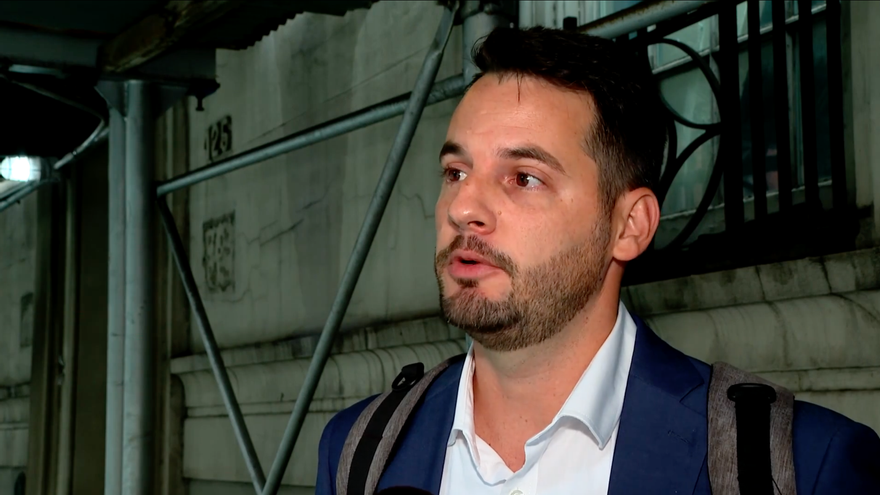
Joel Suárez Orozco, interviewed by Mario Vallejo this Tuesday in New York. (Capture/Facebook)

14ymedio bigger14ymedio, Madrid, 19 September 2023 — Joel Suárez Orozco worked throughout 2020 in the Cuban United Nations mission, located on the third floor of its headquarters, south of Manhattan (New York). This Tuesday, the young Cuban diplomat was at the door of the same place, but this time to protest against the regime coinciding with the visit of Cuban President Miguel Díaz-Canel to participate in the General Assembly.

“While you are in Cuba you can’t know what freedom is, and this country (USA) gave me that, it gave me the possibility to look over the wall and say: ’They have lied to me all my life,’” Suárez told journalist Mario Vallejo, who was there to cover the demonstrations called by Cuban exiles in front of UN headquarters.

The diplomat explains in a 10-minute interview how he ended up serving as third secretary in the Permanent Mission of Cuba to the United Nations after graduating from the Higher Institute of International Relations in Havana. Suárez specialized in the area of environment and climate change, which led him to get a scholarship at the UN from the Alliance of Small Island Developing States.

“I was lucky that my job was on climate change and sustainable development, and I never had to talk about human rights”

Thus, the Cuban delegation included him in its mission, so that he continue reading

combined his studies with employment. “I was lucky that my work was on climate change and sustainable development, and I never had to talk about human rights,” he explains, although he acknowledges having “a guilty conscience” for having represented the regime.

Things went sideways later. Suárez, according to him, had opportunities to go to different universities in Europe to continue expanding, as hoped to do, his studies. But the Cuban government denied him the opportunity. “I told them, in the best terms: ’Look, I don’t want to continue working here.’ And then came the interrogations in Villa Marista – I was imprisoned after an illegal exit attempt – the constant siege, impediments to work, moral murders…,” he adds.

Among the things he remembers with the greatest pain is his passage through a Cuban prison, after the denunciation of a citizen of Cunaguá (Camagüey). “There I knew what a prison was in Cuba. You have to live it, you have to experience it to know the repression, abuse, lack of rights, lack of freedom and lack of dignity that political prisoners face,” Suárez explains.

According to his testimony, the cells are hermetically closed rooms with no lighting, no windows and no doors, and officials decide who can walk in circles or get some sun. “Food is unpleasant, freedoms are null, you are at the expense of an instructor taking care of you when he wants, as long as he wants… It’s desperate, they play with the desperation of the Cuban people to blackmail them,” he adds.

Although in the short interview he does not explain how he got out of prison, he does specify that his final departure from Cuba was by sea. “I spent six months hiding in forests and mangroves, because these guys did not want to allow me to study,” he says.

“There are many people who work for counterintelligence, especially controlling the movements of diplomats and getting into everyone’s private lives”

Suárez also recounted the conditions in which Cuban diplomats work, to whom they pay between 200 and 300 dollars a month, he says, and with which it is impossible to live in New York, one of the most expensive cities in the world. “That is already a form of coercion, of limiting freedom of movement, of limiting people’s chances of having a life.  Most of them live here, in the east building, and we have to invent creative ways to solve those economic problems,” he explains.

Asked by Vallejo about whether the building houses a mission of espionage agents, Suárez does not confirm or deny. “There are many people who work for counterintelligence, especially controlling the movements of diplomats and getting into everyone’s private lives. I don’t know that there is intelligence working there, although surely they must, because they don’t compartmentalize,” he says.

Finally, Suárez throws a dart at Cuban Americans who seek to do business in Cuba, whom he accuses of benefiting despite the suffering of the Cuban people. “There is nothing that can happen in Cuba, no business opportunity, that does not go through the regime’s approval, and whoever wants to profit has to go through the approval of these people, and, by the way, profit from the human pain and suffering of the Cuban people,” he argues.

The protest against the presence of Díaz-Canel in front of the UN headquarters has been tense, with clashes between Cuban exiles and members of the pro-Castro organization The People’s Forum. The New York Police have had to intervene by forming a cordon to separate the two groups to avoid major disputes.

 The protest against the presence of #DíazCanel in front of the #UN headquarters has been tense, with clashes between Cuban exiles and members of the pro-Castrist organization The People’s Forum 

Translated by Regina Anavy

____________

COLLABORATE WITH OUR WORKThe 14ymedio team is committed to practicing serious journalism that reflects Cuba’s reality in all its depth. Thank you for joining us on this long journey. We invite you to continue supporting us by becoming a member of 14ymedio now. Together we can continue transforming journalism in Cuba.
Cuba Hopes for Permission From the French Government To Send Its Doctors to Brittany

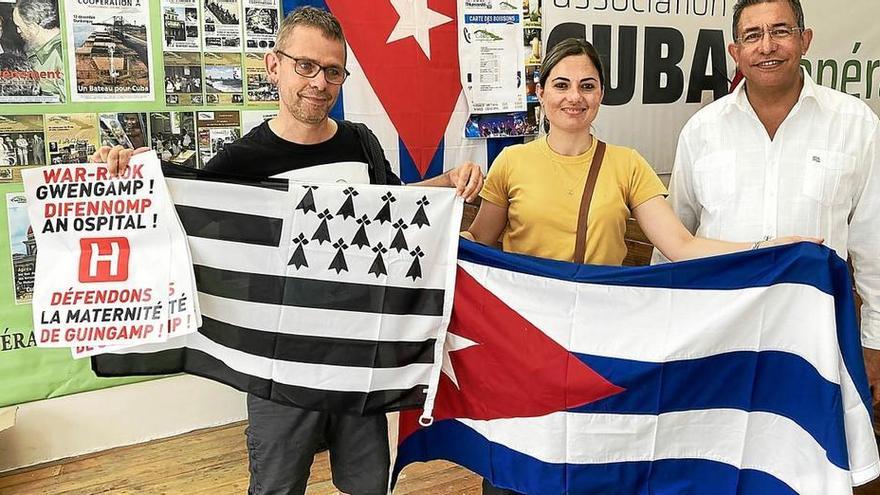
Gaël Roblin, holding the Breton independence flag and protest posters of the Guingamp hospital, next to Cuban diplomats in France. (G.R/ Facebook)

14ymedio bigger14ymedio, Madrid, 19 September 2023 — The Cuban government is discussing the possible landing of one of its international medical missions in France, in metropolitan territory, an idea that depends on a French government permit that seems very unlikely.

Otto Vaillant, Cuba’s ambassador to the country, and his number two, Gisele Pérez Gómez, attended the annual Communist Party meeting held in the region of Brittany (northwest) this weekend. There they met with the Breton independence politician Gaël Roblin, who has been advocating for months for the deployment of Cuban doctors to help alleviate the lack of staff in the area’s hospitals.

In April of this year, the Guingamp hospital announced the suspension of childbirth care due to a lack of midwives, obstetricians and anesthesiologists. Roblin, a councilor in that Breton municipality, wrote a letter to the Cuban Embassy to ask for help in providing  doctors to “save motherhood.” “Many elected politicians and citizens believe that this shortage is organized and indicates a clear desire to destroy the Public Health Service in rural areas. This situation is repeated, in particular, in Carhaix and Landerneau. Equal access to public health services is no longer guaranteed for everyone,” he said.

Could the Republic of Cuba make health personnel available to the French health authorities to allow, in case of emergency and on a temporary basis, the possibility of giving birth in Guingamp? continue reading

Roblin alluded to Cuba’s “internationalist commitment to health,” reviewing the deployment of doctors from the Island across all continents, including Europe (Andorra and Italy), since the COVID-19 crisis. “Could the Republic of Cuba make health personnel available to the French health authorities to allow, in case of emergency and temporarily, the possibility of giving birth in Guingamp? Could you tell me how to proceed?” he asked.

Although there is no news of a public pronouncement from the Cuban side since that time, everything indicates that the reaction was immediate and positive. However, for Cuban doctors to work in France, a presidential decree is necessary. French legislation prevents hiring doctors, dentists, midwives or pharmacists from States that do not belong to the European Union or to the countries with which they maintain agreements, such as Morocco or Tunisia.

In 2005, the Government made an exception for Guyana, to  temporarily hire personnel from other countries, a measure that was based on the remoteness of the overseas territories from the continent. On that basis, in 2019, Martinique and Guadeloupe achieved a similar ordinance that in 2020 allowed the sending of Cuban health workers for the first time during the worst of the pandemic.

The story didn’t end well. The Martinique press echoed the lack of skills to practice in the territory — many due to lack of knowledge of more modern technologies — which made the Cubans mere  collaborators. “In some services they help; in others they don’t contribute anything due to their poor level of French and their lack of knowledge of pharmacology,” said some Antillean colleagues. The operation cost 300,000 euros that, according to some dissenting voices, “could have allowed the creation of positions for young Martinican doctors or helped to finance their medical studies.”

Despite this experience, the director of the Guingamp hospital did not completely close the door to the Cuban option in an interview about the suspension of deliveries in the center, decreed until next October 31, although supplies would run out before.

“You can study. Professional training varies from country to country. There are levels of requirements in France and the European Union. We need to know if these professionals can come directly to practice in France, and as far as I know, they can’t. There are different steps to being recognized as a doctor, to have the ability to exercise the profession. There is the question of the language barrier. We can’t imagine that midwives who don’t speak French would be able to practice in France. And I’m not sure that bringing health professionals from a country that probably needs them can solve the problem on its own,” he said.

“They confirmed to me that their offer was still valid, and that they had discussed it with the Cuban authorities and with the health union of the Central de Trabajadores de Cuba”

Despite this, Roblin endorsed the proposal this weekend on the occasion of his meeting with the Cuban diplomats. “They confirmed to me that their offer was still valid, and that they had discussed it with the Cuban authorities and with the health union of the Central de Trabajadores de Cuba (CTC). A decree of the French Government is enough so that, as during the Covid pandemic in Martinique, Guadeloupe and Saint Pierre and Miquelon, Cuban health personnel can be deployed urgently,” he said.

In addition, the politician added that a future visit by the Cuban authorities to elected politicians from different parts of Brittany is being debated “to measure the extent of medical needs and consider other forms of cooperation.”

The Cuban government has only achieved a similar contract in Europe in Calabria (Italy), where this August a brigade of health workers landed in the face of the region’s difficulties in finding professionals. The rest of the missions on the continent arrived during the pandemic, in Piedmont and Lombardy (also in Italy) and Andorra, where a spectacular desertion took place, that of the head of the brigade and a subordinate.

Translated by Regina Anavy 

____________

COLLABORATE WITH OUR WORKThe 14ymedio team is committed to practicing serious journalism that reflects Cuba’s reality in all its depth. Thank you for joining us on this long journey. We invite you to continue supporting us by becoming a member of 14ymedio now. Together we can continue transforming journalism in Cuba.
Emigrants Have Sent 52 Billion Dollars in Remittances to Cuba in the Last 30 Years

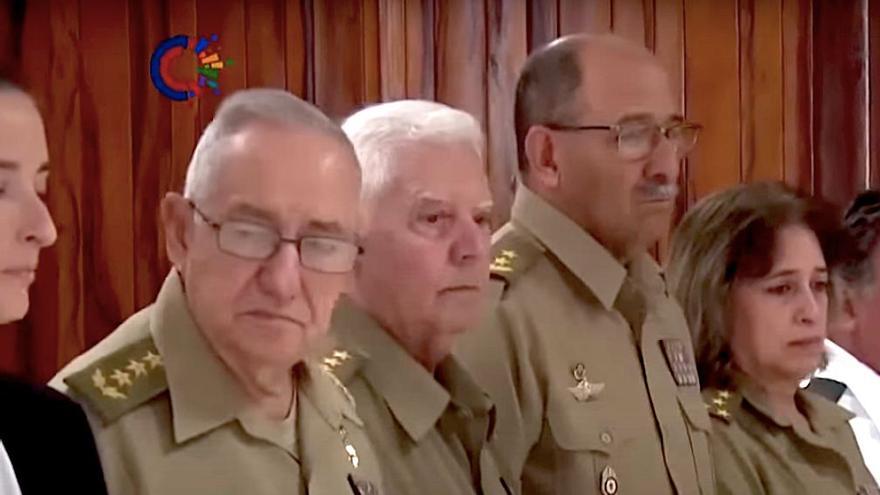
From left to right, generals Ramón Espinosa Martín, Joaquín Quintas Solá, Roberto Legrá and Ania Guillermina Lastres, president of Gaesa. (Screen capture).

14ymedio bigger14ymedio, Madrid, September 19, 2023 —  Over the last three decades, Cuban emigrants have sent their relatives on the Island, a total of 52.252 billion dollars in remittances and another 50 Billion in consumer goods. The data is included in the most recent report by the organization Cuba Siglo 21, signed by academic Emilio Morales, who points to the military directors of the state monopoly Gaesa as responsible for “undermining” the Cuban economy, while highlighting the “potential investor” of the exiles in a future democratic reconstruction of the country.

Morales prepared a historical study of the sending of remittances to Cuba since its authorization by Fidel Castro in 1993, after the Soviet debacle, and concluded that this constant injection of money has served as a “financial basis” for the dollarized infrastructure that the Island maintains today.

A network of corporations and senior officials diverts the flow of capital from its starting point – the shipments of emigrants – to its destination. Morales supports his conclusions with official data that his academic group, Havana Consulting Group, based in Miami, has extracted from documents of the judicial disputes between the American company Exxon Mobil and the Cuban state company Cimex, as well as other sources such as the Departments of State and Treasury of the United States.

The regime’s need for dollars, Morales believes, softened the official discourse on the exiles, who went from being “worms” to forming the “Cuban community abroad”

Furthermore, the academic explains, remittances have not only had an economic impact but also a cultural and diplomatic one. The regime’s need for dollars, Morales believes, softened the official discourse about the exiles, who went from being “worms” to forming the “Cuban community abroad.” On the other hand, it has been one of the main topics of the bilateral conversation between Havana and Washington.

However, the flow of remittances to Cuba has not been regular, and to explain it, Morales divides it into three stages. The first, from 1991 to 2006, was defined by Fidel Castro’s management during the crisis known as the Special Period — after the collapse of the Soviet Union and the loss of its support for Cuba — and the urgent need for foreign currency. The second, from 2007 to 2018, corresponds to the economic reforms promoted by Raúl Castro and the thaw with the United States. The third, from 2019 to 2023, has marched to the rhythm of the so-called ’Ordering Task’* and other “unpopular measures,” such as the implementation of stores that only accept payment in freely convertible currency. continue reading

In Morales’ opinion, both the regime and Gaesa, who had thought of remittances as a “temporary” solution to counteract the loss of the Soviet Union subsidies, ended up becoming increasingly dependent on emigrants’ money and multiple channels have been created so that this capital never reaches the pockets of Cubans, but rather flows to companies managed by the military of the conglomerate.

“At the time, authorizing the sending of family remittances to Cuba implied a very big risk for the Cuban dictatorship from a political point of view,” diagnoses the academic. “However, allowing remittances, as well as foreign investment and international tourism, were calculated risks that the Government decided to take in support of the survival of the regime.”

During the presidency of Raúl Castro, when 31.311 billion dollars were received, half of it informally

With the authorization of remittances, small businesses – which the Revolution had annihilated early, in the 1960s — under what was called the “Revolutionary Offensive” – they saw the opportunity to establish an incipient private sector that has been the first affected by economic instability and that, in addition, has remained in the sights of the Government, which keeps its growth and investment possibilities at bay.

As of 2006, Morales details, 11.751 billion dollars entered Cuba – of which, more than 10 million came through informal channels, he specifies – which made Castro realize the enormous potential of remittances. But the growth of this first stage cannot be compared with that of the next, during the presidency of Raúl Castro, when 31.311 billion dollars were received, half of it through informal channels.

However, the regime viewed the rise of self-employment with concern – there were more than 600,000 entrepreneurs operating with a license on the Island, and an equal number without, explains Morales – and attacked the sector. For its part, Havana tried to curtail the opening achieved with the ’thaw’ — during the Obama presidency —  in time for the arrival of Donald Trump to the White House, the academic believes.

It is during this stage that Gaesa consolidates its power, under the direction of Luis Alberto Rodríguez López-Calleja, Raúl’s former son-in-law who died in 2022, and a clan of military figures who manage companies such as Cimex and American International Services (AIS) – both registered outside of Cuba, in Panama – in addition to remittance shipping companies such as Va Cuba, Cubamax and Caribe Express.

If before the emigrants tried to help their relatives on the Island, now their main objective is to get them out of the country

Among the Cuban military behind these operations are currently, Morales lists: Ana Guillermina Lastres, current president of Gaesa; the Minister of the Armed Forces Álvaro López Miera; the Prime Minister, Manuel Marrero Cruz; and Colonel Héctor Oroza, director of Cimex and AIS. They are all sanctioned by the US.

However, starting in 2019, the number of remittances experienced a radical drop of 45%. Only 9.18 billion dollars arrived in the country, which Morales interprets as a change of intention among the diaspora. If before the emigrants tried to help their relatives on the Island, now their main objective is to get them out of the country. This process has bled the Cuban population and its ability to achieve economic improvement.

The only hope, the report emphasizes, is a transition to democracy that allows the Cubans who left to contribute, in an initial period of 24 to 36 months – it estimates – and with a “potential” investment of 20 billion dollars, to the financial recovery of the country.

“It is the Cubans themselves residing on the Island – in alliance with their relatives abroad – who can truly be the co-owners of a new business fabric that, being truly free, would be the immediate and surest driving force to recover the well-being of the population, as well as promoting reconstruction and national development,” concludes Morales.

*Translator’s note: The “Ordering Task” [Tarea Ordenamiento] is a collection of measures that include eliminating the Cuban Convertible Peso (CUC), leaving the Cuban peso as the only national currency, raising prices, raising salaries (but not as much as prices), opening stores that take payment only in hard currency which must be in the form of specially issued pre-paid debit cards, and a broad range of other measures targeted to different elements of the Cuban economy. 

____________

COLLABORATE WITH OUR WORKThe 14ymedio team is committed to practicing serious journalism that reflects Cuba’s reality in all its depth. Thank you for joining us on this long journey. We invite you to continue supporting us by becoming a member of 14ymedio now. Together we can continue transforming journalism in Cuba.
China Donates a 5 MW Photovoltaic Park to Cuba for More Than 114 Million Dollars

The 5 MW that the new photovoltaic park would provide will not alleviate even 1% of the energy demand

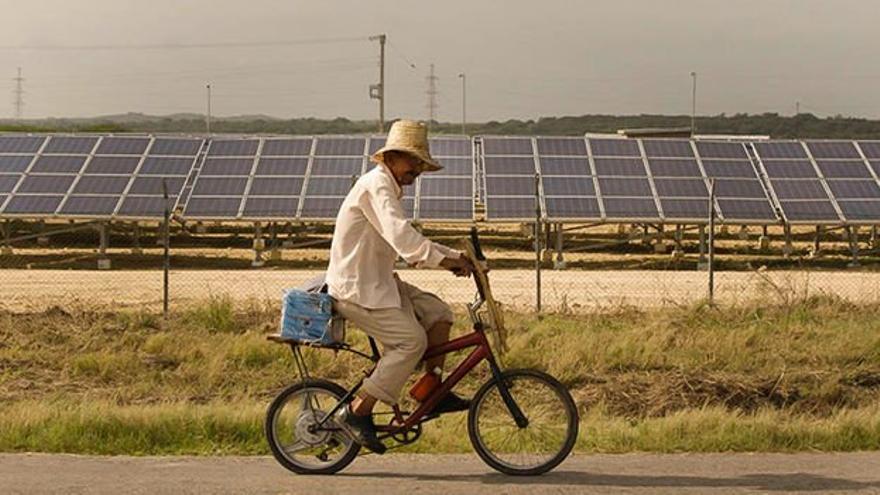
14ymedio bigger14ymedio/EFE, Havana, 20 September 2023 — The Chinese Government donated more than 114 million dollars (almost 107 million euros) to Cuba for the construction of a photovoltaic park with a generation capacity of 5 megawatts (MW) in Holguín, the official press reported on Wednesday.

According to the Cuban News Agency (ACN), the project is in the “initial phase.” Currently, “the conditions of the terrain” and “the necessary assurances in the execution of the construction works and assembly” are being evaluated.

The park, adds the local radio station Radio Mayarí, will be located in the capital municipality of Holguín, a province frequently affected by power cuts due to generation problems and fuel shortages. continue reading

The regional project to change the energy matrix is committed to renewable energies and includes the gradual installation of photovoltaic parks

The regional project to change the energy matrix is committed to renewable energies and includes the gradual installation of photovoltaic parks in other adjacent municipalities.

The Cuban government hopes to reduce its dependence on fossil fuels, which currently account for 95% of national energy production, and especially the import of crude oil, due to the high costs it entails.

However, the 5 MW that this new photovoltaic park would provide will not alleviate even 1% of demand at the time of highest daily consumption in Cuba, according to data from the state Electric Union (UNE).

The national energy transition plan estimates that by 2030, 37% of its energy will come from renewable sources, although currently these barely represent 5%, and investments in this area are minimal.

Last August, the Cuban authorities announced another donation from the Asian country, which included 9,259 solar panels for the state company BioCubaFarma. The purpose of the project is to install the panels at the National Center for Scientific Research, in Havana, and achieve a generation capacity of 5 MW.

Months earlier, in December 2022, the official press also announced the installation of a third solar park in Sancti Spíritus with a donation of equipment from China that will barely have a maximum generation capacity of 2.2 megawatts, 1.4% of the province’s daily demand.

Translated by Regina Anavy

____________

COLLABORATE WITH OUR WORKThe 14ymedio team is committed to practicing serious journalism that reflects Cuba’s reality in all its depth. Thank you for joining us on this long journey. We invite you to continue supporting us by becoming a member of 14ymedio now. Together we can continue transforming journalism in Cuba.
The Cuban Regime Is Not Alone, But It Is in Very Bad Company

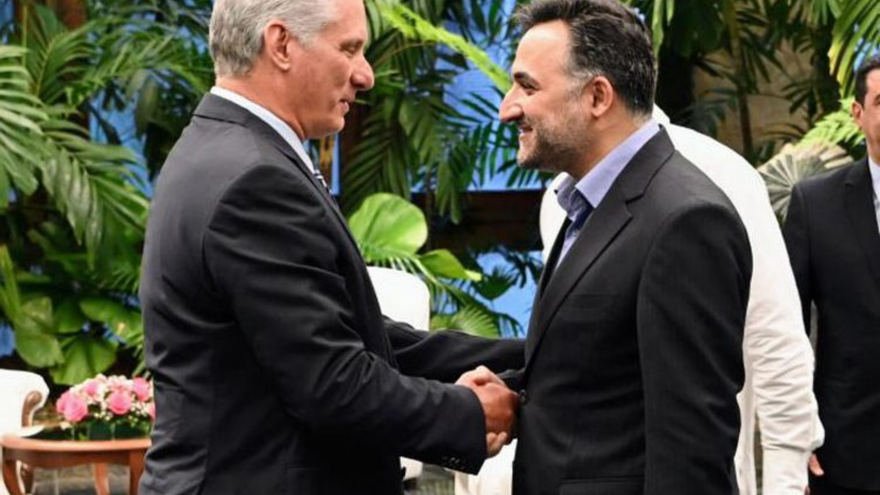
Cuban President Miguel Díaz-Canel received Iran’s Vice President Ruhollad Dehghani on the occasion of the G-77 summit plus China in Havana. (Estudios Revolución)

14ymedio bigger14ymedio, Yunior García Aguilera, Madrid, 20 September 2023 — These days the propaganda of the single party in Cuba has used to the point of exhaustion a desperate slogan: Cuba is not alone. In fact, we have seen some characters parade through Havana who never leave their caves, except to come to ours, where they find refuge, pats on the shoulder and exchange tricks on how to perpetuate themselves in power. However, it alarms other democratic leaders that, like Aesop’s frog, they mount scorpions on their backs.

The 47 agreements from the G77 plus China summit repeat the mantra of science, technology and innovation, as if they prayed to the gods of the North for a little attention. It is obvious that progress depends on the development of this knowledge and these tools, but it’s unfortunate that totalitarian systems use the privilege of attendance not to produce more or find solutions to our problems, but to monitor, control and punish.

The countries of the South, after this summit, have not “raised their voices” as some catatonically insist; they have simply threatened to change their masters

The countries of the South, after this summit, have not “raised their voices” as some catatonically insist; they have simply threatened to change their masters. In the next edition, the same dilemmas will be heard again, similar agreements will be signed and we will remain in debt up to our necks. The complete absence of self-criticism does not allow us to understand the weight of our own guilt in the advance of hunger, misery, violence and the lack of hope suffered by the peoples of the South. With these songs, we will be even poorer, more whiny and less democratic.

The summit has actually served to legitimize authoritarian models, to bring a considerable block of nations closer to the axis of China, to mitigate the condemnations against Russia and to promote the puppet of Castroism as a “world leader.” continue reading

Cuban President Miguel Díaz-Canel arrived in New York wearing that suit, or believing that he was wearing it, although he was naked. His dyslexic speech has been a pastiche of everything that Cuba has been ruminating for decades. All that is condemned at a global level is reproduced internally. They condemn the sanctions but mercilessly sanction any Cuban citizen who disagrees; they speak of “blockade” but block and put absurd obstacles on the Island to any development initiative outside state control; they condemn a hegemonic world but defend the hegemony of the single party; they want an orchestra of multipolar nations but keep Cuba as a monolith, creating a solo of maracas.

Beyond exhibiting to the world an appearance of a leading country, Castroism urgently needs to show the Cubans some light at the end of the tunnel. That desperation to hold great events or flaunt the occasional victory reminds me of the Pan American Games in Havana in 1991. Fidel Castro then praised the Pan-American Villa and swore that he had never seen anything more beautiful. He even said, with his usual fondness for hyperbole, that it should be called “Olympic Villa.” But the Berlin Wall fell and we would suffer the worst crisis in our history. And all Cubans know what the ruins of that mirage look like today.

Now the regime is determined to be re-elected for one of the 47 seats of the UN Human Rights Council

At the recent G77 summit, Havana did not have a Tocopán,* and they knew that a mediocrity like Díaz-Canel was not enough to impress visitors or look like a leader. They needed a sacred cow, a relic, another Tocopán, so they used the nonagenarian Raúl Castro as the mascot of the event.

Now the regime is determined to be re-elected to one of the 47 seats on the UN Human Rights Council. It sounds frighteningly absurd that the country with the most political prisoners in the region, a flagrant violator of all those rights, is running to occupy a chair. But it wouldn’t be surprising if Cuba succeeded either. Latin America has three positions, and only Cuba, Peru, Brazil and the Dominican Republic compete for them. As the winds are blowing, it is likely that nations will vote for the dictatorship, even if that completely discredits the Council.

Thus, the abusive communist regime goes through life becoming the defender of the victims. On the Island, repression and censorship continue; misery, inflation and crime advance, and hopelessness and the migratory tsunami progress. But the world is so crazy that it prefers to turn a blind eye and suck up to the hypocrite. If those who are truly committed to peace and democracy do not act effectively soon, the authoritarian gang will grow to become Ali Baba and the 77 thieves.

*Translator’s Note: Topocán, K’inich Yax K’uk’ Mo’, was the founder and first ruler of a Mayan dynasty.

Translated by Regina Anavy

____________

COLLABORATE WITH OUR WORKThe 14ymedio team is committed to practicing serious journalism that reflects Cuba’s reality in all its depth. Thank you for joining us on this long journey. We invite you to continue supporting us by becoming a member of 14ymedio now. Together we can continue transforming journalism in Cuba.
The Decline of Lawton, the Cuban Capital’s Industrial and Prosperous Neighborhood

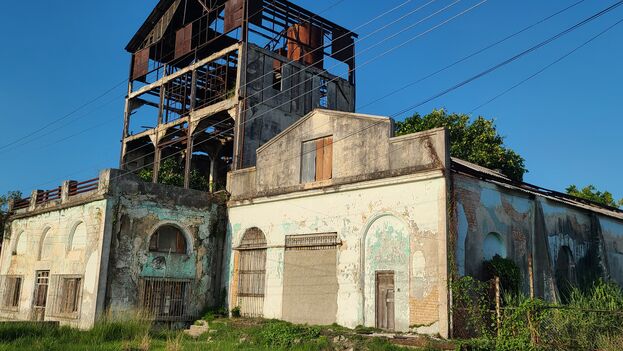
Beyond the railroad bordering the distillery, Lawton’s rum industry suffered the same fate. (14ymedio)

14ymedio bigger14ymedio, Nelson García, Havana, 16 September 2023 — Ruins attest to Lawton’s former splendor: abandoned factories, buildings reduced to rubble and the famous “Scandinavian castles”, on the verge of collapsing. For the neighbors, the deterioration of the neighborhood, located in the municipality of Diez de Octubre, until becoming one of the most dangerous places in Havana, has a start date: 1959.

Omar, who has lived in Lawton since the Special Period, points out an inhospitable area on the corner of F and 12 Street. “The fish processing plant used to be there,” he tells 14ymedio. “Packages of lobsters, shrimp and many other seafood came out of that place”.

If the grass grows now and the garbage accumulates, the main complaint is because of poor planning by the Government. “In 1980, the processing plant ceased to exist and was converted into workshops of the Metal and Electrical Construction Company (COMELEC),” he says. The plan came to nothing after the fall of the Soviet Union, and after being closed for a while, it was decreed that everything be demolished.

“They said they were going to build houses for the workers”, recalls Omar, who used to work at COMELEC. “Thirty years have gone by: Where are they?”

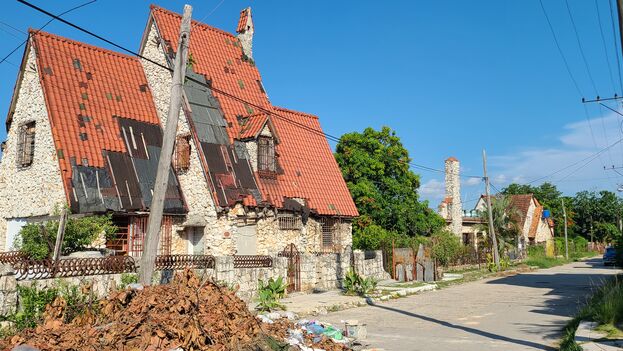
The most obvious sign of decay is found in what remains of the neighborhood’s three famous “European” chalets. (14ymedio)

Not far from the processing plant stands the tower of the old Havana distillery, built during the sugar boom of 1945. “The factory produced various types of alcohol until, once nationalized, the mechanism that channeled the hot water kept breaking down, causing the liquid to overflow from the boilers and begin to accumulate around the factory”, he explains. “First came the unpleasant smells and then the mosquitoes. It didn’t take long for this to fill with ditches and swamps until, eventually, they closed the distillery”. continue reading

Beyond the railroad bordering the distillery, Lawton’s rum industry suffered the same fate. “Everything is extinct here,” Omar summarizes.

The paint factory that the American company Sherwin Williams installed in Lawton – right next to the distillery – was confiscated by Fidel Castro’s Government in 1960 and first reassigned to the Electric Company, and then to the Geysel Power Plant.

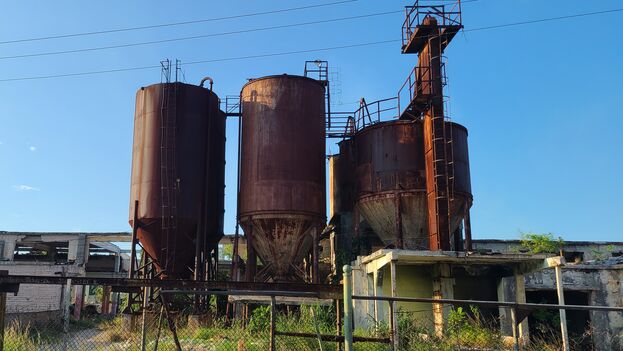
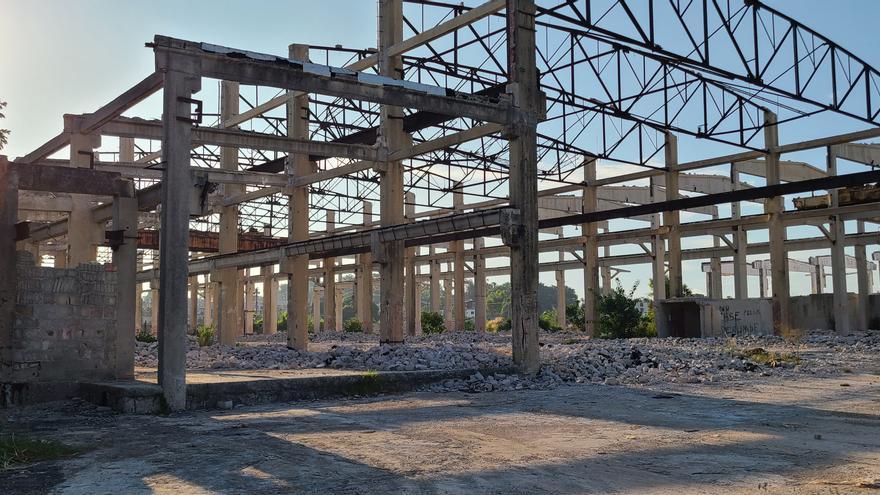
Rigo, age 56 and a former worker at the also dismantled Lawton slaughterhouse, highlights the contrast between Geysel’s “painted and cared-for” building and the premises that once served as a paint warehouse. “The neglect is such that several trees have grown”, he says. A skeleton of beams and columns, as well as a series of rusty tanks, rises in what was once the Siporex prefabricated block industry.

“The only thing that works in Lawton, and barely, is the Siré Cookie Factory,” he says, alluding to one of the first industries in the neighborhood, built by Cuban Mariano Siré in 1927, and also expropriated by Castro.

A series of rusty tanks rises in what was once the Siporex prefabricated block industry. (14ymedio)

One of the most emblematic cases of Lawton’s decay is that of the Antonio Maceo slaughterhouse, which became, after its abandonment in 2000, a mecca for illegal dog fighting and drug dealing. Several families have settled in the other rooms and offices, and even after two decades, they have not managed to overcome their two main problems: crime and constant threats of eviction.

Ramón, 69, remembers perfectly the decline of Lawton’s three bus depots: “There is only one left and it is practically a cemetery”, he concludes. The neighborhood also lost its fertilizer plant, and two other oxygen and acetylene plants, closed since the 1960s due to the Castro “phenomenon,” he says.

But the most obvious sign of decay is found in what remains of the three famous “European” chalets in the neighborhood, built at the beginning of the 20th century, although details of their construction or their former owners are not known. One of them served as a restaurant, supplied by meat from the slaughterhouse; another was a school, which was soon closed. During the Special Period, the Government located several families there, who modified the structure of two of the “little castles”, while the third is in a state of collapse.

“They used to be the symbol of Lawton,” says Ramón. “Now they are like the rest of the neighborhood: withered and forgotten.”

Skeleton of beams and columns from the old Siporex factory. (14ymedio)

Translated by Norma Whiting
____________

COLLABORATE WITH OUR WORKThe 14ymedio team is committed to practicing serious journalism that reflects Cuba’s reality in all its depth. Thank you for joining us on this long journey. We invite you to continue supporting us by becoming a member of 14ymedio now. Together we can continue transforming journalism in Cuba.
The U.S. Project to Help Small Businesses Within Cuba is Controversial

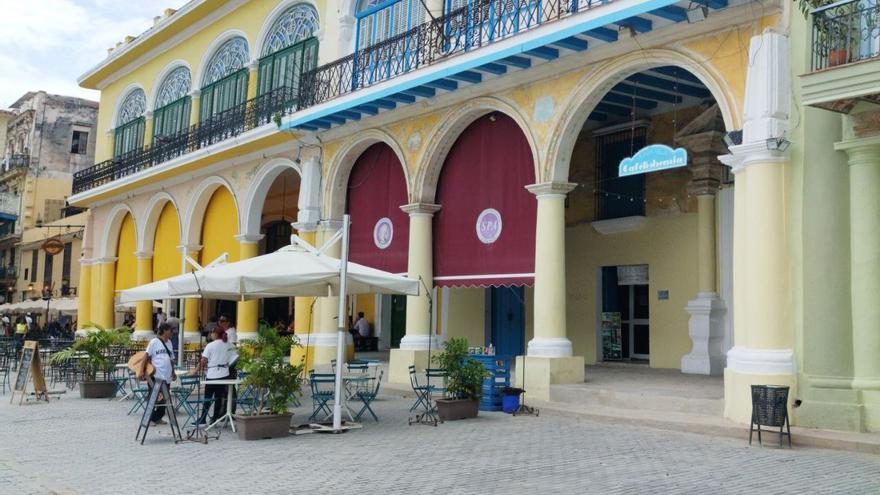
The Bohemia Café, adjacent to Estancia Bohemia, private businesses in Old Havana. (14ymedio)

14ymedio bigger14ymedio, Madrid, 19 September 2023 — The Biden government plans to announce this week the lifting of restrictions to help Cuban micro, small and medium-sized enterprises (MSMEs), according to knowledgeable sources in several American media. Both the Palm Beach Post on Saturday and the Bloomberg agency on Monday indicated that these are “specific guidelines” for U.S. financiers to grant loans to independent companies within the Island.

According to América TeVé, the new measures will include the management of bank accounts in U.S. institutions for residents of Cuba, something prohibited until now. “For example, a small business owner in Cuba can travel to the United States, create a bank account in a U.S. bank and then return to Cuba and manage it from there to make payments, deposits and transfers,” an anonymous source told journalist Mario J. Penton.

The same source says that the prohibitions imposed by the Trump Administration on transactions with third countries to send remittances to the Island will also be overturned.

The State Department refused to confirm to these media the concreteness of the announcement of the measures, but it did say, “We believe the private sector is Cuba’s best hope to generate economic development and employment to improve the living standards of the Cuban people and reduce the current high levels of migration.”

“We believe that the private sector is Cuba’s best hope to generate economic development and employment to improve living standards”

By helping “independent entrepreneurship and civil society,” the organization also said, “we support the Cuban people in their efforts to improve the economic condition of their country, generate employment and escape poverty.” continue reading

It is not expected, however, Bloomberg warns, “that more radical changes will be imminent,” given that “American Democrats are wary of doing anything that could alienate Cuban-American voters in Florida, a determining state ahead of the 2024 elections.”

The long report published on the subject by the Palm Beach Post includes a “recent lunch” in Miami-Dade full of “ambitious and successful expatriates from other countries,” including two “owners of private companies on the rise within the communist country.” One of the residents in Cuba, who requested anonymity, is engaged in international trade, and the other has a chain of cafeterias.

The owners of Cuban MSMEs complained about the “important obstacles” that prevent their growth, such as the terrible state of the Island’s infrastructure, “from a short circuit in the electricity grid to bumpy roads,” and a “practically non-existent banking system.” The latter, according to the Florida newspaper, is what has led them to seek funding in the United States.

Ricardo Herrero, executive director of the Cuba Study Group in Washington D.C., who attended the event and spoke with the aforementioned media, also believes that the “package of political adjustments” is imminent. These “will detail how Cuban businessmen can open bank accounts in the United States and then have access to those bank accounts from within Cuba,” Herrero told Bloomberg.

“Following the game of their maneuvers or, even worse, supporting them financially, will only prolong the agony of the Cuban people”

However, there are many suspicions aroused by the new measures, as revealed by the Palm Beach Post, which explains the “paradox” that MSMEs are seen as “Trojan horses” on both sides of the Florida Strait: “Ideological communists perceive them as a threat to the Cuban Revolution, now in its 64th year. The anti-communist exiles in South Florida suspect that they are a facade for the successors of the Castro brothers.”

“How does Raúl Castro get his cut?” asked Rubén Roque, an exile from the 1960s, and the epitome of the mistrust that any independent firm within Cuba that is not “openly dissident” lacks credibility, or is even linked to the regime and the apparatus of the Communist Party.

Adolfo García, a lawyer who has worked on trade agreements with Cuba, told the Palm Beach Post that “recent history” does not bode well for the MSMEs. In this regard, he recalled the time of the thaw of then-President Barack Obama in which he believed: “The fact is that the opening not only did not work, did not have the success that both Obama and people like me thought, but it also tremendously strengthened the hand of the supporters of the hardline. Clearly it is a system that values the political control, policies and total influence of the Communist Party and does not want a rival source of power, which is what makes a prosperous economy: a prosperous capitalist private sector.”

For its part, the organization Cuba Siglo 21 has expressed criticism of these possible measures on Tuesday, recalling that “the highly propagandized MSMEs barely add up to 8,000 businesses and do not work in a context of free enterprise and a market economy,” and they will only be truly free if the “economic regulations that prevail today on the Island” are lifted.

“The State’s insistence on authorizing the existence of any business is to be able to discriminate against citizens for their political or religious beliefs or for the simple fact of having another country of residence and excluding all of them (millions of Cubans) from investing in the Cuban economy,” warns the NGO co-directed by Juan Antonio Blanco and Emilio Morales. “Following the game of their maneuvers or, even worse, supporting them financially, will only prolong the agony of the Cuban people.”

“There will be no private sector in Cuba, no private companies, no private entrepreneurs until the State – among other things – legally recognizes the right of these companies to decide in which sectors to invest, to select their partners among Cubans or foreigners within the territory and abroad, export and import directly, set the prices of their products and services and sell them directly or through an agency of their choice,” they say.

Translated by Regina Anavy

____________

COLLABORATE WITH OUR WORKThe 14ymedio team is committed to practicing serious journalism that reflects Cuba’s reality in all its depth. Thank you for joining us on this long journey. We invite you to continue supporting us by becoming a member of 14ymedio now. Together we can continue transforming journalism in Cuba.
Seven Dead, Including Two Children, Following Explosion of Two ‘Motorinas’ in the Cuban Capital

The motorcycles were situated at the entrance to the living room of the house and prevented the family from leaving. (14ymedio)

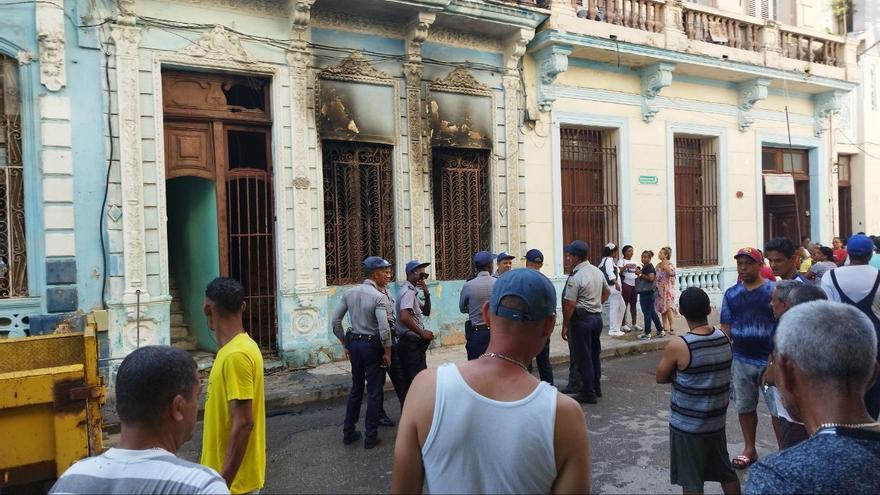
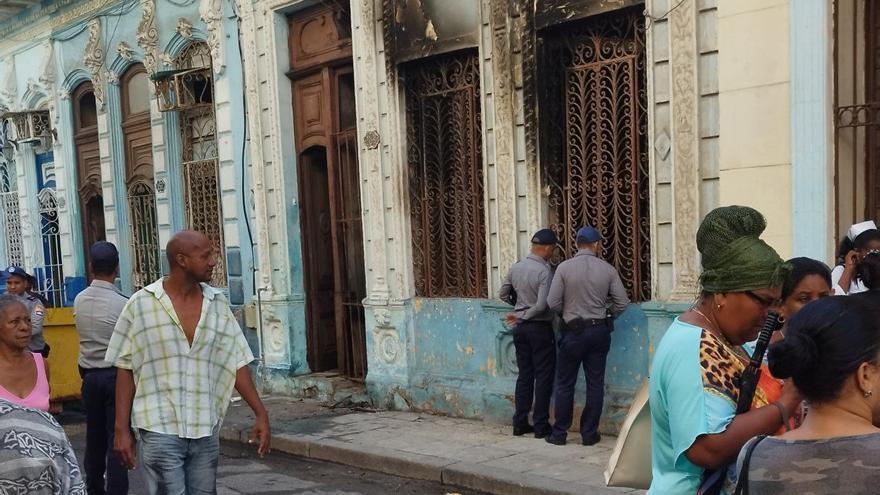
14ymedio bigger14ymedio, Havana, June 28, 2023 — A family of seven, two of them children, died early this Wednesday morning following the explosion of two electric motorcycles in Central Havana. The fire occurred in a house of mixed construction, with a combined structure of wood and masonry, located at 159 Perseverancia Street, between Ánimas Street and Virtudes Street.

The official press has not yet revealed the names of the victims, but 14ymedio spoke with a neighbor, who recounted what happened and the family’s composition.

In the house, the matriarch, Magaly, about 50 years old, and her two children shared space. The man, about 20, also lived there with his girlfriend; and the daughter, approximately 30, was the mother of the two deceased children, ages 3 and 5. Finally, there was the young woman’s partner, presumably the owner of at least one of the burned motorbikes, located at the entrance to the living room of the house. The origin of the fire is still unknown, but according to witnesses it could have been due to the batteries exploding while being charged.

The fire occurred at number 159 Perseverancia Street, between Ánimas and Virtudes, shortly after 2:30 am. (14ymedio)

The fire departments of several municipalities in the capital – Old Havana, El Cerro, Plaza de la Revolución and Regla – came “immediately” to put out the fire, according to Cubadebate. “The police arrived in about 10 minutes and the firefighters did not take more than 20, that is, they did not arrive too late, but no one would have arrived in time, it was as if two bombs exploded,” explains the witness, who lives in the house. adjacent and whose wall was still hot around 10 in the morning, when 7 hours had passed since the accident. continue reading

The fire was “voracious,” as this neighbor described it. “So huge and so furious that there was no way to get those people out of there, because in their interior patio they had no communication with anyone, with anyone else’s interior hallway. They were simply cut off,” he lamented. Some neighbors desperately tried to force the door, but all in vain, as it was initially too hot and eventually burned completely.

In the absence of official information, the version circulating in the neighborhood is that the family died, most likely, from smoke inhalation, although the bodies were charred when emergency teams managed to enter.

On the positive side, a woman and her daughter, both adults, who lived right above, managed to escape the flames. In that area of ​​Central Havana there are many homes of this type, in which a side staircase gives access to the upper floor. The two women managed to leave by crossing the balcony of the Paquito González primary school, which did not open its doors this Wednesday.

“The block was black with smoke, enormous smoke, you couldn’t get close because you couldn’t breathe,” the neighbor reviews. The sadness is evident in the young man, who knew the deceased boy, a few years younger than himself, from playing together in the neighborhood, all his life.

Photographs published by the official press show that, in addition to the construction, numerous objects in the house were damaged, including several bicycles parked next to the motorbikes.

The leaders of the Communist Party and the provincial government, alarmed by the seriousness of the incident, came to witness the scene. Ramón Pardo Guerra, the head of the National Civil Defense General Staff, also appeared.

President Miguel Díaz-Canel expressed, in a brief tweet accompanied by photographs of the incident: “We regret the human losses in the fire. Our condolences to family and friends.”

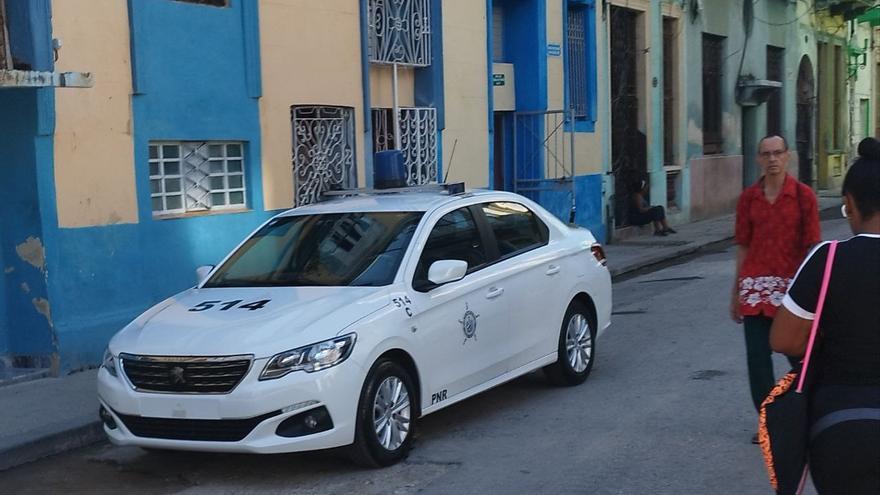
Este diario pudo constatar la fuerte vigilancia policial en el lugar de los hechos esta mañana. (14ymedio)
This newspaper was able to verify the strong police surveillance at the scene of the events this morning. (14ymedio)

The neighborhood where the house is located, known by the traditional name of San Leopoldo, is one of the most populated in the Cuban capital, with most of the houses built at the beginning of the last century, numerous tenements and a high degree of architectural deterioration, due to the lack of maintenance and the exposure to saltpeter, because of its proximity to the sea.

Electric motorcycle battery explosions are one of the most frequent causes of fires on the Island, although this is the most serious incident of that type. Last March, two men – one 45 years old and the other 48 – died in another explosion, also in Central Havana. Two more people – who tried to help those trapped in the building – were injured in the incident, while a third was discharged from the hospital immediately.

“Fires have been breaking out on mopeds or electric motorcycles since 2017. In 2019 there were 221 fires and as of October 2020 a total of 485 were reported,” state television reporter more than two years ago.

The situation has not improved over time. In September 2022, two people were seriously injured in a house fire in Luyanó, in the Havana municipality of Diez de Octubre.

In June 2022, the explosion of another motorbike when it was being charged caused a fire in the municipality of Cerro that destroyed another 12 vehicles of that type and two cars.

Translated by Eric Peliza and others

____________

COLLABORATE WITH OUR WORKThe 14ymedio team is committed to practicing serious journalism that reflects Cuba’s reality in all its depth. Thank you for joining us on this long journey. We invite you to continue supporting us by becoming a member of 14ymedio now. Together we can continue transforming journalism in Cuba.
Inter-American Press Association Demands the Immediate Release of Cuban Journalist Henry Constantin

The director of the digital magazine La Hora de Cuba, Henry Constantín, in an archive photograph. (EFE/Ricardo Maldonado Rozo)

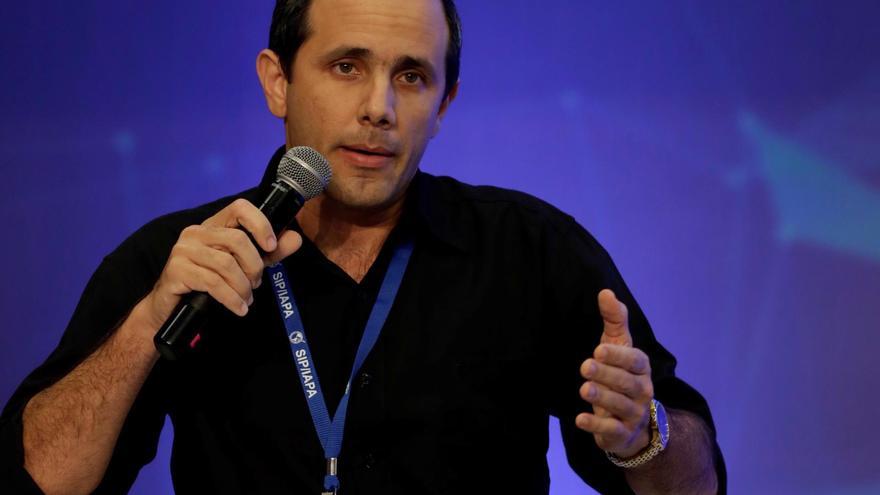
14ymedio biggerEFE (via 14ymedio), Miami,18 September 2023 — The Inter-American Press Association (IAPA) demanded on Monday the immediate release of Cuban journalist Henry Constantín, victim of arbitrary detention by the Island’s authorities since last Friday.

The director of the independent magazine La Hora de Cuba, from Camagüey, was arrested that day by State Security agents in Havana, during the inauguration of the G-77 Summit plus China, according to a statement from the IAPA.

It is the second time this month that the journalist has been arrested. Constantín is also regional vice president of the Commission on Freedom of Press and Information of the IAPA, a hemispheric organization based in Miami (USA).

On this occasion, Constantín was arrested “for being illegally in Havana,” and told that he will be returned to Camagüey “within fifteen days, if transport appears,” as the detainee himself said through a phone call, the IAPA reported.

The journalist had already been arrested on September 4 in Camaguey along with his colleague José Luis Tan, a collaborator of Diario de Cuba, while they were trying to cover the trial against the activist Ienelis Delgado Cué. continue reading

The repression against journalists and independent media continues to be carried out by both the Communist Party and the Ministry of the Interior

For her part, journalist Neife Rigau, a collaborator of La Hora de Cuba, said that “the regime monitors me, persecutes me and cuts my Internet connection constantly,” according to the IAPA, adding that she received a summons from State Security for an “interview” on September 17.

“We strongly condemn Henry’s arrest and demand his immediate release,” the president of the IAPA and global director of Licensing and Printing Innovation of The New York Times, Michael Greenspon, and the head of the Press and Information Freedom Commission and journalistic director of the Argentinian newspaper La Voz del Interior, Carlos Jornet, jointly said in the statement.

Both complained that “the regime continues to arrest, harass and monitor independent journalists.”

In the report on Cuba presented at the semi-annual meeting of the IAPA last April, the organization pointed out that in that country, “repression against journalists and independent media continues to be carried out both by the Communist Party and the Ministry of the Interior.”

“The number of attacks was reduced, not because of a change of official strategy but because dozens of reporters left the country. The gag against the freedoms of the press and expression is rooted in the Criminal Code, the Law of Associations, Law 88, the Constitution, as well as in specific decrees,” the report added.

The IAPA is a non-profit organization dedicated to defending and promoting freedom of the press and expression in the Americas. It is made up of more than 1,300 publications from the Western Hemisphere.

Translated by Regina Anavy

____________

COLLABORATE WITH OUR WORKThe 14ymedio team is committed to practicing serious journalism that reflects Cuba’s reality in all its depth. Thank you for joining us on this long journey. We invite you to continue supporting us by becoming a member of 14ymedio now. Together we can continue transforming journalism in Cuba.
Beggars Resist Getting on the Bus That Picks Them Up on the Streets of the Cuban Capital

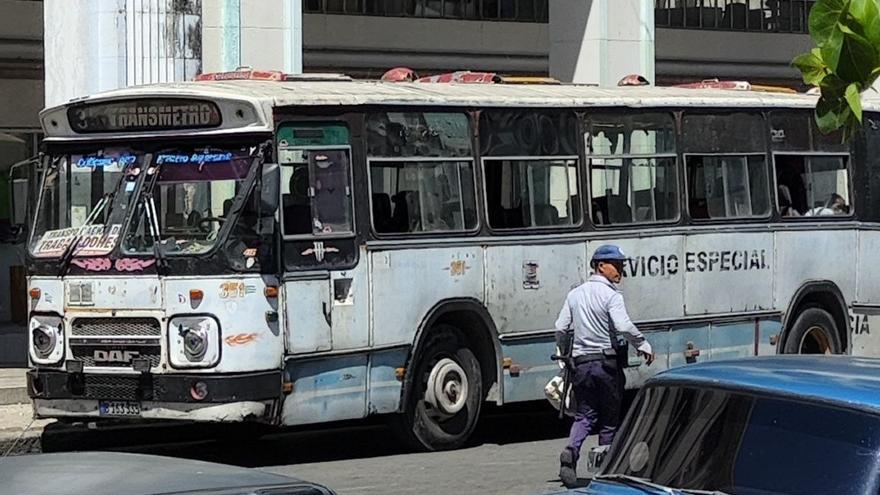
The agent snatched a bag from the beggar, who immediately ran after him, berating the police officer with loud insults. (14ymedio)

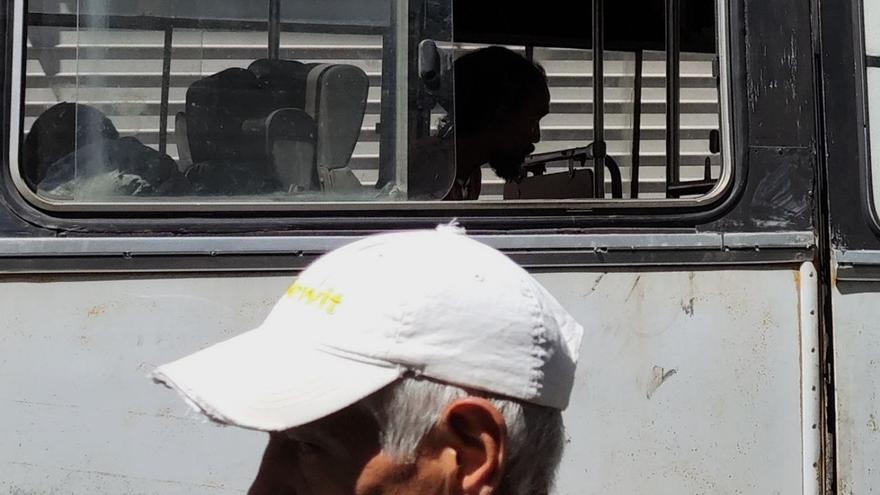
14ymedio bigger14ymedio, Juan Diego Rodríguez,  Havana, 19 September 2023 — The dilapidated Transmetro bus parked on Carlos III Avenue in Havana, this Monday, seemed to be destined for what the sign on its windshield said: “Transportation of workers.” However, it was striking that a woman dressed in civilian clothes and with a folder in her hand was helping a dirty old man with a cane to climb up. The vehicle was not transporting workers but beggars. ##A dozen of them, all unclean, some handicapped, most of them black, were piled up in the back seats, as if they were prisoners.

Before reaching another stop, near San Rafael Boulevard, a man warned a needy person in a wheelchair and carrying an image of San Lázaro: “Hey, move, move, move! The bus is coming that is picking up [people].” The man was able to avoid the raid, unlike three other beggars, who were brought in by the police officer who was also traveling in the vehicle. “Come on, let’s go,” the officer repeated with reluctance.

Upon seeing the bus, half rusted and aged, a woman who witnessed the scene said: “At least they have improved transportation, I remember once when a community services truck picked them up.”

Later, in the Galiano area, the vehicle stopped again at a place where several beggars usually sell things. After boarding them, the police officer went to the Fe del Valle park, where he addressed another homeless man who continue reading

refused to accompany him. Then, the agent snatched a bag that the man was carrying, who immediately ran after him, berating the police officer with loud insults. It was of little use to him, since the homeless man ended up, like the rest, in a seat of the vehicle, which continued to lose itself towards Monte Street.

A dozen of them, all unclean, some handicapped, most of them black, were piled up in the back seats, as if they were prisoners. (14ymedio)
A dozen of them, all unclean, some handicapped, most of them black, were piled up in the back seats, as if they were prisoners. (14ymedio)

The authorities usually pick up the needy who flood the capital from time to time to take them to the Social Protection Center located in El Cotorro, known as Las Guásimas, where, in the words of the regime, “people with wandering behavior” are cared for. There, they bathe them, shave them, cut their hair and give them some second-hand clothes. “They are only here for a few days,” a resident near the center tells this newspaper. After a few days, they are returned “clean” to the streets, populated with more misery every day.

____________

COLLABORATE WITH OUR WORKThe 14ymedio team is committed to practicing serious journalism that reflects Cuba’s reality in all its depth. Thank you for joining us on this long journey. We invite you to continue supporting us by becoming a member of 14ymedio now. Together we can continue transforming journalism in Cuba.