The Freedom to Inform Requires No Permission

“Henry Constantín is not in pretrial detention. He is being held unjustly and illegitimately”
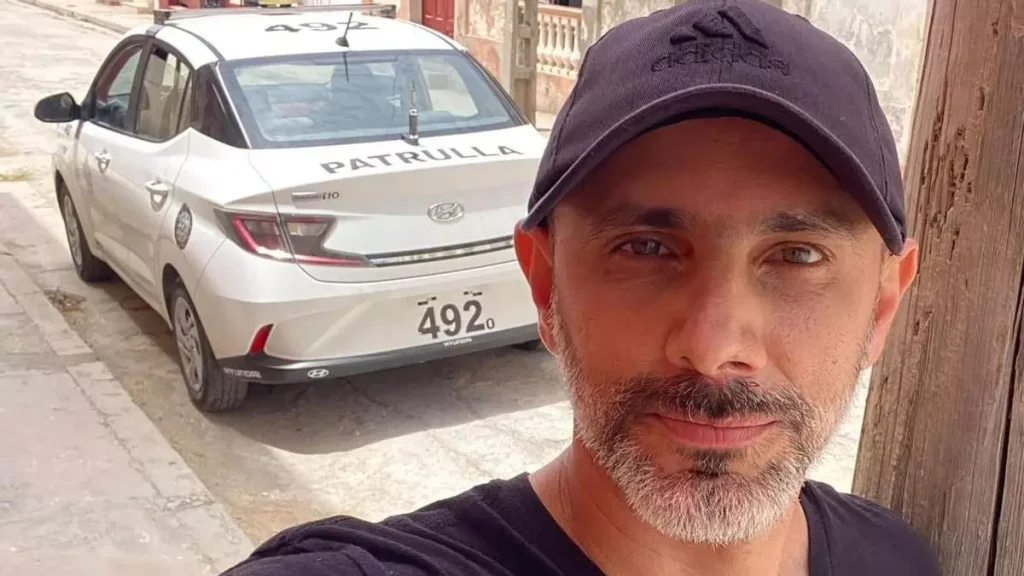

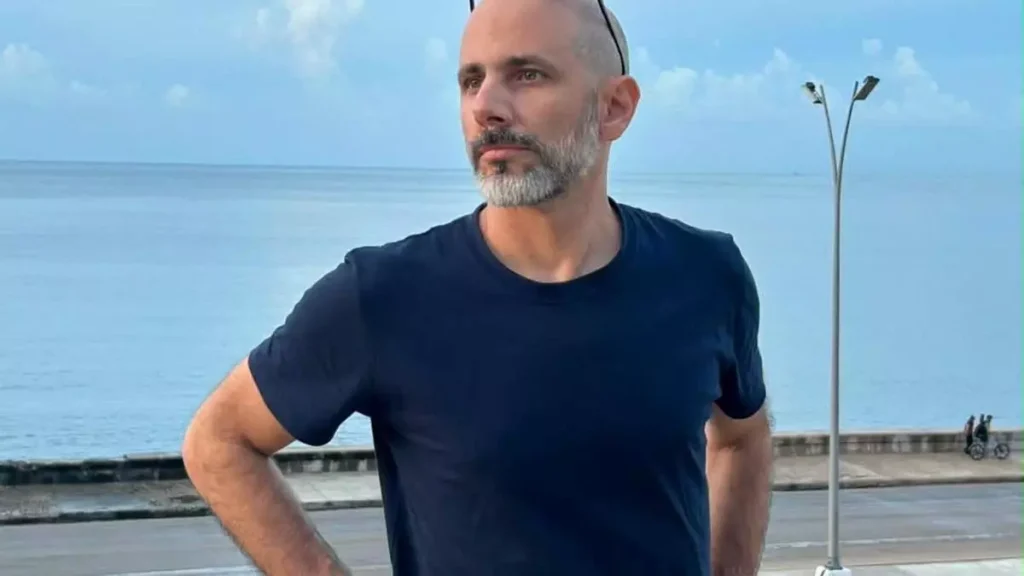
Henry Constantín, director of La Hora de Cuba and regional vice president of the Inter American Press Society (SIP). / Facebook/Henry Constatín

14ymedio bigger14ymedio, Havana, September 30, 2026 – No one should be imprisoned for expressing their ideas or for reporting on what those in power seek to conceal. Freedom of expression is a right, not a concession from the Government. The imprisonment of journalist Henry Constantín once again demonstrates that the Cuban regime treats freedom of expression as a privilege conditional on obedience.

Henry Constantín, director of La Hora de Cuba and regional vice president of the Inter American Press Society (SIP), was detained on September 16, 2026, in Camagüey. The authorities have ordered his transfer to Kilo 7 prison under pretrial detention. The official justification was his failure to appear for a summons from the Identification, Immigration and Foreigners Directorate. The formal charge: “disobedience.”

The offense is included in Article 189 of the Cuban Penal Code currently in force. But invoking a legal provision is not enough to make an imprisonment legitimate. Even less so when we are talking about a country like Cuba. continue reading

Constantín’s defense was unable to file a habeas corpus petition on Friday, September 18, because it was a day of “change of duties”

According to information released about the case, Constantín’s defense was unable to file a habeas corpus petition on Friday, September 18, because it was a day of “change of duties.” They had to wait until Monday the 21st. For that reason, the hearing to decide on the habeas corpus petition, which under Cuba’s Criminal Procedure Law should have taken place before Friday the 25th, did not take place either.

Cuban judges are formal judges from Monday through Thursday. On Fridays, they “change duties.” For that reason, the Provincial Court of Camagüey informed Henry’s relatives and defense that the essential habeas corpus hearing, which should have been held within 72 hours after the petition was filed, would take place four or five days later, if they decided to hold it.

The uncertainty is inadmissible. Habeas corpus exists to subject a deprivation of liberty to urgent judicial review. Its effectiveness depends on that review taking place as quickly as possible. Every delay prolongs the detention and the risk to a person who has been unjustly detained.

But in the same country that quickly invokes an article of the Penal Code to justify the imprisonment of a journalist, there is no urgency for a judge to assess the violation of his rights. It might seem like a euphemism, but it is not: Cuban judges changed duties many years ago. In many cases, they are mere legitimizers of a despotic power in which the law is not a limit on that same power, much less a guarantee for the citizen.

In a context like Cuba’s, the law serves to punish those who question those in power but rarely reaches those who serve or wield that power

The Penal Code used to charge Henry Constantín also provides for sanctions against officials who maliciously delay the processing of matters, unjustifiably fail to perform their duties, or issue rulings that violate the law. Despite the foregoing, none of the judges who have delayed the review of Henry’s imprisonment shares a cell with him. Because in a context like Cuba’s, the law serves to punish those who question those in power but rarely reaches those who serve or wield that power.

Faced with a context like that, only disobedience remains because disobeying is the only way to exercise rights.

Henry Constantín and the rest of the independent journalists, in the eyes of the Cuban regime, have been disobeying for years. To a power that demands absolute obedience, the simple act of reporting freely is insubordination. For that reason, anyone who wants to practice independent journalism in Cuba will have to disobey the regime that prevents it.

This is not our idea. Martin Luther King wrote it from a cell in 1963. In his Letter From Birmingham Jail, he said: “One has a moral responsibility to disobey unjust laws.” And invoking Saint Augustine, he recalled that “an unjust law is no law at all.” Four decades earlier, while being tried for sedition before a British colonial court, Mahatma Gandhi had said something similar: “Non-cooperation with evil is as much a duty as cooperation with good.”

Both understood that unjust regimes relabel rights as crimes. What in a free society is called exercising freedom of expression, in the vocabulary of totalitarianism is called “disobedience.” It is the power’s “newspeak”: naming as a crime what in many democracies is a natural and universal right.

Likewise, the pretrial detention imposed on Henry Constantín marks a qualitative leap. It is no longer a matter of the few-hour detentions he has suffered so many times. The regime has decided that it will no longer tolerate his determination to continue exercising his rights. If it previously tried to silence him with cuts to electricity and Internet service and with detentions, it now resorts to the most absolute form of deprivation: the total loss of freedom. It does so, moreover, under the euphemism of “temporary” or “provisional.”

Pretrial detention is an exceptional precautionary measure that allows a person to be deprived of liberty before trial when there are concrete risks that justify it

Pretrial detention is an exceptional precautionary measure that allows a person to be deprived of liberty before trial when there are concrete risks that justify it, such as flight or obstruction of the investigation. It does not constitute an advance punishment nor does it eliminate the presumption of innocence.

However, in Cuba it is used for another purpose: to keep a person like Henry Constantín locked up without the need to bring him to trial and without exposing the regime that imprisons him to the public scrutiny that, for any political system, comes with putting a journalist in prison.

Henry Constantín is not in pretrial detention. He is being held unjustly and illegitimately.

We demand that pretrial detention not be used to prolong the repression of Henry Constantín for weeks or months. We demand that he be released immediately and unconditionally so that pretrial detention does not become the instrument that allows the Cuban regime to achieve what it has so far failed to achieve: breaking the journalist’s will and forcing him to choose between prison and exile.

Doing journalism should never be considered disobedience. Because reporting is not a crime.

Translated by Regina Anavy

______________________

COLLABORATE WITH OUR WORK: The 14ymedio team is committed to practicing serious journalism that reflects Cuba’s reality in all its depth. Thank you for joining us on this long journey. We invite you to continue supporting us by becoming a member of 14ymedio now. Together we can continue transforming journalism in Cuba.
Henry Constantín Enters Kilo 7 Prison in a Process Marked by Lack of Information

Authorities postpone the habeas corpus hearing, which was supposed to be held this Friday.

Henry Constantín said that he was calm and firm last Wednesday during a visit by his partner to Villa María Luisa. / La Hora de Cuba

14ymedio bigger14ymedio, Madrid, September 25, 2026 – Independent journalist Henry Constantín, director of La Hora de Cuba and vice president of the Inter American Press Association (IAPA) in the region, entered Kilo 7 prison in Camagüey this Thursday. The information, confirmed by him personally in a call to his partner, journalist Alejandra García, contradicts the measure issued during the investigation, which indicated that he would be transferred to Cerámica prison, in the same province.

The alert began Thursday morning, when the journalist’s lawyer reported that Constantín had been transferred from Villa María Luisa, the State Security operations and interrogation headquarters in the Garrido neighborhood of Camagüey, without the family’s knowledge. The news spread on the assumption that the journalist had been taken to the place stated in the official record.

The news spread on the assumption that the journalist had been taken to the place stated in the official record

Constantín, who was subject to a precautionary measure of preventive detention amid an investigation for “disobedience,” had told those close to him last Tuesday that there were rumors that he would be transferred. However, in the end, it was other prisoners who left the facility. On Wednesday, when his family went to visit him, they received no notice of the transfer, which ultimately took place unexpectedly on Thursday.

La Hora de Cuba has denounced the accumulation of illegalities, since the lack of news was followed by false information, given that the precautionary measure indicated that the preventive detention was to be served in Cerámica. Added to all this is the postponement of the habeas corpus hearing filed Monday, which was supposed to take place this Friday. continue reading

The Provincial Popular Court, where Constantín’s family went to inquire about the situation, indicated that although the hearing was scheduled for September 25, “due to work changes” in the country, “it is perhaps postponed until Monday,” although, the publication adds, “most likely it will be next Tuesday the 29th.”

The family has denounced a violation of the Criminal Procedure Law, which establishes that the court has 72 hours from the time it admits the habeas corpus to hold the hearing. “A ruling cannot contradict what the procedural law says; that violates the law of a legal process of the hierarchy,” said law graduate Luis Orlando Bermúdez.

However, the subsequent article specifies that this must be complied with “unless there are justified causes that prevent it,” which would allow for a legal loophole on which to rely. Bermúdez, in any case, considers that the cause is not justified. “I think that if there is a habeas corpus there should be a judge, during the rotation due to the change of work. It cannot be that my procedural guarantees are violated because you have a change of work; that is crazy. You cannot arrange for there to be a change of work on Friday when there is a labor code that says Friday is a work day,” he maintains.

Henry Constantín is accused of a crime of disobedience for failing to appear for a summons issued for last September 9

Henry Constantín is accused of a crime of disobedience for failing to appear for a summons issued for last September 9 at the Directorate of Identification, Immigration and Foreigners, in the Vista Hermosa neighborhood. Shortly afterward, on the 16th, the journalist received another communication instructing him to appear at the Second Unit of the Revolutionary National Police, located on Carretera Central, where he was arrested, supposedly, for the events that occurred the previous week.

Since then, his lawyer has complained about the misinformation that obstructs his right to a defense, beginning with the lack of access to the case file, without which she cannot appeal any of the measures adopted.

Last Wednesday, during a visit of about 20 minutes, Constantín assured his partner that he is facing his current situation with determination. “I am calm and I remain firm,” he said.

Translated by Regina Anavy

______________________

COLLABORATE WITH OUR WORK: The 14ymedio team is committed to practicing serious journalism that reflects Cuba’s reality in all its depth. Thank you for joining us on this long journey. We invite you to continue supporting us by becoming a member of 14ymedio now. Together we can continue transforming journalism in Cuba.
Preventive Detention Ordered for Henry Constantín, Detained at State Security Headquarters in Camagüey

His defense filed a habeas corpus petition for the journalist, who has been detained for five days, and denounces the lack of access to the case file.

Constantín was also arrested a year ago while accompanying Iris Mariño to a summons with the political police. / Facebook / Henry Constantín

14ymedio bigger14ymedio, Madrid, September 22, 2026 – Independent journalist Henry Constantín, director of La Hora de Cuba and vice president of the Inter American Press Association (IAPA) in the region, remains detained at Villa María Luisa, the State Security headquarters for operations and interrogations in Camagüey. According to the investigator in the case, preventive detention has already been ordered for him. His defense, which has denounced not having access to the case file, filed a habeas corpus petition this Monday to guarantee the reporter’s rights after he had been detained for five days.

Constantín’s lawyer went this Monday to Villa María Luisa, where she was able to speak with the investigator in the case, whom she identifies as Juan Pablo. He told her that preventive detention had already been approved and that the case file was with the Prosecutor’s Office. The lawyer went there and requested access to the documentation—as provided for by law—in order to learn the details of the charges Constantín is facing and provide him with a legitimate defense, including a possible appeal or legal challenge. However, she “found no officials available,” which prevented her from learning the accusation.

It is known only that Constantín is accused of an alleged offense of disobedience for failing to attend a summons issued for September 9 at the Identification, Immigration and Foreigners Directorate, in the Vista Hermosa neighborhood. Shortly afterward, on the 16th, the journalist received another communication instructing him to appear at the Second Unit of the Revolutionary National Police, located on the Carretera Central, where he was arrested, supposedly, for the events that occurred the previous week. continue reading

It is known only that Constantín is accused of an alleged offense of disobedience for failing to attend a summons issued for September 9

Constantín’s defense argues in the habeas corpus petition that the Criminal Procedure Law provides only for a “fine of up to one hundred installments” for failing to attend a summons without justified cause, while detention would be imposed in the event of failing to appear for a second summons. Since the journalist did appear on that occasion, the lawyer argues that the offense of disobedience with which he is charged is not valid. Nevertheless, the impossibility of viewing the case file leaves the lawyer in the dark.

“Administrative obstacles have been repeated during the five days he has remained detained,” La Hora de Cuba denounced when reporting what happened. “On September 17, after a criminal defense lawyer was hired, she sent a colleague to Villa María Luisa, in the Garrido neighborhood, at around 2:30 p.m. to inquire about Henry’s situation, but he was told that investigator Juan Pablo had already left because he lives in Nuevitas, a different municipality,” they stated.

The statement, posted on its Facebook page, highlights the words of IAPA President Pierre Manigault, who denounced days ago that this is “a new and serious episode of harassment against the independent press.” “The summonses, detentions, surveillance and house arrests against Constantín are part of a pattern of pressure aimed at obstructing his journalistic work,” Martha Ramos, chair of that organization’s Committee on Freedom of the Press and Information for Cuba, also said.

La Hora de Cuba has insisted on the importance of any judicial process being “transparent and without obstacles that block access to fundamental rights. The demand for the release of our director and an end to the persecution of those who practice independent journalism remains.”

This detention has already surpassed in length the longest detention the journalist had previously experienced in June 2025, when he spent four days, also at Villa María Luisa, after accompanying journalist Iris Mariño to a summons. On that occasion, he was accused of an offense of “contempt” over a publication about the actions of a State Security agent. The case was never brought to trial.

Translated by Regina Anavy

______________________

COLLABORATE WITH OUR WORK: The 14ymedio team is committed to practicing serious journalism that reflects Cuba’s reality in all its depth. Thank you for joining us on this long journey. We invite you to continue supporting us by becoming a member of 14ymedio now. Together we can continue transforming journalism in Cuba.

‘La Hora de Cuba’ Receives Award in Europe for its Defense of Freedom of Expression

Henry Constantín has been invited to receive the award in Sweden, but he will not be able to travel because Cuban authorities are keeping him under ‘regulation’.

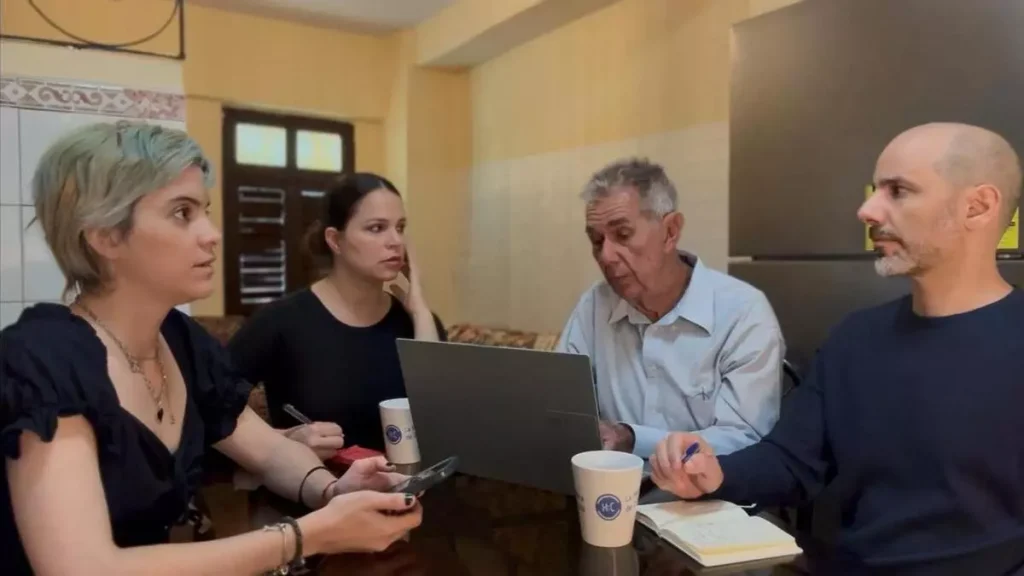
Part of the ‘La Hora de Cuba’ team, headed by Henry Constantín [far right] / Facebook
14ymedio bigger14ymedio, Havana, April 29, 2026 / The magazine La Hora de Cuba [Cuba’s Hour] was awarded the Civil Rights Defender Award 2026 by the Swedish organization Civil Rights Defenders (CRD) on Wednesday. The award recognizes the publication, directed by Henry Constantin, for its “exceptional resilience and courage in defending freedom of expression, free and independent journalism, and democracy.” The Georgian platform Netgazeti was also among the recipients of the award .

As CRD highlights in its press release, La Hora de Cuba “operates in one of the most closed media environments in the world.” It notes that on the island, “independent journalism is, in practice, criminalized,” yet the platform works “immersed in the reality it reports.” Similarly, the organization continues, “they document arbitrary arrests, political trials, and how repression permeates daily life—stories that state media do not tell.”

On its website, the NGO highlights the work the media outlet has carried out for more than a decade, in which “hundreds of people have contributed, from journalists, artists and photographers. Many have been forced to stop collaborating after being arrested, interrogated or receiving threats against their families. Others have left the country, but some remain.”

“Many have been forced to stop cooperating after being arrested, interrogated, or receiving threats against their families.”

Henry Constantín, who has suffered several arrests for his work leading La Hora de Cuba – just two in 2026 – has stated that his media outlet has received many “awards” before this one: “More than 40 arrests, hundreds of police summonses and interrogations, thousands of threats, several defamation campaigns, a few bans on leaving Cuba for years, continuous surveillance, vandalism against my house, physical violence and police accusations.

The communicator asserted that “these are the rewards that the Cuban regime has given us for sharing the truth for almost 14 years, the same number of years that a diverse team of people has accumulated with whom I have been able to build and maintain this media outlet in the extremely harsh conditions of rural Cuba.”

Regarding the Swedish award, he said the team is deeply grateful, as it “strengthens us to continue sharing freedom and information from deep within the country, from Camagüey and every city where our team operates. Thanks to the dozens of Cubans who have worked with La Hora de Cuba over the years , thanks to the thousands of people who read us daily, and thanks to my family, always by my side.”

He also said that, “for La Hora de Cuba, this award means increased visibility and also greater responsibility. People as far away as Sweden, who work with activists and journalists in difficult situations around the world, believe that we at La Hora de Cuba deserve it. That means we must take our work even more seriously.” continue reading

“I don’t plan to leave Cuba. I’m going to continue working here, doing journalism for the freedom of Cuba.”

The award ceremony is scheduled for May 18 in Stockholm, Sweden. Although Constantín—who received the 2021 Press Freedom Award from the Inter-American Press Association (IAPA)—has been invited to attend, he will be unable to travel because Cuban authorities have kept him under travel restrictions since 2019, prohibiting him from leaving the country unless he emigrates, an option he rejects. He reaffirmed this stance after his latest arrest: “I don’t plan to leave Cuba. I’m going to continue working here, doing journalism for freedom in Cuba.”

For Iris Mariño, deputy director of La Hora de Cuba and who was under house arrest for participating in the Island-wide 11 July 2021 protests, the award “signifies that fear cannot be an obstacle in your life. Living under a dictatorship and having been subjected by the repressive apparatus to various acts of psychological, verbal, and even physical violence has not been the defining factor in my daily life. Every repressive action I have experienced, every obstacle, has made me desire freedom and democracy for Cuba even more and work towards achieving it.”

Regarding the Georgian media outlet Netgatzeti, CRD points out that one of its founders, Mzia Amaglobeli, has been in prison since last year for practicing journalism in a country that has been warned to be on the verge of a dictatorship, following the Georgian Dream party’s rise to power in 2012.

Mzia Amaglobeli has been in prison since last year for practicing journalism in a country that has been warned is on the verge of a dictatorship.

The award, a benchmark in Europe in the area of ​​human rights, has been given since 2013 to those who defend civil rights in restrictive environments.

La Hora de Cuba is the first media outlet in the Americas to receive the recognition and the second organization to obtain it on the continent, after the Venezuelan NGO Foro Penal, dedicated to the registration of detentions for political reasons and free legal defense, won it in 2023.

Previous recipients of this award include Belarusian activist Ales Bialiatsky, [see also] who received it in 2014, eight years before being awarded the Nobel Peace Prize in 2022. At the time, he was imprisoned awaiting trial for “smuggling and financing actions that violated public order.” The human rights defender was sentenced to 10 years in prison but was pardoned last December, along with 122 other political prisoners, by Belarusian President Alexander Lukashenko.

Translator’s note: Readers are encouraged to scroll through the couple of decades of posts by  (and about) Henry Constantin on this site.

______________________

COLLABORATE WITH OUR WORK: The 14ymedio team is committed to practicing serious journalism that reflects Cuba’s reality in all its depth. Thank you for joining us on this long journey. We invite you to continue supporting us by becoming a member of 14ymedio now. Together we can continue transforming journalism in Cuba.

Cuban Journalist Henry Constantin Is Released After Being Missing for 44 Hours in the Hands of State Security

His arrest coincided with the funerals of the soldiers killed in Venezuela and a large police deployment in Havana.

For almost two days, neither his family nor his colleagues knew his whereabouts. / Screenshot / Instagram

14ymedio bigger14ymedio, Havana, 17 January 2026 — Independent journalist Henry Constantín, director of the digital news outlet La Hora de Cuba, was released this Friday after being detained and held incommunicado for 44 hours by State Security. He described the incident as “arbitrary” and “unjustified.” For nearly two days, neither his family nor his colleagues knew his whereabouts, in yet another case of enforced disappearance against a member of the critical press in Cuba.

Constantín was arrested in Havana amid a large police operation linked to the official funeral of 32 Cuban soldiers killed in Venezuela, an event the regime turned into a political demonstration and a show of control. According to the journalist himself after his release, his presence in the capital was used as a pretext to detain him, without a warrant, without a formal explanation, and without access to a lawyer.

“They took me to a cell and I simply disappeared,” the journalist recounted in a message posted on his social media. During that time, he was unable to communicate with anyone, and the authorities offered no information about his legal status. The official silence contrasted sharply with the swift reaction of colleagues and organizations who denounced his disappearance and demanded his release. continue reading

“I don’t plan to leave Cuba. I’m going to continue working here, doing journalism for the freedom of Cuba.”

From the outset, La Hora de Cuba reported on the arrest, and its colleague Alejandra García—whom Constantín expressly thanked—documented the case from Havana, keeping the public eye on the situation while the journalist remained incommunicado. Pressure on social media grew as the hours passed without news.

The arrest occurred in a particularly sensitive context for the regime. The transfer and funeral rites for the soldiers killed in Venezuela were accompanied by mobility restrictions, a reinforced police presence, and surveillance of activists and independent journalists.

Constantin has been arrested multiple times, subjected to interrogations, threats, movement restrictions, and constant surveillance. In previous incidents, State Security has attempted to justify its harassment by resorting to ambiguous criminal charges such as “contempt,” frequently used to criminalize critical opinion.

After his release, the journalist not only denounced what had happened, but also took the opportunity to send a direct message to his captors. “I don’t plan to leave Cuba. I’m going to continue working here, doing journalism for the freedom of Cuba,” he stated. This is not the first time the journalist has made clear his decision to remain on the island despite systematic harassment.

____________

COLLABORATE WITH OUR WORK: The 14ymedio team is committed to practicing serious journalism that reflects Cuba’s reality in all its depth. Thank you for joining us on this long journey. We invite you to continue supporting us by becoming a member of 14ymedio now. Together we can continue transforming journalism in Cuba.

Cuban Journalist Henry Constantin Released After Seven Days Arbitrarily Imprisoned

The director of ‘La Hora de Cuba’ has been locked up in the detention center known as El Vivac

It was Constantin himself who reported his release in a phone call from outside El Vivac, in Arroyo Naranjo, Havana.

14ymedio bigger14ymedio, Madrid, 26 December 2024 — Henry Constantín, director of La Hora de Cuba and national vice president of the Press Freedom and Information Commission of the Inter-American Press Society (IAPA), was released this Thursday, just a week after being arbitrarily detained by State Security in Havana. Since then, the independent journalist had been imprisoned in the prison known as El Vivac.

According to the media he directs on social networks, it was Constantin himself who informed of his release in a phone call from outside the detention center of the Ministry of the Interior, located in the municipality of Arroyo Naranjo. This same December 26, according to a previous publication of La Hora de Cuba, the journalist had been scheduled to have an oral hearing in the Provincial Court of Havana, corresponding to an appeal of habeas corpus filed in his favor by his relatives. Instead of being transferred to trial, however, he was released.

The day before, December 25, the authorities had denied him the transfer to Camagüey, where he lives. Neither Constantin nor La Hora de Cuba has provided more details of what happened this week in El Vivac, from where he has been able to make phone calls. continue reading

Instead of being transferred to trial, however, he was released

In one of them, on Monday, he declared that he dedicated “his Christmas to all the political prisoners of Cuba, without exception,” especially to Félix Navarro, his daughter, Sayli Navarro, and Sissi Abascal. In addition, he thanked the messages of solidarity that have asked for his release on social networks.

That same day, a collaborator of La Hora de Cuba had approached the detention center to find out about Constantin and bring him toiletries, but the authorities refused to provide the visitor with any kind of information and to receive the objects. They said that Constantin would have “the visit” this Thursday, the day he was finally released.

The journalist from Camagüey was arrested last Thursday, on the eve of the “march of the fighting people” organized by Miguel Díaz-Canel in response to Cuba’s maintenance on the US list of countries that sponsor terrorism. That same day he was interrogated by six State Security agents who told him that he would be transferred to Camagüey “according to the availability of fuel from the Ministry of the Interior.”

Translated by Regina Anavy

____________

COLLABORATE WITH OUR WORK: The 14ymedio team is committed to practicing serious journalism that reflects Cuba’s reality in all its depth. Thank you for joining us on this long journey. We invite you to continue supporting us by becoming a member of 14ymedio now. Together we can continue transforming journalism in Cuba.
Cuban State Security Detains Journalist Henry Constantin for Four Days

A collaborator of ’La Hora de Cuba’ is prevented from delivering toiletries to the detainee

Henry Constantin thanked the messages of solidarity that have called for his release on social networks / Facebook/Henry Constantin

14ymedio bigger14ymedio, Havana, 23 December 2024 — Henry Constantín, director of La Hora de Cuba and regional vice president for Cuba of the Inter-American Press Society (IPA), has been in detention for 96 hours in El Vivac de La Habana. This Monday he was able, however, to communicate with the media he directs and declared that “he dedicates his Christmas to all the political prisoners of Cuba, without exception,” especially to Félix Navarro, his daughter Sayli Navarro and Sissi Abascal. He thanked the messages of solidarity that have asked for his release on social networks.

According to La Hora de Cuba, a collaborator – whose name they do not offer – approached the detention center of the Ministry of the Interior, located in the municipality of Arroyo Naranjo, but the authorities refused to provide him with any type of information and would not let him deliver the toiletries that he was carrying for the journalist.

“The officer on duty – who could not be identified by his military rank – told me that on Sundays nothing is received, that on Sundays they do not receive any package for any detainee,” this source told La Hora de Cuba. “They insist that nothing can be known about any detainee.” They only receive packages on Monday, Wednesday and Friday on a strict schedule, from 9 am to 11 am and from 2 pm to 4 pm.

“The visit corresponds to that detainee this Thursday, but in his case headquarters has to assess whether he is allowed or not”

In the same way, they warned him about Constantín: “The visit corresponds to that detainee this Thursday, but in his case the headquarters has to assess whether he is allowed or not.” continue reading

The journalist from Camagüey was arrested last Thursday, on the eve of the “march of the fighting people” organized by President Miguel Díaz-Canel in response to Cuba’s maintenance on the US list of countries that sponsor terrorism. That same day, the independent media adds, he was interrogated by six State Security agents who told him that he would be transferred to Camagüey “according to the availability of fuel from the Ministry of the Interior.”

La Hora de Cuba indicates that on Monday an appeal of habeas corpus was filed before the Provincial Court of Havana, “which will be settled tomorrow due to lack of staff today,” and that it must be legally answered within three days.

Other dissidents harassed on December 19 were journalist Juan Manuel Moreno, director of the Cuban Institute for Freedom of Expression and Press (ICLEP), Amanecer Habanero, and activist Yamilka Lafita, alias Lara Crofs. State Security forbade both of them from leaving their homes under threat of arrest.

Translated by Regina Anavy

____________

COLLABORATE WITH OUR WORK: The 14ymedio team is committed to practicing serious journalism that reflects Cuba’s reality in all its depth. Thank you for joining us on this long journey. We invite you to continue supporting us by becoming a member of 14ymedio now. Together we can continue transforming journalism in Cuba.
Two Cuban Journalists Arrested While Seeking To Report on the Trial of an Activist in Camagüey

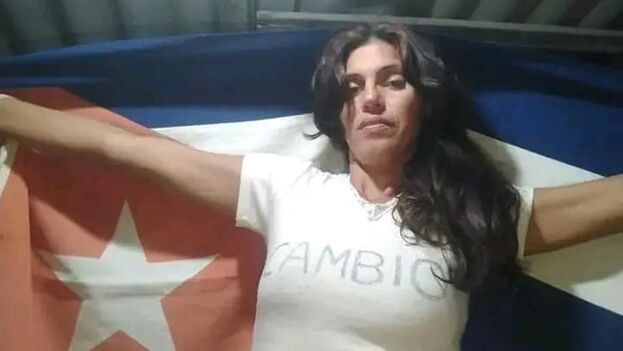
The activist Lenelis Delgado Cué is known on social networks as Mambisa Agramontina Her T-shirt reads “CHANGE.” (Facebook)

14ymedio bigger14ymedio, Havana, 4 September 2023 — Henry Constantín, director of the independent newspaper La Hora de Cuba, is missing. The journalist from Camagüey was arrested along with his colleague José Luis Tan Estrada, this Monday, when both tried to attend the trial against the Cuban activist Lenelis Delgado Cué, who is being prosecuted for the crime of contempt before the Popular Municipal Court of Camagüey.

Tan Estrada was released in the afternoon after spending more than five hours “locked in a dungeon with the most inhumane conditions that can exist,” according to what he himself denounced on Facebook . The reporter was fired at the end of last year from his position as professor of Journalism at the University of Camagüey for, according to the academic authorities, being a “negative influence on the students.”

As for Constantín, his phone continues to be off this Monday afternoon and this newspaper has not been able to contact him or his relatives. La Hora de Cuba reported it was unable to reach the court because “from the early hours of the morning” it was “surrounded by police and State Security agents.”

Lenelis Delgado, known on social networks as Mambisa Agramontina, has been in prison since April 4, when she was arrested at her home and transferred to the State Security headquarters in Camagüey known as Villa María Luisa. She is currently being held at the Kilo 5 Women’s Prison.

“She is in good health and firm in her convictions. My daughter is my pride and she will never fail her ideas and her fight for the freedom of Cuba”

Last October, Delgado had been fined 3,000 pesos under Decree Law 370, after “exercising her freedom of expression on Facebook,” La Hora de Cuba published when interviewing her. At that time, she was “accused of disobedience, with the risk of imprisonment, for not responding to a police summons.” The activist, a mother of three children, was intimidated after making several live broadcasts criticizing the island’s regime. continue reading

More recently, she denounced on social networks the repression against her friend also activist Aniette González, who was tried for the crime of “insulting patriotic symbols.” González, 43, was arrested on March 23 in Camagüey for posting photos on social networks of her body covered with the Cuban flag. Delgado, on the cover of her Mambisa Agramontina Facebook page, has a collage with González’s photos next to the flag.

“She is in good health and firm in her convictions. My daughter is my pride and she will never fail her ideas and her fight for the freedom of Cuba,” the activist’s mother, Leticia Cué, told La Hora de Cuba. Last July, through the Cuban Observatory for Human Rights based in Madrid, Cué denounced “the arbitrary repression against my daughter, who was prevented from using the telephone to make calls to family and friends for two months.”

From prison, Delgado also warned that she suffered from scabies and did not have medical attention from prison health personnel. José Luis Tan Estrada, who received a call from the opposition, made public Delgado’s medical situation: “The doctor does not know that I exist,” Delgado told the journalist.

____________

COLLABORATE WITH OUR WORK: The 14ymedio team is committed to practicing serious journalism that reflects Cuba’s reality in all its depth. Thank you for joining us on this long journey. We invite you to continue supporting us by becoming a member of 14ymedio now. Together we can continue transforming journalism in Cuba.
In Addition to Being Expensive and Useless, the Cuban Passport is Not Edible

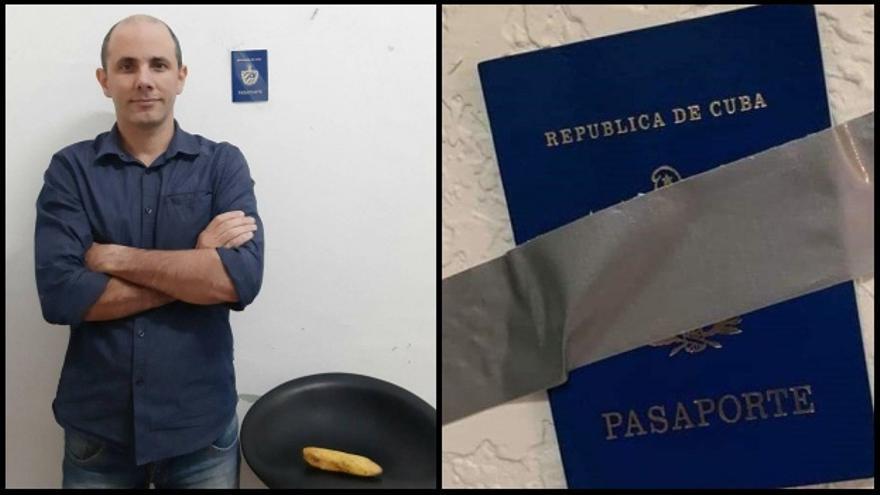
With a useful life of only six years, the Cuban passport must be extended twice during that time. Henry Constantin stands next to his passport taped to a wall with a banana beside him. (Collage)

14ymedio bigger14ymedio, Marcelo Hernández, Havana, 12 December 2019 — Good art does not leave anyone impassive, especially if it mixes irreverence, mockery and everyday life, as demonstrated this December with the installation of a ripe banana stuck with adhesive tape to the wall at the Art Basel festival. The composition of the Italian artist Maurizio Cattelan not only attracted great attention but also sold for $ 120,000. A price that has made many internet users recreate the work in their homes with what they find most valuable or ridiculous.

This is how it came to be the turn of the Cuban passport, one of the most expensive on the planet, for which an emigrant must pay more than 450 dollars if they are obtaining it from within the United States. With a useful life of only six years, the document that proves that someone is a national of this Island must be extended twice during that time, which raises its price about 320 dollars more. Something that those who have posted photos of the blue booklet with the shield of the Republic taped to a wall have not failed to observe.

“Cattelan fell short. Poor people who believe that buying $ 120,000 a banana attached to a wall by an ’artist’ is the biggest scam,” the independent journalist Henry Constantín joked on his Facebook account. The reporter believes that it is worse to pay for a Cuban passport “that you cannot even eat, and that sometimes, as in my case, it is not useful for traveling* (or for anything else).” continue reading

“And now eat it to complete the artistic act,” said an internet user after reading Constantin’s text and alluding to the final destination of the banana in Art Basel, where a man tore the fruit from the wall and ate it to the surprise of some and rejoicing of others. Soon after, a gallery employee looked for another banana, took a new strip of duct tape and stuck it on the wall. Nothing had changed, just like with the Cuban passport.

 *Translator’s note: Cuban State Security has blocked Constantin from traveling outside Cuba.

________________

COLLABORATE WITH OUR WORK: The 14ymedio team is committed to practicing serious journalism that reflects Cuba’s reality in all its depth. Thank you for joining us on this long journey. We invite you to continue supporting us by becoming a member of 14ymedio now. Together we can continue transforming journalism in Cuba.
Eleven Activists and Independent Journalists Blocked From Leaving Cuba

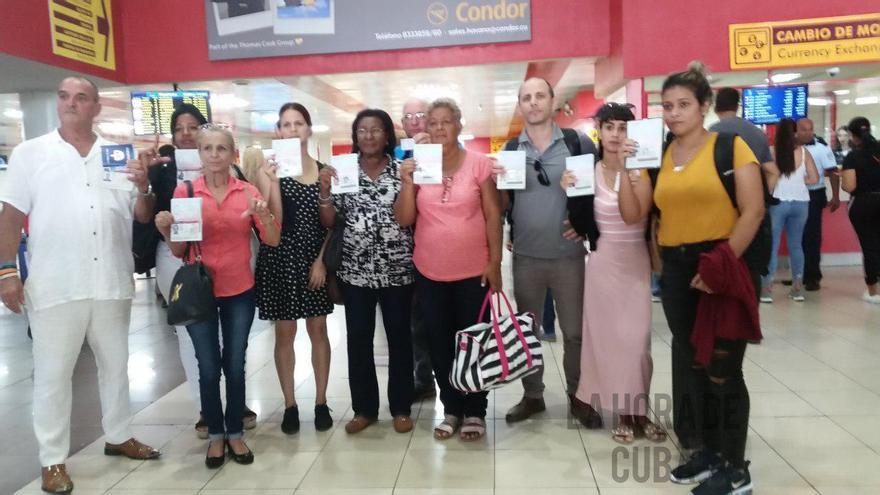
Reporter Henry Constantin, third from right to left, was one of those who was not allowed to travel to the United States on Thursday. (Inalkis Rodríguez / La Hora de Cuba)

14ymedio bigger14ymedio, Havana, 24 October 2019 — On Thursday, Cuban authorities prohibited the departure of twelve political activists and independent journalists who had arrived at the international airport of Havana to take a flight to Miami.

They had all been invited to the Pasos de Cambio (Steps of Change) event, a meeting of Cuban civil society that will be held starting tomorrow at the Freedom Tower, in Miami. Luis Almagro, general secretary of the Organization of American States (OAS) is expected to attend as are several leaders of the Cuban exile.

According to the information transmitted to 14ymedio by the journalist from Camagüey Henry Constantín, this is the list of people who were not allowed to travel: Asunción Carrillo Hernández, Caridad Burunate and Yisabel Marrero Burunate, members of the Pedro Luis Boitel Party; José Díaz Silva and Lourdes Esquivel, of the Opponents for a New Republic party; Unpacu and Ladies in White activist María Josefa Acón; Adrián del Sol, son of Guillermo del Sol, who recently undertook a 55-day hunger strike to protest against arbitrary decisions of State Security to prohibit trips abroad from the Island; the cyber activist María de Lourdes Ayala Anazco; Leonardo Rodríguez Alonso, member of the Patmos Institute; the photographer Iris Mariño and Constantín Ferreiro himself, both from the media La Hora de Cuba.

Guillermo del Sol has been invited to the Miami event but was planning to travel on another flight. According to Constantin, “he seemed to be one of the two people who would not be banned from traveling, but when he learned that his son was still ’regulated’*, he said he was staying.” As this article was being written he was trying to convince the authorities that his presence at the event was important. The name of the other activist who was able to pass through the Immigration barrier has not been revealed so far.

At the airport there was a tense situation when the group decided to take a picture with everyone who was ’regulated’. “We watched as we were surrounded by a dozen State Security agents, some of them known to us, but happily there were no arrests,” says Constantin.

*Translator’s note: The Cuban government applies the term “regulated” to individuals who are prohibited from leaving the island.

_____________________________

The 14ymedio team is committed to practicing serious journalism that reflects Cuba’s reality in all its depth. Thank you for joining us on this long journey. We invite you to continue supporting us by now becoming a member of 14ymedio. Together we can continue transforming journalism in Cuba.
Harassment Against ‘La Hora de Cuba’ Magazine Continues

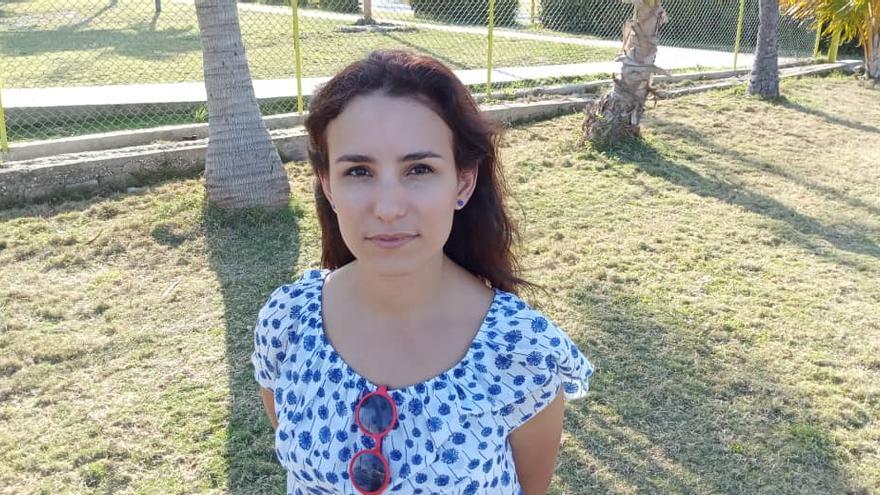
The editor of ’La hora de Cuba’ is the fourth woman on the team who has been barred from leaving the country. (Facebook / La Hora de Cuba)

14ymedio bigger14ymedio, Havana, 22 May 2019 — Cuban authorities prevented several collaborators of the magazine La Hora de Cuba, Inalkis Rodríguez, Iris Mariño and Sol García, from boarding a flight to attend an event in Trinidad and Tobago on the participation of women, to which they had been invited by the Simone de Beauvoir Leadership Institute.

Before leaving for the capital to take the flight, and so as to ensure they would “not make the trip in vain,” they passed through the Immigration office in Camagüey, Inalkis Rodríguez told 14ymedio in a telephone conversation.

“As soon as we said our names they explained that we were ‘regulated’ [the official euphemism for ‘banned from leaving the country’] and when we asked for more explanations they only added that it was “for reasons of public interest.”

In this case, as has happened in previous situations with other civil society activists or independent journalists, the immigration authorities did not explain what steps a person should take to appeal the so-called ‘regulation.’ “Ask the Prosecutor’s Office” was the response obtained by the La Hora de Cuba journalists.

Previously been banned from leaving the country were Isel Arango, the director of the magazine, as well as Henry Constantín, regional vice president for Cuba at the Inter-American Press Association (SIP), who, after two years of being banned from traveling abroad was allowed to leave the country a few weeks ago.

_________________

The 14ymedio team is committed to serious journalism that reflects the reality of deep Cuba. Thank you for joining us on this long road. We invite you to continue supporting us, but this time by becoming a member of 14ymedio. Together we can continue to transform journalism in Cuba.

The Stain of the Torches

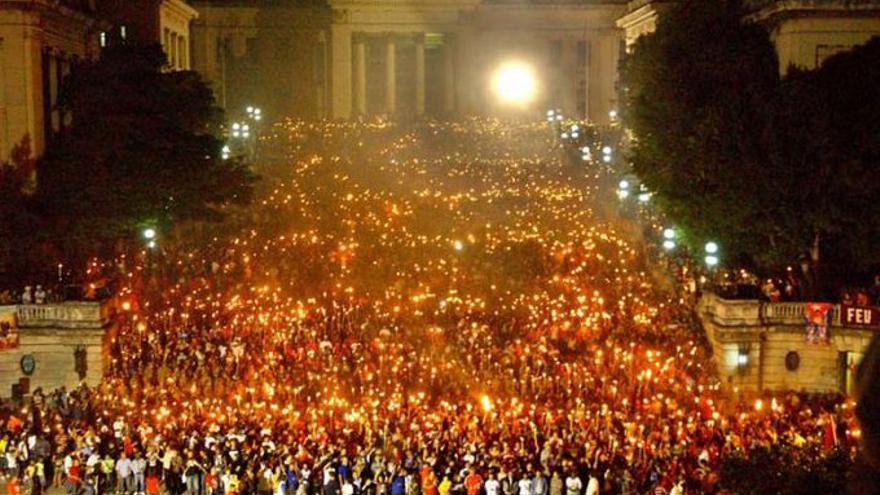
Official government march yesterday, for the birth of José Martí. (MiguelDiazCanelB)

14ymedio bigger14ymedio, Henry Constantin, Camagüey, 29 January 2019 — I did not believe it, I could not believe that they were capable of such selfishness. Our unelected government began its annual torch march in Havana, one day after the tornado had passed.

It is not a march to pick up debris, nor to bring help to people who lost their belongings in the tornado (although they tried to apologize by promising that they will do it, not today, but the next day); it is not a march of solidarity and compassion with the Cubans who today are sleeping in anguish: it is a march of insensitive politicking. And it is not for José Martí, don’t try to deceive us, he would never have prioritized his birthday nor the cult to himself or any deceased caudillo (Fidel Castro) over the tribulations of his people. continue reading

The march serves to remind us that in Cuba politicking is still the priority of the higher-up officials, to the point that they prefer to maintain an expensive parade (how many official vehicles are currently burning the people’s fuel? how many security agents needed to protect the well-known, how much electricity used so there is light and sound for the choreography?, how many press teams are active to cover a ritual that, in the end, doesn’t even touch the edge of the heart of almost anyone in Cuba?).

A few kilometers from the march there are dozens, hundreds of families having a terrible time, without electricity, with injured relatives or destroyed property, surrounded by debris and shortages, and half of those with torches and the wasted resources would have helped them quite a bit. If not to recover their lost belongings, at least to have faith yes, which is the essential thing that people need to make it to the next day.

I admit that yesterday I had to keep quiet. Diaz-Canel immediately appeared in the affected areas, I do not know if it was heartfelt or because it is stipulated by his job responsibilities, God knows. But the image of a leader in pain seeing the suffering of his people did not last long.

Now he is posing among the scenes of the march, by obedience or insensibility, or maybe both; the unelected president with his also unelected boss, and the two freshly-bathed, recently having dined, with their unaffected homes, their happy families and their quiet smiles, because they lost nothing. It is true that, in the end, they do not owe anything to those people the tornado affected: none voted for them for president or anything else.

Let’s see if the people who are suffering find out about it, that Cubans are not worth much to those who are on top — and if they are worth it, it is not when they are in trouble, but when they march obediently — and hopefully they will make it clear in the circus-like referendum of February 24, with anything but the false Yes vote that many plan to mark on the ballot with the same inertia with which they marched today [on Monday] for Martí and the other one (Fidel), then go marching the following day for a visa or to cross a frontier.

If the tornado does not make those still in charge prioritize Cubans in their agenda, at least it will help us to give back to them the lack of importance they give us. Because at the end of a day of pain in so many Cuban homes, what the authorities have done in Havana is not a march. It’s a stain, and one that is not easy to erase.

Translated by Wilfredo Díaz Echevarria

___________________________

Note from 14ymedio: This text was originally published in La Hora de Cuba. We reproduce it here with the permission of the author.

The 14ymedio team is committed to serious journalism that reflects the reality of deep Cuba. Thank you for joining us on this long road. We invite you to continue supporting us, but this time by becoming a member of 14ymedio. Together we can continue to transform journalism in Cuba.

Third ‘La Hora De Cuba’ Editor Charged With Illegally Practicing Journalism In Camaguey

Iris María Mariño García (left) with Sol García Basulto (right). (Facebook)

14ymedio bigger14ymedio, Havana, 30 January 2018 — Iris Mariño García, a journalist from La Hora de Cuba (Cuba’s Hour), was charged on Monday with the crime of “usurpation of legal capacity” and is facing a sentence of up to one year in prison, the magazine’s director Henry Constantin told 14ymedio. Mariño is the third member of the editorial team of the independent publication to face prosecution.

On Sunday, Mariño received a verbal police summons at her home from an officer who told her to appear on Monday. The reporter presented herself to the First Police Unit in the city of Camagüey.

At the station, Captain Yanet Díaz informed Mariño of an accusation similar to that received received last year by Constantín himself, along with the reporter Sol García Basulto. The official, however, did not give her a copy. continue reading

“Supposedly someone is accusing her of having conducted an interview on the street, the same script they used with us,” says the director of La Hora de Cuba.

Mariño now faces the possibility that a judicial process will be opened against her, charging her with violating Article 149 of the Penal Code which makes it illegal for individuals to “perform acts proper to a profession which they are not properly authorized to exercise.”

The official did not specify which of Mariño’s articles will serve as evidence in a court but, Constantín reported, she mentioned “the interviews published in the magazine in a general manner and specifically the opinion polls which are published on the last page.”

The official reproached Mariño for engaging in journalism without authorization and warned her that they will meet “many more times.”  The reporter did not receive any information about possible precautionary measures that limit her freedom of movement.

Last year, following the accusation against Sol García and Henry Constantín, the Inter-American Press Association stated that the actions against the two journalists are contrary to international provisions that support “the right to seek, receive, and disseminate information and express opinions.”

__________________

The 14ymedio team is committed to serious journalism that reflects the reality of deep Cuba. Thank you for joining us on this long road. We invite you to continue supporting us, but this time by becoming a member of 14ymedio. Together we can continue to transform journalism in Cuba.

IAPA Condemns Cuban State Security’s Threats Against ’14ymedio’ Journalist

Gustavo Mohme, president of the Inter-American Press Association. (Congress of the Republic of Peru / Flickr)

14ymedio bigger14ymedio, Havana, 18 January 2018 – Cuban State Security’s threats against Luz Escobar, a journalist with 14ymedio, were condemned on Tuesday in a statement by the Inter-American Press Association (SIP); the organizations said that the threats “show that restrictions and challenges continue to confront the exercise of freedom of the press” on the island, as they have since the triumph of the Cuban Revolution.

“We are concerned that this new harassment of an independent journalist only reflects the government’s intolerance and lack of will,” the president of the IAPA, Gustavo Mohme, said in the note.

Last Monday, 14ymedio published an article in which it made known that Luz Escobar, who has been working for this medium since its founding in 2014, had been summoned in Havana by agents of the political police, who invited her to collaborate with the Government and thus “influence the editorial line” of this newspaper. continue reading

During the hour and twenty minute meeting, and before the professional had received and rejected the offer, the agents threatened to prevent her from leaving the country, said they would pressure her family members, and would accuse her in front of her neighbors of being a “counterrevolutionary.”

In a recent article framed as a letter to the journalist, the director of 14ymedio, Yoani Sánchez, openly stated her support for Luz Escobar. “They, without planning to, have given you the best argument to continue your career in journalism, because they have shown you that ‘up there’ nothing remains of respect for the citizen, for ethics, morality, sincerity, integrity… and much less for COURAGE. Of which you possess oceans,” she told the journalist.

The president of the IAPA has reiterated that what is happening in Cuba “continues to be a priority issue” for the organization he presides over. The statement also mentions another incident that occurred on January 11 in which the authorities detained journalists Sol García Basulto, Inalkis Rodríguez and Henry Constantín Ferreiro, members of the magazine La Hora de Cuba  in Camagüey.

IAPA continues to emphasize that this action by Cuban State Security against the journalists of La Hora de Cuba was due to the presence of President Raúl Castro in Camagüey, since he was visiting the city. ” Constantín Ferreiro and Garcia continue to be prohibited from leaving Camagüey, where they reside,” the statement reads, noting that they had been accused of the crime of “usurpation of legal capacity” because, according to the government, they have not been “duly authorized” to practice as journalists.

In its latest report on Cuba, the IAPA denounced that the lack of press freedom on the island worsened in 2017. The non-profit organization said that this was due to an increase in “the aggressions against independent journalists and even their relatives, and against users of social networks by police bodies” with the collaboration of the Ministry of Justice.

In the Human Rights Watch’s 2017 Annual Report published on Thursday, the organization notes that the Government of Cuba “detains, harasses and threatens independent reporters” among other serious violations of people’s rights and freedoms.

__________________________

The 14ymedio team is committed to serious journalism that reflects the reality of deep Cuba. Thank you for joining us on this long road. We invite you to continue supporting us, but this time by becoming a member of 14ymedio. Together we can continue to transform journalism in Cuba.

Camaguey Police Prohibit Sol Garcia and Henry Constantin From Exercising Journalism

Independent journalists Sol García Basulto and Henry Constantín Ferreiro. (14ymedio)

14ymedio bigger14ymedio, Havana, 4 May 2017 — Journalists Sol García Basulto and Henry Constantín were summoned Thursday to Camagüey’s Third Police Unit, where they were threatened with having their homes searched and the equipment they use to do their work confiscated if they do not stop “publishing on social networks and in independent magazines.”

An official, who identified himself as Lieutenant Francisco Pacheco, reproached the young people for continuing to work as journalists and issued each of them a warning.

The official also accused Constantin of buying “200 bags of cement and a bathing suit” which he transported “in a yellow Lada car from Najasa to the city of Camagüey.” However, Constantin categorically denies the accusation and insists that he has not left the city because he is under a “restriction of movement” measure. continue reading

On March 23, both reporters were charged with the alleged crime of “usurpation of legal capacity,” a charge that is still active, according to Constantin speaking to 14ymedio a few minutes before the meeting with the police on Thursday.

If the charge goes to trial, they could be tried under Article 149 of the Criminal Code, which punishes those who “perform acts of a profession for which they are not properly qualified.” They would then be subject to a prison sentence of between three months and one year.

The reporters are part of the editorial team of the independent magazine La Hora de Cuba (Cuba’s Hour), which is distributed in digital format. In addition they collaborate with different independent media and García Basulto is a correspondent for 14ymedio in the province of Camagüey.

At the end of last year, Constantín was named regional vice president for Cuba for the Inter American Press Association (IAPA). Recently the reporter was not able to attend a conference in Los Angeles about the current situation of journalists on the Island, nor was he able to attend a later meeting of the IAPA in Guatemala, due to the restrictions of movement imposed on him by police authorities.

García Basulto was warned by the police again this Thursday, about her job of interviewing people and collecting information in public places. A task that she undertakes, according to the officers, to “misrepresent information and write against the government.” The police showed particular annoyance at an interview with the rapper Rapshela published in 14ymedio in March.

In November 2016, State Security prevented the 14ymedio correspondent from leaving her home in the days following the death of former President Fidel Castro, while the funeral procession transported his ashes to Santiago de Cuba.

At that time the young woman denounced the escalating repression against her, which began in December 2015 when she solicited opinions outside the Provincial Court of Camagüey where the trial was being held for the murder of musician Pedro Armando Junco, known as Mandy.

The IAPA believes that the accusations against the two journalists are contrary to international provisions that support “the right to seek, receive, disseminate information and express opinions.”