
A Cuban Suggests ‘A Course of Detoxification From Castroism’ for Newcomers to Florida

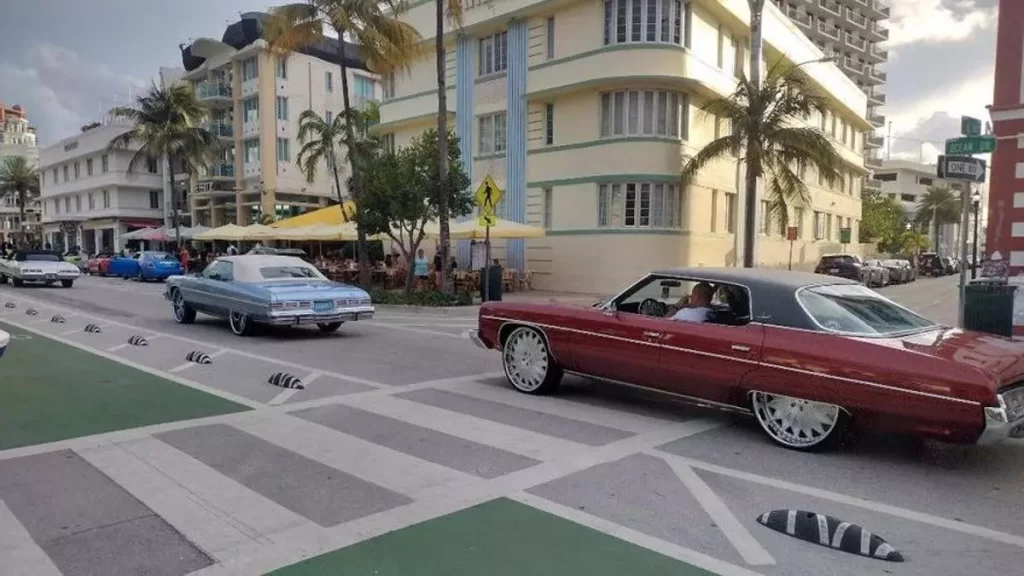
The bad thing, says Nancy, is the perception they have in Florida of Cubans, especially newcomers / 14ymedio]

14ymedio bigger14ymedio, Alejandro Mena, Miami, 2 April 2024 — It’s been three months since Estefany (fictitious name) arrived from Cuba to the United States with the humanitarian parole established by Joe Biden’s Administration last year, and at the moment she does not seem to adapt well to the rule of law. Last week, she was fired from her job in a well-known restaurant chain after it was discovered that she stole several belongings from some of her colleagues, including an expensive Apple Watch and a jacket.

“Many Cubans take what is not theirs,” says Nancy, who tells 14ymedio about the woman with whom she worked until a few days ago. “Fortunately for her, the boy whose watch she stole didn’t want to report it, but the boss fired her immediately.”

It is a story that repeats itself. “In the pizzeria where I worked for a while there was a dishwasher who stole boxes of gloves and anything else he could find,” says Fernando, a chef who arrived in Florida from the Island two years ago by the so-called “volcano route” via Nicaragua. “And when we discovered it and the boss fired him, before leaving he complained about the salary they paid him.” continue reading

“In the pizzeria where I worked for a while there was a dishwasher who stole boxes of gloves and anything else he could find”

On Monday, two Cubans, Yasniel Acosta Prieto and Ariel Echevarría Borges, were arrested in Indian River County, Florida, when they were caught stealing correspondence from mailboxes, a federal crime in the United States. According to the report by América TeVé, they had in their possession at least 50 letters with “sensitive information” from local residents, including bank details, personal documents and checks, which, the Police warns, could be used to extort or commit some type of fraud.

“They should offer a free Castro detoxification course to all of us who emigrate,” says Fernando, “which is comprehensive. Cubans are very intoxicated with taking what is not ours. I was working in warehouses for five years, and I lived on what I stole there. I’m very embarrassed now, but at the time it seemed normal to me.”

“Most of us only come to work to try to get ahead with our families in freedom”

Almost all nationals of the Island know first-hand, or from close stories, the use of notebooks, pencils, erasers, printer paper and all stationery supplies stolen by fathers or mothers from state offices. Or the snacks they offered in the workplaces. Fernando also has a butcher friend in Miami: “Every time he was at work he stole a few pounds of meat from the customer, until one day he collided with reality. And why would he do this if he’s no longer in Cuba? The truth is that he was very damaged, like everyone else, by the Revolution.”

The bad thing, Nancy says, is the perception people in Florida have of Cubans, especially newcomers. “We are not all like that,” says this young 30-year-old mother, who was a nurse on the Island and in the United States makes a living as a waitress in several establishments, with draconian schedules. “Most of us only come to work to try to get ahead with our families in freedom.

The unprecedented exodus that Cuba suffers mostly impacts Florida, where approximately 75% of the Island’s nationals arrive. At a congress on migration held last February in Hialeah, the authorities pointed out that in recent years the number of accidents, crime and arrests has increased. However, experts such as Jorge Duany, director of the Cuban Research Institute, say that there is not enough data to link these numbers directly to the increase in migrants.

Translated by Regina Anavy

____________

COLLABORATE WITH OUR WORKThe 14ymedio team is committed to practicing serious journalism that reflects Cuba’s reality in all its depth. Thank you for joining us on this long journey. We invite you to continue supporting us by becoming a member of 14ymedio now. Together we can continue transforming journalism in Cuba.

A Senior Official of the PCC in Pinar Del Rio Has Been Dismissed, Criticized for ‘Dubious Management’

The official press reported that Rodríguez will take on other administrative tasks / Redpinar

14ymedio bigger14ymedio, Havana, 2 April 2024 — The Communist Party of Cuba (PCC) moved the pieces on its board again on Monday, when it dismissed, just two days after the dismissal of Susely Morfa in Matanzas, its first secretary in Mantua, Pinar del Río. Liusmara Rodríguez Soriano “was released from her responsibility,” said the official press, Guerrillero, with the euphemism used by the regime to refer to the punishment of leaders who have mismanaged their territories. A source consulted by 14ymedio in Matua about Rodríguez’s dismissal says that during her time in office the official “made many mistakes. Homes affected by floods and hurricanes have been added in recent years in the municipality, and there are still people who have been asking for materials and help to repair their houses for ten years and more,” it says.

“In the distribution of materials, Liusmara gave privileges to certain people, letting them use cement and roofing materials as if this were a private farm. There was a lot of discomfort and many rumors of the diversion of resources meant for those affected,” so her dismissal could be a consequence of “dubious management.” “The red sweaters she wore, referring to Rodríguez’s clothing with revolutionary slogan, didn’t help her much.”

“In the distribution of materials, Liusmara gave privileges to certain people who used cement and roofing material as if this were a private farm”   

Rodríguez, of whom not a word was said in the provincial media, will be replaced by Noel Camejo Pérez, age 44, who “accumulates experience in management. At the UJC [Union of Young Communists], he was the first secretary in Guane and a member of the Provincial Bureau. In the PCC he served as a member of the municipal bureau for the attention to political and ideological activity in the Guanero territory and as an official of the Provincial Committee in the agri-food sphere, from 2022 to the present,” Guerrillero summarized. continue reading

Rodríguez, who was recognized for her “efforts and consecration,” “will assume other tasks in the administration,” the report concluded.

The same thing happened last Saturday in Matanzas, where the first secretary of the Party, Susely Morfa – a psychologist and political leader of the Island who stood out in the acts of repudiation against Cuban activists at the Summit of the Americas, in 2015 in Panama – was dismissed from her position.

In the case of Morfa, succeeded by Mario Sabines Lorenzo, age 52, and former governor of the province, the leaders outdid themselves praising the official, described as a “great leader.” “During events of great complexity such as the fire at the Supertank Base, the floods in Carlos Rojas and even the events of 11 July [2021], she has always been on the front line of combat, something that undoubtedly makes her a great leader,” praised Osmar Ramírez Ramírez, secretary general of the Workers Union of Cuba.

The position of first secretary of the party, the direct  representative of the regime’s interests  in each territory, seems to be one of the most susceptible to change   

The position of first secretary of the party, the direct representative of the regime’s interests in each territory, seems to be one of the most susceptible to change. Weeks ago, Liván Izquierdo, who occupied the position in Ciego de Ávila, was also “liberated.” The PCC reported that the provincial committee “agreed at the request of the Political Bureau to release the first secretary of this organization comrade Liván Izquierdo Alonso, who will assume other responsibilities in the organization,” and they added that he should leave his office in fifteen days.

Izquierdo, known for paying special attention to his public projection in the local media, was dismissed by the official media Invasor with praise and the clarification that the former first secretary himself had voted in favor of his departure from office.

José Ramón Monteagudo Ruiz, first secretary of the Party in Santiago de Cuba, who left office on February 1 without pain or glory, did not have the same luck. Monteagudo, dismissed by Cuban President Miguel Díaz-Canel himself, was in the position for less than three years, which coincided with the COVID-19 pandemic and the worsening of the island’s economic crisis. His successor, Beatriz Johnson Urrutia, former governor of the province, has also not managed in her short time in office to keep her history free of protests and complaints from the population.

Weeks later, on February 21, the Political Bureau requested the departure of the first secretary of Cienfuegos, Marydé Fernández López, from office. On that occasion, the secretary of the Central Committee, Roberto Morales Ojedam, who has attended the removal of each of the provincial secretaries, applauded Fernández for “her personal qualities and the results in her performance at the head of the partisan organization,” which he did not mention. In her place, Armando Carranza Valladares, who was part of the Provincial Bureau, was named.

The movement of cadres, which the press has described on several occasions as a standard process, has not only occurred at the local level but also in the structure of the central government itself  

The movement of cadres, which the press has described on several occasions as a standard process, has not only occurred at the local level but also in the structure of the central government itself. In addition to the fall into disgrace weeks ago of the former Minister of Economy and Planning, Alejandro Gil – who dragged with him the former Minister of Food Industry Manuel Santiago Sobrino Martínez – the regime announced on January 8, the dismissal of the deputy ministers of Culture Fernando Rojas Gutiérrez and Kenelma Carvajal Pérez.

“This movement responds to a policy of the country of gradual renewal of management cadres at all levels, and ratifies in practice the confidence of the Revolution in young people,” the Ministry of Culture stated at the time, assuring that it was a “liberation by renewal” and not a punishment.

The departure of Rojas, whose “revolutionary loyalty” was recognized, left the citizenry perplexed. They remember him as one of the most loyal cultural commissioners to the regime and for his participation in the tense meeting with the artists of the 27N collective in which his boss, Alpidio Alonso, ended up slapping the independent journalist Mauricio Mendoza.

Also related to culture, the departure of Luis Morlote Rivas from the Union of Writers and Artists of Cuba was revealed in January. Known as one of Díaz-Canel’s trusted men, Morlote – who also directs the Cultural News of Cuban Television – was not “liberated” but promoted to the Ideological Department of the Party.

Likewise, at the beginning of the year, two deputy ministers of Foreign Trade and Foreign Investment, Ana Teresita González Fraga and Roberto López Hernández, were removed. Although the leaders then stated that it was a “process of renewal of positions in the structures of the Government,” the poor economic situation of the Island, which needs foreign exchange and investments at all cost, raises suspicions about the real reasons of the regime for replacing the officials. A doubt that is repeated with the numerous “liberations” of recent months.

Translated by Regina Anavy

____________

COLLABORATE WITH OUR WORKThe 14ymedio team is committed to practicing serious journalism that reflects Cuba’s reality in all its depth. Thank you for joining us on this long journey. We invite you to continue supporting us by becoming a member of 14ymedio now. Together we can continue transforming journalism in Cuba.
An 11J Protester is Released in Cardenas After Serving His Sentence

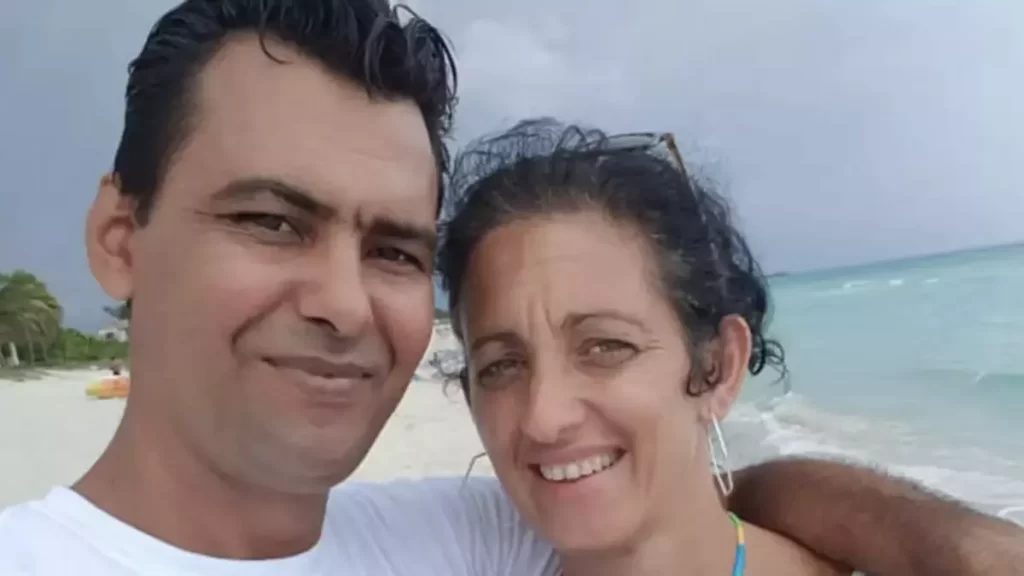
Samuel Pupo Martínez was initially sentenced to seven years in prison, but a cassation appeal reduced the term to three / Courtesy

14ymedio bigger14ymedio, Havana, 2 April 2024 — Samuel Pupo Martínez, sentenced to three years in Agüica prison for demonstrating on 11 July 2021 (11J) in Cárdenas, Matanzas, was released on Monday. Known for his photo of the protests, taken while mounted on an overturned vehicle, his sentence was reduced to two years, eight months and 21 days by a “report”.

“I will continue to fight for my Cuba to be really free, because I left the small prison and entered the big one. I don’t feel free,” Pupo, age 49, told Martí Noticias on Monday.

On July 11, in front of the headquarters of the Communist Party of Cárdenas, Pupo mounted an overturned car, shouted “Homeland and life! Down with communism!”, which the authorities did not forgive. Arrested and transported in a police van to La Bellotex prison, Pupo was missing for several days and suffered mistreatment at the hands of the police.

“I am free because I have fulfilled my sentence, which was for three years. I don’t owe them anything,” said the former political prisoner, after being released from prison this Monday. continue reading

“I will continue to fight for my Cuba to be really free, because I left the little prison and entered the big one. I don’t feel free”

In April 2022, almost a year after his confinement, the court of Matanzas conducted a three-day trial in which Pupo was charged with public disorder and contempt, and the Prosecutor’s Office requested a sentence of seven years. “His lawyer made a brilliant defense, but the prosecutor asked for the maximum penalty for each crime he had allegedly committed,” his wife told 14ymedio.

The sentence was pending for a month, and both Pupo and his wife felt hopeful because the lawyer had requested that the charge be reduced to a precautionary measure, explaining that “Pupo has scleroderma, a degenerative disease, which is not compatible with staying in a prison.” However, the court dismissed the request. The family then requested an appeal of cassation,* which was granted, and Pupo’s sentence was reduced to three years.

“I have many brothers who have had to suffer disproportionate sentences, which were unjustified, unjust,” he told Martí Noticias, referring to those prosecuted for demonstrating on 11J. “It was a warning for people to suck it up and stay silent. Since the Castro revolution triumphed, something like this had never happened, and I was proud to have been there.”

Despite the regime’s repression, Pupo feels hopeful about the new protests that happened on the Island after 11J: “People are going out to claim their rights. It’s time for the Cuban people to realize that their rights have been trampled on, that we have to defend them ourselves.”

During his time in prison, Pupo was with other 11J political prisoners, such as Félix Navarro, also a former prisoner of the Black Spring, who is completing his prison sentence in Agüica; and Francisco Rangel Manzano, sentenced to six years for demonstrating in the Matanzas municipality of Colón.

*Translator’s note: Courts of cassation are upper-level courts of “extraordinary” remedy that interpret the law rather than re-examining the facts. They can abrogate or annul a lower court decision.

Translated by Regina Anavy

____________

COLLABORATE WITH OUR WORKThe 14ymedio team is committed to practicing serious journalism that reflects Cuba’s reality in all its depth. Thank you for joining us on this long journey. We invite you to continue supporting us by becoming a member of 14ymedio now. Together we can continue transforming journalism in Cuba.
A Journalistic Investigation Links Unit 29155 of the Russian GRU with ‘Havana Syndrome’

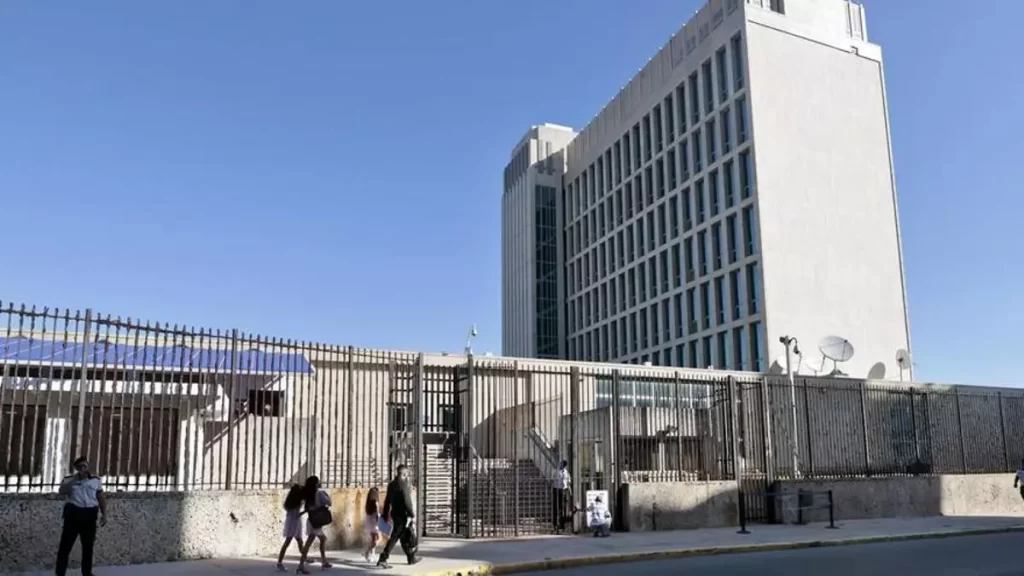
Although the first victims of the syndrome emerged in 2016 in Havana, the report says that “there were probably attacks two years earlier in Frankfurt.” / EFE

14ymedio bigger14ymedio, Madrid, 1 April 2024 — The health incidents known as “Havana syndrome” may originate from “directed energy” weapons of the Central Intelligence Department of the Russian Armed Forces (GRU). This was revealed on Monday by The Insider, in a long report made in collaboration with the American program 60 Minutes and the German magazine Der Spiegel.

The one-year-long investigation presents, for example, the testimony of victims who saw members of the fearsome Unit 29155 of Russian military intelligence at the scene of the attacks.

One of those victims, a nurse married to a Justice Department official stationed at the U.S. Embassy in Tbilisi (Georgia), tells The Insider how, on October 7, 2021, she suddenly felt, “as if a high-pitched sound had entered through the window,” which she describes as the one heard in movies after a bomb explodes: “It just pierced my ears.” At the moment she felt “a stabbing headache” and, later, she vomited. continue reading

The woman, introduced by the media with the fictitious name of Joy, says that she saw a black Mercedes parked on the street

The woman, introduced by the media with the fictitious name of Joy, claims that she saw a black Mercedes parked on the street in front of her house, and next to the vehicle, a “tall and thin” man. This, as she identified herself in a photograph three years later, was Albert Averyanov, not only an agent of Unit 29155, the GRU squad known for carrying out murders and sabotage operations, but the son of its founder, Andrei Averyanov.

The report presents as evidence the fact that the high-ranking members of the unit received “political awards and promotions” for works related to the development of “non-lethal acoustic weapons”; that is, “directed energy, sound or radio frequency devices, which can cause “acoustic effects” on the brains of the victims.

In addition, she asserts that although the ailment was named from the effect it caused on American diplomats in 2016 in Havana, “there were probably attacks two years earlier in Frankfurt, Germany,” a few months after the Russian invasion of Ukraine in 2014. Then, an employee at the U.S. consulate “fell unconscious by a blow, something similar to a strong ray of energy,” and, later, “he was diagnosed with a traumatic brain injury.” This victim “was also able to identify an agent of Unit 29155 based in Geneva.”

The media presenting the investigation claim to have discovered “documentary evidence” that Unit 29155 has been experimenting “exactly with this type of weaponized technology” that experts suggest as a plausible cause of Havana syndrome.

Symptoms of the ailment include chronic headaches, vertigo, tinnitus (auditory sensation that consists of perceiving sounds that do not come from external sources), insomnia, nausea, psychophysiological deterioration and, in some cases, blindness or hearing loss. “Many victims have said that they were well and that they suddenly suffered intense pain or pressure in the skull, usually located on one side of the head, as if they were trapped in a ray of concentrated energy,” the text states.

The appearance of these health incidents in American and Canadian diplomats in Havana was one of the reasons why the normalization with Cuba initiated by Barack Obama when he was president of the United States did not move forward. In 2017, the next president, Donald Trump, decided to suspend consular services in Havana and minimize diplomatic personnel on the Island.

Meanwhile, the Government of Cuba has always denied any responsibility and set up a commission of experts that found no scientific or criminal evidence that linked the symptoms with possible sonic attacks, microwaves or other deliberate action.

On March 1, 2023, the Office of the Director of National Intelligence (ODNI), Avril D. Haines, published a report prepared by seven United States intelligence agencies in which they stated that it was “very unlikely” that a foreign adversary would cause the so-called Havana syndrome.

The Government of Cuba always denied any responsibility and set up a commission of experts that found no evidence of possible sonic attacks

The Insider’s report is also a challenge to that report, which was already criticized at the time by experts such as Marc Polymeropoulos, a former senior CIA officer and victim of the ailment himself. In an interview with América TeVé, last year, he considered himself “betrayed” by the report and insisted on pointing out Cuba and Russia as responsible for the attacks.

“I would say that it has all the characteristics of a Russian active measure. It is what a successful action would look like, one that would cause fear to the adversary, take people out of their work and distract,” the former intelligence agent told the Miami chain at the time.

The statements to The Insider of the first CIA officer affected by Havana syndrome in Cuba, the “patient zero” presented under the pseudonym of Adam, are forceful: “What this long investigation has shown is that either the intelligence community is unable to carry out its most basic function or has worked to cover up the facts and deceive the public and the affected employees.”

Translated by Regina Anavy

____________

COLLABORATE WITH OUR WORKThe 14ymedio team is committed to practicing serious journalism that reflects Cuba’s reality in all its depth. Thank you for joining us on this long journey. We invite you to continue supporting us by becoming a member of 14ymedio now. Together we can continue transforming journalism in Cuba.

The Cuban Minister of Tourism Expects Half a Million Russian Visitors

Juan Carlos García Granda, Cuba’s minister of tourism  / Presidencia Cuba

14ymedio bigger14ymedio, Moscow, 14 March 2024–The Russian MIR payment card, accepted in Cuba since November 2023, is here to stay and will boost Russian tourism to the Caribbean nation to an expected half-million visitors, Cuban minister of tourism Juan Carlos García Granda declared today.

“The Russian MIR card arrived in Cuba to stay,” García Granda stated during a press conference called by the Russian news agency TASS.  He explained that the Cuban tourism sector assigned itself the task of “creating many more benefits for the Russian customer.”

“One of the challenges we have overcome, because we can now announce the results, is that Russians can use rubles to pay in Cuba, which is already the case today,” he pointed out.

García Granda recalled that since 20 November 2023, “we were able to complete the first transactions with MIR cards, and we officially announced the use of MIR cards on terminals at points of sale since 5 December 2023.” continue reading

The minister reiterated the interest in promoting Cuba as an attractive tourist destination for Russia

“In these first months of operation, more than $2.7 million dollars have been transferred via the MIR cards; there are 20,000 point-of-service terminals in major stores and tourist spots throughout the country. This is something that will continue to grow and the conditions exist for it to be so,” he asserted.

The minister reiterated the interest in promoting Cuba as an attractive tourist destination for Russia, and averred that Havana “is not abandoning the objective of having Russians occupy one of the three top spots among foreign visitors to the country.”

He indicated that even throughout the coronavirus pandemic, Russian tourists could visit the Greatest of the Antilles, thanks to agreements between Havana and Moscow. Also, Havana is in permanent dialogue with the Russian authorities to increase not only the number of flights, but also to add new routes, in particular from St. Petersburg to the Island.

Already for the current year, García Granda noted, Cuba will exceed 200,000 Russian tourists.

“This is not a great amount in terms of absolute figures, but it will be a very motivating result for us. I expect that soon, even while I’m still leading this ministry, we will get to a half-million Russian visitors,” he added.

Translated by Alicia Barraqué Ellison 

____________

COLLABORATE WITH OUR WORKThe 14ymedio team is committed to practicing serious journalism that reflects Cuba’s reality in all its depth. Thank you for joining us on this long journey. We invite you to continue supporting us by becoming a member of 14ymedio now. Together we can continue transforming journalism in Cuba.

Uruguay Keeps More Than 7,000 Cubans Who Applied for Refuge in Limbo

A total of 7,293 Cubans applied for refuge last year in Uruguay; the process now takes two years / x/@cubanoslibresuy

14ymedio bigger14ymedio, Havana, 2 April 2024 — More than 7,000 Cubans who applied for refuge last year in Uruguay “remain in limbo” because the care system is “suffocated,” according to the Uruguayan newspaper El Observador. The Ministry of Foreign Affairs said that the country ended 2023 with 24,193 applications, and the waiting time has been extended to two years. Milagros Rodríguez is one of those Cubans who arrived in Montevideo last year with the idea of starting a new life with her Cuban partner, whom she re-encountered in that nation. However, things didn’t go as she planned. According to the Spanish newspaper El País, she currently has a provisional identity document and works as a cleaner.

The Ministry of Foreign Affairs said that the country ended 2023 with 24,193 applications

By remaining in “migratory limbo”, Cubans do not have refugee status and cannot cancel the application for refuge to process the permanent residence that would allow them family reunification. Rodríguez points out that a solution for her, like thousands of her compatriots, is for Uruguay to “release them from that visa”, as happened during the Covid 19 pandemic.

According to the Uruguayan newspaper El Observador, the “diagnostic” document approved by the Refugee Commission collapsed due to the “lack of resources” and the “shortage of migratory alternatives” for people who can’t show that they are being persecuted.

Uruguayan Foreign Minister Omar Paganini argues that the delay is due to the fact that the majority of applicants “do not meet the requirements to be refugees.” He accepts as “reasonable” that Cubans have motives to leave the Island, but for Uruguay to grant them asylum, they must prove that they are victims of “political persecution.” However, a solution is being analyzed. continue reading

Last May, Alberto Gianotti, of the Migrant Support Network, warned that between 9,000 and 10,000 nationals of the Island had to process a visa to maintain their legal status in the South American country.

Alberto Gianotti, of the Migrant Support Network, warned that between 9,000 and 10,000 Cubans had to apply for a visa to maintain their legal status

El Observador reported that since the beginning of the pandemic, Cuba has suffered the largest flight of its population in its history. “Tourism collapsed; infrastructure showed its shortcomings; medication and food were scarce; there were constant blackouts; and about half a million escaped to the United States.”

The same newspaper reiterated that Uruguay has no intention “to deport the undocumented, much less to allow irregular inhabitants to accumulate”, with the consequent problems that would result, so Montevideo is rushing to find a solution that is not expected to be easy.

Since the president of the United States, Barack Obama, put an end to the “wet foot/dry foot” policy in 2017, Cubans have found an alternative route through Uruguay. Their journey begins in Guyana, the only South American country that does not require a visa. From there they cross through Brazil and then resort to coyotes to reach Uruguay, where they ask for refuge.

Translated by Regina Anavy

____________

COLLABORATE WITH OUR WORKThe 14ymedio team is committed to practicing serious journalism that reflects Cuba’s reality in all its depth. Thank you for joining us on this long journey. We invite you to continue supporting us by becoming a member of 14ymedio now. Together we can continue transforming journalism in Cuba.

Who Can Become a Citizen? Legal Pathways to Gaining Spanish Nationality

No European country approves more citizenship applications than Spain / Consulado de España en La Habana/X

14ymedio bigger14ymedio, Yoan Molinero Gerbeau, Madrid, 30 March 2024 — Last year, public attention turned to two prominent sports figures — Sara Khadem and the Real Sociedad footballer Robin Le Norman — when it was announced in the Official State Gazette that they had been granted Spanish citizenship along with 106 other people. It bears mentioning that a good number of these people included Nicaraguan dissidents, who received the so-called “letter of naturalization,” a mechanism that allows the government to unilaterally grant Spanish citizenship to whomever it deems worthy by means of royal decree.

As a result of these decrees, the organization Civio performed an interesting exercise, creating a database that indicated how many people had acquired Spanish citizenship this way since 1993.

Only a tiny portion of the naturalizations authorized by the Spanish state during this period were granted by means of this noteworthy though certainly elitist procedure, which allows the government to confer citizenship at its discretion.

To get a broader picture, we can look at data published by Spain’s National Statistical Institute (INE), which  indicates that 181,581 people received the full rights of Spanish citizenship in 2022, of which less than 1% were granted through letters of naturalization. continue reading

The process of acquiring a new nationality is very intriguing since it involves what Abdelmalek Sayad, a prominent sociologist and expert on migration, called a “rite of transubstantiation.” Effectively, in a world of nation-states, where belonging to one has ethnic, cultural and moral implications, the transformation from being a national of one country into a national of another involves some degree of “magic.”

Analyzing the requirements that those who choose to participate in this rite must fulfill is an interesting exercise as it involves entering into a world of beliefs, revealing what a country considers to be valid criteria for recognizing someone as “one of their own.”

Despite being a noteworthy procedure, only a tiny portion of naturalizations were granted by decree at the government’s discretion

What criteria do applicants have to meet in order to be considered a Spanish national? The answers can be found in the country’s Civil Code.

There are four ways to become a naturalized citizen of Spain:

    • Citizenship by nature
    • Citizenship by option
    • Citizenship by residency
    • Citizenship by state possession

Since we have already touched upon the first way, let’s take a look at the others.

Naturalization by option refers to the principle of ius sanguinis, establishing Spanish nationality by birthright. This option is available to children of a Spanish mother or father. Also eligible to apply are those whose grandparents were Spanish but who lost their citizenship due to having been exiled during the Franco dictatorship.

Naturalization by residency gives foreigners who have lived in the country for a certain period of time the chance to become Spanish citizens. Generally, that period is ten years though there are circumstances that can reduce the wait time.

Applicants must also submit a criminal record certificate indicating “good civic conduct” , and show they have achieved “integration into Spanish society.”

The latter is demonstrated through a test that evaluates language fluency as well as knowledge of “Spain’s constitutional and socio-cultural precepts.”

This last requirement is highly controversial because since it tends to focus on the predominant national culture as found in the Castille and Madrid regions, indicating that — as far as the state is concerned — “being Spanish” means adopting a nationalist view that excludes other large regions of the country.

The fourth case, naturalization due to possession of state, concerns those who had Spanish nationality for at least ten years but, for some reason, lost it.

Finally, to be “naturalizable,” applicants must meet two not insignificant criteria.

First, they must renounce their original citizenship, thus indicating a willingness to become legally stateless before becoming citizens of another state.

Secondly, in a highly charged political act, they must swear an oath of loyalty and obedience to the two pillars of the state: the king and the constitution.

Certainly, the requirements to become a Spanish citizen are not without controversy since they impose an important political and cultural burden, raising an issue that has not been resolved by the broader society itself: What does it mean to be Spanish?

The requirements to become a Spanish citizen are not without controversy since they impose an important political and cultural burden

Given the data available, it might be easier answer the question of how willing is Spain to allow foreigners to become citizens. We can look at European statistics to see that how the country stacks up. According to Eurostat, whose most recent figures are from 2021, no other country on the continent approves more citizenship applications than Spain, a total of 144,00 for that year, followed by France (at 130,400), Germany (130,000), and Italy (121,500).

If we keep in mind — again according to Eurostat — that the foreign-born population of France and Italy is similar to that of Spain, while Germany’s is twice the size, it would seem that the country’s policies are not particularly restrictive in this regard.

However, data-driven conclusions do not always coincide with the subjective experience of those who must deal with the paperwork which, according to several investigative reports, is described as slow, arduous and administratively complex. Let’s remember, however, that granting citizenship and expanding rights always has positive effects on society at large.

________________________

Editor’s note: This article was originally published in The Conversation and is reproduced here with permission from Crative Commons. The author, Yoan Molinero Gerbeau, is a researcher in International Migration at the Comillas Pontifical University.

____________

COLLABORATE WITH OUR WORKThe 14ymedio team is committed to practicing serious journalism that reflects Cuba’s reality in all its depth. Thank you for joining us on this long journey. We invite you to continue supporting us by becoming a member of 14ymedio now. Together we can continue transforming journalism in Cuba.
A Former CIA Agent Questions the Rejection of a Foreign Hand in Havana Syndrome

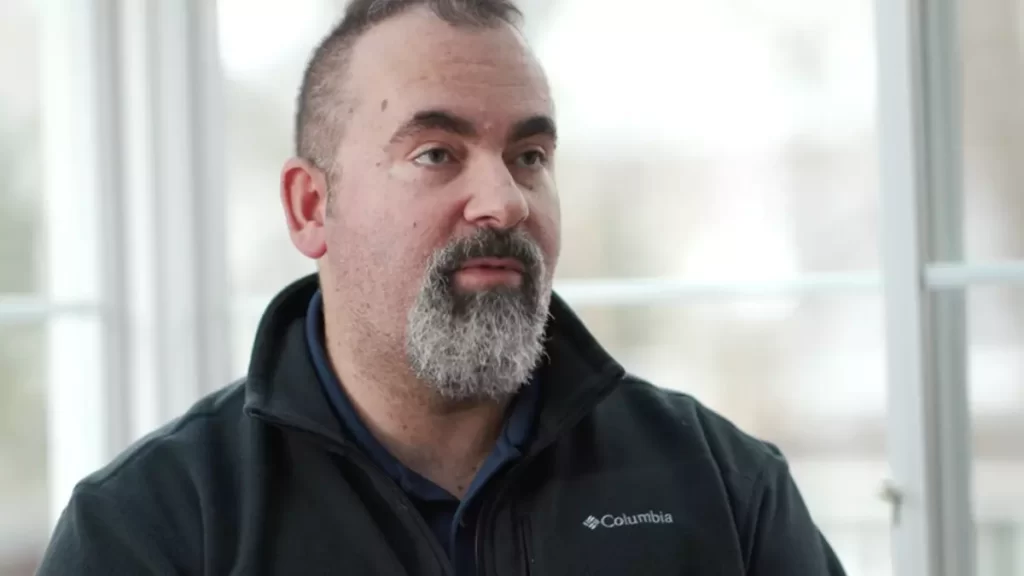
Marc Polymeropoulos was a CIA agent for 26 years. (Screen Capture)

14ymedio biggerEFE (via 14ymedio), Miami, 15 March 2024 — Marc Polymeropoulos, a retired former senior CIA officer who claims to be a victim of the so-called Havana syndrome, described the U.S. intelligence report as a “blow to the gut.” The report ruled out any “foreign adversary”,  and he said in an interview that in his opinion, it was Cuba and Russia.

Polymeropoulos spoke exclusively with América TeVé about the syndrome that affected more than 200 people and which was one of the reasons that the normalization with Cuba initiated by Barack Obama when he was president of the United States did not go ahead.

The interview, divided into two parts, of which the second and last will be broadcast this Tuesday by América TeVé, is a reaction to the report entitled “Evaluation of Abnormal Health Incidents” prepared by seven U.S. intelligence agencies and published on March 1 by the Office of the Director of National Intelligence (DNI), Avril D. Haines.

The interview is a reaction to the report entitled “Evaluation of Abnormal Health Incidents” prepared by seven U.S. intelligence agencies

The former senior officer, who retired from the CIA in 2019 after 26 years, allegedly due to the aftermath of Havana syndrome, which, he said, affected him while in a hotel in Russia in 2017, considered himself betrayed by that report. continue reading

“The idea that we somehow think that there is no State involved is inexplicable. I would understand if they said ‘we don’t know, we just don’t know,'” said Polymeropoulos, who was introduced as an expert in counterterrorism.

The first cases of the syndrome were known in Havana in 2016, and there were later cases of diplomatic personnel, family members and intelligence agents in several countries who were affected.

“How could we move from the report of the National Academy of Sciences, Engineering and Medicines (December 2020) that concluded that our injuries had been caused by a direct energy weapon to this report?” he asked.

Polymeropoulos, who acknowledged that América TeVé had no evidence to support his opinion, believes that everything could have started as an operation by Cuba and Russia to collect intelligence information through signals.

Realizing that the use of targeted energy pulsations could affect the health of American officers on the ground, the process evolved into a weapon.

Polymeropoulos said that neither the Cuban nor the Russian intelligence service wanted to have American intelligence officers in Havana and found that they could “get us off the battlefield in a way that was difficult to detect.”

Translated by Regina Anavy

____________

COLLABORATE WITH OUR WORKThe 14ymedio team is committed to practicing serious journalism that reflects Cuba’s reality in all its depth. Thank you for joining us on this long journey. We invite you to continue supporting us by becoming a member of 14ymedio now. Together we can continue transforming journalism in Cuba.
‘How Much Do You Pay for Rent’ Is How Cubans Greet Each Other in Miami

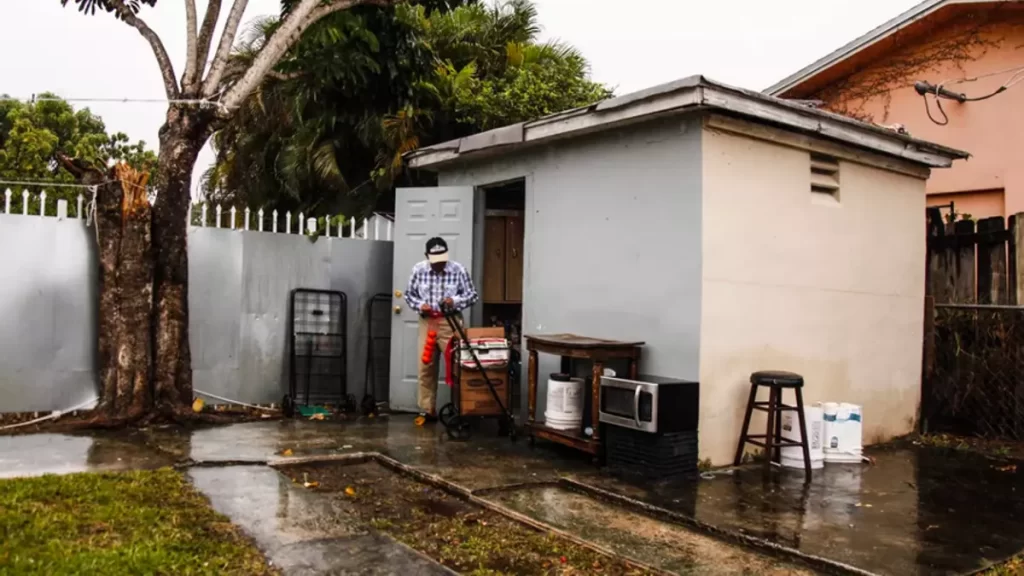
The typical ’efficiency’ in Miami is a small space rented as an apartment / NPR

14ymedio bigger14ymedio, Alejandro Mena/Juan Izquierdo, Miami/Havana, 30 March 2024  — “How much do you pay for rent?” The question has become a greeting among the Cubans of Miami, and the answer is almost always a stratospheric figure. The real estate issue hits newcomers and long-timers alike, but the possible solutions – moving to smaller spaces or peripheral cities – bring new complications: in the historic capital of exile you can have family and your culture, but you also have to work.

Iván, a 38-year-old man from Havana, knows this full well and lists his litany of bills to 14ymedio. Discounting electricity and other basic services, health insurance and his car, living in Broward County – north of Miami-Dade and once economical – costs him more than $2,400.

An apartment, like Ivan’s, has a room, a small kitchen, a washing machine and some furniture. To pay for it, he has to divide his day between two jobs – as a taxi driver and kitchen assistant – and still doesn’t have enough to pay the bills. He wants to move, but it’s not easy. “What’s the most shocking,” he says, “is how much moving costs. Renting a new apartment will cost me $2,000 a month, but to that you have to add two more months in advance. If you don’t have at least 6,000 dollars, you can’t move.”

Ivan has been in Florida for two years and knows the rules, but for newcomers the situation is really disconcerting, he says, especially since many still have to pay off the debt they contracted with the family member who got them out of Cuba, which can exceed $10,000. continue reading

“I used to explain that I didn’t live in Miami but in Broward, which was cheaper a few years ago. But now it’s the same”

“I used to explain that I didn’t live in Miami but in Broward, which was cheaper a few years ago. But now it’s the same,” says Ivan. Panic grows when leases expire and owners can raise the rent or remove the tenant. For those who want to move, the expiration of the lease is an opportunity to look for a cheaper place.

One option is the so-called “efficiency”, a space attached to a house or a larger building – such as a garage – enabled as a room and “with some comforts,” defines Iván. Its price ranges between 800 and 1,500 dollars, depending on its condition and the area. In Miramar, in Broward County, “some parts are still cheap,” he says, except for the west of the city, where the price increases are alarming. It is also “quite cheap” within the same county, like the city of Hollywood, but “there are neighborhoods where no one wants to live.”

An example is Little Haiti, where, of course, Haitians predominate. Many have been there since the 1960s, when they fled the Duvalier dictatorship, and it has a reputation for “not being safe.” The city of Opa-locka, in Miami-Dade County, has the same reputation, and rents there are also cheap, “although not much more.” “Normally people don’t want to go there,” Ivan says.

“When I meet someone, before asking him how he is, I’m interested in how much he’s paying for rent, for a car, etc. It’s already a whole issue among Cubans here,” Ivan says. Checking your phone and finding a notification of late payment, or verifying that your account is empty and the bank that loaned you the money to buy a car is requesting the monthly payment, is a recurring nightmare.

For the newcomer from Cuba, learning how the economic gears of his new life work is complicated

For the newcomer from Cuba, learning how the economic gears of his new life work is complicated. Often – Ivan describes – Cubans interpret the starting point “from such a price” as the definitive figure, only to find out that they must pay an amount higher than expected. “Many go to the apartment and say ’wow!’, but when they learn the price, plus the fees for garbage, internet, water, electricity, sewer… it’s crazy,” he concludes.

Having a friend, contacts or family members who have been in Florida for a long time is the best help. “Those who have lived here for a while know when a place is up for rent,” says Sara, a 47-year-old from Holguin who lives in Hialeah. Confidence in tenants has decreased a lot, especially with the recent waves of Cubans escaping from the Island.

“Many are afraid to rent because of fights and other reasons,” she says. In her case, she pays “below average” because she has been in the same apartment for years and knows the owners of the property. However, “someone who has just arrived always comes with a bad reputation.”

Property owners in Florida will now have legal support to evict tenants who illegally occupy their houses. A law signed by Governor Ron DeSantis decrees the “immediate expulsion” and the “punishment of criminals who seek to circumvent the system.”   [[Property owners in Florida will now have legal support to evict tenants who illegally occupy their houses]]

The law will go into effect on June 1, and the Florida Prosecutor’s Office pointed out that it was a measure against Washington’s inaction in the face of the migration crisis, which “has allowed millions of illegal immigrants to cross the border.” According to the authorities, a group of undocumented migrants has an “atrocious and brazen plan” to seize houses, so the law empowers the owner to request “the assistance of a sheriff” and proceed to eviction.

They can also go to the police if the matter involves a former tenant or one who is in a legal dispute with the owner, which presents certain dangers when interpreting the law. The Florida Rising organization warns that the law “may lead abusive owners to expel legal tenants.”

Hialeah, one of the cities in Florida where Cubans settle most frequently, was identified in 2023 as one of the worst for renting in the United States, despite its popularity among Cubans. “The city projects a modern face and is open to investments, while its residents, mainly employed in manufacturing, construction and maintenance, see how rents rise to unattainable prices for the average salaries,” said El Nuevo Herald last January.

The newspaper cited the complaints of several Cubans, who felt powerless before the real estate boom in the area, while rents exceeded $2,000

The newspaper cited the complaints of several Cubans, who felt powerless before the real estate boom in the area, while rents exceed $2,000 and continue to rise. The mayor of Hialeah himself, Esteban Bovo, told the newspaper that “a garage converted into an apartment” or “a mobile home” are scandalous solutions to the housing problem in his city and said that he trusted the “self-regulation of the market.”

Life, however, goes elsewhere: the last station of the real estate Way of the Cross are the vehicles illegally converted into “houses.” The local government is targeting those who park mobile homes or trailers – apartments on wheels – for an indefinite time in a parking lot. The authorities have promised a flood of fines and raids, but the measure – aimed at a mainly migrant population accustomed to a difficult life – does not seem destined to prosper.

Translated by Regina Anavy

____________

COLLABORATE WITH OUR WORKThe 14ymedio team is committed to practicing serious journalism that reflects Cuba’s reality in all its depth. Thank you for joining us on this long journey. We invite you to continue supporting us by becoming a member of 14ymedio now. Together we can continue transforming journalism in Cuba.

At 140 Pesos a Bunch, the Price of Carrots on the Streets of Havana Has Doubled in One Year

A “mountain” of carrots on Valle Street, near Trillo Park in Central Havana, on Saturday / 14ymedio

14ymedio bigger14ymedio, Natalia López Moya, Havana, March 30, 2024 — On Saturday morning a man leaned over a mountain of carrots placed on Valle Street, near Trillo Park in Central Havana. At 140 pesos a bunch, the price was slightly lower than what the city’s private vendors were charging but far from the 70 pesos that was the going rate in the same spot in late March 2023, or the 80 pesos at the market on 19th and B streets in Vedado, based on weekly figures compiled by 14ymedio. Known jokingly as “La Boutique,” the market on 19th and B streets can induce approach-avoidance conflict in Havana residents. It is common knowledge that, within its perimeter, you can find not only the highest produce prices in the city but also best quality and widest variety of merchandise, a stark contrast to the many stunted cassavas and sickly tomatoes for sale at other private markets and state-run establishments.

Fruits such as soursop and star apple, which are never seen in other stores, can frequently be found at La Boutique. Plastic shopping bags here are in short supply but can be had if you are willing to pay extra for them. Domestically grown grapes, mameyes for smoothies and tamarind paste stand ready to go into a refreshing juice drink. Imported heads of garlic, with cloves four times the size of the local variety, are among the items for sale here.

Nearby, there is no shortage of unlicensed vendors selling lobsters, shrimp and a wide variety of fish filets. There is also an abundance of drivers, ready to deliver a client’s purchases to his or her door, as well as currency exchangers who can swap out a bagfull of Cuban bills for a hundred dollars. In the midst of this vibrant and varied marketplace, it is the carrots that stand out. Clean, almost shiny, and without a trace of their leafy tops. Of course, their price might be double those found in the pushcarts and tiny public squares of the poorest neighborhoods.

Evolution of carrot prices from March 2023 until today / 14ymedio

This week, the price of carrots at 19th and B streets approached 150 pesos a bunch, almost double what it was a year ago but nowhere near the shocking peak of 600 pesos in October 2023. Though healthy and versatile, the carrot is not often used in everyday Cuban cooking, where vegetables, generally speaking, do not play a big role or are served only in small portions. Though continue reading

demand for tomatoes grows in the cooler months and the avocado is king of the table in summer, the carrot — a root vegetable rich in beta-carotene, vitamin A and antioxidants — does not enjoy the same popularity.

During the toughest years of the Special Period, Cubans devised recipes that substituted carrots for the food items that were not available. This is how the “candy coquito” was born. Grated carrots were used instead of wheat flour in puddings while the fruits that normally went into guava or mango jams were exchanged for this hardy tuber. Perhaps this is why many diners associate carrots with the hardships of that crisis as well as those of the current one.

For those who like the vegetable, however, its price might discourage them from buying it as often as they did before. The cost of four bunches of carrots at La Boutique is almost equivalent of a quarter of the monthly minimum wage and close to half of a Cuban retiree’s very small but very common 1,400-peso pension

That is also why, on Saturday, those who prefer to save a little went to the open-air market near Trillo Park, even though the merchandise was covered in dirt and lying on the ground as if it were garbage. They are ten pesos a bunch cheaper than those at 19th and B, which is not much. But if you do not watch what you spend, peso by peso, buying food can become impossible. For many Cubans, there is a red line that they dare not cross when it comes to expenses, even if that means eating much worse. That line is sometimes an intense carrot color.

____________

COLLABORATE WITH OUR WORKThe 14ymedio team is committed to practicing serious journalism that reflects Cuba’s reality in all its depth. Thank you for joining us on this long journey. We invite you to continue supporting us by becoming a member of 14ymedio now. Together we can continue transforming journalism in Cuba.

‘We’ve Been Without Water for 18 Days in the Santa Fe Neighborhood of Guanabacoa’

After several days without water, Santa Fe received a “pipa” (water truck) for the whole community / 14ymedio

14ymedio bigger14ymedio, Pedro Espinosa, Havana, 31 March 2024 — Without changing his tone of voice, an official of the government of Havana explained this Thursday to Joaquín, a 68-year-old retiree, why the neighborhood of Santa Fe, in Guanabacoa, had not received water for more than ten days. “The reservoirs are dry,” he said before hanging up the phone. With that data – and trying not to lose his temper – the old man went to the Communist Party, the municipal delegate and the leaders of his area. He received more laziness and a piece of advice: “Don’t go anywhere else.”

A “comrade” of the Communist Party at least was sincere, Joaquín tells 14ymedio. “I’m a militant but I’m not going to deceive you,” she confessed. “What am I going to tell you? One more lie? This has no solution. It’s disrespectful, because even if the reservoirs are dry, they should send pipas.”

The only “pipa” that reached Santa Fe did not have a hose to distribute the water / 14ymedio

The dry streets of Santa Fe, the discomfort of his family and the economic desperation in the face of the economic crisis of the Island have caused, as Joaquín defines it, the problems of the neighborhood to be “a chain.” The leaders, he believes, are mere “smoke-screens,” whose function is to kick the ball down the road and dodge anyone who asks for explanations. “That’s how they stay clean themselves,” he says, alluding to the Government and pointing his finger at the ceiling. continue reading

The restoration of the service – after Joaquín called Havana – was short-lived: “First thing in the morning this Friday they had already removed it,” he says. Another palliative measure – this Wednesday – was to send a pipa, but without a hose. In front of the impoverished Hino truck, rusty and decorated with a red ribbon “against the evil eye,” the neighbors gathered in a show that Joaquín found regrettable.

“Old men carrying water, one pipa for the whole block… it’s abusive,” he says. “People are drinking water even from puddles. They are not bathing because not everyone has a cistern. But, today, who can build a cistern? One  bag of cement costs 4,000 pesos on the street and 7,000 privately, and the aggregate costs 3,500.”

It doesn’t seem bad to him that, whoever can, pays for a private pipa. What he does not conceive is that the poor people of Santa Fe, who have been complaining about the difficulties in the supply for years, are sent a pipa by the authorities like this Wednesday’s. “If you’re going to send a pipa to a place where people have tanks upstairs – on the roofs – how are you going to send them one without a hose?” he asks.

Like many of the streets of Guanabacoa, those of Santa Fe are full of potholes / 14ymedio

Gloria, a 47-year-old housewife, can no longer be silent on the subject. Squeezed by the shortage, she has personally demanded a solution from the local Aqueduct officials. “There are children here,” is the first thing she says, “and they have been without water for 18 days.” The director’s response was that they didn’t turn on  the turbines because the water “is dirty.”

“They have very old turbines,” Gloria explains to this newspaper. “My proposal is that they put on the water one day yes and one day no. Yesterday they put it on for a moment. They have already turned it off. And the tremendous amount of clothes that many mothers were washing, for example? They don’t send pipas or anything. The delegate does not give answers. He says he doesn’t plan to complain because it doesn’t do any good.”

Others, for fear of possible reprisals or because they don’t believe that local leaders can solve anything, prefer to resign themselves. This is the case of Sandra, age 25, who knows that the neighbors of Santa Fe have tried to expose the situation, although she, “personally”, has not done anything. “It’s a critical situation,” she admits, to which blackouts and shortages are added. “But the problem of water is what affects us the most, not so much electricity. But hey,” she says shrugging her shoulders, “there are worse places.”

“Whoever can invent, invents,” is the motto of Jorge, a 32-year-old mechanic. But the saying has a coda: “He who can’t invent gets on board.” They are the most in Santa Fe. Luckily, he says, his house is on a kind of “border”: “Going up it’s worse,” he says, pointing to a group of houses where the water does not reach because “it has no strength.” When a pipa arrives, they are the ones that carry the most water buckets.

“But, today, who can build a cistern? The cement bag is at 4,000 pesos on the street and 7,000 in a private company, and the aggregate costs 3,500”

Like many of the streets of Guanabacoa, those of Santa Fe are full of potholes. The drought is noticed even by the children, who play at spinning tops near Jorge’s house. One of them unrolls the string and throws the toy on the asphalt, which leaves a wake of dust as it “dances.”

In the living room of his house, Pedro – retired at age 75 – watches the midday news. He likes to see “the part on Ukraine,” but when the national newscasters come on and announce the sending of “so many water pumps” he loses his patience. “Where are all those teams and why don’t any of those pumps get to Santa Fe? They start saying that they are going to give pumps to everyone because there is a lot of breakage. And what about us?” he asks.

From the kitchen, his daughter explains what she has been told: “There is a problem because a pump was blocked and the water is cloudy.” Disillusioned, Pedro returns to his problems: “I don’t know,” he says, “I’m tired of scratching and not being able to bathe.”

The reservoirs, the pumps, the filter, the dirt, the fuel, the broken equipment… the residents of Santa Fe no longer know what to believe. In the mouths of leaders whom no one trusts, multiple causes are attributed to the same phenomenon. In the hard way, families have learned that leaders only react when the same vessels they use to conserve water resonate during a cacerolazo*, going out into the street and banging on pots and pans.

*Translator’s note: Cacerolazo [from ’cacerola’ – saucepan — and the source of ’casserole’’ in English] is the word for beating on pots and pans, a common form of protest in much of Latin America.

Translated by Regina Anavy

____________

COLLABORATE WITH OUR WORKThe 14ymedio team is committed to practicing serious journalism that reflects Cuba’s reality in all its depth. Thank you for joining us on this long journey. We invite you to continue supporting us by becoming a member of 14ymedio now. Together we can continue transforming journalism in Cuba.
Cuba Receives More Than 90,000 Tons of Oil From Russia

The tanker NS Concord arrived in the port of Matanzas with more than 90,000 tons of Russian oil / / @EnergiaMinasCub/X

14ymedio biggerEFE/14ymedio, Havana, 31 March 2024 — Cuba received a ship from Russia with more than 90,000 tons of oil to alleviate the Island’s energy crisis, the Ministry of Energy and Mines reported on Saturday. The NS Concord, under the flag of Gabon, arrived at the Matanzas base in the  west of the country. This is the second shipment of crude oil from Moscow to Havana after the one made on March 17, when 650,000 barrels of crude oil arrived – valued at almost 50 million dollars.

Cuba is going through an energy crisis reflected in interruptions in the electricity service that have lasted more than 10 hours a day.

These shipments occur after several high-level official visits between the two countries. The most recent was that of the Minister of Foreign Trade, Ricardo Cabrisas, to the Eurasian country.

During Cabrisas’ stay in Moscow, Russia granted a new loan to Havana – for an undisclosed amount – to “guarantee the stable supply of oil, petroleum products, wheat and fertilizers,” according to the state agency Prensa Latina. continue reading

Due to the shortage of fuel, the Corral Falso gas station in Guanabacoa opens at 12 pm / 14ymedio

The Cuban government has recently reported that one of the problems in electricity generation is explained by the drop in crude oil imports from allied countries. Although the Island’s government has not indicated them by name, maritime traffic tracking data point to Venezuela and Russia.

Jorge Piñón, an energy expert at the University of Texas, points out that “Cuba is benefiting, like all the other buyers of the Russian Urals crude, from buying a very good quality crude at a discount. Russia was previously selling the Europe Brent crude oil at a premium.”

Piñón explains that Russia has high crude oil inventories due to the sanctions imposed by the West for its invasion of Ukraine. He emphasizes that this has led the Kremlin to “sell he Brent crude at a discount of 8 to 12 dollars per barrel,” having India and China among the main customers.

The Russian Urals crude, Piñón says, is “sold at a discount and at a subsidized price in international markets.” However, “the problem is liquidity due to the few buyers who take the risk of going against the sanctions. The Urals is sold today at $77.43, a discount of $9.54 from the Brent.”

The expert from the University of Texas says that on April 5, another tanker, the Nordic, will arrive in Matanzas, with 475,000 barrels of Russian oil.

According to data offered by Piñón, like the tanker NS Concord, the Nordic set sail from the Russian port of Ust-Luga and made stops in Senegal and Cape Verde. “We are sure that it is one of many Russian oil tankers that are on hold, making technical stops at several ports, to find a final buyer/destination.”

Tourists of the Russian company Rosnetf upon their arrival on the Island / Granma

This Saturday, Havanatur and the International Group of Tour Operators and Travel Agents reported the arrival on the Island of the first flight of this season of workers from the Russian oil company Rosnetf. According to Havanatur, the Nordwind airline transported 389 passengers to “develop ’stay’ programs.” This is the first of three groups of the oil company for the spring, and “another four flights will be completed for the fall.”

For a decade, Havanatur has been offering Rosnetf workers stays to rest and have a medical check-up. The official newspaper Granma emphasizes that the agreement with the Russian company began on the Island in 2014 and “selected the Varadero spa, the main Cuban sun and beach tourist destination, where they enjoy outdoor physical activities, excursions and medical check-ups.”

The Russian workers were received at the Juan Gualberto Gómez de Matanzas international terminal, by the first deputy minister of the Ministry of Tourism, María del Carmen Orellana, the general director of Havanatur, Yoelkis Salazar, and other managers.

Translated by Regina Anavy

____________

COLLABORATE WITH OUR WORKThe 14ymedio team is committed to practicing serious journalism that reflects Cuba’s reality in all its depth. Thank you for joining us on this long journey. We invite you to continue supporting us by becoming a member of 14ymedio now. Together we can continue transforming journalism in Cuba.
A Way of the Cross Marked by Emigration and Tensions with the Communist Party of Cuba

The image of the Nazarene runs through Aguiar, under the poster of the municipal committee of the Communist Party / 14ymedio

14ymedio bigger14ymedio, Juan Diego Rodríguez / Juan Izquierdo, Havana, 30 March 2024 — The most significant station of the Way of the Cross held in Old Havana this Friday, when dozens of Catholics took to the streets under the tense gaze of the Police, occurred on the block of the municipal committee of the Communist Party. The image of the Nazarene went through Aguiar Street and passed under the red and black sign of the same institution that restricted Holy Week with prohibitions in several provinces of the Island.

It was a procession with few faithful and a lot of vigilance. Presided over by Cardinal Juan García, there were more members of the clergy – Franciscan friars, seminarians and missionaries of the Charity of Teresa of Calcutta – and of the security forces than there were the believers who participated in it. However, the religious figures were able to leave at 6:00 pm from the parish of the Christ of the Good Journey to Cathedral Square.

Believers and officers were asked to “give space” to the figures and those who led the procession. “Why do they have so much security if people keep cutting through it,” one of the clerics said sarcastically. Before starting the procession, the priests thanked the “photographers, cameramen and the press” for their presence. “What a pleasure that you are here, because it is a pleasure to see the faith of the people,” they added.

Closely watched by the Police, the Way of the Cross procession leaves from the Buenviaje Church of Christ / 14ymedio

El Cristo and La Dolorosa, on the shoulders of the well-dressed parishioners, traveled around the damaged streets of Old Havana. Behind the figures, a bus with a bullhorn amplified the prayers of the cardinal and the faithful, who asked for “forgiveness” for the Cuban people. The reflections on the Passion of Christ – usual in the celebration – put the emphasis on comparing, although subtly, the suffering of Cubans with that of the first Christians. continue reading

It attributed to the soldiers who crucified Christ an abuse of their “right to coercion”; it alluded to the “spectacle of suffering” that becomes customary. Believers were asked to “approach the persecuted” and hear “the subtle voice of conscience” about the imprisoned. “The Way of the Cross of bitterness is not a civil act but a religious act,” the priests said aloud, and among them were voices critical of the regime such as Jorge Luis Pérez Soto and Kenny Fernández.

Priest Kenny Fernández in the foreground along with other members of the clergy in Cathedral Square / 14ymedio

More people joined when night fell and the symbolic body of Christ reached the Church of the Angel to be buried. Decorated with garlands and lights strung on balconies, the streets that lead to the Plaza del Ángel – in addition to the concert band that accompanied the parishioners – animated the procession.

Decimated by the emigration of a large part of the young Catholics of Havana and by the population in general, this Friday’s Way of the Cross was less emotional than that of previous years. The tensions between the Communist Party and several parish priests, such as the Dominican Lester Zayas, prevented the local Via Crucisis, smaller than the one held in Old Havana, from being carried out.

The procession marches, now at night, towards the Church of the Angel, where the Holy Burial is celebrated / 14ymedio

Interviewed by EFE about the limitations imposed on the parish of the Sacred Heart in El Vedado, which he attends, Zayas again said that his sermons on the Cuban crisis made the authorities uncomfortable and are the cause of the prohibition. “People say that priests can’t be involved in politics. And it’s true, if by politics we mean partisan politics, but if we understand politics as something social, then it is possible to talk about the Gospel. A priest can’t stand at the pulpit and talk about the Heaven that is going to arrive if we can’t transform what happens on Earth, where we have children who go to school without breakfast because they don’t have milk,” he said.

He added that what happened this week in several parishes throughout Cuba – especially in the dioceses of Santa Clara, Havana and Bayamo-Manzanillo – is an “attack on religious freedom.” However, the Conference of Catholic Bishops of Cuba announced that 111 celebrations, including Good Friday and Easter Sunday, were authorized by the Communist Party.

Holy Week has stirred up the unease of Cuban Catholics with the Government. While several priests, such as Fernández and Zayas in Havana, and Castor Álvarez and Alberto Reyes in Camagüey defend their right to criticize – as citizens and clerics – the situation on the Island, the Bishops’ Conference has remained in a certain lethargy and has not issued pastoral letters that, at another time, were their instrument to urge the rulers to change.

The frustrated negotiations for the release of political prisoners, the Vatican’s approaches to Miguel Díaz-Canel and the cordiality of the ecclesiastical leadership with the authorities of the Government and the Party make a critical turn of the bishops unlikely. Despite this, some isolated voices of the Conference, such as that of the Archbishop of Santiago de Cuba, Dionisio García, have spoken out about the poverty, shortages and blackouts that led to the March 17 protests, with a focus on his archdiocese.

Translated by Regina Anavy

____________

COLLABORATE WITH OUR WORKThe 14ymedio team is committed to practicing serious journalism that reflects Cuba’s reality in all its depth. Thank you for joining us on this long journey. We invite you to continue supporting us by becoming a member of 14ymedio now. Together we can continue transforming journalism in Cuba.
The Sea Returns Havana’s Garbage and More to the Malecon

When the sea withdraws, a whole layer of filth covers the nearest streets / 14ymedio

14ymedio bigger14ymedio, Juan Diego Rodríguez, Havana, 30 March 2024 — “What comes from the sea, returns to the sea,” is a maxim that the residents of San Leopoldo, a Havana neighborhood bordering the Malecón, know very well. It’s a low zone in this area of the Cuban capital where there are frequent coastal floods. The sewers, in addition to draining the water, bring into homes the odor of saltwater mixed with trash, and the wastewater carries crabs that are skinny and pale, a result of a contaminated coastline that has few natural nutrients.

Almost a hundred years ago, after the construction of the wall where so many habaneros go to refresh themselves at night, the rocks were covered and the waves diverted. Areas that were filled in until the end of the 19th century were pure coastline. A good part of those areas snatched from the sea are once again under its control when storms and hurricanes hit the Cuban capital. The water rises in a few hours, floods Maceo Park and rushes through the streets of Lealtad, Escobar, Perseverancia and Reina into Belascoaín. Nothing can stop it.

With the penetrations of the sea comes the floating garbage that used to rest on the asphalt. It navigates the pieces of wood, circumvents the plastic bottles and sends the plastic bags with remnants of food and dirt sailing from the corners. The garbage containers are converted into ships, dirty and cracked gondolas that go where the waters carry them. But the waste that people have been throwing off the other side of the wall also returns.

The water rises in a few hours, flooding Maceo Park and rushes through the streets of Lealtad, Escobar, Perseverancia  covering Belascoaín street  

When the sea withdraws, a whole layer of filth covers the nearest streets. Most of the rubbish is concentrated In front of the Malecón wall, in the area from Gervasio to Galiano. Algae that is drying, all kinds of plastic, beer cans where the brands are no longer distinguishable, children’s flip-flops that the waves had taken away, and some inflated and pestilent bags that no one dares to even look at for fear of what they have inside. continue reading

Since last weekend’s storm, the sea brought back everything under the sun to the residents of San Leopoldo, along with the garbage that it removed from the street, which had been accumulating for weeks without the Communals Company coming to pick it up. It is as if nature were returning the offal to them and, by the way, clarifying to them that a city’s trash always returns to its streets, no matter how much the wall protects them.

Translated by Regina Anavy

____________

COLLABORATE WITH OUR WORKThe 14ymedio team is committed to practicing serious journalism that reflects Cuba’s reality in all its depth. Thank you for joining us on this long journey. We invite you to continue supporting us by becoming a member of 14ymedio now. Together we can continue transforming journalism in Cuba.

Cubans Arrested on March 17 Increases to 41, According to Prisoners Defenders

The number of people who have been arrested for protesting on March 17th continues to increase

14ymedio bigger14ymedio, Havana, 30 March 2024 — The NGO Prisoners Defenders (PD) reported on Saturday that, according to its record, 41 people were arrested in Cuba after the protests on 17 March 2024 (’17M’), of which six were later released. The provinces of Holguín and Santiago de Cuba, with 13 and 12 arrested, top the list, followed by Havana (five), Artemisa (three) and Cienfuegos (two).   Last weekend, the organization, based in Madrid, reported that, after the demonstrations of 17M, which protested the lack of food, electricity and freedom, the Police had arrested 38 people but warned that as their investigations progressed, the number could increase.

The list published this Saturday also includes detainees in the provinces of Granma, Guantánamo, Sancti Spíritus, Villa Clara, Las Tunas and Matanzas, with one case in each. PD also points out that six people have already been released since the protests.

On March 23, in Santiago de Cuba, 18-year-old Cristian Kindelán was arrested for protesting in the Carretera del Morro area. Hours later, his father, Asdrúbal Kindelán Garbey, was also arrested when he tried to report the situation on Facebook in front of the detention center in the Altos de Versailles. continue reading

Asdrúbal’s mother and Cristian’s grandmother, Teresa Garbey, explained what happened on social networks and said that her grandson was arrested because he appeared in a video of the protests. When she asked “Major Oscar” of the Ministry of the Interior, the officer responded that he “didn’t have to give an explanation to arrest someone.”

Other organizations offer different figures on the number of detainees after 17M. As of March 19, Cubalex had counted 11 prisoners in El Cobre (Santiago de Cuba), and Justicia 11J pointed out the same figure in Bayamo, capital of Granma province.

After long days of blackouts, on March 17 and 18 there were protests in several Cuban provinces. Citizens demanded “Freedom,” but the screams of “We are hungry” and “We want current” were also heard.

Translated by Regina Anavy

____________

COLLABORATE WITH OUR WORKThe 14ymedio team is committed to practicing serious journalism that reflects Cuba’s reality in all its depth. Thank you for joining us on this long journey. We invite you to continue supporting us by becoming a member of 14ymedio now. Together we can continue transforming journalism in Cuba.