Cuba’s State Newspaper Granma Repeats Fidel Castro’s Advice to Hugo Chávez: ‘Don’t Resign! Don’t Give Up!’

María Corina Machado says that Maduro has the support only of Venezuela’s high military command, “very reduced”


Fidel Castro and Hugo Chávez, in an archive image / Cubadebate

14ymedio bigger14ymedio, Madrid, August 8, 2024 — The Cuban ruling press remains committed to supporting the position of Nicolás Maduro’s regime regarding the result of the elections in Venezuela, criticized by a large part of the international community, including the moderate left. A note published on Tuesday by the State newspaper Granma calls, indirectly, for the Venezuelan president to stay in power, remembering Fidel Castro’s reaction after the coup d’état against Hugo Chávez in 2002. “Don’t resign! Don’t give up!” Castro told Chávez in the early morning of April 12 of that year, when he was able to contact him “after hours of unsuccessful attempts.”

Granma alludes to this alleged conversation, citing Chávez’s own story: “’Don’t go immolate yourself,’ he told me. ’Save your people and save yourself as much as you can; this doesn’t end here.’ And in the end he told me: ‘Here your people are waiting for you, here I am waiting for you. Save yourself, save yourself. I’ll wait for you here.'”

At that time, not mentioned by Granma, it was two years since the signing of the first bilateral agreement between the two countries, which guaranteed Cuba a constant supply of oil, vital for leaving the Special Period behind. This opened the door to the incursion of Cubans into the Government of Venezuela. In fact, after the failed 2002 coup d’état, according to the authors of “The Consented Invasion” (Debate, 2019), Chávez “decided to entrust the Cubans with intelligence tasks to shield him against future military conspiracies.” continue reading

Granma puts “the sanctimonious Latin American progressives and the media of the right” in the same bag

Granma argues that the then Venezuelan president “represented that ’bad example’ that the far right and the empire attack in the region,” and that “Fidel’s constant support and infallible advice in those dark times allowed Chávez to reset and prevent the formula they had tested against Allende from being fruitful in Venezuela.”

Nicolás Maduro placed the current Chilean president, Gabriel Boric, with those who overthrew Salvador Allende* and referred to him as a “pinochetista and coup leader.” Shortly before, Boric had declared at a press conference that he had no doubt that the Maduro regime “has attempted to commit fraud.”

Far from approaching Boric’s leftist position and following the line of Caracas, another note from Granma puts “the sanctimonious Latin American progressives and the media of the right” in the same bag. Because their focus is on the presidential elections of Venezuela, they are ignoring “the genocide in Gaza, the catastrophic collapse of Ukraine, the danger of a Third World War and the climate catastrophe.”

María Corina Machado, during her interview with several independent media / Screen Capture / Tal Cual

Another leftist, the special adviser to the Brazilian Presidency for international relations, Celso Amorim, made statements on Wednesday that also question Maduro’s position of not disclosing the voting records. “I think he understands that there will be a moment when people are fed up, which is not good for him. And if there is fatigue, there is a risk that Venezuela will end up with two presidents, or none,” said the former Brazilian Foreign Minister in an interview with the Globonews television channel as quoted by the EFE agency. The special advisor to President Luiz Inácio Lula da Silva said that he considers it “very regrettable that the electoral records” have not appeared and that he communicated that position to Maduro in the long conversation, of almost an hour, they had the day after the July 28 presidential elections in Venezuela.

He also said that he does not understand why Maduro decided to hand over the records to the Supreme Court of Justice instead of disclosing them: “I have to confess my ignorance because I don’t quite understand what Justice has to do with the records.”

Amorim expressed his fear about a worsening of the situation in Venezuela due to the deep division that the country is experiencing. Nevertheless, he clarified that he prefers not to use the expression “civil war” because it frightens him. “The worst case scenario is that we stay in this situation of condemning one or condemning the other. I’m very afraid that there may be a serious conflict. I don’t want to use the expression ’civil war,’ but I’m very afraid,” were his words.

“I’m very afraid that there may be a serious conflict. I don’t want to use the expression ’civil war,’ but I’m very afraid”

According to Amorim, Brazil, Colombia and Mexico came together to help Venezuela find a solution to the crisis; “because of the deep division that exists in the Caribbean country,” mediation will be necessary for the Government and the opposition to dialogue.

Opposition leader María Corina Machado was asked about this initiative on Wednesday, in a joint interview with several Venezuelan and Colombian independent media. “Unquestionably they have a channel of communication that others do not have with the regime, and I think they have remained in a prudent enough position to be able to maintain this dialogue,” says Machado, who does not rule out that facilitators from other countries may join.

However, regarding the leaks by sources published in some media, such as the Spanish newspaper El País, that allude to a possible pact between the authorities of the regime and the opposition but excluding her from it, Machado says that it is “pure speculation.” She added, “I have not heard that nor was it even insinuated by any of the people with whom I have spoken inside and outside the country. In the end, the leaders of the Venezuelans are chosen by Venezuelans; they are not chosen by the international community.”

The opposition leader also stated, in response to the questions of local journalists, that Maduro must understand that “his best option” is to “enter into a negotiation” with the anti-chavista majority, which insists on the victory of its standard-bearer, Edmundo González Urrutia.

Machado asked Amorim to “help them think” about new diplomatic initiatives to increase the pressure on the Government

In the opinion of Machado, González Urrutia’s main supporter, that dialogue process has to be based on “respect for the popular sovereignty exercised on July 28,” and although there is “still” no negotiation, there is “absolute willingness” on the part of the majority opposition, grouped under the Democratic Unitary Platform (PUD).

She also said that, in those conversations, “guarantees and incentives would be offered so that, effectively, the transition flows in an orderly and stable way.” Although the call for a negotiation is not new, Machado reiterated it when the PUD denounced a “fraud” by the National Electoral Council (CNE). The CNE proclaimed Maduro as president-elect with 51.95% of the votes, and reported that González Urrutia obtained 43.18%, which the anti-chavista sector rejects, claiming to have 83.5% of the votes that demonstrate the victory of its standard-bearer.

Shortly before the interview, in a conversation with the president of Costa Rica, Rodrigo Chaves, Machado affirmed that Maduro has the support only of the military high command, and that “they are not many.” “The only thing he has left is a very small number of military personnel from the high command. Even in our armed forces, our police forces, the PSUV [the ruling party], they are not with him, because they don’t want violence and they don’t want a lie,” said the former deputy.

Machado asked Amorim to “help them think” of new diplomatic initiatives to increase pressure on the Government, which, in view of the protests against the announced electoral result, ordered maximum police and military control to face what they consider “a cyber coup d’état.”

*Translator’s note: Salvador Allende, the democratically-elected leftist president of Chile, was overthrown in 1973 by a military coup led by General Augusto Pinochet.

Translated by Regina Anavy

____________

COLLABORATE WITH OUR WORKThe 14ymedio team is committed to practicing serious journalism that reflects Cuba’s reality in all its depth. Thank you for joining us on this long journey. We invite you to continue supporting us by becoming a member of 14ymedio now. Together we can continue transforming journalism in Cuba.

Eight Cuban Rafters Who Were Shipwrecked After an Illegal Exit From Pinar Del Río Are Still Missing

The lifeless body of Ana Elis Gázquez Vargas was found on the coast of the town of Cortés, belonging to the municipality of Sandino / Facebook / Ana Elis Gazquez Vargas

14ymedio bigger14ymedio, Havana, August 7, 2024 — Amaury Miguel Suárez Torres and his stepfather were the only survivors of the shipwreck of a raft in which, along with nine other Cubans, they sailed on July 14 from La Coloma beach, in Pinar del Río, heading to the United States. Rescued by the Cuban authorities, both have third-degree burns and are receiving medical attention in a hospital in the province, influencer Niover Licea reported on social networks. The raft, according to Licea, “began to take on water” in the middle of the journey, but the crew members, mostly residents of the Alonso Rojas People’s Council, decided to continue. In the early hours of the same day, the boat crashed into a reef and the rafters fell into the sea.

Suárez Torres was traveling with his 20-year-old girlfriend Ana Elis Gázquez Vargas, whose lifeless body was found on July 30 on the coast of the town of Cortés, belonging to the municipality of Sandino. The young woman, originally from Consolación del Sur, died from dehydration. According to the forensic report, when they found her body she had already been dead for a week and was identified by her relatives thanks to her tattoos.

Gázquez’s mother had asked her not to make the journey, but the young woman, tired of the situation on the Island, the economic crisis, the constant blackouts, decided to “set sail,” explains the influencer. Gázquez’s brother also shared on his social networks his regret for the young woman’s death, but did not offer more details. continue reading

The raft on which Amaury Miguel Suárez Torres and Ana Elis Gázquez Vargas were trying to leave the Island was shipwrecked / Facebook / Amaury Miguel Suárez Torres

Nothing is known about the other crew members except that several were carrying cash from the sale of their properties to pay for the travel expenses from Mexico, where they were probably going to land, to the United States. There are other records of irregular departures through La Coloma. In September 2022, two U.S. residents who had arrived at the beach in a speedboat to allegedly pick up several Cubans were arrested.

The Border Guards waited for the rafters, “camouflaged in the grass,” and confronted them, leaving several wounded, according to data from Cubans around the World.

The Ministry of the Interior also reported the discovery last July of a non-motorized boat on the beach of the Villa LindaMar Hotel, in Cayo Largo del Sur, and a Zodiac, also without an engine, in the Juan Claro canal, in the municipality of Martí, which belongs to the province of Matanzas.

According to a recent report by the U.S. Customs and Border Protection Office (CBP), 17,563 Cubans arrived in the United States in June across all borders, the smallest monthly number in the current fiscal year 2024 that began last October.

Last Wednesday, Cuba received 32 rafters deported by the U.S. Coast Guard and, with them, 899 have been deported to the Island from different countries in 56 returns so far in 2024, official media reported.

Translated by Regina Anavy

____________

COLLABORATE WITH OUR WORKThe 14ymedio team is committed to practicing serious journalism that reflects Cuba’s reality in all its depth. Thank you for joining us on this long journey. We invite you to continue supporting us by becoming a member of 14ymedio now. Together we can continue transforming journalism in Cuba.

The Prosecutor’s Office Investigates Machado for “Instigating Insurrection” With Her Letter to the Venezuelan Military

The United States does not yet recognize González Urrutia as president of Venezuela, but it does recognize him as the winner of the elections

Archive photograph of the president of the National Electoral Council of Venezuela, Elvis Amoroso/ EFE/Ronald Peña R.]

14ymedio bigger14ymedio/EFE, Madrid/Caracas, 6 August 2024 — The Venezuelan Prosecutor’s Office announced on Monday that it will open a criminal investigation against María Corina Machado and the opposition presidential candidate, Edmundo González Urrutia, for “instigation to insurrection,” after both called on the police and military to stop the “repression” ordered by the president, Nicolás Maduro.

The accusation has been quickly seconded by the Cuban regime, which calls the demonstrations in the Venezuelan streets a “reissue of an attempted coup d’état using Guaidó’s formula in 2019.”

It is no coincidence that, in the same vein, the official newspaper Granma published the statements of Vladimir Padrino, Minister of Defense, reaffirming “the most absolute loyalty and unconditional support for Nicolás Maduro,” whom he considers “legitimately re-elected by the people and proclaimed by the electoral power.” It is vital for the Venezuelan regime to guarantee the support of the military, and thus the president announced promotions of officers this Sunday. “There will be peace in this country,” says Granma, quoting Vladimir Padrino.

Padrino is, precisely, one of the military figures that Nicolás Maduro distrusts, according to a note published by El Nuevo Herald. “They have him corralled; they are watching him everywhere,” Maduro’s former head of intelligence, Manuel Christopher Figuera, who worked closely with Padrino before going into exile, told a Miami newspaper. continue reading

“Padrino is the one who is in a position to act; he has the highest authority over the monopoly of the nation’s weapons”

According to this source, the Venezuelan president has resorted to Cuban agents in order to control members of the Army who could “have doubts. Padrino is the one who is in a position to act, he has the highest authority over the monopoly of the nation’s weapons, but he is also the only one who could independently negotiate a way out, so he won’t be killed,” Figuera said.

In a statement, the Attorney General, Tarek William Saab, indicated that investigations will begin in the face of this “open incitement” to the uniformed to “disobey the laws,” given that the opposition leaders asked them to “respect” the results of the July 28 elections that, they say, result in González Urrutia being the winner and not Maduro, though the latter was announced by the National Electoral Council (CNE).

“The aforementioned pronouncement evidences the alleged commission of the crimes of usurpation of functions, dissemination of false information to cause anxiety, instigation to the disobedience of the laws, instigation to insurrection, criminal association and conspiracy,” says the brief, published on X by the prosecutor.

According to the regime, Machado and González Urrutia act “outside the Constitution and the Law” when talking about a winner other than Maduro in the elections in this “irritating document.”

The letter from the opposition, published on Monday, reiterates the complaint of electoral fraud by the Government and denounces the repression unleashed in response to the protests against Maduro’s proclamation, which has also been questioned by a large part of the international community.

“We are in close contact with our partners in the region, especially Brazil, Mexico and Colombia, to find a way forward”

In this regard, the United States clarified on Monday that, although it has recognized Edmundo González Urrutia as the winner of the elections, it still does not recognize him as president of the country.

“We are not at that point yet. We are in close contact with our partners in the region, especially Brazil, Mexico and Colombia, to find a way forward,” explained State Department spokesman Matthew Miller in a statement. Miller also urged the ruling party and the opposition to “start discussions for a peaceful transition back to democracy.”

The spokesman reiterated the call for the CNE, which proclaimed the victory of President Nicolás Maduro in the elections of July 28 without providing any evidence, to immediately publish the tally sheets with the results.

The president of the CNE, Elvis Amoroso, handed over the alleged records of scrutiny of the presidential elections to the Supreme Court of Justice (TSJ) on Monday. The president of the highest court, Caryslia Rodríguez, a chavista, indicated that they will begin the “process of expert opinion of the recorded material” for a period of up to 15 days, which can be extendable.

She also said that the presidential candidates, as well as representatives of the political parties, will be summoned to record all the “electoral instruments” that are in their hands, as well as to respond to an interrogation.

Among those cited are President Maduro, as well as the opposition leader González Urrutia. In addition, the representative of the opposition Bureau of Democratic Unity (now Democratic Unity Platform, PUD), José Luis Cartaya; the general secretary of the Movement for Venezuela (MPV), Simón Calzadilla; the governor of the state of Zulia (west), Manuel Rosales; and the candidate Enrique Márquez were summoned. Also included are the Chavistas Diosdado Cabello, Hipólito Abreu, Ilenia Medina, Ricardo Sánchez and Didalco Bolívar.

The spokesman for the U.S. State Department stressed that any evidence presented by the CNE will require “a thorough scrutiny”

She also requested “all the elements” that prove “the reported cyber attack against the computer system” of the institution, which represented an “impediment for the timely transmission of electoral results.”

The spokesman for the U.S. State Department stressed that any evidence presented by the CNE will require “a thorough scrutiny” due to the “potential for alteration and manipulation” a week after the elections took place.

U.S. Secretary of State Antony Blinken recognized González Urrutia’s electoral victory on August 1, giving veracity to the voting records obtained by the opposition platform that would give an overwhelming victory to its candidate.

The presidents of the largest left-wing powers of the region, Luiz Inácio Lula da Silva of Brazil, Gustavo Petro of Colombia and Andrés Manuel López Obrador of Mexico asked the CNE in a joint statement to make the records public and that there be a verification of the results. However, their position may hide, according to some analysts, the intention to annul the elections and help Maduro in a negotiated exit.

Meanwhile, at least 91 teenagers have been arrested in Venezuela in the last week. Foro Penal, an association of lawyers in defense of political prisoners in Venezuela, said on X that these arrests have been verified and are part of the total of 1,010 people behind bars for demonstrating, in almost all regions of the country, in rejection of Maduro’s proclamation.

In this regard, the general coordinator of the NGO Cecodap, Carlos Trapani, explained to EFE that these arrests have shown patterns contrary to legal regulations. The detention centers are police commands or military headquarters instead of specialized spaces for the care of minors.

Likewise, he continued, another feature that is repeated is the violation of the periods established in terms of the appearance in court of minors, which should be carried out no more than 24 hours from the time of arrest. Some minors have been detained up to six days without being able to know the accusations against them.

The relatives of the minors have claimed, according to Trapani, that the arrests occurred with excessive physical and psychological violence and that the detainees have not been allowed to communicate with their families or defense attorneys.

According to the Network for Human Rights of Children and Adolescents of Venezuela, a 15-year-old teenager died due to the “excessive use of force” / Voice of America

The lawyer said that, according to Venezuelan legislation, a person under the age of 14 cannot be charged, and he drew attention to a case of a 13-year-old boy who, according to human rights organizations, is among those apprehended. According to the Network for the Human Rights of Children and Adolescents of Venezuela, a 15-year-old teenager died due to the “excessive use of force by the officials who contained the demonstration” in which he participated, in the state of Zulia, on the border with Colombia.

Voice of America also reported that on Monday, at the Simón Bolívar de Maiquetía international airport in Caracas, “multiple forced disappearances of Venezuelans and expulsions of foreigners” have occurred.

At least 14 journalists were deported from Venezuela between July 25 and August 2, as reported on X by the National Union of Press Workers. Most of the journalists were not allowed to enter in Maiquetía and were returned to their countries of origin. Others were arrested by security forces even in their hotels, and at police and military checkpoints. They were taken to the airport and expelled according to their testimonies, press accounts and reports from the governments of their respective countries.

In total, there have been at least 1,010 arrests and 11 deaths from the repression during the post-election crisis in Venezuela, according to reports from Foro Penal.

Translated by Regina Anavy

____________

COLLABORATE WITH OUR WORKThe 14ymedio team is committed to practicing serious journalism that reflects Cuba’s reality in all its depth. Thank you for joining us on this long journey. We invite you to continue supporting us by becoming a member of 14ymedio now. Together we can continue transforming journalism in Cuba.

With Their Requests to the Prosecutor’s Office To Resolve a Robbery, Some Freemasons Facilitate the Government’s Interference

A formal complaint to the Prosecutor’s Office and two ministries ask to review the case of the theft of $19,000 from the Llansó Masonic Foundation

In the center, José Ramón Viñas Alonso, who presides over the Llansó Asylum Trust and accused Mario Urquía Carreño after the theft of money / Supreme Council of Degree 33 for the Republic of Cuba

14ymedio bigger14ymedio, Juan Izquierdo, Havana, August 6, 2024 — The Mason master Hermes Fernández – one of those who participated in the protest of July 23 in the Gran Logia in Havana – addressed a formal complaint to the Cuban Prosecutor’s Office and the Ministries of the Interior and Justice for the little attention of the authorities to the fact that triggered the current crisis of Freemasonry on the Island: the theft of $19,000 from the office of Grand Master Mario Urquía Carreño.

The document, which has circulated among the Freemasons of the country and to which 14ymedio had access, presents a chronology of the crisis from last January, when the theft occurred, until the recent meeting of the members of the brotherhood with Caridad Diego, head of the Office of Religious Affairs of the Communist Party.

Fernández assumes that the text will contradict Diego, who – he says – reprimanded the Freemasons for protesting against Urquía Carreño: “Far from recognizing that (the authorities) have no right to interfere in matters between Freemasons, once again they make use of the irrationality and illegality of their acts by asking us not to demonstrate and that we let them work.” continue reading

“No Masonic legal solutions are offered in the ’complaint,’ but, once again, they seek the intervention of the Castro authorities”

For the writer and exiled Mason, Gustavo Pardo, Fernández’s claim sends a wrong message about the state of the brotherhood, since, while denouncing the interference of the regime, they turn to the regime to resolve the crisis. “No Masonic legal solutions are offered in the complaint,’ but, once again, they seek the intervention of the Castro authorities,” he argues. Turning to the State as a “great guru” to resolve their internal affairs is a strategic mistake, says Pardo.

The evidence of this submission is the very header of the letter: “Year 66 of the Revolution,” an unnecessary formula in a document issued by a Freemason, which seems aimed at ingratiating itself with its recipients. Fernández first appeals to the Constitution – whose articles he cites – to support his right to complain and the duty of the institutions to respond to it.

The center of his argument is that the money remains missing and that Urquía Carreño committed himself, not only to the Freemasons but also to the Police, to return it. It is the coffers of the Masonic National Foundation – the source of the funds – that has suffered the most, and that shortfall cannot go unanswered, explains Fernández.

The money remains missing and Urquía Carreño is committed, not only to the Freemasons but also to the Police, to return it

Urquía Carreño’s commitment is in writing, in a document that Fernández attaches to his request. This is the Act of Conciliatory Agreement, signed at the Picota police station on April 1 by the Grand Master and Captain Leidys Villaurrutia Díaz. This text gave an account of the conclusion of the investigators of the Ministry of the Interior after visiting the crime scene: the door of the Grand Master’s office had not been violated.

It did not consider, however, that there was sufficient evidence against Urquía Carreño, who pleaded “responsible” – but not guilty – for the theft, and as such promised to return the lost amount within three months. “This period has already expired, so it is also perjury,” Fernández emphasizes.

The Freemasons themselves carried out “unsuccessful searches” for the money, and Urquía Carreño was recalled for his “delay” in taking measures and admitting the occurrence of the theft. This delay, Fernández argues, was one of the reasons for the decision to “report the loss” to the Police, a fact that – at the Masonic level – meant opening the door of the brotherhood to the authorities.

The intervention of the Ministry of Justice to defend Urquía Carreño was an “anti-legal” act by the brotherhood

From there, scandals have followed, in particular about the authority of Urquía Carreño, several times expelled and rehabilitated in his position of Grand Master. Fernández believes that the Masonic legislation is “very extensive, nourished and strengthened,” so the intervention of the Ministry of Justice to defend Urquía Carreño was an “anti-judicial” act by the brotherhood.

With all this, Urquía Carreño put the spotlight on the Supreme Council of Degree 33 – the second most important Cuban Masonic body after the Grand Lodge – says Fernández, and intended to turn it into “an irregular Masonic power with an undeniable prestige.” Urquía Carreño’s behavior brought the attention of the international press, because they wanted that action “not to be misinterpreted.”

Convening a meeting with Diego, in which another senior official was present – Miriam García Mariño, from the Registry of Associations – was the “reaction” of the Government to the protest. Fernández concludes the document with the request that “an in-depth investigation and the corresponding tax verifications be carried out,” because, in his opinion, “there is no other way to resolve this matter” if it is not the Prosecutor’s Office.

The Cuban Freemasons have scheduled an extraordinary session for next September 21 at the Great Masonic National Temple. On the agenda, under the “motions outside the agenda” section, the situation of Urquía Carreño and his future inside the brotherhood can be discussed once again.

Translated by Regina Anavy

____________

COLLABORATE WITH OUR WORKThe 14ymedio team is committed to practicing serious journalism that reflects Cuba’s reality in all its depth. Thank you for joining us on this long journey. We invite you to continue supporting us by becoming a member of 14ymedio now. Together we can continue transforming journalism in Cuba.

The Authorities Are Blamed for the Deaths of 95 People in Cuba Over the Last Five Years

Protests in Cárdenas, Matanzas, on July 11, 2021. (Girón)

14ymedio bigger14ymedio, Havana, 9 February 2024 — At least 382 Cubans were victims of police violence between 2018 and 2023. Of these, 95 people died as a result of confrontations with the authorities, denial of medical care or excessive use of force, according to a report published Friday by the Cuban Observatory for Human Rights (OCDH) and the independent media El Toque, which denounce the “whitewashing” of these crimes by the state.

The typology used by these platforms summarises a total of seven “forms of physical violence” used by the police: sexual abuse, violent arrests, extrajudicial execution, denial of medical assistance – including lack of adequate care or delay in providing it – and unjustified use of firearms and death in custody. In the last case, alleged suicides of prisoners or detainees are also reported, although the “lack of transparency of the regime” prevents the real causes from being known or investigations from being carried out.

The platforms warn that psychological, economic or verbal violence, as well as discrimination, were not taken into account in the register, as these situations are difficult to verify. continue reading

A third of the registered cases, 129, correspond to people who were victims of police violence during the mass protests of 11 July 2021

A third of the registered cases, 129, correspond to people who were victims of police violence during the mass protests of 11 July 2021. Likewise, with 167 and 54 incidents respectively, Havana and Camagüey – where the Nuevitas protests took place in August 2022 – are the provinces at the top of the list. In most cases, the violence was politically motivated.

The report indicates that  “Of the 95 Cubans who died in the last five years as a result of police excesses, 76 were in state custody at the time of their deaths. From information provided by government representatives to various relatives, we have recorded that 33 died due to a medical condition; 28 died from suicides or presumed suicides; and another 12 from hunger strikes, beatings or accidents. The cause of death of three others is unknown”.

The denial of medical care, as well as prison violence, are two of the most controversial points in the report. Although they have been denounced on numerous occasions by political prisoners or their families, the lack of physical records to prove the violation of human rights is an important factor.

One of the cases mentioned is that of Yosvany Aróstegui, who died in the Amalia Simoni hospital in Camagüey on 7 August 2020, after holding a hunger strike for weeks. The authorities, however, evaded responsibility for the prisoner’s death.

One of the cases mentioned is that of Yosvany Aróstegui, who died in the Amalia Simoni hospital, in Camagüey, on 7 August 2020, after holding a hunger strike for weeks.

Regarding the excessive use of force or firearms, the platforms recall the death of Zinédine Zidane Batista Álvarez in July 2022 in Santa Clara, after an officer shot him three times in a confrontation in the street, the last time in the chest, while the young man was handcuffed on the ground. Both Batista’s family and several organisations have denounced this police excess, claiming the officer unnecessarily used a lethal weapon against an 18 year old minor.

Extrajudicial killings, where people have been killed by the authorities without a court verdict, also have a representative case: the incident in Bahia Honda on 29 October 2022, when the police “deliberately” sank a boat carrying 26 people who were trying to leave the country. Some eight people, including a two-year-old girl, died during the incident.

“The protection of the image of the forces of law and order, the manipulation of events and the lack of transparency mean that many violent acts go unrecorded,” which allows those responsible to go unpunished, says the report. Only two cases are known, it adds, in which two policemen were punished for sexually abusing two teenagers in April 2020 in the Havana municipality of Marianao. However, both the identities of those involved and the sentences were never revealed by the authorities.

The report states that “there is an attempt by those in power to whitewash the image of the police through social networks or in the independent media when violent acts occur”, , and concludes that, for this reason, “it is likely that the real number of people violated, as well as the number of violent incidents in the last five years is much higher”.

Translated by GH

____________

COLLABORATE WITH OUR WORKThe 14ymedio team is committed to practicing serious journalism that reflects Cuba’s reality in all its depth. Thank you for joining us on this long journey. We invite you to continue supporting us by becoming a member of 14ymedio now. Together we can continue transforming journalism in Cuba.

Concern in Venezuela About Plots to Annul the Elections

With the support of some left-wing governments, Chavismo is looking for alternatives to preserve power

Rescheduling the elections would give Chavismo time to calm the demonstrations in the country / EFE

14ymedio bigger14ymedio, Havana, August 5, 2024 — Cornered by international discredit and the civic advance of the opposition, the next move of Chavismo to guarantee its survival is the subject of dozens of theories, opinions and rumors. The approach to the possible annulment of the electoral results by the regime is – in the words of the former president of Colombia, Iván Duque – one of the most widespread and “dangerous” hypotheses.

“There is talk that the Supreme Court of Venezuela is considering the possibility of declaring the elections null and void, given that the data could have been corrupted due to the ’cyber attack’ that Maduro uses as a smokescreen,” the Colombian politician said on Monday on X. The alleged hacking of the database of the National Electoral Committee (CNE), he said, could be a pretext for Maduro to seek an advantage.

The theory is not only “possible” but also “strategic” for the regime of Nicolás Maduro, says Duque, who describes step by step the possible development of this plan to stay in power.

First, the Supreme Court would set the scene by asking the CNE for evidence of the cyber attack, and it would get the evidence by paying companies specializing in digital security, the former president theorizes. “Money buys almost everything,” so “getting a forensic technical report on cybersecurity from a company like this would not be difficult for them.” continue reading

First, the Supreme Court would set the scene by asking the CNE for evidence of the cyber attack

With the evidence in hand, the Court could declare the voting records corrupt and “disavow” Maduro as president, creating at the same time an alibi for the CNE authorities, who declared the dictator president-elect by relying on manipulated and false information.

This will allow Maduro to come out of his corner and reorganize his forces. They will have a period of four months to correct all the flaws, shield the system and guarantee his triumph in December,” explains Duque, who adds that the regime could amplify its margin of victory by ordering the release of the detainees during last week’s protests – “which would give a social relief” – and by promising guarantees to the opposition.

“Freezing ” the situation, as the Colombian calls this strategy, would also eliminate the “reasons to protest” and clear the image of the dictatorship before part of the international community by converting “fraud” into “error.”

Duque also pointed out that his successor in the presidency of Colombia, Gustavo Petro, could be the one who negotiates – “to help Maduro” – the annulment of the elections in Venezuela, supported by other allies in the region. “Mexico and Brazil are being sought to do the same,” he said.

“Freezing” the situation, as the Colombian calls this strategy, would also eliminate the “reasons to protest”

According to an interview in El Tiempo newspaper with a source in the Colombian government, “Petro is aware that Maduro lost the election and that what Chavismo did delegitimizes it. Therefore, Colombia wants to give them a way out and generate confidence for a peaceful transition.” The official also denied that Colombia supports a cancellation of the elections: “There has been talk of even repeating the elections, but Colombia does not entirely agree because they will lose again, and that would encourage a greater escalation of the conflict.”

Other possible scenarios, based on the alliances of Chavismo in the region, include the removal of repression to avoid more complaints and let the storm pass, an escalation of violence or a dictatorship without Maduro – a “fraudulent change” – that could facilitate both Havana and the Puebla Group.*

According to the information from more than 24,000 tally sheets with 80% of the votes counted, published by the coalition of opposition parties on its website, Edmundo González Urrutia from the Democratic United Platform (PUD) won with 67% of the votes, and Maduro remained at 30%.

The data have been validated by several governments and dozens of independent and foreign media. Some experts, such as the Spaniard Kiko Llaneras, have published graphs and maps showing the forceful victory of the opposition in all the states of the country from the voting records, which include the signatures of witnesses and poll workers, among other data that support the veracity of the documentation.

Graph of votes by state published by ’El País’ / El País

*Translator’s note: The Puebla Group was founded in 2019 to unite left-leaning parties and leaders from Latin America and the Caribbean. It denounces U.S. “imperialism” and sanctions and calls for “de-dollarizing” the economy.

Translated by Regina Anavy

____________

COLLABORATE WITH OUR WORKThe 14ymedio team is committed to practicing serious journalism that reflects Cuba’s reality in all its depth. Thank you for joining us on this long journey. We invite you to continue supporting us by becoming a member of 14ymedio now. Together we can continue transforming journalism in Cuba.
Even Cristina Kirchner, an Ally of the Cuban Regime, Urges That ‘The Vote Counts Be Published’ in Venezuela

The former Argentine president says that Caracas has a copy of the allegedly hacked results

Cristina Fernández de Kirchner in an archive photograph / EFE/Gustavo Amador

14ymedio biggerEFE/14ymedio, Mexico City/Santiago de Chile/Caracas/ 4 August 2024 — The former president of Argentina, Cristina Fernández de Kirchner, joined the call made by different Latin American presidents on Saturday for the electoral authorities of Venezuela to publish the voting records of the July 28 elections, which showed President Nicolás Maduro’s defeat at the hands of Edmundo González Urrutia. Just as the opposition has already done

From Mexico, where she traveled to participate in a forum organized by the ruling party, Movimiento de Regeneración Nacional (Morena), Fernández de Kirchner urged the National Electoral Council (CNE) to publish the results, “not only for the Venezuelan people, the opposition and democracy,” but also “for the legacy of Hugo Chávez himself.”

“That’s what we have to ask for: that the records be published so that everyone can scrutinize them – international public opinion, the opposition and the people of Venezuela,” Fernández de Kirchner said.

The former Argentine president also affirmed she “fully” shared in the statement signed last Thursday by the Governments of Brazil, Mexico and Colombia, where they called on the Venezuelan authorities to publish in an “expeditious way” the data “disaggregated by polling station” of the continue reading

elections held a week ago in the South American country.

“That’s what we have to ask for: that the results be published so that everyone can scrutinize them, international public opinion, the opposition, the people of Venezuela”

After this Saturday’s demonstrations in Caracas, led by María Corina Machado, Fernández de Kichner said she was “happy” because Machado had come out of “clandestinity,” where she was for security reasons, after Maduro threatened to put the leaders of the opposition in jail.

The former president (2007-2015) and former vice president (2019-2023) of Argentina traveled to Mexico on Friday night and is expected to meet with Mexican President Andrés Manuel López Obrador and his successor, the president-elect, Claudia Sheinbaum.

Meanwhile, the president of Chile, Gabriel Boric, said on Saturday that he maintains his position on the outcome of the presidential elections in Venezuela and will not validate “any result that is not verified by independent international organizations.”

Boric insisted on not recognizing the triumph of Chavismo after meeting at the La Moneda Palace with his ambassador to Venezuela, Jaime Gazmuri, recently expelled by Maduro, after the Chilean government rejected the results that declared Maduro the winner of the elections that would perpetuate him in power until 2031.

“We call for full respect for the human rights of protesters in Venezuela and an end to arbitrary arrests and violence,” Boric added from his X account, while calling Venezuela’s expulsion of the Chilean diplomat “untimely and unjustified.”

“We call for full respect for the human rights of protesters in Venezuela and to end arbitrary arrests and violence”

Yesterday, not only were there demonstrations inside Venezuela, but the diaspora of Venezuelans living in exile also took to the streets in various countries in Latin America, the United States and Spain to denounce the fraud in last Sunday’s elections.

In the United States, where there are about 750,000 Venezuelans, 60% of whom are in South Florida according to official data, calls for support of the opposition have multiplied in several cities, including Miami and New York. Similar demonstrations were held in Ecuador, Mexico, El Salvador, Peru, Costa Rica, Paraguay, Honduras, Panama, Argentina and Colombia.

A rally called by the Venezuelan opposition in Spain on Saturday in Madrid asked that international pressure not cease until Maduro recognizes that the winner of the elections is González Urrutia.

The crowd gathered at the Puerta del Sol with Venezuelan flags and numerous placards with messages such as: “We cannot ignore so many people who ask for a change,” “Nobody said it would be easy,” “Freedom for all political prisoners,” “The fight is not over,” “SOS, intervention now,” “Many of us want to return home,” “No more repression, no more deaths,” “Maduro lost, we have the results,” “Edmundo president with an overwhelming majority” and “Fraud.”

Antonio Ledezma, a former mayor of Caracas, in statements to EFE, said that “mercenaries” were sent from Nicaragua and Cuba support “the repression” of the Venezuelan Government “against its people.”

Maduro announced this Saturday that 2,000 people have been arrested in Venezuela after participating in the protests against electoral fraud

Ledezma, exiled in Madrid, questioned if the international community “will allow an innocent, peaceful people, who accepted the challenge of going to the elections, to be massacred by a dictator like Maduro.” At the same time, he urged leaders like López Obrador to bluntly condemn the electoral “fraud” in Venezuela, as other Latin American leaders have done.

Maduro announced this Saturday that 2,000 people have been arrested in Venezuela after participating in the protests against electoral fraud. “We have 2,000 prisoners captured and from there they go to (the prisons) Tocorón and Tocuyito, maximum punishment, justice. This time there will be no forgiveness, this time what there will be is Tocorón,” the president said in front of supporters who marched this Saturday in Caracas, in parallel with the protest called by Machado and González Urrutia.

The Venezuelan president accused the detained opposition protesters of allegedly burning polling stations, as well as regional headquarters of the CNE. So, he maintained, what they did was “very serious,” and he threatened that there will be “complete justice” after “everyone confesses, because there has been a strict legal process, directed by the Attorney General’s Office, with full guarantees when everyone is convicted and confesses.”

Translated by Regina Anavy

____________

COLLABORATE WITH OUR WORKThe 14ymedio team is committed to practicing serious journalism that reflects Cuba’s reality in all its depth. Thank you for joining us on this long journey. We invite you to continue supporting us by becoming a member of 14ymedio now. Together we can continue transforming journalism in Cuba.

Cuban Migrants Will Be Able To Get Their US ‘CBP One’ Appointment in Two More Mexican States

Several groups of Cuban, Venezuelan and Colombian migrants wait for a response to their CBP One applications in Tijuana, Mexico / EFE

14ymedio bigger14ymedio, Ángel Salinas, Mexico City, August 5, 2024 — The United States Customs and Border Protection (CBP) confirmed last Saturday that “soon” migrants will be able to schedule appointments through the CBP One application from the states of Tabasco and Chiapas, in Mexico, to obtain one of the 1,450 appointments available daily, according to the AP news agency. The measure “will reduce the risks of people entering through the southern border of Mexico,” the statement clarifies. Last Friday, Mexican Foreign Minister Alicia Bárcena said that, as part of the agreements with the United States, “from now on, CBP One appointments can be obtained in Chiapas and Tabasco,” along with the rest of the states where they are already available. She also mentioned the reduction in the number of migrants crossing Mexico, from 12,498 arrests in December 2023 to 1,941 in August of this year.

Bárcena specified that these numbers correspond to “migrants who try to enter the United States without an appointment and are processed .”

Last May, the United States processed more than 44,500 people through the CBP One application / Image Capture / Telemundo 51

Aledmys Morell, a 27-year-old Cuban who is in Tijuana waiting for a response after requesting an appointment, tells 14ymedio about the difficulties of staying in Mexico while waiting for the U.S. authorities to respond. “Life is hell here. This place is full of gangs, robberies and extortion, but my cousin tells me to wait, not to cross illegally because I’ll be deported and will no longer be able to enter the United States.”

Morell, from Santiago de Cuba, explains that he filled out the application last June. He did it from Tijuana because he could not complete the procedure when he was in Mexico City. “You have to keep trying and then continue reading

wait.” The CBP One application designates appointments every day at 9:00 am in Tijuana, Mexicali and Nogales; at 10:00 in Ciudad Juárez and Mexico City; and at 11:00 a.m. in Piedras Negras, Nuevo Laredo, Reynosa and Matamoros.

Jaiver Rodríguez, a Venezuelan who shares a room with Morell, points out that he has been waiting for the appointment for four months “and it hasn’t arrived.” Some of his compatriots got it in one month, but “I don’t know what their problem is with me.” Two of his relatives caught up with him in Tijuana because they were not allowed to leave Tapachula (Chiapas).

The Cuban photographer Ginle Cubillas Arriola, who is in the United States, tells this newspaper that one of the mistakes that migrants make is that, in their desperation over the delay of a response, they end up submitting more than one application, which “lengthens the wait,” and the request, sometimes, is rejected. “I know of people who asked for a group appointment, mistakenly thinking that this was the best way.”

In Mexico City, groups of Haitians and Venezuelans predominate / EFE

Rodríguez says that since last July, the CBP One application “requests, in addition to the migrant’s data, a selfie and a geolocation tag.” The Venezuelan hopes that the request for appointments through the application will not be affected by these requirements or by the recent temporary suspension of travel permits for those who have received the humanitarian parole – because of alleged “significant levels of fraud.”

For his part, Morell managed to get a job in an inn (restaurant) washing dishes in exchange for food and 480 pesos (24.88 dollars) per week, which allows him to share a room with Venezuelans and Colombians. ” At least I’m eating. There are plenty of migrants living on the street,” laments the Santiaguero.

Since its launch in January 2023 and up to last June, the CBP One application has been used by more than 687,000 people who have managed to successfully schedule their appointments to present themselves at one of the eight points of entry into the United States.

According to official data, the United States processed more than 44,500 people last May through these appointments, using the information on the application.

The border entry points in Tijuana and Matamoros recorded 400 appointments per day, according to an official report by the Strauss Center of the University of Austin, Texas. In Reynosa, Nuevo Laredo and Piedras Negras they reported more than 200 appointments a day.

Translated by Regina Anavy

____________

COLLABORATE WITH OUR WORKThe 14ymedio team is committed to practicing serious journalism that reflects Cuba’s reality in all its depth. Thank you for joining us on this long journey. We invite you to continue supporting us by becoming a member of 14ymedio now. Together we can continue transforming journalism in Cuba.

Like Every Year in Cuba, the Circus Begins to Get School Uniforms

Due to lack of fabric, there will only be enough for four grades and if the parent has the patience to endure hours of waiting in line

By fifth grade they plan to end up distributing two sets of clothes / Escambray

14ymedio bigger14ymedio, Juan Diego Rodriguez, Havana, 5 August 2024 — The sale of school uniforms, which officially began on August 1, is already a display of long lines and complaints. As the official press warned, uniforms are only offered to the “initial grades,” that is, those in which students change cycles: preschool, fifth, seventh and tenth grade, as well as the first year of Technical-Professional and Pedagogical Education.

The Ministry of Domestic Trade warned that the garments for the remaining grades will depend on the “arrival of fabric imported by the industry.” Monica, a young woman from Luyanó, in Havana, the mother of three girls, one in preschool, another 12 and the oldest age 13, confirmed this Monday the disorder and shortages that govern the process.

“Of the smaller sizes, which are the ones that sell the most, there is no size 4, there are only 6 and 8,” said Monica, who got up early to be able to wait in the long line. “They don’t even say if there is a lot or a little or what.” Of her other two daughters, only the middle one, who is going into seventh grade, is required to wear a uniform.

The process, explains this mother, referring to the packages of basic products sold in the stores, is “like the [food] combo”: with their identity card, customers sign up on a list, which they then call to go to the store. continue reading

Uniforms ready for sale in the Luyanó neighborhood in Havana / 14ymedio

None of this is specified by the official media, which report that the Ministry of Domestic Trade “acknowledged delays in the production of vouchers, so sales will be controlled according to lists issued by Education.” Likewise, they indicated that each province would report on the “organizational measures” adopted for the sale of uniforms.

In Santiago de Cuba, according to Sierra Maestra, “relatives should call the educational centers for more information.” They also explained that two sets of clothes will be offered for preschoolers and one set for the rest of the grades planned.

The same will be sold in Sancti Spíritus, according to the newspaper Escambray, although for fifth grade they plan to end up distributing two sets of clothes. One will be sold in “a first stage” and the other “will be received when the industry completes production.”

We will start the sale with the existing inventories in the retail network and with the quantities that were left in the Universal Company,” Domingo Chaviano, an employee of the Business Group of Commerce, told Escambray. “This means that school clothing cannot be delivered in the same way in all places.” In that province, sales take place in Jatibonico and Fomento, in addition to the main municipality.

In Las Tunas, things are worse, according to what Periódico 26 published: in the “first phase,” two items of clothing will be sold for preschoolers and one for fifth graders, and only in Majibacoa and Manatí.

It didn’t take long for Monica, Luyanó’s young mother, to give up on her venture. At 9:30 a.m., half an hour after opening the store she was authorized to shop at, only two people had been served. The entire line, under the sun and next to sewage, became desperate. “I left, I’ll buy everything at Revolico [an on-line site] because if I stayed there it would be one in the afternoon.”

____________

COLLABORATE WITH OUR WORKThe 14ymedio team is committed to practicing serious journalism that reflects Cuba’s reality in all its depth. Thank you for joining us on this long journey. We invite you to continue supporting us by becoming a member of 14ymedio now. Together we can continue transforming journalism in Cuba.

We Are All Venezuela

The electoral scam of Maduro and his supporters is now bathed in the blood of citizens who demanded their rights and with the imprisonment of many others

Thousands of Venezuelans protested on August 3, 2024 against the results of the presidential elections provided by the CNE, which proclaimed President Nicolás Maduro the winner and president-elect

14ymedio bigger14ymedio, Pedro Corzo, Miami, 4 August 2024 — The Venezuelan opposition leadership, particularly María Corina Machado and Edmundo González, accepted the challenge of the autocracy to participate in the presidential elections without a minimum of guarantees. They were aware that the electoral authorities were loyal to the regime and that they would hinder the management of the campaign. In honor of both opposition leaders, popular support was massive, unprecedented in the country, despite the collective certainty that the rulers have always been cheaters, as they demonstrated once again on July 28.

Both leaders faced the frustration of large sectors of the population with some opposition leaders of the past. According to experts, several of them made serious mistakes of their own free will, and others simply made wrong decisions. Opposition is not easy, a condition that worsens dramatically when fighting a ‘regime of force’ that counts among its best tools an absolute lack of scruples.

They breathed into their supporters the lost confidence and the certainty that triumph was possible, although they fought against thieves and murderers

Machado and González prevailed over the disappointments with rigor, talent and devotion. They showed an admirable personal courage because they voluntarily became targets of any minions of the government and its fans. They breathed into their supporters the lost confidence and the certainty that triumph was possible, even as they fought against thieves and murderers. continue reading

The opposition carried out a totally atypical electoral campaign in our hemisphere. Consummating the programs was a complicated obstacle course for the conveners and those summoned. However, everyone overcame the difficulties with massive attendance at the campaign events and at the polls on election day.

Venezuelans want to leave Castrochavism in the same way that it was imposed, through elections, although they must never forget that the true nature of that regime is violence seasoned with military coups, which happened on more than one occasion during the 40 years of democracy that the country experienced.

The electoral scam of Nicolas Maduro and his supporters is now bathed in the blood of citizens who demanded their rights and with the imprisonment of many others. Popular protests have been answered with arrests, kidnappings and murders, events that unfortunately will not stop as long as there is resistance to fraud. On the contrary, government violence will escalate to unsuspected levels as long as there are opponents of the farce.

There is no doubt that the Venezuelan opposition has chosen the most difficult path, which is inexorably that of duty. The men and women who are part of it have faced numerous difficulties, particularly their leaders, who have assumed the risks with dignity and courage.

Resistance is vital for democracy to succeed. It is hard and tragic, but if the opposition abandons the fight, the Venezuelan regime could be as long-lived as the Castro regime, now in its 65th year, with the same characteristics as the Communist military dictatorship on the Island.

Maduro and his acolytes could accentuate their state of siege. Precarious freedoms and non-existent citizens’ rights would be more limited. The repression, the preferred instrument of Castrochavism, could harden to unprecedented levels.

They know that the end of one could be the end of all, and for reasons of survival, in addition to the network of interests they share, they have to support each other

The future is one of a struggle, much bloodier and more complicated than now. The enemies of freedom are consistent with their tyrannical purposes, to the extent that these could be the last elections held in the Bolivarian homeland, unless the denunciations spread massively, until they manage to make them admit the fraud.

The allies of Castrochavism are increasingly emboldened. Venezuela’s regional partners are aware of the fragility of their mandates. They know that the end of one could be the end of all, and for reasons of survival, in addition to the network of interests they share, they have to support each other.

The imperial dictatorships of Russia, Iran and China, staunch enemies of human rights, are not far behind. Venezuela is part of their network of influence and they will always support its autocracy.

For our part, those of us who fervently believe in our rights, citizens and governments, we must support the Venezuelan Democrats until the end. We must not compromise. Everyone’s freedom depends on freedom for the land of the Libertador, Simón Bolívar.

Translated by Regina Anavy

____________

COLLABORATE WITH OUR WORKThe 14ymedio team is committed to practicing serious journalism that reflects Cuba’s reality in all its depth. Thank you for joining us on this long journey. We invite you to continue supporting us by becoming a member of 14ymedio now. Together we can continue transforming journalism in Cuba.

María Corina Machado Thanks Seven European Countries for Their ‘Commitment to Venezuelan Democracy’

The opposition’s tally sheets “leave no room for doubt” that Edmundo González Urrutia “is the elected president of Venezuela,” María Corina Machado said.

This Saturday, during a demonstration to repudiate electoral fraud, María Corina Machado said that the opposition had never been “so strong”

14ymedio bigger14ymedio/EFE, Havana/Caracas/Madrid/Santiago de Chile, 4 August 2024 — Opposition leader María Corina Machado thanked Spain, Italy, France, Germany, the Netherlands, Poland and Portugal this Sunday for their “commitment to democracy” in Venezuela, after they signed a joint statement in which they ask Maduro to publish all the voting results of the July 28 presidential election.

“We call on the Venezuelan authorities to publish all the voting minutes without delay in order to guarantee the full transparency and integrity of the electoral process,” reads the document published by European countries this Saturday.

In response, in a message on her X account, Machado supported the demand of European countries that the votes be verified as soon as possible, “at the international and independent level,” in view of the fact that “the regime did not do it within the deadlines established by law.” The largest anti-chavista coalition, the Democratic United Platform (PUD), on the other hand, has made public the proceedings that demonstrate the triumph of its candidate, Edmundo González Urrutia. continue reading

Machado insisted that the voting records held by the opposition “leave no room for doubt” that González Urrutia “is the president-elect of Venezuela,” since they represent more than 80% of the votes and are available at resultadosconvzla.com for anyone to consult. This despite the fact that the National Electoral Council (CNE) proclaimed President Nicolás Maduro as the winner without delivering the evidence to support such an announcement.

Machado, who this Saturday came out of hiding from Maduro’s threats to arrest the opposition leaders, thanked the call of European countries to “cease the persecution and repression that in recent hours have been cruelly deployed against innocents, who are only demanding that the popular sovereignty they exercised last Sunday be respected.”

In Spain, the Minister of Foreign Affairs will present his position on Venezuela before the Parliament

It is expected that on August 13, the Spanish Government, through its Minister of Foreign Affairs, José Manuel Albares, will present its position on Venezuela to Parliament in an extraordinary session of the Committee on Ibero-American Affairs.

After the presidential elections a week ago in Venezuela, Albares has insisted that the result “must be able to be verified with total transparency,” and for this “it is necessary to present the tally sheets to recognize the results.” He also called for “calm, civility and the guarantee of fundamental rights,” after the protests that have left 22 dead, according to an independent press count, and about 2,000 detainees, according to Maduro himself.

The conservative opposition of the Popular Party asks the minister to explain, among other issues, the Spanish Government’s action after the expulsion of its parliamentary delegation by the Venezuelan authorities. The delegation was a group of senators, deputies and members of the European Parliament who were not authorized to enter Venezuela to act as observers on election day.

Chilean President Gabriel Boric and Brazilian President Lula da Silva will meet this Monday in Santiago de Chile to discuss their differences on the subject of Venezuela as a backdrop

Meanwhile, the presidents of Chile, Gabriel Boric, and Brazil, Luiz Inácio Lula da Silva, will meet this Monday in Santiago de Chile to address a large and strategic bilateral agenda of trade, political and security cooperation. These conversations will take place against the background of their disagreement on regional and international issues, especially the controversial elections in Venezuela.

Although the situation in Venezuela is not included in the official agenda, and so far is absent in the draft of their joint statement, it is most likely that it will be addressed during the meeting. “It is more than natural that they talk about the region,” the Brazilian government said this week.

It is, in short, an inescapable issue, especially if we consider Maduro’s determination to expel the diplomatic missions of Argentina, Costa Rica, Peru, Panama, the Dominican Republic, Uruguay and Chile for questioning his win, which is not documented by any evidence.

Translated by Regina Anavy

____________

COLLABORATE WITH OUR WORKThe 14ymedio team is committed to practicing serious journalism that reflects Cuba’s reality in all its depth. Thank you for joining us on this long journey. We invite you to continue supporting us by becoming a member of 14ymedio now. Together we can continue transforming journalism in Cuba.

‘Acute Fever Syndrome’ Is What Dengue Is Now Called In Cuba So As Not To Raise Alarm

Two medical sources confirm to 14ymedio that they have received this instruction for their diagnoses

In hospitals, doctors do not have the reagents to diagnose dengue / 14ymedio

14ymedio bigger14ymedio, Miguel García, Holguín, 2 August 2024 — After two weeks of barely being able to get out of bed and an early morning receiving hydration serum in the Vladimir Ilich Lenin General University Hospital in Holguín, Isabel, 64, seems to have gotten rid of dengue, though all her medical papers indicate that she had “acute fever syndrome,” the euphemism imposed by Public Health to avoid leaving a record of the current incidence of the virus on the Island.

“My son-in-law is a doctor, and when he saw that I had bruising in the abdominal area, a high fever and an inflamed liver, he diagnosed me at home,” Isabel explains to 14ymedio. With the clinical diagnosis from a direct relative, she also followed the clinic’s recommendations: rest, a lot of liquid and stay under a mosquito net to avoid bites that would infect others.

“I didn’t go to the hospital the first few days because they were going to tell me the same thing my son-in-law had already told me. Everyone knows how deteriorated the hospitals are, and there are many people filling up the emergency rooms with symptoms like mine.” But, when she was already on her seventh day with a high fever, “I began to feel very weak and had a very swollen abdomen, so I decided to go.” continue reading

Isabel went to the Lenin hospital and found the entire emergency room “full of people with the same symptoms”

Isabel went to the Lenin hospital and found the entire emergency room “full of people with the same symptoms.” She waited for her turn despite the discomfort that prevented her from sitting or lying down. “My liver and spleen were so inflamed that I could only stand, because if I sat down it hurt a lot, but standing made me quite tired; these were very difficult hours.”

“The first thing they told me was that there were no reagents to test for dengue, so I was never going to know exactly what I had,” she recalls. “The situation was very distressing, because if something happened to me, I wanted my family to at least know why. But every time I said the word ’dengue’ the doctors and nurses spoke to me quietly and changed the conversation. It gave me the feeling that they are forbidden to say the name of that virus.”

The waiting time was lengthened because “there were few medical staff; the stretchers were all occupied, and they had to pass one of the patients over the others in line because he fainted,” she says. “The scene reminded me of what happened during the COVID-19 pandemic.”

Finally, Isabel managed to be treated by a foreign student who was doing his internship in the hospital. “He was very kind but had nothing to give me. He just told me that I was dehydrated and my situation was delicate, although not as serious as other patients he had seen. He recommended that I get a saline serum as soon as possible.”

Isabel’s family found the serum themselves and were able to hook up a drip for her through a catheter. “Between one thing and another, my daughter spent more than 5,000 Cuban pesos that night.” Before the early hours of the morning, Isabel was lying down with the serum passing through a vein in her left arm. “That saved my life.”

Next door to Isabel’s family’s house in Reparto Peralta, an 86-year-old man died after presenting very similar symptoms

In the medical certificate she had to present at work for her days of absence, and in the treatment that the doctor wrote detailing her symptoms, a phrase caught Isabel’s attention. Instead of dengue, the condition was described as “acute fever syndrome.” She asked the doctor about that and showed him the bruises on the skin of her abdomen, legs and arms. But the answer was more bureaucratic than scientific: “That’s what they have told us to put down; we can’t write ’dengue’ anywhere.”

Next door to Isabel’s family in the Reparto Peralta, an 86-year-old man died after presenting symptoms very similar to those of the 64-year-old woman. “The death certificate given to the family says that it was a cardiac arrest after an acute fever syndrome.” The inaccuracy of the diagnosis has left his family in suspense. “It could also be the Oropouche virus but they don’t tell us anything.”

A doctor who works at the Holguín Pediatric Hospital confirms the avalanche of patients with fever and symptoms associated with dengue and Oropouche. “We can’t tell parents what we think the child has. We are directed to put ’acute fever syndrome’ in all cases,” she tells this newspaper under the condition of anonymity.

The doctor believes that the order is due to two reasons: “to prevent the number of dengue cases in Cuba that are reported to international organizations from skyrocketing because that affects tourism. In addition, they [the authorities of the Ministry of Public Health] don’t want people thinking that we are in an epidemic. We can’t cause more alarm because ‘the country doesn’t want to create more anxiety in the people’ was what they told us at a meeting.”

Translated by Regina Anavy

____________

COLLABORATE WITH OUR WORKThe 14ymedio team is committed to practicing serious journalism that reflects Cuba’s reality in all its depth. Thank you for joining us on this long journey. We invite you to continue supporting us by becoming a member of 14ymedio now. Together we can continue transforming journalism in Cuba.

The Cuban Regime Seeks Investments From Iran To Revive the Economy

Havana is interested in Tehran’s capacity to “process significant volumes of oil and gas”

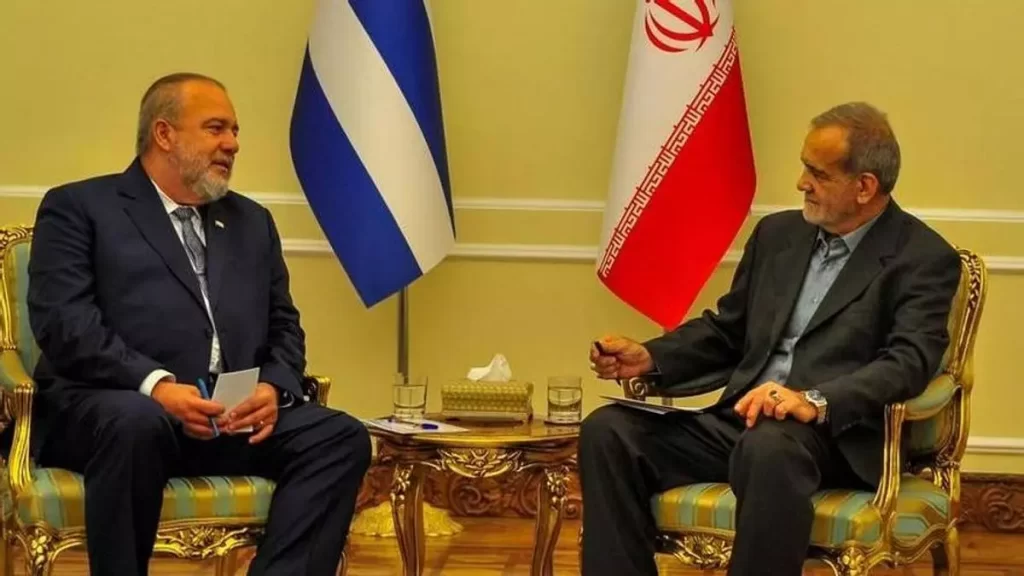
Cuban Prime Minister Manuel Marrero meets with the new president of Iran, Masud Pezeshkian, after his investiture / Government of Cuba

14ymedio bigger14ymedio, Havana, 3 August 2024 — “It is evident that Tehran seeks to position itself in Latin America, and Cuba can be the most feasible entry.” The words of Óscar Julián Villar Barroso, professor of history at the University of Havana and regular interlocutor of the Russian agency Sputnik, describe the measure of the peaceful approach, but at full speed, between the two countries.

Following the recent visit of the Cuban Prime Minister Manuel Marrero to the Iranian capital, the Island has hopes for the “increase in investments in the Cuban economy,” which remains in a coma despite Cuba’s alliances with Russia, China and Venezuela. For Villar Borroso, Havana can offer itself as a “viable and safe interlocutor” for Iran to set foot in the region.

Iran, according to Villar Barroso, is “especially” interested in helping the energy, biotechnology and transport sectors of the Island. Cuba, for its part, is interested in Iran’s ability to “process significant volumes of oil and gas.” The country has developed “an infrastructure for the exploration, extraction and treatment of hydrocarbons” and has achieved “progress in the nuclear sphere,” in addition to other “potentials and experiences” that the Island plans to use to its advantage. continue reading

Villar Barroso admits that Tehran’s interest is not so much economic as it is political

Villar Barroso admits that Tehran’s interest is not so much economic as it is political. The “pragmatism” of Iranian foreign policy, he explains, is what led the new president, Masud Pezeshkian – elected after the death, in a helicopter accident, of his predecessor Ebrahim Raisí – to promise Marrero that “it will be a priority to strengthen relations with Cuba” and sign new agreements.

Pezeshkian’s speech and his dialogue with Marrero contained nods to Fidel Castro, whose “fight” against the United States he highlighted, a gesture that both Villar Barroso and Sputnik see as a good diplomatic signal towards the Cuban regime.

Cuba will be Iran’s base of operations and will help it dodge Washington’s sanctions if the U.S. tries to prevent it from doing business in Latin America, the academic evaluates. In return, Cuba will receive financial aid in “sectors where the Island has difficulty financing productions and activities.”

“As far as biotechnology is concerned, “there are already investments in that industry,” said Villar Barroso

With regard to biotechnology, “there are already investments in that industry,” the academic explained. Iran hired Cuban scientists to open a production plant for the Soberana 02 vaccine in Iranian territory with “technology transferred” from the Finlay Vaccine Institute in Havana.

On the Iranian issue, Sputnik also interviewed Gleydis Sanamé Chávez, a researcher on Middle East and North Africa issues at the Havana International Policy Research Center. Sanamé said that Iran will help with the “modernization of thermoelectric and hydroelectric power plants in Cuba.”

Both countries have signed agreements in the area of sports, foreign trade, food, industry and technology, which Sanamé describes as valuable in the face of the “systematic crisis that the Island is going through.” Although, for Villar Barroso – who also talks frequently with Sputnik – the greatest value of the alliance with Tehran is that Cuba is a common factor for other regional powers, such as Russia and China, which “push for a gradual transition” and a “strategy” against Washington.

Iran and Cuba are considering using the Island’s naval infrastructures with the aim of “satisfying the demand of South American countries”

Last May, when Raisí was still alive, the head of the Iranian Port and Maritime Organization, Ali Akbar Safaei, revealed that Iran and Cuba are considering using the Island’s naval infrastructures with the aim of “satisfying the demand of South American countries.”

The official highlighted his Government’s interest in “strengthening relations” with “friendly countries” and giving continuity to “maritime trade and transport between Iran and South American countries, especially Venezuela.”

Iran is one of Nicolás Maduro’s main allies – subjected to international discredit after the fraud in the presidential elections – especially since 2020, when the shortage of gasoline forced Venezuela to go to the ayatollahs to buy fuel. In 2022, in addition, the country also known as Persia agreed to renew the Paraguaná Refining Center, the largest in Venezuela, although this is not yet a reality.

The talks about the use of Cuban port facilities took place as part of the trip to Tehran of the Minister of Transport of the Island, Eduardo Rodríguez Dávila, who met with his Iranian counterpart, Mehdi Bazarpash. At the meeting, the News Agency of the Islamic Republic (Irna) quoted the Iranian minister himself as saying, “we agreed to establish a twinning between two important ports of Iran and Cuba.”

Last February, in addition, Iran exempted Cubans – and citizens of about thirty countries – from visas as part of a plan to revive tourism, in crisis due to the bad image of the country, the coronavirus and the protests of 2022, harshly repressed by the Islamist regime in Tehran.

Translated by Regina Anavy

____________

COLLABORATE WITH OUR WORKThe 14ymedio team is committed to practicing serious journalism that reflects Cuba’s reality in all its depth. Thank you for joining us on this long journey. We invite you to continue supporting us by becoming a member of 14ymedio now. Together we can continue transforming journalism in Cuba.
Prostitution, Sales of Drugs and Other Trades Have Taken Over Havana’s Parc de la Fraternidad

When the sun comes out and the shadows that inhabit the place retreat, what you see is a square fallen into disgrace.

As soon as you cross Reina Street, you realize you’re entering a territory with other rules / 14ymedio

14ymedio bigger14ymedio, Natalia López Moya, Havana, 3 August 32024 — There is a map for any Havana you want to find. If you try to avoid danger, unsafe areas and having your throat cut, there is one street, but if the goal is to take a chance, experience risk and furtive relationships in the dark, then another map will have to be consulted. Parc de la Fraternidad [Brotherhood Park} has every map, for both the spineless and the daring. You can find an illuminated corner to take a collective taxi or the abysses of a city where the Police turn a blind eye when they want.

As soon as you cross Reina Street, you can tell you’re entering a territory with other rules. The lamps that once illuminated the garden and pedestrian crossings on the side of the Havana Capitol barely provide light. “This gets as dark as a wolf’s mouth,” says an old man who sleeps in the portals of the Palacio de Computación, a property that once housed a large market of the Sears chain and that now languishes from the lack of young people who visit it since they can now browse the web on their cell phones.

The function of the pieces of wood that have not yet been torn from the supports of the benches can be as wide as imagination allows / 14ymedio

The man, who was left homeless more than a decade ago, says that he used to spend the early mornings on a bench in Parc de la Fraternidad but now “the one that’s not broken is used for other things when night falls.” The function of the pieces of wood that have not yet been torn from the supports of the benches can be as wide as imagination allows. The same goes for any type of currency or substance that can be exchanged for sexual favors. “After a certain time you shouldn’t come here,” he warns. continue reading

When the sun rises and the shadows that inhabit the park withdraw, what you see is a plaza fallen into disgrace, with beautiful trees, but with almost no places to sit and an increasingly neglected patch of grass. The line at a nearby bus stop winds between the roots of the laurels, but people must appeal to the sidewalk to sit down because “here out of every three benches, two are broken,” says an old woman who waits for the bus that goes to Marianao.

The reasons for so much deterioration are as varied as the possible maps of the Cuban capital. To the lack of investment that has affected the entire area, especially after the death of the city historian Eusebio Leal, is added an economic crisis that makes vandalism and theft of any public element a way to shore up survival. Many of those who spend the night or make a living in the park are not interested in intruders being comfortable enough to stay; they don’t want anyone to see what goes on there.

The reasons for so much deterioration are as varied as the possible maps of the Cuban capital / 14ymedio

At the end of the 18th century the area became a military exercise field, and now other battles are being fought on its premises. Prostitution, the stealthy search for a partner for one night, the bodies that are sold, even under the age of 16, which in Cuba is the age of majority, and the exchange of foreign currency and the sale of drugs have changed the raison d’être of a park that was once short of housing a zoological garden.

Its several plots of different sizes and its ornamental elements are currently the scene of a country in crisis. In the center of the ensemble, there is a ceiba, the “Tree of American Brotherhood” that was fertilized with land from each of the republics that participated in 1928 in the VI Pan American Conference. Popular legends have attributed that mixture to a ritual that condemns the entire Island to eternal unhappiness until what was supposedly buried in the roots of the tree is extracted.

However, there has been no need for spells or evil enchantments for the environment of the stately ceiba to be in a worse state every day. The spell has been of a different type and looks more like carelessness and neglect than any centenary spell.

Translated by Regina Anavy

____________

COLLABORATE WITH OUR WORKThe 14ymedio team is committed to practicing serious journalism that reflects Cuba’s reality in all its depth. Thank you for joining us on this long journey. We invite you to continue supporting us by becoming a member of 14ymedio now. Together we can continue transforming journalism in Cuba.
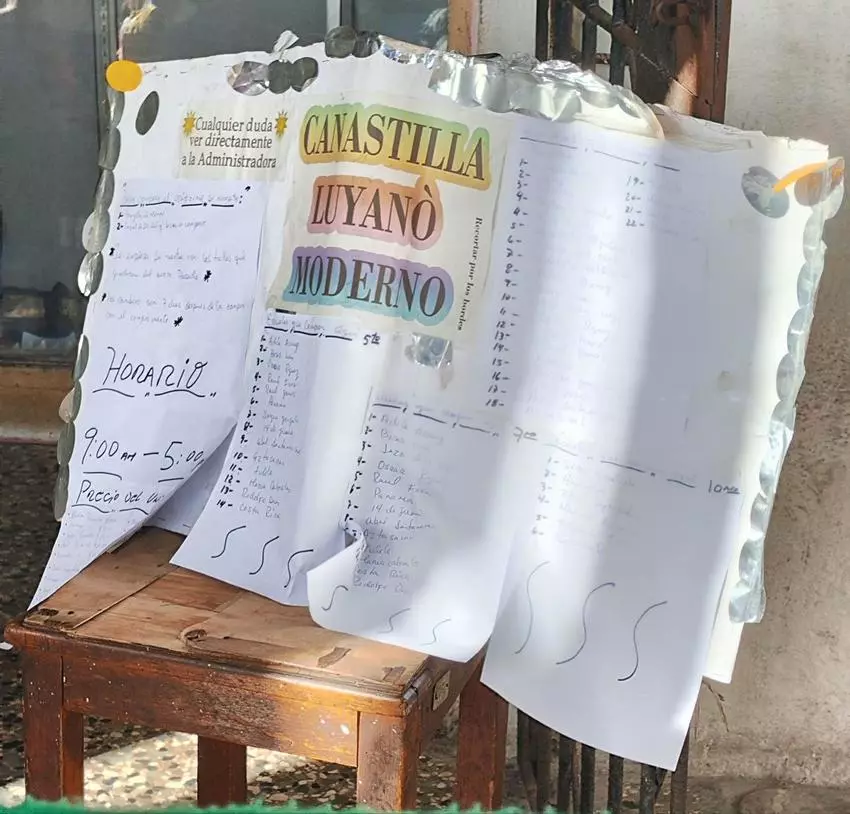
In Cienfuegos, Motor Scooter and Tricycle Owners Take Advantage Of The Lack Of Public Transport

For those living in the surrounding areas, managing to get into the city for work or for running errands is an Odyssey

14ymedio bigger14ymedio, Julio César Contreras, Cienfuegos, 3 August 2024 – Climbing with difficulty onto a horsedrawn cart, cramming inside an electric tricycle or paying more than 100 pesos for a motor scooter are the transport options that Lidia has to shuffle every morning when she sets out for work in Cienfuegos. For a bus to actually arrive, or for some Lada driver* to decide to give her a lift, these are no more than “miracles” which happen with less and less frequency since the start of the fuel shortage and the lack of public transport vehicles. If you want to move about, private vehicles are the only option.

“It’s useless to wait at a bus stop”, the 65 year old Cienfuegera told 14ymedio. Private transport is usually more efficient and more readily available she says, but it’s the prices which stop people from using these vehicles.

“From the entrance to Calle Industria to Paseo del Prado, a horse drawn cart ride costs between 15 and 20 pesos, but that zone is always full of people due to its proximity to the provincial hospital so it’s difficult to get a lift around there at peak times. If you need transport quickly, or you need to go a longer distance, the motor scooters can cost you up to 500 pesos for just a few kilometres”, says Lidia.

From the entrance to Calle Industria to Paseo del Prado, a horse drawn cart ride costs between 15 and 20 pesos / 14ymedio

For those living in the surrounding areas, managing to get into the city for work or for running errands is an Odyssey. “I live in Pueblo Grifo, on the outskirts, and pay 200 pesos for a motor taxi that takes me from Villuendas Park to the centre”, says Luis, another Cienfueguero, complaining about the few options available and their high costs. continue reading

“Okay if they were fixed prices but the problem is that tomorrow they’ll raise the price by 50 pesos and you’ll still have to pay it without complaining because there’s nothing else available and it’s weeks since I last saw a Diana”, he says, referring to the inter-urban buses that carry that name.

In answer to anyone who might ask what happened to all the inspectors who were supposed to prevent abusive pricing, Luis replies sarcastically: “It would seem they all went off to Venezuela to look for petrol (gasoline)”. The Cienfuegero assures us that in the last few days he’s only seen, sporadically, the official in charge of the Pastorita bus stop. “He works a bit in the mornings with his clipboard under his arm, without getting even the minimum of respect from drivers”, he complains.

It costs 200 pesos for a motor taxi from Villuendas Park to the city centre / 14ymedio

If Cienfuegos’s bus stops seem to be deserted for the major part of the day, it’s not because the transport is efficient and quick but that the passengers know that if they bother to wait around for a bus to arrive, “they’re gonna be there until nightfall”.

It doesn’t bother the private car owners who offer transport to travellers that there aren’t any buses or that the inspectors are disappearing. “At the end of the day that brings us more clientele and more work”, says the driver of one motor scooter. “It’s true that people can’t always pay our tariffs, but the prices aren’t that way because we want them to be but because inflation affects us as well”, he says.

Tyres and wheels, spare parts, petrol, duty payments and maintenance costs, “all that is money which we have to find at the end of the day and we still have to earn enough to live on, because if not then the business can’t be sustained”, he explains. “The passengers are sometimes annoyed or refuse to pay. It’s unfortunate that people treat each other badly when it’s the people higher up that have the solution in their own hands. When someone’s like that with me all I can say to them is ’either get in, or stay where you are’”.

Translator’s note: Government officials who are issued government cars — generally Russian made Ladas — are required to pick up and drop off passengers (at no charge) at designated areas, but commonly fail to do so. 

Translated by Ricardo Recluso

____________

COLLABORATE WITH OUR WORKThe 14ymedio team is committed to practicing serious journalism that reflects Cuba’s reality in all its depth. Thank you for joining us on this long journey. We invite you to continue supporting us by becoming a member of 14ymedio now. Together we can continue transforming journalism in Cuba.