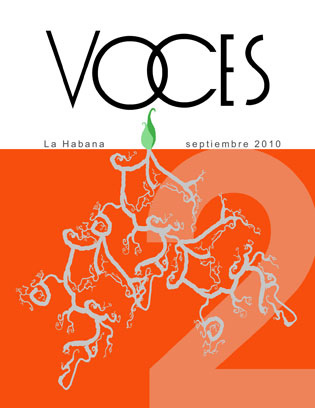
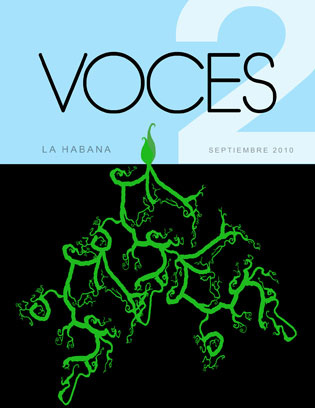
The Third Issue of La Rosa Blanca Magazine / Henry Constantín

This is the third issue of La Rosa Blanca, you have to walk a lot in order to publish it, and walk even more to deliver it in a country mute and without internet. Every issue of La Rosa Blanca, which I’ll post in this blog as I’ve done before, since I don’t have any effective way to post it someplace else, is the sum of a few eventful trips to collaborators’ houses and loyal readers.

This magazine is also the end of many trips. In the province of Las Tunas, up north, I meet Christian essayist Frank Folgueira at his house, a stubborn historian focused on the history of another one of the towns – Manatí, which is also my birthplace – hit by the plague that is just ending. As if it were a national affliction, in Encrucijada de Villa Clara, in an old high roof wooden house from before the revolution, I meet Gabriel Barrenechea, suffocated by the gray vigilant atmosphere of his village, writing his stories and copious economics and political essays by hand.

Havana… and fourteen long flights of stairs to reach the apartment of two friendly Cubans, Yoani and Reinaldo, because La Rosa Blanca publishes some articles from Generation Y, which needs from channels like this one to be read in Cuba. Afterwards, down Tulipán street, we turn and continue for a couple of streets, in Nuevo Vedado, and underground – and under the sea which floods this island – we meet Rafael Alcides who breaks his self-imposed silence to offer us a few articles of unheard of tidiness.

A bit farther away, where Vedado and Downtown Havana meet, Yoss delivers dozens of writings of every kind, but always weighing more towards fantasy and science fiction, giving a breath of fresh air to the seriousness that national reality imposes on the magazine. I come back to Camagüey, and go to the only house where everything is discussed, freely and thoroughly, located in Agramonte, and I meet with the intellectual Rafael Almanza going through one of the thousands of pieces that make up his work.

Maybe, instead of coming back to Camagüey, I go from Havana to Pinar del Rio, where Dagoberto Valdés and Karina, Virgilio, Jesuhadín, Néstor, Servando and the others patiently try to inculcate a culture of tolerance in all Cubans. Or I’ll go to Bayamo, where my friend Ernesto Morales, who’s been just expelled from his post working as an official journalist – he’s finally managed to get that badge of recognition of his honesty and bravery – writes and blogs in the tense and isolated environment of the eastern provinces; or maybe to visit Elia, in Las Tunas, in search of Carlos Esquivel’s poems, a miraculous writer who has resisted the temptation of the big cities, and refuses to leave his indolent land.

From the work of all of them, and many others, comes La Rosa Blanca, which will later spread from computer to computer, from memory to memory, and even through old three and a half inch floppy disks, with the same silent fragility which characterizes its making. Here it is.

La Rosa Blanca 3.pdf

Translated by: Xavier Noguer

September 5, 2010

The Virgin of Charity of Cobre / Dimas Castellanos

After a mass at her shrine by the Bishop of Santiago de Cuba, the Virgin of Charity of Cobre began on 8 August a pilgrimage across the country, with a message of dialogue and reconciliation, which will run until 10 December 2011.

The precession, commemorating the 400th anniversary of her appearance in Cuban water, coincides with a profound structural crisis provoked by the failure of the totalitarianism that monopolizes the politics, economy, and communication media, and eliminates civil society and independent civic spaces, generating a series of losses reflected in the despair, apathy, generalized corruption and the exodus; its repair requires a huge dose of spirituality. In this context the pilgrimage of the patroness of Cuba begins, through all the towns and cities of Cuba, with a message of freedom and love, two concepts which represented a turning point with Christianity, and without which it would be impossible to overcome the current crisis.

Freedom, the birthright of man, establishes that the inner conscience of human work is the freedom granted by God. Love, understood as a relationship that abandons the narrow context of only the Jewish people to include all men and all peoples, becomes an instrument of transformation to create a community where all men are brothers. So, live, the first condition of the concept of Christianity, stands as the highest form of free will, while its infrastructure is freedom.

The worship of Mary had earlier manifestations in Cuba but with the appearance of the image of the Virgin of Charity, floating in the waters of Nipe Bay — found by two aborigines and a black man — which was identified as Mary by the Spaniards, as Atabey by the aborigines, or as Oshun by the natives of Africa, deities associated with water, the sea, the moon and motherhood, which represent the universalization of love. Attributes that, from its appearance, turned it into the most Cuban of the Mary devotionals and part of our country’s history as evidenced by the following facts:

In the mines of Cobre de Santiago del Prado, site of the Shrine of Charity, history locates the first mass rebellion against slavery and the first liberation of the slaves. In 1731, due to mistreatment, the slaves in the mines in the surrounding mountains rose up to defend their freedom. In this conflict, Pedro Agustín Morell de Santa Cruz, a leading figure of the Catholic Church, not only acted as a mediator between the Governor and the rebellious slaves, but sided with the latter. Seventy years later, copper miners, led by Father Alejandro Ascanio, gained their freedom by royal decree, which was read before the Virgin, 19 May 1801.

Carlos Manuel Céspedes, on taking the city of Bayamo on October 20, 1868, celebrated a solemn mass in honor of the Virgin, putting his revolutionary army under her protection and in November of the same year he went to her Shrine to present her his arms and honor and to ask her in her position as Queen and Mother of Cubans, for the freedom of Cuba.

In the war diary of Ignacio Mora, one of the patriots of Camagüey who rose in November 1868, he wrote on September 8, 1872: “The fiesta of the Virgin of Charity of a delirium for him (the people). Without eating, they dedicate these days to looking for wax to have a mambí-style fiesta, that it they light many candles and assume that the image of the Virgin is present. On all the farms there is not a single cooking fire, only candles lit for the Virgin of Charity!”

General Antonio Maceo, who during the war would wear an insignia with the image of the Virgin, once told his men: “We must all give thanks to the Virgin of Charity of Cobre, because she is also fighting in the jungle.”

At the conclusion of the War of Independence, representatives of the Liberation Army were excluded from the signing of surrender, which is why the General Calixto Garcia ordered his General Staff, with General Agustín Cebreco at the front, to advance to the Shrine to celebrate the triumph of Cuba over Spain in a solemn Mass with a Te Deum at the foot of the statue of the Virgin, a fact regarded as the Mambisa Declaration of Independence of the Cuban people.

In September 1915, a group of veterans of the War of Independence led by Major General Jesús Rabí, asked Pope Benedict XV to name the Patroness of Cuba and September 8 as the date of her celebration. The petition argued: “…(because) in the heat of the battles and major events of life when death was closer or we were nearer to despair, there was always a light dissipating any danger, or consoling water sprinkling for our souls, the vision par excellence of this Cuban Virgin, Cuban by origin and by secular devotion and Cuban because… having proclaimed our soldiers, all of them praying to her for victory, and for the peace of our unforgotten dead.” The request was granted by papal bull.

Fermín Valdés Domínguez, a close friend of José Martí, said: “The miraculous Cuban Virgin of Charity is a saint who deserves my respect because she is a symbol of our glorious war.”

For these reasons in December 1936, by delegation of Pope Pius XI, the Archbishop of Santiago de Cuba, Bishop Valentín Zubizarreta, crowned the statue of Our Lady of Charity of Cobre facing Santiago Bay. Between 1951 and 1952, as part of the fiftieth anniversary of the Republic, the Virgin made her first pilgrimage around the island. In November 1959 her image was moved to Havana and placed on the altar of the José Martí Plaza to celebrate the mass of the closing of the National Catholic Congress. In 1977, Pope Paul VI elevated the National Shrine of Our Lady of Charity to the dignity of a Basilica. In 1998, Pope John Paul II crowned the Virgin of Charity of Cobre a second time, where he said: “From her sanctuary, not far from here, the Queen and Mother of all Cubans — without distinction of race, political opinion or ideology — guides and sustains, as in the past, the steps her children to the heavenly realm and encourages them to live in a such a way that authentic moral values will always reign supreme in society, which is the rich spiritual legacy inherited from our elders.

With a historical and divine foundation, the Virgin of Charity of Cobre is an enormously valuable spiritual force in our history. Like a supporter for a phenomenon as painful as childbirth, her presence is significant at the moment of delivery. For all these qualities, for the fact that she is Cuban, that is for her identity with and belonging to the culture of Cuba, the image of Mary personified in the Virgin of Charity of Cobre, is with is, speaks to us, unites us and fills us with the strength that emanates from faith and from hope, love and freedom. Hence, the relevance of this pilgrimage in this critical moment of our nation’s life.

September 9, 2010

PRINCE CLAUS AWARD FOR YOANI SANCHEZ / Intramuros

It is the fourth time a Cuban has received this international recognition.

By Dagoberto Valdés

The renowned Cuban blogger Yoani Sanchez has been chosen to receive the prestigious Prince Claus Award for Culture and Development, one of the most prestigious on the European continent. The award will be bestowed in December, 2010.

The Prince Claus Award was established in 1997 in honor of he who gave it its name and heritage, Prince Claus, the consort of Queen Beatrix of the Netherlands. Each year a select and competent international jury is convened in Amsterdam by the Foundation that bears the same name, a leader among the sociocultural NGOs, which is devoted specifically to promoting cultural diversity in developing countries. The top prize is awarded in the Royal Palace in Amsterdam on December 8, to mark the birthday of the late prince, and the ten other awards are presented in the Embassies of the Netherlands in the respective countries of the winners.

Yoani Sanchez has received one of these ten awards for her work as a communicator, and her educational efforts to develop citizen journalism in the difficult conditions in Cuba. Yoani has received numerous international awards among which are the Ortega y Gasset Prize for digital journalism, she has been chosen by Time magazine as one of 100 most important people in 2008 and, almost coincidentally with the distinction of the Netherlands, Yoani has just been chosen among the 60 personalities in the world who have promoted freedom of expression, by the International Press Institute (IPI) on the occasion of the 60th anniversary of this institution.

Cuba continues to receive the attention of the Prince Claus Fund; this is the fourth time its International Jury has awarded this important prize to a Cuban. In 1999 the magazine Vitral of Pinar del Rio, received the top prize shared with the Qatari television network Al Jazeera and the Algerian-French playwright Mohamed Fellag. In 2008 the versatile plastic artist Tania Bruguera received a Prince Claus Award at the residence of the Embassy of the Netherlands and in 2009 another of these awards was received by the editor, critic, translator and cultural animator of the Criterios Center, Desiderio Navarro. Again, it is Cuba that wins and is recognized for the plurality of its culture.

Yoani, who is a permanent contributor to our magazine, receives the congratulations and support of the entire Coexistence project team, many of whom know her. She deserves not only the prestige this laurel brings to her name from the Foundation that awarded it, which has been dedicated for over a decade to the promotion and development of the most rich and fruitful expressions of the cultures of people all over the world.

September 9, 2010

Excitement / Regina Coyula

My uncle Fernando Pérez-Puelles is 99, and save for some thick-lens glasses because he doesn’t want to have cataract surgery, he is divine, with a vitriolic personality but a great nostalgia for Cuba. Fernando has lived in Miami since 1961 and yesterday he called on the phone, very excited; a little cryptically, he said he understood that he’d be coming back here soon, because according to the news in Miami, the fall of the government was a matter of weeks.

Not as soon a my uncle would like, nor a long as I myself calculate, but beware. Fernando, from Young Cuba, saw the government of Machado fall, from the 26th of July Movement he saw Batista’s government fall, who knows if his longevity will allow him to see the fall of the current government.

Meanwhile, Fernando is making plans to buy the house in Manatí where the Pérez-Puelles spent their childhood. A wooden house that only exists in Fernando’s nostalgia, because successive cyclones passing through the country have done away with it. As I see it, it could be Fernando who rebuilds it.

September 12, 2010

A Problem of Sizes / Fernando Dámaso

Socialism is so rigid it is practically impossible to reform it. It is like a straitjacket imposed on society the minute it begins, and afterward we are forced to live with it, ignoring any development of change in sizes.

  1. A conception less orthodox and dogmatic would understand changes, and at least go from a Small to a Medium and then to a Large and Extra Large, avoiding the annoyance and in the end the tearing.
  2. But this is like asking for the impossible. And Marti, with his foresight, warned against the dangers of socialism. It’s just that, as in many other things, we forget his warnings and fall, and continue to fall, into mistakes he warned us against.
  3. There is no doubt that the ideas of Marx and Engels, as a theory, attracted and do attract as many intelligent beings as fools. Developed in their private offices and German breweries and London pubs, which is not meant as a criticism, fortunately they never applied them in life, assuming them to be Utopian.
  4. Our great disgrace has been the continual enforcement of these social models. Each one in its way, to a greater or lesser extent, in different eras, has demonstrated its failure in the real world.

September 11, 2010

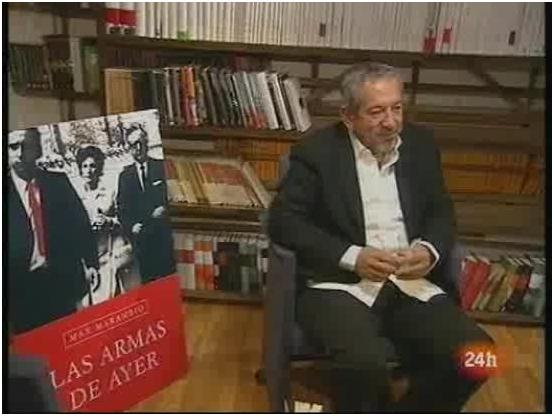
Marambio Has Nothing to Fear / Laritza Diversent

In the Cuban legal system there is no procedure that allows president Salvador Allende’s ex-bodyguard to testify as an accused before the Chilean prosecutor.

He will be judged according to Cuban law and within the national territory, in person or in absentia. If he returns to the island to respond to the accusations, he can count on serving his sentence in his own country, if there are treaties to that respect between the two nations.

Not withstanding the foregoing, the official summons issued by the Ministry of the Interior (MININT) and published in the Official Gazette, the organ of dissemination of government laws and acts, does not meet the formal requirements of Cuban procedural law. Normally the Cuban authorities, in their procedures, act on their own irrespective of the legality.

In the summons to Marambio from the prosecutor, are: his name, surnames, address of the one summoned; the reason for the summons; the day he is required to appear and the consequences of failing to do so.

However, the summons did not state the place nor the time the leftist businessman must appear, requirements of the law. Nor was it authorized by a judicial authority. The provision requires that the “the summons is issued by way of a certificate sent by the secretary” of the court in the matter.

In the case of a judicial proceeding undertaken without observing the provisions of the Law of Criminal Procedure, it is established as invalid, under Article 86. MININT’s own note refers to this provision. This, at the same time clarifies that if the person summoned appears, the summons becomes legal.

Finally, it is clear that the arrest order has international repercussions.

The publication in the Official Gazette of the Republic of Cuba of both notes as required, is a prerequisite for the declaration of non-compliance and the trial an absentia, in the case of an accused who is outside the country.

The Cuban judicial system provides for the continuation of the proceedings against the accused declared in non-compliance until its final resolution, in the case of crimes against the fundamental, political or economic interests of the nation.

Marambio has no reason for fear. The revolutionary government has no intention of pursuing the international businessman who, thanks to his business dealings on the island, managed a group of companies moving more than 100 million dollars annually. It’s true, he knows he cannot return and lose everything he had and enjoyed here.

September 8, 2010

Are There Guarantees in Cuba for Marambio? / Laritza Diversent

Another issue is to certify that the proprietor of the International Network Group(ING) will have his guarantees respected. One of the managers of “Alimentos Rio Zaza,” the private company formed between the Cuban Government and Marambio was the 59-year-old Chilean Roberto Baudrand. He was under house arrest in Cuba and endured strenuous interrogation sessions. In April, he was found dead at his apartment.

The Cuban autopsy, accepted by the family of the deceased, certified that the cause of death was due to respiratory failure combined with the consumption of drugs and alcohol. There is still doubt if the death was due to accidental death or to suicide.

With respect to whether the criminal process against Marambio will take place in part in Chile, I have my doubts. The questionnaire with 21 questions presented to the businessman by the Cuban authorities, is a different process. In this case, his answers are that of a witness.

In the investigation other directors of his companies in Cuba are implicated, accused of paying bribes, embezzling funds and diverting resources outside the country. Marambio was linked to the corruption scandal that involved the director of Institute of Civil Aeronautics of Cuba (IACC) and Major General Rogelio Acevedo. Lucy Leal, director of ING, was arrested and is being investigated.

Cuban procedural law provides that when the witness resides outside the national territory treaties between the two countries, if any, will be observed. If there are no treaties, formal letters through diplomatic channels will be sent, according to international practices.

The proceedings, the summons and the indictment, officially published by the Cuban authorities, are formal procedures, not administrative ones as believed by the lawyers for the Chilean businessman.

September 7, 2010

Marambio: Accused or Witness / Laritza Diversent

The subpoena and indictment prepared by the Ministry of the Interior (MININT) against the 63-year-old Chilean businessman, Max Marambio, has raised innumerable questions. The first of these is what would happen if the close friend of the eldest of the Castros decided to return to the island.
The chances that the authorities would put him in jail, as a preventive measure, are high. The criminal proceeding against him is in its preparatory phase, when the investigation occurs, the legal facts are described, and so on.

They also want to assure that the defendants show up for the day of the trail. Given that “The Fat Man,” as Marambio is known in Cuba, lives outside the country, provisional detention would be the most effective assurance.

Another question is whether Marambio’s attorneys can travel to Cuba and represent him in the investigation being carried out against him. In order to be named as a defense attorney, under the Cuban system, the individual must be part of the process.

This would start when the person is the object of a preventive measure (pre-trial detention, bail, etc.). It means that you must first appear before the instructor (similar to a district attorney) as required and testify regarding the facts alleged against you. After this your attorney is appointed.

The Chilean courts returned the warrant to Cuba, citing errors that prevented their compliance with it. For example, the lack of clarity regarding Marambio’s situation, and whether he is a witness or a defendant.

The note published by MININT in the Official Gazette of the Republic of Cuba, however, expressly lists Max Marambio as the “accused” for the crimes of Bribery, Acts Detrimental to Economic Activity, or of Procurement, Embezzlement, and Falsification of Bank and Trade Documents, and Fraud.

There is no doubt, the businessman is called as a defendant. It’s worth mentioning that Cuban law does not provide for the presence of a lawyer during questioning, nor in the obligation to instruct him in his rights. For example, there is no duty to declare the charges against him, which can be done at any time or as many times as desired.

September 6, 2010

Justice Minister Names Legal Representatives / Laritza Diversent

The Justice Minister Maria Esther Reus González, issued Aug. 6, Resolution No. 215, which names two counselors at the Ministry of Justice (MINJUS), Dr. Diego Fernández Cañizares Abeledo and Attorney Nelia Caridad Aguado López, experts from the ministry, to act without prejudice to its final completion, in the administrative proceeding brought against her, before Second Civil and Administrative Board of the Provincial Peoples Court of the City of Havana by independent jurists.
Attorney Wilfredo Vallín Almeida, president of the Cuban Law Association, a union of dissident lawyers, asked the MINJUS Register of Associations on April 7, 2009, on behalf of his organization, for a certification which the state agency never issued. Reus Gonzales, designated by the Council of State in March 2007, is empowered to direct the operation of the National Registry of Associations, and to guide and monitor government policy on partnerships and foundations.

Counsel Almeida Vallín filed a complaint with the People’s Provincial Tribunal of the City of Havana, regarding its administrative silence before the Appeal submitted to the Minister, which still has not been responded to in accordance with the provision of Law No.54 “The Associations Act.” Last 28 July, the head of MINJUS received a summons from the tribunal requiring her to name legal representatives.

September 9, 2010

The Times of the Cuban Model / Claudia Cadelo

The Cuban model doesn’t even work for us anymore.

The Cuban model was not working for us even when I thought of it.
When the socialist block collapsed the model didn’t work, not even for us.
After much reflection, the Cuban model will no longer be working.
The Cuban model hasn’t worked, not even for Chavez.
Before me, the Cuban model had worked.
What I created as the Cuban model, failed.
The Cuban model will not work for us, not even when Raul makes changes.
It is possible that the Cuban model would not work, not even for us.
That the Cuban model has not worked doesn’t affect my visits to the aquarium.
If the Cuban model worked for us, I wouldn’t have created it.
If the Cuban model would have worked for us, I would have retracted just the same.
The Cuban model would never work.
The Cuban model would have worked in another dimension.
He who has published in Granma that the Cuban model doesn’t work, will be shot.
Work! Cuban model!

Image: Guama

Text from the cartoon:
– HAHAHA… It’s not working!
– Don’t misinterpret.

September 10, 2010

Personal Glasnost / Regina Coyula

I appreciate the support of the commentators. I am not going to stop writing, nor have I thought of moderating the comments, though I appeal, yes, to the good judgment of those who write for more than catharsis.

Several of my readers have asked me.

When I was sixteen I started at MININT (The Ministry of the Interior). I was proud to have been selected. My family, which was completely “integrated” — that is supporters of the Revolution — received the news with great joy. MININT was seen by the revolutionaries as the organism destined to protect the Revolution from danger. Under its rules of compartmentalization — or “need to know” — I worked from 1973 to 1983 in the department of Technical Operations, and from then until 1987 I was an official operative, where I worked in the areas of culture. And until I discharged myself in 1990, I was in “Assurances.”

That was my history there. Like great romances, it was beautiful while it lasted.

September 10, 2010

Philosophy of Hate / Fernando Dámaso

  1. A philosophy of hate has spread across the world like a pandemic which seems to cover everything, calling into question whether humans are thinking beings of superior intelligence. Love has been pushed to the side and must struggle fiercely to show itself, in public as well as private social relations. Intolerance and violent confrontation reign in modern life.
  2. The background of hate has different handholds, from the settling of scores for the discovery and colonization of the New World, to the Crusades to the Holy Land to spread Christianity. Without a doubt there were excesses and faults, but to go hundreds of years later clamoring for revenge is altogether absurd.
  3. The history of mankind and, within it, the formation of the nations, has known intense periods of violence where some ethnic groups and peoples imposed on others, fundamentally due to their greater level of development. Entire civilizations have appeared and disappeared this way, up through our times. Demands for material and moral compensation for events in the long course traveled since the Big Bang are, aside from irrational, also impossible to satisfy. It would be a never-ending story, and nobody could be left out of it, because the responsibility is shared.
  4. It is true that Spain colonized the Americas, but before that the Moors had colonized almost all of Spain. It is true that Europe colonized Asia and Africa, but before that the Ottoman Turks and the Huns, to cite just two examples, invaded Europe, the latter led by Attila even reaching the gates of Rome. It is true, getting back to America, that Spain subjugated the Aztecs and the Incas, but before that these same had subjugated all the surrounding peoples, turning them into vassals or slaves as they built their empires. We see that the culprits are those who prevail.
  5. To set out today, on the basis of these distant events, to fuel passions and hatred and call for political or religious crusades only serves to demonstrate, as Albert Einstein put it, “Two things are infinite: the universe and human stupidity”.

Translated by: Mark B.