A Cuban Baseball Player From the Matanzas Team Who Traveled to Spain Without Bats Escapes

Baseball player Yoisnel Camejo disassociated himself from Cuban baseball after the failure of the Matanzas team in Spain / Facebook/Cuba Grand Slam

14ymedio bigger14ymedio/Swing Completo, Havana, 1 October 2024 — Yoisnel Camejo, a member of the Matanzas team, left the club’s training in Spain. The player, according to the Cuba Grand Slam Facebook page, “decided to stay on Spanish soil” after the failure and elimination of the team in the Catalan Cup.

It will be difficult for the Matanzas team to participate again in an international event. Camejo “took advantage of the opportunity and embarked on a new path through Spain although it may not be linked to baseball,” said Pelota Cubana journalist Miguel Rodríguez.

Camejo did not show up with the rest of his teammates to board the 6:00 a.m. flight from Spain that was returning the team to the Island, thereby “breaking any link with the Cuban athletic movement.” The athlete chose to “start a new process in his life,” the magazine Swing Completo added.

During the tournament, in which Matanzas recorded two defeats and one victory, Camejo participated in two games and struck out in one of them. The athlete participated in six National Series with the Cocodrilos team. In 50 games he had 82 times at bat, 31 hits, two doubles, five triples, a couple of home runs and 18 assisted runs. continue reading

The Catalan Cup confirmed that Cuban baseball “is bogged down and has lost the gift of victory,” said Por la Goma after Matanzas’ failure. The team’s result showed the lack of foresight on the part of the Cuban Baseball Federation (FCB) in the processing of visas for the players and the team’s lack of preparation.

The former player for Industriales is now in the US / Facebook / Francys Romero

Pelota Cubana reported this Monday that in addition to the fact that the players of Matanzas traveled without training, they also did so “without a complete team and, what is more alarming, without bats.”

The club had to “borrow” the bats. “How can such an improvisation be explained in an international competition? The answer is simple: the Cuban player, like the rest of the citizens on the Island, has been forced to survive instead of fully dedicating himself to his profession,” stressed the same specialized media.

Cuban baseball players seem more concerned about what they can take back home, the same specialized media highlighted. The reason many players did not carry bats is because “if they load down their luggage with bats, the weight they can bring back is much lower,” the publication pointed out, referring to the weight of luggage allowed by the airlines.

This Monday, the arrival in the United States of baseball player Óscar Valdés, who was absent from the national team’s lineup for the Premier 12, was also confirmed. So far it is unknown if there is interest from a major league club in the player from Industriales.

In his career in the National Series and the Elite League, Valdés has a batting average of .282 with 99 doubles, 11 triples, 32 home runs, 303 RBI runs and 304 scored.

Translated by Regina Anavy

____________

COLLABORATE WITH OUR WORKThe 14ymedio team is committed to practicing serious journalism that reflects Cuba’s reality in all its depth. Thank you for joining us on this long journey. We invite you to continue supporting us by becoming a member of 14ymedio now. Together we can continue transforming journalism in Cuba.

At the Central Post Office in Cienfuegos, a Single Employee Serves the Public

“Today it will take two hours, at least,” estimates Antonio, a retiree who comes to collect his pension

The post office on San Carlos Street in Cienfuegos is buzzing with dissatisfied customers. / 14ymedio

14ymedio bigger14ymedio, Julio César Contreras, Cienfuegos, 30 September 2024 — A few blocks from Cienfuegos Bay, the post office office on San Carlos Street is buzzing with dissatisfied customers. They have no place to sit, and as the sun hits the avenue, tension and annoyance increase. People come to transact business or to buy stamps, but before asking who’s the last in line*, they have to calculate if they have enough time and patience.

“Today it will be two hours, at least,” estimates Antonio, a retiree who comes to collect his pension, perceiving the long line as a field of cane that he has to cut with a machete. He has plenty of time and has acquired patience – as a remedy – over the years. Now he has his “door jamb”; that is, a space on the sidewalk where he sits with great difficulty. From there, the line advances. The sun and the discomfort too.

If the post office put its employees in more than one window, the story would be different, says Antonio. On the contrary, there are a series of “trenches” – a counter, a glass sideboard, an empty armchair – that prevent passage and regulate the movement of the line. Everyone must go “through the channel” to the only available window.

The office is gloomy. Several burned-out light bulbs hang from the ceiling, which don’t improve the appearance of the premises. The paint – a greenish gray – absorbs the light and gives the place a suffocating atmosphere. The windows of the facade are covered with tinted plastic, the well-known and not very useful measure against cyclones, and someone – it is difficult to imagine why – stole the plastic cabin of one of the public telephones. continue reading

Everyone must go “through the channel” to the only available window

In a place like this, the “coleros” [people paid by others to stand in line for them] thrive with their “little deals,” but Antonio – out of embarrassment, he says – does not get involved. “I wouldn’t have the nerve to get in line with five or six people behind me.” Not without some sadness, he says that saving a place in line is paid at 500 pesos per person. It is the price he pays for avoiding discomfort, embarrassment and not infrequently the insults of those who do suffer the wait.

It’s not often that elderly retirees with pension books pay a colero. The business deal is not economical if it has to be repeated every month, and for a meager state pension it’s not worth it. “Those who do pay want to buy stamps, so it’s normal for another person to save a place in line to collect a pension and at the same time ’resolve’ the purchase of something else. So you wait and earn a little money,” explains Antonio.

But there is no money in the world that justifies the “ordeal” of being in the post office. When there is only one worker at the window – which is usually the case – you have to start lining up at 5:00 am in order to leave, hopefully, by 10:00 or 11:00 am. It’s not worth it, the retiree insists, and he returns to his “door jamb” spot.

To Vilma – self-employed and with much less patience than Antonio when it comes to lines – what bothers her is that two blocks from the Post Office “a man” has all the stamps there have been and will be for an informal sale. “Where do you get them?” she asks. She gives the answer at the same time as those around her, pointing to the post office: “From right there.”

The office is gloomy. Several burned out light bulbs hang from the ceiling, which do not improve the appearance of the premises. / 14ymedio

The corruption is remarkable, she says, because the person selling stamps also has ways of doing business with the National Office of the Tax Administration (ONAT), according to Vilma. For years, she has preferred not to settle her accounts with ONAT through the post office. Every procedure is cumbersome, and the only stamp that the office is quick to put on its papers, she says, is “that of inefficiency.”

The post office is no longer even useful for her to receive the national newspaper at home, she points out. “I canceled my contract,” she says proudly. “In addition to putting up with the newspapers only publishing what suits them, they arrived three and four days late. When I came to complain about the bad service, they justified themselves by telling me that the workers are insufficient to meet the city’s demand.” Now I get the news through social networks.

It would take too many words to describe the deficiencies in the parcel service, Vilma continues. “Someone recently sent me a package from Spain. After three months passed and it hadn’t arrived, I made a claim. They blamed the lack of fuel, transportation and, of course, the blockade.” The matter didn’t stop there. If the package was, as she supposed, in national territory, she was told she could “motivate influence.” Once money changed hands, the package immediately appeared.

Defeating the line does not guarantee anything, since the attention at the window brings properly institutional obstacles

On San Carlos Street, it doesn’t matter if you come to collect your pension, send a letter – a practice that is increasingly disappearing – or do a national transfer: the line, warns the guard, is “only one person at a time.” The defense by blood and fire of that “unit” seems to be the real concern of the staff, says Antonio.

Defeating the line does not guarantee anything, since the attention at the window brings institutional obstacles, such as the fact of not being able to send more than 2,100 pesos in a transfer. “It’s one limit after another,” Vilma complains.

The post office on San Carlos is the “central one” in Cienfuegos. If its operation leaves much to be desired, the booths are even more alarming. Closed firmly, they have only one function: to give shade to those who, overwhelmed by the incompetence and heat of Cienfuegos, seek a moment of truce.

*Translator’s note: Cubans join lines by asking “who’s last” and then, as soon as the next person joins behind them, they can move around freely without anyone ’losing their place’.

Translated by Regina Anavy

____________

COLLABORATE WITH OUR WORKThe 14ymedio team is committed to practicing serious journalism that reflects Cuba’s reality in all its depth. Thank you for joining us on this long journey. We invite you to continue supporting us by becoming a member of 14ymedio now. Together we can continue transforming journalism in Cuba.

The Voluptuous ‘Frutabomba’ Is No Longer Within the Reach of Every Cuban’s Purse

Mrs. Papaya reigned when oranges, cashews, custard apples and soursop disappeared

Fruit has been the victim of inflation that has pushed it past the pockets of many Cubans / 14ymedio

14ymedio bigger14ymedio, Natalia Lopez Moya, Havana, 29 September 2024 — The frutabomba, the most voluptuous of the fruits consumed in Cuban homes has, for decades, also been the ingredient of the most popular desserts and milkshakes when there is a shortage of milk for a good flan or the exclusive mamey disappears from the markets. Painted in paintings and recreated in engravings, in recent years it has ceased to be a product within everyone’s reach.

Also known as ‘papaya’, a moniker commonly used by Cubans to designate the vulva, it has the advantage of being large but the problem of being fragile when transported when ripe. Huge and delicate, it is most often sold whole in markets but can also be purchased in portions that must be swallowed in a short time before they spoil.

Now, a pound of frutabomba is sold for 60 pesos in the market at 19th and B in El Vedado, Havana. A single specimen can weigh quite a bit, so with less than 300 pesos it is unlikely that you will be able to walk away with one of these fruits in your bag, and trying to buy a small portion, for just one person, can be as difficult as convincing a vendor in the downtown store to sell half a head of garlic or just a couple of lettuce leaves.

A pound of frutabomba is sold for 60 pesos at the market on 19th and B in El Vedado. / 14ymedio

While other products have doubled or tripled in price in recent months, the price of frutabomba has remained stable throughout 2024, although in continue reading

November of last year it reached 70 pesos per pound. But even without significant jumps, the fruit has also been the victim of inflation that has pushed it out of the pockets of many Cubans. Its rise began at the beginning of this century, when it began to replace other fruits that were in short supply at that time.

In the absence of oranges, Mrs. Papaya came out on top. In the absence of cashews, sugar apples, custard apples and soursops, their plump appearance and small seeds replaced a long list of delicacies that once sprouted from the branches of so many trees throughout the country. Easy to harvest, with a medium-sized plant but high productivity and without great demands to be transported in its green state, it was the perfect food for the state-owned Acopio to fill figures and organize agricultural fairs.

But people wanted them ripe, ready to be cut into pieces and devoured. That’s where popular ingenuity came into play. They discovered that if a green specimen was dipped in a formula based on nitrogen fertilizers, it quickly acquired a beautiful color that made customers salivate and pushed them to reach into their wallets. When they got home and cut open the beautiful frutabomba, they found a whitish and tasteless interior.

Hence the need to see the inside of the fruit before buying it. A small triangle cut with a skillful knife allowed the inside to be seen. “Yes, I’ll take it,” sealed the deal with the buyer, relieved to know in advance that it was not one of those “hastily ripened” frutabombas. But with popular tricks you never know, over time the “ripening accelerators” have become more difficult to detect.

A frutabomba dessert, made with green or multi-colored pieces, has saved dessert for countless families

For its part, candied frutabomba, made with pieces of green or multicolored fruit, has saved dessert for countless Cuban families for decades. Easy to make, without complicated ingredients, the syrupy recipe has, however, come up against the lack of sugar in the country that was once mistaken for a sugar mill, beating to the rhythm of the machinery of a sugar mill, and the sound of the cutting of the canes in the sugarcane fields.

The stability of the price of frutabomba in recent months is due more to the loss of the ingredients and contexts that enhance it than to the ups and downs of the market. Given the lack of sugar and tourists, the most sensual of fruits does not rise as much as other products, but neither does it fall from the heights to which it has risen. However, it can still be seen in hotel buffets and in the paintings that tourists buy in souvenir markets.

____________

COLLABORATE WITH OUR WORKThe 14ymedio team is committed to practicing serious journalism that reflects Cuba’s reality in all its depth. Thank you for joining us on this long journey. We invite you to continue supporting us by becoming a member of 14ymedio now. Together we can continue transforming journalism in Cuba.

The Cuban Regime and Cultural Colonization

The Island was too small for Fidel Castro and he set about conquering the rest of the world

Fidel Castro with Mengistu Haile Mariam, who overthrew the Ethiopian Emperor Haile Selassie to establish a Marxist regime. / Historical archive

14ymedio bigger14ymedio, Yunior García Aguilera, Madrid, 30 September 2024 — The ideologues of the Castro model repeat ad nauseam that their struggle is based on a supposed “cultural decolonization.” Abel Prieto Jiménez, a storyteller, civil servant and advisor to generals, has become tiresome with this matter. His latest books and conferences are like a catauro [basket] where he inserts loose phrases, gossip and memes, obsessively attacking Sylvester Stallone or Shakira and labeling anyone with a minimally liberal discourse as fascist. One of his most laughable anecdotes is about how Che was worried about young revolutionaries who read comics in the 60s, because Superman demoralized the effort of the Agrarian Reform.

Another of the champions of this “decolonizing battle” is the Spanish journalist Ignacio Ramonet. With his European passport, the highly paid intellectual travels through Latin American dictatorships, offering his unrestricted support to figures such as Díaz-Canel, Nicolás Maduro and Daniel Ortega. The Galician-Parisian says that the handicap of the left is ethics, because the left is incapable of lying. He could not be more cynical. The Cuban Revolution itself was born on the basis of four founding lies: the repeated denial of communism; the hope of free elections; the guarantee of forming several political parties; and the promise to respect freedom of the press. The lies did not last very long. In just two years, that supposedly authentic revolution became a tropical copy of the Stalinist model.

The lies did not last very long. In just two years, that supposedly authentic revolution became a tropical copy of the Stalinist model.

From then on we would learn to say “homeland” in Russian, we would copy the Bulgarian Constitution, we would travel in Ladas, Moskvich or Karpaty cars, we would send our children to study in Leningrad, and we would replace Mickey Mouse with Masha and the Bear, until the mighty Soviet empire said “ konets ” (end). For 30 years, we were culturally closer to a Pole or a Serbian than to our own former culture. We allowed the Russians to establish not only military bases on our land, but even atomic missiles. The crudest slap in the face to the word “sovereignty” was when we applauded the Warsaw Pact tanks entering Prague to crush its spring. Half a century later, the Cuban regime once again applauds interference, shamelessly supporting Putin in his invasion of Ukraine.

Fidel Alejandro Castro was, in essence, a colonizer. An unbounded admirer of his namesake Alexander the Great, he always thought that Cuba was too small for him. And, once he achieved the status of an Antillean demigod, he set about conquering the rest of the world. Cuba did not send its armies to Africa to decolonize that continent, but to establish Marxist regimes loyal to Moscow.

The USSR provided the weapons and we provided the dead. The most notorious case was in Angola, where Cuban soldiers massacred tens of thousands of Angolans, even after their country had gained independence from Portugal. On May 27, 1977, more than 30,000 dissidents were tortured or killed by Agostinho Neto with the help of the Cuban military occupation. In 2019, the president of Angola publicly apologized for that massacre. But the Cuban regime has never apologized.

Not to mention all the damage we caused in Latin America, infesting the region with armed guerrillas. Although almost all of them failed, many were linked to drug trafficking and others mutated into conventional politics. Today we have the Nicaraguan dictatorship, repudiated by the vast majority of the international community, but unconditionally supported by Havana. Ultimately, it is its bastard daughter. And in Venezuela we have shown that the Castro model is not only capable of ruining a small country, but can also metastasize poverty, in record time, even in the richest country in the region.

In Latin America today we have the Nicaraguan dictatorship, repudiated by the vast majority of the international community, but unconditionally supported by Havana

Much has been said about Castro-communism and its characteristics, but not so much about Castro-capitalism. The model example was the Convertible Currency Department (MC). Beyond the four executed in 1989 during the Causa Uno [Cause Number 1], the company laid the foundations for what is now Gaesa. Castro-capitalism is defined by being monopolistic, shady, hermetic, by having relations with drug trafficking, by the use of front men, by being controlled and led by the military, by money laundering, piracy and ghost companies, by being above the law and the comptrollers. Castro-capitalism uses human beings as merchandise, having healthcare providers as its star product. The Cuban State’s trade in doctors is more lucrative than remittances or tourism, and has been described by several human rights organizations as “modern slavery.

We should also define Castro-imperialism, which seeks to replace Uncle Sam with Uncle Putin; to replace Batman posters with T-shirts of a Joker like Che Guevara; to vindicate the ETA, the ELN and Hamas; to impose Maduro as a “democratic paradigm”; to demonize the liberal model; to appropriate the discourse of minorities that it previously persecuted and marginalized; to replace the bourgeoisie with civil servants.

No, Mr. Abel Prieto, you are not seeking to decolonize anything at all, you are seeking to recolonize. You dream of imposing the hegemony of a single party and a single way of thinking throughout the world. Fortunately, fewer and fewer people are buying your rhetoric.
____________

COLLABORATE WITH OUR WORKThe 14ymedio team is committed to practicing serious journalism that reflects Cuba’s reality in all its depth. Thank you for joining us on this long journey. We invite you to continue supporting us by becoming a member of 14ymedio now. Together we can continue transforming journalism in Cuba.

The Cuban Government Sees ‘Discreet Progress’ in the Macroeconomy While the Country Sinks

The Council of Ministers says it has implemented “very important actions,” but they have not yet reached the population

Poverty has increased considerably in Cuba in recent years, with inflation, a decline in the quality of care, and a loss of value of the currency, among other things / 14ymedio

14ymedio bigger14ymedio, Madrid, 30 September 2024 — With a fiscal deficit of more than 15% of the Gross Domestic Product, a GDP contraction of 1.9, an official year-on-year inflation rate of more than 30%, a devalued peso against the dollar and a public debt of more than 20 billion dollars, Cuban authorities say that there are “discrete advances in macroeconomic indicators that have not yet reached the family economy.” The Council of Ministers reached this surprising conclusion this weekend, in a meeting to review the progress of the month of September.

The optimism that overflows from the article published in the official press entitled “A Process That Advances, But Not at the Required Speed” is unprecedented in a country that is experiencing its most tense days in recent decades, in which there has been no shortage of galloping crises that pale in comparison to the current one, marked by a constant shortage of fuel that not only prevents families from sleeping and eating, but also prevents industries from producing, transport from moving and, ultimately, having the slightest chance of minimally improving conditions.

The Minister of Economy and Planning, Joaquín Alonso Vázquez, however, said that the Government’s plan to correct distortions and to revive the situation is not going badly. “Although the actions carried out are incipient, we are already seeing how some economic indicators are moving.” The only data that remotely support his words were those of the state and municipal budget deficit, which are lower than expected, for reasons that are not as happy as they seem. continue reading

“Although the actions taken are incipient, we are already seeing how some economic indicators are moving,” he said.

The Minister of Finance and Prices, Vladimir Regueiro Ale, said that there is a state deficit of 32.125 billion pesos, 23.249 billion pesos less than planned. But the causes are, on the one hand, the “over-fulfillment of income” and, on the other, undoubtedly worrying but vague, “the non-execution of expenses.” Although he does not offer further details in this regard, the savings may come either from the decrease in the population or from the inability to execute works or programs necessary for the population.

At the local level, the deficit is 2.315 billion pesos, 4.990 billion less than the budgeted figure. There are 54 municipalities, among which Havana and Matanzas stood out, with a surplus. These figures will allow for adjustments in the budget, the authorities said without further details. And that is all the good news.

The Government has reviewed the first two months of the price cap for private companies on six basic products. “Both violations and good experiences have been identified,” it said. The number of inspections carried out is striking: 222,300, from which 348 million pesos were obtained from more than 137,000 fines. From these figures it can be concluded that the average penalty is around 2,800 pesos, barely 8.4 dollars in the informal currency market, an amount that many consider to be insignificant.

Another quantified fact was that of the so-called banking sector, which increased by 4% compared to July, although it is still light years away from the wishes of the authorities, suffocated by the lack of money in circulation. According to the top brass of the Government, there are “discreet solutions to begin to better control inflation and also the exchange rate of the Cuban peso.” This last issue, announced numerous times throughout the year, still has no plan in sight to stabilize either the national currency or the foreign exchange market.

Two facts that make clear the divorce between Cuban society and financial institutions: there are more than 300,000 fiscal bank accounts with zero balances and some 152,000 “non-state management forms” without an operating account.

The official press claims that the ministers discussed the current situation of the country’s main sectors, from the harvest to tourism, including imports, exports, agricultural production and relations between the State and private sectors. However, the state of each of the sectors is not specified, although the state of tourism is public knowledge: catastrophic, with year-on-year counts of international passengers falling almost by half.

Another depressing comment also slipped in. “The link between the national economy and the entities located in the Mariel Special Development Zone is still low, affecting the expected result,” the Government admitted to no one’s surprise. After ten years of development in 2023 , Raúl Castro’s star investment project was born to raise 2.5 billion dollars annually and had barely raised 3.5 billion in a decade.

“The link between the national economy and the entities located in the Mariel Special Development Zone is still low, affecting the expected result”

Manuel Marrero used the phrase ’chapucería [botched work] again, as he did last week in Gibara, to criticize local and provincial officials and asked them to “get to grips with subjective problems, each one in their own field, in the tasks that correspond to them and direct them, but also at the community level, which is where problems are first resolved.”

The Prime Minister admitted that the situation is bad due to “the lack of fuel, foreign currency, electricity,” but he urged people to resolve the problems that he called “subjective,” without making it very clear what he was referring to. However, he made clear his belief that at the state level – for which he is responsible – things are not going so badly. “[The Government] has implemented a number of very important actions, the population still does not perceive it, because it has not yet had a direct impact on them,” he insisted.

The meeting also discussed the ’accountability meetings’ that are taking place these days, meetings in which the problems most frequently expressed by the population were the high prices of basic products, the water supply and waste treatment, construction and maintenance of housing and multi-family buildings, the poor condition of roads and public transport and telephone service, although electricity was especially singled out, as expected. This Monday, the Cuban Electric Union again forecast a deficit of more than 1,100 MW, and the days are already piling up on the population, especially outside Havana, where the hours without electricity are already many more than the hours with it.

Meanwhile, the Prime Minister, as if bureaucracy were not his problem, asked officials to give answers to the population when they raise a protest. “These are issues that are there, and what is missing is a response, which sometimes, unfortunately, is not possible; but we also have to explain this with sensitivity,” he concluded.

____________

COLLABORATE WITH OUR WORKThe 14ymedio team is committed to practicing serious journalism that reflects Cuba’s reality in all its depth. Thank you for joining us on this long journey. We invite you to continue supporting us by becoming a member of 14ymedio now. Together we can continue transforming journalism in Cuba.

Former Cuban Prosecutor Who Sent 11J Protesters in Camagüey to Prison Enters the US

Rosabel Roca Sampedro has a hearing in the Houston Immigration Court on April 9

Former Cuban prosecutor Rosabel Roca Sampedro / Facebook

14ymedio bigger14ymedio, Madrid, 30 September 2024 — Despite the alert launched by various organizations and the express request to the Department of Homeland Security by three congressmen that her her request for asylum be rejected, former Cuban prosecutor Rosabel Roca Sampedro entered the United States on July 15. According to Martí Noticias, which had reported on the case last June, Roca Sampedro entered with a CBP One appointment at the border with Mexico in Brownsville, Texas.

The US media also confirmed that the former official — responsible for the sentences of up to four-and-a-half-years in prison for four protesters in  Camagüey who participated in the Island-wide demonstrations on 11 July 2021, known as ’11J’ — has a preliminary hearing in the Houston Immigration Court on April 9 at 1 p.m.

Roca Sampedro, who left Cuba with her young daughter, has been living in Houston, where her older daughter also lives, at least in recent months, Martí Noticias confirmed, pointing out that the work permit she holds will allow her to benefit from the United States’ Cuban Adjustment Act, after a year and one day of being in US territory, and she will be able to obtain a residence permit. continue reading

One of the organizations that raised the alarm about the case last June was the Foundation for Human Rights in Cuba (FHRC), which has the former prosecutor on its list of repressors. Another was Prisoners Defenders, which confirmed that Roca Sampedro prosecuted Case Number 26 of 2022, with Preparatory Phase File 32 of 2021, for “attack and contempt” against four participants in the protests of 11 July 2021.

Roca Sampedro has resided in Houston, where her eldest daughter also lives, at least in recent months

She was involved in the cases of Adrián Quesada Flores, who was 32 years old when he was arrested; Geovanis Sepúlveda Martínez (43); Lesyani Heredia Salazar (22) and Yadisley Ramírez (34). Roca Sampedro is classified by the FHRC as a “white collar” repressor, and her record includes accusations of prevarication, politically motivated persecution and crimes against humanity.

She also participated in the accusation – and subsequent sentencing of Bárbaro de Céspedes to one year and six months in prison for demonstrating on 11J. De Céspedes is the opposition member who carried a wooden cross during Good Friday 2021 in Camagüey. After his pilgrimage to the La Merced church, De Céspedes was arrested by the police and tried for violating health measures against the coronavirus. After serving his sentence after ’11J’, he was released in February.

The former prosecutor follows the path of many other officials of the regime who choose the US to settle. Last August, the former first secretary of the Communist Party in Cienfuegos, Manuel Menéndez Castellanos, arrived in Miami. Other examples of emigrated officials compiled by this newspaper are Misael Enamorado Dager, former first secretary of the Communist Party in Santiago de Cuba between 2001 and 2009, and Yurquis Companioni, a counterintelligence agent in Sancti Spíritus.

Not everyone manages to settle in the United States with impunity. Liván Fuentes Álvarez , former president of the National Assembly on the Isle of Youth, had his humanitarian parole revoked after his application was approved and he was about to travel to the US. Meanwhile, Judge Melody González , who sentenced four young people from Villa Clara to prison – without evidence and on orders from State Security, according to her own statements – for allegedly throwing Molotov cocktails at regime officials, arrived in May requesting political asylum after her humanitarian parole was denied . Currently detained at the Broward Transitional Center in Florida, the former official will have to prove, after a first failed attempt, that she is eligible for international protection.

____________

COLLABORATE WITH OUR WORKThe 14ymedio team is committed to practicing serious journalism that reflects Cuba’s reality in all its depth. Thank you for joining us on this long journey. We invite you to continue supporting us by becoming a member of 14ymedio now. Together we can continue transforming journalism in Cuba.
Humberto Carrillo y Colón, the Mexican Who Closely Spied on Castro for the CIA

Classics of Mexican music such as Cielito Lindo and La Paloma were the vehicle through which he transmitted information from Havana

Portrait of Carrillo in 1968, when he held a diplomatic position on the Island / Humberto Carrillo y Colón / WordPress

14ymedio bigger14ymedio, Mexico City, 26 August 2024 — Classics of Mexican music such as Cielito Lindo and La Paloma were the vehicle through which Humberto Carrillo y Colón, a failed intellectual and press attaché of the Mexican Embassy in Havana, transmitted information to the CIA about Fidel Castro and other communist leaders. The history of encrypted messages and their interception in 1969 by Cuban counterintelligence was released this Sunday by the newspaper Milenio.

The messages were sent at the same time and on the same day of the week: Sundays at 10:00 am, along with the best-known voices in Mexico. La Paloma played on the radio as an instruction; Cielito Lindo preceded a specific order. The radio station that circulated the information – according to the report of the Cuban spies – was broadcasting from Carrillo’s residence.

In the transmissions – which the Island’s counterintelligence, led by Manuel Piñeiro, “Barbarroja,” did not take long to detect – the movements of Party leaders and of Castro himself were documented. Worried about the messages, the caudillo called the Mexican ambassador Miguel Covián Pérez to ask him about Carrillo’s work. They met on September 3, 1969, although nothing is known about the discussion.

Carrillo said that the accusation against him was a machination of Fidel Castro himself

A day later and in the face of Covián’s inaction, Cuban Foreign Minister Raúl Roa summoned the head of the Mexican mission again to pressure him. Roa gave him the file on the Carrillo case, which was sent to Mexican President Gustavo Díaz, who some sources claim was also a CIA asset under the code name Litempo 2.

Carrillo, a frustrated musician and small-time journalist, was sent to Havana under strange circumstances: the office he was going to occupy did not exist and was created for him. This raised the regime’s suspicions as soon as he arrived on the Island, on March 25, 1968. The odd method he found to encrypt his messages was a reason for mockery in a contemporary article on the official State newspaper Granma. continue reading

“This CIA fondness for Mexican music, captured by radio listeners, contributed to a large extent to focus suspicions on the new Press Manager of the Mexican Embassy in Cuba,” joked the Communist Party newspaper, after airing the case.

Granma publicized the case in 1969, and a copy of the commentary is still preserved in the old archives of Mexican intelligence / Milenio

Carrillo’s shortwave radio was installed at number 504 10th Street in the Havana neighborhood of Miramar, where diplomatic residences and the Mexican Embassy are located. State Security also kept eyes on him for his meetings with intellectuals, journalists and leaders in a quite convulsive time for the country. According to the agents, in “his happy moments” he liked to say that he was not “a career diplomat, but on the run.”

On November 25, 1968, the Mexican diplomat made a trip to the United States “with the aim of expanding his training,” according to the report delivered by Havana to the Mexican Government. He returned to the Island a few days later on December 10, “with more modern shortwave radio transmission equipment.”

Another of the accusations launched by the Cuban government against him was his use of the diplomatic pouch to send correspondence that, in reality, contained classified information for the CIA station in Mexico, then directed by Winston Scott.

Another of the accusations launched by the Cuban Government against him was the use of the diplomatic pouch to send correspondence to the CIA

The story of how Carrillo’s espionage work was uncovered was also, as expected, memorable. After the meeting of Castro and Covián, and in the face of the fear that Carrillo would escape, State Security broke into his residence on September 4 and heard a distant voice on the radio – preceded by music, of course – that said: “2928 2437 1499 8990 4670 7058 5289.*”

Immediately, the same voice foolishly declared: “Message thirty-three. Destroy everything, equipment and papers immediately, for security reasons; take precautionary measures but maintain a normal routine so as not to attract attention. You know what’s happening. Regards, Enrique.”

Carrillo was not there – Covián had gone to look for him hours before – but State Security found evidence of his work, such as papers with invisible writing and notes that betrayed him.

After the scandal, Carrillo was expelled from Cuba, and back in Mexico, the Federal Security Directorate (DFS) – the then Mexican counterpart of the CIA – conducted its own investigation. He was questioned by the Mexican political police and by his own director, Fernando Gutiérrez Barrios. It is assumed that Gutiérrez Barrios was also in the service of the CIA under the code name Litempo 4. There is, however, no record of his interrogation of Carrillo.

The case file records that Carrillo denied the accusations of the Cuban Government and said he used his radio – “Zenit brand, model 3001, with modulated frequency of 5 or 6 bands” – only “to listen to the news given by the stations of Mexico, in particular the XEW and the Voice of America of Washington.”

The copy of the case file is kept in the General Archive of the Nation in Mexico City / Milenio

Carrillo said that the accusation against him was a machination of Fidel Castro himself because of the tense relationship that existed at that time between Mexico and Cuba, and that he was always “the scapegoat” for the Cuban Government. After all, the government of Díaz Ordaz never denied or admitted the accusations.

In 2021, Carrillo – then 83 years old – wrote a brief blog where he uploaded some photographs of his life, as a personal memory. In the only post he wrote, which almost works as his will, he says: “I consider that writing a classic autobiography should be done with cunning. In reality, all the truth is not always revealed, because we will never publish something truly intimate.”

*Translator’s note: A “numbers station” uses shortwave broadcasts of numbers, usually preceded by music or certain phrases, which are then decoded by intelligence agents (Wikipedia)

Translated by Regina Anavy

____________

COLLABORATE WITH OUR WORKThe 14ymedio team is committed to practicing serious journalism that reflects Cuba’s reality in all its depth. Thank you for joining us on this long journey. We invite you to continue supporting us by becoming a member of 14ymedio now. Together we can continue transforming journalism in Cuba.
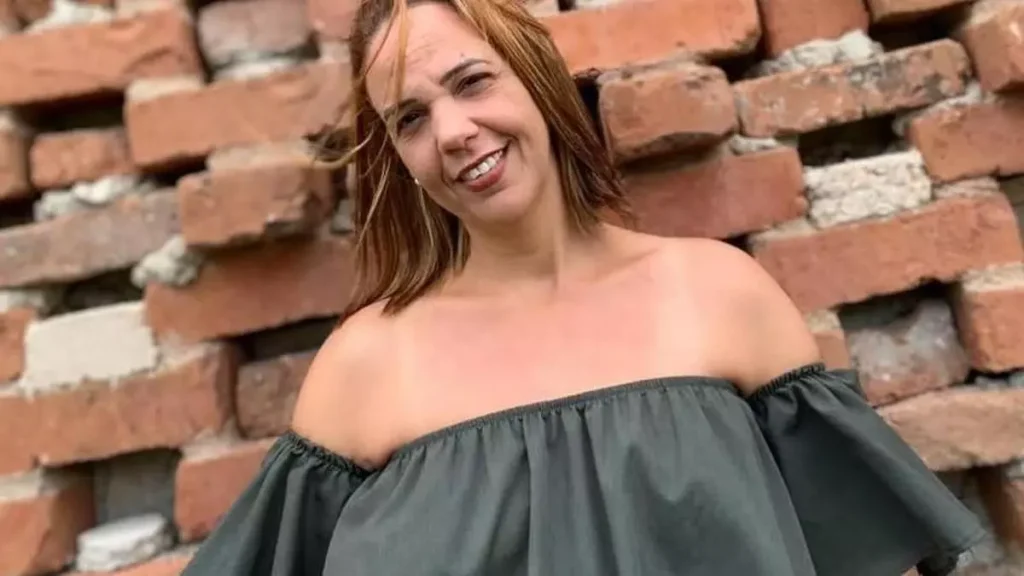
The Presidency of Cuba Announces that Díaz-Canel Is Visiting Mexico for the Fifth Time Since 2018

The Island needs Mexican oil in exchange for thousands of doctors

Díaz-Canel is accompanied by David Kershenobich, who will assume Mexico’s Ministry of Health in the Sheinbaum Government

14ymedio bigger14ymedio/EFE, Madrid, 30 September 2024 — This Sunday, Miguel Díaz-Canel was the first president to arrive in Mexico for the inauguration of the incoming president Claudia Sheinbaum, which will be held tomorrow, Tuesday, October 1, four months after she was elected as the successor to Andrés Manuel López Obrador. López Obrador has been one of the closest allies of the Cuban regime, as evidenced by the Pemex oil shipments to the Island and the substantial contracts for sending doctors to the most remote and dangerous areas of Mexico.

The Cuban president landed at Felipe Ángeles International Airport, where he was received with honors by the military guard and an unknown figure: David Kershenobich, future Secretary of Health in the Sheinbaum Government. Barely a week has passed since it was known that Cuba received more than 23 million euros for three contracts from the Social Security Institute and the Cuban Services Marketing company between July 2022 and December 2023, in addition to the announcement that the Island’s health workers will continue arriving in Mexico under the new Government.

Díaz-Canel is accompanied by a delegation that includes his wife, Lis Cuesta, as well as the Minister of Foreign Affairs, Bruno Rodríguez Parrilla; the head of the Department of International Relations of the Central Committee of the Communist Party of Cuba, Emilio Lozada García; and the general director of Latin America and the Caribbean, Eugenio Martínez Enríquez. The delegation is completed by the Cuban ambassador to Mexico, Marcos Rodríguez.

A note published by the Presidency of Cuba points out that this is “the fifth time that the Cuban leader visits Mexico since he assumed the presidency of the Island in 2018, which denotes the close relationship he has maintained during all these years with the outgoing president, Andrés Manuel López Obrador.”

Shortly after Díaz-Canel, Brazilian President Luis Inazio Lula da Silva arrived. President Gustavo Petro of Colombia postponed his trip to Monday after the helicopter crash in which eight members of the Air Force lost their lives. “I want to accompany the families in their pain and follow the investigation personally to determine the causes of the event,” Petro said continue reading

when announcing his delay. It is expected that this Monday both presidents will meet with Sheinbaum to analyze the possibility of continuing to try a joint mediation of Brazil, Colombia and Mexico that promotes a dialogue between Venezuelan President Nicolás Maduro and the opposition, which claims the victory of their candidate, Edmundo González Urrutia, with 70% of the votes in the July 28 elections.

Díaz-Canel will have several unspecified meetings this Monday, as well as one with “members of the Cuban state mission.” However, the official press makes explicit the exchange about education, culture, sport, the preservation of heritage and the environment, in addition to Health, with special emphasis not only on staff contracts, but also on those for medical students. There is no mention, however, of the shipments of fuel – presumably free – nor of the frustrated agreement on the Mayan Train, with which Mexico hoped to import 200,000 tons of stone from the Island but the total remained at just 7,000, without counting the human and environmental damage of López Obrador’s star project.

Mexico hoped to import 200,000 tons of stone from the Island but the total remained at just 7,000, without counting the human and environmental damage of López Obrador’s star project

At the opening of the Chetumal station, the president-elect starred this Sunday in her last official act prior to the inauguration. “I’m ready, I’m strong. The people of Mexico are ready to start the second stage of the ’fourth transformation’,” said Sheinbaum, referring to the term with which the political project of the ruling party is known.

“In recent months, I have witnessed how beautiful it is to see a president merge with his people and how exciting it is to see a people merge with their president,” she said at the end of her so-called “transition tour.”

“I’m not idolizing you, but I’m proud to say that you are among the greats and that for millions of Mexicans you are the best president our country has ever had,” said Sheinbaum of her predecessor, before praising his achievements: “a new economic model, the foundations of a new judiciary, the foundations of a new thought” and “a politicized and cheerful people,” among others.

“The Mayan Train in the face of all adversities is a reality,” Sheinbaum celebrated, and she said that, contrary to criticism, “the train means the preservation of the largest ecological rainforest after the Amazon.”

López Obrador, who highlighted the role of the Armed Forces in the infrastructure, joked that its inauguration will probably mean vacations for the military workers. “Don’t believe me too much because the new president is very hardworking, and I’m sure she already knows what the trains from the north are going to do.”

The flagship project of the Mexican president contemplates 1,554 kilometers with seven sections that cross five states and 36 municipalities with a total of 34 stations. Sheinbaum announced in July the creation of two new passenger train lines, one departing from Mexico City to Guadalajara, and the other to Nuevo Laredo, Tamaulipas, on the border with the United States, which she described as a “Mayan Train to the north.”

Hundreds of migrants and refugees asked her this Sunday for protection from the violence they suffer

The new president must, however, look at her borders as a priority. There, hundreds of migrants and refugees asked her this Sunday for protection from the violence they suffer.

During a procession with religious leaders from the Catholic Church, the attendees of the 110th World Day of the Migrant and Refugee in Tapachula, Chiapas, called on the Mexican Government to provide free and safe passage for migrants to be able to reach the border with the United States.

Evelin Leonel Villanueva, from Honduras, requested support from Sheinbaum to expedite appointments for interviews in the Mexican Commission for Refugee Aid (Comar), since they have been delayed by six months.

“We feel insecure but also safe with the Mexicans who help us, who can give us free passage to the border and enable transportation for low-income people. It is difficult for us to safely reach the border to be with our family,” she said.

Translated by Regina Anavy

____________

COLLABORATE WITH OUR WORKThe 14ymedio team is committed to practicing serious journalism that reflects Cuba’s reality in all its depth. Thank you for joining us on this long journey. We invite you to continue supporting us by becoming a member of 14ymedio now. Together we can continue transforming journalism in Cuba.

Cienfuegos, Cuba, a City that Dies at Sunset

The corners and parks, which used to be filled with children playing soccer and adults playing dominoes, remain empty. / 14ymedio

14ymedio bigger14ymedio, Julio César Contreras, Cienfuegos, 29 September 2024 — The monotony in the streets of Cienfuegos after three in the afternoon would have been unimaginable a few years ago. The corners and parks, which were filled with children playing soccer and adults playing dominoes, remain empty this Saturday. Procedures and purchases are carried out before noon, and later, when the city goes dark, only beggars and stray dogs remain on the streets.

“I have lived in this city for 71 years, and I’ve never seen it as dead as I do now. People speak ill of the era of capitalism in Cuba, but before, on this same street, one could eat and drink what he wanted,” says Julio, an old man who has paid 20 pesos for a small cup of coffee on the outskirts of the El Español hotel. “This cup is the size of a pea with water, but retirement doesn’t give me enough to pay for a real coffee.”

Gabriela shares the feeling that time is moving slowly and with nothing interesting to do / 14ymedio

Julio complains that, as soon as it’s noon, even the State shops close. As he explains, the variety of entertainment options in the city is zero, and if there were any, it is likely that people wouldn’t be able to afford them. Olivia accompanies the old man, whose visit to the office of the national continue reading

telecommunications company Etecsa – in the middle of working hours – was fruitless. “These people close at 4:00 in the afternoon, and on Saturdays they don’t open until 11:30 in the morning. With my work schedule it’s impossible for me to take care of any business with them,” he emphasizes.

According to Olivia, until some time ago, institutions were still open at 7:00 p.m., but the pandemic was the ideal pretext to restrict working hours and make life even more difficult for the people of Cienfuegos.

“It’s already impossible to go out at night because of the blackouts and the total lack of public transport. Added to that are the few cultural options and the very high price of any product. You can’t even go out for a walk with your family,” the woman reports.

Julio complains that, as soon as it’s noon, even the State shops close / 14ymedio

Julio knows very well what Olivia is talking about. “In my time people went to dance, shared some time at the Casa de la Música or had fun in the Tropisur cabaret. If you were bored, you took a walk around the Jagua hotel or any recreational center in Punta Gorda. Today the only thing we can do is remember that time,” he says.

Gabriela, Julio’s granddaughter, who attends university, is not interested in the activities her grandfather did in his youth. However, she shares the feeling that time moves slowly and with nothing interesting to do. “What am I going to do? Sit in El Prado until they turn on the power at dawn? Go out on a Sunday to find everything closed and the street empty? Expose myself to being assaulted and robbed in the middle of the darkness of the boardwalk? That’s why I prefer to stay home,” she says.

At the age of 21, the young woman hopes to be able to leave Cuba soon with the US Humanitarian Parole Program that her father arranged for her from the United States. “When I leave I’m going to take advantage of the time and go to the movies, which I’ve never done, and to discos and amusement parks. But while I’m here, it’s better to entertain myself on my cell phone,” she says.

Procedures and purchases are made before noon, and later, when the power goes out, only beggars and stray dogs remain on the streets / 14ymedio

Gabriela’s opinion is shared by many Cienfuegeros, who leave the streets as soon as the sun goes down. “If you go to an ATM to withdraw cash, there is no money. If you want to have a soft drink, it’s hot. There is such great negativity and incompetence that coexistence is impossible,” Gabriela complains, with the uncertainty of not knowing how she will get home, near the Tulipán neighborhood.

The Terror of ‘Motorinas’ Spreads in Havana

For fear of the them exploding, a private parking lot prohibits recharging batteries

Whoever reads the sign does not take long to notice the reason for the ’apartheid’ between ’motorinos’ and cars / 14ymedio

14ymedio bigger14ymedio, Juan Izquierdo, Havana, September 30, 2024 — The massive arrival of electric motorbikes or “motorinos” to Cuba, first from China and now from several Latin American countries, has been accompanied by multiple accidents caused by the explosion of batteries in private homes. Entire families have died in those fires, and many Cubans are afraid of the motorinos, considering them to be time bombs.

“It is forbidden to charge electric motorcycles,” says a sign on the door of a private parking lot on Rodríguez Street, in the Havana neighborhood of Luyanó. Whoever who reads it, does not take long to notice the reason for the apartheid, which divides the plugs between motorcycles and the rest of the vehicles.

“People are terrified of those motorinos because lately many have exploded,” says Raquel, a neighbor of the parking lot who remembers having recently seen the news about one of these accidents on social networks. The explosion she is talking about occurred in the capital itself last Wednesday, when one of those vehicles caused a fire at number 59 Picota Street, between Jesús María and Acosta, in Old Havana. continue reading

Last Wednesday one of those ’motorinos’ caused a fire at number 59 Picota Street

In addition to the charred furniture, the destroyed objects and the smoke stains on the facade of the building, a 60-year-old man, identified as Lázaro Calzadilla, lost his life.

Before that accident, another explosion in the Diez de Octubre neighborhood in August ended the life of a family of four – including a baby – with only a 13-year-old girl surviving.

Experience has shown Cubans that you don’t need to tamper with the battery, overuse the motorbike or overheat the circuits for one of them to explode unexpectedly and destroy everything around it. “I understand that they don’t forbid them from entering the parking lot,” Raquel reflects, “but if they don’t show up, it’s better.”

Translated by Regina Anavy

____________

COLLABORATE WITH OUR WORKThe 14ymedio team is committed to practicing serious journalism that reflects Cuba’s reality in all its depth. Thank you for joining us on this long journey. We invite you to continue supporting us by becoming a member of 14ymedio now. Together we can continue transforming journalism in Cuba.

‘Che’ and Fidel, Two of the Poor People Who Attend the Food Kitchen of the Catholic Church in Santa Clara

Dozens of people come to the old garage opposite the cathedral every Sunday, to be given food

The humanitarian association Cáritas supports help programmes in Cuba, such as nurseries, food kitchens and refuges / Cáritas Santa Clara

14ymedio bigger14ymedio, Santa Clara, 19 September 2024 – For five months, a garage opposite the Santa Clara cathedral has filled up with people in need of food. In two rooms inside the old ’storage’ – the name [in English] by which these old installations owned by the Catholic church are known by everyone in the city – a dinner is served up, comprising whatever is available. A layered salchichon sausage with salad, picadillo with mushrooms or olives or rice. The place is soon buzzing with activity. Everyone begins to chat. It happens each Sunday.

Cáritas, the Catholic humanitarian association, provides the food. It’s paid for by donations which “appear”, coming mostly from the German association Help for the Church in Need. It’s open to anyone, in theory, and in practice there are dozens who turn up – 60 or 70 people for whom the State has many names but few solutions: vagrants, the vulnerable, beggars. “They come here principally in search of food, but we also chat with them and make them feel welcomed”, a priest from the diocese tells 14ymedio.

A few diners have become celebrities in their own right, like “el Che”, a beggar who dresses in a military jacket and beret and sports a beard, and who, not infrequently, is the centre of attention, says the priest. “He gets together with two brothers”, he says, not without irony, “who, it just so happens, are called Fidel and Raúl”. There is limited space in the concrete garage, but generally there is a warm atmosphere at the dining tables.

Feeding the poor of Santa Clara isn’t a new project for the city’s Catholic church.

Feeding the poor of Santa Clara isn’t a new project for the city’s Catholic continue reading

church. There have been many initiatives, all of them looked down upon by the local authorities. “It began when a number of young people from the diocese went out into the city giving out food bags but it didn’t please the authorities and ended up being suspended. Now this is being done again, thanks to various donations to Cáritas, but on the condition that it’s done with as little publicity as possible”, says the cleric.

In fact there is little of this activity to be seen on social media. Any image, in the hands of the authorities, could be used to monitor or even obstruct the project. The church, he says, continues to be closely watched by State Security, which, in an already familiar practice, “seems” to have informers in the parish, in cultural centres and in the diocese Training Centre, where courses on the margin of official indoctrination are still being taught.

Just like the country as a whole, the diocese’s humanitarian work is going through difficult times. Ever since the government’s Tarea Ordenamiento (’Ordering Task’) law, the church’s purchasing power has suffered an almost mortal blow and cutbacks have been very noticeable. Nevertheless, charity continues to be a priority and its assistance programmes – the already known distribution of basic supplies that they carry out in no small number of parishes, as well as the food kitchens and the nurseries – have not ceased to function.

Just like the country as a whole, the diocese’s humanitarian work is going through difficult times

In other scenarios, such as in the refuges and clinics, run by Corazón Solidario (Caring Heart) in Santa Clara, where they give out prescription medicines to those in need of them, the administering is adequate but also they have to rely upon Cáritas.

Cuban bishops brought this to attention in a letter written at the beginning of September in which they asked for help and support from Spanish catholics. “The situation”, they said, “is worse than that which we saw in the 90’s, in the so-called Special Period“. Emilio Aranguren, president of the Bishops’ Forum, explained that there is a “huge scarcity of basic produce that can only be obtained at exorbitant prices”. There’s also the lack of medical supplies, which causes “the sick to be very much in distress and makes their lives and the lives of the people around them very difficult”.

Nor are there priests available to travel to the island – whose national clergy is in itself already depleted – a lack of which, in practice, means not being able to count upon enough reliable administrators for ecclesiastical projects and pastoral work.

This shortage of clergy is one of the problems which — according to Aranguren, the source interviewed by this newspaper, and two other prelates, Arturo González, vice president of Conference, and the Jesuit priest Juan de Dios Hernández, secretary general — was put to Pope Francis during their visit to the Vatican on 16 September.

The bishops confirmed that they did talk to the Pope about “the difficult reality” in the country

The three bishops have been extremely cautious about discussing the details of that meeting, but in brief announcements to ecclesiastical media they have confirmed that they did talk to the Pope about “the difficult reality” in the country, about which Francis – who has visited Cuba on a number of occasions – has been reluctant to make critical pronouncements.

The Episcopal Conference will hold elections in November and, despite the advanced age of the bishops (almost all being of retirement age and with no youthful replacements in sight) it’s hoped that Aranguren, who has occupied, since 2017, a post that has been in no small way delicate, will not return to the presidency. Nevertheless, the cleric told us in our interview that when it comes to Cuba it’s not impossible that he will have to continue in office.

In search of an official assessment of the Episcopal Conference’s view of the outlook for Cuba, 14ymedio has tried a number of times to contact its executive secretary, the cleric Ariel Suárez. Our calls have, however, not been answered.

Translated by Ricardo Recluso

____________

COLLABORATE WITH OUR WORKThe 14ymedio team is committed to practicing serious journalism that reflects Cuba’s reality in all its depth. Thank you for joining us on this long journey. We invite you to continue supporting us by becoming a member of 14ymedio now. Together we can continue transforming journalism in Cuba.

“Not Even Its Leaders Believe in the CDRs, and Many Now Live in the United States”

Cienfuegos is left without stew and with blackouts

Without music or celebration, the neighbors dedicated themselves this Friday to spending the blackout in the portals of their homes / 14ymedio

14ymedio bigger14ymedio, Julio César Contreras, Cienfuegos, 28 September 2024 — That a resounding and long downpour would fall this Friday on Cienfuegos was the hope of the Committee for the Defense of the Revolution (CDR) to mask the discouragement in the neighborhoods of the city during the anniversary of the organization. However, neither luck nor hurricane Helene favored the officials; the festivities begin on the 28th, and by afternoon, the sun was shining brightly.

“We have to recognize people’s apathy when it comes to the CDRs. Most of the time we are forced to fill out reports with invented data, because on many blocks we don’t even have leaders at the base level now,” admits a CDR official who tells 14ymedio that it was impossible for them to carry out an activity even on Argüelles Street, where they have their provincial headquarters.

The official, on condition of anonymity, confirmed the suspicions of many Cubans: “The organization has been dying for years. We no longer have the power to call for attendance, to collect food or to ask for voluntary blood donations, which were two fundamental objectives. Not to mention the CDR guard, which disappeared years ago.” continue reading

It was enough to approach the neighborhoods to confirm that the residents did not give importance to the date

At least in Cienfuegos yesterday, it was enough to approach the neighborhoods to confirm that the residents did not give importance to the date and most preferred to stay at home. “Here the only thing we are waiting for is that they put the power back on, because we are now having five hours of blackout. So how can they convince us to have a party and contribute to a stew, when no one has anything to eat or knows what to cook?” Arelis asked, sitting on the sidewalk in front of her house.

“The president of the CDR this year did not dare ask for anything to make the stew, because it is very clear that no one is going to donate the little they have to celebrate the hunger and misery that exists,” the woman explains. After renouncing the militancy of the Communist Party, Arelis explains that she has disassociated herself from everything related to the work of the CDR, because “people cannot be convinced to commit to something that only demands sacrifice without anything in return.”

“A few years ago I still was going into the street every time they announced a meeting. One day my daughter asked me why I was doing it, and I told her that it was for her, that she was at university and I didn’t want her to have a bad mark on her record. That day she told me that she was sick of being watched at school and that we didn’t have to play along with the snitches. Since then I’m not going to any call for anything,” she says.

While years ago on the eve of September 28 the streets were filled with Cuban flags hanging from windows and large cauldrons arranged for the collective stew, today the silence and reluctance highlight the discredit of the organization. “Not even the leaders believe in the CDRs, and they are paid to keep them going,” says Marcos, who claims to be one of the many harmed by the “surveillance disguised as concern” that is typical of the committees.

The calm mood of the neighborhood showed the organization’s lack of power to get people to the meeting / 14ymedio

The comecandela [assholes] who made my life miserable now live in the United States, and I’m still here, in my little house on Reina Street. The CDRs have done a lot of damage. All kinds of scoundrels disguised as revolutionaries belonged to their ranks. Now that the ship is sinking no one wants to be connected to them, but at the time they organized acts of repudiation and were consecrated activists,” he asserts.

The 65th anniversary of the CDRs does not seem to interest the people of Cienfuegos, who, before even considering attending a party, must ensure their daily survival. In neighborhoods with houses in poor condition, destroyed streets and people plunged into poverty, there is no reason to celebrate. “Until recently, on the anniversary you could hear music from Villuendas Park to Martí Park. You could smell stew from the Tulipán neighborhood to the Malecón. Many things have changed,” regrets Arelis, who for years was president of the CDR on her block.

Translated by Regina Anavy

____________

COLLABORATE WITH OUR WORKThe 14ymedio team is committed to practicing serious journalism that reflects Cuba’s reality in all its depth. Thank you for joining us on this long journey. We invite you to continue supporting us by becoming a member of 14ymedio now. Together we can continue transforming journalism in Cuba.

Cuba Extends Tariff-Free Imports for Food and Medication Until January 31, 2025

With the exemption, the regime is convinced that emigrants will continue to provide for the needs of their relatives on the Island

The regime has renewed the measure on several occasions since its implementation in 2021 / 14ymedio

14ymedio biggerEFE (via 14ymedio), Havana, 28 September 2024 — The Ministry of Finance and Prices extended, until January 31, 2025, the tariff exemption for food, medications and other products that travelers can bring to the Island for non-commercial purposes, according to the latest Official Gazette. The regulations adopted in 2021 have been extended on several occasions and so far maintain the limit of the customs value – from 200 to 500 US dollars – for imports made by natural persons through shipments.

The ministry’s resolution puts the value limit for imported items at 500 dollars and up to 50 kilograms, in the value-weight ratio established by the General Customs of the Republic. Likewise, it specifies that the benefit of the exceptional tariff exemption is maintained for the first 30 dollars of the value or its equivalent weight of 3 kilograms, and the rate of 30% will be applied to the excess.

Food, hygiene products, medications and supplies, are authorized up to a limit of 200 dollars or 20 kg

In the cases of food, hygiene products, medications and supplies that are imported by natural persons through air, sea and postal shipments, a limit of 200 dollars or a weight of 20 kilograms is authorized, according to the resolution. continue reading

The current legislation in Cuba on the import of luggage consists of a complex system of weight points and limits that establishes tariffs on excess items brought by travelers. The import of food and medications without tariff limits was a measure adopted after the Island-wide anti-government protests of 11 July 2021 (11J), which had among the main causes the scarcity and shortage of basic products.

With the extension, the regime is convinced that emigrants will continue to provide for the needs – not only financial but also health and food – of their relatives on the Island.

Cuba has been suffering from a severe economic crisis for more than three years, which is reflected in the scarcity of basic products, the partial dollarization of the economy, the depreciation of the peso, the prolonged and frequent blackouts and the sharp increase in prices.

The effects of the pandemic, the tightening of the U.S. economic embargo and failures in economic management are the main reasons for the deterioration, which is stimulating migration – mainly to the U.S. – and social discontent.

Translated by Regina Anavy

____________

COLLABORATE WITH OUR WORKThe 14ymedio team is committed to practicing serious journalism that reflects Cuba’s reality in all its depth. Thank you for joining us on this long journey. We invite you to continue supporting us by becoming a member of 14ymedio now. Together we can continue transforming journalism in Cuba.

The United States Excludes Cuba From the 2026 Visa Lottery for Exceeding the Migrant Limit

In 2024, 3,081 Cubans benefited from a total of 50,000 visas for citizens of more than 50 countries

A group of Cubans lines up to enter the U.S. Embassy in Havana / EFE / Ernesto Mastrascusa

14ymedio bigger14ymedio, Havana, 28 September 2024 — The United States Government decided to exclude Cubans from the Diversity Visas (DV) migration program for the 2026 fiscal year, due to the increase in the flow of migrants from the Island in recent years. No Cuban will be able to participate in the call that will open between October 2 and November 5 for the well-known “bombo.”

“For the DV-2026 visa, natives of the following countries and areas are not eligible to apply, because more than 50,000 natives of these countries emigrated to the United States in the previous five years,” the State Department explained in the call for the program before listing Cuba along with Mexico, China, Haiti and Venezuela, among others.

Washington also stressed that, “with the exception of Cuba,” which is not eligible for the DV-2026, “there were no changes” in the list of eligible countries with respect to the call for the previous fiscal year.

With this decision Cuba joins countries such as Mexico, China, Haiti and Venezuela, which are banned from the program

The Visa Lottery is a mechanism used by thousands of Cubans to emigrate legally and permanently to the United States, at least since 1995 when it was launched after the Immigration Act of 1990. It offers just over 50,000 visas continue reading

annually, which are awarded at random among all applicants from more than 50 countries.

Cubans had participated in the program uninterruptedly. In 2015, rumors circulated of a possible decrease or cancellation of the program for migrants from the Island, due to the re-establishment of relations between Washington and Havana.

With the exception of Cuba, “there were no changes” in the list of eligible countries with respect to the call of the previous fiscal year, Washington explained

In the 2024 Visa Lottery, a total of 3,081 Cubans were selected in the draw, a number that represents more than double those who were selected in 2022, when the United States granted the benefit to 1,358 Cubans. On that occasion, the Island became the country that contributed the most winners in Latin America.

The results of the 2025 Diversity Visa program, which included Cubans, have been published online since May 4. Cubans who registered between October 4 and November 7, 2023 are hoping to be selected for one of the 55,000 visas offered.

Translated by Regina Anavy

____________

COLLABORATE WITH OUR WORKThe 14ymedio team is committed to practicing serious journalism that reflects Cuba’s reality in all its depth. Thank you for joining us on this long journey. We invite you to continue supporting us by becoming a member of 14ymedio now. Together we can continue transforming journalism in Cuba.

Arrested on Sunday, the Leader of the Ladies in White, Berta Soler, is Released

The activist left the Aguilera station in Havana without charges or fines

Berta Soler was arrested while leaving the headquarters of the Ladies in White in the Havana neighborhood of Lawton / Facebook

14ymedio bigger14ymedio, Havana, 24 September 2024 — Almost three days passed before the police released Berta Soler on Tuesday morning. The leader of the Ladies in White was arrested on Sunday by State Security and her husband, former political prisoner Ángel Moya, repeatedly reported that her whereabouts were unknown and that the authorities said they did not know her whereabouts.

It was Moya himself who reported that at 7:45 am on Tuesday, Soler was released at the Aguilera police station in Havana. After her arrest in the Havana neighborhood of Lawton, the activist was transferred to the Aguilera station, then to Cotorro, and finally back to Aguilera. “During her detention, she was confined in semi-dark cells, without water and without possession of her Bible,” said Moya.

She was released from prison without charges or a fine, and this time – unlike other times – the officers did not threaten her. In a post on Monday, Moya reported that his wife “did not appear in the police registry of detainees.” He explained that he called 106 – the police number for filing complaints – and uploaded the audio of the conversation, in which a receptionist at the Ministry of the Interior told him that they did not have the arrest report. In addition, she asked him to go to the “closest” police station and even suggested that Moya was lying about Soler’s arrest.

As happens every week for her activism against the Ladies in White, Soler was arrested last Sunday in the same place. She was taken to the police unit of the Havana municipality of Cotorro and was released two days later. The activist then denounced, in a video on Facebook, that during the lockdown she was threatened by a State Security agent with a “detention of no return.” continue reading

As happens every week because of her activism against the Ladies in White, Soler was arrested last Sunday in the same place

During that time “she was threatened by the repressor Felo, of the State Security, with imprisonment, for not accepting an agreement to end her activism in exchange for going with her husband to the United States” to visit her relatives, Moya said. Regarding the warning, Berta Soler herself said on Sunday morning on Facebook: “I will be on the street and only God knows what can happen. There is no pact with the repressor.”

“This ultimatum that the Cuban regime is giving us,” Soler added in an interview with CubaNet, “this possibility of temporarily leaving the country by removing our ’regulations’ [a prohibition on travel outside the country], is being done to remove Berta Soler and Ángel Moya from above, and also to liquidate or silence the Ladies in White, but that card was played very badly because I am not a person who enters into arrangements with the State Security.”

“Repression has escalated” in recent times against the Ladies in White, the activist said last June, during an interview with the EFE agency.

The members of the Ladies in White in the provinces of Matanzas, Holguín, Villa Clara and Havana have been arrested almost every Sunday since, in January 2022, they decided to go out again to attend mass, after a pause due to the pandemic, in protest to ask for the release of political prisoners, including those of the massive demonstrations of 11 July 2021.

The movement was created by a group of women, relatives of 75 dissidents and independent journalists arrested and sentenced in March 2003 to high prison sentences after the wave of government repression known as the Black Spring. The mobilizations began with a series of Sunday marches to demand their release and became a symbol of dissent, which led to the fact that, in 2005, they were awarded the Sakharov Prize for Freedom of Conscience of the European Parliament.

Translated by Regina Anavy
____________

COLLABORATE WITH OUR WORKThe 14ymedio team is committed to practicing serious journalism that reflects Cuba’s reality in all its depth. Thank you for joining us on this long journey. We invite you to continue supporting us by becoming a member of 14ymedio now. Together we can continue transforming journalism in Cuba.