Cimex and Caribe Will Open Dollar Stores in All Cuban Provinces

Instead of coins, customers who pay with cash must accept their change in the form of candies or ‘other products available by the cash registers’


According to the authorities, up to 7 % of Cimex and Tiendas Caribe supermarkets will follow the business model of 3rd and 70th supermarket in Havana / 14ymedio

14ymedio bigger14ymedio, Madrid, 30 January 2025 — The military conglomerate Gaesa plans to progressively expand trade in dollars to a large number of establishments in its network through Tiendas Caribe and Cimex, starting with the capitals of each of the 15 Cuban provinces. The decision was made as a result of the good results obtained by the recently opened 3rd and 70th supermarket, on the ground floor of the luxury hotel Gran Muthu Havana, which accepts payment only in dollars, both by card and in cash.

The spread of sales in US currency was the main idea transmitted to the population this Wednesday in State TV’s Round Table program, which brought together Mildrey Granadillo de la Torre, first deputy minister of Economy and Planning, along with several senior officials of the Central Bank of Cuba (BCC) and the two retail companies of Gaesa involved in the titanic task of raising dollars quickly, an objective declared by the participants in the talk.

According to Yamilé Álvarez Tejo, head of the commercial department of Tiendas Caribe, sales at the 3rd and 70th supermarket are going smoothly. “The revenues have been significant, with good acceptance of the variety of products, from the cheapest to the highest-end. The customers even appreciate the fact that the prices are favorable with respect to nearby markets and other markets in Cuba.” The director said they hope to attract staff – 90 workers to serve 3,000 people a day. “Per capita consumption is also quite high,” although customers showed less satisfaction with the method of payment.

“The revenues have been significant, with good acceptance of the variety of products, from the cheapest to the highest-end”

“They have not behaved as we would like,” she said, explaining that customers continue to show a preference for cash. “This creates operational stress and makes certain processes in cash control mechanisms and cash validation more complex. At certain times there is a lack of dynamism in the cash registers, since the 100-dollar bills must be validated, and there are a lot of them,” she added. continue reading

In any case, the intention is to progressively continue along this path. Granadillo recalled that in March 2024 the payment of fuel in dollars began to be allowed – sometimes almost forced, since these gas stations are the only ones stocked. Since June, this has spread to other products, mostly linked to the tourism sector, such as the Casas del Habano, and international pharmacies and opticians.

They were “the first steps we took based on the partial dollarization,” stressed the minister, who insisted that the measure was temporary and that “during the year this new network of stores should not exceed 7% of all the Cimex and Tiendas Caribe stores.” In addition, the BCC official assured, despite the evidence to the contrary, the peso will continue to be “the center of the Cuban financial system.”

They also guaranteed that the freely convertible currency (MLC) will be maintained, about whose disappearance there has been much speculation. Those accounts denominated in MLC and the commitment of banks to the obligations with their customers are maintained, based on the funds they have represented or the funds they may have in the future,” said Alberto Javier Quiñones Betancourt, vice president of the BCC, who added that the cards associated with those accounts will continue to work “in the network designed for them to operate.” The issue has generated perplexity among Cubadebate readers, who insistently ask why payment in MLC is not allowed in those stores if it is backed by foreign currency.

They also guaranteed that the freely convertible currency (MLC) will be maintained, about whose disappearance there has been much speculation

Another fundamental axis of yesterday’s intervention was to insist that dollarization is the previous step to de-dollarization. “We have evaluated international experiences that show that a forced de-dollarization, without the creation of previous conditions, could lead to more negative effects for the Cuban economy than those it is currently facing. Faced with the currency deficit, we assessed that a short-term, transitory measure with a gradual implementation was necessary to partially dollarize the economy,” Granadillo said.

You don’t need to have the memory of an elephant to remember that a month ago the Prime Minister, Manuel Marrero, said in Parliament that to de-dollarize “you have to go down this previous path.” Also, the then Deputy Prime Minister and head of Economy, Alejandro Gil Fernández – now arrested for an alleged corruption case – said the same in 2020, when referring to the stores in MLC, which had begun a year ago to sell appliances and months earlier to offer food products.

The official said that these “undesirable but necessary and transitory” measures “subsidized” “social justice.” The idea was – as now – “to do something because the currencies are escaping” and replenish them to “guarantee a minimum supply in national currency,” practically the same words used yesterday by the officials participating in Randy Alonso’s TV program to defend the expansion of dollar stores. The move is the same, and we will have to see if the result will be the same.

The deputy minister welcomed the reduction of the fiscal deficit by “more than 39%” but admitted that this is insufficient and that “a group of services and activities that can also raise cash is being evaluated.” She specifically mentioned the remittances and the scarce exports that exist, since, she said, “Cuba is an open economy, highly dependent on imports.”

The vice president of the BCC explained that they have decided to accept dollars in cash respecting the principle that the customer can choose the payment method, although it was clear that a key element was the greater willingness of Cubans to pay in paper money. “It was analyzed, studied and the possibility was seen, as we are also talking about a faster capture of the currency,” he said. However, electronic payment is preferred, and for this the financial products of this type have multiplied, which also solves the problem of returning change to the customer.

The matter of returning change after an overpayment was mocked when it was learned that candies were given to customers to compensate for the lack of coins, specifically referring to the director of Tiendas Caribe

This matter of refunding overpayment was mocked when it was learned that candies were given to customers to compensate for the lack of coins. of Tiendas Caribe. “When paying dollars in cash, when it is necessary to return change, there is no availability of fractional currency, because it is a foreign currency that the bank does not have. This is an inconvenience. Before, with the CUC [Cuban Convertible Peso, no longer in circulation], there was no such problem, because it was a national currency. Therefore, we clarify to customers that, as long as they do not require change, the use of electronic payment channels is preferable,” she said.

After stating, annoyed, that this matter was a source of ridicule, she explained: “We don’t only give change in candy; there are other products available by the cash register to offer to customers, according to what they are owed.”

The director also referred to the supplying of stores. She said that last year, they began financing nine suppliers “who had the installed capacity and were ready to produce. But this year we are adding another ten. We will continue to increase suppliers, and we will also achieve this in other ways, from establishing formal sales relationships to true productive chains.”

In addition, she talked about other businesses resulting from “partnerships with foreign investors who are suppliers,” who will also charge in foreign currency, because “in this type of business you have to quickly achieve a return on your investments.”

Translated by Regina Anavy

____________

COLLABORATE WITH OUR WORK: The 14ymedio team is committed to practicing serious journalism that reflects Cuba’s reality in all its depth. Thank you for joining us on this long journey. We invite you to continue supporting us by becoming a member of 14ymedio now. Together we can continue transforming journalism in Cuba.

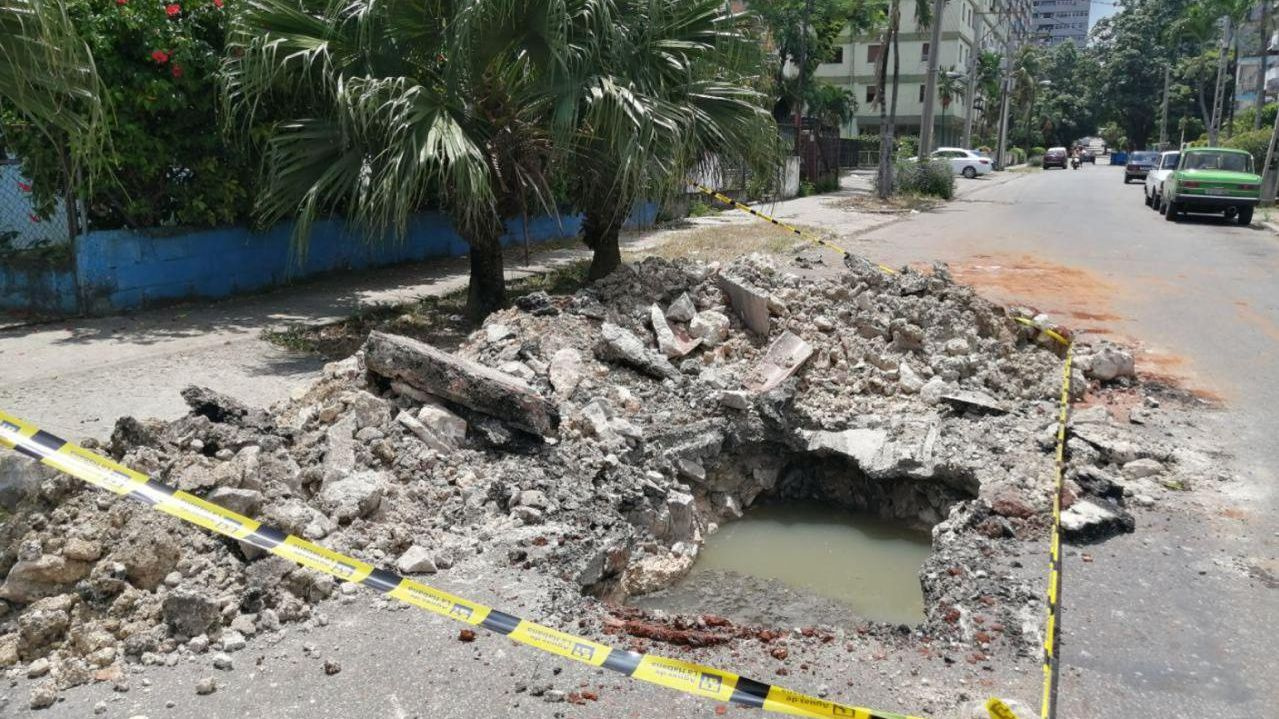
Otto Ortiz, ‘ESEN’ That is There

Ortiz was one of the founders of the group Los Hepáticos in 1987. / Jorge Fernández Era/14ymedio

14ymedio bigger14ymedio, Jorge Fernández Era, Havana, 25 January 2025 — If any beginning of a comedy show can be considered a classic of stage humor, it is what happened more than thirty years ago when Otto Ortiz and Omar Franco walked through the audience at the Carlos Marx in what seems to be a violent argument between the two characters.

Both have become legends, in Otto’s case for more than one reason. That the National State-owned Insurance Company (ESEN in Spanish) owes a car is not news, but that the affected person roasting them about it on social media, is. And that Otto Lugar (Otto’s Place) is not the name of one of his shows, but the name of a pizza place, is also news. So, I go in, sit down and ask the waitress to call the manager immediately.

14ymedio/Jorge Fernández Era. In 1987 you were the founder of the group Los Hepáticos. (The Livers). Thirty-eight years later, how’s that bile?

Otto Ortiz. That bile, as you say, is at its best, more critical and elaborated. I started in the group Los Hepáticos doing very basic humor. With time, with knowledge, with the internet and access to humorists from different countries, we humorists have been looking for our own space, our own way of saying and doing things.

In the beginning, we worked together with Nos y Otros (Us and Others). We didn’t understand their humor much, but today we have followed their line

In the beginning, we worked together with Nos y Otros (Us and Others). We didn’t understand their humor, but today, I guess because of our maturity, we have followed their line.

I don’t just use stage humor. Three decades ago we were terrified of cabarets and nightclubs. Not now, and we have even ventured into social media, with a distant but active audience.

Cuban humor has always enjoyed good health. What is lacking, if anything, is humorists, we have been losing them. continue reading

14ymedio/Jorge Fernández Era. Let’s say ESEN gives you a tourism cab, broken-down and worn-out like you. Would you leave the pizzeria and become a cab driver?

Otto Ortiz. The National State-owned Insurance Company has been a part of my life for five years. I have five children: four real ones, and ESEN, which should be my mother, my father, but it is like a child to whom I allow everything until one day it does something good. I don’t know if he will give me an old and bad car like me, but as long as it fulfills its social role I will be happy. After that, I don’t know what I will do with the car.

I don’t think I’d leave the pizzeria. People know me for three things. The third one is as a humorist. The second one is for ESEN. The first one is for my pizzas. Those are three things that mark who I am. The public Otto is a mix of a pizzeria, state-owned insurance and humor. When ESEN gives me the car, I’ll put in a good word for them. People will say, “Look at this scoundrel.” But I’ve grown fond of them.

14ymedio/Jorge Fernández Era. It seems that your obsession with ESEN is a way to erase the bad memory of the baseball fuel shortage you had in the nineties to defeat Nos y Otros.

Otto Ortiz. Between 1988 and 1990, with Los Hepáticos, I did several seasons at the Carlos Marx, directed by Virulo. Nos y Otros were there too. We organized a four-team tournament. They say they won, we say the opposite, the dispute is still going on. Six top intellectuals like Nos y Otros can’t beat four or five pure “costumbristas” who were Los Hepáticos. I don’t believe that arts can prevail over people from Marianao, Mantilla, La Palma… Edit it however you want to, the paper can stand it.

14ymedio/Jorge Fernández Era. Tell me about Malas Compañías (Bad Company), the ones on the web and the ones you’ve had in your life.

Otto Ortiz. Malas Compañías is a YouTube series that I have the honor of sharing with the people of Punto y Coma (Semicolon), Visti Cárdenas and Iván Salgado. It has to do with relationships between individuals with different sexual orientations: acceptance, acknowledgement, and respect. El Nene (The Baby) who is me, is an old macho and homophobic man who for some reason lives with a gay man. We are already sixteen episodes in, we have addressed different topics, always from a humorous point of view. Behind an apparently simple script, there are messages, especially stories that you laugh about and enjoy. At this point it is very difficult for things not to have a meaning, to “say something.” We try to make people think, to make them grow.

Personally, bad company is left behind. I don’t have many friends and I don’t bother the ones I have. When I love someone I don’t bother him, neither does he, but we are there for each other. We don’t have to say what we are or draw attention to ourselves. The key is to be there at the right time.

I must also talk about good company. I have very few, but the good ones fill the gap in my chest. You and I, for example, have had a working relationship for years, and I have been there for you too, in a relationship of great respect, of love. The simple fact of supporting you (a comment, a timely visit…) speaks of our friendship.

The bad company I discard, the good company I take care of.

14ymedio/Jorge Fernández Era. It is remarkable your insistence on keeping a deep, analytical and critical humor. Aren’t you afraid that the censorship will try to “fry” you in a different kettle of fish… at Otto’s Place?

Otto Ortiz. My humor is more analytical than critical, more analytical than deep. When you go too deep, you can go too far. The subject of ESEN has helped me to criticize from a joking point of view, but without reaching the point of excessive mockery. It’s a good way to joke, but always rubbing salt in the wound with. As Martí puts it: bells on the end, but with a whip.

I have not had the pressure of censorship. I’m not from the media, which is where there can be more fear

I have not had the pressure of censorship. I am not from the media, which is where there can be more fear, because people are officially working and with many criteria. On social media, I do more critical humor, with a certain dose of sarcasm, and people like it. I’ve been lucky with that, without a Torquemada or censor. That’s good, isn’t it?

I joke a lot with the current situation, I try not to miss anything. We live in a society that changes daily, you can’t wait until tomorrow for a joke, because it’s gone. I try to give it a humorous twist while still criticizing, but at the same time I try not to stop suggesting, sometimes just for fun, but it’s there.

I just made a joke about how they were giving candies instead of coins for change (in the store) on the corner of 3rd and 70th. Those kinds of clips don’t last a minute, people consume them well. I also do a repertoire that goes beyond criticism, with the theme of Cubanism, father-son, husband-wife relationships. But criticism must always be present in humor. If we criticized more, it would be better for us, for the country, for society. That’s why I’ll be there, even if I am “fried” in a different kettle of fish… or “baked” at Otto’s Place.

Translated by LAR

___________

COLLABORATE WITH OUR WORK: The 14ymedio team is committed to practicing serious journalism that reflects Cuba’s reality in all its depth. Thank you for joining us on this long journey. We invite you to continue supporting us by becoming a member of 14ymedio now. Together we can continue transforming journalism in Cuba.
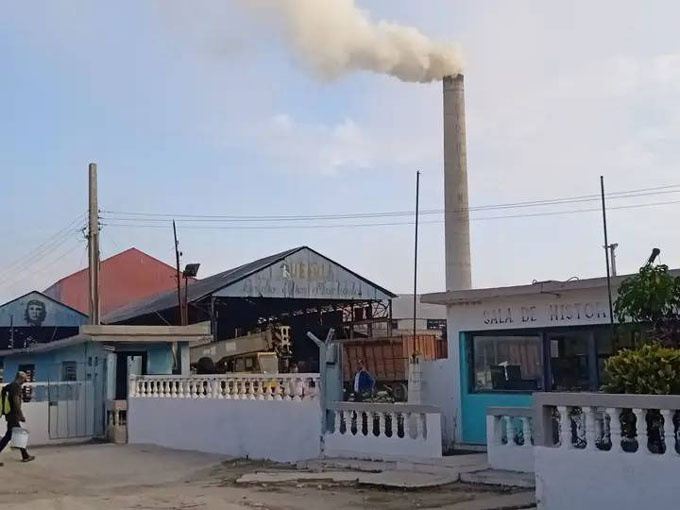
Cuba’s Minister of Transport Acknowledges the ‘Accumulated Deterioration’ of Cuba’s Roads

Rodríguez Dávila suggests that this could be the reason for the massive accidents this January

The lack of qualified personnel, fuel and other resources limits the repair of roads / 14ymedio

14ymedio bigger14ymedio, Havana, 28 January 2025 — Cuba’s Minister of Transport, Eduardo Rodríguez Dávila, has acknowledged that, although the accident data in 2024 were better than those of the previous year, “deterioration is accumulating” for roads and vehicles. His recognition may indicate an improvement, and he has become popular among those who follow his reports. In fact, he points out the massive accidents that have occurred this January as a worrying sign of that deterioration.

“The repeated news about accidents in Cuba in recent days have hurt, and they have to shake up those of us who have some responsibility in this matter,” the minister said on his social networks on Tuesday. However, he does not stop criticizing the publication of that news in the independent press: “Some headlines intend to generate the idea that we blame the drivers and do not analyze the causes in their complexity. And it’s not like that.”

Dávila maintains that the human factor is the main cause of traffic accidents on the Island, but he recognizes that the state of the roads – a parameter that accident reports do not include – “is directly related to accidents and the deterioration of vehicles.”

“It is difficult to know precisely the impact of roads in poor condition on the number and severity of accidents”

The minister claims that “it is difficult to know precisely the impact of roads in poor condition on the number and severity of accidents. Even some recent accidents with fatal consequences have occurred on roads in better condition.” However, he admits that this is a pending task of his portfolio, and that for the time being, there is little hope of effectively and quickly combating the debacle. continue reading

“In recent years, the road conservation program has not advanced as we hoped for material reasons, mainly the fuel deficit suffered by the country. In addition, the lack of a specialized work force, the lack of equipment and the obsolescence of existing equipment, among other reasons, are also determining factors,” he explains.

According to the official, the situation is worse for minor roads and side streets, which do not receive as many resources as the “roads of national interest” – highways and main thoroughfares – where there is more traffic.

There is not much more that his portfolio can do – in addition to the little he already achieves – due to his limited resources, explains the minister, who even assures that he spent “some time” driving a taxi to “understand the complexity of certain issues and to be able to better contribute to the formulation of public policies in our sector.”

In 2024, Cuba recorded a total of 7,507 traffic accidents, 12% fewer than those reported in 2023 (8,556). Deaths also decreased by 13% (634), and the number of injured people was 6,613, 4% less. The year was, it is worth adding, a period weighed down by low mobility due to lack of fuel.

Among the main causes of accidents on Cuban roads, the authorities have cited the lack of attention to control of the vehicle – in 30% of cases – not granting the right of way (29.9%), speeding, driving under the influence of alcoholic beverages and technical defects in the vehicles.

The first four causes are related, as Dávila explains, to the behavior of drivers: “It is often said that in Cuba there is no road courtesy, but when the consequences are fatal, the education of drivers cannot be optional, especially when it comes to the professionals.”

Translated by Regina Anavy

____________

COLLABORATE WITH OUR WORK: The 14ymedio team is committed to practicing serious journalism that reflects Cuba’s reality in all its depth. Thank you for joining us on this long journey. We invite you to continue supporting us by becoming a member of 14ymedio now. Together we can continue transforming journalism in Cuba.

The Sugar Harvest Begins in Granma Province, Cuba, but the Machinery Breaks Down After Two Hours

The Enidio Díaz Machado sugar mill in Granma / La Demajagua

14ymedio bigger14ymedio, Havana, 28 January 2025 — Almost two months later than planned, the province of Granma “officially” celebrated the launch this Monday of the 2024-2025 sugar harvest, although the jubilation lasted just two hours because “technical problems stopped the machines from grinding.” This was reported on Tuesday by the newspaper La Demajagua, which assured that the problem was resolved after “several lost hours and enormous effort” by the workers.

The article describes a litany of blunders. The harvest, the text reports, was supposed to begin last December, but it could not start due to a “lack of lubricants and fuel” for the machinery. After several weeks of trying to solve the “technical failures and inconveniences,” the Enidio Díaz Machado mill, located in Ceiba Hueca, Campechuela, began to grind the cane, but only from 5:00 am to 7:00 am and at barely 70% of its capacity.

After the official start this Monday, says the provincial newspaper in an apocalyptic tone, brigades of macheteros worked with the cutting, transport, lifting and pulling teams, “imposing themselves on the shortcomings that the brutal American blockade imposes on the Island.”

The harvest was supposed to begin last December, but it could not start due to a “lack of lubricants and fuel” for the machinery

The sugar workers of Granma must work with care to achieve a “harvest that exceeds 19,000 tons, and thus compensate for the forecasts of the previous harvest.” However, the Enidio Díaz Machado is running against the clock, since 17 weeks are planned for grinding. To achieve the goal, the media says, it will require “greater effort and commitment of everyone involved in the campaign.” continue reading

The sugar industry, once the Island’s economic engine, is in free fall, and the few mills that work have countless ailments: only six of the 14 planned for this campaign began production on time.

As a result, by the first week of January, barely 25% of what was planned had been ground, and “sugar production was at an insufficient 21%,” according to Dionis Pérez Pérez, director of Informatics, Communication and Analysis of the Azcuba Sugar Group. In an article published in Granma on January 9, the official added that “this scenario is aggravated by the late start-up and the non-incorporation of eight sugar mills, which represent 75% of the producers in the sector.”

Pérez Pérez explained that the electro-energy situation has also delayed the repair work in the mills, as well as in the cleaning centers and mechanization workshops. “This includes national factories, which provide essential parts and pieces for the operation of the sugar industry,” he said.

Pérez Pérez explained that the electro-energy situation has also delayed the repair work in the mills, as well as in the cleaning centers and mechanization workshops

In addition, he added, the lack of fuel availability has limited operational capacity and complicated the logistics needed to meet demand. According to the official, only 10% of the minimum financing required to carry out the harvest has been secured, which puts the sustainability of the production process at risk.

The condition of the mills is one of the reasons why grinding is minimal. It should be remembered that, in 1959, Cuba had 161 mills in private hands that produced 5.6 million tons of sugar that year. The mills remained in good condition during the decades of the Soviet subsidy, with the best sugar production data between the 70s and 80s – more than 8.5 million tons – without reaching, however, the Fidelist utopia of “ten million.”

The symbol of the harvest in recent years has been the debacle. For the 2022-2023 campaign, only 350,000 tons of sugar were achieved, the worst harvest since 1898, and well below the more than half a million tons of national consumption, not to mention the more than 400,000 tons that were exported.

Translated by Regina Anavy

____________

COLLABORATE WITH OUR WORK: The 14ymedio team is committed to practicing serious journalism that reflects Cuba’s reality in all its depth. Thank you for joining us on this long journey. We invite you to continue supporting us by becoming a member of 14ymedio now. Together we can continue transforming journalism in Cuba.

Official Ceremony at José Martí’s House and Police Operation at Otero Alcántara’s House, in the Same Havana Neighborhood

At number 41 on Paula Street, the little house that has been drawn by every Cuban child celebrates a century as a museum this January

On the 172nd anniversary of the birth of José Martí, a hurried official ceremony shook up the routine of the San Isidro neighborhood. / 14ymedio

14ymedio bigger14ymedio, Jose Lassa, Havana, 28 January 2025 — The huge sound systems and a stage, placed in the street, clashed on Tuesday with the narrow and almost childish façade of the house where José Martí was born in Havana. On the 172nd anniversary of the birth of the Cuban national hero, a hurried official ceremony, with some local authorities, shook up the routine of the San Isidro neighborhood, an area where the crisis and lack of investment have left deep wounds.

At number 41 on Paula Street, the little house that has been drawn by every Cuban child, described in songs and photographed to the point of exhaustion, celebrates its 100th anniversary this January as a museum. In the place, where Martí spent only three years of his life, there are photos of his adolescence, images of his time in New York, snapshots with his son, countless documents protected behind glass and some personal objects.

The impeccable yellow facade, the windows with their retouched blue and the red roof form a striking contrast with the surroundings.

The impeccable yellow facade, the windows with their blue touches and the red roof form a striking contrast with the surroundings. While the house, built in 1810, seems to resist the passage of time, other nearby houses are on the verge of collapse or turned into mere rubble. A few meters from the museum, of a neoclassical building from the beginning of the 20th century, only the arches remain. Through the gaps where its doors once stood, mountains of bricks, twisted iron and rubbish now emerge. continue reading

Around the corner, on Avenida de las Misiones, another building abandoned after its roof collapsed “greets” visitors who approach the place where, in 1853, the cry of a baby announced a life as brief as it was prolific. Beyond the short fragment in front of the entrance to the sanctuary, reality becomes harsher and more neglected. The sidewalks full of holes, the balconies on the verge of collapsing on passers-by and the anguished faces of residents looking for food clash with the soft tone of the guide who details the occurrences of that restless child born to a Canarian mother and a Valencian father.

Unlike the immaculate façade of Martí, the one in Otero Alcántara looks like it has been exposed to the elements for centuries. / Juliette Isabel Fernández Estrada/Facebook

If you turn right onto the street that gives the neighborhood its name, the journey then becomes a descent into a poorer, more forgotten Havana. Garbage piles up, abandoned animals search for something to eat among the waste, and a father drags a wheelbarrow with buckets and containers full of water to use in his house. Another turn, also to the right, and you end up on Damas Street. There, around number 955, there was a police operation this morning. A call today to visit the house of Luis Manuel Otero Alcántara and see his work Campesinos felizes 1938-2024 ended with threats against the organizers and several artists with their mobile service cut off.

Unlike the immaculate façade of Martí, the Otero Alcántara façade seems to have been exposed to the elements for many centuries. On its walls, you can hardly make out the blue tone that once covered them. A tangle of cables runs across the top and the door that gives access to the artist’s home, imprisoned since July 2021, has some poorly nailed boards to prevent it from collapsing. A few daring people arrived there on January 28 after reading the call on social media, but they only found poverty and abandonment. There were no platforms with microphones, no officials making speeches and much less tourists taking photos. Nor could you hear the voice of those diligent guides who explain the details of each piece on display, of each photo hanging on the wall. None of that, but rather contempt for the young artist who shouted “Homeland and Life.”

____________

COLLABORATE WITH OUR WORK: The 14ymedio team is committed to practicing serious journalism that reflects Cuba’s reality in all its depth. Thank you for joining us on this long journey. We invite you to continue supporting us by becoming a member of 14ymedio now. Together we can continue transforming journalism in Cuba.
The ELN, Linked to Cuba, Initiated a Bloodbath in Colombia To Control the Cocaine Trade

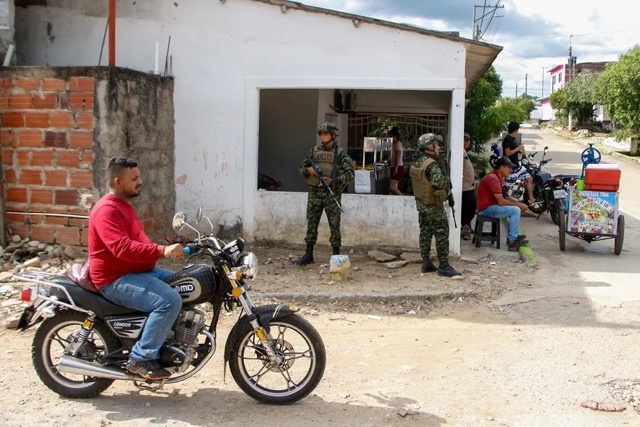
Archive photograph of soldiers of the Colombian Army before a day of peace talks between the Government and the Estado Mayor Central, the main dissident faction of the FARC, in Tibú (Colombia) / EFE / Mario Caicedo

14ymedio bigger14ymedio, Madrid, 27 January 2025 — There are 60 to 80 dead and about 50,000 displaced in 11 days, after clashes in the Catatumbo between the National Liberation Army (ELN) and the 33rd Front of the dissidents of the Revolutionary Forces of Colombia (FARC), according to estimates of the Ombudsman’s Office and the Government of Norte de Santander. However, the situation in that territory is such that the authorities have only been able to collect the bodies of 41 victims, since they cannot access certain areas.

As a report published a few days ago by Bloomberg explains, the Catatumbo mountains “are so dangerous that the police and the army do not usually go far away from their barracks for fear of snipers.” The reason for this peak of violence, the most intense of the last decade, lies in the offensive launched by the ELN against its rival group to take control of the cocaine business, from which both are financed. In the border area, not only does smuggling to Venezuela take place, but there are also laboratories and clandestine airstrips.

The ELN are proponents of Marxist ideology who emerged in the 1960s with open sponsorship by the Cuban regime, which provided them with training and weapons for decades, before recently becoming a “guarantor” of the peace negotiations, currently suspended. In recent days, the ELN has been spreading terror by going door to door “with death lists of local peasants suspected of supporting their enemies,” according to Bloomberg. continue reading

Among the fatalities are six former FARC guerrillas who signed the peace agreement with the Government

Among the fatalities are six former FARC guerrillas who signed the peace agreement with the Government. In addition, 12 other former FARC members are missing, accused by the ELN of belonging to the 33rd Front, a dissident FARC faction that has not laid down its arms and is fighting for control of the coca crops and drug trafficking routes.

In a statement issued on Monday, the ELN assures that it has not carried out actions against the civilian population or people just for “being signatories of peace,” but that it has attacked those who are armed and are “active under a military command in plans against the ELN and the communities of Catatumbo.”

It also said that “we will never accept either submission or surrender as a policy of peace.” Colombian President Gustavo Petro suspended peace talks due to the violence unleashed by the ELN after January 16 and decreed, on Friday, a state of internal disturbance. This will last 90 days and will extend to 16 municipalities in the department of Norte de Santander, including the 11 of Catatumbo affected by the violence. The decree includes Cúcuta, the departmental capital, and two municipalities in the department of Cesar, which is receiving displaced people.

The Government considers that “there is an extraordinary disturbance of public order in the Catatumbo region, resulting from armed confrontations, threats, massive forced displacements, effects on the exercise of the fundamental rights of the civilian population, alteration of security and damage to protected property and the environment.”

Petro’s claim to achieve “total peace” through dialogue seems to be an illusion

In this context, Petro’s claim to achieve “total peace” through dialogue seems to be an illusion Moreover, it could favor the conservative candidates for the Presidency and Congress in 2026, according to what analyst Sergio Guzmán told Bloomberg. “The worsening of security throughout the country and the extension of criminal gangs to areas that were previously peaceful have made many Colombians impatient with attempts to negotiate with groups that extort, kidnap and traffic cocaine,” the agency said.

According to UN data, the potential production of pure cocaine in Colombia rose by 53% between 2022 and 2023, and the hectares of coca leaf planted in its territory reached the historic record of 253,000. Ceasing to fumigate crops – the Colombian government considered drug trafficking a source of financing for guerrilla groups – was, in 2016, one of the conditions of the FARC to sit down to negotiate with the Government, under the argument – supported by the World Health Organization – that fumigation harmed legal farmers and caused serious health problems to the poorest population.

One of the consequences of the peace agreement was the overproduction of cocaine that has flooded the market ever since, and control of the trade is still disputed by guerrilla groups that have not laid down their arms.

The Colombian Prosecutor’s Office reactivated, last week, the arrest warrants for 31 members of the ELN, including the members of its leadership, alias Antonio García, Pablo Beltrán and Aureliano Carbonell, who had been peace negotiators. Guerrilla leaders have been traveling for years between Venezuela and Cuba, the country that hosted those dialogues between 2018 and 2019, the year in which they were frozen.

The potential production of pure cocaine in Colombia rose by 53% between 2022 and 2023

The relationship between Havana and the leadership of the ELN is, in fact, at the origin of the inclusion of Cuba on the US list of countries sponsoring terrorism in 2021, during the first Trump Administration. It was at the request of Colombia, because Cuba refused to extradite members of the group who were on the Island. The talks had stalled after a guerrilla attack against the Police School in Bogotá in January 2019, where 23 people died and 100 were injured.

None of this – neither the causes of the bloodbath in the Catatumbo nor the role of the regime in the negotiations with the guerrillas – has been echoed by the official Cuban press, which has limited itself to giving news of the displaced people and extolling the “solidarity of Venezuela with Colombia.”

For his part, Petro was confident on Monday that his government can consolidate control on the border with Venezuela. “Today there will be a meeting of the entire cabinet in the area to issue the decrees of internal disturbance that will give life to the social pact in the Catatumbo and the financing of the military operation to consolidate State control at the border,” he said on X.

The Colombian president will hold his usual weekly council of ministers meeting in the municipality of Ocaña, which, like the Catatumbo, is located in the department of Norte de Santander and is one of the main recipients of the more than 48,000 displaced people left by guerrilla violence. Specifically, 9,272, according to figures from the Ministry of Defense. The rest of the displaced went to Cúcuta (21,300) and Tibú (13,313).

Translated by Regina Anavy

____________

COLLABORATE WITH OUR WORK: The 14ymedio team is committed to practicing serious journalism that reflects Cuba’s reality in all its depth. Thank you for joining us on this long journey. We invite you to continue supporting us by becoming a member of 14ymedio now. Together we can continue transforming journalism in Cuba.

Swiss Airline Edelweiss, Which Cancelled Its Flights in Cuba, Is Leaving for the Dominican Republic

The last flight on the Zurich to Havana route will depart February 27th. / Edelweiss/Facebook

14ymedio bigger14ymedio, Havana, January 26, 2025 — Gravely wounded in recent years, Cuba’s tourism industry is facing a new problem: airlines rerouting flights that they previously flew to the Island, but now prefer to land at its largest Caribbean competitor, the Dominican Republic.

That happened this week. David Collado, Minister of Tourism of the Dominican Republic, told the press during the International Tourism Fair (Fitur) under way in Spain, that Swiss airline Edelweiss is redirecting several of its Cuban routes.

“We signed agreements with several different operators and airlines today, and tomorrow we will continue signing with Iberia, Air Europa, and Edelweiss, bringing five additional flights to the Dominican Republic, flights that had gone to Cuba and are being transferred to the Dominican Republic,” said the minister, who affirmed that his country has made a successful effort to secure new air routes and commercial partners.

“Today, Air Transat and Air Canada informed us that they will also increase the number of flights from Canada as well, Collado added.”

The rerouting of flights came a few days after Edelweiss announced the suspension of its route from Zurich to Havana, which will make its last flight on February 27, the company explained to 14ymedio. continue reading

The Swiss media outlet Twenty Minutes, which initially reported the suspension of the routes, stated that “the decision is based, on the one hand, on decrease in demand and, on the other, on the current conditions of the José Martí International Airport in Havana. An on-site review conducted by Edelweiss has revealed difficulties in guaranteeing stable and reliable long-haul operations in the long term.”

The company pledged to refund the price of tickets to those who had purchased tickets after the deadline.

A month earlier, the German company Condor also announced the suspension of its flights to the Island for the summer season for the first time since 1990 (other than during the pandemic). The company served three destinations: Havana, Holguín, and Varadero.

Since Cuba was added to the list of states that sponsor terrorism, European citizens visiting the Island can no longer benefit from the ESTA visa waiver program for entering the United States, which, in the opinion of the Cuban Government, had damaged its destination in the European market.

The company pledged to refund the price of tickets to those who had purchased tickets after the deadline.

Travelers from Spain, previously an important market for Cuba, showed the most worrying drop: Up to November in 2024, Spain contributed 26.8% fewer travelers than in the first eleven months of 2023. It is not surprising, therefore, that the Cuban Minister of Tourism, Juan Carlos García Granda, arrived at Fitur stressing that his Government is working in the face of “difficult, complicated scenarios” in the tourism sector.

The promise of the Ministry of Transport to repair airports has also not been carried out. Last July, Minister of Transport Eduardo Rodríguez Dávila said that planned improvements at José Martí Airport in Havana (a new air conditioning system and facilities expansion) for terminal 3, dedicated to commercial flights, had never happened. “In reality, that airport has been at its limit for a long time. We have tried to make investments, and the Havana airport is the one that receives more than 50% of passenger arrivals,” he lamented then.

Translated by Tomas A.

____________

COLLABORATE WITH OUR WORK: The 14ymedio team is committed to practicing serious journalism that reflects Cuba’s reality in all its depth. Thank you for joining us on this long journey. We invite you to continue supporting us by becoming a member of 14ymedio now. Together we can continue transforming journalism in Cuba.

Concern Over Possible Suspension of Release Process for Political Prisoners in Cuba / Cubalex

January 21, 2025

Cubalex expresses its deep concern over the possible suspension of the release process announced by the Cuban government on January 14, in which it promised the gradual liberation of 553 sanctioned persons, generating expectations among the families of persons deprived of liberty for political reasons.

However, following the U.S. administration’s recent decision to revoke Cuba’s exclusion from the list of countries sponsoring terrorism, we have not received any new reports of people being released from prison. In addition, the Cuban government has not officially informed us whether the release process will continue, which increases uncertainty and concern among those affected and their families.

Commitment to the Vatican and Proclaimed Humanism

In its official statement, the Cuban government affirmed that this measure had been taken “in the spirit of the Ordinary Jubilee of 2025” and as part of “the close and fluid relations” with the Vatican. In light of this, Cubalex urges the Cuban state to honor its public commitment and demonstrate the “humanism” that it claims characterizes its criminal justice framework and penitentiary system.”

The uncertainty surrounding the continuation of the release process generates deep concern and highlights how the lives, freedom, and integrity of those deprived of liberty are being used as pawns in a political game between the Havana regime and Washington.

Persistant Omissions and Fundamental Concerns

Denial of the existence of political prisoners: Despite repeated statements from international organizations such as the Committee Against Torture, the Universal Periodic Review, and CEDAW, which recognize actions that criminalize and penalize the exercise of fundamental rights such as freedom of expression, assembly, and association as repressive, the Cuban government continues to deny the existence of political prisoners. This official discourse attempts to delegitimize international complaints, minimize the impact of human rights violations, and avoid international accountability. This generates fear that most of the people released from prison include those punished for common crimes, while the victims of political repression continue to be unjustly imprisoned.

Generating expectations without guarantees: It is unacceptable and macabre to create false hopes in the families of persons deprived of liberty. Cubalex has recorded cases in which the benefits granted in this process are not new concessions, but rights previously denied even though they met the legal requirements. continue reading

Lack of transparency: Monitoring conducted by Cubalex has identified troubling patterns in the releases. To date, we have recorded 172 beneficiaries, with an average age of 32 years, including 24 women, 147 men, and one person belonging to the LGBTIQ+ community. Among the beneficiaries, only three are over 60 years old. The complete and verified list is available on our website. Similarly, it is important to note that we do not know the total number of people who have been released due to the lack of transparency from the Cuban government. On January 16, the authorities announced that 127 people were released between Wednesday and Thursday, but without providing specific details or verifiable information.

 Exclusion of civil society and victims: The process has not included the participation of civil society nor mechanisms to support the physical, psychological, and social rehabilitation of the released individuals. These measures are essential for those who have suffered inhumane detention conditions, which in many cases constitute torture.

Cubalex demands that the Cuban government fulfill its compromise to release all individuals detained for political reasons and ensure full respect for their fundamental rights. Likewise, we urge the international community to adopt a critical stance towards these actions, demanding concrete guarantees to protect the individuals who have been released.

Freedom should not be used as a bargaining chip or presented as a humanitarian gesture after years of unjustified suffering. Cubalex reaffirms its commitment to continue monitoring the process and denouncing any human rights violations.

The post Concern over the possible suspension of the release of political prisoners in Cuba appeared first on Cubalex.

 Translated by Gustavo Loredo

“If Their Intention Is To Threaten Me With Going Back to Prison, They’re Wasting Their Time”

  • Cuban opponent José Daniel Ferrer refused to appear in court after receiving an official summons
  • The US representative in Havana, Mike Hammer, visited the family of political prisoner Sissi Abascal
Other released prisoners like Ferrer have also been cited / José Daniel Ferrer / Facebook

14ymedio bigger14ymedio, Havana, 28 January 2025 — Cuban opponent José Daniel Ferrer, released on January 16 after spending three and a half years in prison, refused to appear before a judge in Santiago de Cuba on Tuesday, after receiving a summons. “You don’t have to be a fortune teller to know that this is a threat to return me to prison if I do not stop my political and social activism in favor of freedom,” he said in an audio. Ferrer is also the leader of the Patriotic Union of Cuba (Unpacu), which has its headquarters in his house, where two policemen arrived to deliver the summons.

Ferrer did not take long to display the piece of paper on social networks along with a text that said: “I’m not going anywhere. If their intention is to threaten me with going back to prison, they’re wasting their time.” Then he sent out an audio message that reached 14ymedio: “Save those threats. I am not going to appear before any execution judge, I have never committed any crime, and the many times I have been imprisoned is for defending human rights.”

The opponent added: “If they are going to return me to prison, to those dens of evil and terror, where political prisoners die, where common prisoners die, where conditions for the criminal population in general are very similar to a concentration camp, they must keep in mind that for the well-being and freedom of my nation I am willing not only to go to prison, but also to give my life.” continue reading

The summons to appear in court did not arrive just at Ferrer’s house. “Today all the political prisoners released from Villa Clara were summoned to the courts of the respective municipalities where they reside, to begin the harassment, blackmail and repression,” journalist and former political prisoner Carlos Michael Morales denounced on X.

The Council for the Democratic Transition in Cuba, of which he is also president, stood in solidarity with the leader of Unpacu

The Council for the Democratic Transition in Cuba, of which he is also president, stood in solidarity with the leader of Unpacu. It published a video of the opponent Manuel Cuesta Morúa warning about the regime’s harassment of Ferrer. “You want to commit an injustice against a person who should have been liberated, not just released from prison,” he said.

Ferrer’s post on social networks was also shared by the US Office of Western Hemisphere Affairs, which said that “the Cuban dictatorship is again attacking and persecuting the brave pro-democratic leader” after “the regime made a deal with the Catholic Church to ’free’ political prisoners.”

“We will not be fooled by their games or participate in them. The illegitimate regime is directly responsible for its treatment of Ferrer and all the political prisoners that it continues to detain unfairly,” the Office added in its publication, which was replicated shortly after by the US Embassy on the Island.

Mike Hammer, the new US representative in Havana, has held meetings in recent days with relatives of Cuban political prisoners and activists, such as the academic Alina Bárbara López.

Annia Zamora, Sissi Abascal’s mother, arrested for demonstrating during the protests of 11 July 2021, also received the representative in her home. In conversation with 14ymedio, Zamora said that Hammer’s visit was “very pleasant. Everything flowed very well. He is very interested in knowing the situation of our prisoners and about my daughter. The family is very grateful for his concern, his interest and for visiting us,” she said.

She also explained that the meeting helped Abascal’s family to feel that they are not alone and that there are “people fighting for our prisoners.”

Since the prison authorities communicated this to Abascal last week, her mother has not heard more news

Both Sissi Abascal and Sayli Navarro, who is also a Lady in White and daughter of the opponent Félix Navarro, were two of the names expected to be on the regime’s list of released prisoners. Far from it, the regime has been cruel to them, forcing them to adhere to a “severe regime” and denying them even the prison benefits to which they are entitled because of their “negative attitude.”

Since the prison authorities communicated this to Abascal last week, her mother has not heard more news. “I haven’t known anything about Sissi since Thursday. On Monday she was allowed a call, but there was a blackout and it was impossible for her to communicate with us,” says Zamora, who clarifies that “Sissi was denied the 120 days of reduction [in sentence] that they do every year. They told her that in 2024 she didn’t have a single day of reduction, it was zero.”

Regarding Navarro, the woman explains that she was denied a less severe regime for another six months, when she will be evaluated again. “Sissi had already been denied in September,” she adds. In a previous interview with this newspaper, Zamora explained that this is the fourth time that the prison authorities have rejected the transition to a less severe regime. “The situation of my daughter and all the political prisoners is worrying. The repression against them is very strong,” she said at the time.

According to Zamora, the conditions in which both opponents find themselves in the La Bellotex prison, in Matanzas, continue to worsen. “They are given water only at night. There is little food, poorly prepared,” she says, and adds: “When Sissi and Sayli call they have a high-ranking officer monitoring them.”

Translated by Regina Anavy

____________

COLLABORATE WITH OUR WORK: The 14ymedio team is committed to practicing serious journalism that reflects Cuba’s reality in all its depth. Thank you for joining us on this long journey. We invite you to continue supporting us by becoming a member of 14ymedio now. Together we can continue transforming journalism in Cuba.

In Havana: Cubans ‘Didn’t Talk Much About José Martí, the Torch March Was About Trump’

As every January, detours and road closures caused chaos in Havana’s traffic

With a large number of military personnel marching, the predominant color in the ceremony was the olive green of the Armed Forces. / 14ymedio

14ymedio bigger14ymedio, Jorge Lassa, Havana, 28 January 2025 — A wave of olive-green caps flooded the steps of the University of Havana on Monday night. At the foot of the famous statue of the Alma Mater – once a symbol of education and civility on the island – Army officers and cadets shouted their way through the crowd, which was preparing to begin the Torch March.

In Miguel Díaz-Canel’s Havana, very little remains of the Martí symbolism that inspired the first march in January 1953. At that time, a group of university students, including Fidel Castro – who claimed the idea of ​​the candles came from the future cultural commissioner Alfredo Guevara – and his brother Raúl, invented a ceremony with religious overtones to remember José Martí on his centenary.

Now, Havana residents are clear that the focus of the March is on the North. “They didn’t talk much about Martí, they talked about Trump and the list of countries sponsoring terrorism,” a disappointed young woman from the Federation of University Students (FEU) told 14ymedio, as she joined the rapid exodus at the end of the ceremony. The slogan for this occasion says it all: “always anti-imperialist.”

At the foot of the famous statue of the Alma Mater, officers and cadets of the Army shouted their way into the crowd. / 14ymedio

Instead of the torch with sharp nails that Raúl Castro supposedly held that night – they were expecting Fulgencio Batista’s repression, which never came – what was waved this Monday was a puny Cuban flag. It is enough to look at photos of past marches to see the decline of the nonagenarian general, as consumed by decades in power as Ramiro Valdés or José Ramón Machado Ventura, who escorted it yesterday. This is the 72nd march that he has attended. continue reading

The March turned Havana into total chaos for several hours. “There was too much traffic detour. I think they went too far,” another of the young people who had a hard time getting to the university esplanade told this newspaper. “From Boyeros and Carlos III there were already caballitos (police cars) directing traffic. When you went down G you couldn’t turn right at either 25th or 23rd. It was almost when I got to Línea that I was able to turn right. They had ‘reserved’ several blocks.”

As usual, shoes and shirts remain from the march, burned by the fire that falls to the pavement. / 14ymedio

In a country that has been mired in a worrying fuel crisis for over a year, there was no shortage of means to transport the students who were going to participate in the event. The caravan of vehicles stretched along 23rd Street in El Vedado.

Since this was, in theory – and despite the strong military presence – a university event, the main attendees were students from the University of Havana, the Sports Institute (Inder), the Technological University (Cujae) and the University of Computer Sciences (UCI). A student from the Rosalía Abreu pre-university in Cerro told this newspaper that he attended because he was one of the “five who ‘got hooked’ for each classroom.”

“A friend of mine came too,” he added. “At least we went out, bought a bottle and walked around after the march.”

The piles of torches used during the march end up in the streets and landfills of Havana. / 14ymedio

The students were greeted on the esplanade by a heated atmosphere in which the usual voices predominated – through loudspeakers: Buena Fe, Silvio Rodríguez, Sara González, Pablo Milanés. The voice of Annie Garcés – the singer who, despite the sponsorship of the regime, does not connect with Cubans – frightened many of those who were waiting for the start of the march.

Cadets from the Armed Forces and the Ministry of the Interior – some of them completely disregarding their uniforms, to emphasize the “informality” of the call – cordoned off the area, whose buildings had been recently painted, even those that are in danger of collapse.

Cadets from the Armed Forces and the Ministry of the Interior, some of them completely disregarding their uniforms, cordoned off the area. / 14ymedio

Until the speeches, the scene was that of a party, with dancing and drinking. The media speak of “thousands of young people” in the march, but the escapes in every street or corner quickly decimated the procession. “There were people who left on L Street,” near the university itself, one of the “escaped” confessed to 14ymedio.

“In the past, at 7:00 pm there was not room for a single person more in the square,” he added. “Now, nobody cares that Raúl and Díaz-Canel were there.” As usual, there are burnt shoes and shirts from the march, which accidentally fell on the pavement. There are also piles of cans strung on sticks, stinking of gasoline, thrown into the streets of El Vedado. These are the remains of the “Martí torches.”

Between blackouts and shortages, the general mood is not one for ceremonies. So much so that the headline on the front page of Granma this Tuesday – which shows Havana illuminated with powerful LED lights, through whose streets the top brass of the regime marches – sounds like a joke or a protest: “The light that Cuba always needs.”

Prison ‘Devastated Me’ says Brenda Díaz, a Cuban Trans Woman Released from Prison

Diaz was sent to a men’s prison where she spent four years, for protesting during 11J

Díaz is aware that her case has made her a symbol. / EFE

14ymedio biggerEFE (via 14ymedio), Güira de Melena (Artemisa), 26 January 2025 — When she learned that she would be released, Brenda Díaz, a Cuban trans woman sentenced to more than 14 years in prison after participating in the anti-government demonstrations on 11 July 2021 (11J), she could not pick up the phone to call her mother. Díaz, one of the beneficiaries of the release process recently announced by the Cuban government, was in “shock” when the prison management gave her the news. She had spent almost four of her 30 years in a men’s module and suffered all kinds of “physical and verbal abuse,” she claims in an interview with EFE.

“It was incredible. I couldn’t believe that after three years and seven months in prison, without being able to see the light of the street, without being able to be free, as I have always been, I was going to find everything again. She (her mother) was crying and so was I. I didn’t sleep that night. I made a thousand inventions to sleep and I couldn’t,” she says while holding the hand of her mother, Ana Mary García.

At 6:00 a.m. on January 18, Díaz was reunited with her mother outside the prison. “Today I am a different person. I am not the Brenda I used to be, I feel it inside me,” she says with a serious expression and a look she focuses, from time to time, on the ground.

“I was with eighty men. I was never treated (by the guards) as a trans person”

Diaz sadly reviews, in a withered tone, the list of humiliations she experienced: “I was with eighty men. I was never treated (by the guards) as a trans person, they treated me like ’the inmate, the prisoner’. I said I was a trans woman and they said no: ’You’re a man’. They shaved my head. They didn’t leave a single hair on my head. Not one. And that shocked me greatly. After so much time of being with my feminine image, seeing myself like continue reading

that… that devastated me,” she says. She was also not allowed to wear women’s underwear, she says.

García, who led a media campaign for the freedom of her daughter, as well as the rest of the prisoners of the 2021 protests, sheds a few tears when she remembers the moment she received the call from Díaz. The entire neighborhood, she says, was scared when they heard her cries of emotion. “The neighbors came thinking that something had happened to me. It was the most emotional moment of my life because I couldn’t see the day when she would be free,” she explains.

García killed a pig to prepare a meal for all the people who came to celebrate her daughter’s release

Since then, reunions with friends, family and acquaintances have not stopped. García killed a pig they had at home to prepare a meal with all the people who came to celebrate her daughter’s release. She also took advantage of the opportunity to indulge in all those little treats and details that she couldn’t do in prison. Like getting her nails done, long and well painted, as she always had them before her incarceration.

She is aware that her case has made her a symbol for a group that believes it continues to be discriminated against in its own country, despite the approval in 2022 of the Family Code, a package of measures that legalized, among other things, marriage and adoption for same-sex couples. “That (the media coverage of her case on and off the Island) has given me more strength. I think that, in those places, each person should be treated as they are and as they want. That term (trans) is not respected. If I am a trans person, treat me as such,” she says.

____________

COLLABORATE WITH OUR WORK: The 14ymedio team is committed to practicing serious journalism that reflects Cuba’s reality in all its depth. Thank you for joining us on this long journey. We invite you to continue supporting us by becoming a member of 14ymedio now. Together we can continue transforming journalism in Cuba.

‘Granma’ Denounces the “Unscrupulous People” Who Steal Solar Panels Throughout Cuba

Thieves steal the cables and pumps from the water supply panels

The crimes occur in isolated communities / Granma

14ymedio bigger14ymedio, Havana, 26 January 2025– So much enthusiasm over the installation of photovoltaic parks, which the press mentions as the solution to all the energy ills of the Island, has made the Cuban authorities look for a pretext to wash their hands of the project if it fails, like so many other projects have. The thefts of panels and electrical components that, according to the government, destroy photovoltaic parks, have become the perfect excuse.

The main objective is the solar panels that guarantee the supply of water in “isolated communities of the nation” and the perpetrators are “unscrupulous people who steal electrical installations and even solar panels, in order to obtain certain economic gains, without stopping to think about the damage they cause to the residents of those sites,” reports Granma, the official organ of the Communist Party.

The State newspaper adds that, just in Holguín, “at least three pumping systems have been affected by robberies. One occurred in the town of Pedernales, near the city of Holguín, where solar panels were stolen on two occasions.” continue reading

The authorities have concluded that “the rate of acts against the equipment of photovoltaic pumping installations has been increasing” 

The “inquiries” of the authorities have concluded that “the rate of acts against the equipment of photovoltaic pumping facilities has been increasing. These are technologies that are not in large parks, but in isolated places, in the vicinity of communities, which makes them vulnerable to harassment by unscrupulous people, who try to profit from collective goods,” said Alexander Valdespino, president of Cubasolar, which promotes the use of renewable energies.

The company is especially involved because it is their equipment – donated or financed many times by foreign governments and entities – that ends up in the hands of thieves. The managers no longer know what to do about the criminals, and the list of robberies continues to grow, Valdespino claims.

“In Manantialito, belonging to the community of Rejondones de Báguanos, they installed one of those pumping systems, but after a while, they stole the cables,” says Granma quoting the manager. The same happened in Tacámara Cuatro, where the thieves took “two pumps and the cables,” and in Playa Girón, where they looted a pump and “other components.”

In Desembarco del Granma, in Banes, the thugs were not so lucky: “They were close to taking the pump, but when they were detected, they withdrew in a hurry with the cables,” said the media, which attributed to the thieves the failure of the “extraordinary effort made by Cuba to improve the quality of life of the population.”

In recent years Cuba has installed dozens of solar parks financed by China, Russia and the European Union

In recent years, Cuba has installed dozens of solar parks financed by China, Russia, the European Union and even international institutions such as the United Nations. During that time, the propaganda about the benefits of the use of clean energy has not stopped in the official press, which forgets that despite the installation of the equipment, the Island has been reporting an energy deficit of around 1,000 megawatts per day for months.

However, the thefts that have occurred reveal that Cubans have an interest in the panels that is far from the wishes of the Government, and it is not the first time that Granma has tried to defend the Government by alleging “crimes.” In December, the newspaper published information that revealed that the panels installed four months earlier to supply energy to a multitude of pumping stations in Las Tunas had already suffered “eight criminal acts, specifically theft.”

A few days earlier, a fire in the Alcalde Mayor solar park in Abreus alarmed the Cienfuegos Electric Company. The fire originated in an area where some solar panels were stacked, waiting to be installed, but “no other equipment was affected,” Granma reported at the time.

Translated by Regina Anavy

____________

COLLABORATE WITH OUR WORK: The 14ymedio team is committed to practicing serious journalism that reflects Cuba’s reality in all its depth. Thank you for joining us on this long journey. We invite you to continue supporting us by becoming a member of 14ymedio now. Together we can continue transforming journalism in Cuba.

Useful Idiots

It is sad, but also evident, that 66 years later there are plenty of idiots who continue to yearn for the regime’s scraps.

To clarify, I’m not talking about the nostalgia for Cuba felt by Cubans, an open wound for many of us. I am writing about the people who defend the sinister Cuban government / 14ymedio

14ymedio bigger14ymedio, Pedro Corzo, Miami, 26 January 2025 — Many years ago, at the dawn of Castro’s tyranny, people in Cuba often heard about those described as “useful fools” or “fellow travelers,” for defending Marxist proposals and their spokespersons, without being part of that horde that has done so much damage to humanity.

I met several of those people, including family members, men and women of good faith who believed all the stories of Castroism for a period of time and then joined the armed struggle against the regime. There were also those who, without any good faith, lent themselves to the dictatorship’s game until they feared being burned themselves and decided to emigrate.

Some of these, despite being abroad, never stopped serving Castroism, either by spying for it or by simply white-washing the face of the regime and organizing, in other countries, particularly from the United States and Puerto Rico, trips and conferences to Cuba. continue reading

Others created institutions with the aim of making totalitarianism palatable to foreigners willing to fulfill the role of useful idiots in favor of Castroism, a function in which the intelligence and diplomatic services of Cuba have played an important role by providing resources to those who have served them from abroad.

There were also those who, without any good faith, lent themselves to the dictatorship’s game until they feared being burned themselves and decided to emigrate

Castroism, to expand that influence, founded the Institute of Friendship with the Peoples (ICAP), an entity that is dedicated to attracting politicians, social leaders, intellectuals and anyone who, as a result of their frustration, is willing to serve in hell. The ICAP and La Casa de Las Americas (House of the Americas) were instruments that provided great services to the Cuban dictatorship, because they could cover up its subversion and its spying.

The Castro leadership quickly realized that it wasn’t only Cubans who supported dysfunctional and tyrannical governments. They became aware that, in all countries, including the most advanced in law, there are useful idiots and fellow travelers ready to serve them over the years.

A few weeks ago, my friend Luis Rolle, a retired captain of the United States Army, told me that he was convinced that the Biden Government was preparing to take measures in favor of the Cuban regime. I listened to his comment very carefully, so it was not surprising that Cuban totalitarianism, an eternal threat to the security of the United States, was once again favored by those who some consider the continuation of Barack Hussein Obama’s policy towards Cuba.

It is incomprehensible that those who promote policies favorable to regimes of force, despite the accumulation of failures of those autocracies, still enjoy public favor and can continue to provide violators of civil rights with coverage that favors them, which, at the least, makes them “fellow travelers.”

The Castro leadership quickly realized that it wasn’t only Cubans who supported dysfunctional and tyrannical governments

Unfortunately, we find many personalities who enjoy being fellow travelers of autocrats. We see them in the entertainment industry, academia, powerful corporations and in US politics, as demonstrated by the exclusion of the Cuban regime from the list of terrorist states, fortunately reinstated with that designation by President Donald Trump the same day he assumed the leadership of the country.

It is painful, but also evident, that 66 years later there are plenty of idiots who, despite having abandoned Cuba, continue to long for scraps from the regime, letting themselves be manipulated in different ways by the Castro authorities, always ready to fish in their troubled waters in order to make money, even if it is stained with the blood of their compatriots.

Let me clarify, I’m not talking about the nostalgia for Cuba felt by Cubans, an open wound for many of us. I am writing about people who, despite having made the decision to leave their country, defend the leaders of the nefarious Government that forced them to leave. I suggest that both terms, “useful fools and fellow travelers,” be summarized in “useful idiots,” because after so much devastation, we should be more categorical in these qualifications, which show that thousands of years of evolution do not prevent some human beings from still having the genes of rats.

Translated by Regina Anavy

____________

COLLABORATE WITH OUR WORK: The 14ymedio team is committed to practicing serious journalism that reflects Cuba’s reality in all its depth. Thank you for joining us on this long journey. We invite you to continue supporting us by becoming a member of 14ymedio now. Together we can continue transforming journalism in Cuba.

Chinese-Backed Wind Farm in Las Tunas to Provide Only 33 of the Promised 50 Megawatts of Power

Construction on Herradura 1 began in late 2018 with financial backing from China.

14ymedio bigger 14ymedio, Havana, 16 January 2024 — When construction began six years ago on the Herradura 1 wind farm in Las Tunas, it was supposed to be completed within a few months. On Wednesday, however, the Cuban communist party newspaper Granma announced with great fanfare that, though the facility “is soon to be finished,” it will still not be complete. Of the 34 wind turbines that the facility was supposed to have ready, only 22 will be put into operation.

“The only thing left to do is to certify that certain items such as the electrical substation —the facility that will handle electricity generated by the complex — as well as the maintenance and operations center are ready,” Granma quotes Carlos Arias Sobrino, general director of Las Tunas Electric Company, as saying.

Herradura 2 — its sister complex, which is also located near the coastal township of Jesús Menéndez — will have twenty generators providing 50 megawatts (MW) to the National Electrical System (SEN). Granma did not indicate when it will begin operations.

However, it did report that a 5 MW photovoltaic solar farm is under construction in the township of Puerto Padre. Together with two others already in operation in Manatí, it should provide 16 MW. continue reading

A 5 MW photovoltaic solar farm is under construction in the township of Puerto Padre. Together with two others already in operation in Manatí, it should provide 16 MW

“With the completion of these two projects, the province will generate almost 50 MW of renewable energy, a step forward in its goal of meeting regional demand and contributing to the national electrical grid,” Granma said. This ignores the fact that the amount of power to be generated by these facilities is insignificant compared to the country’s overall demand for electricity.

Construction on Herradura 1 began in late 2018 with financial backing from China. However, the project soon ran into several obstacles that delayed its completion. Chinese turbine manufacturer Goldwind, German shipping company BBC Chartering and Danish logistics company DSV Panalpina were sued under the Helms-Burton Act in 2020 by North American Sugar, the company that owned Puerto Carúpano before it was expropriated in the 1960s.

The sugar company claimed that these firms owed $291 million for using its confiscated property. In the suit, it is seeking $97 million for use of the plus interest and court costs. Also named in the suit were several U.S. subsidiaries of the European companies. These include DSV Air & Sea, BBC Chartering USA and BBC Chartering Singapore.

Despite the obstacles and the Cuban government’s frequent failure to abide by contractual agreements, China continues to finance the installation of renewable energy generators in Cuba. It is also providing a shipment of spare parts to repair SEN generator sets.

“The Chinese government’s Equipment and Spare Parts for Distributed Electric Generators for Cuba is the result of the consensus reached between Miguel Díaz-Canel Bermúdez, First Secretary of the Communist Party of Cuba and President of the Republic of Cuba and the leader of the Asian giant, Xi Jinping and includes multi-sector cooperation,” state media reported at the time.

The minister of Energy and Mines, Vicente de la O Levy, also announced two contracts with Chinese companies in March of 2024

The minister of Energy and Mines, Vicente de la O Levy, also announced two contracts with Chinese companies in March of 2024 to “gradually” provide SEN with more than 2,000 MW from the construction of 92 solar farms on the island, with approximately three in each province.

The aim of the agreement is to save the country 750 tons of imported fuel, a drop in the bucket given that the country buys about three million tons a year from abroad. The problem is deadlines. The first one must be completed by May of this year and the second, in May of 2028.

While the press claims, as it did on Wednesday, that the construction of these projects is moving forward, Cubans still face ongoing blackouts like the one the Electric Union scheduled for Thursday. According to the state-owned company’s daily briefing, a 1,300 MW shortage is expected during peak hours, a third of the national demand.

____________

COLLABORATE WITH OUR WORK: The 14ymedio team is committed to practicing serious journalism that reflects Cuba’s reality in all its depth. Thank you for joining us on this long journey. We invite you to continue supporting us by becoming a member of 14ymedio now. Together we can continue transforming journalism in Cuba.

‘Apolitical 2.1’ with Unpublished Works by Cuban Artist Luis Manuel Otero Alcántara

In the photo, Luis Manuel Otero Alcántara, leader of the San Isidro Movement. / EFE/Yander Zamora

Location: Librería Arenales. Calle de Vallehermoso 110, Chamberí, Madrid

Apolítico 2.1 is the name of the event that will bring together several artists to present the work Campesinos Felices and other unpublished creations by the renowned Cuban activist Luis Manuel Otero Alcántara. Among the guests are María Matienzo, Julio Llopiz-Casal and Yanelys Núñez.

The exhibition includes “unpublished pieces that reveal a more intimate and visually striking side of the author, reinforcing his ability to combine art with political activism,” according to the organizers.

Artist Luis Manuel Otero Alcántara, leader of the San Isidro Movement, is currently serving a five-year prison sentence in the maximum security prison of Guanajay, after being accused of insulting national symbols, contempt and public disorder.

____________

COLLABORATE WITH OUR WORK: The 14ymedio team is committed to practicing serious journalism that reflects Cuba’s reality in all its depth. Thank you for joining us on this long journey. We invite you to continue supporting us by becoming a member of 14ymedio now. Together we can continue transforming journalism in Cuba.