Rodríguez Dávila suggests that this could be the reason for the massive accidents this January
 14ymedio, Havana, 28 January 2025 — Cuba’s Minister of Transport, Eduardo Rodríguez Dávila, has acknowledged that, although the accident data in 2024 were better than those of the previous year, “deterioration is accumulating” for roads and vehicles. His recognition may indicate an improvement, and he has become popular among those who follow his reports. In fact, he points out the massive accidents that have occurred this January as a worrying sign of that deterioration.
“The repeated news about accidents in Cuba in recent days have hurt, and they have to shake up those of us who have some responsibility in this matter,” the minister said on his social networks on Tuesday. However, he does not stop criticizing the publication of that news in the independent press: “Some headlines intend to generate the idea that we blame the drivers and do not analyze the causes in their complexity. And it’s not like that.”
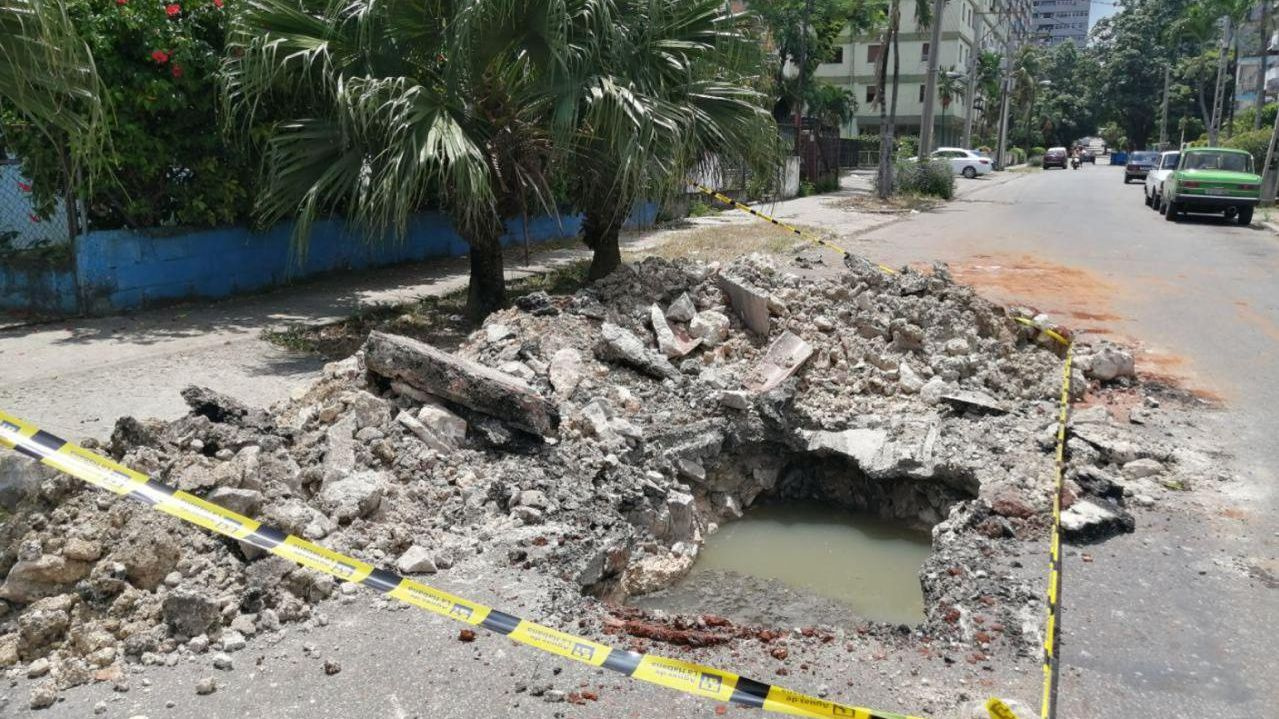
Dávila maintains that the human factor is the main cause of traffic accidents on the Island, but he recognizes that the state of the roads – a parameter that accident reports do not include – “is directly related to accidents and the deterioration of vehicles.”
“It is difficult to know precisely the impact of roads in poor condition on the number and severity of accidents”
The minister claims that “it is difficult to know precisely the impact of roads in poor condition on the number and severity of accidents. Even some recent accidents with fatal consequences have occurred on roads in better condition.” However, he admits that this is a pending task of his portfolio, and that for the time being, there is little hope of effectively and quickly combating the debacle.
“In recent years, the road conservation program has not advanced as we hoped for material reasons, mainly the fuel deficit suffered by the country. In addition, the lack of a specialized work force, the lack of equipment and the obsolescence of existing equipment, among other reasons, are also determining factors,” he explains.
According to the official, the situation is worse for minor roads and side streets, which do not receive as many resources as the “roads of national interest” – highways and main thoroughfares – where there is more traffic.
There is not much more that his portfolio can do – in addition to the little he already achieves – due to his limited resources, explains the minister, who even assures that he spent “some time” driving a taxi to “understand the complexity of certain issues and to be able to better contribute to the formulation of public policies in our sector.”
In 2024, Cuba recorded a total of 7,507 traffic accidents, 12% fewer than those reported in 2023 (8,556). Deaths also decreased by 13% (634), and the number of injured people was 6,613, 4% less. The year was, it is worth adding, a period weighed down by low mobility due to lack of fuel.
Among the main causes of accidents on Cuban roads, the authorities have cited the lack of attention to control of the vehicle – in 30% of cases – not granting the right of way (29.9%), speeding, driving under the influence of alcoholic beverages and technical defects in the vehicles.
The first four causes are related, as Dávila explains, to the behavior of drivers: “It is often said that in Cuba there is no road courtesy, but when the consequences are fatal, the education of drivers cannot be optional, especially when it comes to the professionals.”
Translated by Regina Anavy
____________
COLLABORATE WITH OUR WORK: The 14ymedio team is committed to practicing serious journalism that reflects Cuba’s reality in all its depth. Thank you for joining us on this long journey. We invite you to continue supporting us by becoming a member of 14ymedio now. Together we can continue transforming journalism in Cuba.