


English Translations of Cubans Writing From the Island

 From my birth in 1965 until 1977, I lived in Romay, between Monte and Zequeira streets, less than ten blocks from Latinoamericano Stadium. I was 3 years old when my grandmother Carmen, a rare woman of peasant heritage who was a baseball fan, took me to the stadium two or three times a week. Admission was free, otherwise our modest family budget would not have allowed us to go that often.
We went after lunch, so my grandmother just had to spend on coffee (she was a chain-smoker) and bread with croquette for me. All that cost 50 cents or less. On very special days she bought me a pizza. A native of Sancti Spiritus, she rooted for any Villa Clara team. I, a purebred Havanan, was always for the Industriales.
During the 70s, I sometimes went with Jorge Luis Piloto, then a neighbor in our building, today a renowned composer who has lived in Miami since 1980. He was born in Cárdenas, but when he moved to Havana he became a fan of the Blue Nine. I have not asked Jorge his opinion about the visit of ten Industriales to Miami, but I have asked ten friends, neighbors, and acquaintances.
It seems like a very good idea to everyone to mark the 50th anniversary of the debut of Industriales in the national classics, and now the immigration reform put into effect last February, with the old legends of the Blue Nine being allowed to travel to Florida, for fellowship and to make friendly stops.
Beyond the worn slogan that “we are one people,” if anything unites Cubans on both sides it is the passion for baseball. But the ten people I spoke to in person or by phone disagree on one point: the commemoration should have started in Havana in Cerro Stadium, home of the Industriales. And then moved to Miami.
They say, and I agree with them, that Latino Stadium would be filled to overflowing with fans of Industriales and other teams and provinces, to see the Duque Hernández, Agustín Marquetti, or René Arocha. They would also have appreciated the participation of Yadel Martí, Yunel Escobar and, of course, Kendrys Morales.
Although the media on the island have overlooked the visit to “the cradle of the mafia” by the players from the flagship team of the Cuban capital, the people manage to stay on top of every detail. Like the pall that fell on Miami with the presence of Javier Méndez and Juan Padilla. They even knew the answer that Padilla gave to a Herald reporter — that he had not come there to “talk about it.”
“It” was the beating that he, Méndez, and the Villa Clara catcher Ariel Pestano, inflicted on Diego Tintorero, a Cuban exile who came on the field with a sign asking for the release of political prisoners, during a game between Canada and Cuba as part of the Pan American Games in Winnipeg, in August 1999.
If Miami did not forget, neither did Havana. “Given the repercussions that incident had, we don’t know why the U.S. Interests Section gave visas to Padilla and Mendez. They behaved like thugs in Winnipeg. In Spain recently, a guy wanted to hug Neymar. There are specially hired security guards to prevent such activities, not athletes,” says an acquaintance from the neighborhood.
“Javier Mendez and Juan Padilla should not be part of the entourage,” says a taxi-driver friend, who recalls that some time later Alberto Juantorena boasted in an interview of having beaten Tintorero as he protested outside the Canadian stadium.
The bravado of Juantorena and the Cuban delegation to the Pan American Games in Winnipeg could not prevent the defection of the Pinar del Rio pitcher Danys Baez, then only 19 years old. Baez retired in 2012, with an excellent record.
A retiree, a self-styled sports historian, says: “They deliberately inserted Padilla and Mendez, it was a provocation.” And he showed me a paper documenting several acts of violence perpetrated by Cuban athletes in international events.
In 1962, to reject the athletes who defected from the 9th Central American and Caribbean Games that were held that year in Kingston, Jamaica, Fidel Castro said: “Give it hard to the worms.” Already in those Games, the weightlifting team assaulted a group of exiles who asked them to stay.
“What happened in Kingston was nothing compared with what happened in the 10th Central American Games, in San Juan, Puerto Rico in 1966,” says the retired chronicler. And he tells the story of Cerro Pelado. Better that the readers remember it in the documentary by Santiago Álvarez. A confrontation of the kind Castro always liked, in the best style of the Cold War.
There have been other violent incidents by athletes, coaches, and sports officials from Cuba. One of the most embarrassing happened in the 2008 Beijing Olympics, as recounted in the Spanish newspaper El País: “The Cuban taekwondo athlete Angel Valodia Matos and his coach were banned for life from all sports competitions after the former assaulted the referee after being disqualified in the bronze-medal match against Kazakhstan’s Arman Chilmanov, and the coach yelled that ’the referee was paid off.’ Valodia was disqualified (while winning 3-2 in the second period) because he exceeded the one minute available for medical attention after suffering a blow to the foot.”
The presence of Juan Padilla and Javier Mendez in Miami and their refusal to publicly apologize for the beating Dyer does not help ease tensions. When it is convenient, the regime turns the page. Or tries to let it pass. This has not been the case.
Florida-bound trips, temporary or permanent, by artists, musicians, intellectuals, and now by dissidents and athletes, are in full swing. The rope of Cuban-American exchange is still pulling in one direction. It’s time to also pull in the opposite direction.
Iván García
Photo: Taken from the blog of Villa Granadillo.
1 September 2013
 Lic. Noel Rodríguez Ávila
Our present work is concentrating on the processes of compulsory purchase (forced expropriation) against the owners of motor vehicles transporting freight from the provinces of Holguín and Las Tunas.
Before they started this, in the extinct transport sectors, they created commissions for the buying and selling of trucks, which followed the express instructions of the Ministry of Transport in regard to inspecting the vehicles in question, to detect anything illegal done by their owners in terms of parts, components, accessories or engine units.
Once they had finished the inspection, they wrote out a report on the deficiencies they had detected; afterwards they gave the owner a document directing him to sell his vehicle, for which they paid by cheque in the payee’s name in national money for the value of $1800 or $2500, depending on the tonnage.
This transaction was covered by an ambiguous, corrupt and one-sided contract of sale authorized by Resolution 118-88 of the Ministry of Transport, the law 1090/63, complemented by the law 1148/64, and the law 1206/67, which entitled the Central Administration entities of the state to acquire the assets required for the taking forward of their activities; giving rise to a situation in which, on the presentation of demands before the Civil and Administrative Chamber of the Provincial Tribunals, the sale was Held to be Null and Void because of the exclusion of the spouse’s interest.
In those cases where the vehicle’s owner refuses to effect the sale, the process of compulsory purchase is commenced; a procedure which is instituted in our legal and constitutional system, ensured both by the Constitution of the Republic in Art. 25 and also in Arts. 425 et seq. of the Law of Civil, Administrative, Employment and Economic Procedure; being the prerequisite which mediates the declaration of public necessity and social interest.
On that basis the Ministry of Transport issued Resolutions number 40 and 85, which declared the public necessity and social interest in acquiring the said vehicles which were operating in the eastern area, in order that the Holguín Truck Company could achieve its transport plans. Looking back, it is clear that the objective of this process was to get rid of the private sector.
This view is backed up by an legal Opinion issued by the legal directorate of the Ministry of Transport, in relation to a complaint presented by truckers from the province of Holguín addressed to Raúl Castro Ruz, who was at that time Second Secretary of the PCC (Communist Party of Cuba) and Minister of the FAR Revolutionary Armed Forces); in which, among other things, there is the following reference: The compulsory purchase of trucks, initiated against their owners, has its antecedents in the year 1989, when, on the orders of the high command of the country they made available what was termed “The policy of making things harder for the private sector, with a view to its gradual disappearance”, reflected in agreement no. 1507 of the Secretariat of the Central Committee of the PCC …
We can therefore conclude that:
Firstly: The private carriers were grouped in the defunct Fleet Operator, from where they offered their transport services, both to private individuals and companies, as well as the Central Administration of the State.
Secondly: That the Ministry of Transport secured, employing anticipated alleged technical violations and by way of a corrupt contract of sale, the compulsory purchase, with no voluntary aspect at all, of private sector trucks, resulting in the later nullification of these legal transactions.
Thirdly: That the State disguised its true intentions, aided by a false declaration of public necessity and social interest, when its real interest was to get rid of the private sector.
Fourthly: Today it remains clear that this sector represents a great public utility and is in the social interest, as the state has had to turn to the private carriers in order to sort out the situation with the transport of passengers and goods on a national level.
Therefore it would be good to get a reply to the question in the title: Compulsory purchase: Why and what for?
Translated by GH
26 August 2013
An interview with Father José Conrado, from Cuba, by La Nacion newspaper.
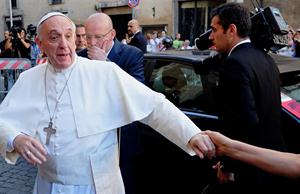
By Ramiro Pellet Lastra | LA NACION
José Conrado describes himself as a “small-town priest.” But from his parish in Santiago de Cuba, or in the colonial city of Trinidad, to where he was transferred, he throws verbal darts with a “language of the barricade” against corruption, repression, and other hallmarks of the Cuban government. Close to the dissident movements, Conrado has suffered pressure, aggression and even exile. But he has continued denouncing the leadership of his country, as in this dialogue with LA NATION newspaper, during a visit to Buenos Aires, after attending the World Youth Day in Rio de Janeiro.
Conrado only set aside denunciation in favor of enthusiastic praise when he analyzes Francisco‘s performance at the head of the Church, a man he trusts, and whom he hopes that “when Dilma, Cristina, or whoever goes to kiss his hand, he tells them the truth.”
How do you see the Cuba of today?
– Cuba is a bankrupt country, economically and morally bankrupt. From a family point of view, it’s an eroded country. There is not a single Cuban who doesn’t have relatives abroad, including Fidel Castro, who has several grandchildren and a daughter outside of Cuba as political exiles. It is a country where everyone, for one reason or another, has suffered the imprisonment of a family member, the death of a family member, in front of a firing squad or in the Straits of Florida. It’s a country with a history of political imprisonment.
-Why in Latin America there are those who still have a good image of the Castro regime?
-I think there is a certain complicity of the Left that wants to see Cuba as paradisiacal paradigm of what Revolution is and what social accomplishments are. There is also an ongoing press campaign on the part of the Cuban government. And there are the visitors to Cuba, because tourists see Cuba from air-conditioned buses and from five-star hotels.
-People came out into the streets to protest in many countries, democratic and non-democratic, but they did not do it in Cuba.
-People in other countries saw a space for freedom that made them decide to forget the spaces of their fear. We haven’t yet gotten to that point. I believe we have a point where this will happen, but we aren’t there yet. In Cuba, a popular saying goes: There’s not one to turn the government over to, but nor is there anyone who can fix it. Everyone in Cuba knows we must have change. It is a silent and unanimous agreement among all Cubans.
Will perhaps a minor incident light the fuse like in the “Arab Spring”?
-Yes, that could happen. I think the government stays away from large crowds. They don’t have as many large demonstrations as before. I think the government has been very astute to not permit acts of unchecked violence on the part of the police. I think that people would throw themselves into the street [if such acts happened].
-And in this context, what prospects does the government have?
-The seriousness of the situation is forcing the government to think of another way out. Today they are proposing that those whom they always considered their eternal and bitter enemies, Cubans in exile, invest in Cuba..
As a Latin American priest, how did you experience the election of Pope Francisco?
-Francisco is a gift from God for a time of crisis. He is man who is above the conventions of the left and the right, because he goes for the essential, and the essential is God and the people who are suffering. Pope Francisco knows that he is a servant.
-Could he influence not only for Cuba, but for democracies in trouble?
-I think that he is going to have great influence, because the Church needs a reform from within. How is he going to preach to the politicians not to steal otherwise? A Church renewed from within is an example for these men who have great responsibilities.
-In addition to being an example, could Francisco influence through his discourse, through direct denunciation?
-Yes, of course. I don’t ask the Holy Father to speak the language of the barricade, like I, a small town priest, do, but I do ask him to be very firm with the rulers. That when Dilma, Cristina, or whoever goes to kiss his hand, he tells them the truth.
Translated by: Ernesto Ariel Suarez
1 August 2013

The actor Roberto Albellar playing José Martí at the Congress of the Union of Cuban Journalists (UPEC)
On national television, with great fanfare and bombast, they present the approaches of the IX Congress of the Union of Cuban Journalists (UPEC), the most useless group in the country, among the many unproductive institutions on the Island, which, for more than half a century, has bowed before the designs of the Castro dictatorship.
It’s not new that the news items are selected by the Ideological Department of the Council of State, then are passed on to the newspapers which publish them in their own way, according to the journalists that write them. It is also known that for any spot to appear on TV, it has to pass the censorship filter of the Commission that analyzes it, sending it on the Ideological Department, and waiting for the response.
Each radio program in the country, has a consultant who is responsible for reviewing the scripts and deciding what is acceptable to air and what is not.
With regards to the publishers it’s the same, in fact, for my books they’ve published they had to be award winners, they never accepted a book from me that hadn’t won a prize, as for my rebellious literature… but that’s another story.
I remember that with the writer and career journalist, Amir Valle, Tubal Paez Hernandez, President of UPEC, rejected his membership for being rebellious, and his testimonial book Havana-Babylon was snatched the Casa de las Americas Prize for its content of social reporting, which is supposed to be the main reason for being a journalist.
In the small spaces of “debate” in the IX UPEC Congress that have been televised, it was a shame to see journalists as if they were recent graduates, inexperienced yet feeling their way — and yet already with gray hair — saying with apparent naiveté, “that the revolution needs a more effective journalism, persuasive, aggressive.”
With these words, years ago, they were thrown out of their jobs without recourse, for not being politically reliable, stopped in their professional development, their social status deteriorating, along with their ability to travel, their salary, etc, in short, the Cuban “journalist” was crushed, humiliated, intimidated, made timid.
And now, to cover up these hard times, in this Congress they have been allowed to say ridiculous things, like that the computers are archaic, the Internet connection is inadequate, as if they were asking for Christmas presents. They still don’t understand that they shouldn’t give us anything, that our intellect should acquire what’s needed, that our labor should be enough to earn us what belongs to us. But that will be for a tenth Congress, that — with any luck — we will hold in freedom, without a dictatorship, where we can, like journalists, writers, bloggers, chroniclers, correspondents, say what our conscious demands.

Ángel Santiesteban
Prison 1580
July 2013 / Published in this blog on 6 September 2013
The school year is just beginning, the children chat about their vacations. Samantha and Yenny show their tans from Varadero; Jorgito learned to dive with a mask and snorkel in Cayo Santa Maria; Barbarita spent almost two months with her cousins in Bayamo and there she made a ton of new little friends; Heriberto, thanks to his grandfather, discovered stamp collecting, and also spent a week in camping in El Abra. But what caused a sensation were Mayrilis’s vacation photos; with Mickey in front of the Princess Castle, in Universal Studios, in a fantastic water park… Mayrilis enjoyed a week in Disney World. She brought back a pink backpack with a matching lunchbox and many more gifts, but her mom didn’t allow her bring them to school.
Without looking at Mayrilis’s camera, also pink, Hector was not impressed. He and Yasmany built a chivichana (a homemade “soapbox” racer) and his mother brought them to the coast a ton of times, where they learned to fish with the flesh of earthworms. The bad thing was the walk back up the high hill, now without water in the water bottle.
5 September 2013
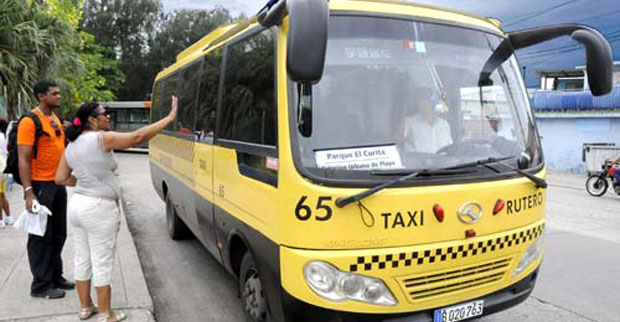
 HAVANA, Cuba, August, www.cubanet.org — A very brief stop at a Havana park, El Curita (at the corner of Reina and Galiano streets), provides enough time to gauge the opinions of riders of the new public transport cooperative that serves the Havana-Boyeros-Santiago de las Vegas corridor, among the most populous in the capital. In general the consensus is that the fleet of small buses that serve this route were operating better before the switch to cooperative management even though, to much dismay, there has been no subsequent reduction in fare.
Since these buses were managed directly by the state before being taken over by the cooperative, we can already compare how good service was just a short time ago versus how bad it is today.
In Artemesia, one of the other provinces chosen as a test site for cooperative management of public transport, the flood of complaints from riders attracted the attention of the independent press. Meanwhile, the cooperative members themselves, who have been on the job barely a month, cite basic shortages (they rent rather than own their vehicles and do not have access to wholesale markets) as justification for the poor service and changes in ticket prices.
 Cuba’s bigwigs believe these “new” cooperatives will provide the magic formula for completing the latest phase of their totalitarian dictatorship without embarrassment.
Looking at it from the standpoint of the world’s fatuous leftists — which is to say as a means for creating new social and economic relationships based on equality, mutual aid and solidarity — the cooperative movement must seem like manna from heaven. The hope is that it will revitalize the regime’s goal of being able to remain masters of all they surmise while simultaneously making it look as though they are seeking innovative ways of raising efficiency and productivity through a clever process of economic decentralization.
Anyone feeling bewildered by the avalanche of prohibitions and assaults with which the regime harasses the self-employed — taking place just at the moment when many had hoped it would support and even promote their activities — might well find their confusion summed up in one word: cooperatives. The bigwigs have realized that they need not run of risk of privatization (even on a small scale), or even of small business development, which one way or another always leads to free thinking and independence.
By creating cooperatives, the bigwigs hope to make everyone believe (to use another well-worn phrase from Lampedusa) that things are changing even as everything remains the same. And so naively convinced are they that their plan is working that they feel they have the luxury of dismissing and marginalizing the self-employed — the only group that, for better or worse, was proving capable of pulling their chestnuts out of the fire.
Like the cries of a dying man, they are now publicizing, as they typically do, the existence of 124 cooperatives which have been operating since July 1 in sectors such as transport, construction, trash collection and farmers’ markets.
 Of course, the project is part of the charming “updating of the economic model,” which has been summed up in black and white and embalmed in what is known as the Guidelines of the Sixth Congress of the Cuban Communist Party. One of its chief promoters is Grisel Tristá, whose position carries the mile-long title Chief of the Group for Corporate Perfection of the Permanent Commission for Implementation and Development. She has charmingly and quite literally stated that cooperatives “allow the state to divest itself of responsibilities that are not of transcendental importance to economic development.”
However, another expert — the president of the Society of Cooperatives of the National Association Cuban Accountants and Economists, Alberto Rivera — was talking no less charmingly about the need to train the public to understand that the promotion of these cooperatives represents a deceptive hoax. Rivera believes they were intended to serve somewhat like spare tires and were given only a passive, short-term role. True cooperatives (even as perceived by the world’s leftists) would be fundamentally incompatible with the bureaucratic, anti-democratic and suffocating nature of the Cuban regime.
What is most laughable about this is all the clucking by the official press over the publicity surrounding this issue. They insist that cooperatives are being set up with the desire and support of their members.
Of the first one hundred twenty-four that have been set up, one hundred twelve started out as state-owned businesses. This is another way of saying they were failed, insolvent enterprises headed by corrupt, inept administrators who later automatically became presidents of their cooperatives. Only twelve started out in the private sector, established, it is said, by self-employed individuals.
Rogelio Regalado, member of another organization called the Commission for the Implementation of the Reforms, has clearly described how certain bankrupt state enterprises underhandedly manipulate their workers by suggesting that they “voluntarily” become partners in a cooperative, telling them, “If there are no workers willing to become partners, the property and assets are liable to be auctioned off.”
Two hundred twenty-two small and medium sized state businesses — all problematic, unproductive and in crisis — were converted to cooperatives which are in theory fully autonomous. A wide range of services — including fresh fruit markets, restaurants and even shrimp farms — will come under this new form of management for which they have already coined the charming slogan “economic solidarity.” In other words, there will be more of the same.
It is a ruse intended to delay access to private property while they still can so as to hamper the country’s real agents of economic progress. This makes a mockery of consumers — in other words the public — which cannot find alternatives to satisfy their own demands and instead must continue subsidizing those of their exploiter, which is to say the regime.
 José Hugo Fernández is an author whose works include the novels The Suicide Clan, The Crimes of Aurika, Butterflies Don’t Flutter on Saturday and The Parable of Bethlehem and the Shepherds. He is also the author of two short story collections, The Island of Blackbirds and I Who Was the Streetcar Desire, as well as a collection of essays, Shadows Against the Wall. He lives in Havana, where he has worked as an independent journalist since 1993.
From Cubanet
28 August 2013


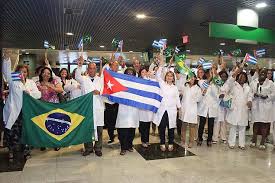
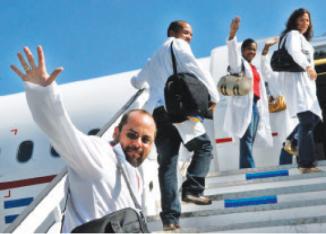 HAVANA, Cuba, September, www.cubanet.org – Since Cuba announced on August 24th the medical cooperation agreement with Brazil, Granma, the Communist Party newspaper, has reported on the front page the arrival of groups of physicians in that country.
All the stories omitted the fact that the offering of “solidarity and love” will pay about $4,200 per month per doctor, according to disclosures by Brazilian authorities.
The National Federation of Physicians of the South American country said the Cuban professionals “will receive a fraction of that.” Some Brazilian organizations have characterized the Cuban collaboration as slave labor.
“Typically the monthly payment received by Cuban doctors is less than $100,” said Yasser Rojas, a Cuban doctor who works with civil society organizations.
Nevertheless, physicians are competing to be selected to go on international missions. Every year thousands of them are posted outside Cuba to provide services, in order to give their families a slightly more prosperous life.
The source said that a general practitioner practicing on the island earns a monthly salary of 480 to 535 pesos in national currency (about $20).
“The doctor’s thinking is: I will sacrifice myself for a while, I will get my usual salary, I will save the payment for the collaboration and the food allowance, together with the gifts that patients offer, for a phone or even a plasma TV,” he said.
Analysts believe that the export of professionals, mainly doctors, provides the principal income of the country, about six billion dollars annually. As the Vice Minister of the Ministry of Public Health said, “Cuba does not export doctors, Cuba exports health services.”
Brazil is one of the nearly 30 countries that receive Cuban medical services for a fee, out of a total of 58.
 More doctors in Brazil, fewer doctors in Cuba
“A contingent of 4,000 professionals will arrive in Brazil through the end of 2013,” according to a press release from the Ministry of Public Health of the island. Meanwhile the quality of health services on the island continues to deteriorate, although according to the World Health Organization, Cuba has the highest number of doctors per capita in the world: one per 148 inhabitants.
Government officials recently informed the United Nations, “The National Health System in Cuba, through the governmental and social character of medicine, and universal free access to health services, has been instrumental in raising the health indicators of the entire population, particularly those of women and children.”
There are no polls or surveys to give an idea of popular discontent with medical care. Complaints can be heard daily in any hospital waiting room in the country.
Regla Ríos suffered the negligence of the medical staff at Children’s Hospital of Havana. His minor grandson was admitted for an infected insect bite on his foot. “They prescribed a drug that is for vision, his condition deteriorated, and we waited for him to get better, otherwise they had to operate,” he lamented.
Another elderly woman, who declined to be identified, said that she went to the Mario Escalona Polyclinic in Alamar to make an appointment with a specialist and they gave her one for almost two months later. The lady, in her seventies, said “I could die by then!”
Dr. Rojas asserted that, “Every day it’s harder for the ordinary citizen to find a good specialist, because they have an excess of daily consults, or have emigrated, or are abroad for the collaboration programs.”
“In the end, it’s the people who suffer the worse of it,” Regla commented pessimistically. “With the missions, the doctors at least excel professionally and strengthen the economy. For it’s part, the Government receives economic benefits and international respect.”
And for us, what?
From Cubanet
4 September 2013
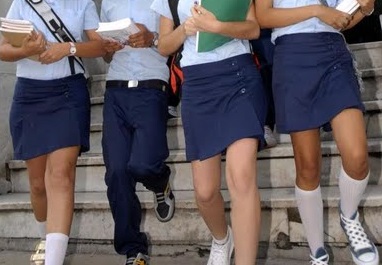 HAVANA, Cuba , September 4, 2013, www.cubanet.org – Two police cars parked at the entrance to a high school. From one of them a man in civilian dress got out, and with long strides entered the school. Uniformed police also got out of the cars, but they remained outside the fence. The civilian went straight to the office of the director, who barely had time to react when the newcomer started dragging him, kicking, taking him almost to the center of the schoolyard.
The students witnessed the spectacle as if it were a Roman circus or a “pankration” fight. Most of them cheering the man and some recognizing him as the father of one of the girls at the school. Then, beating the director with a piece of wood until he was unconscious, the man called the police. They came in, handcuffed the defenseless individual on the ground, and carried him to the police car.
It was learned that the director was having relations with the daughter of the aggressor, an 8th grade student, and had been since she was in 7th grade. The romance was a secret until her girlfriend, who knew everything, committed an indiscretion. The offended father, with very good relations with the People’s Revolutionary Police (PNR), gathered all the evidence. The girl confessed. Furthermore, it was learned that the director was participating in a network of falsifying and selling school records.
Prostitution among students
Similar events are common in the schools of Cuba. They don’t always come to light because the students themselves cover for the teacher, or director, either out of their own interests or fear.
Any Cuban who spent part of his youth in the education system of boarding schools in the countryside, heard anecdotes of students being teachers’ lovers. Sexual relations between minors and adults, who were supposed to, under the law, be the children’s guardians. This writer saw, on more than one occasion, students involved with teachers in exchange for a higher grade on an exam, or to avoid having to repeat a year. The phenomenon was not unique to girls. Boys also offered sexual favors to male teachers in exchange for the same things.
Now the phenomenon is spreading. Prostitution is exercised between students themselves, under the auspicious cloak of festivals called “downloads.” In this mode the beneficiaries are the more affluent kids. It’s known for a boyfriend to lend his girlfriend to a classmate in exchange for money or other equivalent material goods. If the matter goes further, and it gets into “experimenting,” the boyfriend also gets into the bed. Bisexuality, more than a possible and legitimate tendency, is now a carte blanche to earn money.
Virginity is a burden
For girls, virginity is a burden that is removed as soon as they’re over twelve. A growing number of girls become sexually active even earlier. For guys, someone who is more than twenty is considered an “old man.” The fast and rushed “burning of stages” is part of the race for survival. The sex trade constantly asks for “fresh meat.” Moreover, many families raise their girls as “animals for the competition.” In blunt terms, they should be ready to find themselves a “daddy with little money.”
For boys, the job of “chulo” — pimp — is practiced within the school itself. It’s a kind of training that is later completed in the street. The school no longer instructs the “New Man.” Now it is a transit point for boys and girls whose sexuality emerges marked by cynicism, consequences and a reflection of a society sick to its very roots.
From Cubanet
4 September 2013
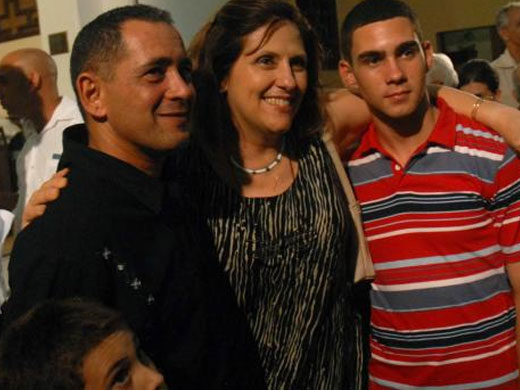
HAVANA, Cuba , September , www.cubanet.org — For some time now we’ve noticed the absence of Elián Gonzalez and other members of his family from the pages of newspapers, radio broadcasts and television channels. We even know the failed attempt by a foreign press correspondent to interview Elián, who is barely seen in his native Cardenas. Anyone would think that this is the normal course of events when people are immersed in the everyday: the little rafter is a school student and cadet, while his father and other family members go about their usual jobs.
However, a recent development suggests that such ostracism could be responding to a policy laid down by the upper echelons of power. Granma newspaper, in its issue of Friday, 23 August, reported that the National Directorate of the Committee for the Defense of the Revolution (CDR) presented its Neighborhood Award — true, the CDRs don’t function at the neighborhood level, but their bosses run around the country holding meeting and handing out distinctions — to the “Museum for the Battle of Ideas,” located in the town of Cardenas in Matanzas. The ceremony was attended by leaders of the Communist Party, of the CDR, the heads of the Museum, and Señora Irma Sehweret, mother of René González, the “Cuban Five” agent released from prison in the United States and repatriated to Cuba. And Granma did not mention anyone else.
If the bombastic “Battle of Ideas” emerged as a result of the hype orchestrated by Cuban authorities around the efforts for Elián’s the return to Cuba, and the creation of the Museum in Cardenas served the purpose of collecting the history those tumultuous times of marches, rallies, Roundtable TV shows, and the discourse of the barricade, how can we conceive that neither Elián, nor his father, nor any other member of the family, were now present at the delivery of that recognition? Clearly, gone are the days when, after Eián returned, and every time a public event was celebrated, the presenters of the “activity” announced the presence of “Elián Gonzalez and his distinguished family.”
Surely, no well-informed observer of the Cuban reality can escape that many of these people converted, the overnight, into “Heroes” by Castro’s propaganda machine, are useful only when they serve to stoke the dispute with United States; an dispute that the Cuban government needs as a safety valve to cover up its mistakes. The show around “The Elián case” did the job while the child was being held in the United States. Then came, from the year 2000, the noise about releasing the five agents accused of espionage, who had been arrested in 1998. In other words, the new droning chorus burst forth when nothing more could be squeezed from the tribulations of rafter.
In this context it is reasonable to expect that the released René González appears in public less often; and that this would equally be the fate of Fernando González Llort, the next agent to be released in February 2014. Perhaps simply to keep the aura of “heroes” of those who face longer sentences, as is the case with Gerardo Hernandez. However, it is also likely that the star of the already expendable is not completely shut down, and that we will be reminded of them from time to time.
So then, did something special happen to Elián and his family, to disappear like that, so totally, from the Castro hoopla? Apparently not even their neighbors in Cardenas are able to offer an adequate response.
 Orlando Freire. Born Matanzas, 1959. Bachelor in Economics. He has published a book of essays The evidence of our times, winner of the 2005 Vitral Award, and the novel Blood of Freedom, winner of the 2008 Gaveta Franz Kafka Prize. He also won the awards for Ensayo y Cuento in the Universal Dissident Magazine, and the Essay Prize of the magazine Palabra Nueva.
From Cubanet
5 September 2013
 The 2013-2014 school year begun, dragging into this new stage all the deficiencies and errors accumulated during these past 30 years.
After swallowing the bitter pill of acquiring uniforms, sending them to be taken in or out, finding another from the son of a friend he no longer needs, in order to have two sets to alternate, finding the books and something to cover them with, paying for notebooks with CUC (hard currency), because the ones from the school are not enough, pencils, backpack, socks, sneakers or shoes (a parent’s worst nightmare), everything an investment in hard cash, the task with the biggest responsibility, because of what it implies, is to successfully enroll children in a school (one of those that corresponds to the area of residence), which has enough teachers, since the deficit of educators is such that many classrooms don’t have a teacher assigned to them.
Each day there are fewer young people who aspire to major in pedagogy, among other reasons, because the salaries paid are insufficient, and they don’t enjoy the minimal conditions needed or the social acknowledgment of exercising one’s profession correctly, as well as the charged ideology that being a teacher entails.
Many young people, who were taken with the profession, end up leaving the classroom to go to work in the tourism or restaurant sector, to find something more attractive and better paid. So then they call those students who didn’t succeed in passing the exam for this major, and who prepared only three months for the teaching profession, as well as those put up as substitute teachers in televised classrooms, provoking the sleepiness and boredom of students and teachers, without noticing the errors of education that has occurred through the years.
Now the government complains of the tremendous academic deficit of our educators and pupils, which prevents the latter from being accepted in the universities, which, in turn, have seen a decrease in their academic level, due to the politics and partisan ideology that has always been a priority in teaching. At this very moment, there is a case being made that this school year be dedicated to “The Five Heroes.” For this, of course, they didn’t consult the teachers or the students. Again, politics over teaching.
Another aspect to take into account is that it is principally the parents and the teachers who in the days before the classes begin, must, with their own resources, clean the classrooms and school yards and on occasion, even provide the paint with which to repair these into decency. Some parents, who can count on certain economic resources, even buy electric fans to ensure that the environment is more pleasant in their children’s classrooms. All of this is common practice. Once again the citizens resolve the problems that belong to the State, who publicly makes note of its “victorious triumph” and in the case of education, one of the “triumphant flags” raised is socialism, which in these moments is totally worn down and frayed.
In addition, there is constant talk of recovering formal education, good manners and social mores, and I wonder: who were the principals responsible for these disappeared and destroyed values, instilling in adolescents the promiscuity reigning in forced scholarships and schools in the countryside, where the good manners transmitted from the family are retracted, considered petty bourgeois behavior?
Who could have forgotten that it was the teachers themselves who, in many schools in the eighties, supplied sticks and stones to the students, under guidance from the authorities, to repress anyone who intended to leave the country?
Now, who should we blame for the improper conduct, vulgarity and marginality developed in our society where the bad examples have gone hand in hand with economic and social decline for half a century, where the fear induced has led us to be involuntarily complicit with our silence.
4 September 2013
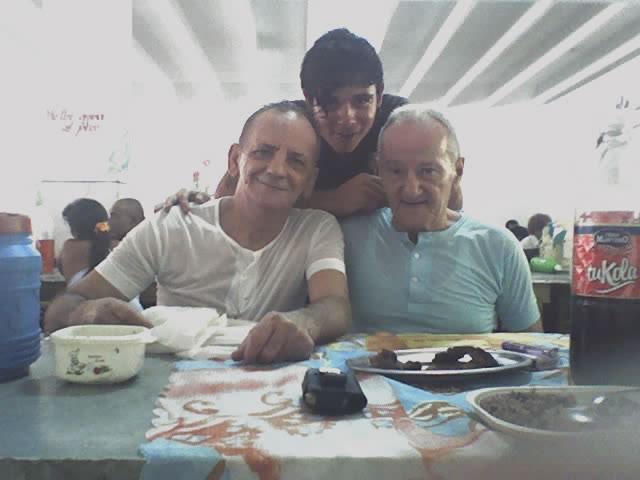 HAVANA, Cuba , August, www.cubanet.org.- Undocumented and with the stigma of “terrorist,” Jesús Rojas Pineda barely survives in Jagüey Grande, Matanzas; after having been released on October 19, 2012, from Kilo 9 Prison.
Last August 7, Rojas Pineda turned 70.
His cause is the same one that Armando Sosa Fortuny was tried for: The 15 October 1994 disembarking together for Caibarién, more outraged than organized, as you will see below.
Before enlisting in the group of seven men who landed that night, Rojas Pineda had been a fisherman in his native Caibarién until on July 12, 1994 he took to the sea in a plastic boat and rowed, coming ashore in Florida
“We were well received as rafters, they helped us right away,” says Rojas.
He also got a job: “I started making pots to catch lobster.”
But, according to his own words, on 12 August of that same year, in a funeral home on Calle 8, the bodies of two Cuban rafters were laid out. “That day 600 boat people arrived on U.S. shores.”
He says that right then a protest was organized against the Cuban government, holding it responsible for the death of the rafters. “The protest lasted 24 days… on October 10 a group of seven of us agreed to return to Cuba with some weapons but without chemicals substances nor explosives.”
The rest of the story is well known. They tried to cross the newly opened causeway that connects Cayo Santa Maria with Caibarién, to the Escambray. On the road a car appeared in which were traveling, among others, the Communist party secretary of the province of Villa Clara , who was killed in an accidental shooting by the gun of Humberto Real Suarez, another of the expeditionaries.
“At the trial, the prosecutor himself admitted that the shooting was accidental, since the weapon Humberto was carrying Humberto was modern and if he had pulled the trigger intentionally it would have released a flurry of shots instead of one, as it happened,” recalls Rojas Pineda.
Nevertheless, the sentences were for between 20 and 30 years in prison; the firing squad Humberto Real Suarez standing out; he had testified at the trial, “I did not come to kill innocents, but to fight against the dictatorship.”
Several of the seven men had been badly wounded by their captors. Fortuny in the head and shoulder; Real Suarez in the wrist; Rojas Pineda by the impact of 82 glass particles after the car windows were blown out; and Diaz Bouza, handcuffed on the ground, was shot by an AK that struck him in the jaw and arm.
The sentence for Rojas Pineda was 20 years, even though at the trial it was recognized by the prosecution that his gun was never fired.
“I lost the key“
After the trial, they were transferred to maximum severity prisons.
To describe the Cuban prison inside, Rojas Pineda says: ” Monstrous, in ever respect.”
Kilo 8 Prison in Camaguey , known as “I lost the key,” was one of the first places they went.
“There I was in the cell No. 50, maximum security. They didn’t let you out in the sun, and denied us medical care claiming that we were terrorists.”
In that prison, Rojas Pineda was nicknamed the Matador because the officials wouldn’t stop mistreating him. “They imposed extra punishments on you, like reducing your water and taking away the foods sent by your family.”
At some point he was in need of an operation of hemorrhoids and for him to see a surgeon he had to stage a hunger strike that lasted 18 days. “They refused not only to let me be seen by the doctor, but also the painkillers.”
When he was 18 days into the hunger strike, a visit was scheduled from the MININT Commission from Havana to inspect the prison.
Rojas Pineda took his blood-filled rags and threw them into the corridor. Only then was he taken to hospital where he underwent surgery the next day. But back in the cell they cut off his water supply. “I had to get up and go to get some water for the toilet, recently operated on.”
“One night, a boy started calling after the order for silence: Let me go to cell of the Matador, he always gives me something to eat,” Rojas Pineda continues his story.
“A guard pulled him out and along with three others beat him nearly to death. The prisoners began shouting, ‘Abuse! Abuse!’ and started hitting the bars. The second night, they called in special troops, that even had flamethrowers, because the prison called them saying it was a revolt against the government. The prisoners were expressed themselves, saying, ‘This is a problem of the daily outrages and abuse.’
“They retired the troops and in a few days a commission of officials from Havana brought 50 releases, 50 paroles and 50 minimum conditions,” he adds.
Parole was denied on many occasions. Finally, on October 19, 2012 he was released “for completing the sentence.” In all, he spent 18 years in captivity.
Until the last day, shared the same task and the same small space with Armando Sosa Fortuny, whom he calls “brother.”
After being released, an opportunity came to visit Fortuny bringing him food, but “they didn’t accept the crate nor the bag, because they said it wasn’t visiting day.” Every afternoon, Rojas Pineda goes to the phone and waits for the call from his “brother.”
Currently, he suffers from hypertension, circulatory problems and an advanced degree of deafness, in addition to all wear and tear from so many years as a political prisoner.
Undocumented
Rojas Pineda’s family is the opinion of this man does not want to be in Cuba any more. At first he could not close any doors in the house.
Rojas Pineda was in the midst of the formalities for U.S. residency when he decided to return to Cub . The mailing address in Miami is the one on the document they gave him when he left the prison, which is not an identity card, but a kind of letter of freedom.
But he can not emigrate legally to the United States, primarily because his U.S. documentation was held by the Cuban authorities after his arrest.
What the Cuban Office of Immigration and Nationality is proposing is to being the paperwork for “repatriation,” to be able to obtain an Identity Card. But Rojas Pineda doesn’t feel well in the land where he was born, that didn’t sufficiently raise its voice for his cause, and that didn’t save him and his family their 18 years of suffering when he was a political prisoner.
When this reporter comments that his story could be read by the Cuban public in exile, he expresses his desire to send a big hug to his brothers and the request that, “If anyone knows of a way in which I can obtain a duplicate of the documentation retained by the Cuban authorities since the day of our arrest, if it might be left in some file in Florida, let me know. I want to spend my last days in peace,” he concludes.
Lilianne Ruiz | From Cubanet
30 August 2013