Where is Robertico? / Luis Felipe Rojas

Photo: Luis Felipe Rojas

This is the question many are asking after the events at the “Protestdrome,” where the Cuban musician Roberto Carcassés let loose with good things.

The first thing that happens in these cases is a silence that is scary … the repressed and repressor (for different reasons). Although they haven’t taken physical measures, Robertico knows what the tools of torture are. They’ve just told him that he would not be performing any more for a while. But he knows with what pliers they’ll tie his jaw shut, what is the substance they smear on you so you stink for a thousand miles and not even some of your colleagues in your own band will come by the house.

It happened recently to the painter Pedro Pablo Oliva, it has happened to a lesser or greater extent to Pablo Milanes, Orlando Luis Pardo Lazo, Ana Luisa Rubio, Rafael Alcides and Antonio José Ponte. Maria Elena Cruz Varela and Carilda Oliver fared no better; Antón Arrufat, Fausto Canel, Marcos Miranda, Cundo Bermúdez and Reinaldo Arenas lived a hell of  full of thorns when in their way they also said, like Robertico: “I want / remember that I always want.”

There is a big distance between the poems for which José Mario went to labor camps and this timba-with-swing where it seemed the leader of the Interactive musical group was going to dedicate it to the 4 remaining spies imprisoned in the United States … or five because Ana Belen Montes is imprisoned due to the inexperience of Castro’s intelligence apparatus.

This time it is not a documentary like PM, a magazine like Diaspora, the  troubadour intimacy of Pedro Luis Ferrer or the rawness of Lichi Diego, informing against himself (and the family, partners and all the rest divided). The last straw came under the Mount of Flags (hehehehehe, so great that) with the United States Interest Section in the background, presided over by the freed spy and the story of the yellow strips. Fiesta and dance, the best of the Communist youth danced and shouted against President Obama and the killjoy Robertico was seen with the tight note, the peg leg, the red flag, the witchcraft and the creole tripe.

A few weeks ago the poet Rafael Vilches was expelled from a cultural institution for joining up with the disaffected with the government. Angel Santiesteban receives a prize for a novel in prison, the PEN Writers in Cuba continues to operate even though squeezed into Johny Feble’s house, and Alina Guzman Tamayo continues offering some really good performances from Alamar, without the help of anyone, according to what I’ve been told.

Robertico will appear and those of us who love the irredeemably crazy music that he makes with Interactive (or without the partners) will sing: “I want / remember I always want.”

16 September 2013

“We Want Many Things More” / Rebeca Monzo

Thursday the 12th of this month everything was ready for the presentation of the big concert, “dyed yellow” by suggestion of the agent himself Rene, in the “Protestdrome,” as the “Hill of Flags” is popularly known, in front of the United States Interest Section.  All was previewed by the Ministry Culture, the Writers and Artists Union of Cuba (UNEAC) and controlled by State Security.

The musical groups and artists that usually act in all the “so called patriotics,” had rehearsed and previously reported the musical numbers that they would present. What no one could foresee is that in front of his very well known and popular group, Interactive, a brave young man, Robertico Carcasses, great improvisor, in the middle of that well-rehearsed scheme, would give the discordant note, which would put all the Nomenklatura on edge.

The moment arrived to perform the well known number Cubans for the World, and Robertico, leader of the group, dressed all in white, left the piano to take the microphone and improvise, before the astonished gaze and surprised ears of all those present, who could not really believe what they were hearing, and which the public repeated enthusiastically, following the contagious cadence of the chorus:  ”I want, remember that I always want,” “Free access to information in order to have my own opinion,” “No militants nor dissidents, all Cubans,” “We want many things more,” “Direct election of the president. . .,” “I want, remember that I want, the end of the blockade and self-blockade. . .”

He surprised everyone, he gave the authorities no time to improvise, they could not divert the cameras to the dark night sky, he did not give them time to project something else on the screens.  He caught them “in motion” as we say here. Robertico knew how to intelligently take advantage of the opportunity that presented itself. That was no accident, it was his deepest feeling, to which he could give free rein, where he knew he was going to be heard, not like that open letter that he made to Harold Gramatges, in front of the music section of UNEAC in 2007 and that surely was shelved, maybe with one or another similar.

Now it is only left to us to be very aware of what could happen to this artist and, using word and writing as effective means, try to prevent reprisals against this valiant musician. I am sure that you, I, everyone, we are agreed that “we want many things more.”

Translated by mlk

17 September 2013

The Prosecution Requests Long Sentences for Sonia Garro, her husband Ramon Alejandro Munoz, and Eugenio Hernández / Diario de Cuba

soniaindexCuban prosecutors have requested long prison sentences for Lady in White Sonia Garro Alfonso, her husband the activist Ramón Alejandro Muñoz González and the also dissident Eugenio Hernández Hernández, according to the independent Center for Information Hablemos Press.

 According to statements by Muñoz González from Havana’s prison Combinado del Este where he is being held, the regime has asked for 12 in prison for him, 10 for Garro and 11 for Hernández on charges of “assault, disorderly conduct and attempted murder.”

There are conflicting reports regarding the sentences for these opposition activists.  Other sources within the internal dissidence state 12 years for Garro and 14 for her husband.

Muñoz claimed to have in his hands the document produced by the prosecution on Hernández’s case on which the sentence requests for the other accused also appear.

The three dissents have been remanded in custody since March 2012. If the sentences become true, these would be among the longest imposed on dissidents since the imprisonment of the Group of 75 in the spring of 2003.

Garro and Muñoz were arrested during a violent police operation in which the authorities used Special Troops and rubber bullets.  The Lady in White was injured in one leg.

Muñoz said that the Prosecution accuses her of attacking a female police officer and shouting “Down with Fidel and Raul.” He is accused of throwing a television set at a member of the commando that raided his home.

“That is a lie. That is not true. They arrived shooting into the house.  At no moment did we injure anyone.  We were the injured,” replied Muñoz.

“[They did] Not prove that there was (a murder) attempt.  There was an attempt, but from them on us. The only murderers here are the Castro brothers,” he said.

He reckoned that the requests for long sentences show that “they (the rulers) will never forgive the fact that there are men that fight for Cuba’s freedom.”

“The dictatorship has retaliated against peaceful fighters, defenders of human rights […] I think this is one of the greatest injustices against the opposition in the last few years,” said Muñoz.

“We are fighters, and we will continue to be, no matter how long we are in prison,” he assured us.

During the year and a half that they have spent in prison, both Muñoz and Garro have been the victims of beatings and other punishments by the authorities and by common prisoners egged on by the former. Both have passed through punishment cells.

Last month, the Lady in White received a beating by four prison guards that were subsequently suspended.

Activists and relatives have requested in numerous occasions, to no avail, that they be declared prisoners of conscience by Amnesty International.

Translated by Ernesto Ariel Suarez

From Diario de Cuba

17 September 2013

Discrimination Against Women in the Cuba of the Generals / Miriam Celaya

13-generales-okLA HABANA, Cuba, September, Miriam Celaya, www.cubanet.org –The revolutionary movement that took power in 1959, from its inception kept women in a position subordinated to male leadership.  None of the revolutionary programs included female emancipation.  Moreover, no woman took part in the crafting of the program or gave input about the objectives and social aspirations of society’s feminine sector despite the fact that already in the 1950s they were an important labor and student force, even in the universities.

At the end of the insurrection, no woman had reached higher military ranks as opposed to those who participated in the 19th century wars of independence.

The feminine sector committed to the revolutionary movement followed the patterns established by a strongly sexist tradition, and submitted itself to the always male high command’s decisions, thus being relegated to reproduce –during the war and later on the new social stage– the patriarchal model with its rigid separation of gender roles.

Women’s Front at Sierra Maestra

Nevertheless, Fidel Castro recognized the importance of the feminine force as shown during the brief imprisonment of the attackers of the Moncada Army Barracks when many women mobilized themselves into action to collect 20 thousand signatures requesting amnesty for the young revolutionaries and presented them to the Senate. Castro understood the importance of this force, and therefore created a women’s front at Sierra Maestra –Mariana Grajales Female Battalion (1958)– under the command of the 26 of July Movement lead by him.

Once in power, they created the Revolutionary Women’s Union, the predecessor of the Federation of Cuban Women (FMC), to mobilize women in support of the revolution’s social programs.  All republican women’s organizations, including those that had supported the revolutionary struggle, were dismantled to preclude tendencies different from those dictated by the new political power. At the same time, no woman was considered to occupy a position with the decision making circles; only one occupied  briefly the post of Education minister, and Vilma Espín, Fidel Castro’s sister in-law, led the FMC from its creation to her death.

Feminism for idle bourgeoisie

The main objective of the FMC was, in principle, to promote women’s participation in the country’s political, economic and social life, but always dependent on a complete loyalty to the revolution and the new ideology now in power.  Thus, “the FMC described itself as a feminine organization, but not a feminist one since feminism was considered a social movement that took away efforts and attention from the revolutionary struggle, aside from being the ideology of idle bourgeoisie.”  Most women accepted being part of the organization. Eventually, membership became automatic for women older than 14 years of age, so by 1995 around 3 million Cuban women, 82% of the female population, were “affiliated” to the organization.

Feminist ideology was diluted within a “collective revolutionary way of thinking.”  As the civic tools developed during the Republic disappeared, women were definitely left at the mercy of the government’s will.

Paradoxically, paired to the loss of female autonomy in politics, more than 60 percent of professionals and highly specialized technicians are women.  In contrast, most of the leadership positions are occupied by men, and this illustrates the prevalence of male patterns that maintains discrimination vis-à-vis the supposed “conquests” granted from the circles of power.  Despite their alleged emancipation, Cuban women continue to be subjected to discrimination masked by a false egalitarian discourse.

More male business owners

Currently, government reforms that legalize investments in the private sector also show the wide prevalence of men as business owners and entrepreneurs.  Women come to the new economic stage, where male protagonism prevails, at a disadvantage.  There is no political program to equalize the opportunities between the genders for the future of the island, and in the absence of a really autonomous feminine movement, women are left in the most abject civic helplessness.

But full emancipation also requires full civic responsibility.  The strong presence of women within the dissidence and the independent civil society points to an opportunity for the resurgence of women’s struggles in times to come.  Only in a democratic scenario will it be proven whether the necessary foundations for a gender conscience exist in Cuba.

Translated by Ernesto Ariel Suarez

From Cubanet

12 September 2013

Robertico Carcasses, The Monster / Juan Juan Almeida

Roberto Carcasses at the piano. Photo from Cubanet.

I am happy and confident that at some point in the future, the world’s dictionaries will exclude some words, among them Ideology and Dictator. By then, most fortunately, no one will speak of Fidel, Hitler or Pinochet; and in the schools they will continue mentioning names like Beethoven and Mozart, fortunately art transcends, as do performers.

No wonder, although there are always people who strive to get our attention and try to manipulate us from one shore or the other using bombastic verbiage, dangerous pandemic ideas and/or extravagant dress, that it was a musician, Robertico Carcassés, who hit the home run in the middle of the Malecon, during a political event held at none other than the José Martí Anti-imperialistic bandstand in Havana, the social gateway, also known as the “Protestdrome,” a plaza erected facing the United States Interest Section in Cuba, where the Cuban government sends its frequent, soporific and boring missives, with which it tries to show a false political strength and/or popular cohesion.

It is clear that the young artist, famous for his talent and his magisterial way of interpreting the difficult art of musical improvisation, does not live divorced from reality and knows with certainty the significance of each and every one of the words he chanted.

And it’s not the hair that’s bad, it’s that the comb is no longer working.  Free access to information, the manipulation of public opinion, the electoral system, the “blockade,” the internal blockade and lack of rights, are issues that constantly weigh on Cuban homes. And also in Robertico’s home which, in addition, in his case, suffers like so many other Cubans the mark of family separation. One of his sons has lived for some time in Miami.

Consciously or not the scope of what he said in his catchy improvised interpretation, the truth was that he made an impression, and now the question is, what will happen.

Well, if we put the event in context, using our brains and not our hearts, it’s easy to know that nothing will happen to the artist.

In the Facebook profile of his group, Interactive, it is announced that he would not perform this past Saturday, day before yesterday, at Cafe Miramar, nor will he be in Havana in the Bertolt Brecht theater hall of Vedado this coming Wednesday.

Also posted was a note, but then it disappeared, saying that the members of the group had been summoned to a meeting at the Cuban Institute of Music, where they were informed that Roberto is “separated the sector” indefinitely. A word too ambiguous that to my mind means an eighth note, because I am sure that very soon Robertico will again play and enjoy national and international stages, but now more firmly because he has shown that he is not only a part of that large group of outstanding musicians within a generation of monsters, as Cubans always say, that feels committed only to playing a musical instrument, it is also of those cabinetmakers who can chisel ,in a piece of the national wood, the sculpture of a new social life.

17 September 2013

My Kingdom for a Microphone / Reinaldo Escobar

[youtube=http://www.youtube.com/watch?v=oxFzSUN7kSQ&w=420&h=315]

 Subtitles read:
Free access to information for me to have my own opinion.
I want to elect the president by direct vote, not by other means.
Neither militants nor dissidents, all Cubans with the same rights.
End the blockade… and the INTERNAL BLOCKADE.

It’s been six days since the Cuban musician Robertico Carcassés surprised everyone with his daring improvisation in the midst of a concert at the Anti-imperialist Plaza on the Havana Malecon. As with any urban legend, there are versions that add and others that subtract words from his unusual speech. Like many other television viewers, I was watching another channel when the event  dedicated to demanding the release of the Ministry of the Interior’s five combatants in the United States was broadcast, but in less than 24 hours I received a text message which reproduced the words where he asked for free access to information, the right to elect a president by direct vote and equal rights for Cubans, be they militants or dissidents, adding the desire to end the blockade and the internal blockade.

There are many of us who envy the luck of the singer. To have a microphone in hand while broadcasting live and direct to the whole nation. Everyone would like to say their piece, personally, if only for a few brief seconds; I would limit myself to demanding the decriminalization of political dissent. Others would ask for freedom of the press or justice before a specific outrage. Robertico Carcassés must have thought very hard about his improvisation. I hope he can come to terms with the consequences.

Now some are criticizing him for what he said and others for what he didn’t say. From this modest space, I congratulate him.

Oh, if I only had a microphone!

16 September 2013

My Words at Forum 2000 / Yoani Sanchez

Good evening:

More than a decade ago Vaclav Havel’s book “The Power of the Powerless” fell into my hands for the first time. It came wrapped in a page of my country’s official newspaper, the Cuban Communist Party’s daily. Covering books was one of the many ways of hiding inconvenient texts forbidden by the government from the eyes of informants and the political police. In this way we had been reading, clandestinely, stories of what happened with the fall of the Berlin wall, the end of the Soviet Union, the Czech transformation, and all the other events in Eastern Europe. We knew about all these transitions, some more traumatic, others more successful and many of us dreamed that the transformation would soon come to our Island in the Caribbean, subjected to more than five decades of totalitarianism. But the transition most yearned for remains to be built. The processes of change don’t come alone, citizens have to spark them.

Today I am here, in the very city where Vaclav Havel was born, this man who summed up as few others have the spirit of the transition. I am also facing many people who have encouraged, pushed and personified the desire for change in their respective societies. Because the search for horizons of greater freedom is an essential part of human nature. Thus, it is twisted and unnatural for regimes to try to perpetuate themselves over the people, to immobilize them, to take from them the desire to dream that the future will be better.

In Vaclav Havel’s era, for Lech Walesa, and for so many other dissidents of the communist regimes, methods of peaceful struggle were effective: labor unions, even artistic creation was put to use for change. Now technology has also come to our aid. Every time I use a cellphone to denounce an arrest or write in my blog about the difficult situation of so many Cuban families, I think about how these gadgets with keyboards and screens would have helped the activists of previous decades. How far they could have cast their voices and projects had they had the social networks and all of cyberspace that opens today before our eyes. The Web 2.0 has been, without a doubt, a boost for the spirit of transition that dwells within us all.

Today, for the first time in Forum 2000, there is a small representation of Cuban activists. After decades of island confinement in which our country’s regime blocked many dissidents, independent journalists and alternative bloggers from traveling abroad, we have achieved the small victory of their opening to us the national frontiers. It is a limited victory, incomplete, because many others are still missing. Freedom of expression, respect for free opinion, the ability to choose for ourselves who represents us, the end of those acts of hate called “repudiation rallies” that still persist on the streets of Cuba against those who think differently from the ideology in power. However, many of us feel that Cuba is in transition. A transition that is happening in a more irreversible and instructive manner: from within the individual, in the conscience of a people.

In this transition we see the influence of many of you. Many of you who have arrived first to freedom and who have found that it is not the end of the road, rather freedom brings new problems, new responsibilities, new challenges. You who, in your respective countries, kept alive the breath of change, even risking your names and your lives.

Like the spirit of transition contained in that book by Vaclav Havel, wrapped — to disguise it — with the pages of the most stagnant and reactionary official newspaper you can possibly imagine. Like that book, the transition can be prohibited, censored, decreed to be almost a dirty word, postponed and demonized… but it will always arrive.

The post Mis palabras en el Forum 2000 appeared first on Generación Y by

16 September 2013

“Pioneers for Communism”: Doctrine with Bandana / Miriam Celaya

Aspiring Pioneer in 1965

This school year my grandson César began the first grade. He is pleased with the expectation of learning to read and write, but above all he is very excited that soon he will get his blue bandana and become another “pioneer for communism,” like his father 28 years ago, and like his confrontational grandmother a long time before that.

Last Monday, fresh from school, he phoned me: “Grandmother, I’m going to recite poetry and I learned what all the children in my class have to recite the day we put on the bandana.” And he continued, in his clean fresh voice, repeating the rhymed doctrine in the worst doggerel:

For my commander with the sweet smile

I keep forever the sun and the breeze

For my commander with his beard and hat

I cut garden flowers in January

For my commander lost in October

This blue bandana covers me   

Struck dumb for a moment, absorbing the bad effect, I surprise myself seeking the stupidest consolations in the world: at least it’s not an ode to the Unnameable, or to the Argentine who murdered so many Cubans with impunity… although I recognize this is a fool’s comfort; before and after, the Revolutionary catechism includes in the program those two protagonists in the sainted olive-green, and there will be other bad poetry, and there will be slogans and ritual perfidies.

Then I was assaulted by the old memories of my own initiation into the Pioneers, when I was the same six-years-old that César is today, and walked gap-toothed and happy about the nearness of my bandana, blue and white then, on the light gray blouse of my elementary school uniform. A photographer came to the school to take pictures of the kids aspiring to the Pioneers, seated one by one at a desk in the school courtyard with an enormous Cuban flag as the background and a pen in hand, as if we were writing the application form, although hardly any of us knew how to write even a little. Because then it was an essential requirement to aspire to the Pioneer organization and to receive authorization from our parents, who had to sign this form giving us their consent, before we could belong to it.

In the span of 48 years some details have changed. For example, in my generation membership in the Pioneer organization was not mandatory, the Pioneer stage was limited to the elementary school years, the bandana was only worn for certain dates and ceremonies, and the textbooks weren’t so overwhelmingly ideological. But basically the content of the organization has always been the same: to establish mechanisms of social control in service to the government, beginning with the manipulation of the conscience of the great masses from very young ages. Thanks to this method, eminently fascist, most of those individuals were subject, if not to the ideology itself, at least to passive submission, acceptance.

For children, however, being Pioneers does not represent a political-ideological affiliation, which in effect it is, rather the bandana is a sign denoting belonging to a school, a group of friends and classmates, who share learning, games, common interests. The bandana says “they are big,” they already know how to read and write or are close to having this knowledge. They ignore that they will receive, between poetry, readings, mottos and slogans, the systematic official brainwashing that their parents and grandparents born under this regime received before them.

In fact, the process of “Communist Pioneerization” has degraded over the last 30 years, through the generation gap between Cubans born just before or just after the establishment of the Castro regime, and the guerrilla caste of the Moncada barracks attack, the Granma Yacht and the Sierras, and those in the wake of the growing disenchantment that occurred basically from May 1980, following the events at the Peruvian Embassy and the Mariel Boatlift.

The “Revolutionary” romance had ended, and in consequence, the conscience of tens of thousands of Cubans gradually began to become independent of the official discourse, while publicly expressed attitudes continued to respond to the call of the government. Thereafter, almost every Cuban who deviated from the Castro creed began to wear two faces and to hold two, opposite, moral standards: a “real” one, for private life with family and close friends; another “false” one, to blend into the labor collective and into society (in “the mass”) and to keep themselves safe from reprisals and accusations.

Thus, the Pioneer initiation rite that marked the official and socially acceptable indoctrination for ideological servitude, has also become a turning point in the exercise of the so-called “double moral standard” (immorality). A vile pact tacitly accepted by the parties, in which the government pretends to believe that all Cuban parents accept the “Pioneer-Communist” militancy of their children, at the same time that they teach their children to “go with the flow” of the doctrine in the schools and to repeat the verses and slogans praising the regime, while at home illegalities and even anti-government speech survives. “What you see and hear here you don’t say at school,” “if the teacher asks you say this, but in reality things are different.”

Finally, there are the children who wear the bandana of “Pioneers-for-Communism-we-will-be-like-Che” even a few days before emigrating with their parents in search of a freedom they don’t find in their own land. And with this practice, for one generation after another, we have inculcated lying and hypocrisy in our children as values for facing life.

Maybe that’s why hearing my grandson recite the stanzas of that bad versification left me cold. However, quick as a flash I thought of a solution when, surprised by my silence, my little boy asked me, “Grandma, why are you quiet? Don’t you like poetry?” “No, but I know many nursery rhymes prettier than that. Let’s make a deal: I’ll teach them to you.” He was delighted. I also know the power of verses, but not to indoctrinate, rather to enrich the soul, to make us free. We’ll see which verses better calm the spirit of my boy, but I’m inclined to think they will be the ones I recite.

16 September 2013

Among Fish and Cats / Orlando Luis Pardo Lazo

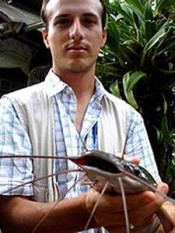
Photo by OLPL
Photo by OLPL

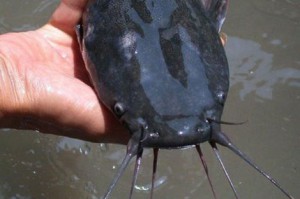
The catfish has conquered Cuba. The Communist Party and Youth Wing newspapers are singing the praises of its soft, white flesh. However…

The forced introduction of catfish to Cuba from Africa and Asia, in the late twentieth and early twenty-first century, can now be considered an ecological holocaust. The animals’ voracious appetite has wiped out countless freshwater animals on the island, in addition to non-aquatic species.

This breed of catfish, otherwise known as Clarias batrachus, or walking catfish, can weigh dozens of pounds and grow to a monstrous size. They are scavengers and, thanks to their ability to survive out of water for an extended period of time, all kinds of objects have been found in their stomachs: Spark plugs, marbles, coins, stones, plastic, the remains of vegetation, fish, amphibians, birds, rodents, and sometimes even feces. They will also devour one another when overcrowding occurs.

Sooner or later the Cuban Ministry of the Fishing Industry will have to respond to this irreparable idiocy on a national and international level. In the face of shortages of other sources of protein, the government has tried to provide the population with cheap meat, but many still find the texture and flavor of catfish disgusting and, in practice, even if they don’t have any other option, many buy catfish to feed their pets. (In particular cats, whose numbers were decimated during the Cuban famine of the 1990s, finally seem happy with the Revolution’s food policy.)
Claria Catfish

Photo: OLPL
Photo: OLPL

Although Cuba is surrounded by water, and our archipelago has more than 3,500 miles of coastline, the Cuban Fishing Fleet is a mere phantasm floating across the memory of the Caribbean Sea. Private fishermen came under suspicion for possibly smuggling people to Miami. Cuba is too close to the United States, where, paradoxically, catfish is treated as a delicacy: “God gives a beard to those who don’t have a jawbone,” is a common saying on the island, except that in this case the catfish has a moustache.

Translated by Alex Higson

From Sampsonia Way Magazine

15 September 2013

Between Neglect and Helplessness. Prostitution in Cuba, Part 3 / Miriam Celaya

jineteras090913Official secrecy and complicit silence

The original sin of the “Cuban Revolution” in relation to prostitution lies not in the fact of its not being able to eradicate it, a clearly impossible task, but in denying its very existence. Such a denial doesn’t only retard the search for solutions for social problems — sexual slavery, drug trafficking, child prostitution, the spread of sexually transmitted diseases like AIDS, etc. — that have appeared on the Island, but also prevents the population from having a clear perception of the issue and its social implications.

By excluding the issue from public debate it remains buried under less pressing emergencies related to economic survival and the precariousness of material resources. At the same time, these very privations accelerate the the deterioration of moral values, and feed the growth of prostitution, especially among teenagers under 18, who constitute the most vulnerable sector. A vicious circle that closes in on itself with a Gordian knot that seems to have no solution.

The end of innocence

While many adult women have chosen for themselves the path of prostitution, it is not less true that the entry of minors into the profession is ever more frequent. Eighteen marks the age of sexual consent in Cuba, but it is not rare to find girls between 13 and 17 who have already become prostitutes.

These kinds of activities, although prohibited by current laws, are difficult to detect due the complex web of illegalities that has been consolidated in the heat of impunity, and that now includes the networks of “recruiters” (generally older prostitutes and pimps), brothels — often protected behind the facade of a legal business, clandestine hostels, etc. — and, in some cases, with the complicity of law enforcement.

Police corruption, meanwhile, can be gross or subtle and ranges from simple extortion of the prostitute to the direct participation in obtaining monetary benefits under the concept of protecting the business; but in all cases it constitutes an important obstacle in combating this scourge.

According to the testimonies of several prostitutes, some police officers who cover shifts at certain key points in the capital receive direct payment from them, or from the employees of neighborhood bars, to permit both the trafficking of these sex workers as well as the clandestine trade in rum and cigars that is a scam usually played on unsuspecting foreigners. Prostitutes and bartenders have established a kind of mutually beneficial professional collaboration and have created true niches of corruption, particularly in poor areas of dubious reputation, such as Chinatown in Havana or San Rafael Boulevard.

The absence of institutions

In addition, some life stories suggest that the majority of minors who venture into the world of prostitution come from dysfunctional families and have grown up in hostile homes, both materially and affectionately, without there being any institutions truly responsible for their safety and protection.

A sample study conducted with a group of young prostitutes between the ages of 15 and 25, allows the conclusion that almost all of the cases came from dysfunctional homes, that prostitution among minors is a growing trend, and that the representatives of the repressive bodies or the courts are the only representatives of any official institution with which they have had any contact or relationship, whether it be to be blackmailed, arrested or punished; but never to offer them an alternative life or to enroll them in some social program that allows them to overcome the serious existential conflicts facing them.

Some of them are completely lacking in family support, others have minor children, are school dropouts, have used drugs at least once, and/or smoke and drink alcoholic beverages regularly.

The issue is compounded because it appears that there is no national program, nor even a local one, charged with supporting those who, given their particular circumstances, have taken to prostitution as a way to solve their material problems, not even for those who have lived in conditions of extreme poverty and lack of attention in dysfunctional homes, those who have been abandoned by their families, or for those who have been systematically abused, including by their own close family members.

Such helplessness is even more inexplicable given that, for over half a century, the Government has developed organizations dedicated to “surveillance” on every block through the so-called Committees for the Defense of the Revolution (CDR), or to the needs and defense of women through the Federation of Cuban Women (FMC). An institutional structure that, had it functioned in the social interest or fulfilled its founding principles, would have been capable of controlling this evil from the beginning.

Neither the Government nor independent civil society

Even though the problem of child prostitution potentially affects thousands of families, it does not seem to arouse significant interest on the part of the Government, largely responsible for the fate of so many frustrations; the same Government whose educational system, for decades, has robbed parents of their authority and awarded the “paternalistic” State custody of children, teenagers and young people, now abandoned to their own bad luck.

More worrying still is that not even within the alternative spaces is there a particular interest in this matter. In any case, a debate on the topic is not emerging, nor are there civic proposals that take it on, to any extent, from independent civil society. This suggests that perhaps there is an underlying accumulation of moral prejudices or traditional taboos that prevent the same sectors which have opened spaces for questions as complex as racial discrimination or sexual diversity, from taking on the challenge of the debate about prostitution and its social effects.

But far beyond the lack of resources, what is really alarming is the apparent lack of political will within all parties to approach one of the most complex issues that Cuban social reality is facing in the near future.

From DiariodeCuba

Prostitution in Cuba: Part 1Part 2.

9 September 2013

Living in a Shelter Comes to Seem Normal / Odelin Alfonso Torna

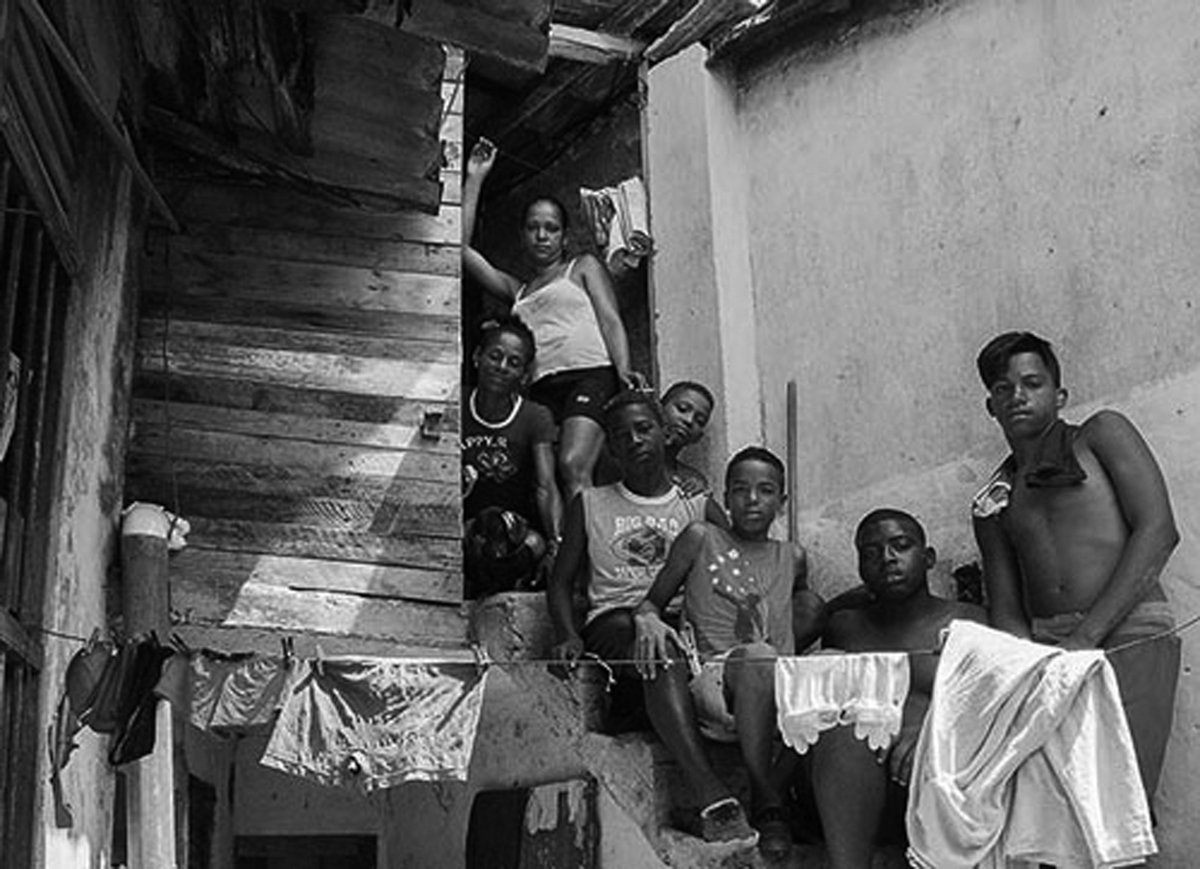
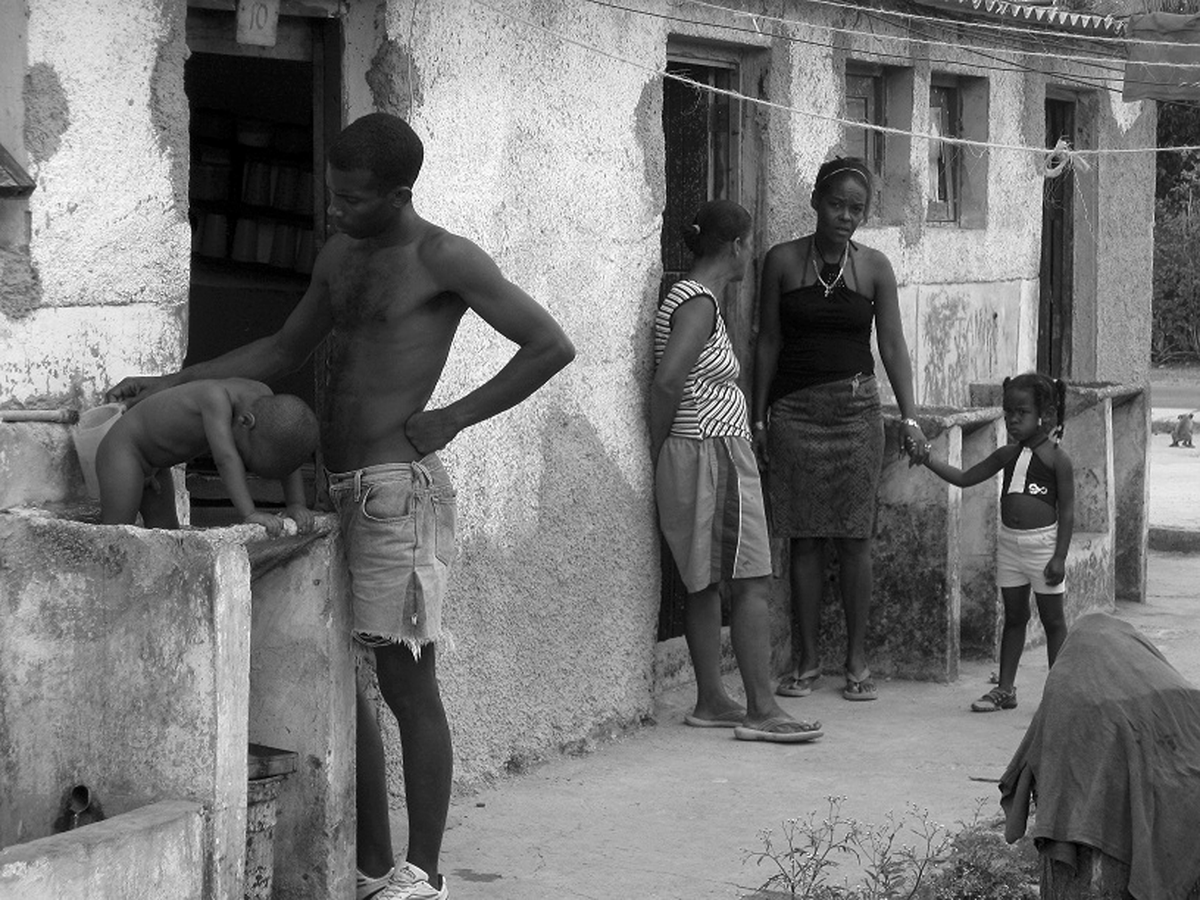
HAVANA, Cuba , September, www.cubanet.org – For ten years, the issue of housing has topped Cuba’s social problems. The state, unable to meet demand in the medium and long term, commits to offering its abandoned and unrepairable properties. Families of victims, calling on their meager resources and their own efforts, are divided out among warehouses, factories, schools, offices and even in abandoned police headquarters.

Offices of an old abandoned factory in danger of collapse, located in Cuervo road in the Havana municipality of Arroyo Naranjo, were previously assigned, provisionally, to three families of victims. In the warehouse of the dismantled La Ideal cannery, in the capital municipality of San Miguel del Padron, shelters other families by whatever means possible. The San Francisco de Paula railway station, in the same municipality, has served as a “temporary” roof for three families since the end of the ’90s.

These spaces donated by the State already existed, to a lesser extent, before 2006, the year that Fidel Castro delegated his powers for reasons of health. Already since 1996, part of the International School of Sports and Physical Culture (EIFD), in the Cotorro municipality, was enabled for dozens of victim families to temporarily stay overnight. These families and their descendents are still living in EIDF.

Transition communities like Gambute, Mantilla, El Comodoro and Martín Pérez, all in the capital, have been operating for more than fifteen years.

According to the ousted vice president Carlos Lage, 2006 ended with 111,373 housing units built, 78,833 more than were constructed in 2011 (32,540). Data provided by the National Housing Institute shows that Cuba must build between 60,000 and 70,000 housing units. However, the State is building some 16,000 while between 8,000 and 10,000 are built through private efforts. The State insists that its priority is to “solve [the problem of] those sheltered because of collapses.”

Does Havana, receiving more than 20,000 new residents each year, especially from the interior of the country, record in its annual housing construction plan the spaces and “transition communities” that are offered each year to victims and social cases? Looking at the nationwide housing stock of more than 3 million units, according to the National Statistics Office (ONE) 61% are in good condition, and the rest are “regular” or “bad.” Annual demand is predicted to be twice the plan figures for construction and repair of housing units.

Oris Silvia Fernández, president of the National Housing Institute, interviewed for the new news show “Cuba says,” argued, “We have a very complicated situation in the country’s capital because we have 5,471 families in shelters, and we have to say that there are other families who live in critical buildings with rather complicated structural situations in the capital, and we are talking of a total requirement of 28,000 homes.”

According to the ONE, the Cuban capital has more then 6,000 tenements and former mansions and old houses subdivided into rooms, plus 46 shantytowns — among them the transition communities — on the periphery, where more than 18,000 people live. All of them, and the new generations that come along, have been waiting for more than twenty years for dignified housing. However, statistically, are these cases resolved by the government?

For the long list of victims, offers of land by the State do not seem to be on the table. And despite Decree Law 217 (1997), which regulates the flow of migrants to the capital, the arrival of emigrants from the eastern part of the country increases the total housing needs in the capital.

Hurricanes and tropical storms over the last ten years have affected more than one million homes. Hurricane Sandy, which hit eastern Cuban in October 2012, most affected the provinces of Holguin, Santiago de Cuba and Guantanamo, causing the complete destruction of 22,396 homes. As of the first half of the year, 20,710 remained unaddressed. From previous cyclones — I’m referring to Gustave, Ike and Paloma — 40,000 totally collapsed homes remain unaddressed, according to Silvia Fernández.

The eastern province of Santiago de Cuba has a housing stock of 329,191 homes, with 40% in fair or poor condition. With this as a starting point, Hurricane Sandy affected 171,000 households, and only 44% of the victims have resolved their situation.

Given the low production of materials and a government program to build housing that does not exceed 20,000 annual units, temporary solutions appear necessary  It remains to be known if this is a permanent state.

By Odelín Alfonso Torna — odelinalfonso@yahoo.com

12 September 2013

The Man in Front of the Microphone / Yoani Sanchez

Subtitles read:
Free access to information for me to have my own opinion.
I want to elect the president by direct vote, not by other means.
Neither militants nor dissidents, all Cubans with the same rights.
End the blockade… and the INTERNAL BLOCKADE.

The filters were useless. The many eyes watching the monitors of the “master switch,” with itchy fingers ready to cut the signal, turn off the audio, kill a camera and switch to another focused on the crowd… or even on the heavens…

The professionals were useless, even though they had been carefully trained in TV censorship to cut to a test pattern or superimpose a musical curtain, should any “spontaneous” thing be said that should not be broadcast live.

It was all useless because the man in front of the microphone made the decision of his life: he resolved to put honesty above his own artistic career.

Robertico Carcásses was at the right time and the right place. He couldn’t let the chance go by and so he let loose, on the main stage of the Cuban regime, what so many of us are thinking.

Thank you, Bobby, for your bravery, your originality and for seizing this great opportunity with your voice and your art. Thank you!

*Translator’s note: Carcásses was singing at a concert staged for the release of the “Cuban Five” (Cuban spies imprisoned in the United States) at the Anti-Imperialist Bandstand in Havana, Cuba.

15 September 2013

Revolutionary Prostitutes. Prostitution In Cuba, Part 2 / Miriam Celaya

valla020913No social phenomenon arises suddenly or by spontaneous generation, rather it is the result of a long process of the accumulation of essential components. The rise of prostitution in “Socialist Cuba” is no exception. In fact, prostitution was not eliminated by policies dictated by the Government, which favored the mass incorporation of women into the workforce, nor with the wider social benefits that they undoubtedly enjoyed as long as romance subsidized by Eastern European socialism lasted, as was demonstrated when, impelled by the calamities of the so-called “Special Period*” the Government opted for international tourists as the most expeditious way to bring in hard currency.

With the Revolution brothels disappeared, but prostitution did nothing more than change its attire to disguise itself and survive in other forms, perhaps more subtle, which were enshrined and diversified as the system consolidated itself and installed the “meritocracy,” a predominantly male caste formed by mid- and high-level “leader cadres” of the Government, the Communist Party, high-ranking officials of the army or the Interior Ministry, as well as directors and managers of numerous state enterprises and institutions.

The privileges that the new caste of leaders can enjoy, according to their level, includes everything from travel abroad, free or very low-cost vacations in the country’s best hotels, special medical attention and private clubs, to the assignment of housing and cars, along with a generous quote of fuel, among many others.

The meritocracy, in turn, brought an explosion of a subordinate caste, the vaginocracy, formed by women attracted to the power and benefits of the new anointed, which are passed on to those with whom they are linked sexually, who can now enjoy a way of life that, otherwise, they would not have access to. These were not always their wives. It was an open secret that almost every prominent leader accumulated, among his trophies, some young and beautiful lover whom he maintained out of wedlock, based on gifts, perks and material benefits. The most successful of these hunters managed to wed their protector or came to acquire a good home or well-paid job, among other possible benefits.

It was not exceptional for military leaders to travel with their lovers, including on their “internationalist missions,” as happened in Angola, where they appeared embedded as personal staff. And surely they were.

This, with the advent of Marxism in Cuba and of the new class in power, prostitution for barter was reinstated, exchanging sex for money rather than for material benefits, and for the possibility of moving up the social ladder. The new model renewed old principals, tolerating the “vices of the bourgeois past” painted with make-up in the colors of the proletariat. The new prostitutes had no qualms about marching in Civic Plaza on the ritual dates, dressing as militants on the Days of Defense, or quickly stepping up for the Committees for the Defense of the Revolution or the Federation of Cuban Women. Revolutionary prostitutes had emerged, although neither they, nor the society, would consciously assume this definition.

For its part, society was abiding by the new rules. After all, offering sexual favors to a cadre of the Revolution in exchange for certain benefits was not so reprehensible. They were sacrificed comrades who spent a lot of time far from family and should have some leisure activity; it’s true they traded in sex, but at least their shared their beds with pillars of the fatherland, which in some way turned them into patriots. It was the heyday of revolutionary intransigence.

The double standard was imposed almost inadvertently as a national culture and as part of the mechanisms of the survival in a country in which the scarcity of material goods pushed the society towards the frontiers of moral misery. Almost the entire national spirituality was constrained within the ideological corset, which added to the chronic civic irresponsibility, contributed to the aggravation of the “anthropological damage” that has been brilliantly defined by the layperson Dagoberto Valdés.

Simultaneously, the traditional family structure was fractured and its values disrupted. Parents lost authority to the power of the State-Government-Party which appropriated their children and indoctrinated them into the new ideology of the commune. The children were sent to boarding schools from adolescence and grew up in promiscuity far from family control.

They had laid the foundation for the social disaster that would come in the ultimate decade of the 20th century when we Cubans were discovering that prostitution had overflowed the confined limits of the sex trade and infiltrated the roots of the whole society. Soon, the vaginocracy would yield to the strength and diversity of “jineterismo” — hustling.

*Translator’s note: The Special Period in Times of Peace (Período especial en tiempos de paz) was the name given by the regime to the period of extreme economic crisis following the collapse of the Soviet Union (Cuba’s main political and economic ally and subsidizer) in 1991.  Its end is not very well defined, but seems to have been around the time when the late Venezuelan strongman Hugo Chavez started to send oil and money to the island.

Prostitution in Cuba, Part 1: The Many Faces of a Conflict

From DiariodeCuba

2 September 2013