HAVANA, Cuba, October 8, 2013, Martha Beatriz Roque Cabello / www.cubanet.org.- On Thursday September 26, Barbara Fernandez Barrera was the victim of an act of repudiation in her home, located at Avenida 47, #7403, between 74th and 76th, in the municipality of San Antonio de los Baños, Artemisa province. The attack was ordered by Ernesto Perez, head of State Security for the municipality.
Supposedly, officers arrived with a warrant, but they didn’t show it to Barbara, saying it was from the Municipal Prosecutor, named Damaris Jata Seco. The aim was to remove a sign that was on the wall of the balcony of his house, that said: A long injustice, 3 years without water.
About twelve men went to the house by order of the Prosecutor. The painted the front green and white, in an illegal act of vandalism, according to Barbara, because this officer decided to do so.
While they were carrying out the painting, they were also threatening the woman, telling her she could fall from the balcony.
Also present was a State Security official known as Osmani. According to Barbara, she has put up with this situation since February 6, 2009, caused by the downstairs neighbors who cut off the water supply from the street.
She went out to demonstrate publicly on May 27, accompanied by some dissidents, with signs to protest this untenable situation and a deputy prosecutor named Marlen appeared outside the Municipal Prosecutor’s office and told her it would be resolved; she had been totally deceived, as is usual with the regime when they want to get out of difficult situations.
Now, Barbara has an Independent Library named after Václav Havel. According to her account, those who were in her house painting, shouted that they were going to burn her books. They offended the former Czech president, saying he was a “criminal” who fancied himself a defender of Human Rights.
It should be made clear that all these people were officially representing the Cuban regime, which has diplomatic relations with the Czech Republic .
As in most cases of social problems, the government does not solve this problem to make this family’s life a little easier, but removes a poster that does not look good from the political standpoint. As always: It’s politics before social justice.
HAVANA, Cuba, October www.cubanet.org — It is called the Bad Neighborhood of the Bright Light, a hamlet situated to the west of Santa Fe in Havana province. Its residents, almost all black and mixed (emigrants from areas to the east), say that in the beginning, more than twenty years ago, the houses on the edge of the sea were huts, lifted on a base of old posts and materials found in the trash, and that very few of its residents are registered in the Identity Card offices, nor are their houses, now in better repair, legalized by the Housing Authority.
A few days ago Claribel returned to this neighborhood; she is a Cuban who escaped on a raft to the United States five years ago. Such was my curiosity, that I asked a neighbor, a friend of her family, to take me to meet her.
We took a bicitaxi and with great fear braved the convoluted, dangerous and muddy streets to the little house where Claribel’s family lived, a few yards from the sea. The sight was depressing. She is a twenty-something girl, tousled hair, with the face of a black doll and a contagious smile. But in the hut, still made of broken boards and a cement-fiber roof, lived her parents, brother and grandparents in deep poverty, or as they themselves told me, barely surviving.
“I’m not surprised. It’s all I knew,” Claribel told me. “They can’t even drink a glass of milk a day. The monthly wages of my brother don’t last half a month, they still haven’t fixed the streets, there’s no piped drinking water, no toilets with plumbing, no bus that comes here, and what’s worse, the money they have isn’t enough for proper nutrition for the eldery, because the products in the “shopping” are very expensive. In a word: My family lives as badly as when they came to the Bad Neighborhood of the Bright Light some ten years ago. It was called that from the beginning because everyone lacked gas for cooking. Today many of them still use the old dangerous burners.”
I didn’t want to say goodbye without asking them why they’d left the eastern provinces, and the grandfather answered:
“There, in Santa Cruz del Sur, our social life regressed because everything was deteriorating little by little. The hopes that the Revolution gave us evaporated like will-o-wisps. The Haiti sugar mill shut down. The young people gave themselves over to drinking. Nothing functioned, not the bakery, the mail service, the little restaurant. The village became a ghost town, while Fidel kept giving the same speeches, talking about the crises in other countries, without saying that Cuba was more than dead. Me, I was proud of my native home, when we left, everything was destroyed, just like so many forgotten villages in Cuba.”
Before we left, we asked if there was a paved road out of there, so we could avoid the bicitaxi. There wasn’t any. Back in Santa Fe, despite its broken streets and its sidewalks overgrown with grass, we thought we’d come to Paradise.
HAVANA, Cuba, October, www.cubanet.org – Of the 6.5 million hectares of agricultural land is in Cuba, only 32 percent was cultivated in February 2008, when General Raul Castro assumed the presidency. There were 2 million acres covered with the invasive marabou weed or other weeds, and badly cared for. In other words, one third of the arable land was idle.
Twenty years after their creation, the Basic Unit Production Cooperatives (UBPCs), with the 1.77 million hectares of land they own, only managed to cultivate 219,100 hectares in 2012. With the exception of land used for growing sugar cane, coffee, cocoa and cattle breeding, these cooperatives reported 23% of their land to be idle, covered with marabou and other weeds.
To help turn around this deplorable situation, the government enacted Decree-Law 259, in July 2008, which authorized the distribution of land, in a form of leasing known as usufruct, up to a limit of 13 hectares per person, for a period of 10 years, with possibility of extensions. In the last five years, 1.7 million hectares has been distributed to 174,000 lessees. Of this figure, 53% is destined for livestock, 23% to vegetable crops, 7% to livestock breeding, with small areas under cultivation in tobacco, coffee and sugarcane.
But right now the process of distribution of land in usufruct is hampered and limited by of bureaucratic delays in the approval of applications. This is compounded by the slowness and delay in beginning to work the land, sometimes caused by the lessees’ inexperience of the farm work. Also due to the fact that they face a shortage of the means of labor , their high prices and poor quality.
However, the major obstacles confronting the delivery of lands in usufruct come from the State farms, which hinder and are reluctant to declare vacant the 500,000 hectares of land that remain unproductive.
Of the total land owned by agricultural enterprises, cooperatives, farmers and the lessees, only 1,353,519 hectares were cultivated in 2012.
The poor results in agricultural production require the government to spend 1.5 billion dollars in food imports, most of which could be produced in Cuba.
The situation is such that between January and March of this year there was a drop of 7.8 % in agricultural production, reporting a significant reduction in the production of beans, potatoes, citrus fruits, eggs and milk.
The magazine Palabra Nueva (New Word), of the Archdiocese of Havana, in the section dedicated to sports, apart from analyzing the current situation of the different disciplines in the country, is doing important work in rescuing figures forgotten or disqualified by the official press, due to what they practiced before January 1, 1959 (the day of discovery, because the 2nd was they day Christopher Columbus arrived, as a poet friend likes to say), or continued to practice after they were out of Cuba, without links established with the new authorities.
It also informs us about the current Cuban athletes, not belonging to the “government stable,” who triumph in the different countries in world sports, in baseball, as well as football, boxing, swimming, volleyball, basketball, wrestling, athletics, etc., who, despite the narrow political opinions of the authorities to marginalize them, and even the absolute silence around them, declaring them non-persons, are as Cuban as those living on the island, and are also a source of national pride.
No country in the world rejects their children, living wherever they live and succeeding wherever they succeed, because they are an indissoluble part of them, independent of their political opinions and their acquiring, or not, another nationality in a given moment. Luckily history, despite the opportunism and cowardice of some of those who write, always places everyone in their rightful place. It’s all a question of time!
Thus, in a not too distant future, our sports stars will be together with athletes from before and today, from inside and outside, receiving the same respect as citizens. For now, we are grateful to Palabra Nueva for what it does, showing that in sports, too, we are one people dispersed across many shores, all of us valued and honored.
The so-called digital natives are those born after 1970. Not only am I not a digital native, but I must wait for citizenship because I was born much earlier and come from a disconnected planet. In Cuba that date must run with generosity to the late ’80s because of the Blockade and the Imperialist Threat (and rumor has it also because of our former Sister, which bet the future entirely on socialism and not on the technological revolution).
But all mixed together, we Cubans in general came to familiarize ourselves (from afar) with personal computers from the ’90s: before that, some demigods called “micro operators” were the only ones with access to those machines of the dark green screens, there were some who experienced a Caribbean television as a screen.
My first encounter was in 1987, a NEC with a floppy disc reader. As the micro operator of the NEC of my account was my “team” and in the interim I married and went on maternity leave, I learned the management of the exclusive apparatus and when Ana Gladys was absent, Regina took command, most royal at the helm of an ocean liner. In addition, in this office of the micro, the air conditioning never failed, as it was said that the machine could not live without it. continue reading
Ana Gladys and I could have a conversation in front of anyone, others would think we were speaking another language: “The command is control-alt-M” (or it seems, but I’ve already forgotten MS DOS), “I left the program on the floppy,” what do I know, things like that.
At that time I did not need to study anything, I learned the commands by heart, and printed for my colleagues some precious theses with an academic program; not forgetting the variety of sources that came later.
A clever technician working in Copextel put together a Frankenstein. It was 1994 and the boy did not charge me, preferring to climb on a raft in the summer of that year. An XT with the text editor Wordstar or Wordperfect that my husband, the poet Alcides, didn’t touch for fear of the electricity.
It wasn’t until 1995 that we bought, secondhand, a 486. With Windows cam happiness. I convinced the poet that a PC was much better for his work. With more fear than conviction, he clung to his old Underwood, claiming not to know that symbiosis with mechanical apparatus, but as the immortal Stevenson said: Technology is technology, and I managed to convince him to step forward, to modernity. He is not a seasoned user, but he bangs on the keys and his drafts are flawless, an argument that was like a coup de grace to decide it.
As in this world of technology obsolescence is relentless , the 486 did not break, but it was incompatible with many peripherals, and in 2004, through the son of a friend (ooops … also today in exile), we bought a Compaq Pentium 3! brand new in its box and continued with the magnificent Magnavox SVGA monitor we “settled” for the 486. Alcides worked with him until four months ago he lost his memory (not Alcides, he enjoys an excellent memory) , and I have a friend from Miami engaging in archeology to see if he can retrieve it, because here the old RAM is more expensive than if it were new. I would prefer it not appear, so Alcides doesn’t regress to Windows 95.
Faced with the possibility of being left without work, I connected the keyboard and monitor (of the LCD) to a tiny Lenovo that I won in a contest on Twitter. At first , this was a disaster, because jumping from Windows 95 to Windows 7 for him was a leap of faith, but he has grown accustomed, and sometimes whole days pass without hearing that deep Rrregina … when the PC locks up.
The Internet has been an experience apart: familiarizing myself with browsers, optimizing the little connection time, getting into social networking, dealing with the downloading and installation of software. Much studying of booklets, manuals and tutorials, the years do not go for nothing; now I challenge myself to learn how to make a webpage from WordPress. In the end, more than curiosity, I think what keeps me studying like a madwoman is the fear of losing my memory, not just the RAM.
The justice and liberty that the dictator Raúl Castro Ruz snatched from our dear Ángel Santiesteban-Prats, couldn’t stop him continuing to be a great man who is adored by his true friends, not abandoned for a moment, not him, the brilliant writer, prize winner within and beyond the island, to the pain and envy of many colleagues who, having been his friends turned against him when so ordered to and all that just for the crumbs of stale bread and some false professional recognitions.
Today, all these UNEAC colleagues, especially those eight brazen writers , who are signatories against gender violence, which used to Angel as the emblem of an abusive violent man, who celebrate every day the brutal repression against the Ladies in White, and are silent this week – sure why not – about the brutal beating of the actress Ana Luisa Rubio by dictator Castro’s political police disguised as “neighbors”. Today, them, all of them and the dictator of course, will receive the news with deep anger which will delight the majority, that is to say, all the good people who love freedom, justice, democracy, human rights , art, literature:
Ángel Santiesteban-Prats has just won the International Franz Kafka prize which convened in the Czech Republic. continue reading
Tomorrow, Friday, at 7.30pm, in the Cervantes Institute of Berlin, three Cuban writers: José Manuel Prieto, Jorge Luis Arzola and Amir Valle, moderated by the German editor Michi Strausfeld, will speak about such important themes as liberty and creation in Cuba.
Starting from the injustice perpetrated against Ángel Santiesteban Prats, who is currently serving a prison sentence on the island where he was wrongfully convicted in a trial which was rigged to prevent further denouncing the plight of Cubans in his blog “The Children Nobody Wanted”, the writers will also speak about other developments of intellectual repression.
And as a novelty, they will present the novel ” The Summer When God Was Sleeping”. A novel which deals with the theme of the boat people with which Ángel Santiesteban was the winner of the International Franz Kafka Novels from the Drawer Prize, which convened in the Czech Republic.
Hopefully, all those who are in Berlin can join us!!!
Amir Valle, writer and journalist, literary agent of Ángel Santiesteban-Prats
Gorki Águila, leader of the punk rock band Porno para Ricardo, was released on bail a week ago, after a People’s Revolutionary Police (PNR) patrol stopped him in the early morning of Sunday, 29 September, and found in his backpack two tablets of a medication for epilepsy, an illness Águila has suffered from since he was a teenager.
What’s your legal situation now?
I’m out on bail now, waiting for a trial with no date. What I have, if I have something, are two pills in a backpack. I made the mistake of signing the bond with the full offense. After they released me, the legal assistance from the Cuban Law Association (AJC) helped to understand what I signed, in order to be set free, I should have written, “for an alleged crime, that has not been proved.”
The crime they put in there was the whole nine yards of the penal code. The full paragraph referring to drugs. But at the time I signed, I didn’t have legal advice, because even though I asked for it, they didn’t let me see a lawyer. If I made a mistake signing those papers so they would release me, it was because I was under a lot or pressure with a violent migraine, I wanted to go home and without legal advice, I did it.
The instructor/investigator told me to sign, that the crime he put (“so this is how it should be put,” he said) didn’t mean they would accuse me of all that, that he was going to wait to see how things were evolving to tell me the crime I would be charged with. That is, they put the full paragraph to choose what crime they were going to put or if they were going to put a crime.
Those are my fears, that now I can’t be sure of what they’re accusing me with. The instructor also told me, “It could be that all this goes in the file and the prosecutor doesn’t approve it. Because if you bring the papers, at best, nothing will happen.” He also told me that it’s possible they’ll take it to the prosecutor and then tell me what crime I’m accused of. I’m in limbo, without any definition of the crime nor a date for the trial.”
Do you have all the medical documentation?
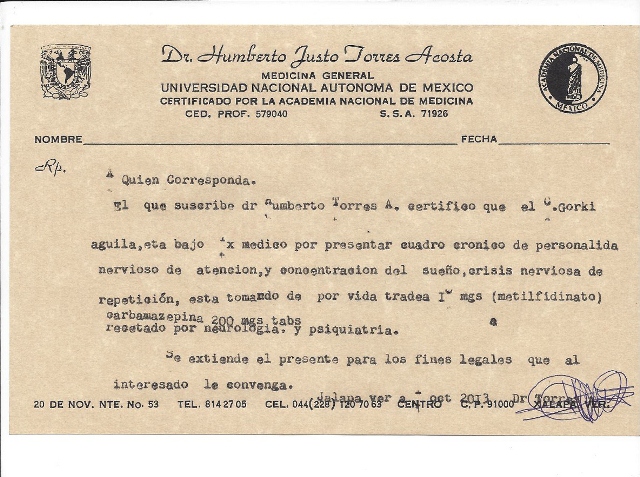
I already scanned the document from the doctor in Mexico who prescribed the Tradea. My family sent it to me, but my family doesn’t know the full process, since the document isn’t legal until it passes through a notary and then through the Ministry of the Interior in Mexico. And ultimately it has to go to the Cuban consulate. To send proof to Cuba that the doctor exists and the notary exists. And then the Cuban Consulate will say that “the whole world exists,” because it has legal force. I’m in this process, but I’m worried, because I don’t have a trial date, they could summon me tomorrow without my yet having the documents that would be my defense. continue reading
The legal document says that I am taking Tradea on a medical prescription. Basically, in a normal country, that eliminates the crime they are inventing of “trafficking and possession,” in two epilepsy pills, for a disease I’ve suffered from since I was a teenager.
I also went to the doctor here to get a clinical medical history where it explains why I take Carbamazepina. In Mexico they prescribed me Tradea, but here in Cuba it’s on record that I’ve been epileptic since high school. The pills are for epileptic seizures that I don’t get very often. And Carbamazepina and Tradea (metilfinidato) are similar.
How did the police authorities treat you?
The arrest followed the classic treatment you get in those places. They started out by threatening me: “Now you’re going to roast. Are you the guy in Los Adeanos*? You’re being tracked by your Committee for the Defense of the Revolution (CDR)…” I told them that in this country everyone is tracked by the CDR. [*Translator’s note: Gorki is not in Los Aldeanos.]
From the beginning, I started to ask for my medication, but they wouldn’t give it to me. Although my girlfriend brought it for me, they didn’t want to give it to me.
I was detained from early Sunday morning — for us it was Saturday night because it was a little after midnight — until 4:30 Monday morning. And I can’t describe the lack of hygiene in a Cuban jail cell. The jail bathroom looks like hell, not to mention there’s no water, you can’t flush. You are constantly breathing a stink of shit and piss. The cockroaches crawl all over everything, the filth of the floor is never cleaned. When a cell is filled with 4 people, everyone is sweating and breathing in the heat, it gets more and more uncomfortable and it makes you anxious to get out of that place.
There was something in particular that made me feel very humiliated. I was sitting on the floor, because I hadn’t eaten. I didn’t want to get dizzy and I had a bear of a headache. And one of them took out his cellphone and shouted at me, “Hey, look over here,” to take my picture.
They wanted to do a urinalysis. Looking not only for “evidence” of the two Tradeo tablets, but also the supposed drugs in my bloodstream. I would never agree to this. They even threatened me, “We’re going to give you 8 years for contempt because this is an order and you have to comply.” I told them, “I’m not going to give you any urine, because I don’t know what you’re going to put in it.”
And then they said, “That’s defamation.” Every time I spoke it was more years… I told them, “Look, if you notice, this medication is sold in Cuba, but not with this trade name. Tradea is metilfinidato. That is sold here.”
It’s the same medication, purchased outside, by medical prescription. I have Mexican residence, I have the right to have my pills. The police told me, “Ah, that’s international trafficking.”
What were the circumstances of your arrest?
We were seated, Renay (the drummer) and I, on the wall of the Obrera Maternity Hospital, in Marianao. It was the night of Saturday, 28 September, “CDR Day.” Before that we had an open-air interview with a journalist, an American university student, in La Puntilla, on the beach in front of the Commercial Center. We talked as a group, about our music, about all the censorship our band has suffered.
I’m not sure if this had something to do with the arrest. We left there, partly by bus and partly walking, to get to the party of a friend. We were relaxing sitting there and suddenly we saw the patrol that stopped dramatically. The police got out, asked for my ID, and told me to show them the entire contents of my backpack. We didn’t have anything to hide, I showed them my things and said, “And this is my medication.” The only thing they have as evidence of a supposed crime they’re trying to involve me in are two “fucking” pills.
Supposedly the police present the facts, not valuations or judgments, because that’s would make them a Court.
Do you think the pressure exerted by the media was crucial in your being released on bail?
I think so. Pressure from the medial is crucial. I thank my friends, the media in Miami, who always respond to this kind of abuse. Every time the media exposes the helpless position of a detainee, they limit the spaces of impunity in the behavior of the repressive bodies. I thank them from my soul. The first thing I advise is to lodge the complaint.
After all those hours locked up, it was Monday and they came to my cell and asked, “Do you have something there to call your family?” I told them, “No, but I need to, because among other things I need Carbamazepina, and you won’t give it to me.”
The police even gave me a card to use the public phone, and told me they were going to “bail me out.” I was surprised, because that right is not usually recognized by the police. I asked, “Did my friends already get me a lawyer,” and they said, “No, we decided among ourselves.” I think it was from the pressure of some of the media, thanks to the journalist Reinaldo Escobar, who was the first to make it known.
But I think they might be waiting to drop everything that has taken shape in the media and at a specific time, when it’s no longer being talked about, they’ll summon me to court and do what they please without any coverage or scandal.
Or, in the event that they see they have very little to arrest me for, and it’s going nowhere, they’ll wait until they have a kilo of cocaine to accuse me with because for two pills they’re going to make the same mistake again, “We know that with two pills we’re not going to put him in prison, let’s put a side of beef in the refrigerator.”
There is no exam that the Castro dictatorship has passed to prove that it is not a tyrannical, despotic, cruel, repressive, abusive, corrupt and inefficient regime.
Freedom House has once again tested the freedom of use of internet in the countries which make up the world’s concert of nations and Cuba, Castro’s Cuba, as it couldn’t be any other way, was placed in the penultimate position on the list, together with China and only just above Iran.
Freedom House documented how the Internet in Cuba continues to be — when it’s not an unattainable fiction for 95% of the population — a trap by the political police to control those who use the internet for personal means and to prosecute and jail those who use it to denounce the violations which are committed by the regime against its people who demand liberty, justice and democracy in Cuba.
Among this wide spectrum of the harassed, persecuted and imprisoned by the military arm of the Raúl Castro Ruz dictatorship, are the peaceful activists who are unceasing in their efforts to restore freedom to Cuba. Be they bloggers, members of organizations like the UNPACU or the Ladies in White, intellectuals like Angel Santiesteban-Prats or independent journalists. continue reading
The period which the report focuses on is the period from May 2012 to April 2013. As a result it does not include the opening of the internet access points which were created last June that would have “added” some points in favor of the regime, but then these were drastically lost by allegations that have been made about them, for example, that the right buttons of the mice on the PCs were deactivated, preventing users from using the option to “copy and paste”.
Later also, the repression against independent journalists and activists in general who denounce all the abuses of the regime across Twitter has grown so overwhelmingly, reaching the highest figures of the last four years. Among the most scandalous cases of State violence against an indefensible woman who was only defending her ideas, it is necessary to add the case of the actress and blogger Ana Luisa Rubio who, due to the time-frame, doesn’t appear in the report.
Controlling the use of the internet and along with that applying outright censorship to the sites which Cubans can access or not, violating the privacy of emails, suspending accounts, and what is much more serious, exercising direct violence on those who make use of “almost” free internet thanks to connections supplied by foreign embassies or tweets via telephone at unfair prices paid for by international solidarity, it is possible for the state monopoly telephone companies, while lending themselves to the political police so that they can subjugate and rail against its users, to profit shamelessly at their mercy.
My objective here is not to relay the information contained in Freedom House’s report, but to highlight the huge value it has and appeal to all those who read it and share it so that the world knows the truth about what happens in Cuba through serious and well documented reports. For those who still don’t quite believe or understand what is happening in Cuba for over half a century, it is essential to be aware of this type of reliable information and not the the vast number of pamphlets which circulate everywhere, without foundation and which do not help to give any credibility to the cause for a just and free Cuba.
I cannot get used, and I will not stop denouncing and demanding, whenever I know about a savage act consented to by the government, which does not condemn the punishable, and the complicit silence of social institutions, particularly CENESEX*, which advocates respect for the law, and especially UNEAC**, the victim being on this occasion Luisa Rubio, a female artist.
These female intellectuals who recently were the standard-bearers of a campaign against gender violence, how do they manage to continue living, full of guilt? This incident has a range beyond a gender issue, it comprises a humanistic feeling, and it is alarming that members of society assume behaviors that border on savagery. A Revolutionary does not abuse, does not volunteer to join a horde to beat helpless fellow citizens, then, what kind of Revolution they are talking about on official speeches?
I cannot keep looking at the pictures of Ana Luisa beaten, it hurts so much , it hurts deeply, I feel it on my own flesh, I’m really angry, anger explodes within my heart. I can better endure my rights being trampled on, than this being done to a family member or a friend, that means the same to me, and even to a stranger.
I decided to be an opponent because I rise up against abuses, and so I’m willing to die in the attempt. Nothing justifies violence, but in Ana Luisa’s case, we are talking about a woman, kind and sensitive. She exudes kindness. On several occasions I visited her, I was able to observe the surveillance they kept at her home, both on the part who was on duty at the premises of the Communist Party which is located in front of her home, as well as her neighbors, because they do it fully exposed.
Ana Luisa told me that when she has tried to report the abuses, refusing to leave the police station without being heard, she has been hustled by force, going as far by throwing her down the stairs causing severe fractures. Whoever observes the marks of the beating, will understand how inhuman the attackers were. The way they did it, it is clear that the attack was premeditated, using little children to ring the bell, pretending to annoy her, they made her come out and they committed their wrongdoing.
I will ask again intellectuals and artists, until they listen to me, that they adopt the honorable stance that this country is demanding and people need as a guide.
With regard to the actress and human rights activist, Ana Luisa Rubio, we should await that justice comes, which will knock infallibly on everyone’s door.
Ángel Santiesteban-Prats
Lawton Prison Settlement. September 2013
Translator’s notes:
*CENESEX is the Center for Sex Education, which is run by Raul’s daughter, Mariela Castro.
**UNEAC is the Writers and Artists Union of Cuba
Translated by Gualdo Hidalgo, Executiveeditor@latinhf.com
Cubanet interviewed Eliezer Avila, the computer scientist who once faced Ricardo Alarcon, former president of the National Assembly. He moved to the capital in order to participate more directly in the changes in civil society.
What have you been doing in your public life lately?
Since I arrived in Europe I have focused on my personal life. One of my biggest frustrations was that I’ve always lived nearly 500 miles from the capital (in Puerto Padre, Las Tunas). I had to take a bus or a train and travel sometimes for days in order to participate in public life, which is not only all that is written which overseas readers may read, but what happens in debates within of Cuba, within the intelligentsia who, with or without criticism, is what touches us.
We must mention the debates of the journals Temas [Themes], Espacio Laical [Lay Space], a series of good debates, in which I want to participate. Then, making an effort to be able to insert myself in a more coherent and consistent way in public life, I have had to spend the last two months to stabilize my life in the city of Havana.
From your previous social work we perceived you as a human rights activist and then a freelance journalist. But you have defined yourself as a politician. So: What political leaning do you identify with? Socialism, Social Democracy, Liberalism?
Bayley interviews Eliecer
I said in an interview with Bayly (in Miami) recently, that I define myself as a rational politician, perhaps a mix of “liberal center.” The truth is that I have infinite belief in individual freedom as the sole driving force of initiative, progress, the maximum effort to get ahead, and freedom. Now, I also believe in social responsibility, and I believe in a government that offers opportunities.
In European politics, as far as I could see, especially in the Nordic countries, there is a strong tendency for political rationality. That is, the issue we are talking about is the specific issue of what we should do. We don’t have to look through black or white glasses. We are going to study the issue in its totality and make a decision that at times could be a little to the left and at times a little to the right. The truth is it’s looking for the better good. I lean that way.
There are a ton of projects there that don’t consider economics, but the tendency of the left says that we have to do them because they sustain a group of services, of subsidies, because this is a social policy of interest to the left. But, well, it’s an economic disaster, that ends up undoing the policy itself because of the lack of resources to sustain what remains on the large screening, that can’t even sustain itself, and then, which way do I lean? For a balance between what is efficient and what is necessary.
Although you have defined yourself as a politician, Somos + [We Are More] is not a party but a movement. Has it been founded yet?
We are at the stage of conceptualization. I’m trying to gather a nucleus of people, especially young people; university students, workers. I’m looking for young people who aspire to have a future in Cuba. We can design a proposal addressing different subjects, in accordance with our dreams for a future for everyone in the country, including those who today make up a part of any political tendency.
The new acquisition of Somos + is a specialist in biology, who is designing the policy proposals in the environmental field, which in Cuban is disarmed. We want to have economists, sociologists, workers. That is, we want to have a directing nucleus of the Movement as diverse and comprehensive as possible. And we are engaged in this effort. We have not yet officially launched the Movement.
You also said that the Movement could accept some communists as members. What, then, is is precisely the purpose of Somos +?
The point of departure of our Movement should be, above all, the most common demands of the largest possible number of Cubans. I know Communists who are Democrats. So, we are associating with tendency to the left, a hegemonic opinion, dictatorial, that doesn’t have to be that way. In Spain there are communists, in France, in Canada, the United States is full of communists who are democrats. Because they respects the rights of everyone else who are not communists to compete politically, fair and square, and to create a social balance, based on what we all think. Then, you can have whatever political position you have and at the same time be a democrat. What I will always defend is that our Movement is democracy. There’s no room for doubt about that. We will not accept people who are not democrats, that’s it. But for me, I don’t think it’s necessary to label people and ask them what color they are for them to be, in one way or another, a part of the Movement…
Have you been inspired by any movement within or outside Cuba to conceive the idea of the Somos+ Movement?
I would say I’ve had very broad influences. I have had excellent conversations with leaders of movements in Cuba. For example, José Daniel Ferrer, a person I admire and respect very much. Other people who are not actually a political movement, but they do have some very interesting ideas for the future of Cuba , such as Antonio Rodiles, Yoani Sanchez, Dagoberto Valdés and well, a long list… They have nurtured me in all this, but also the trip to Europe, especially to northern Europe, where I think they are the most balanced politics in the world… The German Green Party really left me very inspired… I like doing politics that way. A relaxed politics, no angry grand passions that try to move the world, a conversational politics. I saw in the German Parliament the most heated political discussions, and then everyone has a glass of wine, hugs each other, shakes hands.
This to me seems to be the best example I’ve seen of what we have on a small island. We don’t have to have these great conflicts that some people want to encourage until they’re unsalvageable. We have the same language, the same idiosyncrasies, we have the same aspirations. What do we want? A state of decent comfort, of dignity, a freedom of information that allows us to be believe we have entered the world, and we are not in a small cave in the Caribbean and that we are not part of the development.
We want to be respected for our work, we want to be paid, and according to this we can have the life we deserve.
Why are you leading Somos + instead of joining one of the already established movements within the opposition?
It has always seemed necessary to me for a new seed to be born, a new flower, that is not conditioned, permeated by a group of things that can be positive or negative but that have been longstanding.
It is good to assume responsibility for success if we achieve it, but also bear the weight of failure if it comes to that. It is very interesting to travel this whole road, we have the right, as a new generation, to make mistakes, to forge our way, to be neither better nor worse than those who started earlier and whose work I respect.
Now I want to ask questions to get an idea of your profile: What books do you read, what music do you like, what movies do you remember?
I like old music, from the ‘70s and ‘80s, in English and in Spanish. As I am a computer scientist I’m passionate about programming sometimes whole nights, whole weeks, without going to bed, listening to a lot of hard rock, “System of a Down,” “Nightwish.” Movies: I very much like historic films, and adventures. I like all the movies about World War II, including the reflections of those who make you questions yourself, to think about the essence of humanity itself, above all, this capacity to create hatred. I really like “Life is Beautiful.” At the same time I very much like movies that exalt human valor. In books, as in movies, and in music, I like true stories. I was reading “The Rage and the Pride” by Oriana Fallaci. I finished reading the novels of Padura. I like Cuban writers who defined an era, with a writing that was very brave for its time, because it was ahead of many things that happened then.
How do you intend to add more people to Somos +, taking into account the fear that people have of reprisals from the government with its repressive apparatus?
First, I don’t think I should feel badly that no one has beaten me, I haven’t been in jail. Then, I think it is normal that it happens, that many people tell me, “I don’t want to sign up, I don’t want anything to happen to me.” You have to show these people that they are standing on safe ground. A ground in which I have confidence and which anyone can also rely on because there is nothing hidden. Political transparency can, in every sense, be a weapon that will help us to add many people.
The underground Cuban opposition has its advantages and disadvantages. One of the greatest fears that I have is that once we engage in politics in a democracy, too many people were accustomed to hiding.
This recent event with the musician Roberto Carcasses asking for changes at the concert of September 12, do you think it’s a sign of new times ?
I think so, recently I was talking to my wife. There are many people who are willing to assume some measure of responsibility for what touches them, according to their place in society, and I mean artists, intellectuals, many people who have responsibilities within the media …
People who travel, and Robertico Carcassés is one of them, they realize that in the whole world today a new wave is happening, they sometimes say, “Well good, the Arab countries are being shaken up.” I think the whole world is being shaken up…. These people who travel, who leave, they are seeing everything that is happening, when they get to Cuba it’s like traveling back in time 54 years… Sometimes there are situations like that of Robertico Carcasses, which I think it was mostly an awakening of consciousness that marks a before and after. It marks a precedent, as did what happened at the University of Information Sciences (UCI) as well.
With that speech I had the opportunity to make … It raised the bar a little of what would be done and what could be criticized, and after there was a trend in the newspaper Granma, in the News, of creating spaces where people began to discuss a set of issues . Well, I think it is very healthy and very necessary for a country to have things happen like with Robertico Carcassés … Far from being the exception, it should be the rule.
It’s said that the reforms within Raul Castro’s government are a fraudulent change, and that one of their tactics is the replace the real opposition, organic within the society, with what the spokespeople themselves have called a “loyal opposition.” If you agree with this opinion, what do you think of this phenomenon?
Today what we have in this second stage, to give it a name, in the government of Raul Castro, is a setback, including a discourse that already seems to come from the past. We have seen once again the pioneers reciting with their neck veins bulging, almost in the style of the “open platform.” We have reading in the newspaper again these discourses that label things “Revolutionary” and “truly Revolutionary,”or that abuse the word Revolutionary.
Yes, but when I gave the example of what they call loyal opposition, I was thinking of places like the official blogosphere, where there is a certain amount of criticism, but it is fabricated by the government to create an impression of openness…
I also include that in what I was saying. In any of those spaces even La Joven Cuba could enter, but the result is that you can fool some of the people some of the time, but you can not fool All of the people forever. These spaces were opened and people began to feel a catharsis there. It turns out that criticism is only the first link in a chain of a process that should end with political decisions. Then, something very interesting has happened in Cuba, it is that we have already talked too much. We bring too many years of criticizing.
HAVANA, Cuba, October, www.cubanet.org – What was Raul Castro thinking when, some days ago, in a meeting with the Council of Ministers, he said they are “doing experiments in order to” address the effects of the aging of the Cuban population? It’s not that one wants to take a shot at everything our chiefs say, but it would be easy to understand the reasons we start to tremble as soon as we hear the word “experiment” on their lips.
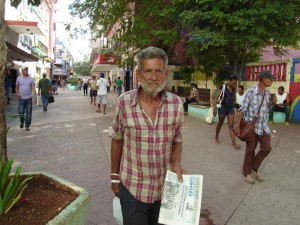
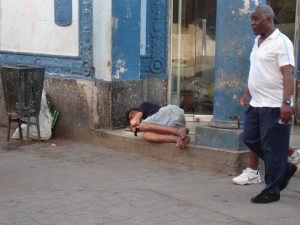
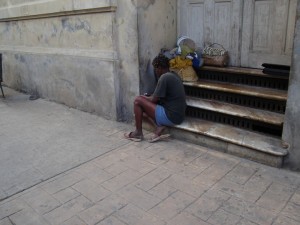
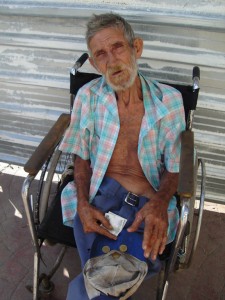
For example, could they be thinking about experimenting with the abandoned elders who have now turned Havana’s San Rafael Boulevard into a showcase of the futility, lack of attention and neglect of the regime?
It’s enough to walk a few blocks on this populous street to form a rough opinion of the drama of the old people whose fate rests on the streets of Havana, without any family support and without any government help, which now and again brings the police down on them, piling them into their cages like mangy dogs.
“To the old people who have to be cared for as if they were children, especially those who have been working,” Raul Castro also said at that meeting, which also scares us, not only for fear of what could happen to the children if the authorities stuck literally to their words, but for the exception they make with respect to “those who have been working.” Did he mean to say that those who didn’t work for the State have no right to be cared for in their old age? And how will these bureaucrats classify these old people, who have no record nor identification nor more property other than the rags they are wearing, to make it clear who deserves or doesn’t deserve to be cared for according to their former occupations?
Although the chiefs pretend not to take notice, as disheartening as is the increasing aging of the Cuban population, so is the aging of the Fidelist system, not only with regards to the ages of its principal representatives. Also, and especially, the ton of years they have remained imperturbably with the upper hand, anchored in the same speech and in the same aberrant and retrograde experiments of yesteryear.
Thus, I see they have nothing left but to experiment with themselves, retiring together, now that there is still time, as the only way to stop the tragedy of our elderly homeless, as well as so many others who were motive and today are an impediment to the solution.
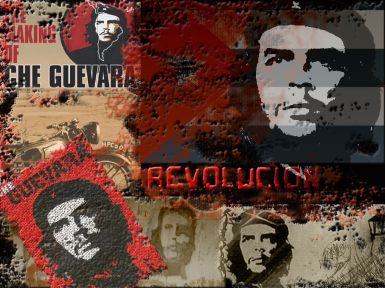
HAVANA, Cuba, October, www.cubanet.org – Che Guevara used to say that the history of the Cuban Revolution shouldn’t be written by others who were not its protagonists. The writers, whom he didn’t consider revolutionary enough, did not inspire confidence in this task.
In fact, he himself, who did not lack a literary vocation and talent, was the first who ventured a narrative. Reminiscences of the Revolutionary War was good effort to start writing the story of the Castro insurrection, from the Sierra Maestra to the taking of Santa Clara.
In any case, although fragmented and incomplete, the result was much better when Guevara wanted to give expression to his military thinking in Guerrilla Warfare, which was a diffuse manual of insurgency tactic and strategy.
A few years later the Frenchman Regis Debray attempted what Guevara hadn’t achieved: to establish guerrilla theory. But Debray himself, after the publication of Revolution in the Revolution?, acknowledged that failure of his theories. It wasn’t easy to theorize about the fortuitous and almost providential events of the Cuban Revolution. The Castro insurrection, with disasters such as the attack on the Moncada Barracks and the shipwreck at the landing of the yacht Granma, could be dramatic examples of what a guerrilla movement should never do unless it aspires to suicide. Not all guerrillas have the luck of facing barely professional troops,corrupts and demoralized as was the army of the dictator Batista. Che Guevara’s disasters in the Congo and Bolivia tragically demonstrated this.
Nor did Che Guevara manage to clearly define his social and economic thinking in a book. Man and Socialism in Cuba is frightening in its immoderate and super-human statist idealism. With regards to the economy, for years the economists who are trying to ensure the survival of the Castro regime have unsuccessfully tried to work Che Guevara’s ambiguous and contradictory concepts into a body of practical and coherent ideas applicable to the Cuban situation.
Guevara considered socialist economic planning banal. “Without Communist morality, it doesn’t interest me at all,” he confessed to the French journalist Jean Daniel in 1963.
Today, Guevara’s thesis of creating two, three, many Vietnams… would be counterproductive to the reinvention of socialism, but with a market economy.
Che Guevara saved us the horror by not writing about his time as an executor of the Revolutionary terror in the La Cabaña Fort in the first months of 1959. It’s terrifying to imagine what his narrative may have been. The murdered puppy gives us an idea. The only account he wrote is impeccable, but very cruel. Bringing to mind the call to Revolutionary fighters to become, according to his own words, “cold killing machines.”
Clothing sales by the self-employed. Photo from Internet
Things are looking bad for the sale of clothing, so much so that many of Havana’s retailers who pay to be licensed as seamstresses or tailors are concerned about what’s coming. As of 28 September 2013, an official provision has gone into effect establishing that they can only sell clothing made by hand, on pain of heavy fines and confiscation of all the industrially-made apparel they offer.
So far, the numerous private small business in Central Havana have remained open and are selling the same imported clothes, without any official operation taking place. But there is a grim anxiety circulating among them and they know it’s only a question of time before the hordes of inspectors and pack of uniforms come down on them.
Anais, one of the dozens of clothing vendors who have opened private businesses in Central Havana, has already lived four decades, and before having a self-employment license she knew how to make money working for herself. In fact she had a business selling imported clothing, which then came from State warehouses stores, through one of the multiple chains of smuggling networks that have proliferated on this Island since the bans were instituted as a method of governance.
So she shrugs her shoulders at the new official threat: “When I hear that the inspectors are about to come down this street (and I’m sure to hear ahead of time), I’ll close and go to the office and surrender my license. They’re not going to screw me over. I took all the merchandise I had in my house and put it in a safe place, so I will continue to sell “under the counter.” That’s what I’ve always done! Licensed or not, I’m not going to starve. We’ll see who has more to lose.”
Just half a block from Anaís a middle-aged couple complains. The man is more withdrawn and talks in monosyllables or just nods, approving what his wife says; she is more talkative, perhaps because she feels more confident talking to other mature woman like herself, or perhaps because she needs the catharsis.
I tell them who I am and what I do — something for which they don’t give out licenses in Cuba– but that doesn’t scare them one bit. “Just don’t use our names,” they ask me. Of course not, I don’t even ask. In reality, it’s not necessary, I’m just digging into what the media says, in what lies beyond the laws, the regulations, the statistics.
I’m more interested in people and their reasons than in the government’s regulations and the propaganda of its spokespeople. Life is on the streets, very different and distant from those who make the laws and what the media shows.
The woman tells me that a couple of years ago she took our a license as a dressmaker and began selling there, in the doorway of her sister’s house, and some time later, when they prohibited selling in doorways, she moved to the living room of the same house. It went well, so she was able to invest more money in merchandise and her husband also took out a license as a tailor.
Neither of them knows how to thread a needle, but she knows this business: before she was already “selling some clothes that just came my way, you knowl but always with a fear that the police would catch me. Once they took a backpack frull of t-shirts and I had to pay the owner from my own pocket.”
So when she saw the chance to earn money legally she took out a license. The official who helped her never said she couldn’t sell industrially-manufactured clothing, although it’s true that the permit says it’s for handmade goods.” But, she remembers, “from the beginning everyone here sold imported clothes and no one ever warned us about anything, nor did the inspectors fine us or take the merchandise. Instead they let us get excited, and spend money locally, on the display racks, the pegs and all those things, and we invested in the clothes coming in through the airport where we certainly had to pay duty on them. Now they are saying that we Cubans don’t pay the tariffs, so what have we been paying for at the airport?”
Then the husband tells me, “That’s the problem. In this country there are too many limits and too many things prohibited.”
The story of another young entrepreneur is similar, who just points out that when he got his license specifically asked officials at the tax office if he was only allowed to sell hand-crafted clothing, to which they responded with a typical phrase, full of complicit winks: “This is Cuba , you know that you can always do more. You have to swim and put way the clothes.” The young man laughed, “I do not want to store the clothes, I want to sell them and make money.”
In a total of seven private shops I visited the feeling is one of uncertainty and discontent. All of the interviewees think that the solution would be to have a wholesale market in the country to legalize the sale of manufactured clothing, but we know that isn’t going to happen.
The crux of the matter is that in a couple of years private businesses have successfully competed with the State’s hard currency stores, whose sales have fallen sharply as the self-employed multiplied. A greater variety for sale, more acceptable prices, better quality and friendly service are factors that distinguish the private owner versus State establishments, advantages that the government is in no condition to match, let alone surpass.
Moreover, a significant number of these private retailers are former state workers who have become “available” — the State euphemism for being laid-off — but who already engaged in illegal sales before having a license; that is they are trained in smuggling activities and surviving on the margins of legality, so that — as the last elf-employed young man I interviewed told me — the government is just leaving the path open for crime: “Here many people know how to ’struggle,; so that’s why they don’t have a license. Who’s going to take out a license to sell the same cheap clothes they sell at the fairs all things being equal? And how are the police going to control so many people?”
It is clear that with the implementation of self-employment the government has opened a Pandora’s box that it cannot now close without facing the consequences. However, despite the repressive nature of the new provisions and the official obstinacy in refusing to license as retailers, the balance remains negative for the authorities. What was before is no longer. Meanwhile, there are more and more discontented Cubans in the streets. Given the circumstances, it seems fine to me, to see if once and for all an awareness of autonomy and rights blossoms among the Cuban people.
The facts and news about the sport of balls and strikes, learned during the recently concluded month of July, settle the dispute between amateur and professional baseball in favor of the latter.
It started with the debut of Yovani Aragón in the World Port Tournament of Rotterdam, a less demanding event than the Olympic Games and the World Classic, where the spiritual mentor captured the ninth title for Cuba.
It was followed by the series between the U.S. collegiate national team and the Cuban team, in which the Antillean team displayed the weakest performance in recent international matches: weak hitting, a high number of strikeouts, failure of the first batters, flawed tactics, errors in fielding and throwing to bases, and they stole 15 bases in 16 tries. For its part, the American squad also had a weak offense, but had 12 pitchers throwing between 93 and 98 miles per hour.
The Cubans, who had defeated the student selections in 8 of 10 tries, with more experience and with an average age of 26.6 years, were defeated by a team whose ages ranged between 19 and 23. The Cuban mentor, Victor Mesa, who hoped to win three or more games, had to settle for a crushing defeat. Something similar to what happened in the third World Baseball Classic, when he said “We will win the Classic. That’s why we came, not for anything else”; but he failed to improve on the fifth place finish in the second Classic.
To these two facts the following news was added:
1 – The Granma native Alfredo Despaigne, hired by the Campeche Pirates of the Mexican League, hit 6 for 6 on July 24, equaling the record set in 1936 by the “Immortal”, Martin Dihigo.
2 – Yasiel Puig, from Cienfuegos, was awarded the Best Player and Rookie of the Month for June, after his debut with the Los Angeles Dodgers. In 26 games he led in batting, was the leader in on-base percentage, hit seven home runs and drove in 16 runs. With 44 hits he was second on the all-time list of rookies in their first month, four behind the mark set by Joe DiMaggio in 1936.
3 – Jose Iglesias, infielder for the Boston Red Sox, was selected Rookie of the Month in the American League. In 25 games he batted .395 with four doubles, two triples, one homer, six RBIs, 17 runs and eight walks, had 11 games with two hits or more and a streak of 18 straight games with base hits.
4 – Jose Fernandez, pitcher for the Miami Marlins, with little more than three months in the major leagues, was named to the All-Star Game along with Aroldis Chapman of Holguin, closer for the Cincinnati Reds, while Yoenis Cespedes from Granma, of the Oakland Athletics, won the home-run competition during All-Star Week.
5 – Veterans of the Industriales team played several games during the celebration of the 50th anniversary of the club in Miami, where the Industriales players from the island faced off against Industriales players living in the U.S.
JORGE EBRO el Nuevo Herald
The facts and news take us back to the time when professional baseball was abolished. Until then Cuba had a large presence in international events. After the First World Amateur Baseball Series, held in London in 1938, the following five were held at La Tropical Stadium in Havana, of which the island won four. Meanwhile the Caribbean Series was created at the request of Cuba, when in 1948 it proposed to delegates from Puerto Rico, Panama and Venezuela, to hold an annual series among the champion teams to decide the best of the region. Havana was host to the first in 1949. From there, until 1960, Cuba won 7 of the 12 series, the last five in a row.
In keeping with a longstanding relationship between politics and sport, the leader of the Revolution made a long speech about baseball. On January 2, 1967, he said: professional sport was eradicated, and above all, it was eradicated in that sport, which was one of the most popular: baseball… But more interesting is that never did any professional athlete whose business is the sport, play with such enthusiasm, so bravely, with such courage, as do our athletes, who are not professionals.
Certainly the Revolution took baseball to all the people in the country, constructed several stadiums, renamed the Grand Stadium the Latino-American Stadium of del Cerro, and added new bleachers. In exchange, it prevented Cuban players, with the qualities of stardom, from measuring themselves against the best players in the world and deprived the Island’s fans of the enjoyment of professional baseball which, live or on the radio and television, they had enjoyed from anywhere the country.However, professionalism was not eradicated, rather it was hidden. If a professional is someone who is paid by salary for the work performed, the players of the National Series, who received their salaries for that work, have been professionals from then until today.
With that “free” baseball Cuba established supremacy for decades in the Central American amateur, Pan American and global competitions. It proclaimed the great victory over “slave” baseball. Brimming with pride, in October 1975 it said: if in other Latin American countries there is no social revolution, there is no development of the social revolution; regardless of technique, regardless of how many trainers they hire, regardless of how many new things they devise, they can’t match Cuba’s successes in the sport.
The illusion vanished. Cuba had been beating the amateurs with a professional team. When the match-ups with the presence of professionals began, “slave” baseball proved superior to “free” baseball, as in the Classics. The results started to disappoint. But the worst has been the hundreds of players who have defected in search of “slavery,” which has affected especially pitchers. Almost all of the best pitchers of the last 20 years left the Island: From René Arocha to Odrisamer Despaigne and Misael Siverio and with them hundreds of players from all categories.
After a long and brilliant baseball history, measured against the best in the world and having triumphed, countries with no tradition in this sport beat us, or we win by scaring them. The climax has been, not the loss against other professionals, but against college students, true amateurs who faced the “amateurs” of the greatest of the Antilles and swept them in five games.
Cuba is in decline relative to the rest of the world. The dispute between amateur and professional baseball is decided in favor of the latter. The strategy outlined in 1961 needs to be abandoned. Although not publicly acknowledged, which is too much to ask, the most important thing is to accelerate the steps being taken to return to the road we should never have abandoned. For now Cuba will attend the upcoming Caribbean Series to be held in Margarita Island, Venezuela, but the dream of many fans and many of those who now shine in Professional Baseball, is to represent Cuba in the next Classic. It is not a big demand, it is simply to allow Cuban players residing abroad to defend the colors of their flag, as do players from the rest of the 15 countries participating.