The president says that the fight against corruption, drug use, illegal activities, and social indiscipline “is a state policy that requires a comprehensive and interdisciplinary approach.”
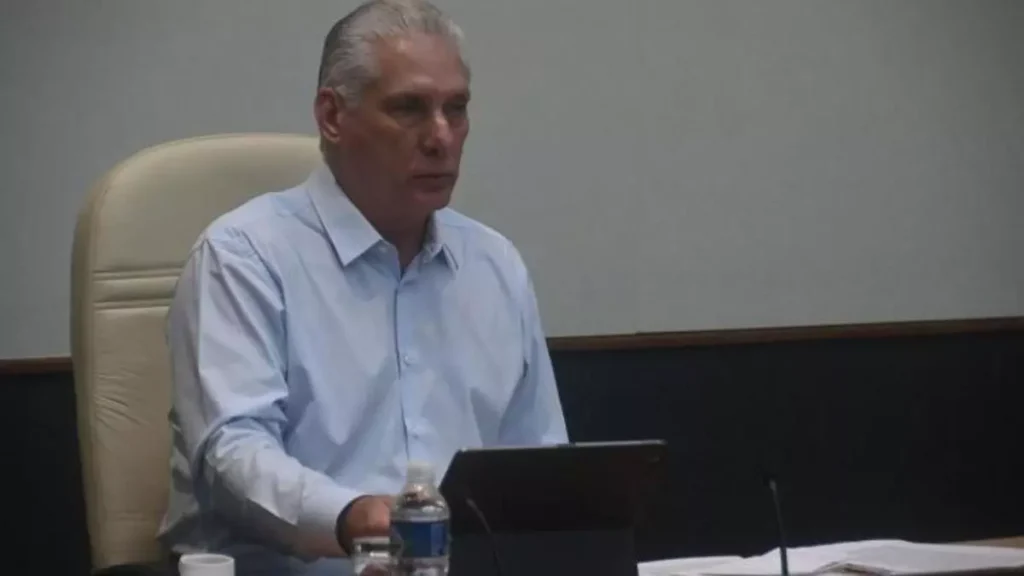
 14ymedio/EFE, Havana, November 24, 2026 – Cuban President Miguel Díaz-Canel stated Monday that the fight against crime, corruption, drug use, illegal activities, and social indiscipline on the Island “is a state policy that requires a comprehensive and interdisciplinary approach.”
The statement was made at the government meeting opening the Sixth National Exercise for the Prevention of and Fight Against Crime, Corruption, Illegal Activities, and Social Indiscipline, which will continue throughout the country until next December 5, according to a report published by the Presidency on social media.
Díaz-Canel emphasized “the importance” of social and community prevention, as well as “popular participation and oversight,” which he considered “a guarantee in confronting these phenomena.”
He also pointed to the emergence of new crimes and said that many of them “are encouraged by the enemy in an attempt to destabilize the country and create a sense of insecurity.”
This new campaign against criminal activities is aimed “at strengthening the measures that guarantee stability and public safety, protecting social well-being, and correcting economic distortions at such a complex time as the one we are experiencing,” the report stated.
Cuban authorities specified that they would prioritize monitoring protective measures for critical infrastructure, such as the national electrical system and the water supply
Among the activities planned for the exercise, Cuban authorities specified that they would prioritize monitoring protective measures for critical infrastructure, such as the national electrical system and the water supply.
They also mentioned that “surprise inspections” are planned at entities of economic and social importance that have direct ties to the population, such as those involved in food production and marketing. The exercise will also focus on monitoring pricing policies and tax compliance.
It will also include visits and meetings in communities with people who are neither studying nor working, as well as neighborhood and institutional discussions about the drug problem.
Cuban authorities have acknowledged an increase in drug use in the country and have expressed concern about its circulation on the Island, particularly among young people.
They also insist on maintaining that Cuba “is not a country that produces or serves as a transit route for illegal drugs” and that the Island government’s policy is one of “zero tolerance” toward this scourge.
In early November, more than 250 people had been arrested since September for their alleged involvement in drug trafficking, as part of an increase in operations to combat these crimes.
In recent years, the regime has launched several campaigns against these activities, while the official media have begun giving the issue coverage, particularly focusing on high-profile trials and sentences, especially when the penalties are particularly severe.
Translated by Regina Anavy
______________________
COLLABORATE WITH OUR WORK: The 14ymedio team is committed to practicing serious journalism that reflects Cuba’s reality in all its depth. Thank you for joining us on this long journey. We invite you to continue supporting us by becoming a member of 14ymedio now. Together we can continue transforming journalism in Cuba.