Since “the blockade does not allow us to bring” fuel, they are calling for donations to send solar panels.
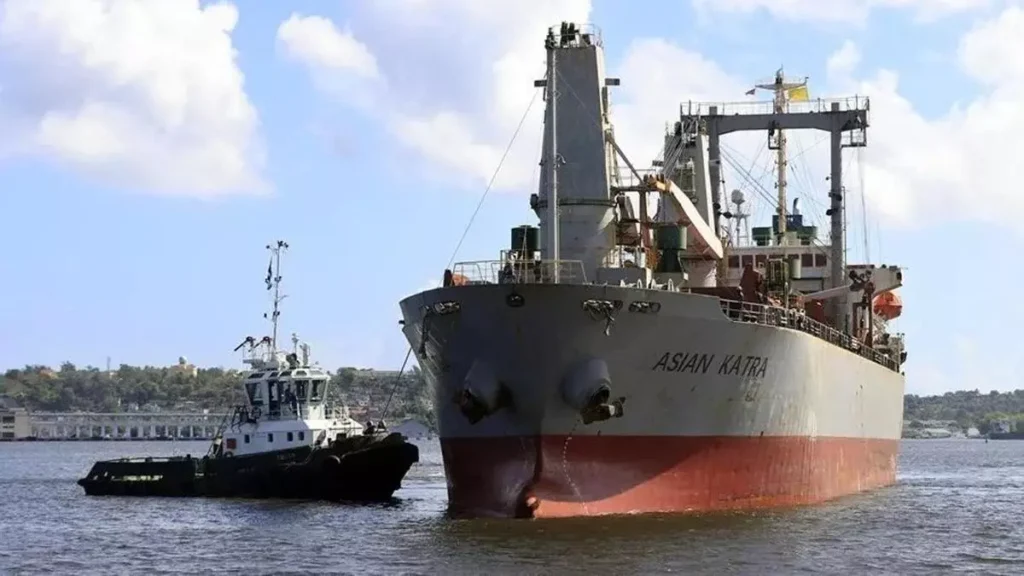
 14ymedio, Madrid, November 23, 2026 – The Jose Martí Association of Cubans Residing in Mexico has abandoned its project to send an oil tanker to Cuba and has transformed the campaign into a fundraiser to purchase solar panels. “The blockade does not allow us to bring oil, but we will bring solar panels,” the organization announces in a poster circulated this Monday by the pro-government media outlet Cubainformación.
In January, the United States threatened to impose tariffs on countries supplying crude oil to the Island, although the U.S. Supreme Court forced the removal of those tariffs in February, without ruling out future sanctions.
The initiative, originally named “An Oil Tanker for Cuba,” is now entering its final phase with a call for donations
The initiative, originally named “An Oil Tannker for Cuba,” is now entering its final phase with a call for donations. “Every day counts. Each contribution, however small it may seem, brings us a little closer to this goal of solidarity and commitment with the Cuban people,” says the Association, which also calls for spreading the campaign.
The organizers have established an account at Scotiabank in the name of Sergio Chaviano Llerena to receive contributions, which must be identified with the reference “Bonds.” Participants will receive a bond after emailing proof of their deposit. No information has been provided on how much money has been raised so far, how many solar panels they intend to purchase, or when they would arrive on the Island.
The José Martí Association had announced its ambitious project in May 2025 as part of the commemorations marking the centenary of Fidel Castro’s birth. At the time, the 400,000 barrels it intended to send had an estimated value of $22.4 million, not including transportation costs. It was never explained how the organization would finance such an operation.
The Association of Cubans Residing in Mexico José Martí had announced its ambitious project in May 2025 as part of the commemorations marking the centenary of Fidel Castro’s birth
The change in plans had already been considered by the Association itself more than a year ago. Its vice president, Olivia Garza, acknowledged in an interview with Cubainformación in October 2025 that the cost of the oil tanker was “quite high” and warned that if they failed to raise the necessary money, they would invest it “in solar panels or supplies that the people in the Cuban Government tell us are needed for the national energy system.”
Garza, who maintained contacts with the Cuban Embassy, promised biweekly reports on contributions. She also announced that the campaign would conclude on November 25, 2026, the tenth anniversary of Fidel Castro’s death, with a massive festival in Mexico City, although the event has not yet been confirmed.
This is not the only project promoted from that country to alleviate Cuba’s energy shortages through direct coordination with the Island’s government. On October 20, the launch of “One Liter of Gasoline for Cuba” was announced. The initiative, organized by the Antifascist Cultural League, aimed to raise funds to send 40,000 liters of fuel through the sale of prints by Cuban artists, at 25 Mexican pesos each. The group had also launched the “Light for Cuba” campaign in August, intended to purchase solar panels.
On November 3, President Claudia Sheinbaum joined the fundraiser by purchasing a print, according to the organizers, who circulated a photograph of the president alongside writer Paco Ignacio Taibo II. Although the Antifascist Cultural League expected to reach its goal within a month, it has not publicly demonstrated that it raised the funds or that the fuel was sent.
The Mexican initiatives join other campaigns by organizations aligned with the Cuban regime. In June, projects promoted from Spain and Portugal to send medical supplies, food, and photovoltaic equipment came to light. Among them was a fundraiser organized by the Euskadi-Cuba Basque Association, which had raised 245,000 euros to install solar power systems in health centers on the Island.
Oil, meanwhile, remains a sensitive issue for the Mexican Government. In March, Sheinbaum avoided committing to resuming fuel shipments in the face of tariff threats from Washington. “Mexico has every right to send fuel, whether for humanitarian or commercial reasons, but we do not want to harm Mexico,” she said at the time.
Translated by Regina Anavy
______________________
COLLABORATE WITH OUR WORK: The 14ymedio team is committed to practicing serious journalism that reflects Cuba’s reality in all its depth. Thank you for joining us on this long journey. We invite you to continue supporting us by becoming a member of 14ymedio now. Together we can continue transforming journalism in Cuba.