OFAC says it will not penalize foreign companies that ship agricultural products, medicines, and medical supplies, along with their spare parts and software.
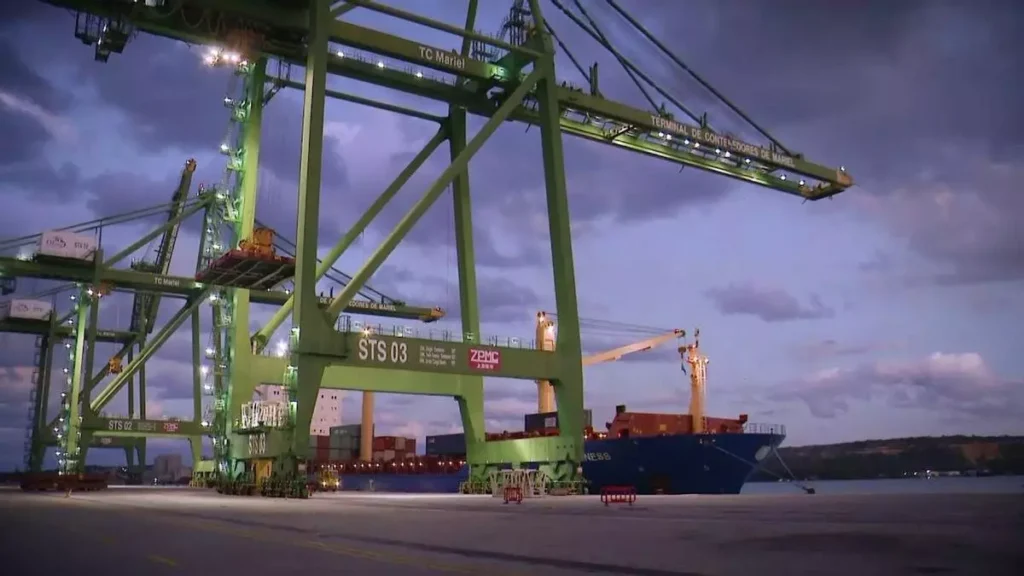
 14ymedio, Madrid, November 22, 2026 – The U.S. Department of the Treasury cleared up a question that had been troubling exporters and shipping companies following the November 5 sanctions: continuing to operate through the port of Mariel does not automatically make them targets of sanctions, provided they do so within the scope of what is authorized.
The clarification, published by the Office of Foreign Assets Control (OFAC) in two new answers to frequently asked questions, does not, however, change the situation of the Mariel terminal, which remains in the hands of entities that Washington has already sanctioned this year.
OFAC’s first response confirms that Americans engaged in activities authorized under the Cuba sanctions regulations may continue doing so, including making payments to Cuban ports and, explicitly, to the port of Mariel. As for foreign companies, OFAC says that, generally speaking, Washington does not pursue non-U.S. persons for authorized transactions and does not intend to sanction them under Executive Order 14404 for operating in the maritime sector, including at Mariel.
The sanctions do not target those supplying Cuba with agricultural products, food, medicines, medical devices, parts and components for such equipment, or software updates for those devices. The clarification does not mention other types of cargo.
The sanctions do not target those supplying Cuba with agricultural products, food, medicines, medical devices, parts and components for such equipment, or software updates for those devices.
The second response clarifies the scope of the November 5 determination, which opened the possibility of sanctioning any foreign company that operates or has operated in the maritime, manufacturing, technology, and electronics sectors.
OFAC emphasizes that the measure exposes companies to the risk of being sanctioned but does not automatically sanction them: only those individually determined to be subject to sanctions will be penalized. Licenses such as General License 1 eand exemptions continue to provide protection. Americans, for their part, remain prohibited from conducting transactions with Cuban nationals, except where an exemption or authorization applies, regardless of whether they operate in those sectors.
The port of Mariel has been under Washington’s sanctions pressure for months. Following the designation of the military conglomerate Gaesa in May, the Cuban state transferred control of the terminal in June to two other entities: Coral Marítima S.A., which took over the assets, and the Maritime Port Transportation Business Group (Gemar), which controls the port infrastructure, vessels, and maritime logistics. The State Department sanctioned both on July 13.
On July 23, it also designated Mariel Container Terminal S.A. itself, on the grounds that, like the other two entities, it was participating in a scheme to circumvent sanctions. That decision closed any legal loophole involving a port through which approximately 85% of the merchandise received by the Island passes.
Washington had already made clear that humanitarian operations involving food, medicines, and medical equipment remained authorized
In May, shipping companies CMA CGM (France) and Hapag-Lloyd (Germany), which handled nearly 60% of cargo shipments to Cuba, suspended their services out of fear of sanctions, although they have partially resumed them since then.
The sector-wide determination came alongside a new round of sanctions this November. It also affected eight companies and five fuel transport vessels. The companies include the Cuban firms Cubaelectrónica and Tecnosime and the Chinese companies Ceiec and Beijing H&C Technologies, accused of supplying military equipment to the Cuban regime. The measures fall under Executive Order 14404, signed by Donald Trump on May 1, 2026.
Washington had already made clear that humanitarian operations involving food, medicines, and medical equipment remained authorized. The clarifications that OFAC has now issued reiterate this point, but the threat remains for foreign companies with ties to the Cuban regime: any entity that is 50% owned by or affiliated with an entity designated by OFAC is also considered sanctioned.
Translated by Regina Anavy
______________________
COLLABORATE WITH OUR WORK: The 14ymedio team is committed to practicing serious journalism that reflects Cuba’s reality in all its depth. Thank you for joining us on this long journey. We invite you to continue supporting us by becoming a member of 14ymedio now. Together we can continue transforming journalism in Cuba.