PAN and PRI senators denounce the lack of transparency in the use of public resources and the silence on political prisoners
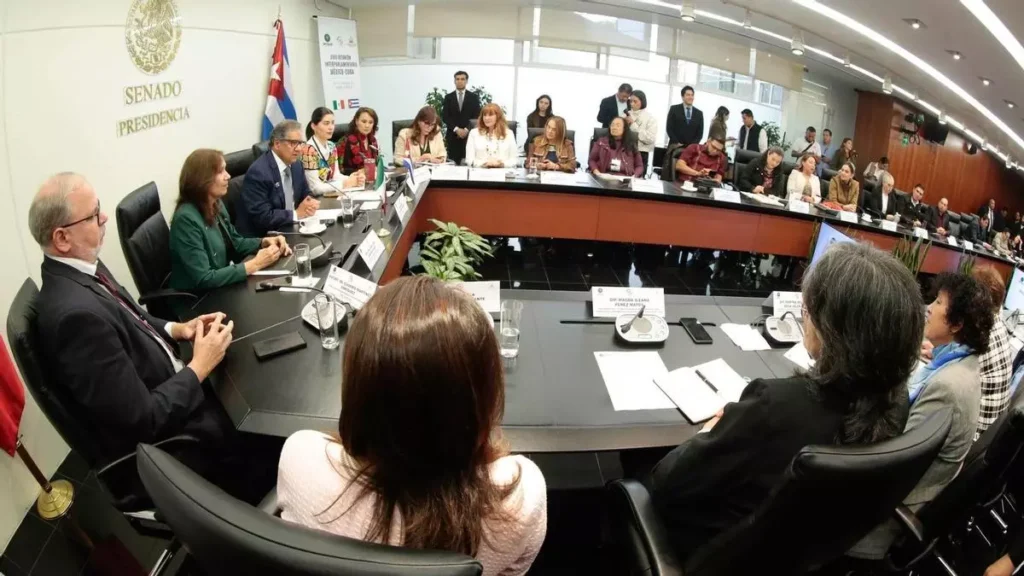
 14ymedio, Havana, November 22, 2026 / The Claudia Sheinbaum Government’s policy of economic support for the Cuban regime is once again drawing criticism in Mexico. The 18th Mexico-Cuba Interparliamentary Meeting, held on Friday and Saturday in the Senate, concluded with new commitments to bilateral cooperation, but without the participation of legislators from the National Action Party (PAN) and the Institutional Revolutionary Party (PRI). The opposition’s absence coincides with its repeated denunciations of the multimillion-dollar oil supplies to the island and the lack of transparency in the use of Mexican public resources.
PAN Senator Marko Cortés Mendoza had announced that he would not take part in the meeting because he considered that it left out fundamental issues such as human rights, the persecution of opponents and the existence of political prisoners in Cuba. “I am not going to participate, out of basic consistency,” the legislator declared, according to a report from the Reforma agency, published on November 20.
Cortés, a former president of the PAN, maintained that dialogue between the two countries is positive, but should not serve to legitimize an authoritarian Government. In his view, any cooperation in health, education or economic development should be accompanied by demands for democratic freedoms and respect for human rights.
Cortés then denounced that energy resources were being used as an “ideological checkbook”
The senator’s stance is not new either. Last January, he demanded an exhaustive report on Mexican oil and fuel supplies to Cuba, including the volumes transported, the value of the shipments, the maritime routes, the possible subsidies and the opaque involvement of Gasolinas Bienestar, a subsidiary of Petróleos Mexicanos (Pemex).
Cortés then denounced that energy resources were being used as an “ideological checkbook” and demanded explanations about the real benefits of those operations for Mexico. He also warned of the economic and diplomatic consequences that could result from maintaining the supplies.
The criticism extends to other National Action leaders. In February, the coordinator of the PAN senators, Ricardo Anaya, accused the Executive of financing the Cuban regime with Mexican taxpayers’ money. Anaya argued that the resources were not going directly to the population, but to a Government that represses demonstrations and persecutes independent journalism.
The leader also warned of the possible repercussions of that policy for Mexico’s trade relationship with the United States, especially in the context of the review of the North American free trade agreement.
‘El Universal’ revealed that Pemex had refused to hand over the payment receipts requested by the newspaper
For his part, the national president of the PAN, Jorge Romero Herrera, stated in late January that his party does not oppose humanitarian aid for Cubans, but it does oppose giving oil away to the Havana Government, “as if we were enjoying absolute prosperity.”
Senator Gina Campuzano González also questioned the Executive’s budget priorities during a parliamentary speech in September. The legislator contrasted the resources allocated abroad with Mexico’s domestic needs in health, security and infrastructure, and criticized the delivery of oil, medicines and other supplies.
The controversy has a considerable economic dimension. Last February, Pemex’s director general, Víctor Rodríguez Padilla, officially acknowledged that during 2025 the oil company had supplied Cuba with crude and petroleum products worth $496 million.
The official asserted that the operations corresponded to a commercial contract in force since 2023 and that Cuba “was meeting its payments.” However, as 14ymedio has pointed out before, these claims are not backed by documentary evidence. Months ago, an investigation by El Universal revealed that Pemex had refused to hand over the payment receipts requested by the newspaper, arguing that Gasolinas Bienestar, the subsidiary in charge of the operations with Cuba, was a commercial company under private law not directly subject to transparency obligations.
A columnist suggested that Sheinbaum should consult citizens on whether that assistance should continue
In a column published this Saturday, journalist Angélica Beltrán harshly criticized Sheinbaum for the resources allocated to Cuba and even suggested that the president should consult citizens on whether that assistance should continue. The columnist also questioned the Mexican Government’s allocation of millions of dollars to Cuba without explaining with sufficient transparency how much public money has been committed and under what conditions.
Meanwhile, the interparliamentary meeting concluded with an agreement to strengthen cooperation in energy, health, science, tourism, food security and trade. The president of the Senate, Higinio Martínez Miranda, of the ruling party, reiterated Mexico’s support for Havana and defended the continuity of bilateral relations.
The meeting did not announce any new specific amounts of funding, but it laid bare the differences between those who defend cooperation with the regime and an opposition that demands that solidarity with Cubans be separated from economic support for their Government.
Translated by GH.
______________________
COLLABORATE WITH OUR WORK: The 14ymedio team is committed to practicing serious journalism that reflects Cuba’s reality in all its depth. Thank you for joining us on this long journey. We invite you to continue supporting us by becoming a member of 14ymedio now. Together we can continue transforming journalism in Cuba.