A woman engineer who sells cold cuts and a former tourism employee portray the exhaustion of those in Matanzas who sacrifice their rest just to survive.
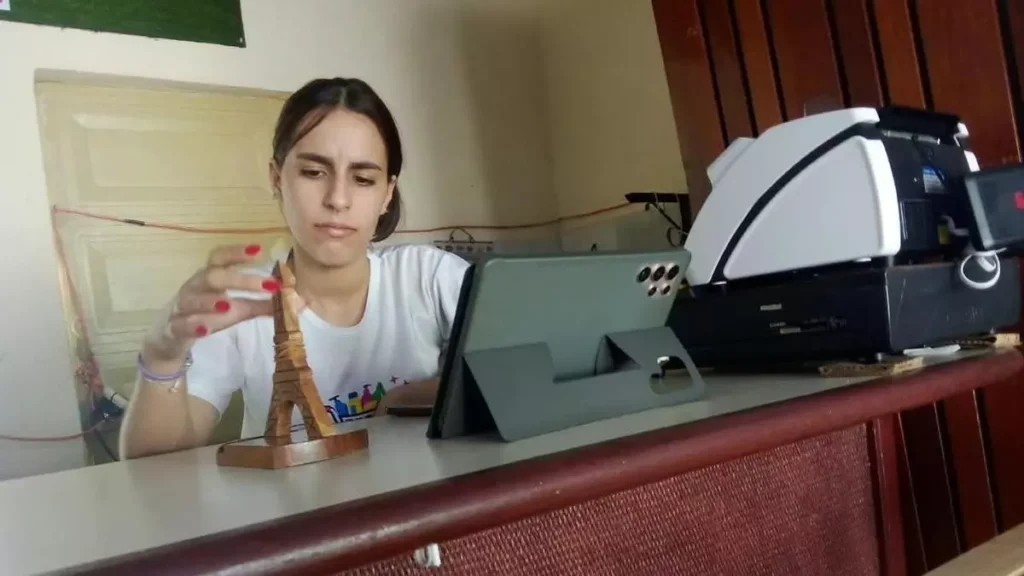
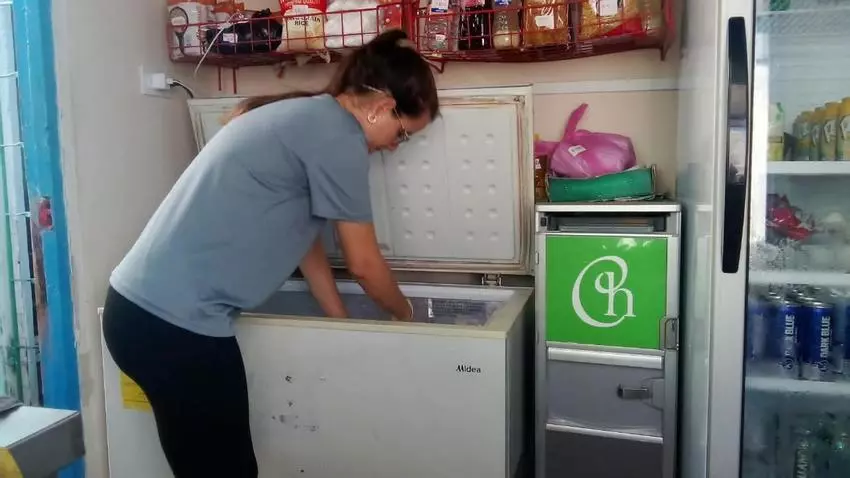
 14ymedio, Julio César Contreras, Matanzas, November 22, 2026 – Roxana opens the freezer to look for a tube of chorizo. She rummages through several packages, sets others aside, and for a few seconds seems confused. Then she remembers that she is looking for the merchandise as if she were at the other kiosk where she also works. After spending all seven days of the week behind a counter, the two establishments end up becoming confused in her mind. “It’s happened to me that I enter a number in the inventory that belongs to the other place. It’s not carelessness, but exhaustion,” she explains.
The young woman is a single mother of two small children, and every day she pedals the kilometers separating the neighborhoods of La Playa and Versalles. Her bicycle is the means of transportation that allows her to juggle her family responsibilities with two jobs that leave her barely any time to rest. “My workday, from Monday to Sunday, starts at 6:00 in the morning,” she tells 14ymedio.
A little over three years ago, she graduated with a degree in agricultural engineering. She completed her mandatory social service and ended up trading the furrows of farmland for shelves stocked with beverages and sweets. “You can’t work for the State,” she declares. The 30,000 pesos a month she earns by combining both salaries are barely enough to feed her children. Her parents look after the little ones and, when money is scarce, they also lend her a few pesos.
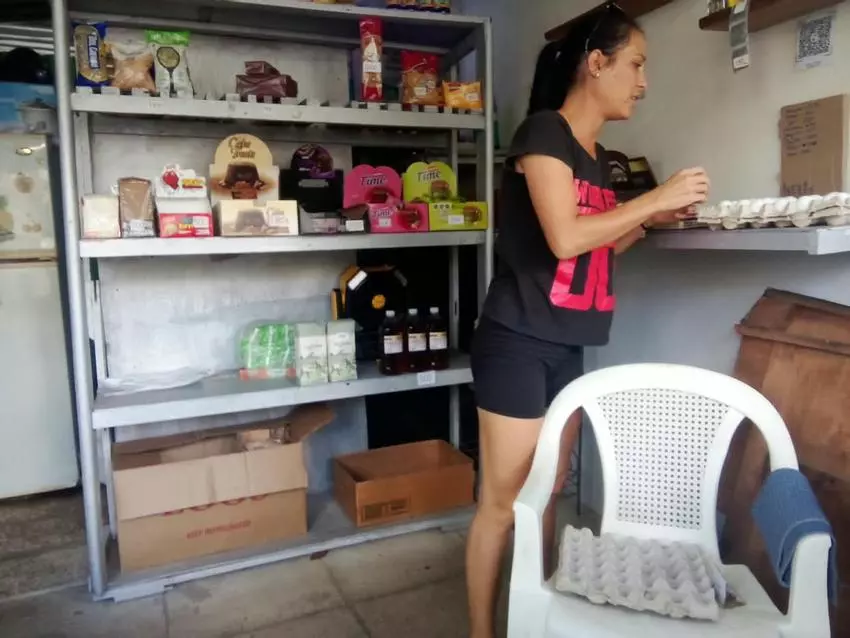
“To make sure my children have food, I’m willing to do whatever is necessary,” she says. Her university degree has been relegated to a memory, while she learns to distinguish brands of cold cuts, organize inventories, and verify bank transfers.
In Matanzas, finding the same employee working at two different establishments is no longer surprising. The young woman who serves customers buying food in the morning may sell clothes in the afternoon, while a shop assistant supplements his salary with errands, repairs, or any activity that brings in a few extra pesos. Holding multiple jobs, once an exception, has become a survival strategy.
For decades, holding several jobs simultaneously was subject to strict restrictions. In June 2009, Raúl Castro’s Government approved Decree-Law 268, which explicitly regulated multiple employment and allowed workers to enter into additional contracts. The measure was presented as an opportunity to increase incomes and stimulate productivity. Law 116, the 2013 Labor Code, maintained this possibility, subject to different working conditions and schedules.
Seventeen years later, what was announced as an option for earning more has become, for many, the only way to keep from sinking. Inflation is devouring salaries, and even the private sector does not guarantee sufficient income. In many small businesses in Matanzas, workers are paid around 1,000 pesos per shift, with no sales commissions.
Kenia, 51, knows this reality well. Until the beginning of the year, she cleaned rooms at a hotel in Varadero, but the establishment’s closure forced her to reinvent herself. Now she sells food at a kiosk and, when she finishes, runs a garage sale at her home, where she offers secondhand clothing and other items.
“Ever since the hotel closed at the beginning of this year, I’ve had to become a jack-of-all-trades just to keep going,” she says, while waiting for a transfer confirmation to appear on her phone.
She and another saleswoman divide the work at the establishment. Each receives around 15,000 pesos a month. “It sounds like quite a lot, but with how expensive everything is, that money is gone in less than a week.”
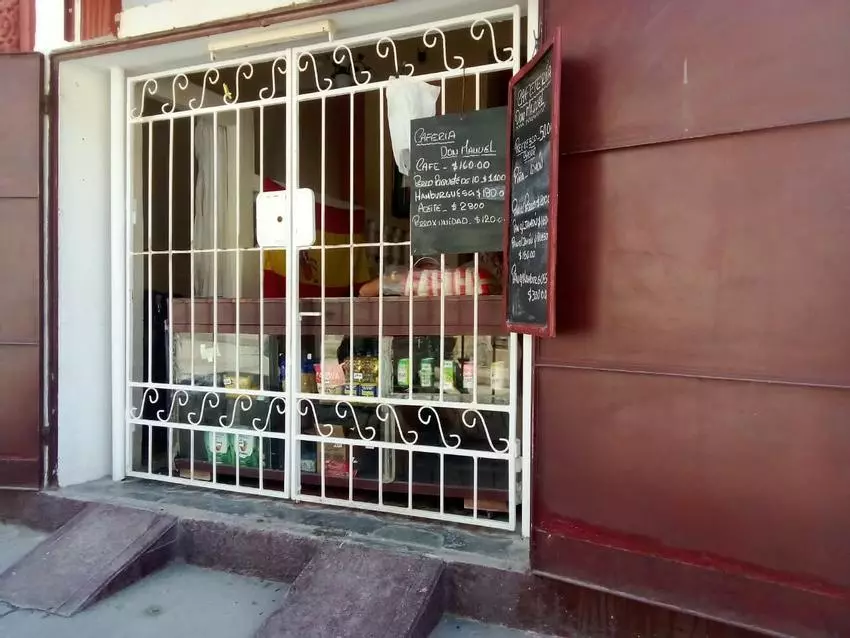
Behind the bars of some shops, cartons of eggs, bottles of cooking oil, and packages of imported rice create a misleading impression of abundance. There are goods, but buyers lack sufficient money. During slow periods, Kenia updates her WhatsApp group with the offers from her home-based business.
Necessity does not even respect retirement age. Many elderly Cubans return to the labor market because their pensions do not cover basic expenses. Seeing an elderly person working is an increasingly common sight, but in their case they almost always return to the state sector because they cannot find work in the private sector. “Here you have to stand all day, and the job requires a lot of moving around from one place to another, as well as carrying merchandise,” Kenia says.
“I’m still strong, and fortunately, my daughter brings me lunch,” the woman says gratefully. Other workers eat at irregular hours or simply skip a meal. She still needs to finish building her house, but all the work is beginning to take its toll on her body.
“I need these two jobs, but I just can’t keep going anymore,” she admits. If in the past having two jobs was a sign of prosperity, now, in Matanzas, it is merely a way to postpone poverty until the following week.
Translated by Regina Anavy
______________________
COLLABORATE WITH OUR WORK: The 14ymedio team is committed to practicing serious journalism that reflects Cuba’s reality in all its depth. Thank you for joining us on this long journey. We invite you to continue supporting us by becoming a member of 14ymedio now. Together we can continue transforming journalism in Cuba.