The Terrible Data of the Cuban Economy Do Not Show an Improvement Either in the Short or Medium Term

Pavel Vidal points out that the purchasing power of families “has been pulverized”
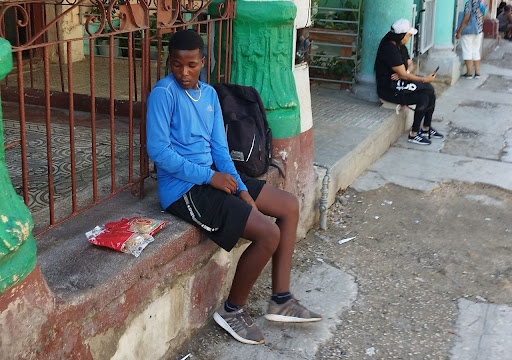

One of the variants adopted by misery in Havana is that of the “seller beggars” / 14ymedio

14ymedio bigger14ymedio, Madrid, October 28, 2024 — “In economics everything is paid for; you can’t create wealth out of nothing.” This is the forceful conclusion of the most recent special report of the National Office of Statistics and Finance of Cuba (ONEI), directed by the Cuban economist living in Colombia, Pavel Vidal. In it, the expert analyzes the six essential macroeconomic indicators of the Island that explain “the cost of doing nothing,” as the document is titled.

The six indicators, all with data ONEI and the Economic Commission for Latin America and the Caribbean (ECLAC), collect figures from 1990 to 2022 and address the fiscal deficit, money supply, gross domestic product (GDP), the exchange rate in the informal market, the average exchange rate, and the wage-productivity ratio. The result is clear: all indicators grew exponentially, with the exception of GDP, which is collapsing.

“The contraction of GDP not only aggravates the imbalance between supply and demand for products, but also increases dependence on imports, thus generating a permanent and structural demand for foreign currency,” explains the report, which arrives a few days after another publication was made public, under the title of International Trade Prospects 2024, in which ECLAC states that imports will contract by 5% this year. continue reading

“The contraction of GDP not only aggravates the imbalance between supply and demand for products, but also increases dependence on imports”

Exports will suffer even more, with a contraction of 15% as a result of the productivity crisis that Vidal also mentions. “The low figures in exports, agriculture and manufacturing production are scary. The crisis has affected the potential production capacity; it is not just a short-term issue,” he adds. The outlook is discouraging, as the energy crisis, mass migration and the rampant deterioration of infrastructure do not allow an improvement to be seen either in the short or medium term

The report reviews well-known data: there is no hard currency; the deficit is compensated with an uncontrolled issuance of unsupported currency; inflation is officially above 30% and reaches three digits if the data of the informal market are included; the depreciation of the peso is constant and, although wages increased in 2021, they have not done so significantly again. This, although it causes suffering in the population, is paradoxically one of the few good decisions of the Cuban government, says the economist.

The measure “avoids the generation of repetitive and superfluous cycles of wage increases, price increases, new wage adjustments, and so on, as has happened in economies that end up in hyperinflation scenarios, as has happened in Venezuela.” In this way, Cuba has avoided placing itself in a hyperinflation scenario, formally corresponding to those who exceed the limit of more than 50% in a single month.

However, the social cost is “extremely high.” The purchasing power of fixed income in Cuban pesos, he continues, “has been pulverized and has led to poverty for families who do not have other alternative sources of resources,” Vidal reflects.

The economist calls “inflationary tax” the overcost reached by goods and services on the Island because of the unstoppable rise in prices, which falls on the entire population regardless of their salary or sources of income, generating greater vulnerability in those who have the least. “By not doing anything substantial to stop the fall in national production and exports, and to reduce the imbalance of the budget, the Government has allowed an asymmetric adjustment of the crisis that falls on families that depend on fixed income in pesos,” he insists.

Cuba cannot continue to wait for “an international ally that does not exist and miracles of an economic model that does not give more”

Thus, Vidal considers that the model preserves little more than the name and the “discourses” but does not give in practice. “The social benefit of subsidies, programs and budgeted transfers, and free education and health, is not real when it must be paid by the poorest families through an onerous inflationary tax.”

The report also recalls that Cuba cannot continue to expect “an international ally that does not exist and miracles of an economic model that does not give more,” nor inflating a state business system that only “drains human, financial and budgetary resources.”

The document was made public this Monday, just a few days after the bad news of the ECLAC report, otherwise expected. The Economic Commission for Latin America and the Caribbean, which depends on the UN, underlines that the fall in the price of nickel and the collapse of sugar production make Cuba one of the five nations on the continent with the greatest contraction in exports.

The report does not include the resources that the Island will obtain from the export of services, since Havana has not provided them, “something that draws attention due to the high weight they have,” recalls economist Pedro Monreal, without expressly mentioning doctors, who represent billions a year for the State, even despite the decline in recent years.

Translated by Regina Anavy

____________

COLLABORATE WITH OUR WORKThe 14ymedio team is committed to practicing serious journalism that reflects Cuba’s reality in all its depth. Thank you for joining us on this long journey. We invite you to continue supporting us by becoming a member of 14ymedio now. Together we can continue transforming journalism in Cuba.

Cuba Suffers a New Defeat in Baseball Against Curaçao

The team, led by Alexander Urquiola, failed against Curaçao, in the Bahamas / Jit / Giovanni Martínez

14ymedio/Swing Completo, Havana, 28 October 2024 — Island baseball continues to add disappointments. Curaçao beat Cuba 2-1 this Sunday at the Andre Rogers stadium, in Nassau, capital of the Bahamas, and thus took away the possibility of competing for the gold medal in the Caribbean Cup. “Without a doubt, it is another major failure in the international arena,” published the specialized media Pelota Cubana USA.
italics

The same publication detailed that despite the fact that the selection, led by Alexander Urquiola, was made up of several young figures, “many with inexperience in Cuban teams, it was not a tournament to be left out of the title discussion.”

The defeat against Curaçao shows that the sport, once king on the Island, “requires work, resources and above all respect,” warns Por la Goma in its Facebook post. “We should have removed the blindfold a long time ago,” emphasizes journalist JuanK. continue reading

The same publication specified that while the Provincial Series are suspended in Cuba, there is a lack of balls for practice from the lower levels, and they stopped “two months ago paying the players their salary of 3,500 pesos.” In Curaçao “they play baseball all year round,” and they have a professional league and lower categories.

In addition, the author urges, we must stop thinking that the rival teams “do not have the same history” as the Island: “We must understand that history is not lived, and that while we are analyzing how to create a National Series, all the other countries are preparing and inserting themselves more every day into the world elite.”

The Cuban baseball team during their performance against Curaçao at the Andre Rogers stadium / Jit / Giovanni Martínez

The official media Jit pointed out that two “failures” – the games lost against the Virgin Islands and Curaçao – led the national team to the match against the Dominican Republic for the bronze medal.

The defeat against Curaçao was taken by José Ignacio Bermúdez after allowing two runs and scoring four opponents. For his part, Randy Martínez, from Pinar del Río, got outs without allowing hits, one of them thanks to a strikeout. The hope for Cuba in the Bahamas is the bronze medal.

As for the U-12 team, this Sunday they defeated Panama 5-1 in a match played at the Rod Carew stadium and got a third place in the Pan American Championship.

Prensa Latina highlighted the offensive actions of Humberto Alfonso and Alan López, both with a couple of trailers, and Alex Batista. Also, Barrero hit a single and double, and victory was credited from the mound.

Translated by Regina Anavy

____________

COLLABORATE WITH OUR WORKThe 14ymedio team is committed to practicing serious journalism that reflects Cuba’s reality in all its depth. Thank you for joining us on this long journey. We invite you to continue supporting us by becoming a member of 14ymedio now. Together we can continue transforming journalism in Cuba.

A Hotel Employee in Colombia Is Accused of Trafficking and Hosting Migrants, Including Cubans

The coyotes transport migrants in boats / EFE]

14ymedio bigger14ymedio, Havana, 28 October 2024 — A Colombian woman linked to a Cuban migrant trafficking network was sentenced this Sunday to four years and two months in prison. Gloria Milena Álvarez Quinchía will also have to pay a fine equivalent to 1,383 dollars.

According to the evidence provided by the Attorney General’s Office, Álvarez Quinchía took advantage of her work in a hotel in Medellín, Antioquia, to facilitate the lodging of irregular migrants, mainly Cubans, on their route to the Gulf of Urabá, from where they continued to Panama and then to the United States.

The Specialized Directorate against Human Rights Violations, which led the investigation, pointed out Álvarez Quinchía as the one in charge of operating the logistics to host and facilitate the land transport of irregular migrants to Capurganá, in the department of Chocó.

Coyotes charge between 150 and 350 dollars for each migrant for taking them in speedboats from Capurganá to Panama, through the Darién jungle, in search of the American dream.

Álvarez Quinchía was arrested in May 2022 along with 10 other people allegedly involved with a network of coyotes. According to official data, up to August of this year the illegal entry of 273,142 people into Colombia was recorded. continue reading

Some migrants sleep on mattresses on a street in Turbo; the photo is from June of this year / EFE

Coyotes exploit several routes for migrant trafficking. Among them is the Darién jungle, through which as of May more than 70,000 migrants had crossed on their journey to the United States.

More than 520,000 migrants crossed the Darién in 2023. Venezuelans (328,667), Ecuadorians (57,222), Haitians (46,558) and Chinese (25,344) “were the most recurrent nationalities to cross,” according to data from the Panamanian Ministry of Public Security.

Illegal trafficking is quite profitable, and in Colombian regions such as Necoclí, Turbo and Acandí, the coyotes use boats for transport. The New York Times reported that migrants pay $40 for a boat ride from Colombia to get to the rainforest.

“A guide that takes you along the dangerous route when you start walking: 170 dollars. Someone who carries your backpack in the muddy hills: 100 dollars. A plate of chicken with rice after a day of laborious climbing: 10 dollars. Special packages with everything included to make the risky effort faster and bearable (with stores, boots and other basics): 500 dollars, or more,” published The New York Times in 2023.

Translated by Regina Anavy

____________

COLLABORATE WITH OUR WORKThe 14ymedio team is committed to practicing serious journalism that reflects Cuba’s reality in all its depth. Thank you for joining us on this long journey. We invite you to continue supporting us by becoming a member of 14ymedio now. Together we can continue transforming journalism in Cuba.

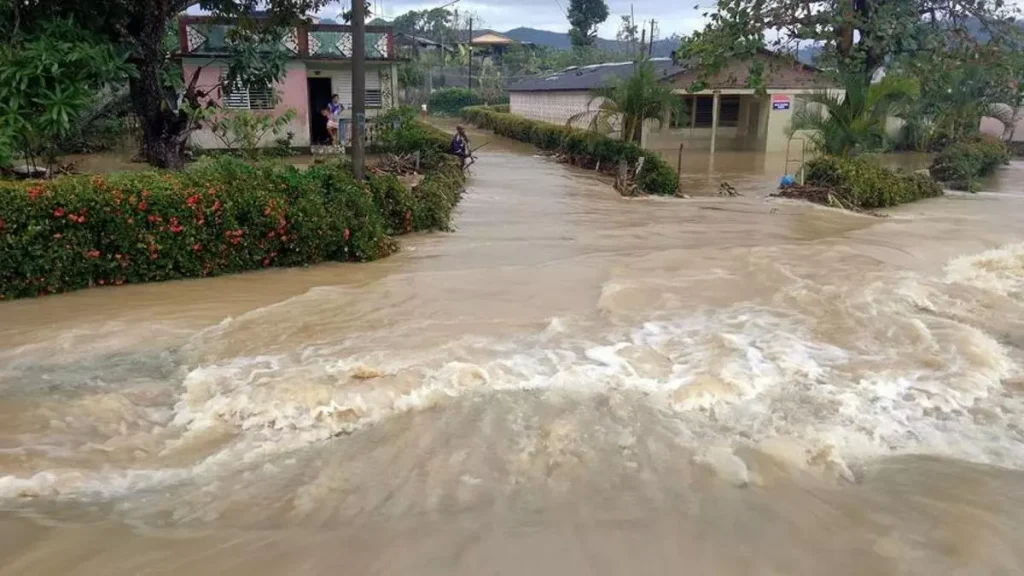
“Lives Would Have Been Saved”: The Residents of Guantánamo Denounce the Cuban Government’s Negligence

 A resident of San Antonio del Sur confronts Díaz-Canel: “They left us alone”

From the afternoon to the night, between Sunday and Monday, the dams in Guantánamo overflowed / Facebook/Daniel Ross Diéguez

14ymedio bigger14ymedio, Havana, 24 October 2024 — Four days after the passage of Hurricane Oscar through northeastern Cuba, there are communities that are still isolated, and it has not been possible to determine a total account of the number of victims. Everything points to the Government’s negligence as one of the causes of the tragedy. “The Defense Council of San Antonio del Sur was not activated in time, and they did not know what they were facing. They were surprised by the overflow of the dam in the middle of the night. The current number of missing people could have been avoided,” says filmmaker Daniel Ross Diéguez, from the city of Guantánamo, in a Facebook post.

At the local government headquarters of the Popular Power, he sent an audio to his friends to which 14ymedio has had access. There is a list of the inhabitants of the municipality of Imías, which remains isolated this Thursday. “The only communication comes from those who went on foot to see what happened,” explains the visual artist, who is also trying to locate several relatives.

“They took notes and put down the names of those who are alive and sent them with someone,” he says. “And so they censor the map of the disappeared.” According to the artist in the same audio, there are 76 missing but there could be more. “The figure is large,” because the coastal municipalities of San Antonio and Imías have a large population. “Many who were able to return say that they saw people climbing the mountains, and we have to start looking for them.” continue reading

According to the artist in the same audio, there are 76 missing but there could be more

In the same message, Ross Diéguez criticizes: “There are immediate things that could have been done and were not done, and others that were done too late.” According to his story, days before Oscar’s passage it was reported that its intensity was decreasing, and after the collapse of the electro-energy system on Friday, since there was no connection or news, the inhabitants of those communities were left with the idea that it would not be serious.

“Those people unfortunately didn’t know anything for three days and suddenly began to see a wall of rain.” They realized, at dawn, that water was flooding the houses. Those who could took refuge on the upper floors.

Ross Diéguez explains that the geography of Guantánamo, with thousand-meter high mountains that act as “cloud harvesters,” had a lot to do with the catastrophe. “When a hurricane passes, it retains water and weakens very slowly because it’s hot, and this generates three times the rain that it already brings,” he explains. And so it happened: from the afternoon to the night, between Sunday and Monday, the dams overflowed.

According to the official press itself, the Los Asientos reservoir, in San Antonio del Sur, “overflowed with 17.5 million cubic meters of water.”

“Uunfortunately, the Defense Council could not be activated because there was no electricity,” Ross Diéguez continues, and the Armed Forces (FAR) “were not intelligent.” They could have used a radio that “does not need internet or a connection,” to warn of the dam’s overflow, but they didn’t have one. Nor did they think of reserving fuel to send a vehicle and warn these towns. “People didn’t know what it was; they didn’t understand what was happening to them. Lives could have been saved.”

So far, the official calculation is seven fatalities, six in San Antonio del Sur – including a five-year-old child – and one in Imías.

“We used to complain before, but we had no idea how lost this Government is”

This Thursday, the FAR claims to be chartering helicopters to bring food to areas without access. The shortage of food and the poor organization are also denounced by Ross Diéguez. “There was rice and other food in warehouses that they did not distribute at the time, and it spoiled. “One wonders why they didn’t give that in advance also, if we were starving. Here they still owe* September’s rice,” he claimed.

“We used to complain before, but we had no idea how lost this Government is,” concluded the filmmaker, who recalled the number of crops lost in the Caujerí Valley, “where more fruit is grown in Cuba, where more food is contributed,” he noted, “and not just for export.”

This Thursday, the newspaper Venceremos gave a devastating account of the losses. About 75,000 cans of coffee were lost in Maisí. “All coffee plantations suffered the hurricane’s impact, with damage of different magnitudes,” says the official newspaper, which documents “significant damage” to yams, malanga, cassava, beans and, above all, bananas.

More than 70% of the banana plantations and 3,502 hectares of cocoa in Baracoa “suffered damage, from mild to strong,” as did the 481 hectares of coffee. Another crop that suffered great damage was coconut, in the Güirito-Mata-Guandao basin, “with the collapse of a considerable number of plantations and the loss of production.”

The situation is such that the Central Bank of Cuba has made public several account numbers – in the Banco de Crédito y Comercio (Bandec), in the Banco Popular de Ahorro (BPA) and in the Banco Metropolitano – to receive donations, in pesos, for the victims. “Transfers can be made through electronic payment channels: ATMs, Transfermóvil or by depositing cash at any bank branch,” it says in a statement.

For his part, Miguel Díaz-Canel could clearly hear the summary of what happened in these territories from the mouth of one of its inhabitants, during his official visit to San Antonio del Sur. “They didn’t take all the measures to evacuate us; they left us alone there,” a man reproached him, kind but desperate.

“Who left them alone?” the president asked with a frown, stuttering before the citizen who dared to confront him. “The Government,” replied the good neighbor. “There was no one to rescue us.” The man had to help remove, he said, up to 29 children who were refugees in a school, along with the rest of the population. Díaz-Canel tried to explain: “They took all of you to the school precisely because of the evacuation; what happened is that the phenomenon was worse than expected.” The man insisted that they were left without any equipment to evacuate people “in case the river got in.” The president settled the brief dialogue by promising, “We’ll investigate that.”

*Translator’s note: “Owe” refers to not having distributed the rice sold through the State rationing system, almost certainly because the bodegas (ration stores) had not received the rice.

Translated by Regina Anavy

____________

COLLABORATE WITH OUR WORKThe 14ymedio team is committed to practicing serious journalism that reflects Cuba’s reality in all its depth. Thank you for joining us on this long journey. We invite you to continue supporting us by becoming a member of 14ymedio now. Together we can continue transforming journalism in Cuba.

In Sancti Spíritus the Public Lighting Died Long Before the Total Blackout

Phosphorescent vests, rechargeable headlamps, flashlights or even traditional oil lamps are used to move around the city

At night and seen from above, the city is an expanse of darkness / 14ymedio

14ymedio bigger14ymedio, Mercedes García, Sancti Spíritus, 26 October 2024 — A couple crosses paths with a friend on one of the main streets of the Kilo 12 neighborhood in the city of Sancti Spíritus. They can barely see each other, because the lack of public lighting has forced the young man, who runs into them head-on, to wear “a miner’s headlamp.” When the man greets them they are dazzled by the light that, in the midst of absolute darkness, leaves them, for a few seconds, disoriented and stumbling over the holes and cracks on the sidewalk.

“People have already given up on the street lighting,” the woman admits. “If we get used to having electricity inside our homes only a few hours a day, then what happens when we have to go outside at night?” she asks this reporter. “What most people do is stay home, but we go to eat at my mom’s house two or three times a week, and we have to walk back because there is no transportation at that time.”

Phosphorescent vests, rechargeable headlamps, flashlights or even traditional oil lamps are used to move from one point to another in the city, to avoid stumbling into a pothole or breaking a leg after falling into an uncovered sewer. Some are guided by the light coming from houses that are are lucky enough to have electricity at that time, and others take advantage of the headlights of vehicles that pass to detect the nooks and crannies of the road in front of them. continue reading

Some are guided by the light coming from houses that are lucky enough to have electricity

“My brother sent me this miner’s headlamp, and it helps a lot,” Susy, a 42-year-old resident near the historic center of Espírito, told 14ymedio. “I use it if I have to go out at night, but also in the house to scrub my floor during the blackout, make food or wash my daughter’s uniform for the next day of school.” When the light is placed, clinging with elastic bands to her head, Susy acquires a strange appearance and knows it: “I’m like a firefly; I carry my own light.”

Without public lighting, residents in the city of Sancti Spíritus have come to the conclusion that everyone must provide his own light when going out at night. A long time ago, like the rest of Cubans, they gave up depending on the ration system’s basic family basket for food; they stopped waiting for the Electric Union to supply them with constant energy in their homes; they said goodbye to a Public Health system that guaranteed them everything from medical sutures to painkillers, and converted their kitchens to the use of coal or wood, tired of waiting for stability in the sale of propane.

On the list of orders that Susy has sent to her brother in Jacksonville, Florida, she has added two new miner’s headlamps: “one that can be adjusted for a smaller head, like my daughter’s, and another for my husband who leaves at dawn for work and really needs it.” At night and seen from above, the city is an expanse of darkness where tiny little lights move around. Each one is a person who is going somewhere.

Translated by Regina Anavy

____________

COLLABORATE WITH OUR WORKThe 14ymedio team is committed to practicing serious journalism that reflects Cuba’s reality in all its depth. Thank you for joining us on this long journey. We invite you to continue supporting us by becoming a member of 14ymedio now. Together we can continue transforming journalism in Cuba.
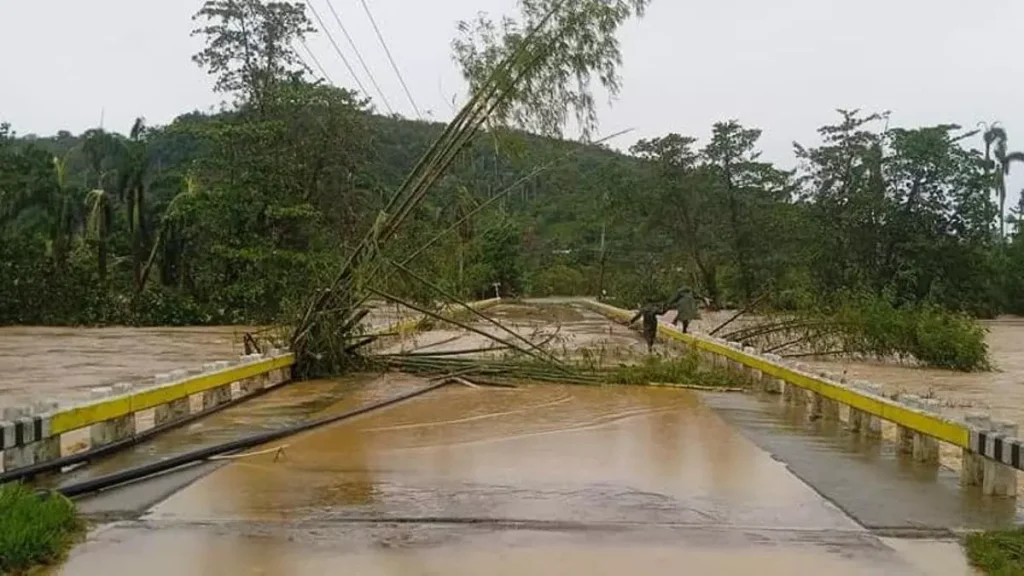
Canadian Archaeologists Unravel the Mysteries of the Taínos of Los Buchillones in Cuba

The figures, carved from guayacán and ebony, were created between the 13th and 17th centuries

Los Buchillones is also the most significant archaeological site of Indo-Cuban art

14ymedio bigger14ymedio, Xavier Carbonell, Salamanca, 26 October 2024 — It took almost 30 years for more than 150 pieces of indigenous art from the Los Buchillones site, in Ciego de Ávila, to be described and dated correctly by archaeologists. The merit, however, does not really go to the historians of the Island but to the University of Toronto, Canada, and the Royal Ontario Museum, who were in charge of the scientific study of the figures.

Despite the importance of the discovery, which greatly enriches the vision of pre-Columbian Cuba, the official press has hardly mentioned it. Last Thursday, however, ’Invasor’ explained the controversy over the pieces found in 1995 in Los Buchillones, which had been incorrectly attributed to “groups of farmers and ceramicists.”

Thanks to the scientists of the Isotrace university laboratory, it is now known that the figures, crafted in guayacán [lancewood] and ebony, were created between the 13th and 17th centuries of our era, more precisely between 1220 and 1690; the community remained there after the Spanish Conquest. That, the specialists add, was the “peak moment for ceramics.”

Nor were they created, as was thought, in Los Buchillones, but rather in another settlement located 500 meters from there, in an old salt flat known as La Laguna. This was suspected by Cuban scholars and fans of archeology, explains ’Invasor,’ since many of the pieces had marks that showed that they had been taken from the bottom of the sea or a river. continue reading

As for the typology of the figures, they correspond to the artistic forms that are known from the Tainos. They are ’cemíes’ – gods, ’dujos’ or ceremonial stools, spatulas and trays. Few of the Greater Antilles have so many representative pieces of indigenous art, and in the Cuban context, it also marks a milestone: Los Buchillones is the most significant archaeological site of Indo-Cuban art.

Ebony bowl found in the deposit / Patrimonio Ciega de Ávila / Facebook

Of the sculptures, eight stand out, whose characteristics help to better understand the imaginary and everyday life of the Tainos. They are dark in color, carved in guayacán and ebony wood, whose height ranges between 10.5 (4.1 inches) and 34 centimeters (13.4 inches). You can see in some of them the head and limbs – with emphasis on the male and female genitals – of a divinity, and others are in the form of sexless animals.

They are, judging by their shape and careful symmetry, idols linked to fertility, and that is the name that the most remarkable sculpture has received, 18 centimeters (7.1 inches) high, and of which ’Invasor’ provided a sketch. In addition to sexual symbolism, it contains elements – the representation of a skeleton and a kind of halo, in the manner of Catholic saints – that refer to the passage from life to death and to the notion of time that the Taínos possessed.

It is believed that the vases and bowls also have a ritual character and were used by the Taínos in their religious ceremonies. According to ’Invasor,’ the Canadian specialists recommended “developing a stylistic study of these objects” and continuing the investigation, headed by Cuban archaeologist Jorge A. Calvera Rosés.

Only fragments of Cuba’s indigenous past remain. The few archaeological studies that have been published in the country have given little clarity about the different groups that formed the Indo-Cuban area, and most Cubans have erroneous or outdated notions about their lives, customs and rituals.

A decisive step to understand the religion of the Taínos was taken, in 1947, by the Cuban ethnologist and polygrapher Fernando Ortiz with his book, ’El huracán, su mitología y sus símbolos (The Hurricane, its Mythology and Symbols). Published by the Economic Culture Fund and impossible to obtain in the the Island’s bookstores – it is rare, even in the libraries – Ortiz’s meticulous study of several pieces similar to those found in Los Buchillones allowed us to understand the sacred universe of the Taínos.

Ortiz’s meticulous study of several similar pieces allowed us to understand the sacred universe of the Taínos / Patrimonio Ciego de Ávila / Facebook

Ortiz focused his research on a set of enigmatic sculptures, formed by a human trunk with a head and another creature in its chest with arms crossed in an X. Although the shapes of the “curious figurines” were variable, these elements were the common factor and pointed to a sacred conception of the hurricane, the Father of Winds for the Taínos.

His conclusion was that the idol of the hurricane was “the most typical figure in Cuba,” since he had not found specimens on any other Caribbean island. To explain it, he composed a work that seeks the traces of the cult of the hurricane from Hindu swastikas to Andalusian dances, describing a mythical itinerary practically virgin in Cuban historical studies.

Despite the shortcomings, the field of Indo-Cuban studies offers the researcher a terrain full of novelties and a whole bibliography of pioneers such as Ortiz, who in his time reached the height of classical mythological studies like James Frazer and Joseph Campbell. His personal collection, absorbed – with little care – by the National Library and other state institutions, is a good starting point for the researcher.

“Every archaeological object is in itself a search for an intelligible expression. It is a dead and unearthed being to which its name and life must be returned,” Ortiz then said, before, effectively, giving meaning to his discovery. The more than 150 pieces of Los Buchillones continue, as predicted 100 years ago by Ortiz, in search of someone who knows how to speak in their “own language.”

Translated by Regina Anavy

____________

COLLABORATE WITH OUR WORKThe 14ymedio team is committed to practicing serious journalism that reflects Cuba’s reality in all its depth. Thank you for joining us on this long journey. We invite you to continue supporting us by becoming a member of 14ymedio now. Together we can continue transforming journalism in Cuba.

Dozens of Cubans Attend the Burial of El Taiger’s Ashes in the Colón Cemetery

The funeral service was held at the El Sauce Cultural Center in Havana

His followers burst into applause and sang some of his songs / Cuban Institute of Music / Facebook

14ymedio bigger14ymedio, Havana, 26 October 2024 — Dozens of people went on Friday afternoon to the state-owned El Sauce Cultural Center in Havana, to say goodbye to the Cuban reggaeton singer José Manuel Carbajal Zaldívar, known as El Taiger, who died at the age of 37. Although the ceremony was held only for the artist’s relatives and acquaintances, as reported on social networks by the Cuban Institute of Music, 500 followers accompanied the funeral procession to the Colón Cemetery, where his ashes were deposited.

During the tribute, the urn was placed on a table surrounded by wreaths next to his portrait, along with a Cuban flag and some candles. Behind, a screen projected images of the reggaeton singer. In one of them he was seen with his arms crossed next to a message that read: “El Taiger, the emblem of a country forever.”

After the tribute, the urn was taken to the cemetery, and when it was deposited in the family vault, the artist’s followers burst into applause and sang songs by the musician. The funeral procession led by his family and friends was accompanied by a group of admirers who left flowers in farewell.

The urn was taken to the cemetery, and when it was deposited in the family vault, the artist’s followers burst into applause and sang songs by the musician

The Havana necropolis, hit by vandalism, and now with El Taiger’s ashes in a colorful container, is unleashing the concern of his followers, who fear that his remains may be desecrated or stolen. continue reading

The ashes of the musician, who died on October 10 in a Miami hospital after remaining unconscious for days, arrived in Cuba on Thursday in a black bag from the Miami Memorial Plan funeral home carried on her shoulder by Teresa Padrón, the singer’s manager .

In a brief text published on social networks on behalf of the relatives of El Taiger “and Cuban cultural institutions,” the Cuban Institute of Music thanked the crowd for their displays of admiration and respect “expressed by our people in the face of the hospitalization, death and funeral ceremony for the young Cuban musician.”

In the Havana necropolis, hit by vandalism, the colorful container with his ashes is a source of concern to his followers

The Cuban Government rarely grants the use of a cultural space to pay tribute, especially to figures that are “uncomfortable” for the official cultural world. This time, however, the willingness of the authorities was the finishing touch on a series of acts of solidarity with the singer, whom the official press described as a “victim of a society as violent as the American one.”

The acts of support by the ruling party included extensive coverage of the case since El Taiger appeared in the back of a van with a bullet in his head, next to a few gallons of gasoline, on October 3, near Jackson Memorial hospital, in Miami.

The investigations in Miami to clarify his murder are still ongoing, and recently the chief of police, Manuel Morales, stated that the crime could be solved very soon because they have new evidence of what happened. “At this time we are not ready to discuss that level of detail of the investigation,” he said in an interview with Univision.

Translated by Regina Anavy

____________

COLLABORATE WITH OUR WORKThe 14ymedio team is committed to practicing serious journalism that reflects Cuba’s reality in all its depth. Thank you for joining us on this long journey. We invite you to continue supporting us by becoming a member of 14ymedio now. Together we can continue transforming journalism in Cuba.

Cuba: The Methodist Church of Guantánamo Welcomes Dozens of People Evacuated After the Floods

Unicef donates 1.5 tons of medicines to Cuba for those affected by Hurricane Oscar

Many parishioners offered their homes to welcome the victims / Facebook / Methodist Church of Guantánamo

14ymedio bigger14ymedio, Havana, October 26, 2024 — A first donation of 1.5 tons of “medicines and consumable material” from Unicef arrived this Saturday in Havana to be delivered to the victims of Hurricane Oscar, which left seven dead in the eastern province of Guantánamo. The UN fund estimates that this aid will serve to support the medical care of some 140,000 people, “especially pregnant women, children and adolescents.”

The organization’s representative in Cuba, Alejandra Trossero, said that the objective is “to contribute to national response and recovery efforts in the most affected areas, especially so that children and adolescents and their families in Guantánamo have basic services.”

The donation is made up of kits that include analgesics, antipyretics, antibiotics, antifungals and other supplies for medical emergencies. Likewise, UNICEF said that, with the support of the Directorate General of Civil Protection and European Humanitarian Aid Operations (ECHO), it was able to secure “1,000 roofing sheets, 680 metal roofing purlins (braces), and 4,700 screws” for the reconstruction of 74 affected schools in the eastern province.

The Methodist Church of Guantánamo recently published images of its members helping residents in the most affected municipalities of the province after Oscar and the heavy rains that hit this Friday. It also announced that it would welcome 65 evacuees, who will be transferred to parish homes, and it has gathered donations to distribute among the victims.

Compared to the wave of solidarity with the eastern provinces, including from the exile community, the regime’s performance seems weak. After San Antonio del Sur, Maisí, Imías and Baracoa were devastated and isolated, it took the authorities two days to reach the municipalities, and actions to continue reading

accelerate the recovery have been scarce. In the official press and social networks, however, there has been no lack of voluntarism from leaders like Miguel Díaz-Canel and Manuel Marrero, but so far, it’s just been words.

Oscar entered Cuba on Sunday as a category 1 hurricane (out of 5) on the Saffir-Simpson scale, very close to the coastal city of Baracoa, and became a tropical storm before leaving on Monday through an area near Gibara, in the province of Holguín. So far, the authorities have not been able to give a definitive account of material and human damage in the area, due to the difficulty of access after heavy flooding in those localities, where there are dozens of missing people. It is feared that the death toll will be higher.

There are still isolated areas where the storm damage was severe

There are still isolated areas where the storm damage was severe, with accumulations of rainwater that caused runoff from the mountains, flooding and landslides, preventing access to the groups of rescuers.

According to Unicef estimates, the affected population amounts to 149,693 people, of which 32,600 (22%) are children. On Friday, the Cuban authorities began to evacuate the inhabitants of the eastern municipalities of Baracoa (Guantánamo, 80,000 inhabitants) and Moa (Holguín, 70,000 inhabitants), after heavy rains were recorded in the last few hours.

*The principle of relying on voluntary action (used especially with reference to the involvement of voluntary organizations in social welfare) – Oxford Dictionary

Translated by Regina Anavy

____________

COLLABORATE WITH OUR WORKThe 14ymedio team is committed to practicing serious journalism that reflects Cuba’s reality in all its depth. Thank you for joining us on this long journey. We invite you to continue supporting us by becoming a member of 14ymedio now. Together we can continue transforming journalism in Cuba.

‘Escambray’ Justifies the Postponement of the National Series and the Elite Baseball League in Cuba

The authorities also announced the cancellation of the U23 Tournament due to lack of resources

The National Series will be postponed until September 2025 / ’Escambray’

14ymedio bigger14ymedio, Havana, October 25, 2024 — The official media of Sancti Spíritus, Escambray, justified this Friday the decision of the National Institute of Sports, Physical Education and Recreation (Inder) to postpone the two most important baseball competitions at the national level due to the crisis. As the newspaper explained, in the context of the “economic war” in which the Island lives, carrying out the III Elite League and the 64th National Series would be “counterproductive.”

Escambray recalled that, after the announcement on October 14 of the calendar change, many sports fans demanded that the Elite League – celebrated at the end of the year – be rescheduled for next March and the National Series for a year from now. For the media, however, the change of date is nothing extraordinary, because the events require “important logistics of all kinds that the country can’t manage today.”

In that sense, at least, the state newspaper went deeper into the causes to postpone the games than Inder, which did not dedicate a word to the deep economic crisis. “It is incoherent to carry out an event that has not yet shown its validity after resuming, at least not in a country that is debating how to share a drop of fuel between electricity generation and ambulances, that can’t guarantee rice and sugar in the family basket or the supplies to produce food, not to mention the medicine that is missing in the pharmacy,” Escambray said, referring to the Elite League. continue reading

The events require important logistics of all kinds, which the country cannot manage today

Given that scenario, the media adds, “baseball and any sporting event, even a cultural one, are not priorities.” In fact, he advises that this tournament be suspended until the country’s conditions allow it and makes an unfortunate comparison, by giving as an example the Olympic Games, which canceled three editions due to world wars – conflicts that, taken together, left about 85 million dead – and the case of Tokyo 2020, which was postponed a year due to the pandemic. “As far as I know, the Elite Baseball League doesn’t compare on any scale of importance to those events,” he says.

With the “few resources that the country has,” the article continues, the National Series could be developed, “which demands an even stronger logistical scaffolding and which is, in short, Cuba’s main sociocultural event.”

Postponing the date will have several consequences. One of them is the statistics, since there will not be a National Series until 2026. Therefore, there will be no winner in 2025. In addition, “it is too long a downtime for one of the few recreational reliefs in the nation,” explains Escambray, which estimates that it will mean at least five months without baseball on the Island.

There is no way to distract yourself or disconnect from the problems that the Cuban has day after day

In the comment section of the Cubadebate article about the Inder’s announcement, Cubans also made clear their discontent: “In all that time until March 2025, fans will not be able to enjoy the national pastime. There is no way to distract yourself or disconnect from the problems that the Cuban has day after day. Very bad decision, really,” says a user.

The negative announcements of the authorities about the sport did not end there. On October 15, during the preparation of the team of players to compete in the Premier 12 tournament, Juan Reynaldo Pérez, president of the Cuban Baseball and Softball Federation, reported that the National U23 Tournament was canceled because half the provinces “are not in a position to develop it.” The reason: the event depends on the local budget, and there are no funds.

“This is the second consecutive time that the U23 suspends its national championship for reasons of money. You can’t do something that contributes to the development of the youngest players in the country, but you do have to play a non-professional Elite League anyway in March, whose objectives are still very questionable,” criticized sports journalist Yasel Porto.

Last Wednesday, Porto also reported on the economic problems experienced by the Industriales of Havana team. According to him, the members have not received their salaries for more than two months. In his message, alluding to the authorities, the journalist added: “Let’s see if someone notices this and at least feels a little ashamed.”

Translated by Regina Anavy

____________

COLLABORATE WITH OUR WORKThe 14ymedio team is committed to practicing serious journalism that reflects Cuba’s reality in all its depth. Thank you for joining us on this long journey. We invite you to continue supporting us by becoming a member of 14ymedio now. Together we can continue transforming journalism in Cuba.

The Hiring of Cuban Doctors in Mexico Continues as Another 173 Arrive in Quintana Roo

Last June, five Cuban specialists joined the Mexican Chetumal oncology hospital in Quintana Roo / Diario de Quintana Roo

14ymedio bigger14ymedio, Mexico City, 25 October 2024 — Mexico announced this Thursday the arrival in Quintana Roo of another 173 Cuban doctors, who join the 36 already established in that state, to reinforce care in the health centers. Mexican authorities are waiting for another 30 doctors from the Island to distribute them in 13 hospitals in isolated communities and in 18 mobile units, where they will provide care on Saturdays and Sundays.

The Mexican government has been extremely cautious about the centers in which it places Cubans. As of September, the health authorities of Quintana Roo had registered a hematologist, an epidemiologist and three gastroenterologists from the Island, who in June 2023 joined the Chetumal oncology hospital. It is known that in 2022, another 31 specialists arrived, but their distribution was never revealed.

The state coordinator of Imss-Bienestar, Moisés Alejandro Toledo, announced last June that specialists sent to remote areas, including Cubans, will receive “a bonus independent of their salary.” Months ago, in April of this year, the director of the Mexican Institute of Social Security (Imss), Zoé Robledo, was more specific: the salaries for these positions are 50,000 pesos (2,732 dollars per month), in addition to an incentive of 10,000 pesos (545 dollars).

The newspaper Reforma also reported in early October that it cost Mexico 5,188 dollars a month to maintain each of the Cuban doctors. The figure includes the salary – 27,000 pesos (1,351 dollars) – and the costs that the Government must cover to pay for food, lodging and transportation of about 966 health workers. The 2,135 specialists who arrived in the country this year make a total of 3,101 doctors who will also benefit. continue reading

The state of Quintana Roo placed 173 Cuban specialists in rural hospitals / Video capture

The 3,277 dollars received in total by Cuban doctors is managed by Neuronic Mexicana, a subsidiary of Neuronic S.A Cuba, a company that, since 2018, has represented the products and services of the biotechnology and pharmaceutical industry of the Island, under its president Tania Guerra.

The management of the company has been questioned after the escape of several Cuban health workers, who have left their positions in Mexican centers – a total of 48 left between July 2022 and 2023. In practice, to cover their basic needs, doctors receive only “a stipend.”

Toledo said that a significant shortage of specialized nurses persists, confirming the weakening of the health system. The promise of former president López Obrador to create Imss-Bienestar, a free healthcare organization to replace the Seguro Popular and “have a better health system than Denmark,” is still far away.

“We have made a diagnosis of the infrastructure of our health centers and hospitals; maintenance by the state government has been carried out, and we are continuing with the work. We are improving the quality of care everywhere,” Toledo acknowledged.

Cuba has been favored by this program since the administration of López Obrador. Between 2022 and 2023, Mexico signed three agreements with the Island for which it paid 23,227,156 euros for 610 specialists.

The agreements were strengthened between the two countries despite the fact that several organizations, such as Prisoners Defenders, have criticized Mexico for promoting the hiring of Cuban professionals in “conditions of slavery.” The president of the organization, Javier Larrondo, has also said that there are “State Security agents” among the contingents of doctors who have arrived in Mexico.

Translated by Regina Anavy

____________

COLLABORATE WITH OUR WORKThe 14ymedio team is committed to practicing serious journalism that reflects Cuba’s reality in all its depth. Thank you for joining us on this long journey. We invite you to continue supporting us by becoming a member of 14ymedio now. Together we can continue transforming journalism in Cuba.

With No Time To Recover From Hurricane Oscar, Baracoa Cuba Suffers Floods Due to Heavy Rains

Local media reports the overflow of the Miel River and several landslides

The town of Cabacú, on the outskirts of Baracoa, is one of the most affected / Primada Visión

14ymedio bigger14ymedio, Havana, 25 October 2024 — Baracoa woke up again with floods this Friday, after being incommunicado since last Monday due to the passage of Hurricane Oscar. This time, the heavy rains that have ravaged the municipality of Guantánamo since dawn caused the overflow of the Miel River, whose waters reached several areas of the city and caused some landslides.

“Since two in the morning it’s been raining heavily here in Baracoa, and my street is flooded,” a resident told 14ymedio. “What Oscar didn’t do to us, this rain is doing. The water is about to enter the houses, and to top it off, an underground spring erupted on my patio, so we have water everywhere,” he complains. The man reports that, with the soil saturated by the rains left by Oscar, the slightest downpour wreaks havoc.

On Friday, Cuba’s Prime Minister, Manuel Marrero, reported on X that the authorities have begun to evacuate residents of Baracoa and Moa in the eastern province of Holguín. He stated that the Government has begun to mobilize after “the hard experience of the last few days.” “Landslides, floods and damage to homes are reported” in Baracoa, he added. The rainfall of the last few hours has also affected the municipality of Moa.

As reported this morning by the local television station, Primada Visión, the Jamal Weather Station reports intense rains from 1:00 in the morning. By 7:00 am, the cumulative rainfall was 128.8 millimeters (5.1 inches). The showers could last until Sunday. The rains are “related to the presence of an extended trough over the region, the transit of a tropical wave to the south of the territory, together with high values of humidity on the surface and a warm and humid flow from the southern region,” meteorologist Miriam Teresita Llanes told the media. continue reading


The television station also reports floods in the neighborhoods and towns of Cabacú – on the outskirts of the city and one of the most affected – La Playa, La Pasada, La Granjita, Reforma Urbana and areas near the Miel riverbed.

According to the Facebook post of Adalberto Moreira, a broadcaster on Radio Baracoa, in some areas of Cabacú, “landslides and floods” were reported.

“Very intense rains continue in Baracoa. Unusual floods in the city and river penetrations into homes are part of a critical panorama,” Primada Visión explained on social networks, where it showed images and videos sent by residents with entire streets flooded and houses with water up to the windows.

Not 48 hours had passed since Miguel Díaz-Canel left Guantánamo, where he visited San Antonio del Sur and promised that the Cubans of those areas were “neither alone nor abandoned.” But the people were again immersed in helplessness, and one resident reproached the leader to his face.

The tasks of the “recovery phase” announced on Thursday by the Civil Defense did not take effect either, and this Friday it was the residents themselves who tried, on their own, to unclog drains to facilitate the runoff.

Although reporting on the rains and sharing the images published by Primada Visión, the state media have not dedicated one line to reporting on the Government’s action plan to reduce damage in Baracoa.

After the passage of Hurricane Oscar, San Antonio del Sur, Imías and Baracoa were left incommunicado by the overflow of rivers and the destruction of several bridges that made it difficult for the authorities and rescuers to reach the municipalities. During those days there were seven deaths confirmed by official media, but large-scale floods and reports from families on social networks indicate that the number could be higher due to the dozens of people who are still missing.

The Minister of Transport, Eduardo Rodríguez Dávila, then reported the formation of a sinkhole that caused a road closure before Imías, leaving the population of Baracoa and Maisí isolated. In addition, in Macambo and La Farola, there were “big landslides” and damage to the San Antonio-Puriales road, whose bridge had one of its supports undermined.

As of Thursday, authorities accounted for at least 1,183 partial collapses and 1,048 partial roof collapses, in addition to 51 total house collapses. These numbers could grow if heavy rains continue in Baracoa.

Residents of Guantánamo province denounced the abandonment of the Government, which kept them uninformed due to the general blackouts on the Island. The news took two days to reach the devastated communities.

Translated by Regina Anavy

____________

COLLABORATE WITH OUR WORKThe 14ymedio team is committed to practicing serious journalism that reflects Cuba’s reality in all its depth. Thank you for joining us on this long journey. We invite you to continue supporting us by becoming a member of 14ymedio now. Together we can continue transforming journalism in Cuba.

With Programmed ‘Alumbrones’ (Moments of Light) in Cuba, and Lines for Gas, Sancti Spíritus Returns to ‘Normalcy’

Most of the Cubans who crowd in front of the points of sale are elderly / 14ymedio

14ymedio bigger14ymedio, Mercedes García, Sancti Spíritus, 24 October 2024 — Nothing in the streets of Sancti Spíritus suggests that, as the state press states, life has returned to normal. The reconnection of the National Electric System (SEN) did not take the city out of the blackouts but merely returned it to the system of “rationed” cuts that it has been suffering for months. With the beginning of the school year scheduled for this coming Monday and the few services that have reopened, the streets remain almost empty. Only one place gives signs of life: the gas lines where Cubans gather daily to try to buy “a little something.”

“For days there has been the same crowd of people at the points of sale. The tickets for the application to buy are still suspended, and that forces people to go every day to check that they are on the list and look at what number they can get for a turn in line,” says Luis, a resident who, in recent days, has had to get up at the crack of dawn on several occasions to try to buy propane. “Yesterday I even fell asleep in line; that’s how tired I was.”

“The SEN was fixed, but here they continue to turn off the electricity in blocks as before. Therefore, those who do not have propane risk being left without cooking or heating water,” he explains. The places where charcoal is sold are also scarce, “although a bag has gone up to 2,000 pesos.”

The only option to eat when you don’t have electricity or propane, says Luis, are the places that sell broth. “Yesterday I went to the agricultural square and came across some broth being made on top of stones with a lot of sticks serving as firewood. One little glass was 32 pesos.”

In the Plaza de los Agros, broth was sold at 32 pesos / 14ymedio

Luis, therefore, has become one more of the hundreds of Cubans, mostly elderly, who crowd in front of points of sale for propane to try to get their name on the list of buyers. Carrying cylinders in wheelbarrows, on bicycles or in tow, Cubans settle on sidewalks or on the tanks themselves to wait long hours. The pose and age change, but the expression of helplessness on their faces is the same.

“I now managed to sign up, but I have about 1,000 people in front of me, and when the list reaches 1,500 it restarts. The lucky ones were the first to be able to add their names on Wednesday, because in the morning 100 cylinders came in, 15 of them authorized for state entities and five for the physically disabled. The remaining 80 were for the population,” Luis said, aware that the amount is insufficient.

“According to my calculations, from how the line has progressed so far, I should get the propane in about 20 days. I’m praying that it doesn’t end and they don’t stop bringing it,” says Luis, who knows that “the regime is limping along on its last legs.”

Just a few weeks ago, in early October, the Government managed to pay for the liquefied gas that is now being distributed on the Island. Before its arrival, the shortage kept many Cubans awake, and after the ship was able to dock, the distribution became “complex” due to bad weather caused by a cold front that arrived from the western provinces. “Cured of fright,” Luis knows that those situations, far from being exceptional, are quite frequent on the Island.

The provincial bus terminal this Wednesday afternoon was completely dark / 14ymedio

Like Sancti Spíritus, in other provinces there have also been long lines to buy the product. This is the case of Holguín, reported by this newspaper, where residents went to the points of sale in search of a means to cook during Hurricane Oscar’s passage. Many did not get to buy then, and the lines are still as long as at the beginning.

In the middle of the week, and with the alleged return to normalcy that the regime announced in its official media, no students or passers-by circulate in Sancti Spíritus. Only some employees that the Government described as “essential” continue to go to work.

The provincial bus terminal on Wednesday afternoon was completely dark with no service, and with the lack of fuel, hardly any vehicles circulated on the main roads. In his round-trip walks to the point of sale, Luis has found himself in a desolate city, “as if the hurricane had passed through here and not through the east.”

Translated by Regina Anavy

Translator’s note: ‘Alumbrón‘ is a coined Cuban word referring to the time when the light (electricity) is ON, that is the opposite of ‘apagones’ – blackouts. It comes from the verb ‘alumbrar’ which means to be bright or give off light.

____________

COLLABORATE WITH OUR WORKThe 14ymedio team is committed to practicing serious journalism that reflects Cuba’s reality in all its depth. Thank you for joining us on this long journey. We invite you to continue supporting us by becoming a member of 14ymedio now. Together we can continue transforming journalism in Cuba.

Requiem for Guantánamo

The easternmost province of Cuba is also the poorest, and the ideologues of the regime know that the greater the poverty, the greater the dependence

Cuban President Miguel Díaz-Canel arrived in the areas affected by Oscar with an army of escorts, but empty-handed / Cubadebate

14ymedio bigger14ymedio, Yunior García Aguilera, Madrid, October 24, 2024 — Thanks to the theater, I was lucky enough to tour almost the entire Cuban archipelago, from Pinar del Río to Santiago, including the Isle of Pines (now the Isle of Youth). However, I was left with a debt before I was expelled from Cuba: Guantánamo. Some of my works were presented on its stages, but the performance always coincided with a trip outside the country. That aphorism that reads “know Cuba first and abroad later” has never been taken very seriously by most Cubans who have the privilege of boarding planes. So when we are far away, we are crushed by the full weight of nostalgia. Guantánamo is my loose end, my little thorn, my pending account.

The easternmost province of Cuba is also the poorest. And the ideologues of the regime know that the greater the poverty, the greater the dependence. That is why no one rules out that planned misery is one of their strategies to maintain an obsolete, impoverishing and catastrophic model. In the “elections” of delegates of 2023, for example, Guantánamo was the province with the most validated votes (92.94%).

The regime prefers to concentrate the scarce resources it distributes on the most problematic areas, the least obedient, those where the spark of protest ignites more quickly. That’s why they tend to leave the territories that show greater loyalty alone. The poverty of Guantánamo is not only the result of a geographical fatalism. Its helplessness is directly proportional to the confidence that the bureaucrats feel in the political fidelity of the region. “You don’t waste bullets on won territory,” could be a new aphorism. But all that, perhaps, is about to change. continue reading

The regime prefers to concentrate the scarce resources it distributes on the most problematic areas, the least obedient

The hand-picked dictator arrived in the areas affected by Hurricane Oscar with an army of escorts, but empty-handed. He arrived with a lot of excuses, but without solutions; with a troop of cameramen, but without supplies. Cubadebate published this Thursday: “Neither alone nor abandoned, Cuba works as a function of you.” However, in all the images that circulate on social networks, the truth slaps the official headline in the face. People did not receive Díaz-Canel with applause. In their voices you could repeatedly hear a blunt phrase: You abandoned us.

We still don’t know, for sure, the size of the destruction. Hurricane Ian (2022), category 5, left five fatalities. Oscar, with category 1, has already claimed seven lives, although it is feared that the figure is higher. Not even the response to hurricanes, which once enjoyed prestige, can now boast of anything. The disaster is total.

Some Cubans have suggested turning the Guantánamo Naval Base into a city for free Cubans. Although the idea is Macondian* and unlikely, it would be interesting to transform that little piece of Cuba, occupied by the United States, into a kind of Caribbean Hong Kong. Imagine the moral impact that a free city could cause in the very mouth of the caiman. Imagine the contrast between both sides of the metal fence. Of course, this suggestion is no more than a fantasy. But since the regime has taken practically everything from us, don’t let them also take away our ability to imagine.

No one, not even the most bitter enemy of the regime, is happy about the tragedy that occurred

I’ve never been to Guantánamo, but I have a lot of friends there. I attest to the talent, intelligence, creativity, nobility and courage of the people I know. Our thoughts and prayers go out to them today. No one, not even the most bitter enemy of the regime, is happy about the tragedy that occurred. We all hurt for Guantánamo. In exile, many Cubans are already organizing to send aid, prioritizing the most affected areas. And we are aware that a bandaid does not solve the whole problem, but it serves, at least, one injured person. That’s not a small thing. Worse would be to stay with our arms crossed or limit ourselves to denunciation and catharsis.

Cuba is fed up with political speeches. Those of us who have focused on fighting for change should avoid reproducing the regime’s talkative model. Practicing politics is, above all, doing concrete things for the people. It should be more about doing and less about talking. It should be a practice, not just simple rhetoric. It’s true that it is extremely complicated to do it from the outside. It’s true that, with any aid, there is the trap of indirectly benefiting the regime. But that fear cannot cause us to abandon those who need help.

How to force a humanitarian intervention? How to achieve it despite the obstinacy and arrogance of a dying regime? Let’s not just stay in a corner singing La Guantanamera. Doing something today for Guantánamo is the best way to do it for the Cuba of our dreams.

*Translator’s note: Macondian is a term associated with the fictional Colombian town of Macondo, which is featured in Gabriel García Márquez’s novel ‘One Hundred Years of Solitude’

Translated by Regina Anavy

_______________

COLLABORATE WITH OUR WORKThe 14ymedio team is committed to practicing serious journalism that reflects Cuba’s reality in all its depth. Thank you for joining us on this long journey. We invite you to continue supporting us by becoming a member of 14ymedio now. Together we can continue transforming journalism in Cuba.

Cuba and 12 Other Countries Are Admitted to the BRICS Group As “Associate Members”

Venezuela, whose candidacy had been received with reluctance by Brazil, was not included

Central table of the BRICS summit in Kazan, Russia / EFE

14ymedio bigger14ymedio, Havana, October 24, 2024 — Cuba was admitted this Friday, along with 12 other countries, to the BRICS group, at a time of maximum devastation for the national economy in which the Island desperately seeks the bloc’s help. The announcement was made this Thursday during the XVI summit of the organization, in Kazan, Russia, according to the official media Cubadebate.

Together with the Island, the alliance – originally formed by Brazil, Russia, India, China and South Africa – also welcomed Algeria, Belarus, Bolivia, Indonesia, Kazakhstan, Malaysia, Nigeria, Thailand, Turkey, Uganda, Uzbekistan and Vietnam. Venezuela, however, was not accepted. Its inclusion had been met with reluctance on the part of Brazil.

Celso Amorim, the right-hand man of President Luiz Inácio Lula da Silva – who did not attend the conclave – asked to “go slowly” in including the group of emerging economies to the group. “I don’t defend the entry of Venezuela,” Amorim said before the summit. “It’s no use filling BRICS with countries; otherwise, a new G-77 will soon be created.” continue reading

Putin’s words reaffirmed that the members of the bloc will have the same support and that the group is open to all those who “share its values”

However, Putin’s words reaffirmed that the members of the bloc will have the same support and that the group is open to all those who “share its values.” To exemplify this, the president spoke of the war in Ukraine. He claimed that the West wanted to turn his country into “a satellite of raw material,” but stressed that, on the other hand, the BRICS partners respect the independence and traditions of Russia. Some, like Cuba, in a more than enthusiastic way and with full support.

In his message, the Russian president pointed out that the group does not create alternatives to the SWIFT system and highlighted that Russia uses its own financial messaging system and that several other Bric countries also use it.

Cuban President Miguel Díaz-Canel was unable to attend the summit. The energy situation on the Island, which since Friday suffered a blackout in most of its territory, and the passage of Hurricane Oscar through the eastern provinces, forced him to stay in the country. In his place was Foreign Minister Bruno Rodríguez, with the mission of doing everything possible to achieve the inclusion of Cuba in the bloc.

President Díaz-Canel said that Cuba’s goal was to find in the group a very favorable environment for Cuba

In a tweet about the summit, the president said that Cuba’s goal was to find in the group a “very favorable environment for Cuba,” “cooperation and collaboration,” “mutual benefit” and “the creation of an economic and commercial cooperation structure that does not use the dollar as its currency”; that is, a country linked to large economies, such as Russia or China.

As of now, the bloc temporarily led by Putin has become 45% of the world’s population and a third of the gross domestic product of the entire planet.

Translated by Regina Anavy

____________

COLLABORATE WITH OUR WORKThe 14ymedio team is committed to practicing serious journalism that reflects Cuba’s reality in all its depth. Thank you for joining us on this long journey. We invite you to continue supporting us by becoming a member of 14ymedio now. Together we can continue transforming journalism in Cuba.

Military Conscientious Objectors Call for the Creation of a Civic-Military Committee in Cuba

In a statement they remind the Revolutionary Armed Forces that “they owe their loyalty to the people, not to the oligarchy”

Members of the Revolutionary Armed Forces of the provinces of Holguín and Santiago de Cuba / Facebook

14ymedio bigger14ymedio, Havana, 23 October 2024 — Cuba is experiencing “a stage of existential danger.” In this situation, in the face of “the final collapse of the national energy system” and with the population living “fenced in by the lack of food, electricity and water,” the Military Conscientious Objectors group urged the creation of a civic-military committee with a group of citizens that synthesizes the main demands of the population, including the resignation of those who caused this crisis.

In a statement released on Tuesday, the group, founded in 2021 by former Cuban officers in exile, pointed out that this committee should implement the process of replacing the leadership in the Government with a provisional executive team, as well as the steps to be taken for the organization of free elections and the formation of a Constituent Assembly.

“Liberation from the totalitarian regime will allow the country to develop with the most modern technologies and, thus, finally incorporate Cuban society into the new era of information of the 21st century. Being miserable and oppressed is not living, but dying every day,” it added.

The total blackout suffered in the country in recent days, they say, is presented by the Government as an electricity supply crisis. It’s not

The pointed out that the moment the Island experiences today is “like that of the October Crisis” – referring to the 1962 missile crisis, provoked by the installation of Soviet nuclear missiles in Cuban territory – but this time, “courtesy of the current Cuban oligarchy.” The total blackout suffered in the country in recent days is presented by the Government as an electricity continue reading

supply crisis. “It’s not,” they say, and explain why: “When they say they’re repairing the power supply, they are actually trying to restore the regime that caused the already prolonged blackouts. But now not even that is possible. They did not invest in modernizing the thermoelectric plants, and today 10 billion dollars are needed to restore the energy system.”

The military in exile remarked that the population suffers not only from the lack of electricity and food, but also from the increase in various medical conditions, which cannot be faced due to the “lack of doctors, nurses and medicines.” Hence, the deaths multiply, and the authorities falsify the origin of the deaths, according to statistics, which, however, “are recorded in the cemeteries.”

Cubans experience different types of violence, such as social violence, not having services and basic economic rights, and political violence

The group added that Cubans experience different types of violence, such as social violence, not having services and basic economic rights for citizens, and political violence “when those who protest against this situation are repressed.” Those elements are “causing as many deaths as a civil war” in the country.

Therefore, they said, it is essential to remove “this parasitic class” from power to achieve the release of all political prisoners (1,113, according to the latest Prisoners Defenders count), as well as to put an end to exile and the lack of political, civil, economic and social freedoms and rights that has plunged the country into the most overwhelming misery.

In the face of the protests that have been experienced in the country in recent days as a result of the total blackout, the former military in exile remember the members of the Revolutionary Armed Forces who “owe their loyalty to the people, not to the oligarchy.”

Finally, in the text that culminates with the phrase “Homeland and life,”the military in exile recalled that rebellion is a constitutional right that is in force (Article 4) and a principle of democratic jurisprudence since the Universal Declaration of Human Rights, which also appeared in the Constitution of Cuba of 1940.

Translated by Regina Anavy

________________

COLLABORATE WITH OUR WORKThe 14ymedio team is committed to practicing serious journalism that reflects Cuba’s reality in all its depth. Thank you for joining us on this long journey. We invite you to continue supporting us by becoming a member of 14ymedio now. Together we can continue transforming journalism in Cuba.